Image: The National Gallery, London · Public domain · via Wikimedia Commons
Water-Lilies, Setting Sun (National Gallery, London)
Claude Monet, c. 1907
Water-Lilies, Setting Sun is a painting of about 1907 by Claude Monet in which pink and gold sunset light plays across his lily pond between dark reflections of willows. Bequeathed by Simon Sainsbury in 2006, it is in the National Gallery, London.
- Artist
- Claude Monet
- Date
- c. 1907
- Medium
- Oil on canvas
- Dimensions
- 73 × 92.7 cm
- Collection
- The National Gallery, London, United Kingdom
- Movement
- Impressionism
- Catalogue
- Wildenstein 1719
- Nature & Landscape
- Water & Sea
Water-Lilies, Setting Sun is a canvas of about 1907 by Claude Monet showing the light of the setting sun on his lily pond at Giverny. It measures 73 by 92.7 centimeters and was bequeathed to the National Gallery in London by Simon Sainsbury in 2006 (NG6608). Monet kept it in his studio until 1923 and may have reworked it during those years, which gives it a richer, darker surface than most of his 1907 lily pictures.
What you're looking at
The pond is seen without its banks, bridge or horizon. Across the upper left, a band of warm light lies on the water: pink, peach and soft yellow, the reflection of a sunset sky. The rest of the surface is dark, a deep mixture of brown, green and violet, and through it run vertical streaks of darker color, the reflections of the weeping willows on the bank. The National Gallery points out that this balance of horizontal lily pads against vertical willow reflections is what makes the surface seem both flat and deep.
The lily pads are long, thin horizontal strokes in pale blue-green and gray, laid across the canvas like bars of light, with a few flowers as touches of red and pink at the right. At the lower left, a clump of reeds or grasses rises in thin, curved strokes, the only clue to where the pond's edge might be. The Gallery notes that these plants may have been added later: a photograph of Monet's studio taken around 1907 shows the canvas without them.
The pond at sunset
Monet dug the pond in 1893 and enlarged it in 1901–02. Between 1903 and 1908 he painted it again and again, mostly in daylight, and in 1909 Durand-Ruel showed forty-eight of these water landscapes in Paris. Sunset pictures are less common in that campaign. The low light, coming almost horizontally, sets the reflected sky aglow while leaving everything below the trees in shadow, and Monet uses that contrast as the subject.
How this version differs
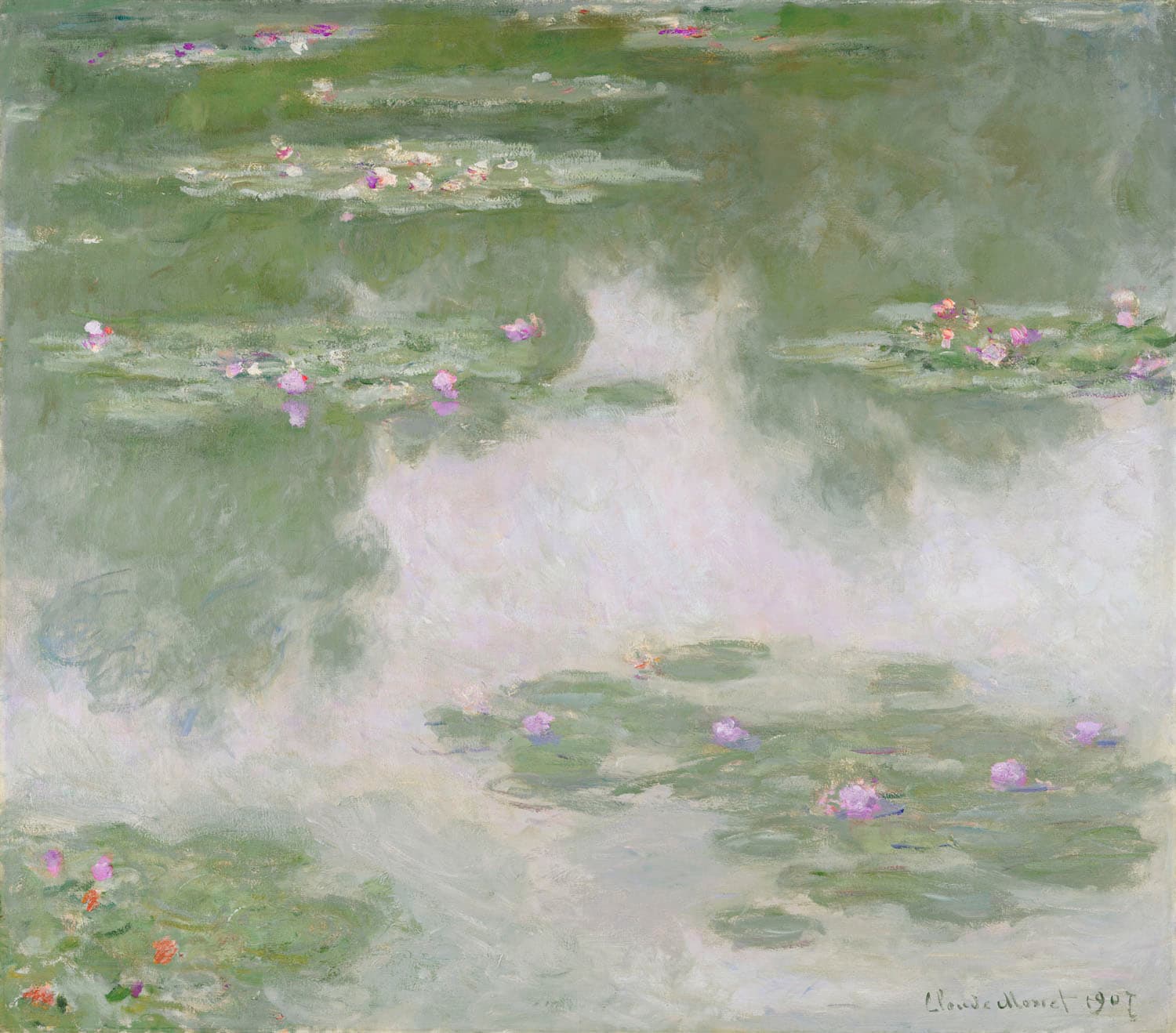
Most of the 1907 lily paintings are cool and pale, like the Pola Museum's Water Lilies or the Wadsworth's silvery Nymphéas, or are built around a tall column of reflected light, like Houston's Water Lilies (Nymphéas). This one is warm and dusky, its palette of rose, gold, umber and violet closer to the late Orangerie panel Water Lilies: Setting Sun than to its contemporaries. The later reworking may account for that kinship: by 1923 Monet was deep in work on the Grandes Décorations, and a canvas left in the studio could absorb the new, denser handling.
How it was painted
The paint is thicker and darker than in most canvases of 1907. The willow reflections are dragged down in long vertical strokes; the lily pads are laid across them horizontally in lighter, cooler paint; the sunset band is softer and more blended. The reeds at lower left are painted in thin, wiry lines, distinct from the rest of the surface. The picture is signed.
Ownership and where to see it
Monet kept the canvas until 1923, when it went to the collector Henri Canonne, an early owner of many late Monets. It later belonged to Simon Sainsbury, a member of the supermarket family and a major benefactor of British museums, who left it to the National Gallery in 2006. It hangs in the Gallery's nineteenth-century rooms near the 1899 bridge picture, The Water-Lily Pond. For the whole series see Monet's Water Lilies; for the garden, Giverny; for Monet worldwide, Where to See Monet's Paintings.
Questions & answers
Where is Monet's Water-Lilies, Setting Sun?
It is in the National Gallery in London (NG6608), bequeathed by Simon Sainsbury in 2006. It hangs in the nineteenth-century galleries, not far from Monet's 1899 Water-Lily Pond.
When was it painted?
About 1907, at Monet's water garden in Giverny. He kept it in his studio until 1923 and may have reworked it then; a studio photograph of around 1907 shows it without the plants at lower left.
What does the painting show?
The lily pond at sunset, with no banks or horizon: a band of pink and gold reflected sky across the upper left, dark vertical reflections of willows, horizontal strips of lily pads and a clump of reeds at lower left.
How is it different from other Monet water lilies of 1907?
Most 1907 lily canvases are cool and pale. This one is warm and dark, closer in color and handling to the late Orangerie panels, perhaps because Monet reworked it as late as the early 1920s.
More by the artist
Claude Monet
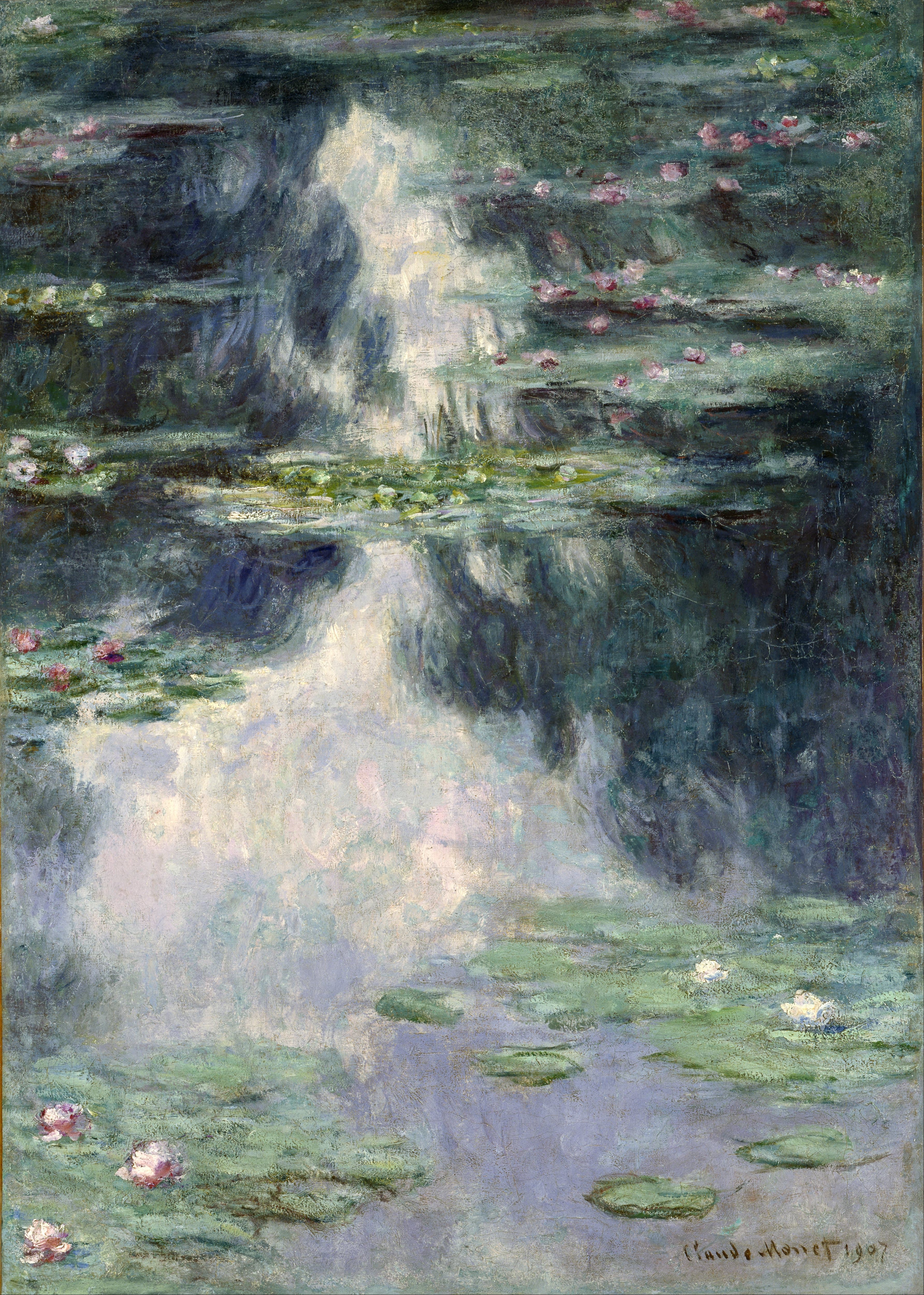
Pond with Water Lilies (Israel Museum)
Claude Monet · 1907
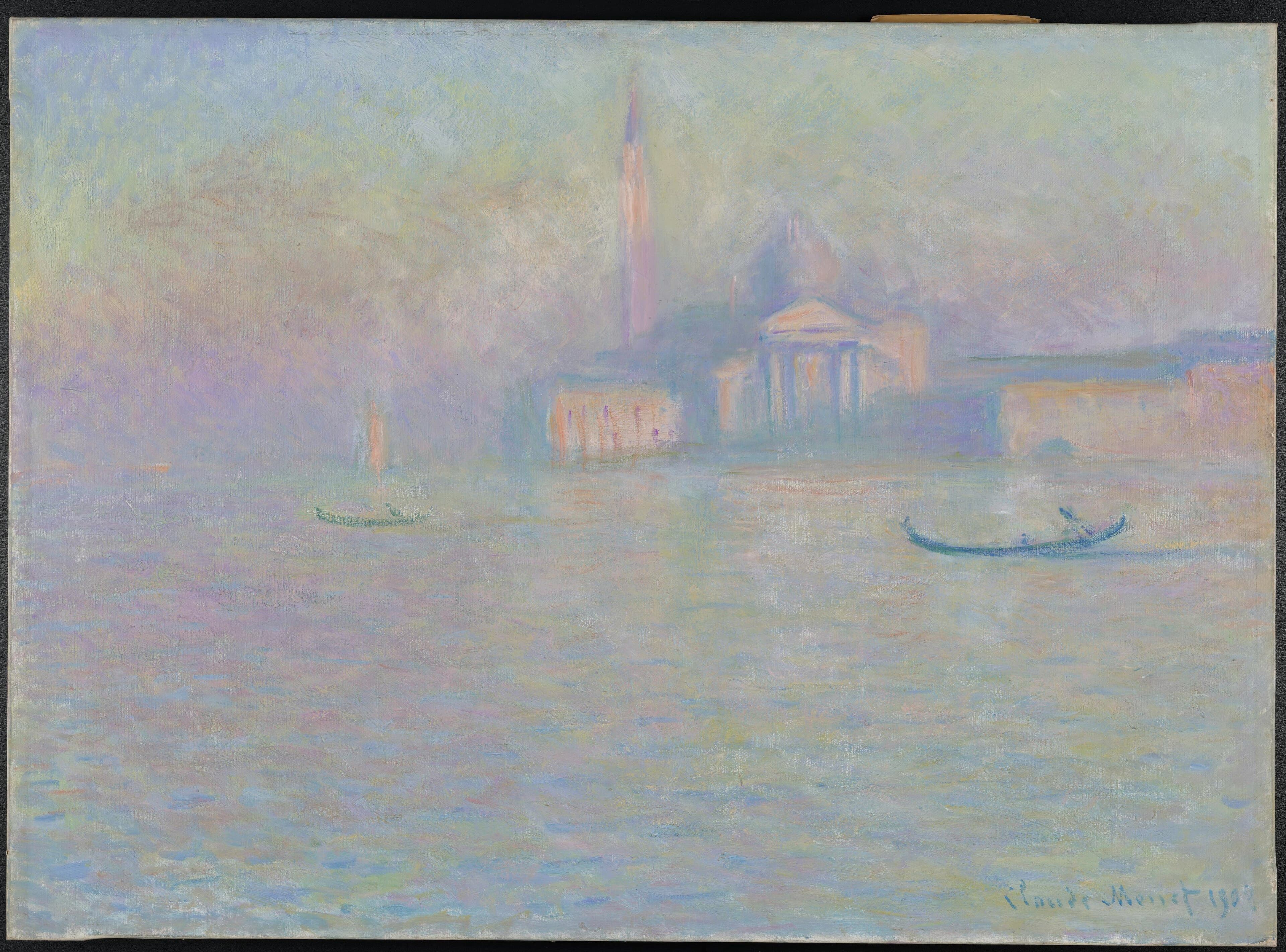
San Giorgio Maggiore
Claude Monet · 1908
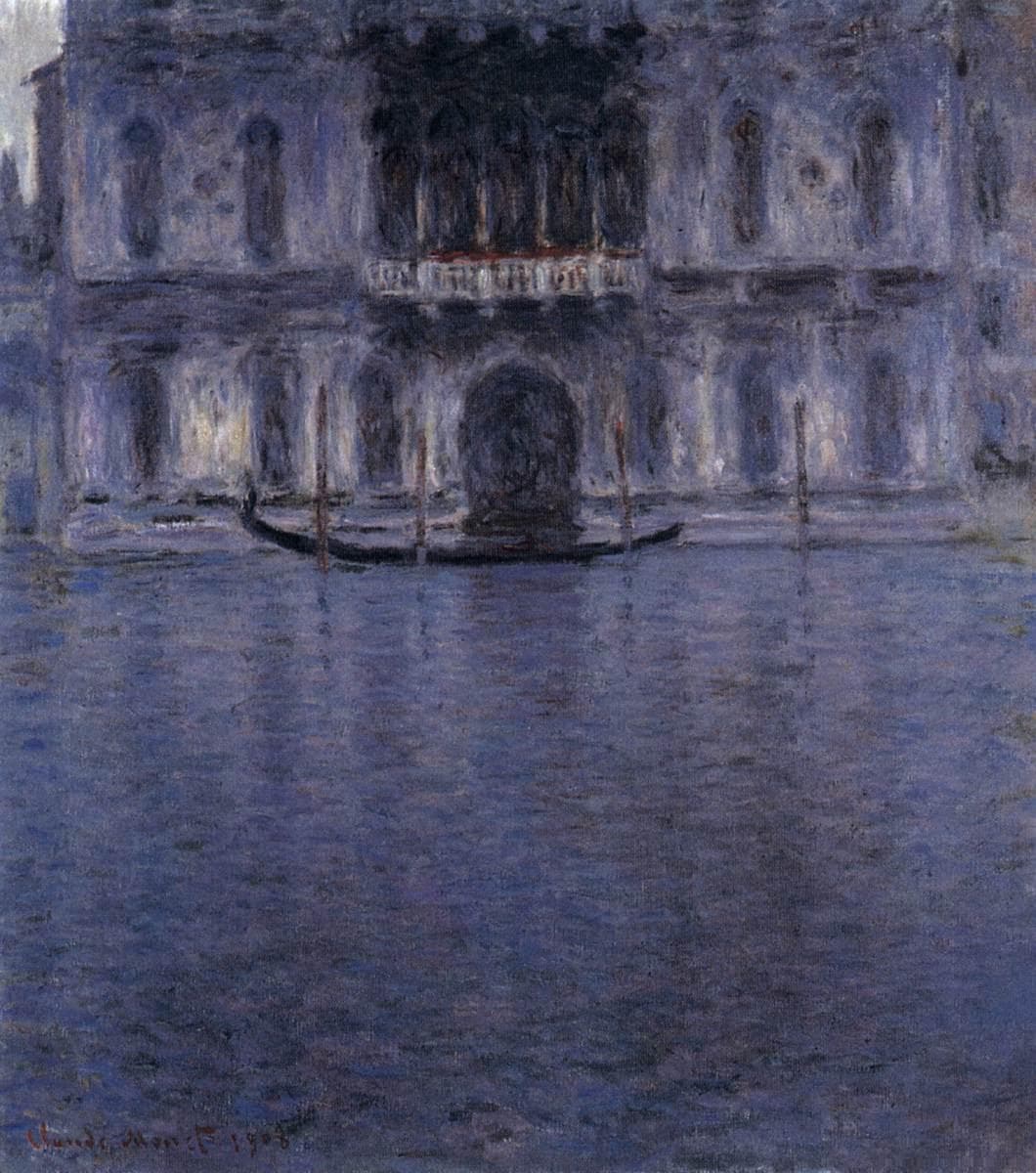
Palazzo Contarini
Claude Monet · 1908
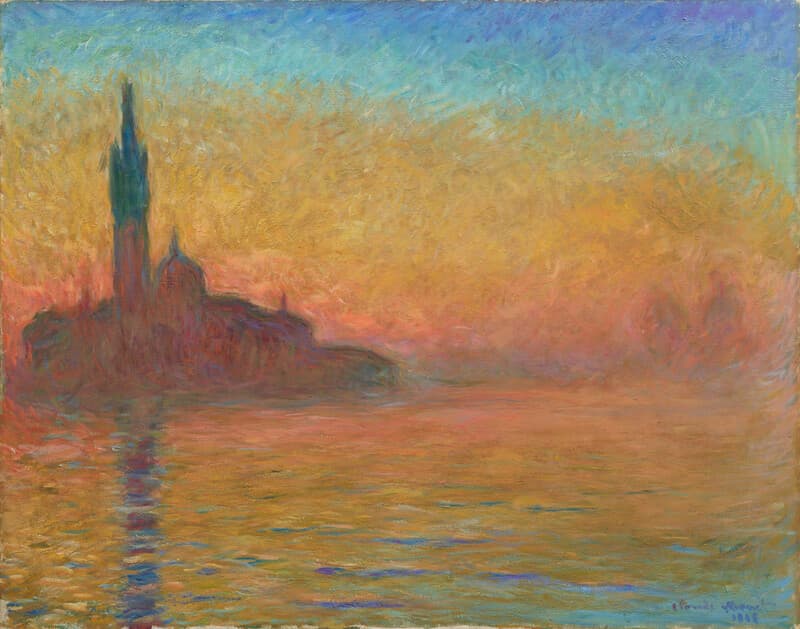
Twilight, Venice
Claude Monet · 1908
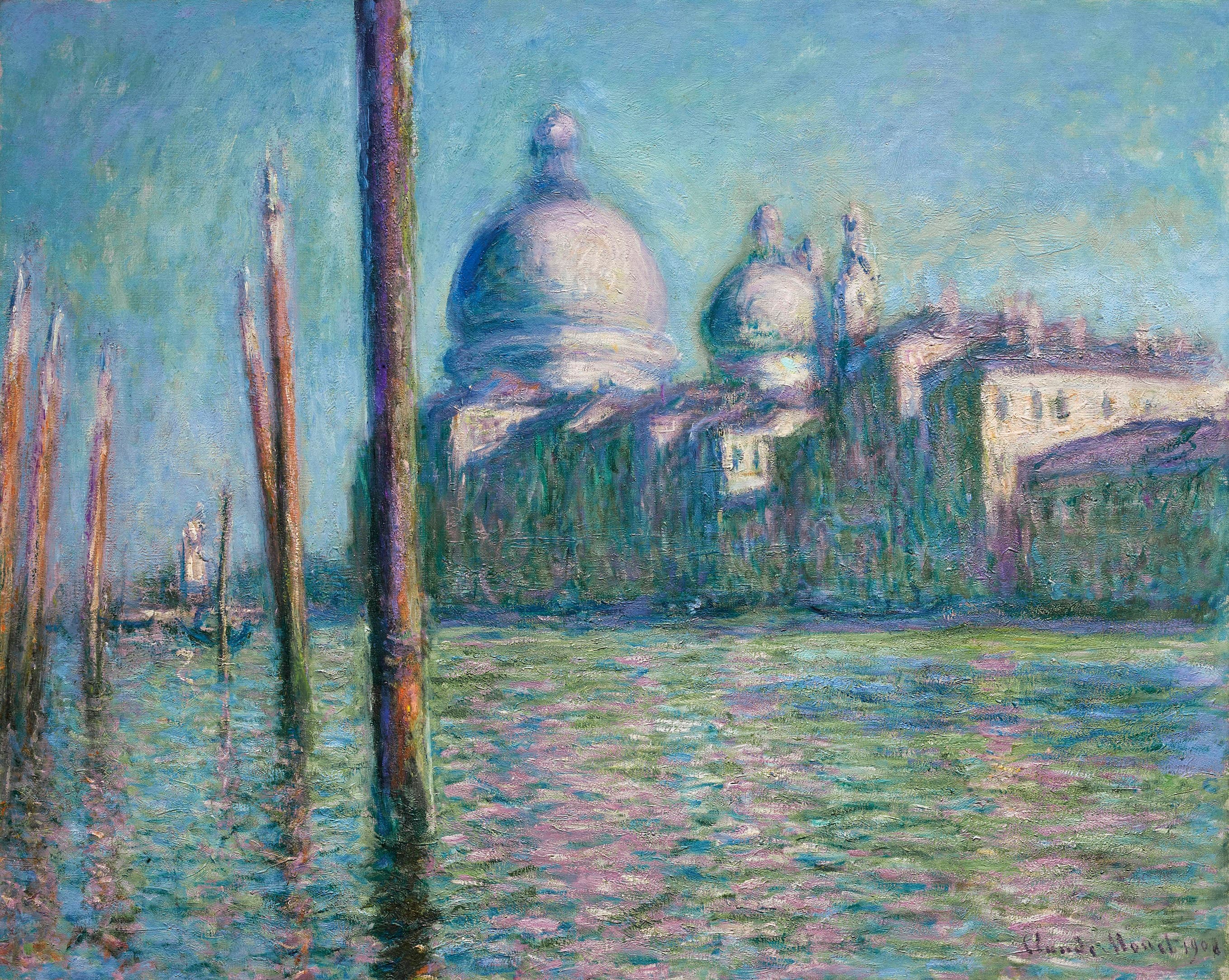
The Grand Canal, Venice
Claude Monet · 1908
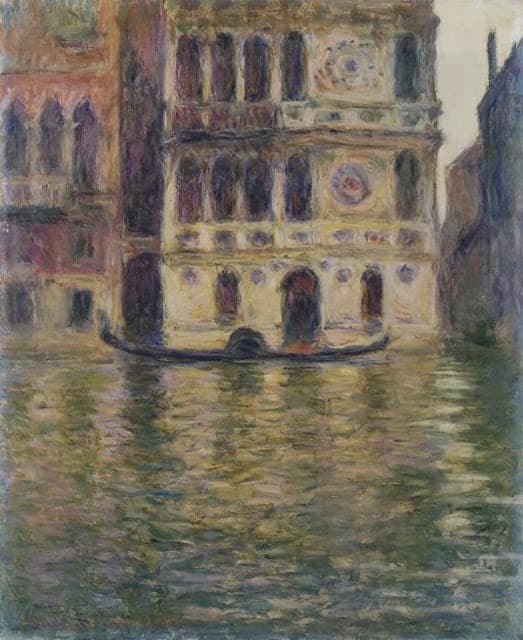
Palazzo Dario
Claude Monet · 1908
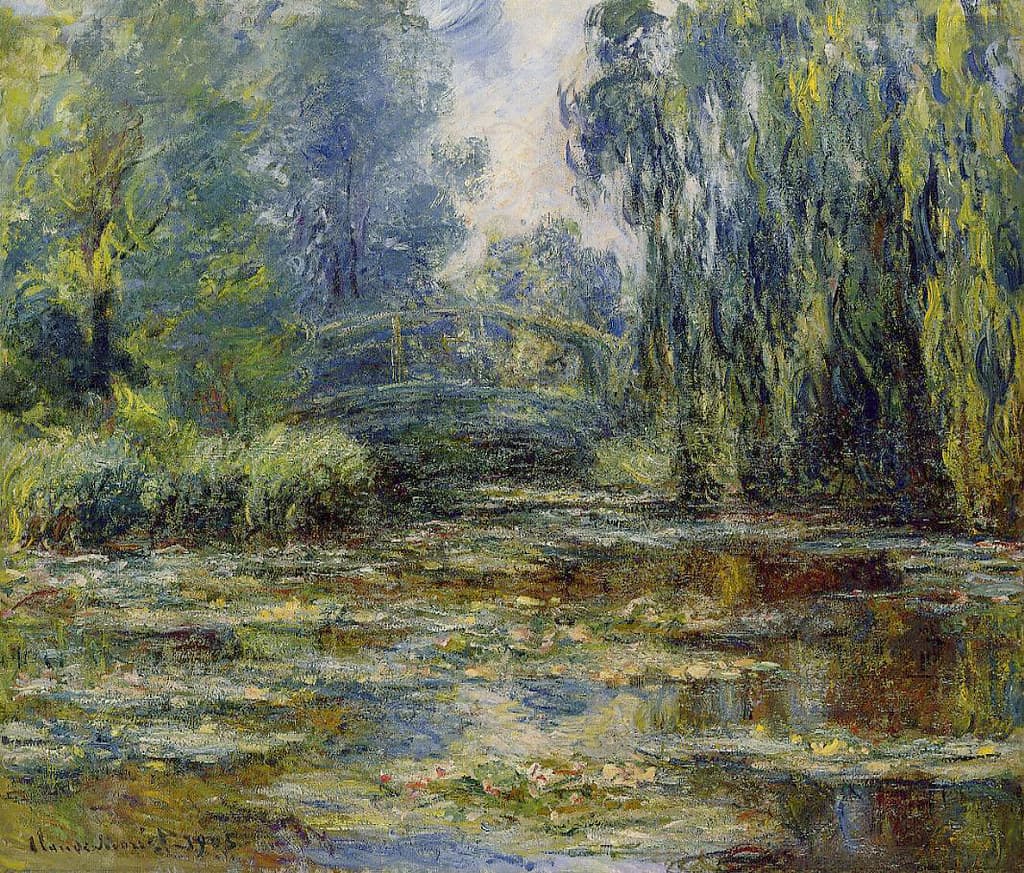
The Water-Lily Pond and Bridge
Claude Monet · 1905
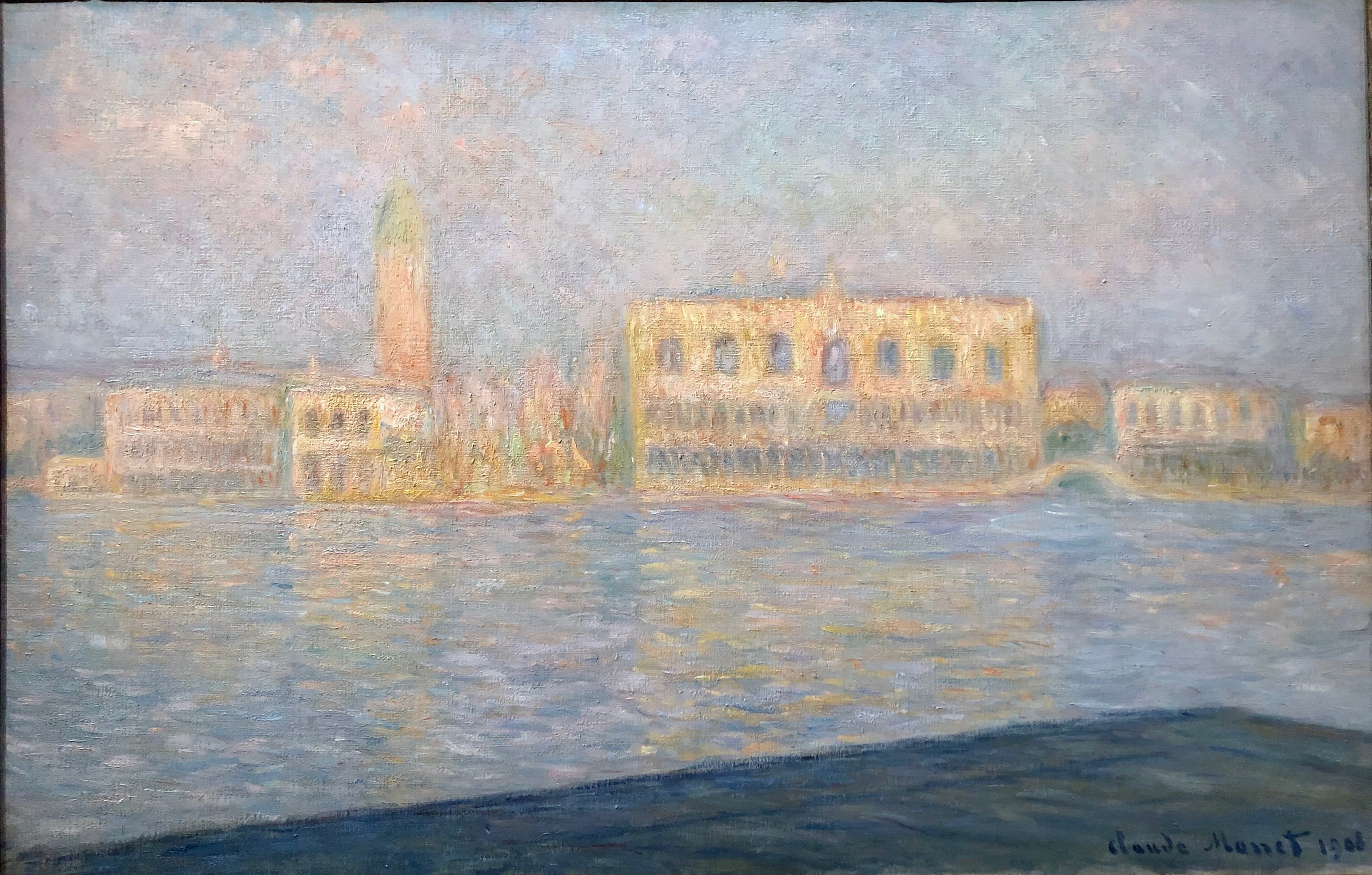
The Palazzo Ducale, Seen from San Giorgio Maggiore (Guggenheim)
Claude Monet · 1908
Also painted in 1907
The same year
Kindred works
You may also study
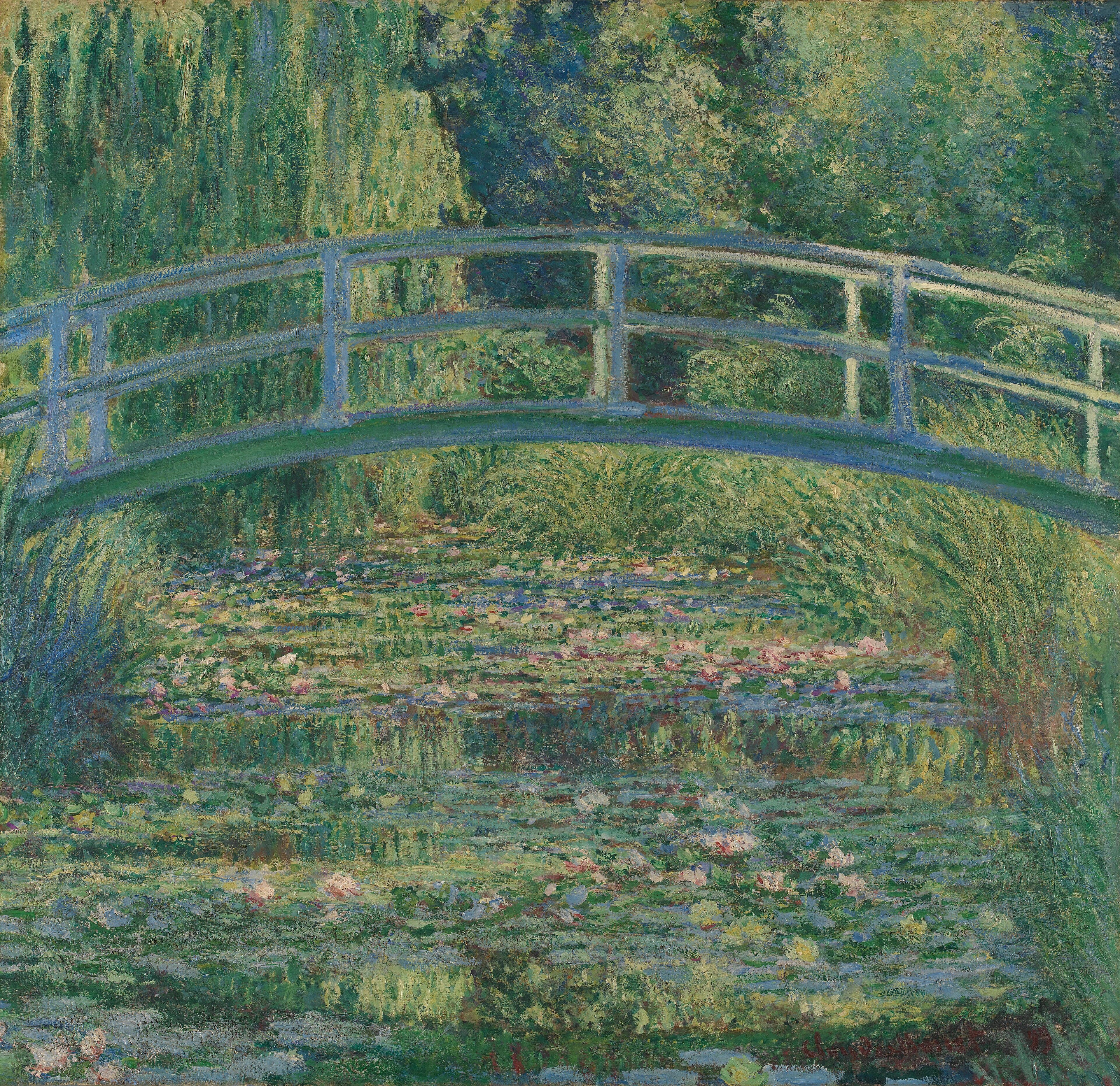
The Water-Lily Pond (National Gallery, London)
Claude Monet · 1899
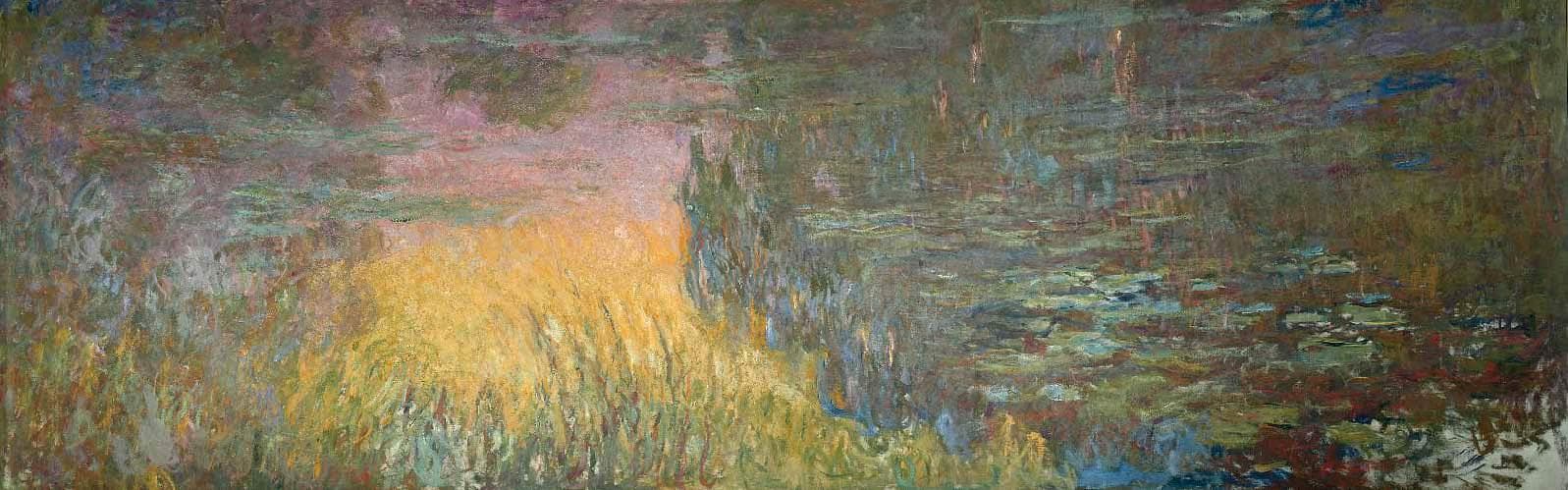
Water Lilies: Setting Sun
Claude Monet · 1914–26
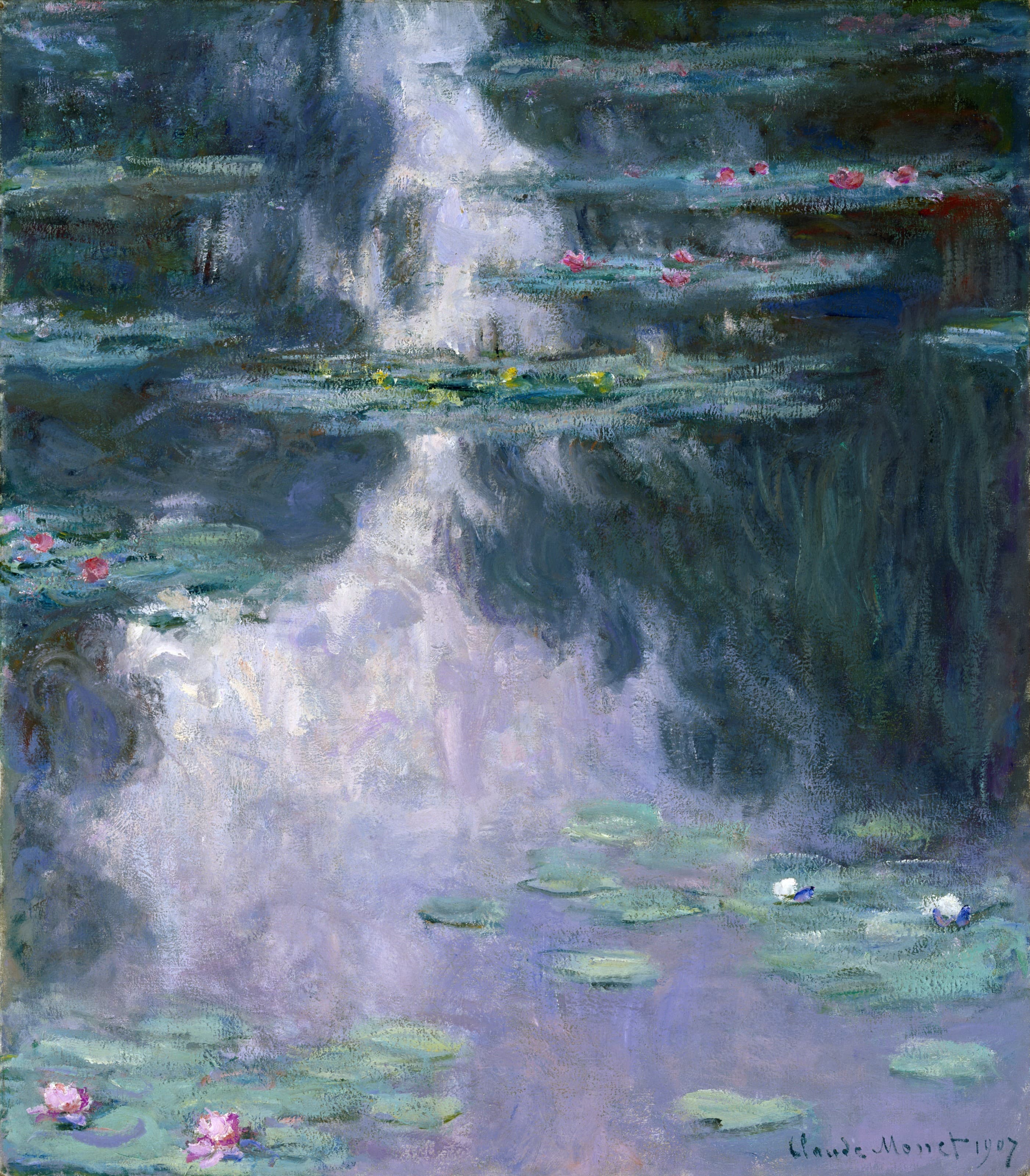
Water Lilies (Nymphéas), 1907 (Houston)
Claude Monet · 1907
Nymphéas (Water Lilies), 1907 (Wadsworth Atheneum)
Claude Monet · 1907
Water Lilies (1907, Pola Museum of Art)
Claude Monet · 1907
Blue Water Lilies
Claude Monet · 1916–19
Corner of the Water-Lily Pond
Claude Monet · 1918
The Japanese Bridge or The Lily Pond
Claude Monet · 1900