Image: Portland Art Museum; photo M.O. Stevens / Wikimedia Commons · Public domain · via Wikimedia Commons
Waterlilies (c. 1914–15, Portland Art Museum)
Claude Monet, c. 1914–15
Waterlilies is a large canvas of about 1914–15 by Claude Monet of his Giverny pond, white and salmon-pink lilies on water mirroring sky and willows. A gift from Monet to his son Michel, it is in the Portland Art Museum, Oregon.
- Artist
- Claude Monet
- Date
- c. 1914–15
- Medium
- Oil on canvas
- Dimensions
- 160.7 × 180.7 cm
- Collection
- Portland Art Museum, Portland, Oregon, United States
- Movement
- Impressionism
- Catalogue
- Wildenstein 1795
- Nature & Landscape
- Water & Sea
Waterlilies is a large canvas of about 1914–15 by Claude Monet of the lily pond in his garden at Giverny, in the Portland Art Museum in Oregon (59.16). Measuring about 160 by 180 centimeters, it is one of the first big lily canvases Monet painted when he returned to the pond in 1914. He gave it to his son Michel, who kept it for decades; the museum bought it from him in 1959 through the Helen Thurston Ayer Fund.
What you're looking at
The canvas shows the pond without a bank. Across the upper half, a broad field of lily pads spreads in rounded clusters of gray-green, olive and blue, and on it sit several large white water lilies, painted as thick, cupped blossoms with pale green and lilac shadows: one at the left, two together at center right, one more at the far right, another at the top. At the upper right, long vertical strokes of green and yellow fall into the water, the reflection of a weeping willow.
The lower half is more open. On the left, a pale lilac and blue passage reflects the sky. In the center and right, the water darkens to deep green and blue, with vertical reflections of foliage. Floating on this darker water, a scatter of flowers in salmon, coral and orange-pink catches the light, and a few pads are drawn as dark rings. At the lower left, a large pad outlined in black and a pink-orange bloom sit close to the viewer.
The combination of large white lilies above and warm coral ones below, with willow reflections, gives the picture a festive, summer light.
The late pond
After the death of his wife Alice in 1911 and of his elder son Jean in 1914, and with his sight clouded by cataracts, Monet returned to the lily pond in 1914 with a new ambition: a cycle of enormous decorative panels that would surround the viewer with water. In 1915 he built a large new studio at Giverny to paint them. Alongside the panels, which went to the Musée de l'Orangerie in Paris in 1927, he painted dozens of big canvases of the pond, studies and independent pictures, most of which stayed in the studio, unsigned, until his death in 1926. Portland's canvas comes from the very start of that period, and its handling, broad and loose but still describing individual flowers, sits between the water landscapes of 1903–08 and the near-abstract panels.
How this version differs
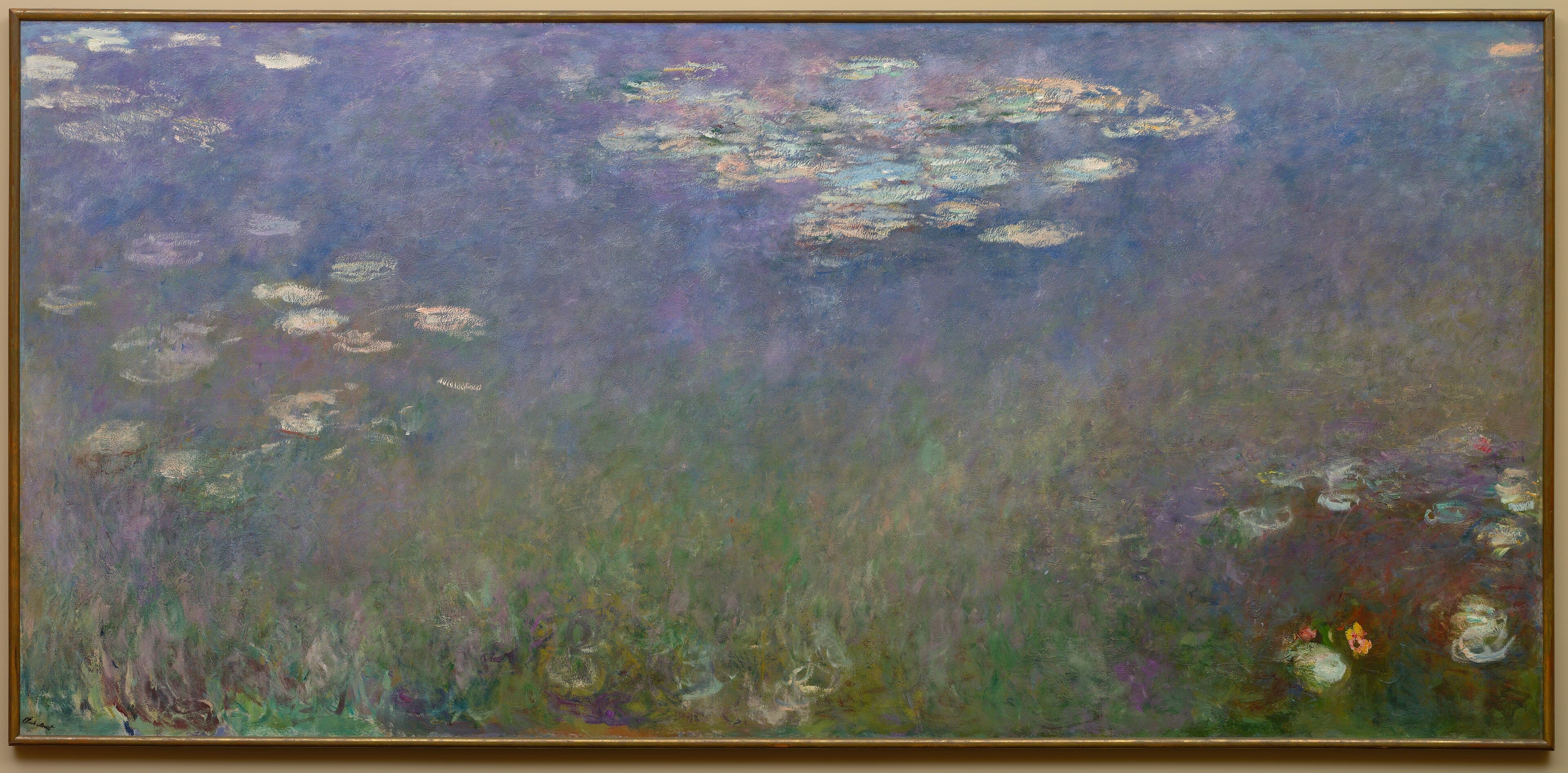
Compared with the dark, unfinished Museum Barberini Water Lilies of 1914–17, Portland's is brighter and more fully resolved, with distinct flowers and a clear distinction between pads and water. Compared with the Cleveland Water Lilies (Agapanthus), it is far smaller and more intimate. At the other extreme of scale is the Museum of Modern Art's nearly thirteen-meter Water Lilies, begun the same year.
How it was painted
The white lilies are built up in thick, curving strokes, the heaviest paint in the canvas. The pads are flat, broadly brushed ovals. The willow reflections are long vertical drags of green and yellow, and the sky reflection on the left is laid in with soft, blended strokes. Until recently the colors were deepened by a later, non-original varnish.
Ownership, conservation and where to see it
Michel Monet hung the painting in his dining room for many years before selling it to the Portland Art Museum in 1959; one account says the purchase was funded in part by proceeds from a popular 1958 Van Gogh exhibition. In 2024 the museum received a Bank of America Art Conservation Project grant to clean it. The conservator Charlotte Ameringer removed the discolored varnish, revealing lighter, cooler colors, and the painting returned to view in a new display. For the series see Monet's Water Lilies; for the garden, Giverny; for other public collections of Monet, Where to See Monet's Paintings.
Questions & answers
Where is Monet's Waterlilies in Portland?
It is in the Portland Art Museum in Oregon (59.16), bought in 1959 through the Helen Thurston Ayer Fund. It was cleaned with a Bank of America conservation grant from 2024 and returned to view afterward.
When was it painted?
About 1914–15, at Giverny, at the start of the late period when Monet returned to his lily pond to work toward the great decorative panels now in the Musée de l'Orangerie.
What does it show?
The pond surface with no bank: large white water lilies on gray-green pads in the upper half, willow reflections at upper right, and salmon and coral flowers floating on darker green and blue water below.
How did Portland get a Monet water lily?
Monet gave the canvas to his son Michel, who hung it in his dining room. The museum bought it from him in 1959, reportedly helped by proceeds from a 1958 Van Gogh exhibition.
More by the artist
Claude Monet
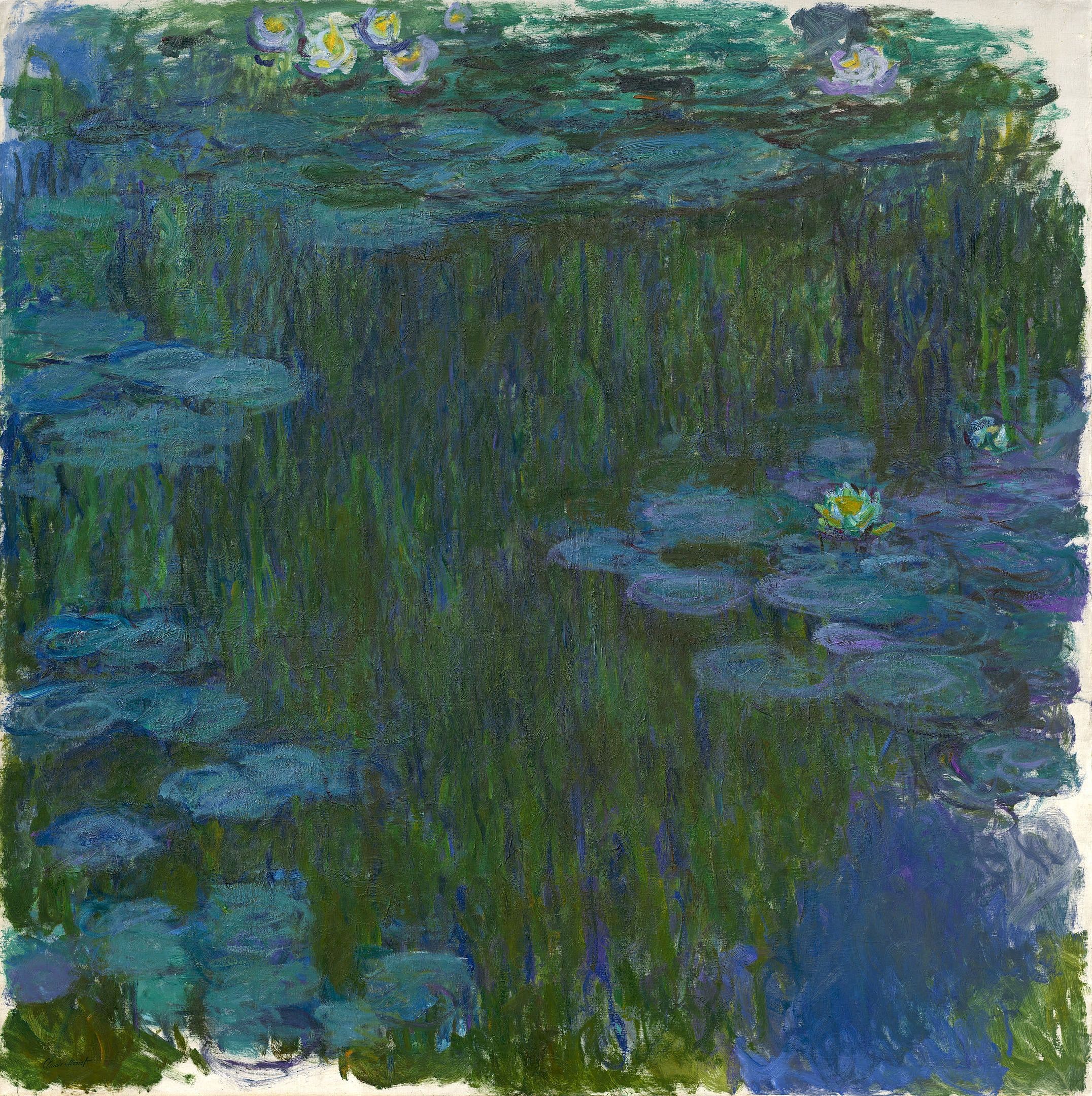
Water Lilies (1914–17, Museum Barberini)
Claude Monet · 1914–17

Water Lilies (MoMA triptych)
Claude Monet · 1914–26
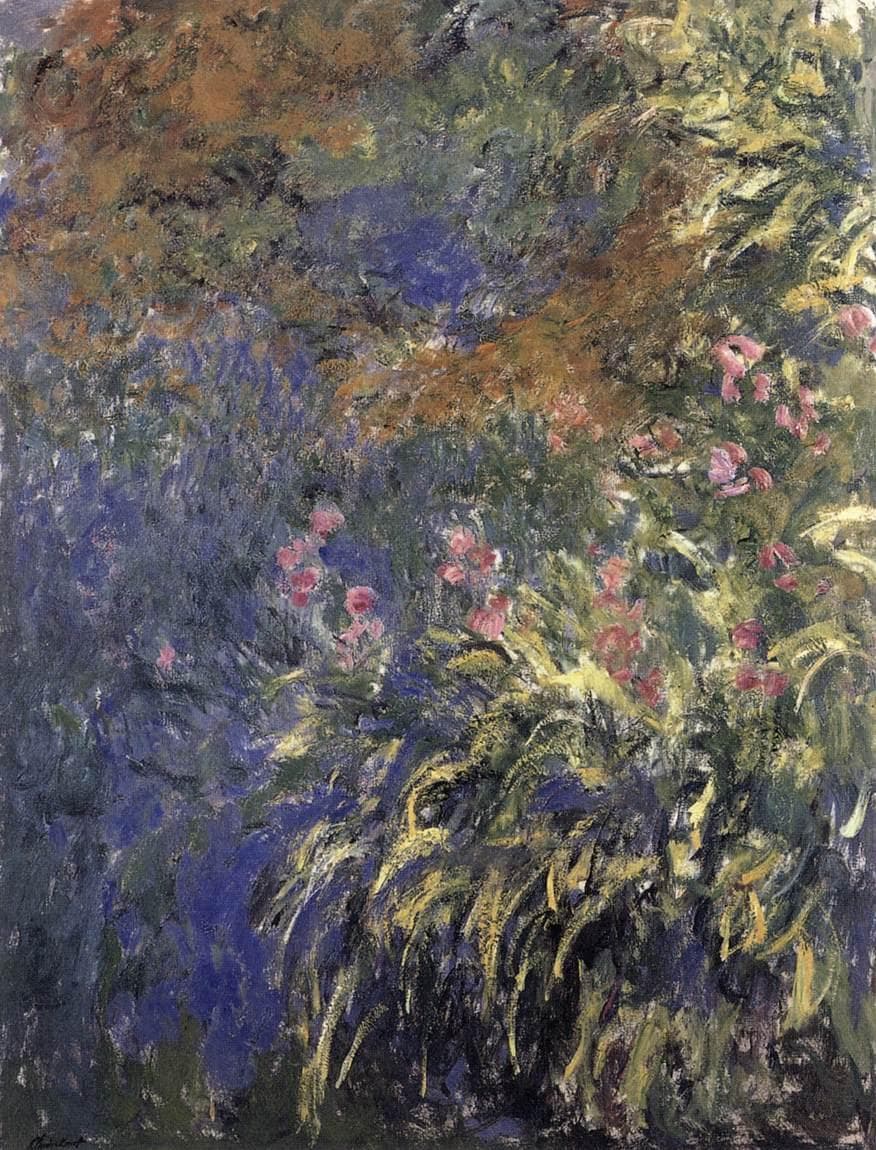
Irises by the Pond
Claude Monet · c. 1914–17
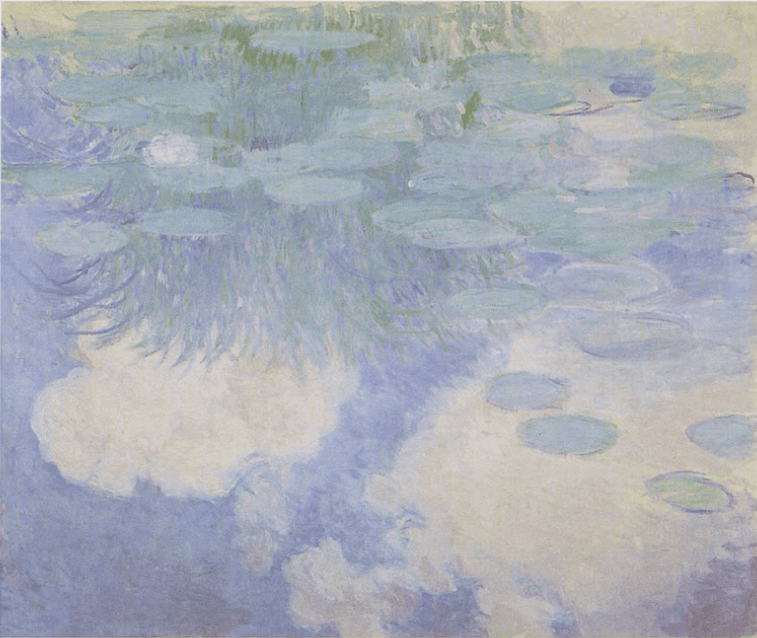
Nymphéas (1915, Musée Marmottan Monet)
Claude Monet · 1915
Water Lilies (Nymphéas), 1915 (Gunma)
Claude Monet · 1915
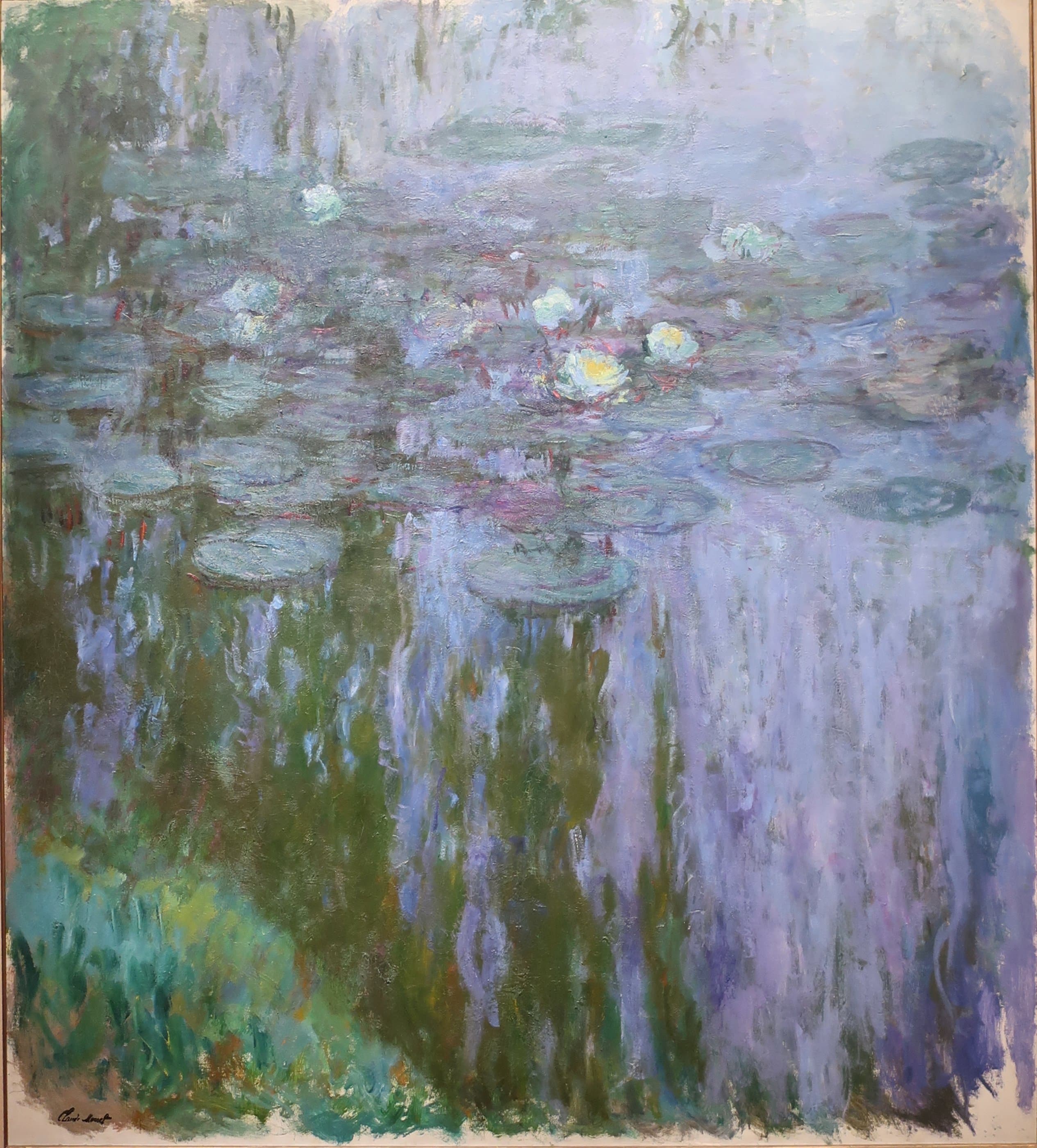
Nymphéas (Musée Marmottan Monet, 1916–19, inv. 5119)
Claude Monet · 1916–19
Weeping Willow and the Water-Lily Pond
Claude Monet · c. 1916–19
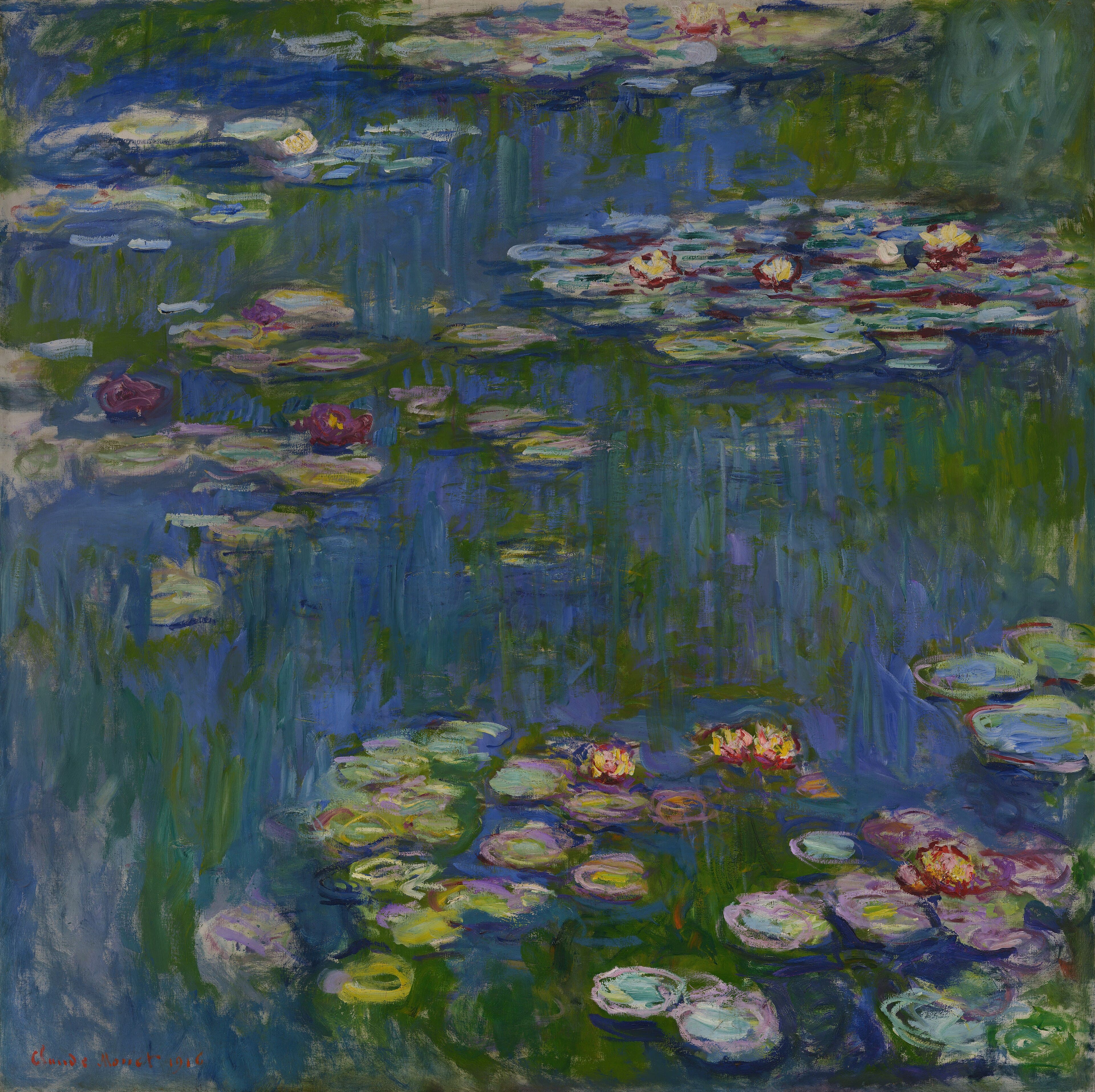
Water Lilies (1916, Tokyo)
Claude Monet · 1916
Also painted in 1914
The same year
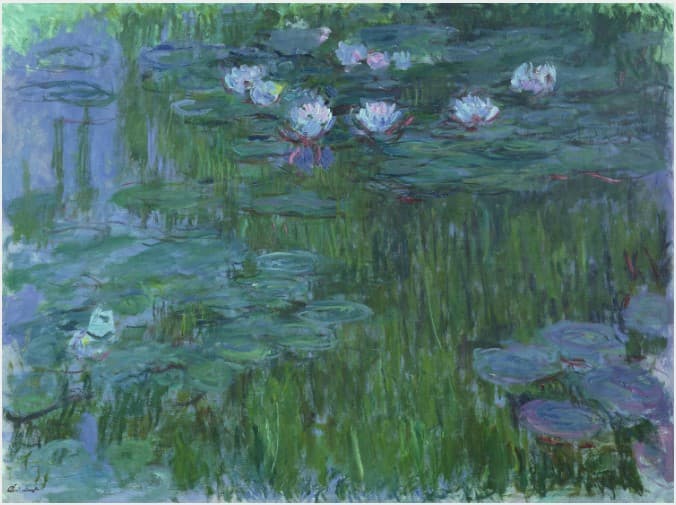
Kindred works
You may also study
Water Lilies (Agapanthus)
Claude Monet · c. 1915–26

Nymphéas [Waterlilies] (National Gallery of Australia)
Claude Monet · c. 1914–17
Weeping Willow
Claude Monet · 1920–22
Le pont japonais
Claude Monet · 1918–24
Water Lilies with Willow Branches
Claude Monet · c. 1916–17
Water Lilies (Saint Louis Art Museum)
Claude Monet · c. 1915–26
Water Lilies (Toledo Museum of Art)
Claude Monet · c. 1922
The Japanese Bridge
Claude Monet · c. 1919–24