Image: Private collection · Public domain · via Wikimedia Commons
The Japanese Bridge
Claude Monet, c. 1919–24
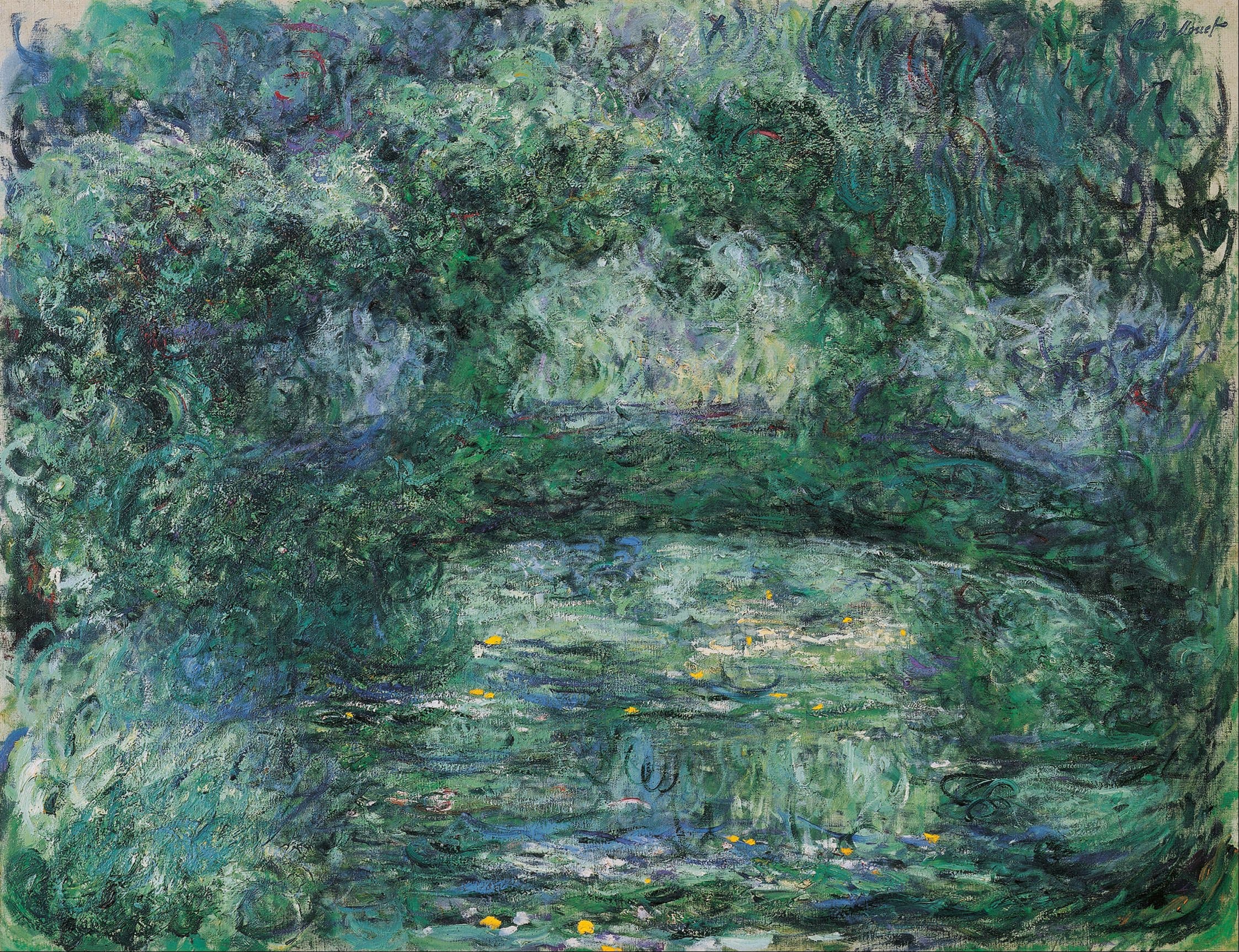
The Japanese Bridge is a late Claude Monet painting of his Giverny footbridge, about 1919–24, in turquoise and blue-green with pink lily pads on the pond. A private collection has lent it to the National Gallery, London.
- Artist
- Claude Monet
- Date
- c. 1919–24
- Medium
- Oil on canvas
- Dimensions
- 89 × 116 cm
- Collection
- Private collection (lent to the National Gallery, London), London, United Kingdom
- Movement
- Impressionism
- Catalogue
- Wildenstein 1922
- Nature & Landscape
- Water & Sea
The Japanese Bridge (Le Pont japonais) is one of the late paintings Claude Monet made of the wooden footbridge in his water garden at Giverny, listed in Wildenstein's catalogue raisonné as no. 1922 and dated to about 1919–24. It measures 89 by 116 centimeters. The painting belongs to a private collection and has been lent to the National Gallery in London, which showed it alongside its own Giverny pictures.
What you're looking at
The bridge is a long, shallow arch of deep blue-green crossing the canvas just above the middle, its upper rail picked out with a dark, wiry line. Above it hangs the wisteria and the foliage beyond, a soft mass of turquoise, jade and dark teal, brushed in short arcs and curls, with a few blood-red flecks among the leaves. At the center of the upper half a paler, misty patch of blue-white opens, the distant light under the trees.
The lower half is the pond, and here this version is unusually legible. Pale pink, cream and lilac dabs float on the blue-green water in a loose diagonal band from left to right: lily pads catching the light, and perhaps a few flowers. They make the water read as a flat surface receding toward the bridge, something many of the late bridges lose. At the lower left, a thick clump of blue-violet strokes marks a plant on the bank, perhaps irises. The right edge is a curtain of dark verticals, the willow and reeds.
The overall color is cool and harmonious, close to the bridges of 1899 in key but painted with the swirling, layered touch of Monet's last decade.
Giverny after the war
Monet had first painted the bridge in 1899–1900 in a group of clear, finely balanced views, such as The Japanese Footbridge in Washington. When he returned to it around 1918, the plants had grown over the structure and his eyesight had declined. Cataracts, diagnosed in 1912, dimmed and yellowed his vision until he agreed to an operation on his right eye in 1923.
The late bridges therefore range widely in color, from fiery reds to subdued blues. This canvas sits at the cool end, with the Marmottan Japanese Bridge of 1918–19 and the version in the Van Gogh Museum.
How it was painted
The width, 116 centimeters, makes this a horizontal picture, like the Marmottan's Le Pont japonais (W 1933) of the same size. Monet works the foliage with a loaded brush in curving, overlapping strokes, and the water in horizontal touches separated by bare gaps, so the lily pads float. Thin passages near the edges show the canvas weave. The paint surface is dense but not crusted, and the color is mixed as much on the canvas as on the palette.
How this version differs
Three features set it apart: its cool turquoise palette, its relatively readable pond with pink lily pads, and its horizontal format. Placed beside the emerald São Paulo bridge, it is lighter and more varied in color. Beside the red Marmottan pictures it looks almost serene. See all the versions in the Japanese Footbridge series and the garden in Monet's Giverny.
Where to see it
The painting is privately owned. The National Gallery in London announced its loan from a private collection to hang with the gallery's own Giverny pictures. Long-term loans can end, so check the gallery's current displays before visiting. For Monet's bridge pictures in public collections, see where to see Monet's paintings.
Questions & answers
Where is this Japanese Bridge by Monet?
It is in a private collection and has been lent to the National Gallery in London, which displayed it with its own Monet paintings of Giverny. Loans can be withdrawn, so check the gallery's current displays.
When was it painted?
It is dated to about 1919–24 (Wildenstein no. 1922). Monet painted it in his water garden at Giverny during the last years of his career, while also working on the Orangerie Water Lilies.
What does it show?
It shows the arched footbridge over Monet's lily pond in cool turquoise and blue-green, with wisteria overhead and pale pink lily pads floating on the water below.
How does it compare with the 1899 Japanese bridge paintings?
The 1899 versions draw the bridge clearly with fresh greens and a square format. This late canvas is wider, and its forms dissolve into thick, swirling brushwork, though its cool palette is closer to 1899 than the fiery red late versions.
More by the artist
Claude Monet
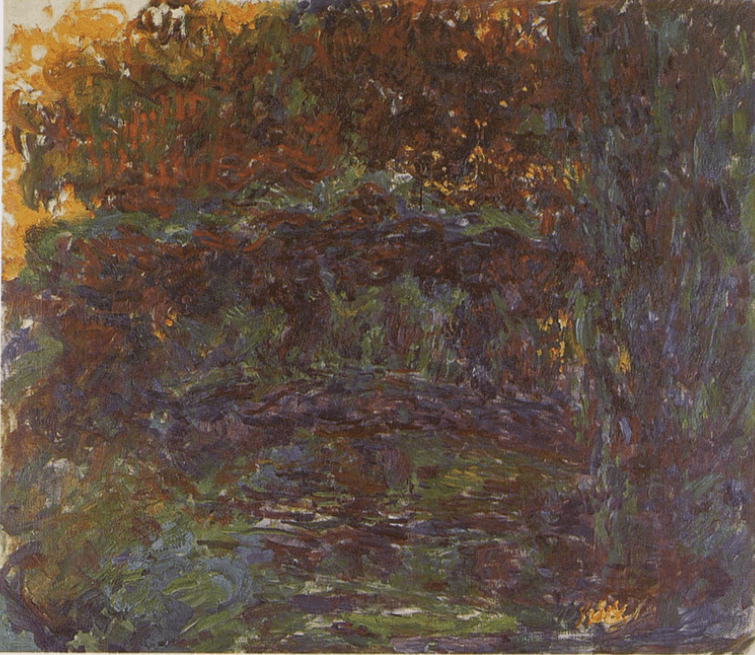
The Japanese Bridge
Claude Monet · 1918–24
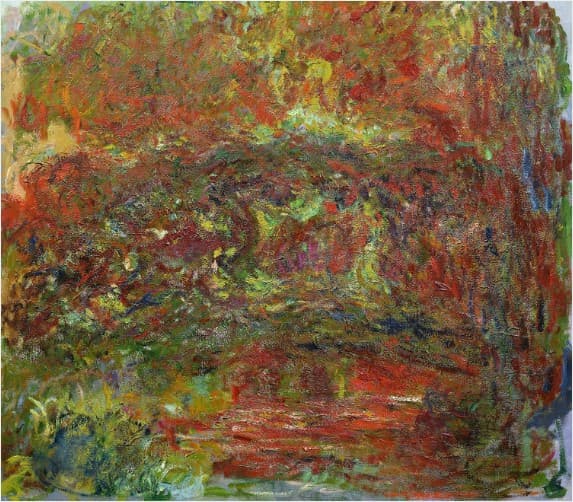
Le pont japonais
Claude Monet · 1918–24
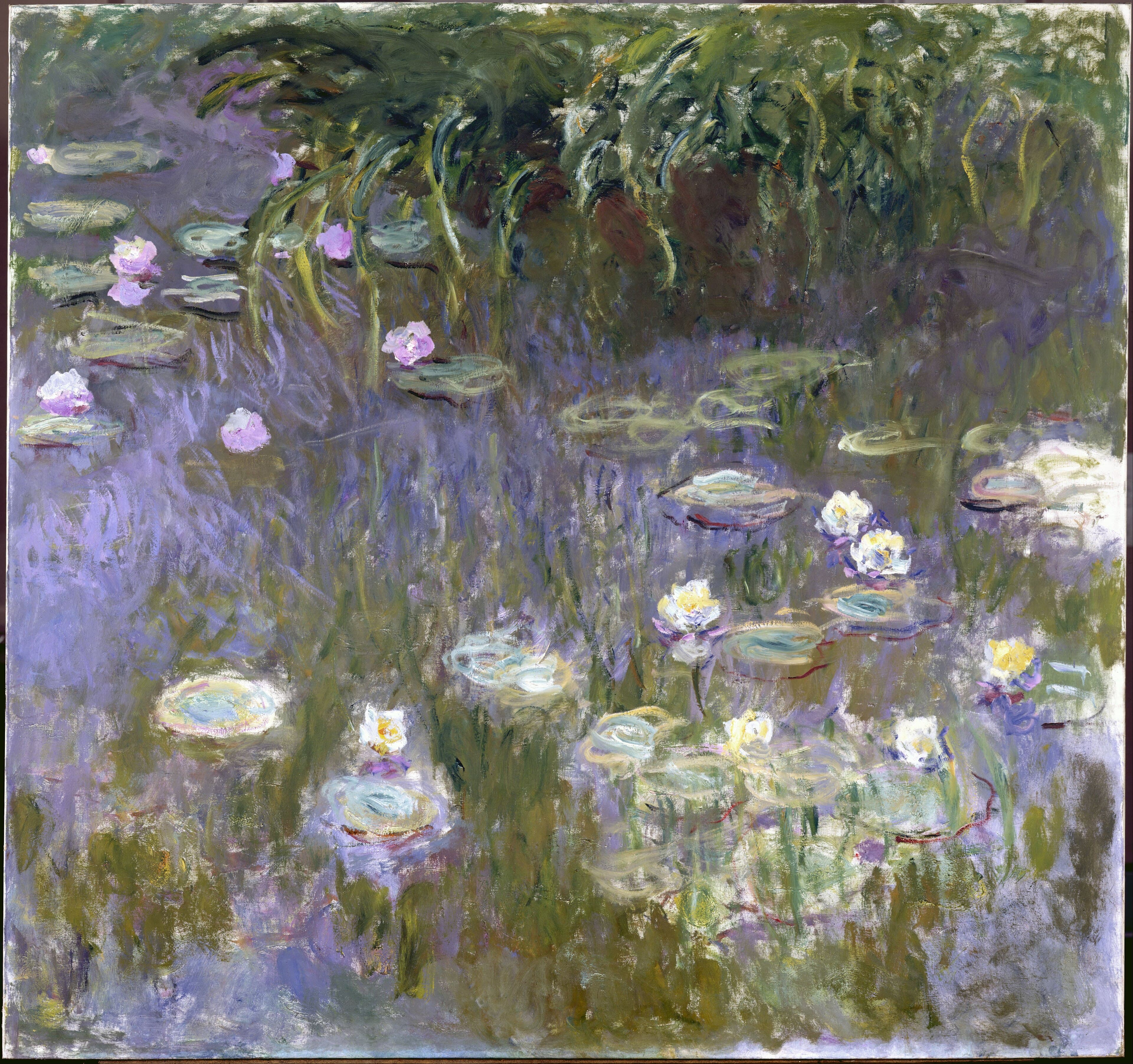
Water Lilies (Toledo Museum of Art)
Claude Monet · c. 1922
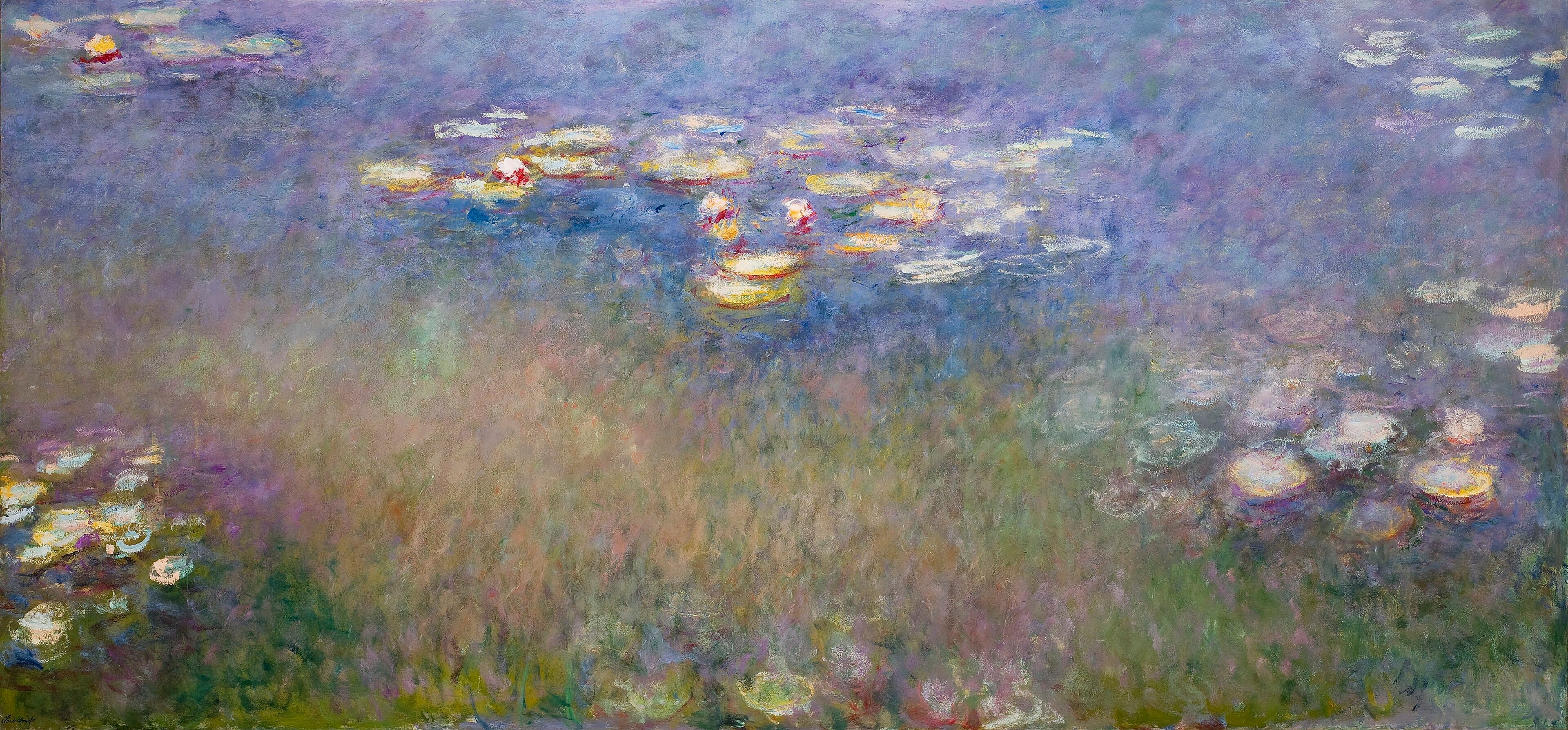
Water Lilies (Saint Louis Art Museum)
Claude Monet · c. 1915–26
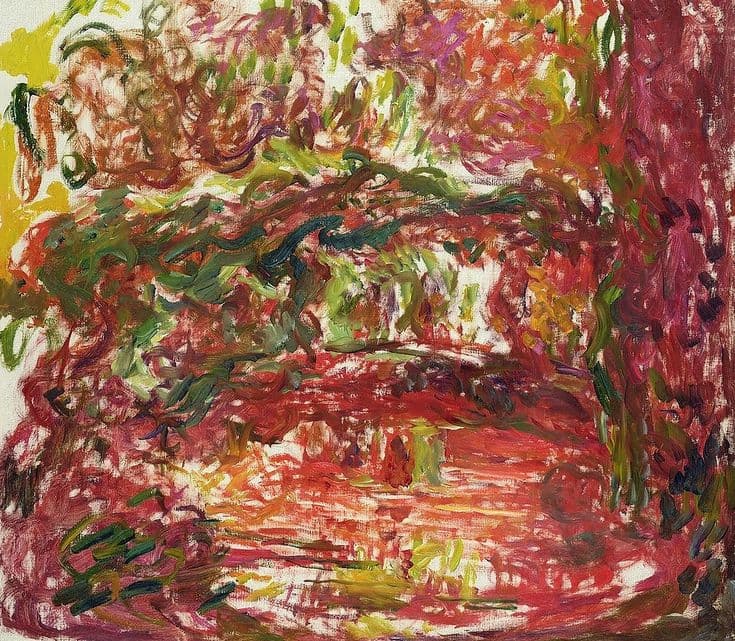
The Japanese Bridge
Claude Monet · 1918–24
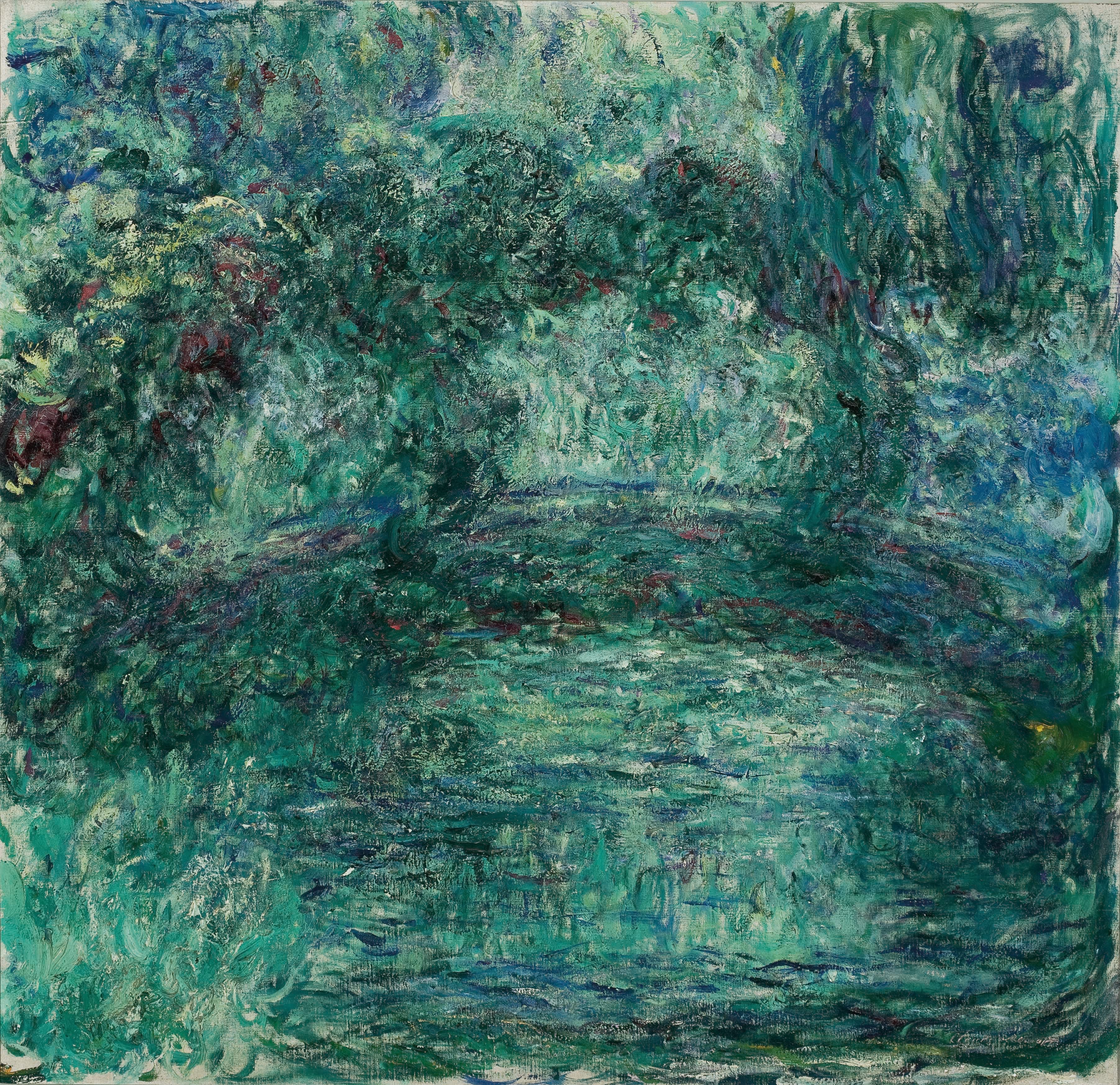
The Japanese Bridge over the Water-Lily Pond in Giverny
Claude Monet · 1920–24
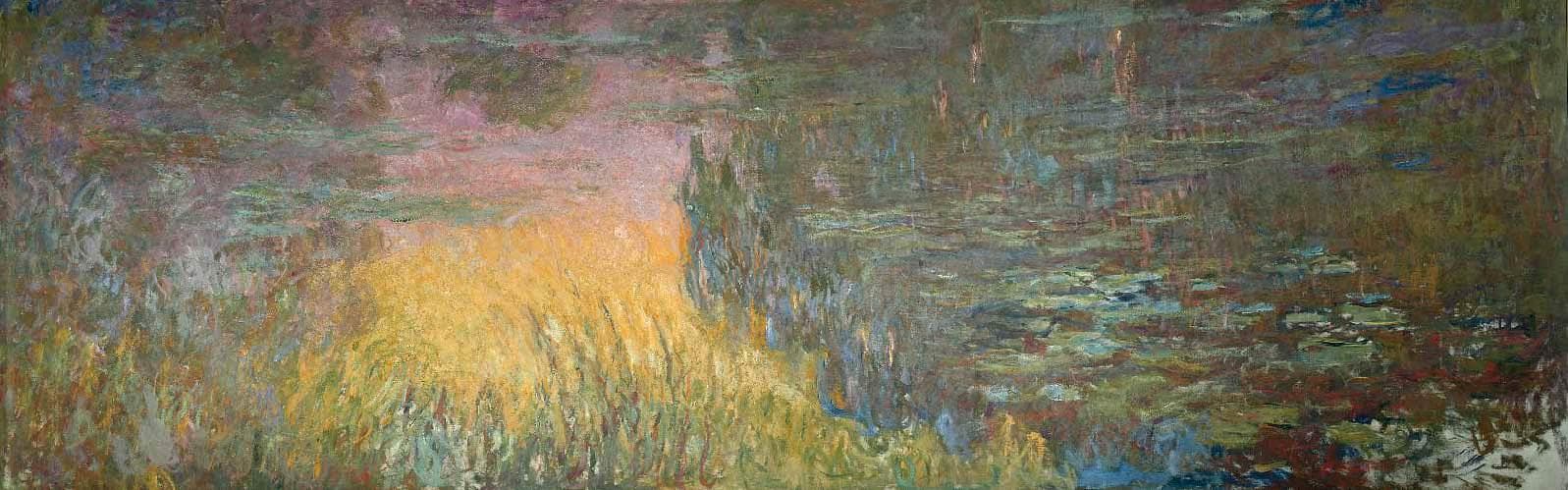
Water Lilies: Setting Sun
Claude Monet · 1914–26
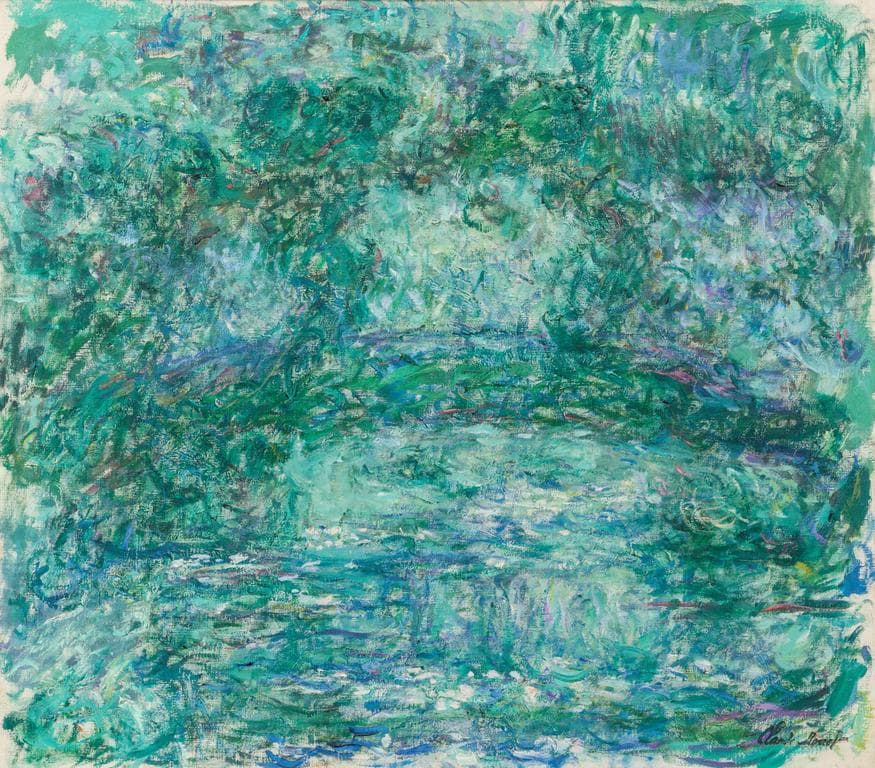
Le pont japonais (Japanese Bridge)
Claude Monet · 1918–24
Also painted in 1921
The same year
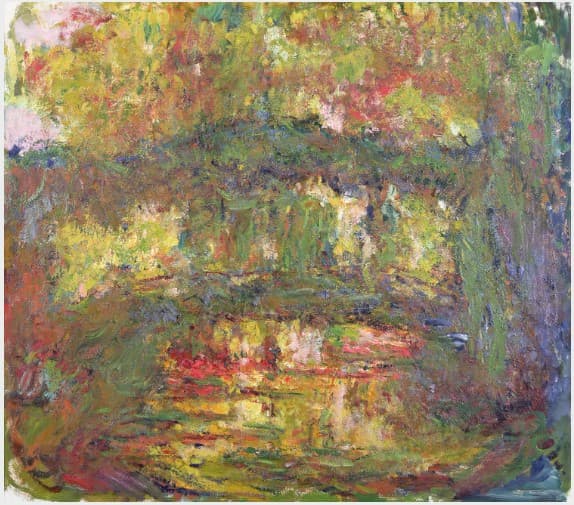
Kindred works
You may also study
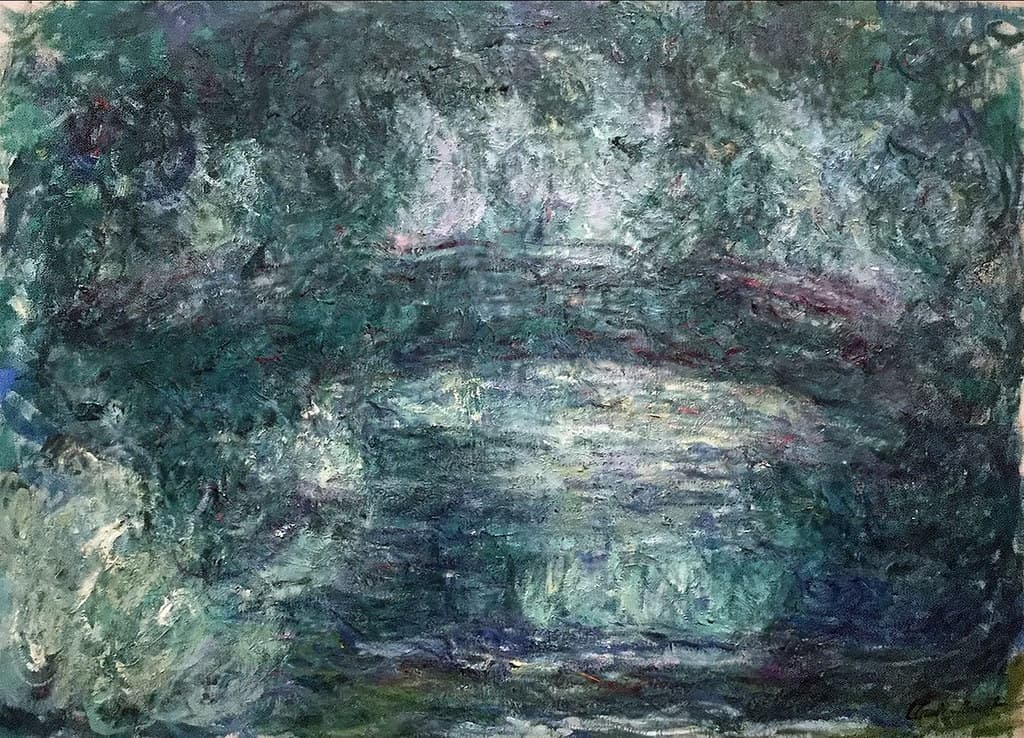
Japanese Bridge
Claude Monet · 1918–19
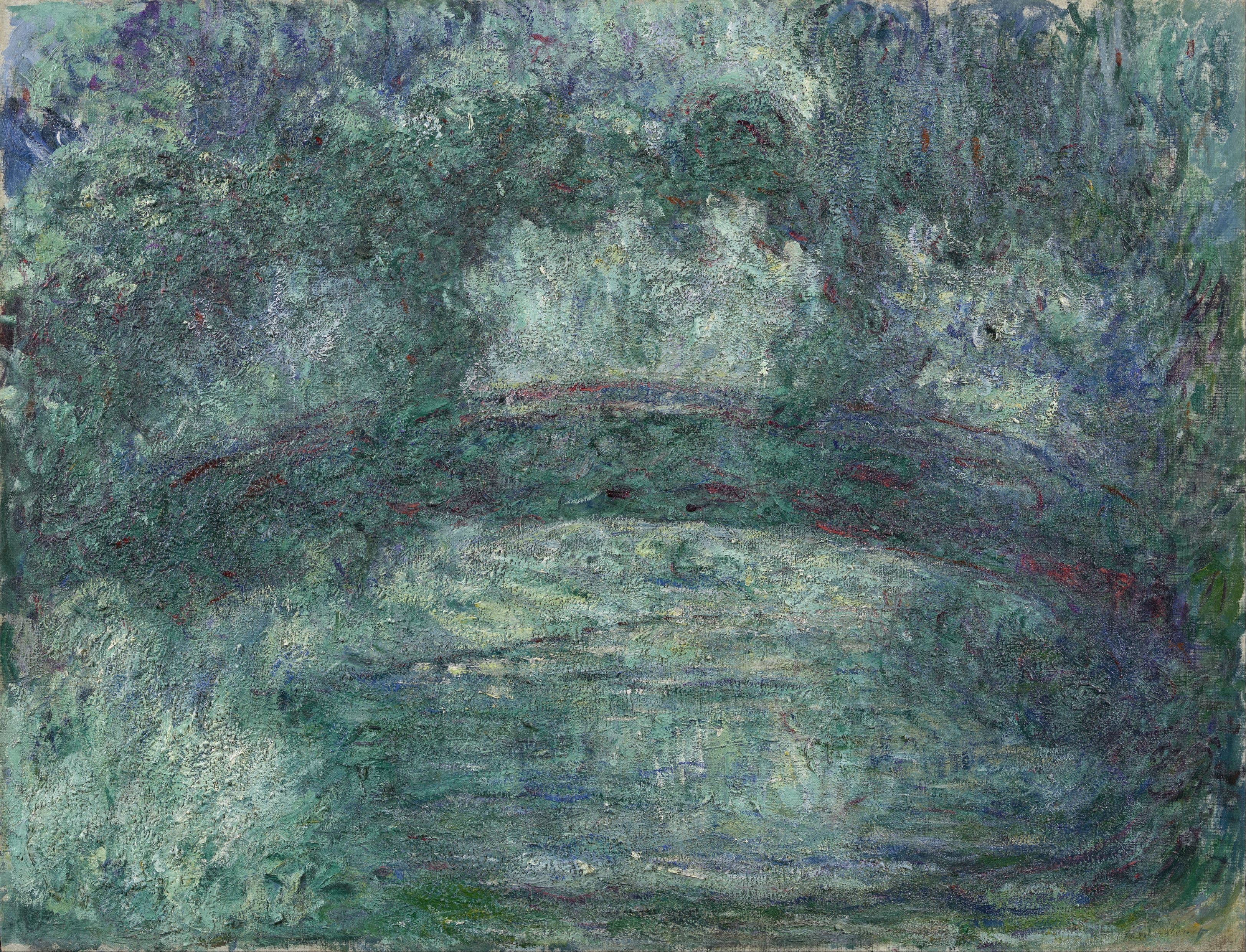
The Japanese Bridge
Claude Monet · 1919–24
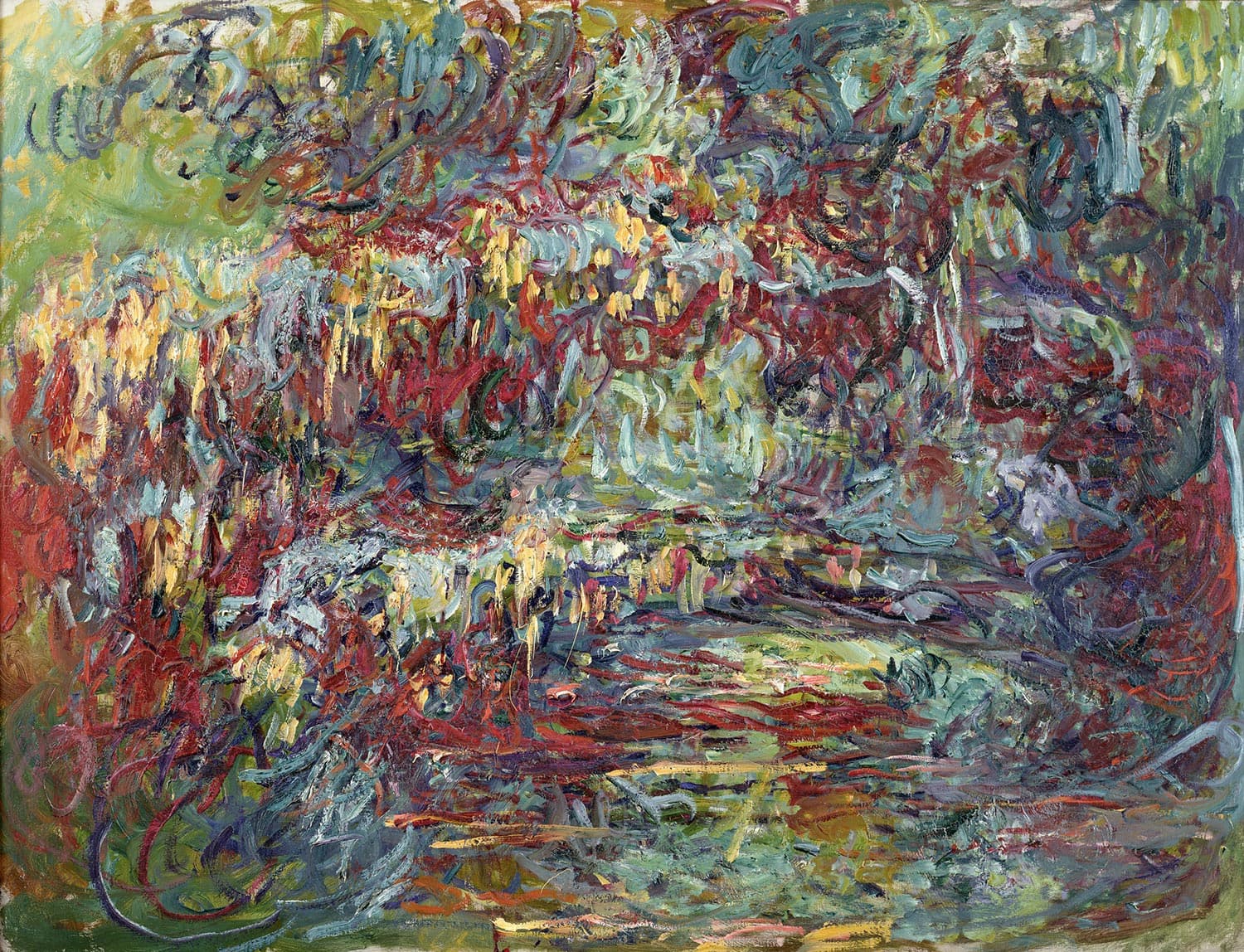
Le Pont japonais
Claude Monet · 1918–24
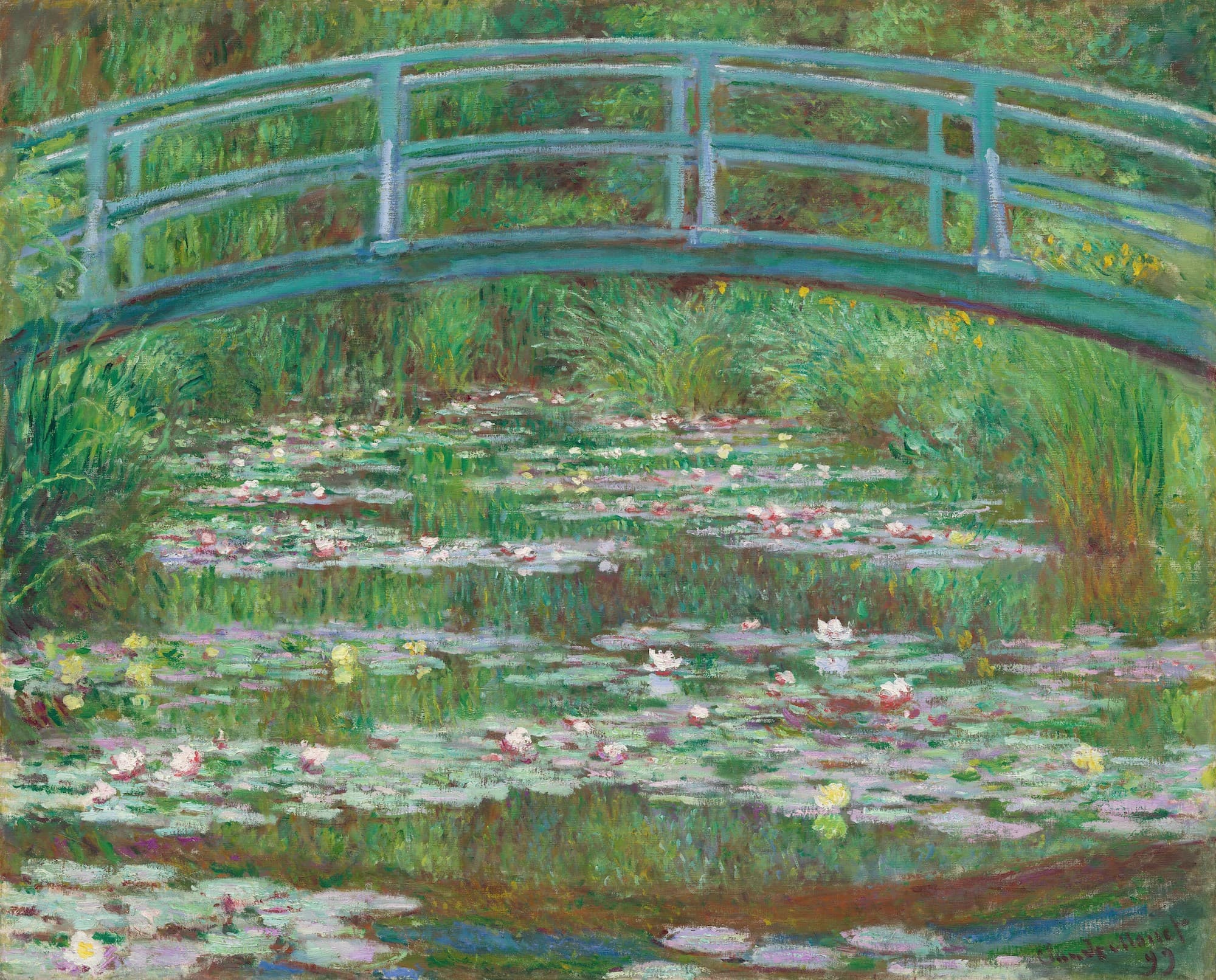
The Japanese Footbridge
Claude Monet · 1899
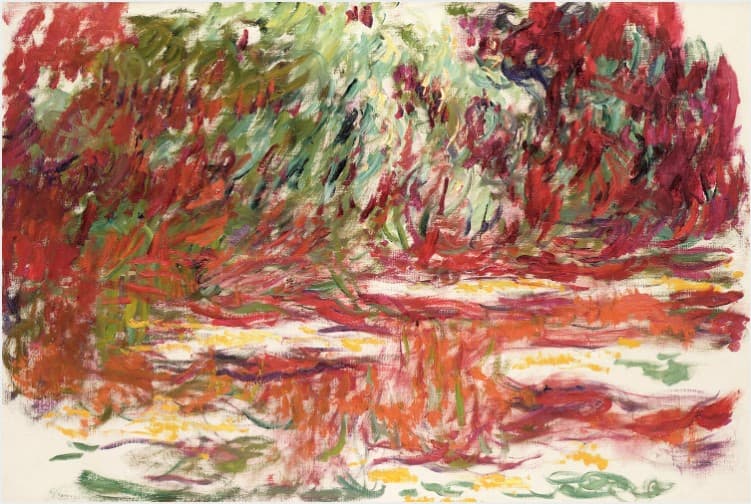
Water-Lily Pond (Bassin aux nymphéas, 1918–19)
Claude Monet · 1918–19
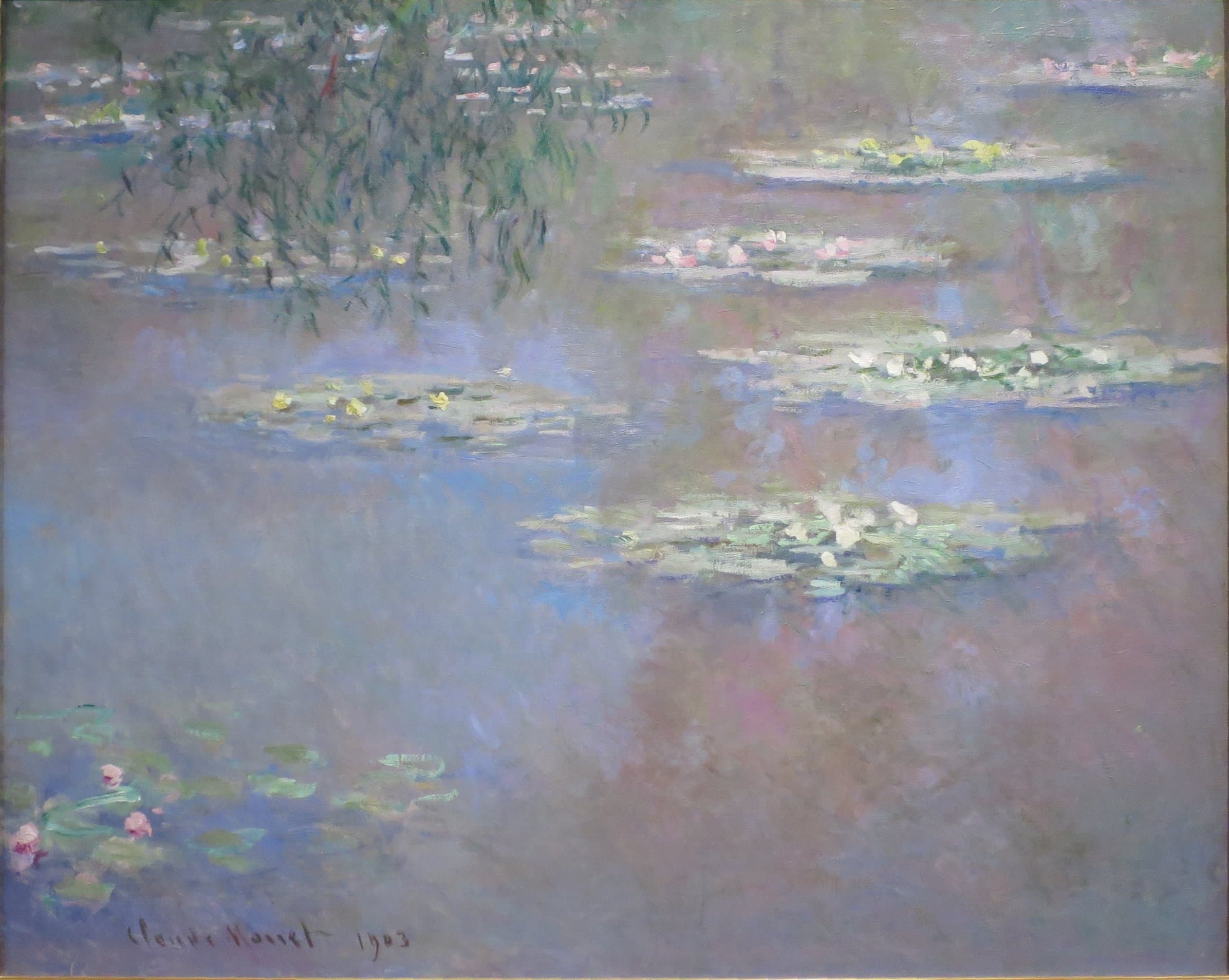
Waterlilies (1903, Dayton Art Institute)
Claude Monet · 1903
Waterlilies (c. 1914–15, Portland Art Museum)
Claude Monet · c. 1914–15
The Japanese Bridge
Claude Monet · 1918