Image: Art Institute of Chicago (artic.edu/artworks/14624) · Public domain · via Wikimedia Commons
Stacks of Wheat (End of Day, Autumn)
Claude Monet, 1890–91
Stacks of Wheat (End of Day, Autumn) is a painting by Claude Monet of 1890–91 showing two wheat stacks in a field at Giverny in the pink light of an autumn evening. It is in the Art Institute of Chicago.
- Artist
- Claude Monet
- Date
- 1890–91
- Medium
- Oil on canvas
- Dimensions
- 65.8 × 101 cm
- Collection
- Art Institute of Chicago, Chicago, United States
- Movement
- Impressionism
- Catalogue
- Wildenstein 1270
- Nature & Landscape
Stacks of Wheat (End of Day, Autumn) is an oil painting by Claude Monet, made in 1890–91 and signed and dated "Claude Monet 91" at lower left. It shows two stacks of harvested wheat in the field beside his house at Giverny as the sun goes down on an autumn day. The canvas, 65.8 by 101 centimeters, belongs to the Art Institute of Chicago (accession 1933.444), which holds the largest group of Monet's stacks anywhere. Wildenstein's catalogue lists it as number 1270, Deux meules, déclin du jour, automne.
What you're looking at
Two stacks stand in an open field. The larger one, at right of center, is a broad cone with a rounded cap; the smaller, at far left, sits lower and further back, so that the pair reads as near and far. Both are painted in the same unexpected color: not straw-yellow but a dusky coral, warmed to orange where the last light catches their flanks and cooled to rose in their shadowed bases.
Behind them a band of trees and roofs runs across the middle of the picture. A few red-tiled houses peep out at the center, and a long blue-violet ridge of hills closes the view. Above, the sky is the most worked passage on the canvas. It grades from a cool, chalky green at upper left to a band of apricot and pink along the horizon at right, where the sun has just dropped. A small patch of acid green at the right edge, painted over the pink, catches the eye on a second look.
The field itself is a mesh of lilac, green and buff strokes. There are no hard shadows anywhere. At this hour the light comes almost level and from far off, so everything is bathed rather than modeled.
End of day, autumn: what makes this version distinct
The Art Institute's own reading of the series points out a structural difference between the seasons. In nearly all the autumn views, the tops of the stacks break the horizon and push up into the sky; in most of the winter views the stacks sit lower in the field, wrapped in bands of hill and ground. This canvas is a clear example of the autumn type: the peak of the large stack rises well above the ridge into the glowing band of sky, so the stack and the sunset become a single shape of warm color.
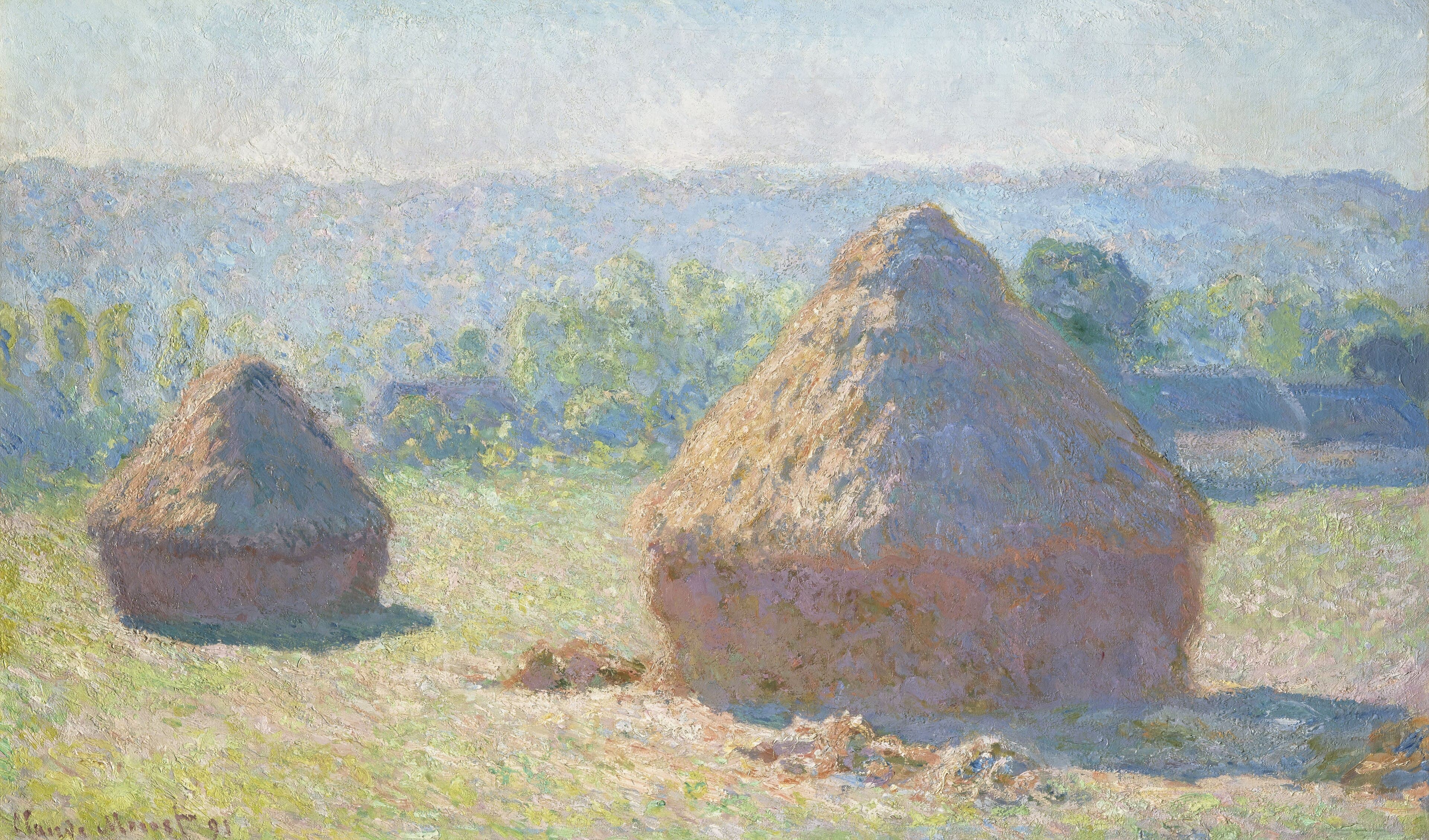
It also differs from Chicago's other autumn picture of the same pair, Stacks of Wheat (End of Summer), which is a daytime view with long blue shadows and a pale yellow sky. Here the shadows have gone and the whole canvas has been pushed toward pink. Compared with the high-noon brightness of Grainstacks, in Bright Sunlight, the same two stacks seem almost to glow from inside.
How it was painted
Monet began the stacks in late summer 1890 and worked on them into the winter, often keeping several canvases going at once and switching from one to the next as the light changed. He wrote to the critic Gustave Geffroy in October 1890 that he was chasing "instantaneity," and that the effects he wanted came and went too quickly. Back in the studio he reworked the pictures, adjusting the color across a whole canvas so that each one holds together as a single harmony.
The surface here shows that process. The paint is dense and crusty, built up in many dry, small strokes laid over each other, especially in the sky and the stacks. Underlying colors show through the gaps, which is what gives the pinks their vibration.
The Stacks of Wheat series
In May 1891 Monet hung fifteen of these canvases together in one room at the Galerie Durand-Ruel in Paris, and the exhibition was a critical and commercial success. The idea of showing many versions of one humble motif became the model for his later series of Poplars and Rouen Cathedral. Our Haystacks series hub gathers the canvases; for a winter sunset of the same field, see Stacks of Wheat (Sunset, Snow Effect), also in Chicago.
The museum's provenance research shows how fast the pictures sold. This one went from Monet to Durand-Ruel in July 1891 and on to the Chicago collector Potter Palmer, changed hands several times in the dealer's books, and eventually entered the collection of Mrs. Lewis Larned Coburn, whose memorial bequest brought it to the Art Institute in 1933.
Where to see it
The painting hangs in the Art Institute of Chicago's Impressionist galleries (Gallery 243 at the time of writing), often near several other stacks. See Monet at the Art Institute of Chicago for the museum's full holdings, Giverny for the place, and Claude Monet for his career.
Questions & answers
Where is Monet's Stacks of Wheat (End of Day, Autumn)?
It is in the Art Institute of Chicago, accession number 1933.444, part of the Mr. and Mrs. Lewis Larned Coburn Memorial Collection. The museum owns more of Monet's stacks of wheat than any other, and this canvas usually hangs with them in the Impressionist galleries.
When and where did Monet paint it?
He painted it in 1890–91 in a field next to his house at Giverny, in Normandy, and signed it "Claude Monet 91." He started the stacks outdoors in late summer and autumn 1890, working on several canvases at once, and finished them in the studio.
Why are the haystacks pink in this painting?
Monet painted the color the light gave them, not the color of straw. At the end of an autumn day the sun is low and warm, so the stacks, field and sky take on coral, rose and apricot tones, and the shadows almost disappear.
How is this version different from Stacks of Wheat (End of Summer)?
Both show the same two stacks, but End of Summer is a daytime view with long blue shadows and a pale yellow sky. End of Day, Autumn is a sunset: the shadows have gone, the stacks glow coral, and the large stack's peak rises into a band of pink and apricot sky.
More by the artist
Claude Monet
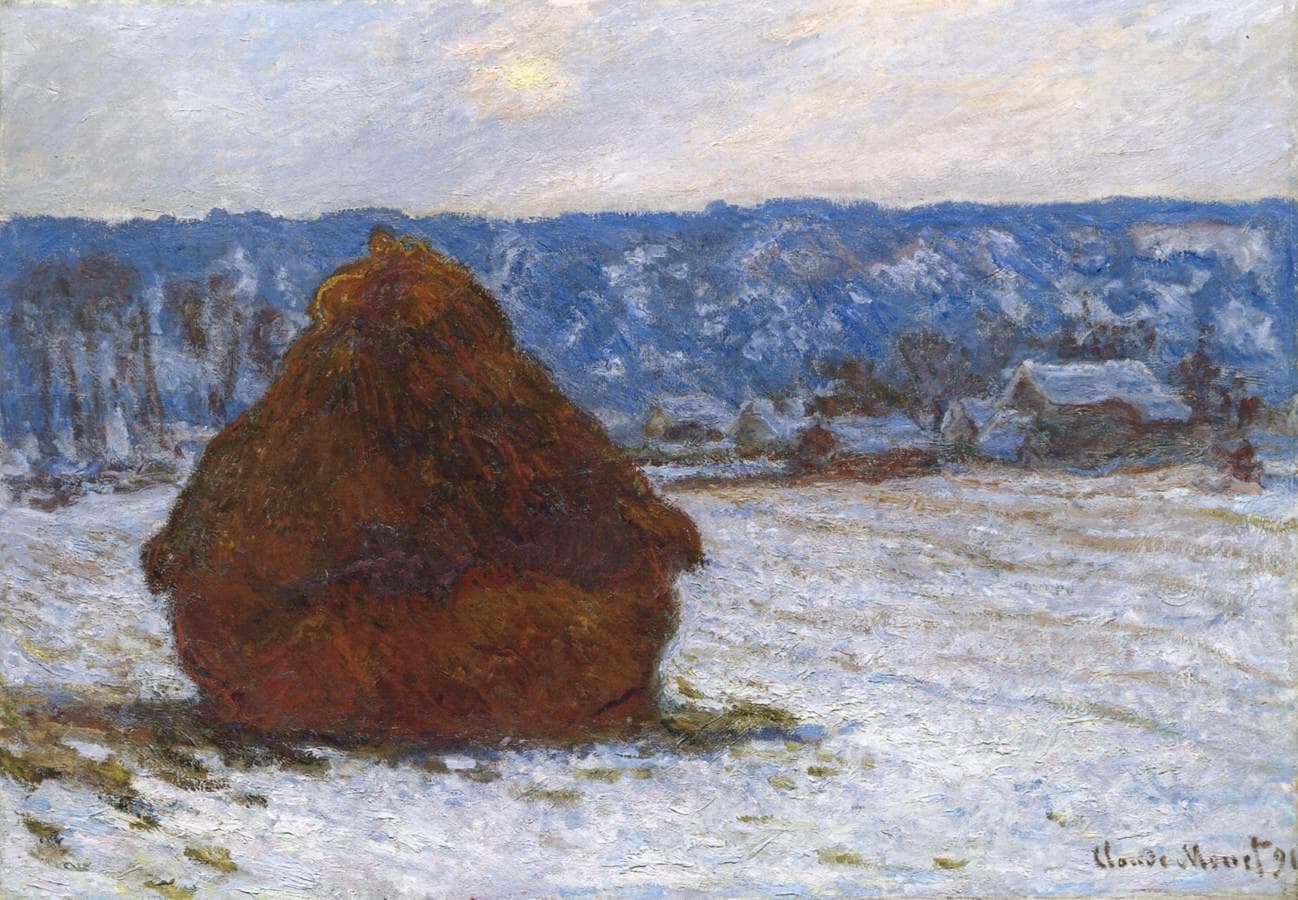
Stack of Wheat, Snow Effect, Overcast Day
Claude Monet · 1890–91
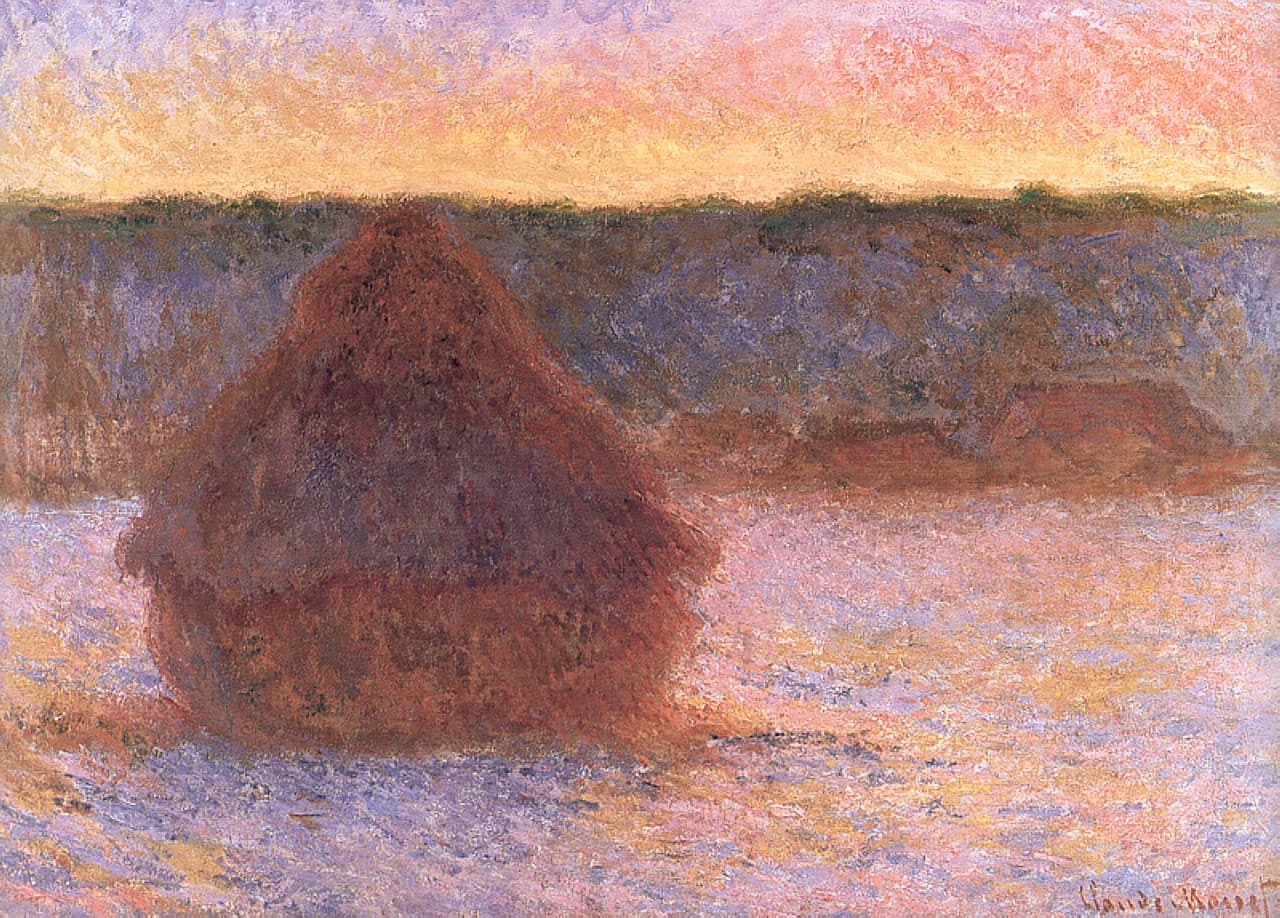
Haystacks at Sunset, Frosty Weather
Claude Monet · 1891
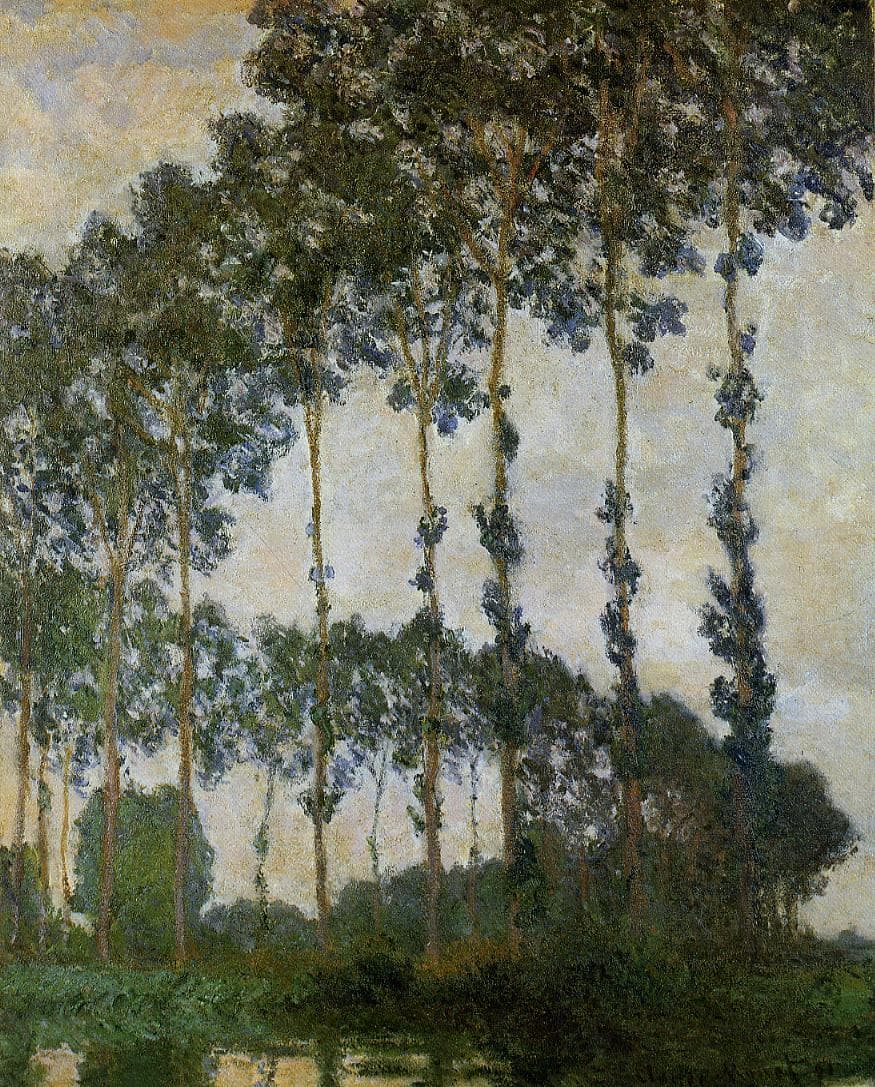
Poplars near Giverny, Overcast Weather
Claude Monet · 1891
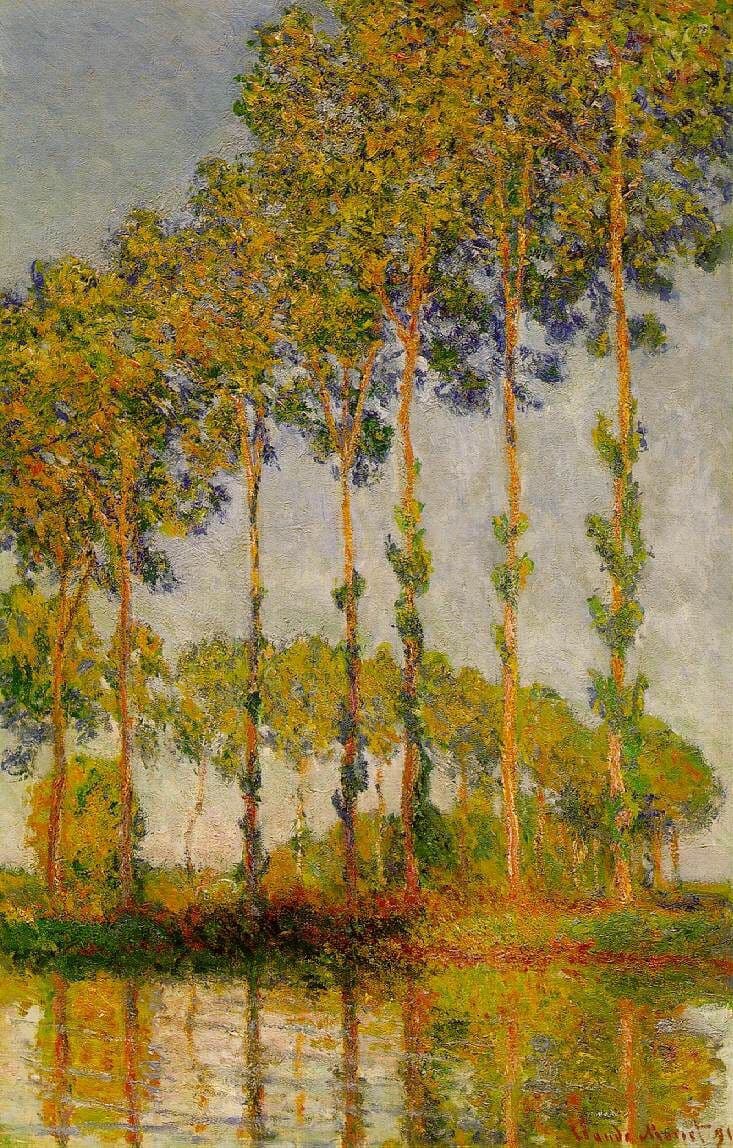
Row of Poplars in Autumn
Claude Monet · 1891
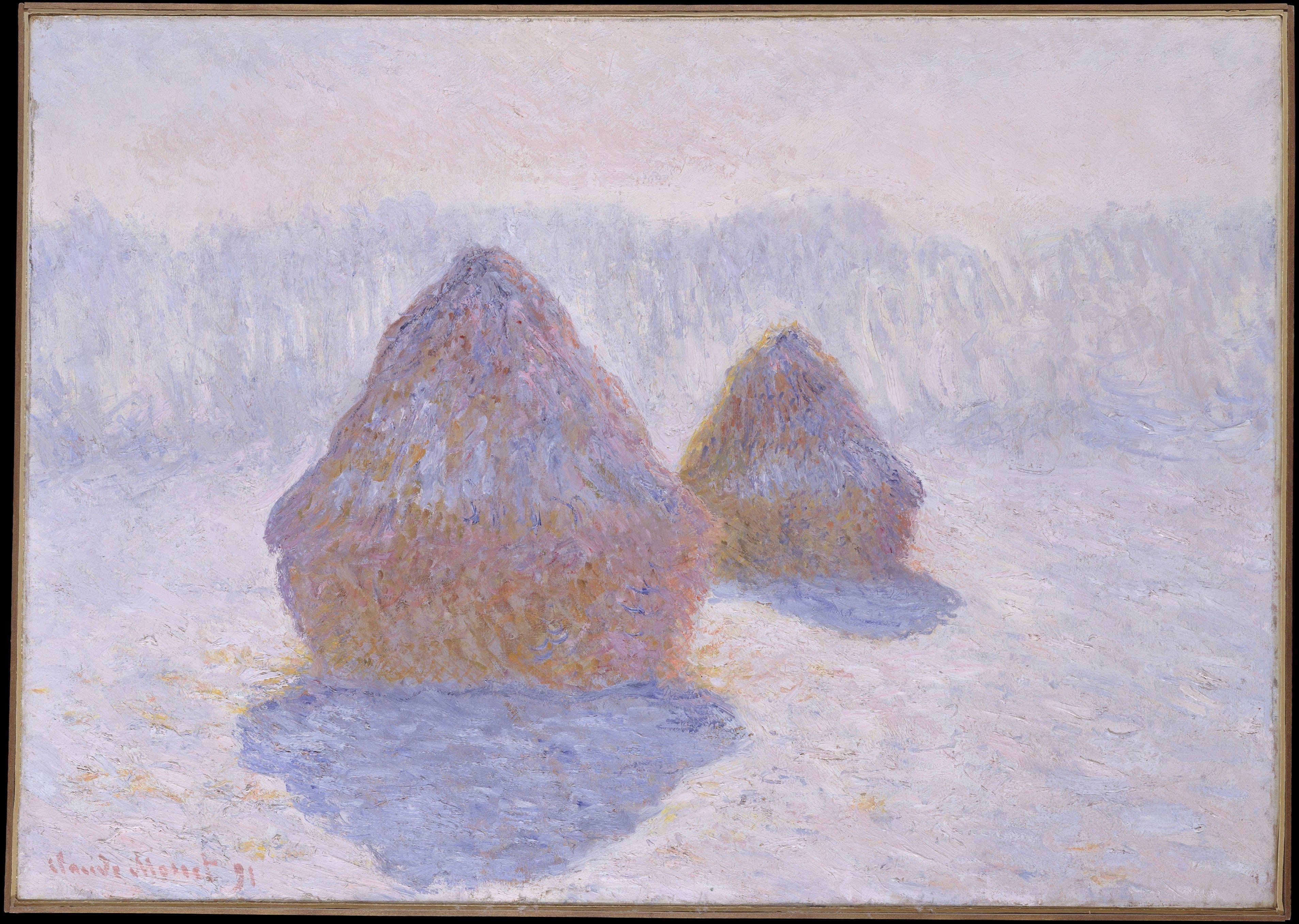
Haystacks (Effect of Snow and Sun)
Claude Monet · 1891
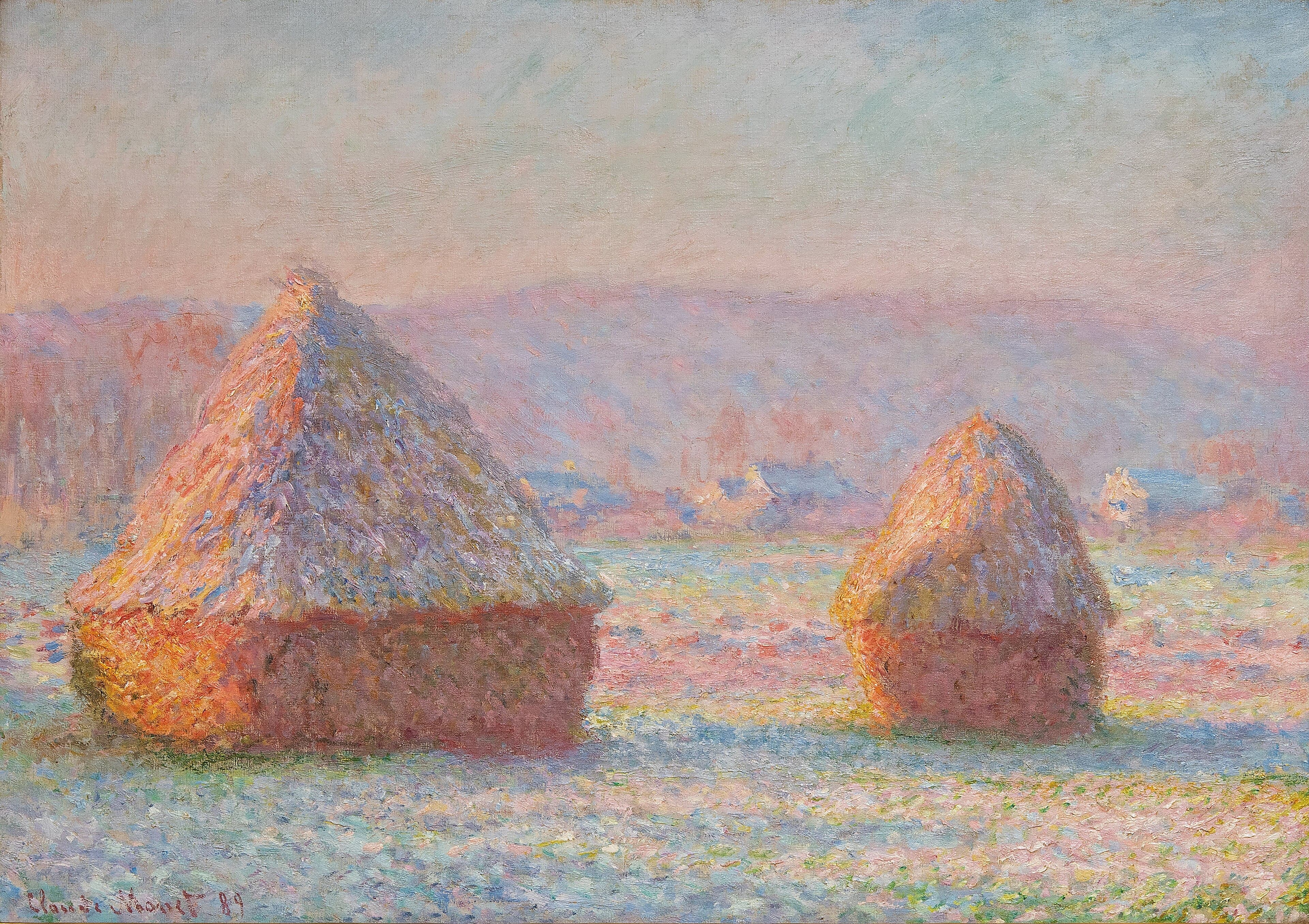
Grainstacks, White Frost Effect
Claude Monet · 1888–89

Boating on the River Epte
Claude Monet · 1890
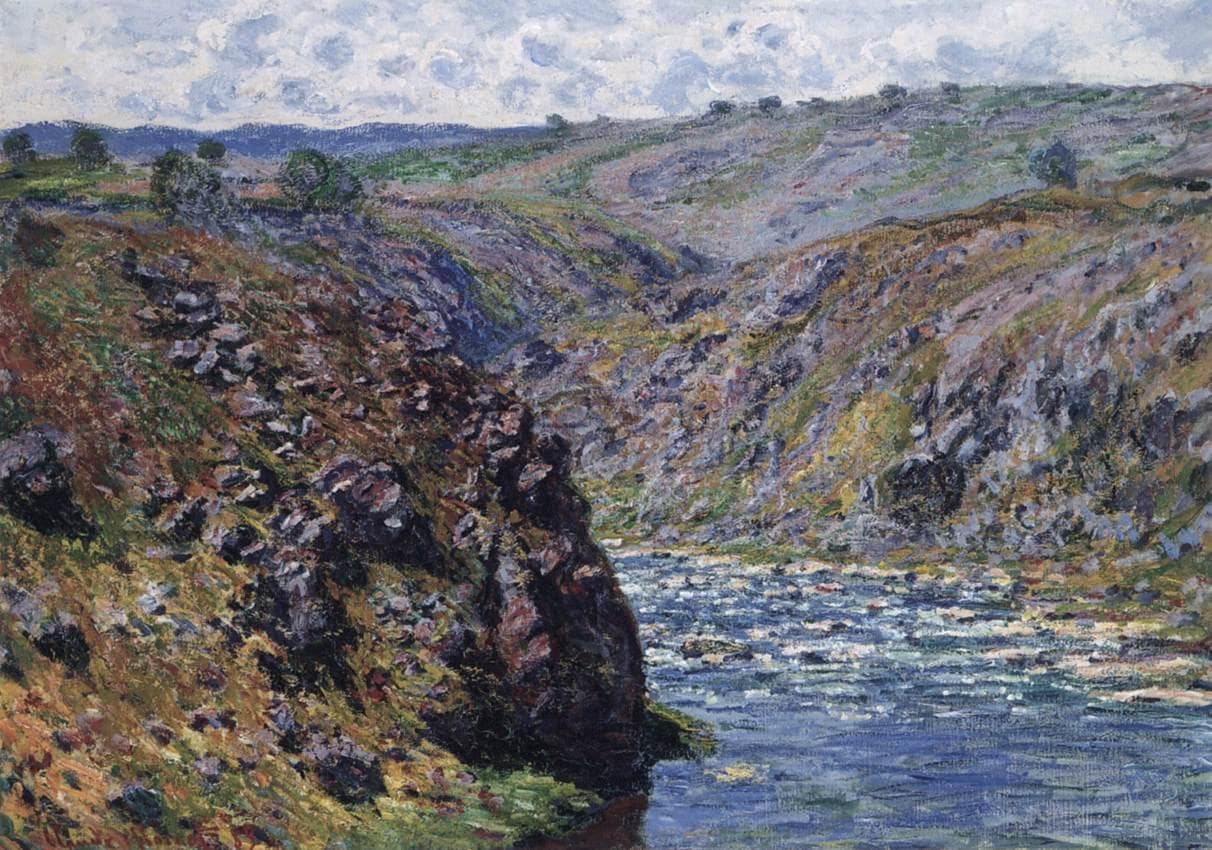
Valley of the Creuse (Sunlight Effect)
Claude Monet · 1889
Also painted in 1890
The same year
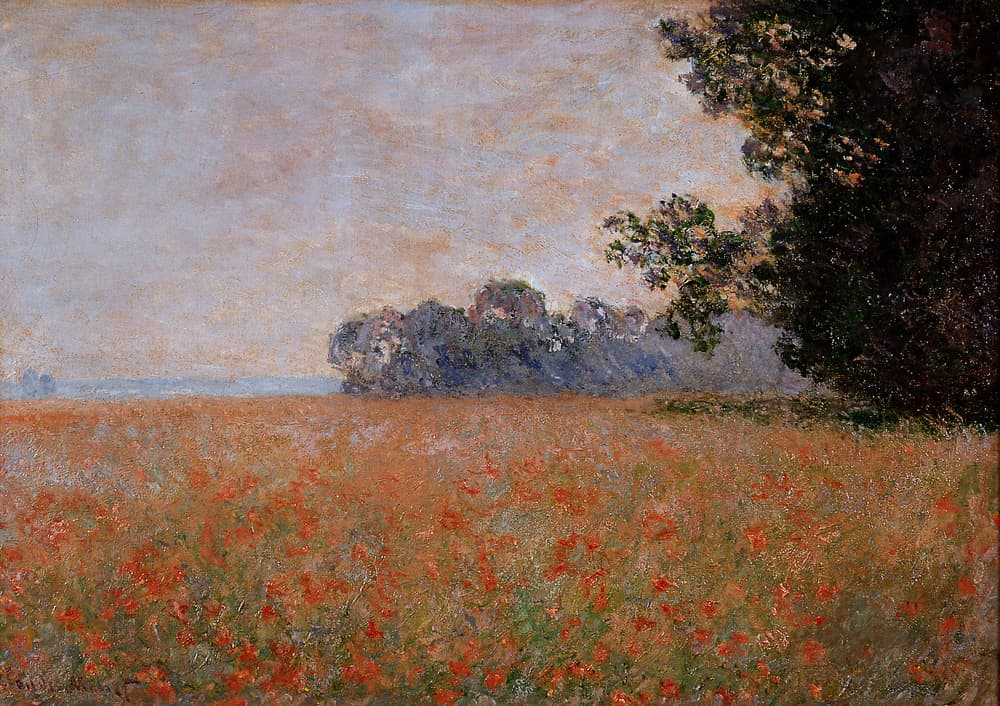
Oat Field with Poppies
Claude Monet · c. 1890
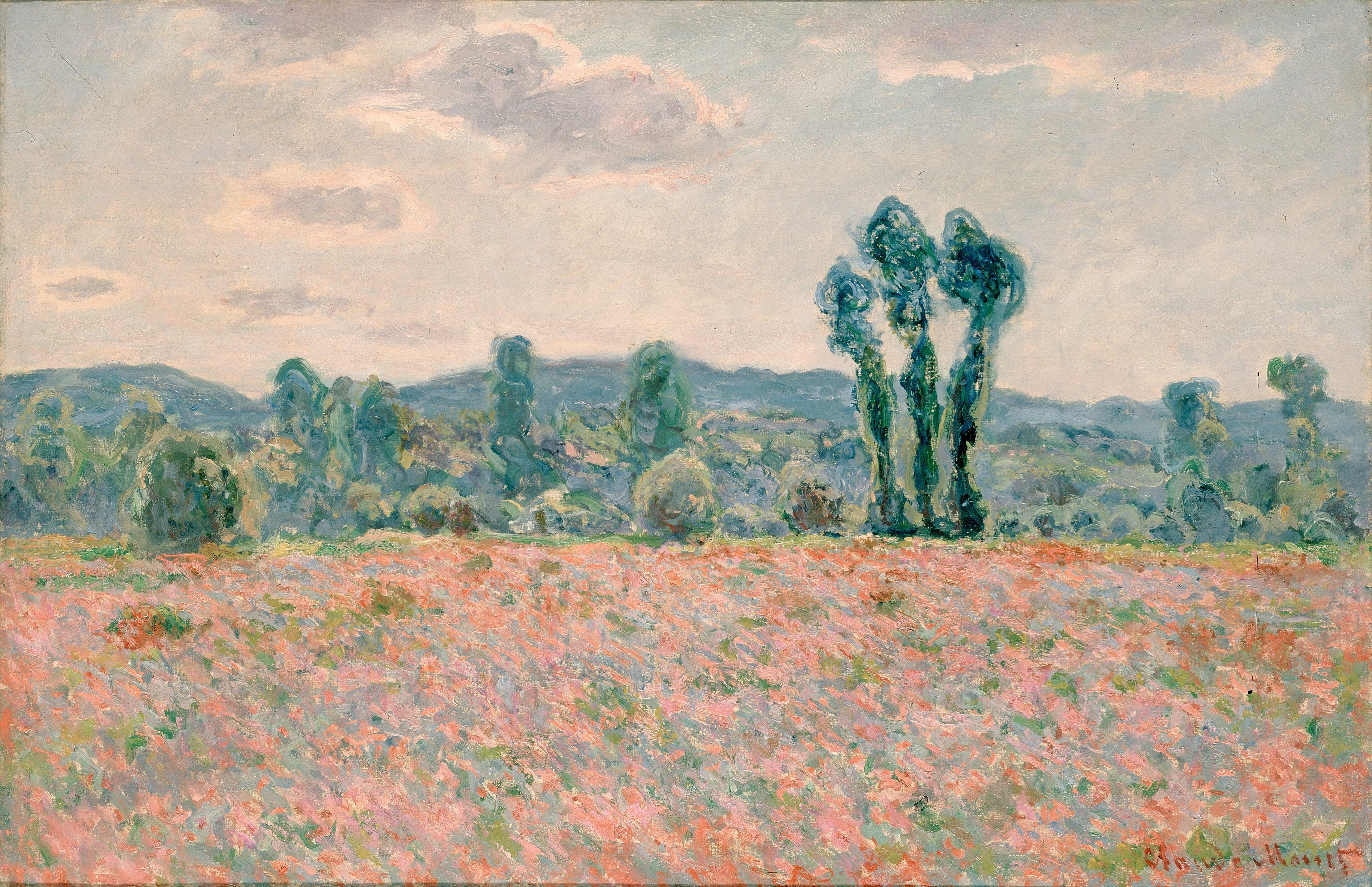
Poppy Field
Claude Monet · c. 1890
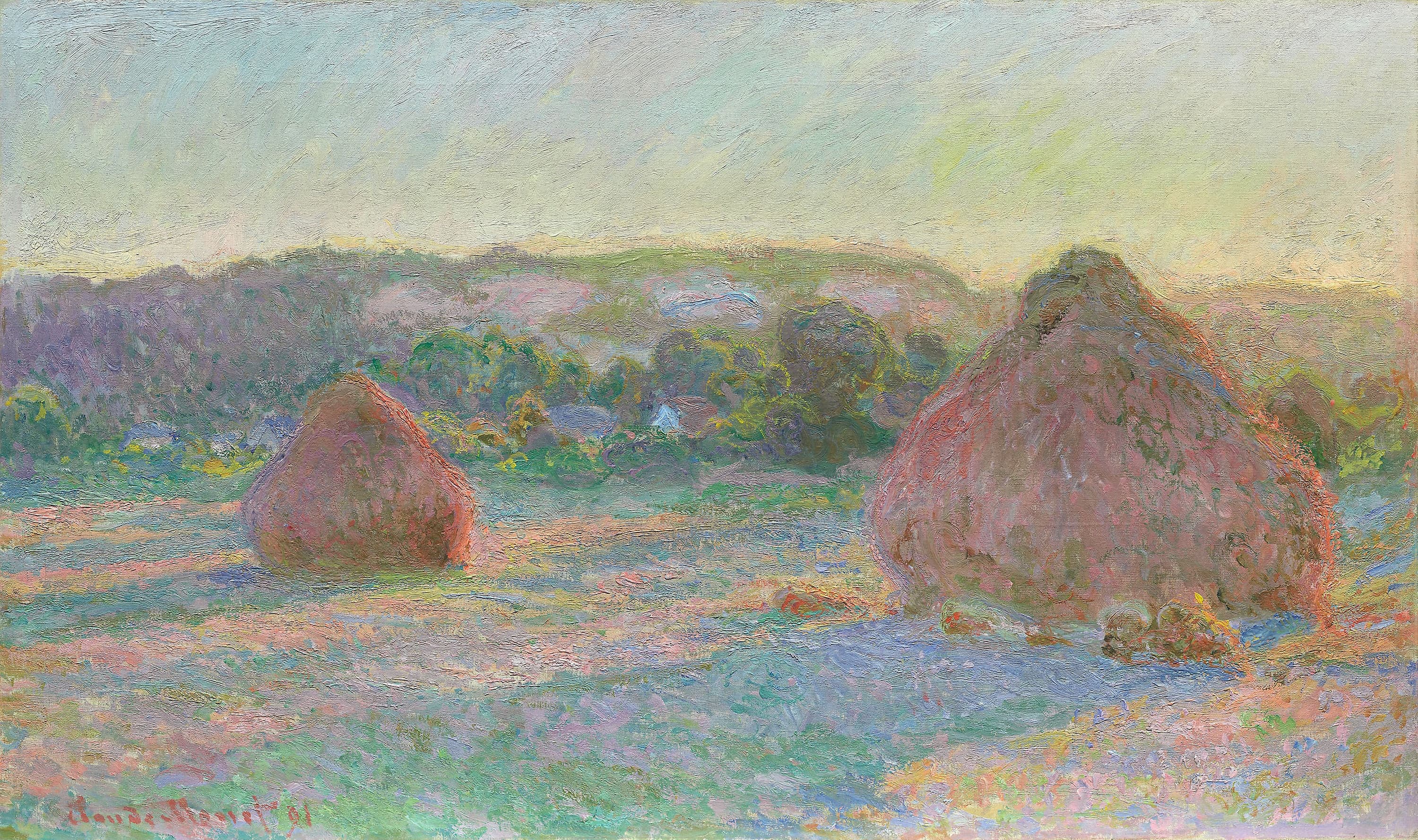
Stacks of Wheat (End of Summer)
Claude Monet · 1890–91
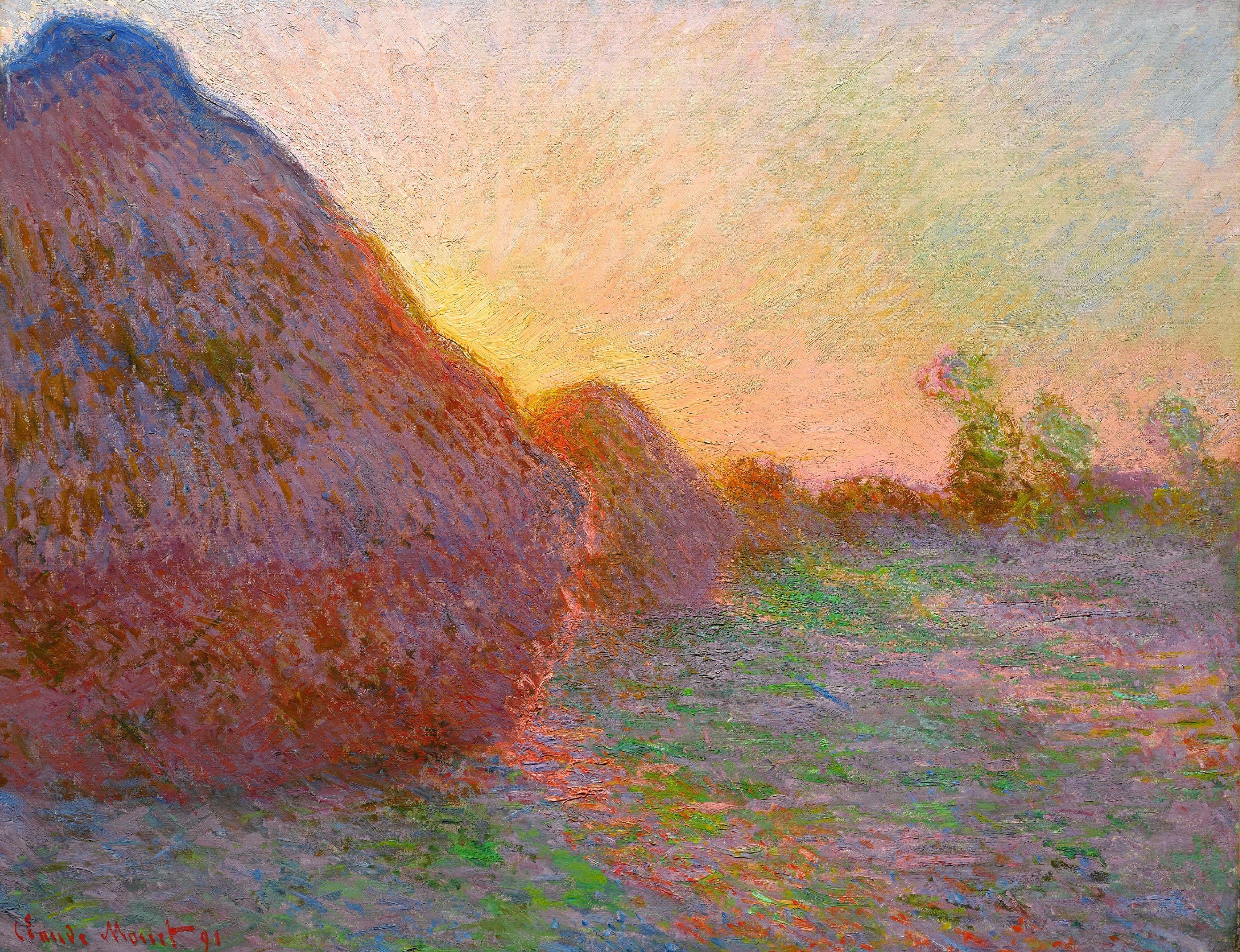
Meules (Grainstacks), 1890
Claude Monet · 1890
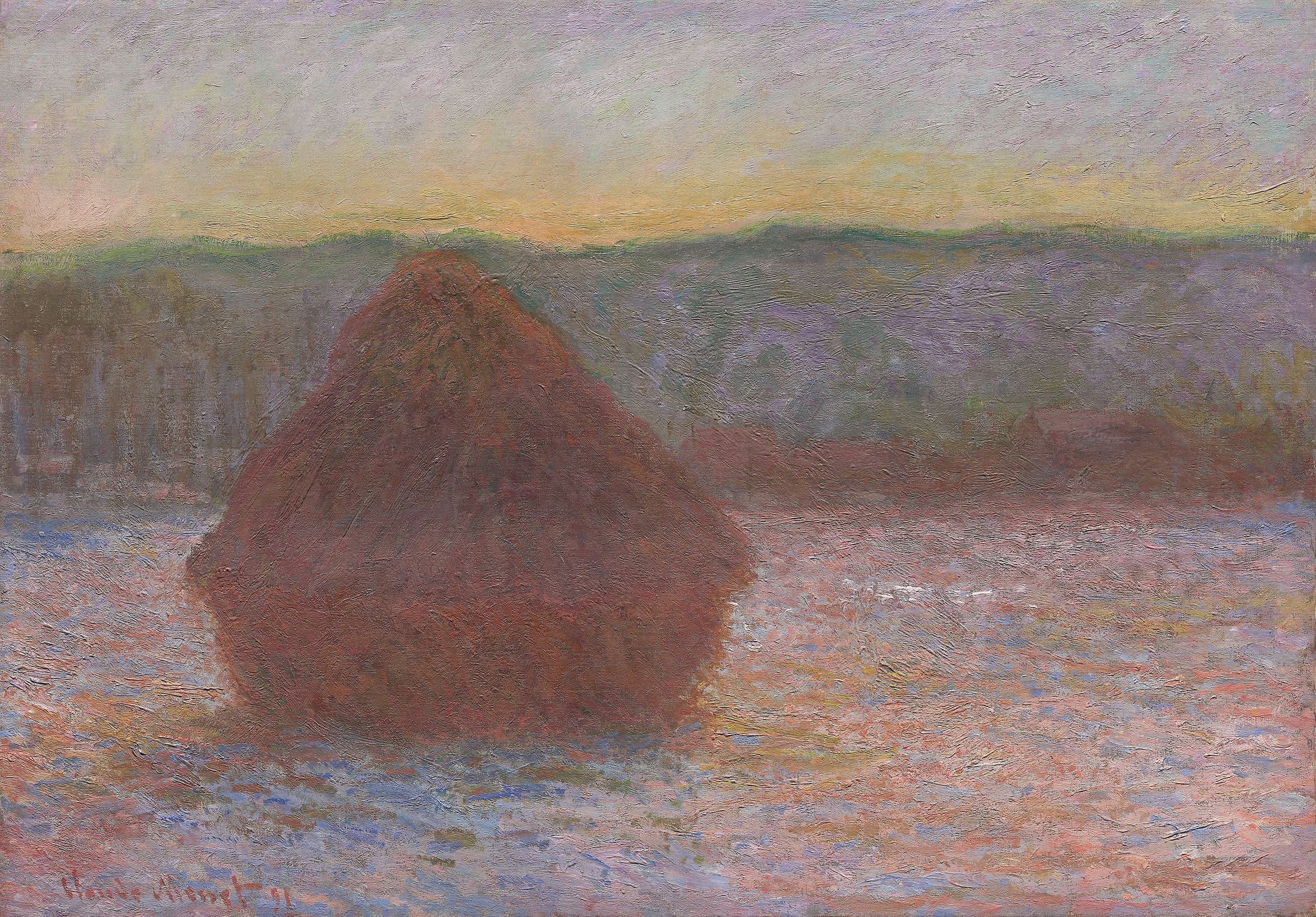
Stack of Wheat (Thaw, Sunset)
Claude Monet · 1890–91
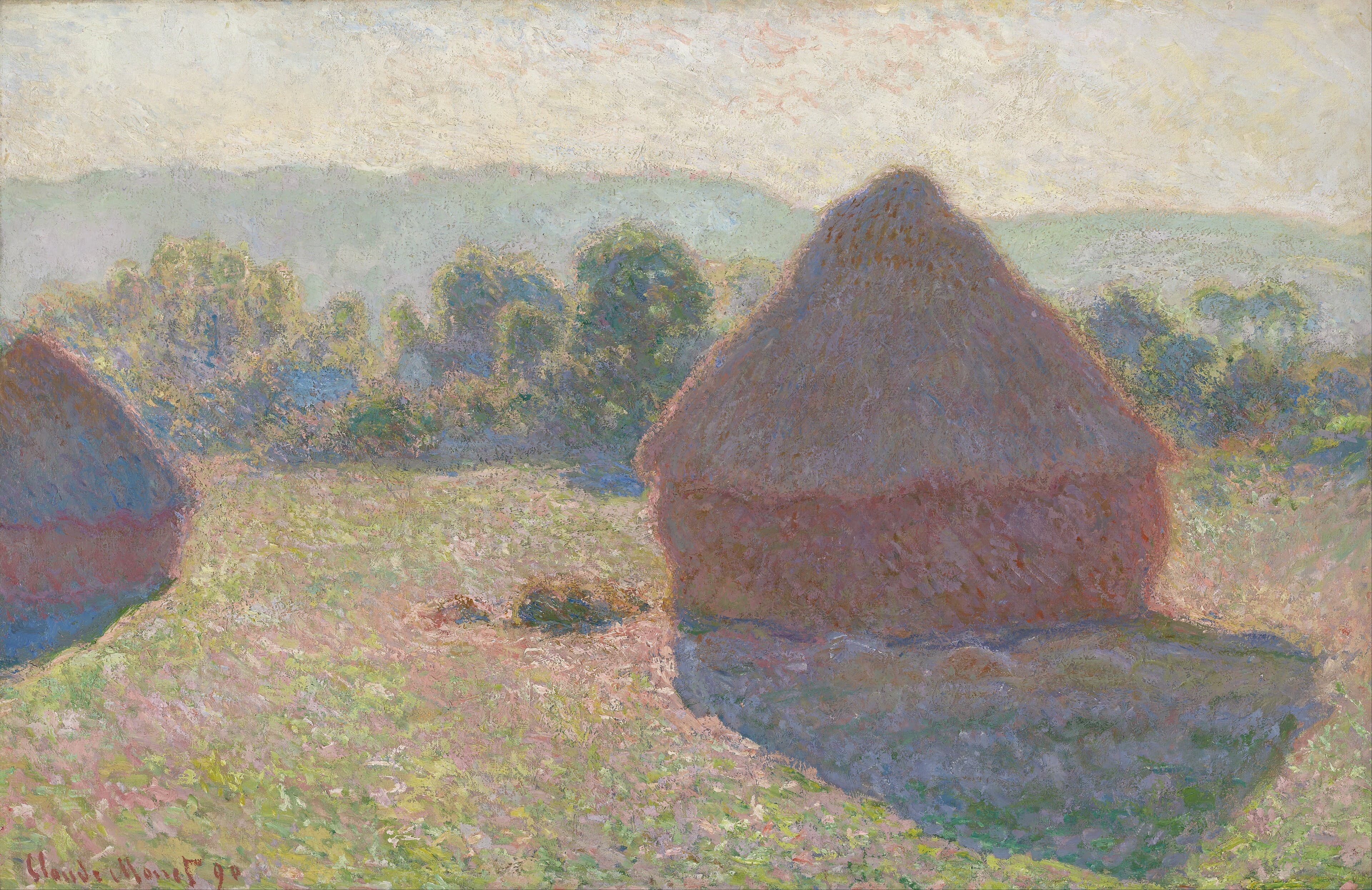
Haystacks, Midday
Claude Monet · 1890
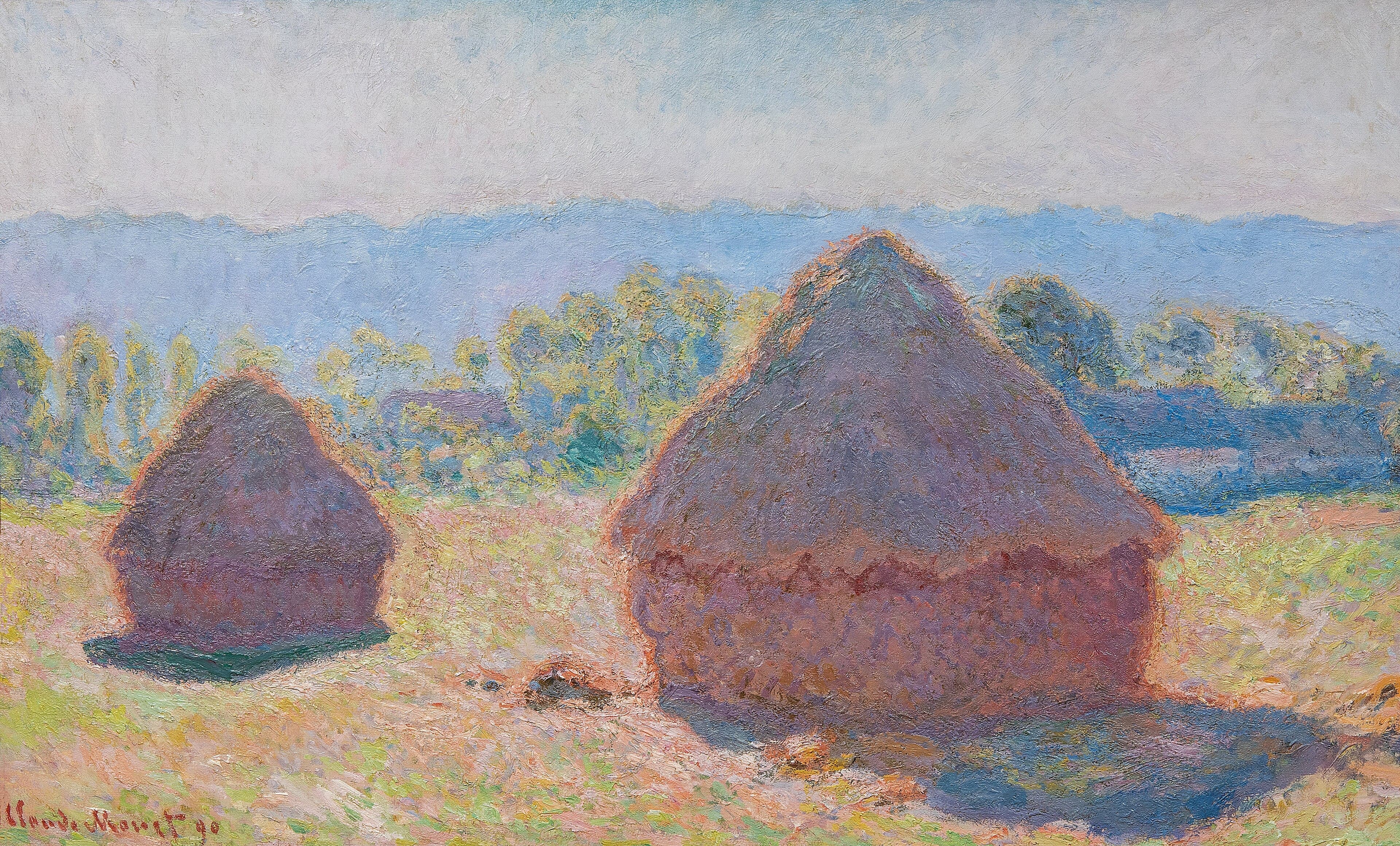
Grainstacks, in Bright Sunlight
Claude Monet · 1890
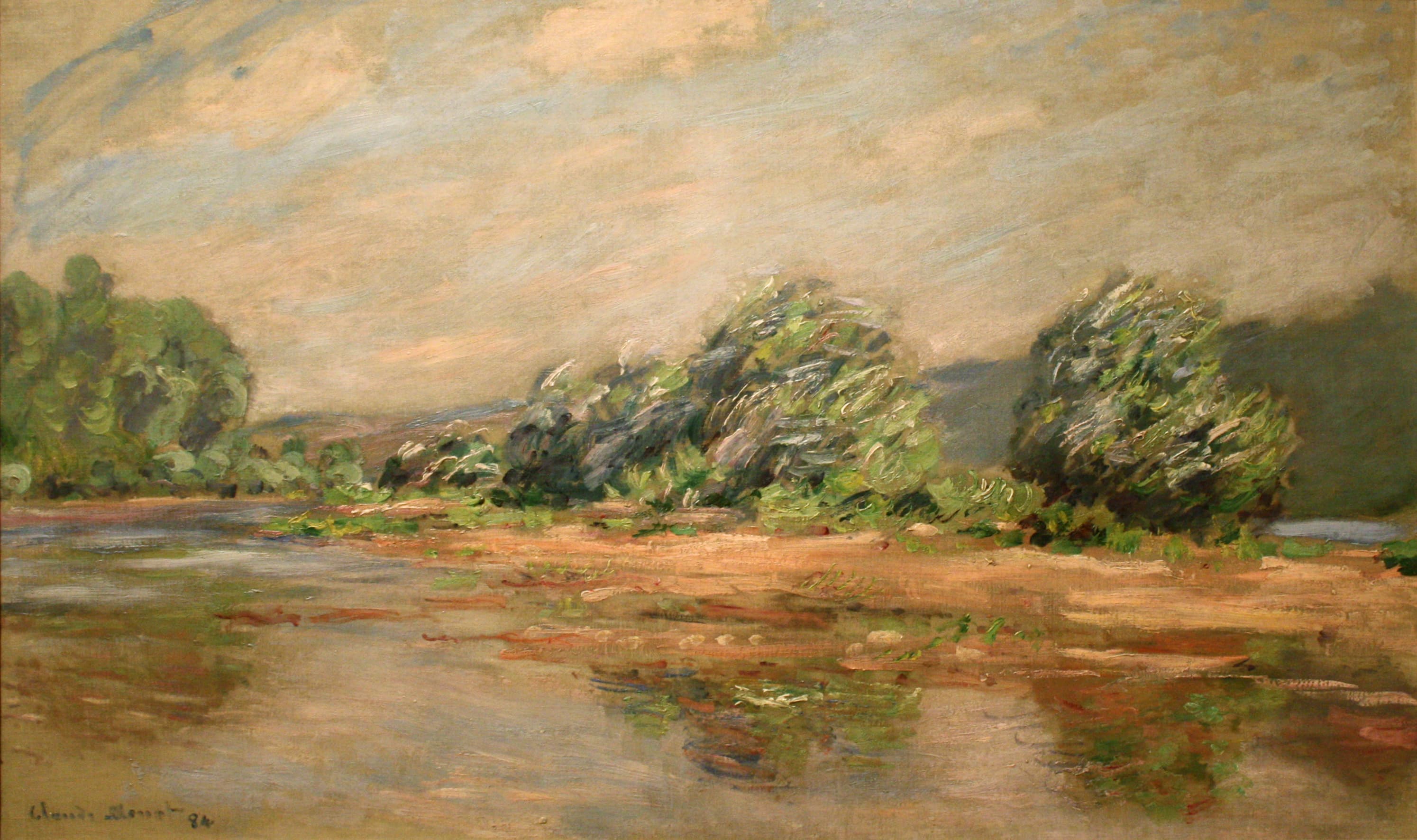
The Seine at Port-Villez (A Gust of Wind)
Claude Monet · c. 1883–90
Kindred works
You may also study
Stacks of Wheat (End of Summer)
Claude Monet · 1890–91
Grainstacks, in Bright Sunlight
Claude Monet · 1890
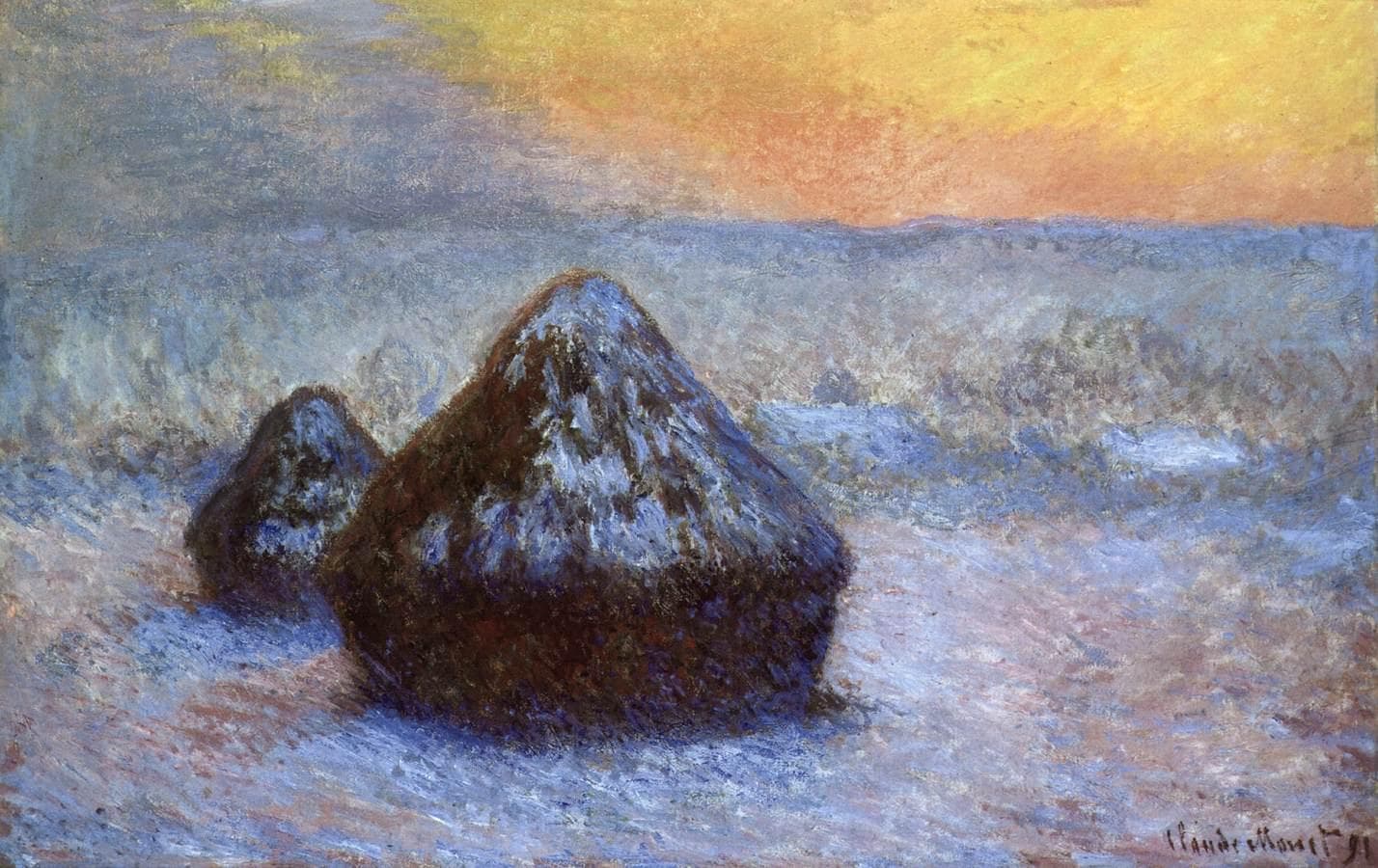
Stacks of Wheat, Sunset, Snow Effect
Claude Monet · 1890–91
Haystacks, End of Summer
Claude Monet · 1891
Bend in the Epte River near Giverny
Claude Monet · 1888
Haystacks at Chailly at Sunrise
Claude Monet · 1865
Morning on the Seine
Claude Monet · 1898
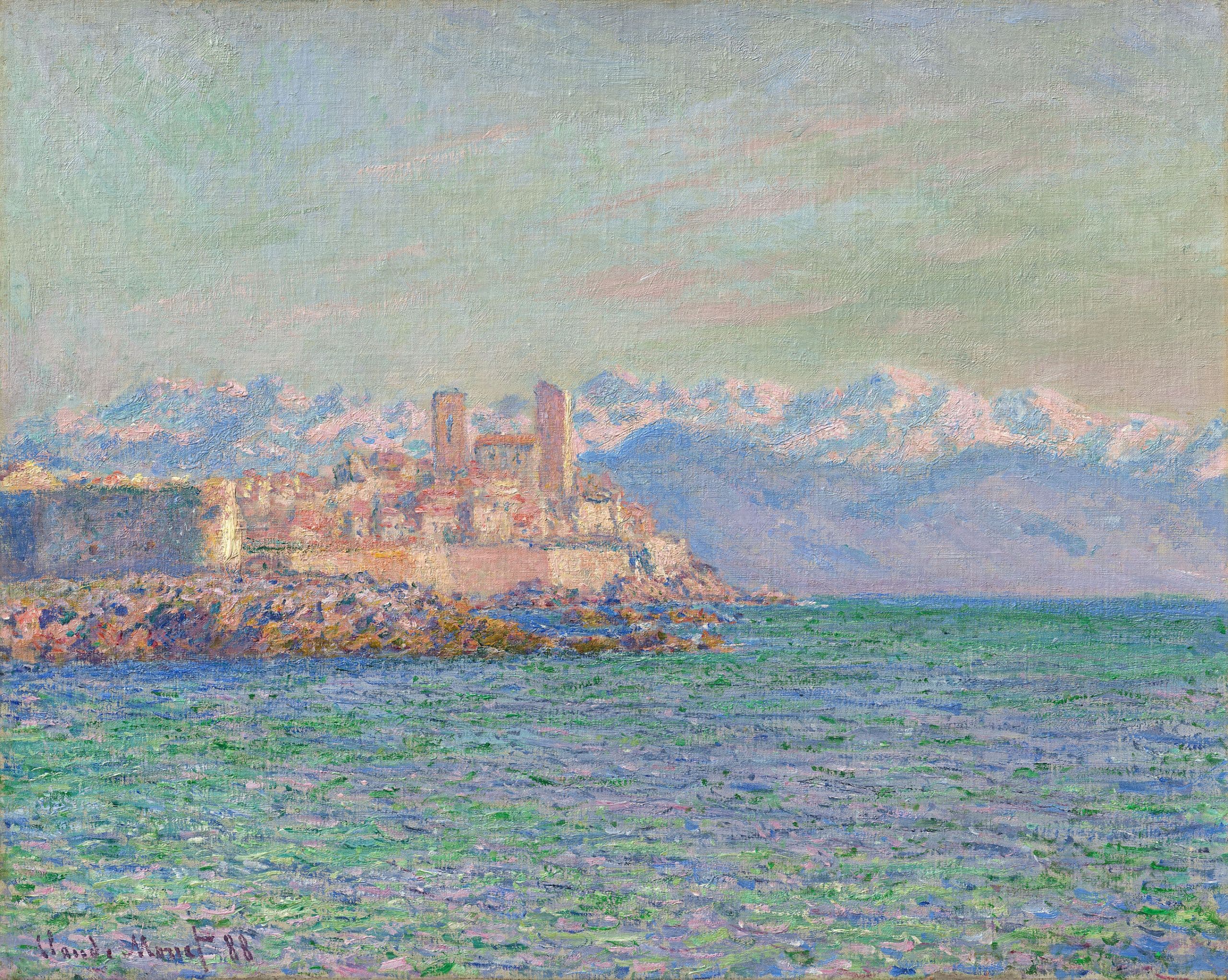
The Fort of Antibes
Claude Monet · 1888