Image: Museum Barberini, Potsdam (Hasso Plattner Collection) · Public domain · via Wikimedia Commons
The Fort of Antibes
Claude Monet, 1888
The Fort of Antibes is an 1888 painting by Claude Monet of the walled old town of Antibes on the French Riviera, glowing pink and cream across a shimmering sea, with the snow-capped Alps behind. Once in the MFA Boston, it is now in the Hasso Plattner Collection, Potsdam.
- Artist
- Claude Monet
- Date
- 1888
- Medium
- Oil on canvas
- Dimensions
- 65 × 81 cm
- Collection
- Museum Barberini (Hasso Plattner Collection), Potsdam, Germany
- Movement
- Impressionism
- Catalogue
- Wildenstein 1161a
- Water & Sea
- Nature & Landscape
- Architecture & Ruins
Claude Monet's The Fort of Antibes (Antibes, le fort) was painted in 1888, during the four months he spent on the Côte d'Azur that year. It shows the ramparts, towers and rooftops of old Antibes floating between a sheet of glittering sea and a range of snowy Alps. The canvas, 65 by 81 centimeters (Wildenstein 1161a), is signed and dated "Claude Monet 88" at lower left. It belongs to the Hasso Plattner Collection at the Museum Barberini in Potsdam.
What you are looking at
The composition is almost entirely horizontal. The lower half of the canvas is sea, a vibrating field of short strokes in turquoise, jade, ultramarine and lilac, with no boats and no waves to speak of, just light moving on water. Across the middle runs a low spit of rocks in rust, ocher and pink, and on it stands the town: a long rampart wall at left, then a stacked mass of houses in cream, apricot and rose, crowned by two square towers.
Behind Antibes, the snow-covered Alps stretch across the whole width of the picture, painted in pinks, whites and pale blues, with a darker blue foothill sloping down at right to meet the sea. Above them the sky takes up nearly half the canvas. It is not a hard Mediterranean blue but a hazy, milky green-gray streaked with pink, the color of a bright day seen through heat and salt air.
The Barberini identifies the landmarks: the Bastion Saint-André on the left, the Château Grimaldi and the tower of the cathedral of Notre-Dame-de-la-Platea. Monet painted them from a distance, from the Plage du Ponteil across the bay, which let him give the whole foreground to the sea.
Where and when
Monet spent January to May 1888 at Antibes, staying at the Château de la Pinède, a lodging for artists recommended by Guy de Maupassant. He produced some thirty-nine compositions there. It was a deliberate return to the south four years after Bordighera, and this time he arrived with a plan: to find a few strong motifs and paint them repeatedly in different lights. The old town seen across the water was one of them. He fought with the mistral, which threatened to blow his easel over, and with a light he found exceptionally hard to render.
The Antibes canvases were shown at the Boussod, Valadon et Cie gallery in Paris in June 1888, where they were managed by Theo van Gogh, and they sold well.
How this version differs
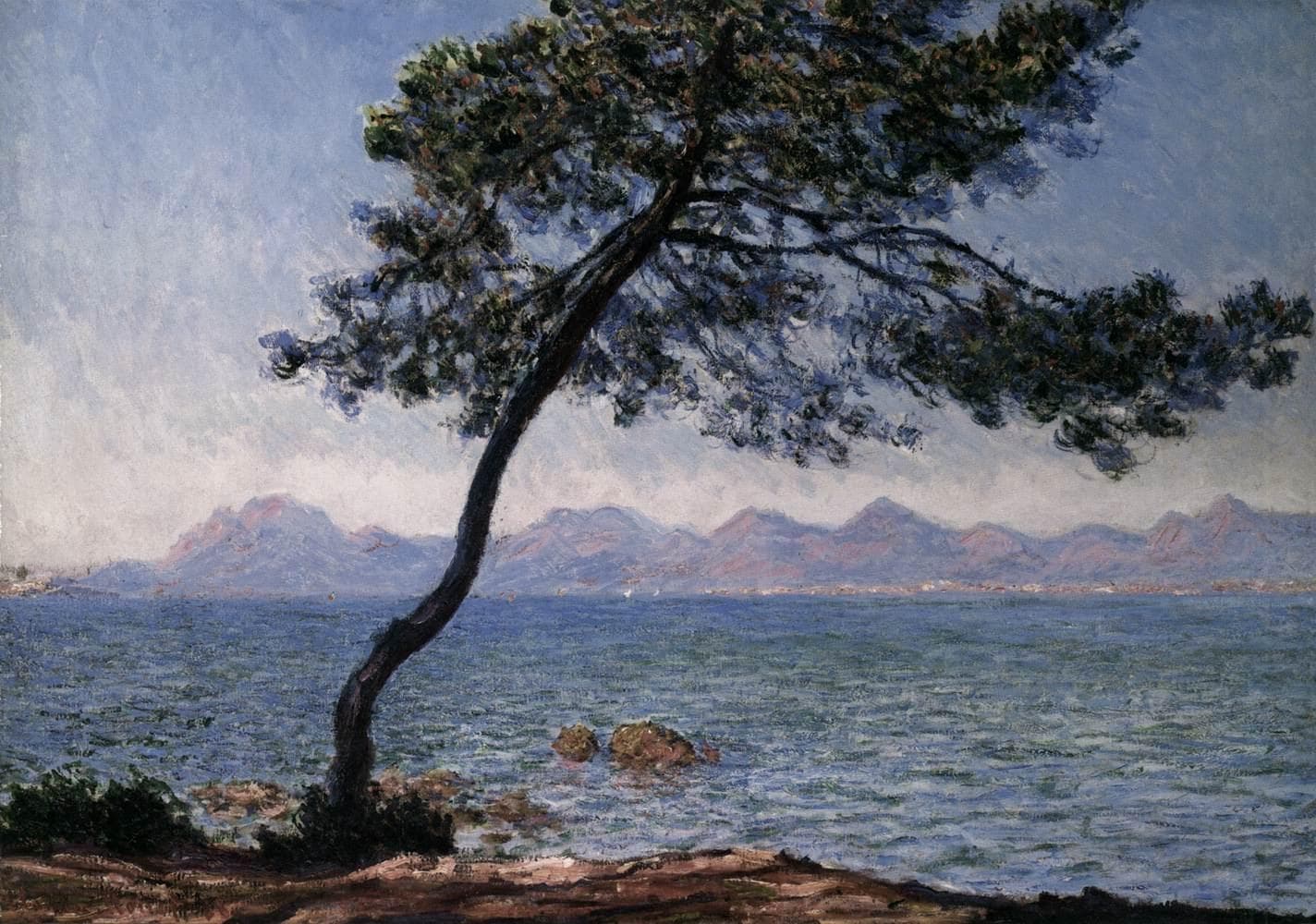
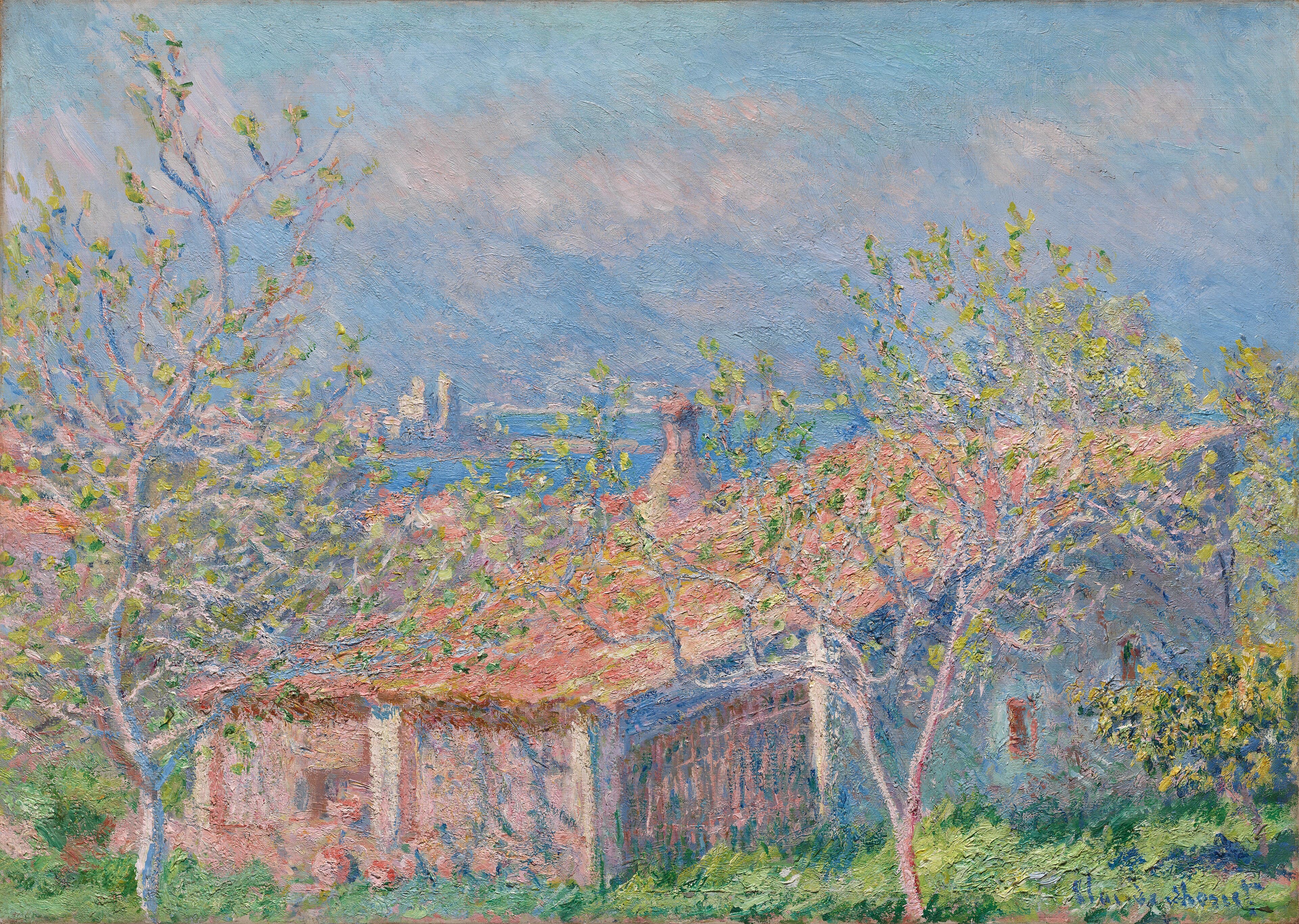
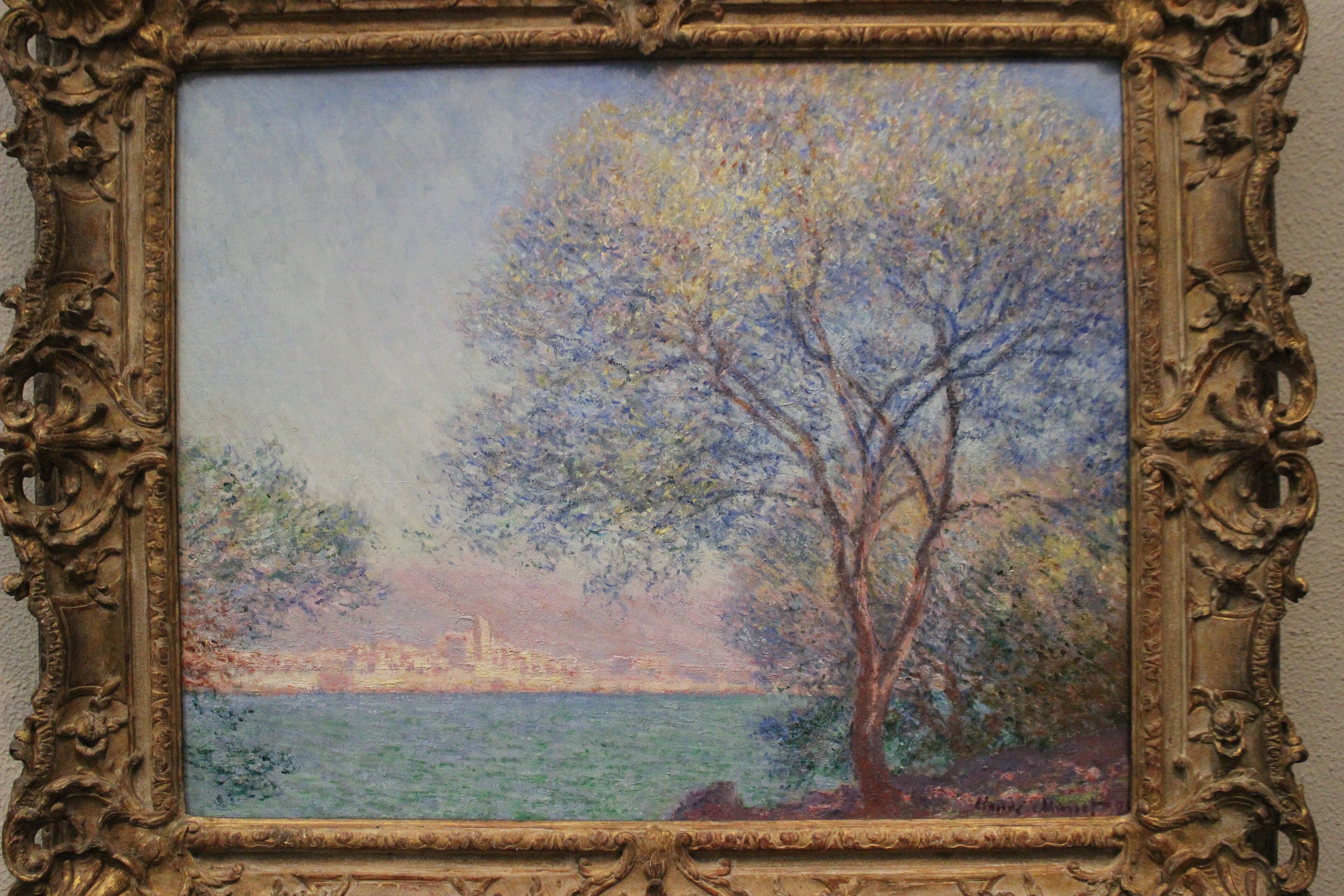
Monet painted Antibes from several angles that spring. In Morning at Antibes in Philadelphia the town is a pale strip far across the water, overshadowed by a big feathery tree; in Gardener's House at Antibes in Cleveland its towers appear far off beyond a cottage roof; and in the Courtauld's Antibes a single leaning pine stands on the shore against the sea and pink mountains. The Fort of Antibes is the frontal, panoramic version: town, sea and mountains in three clean bands, with nothing in between. A closely related view is in the Museum of Fine Arts, Boston.
The Barberini describes how Monet built up blue, red, green and orange from a white base to capture the intensity of the southern light. Here that technique produces something almost decorative: the town silhouette and the Alpine range in pink, ocher and white form a frieze against the cool sea and sky.
How it was painted
The sea is painted in small, horizontal, closely set strokes of pure color, which mix in the eye into a shimmering surface. The town is built of slightly larger, blockier touches that give walls and roofs their solidity. The mountains are softer, almost dissolved into the sky. The overall key is high and pale, with very few dark values: even the shadows are lilac and blue.
For all of Monet's southern pictures, from Bordighera in 1884 to Antibes in 1888, see Monet on the Mediterranean.
Ownership and where to see it
Durand-Ruel bought the painting from Monet in June 1890 and sold it that September to the Boston collector Peter Chardon Brooks, through the painter and agent Joseph Foxcroft Cole. It stayed in his family for nearly ninety years and was given to the Museum of Fine Arts, Boston, in 1978. The museum sold it at Sotheby's New York in November 2011, and it later entered the Plattner collection. It is now shown at the Museum Barberini in Potsdam. See Where to See Monet's Paintings and Claude Monet.
Questions & answers
Where is Monet's The Fort of Antibes?
It is in the Hasso Plattner Collection at the Museum Barberini in Potsdam, Germany. From 1978 to 2011 it belonged to the Museum of Fine Arts, Boston, which sold it at Sotheby's New York in November 2011.
When and where was The Fort of Antibes painted?
Monet painted it in 1888 at Antibes on the French Riviera, where he stayed from January to May. He worked from the Plage du Ponteil, looking across the bay to the old town, and signed and dated the canvas 1888 at lower left.
What does The Fort of Antibes show?
It shows the old town of Antibes, with the Bastion Saint-André, the Château Grimaldi and the cathedral tower, glowing pink and cream on a rocky spit between a shimmering turquoise sea and the snow-capped Alps.
Did Monet paint other views of Antibes?
Yes. Monet made around thirty-nine Antibes compositions in 1888, returning to a few motifs in different light. Related works include Morning at Antibes (Philadelphia), Gardener's House at Antibes (Cleveland), Cap d'Antibes (Courtauld) and a close variant of this view in the MFA Boston.
More by the artist
Claude Monet
Under the Pines, Evening
Claude Monet · 1888
Antibes
Claude Monet · 1888
Poplars at Giverny
Claude Monet · 1887
Meadow at Giverny
Claude Monet · 1888
Gardener's House at Antibes
Claude Monet · 1888
Woman with a Parasol, Facing Right
Claude Monet · 1886
Storm off Belle-Île
Claude Monet · 1886
Grainstacks at Giverny, the Evening Sun
Claude Monet · 1888–89
Also painted in 1888
The same year
Kindred works
You may also study
Morning at Antibes
Claude Monet · 1888
Strada Romana in Bordighera
Claude Monet · 1884
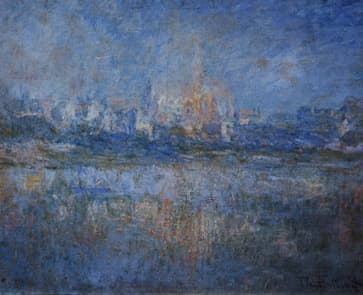
Vétheuil in the Fog
Claude Monet · 1879
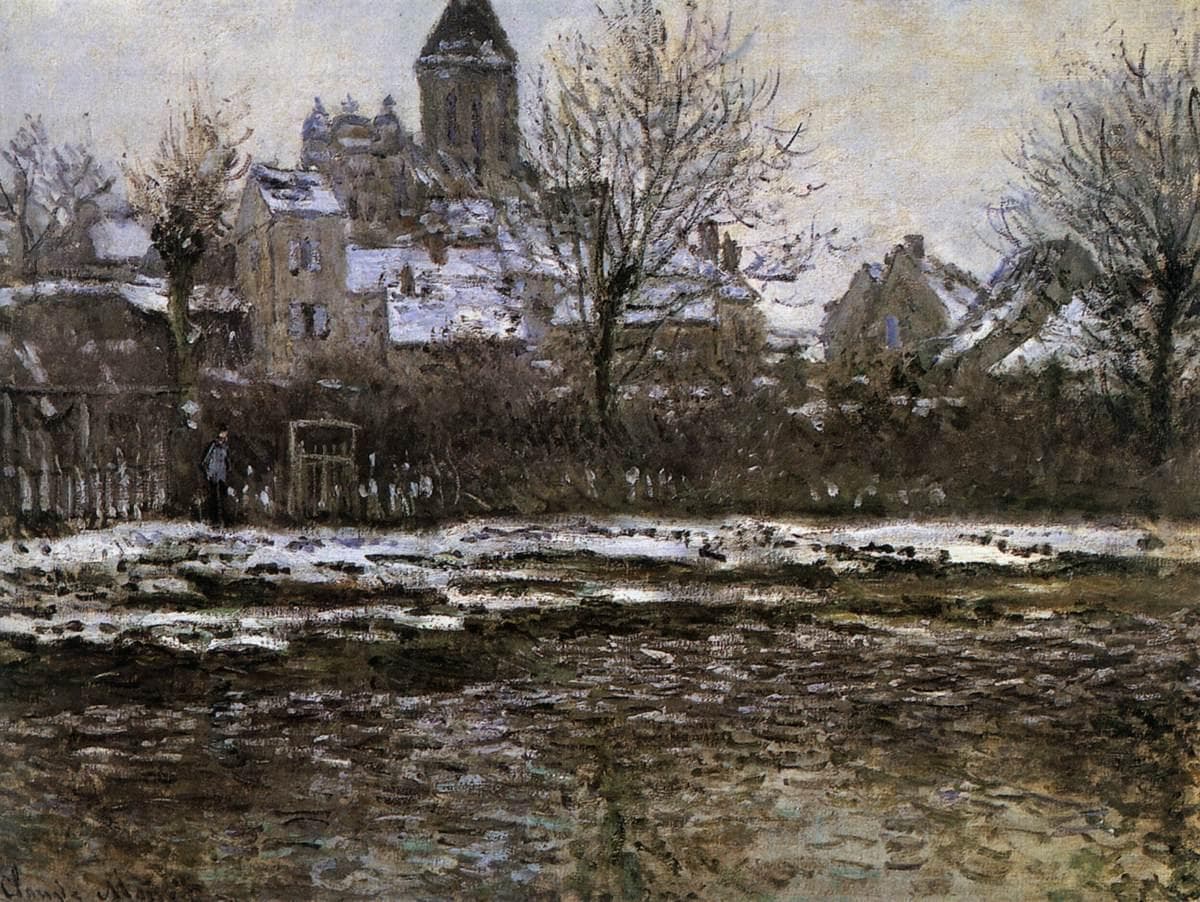
The Church in Vétheuil in Winter
Claude Monet · 1878–79
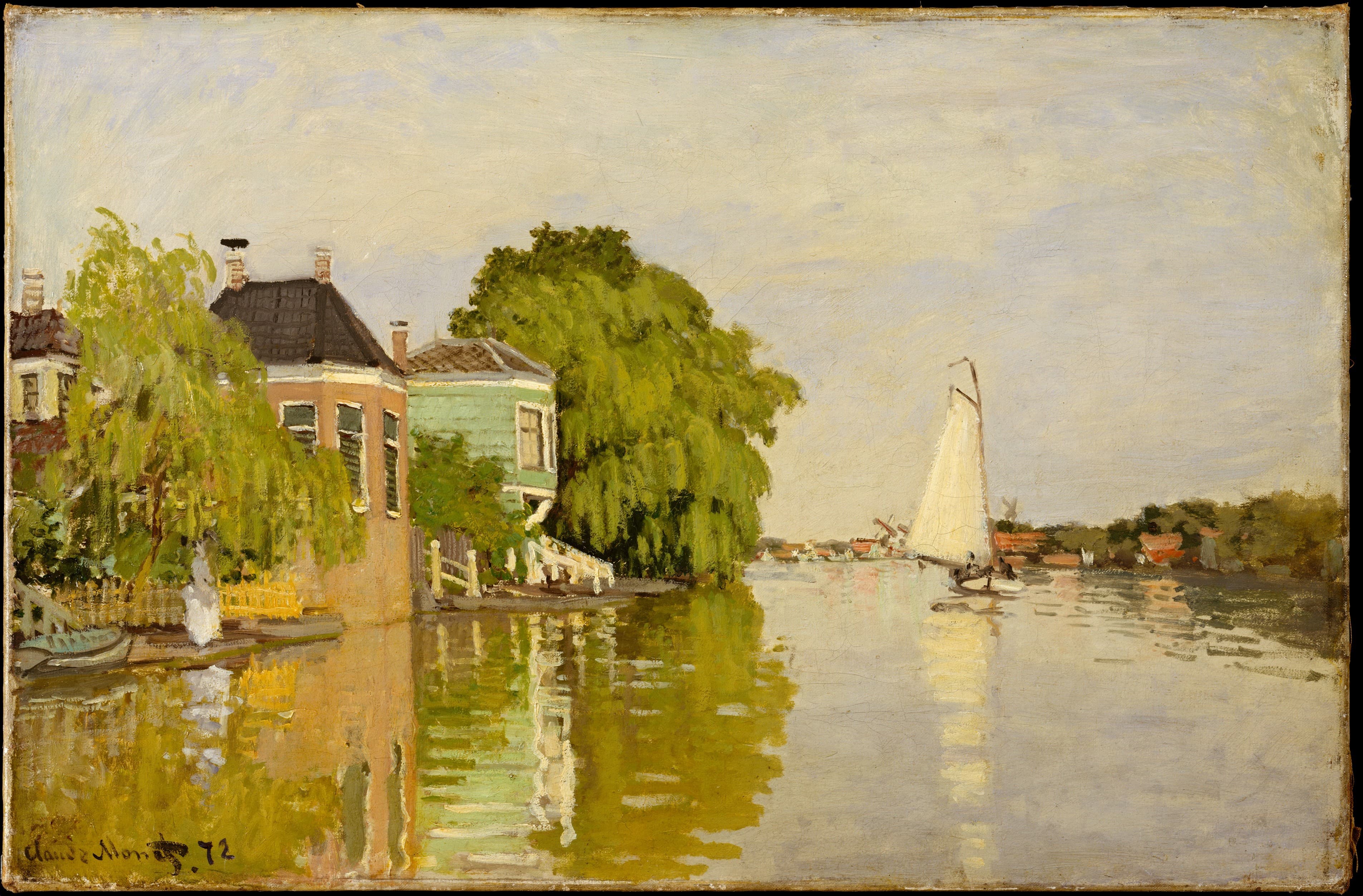
Houses on the Achterzaan
Claude Monet · 1871
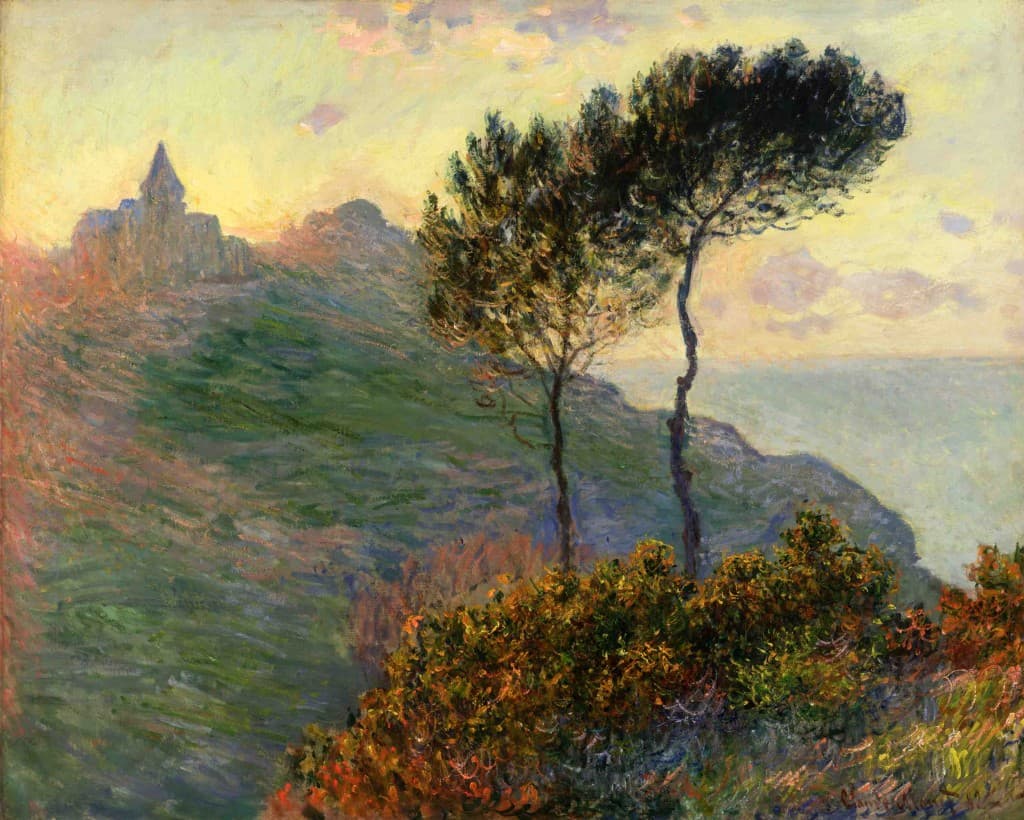
The Church at Varengeville
Claude Monet · 1882
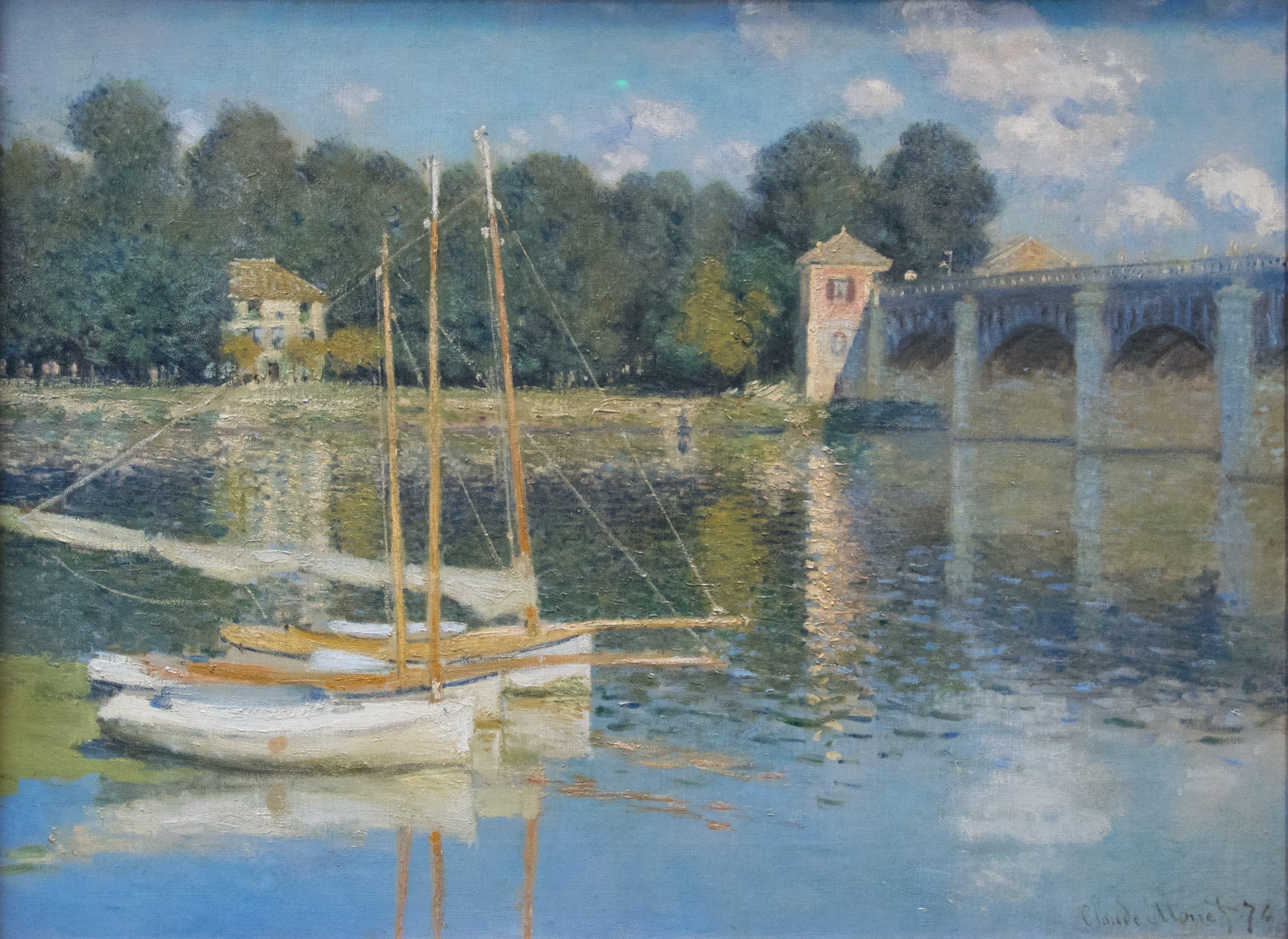
The Argenteuil Bridge
Claude Monet · 1874
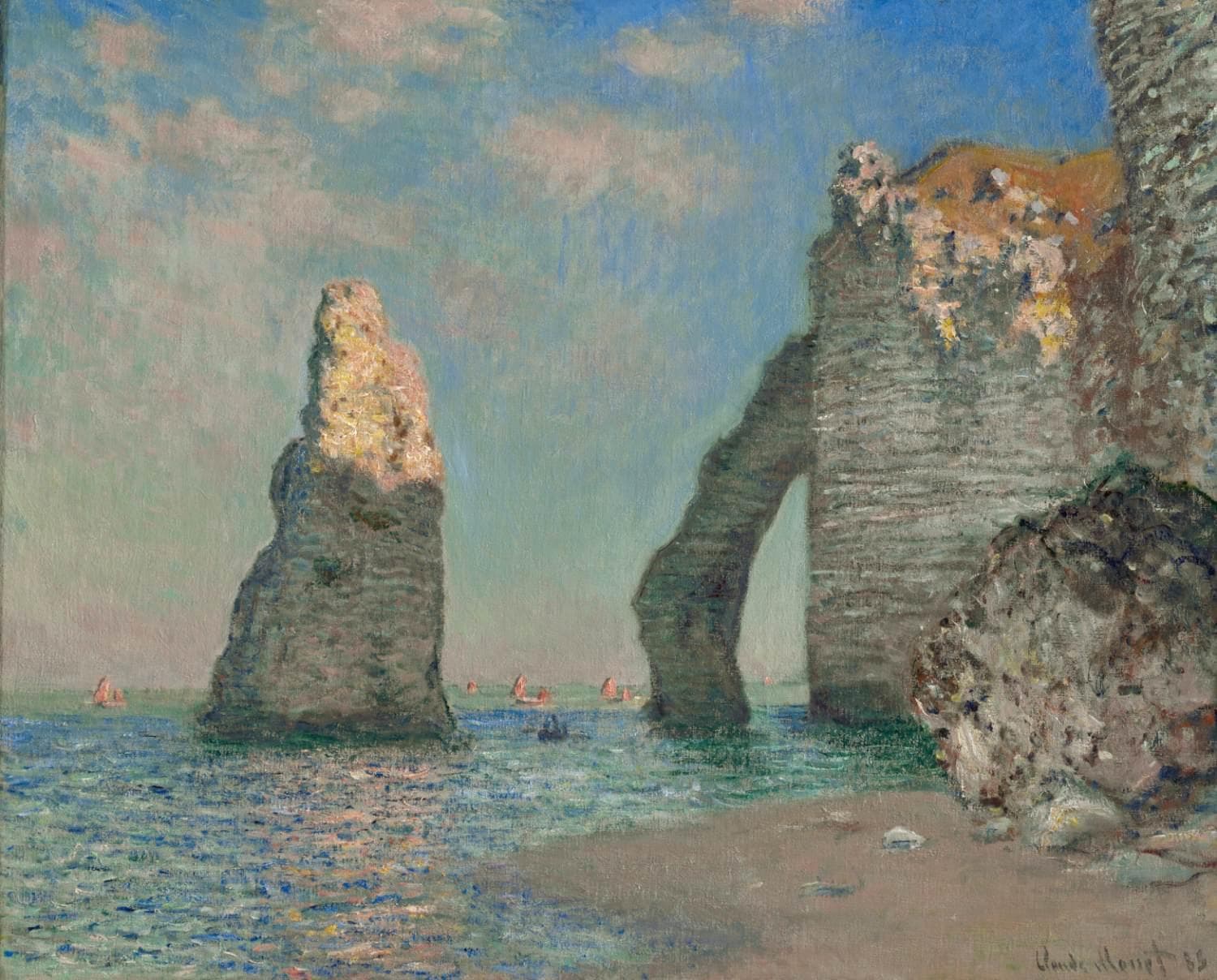
The Cliffs at Étretat
Claude Monet · 1885