Image: Hill-Stead Museum, Farmington, Connecticut (via Google Arts & Culture) · Public domain · via Wikimedia Commons
Grainstacks, in Bright Sunlight
Claude Monet, 1890
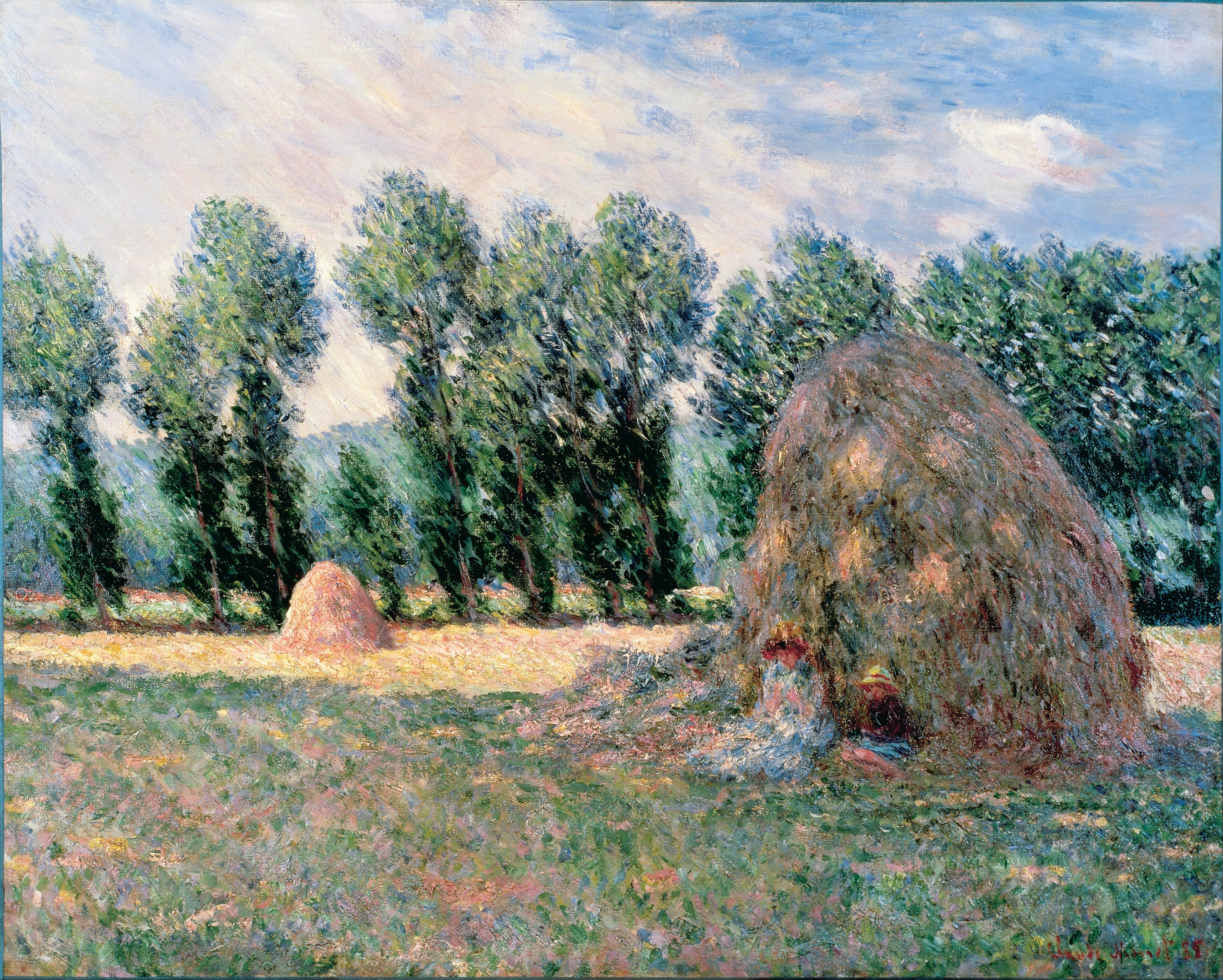
Grainstacks, in Bright Sunlight (Meules, grand soleil) is an 1890 painting by Claude Monet of two wheat stacks in a sunlit field at Giverny, backlit so their edges glow orange. It is in the Hill-Stead Museum, Farmington, Connecticut.
- Artist
- Claude Monet
- Date
- 1890
- Medium
- Oil on canvas
- Dimensions
- 64 × 91 cm
- Collection
- Hill-Stead Museum, Farmington, Connecticut, United States
- Movement
- Impressionism
- Catalogue
- Wildenstein 1267
- Nature & Landscape
Grainstacks, in Bright Sunlight (Meules, grand soleil) is a painting by Claude Monet, signed and dated "Claude Monet 90" at lower left. It shows two stacks of wheat in the field beside his house at Giverny on a brilliant summer day. The canvas measures about 64 by 91 centimeters and is in the Hill-Stead Museum in Farmington, Connecticut, the house-museum built for the industrialist Alfred Atmore Pope and his family. Wildenstein's catalogue lists it as number 1267.
What you're looking at
The composition is the one Monet used for several of the late-summer canvases: a big stack right of center and a smaller one at left, set on a stubbled field with a line of trees, roofs and hills behind. What sets this version apart is the direction and strength of the light. The sun is high and slightly behind the stacks, so their fronts are in shade and the outlines blaze. Monet draws each contour with a broken rim of hot orange, as if the straw at the edges were catching fire.
The shadows fall toward us. Under the left stack a dark, blue-green pool spreads across the ground; under the large stack a broad wedge of cobalt and violet runs off to the right. Between them, the stubble is painted in near-white, cream, pink and pale green, so bright that it seems bleached.
The background reads like a heat haze. A row of yellow-green trees, painted in short vertical dabs, stands in front of a long band of blue hills, and at right a group of blue-roofed farm buildings dissolves into the same blue. The sky is almost colorless: a thick, creamy white with faint lilac, laid on with a loaded brush.
Bright sunlight: what makes this version distinct
Most canvases in the series are about low light: sunrise, sunset, frost, snow. This is one of the few that confronts the full glare of a summer day. Compare it with the Musée d'Orsay's Haystacks, End of Summer, which shows the same pair from almost the same spot in a softer, hazier light, and with Chicago's Stacks of Wheat (End of Summer), where the sun is lower and the shadows longer. Here the contrast is at its strongest: dark, cool bodies against a field that is nearly white.
The date also matters. Signed "90," this canvas belongs to the first, summer phase of the campaign, before the winter pictures that make up the core of the series. It shows Monet still working with the warm palette and strong cast shadows of a summer day, before frost and snow pushed him toward the pale pinks and blues of Haystacks (Effect of Snow and Sun).
How it was painted
The stacks stood in a field just outside Monet's property, which he bought in November 1890. He painted outdoors on several canvases at a time, swapping them as the light moved, and then refined them in the studio. The texture here is heavy: the sky is a thick crust of dry paint, and the stacks are built from short, overlapping strokes of mauve, rust and blue, with the orange rims added on top. Monet liked such rough surfaces because they broke the light, and he sometimes reworked a canvas until the paint was several layers deep.
Alfred Pope and Hill-Stead
Alfred Atmore Pope, a Cleveland iron manufacturer, was one of the earliest American collectors of Monet. Hill-Stead's own history records that he bought this canvas from the Paris dealer Boussod, Valadon et Cie, and that he acquired three paintings from the stacks series in all; an earlier, pre-series picture, Grainstacks, White Frost Effect, is also at Hill-Stead. The paintings were hung in the family's rooms rather than a gallery, and a 1910 photograph shows this one in the dining room. The house, designed with Pope's daughter Theodate Pope Riddle, opened as a museum after her death, with the collection left in place.
Where to see it
The painting hangs in the Hill-Stead Museum in Farmington, Connecticut, near Hartford, in the domestic setting the Popes gave it. Our Haystacks series hub lists the other versions, Where to See Monet covers smaller collections like this one, and Giverny describes the fields where the stacks stood. For the painter's life, see Claude Monet.
Questions & answers
Where is Monet's Grainstacks, in Bright Sunlight?
It is in the Hill-Stead Museum in Farmington, Connecticut, the former home of the collector Alfred Atmore Pope. Pope bought it from the Paris dealer Boussod, Valadon et Cie, and it still hangs in the house among the family's other Impressionist paintings.
When did Monet paint Grainstacks, in Bright Sunlight?
He signed and dated it 1890. It belongs to the summer phase of his stacks campaign at Giverny, before the winter canvases of 1890–91, and shows the field in strong midday light with deep shadows falling toward the viewer.
Why do the haystacks have orange outlines?
The sun is high and slightly behind the stacks. Light passing through the loose straw at the edges makes the contours glow, and Monet painted that glow as a broken rim of hot orange around each dark, shaded stack.
How many grainstack paintings did Monet make?
Wildenstein's catalogue lists about twenty-five canvases from the main 1890–91 campaign, plus earlier and later stack pictures. Fifteen were shown together at Durand-Ruel's gallery in Paris in May 1891.
More by the artist
Claude Monet
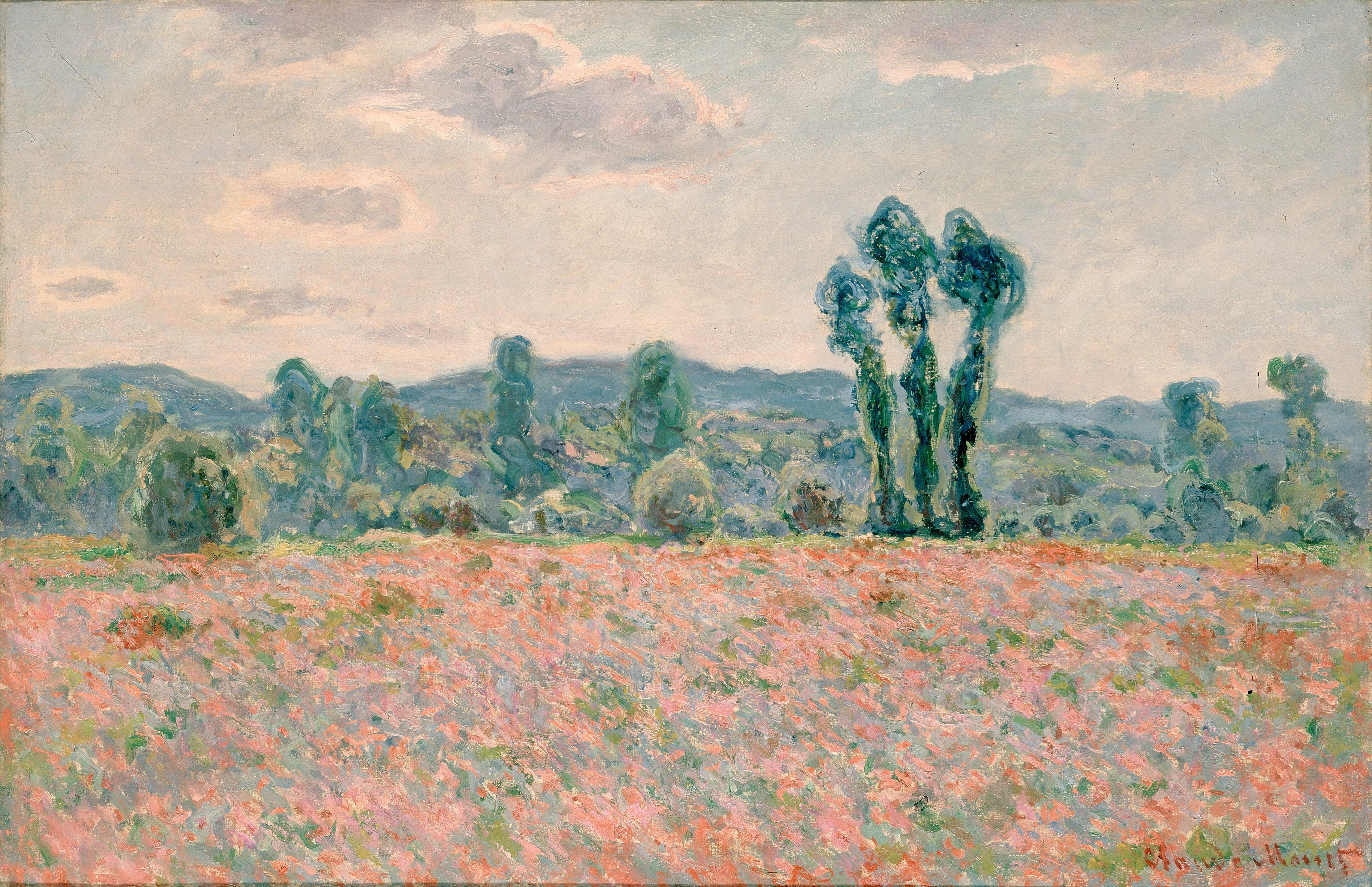
Poppy Field
Claude Monet · c. 1890
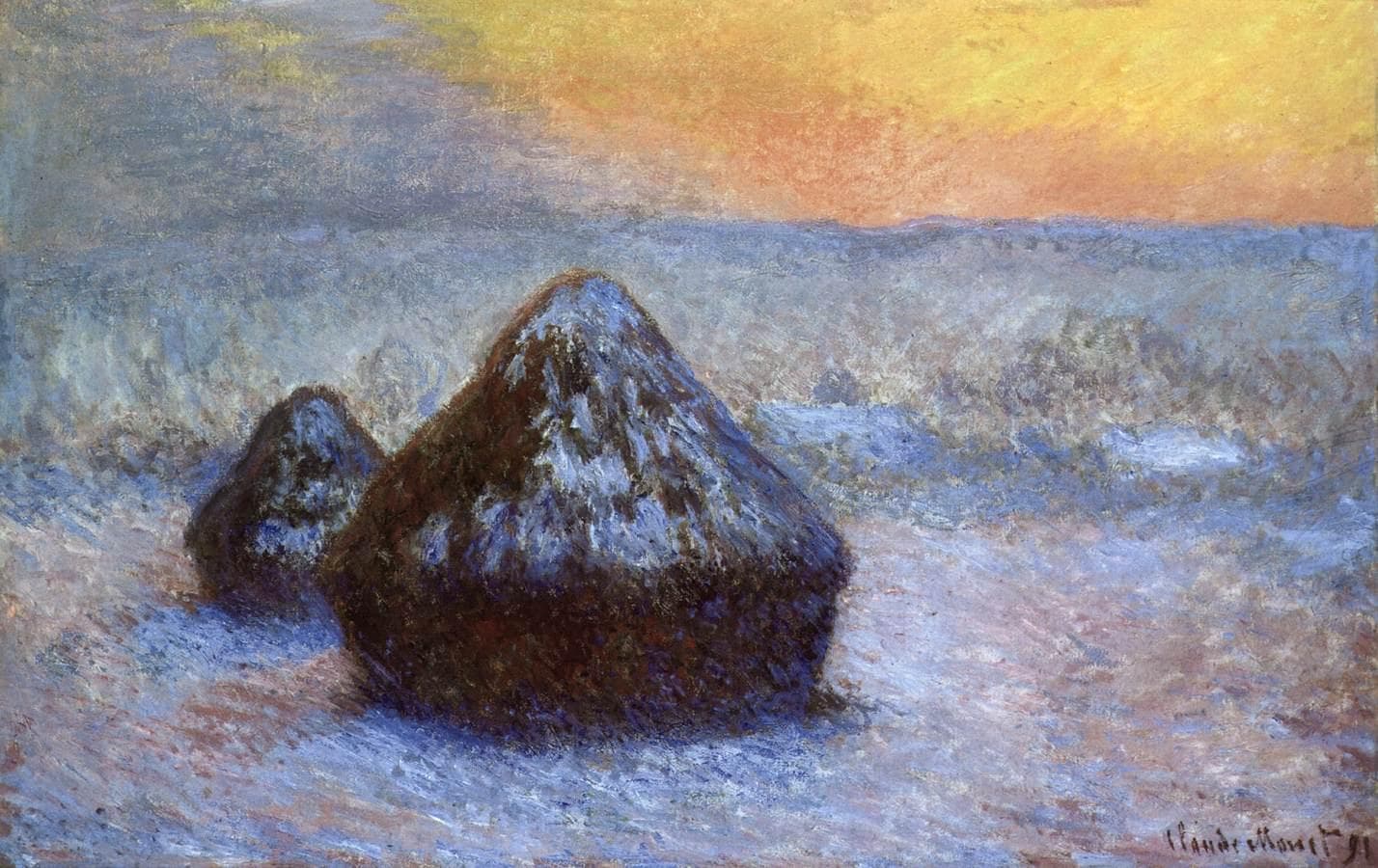
Stacks of Wheat, Sunset, Snow Effect
Claude Monet · 1890–91
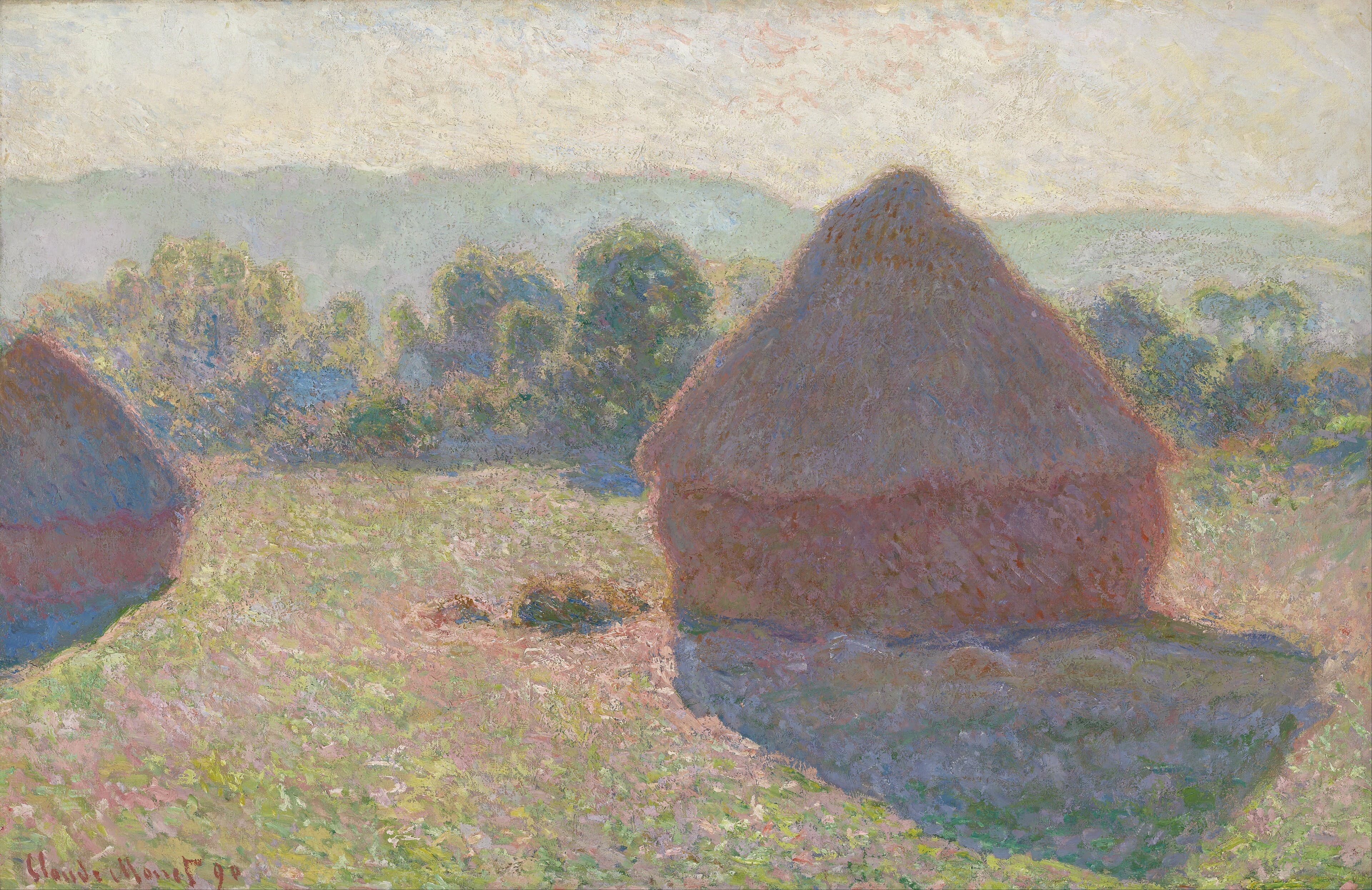
Haystacks, Midday
Claude Monet · 1890
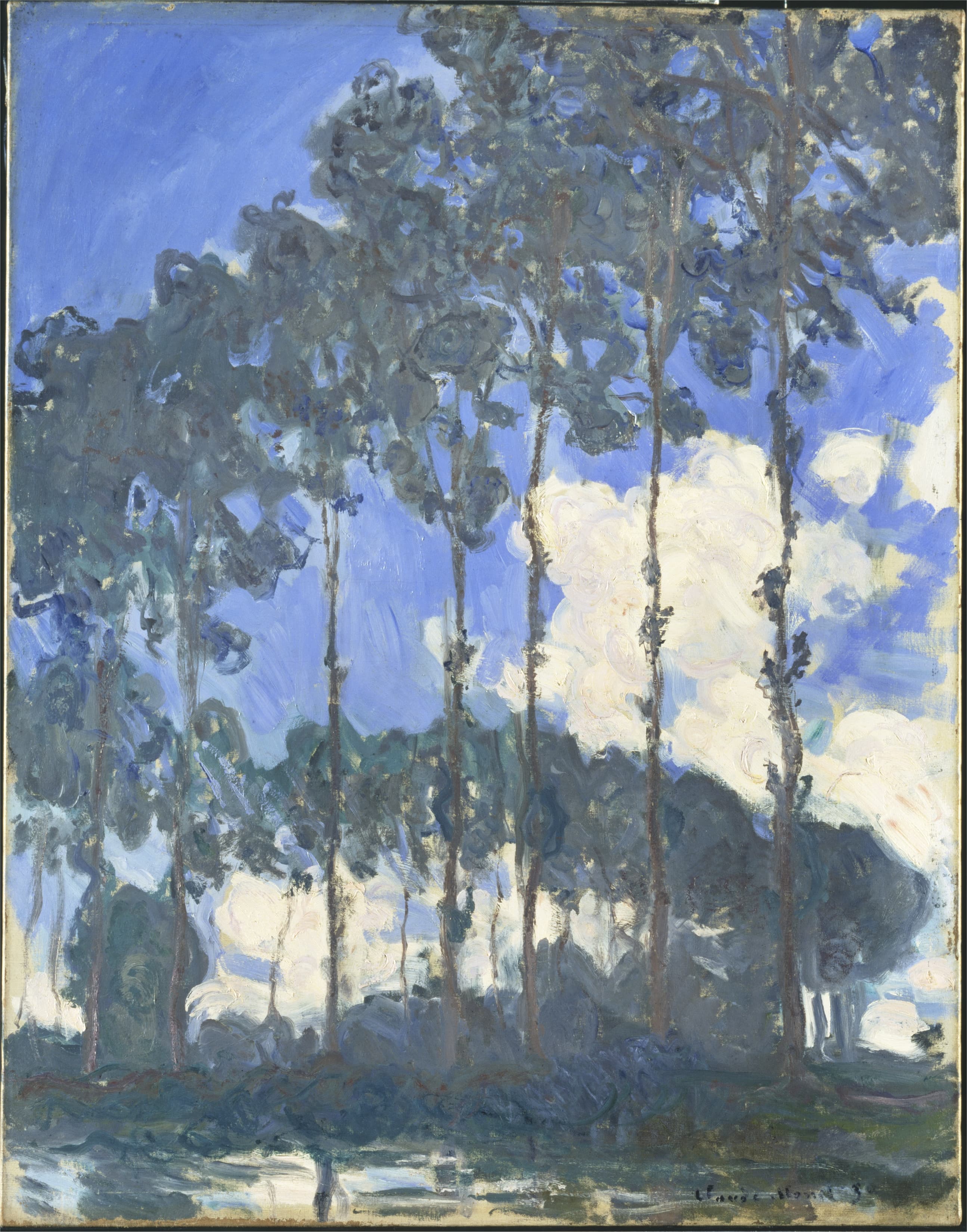
Poplars on the Epte (London)
Claude Monet · 1891
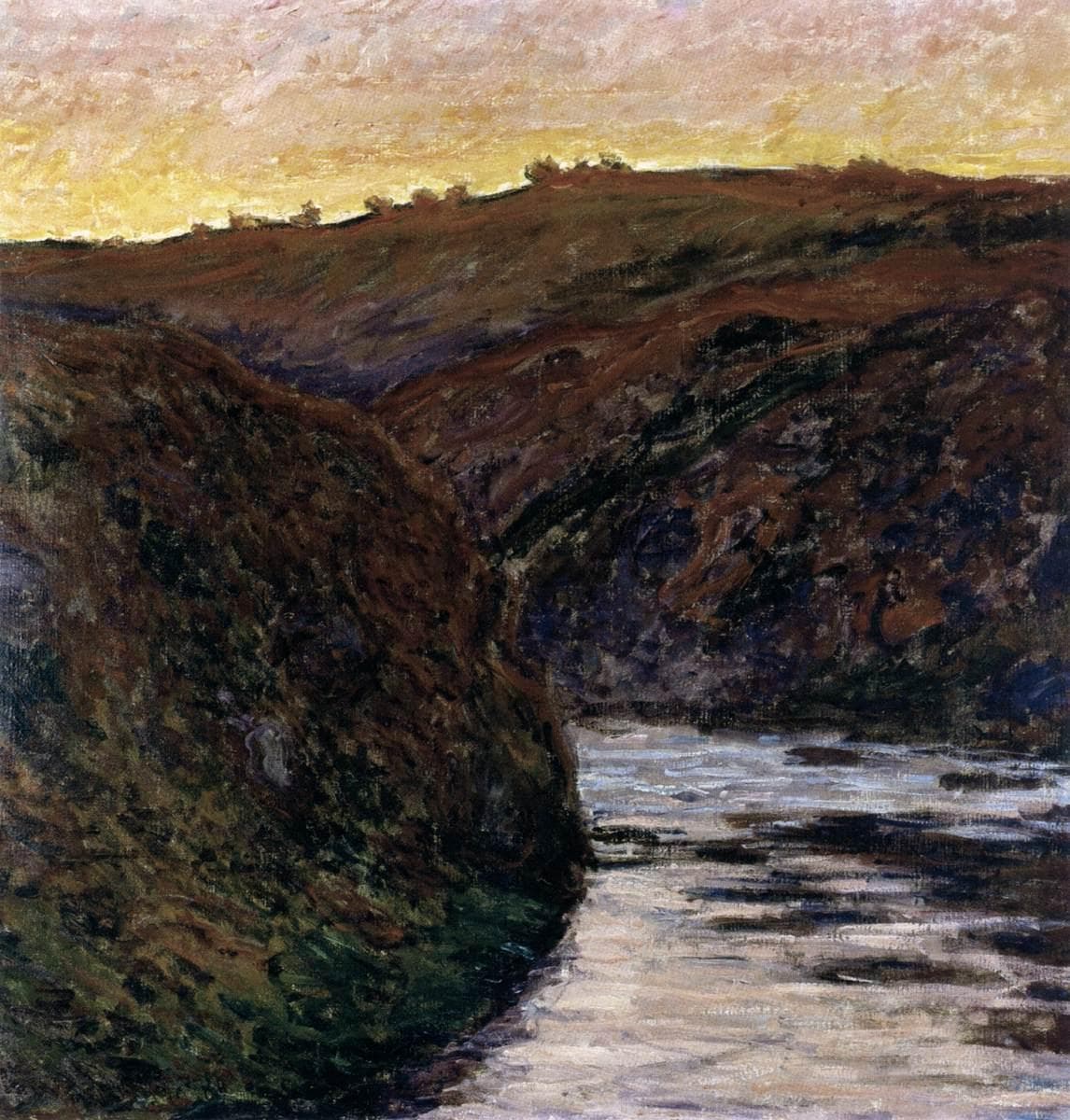
The Creuse, Sunset
Claude Monet · 1889
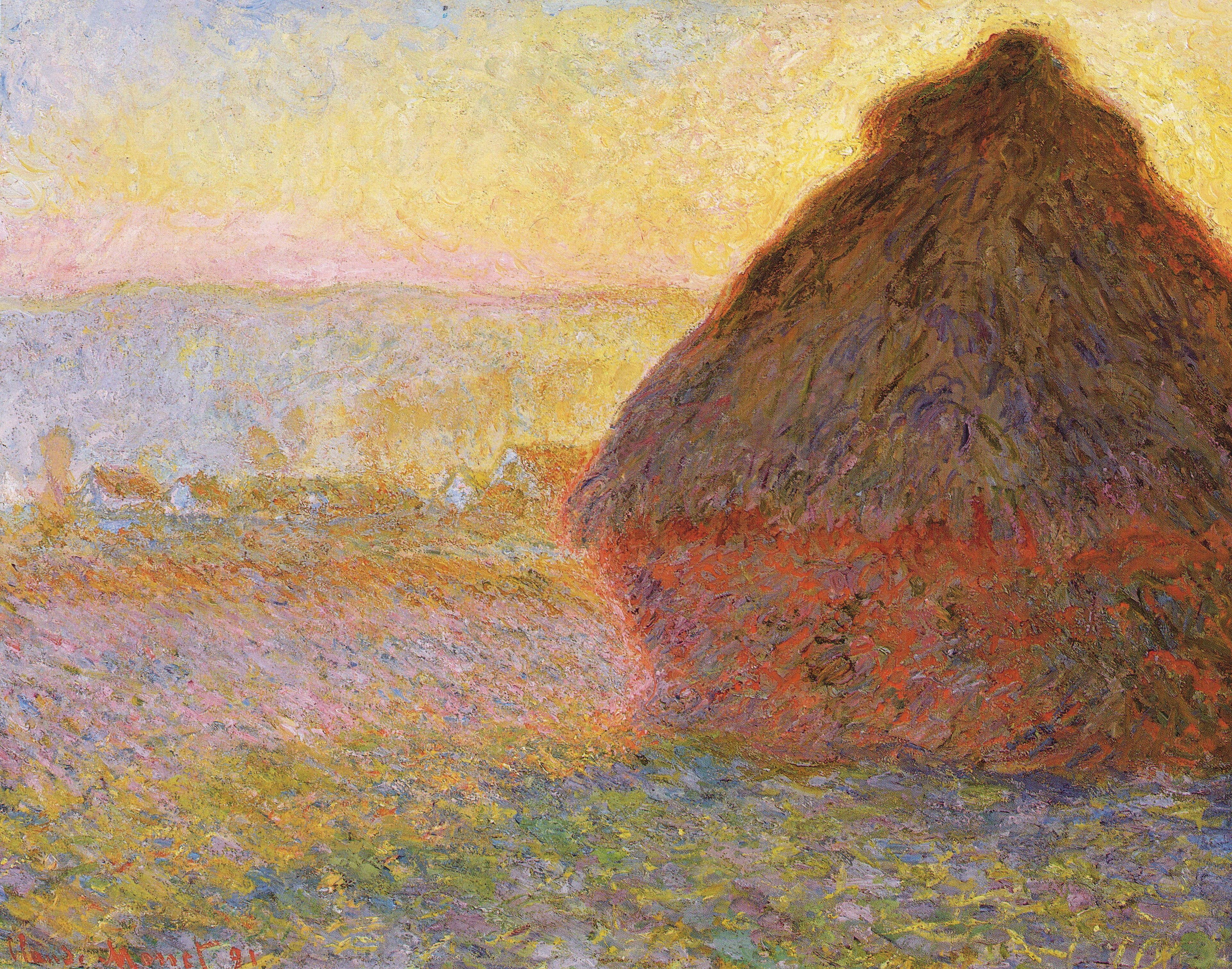
Grainstack (Sunset)
Claude Monet · 1891
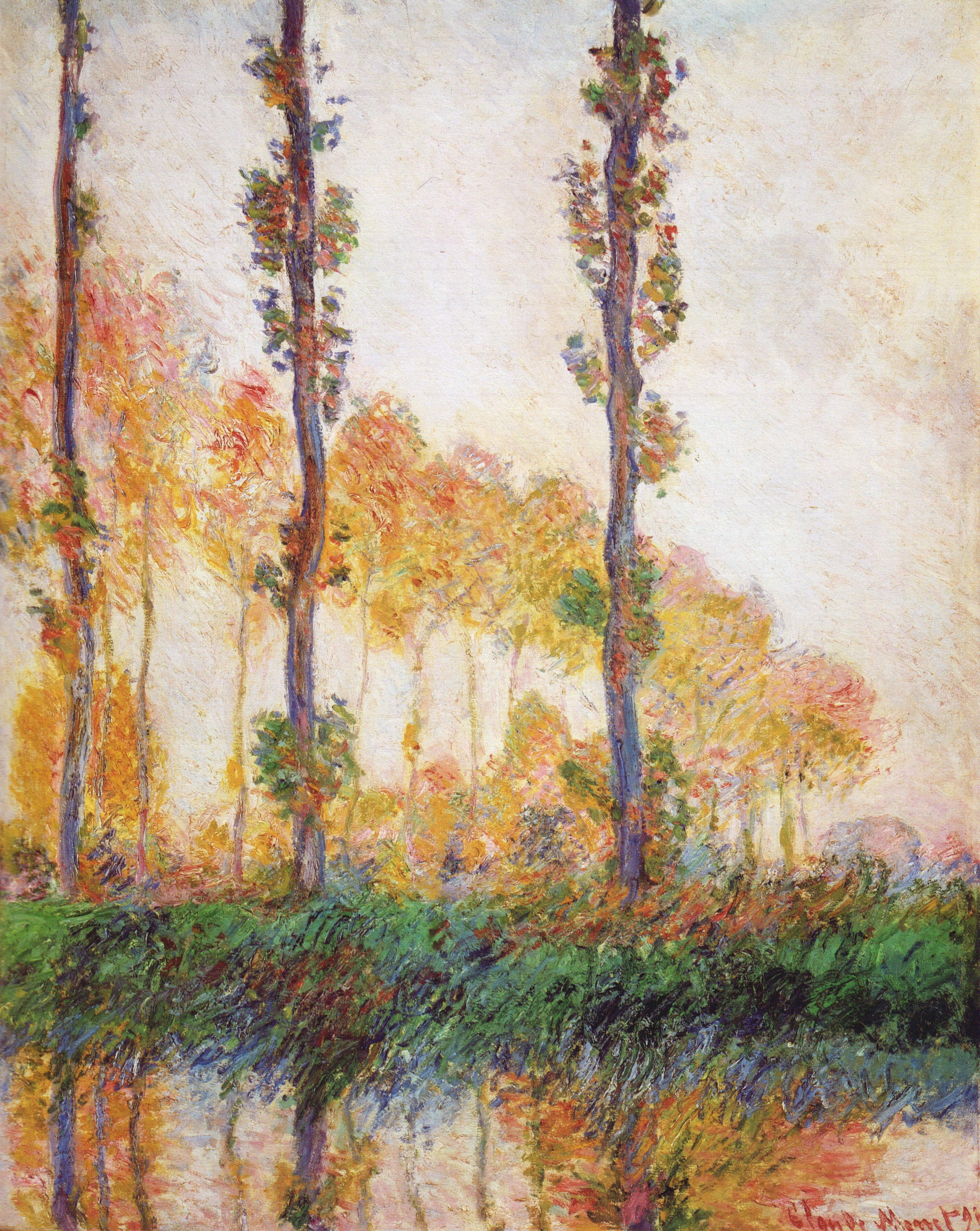
Poplars (Autumn)
Claude Monet · 1891
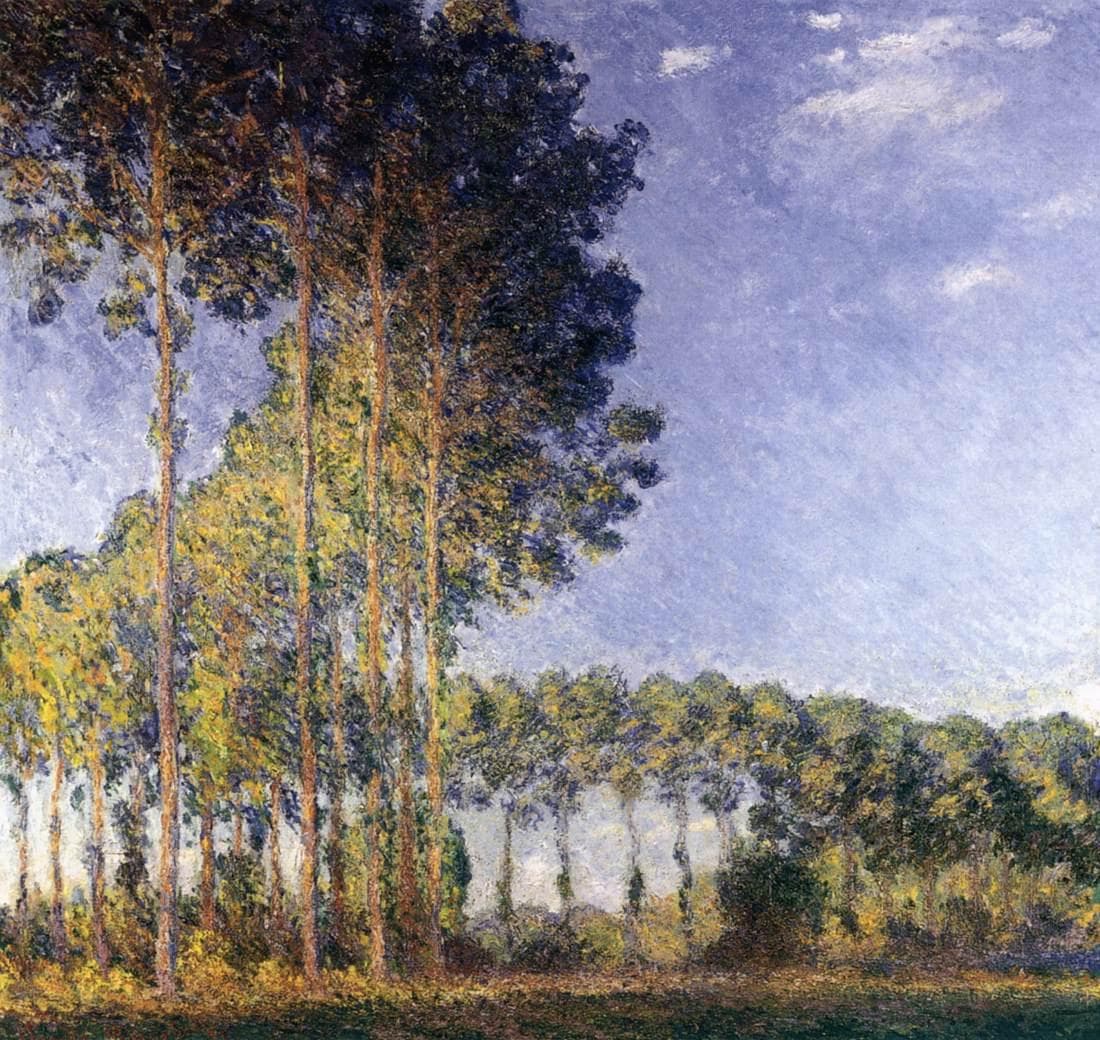
Poplars at the Banks of Epte
Claude Monet · 1891–92
Also painted in 1890
The same year

Boating on the River Epte
Claude Monet · 1890
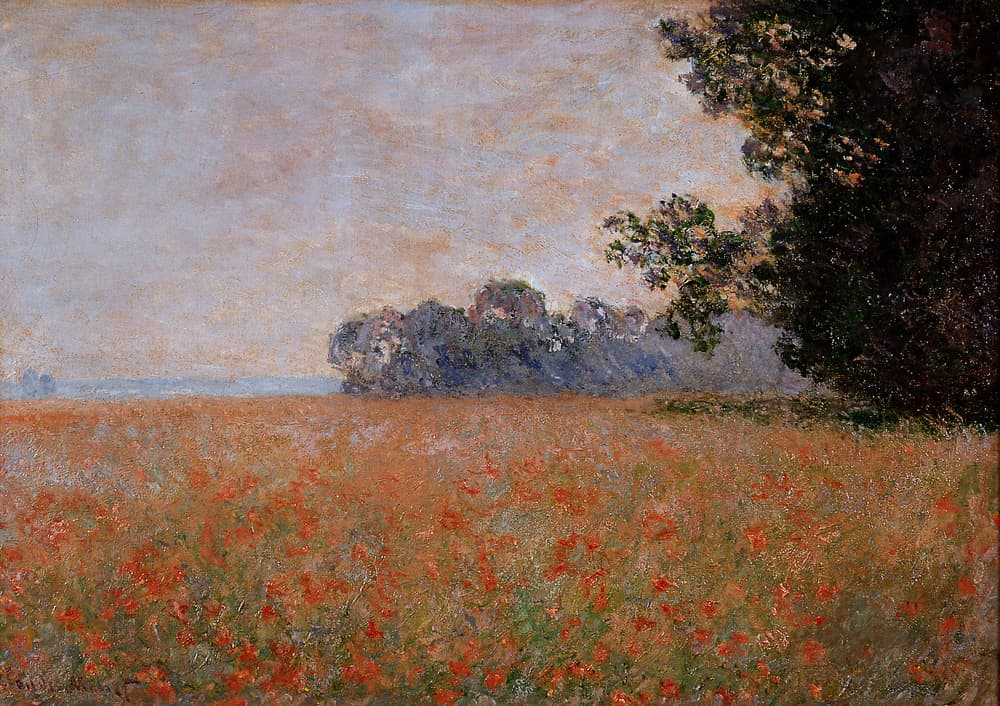
Oat Field with Poppies
Claude Monet · c. 1890
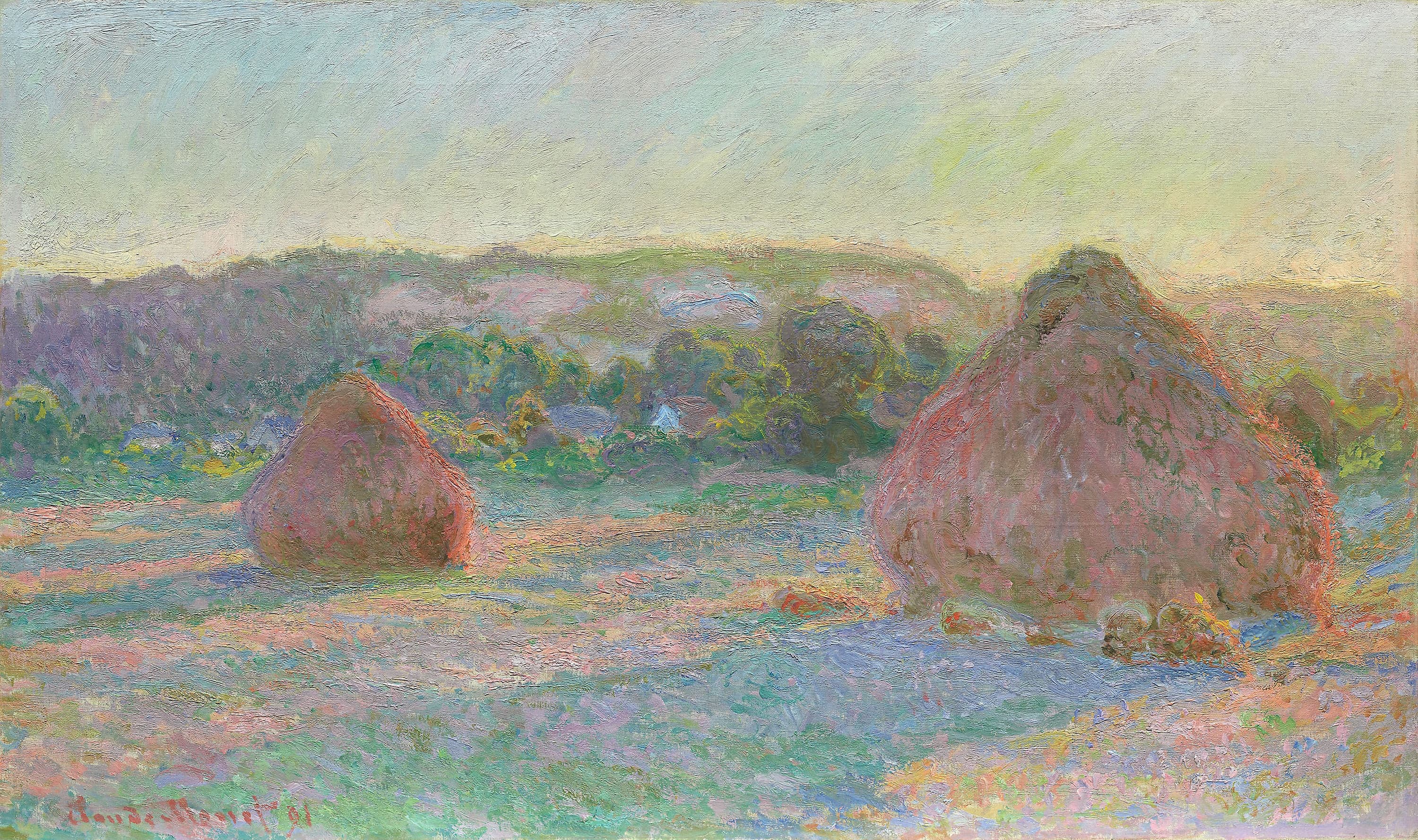
Stacks of Wheat (End of Summer)
Claude Monet · 1890–91
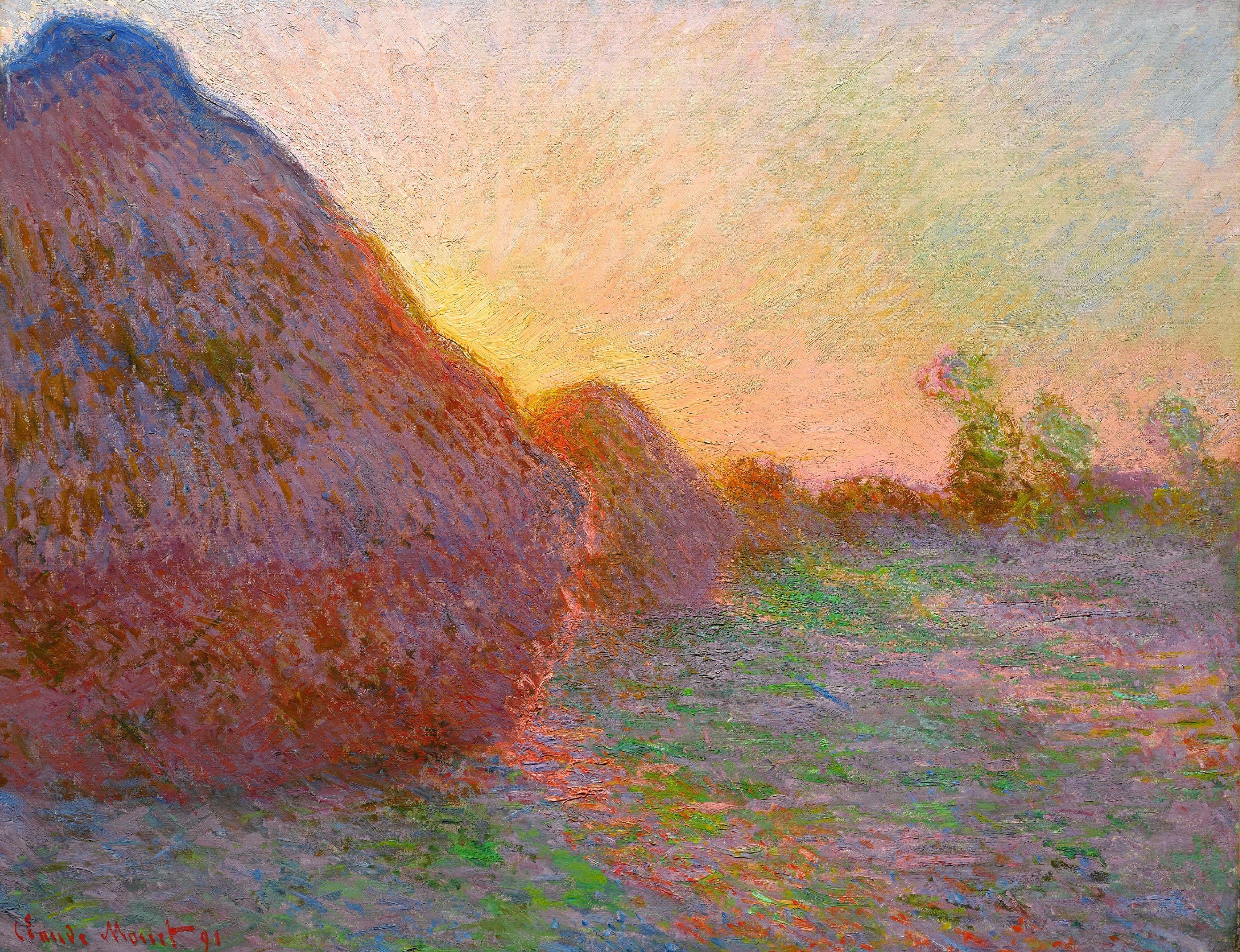
Meules (Grainstacks), 1890
Claude Monet · 1890
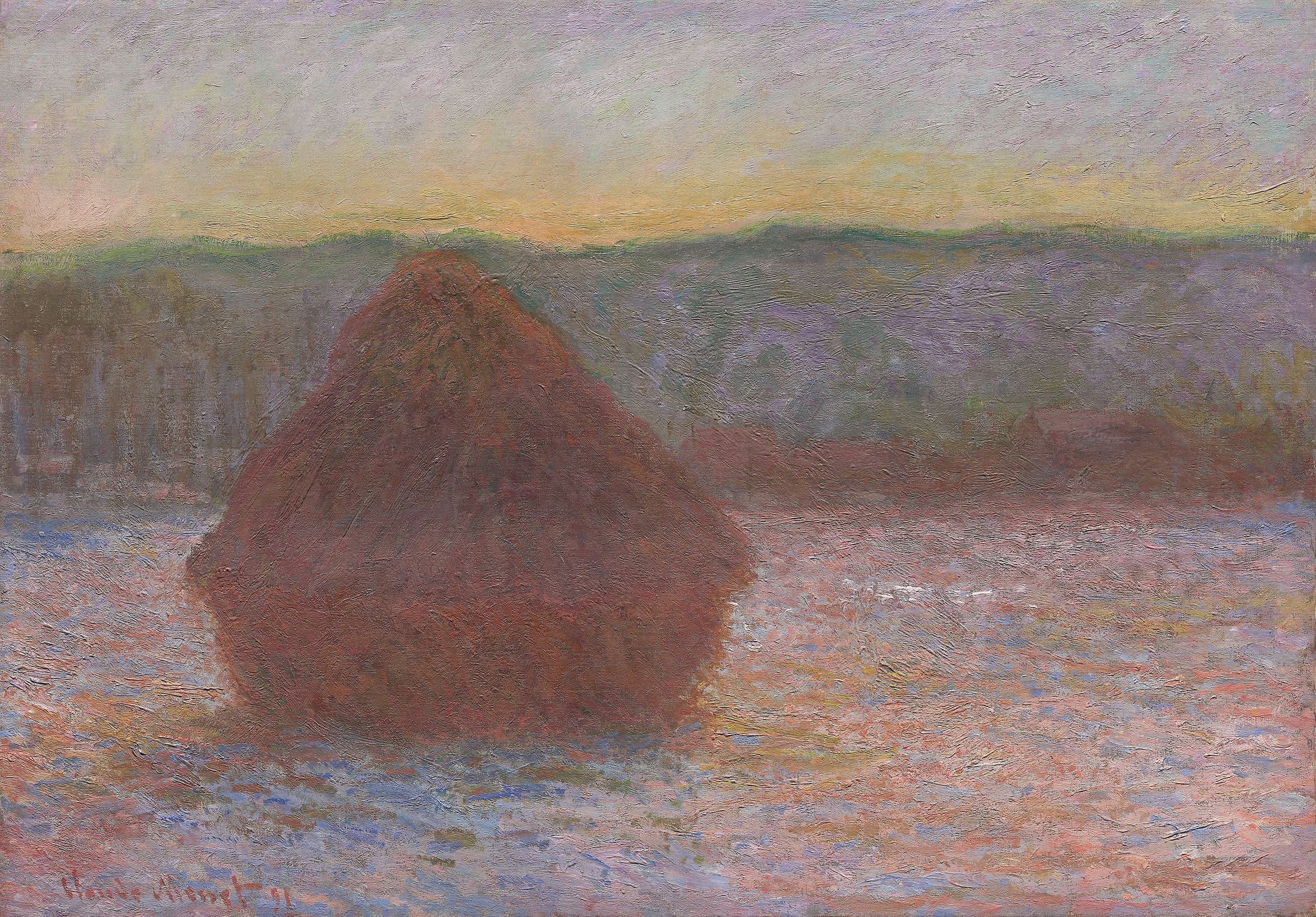
Stack of Wheat (Thaw, Sunset)
Claude Monet · 1890–91
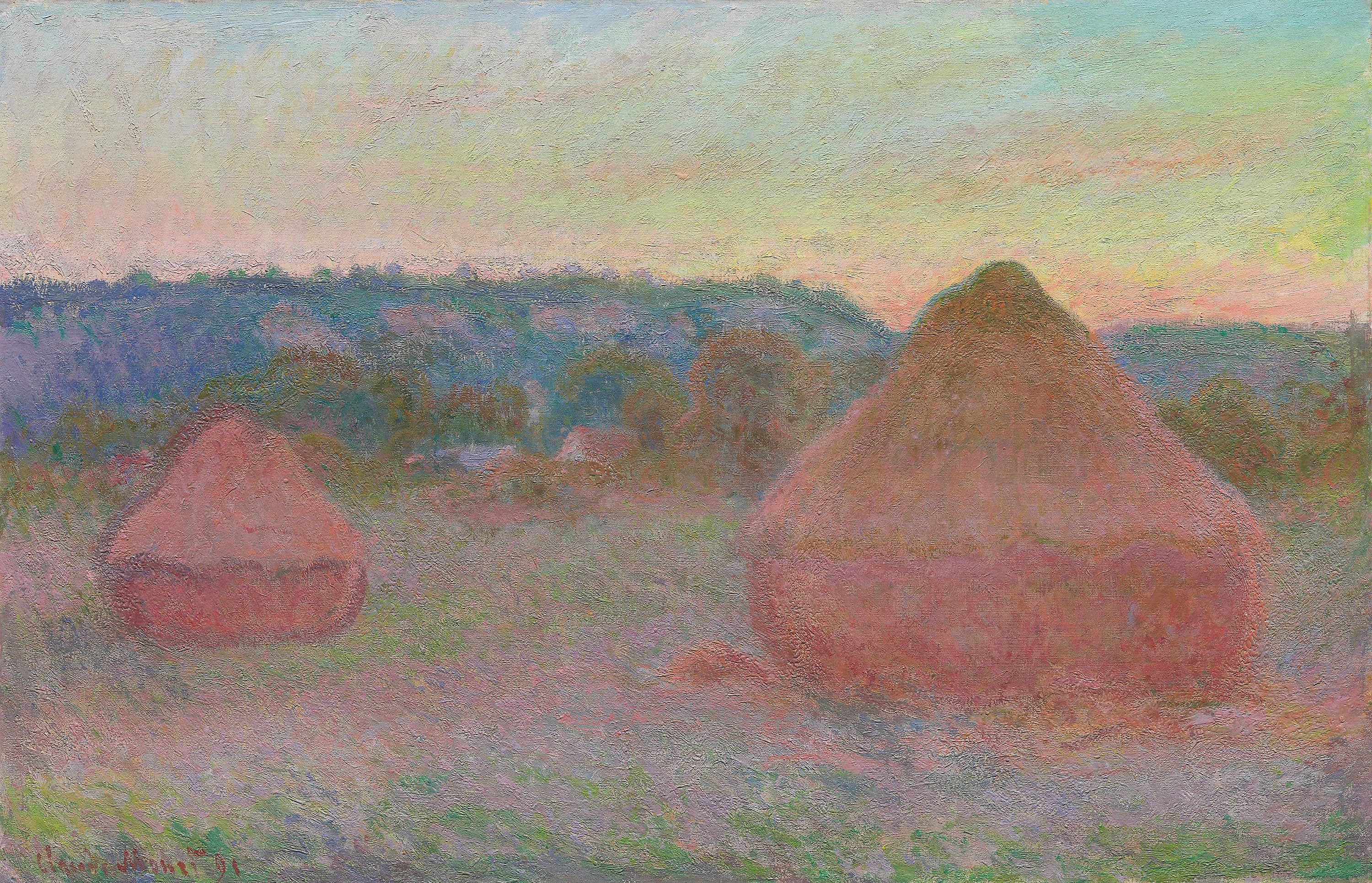
Stacks of Wheat (End of Day, Autumn)
Claude Monet · 1890–91
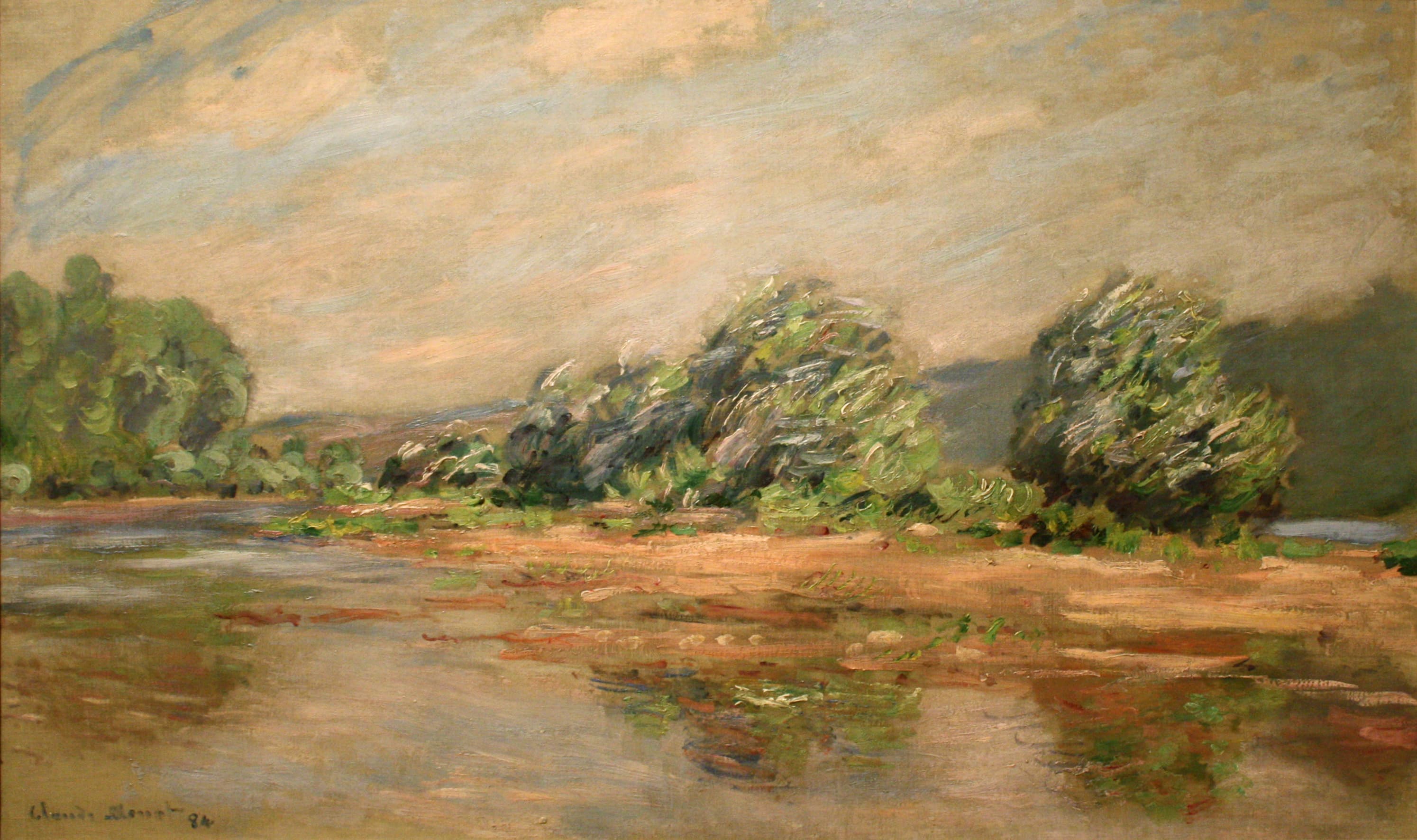
The Seine at Port-Villez (A Gust of Wind)
Claude Monet · c. 1883–90
Grainstacks in the Sunlight, Morning Effect
Claude Monet · 1890
Kindred works
You may also study
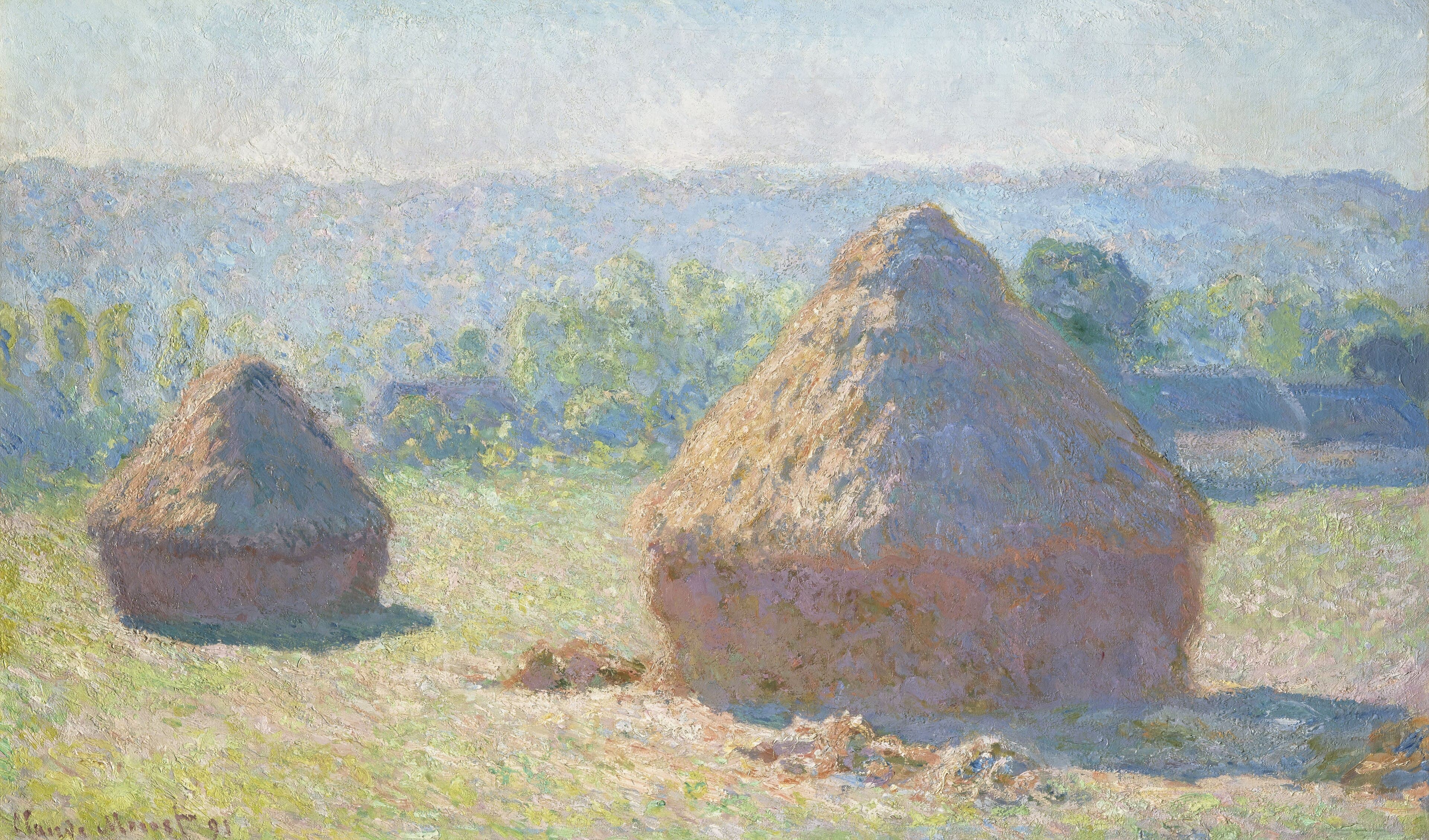
Haystacks, End of Summer
Claude Monet · 1891
Stacks of Wheat (End of Summer)
Claude Monet · 1890–91
Grainstacks in the Sunlight, Morning Effect
Claude Monet · 1890
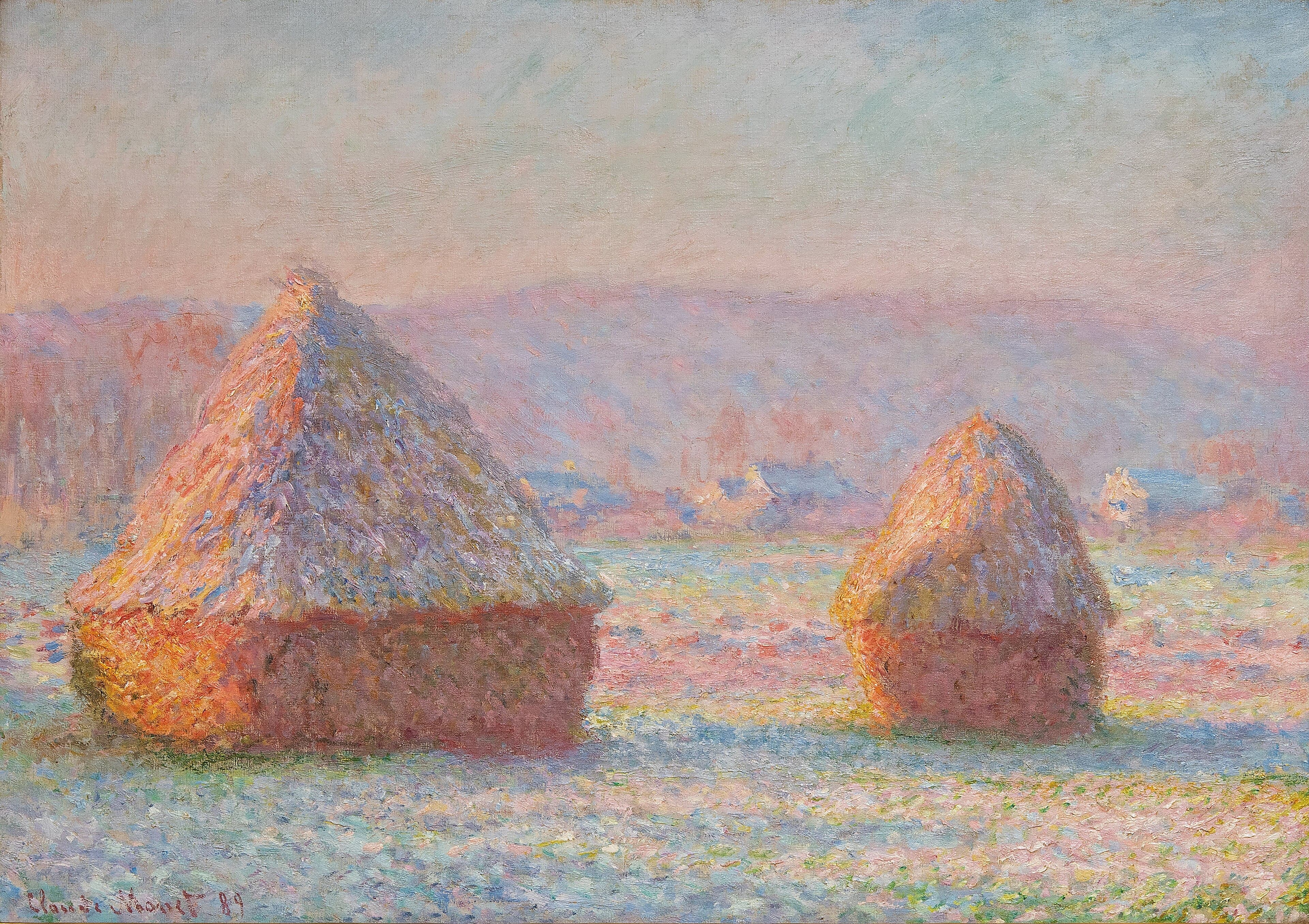
Grainstacks, White Frost Effect
Claude Monet · 1888–89
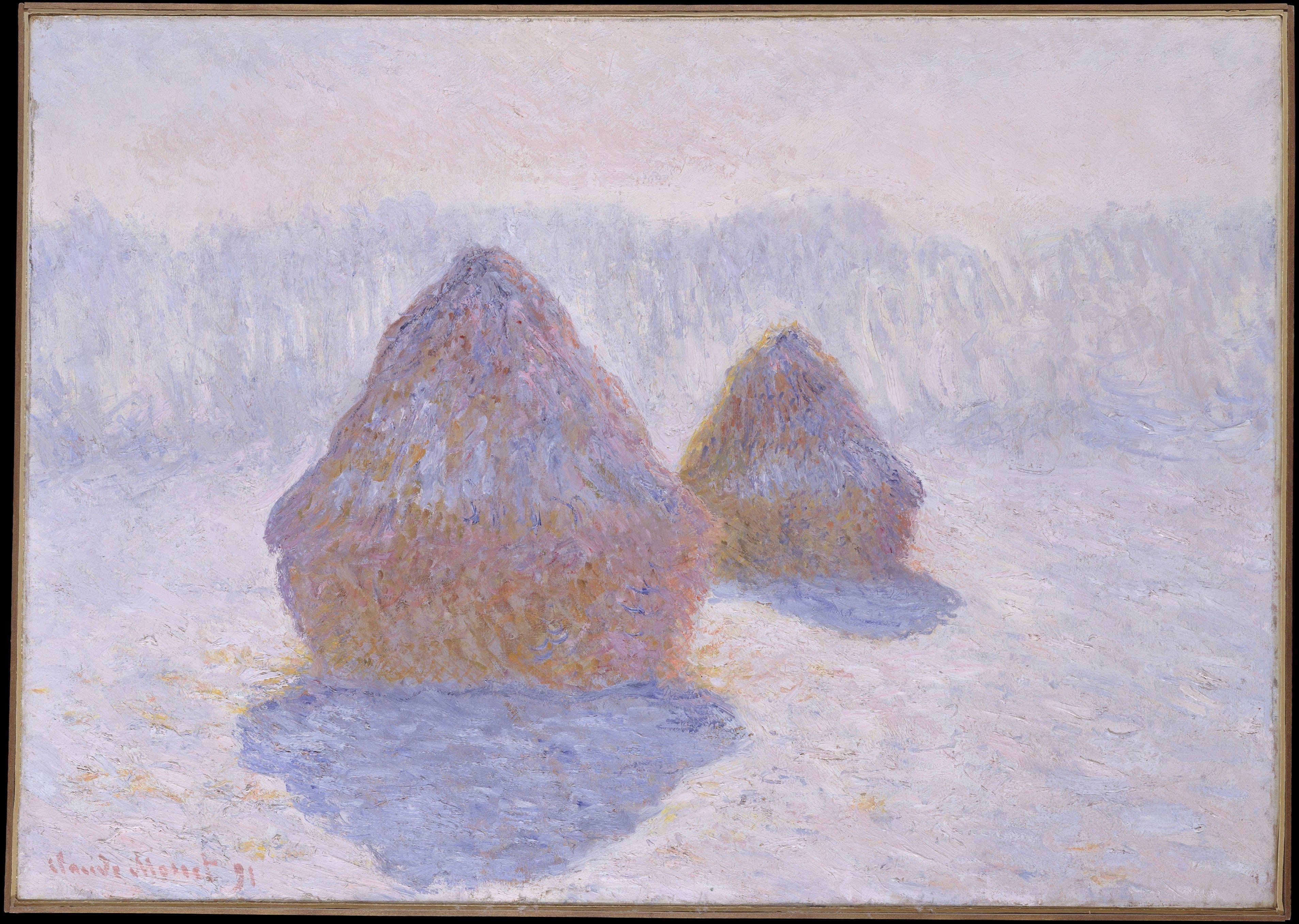
Haystacks (Effect of Snow and Sun)
Claude Monet · 1891
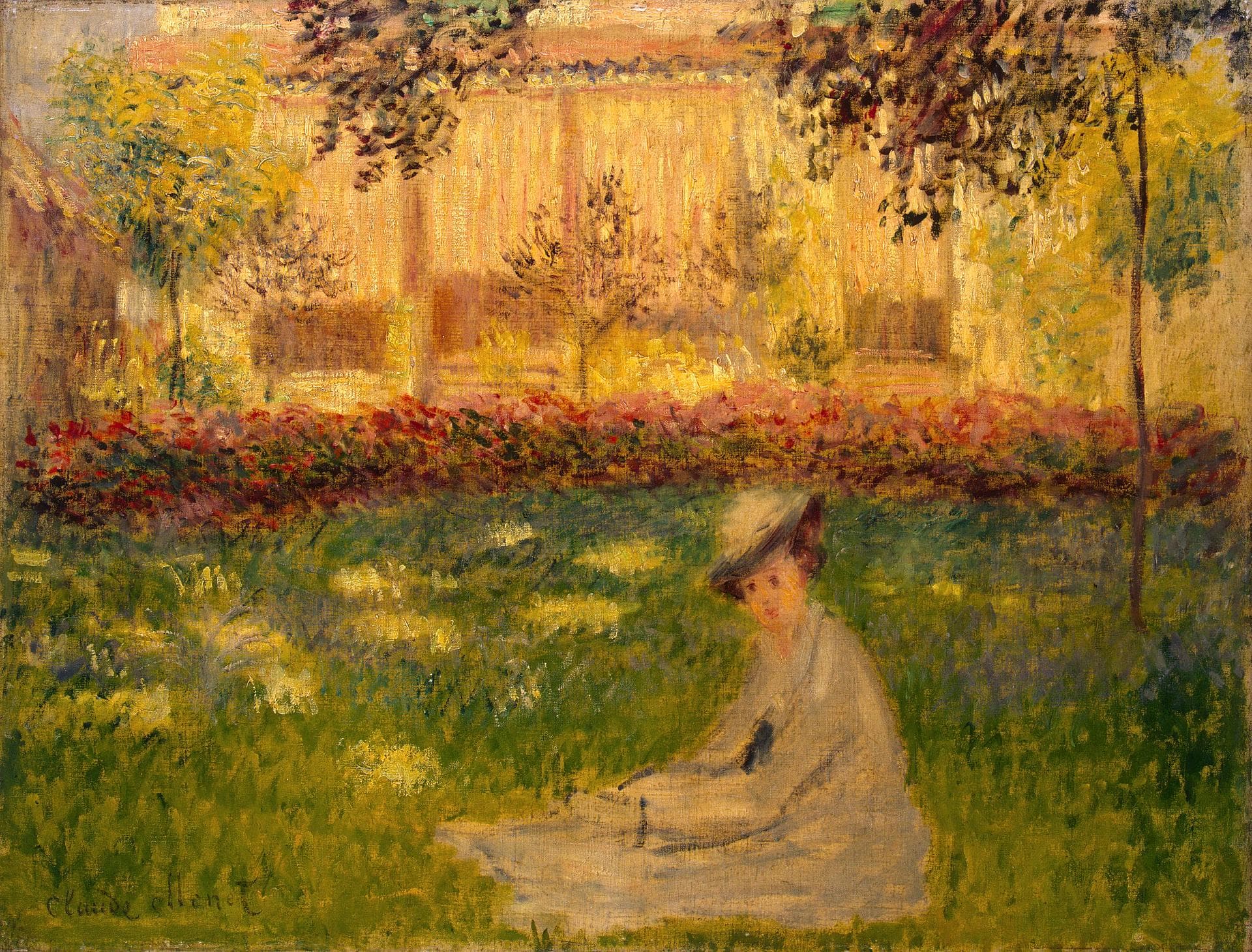
Woman in the Garden
Claude Monet · 1876
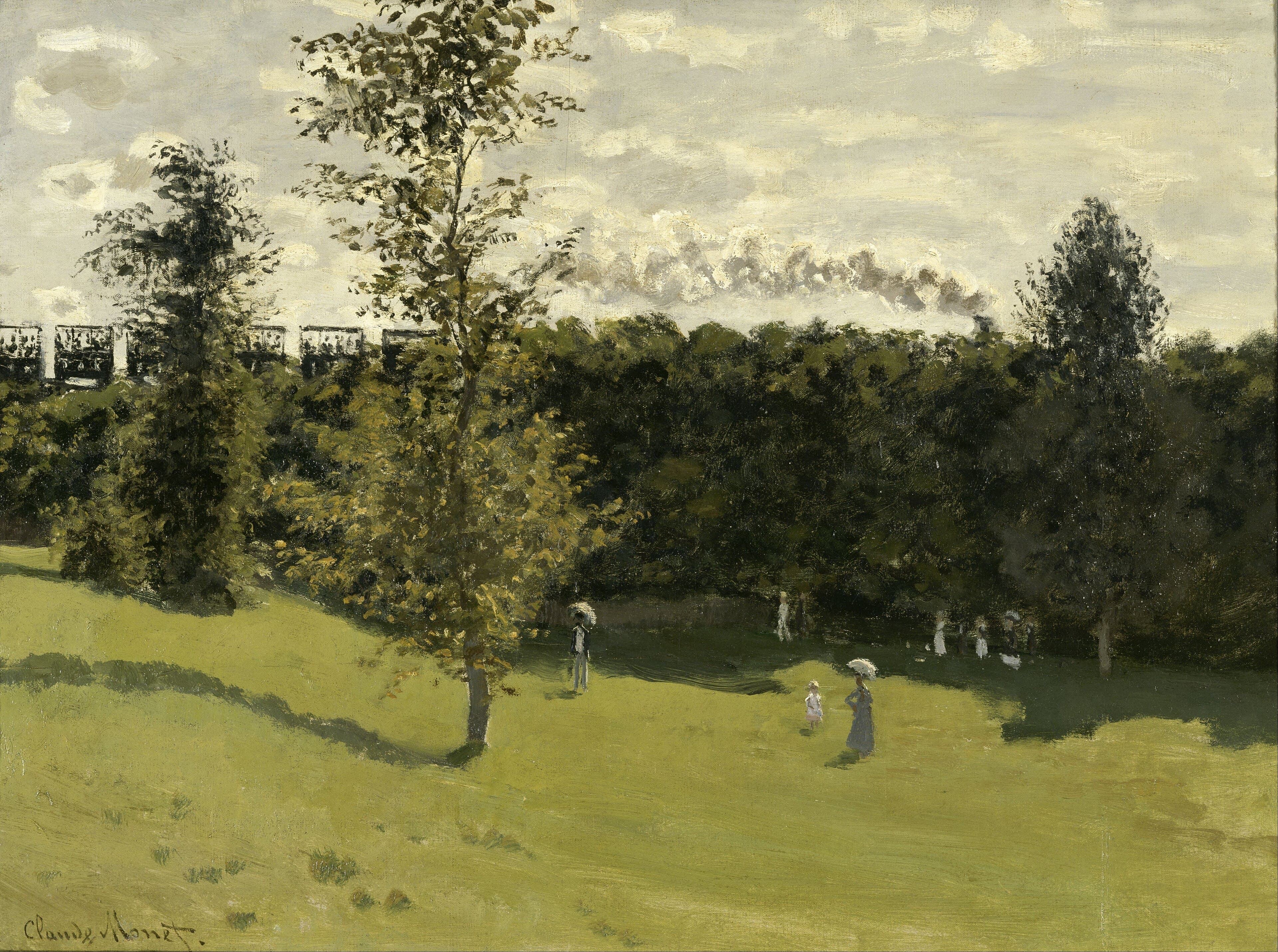
Train in the Countryside
Claude Monet · c. 1870
Haystacks (Ohara Museum, 1885)
Claude Monet · 1885