Image: National Gallery of Australia, Canberra, via Google Arts & Culture · Public domain · via Wikimedia Commons
Haystacks, Midday
Claude Monet, 1890
Haystacks, Midday (Meules, milieu du jour), 1890, is Claude Monet's view of grainstacks under high summer sun, the near stack casting a deep blue shadow. Bought by the National Gallery of Australia in 1979, it is now touring Australian regional galleries.
- Artist
- Claude Monet
- Date
- 1890
- Medium
- Oil on canvas
- Dimensions
- 65.6 × 100.6 cm
- Collection
- National Gallery of Australia, Canberra, Australia
- Movement
- Impressionism
- Catalogue
- Wildenstein 1271
- Nature & Landscape
Haystacks, Midday (Meules, milieu du jour) is one of the early canvases of Claude Monet's Haystacks series, painted at Giverny in 1890 and signed and dated Claude Monet 90 at lower left. It shows the stacks at the brightest, flattest hour of a late-summer day: a big stack in the center-right throws a deep blue-violet shadow to the right, a second stack is cut by the left edge, and behind them rounded trees and the hills of the Seine valley dissolve into a pale, heat-hazed sky. The National Gallery of Australia in Canberra bought it in 1979, and since 2023 it has been lent to regional galleries under the Sharing the National Collection program.
What you are looking at
The canvas is wide, about 66 by 101 cm, one of the larger formats in the series. The main stack, right of center, has a steep, pointed roof of gold and pinkish straw over a rose-colored base. The sun is high, so its shadow is short and falls almost straight to the right, a dense pool of blue, violet and green that is one of the most saturated areas of color in the picture. At far left, a second stack is sliced by the frame, showing only its shaded flank in mauve and blue.
Between them, a few dark, small clumps on the ground, perhaps sheaves or tools, sit in the field. Behind, a row of round, soft-edged trees in gray-green, blue and pink runs across the middle distance, and above them the hills are a pale lilac band. The sky is almost white, a creamy haze. The field is a fine mesh of pink, yellow, green and lilac touches. The signature and date are at lower left.
Where and when it was painted
Monet began the Haystacks series at the end of summer 1890, painting stacks in a field next to his property at Giverny. The early canvases record the end of summer and early autumn, with the stacks in sun and the trees in full leaf; as winter came he turned to frost, snow and thaw. Fifteen were shown at Durand-Ruel's gallery in May 1891. As the National Gallery of Australia puts it, it was the changing effects of light, rather than the stacks themselves, that fascinated him. See our Giverny hub.
How it was painted
Midday light is the hardest to make interesting: it flattens forms and bleaches color. Monet's solution was to make the shadow the most intense thing in the picture, and to fill the bleached areas with color. The sunlit straw is pink and gold, not beige; the haze is cream and lilac, not white. The whole surface is covered with small, interlocking strokes, built up in layers until the canvas has a dense, crusty texture typical of the series.
How this version differs
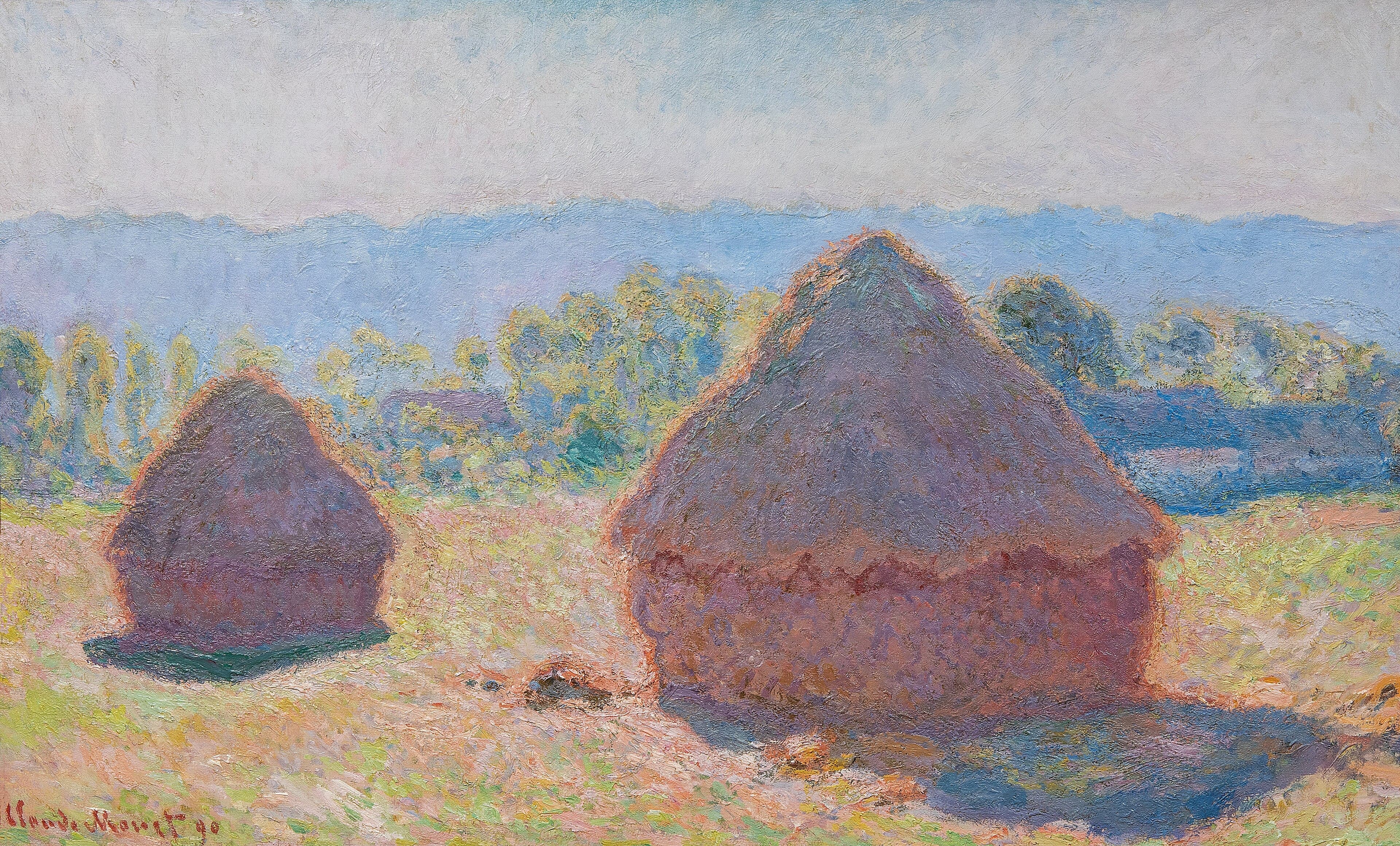
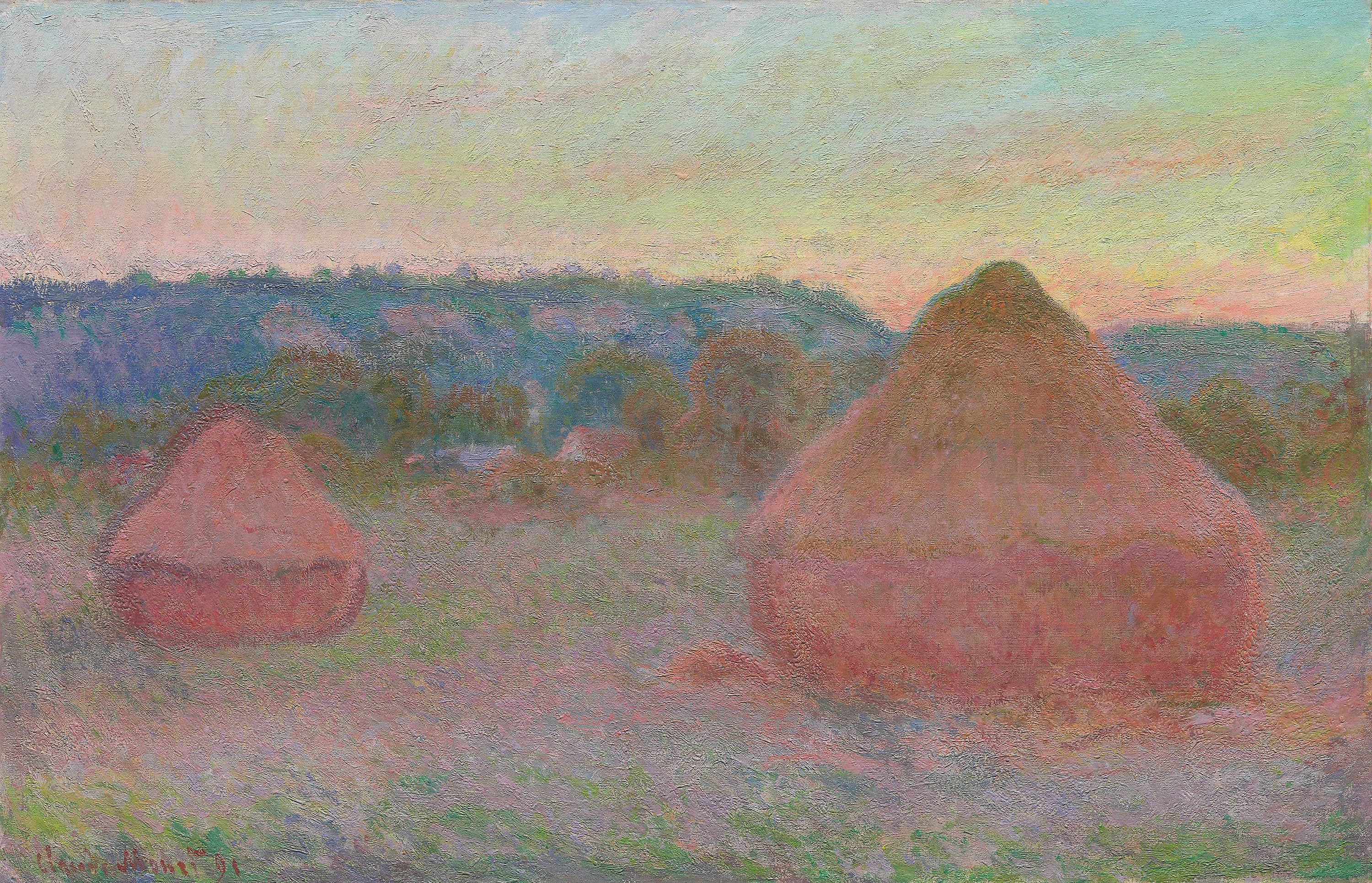
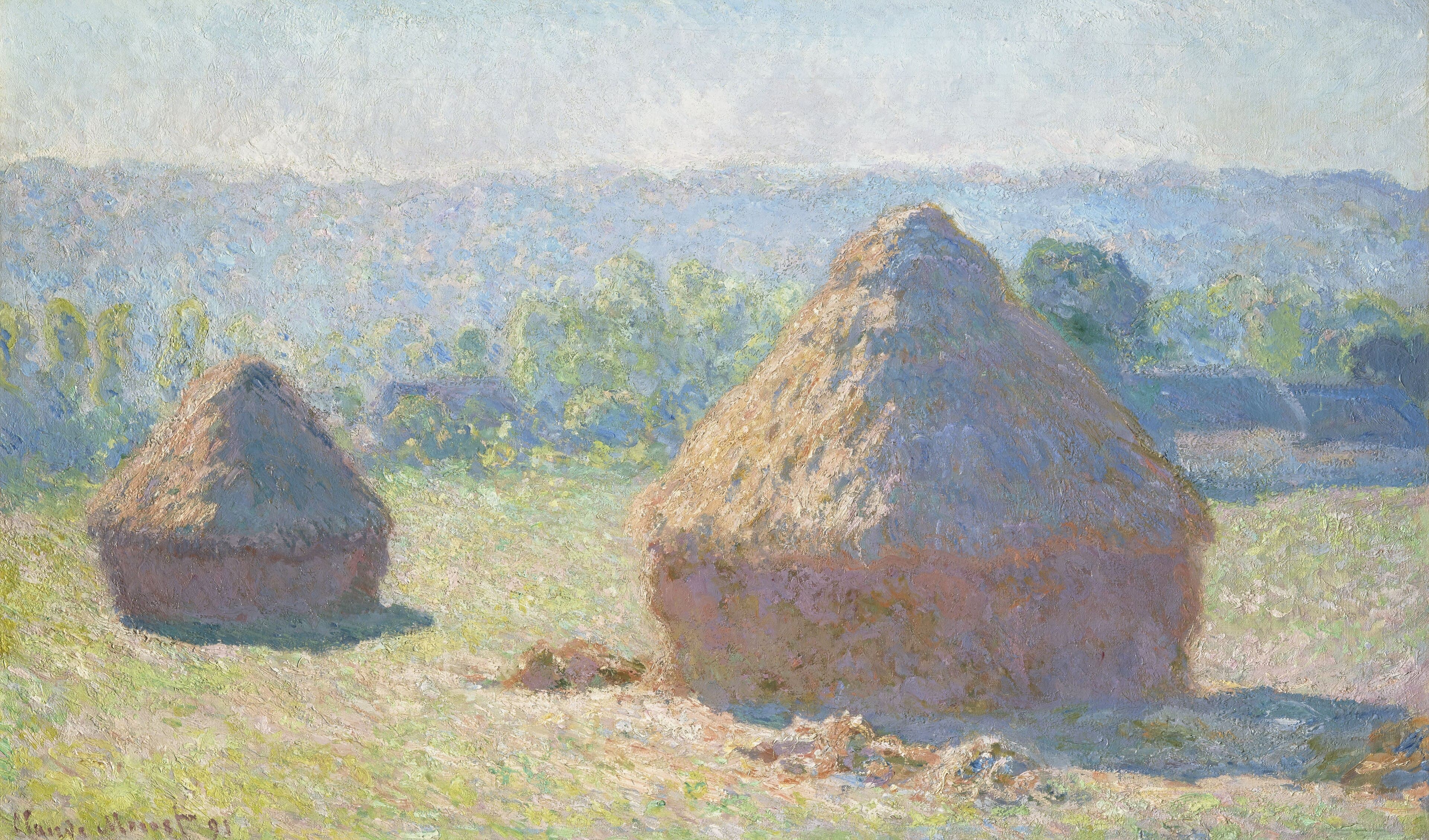
Most of the famous stacks are seen at sunrise, sunset or in snow. Midday is rarer, which makes this canvas a useful counterpoint. Compare the Art Institute of Chicago's Stacks of Wheat (End of Summer) and the Musée d'Orsay's Haystacks, End of Summer, also painted in warm-season light, or the Hill-Stead Museum's Grainstacks, in Bright Sunlight. For a winter contrast, see Stack of Wheat (Thaw, Sunset).
A painting on the road
The NGA's decision to send the painting to regional galleries has made it one of the most traveled Monets of recent years, seen by audiences far from Canberra. At Geelong it anchors the 2026 exhibition Claude Monet and Australian Impressionism, which sets it beside the Australian painters of the Heidelberg School, who were painting sunlit landscapes in the same years.
Where to see it
The painting belongs to the National Gallery of Australia in Canberra (NGA 79.16), purchased in 1979. Under the Sharing the National Collection initiative it was shown at the Tweed Regional Gallery in Murwillumbah from late 2023 to October 2025 and then at the Geelong Gallery, Victoria, from November 2025. Check the NGA website for its current location. See also where to see Monet's paintings.
Questions & answers
Where is Monet's Haystacks, Midday?
It belongs to the National Gallery of Australia in Canberra (NGA 79.16) but has been touring regional galleries: the Tweed Regional Gallery from late 2023 to October 2025, then the Geelong Gallery in Victoria from November 2025. Check the NGA's website for its current location.
When was it painted?
In late summer or early autumn 1890 at Giverny, at the start of Monet's Haystacks series. It is signed and dated 'Claude Monet 90'.
What does the painting show?
Grainstacks in a field under high midday sun: a large stack at center-right casts a short, deep blue shadow, a second is cut by the left edge, and rounded trees and pale hills fade into a hazy sky.
When did the National Gallery of Australia buy it?
In 1979. It was a major purchase for the young national gallery, which opened its Canberra building in 1982, and remains one of its best-known paintings.
More by the artist
Claude Monet
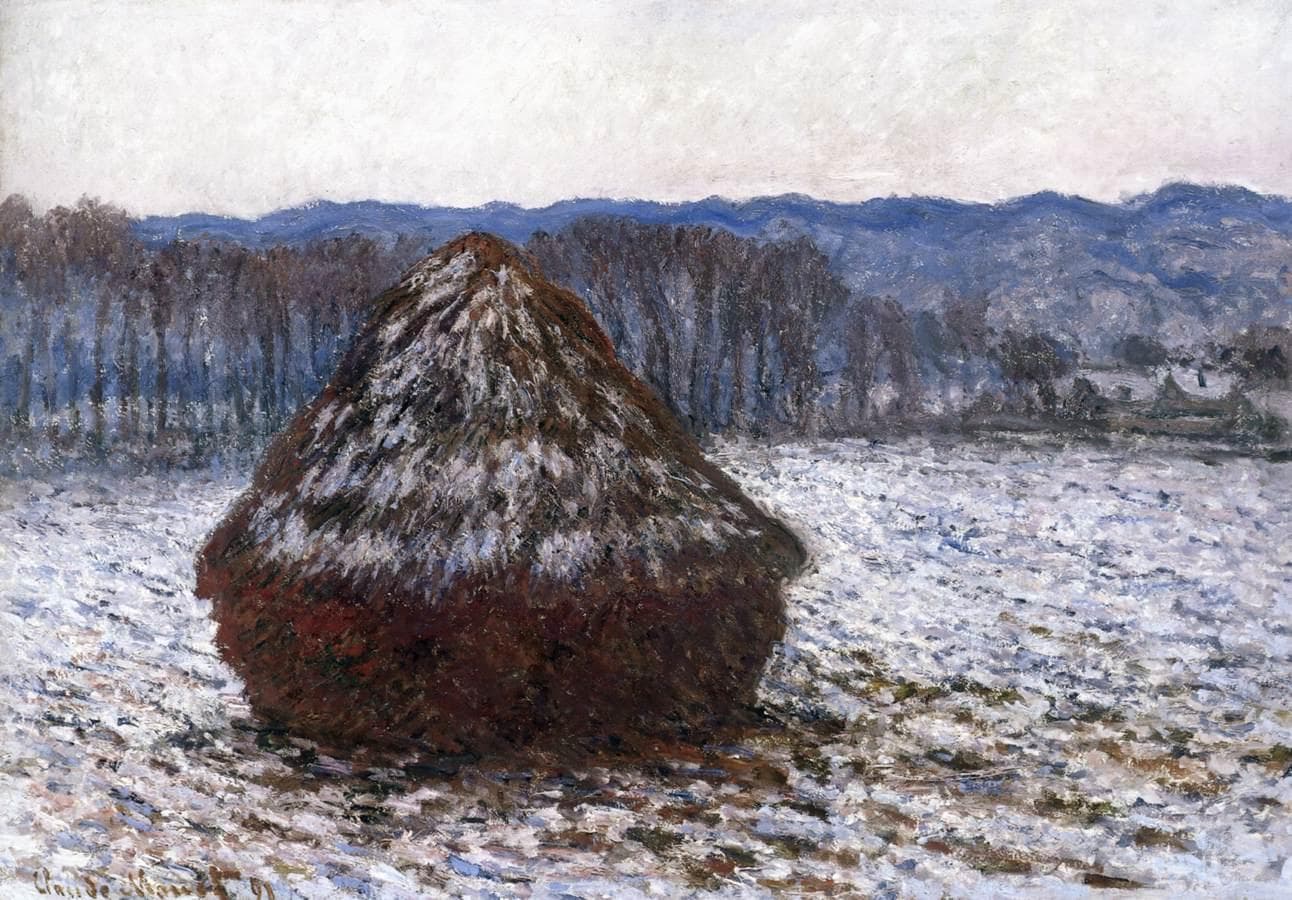
Stack of Wheat
Claude Monet · 1890–91
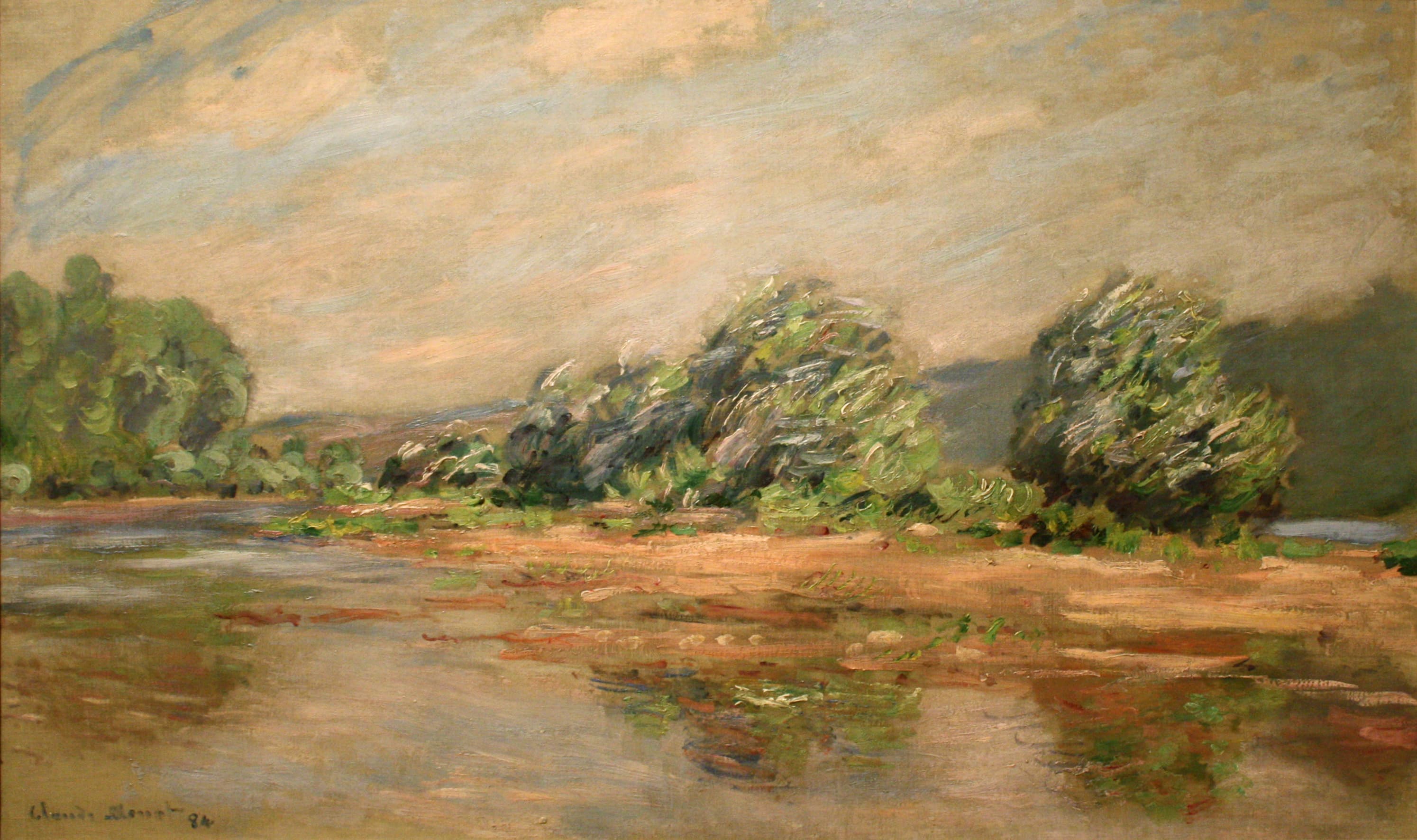
The Seine at Port-Villez (A Gust of Wind)
Claude Monet · c. 1883–90
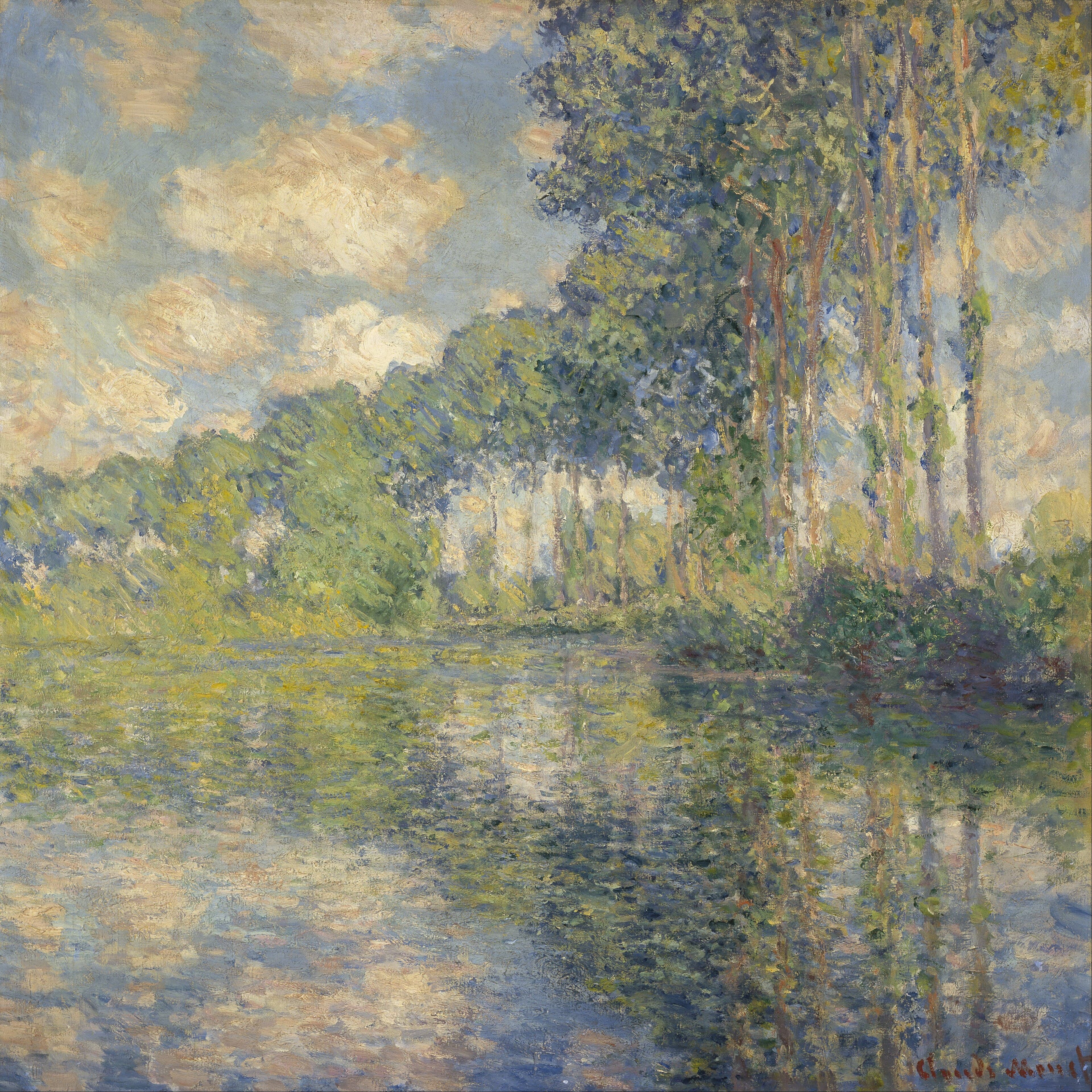
Poplars on the Epte (Edinburgh)
Claude Monet · 1891
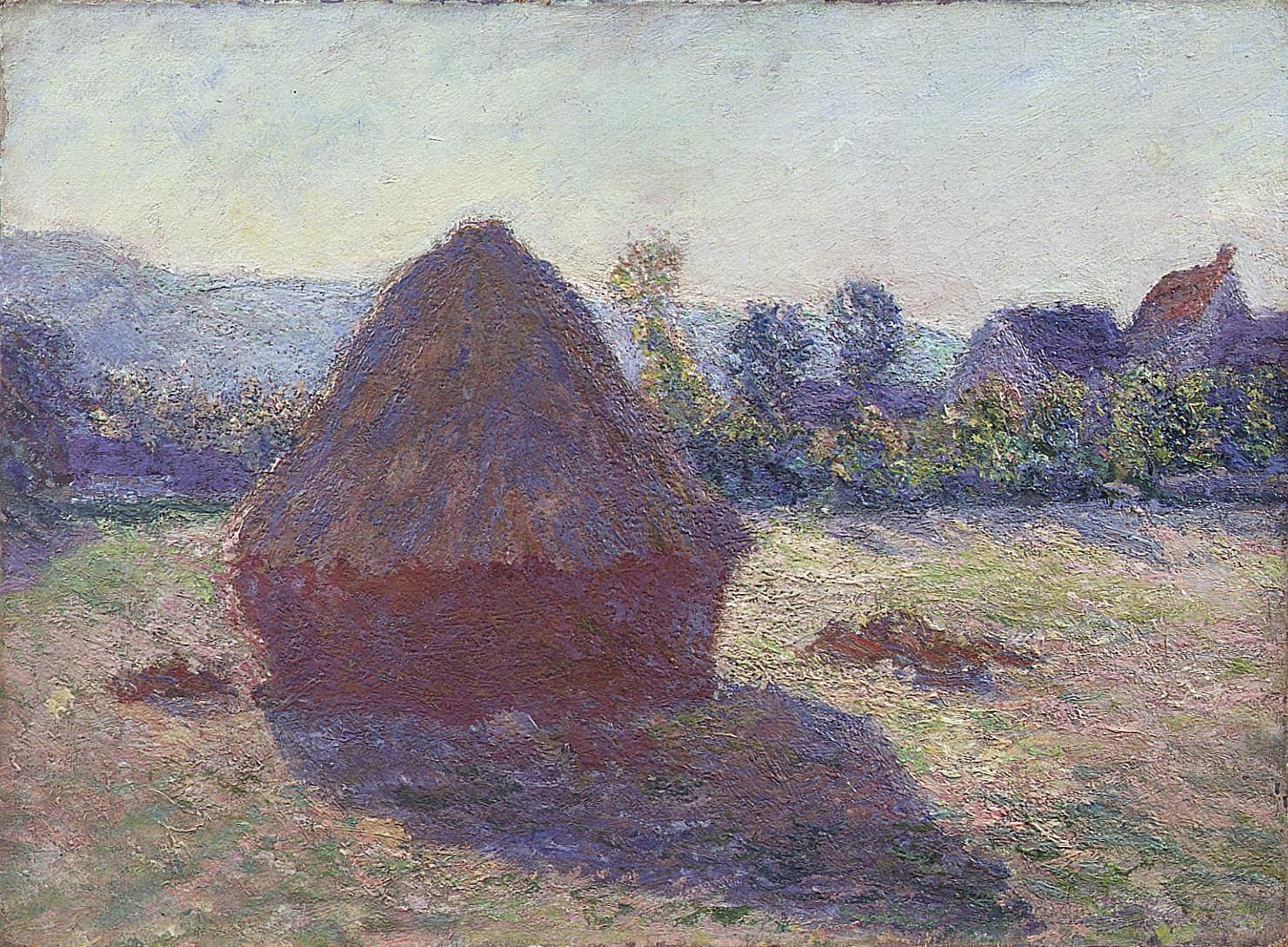
Haystack in the Evening Sun
Claude Monet · 1891
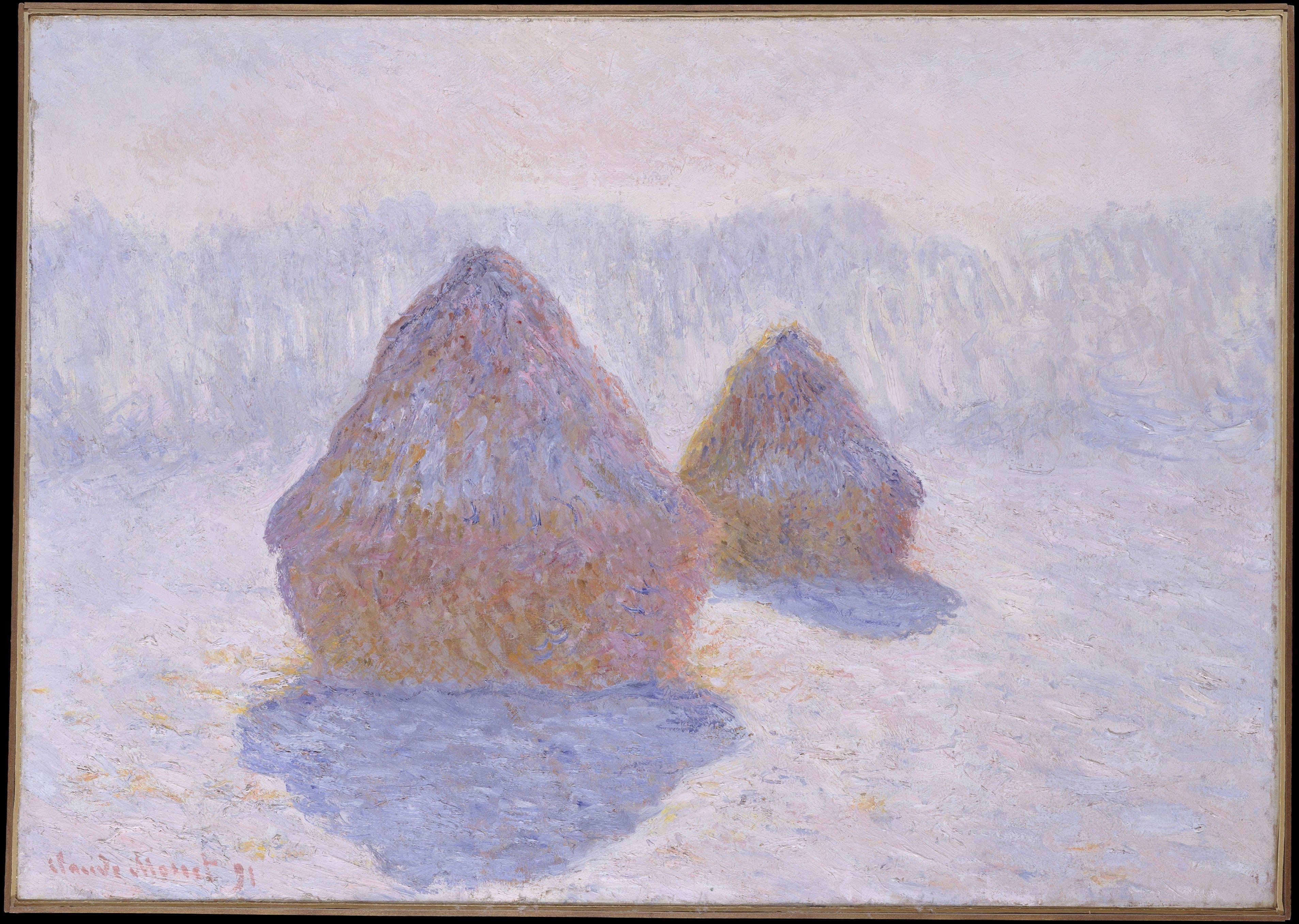
Haystacks (Effect of Snow and Sun)
Claude Monet · 1891
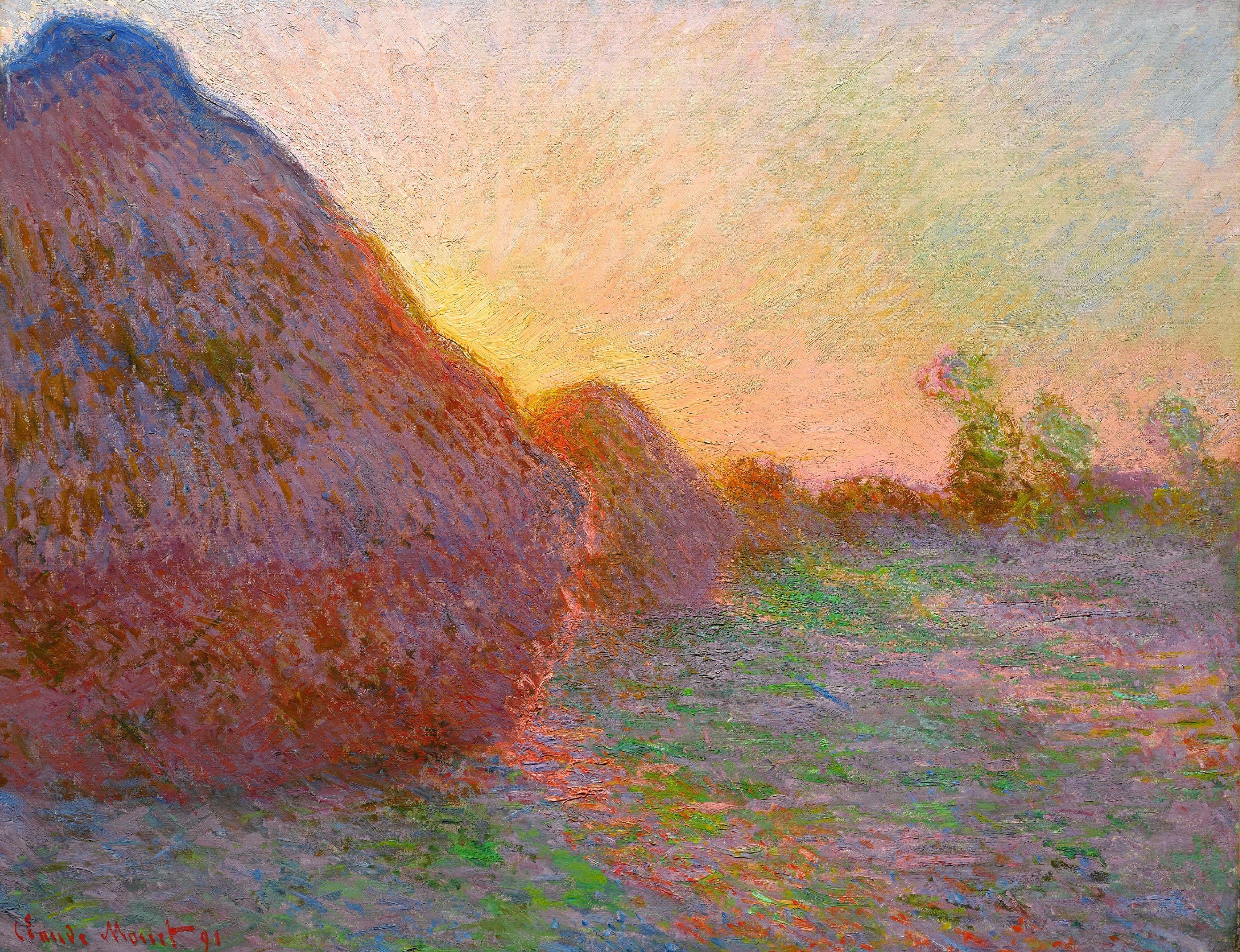
Meules (Grainstacks), 1890
Claude Monet · 1890
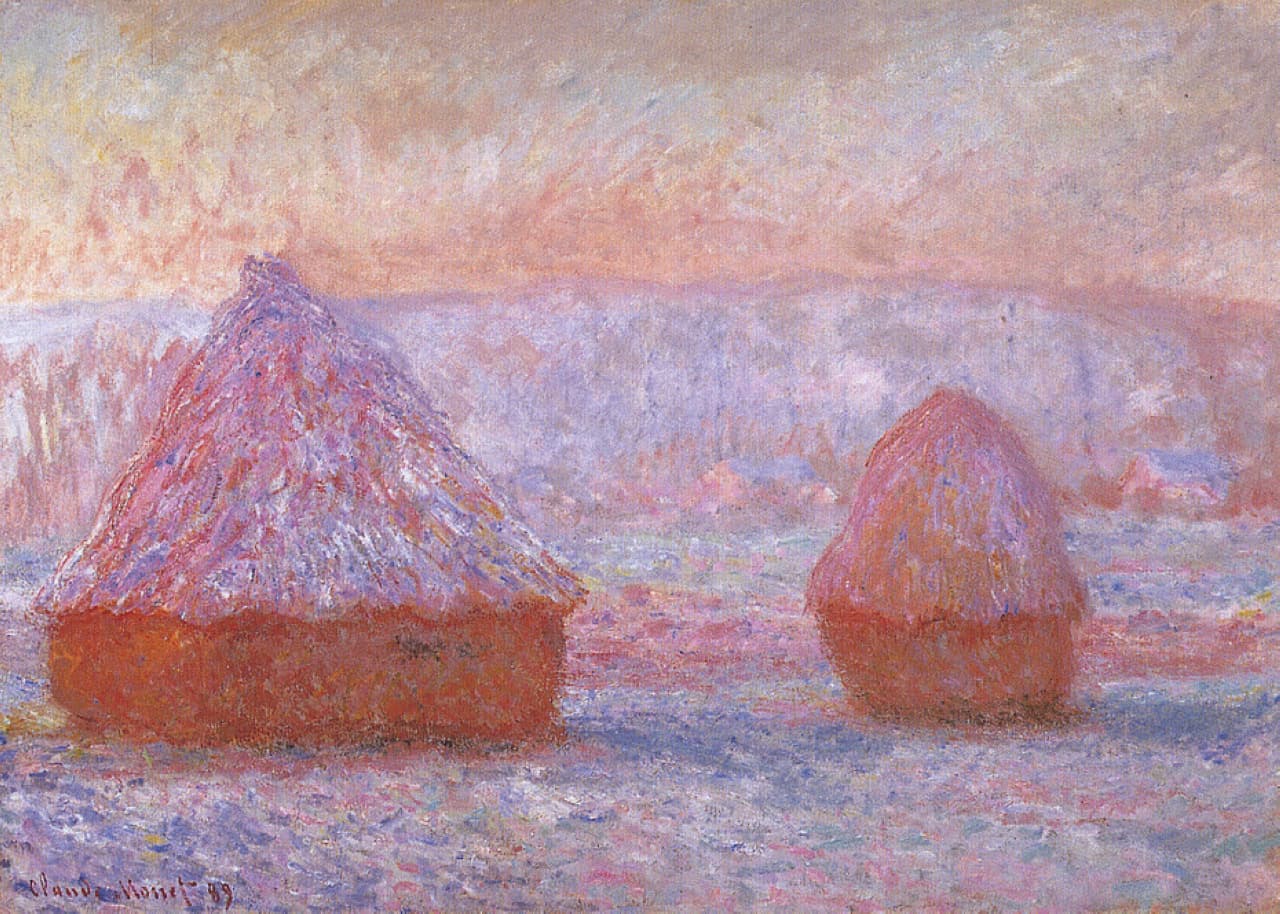
Grainstacks at Giverny, Morning Effect
Claude Monet · 1889
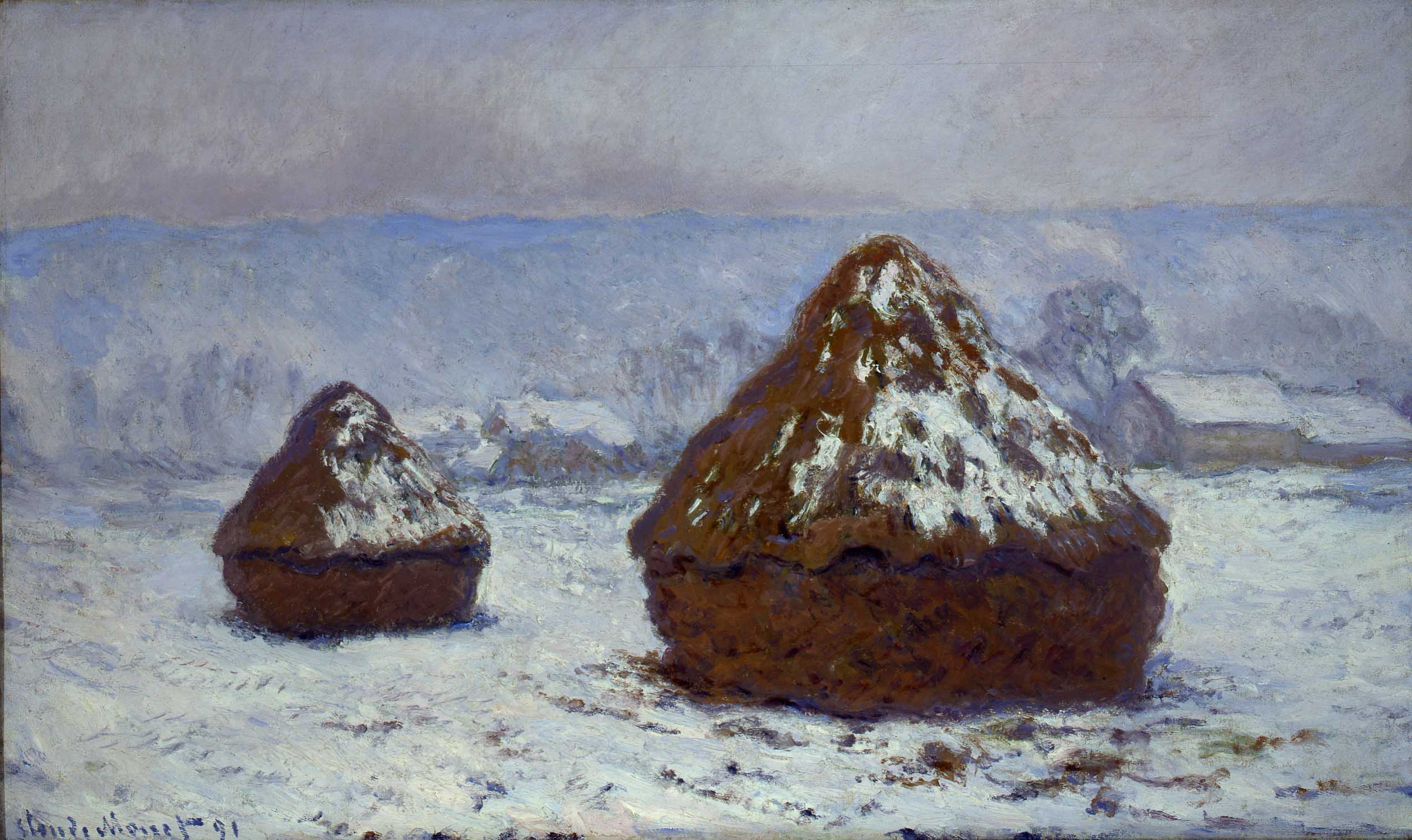
Grainstacks, Snow Effect
Claude Monet · 1891
Also painted in 1890
The same year

Boating on the River Epte
Claude Monet · 1890
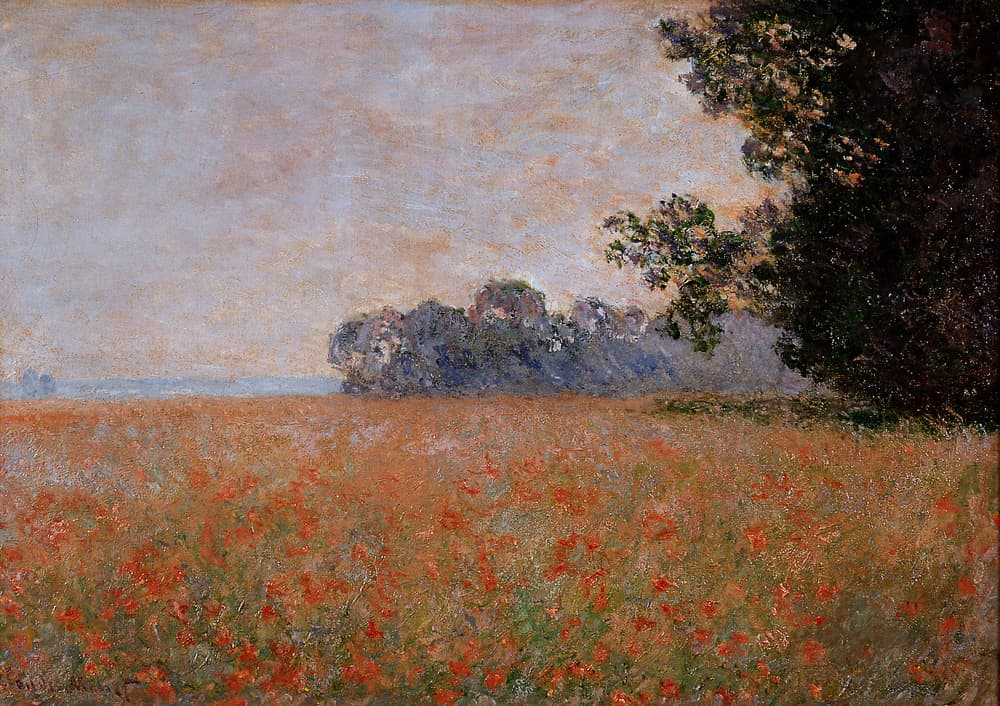
Oat Field with Poppies
Claude Monet · c. 1890
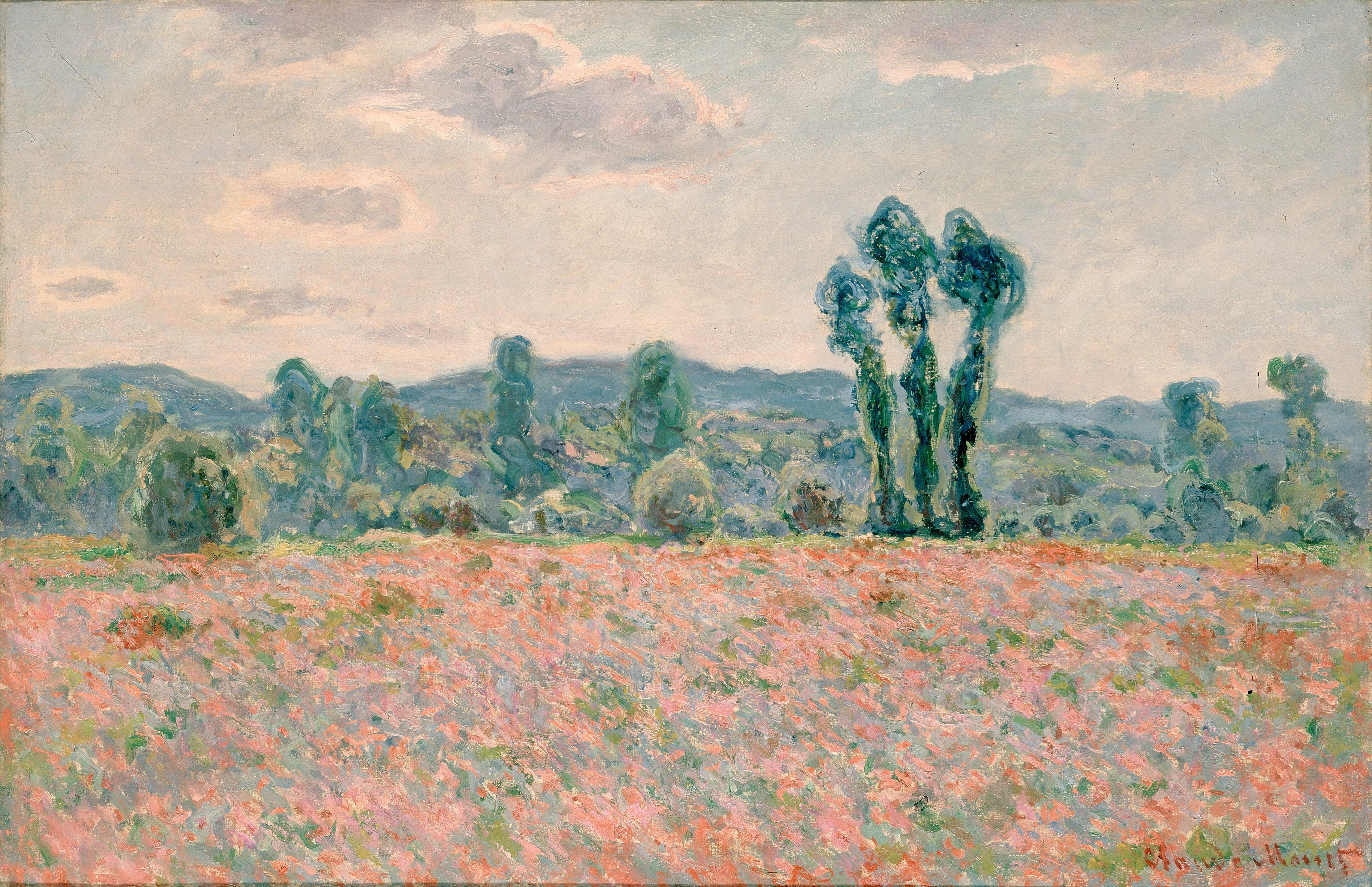
Poppy Field
Claude Monet · c. 1890
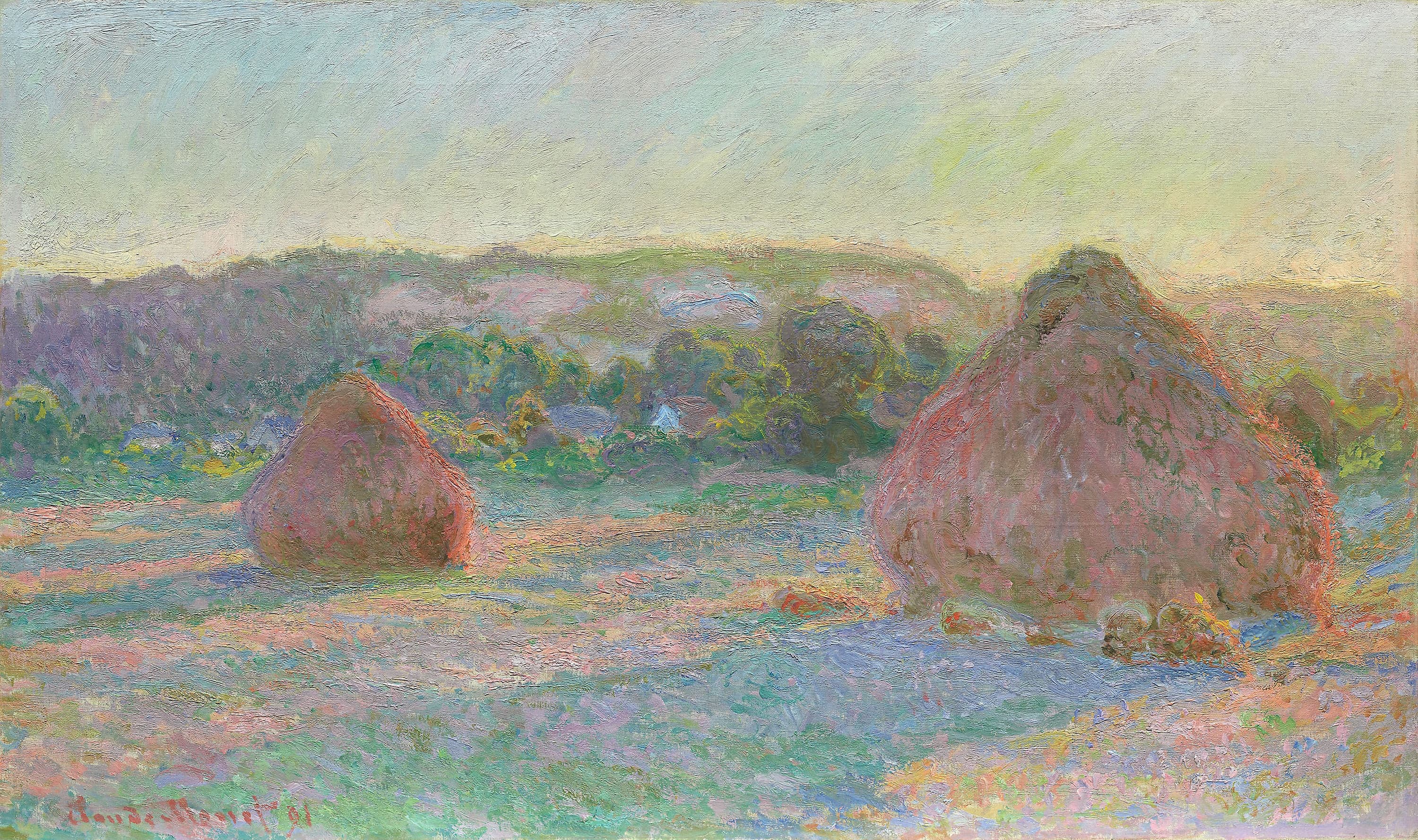
Stacks of Wheat (End of Summer)
Claude Monet · 1890–91
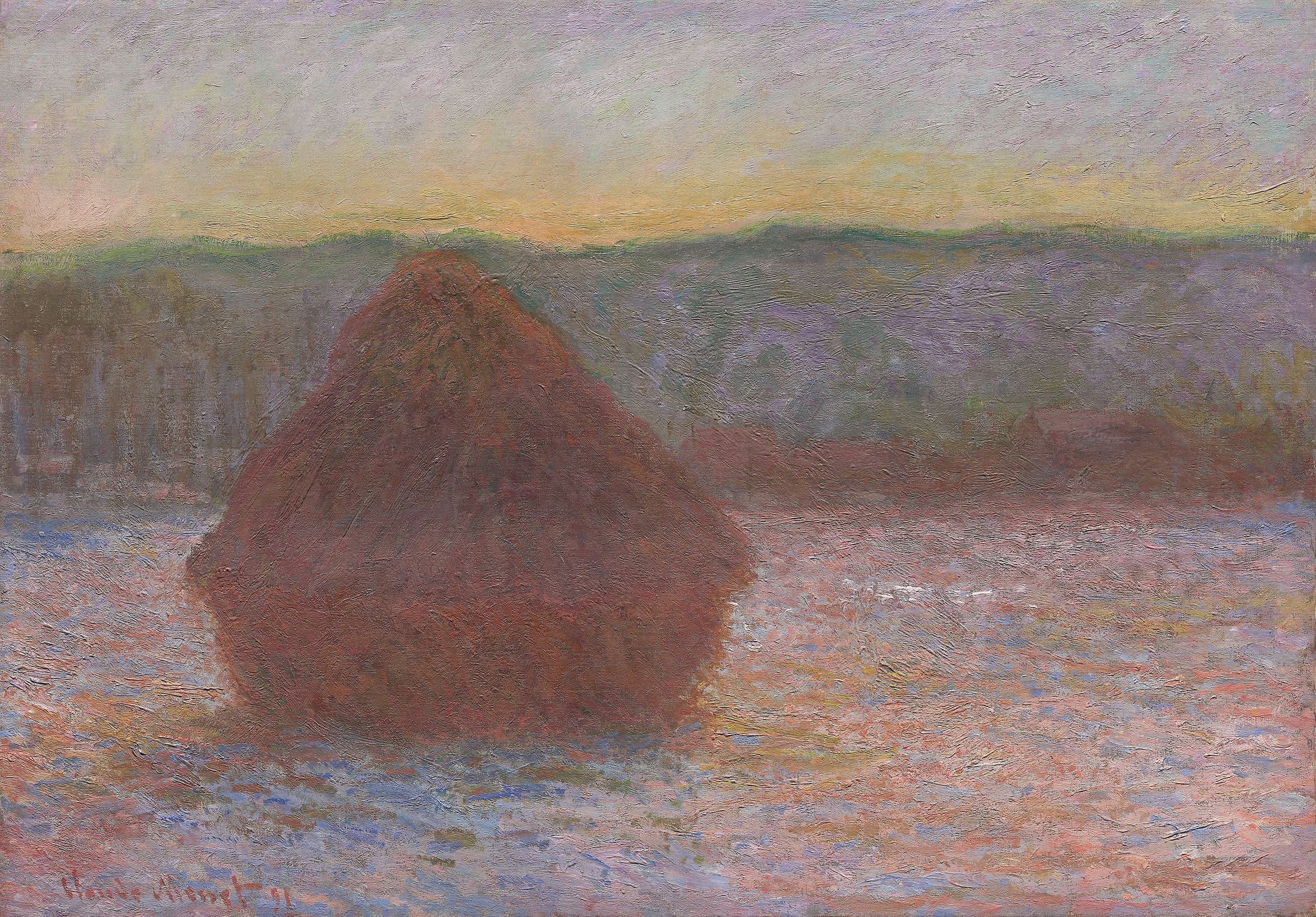
Stack of Wheat (Thaw, Sunset)
Claude Monet · 1890–91
Grainstacks, in Bright Sunlight
Claude Monet · 1890
Stacks of Wheat (End of Day, Autumn)
Claude Monet · 1890–91
Grainstacks in the Sunlight, Morning Effect
Claude Monet · 1890
Kindred works
You may also study
Stacks of Wheat (End of Summer)
Claude Monet · 1890–91
Haystacks, End of Summer
Claude Monet · 1891
Grainstacks, in Bright Sunlight
Claude Monet · 1890
Stack of Wheat (Thaw, Sunset)
Claude Monet · 1890–91
The Fort of Antibes
Claude Monet · 1888
Val-Saint-Nicolas, near Dieppe (Morning)
Claude Monet · 1897
Fight with Cudgels
Francisco Goya · c. 1819–1823
Wheat Field
Claude Monet · 1881