Image: Musée d'Orsay, Paris; photograph by a Wikimedia Commons contributor · CC BY 3.0 · via Wikimedia Commons
Realism / early Impressionism
Le Pavé de Chailly
Claude Monet, c. 1865
Le Pavé de Chailly is a small oil of about 1865 by Claude Monet showing the old paved road through the forest of Fontainebleau near Chailly-en-Bière in autumn light. It is in the Musée d'Orsay, Paris.
- Artist
- Claude Monet
- Date
- c. 1865
- Medium
- Oil on canvas
- Dimensions
- 43.5 × 59.3 cm
- Collection
- Musée d'Orsay, Paris, France
- Movement
- Realism / early Impressionism
- Catalogue
- Wildenstein 56
What you are looking at
A straight road runs away from us into the forest. On the left it is a pale band of beaten earth; on the right a grass verge strewn with fallen leaves takes up most of the foreground, and a single big trunk stands on it, close enough to fill the right edge of the picture. Beyond it the trees close in on both sides and frame a wedge of whitish sky, and at the far end of the avenue the road disappears into a blue-grey haze where the woods turn.
The season is autumn. Leaves have turned rust and orange on the left, the right-hand trees are still a dry olive green, and the light comes low from the side, laying long violet shadows across the grass from the trunk at right. There are no figures, no carts, no walkers. The whole picture is a lesson in how far a road can go.
The detail most people miss is how carefully the focus changes from front to back. The bark of the near trunk, the individual leaves on the grass and the ruts of the road are picked out sharply; the far trees are a soft, almost undifferentiated screen. Monet builds depth from that change of definition as much as from the converging lines of the road.
The picture also has a definite time of day. The shadows fall across the road rather than along it, so the sun is low and to one side, and the sky at the end of the avenue is white rather than blue, as it is on a hazy autumn afternoon. Monet was already paying attention to exactly the conditions that would later become the titles of his paintings.
Where and when it was painted
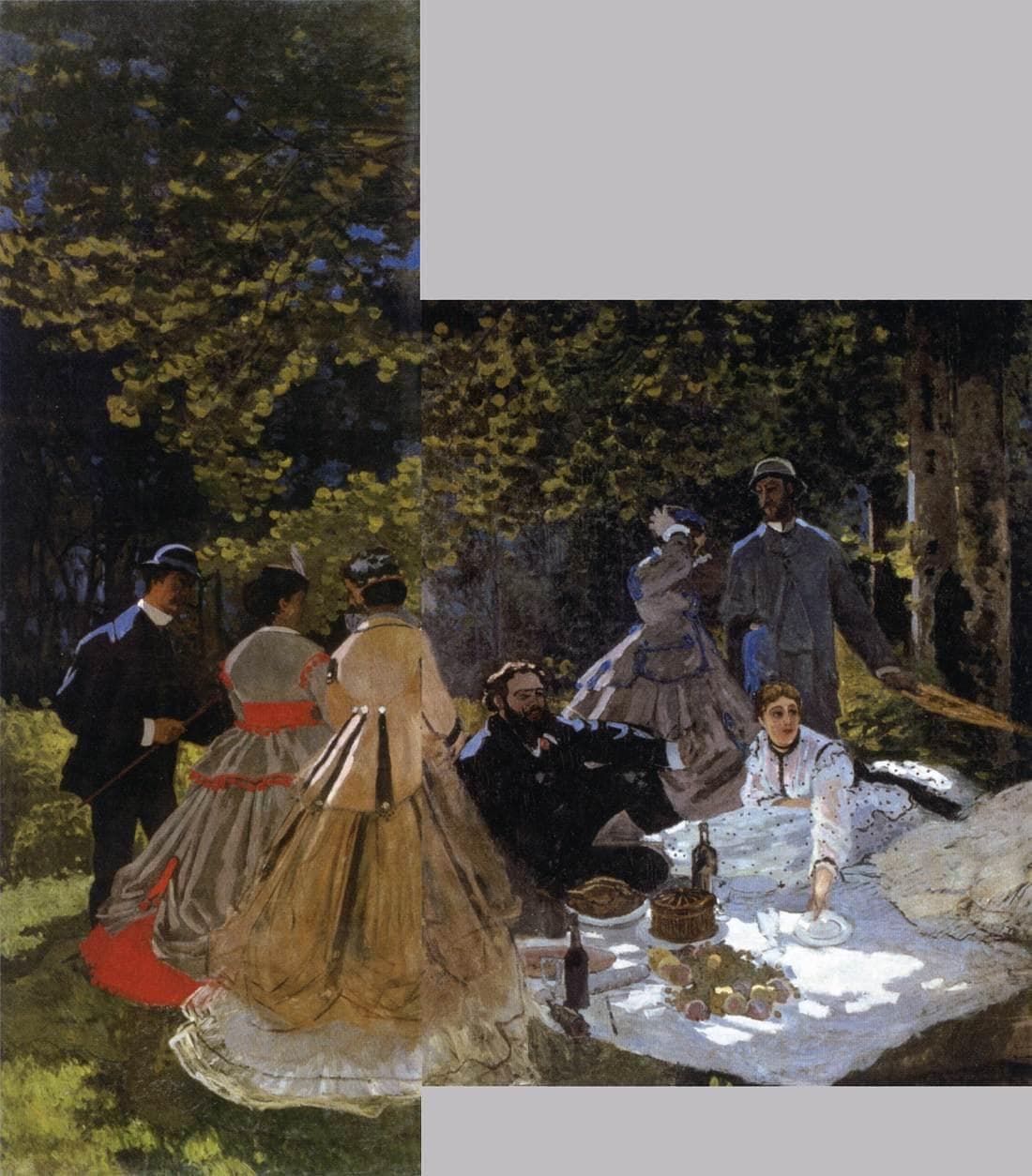
The pavé de Chailly was the paved road that led from the village of Chailly-en-Bière, on the western edge of the forest of Fontainebleau, into the woods. The forest had been the open-air studio of the Barbizon painters, Théodore Rousseau, Diaz and Millet among them, for a generation, and in the spring of 1863 Monet went there with his friend Frédéric Bazille after leaving the studio of Charles Gleyre in Paris. He returned in 1864 and again in 1865, when he stayed at Chailly for months to make studies for his huge, unfinished Déjeuner sur l'herbe.
This canvas belongs to that moment, when Monet was 24 or 25 and still learning from Courbet and the Barbizon school. It sits alongside other forest studies of the same months such as The Bodmer Oak, Fontainebleau Forest and the dawn view of Haystacks at Chailly at Sunrise, and it shares its woodland light with the surviving fragments of Le Déjeuner sur l'herbe.
How it was painted
The canvas is small, 43.5 by 59.3 centimeters, the size of a study that could be carried into the forest and finished in a few sessions. The paint is opaque and fairly smooth, closer to Barbizon practice than to the broken touches of the 1870s, but the color is already Monet's own. He sets complementaries against each other to make the light hum: red-brown foliage against green on the right, bluish violet shadows next to the orange of the leaves. The sky is a flat, pale mass that pushes the dark trees forward.
Monet painted the same stretch of road more than once. A larger and differently lit version, Pavé de Chailly in the Fontainebleau Forest, is in the Ordrupgaard museum near Copenhagen. Comparing the two shows how early he was already treating a single motif as something to repeat under different conditions, the habit that would lead to the series of the 1890s.
Ownership and where to see it
The picture passed through a private collection before the painter and collector Étienne Moreau-Nélaton bought it in 1898. In 1906 he gave his collection to the French state, and the painting was assigned to the Musée d'Orsay when it opened in 1986. It is catalogued by Wildenstein as number 56, and was shown in an early retrospective of Monet's work. For the other Monets in the building, see Monet at the Musée d'Orsay; for the arc of his career, Claude Monet's life in paintings and the Claude Monet page.
Questions & answers
Where is Monet's Le Pavé de Chailly?
Le Pavé de Chailly is in the Musée d'Orsay in Paris (inventory RF 1672). It came from the collection of Étienne Moreau-Nélaton, who bought it in 1898 and gave his collection to the French state in 1906. The canvas measures 43.5 by 59.3 centimeters.
When and where did Monet paint Le Pavé de Chailly?
Monet painted it around 1865 at Chailly-en-Bière, the village on the western edge of the forest of Fontainebleau where he worked with Frédéric Bazille in 1863–65. The pavé was the paved road leading from Chailly into the forest.
What does Le Pavé de Chailly show?
It shows a straight road vanishing into the forest in autumn, with a large tree trunk on a leaf-strewn verge at right and the avenue closing to a hazy point in the distance. There are no figures: the subject is space, light and the turning season.
Are there other versions of Le Pavé de Chailly?
Yes. Monet painted the road more than once. A larger version, Pavé de Chailly in the Fontainebleau Forest, is in the Ordrupgaard museum near Copenhagen. It shows the same avenue under different light and is often compared with the Orsay canvas.
More by the artist
Claude Monet

Bridge over a Pond of Water Lilies
Claude Monet · 1899

Woman with a Parasol – Madame Monet and Her Son
Claude Monet · 1875

Sunset in Venice
Claude Monet · 1908–12

La Grenouillère
Claude Monet · 1869

Beach in Pourville
Claude Monet · 1882

Springtime
Claude Monet · 1872

Boating on the River Epte
Claude Monet · 1890

The Seine at Asnières (Hermitage)
Claude Monet · 1873
Also painted in 1865
The same year
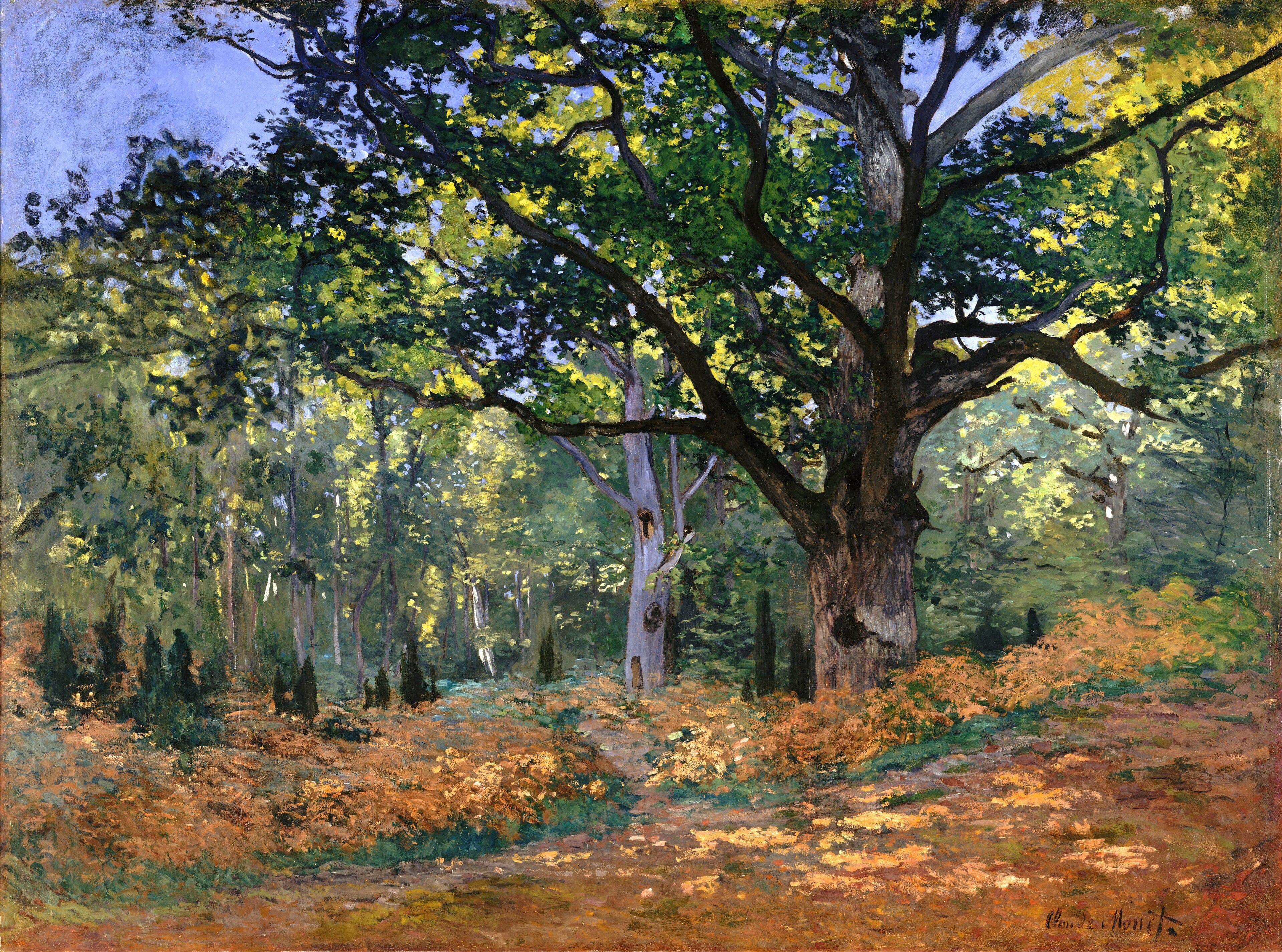
The Bodmer Oak, Fontainebleau Forest
Claude Monet · 1865
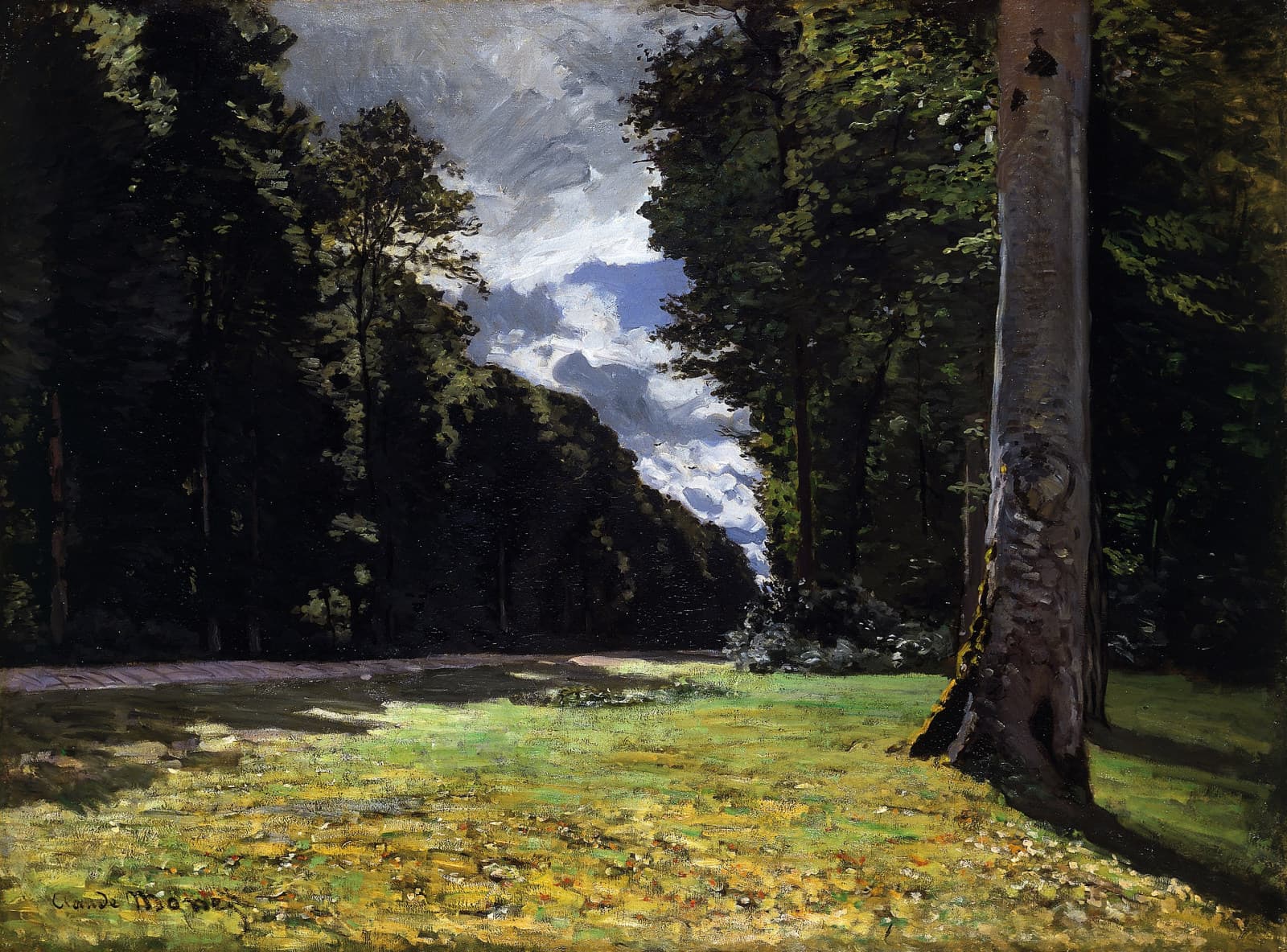
The Pavé de Chailly in the Forest of Fontainebleau
Claude Monet · 1865
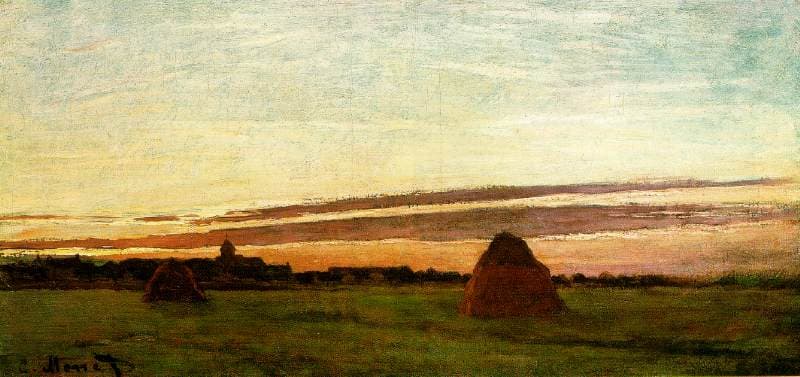
Haystacks at Chailly at Sunrise
Claude Monet · 1865
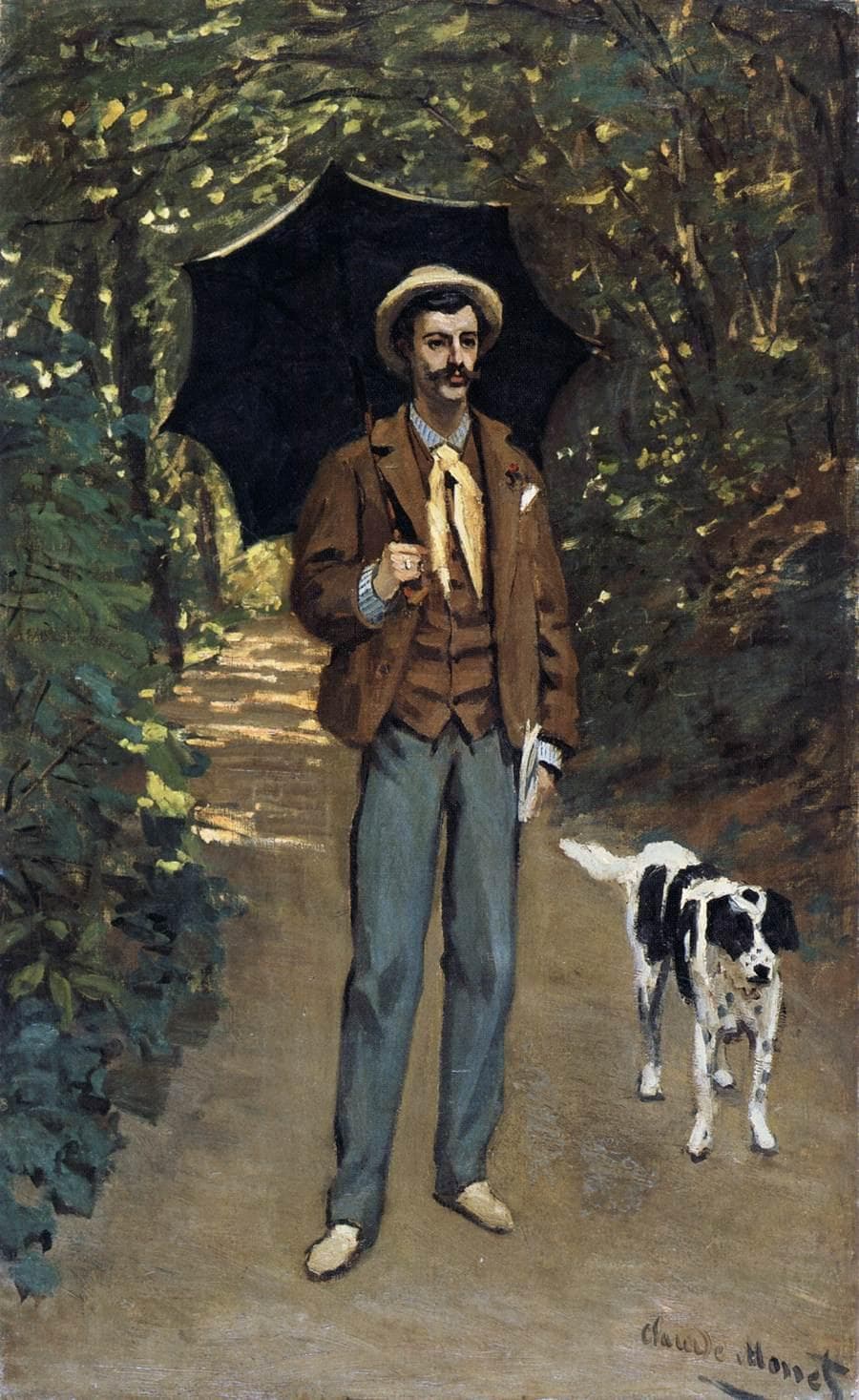
Man with a Parasol (Portrait of Victor Jacquemont)
Claude Monet · 1865–67
Le Déjeuner sur l'Herbe (two surviving fragments)
Claude Monet · 1865–66
La Pointe de la Hève at Low Tide
Claude Monet · 1865
Picnic (detail)
Claude Monet · 1865–66
Setting Sun (Nightfall)
Claude Monet · c. 1865
Kindred works
You may also study
The Pavé de Chailly in the Forest of Fontainebleau
Claude Monet · 1865
The Bodmer Oak, Fontainebleau Forest
Claude Monet · 1865
Haystacks at Chailly at Sunrise
Claude Monet · 1865
Le Déjeuner sur l'Herbe (two surviving fragments)
Claude Monet · 1865–66
Corner of the Studio
Claude Monet · 1861

The Scream
Edvard Munch · 1893

Ophelia
John Everett Millais · 1851–52

The Great Wave off Kanagawa
Katsushika Hokusai · c. 1830–32