Image: Ordrupgaard, Copenhagen · Public domain · via Wikimedia Commons
Impressionism
The Pavé de Chailly in the Forest of Fontainebleau
Claude Monet, 1865
The Pavé de Chailly in the Forest of Fontainebleau is an 1865 painting by Claude Monet of the old paved road through the forest near Chailly-en-Bière, with sunlit grass, a great beech trunk and storm clouds. It is in Ordrupgaard, near Copenhagen.
- Artist
- Claude Monet
- Date
- 1865
- Medium
- Oil on canvas
- Dimensions
- 97 × 130.5 cm
- Collection
- Ordrupgaard, Charlottenlund (Copenhagen), Denmark
- Movement
- Impressionism
- Catalogue
- Wildenstein 57
The Pavé de Chailly in the Forest of Fontainebleau is a large forest landscape Claude Monet painted in 1865, while he was living at the village of Chailly-en-Bière on the edge of the forest. It shows the pavé, the old cobbled road from Chailly into the forest, opening into a sunny clearing under a stormy sky. The picture belongs to Ordrupgaard, the museum of the Danish collector Wilhelm Hansen at Charlottenlund, just north of Copenhagen.
What you are looking at
The foreground is a broad stretch of grass and moss, lit by full sun in yellow-greens and gold and flecked with small touches of ochre and brown, like fallen leaves. A pale strip at left marks the edge of the road where it enters the clearing, and shadows of trees lie across it in cool blue-green bands.
On both sides the forest closes in. At left a wall of dark trees, mostly painted in deep greens and black-greens, slopes down toward the center. At right, close to us, a massive beech trunk rises out of the frame, its smooth gray bark mottled with lichen and painted in long vertical strokes of silver, blue and ochre; its roots grip the grass at its base, and dark foliage spreads above. Between the two masses the sky breaks open in a V of brilliant blue, crowded with dramatic white and gray clouds that look as if they are moving fast. A sunlit bush glows at the end of the opening. The signature is at lower left.
Where and when it was painted
In the spring and summer of 1865 Monet, aged 24, settled at Chailly to work on his most ambitious project yet: a huge picnic scene, Le Déjeuner sur l'herbe, meant to rival Manet and to make his name at the Salon. Frédéric Bazille joined him to pose. The forest that the Barbizon painters Théodore Rousseau and Narcisse Diaz had made famous gave him the setting, and he made many studies of its roads, clearings and trees. The surviving fragments of the big picnic picture are on our pages for Le Déjeuner sur l'Herbe and its smaller study The Picnic.
How it was painted
The size of the canvas, nearly a meter by a meter and a third, shows that this was more than a sketch. Monet probably began it on the spot and finished it in the studio. The handling is free and confident: dragged strokes on the beech trunk, rapid scumbles of green on the far trees, and heavy, broken touches of yellow and green in the sunlit grass. The light comes from behind the trees at upper left, so the clearing is lit and the walls of the forest stay dark. That strong contrast of light and shade is still close to Courbet and the Barbizon painters, but the treatment of sunlight on grass, in flat, unblended touches of pure color, is new.
Related paintings
Monet painted the same stretch of the pavé more than once in 1865. A smaller version, Le Pavé de Chailly, is in the Musée d'Orsay, and he made close studies of individual trees such as The Bodmer Oak, now at the Met. On the open plain outside the forest the same year he painted Haystacks at Chailly at Sunrise. The year before, at Honfleur, he had used a similar composition of a road between trees in Walk. For the story of these years, see Monet's life in paintings.
Ownership and where to see it
Ordrupgaard was built as the private house and gallery of Wilhelm Hansen, an insurance magnate who assembled one of the finest collections of French 19th-century painting in Scandinavia during and after the First World War. It opened to the public in 1918, and his widow left it to the Danish state in 1951. The painting hangs with Hansen's other French pictures there. For other collections with early Monets, see where to see Monet's paintings.
Questions & answers
Where is Monet's Pavé de Chailly painting?
This large 1865 version is at Ordrupgaard, an art museum in Charlottenlund just north of Copenhagen, Denmark, built around the collection of Wilhelm Hansen. A smaller version of the same road is in the Musée d'Orsay in Paris.
When and where did Monet paint it?
In 1865, while he was living in the village of Chailly-en-Bière on the edge of the Forest of Fontainebleau, south of Paris. He was there to prepare his huge picnic picture, Le Déjeuner sur l'herbe, and painted many forest studies at the same time.
What is the Pavé de Chailly?
It was the old cobbled road, or pavé, that ran from the village of Chailly into the Forest of Fontainebleau. Painters of the Barbizon school had long worked along it. Monet shows the road opening into a sunlit clearing beside a huge beech tree.
How does it differ from the Orsay version?
The Ordrupgaard canvas is much larger, nearly a meter by 1.3 meters, with a dramatic stormy sky and a great beech trunk filling the right side. The Orsay picture is smaller and more of a direct study of the road and its light.
More by the artist
Claude Monet

Bridge over a Pond of Water Lilies
Claude Monet · 1899

Woman with a Parasol – Madame Monet and Her Son
Claude Monet · 1875

Sunset in Venice
Claude Monet · 1908–12

La Grenouillère
Claude Monet · 1869

Beach in Pourville
Claude Monet · 1882

Springtime
Claude Monet · 1872

Boating on the River Epte
Claude Monet · 1890

The Seine at Asnières (Hermitage)
Claude Monet · 1873
Also painted in 1865
The same year
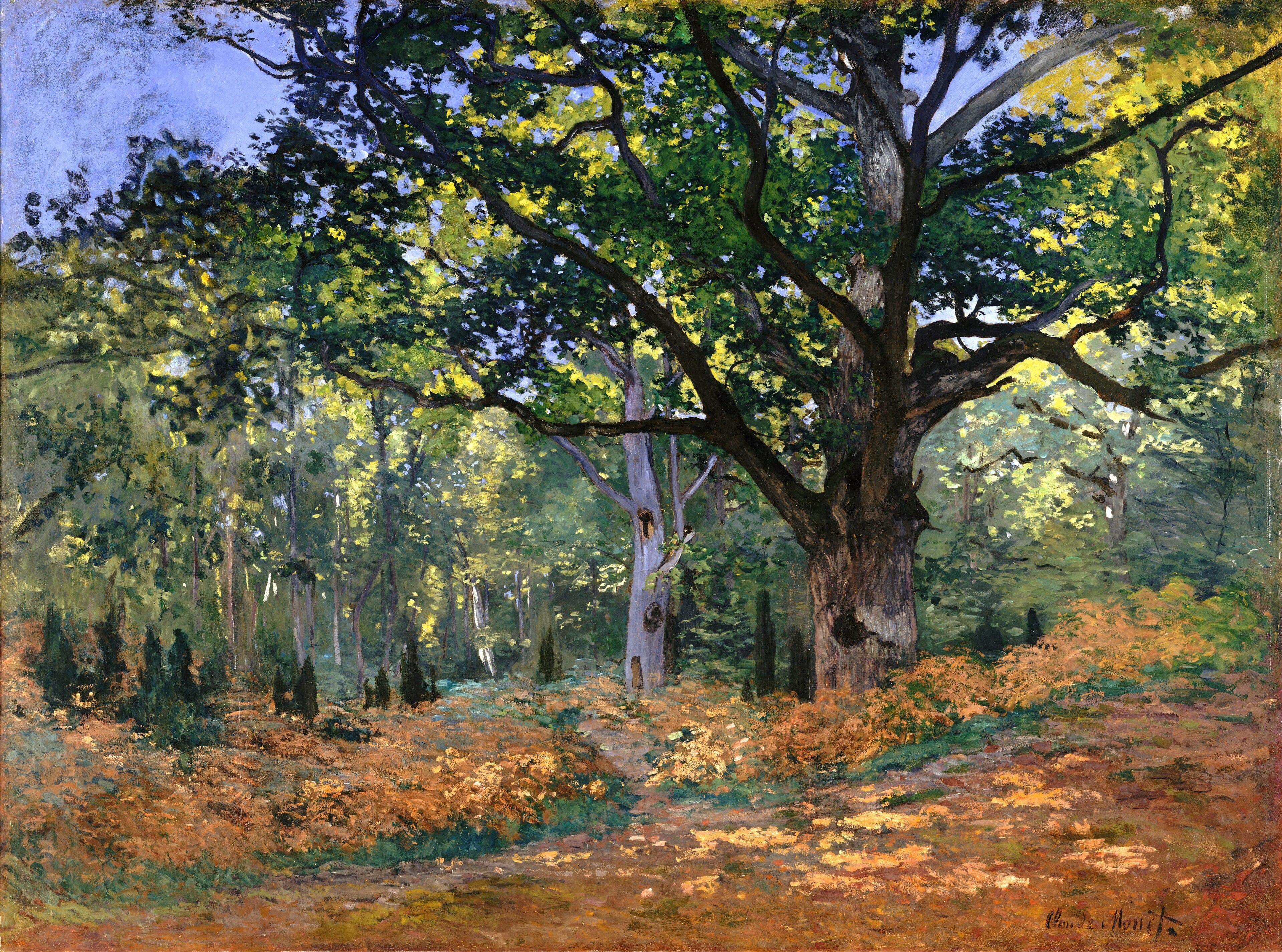
The Bodmer Oak, Fontainebleau Forest
Claude Monet · 1865
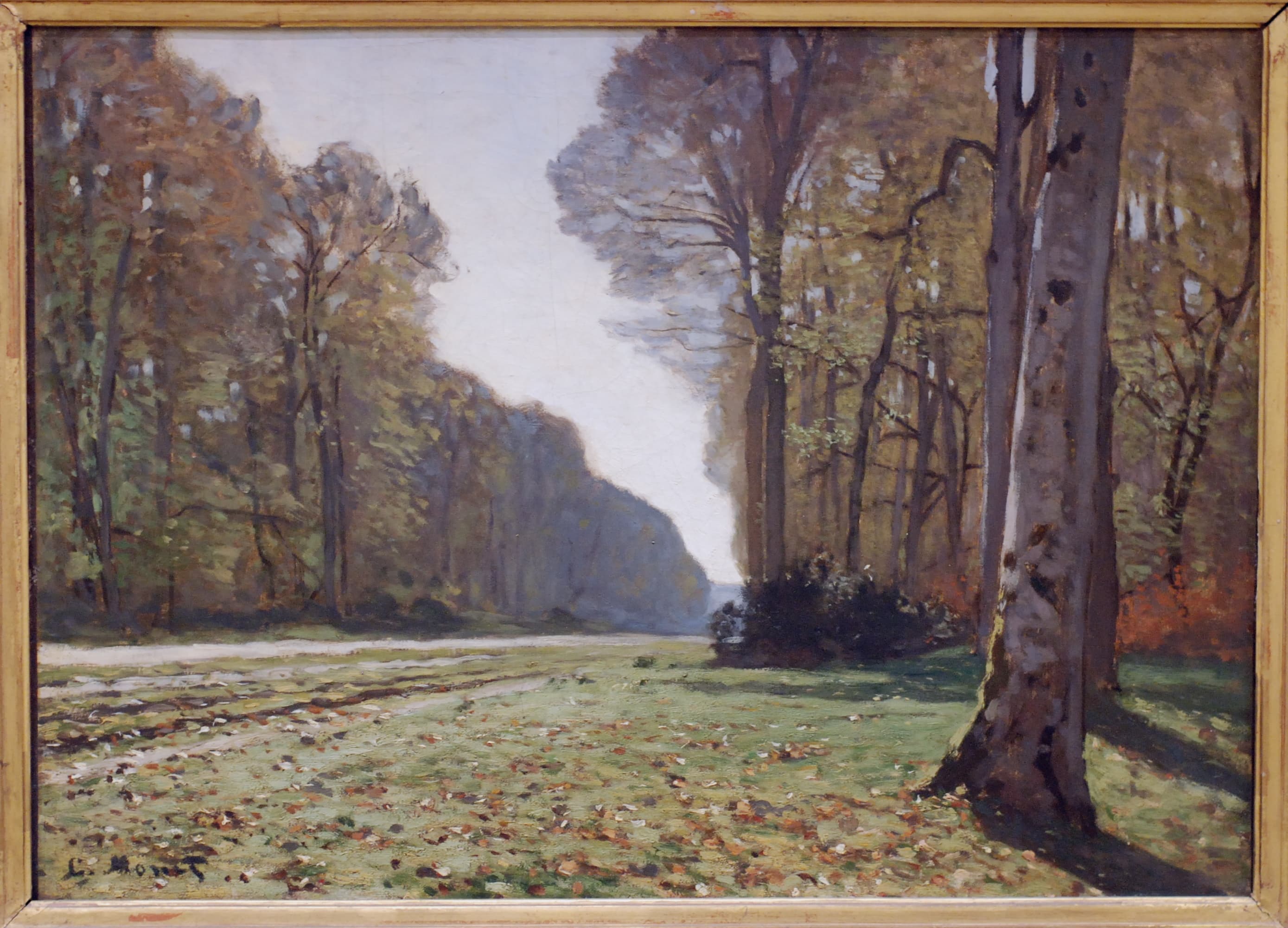
Le Pavé de Chailly
Claude Monet · c. 1865
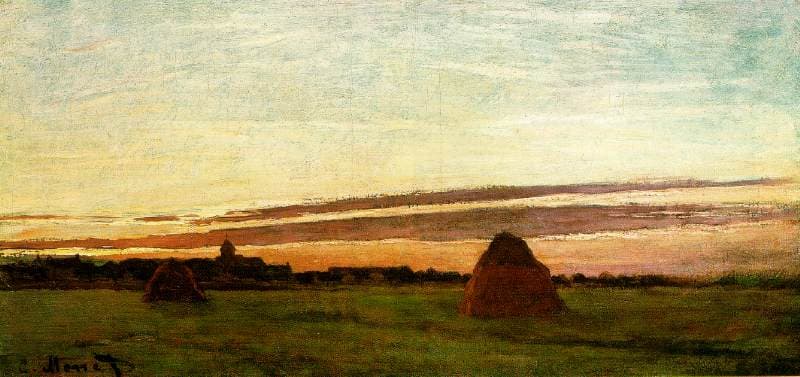
Haystacks at Chailly at Sunrise
Claude Monet · 1865
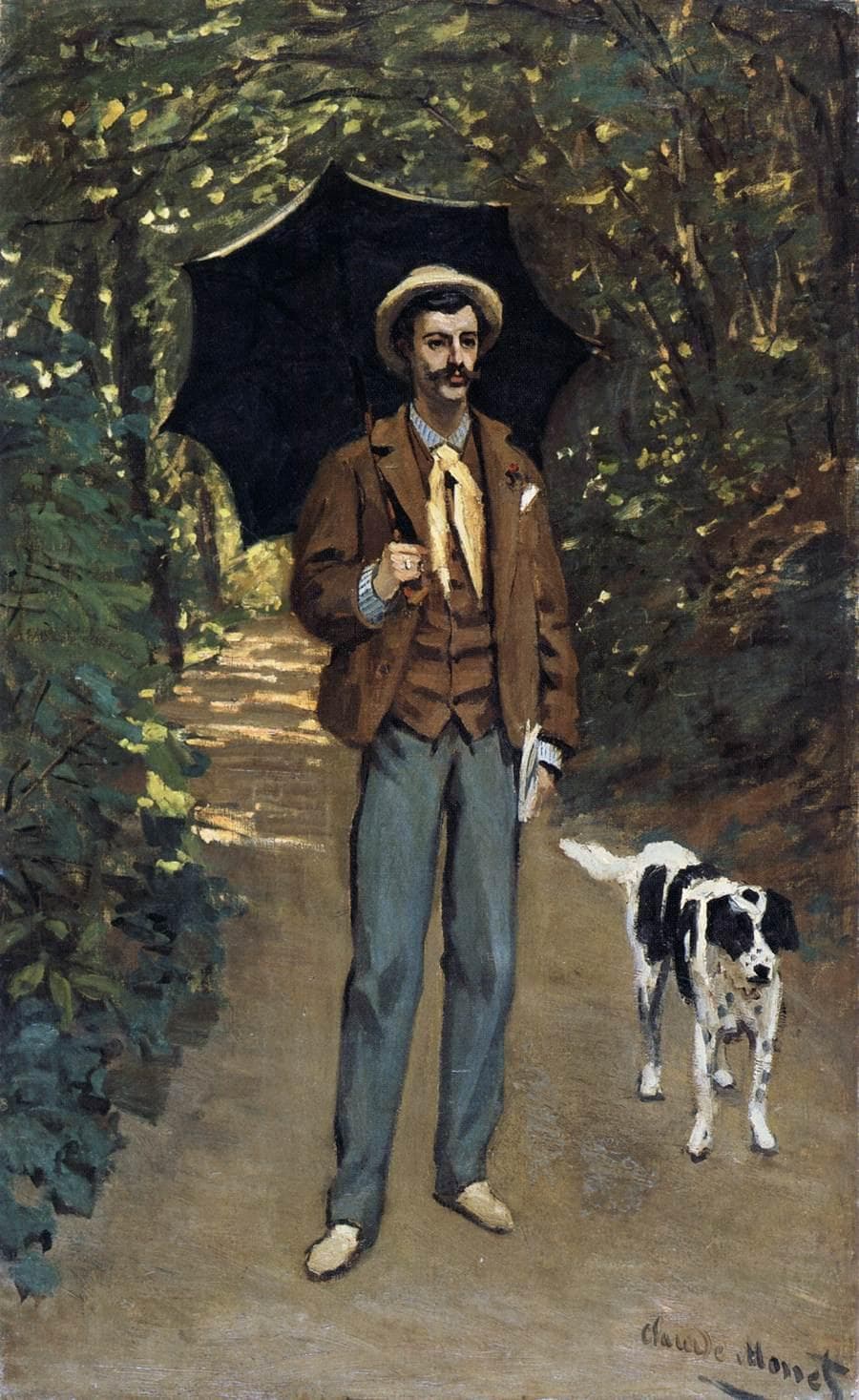
Man with a Parasol (Portrait of Victor Jacquemont)
Claude Monet · 1865–67
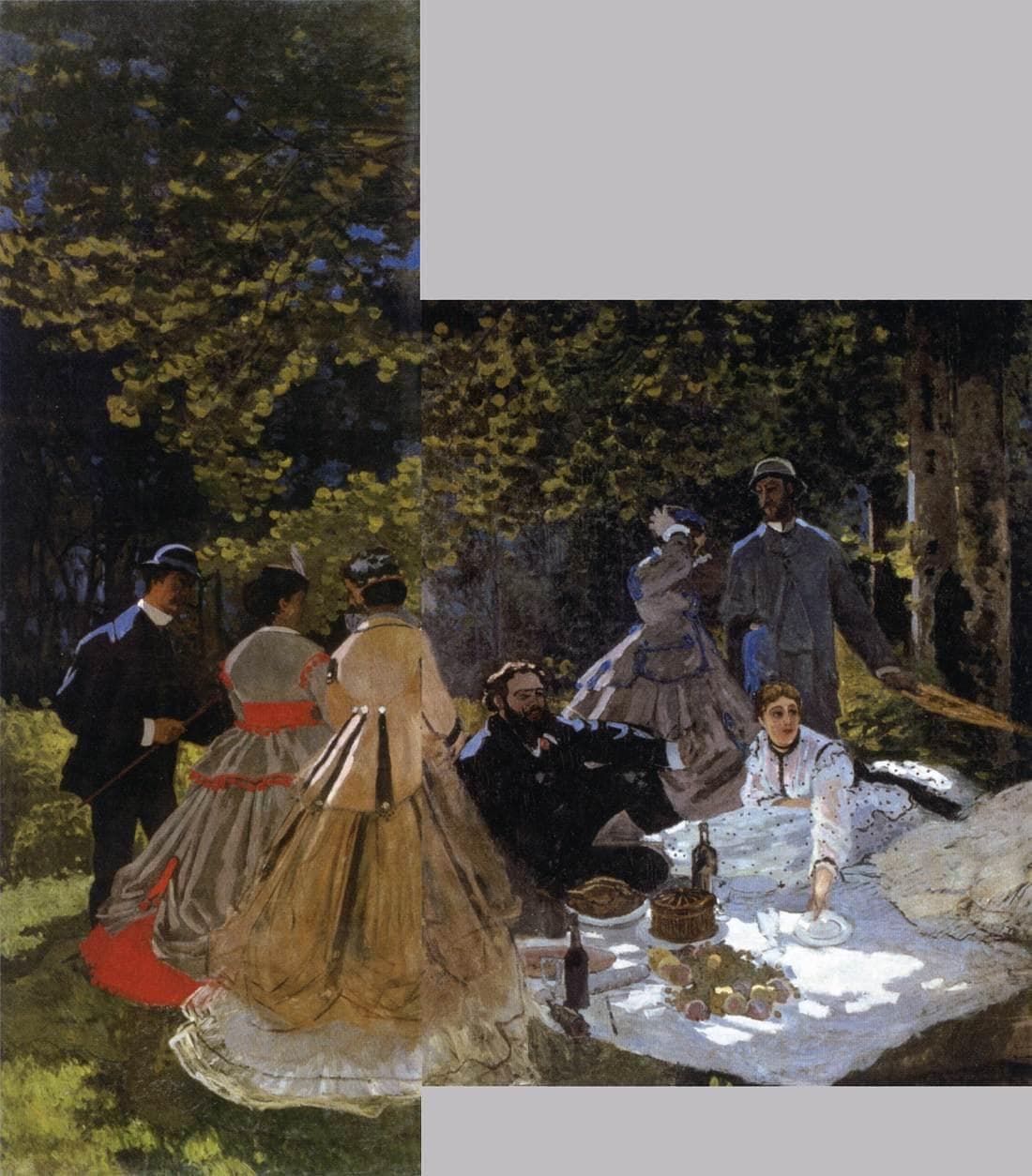
Le Déjeuner sur l'Herbe (two surviving fragments)
Claude Monet · 1865–66
La Pointe de la Hève at Low Tide
Claude Monet · 1865
Picnic (detail)
Claude Monet · 1865–66
Setting Sun (Nightfall)
Claude Monet · c. 1865
Kindred works
You may also study
Le Pavé de Chailly
Claude Monet · c. 1865
The Bodmer Oak, Fontainebleau Forest
Claude Monet · 1865
Haystacks at Chailly at Sunrise
Claude Monet · 1865
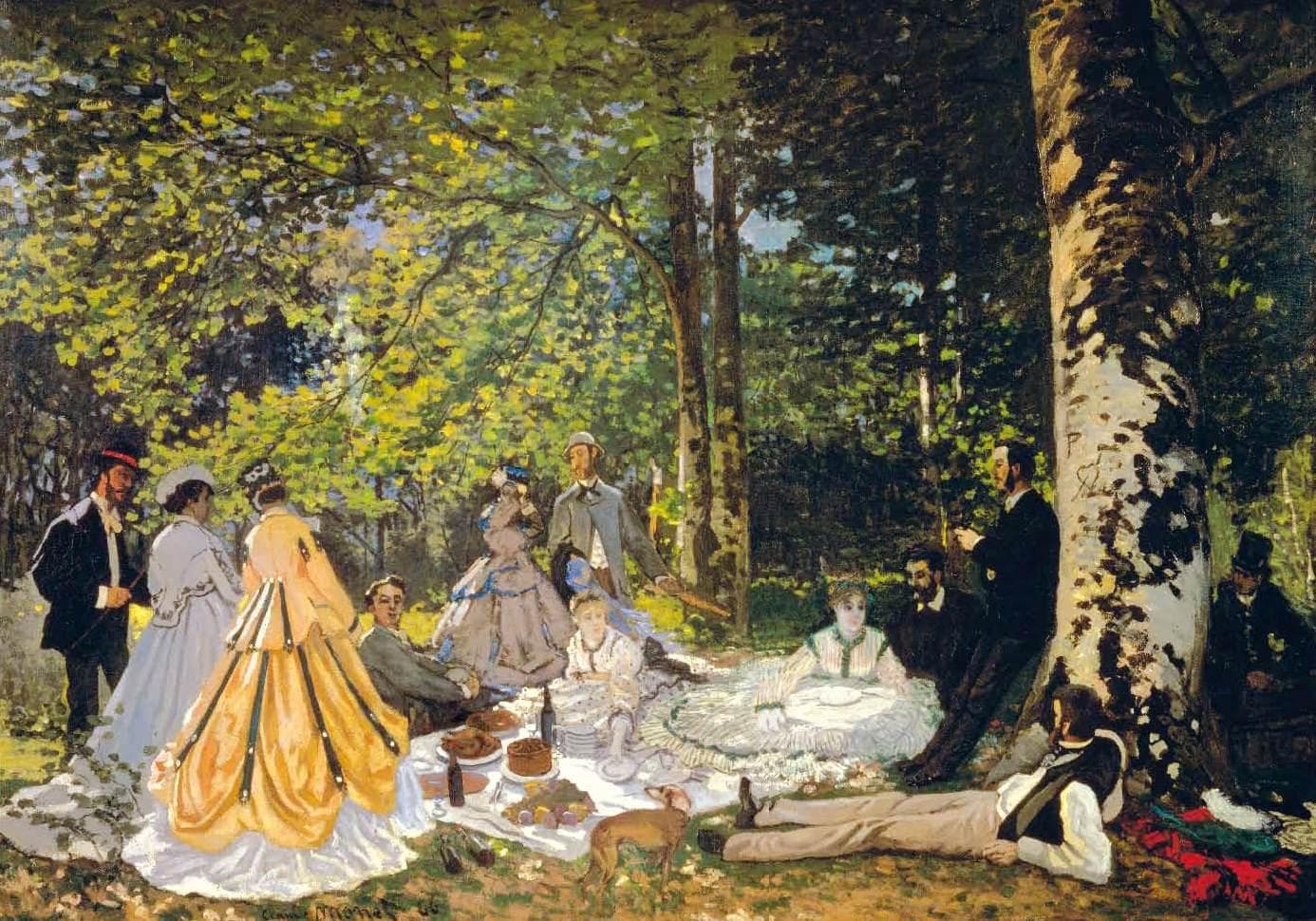
The Picnic
Claude Monet · 1865–66
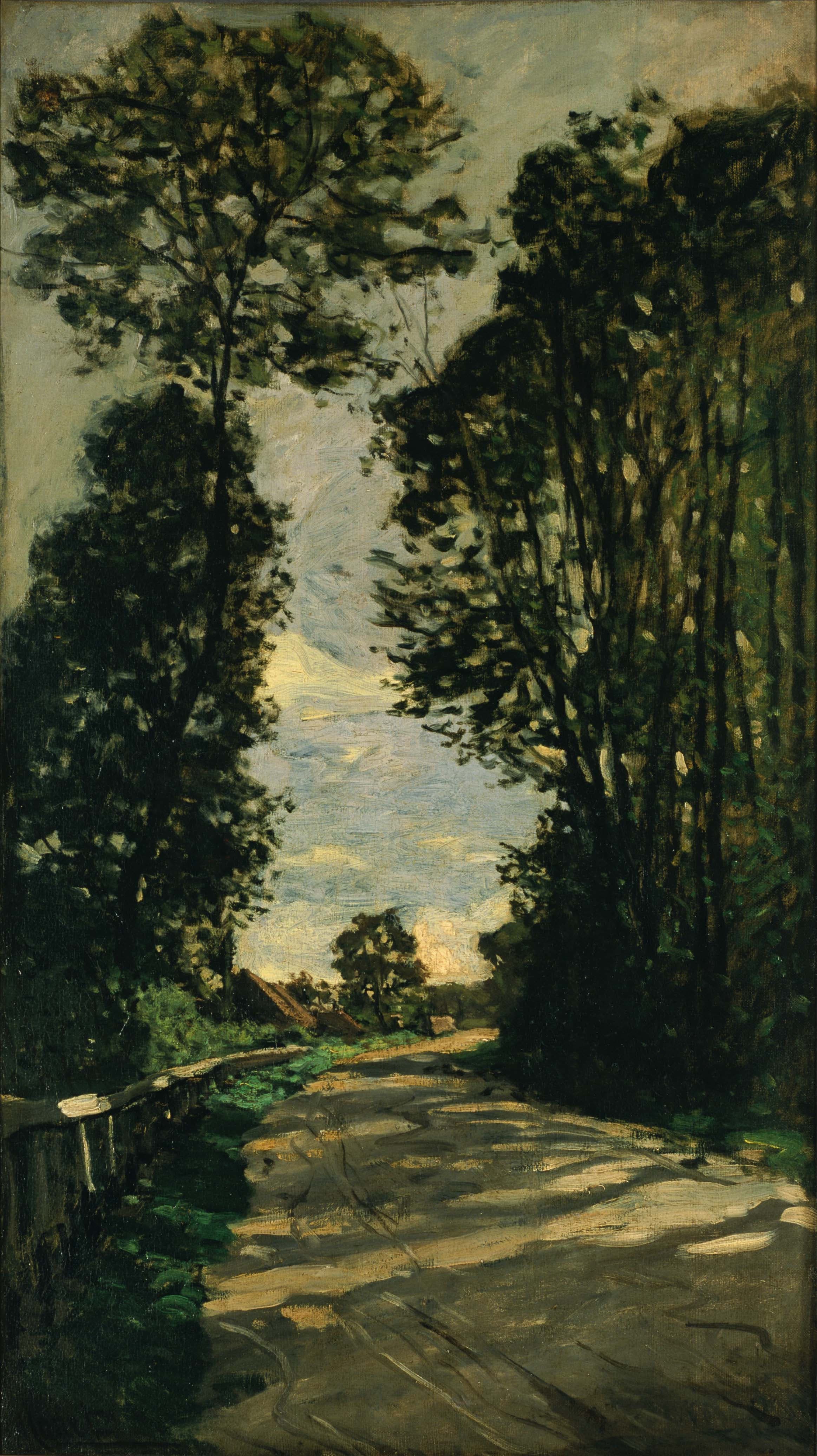
Walk (Road by the Saint-Siméon Farm)
Claude Monet · 1864

The Scream
Edvard Munch · 1893

Ophelia
John Everett Millais · 1851–52

The Great Wave off Kanagawa
Katsushika Hokusai · c. 1830–32