Impressionism
Picnic (detail)
Claude Monet, 1865–66
This is a detail of the central fragment of Claude Monet's Le Déjeuner sur l'herbe (1865–66): a woman in a polka-dot dress and a bearded man beside a picnic cloth. The fragment, 248.7 × 218 cm, is in the Musée d'Orsay, Paris.
- Artist
- Claude Monet
- Date
- 1865–66
- Medium
- Oil on canvas
- Dimensions
- 248.7 × 218 cm (central fragment)
- Collection
- Musée d'Orsay, Paris, France
- Movement
- Impressionism
- Catalogue
- Wildenstein W 63b
This image is a detail from the central fragment of Claude Monet's Le Déjeuner sur l'herbe (Luncheon on the Grass), the huge picnic scene he painted in 1865–66 and later cut apart. The fragment, 248.7 × 218 cm, is in the Musée d'Orsay in Paris (RF 1987 12), and the detail shows its lower middle: the picnic cloth, a bearded man and a young woman in a white polka-dot dress.
Which part of Le Déjeuner sur l'herbe is this?
Two pieces of the original canvas survive, both at the Orsay. The tall left fragment, 418 × 150 cm, shows two standing men and two women in a forest clearing. The central fragment, which this detail comes from, holds the core of the party seated around the cloth. The crop here cuts off the standing figures above and the full width of the group, so it reads almost as a separate genre scene of lunch in the woods.
What you are looking at
At the center sits the young woman in a white summer dress dotted with black, a black ribbon tight at her throat and her reddish-blond hair pulled back. She leans slightly forward, one hand resting on a plate at the edge of the cloth, and looks off to the right with a slightly guarded expression. Behind her, a second woman in a brown dress trimmed with blue ribbons sits half hidden.
To the left, a stout bearded man in a dark jacket reclines on one elbow, his face flushed and turned to the side. At the far left edge, a fold of beige fabric belongs to another figure cut by the crop, and at upper right a man's arm reaches into the scene.
The meal is laid out in the foreground. On the white cloth stand a roast fowl on a plate, a tall raised pie with a browned, fluted crust, dark wine bottles, an upturned glass, clean plates, and a pile of fruit that includes peaches and grapes. These are painted with appetite and speed: the pie is a few curved strokes of ocher and brown, the bottles a stripe of near-black with one white highlight.
Light through leaves
The most modern thing in the detail is the light. Sun filtering through the trees falls on the cloth and the white dress in irregular bright patches, and Monet paints them as flat, separate dabs of near-white with no softening into the folds. The shadows between them are cool blue-gray rather than brown. The faces, by contrast, sit in mild shade.
That is the problem the whole picture set out to solve: how to paint figures in real outdoor light at the scale of a history painting. That flat, high-keyed handling of sunlight is what conservative critics would later attack in Impressionism.
Who are the figures?
Camille Doncieux, who later married Monet, and Bazille posed for several of the figures in the full composition. The bearded man has often been identified as Gustave Courbet, who visited Monet at Chailly while he worked and is said to have advised him, but the identification is not certain. The faces are types more than portraits.
The picture it comes from
Monet began Le Déjeuner sur l'herbe in 1865 at Chailly, at the edge of the forest of Fontainebleau, near the motifs of Le Pavé de Chailly and The Bodmer Oak. He meant it for the Salon of 1866 as a modern-life answer to Manet's scandalous picture of the same title: a dozen life-size figures in fashionable dress on a canvas some four by six meters. He worked it up in his Paris studio over the winter, but could not finish it in time, and sent Camille (The Woman in the Green Dress) to the Salon instead.
In 1878 he left the rolled canvas with a landlord at Argenteuil as security for unpaid rent. When he recovered it in the 1880s, damp had damaged it, and he cut it apart, keeping the sections that could be saved. The whole composition survives only in the smaller sketch in the Pushkin Museum, Moscow, The Picnic.
Where to see it
Both surviving fragments hang together at the Musée d'Orsay; see the central fragment in full and the two fragments side by side. The next year Claude Monet painted Women in the Garden fully outdoors, also now at the Orsay. Our guide to Monet at the Musée d'Orsay covers the rest of the collection.
Questions & answers
Where is Monet's Le Déjeuner sur l'herbe?
The two surviving fragments are in the Musée d'Orsay in Paris: the left section (418 × 150 cm) and the central section (248.7 × 218 cm), from which this detail is taken. Monet cut the damaged canvas apart in the 1880s, and the rest is lost. A complete sketch of the composition is in the Pushkin Museum, Moscow.
When and where was Le Déjeuner sur l'herbe painted?
Monet began it in 1865 at Chailly, on the edge of the forest of Fontainebleau, making outdoor studies of the site and his models, and worked on the huge canvas in his Paris studio through the winter of 1865–66. He intended it for the Salon of 1866 but never finished it.
Who are the people in this detail of Monet's picnic?
The woman in the white polka-dot dress was probably modeled by Camille Doncieux, Monet's future wife, who posed with Frédéric Bazille for several figures. The bearded man reclining beside the cloth is often said to be Gustave Courbet, who visited Monet at Chailly, but that identification is not certain.
Why did Monet cut up Le Déjeuner sur l'herbe?
In 1878 he left the unfinished canvas with a landlord at Argenteuil as security for unpaid rent. When he got it back in the 1880s, damp had damaged it, so he cut it into pieces and kept the sections that could be saved. Two fragments survive, both now in the Musée d'Orsay.
More by the artist
Claude Monet

Bridge over a Pond of Water Lilies
Claude Monet · 1899

Woman with a Parasol – Madame Monet and Her Son
Claude Monet · 1875

Sunset in Venice
Claude Monet · 1908–12

La Grenouillère
Claude Monet · 1869

Beach in Pourville
Claude Monet · 1882

Springtime
Claude Monet · 1872

Boating on the River Epte
Claude Monet · 1890

The Seine at Asnières (Hermitage)
Claude Monet · 1873
Also painted in 1865
The same year
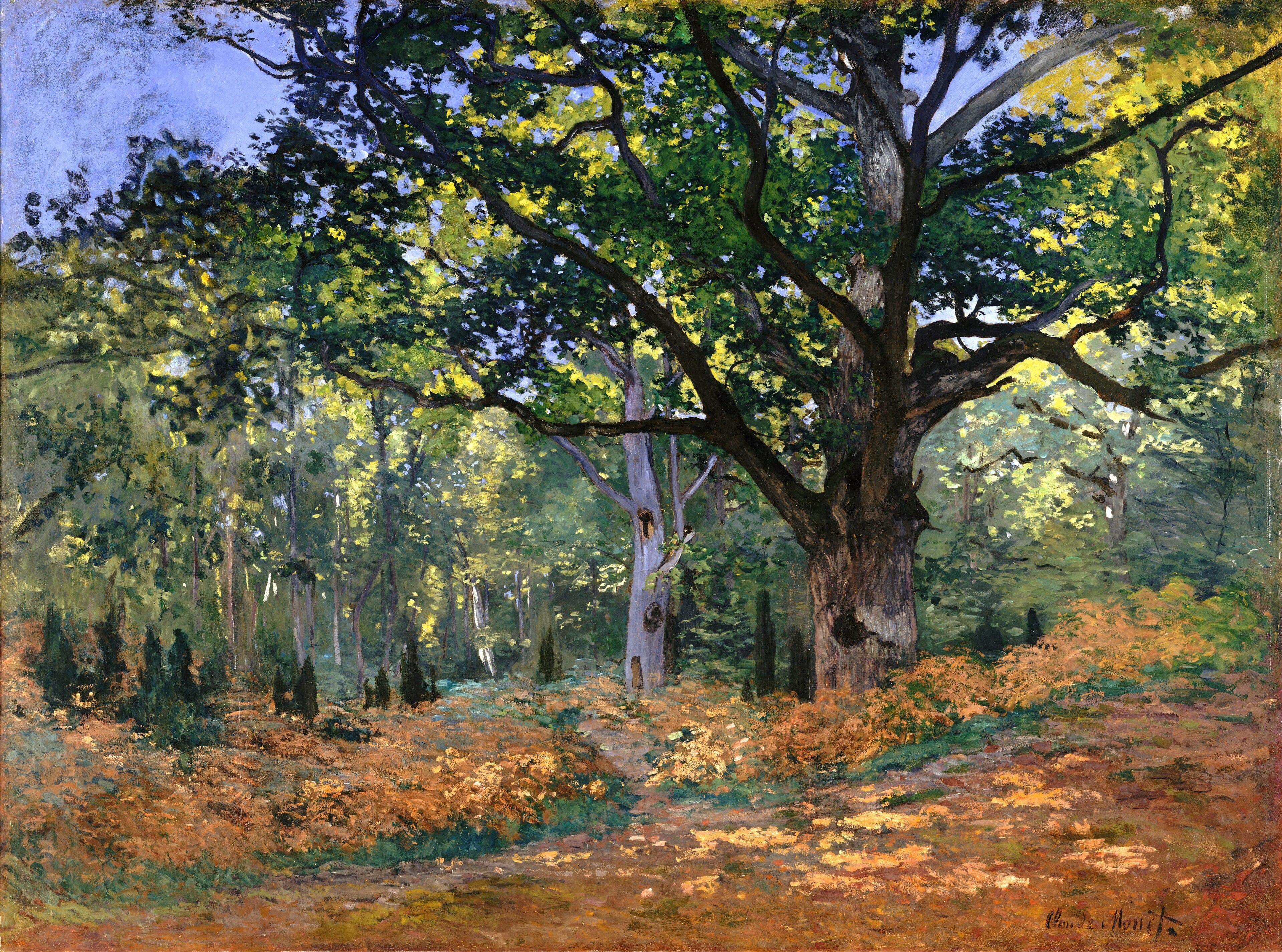
The Bodmer Oak, Fontainebleau Forest
Claude Monet · 1865
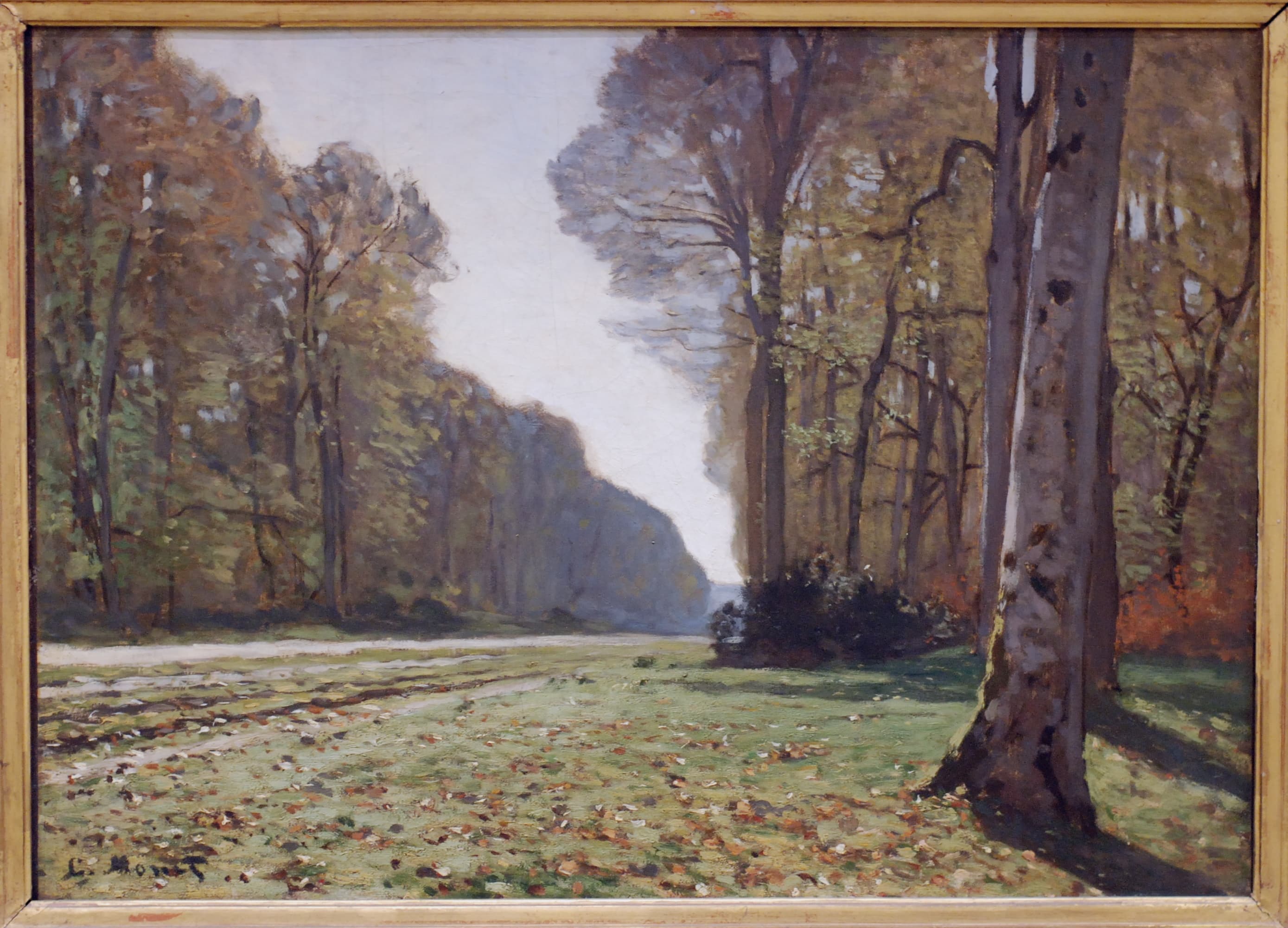
Le Pavé de Chailly
Claude Monet · c. 1865
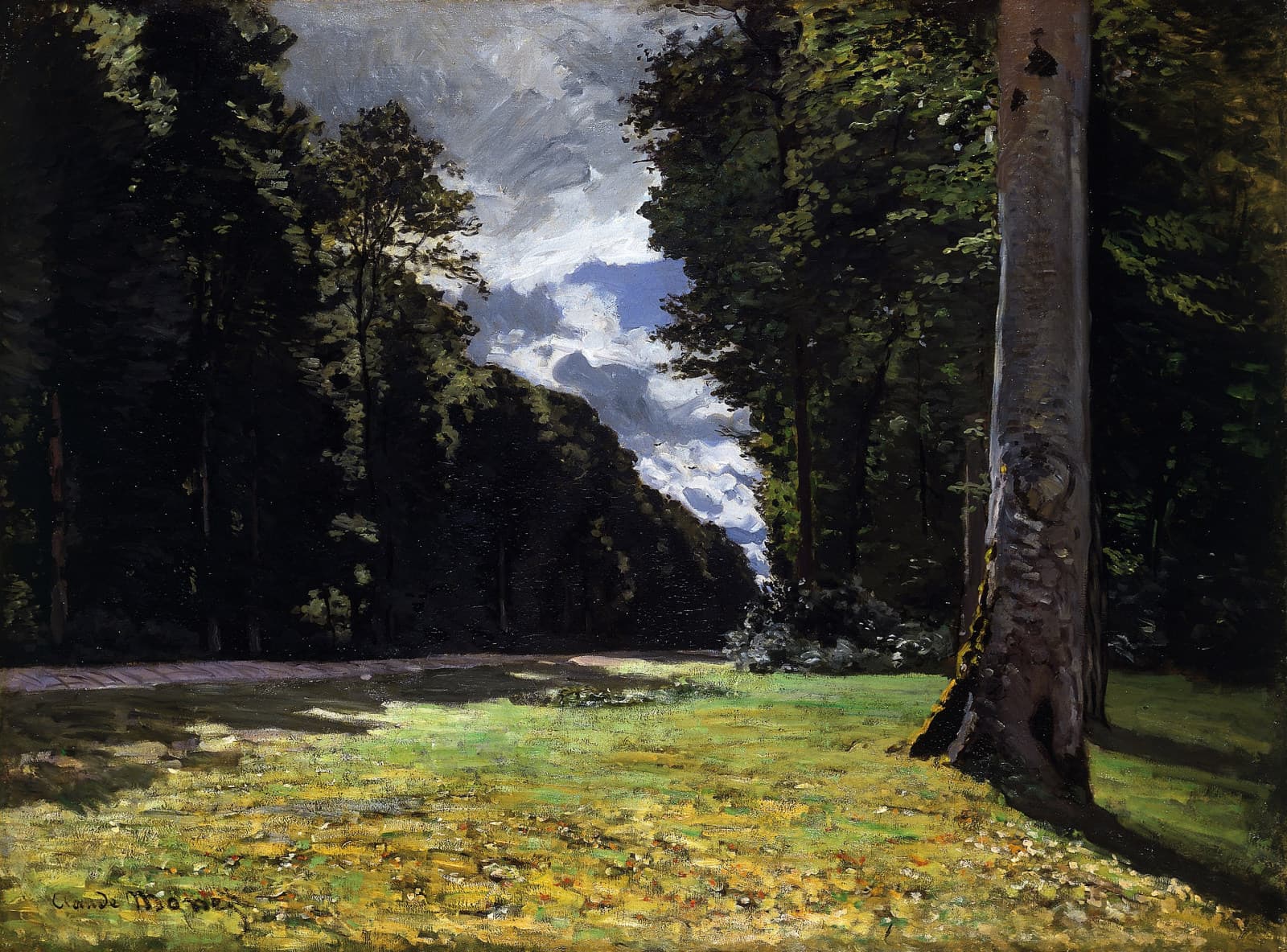
The Pavé de Chailly in the Forest of Fontainebleau
Claude Monet · 1865
Haystacks at Chailly at Sunrise
Claude Monet · 1865
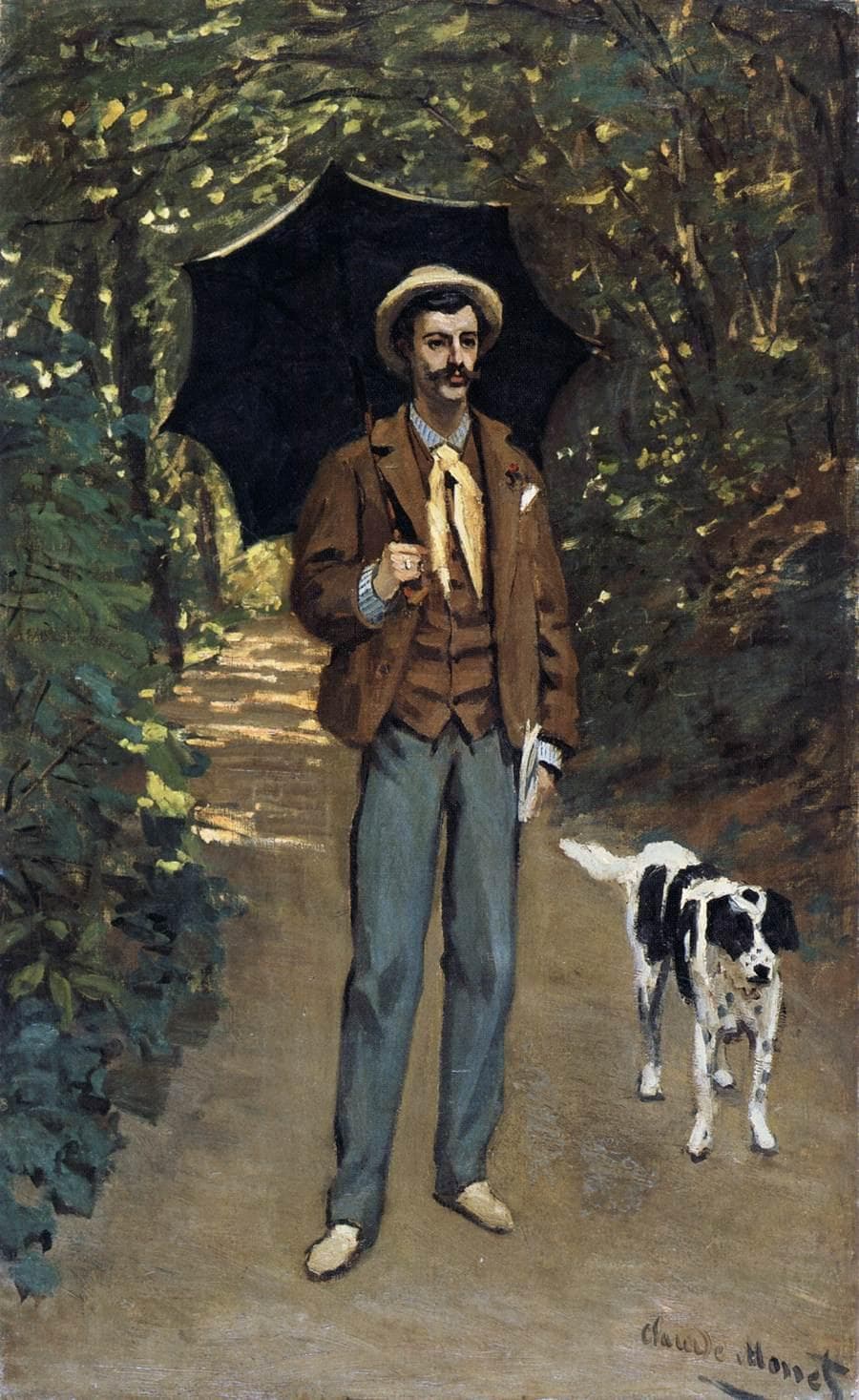
Man with a Parasol (Portrait of Victor Jacquemont)
Claude Monet · 1865–67
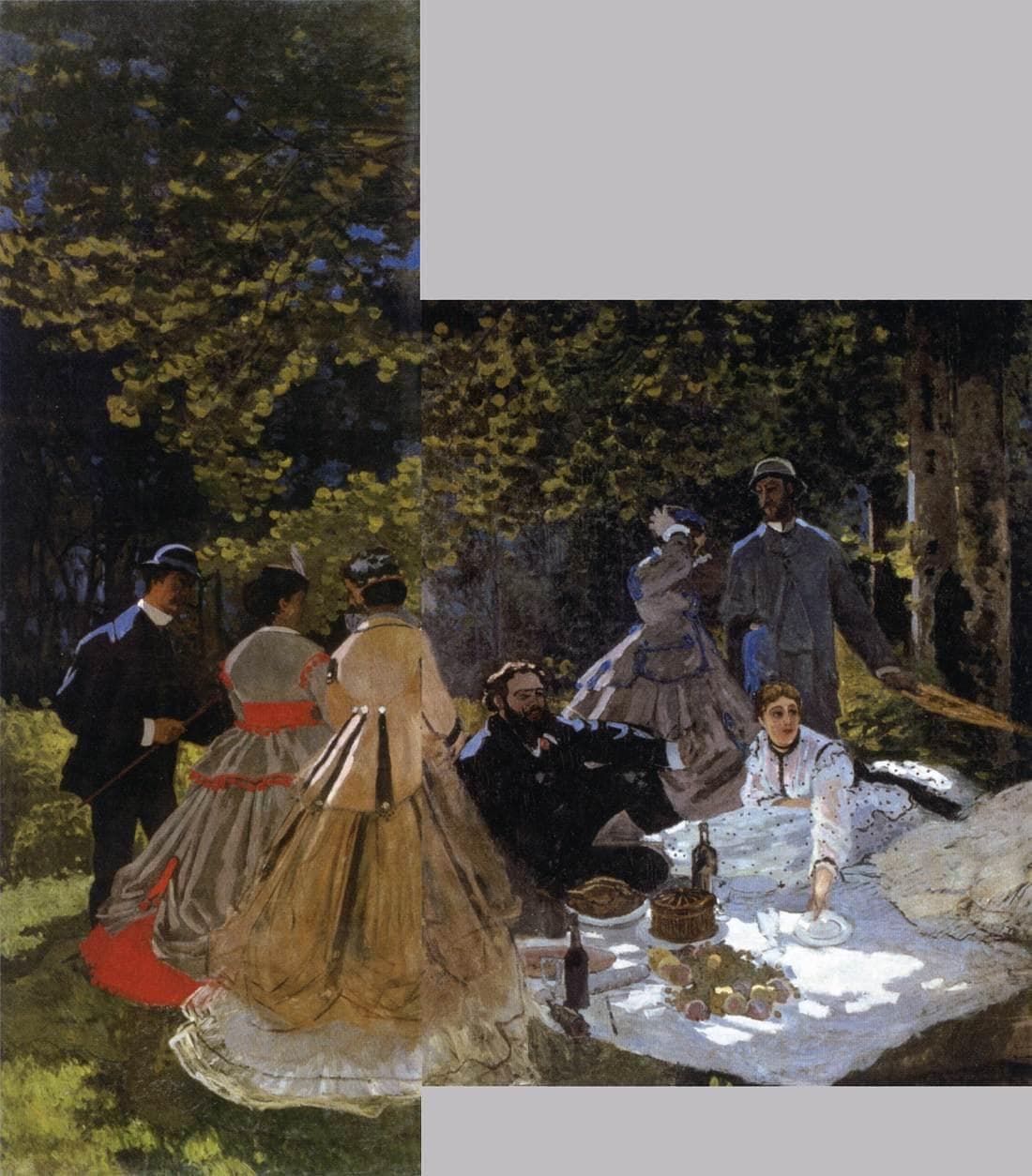
Le Déjeuner sur l'Herbe (two surviving fragments)
Claude Monet · 1865–66
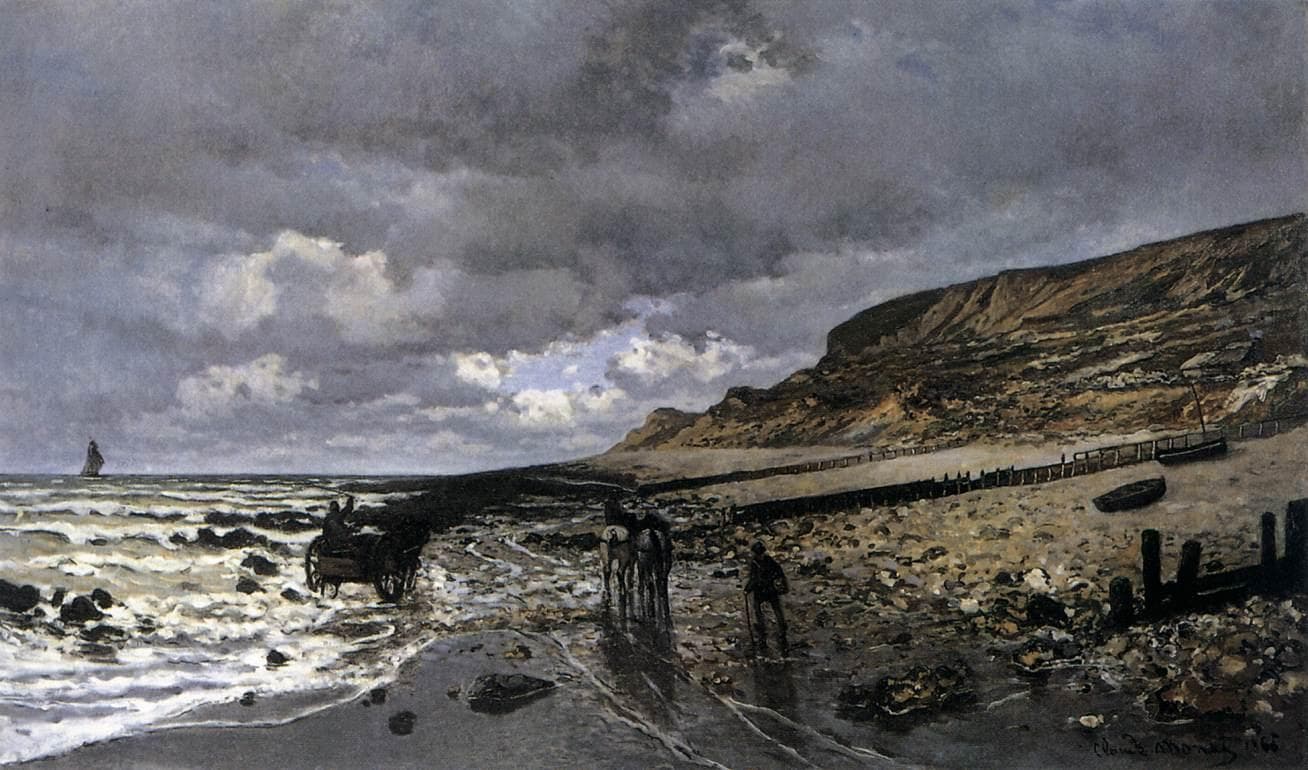
La Pointe de la Hève at Low Tide
Claude Monet · 1865
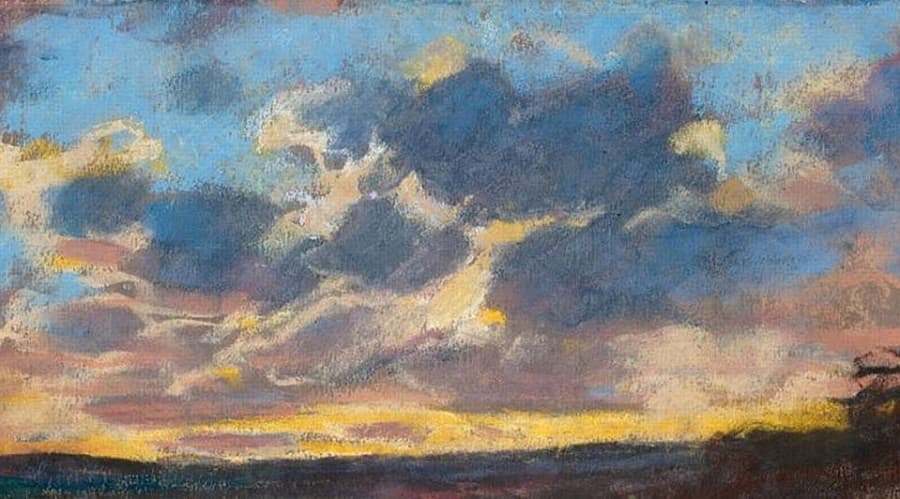
Setting Sun (Nightfall)
Claude Monet · c. 1865
Kindred works
You may also study
Le Déjeuner sur l'Herbe (two surviving fragments)
Claude Monet · 1865–66
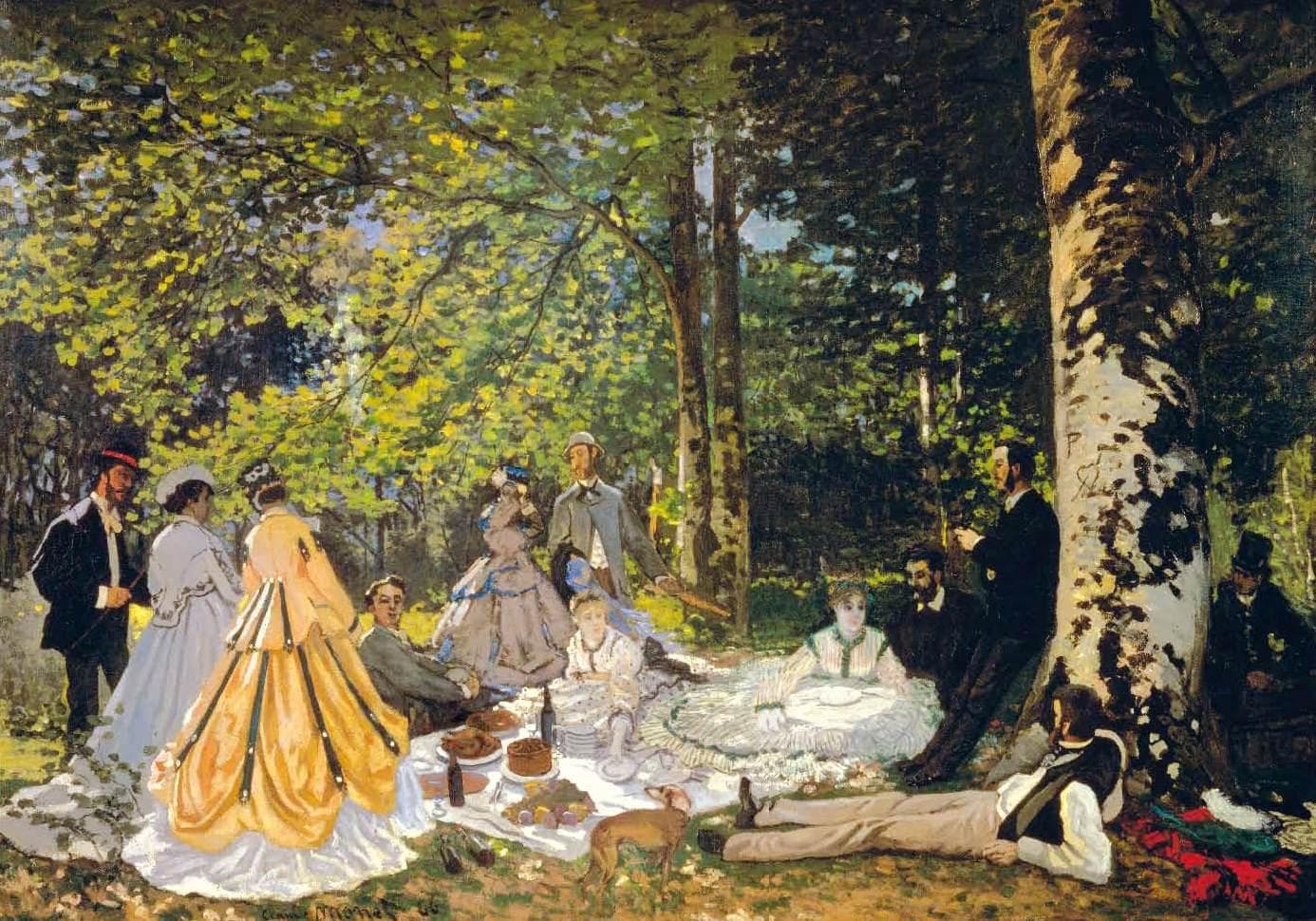
The Picnic
Claude Monet · 1865–66
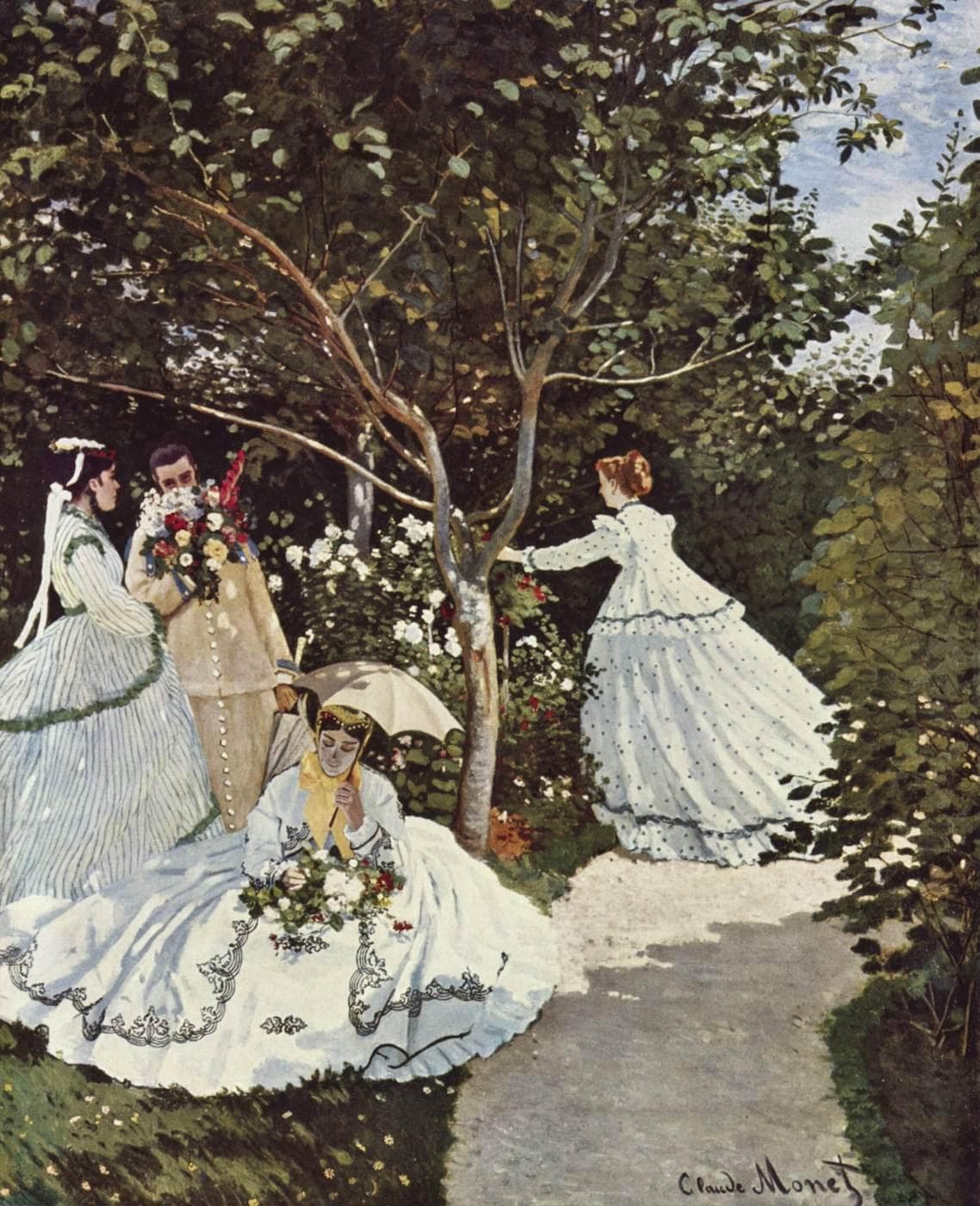
Women in the Garden
Claude Monet · 1866–67
Le Pavé de Chailly
Claude Monet · c. 1865
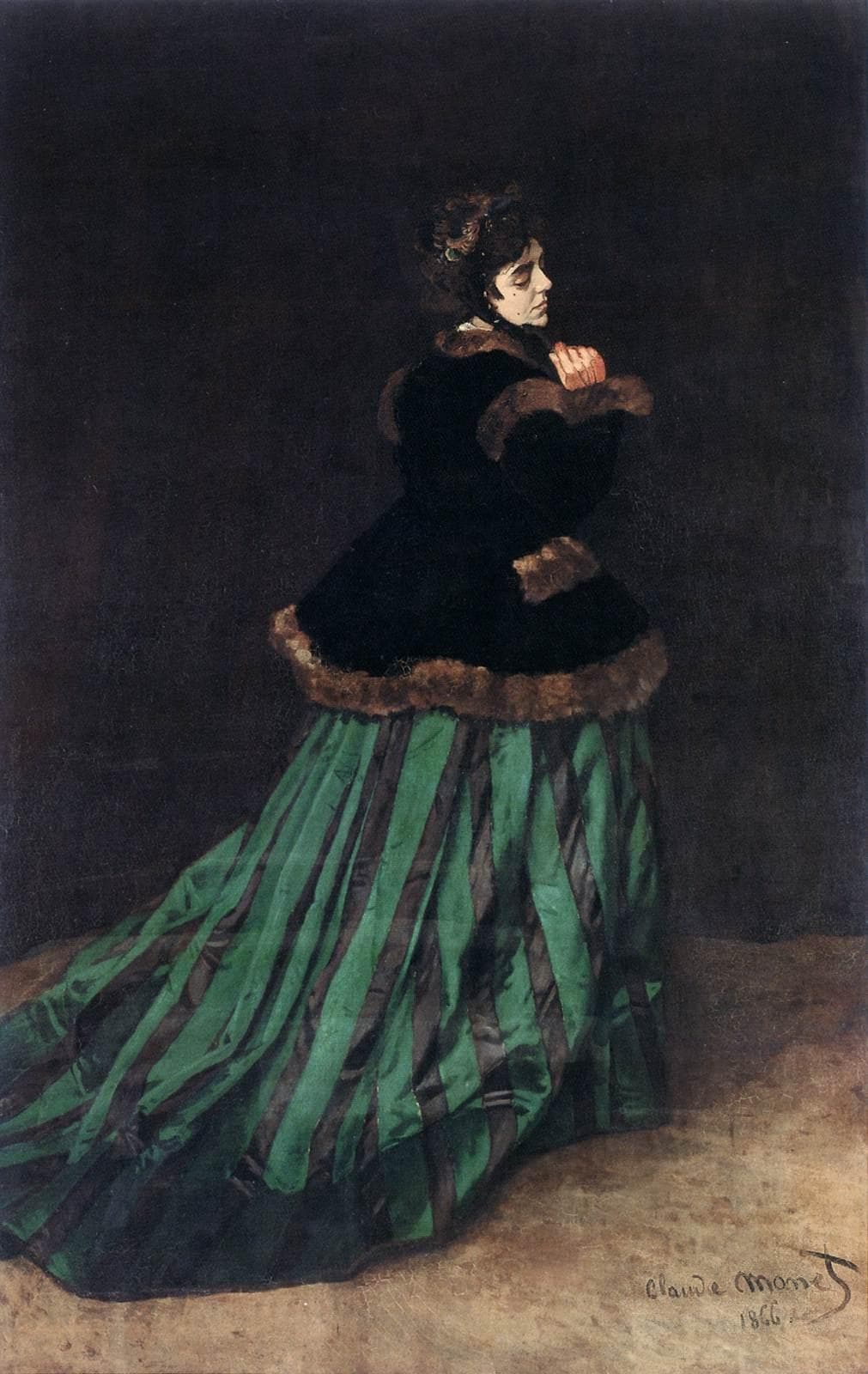
Camille (The Woman in the Green Dress)
Claude Monet · 1866

Venus de Milo
Alexandros of Antioch · c. 150–125 BC

The Scream
Edvard Munch · 1893

Ophelia
John Everett Millais · 1851–52