Image: The Metropolitan Museum of Art, New York; via Wikimedia Commons · Public domain · via Wikimedia Commons
Realism
The Bodmer Oak, Fontainebleau Forest
Claude Monet, 1865
The Bodmer Oak is an 1865 painting by Claude Monet of a famous old oak in the Forest of Fontainebleau, named after the Barbizon painter Karl Bodmer. It is in the Metropolitan Museum of Art, New York.
- Artist
- Claude Monet
- Date
- 1865
- Medium
- Oil on canvas
- Dimensions
- 96.2 × 129.2 cm
- Collection
- The Metropolitan Museum of Art, New York, United States
- Movement
- Realism
- Catalogue
- Wildenstein 60
More at Monet at the Met
What you are looking at
A huge oak stands just right of center, its thick, dark trunk splitting into great branches that reach out across the top of the canvas. Its leaves form a canopy of bright, sunlit greens, broken by patches of blue sky at the upper left. Beneath it, the forest floor is covered with bracken turned orange and rust, and a sandy path winds from the bottom edge toward the base of the tree. Behind, a pale birch trunk and many thinner trees recede into green shade, and small dark conifers stand in the undergrowth on the left.
Sunlight comes through the canopy from the left and falls in patches on the ground and the trunk. The darkest part of the picture is the oak itself, and Monet sets it against the brighter woods behind so that it seems to step forward.
Where and when it was painted
In 1865 Monet, then twenty-four, spent the spring and summer at Chailly-en-Bière on the edge of the Forest of Fontainebleau, south of Paris. He had first gone there in 1863 with Frédéric Bazille, after leaving the studio of Charles Gleyre. The forest was the territory of the Barbizon painters, Théodore Rousseau, Corot, Diaz, who had made its old trees and clearings a subject for modern landscape. Painting the same places was also a sensible commercial choice: collectors knew them.
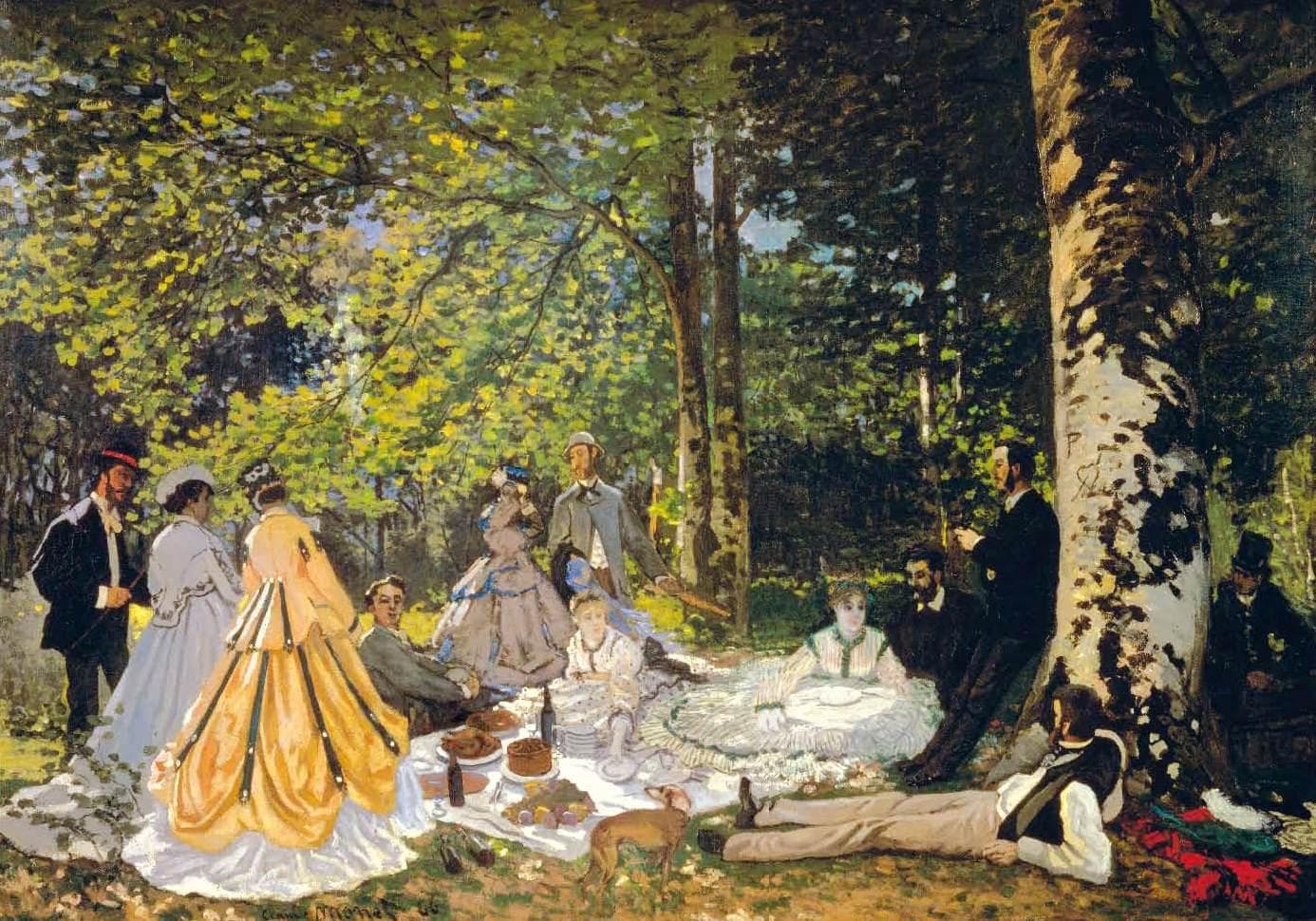
This oak in the Bas-Bréau, one of the oldest parts of the forest, was known as the Bodmer oak after the Swiss-born painter Karl Bodmer, who had depicted it. The Bas-Bréau had been protected from logging since 1853, partly at the urging of the Barbizon artists, in one of the first conservation measures for a landscape valued for its artistic interest. Monet painted the tree at least twice. The same summer he was working on the huge Déjeuner sur l'herbe, for which the forest was the setting; fragments of it are in the Musée d'Orsay, and a full sketch is in Moscow.
How it was painted
This is a large, ambitious canvas, nearly a meter by 1.3 meters, and it shows a young painter testing himself against the Barbizon tradition. The composition is organized in three planes: a bright, loosely painted foreground of bracken and path, a dark and detailed middle ground with the oak, and a light, less defined background of woods. The contrast throws the tree into relief.
What is new is the color in the shadows. The undergrowth is painted in oranges, rusts and yellows rather than browns, and the shadowed ground is tinged with green and blue. The foliage is laid in with thick, separate touches of green and yellow that read as light moving through leaves. The deep blue of the sky and the red-brown of the bracken answer each other across the canvas. Monet is still working within the Realist mode of Courbet, whose Oak of Flagey dates from 1864, but the broken touch and colored shadows look forward to Impressionism.
The painting also has a debt to photography. Gustave Le Gray and other photographers worked in the same forest, and their advice to sacrifice detail in order to focus the eye on the main subject is close to what Monet does here, keeping the oak sharp and letting everything around it soften.
Ownership
Monet took the canvas back to Paris and then to Ville-d'Avray, where it was seized by his creditors in late 1866 or early 1867. He recovered it and sold it to Paul Durand-Ruel in 1872. It went to New York and passed through private collections before entering the Metropolitan Museum in 1964 (accession 64.210).
Related works
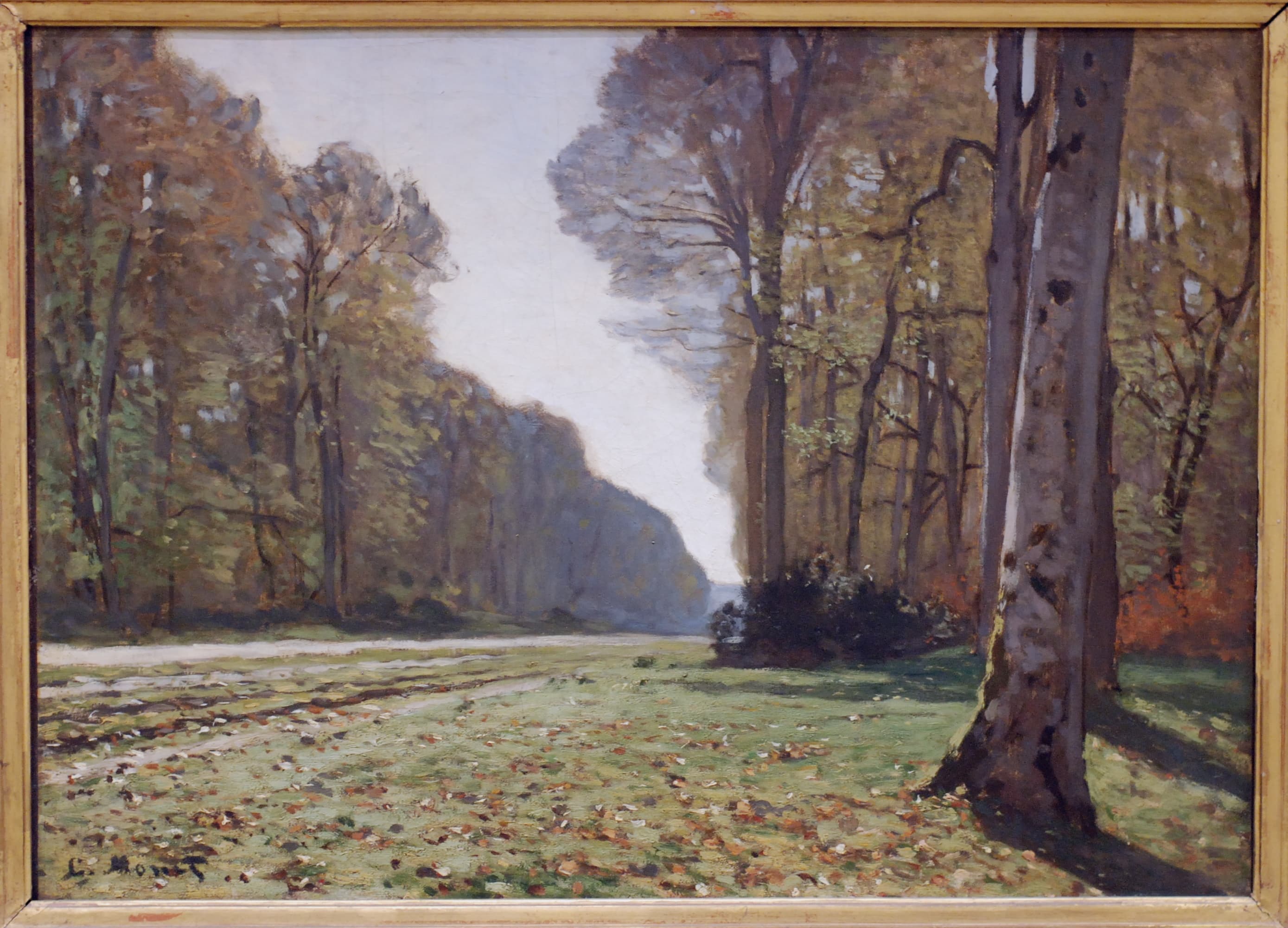
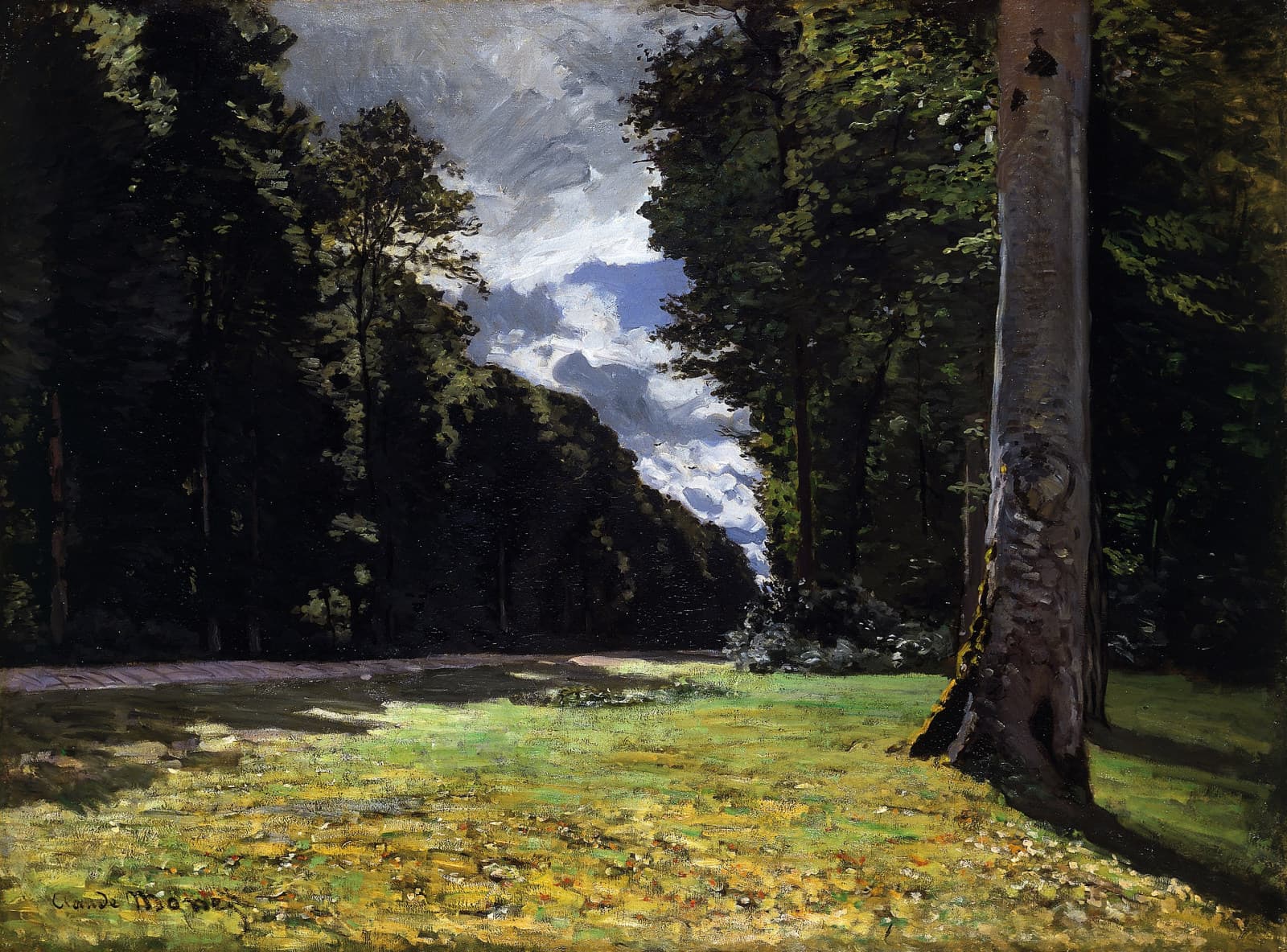
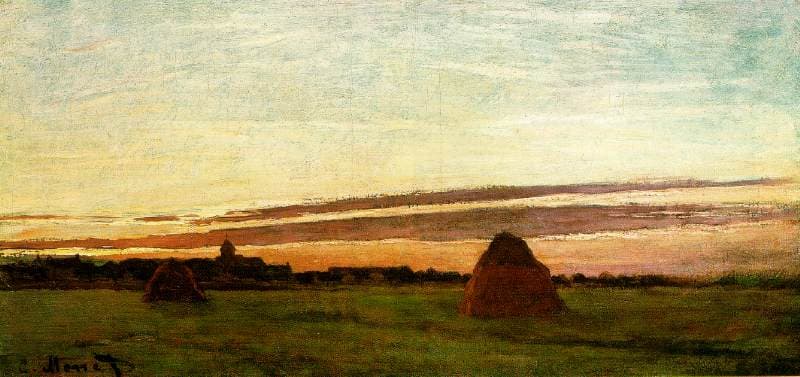
Other Fontainebleau pictures from 1865 include The Pavé de Chailly in the Fontainebleau Forest, Le Pavé de Chailly in the Musée d'Orsay and Haystacks at Chailly at Sunrise.
Where to see it
The Bodmer Oak is in the Metropolitan Museum of Art in New York, in the nineteenth-century European paintings galleries. See Monet at the Met for the museum's other Monets.
Questions & answers
Where is Monet's The Bodmer Oak?
It is in the Metropolitan Museum of Art in New York, accession number 64.210, which acquired it in 1964. It is usually shown in the nineteenth-century European paintings galleries.
When and where was The Bodmer Oak painted?
Monet painted it in 1865 in the Bas-Bréau, an old part of the Forest of Fontainebleau near Chailly-en-Bière, while he was working there on his large Déjeuner sur l'herbe.
Why is it called the Bodmer Oak?
The tree was named after Karl Bodmer, a Swiss-born painter of the Barbizon circle who had depicted it. Famous old trees in the forest often carried the names of artists who painted them.
Did Monet paint the Bodmer oak more than once?
Yes. He painted the same tree at least twice in 1865. The Met's large canvas is the best known; another version is recorded under the title Chêne au Bas-Bréau, le Bodmer.
More by the artist
Claude Monet

Bridge over a Pond of Water Lilies
Claude Monet · 1899

Woman with a Parasol – Madame Monet and Her Son
Claude Monet · 1875

Sunset in Venice
Claude Monet · 1908–12

La Grenouillère
Claude Monet · 1869

Beach in Pourville
Claude Monet · 1882

Springtime
Claude Monet · 1872

Boating on the River Epte
Claude Monet · 1890

The Seine at Asnières (Hermitage)
Claude Monet · 1873
Also painted in 1865
The same year
Le Pavé de Chailly
Claude Monet · c. 1865
The Pavé de Chailly in the Forest of Fontainebleau
Claude Monet · 1865
Haystacks at Chailly at Sunrise
Claude Monet · 1865
Man with a Parasol (Portrait of Victor Jacquemont)
Claude Monet · 1865–67
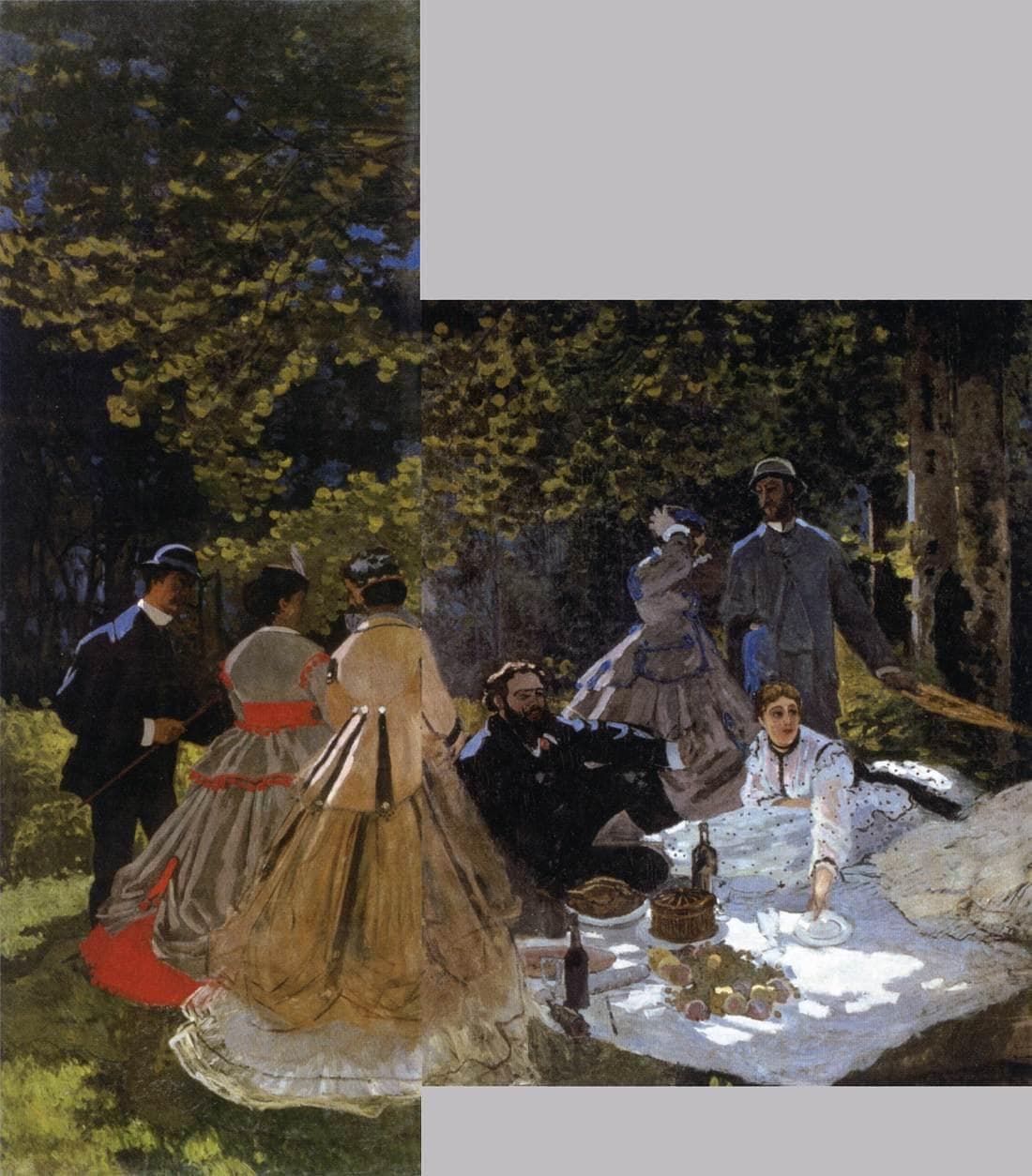
Le Déjeuner sur l'Herbe (two surviving fragments)
Claude Monet · 1865–66
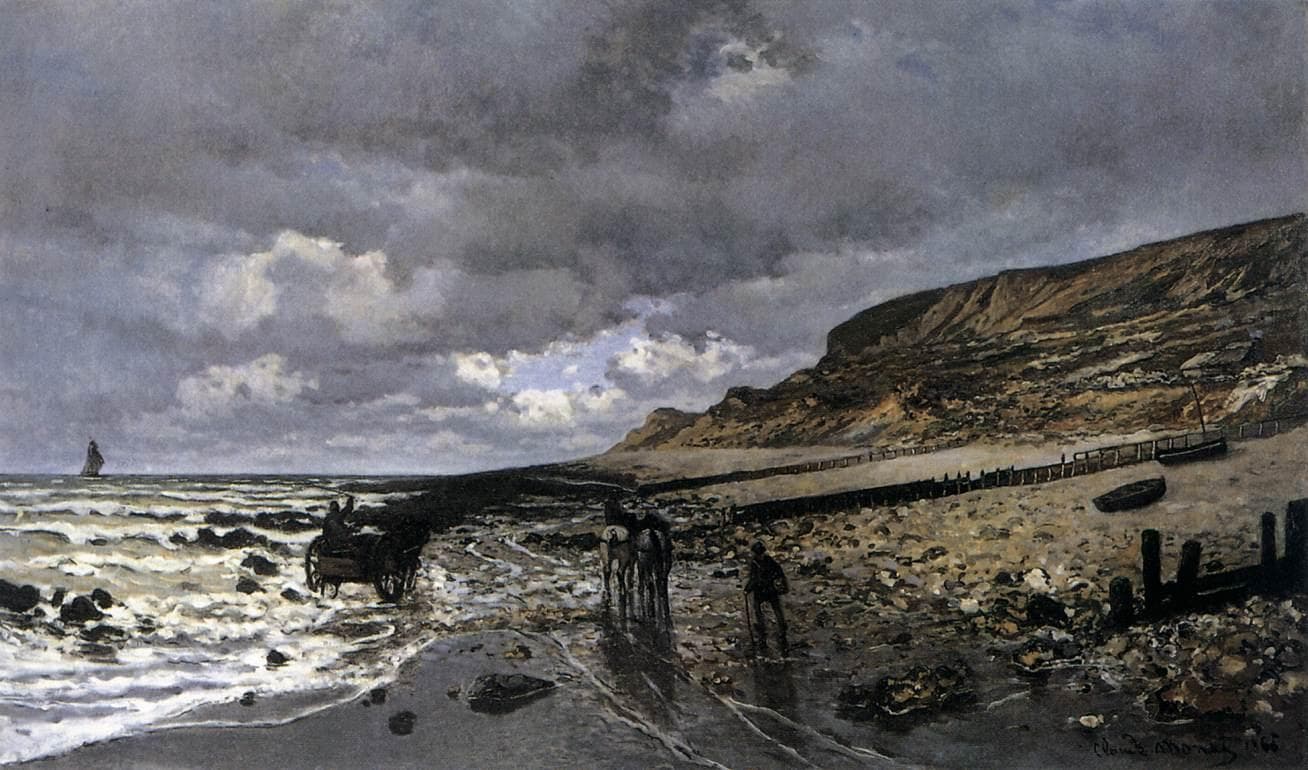
La Pointe de la Hève at Low Tide
Claude Monet · 1865
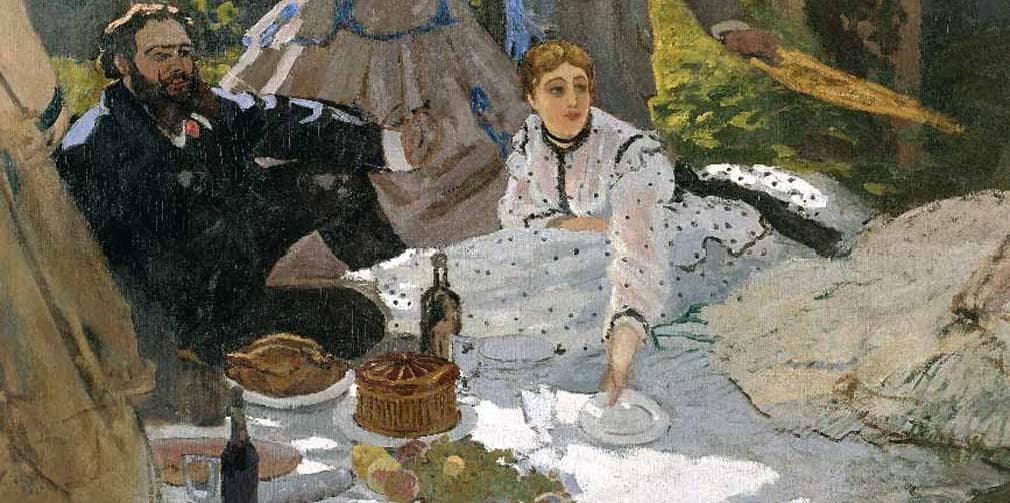
Picnic (detail)
Claude Monet · 1865–66
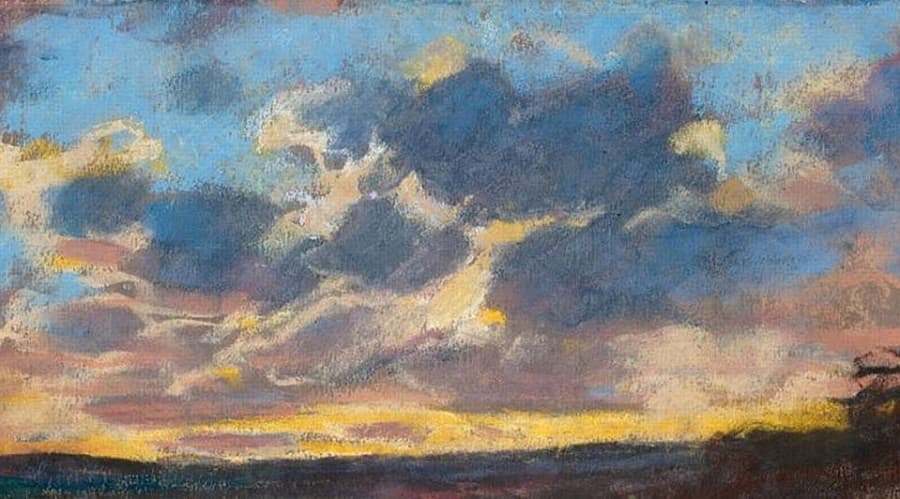
Setting Sun (Nightfall)
Claude Monet · c. 1865
Kindred works
You may also study
The Pavé de Chailly in the Forest of Fontainebleau
Claude Monet · 1865
Le Pavé de Chailly
Claude Monet · c. 1865
Haystacks at Chailly at Sunrise
Claude Monet · 1865
The Picnic
Claude Monet · 1865–66
Le Déjeuner sur l'Herbe (two surviving fragments)
Claude Monet · 1865–66

The Scream
Edvard Munch · 1893

Ophelia
John Everett Millais · 1851–52

The Great Wave off Kanagawa
Katsushika Hokusai · c. 1830–32