Image: Musée d'Orsay, Paris, via Google Arts & Culture · Public domain · via Wikimedia Commons
Impressionism
Train in the Countryside
Claude Monet, c. 1870
Train in the Countryside (Train dans la campagne) is a painting by Claude Monet, c. 1870, of a steam train crossing an embankment above a sunny meadow where women with parasols stroll. It is in the Musée d'Orsay, Paris.
- Artist
- Claude Monet
- Date
- c. 1870
- Medium
- Oil on canvas
- Dimensions
- 50 × 65 cm
- Collection
- Musée d'Orsay, Paris, France
- Movement
- Impressionism
- Catalogue
- Wildenstein 153
Train in the Countryside (Train dans la campagne) is a small summer landscape Claude Monet painted around 1870, in the countryside west of Paris. A train of open carriages runs along a raised embankment at the top of the picture, trailing smoke, while below it people stroll and sit on a sunny meadow. It is in the Musée d'Orsay in Paris, which holds it under the MNR label as a work recovered after the Second World War.
What you are looking at
The meadow fills the lower half of the canvas with a broad sweep of yellow-green grass that rises to the right, painted in flat, sunlit strokes. Long, soft shadows of trees lie across it in darker green. Near the left center stands a slender young tree, its trunk bare and its leaves painted in loose dabs of olive and yellow; to its left a rounder, darker tree, and at far right a tall poplar-like tree in deep green.
Behind them a dense band of dark woodland runs across the picture, and above that, on an embankment or low viaduct at upper left, a train passes from left to right. Its carriages are tiny, a row of black and white rectangles with figures visible in the open cars, and its engine sends a long trail of gray-brown smoke drifting across the cloudy sky. In the meadow, small figures are scattered in the sun and shade: women in light dresses with parasols, a child, and a couple of people sitting under the trees at right. The sky is a gray-white mass of summer cloud, broken by patches of pale blue. The signature is at lower left.
Where and when it was painted
In 1869–70 Monet lived in the western suburbs of Paris, at Saint-Michel near Bougival and then at Louveciennes, a short train ride from the Gare Saint-Lazare. This was the leisure landscape of the new railway age, where Parisians came by train for Sunday walks, boating and bathing. The previous summer he had painted the river resort of La Grenouillère and The Bridge at Bougival nearby. In the summer of 1870 the Franco-Prussian War broke out and Monet left for London, so this is one of the last pictures of that suburban world before the war.
How it was painted
The picture is made quickly, outdoors, with the broad, flat brushwork Monet developed in these years with Renoir. The meadow is laid in with horizontal strokes of light green, the shadows with darker green over it, without blending. The figures are a few touches each: a white stroke for a dress, a smaller one for a parasol. The train is barely more than a sign. Monet is not interested in the machine but in the way it sits in the landscape, its smoke merging with the clouds.
The train in Monet's work
Railways run through Monet's painting of the 1870s. At Argenteuil he painted trains crossing the river in The Railway Bridge at Argenteuil and Railroad Bridge, Argenteuil, and a train stopped in snow in Train in the Snow at Argenteuil. In 1877 he went into the station itself and made the Gare Saint-Lazare series. Train in the Countryside is an early, quiet entry in that story: the train as a brief, smoky line across a summer day.
Ownership and where to see it
The painting belonged to the department-store owner and collector Ernest Hoschedé, Monet's patron, whose collection was sold after his bankruptcy in the late 1870s. After the Second World War it was among the works recovered from Germany and entrusted to the French national museums under the MNR (Musées Nationaux Récupération) label, pending identification of their pre-war owners; its inventory number is MNR 218. It was on deposit at the Musée des Beaux-Arts d'Angers from 2004 to 2009 and is now back at the Musée d'Orsay. See our Monet at the Musée d'Orsay page for the museum's other Monets.
Questions & answers
Where is Monet's Train in the Countryside?
It is in the Musée d'Orsay in Paris, under the inventory number MNR 218. It was on deposit at the Musée des Beaux-Arts in Angers from 2004 to 2009 before returning to the Orsay.
When and where was Train in the Countryside painted?
Around 1870, in the countryside west of Paris where Monet was living, near Bougival and Louveciennes. These suburbs were linked to Paris by rail, and city people came out by train for walks and boating.
What does Train in the Countryside show?
A sunny meadow with trees, where women with parasols and a child stroll and others sit in the shade, while a small train of open carriages passes along an embankment above them, its smoke drifting into a cloudy summer sky.
What does MNR mean on this painting?
MNR stands for Musées Nationaux Récupération: works recovered in Germany after the Second World War and entrusted to French museums until their rightful pre-war owners can be identified. The painting had earlier belonged to Monet's patron Ernest Hoschedé.
More by the artist
Claude Monet

Bridge over a Pond of Water Lilies
Claude Monet · 1899

Woman with a Parasol – Madame Monet and Her Son
Claude Monet · 1875

Sunset in Venice
Claude Monet · 1908–12

La Grenouillère
Claude Monet · 1869

Beach in Pourville
Claude Monet · 1882

Springtime
Claude Monet · 1872

Boating on the River Epte
Claude Monet · 1890

The Seine at Asnières (Hermitage)
Claude Monet · 1873
Also painted in 1870
The same year
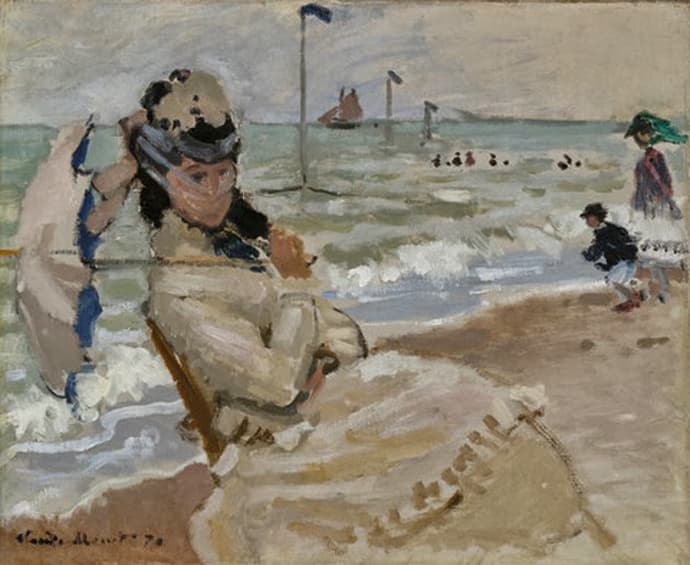
Camille on the Beach at Trouville
Claude Monet · 1870
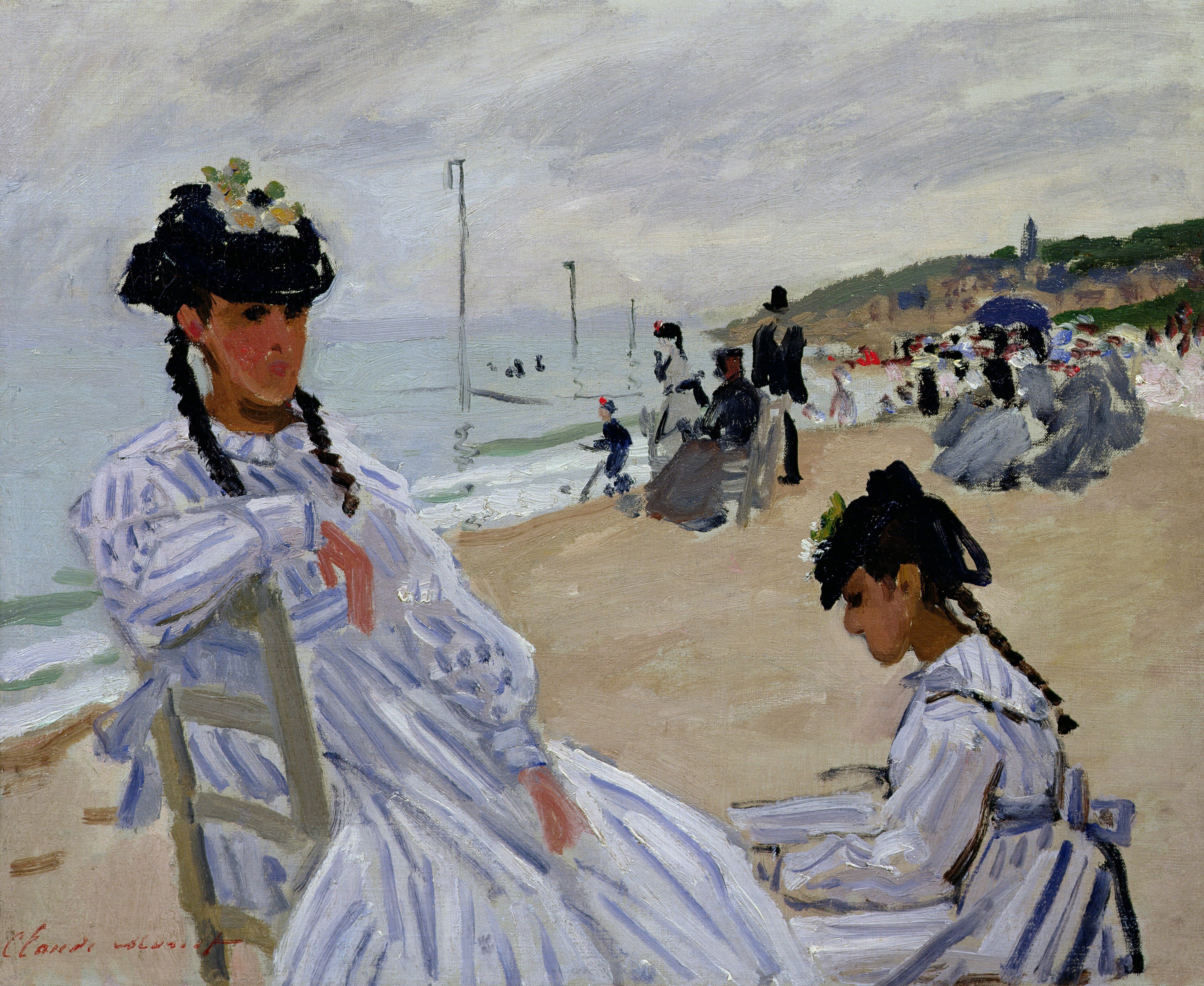
On the Beach at Trouville
Claude Monet · 1870
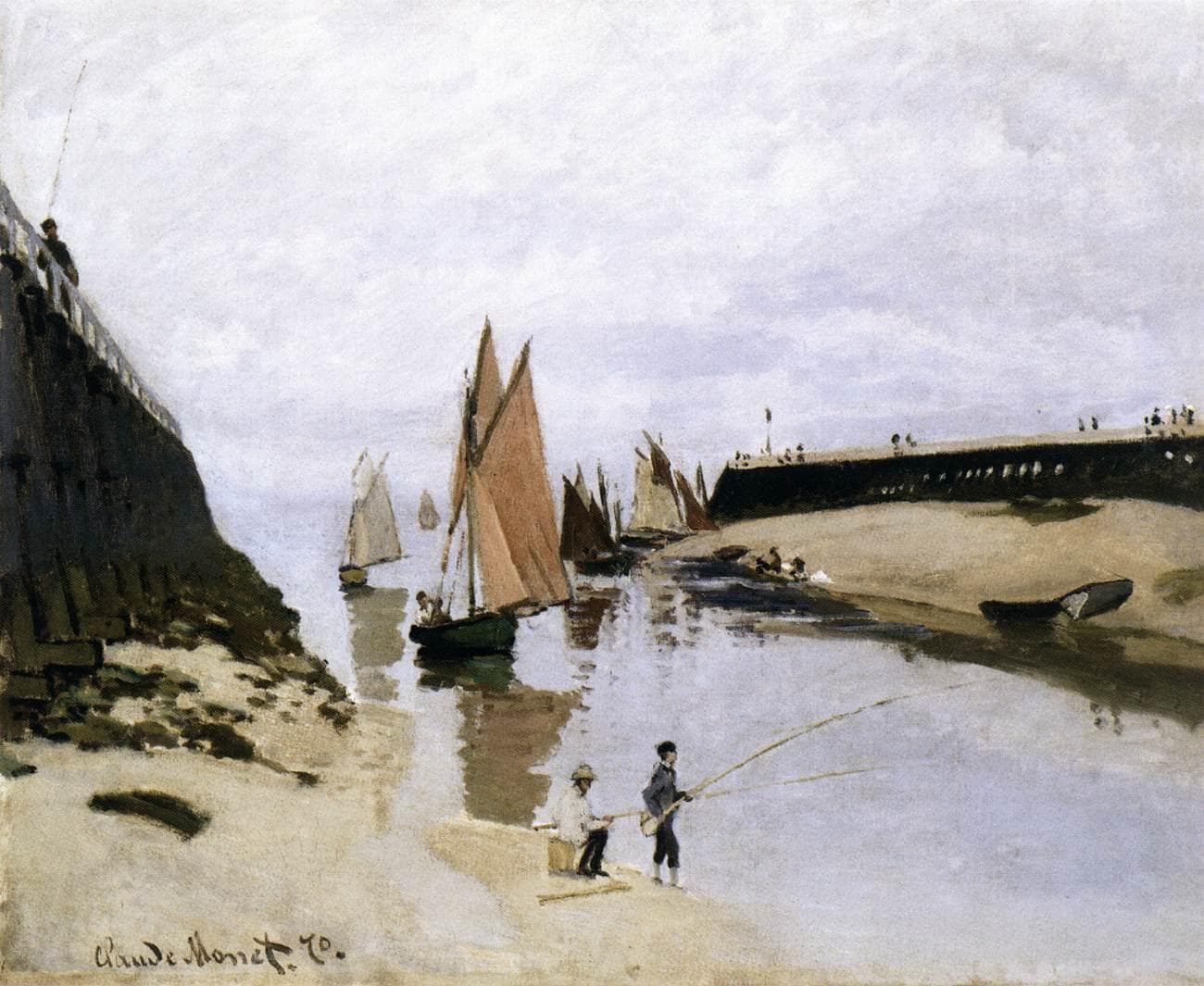
Landing Stage at Trouville, Low Tide
Claude Monet · 1870
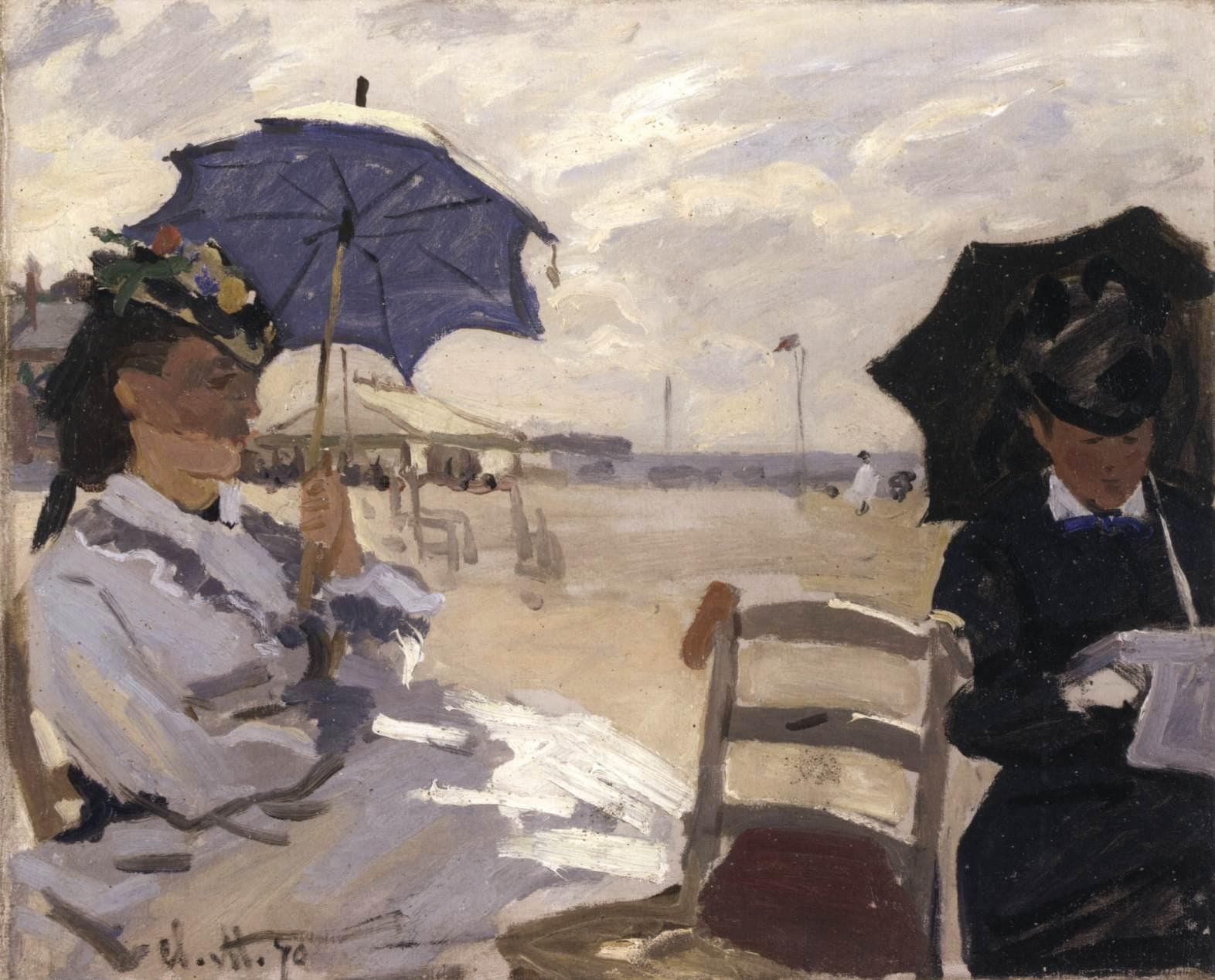
The Beach at Trouville
Claude Monet · 1870
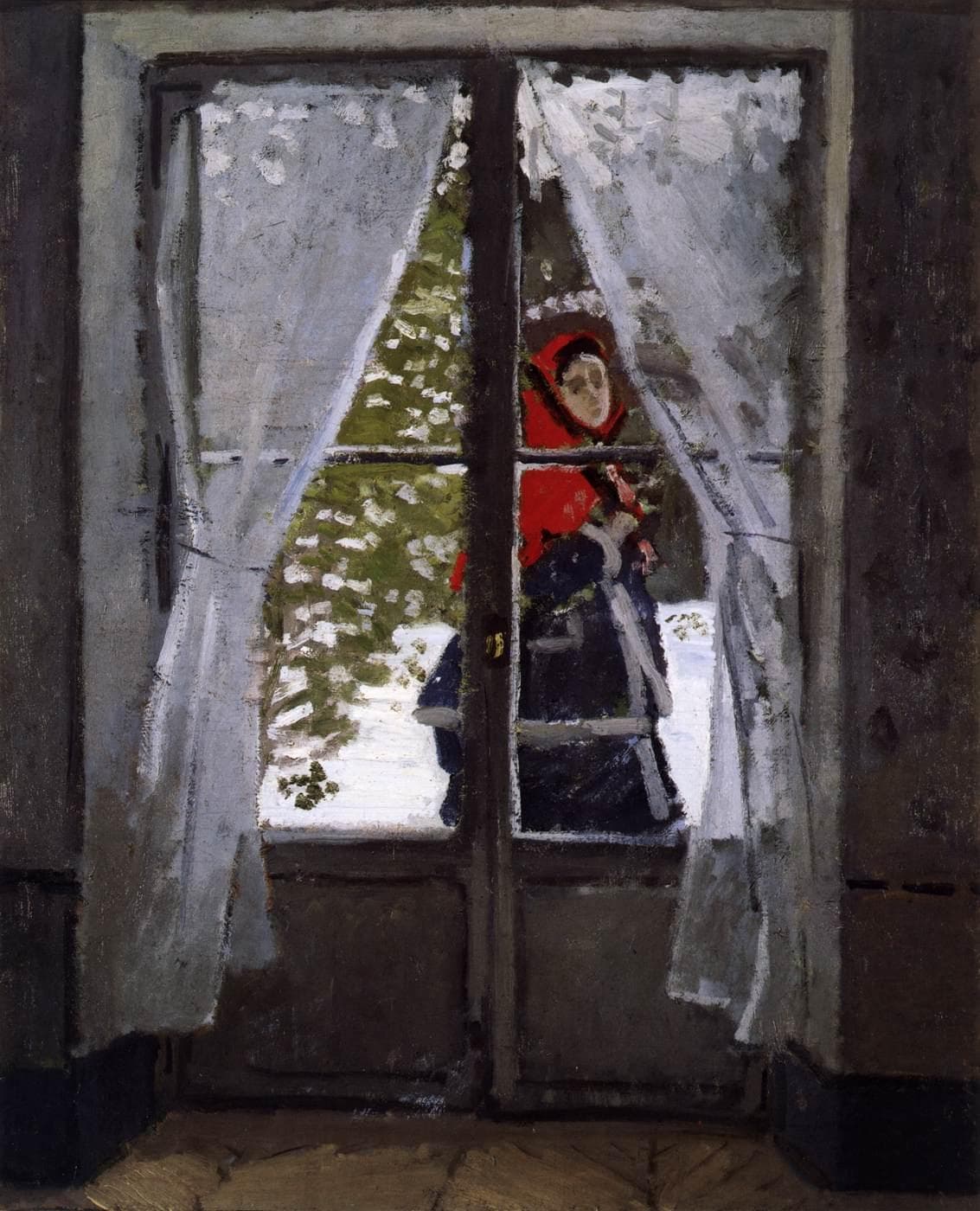
The Red Kerchief (The Red Cape)
Claude Monet · c. 1868–73
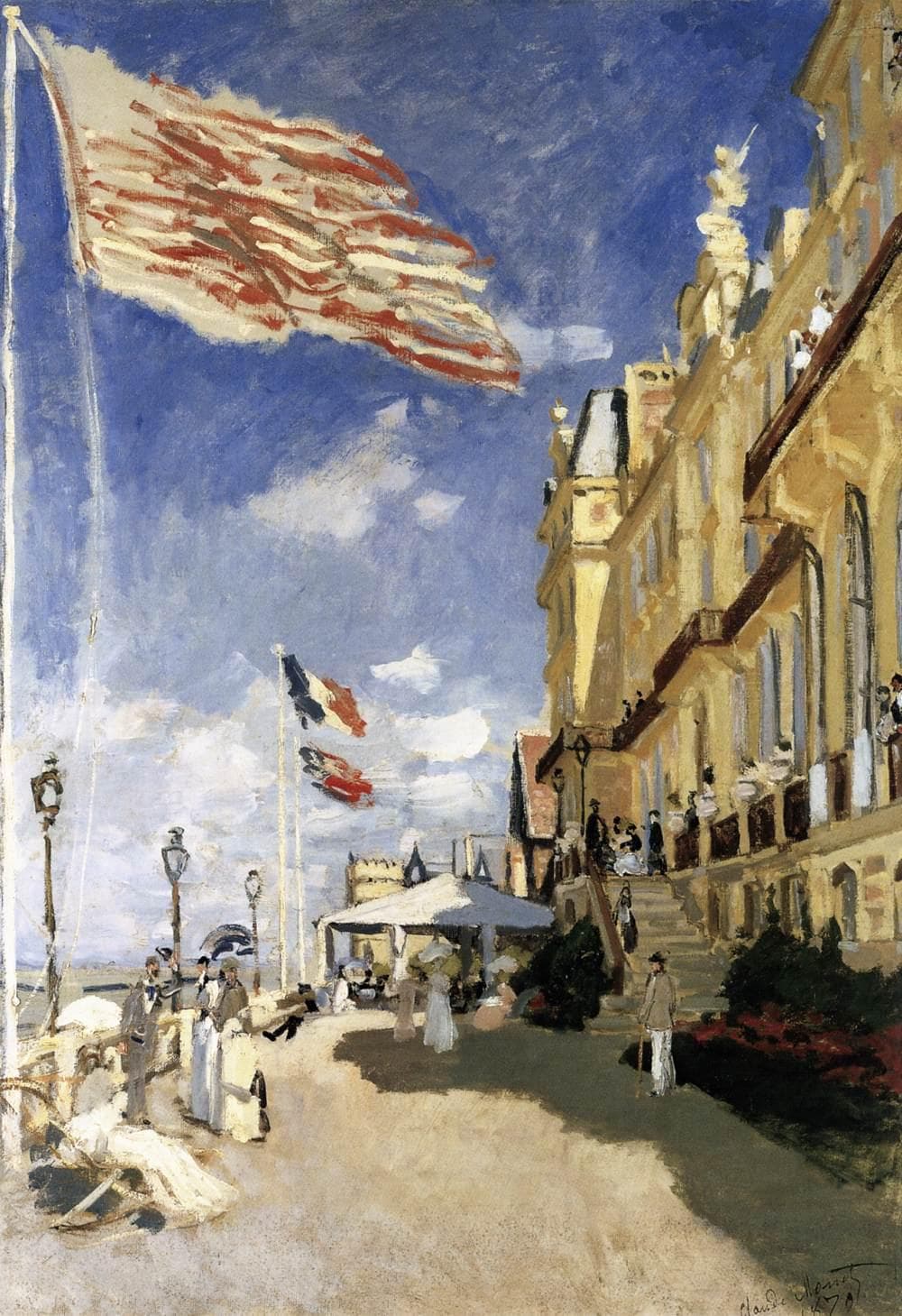
The Hôtel des Roches Noires, Trouville
Claude Monet · 1870
Kindred works
You may also study
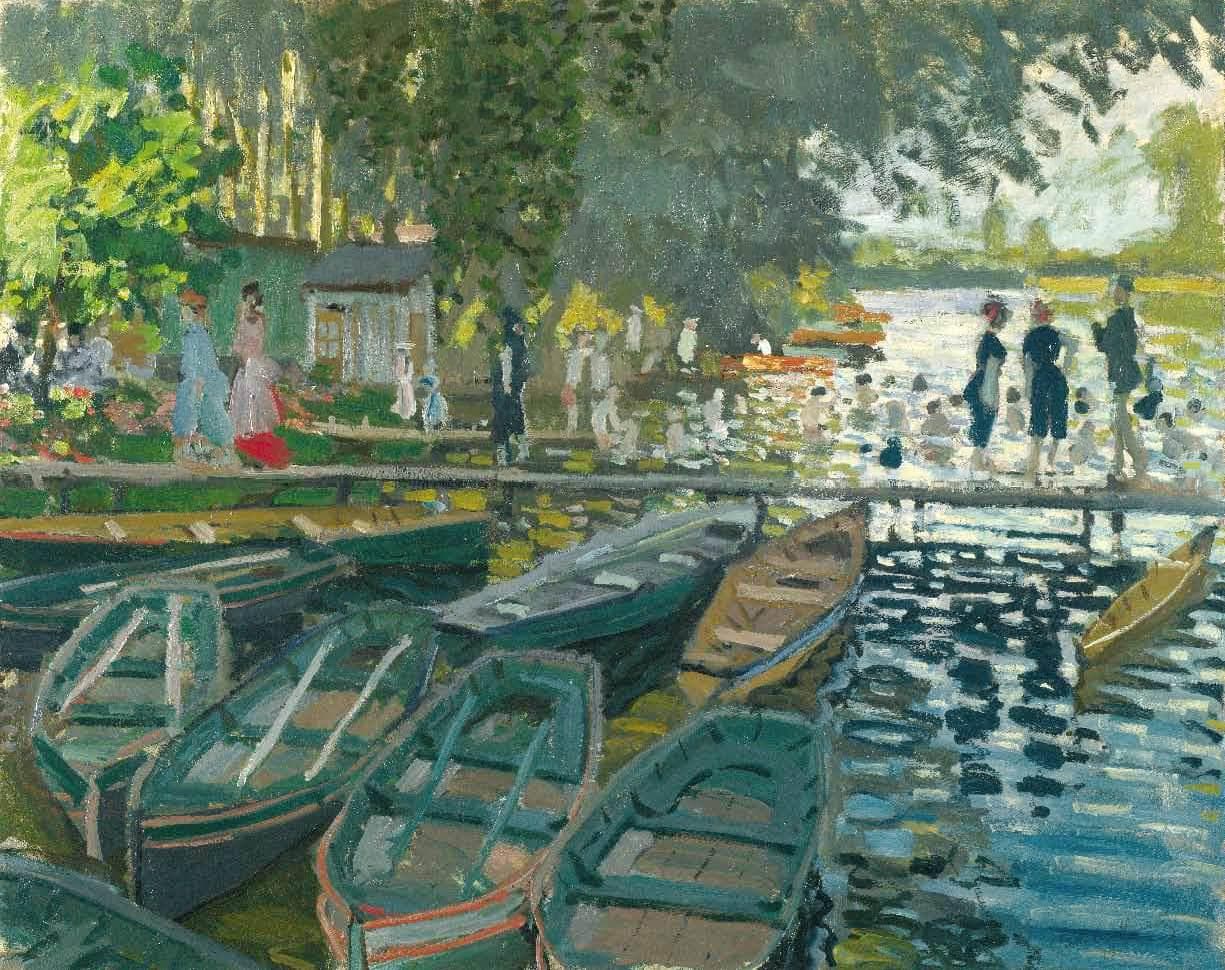
Bathers at La Grenouillère
Claude Monet · 1869
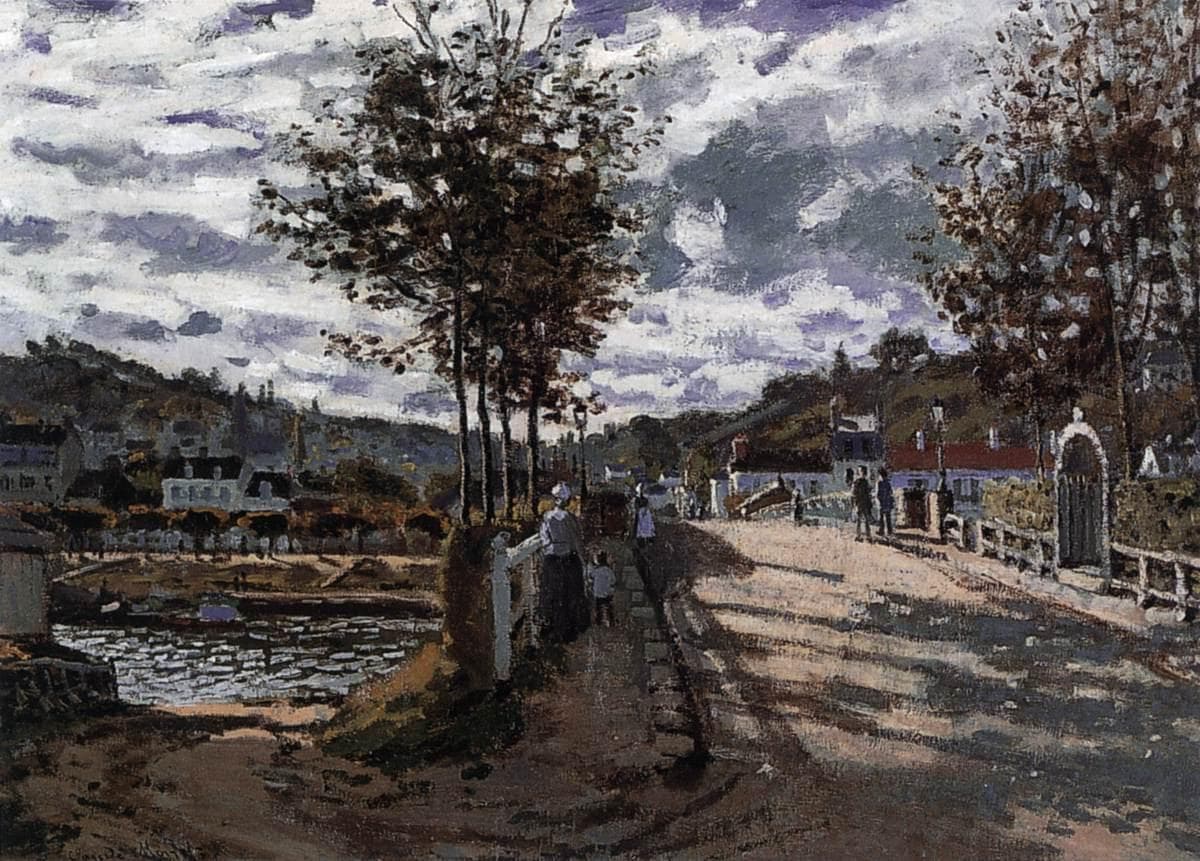
The Bridge at Bougival
Claude Monet · 1869
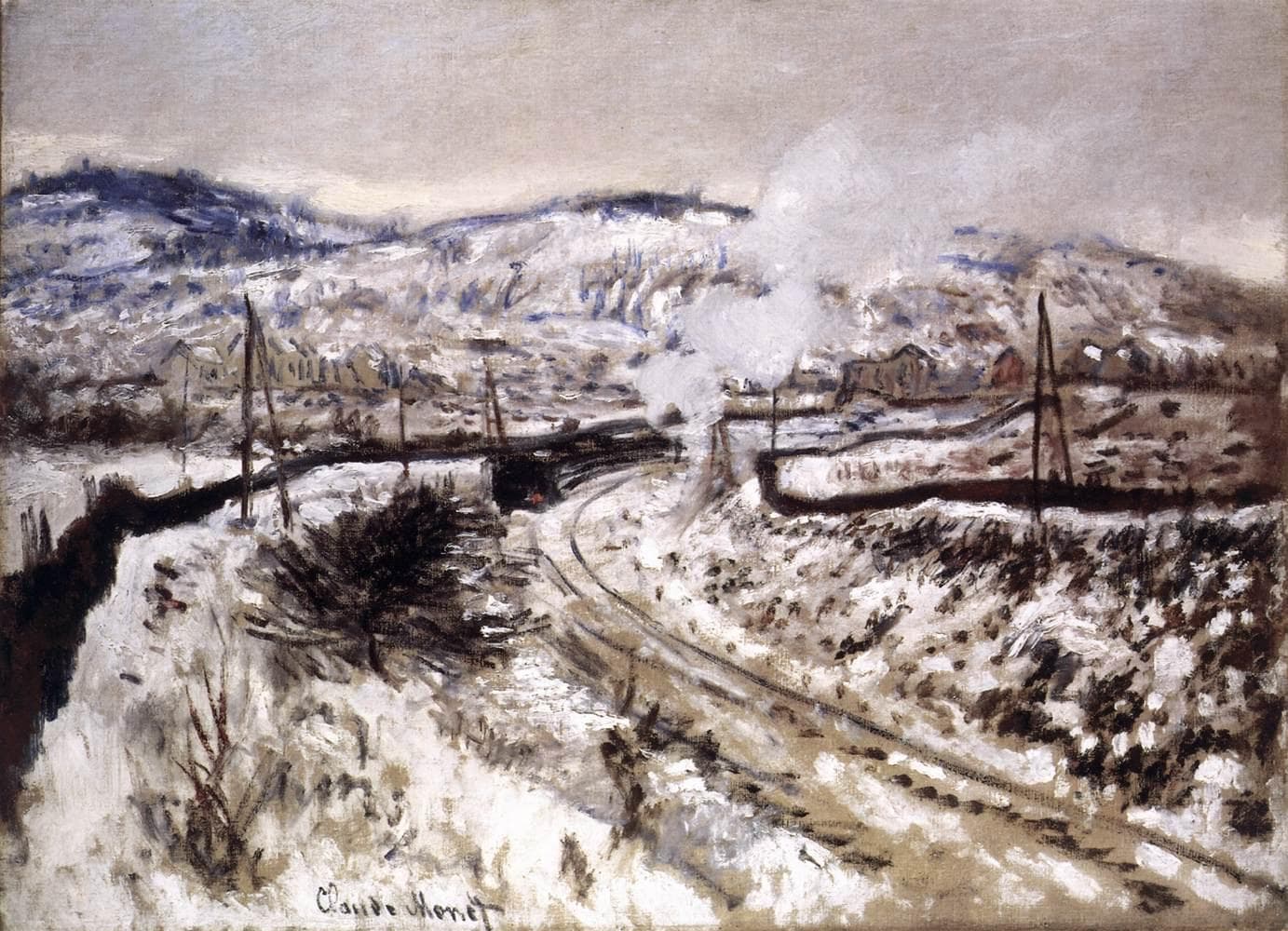
Train in the Snow at Argenteuil
Claude Monet · 1875
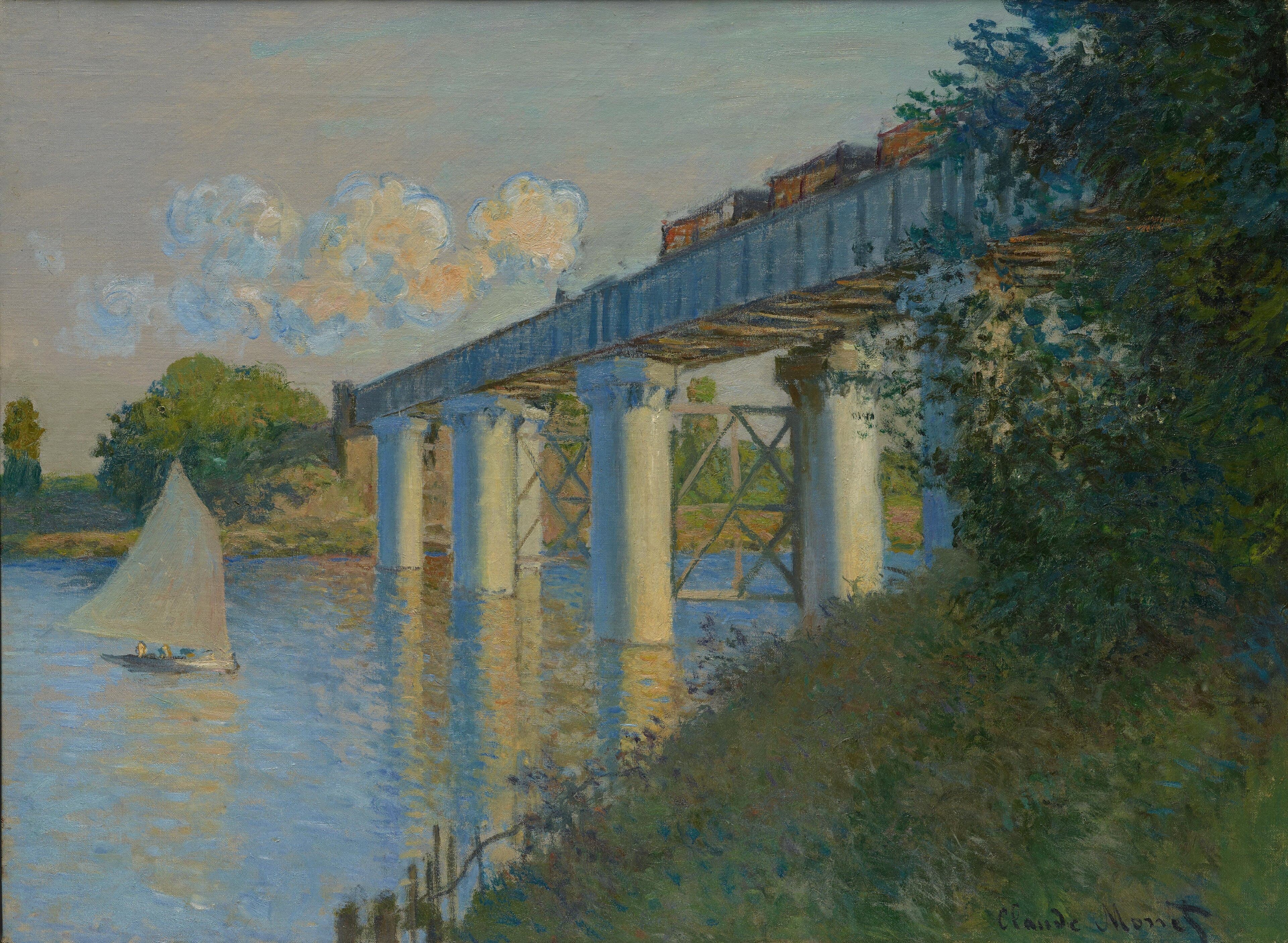
Railroad Bridge, Argenteuil
Claude Monet · 1873
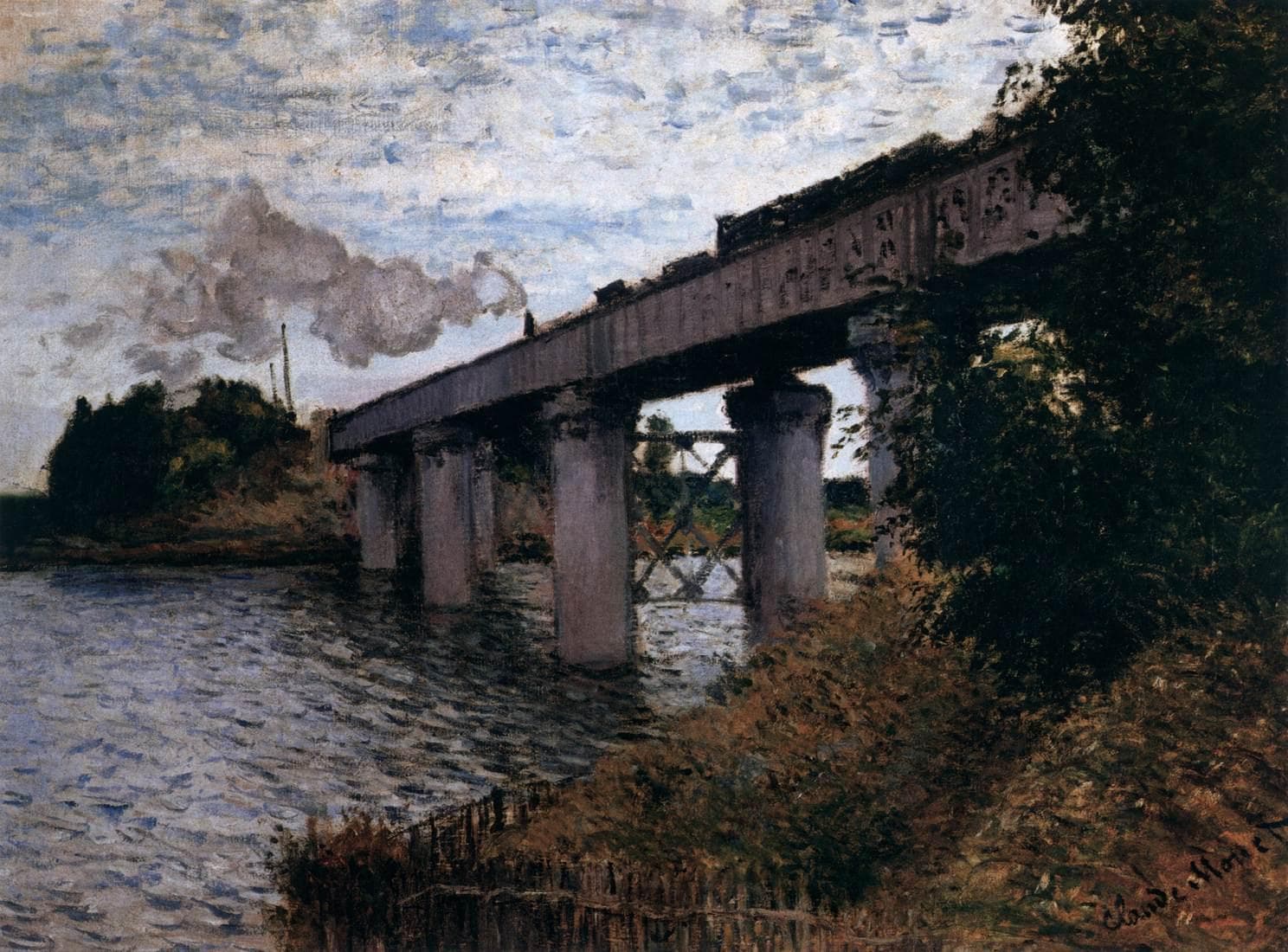
The Railway Bridge at Argenteuil
Claude Monet · c. 1873–74

The Scream
Edvard Munch · 1893

Ophelia
John Everett Millais · 1851–52

The Great Wave off Kanagawa
Katsushika Hokusai · c. 1830–32