Image: Claude Monet (source: www.sothebys.com) · Public domain · via Wikimedia Commons
Peupliers au bord de l'Epte, temps couvert
Claude Monet, 1891
Peupliers au bord de l'Epte, temps couvert (Poplars on the Epte, Overcast Weather) is an 1891 Claude Monet from the Poplars series: tall trunks against a mauve-gray sky by the river near Giverny. It sold at Sotheby's New York in 2023 and is privately owned.
- Artist
- Claude Monet
- Date
- 1891
- Medium
- Oil on canvas
- Dimensions
- 91.5 × 81.5 cm
- Collection
- Private collection
- Movement
- Impressionism
- Catalogue
- Wildenstein 1299
- Nature & Landscape
- Water & Sea
What you are looking at
A dense screen of poplar trunks fills the canvas from edge to edge. They rise from a dark green bank at the bottom, thin and reddish-brown, and run straight out of the top of the picture, so we never see where they end. Clumps of blue-green foliage hang from them at every height, scattered like notes on a stave, and near the top the crowns merge into a loose, broken canopy. Behind the front rank a lower row of trees curves away to the right and drops toward the horizon, and in the bottom strip the river Epte reflects it all in muted greens and pinks.
The sky is the key. It is overcast, a warm gray with a strong pink and mauve cast, brushed in short, flat strokes that sit between the trunks like panes of colored glass. There is no sun, no shadow and no bright highlight. Everything is held at the same middle tone, which makes the color relationships, cool green leaves against pinkish air, do all the work.
The signature and date, Claude Monet 91, are at lower right, in red paint over the dark water.
Painting the poplars, 1891
Claude Monet began the poplars in the spring of 1891 and kept at them into the autumn. The trees lined the Epte at Limetz, about two kilometers upstream from his house at Giverny, and he painted them from his studio boat. When the commune auctioned the trees for timber, Monet came to terms with the merchant who bought them so that they stayed standing until his canvases were finished.
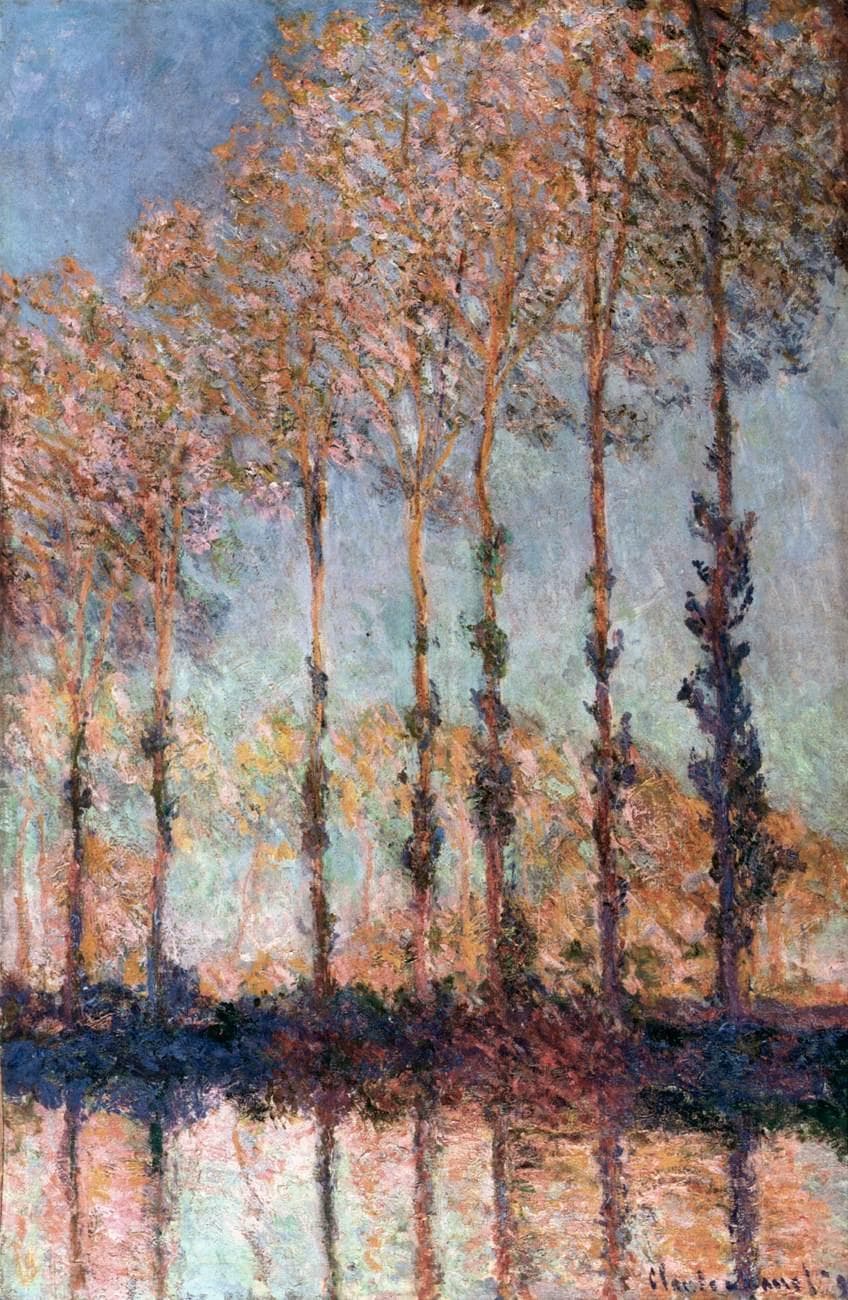
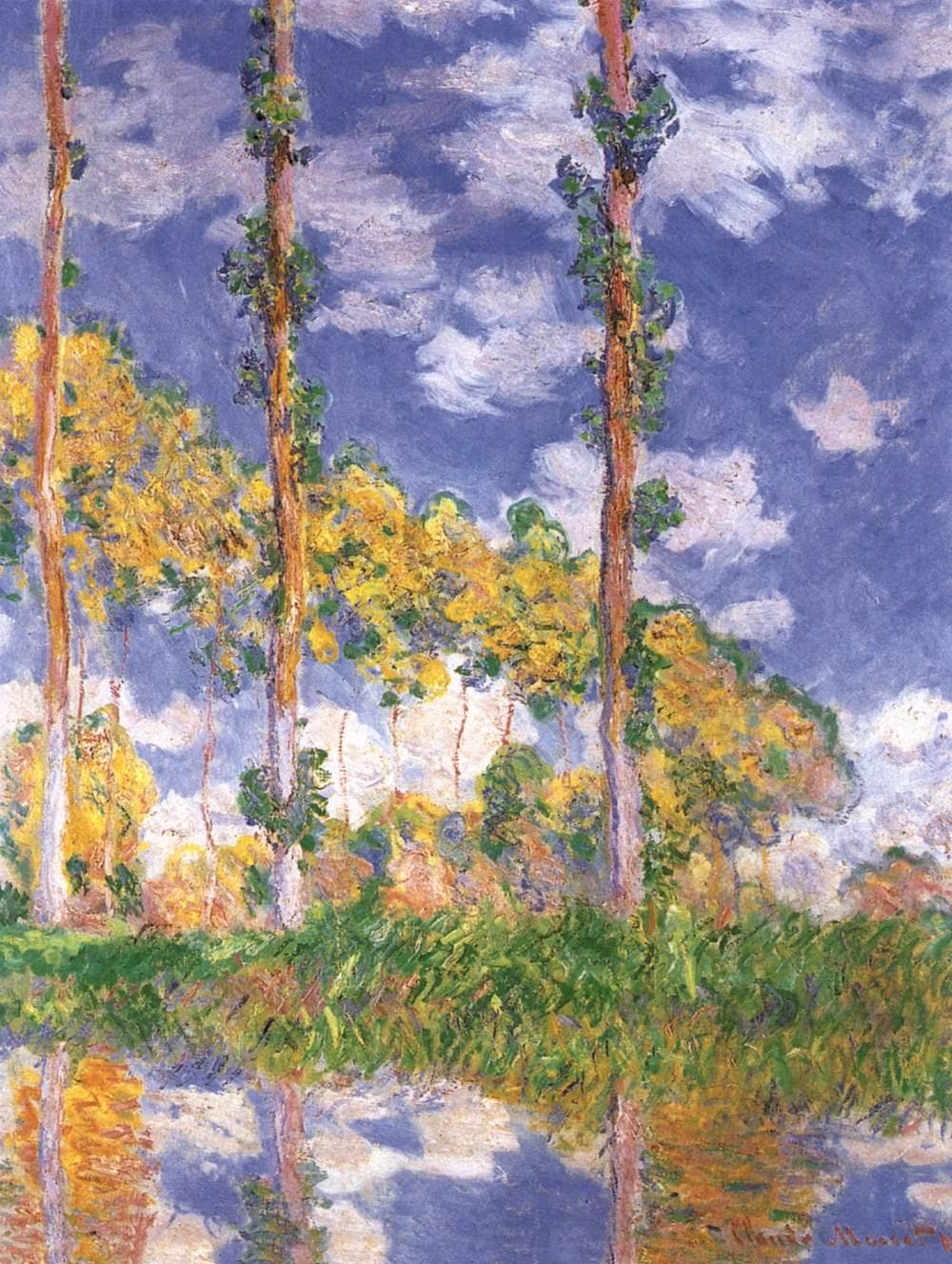
In the Poplars series this picture sits between the two main types. It has the frontal, close-up trunks of the screen-like compositions, but it also shows the row bending away behind, as in Poplars on the Banks of the River Epte. Of the canvases that close in on the trunks, it is one of the most crowded: where Three Poplars, Summer isolates three uprights, this one packs in eight or nine.
How it was painted
The canvas is upright, 91.5 by 81.5 centimeters. Monet worked from the sky forward. The pink-gray ground of the sky goes down first in dense, matte strokes; the trunks are then drawn over it in long single pulls of brown, red and violet, slightly wavering; and the foliage is dabbed on last in rounded clusters of green, teal and blue, with flecks of pink where the sky shows through. The paint is thick enough to have a crusty surface in the sky but kept thin in the trunks, which keeps them light and linear.
Overcast light suited Monet's purposes for a series. It flattens volume and suppresses cast shadow, so the picture becomes a pattern of verticals and soft color areas. That decorative quality, which critics linked to Japanese prints and to woven textile, is especially strong here.
How this version differs
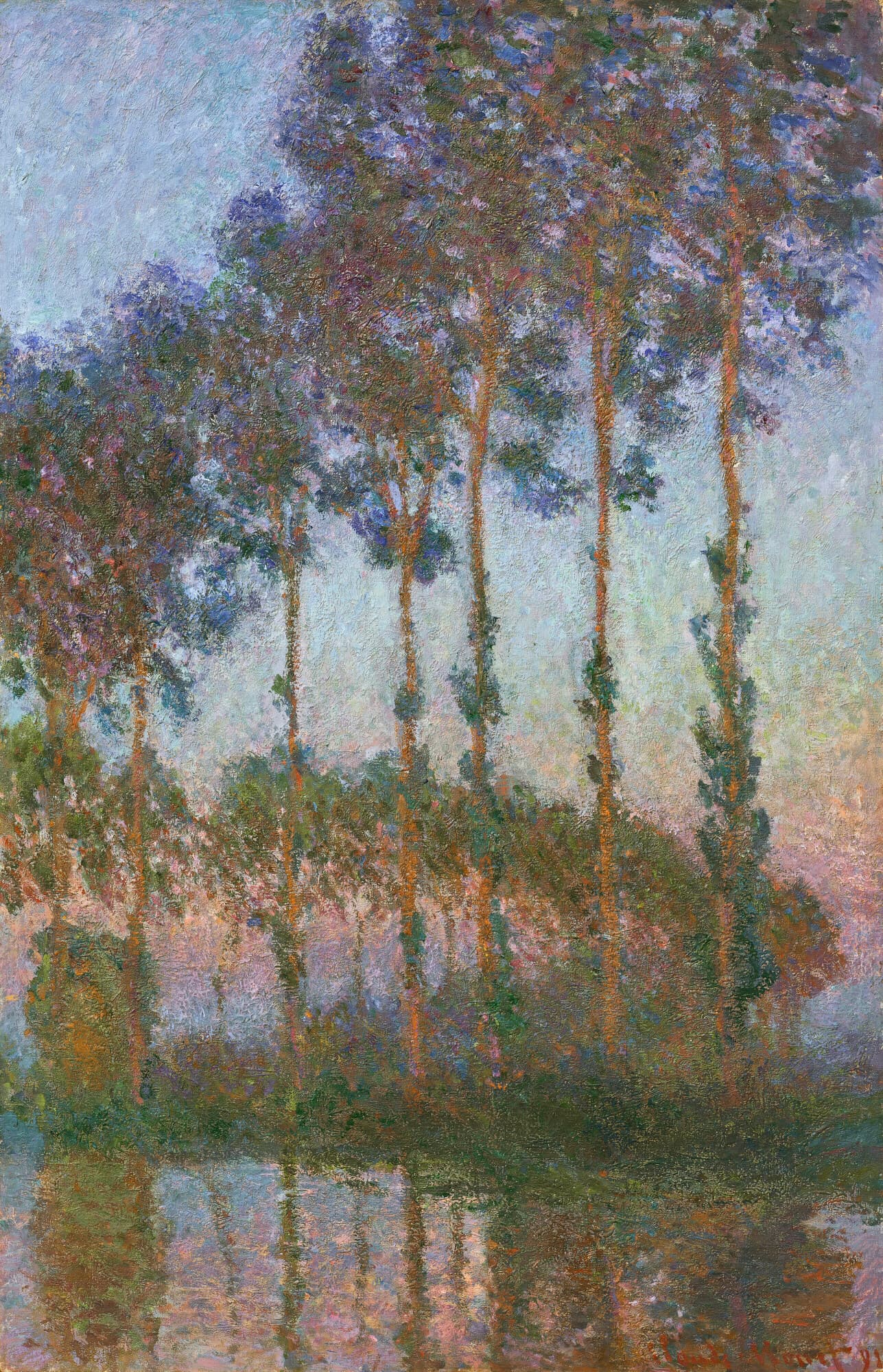
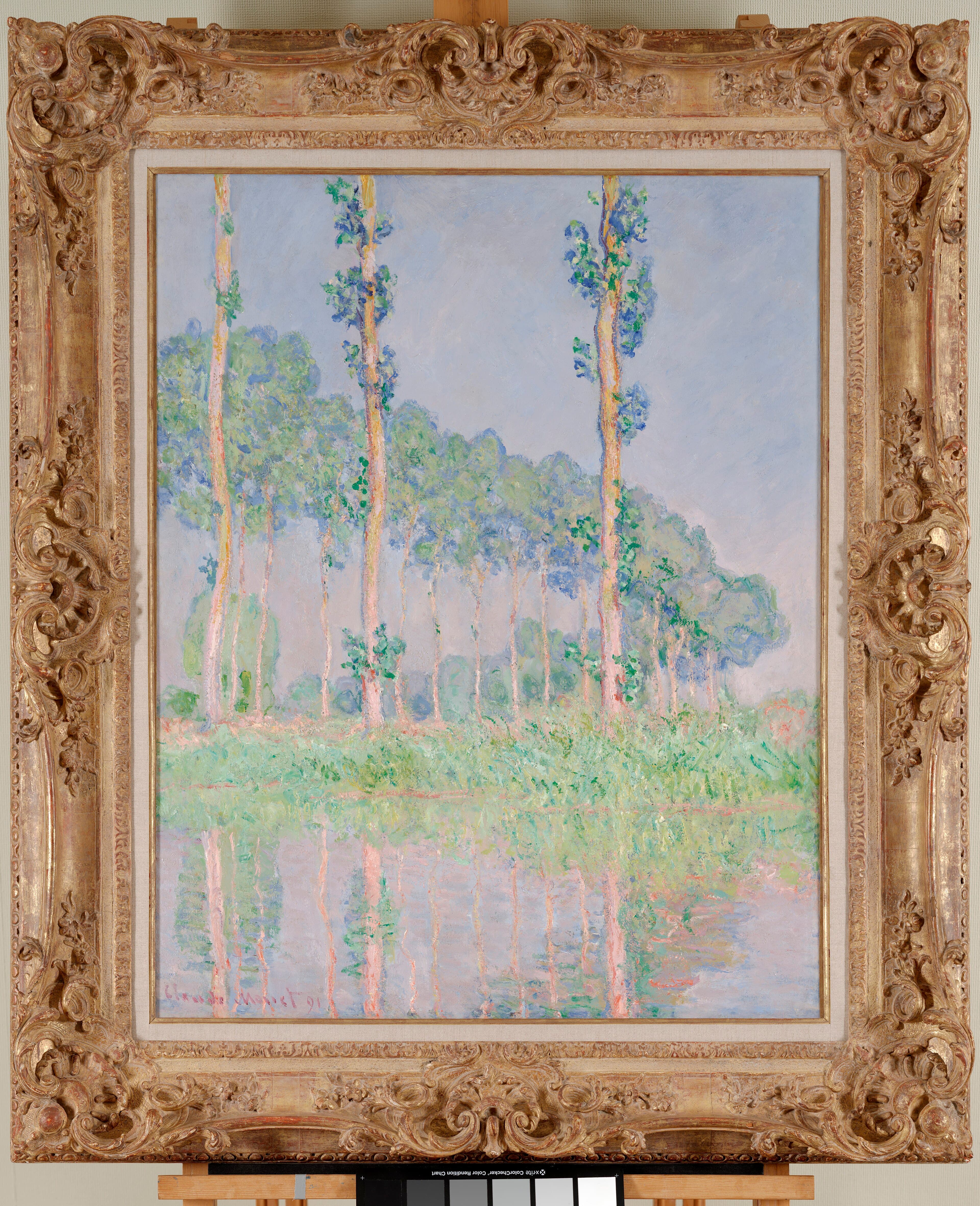
Set beside Peupliers au bord de l'Epte, crépuscule, painted from almost the same spot, the difference is the hour and the weather. The twilight canvas has orange-lit trunks and a sky turning pink at the horizon; this one has no direct light at all, and the pink is diffused through the whole sky. Against the clear blue of Poplars, Pink Effect it is darker and denser, a midday picture under cloud rather than a luminous early or late hour.
The poplar as a motif
Poplars were planted along French rivers in regular rows, as windbreaks and for timber, and harvested when they matured. Monet's trees were a commercial crop, not a picturesque wood. That is part of their appeal for him: their regular spacing and uniform height made a ready-made grid. Some writers have linked the poplar to the liberty trees of the French Revolution, but Monet left no statement to support that reading, and it is best treated as one possible interpretation.
Ownership and where to see it
Catalogued as Wildenstein 1299, the painting has passed through many hands. Sotheby's offered it in its Modern Evening Auction in New York on November 13, 2023, where it sold for about $30.8 million. It remains in private ownership and is not on public view. For poplar canvases you can visit, see our guide to where to see Monet's paintings.
Questions & answers
Where is Monet's Peupliers au bord de l'Epte, temps couvert?
It is in a private collection. The painting was sold at Sotheby's Modern Evening Auction in New York on November 13, 2023, for about $30.8 million, and has not been placed on public view since. It is catalogued as Wildenstein 1299 and measures 91.5 by 81.5 centimeters.
When and where was it painted?
Monet painted it in 1891, dating it beside his signature. The poplars grew along the river Epte at Limetz, a short distance upstream from his home at Giverny in Normandy, and he worked on them from his studio boat over the spring, summer and autumn of that year.
What does temps couvert mean?
It means overcast or cloudy weather. Monet's poplar titles name the light or weather because the motif itself barely changes. Here the sky is a soft pink-gray with no sun or shadow, and the trees read as a flat, decorative screen of trunks and blue-green foliage.
How is this version different from the other poplars?
It is one of the most crowded of the close-up compositions, with eight or nine trunks across the picture, and it is painted in shadowless overcast light. Twin canvases show the same view at twilight, in sun or in autumn color, each with a different palette.
More by the artist
Claude Monet
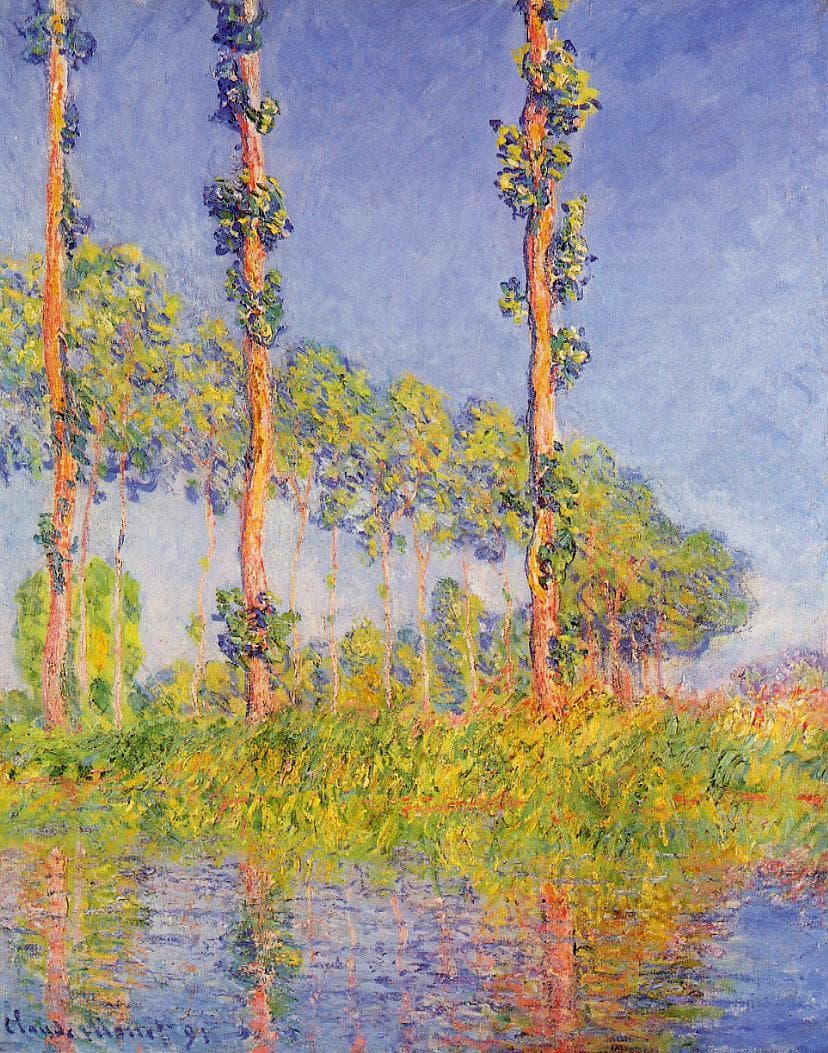
Three Poplars, Autumn Effect
Claude Monet · 1891
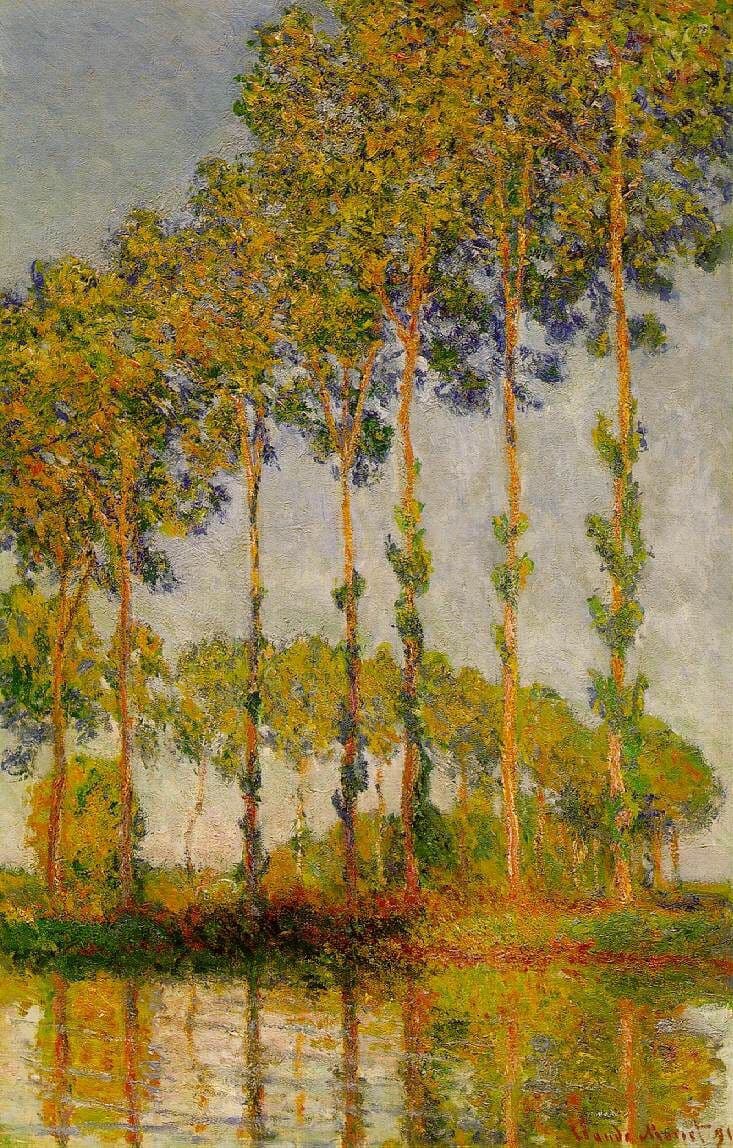
Row of Poplars in Autumn
Claude Monet · 1891
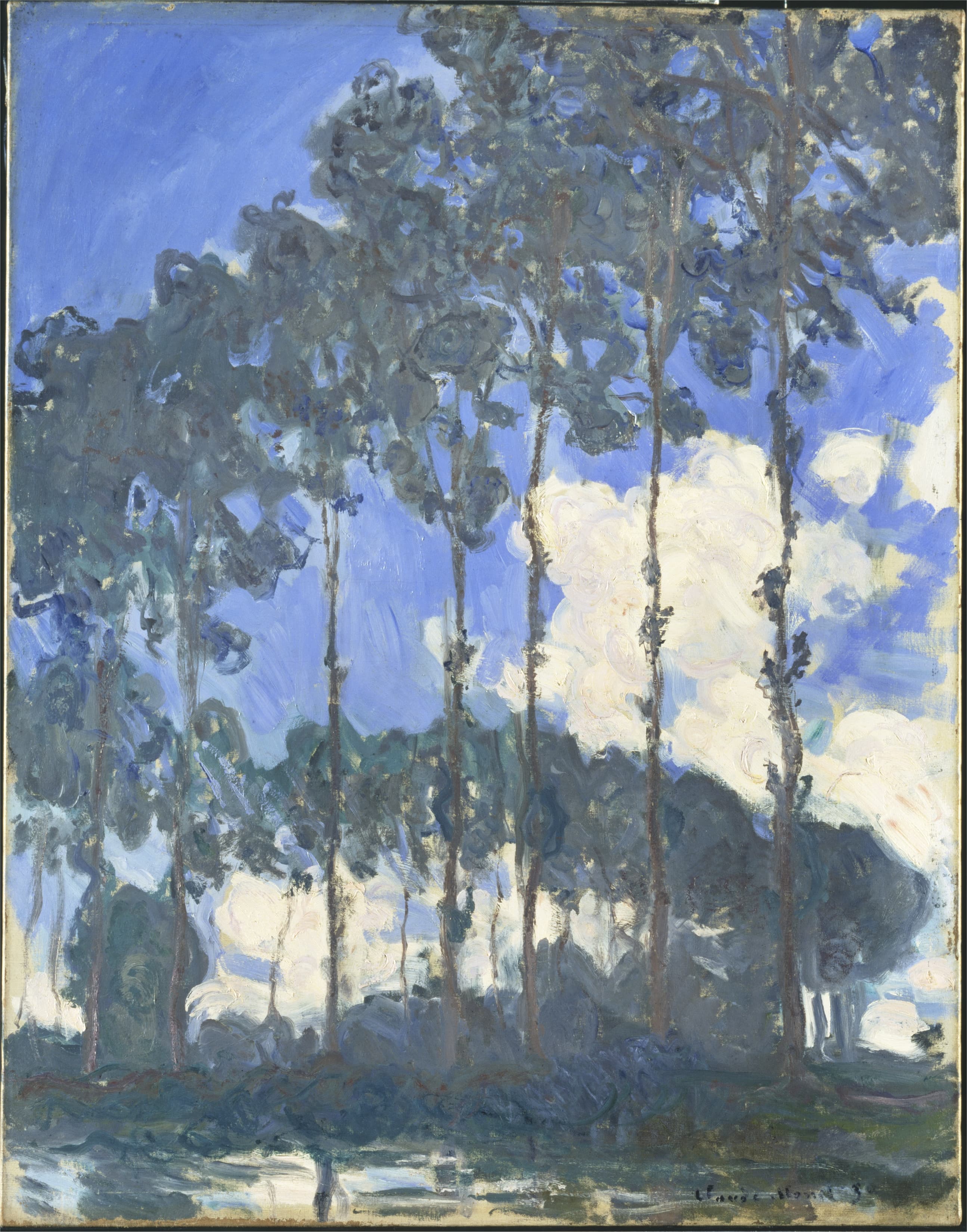
Poplars on the Epte (London)
Claude Monet · 1891
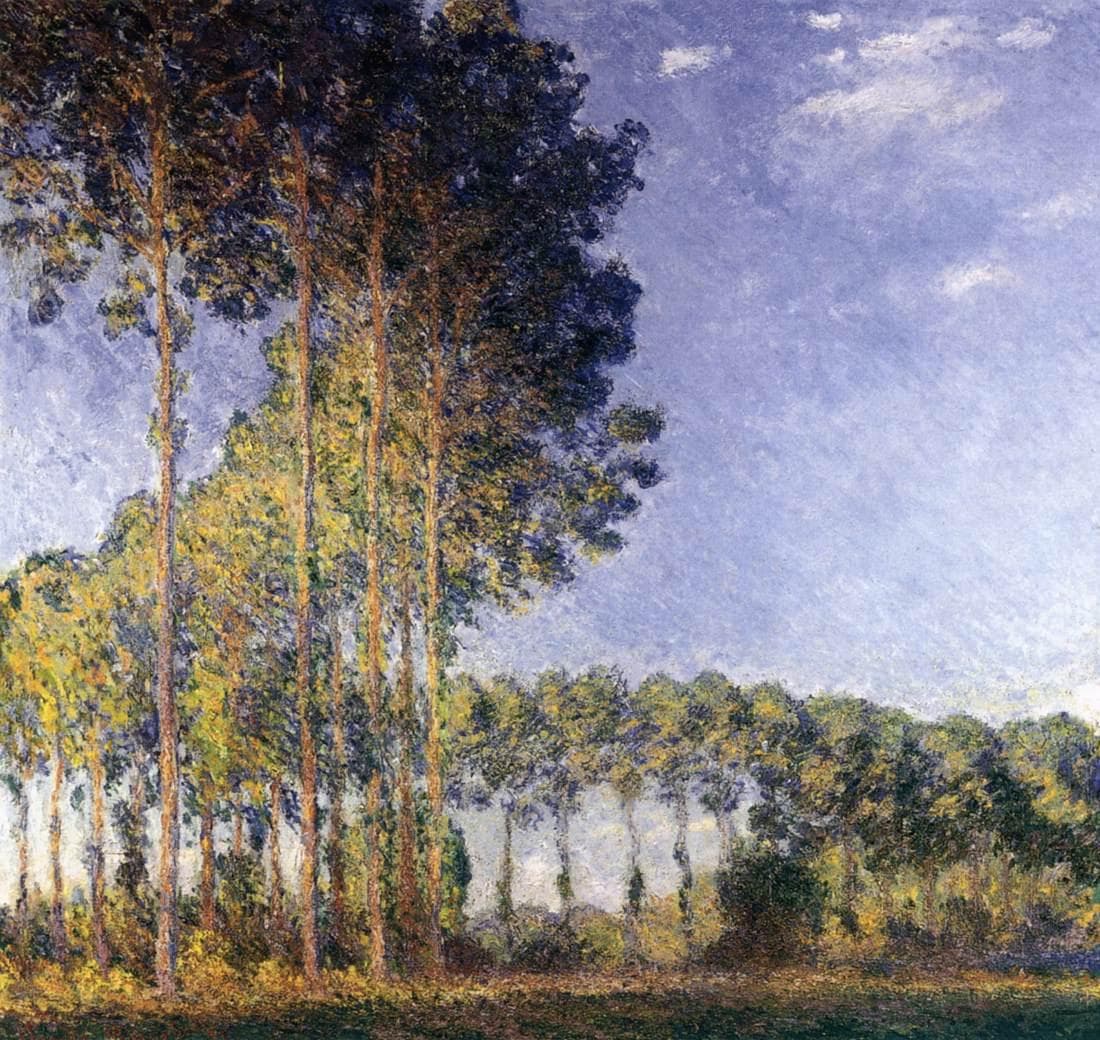
Poplars at the Banks of Epte
Claude Monet · 1891–92
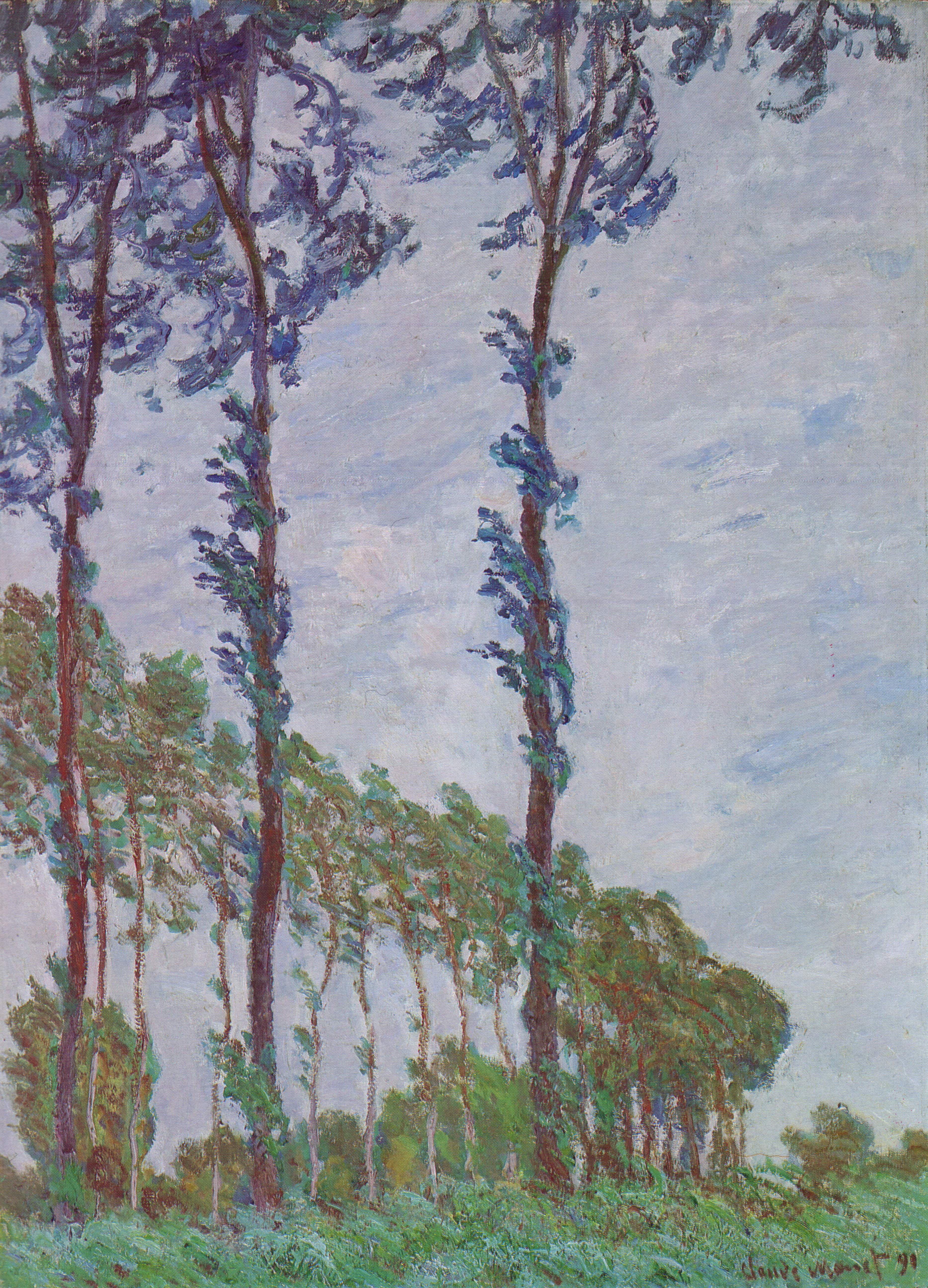
Wind Effect, Series of The Poplars
Claude Monet · 1891
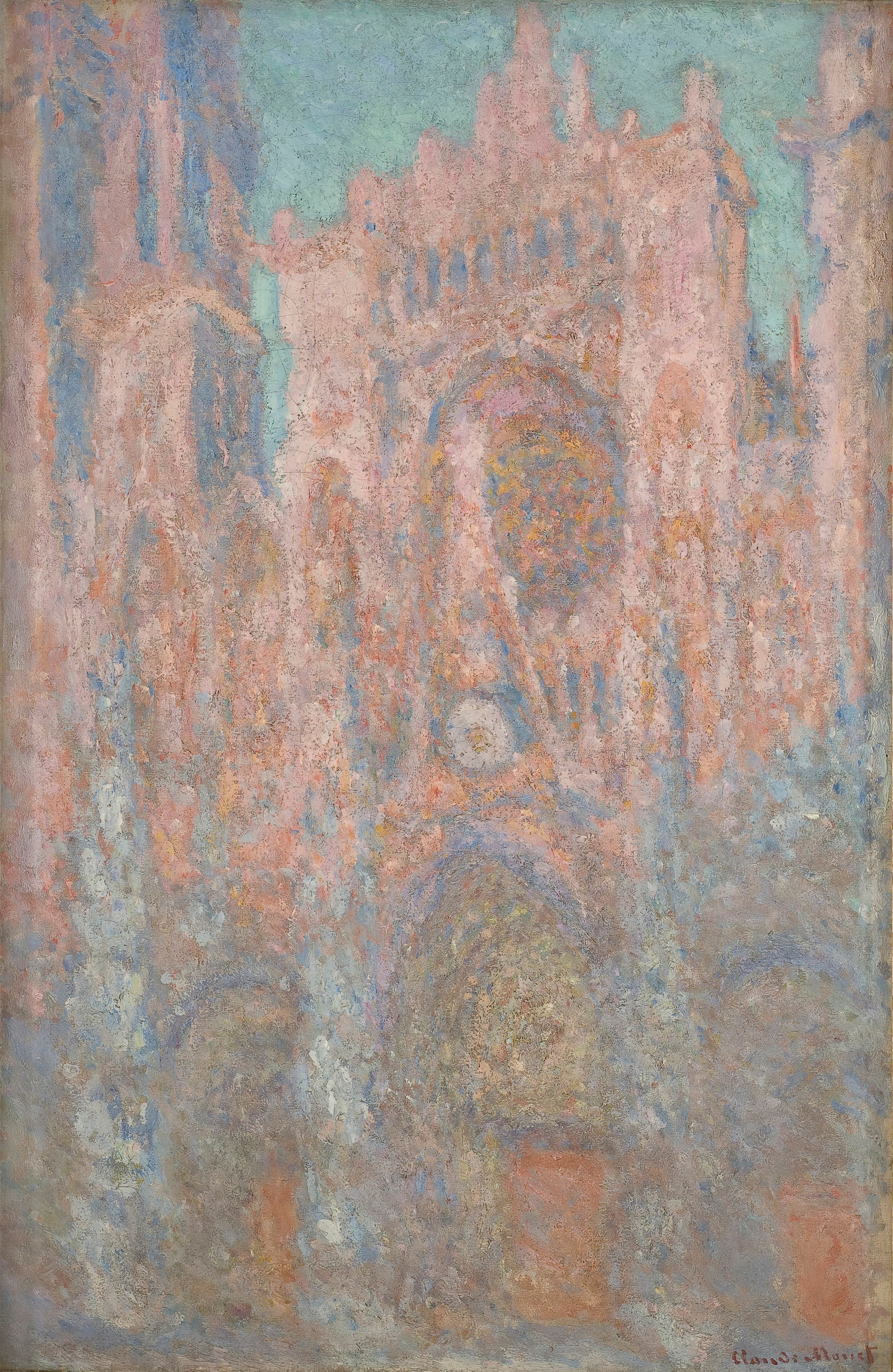
Rouen Cathedral
Claude Monet · 1892–94
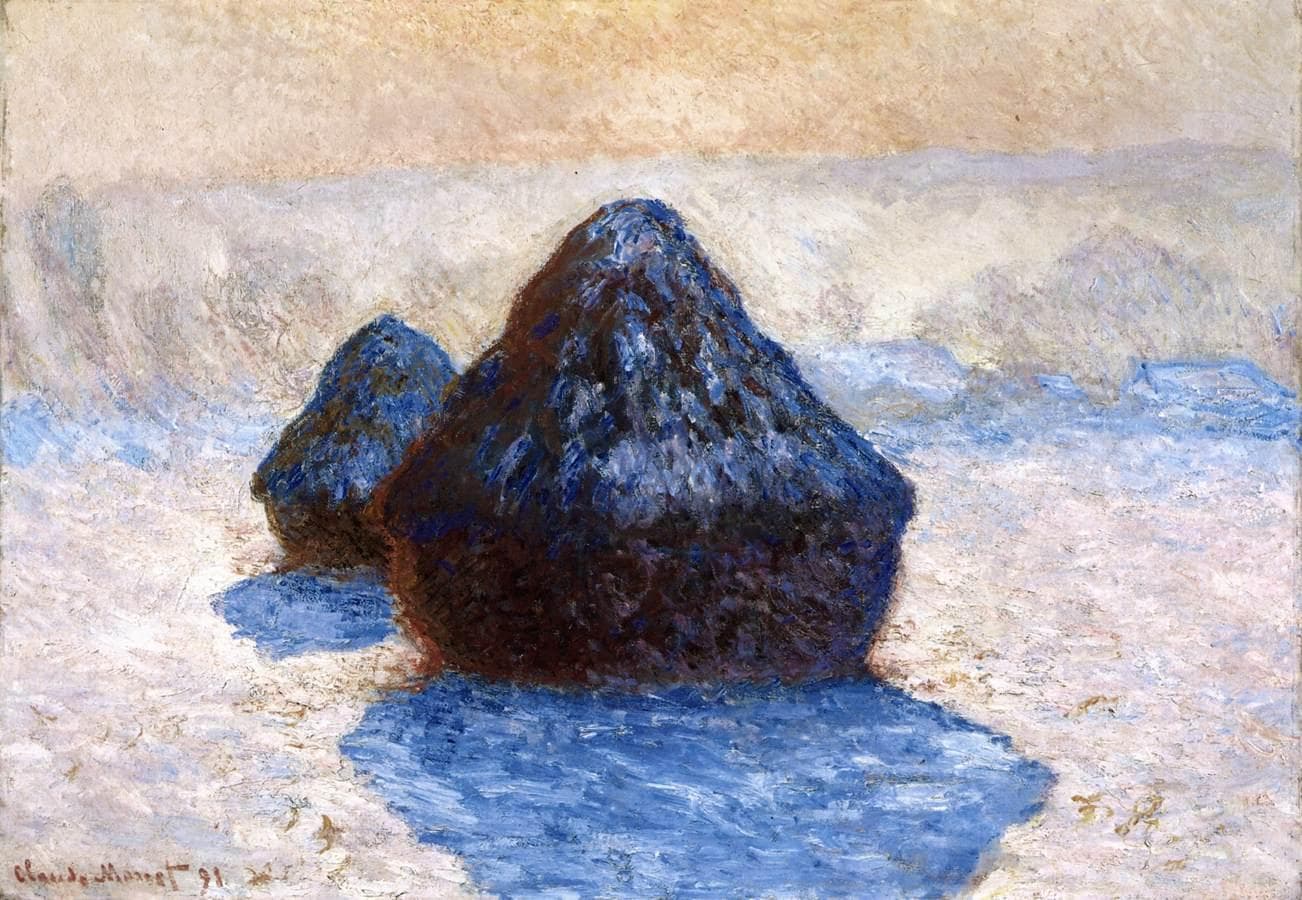
Haystacks, Snow Effect
Claude Monet · 1891
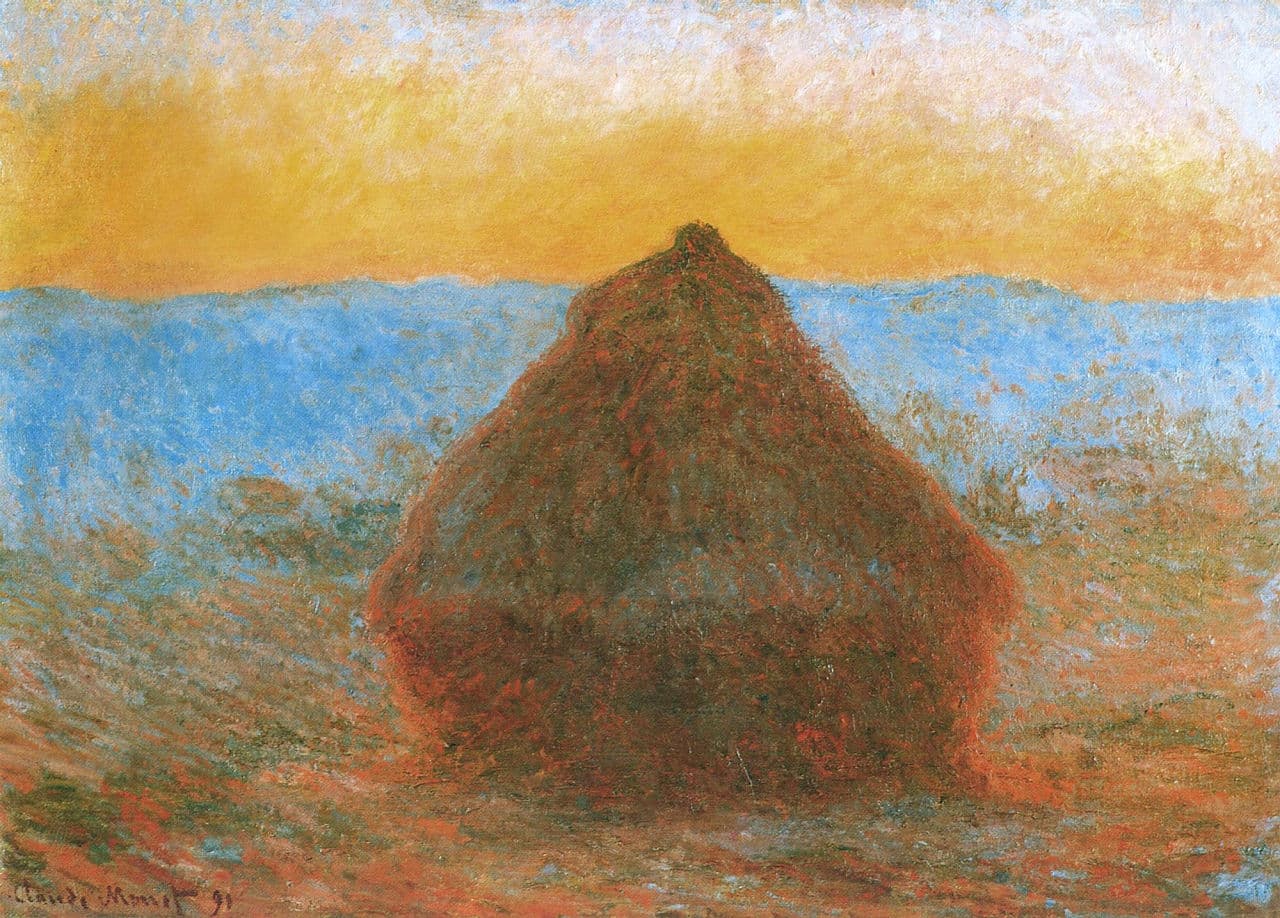
La Meule
Claude Monet · 1891
Also painted in 1891
The same year
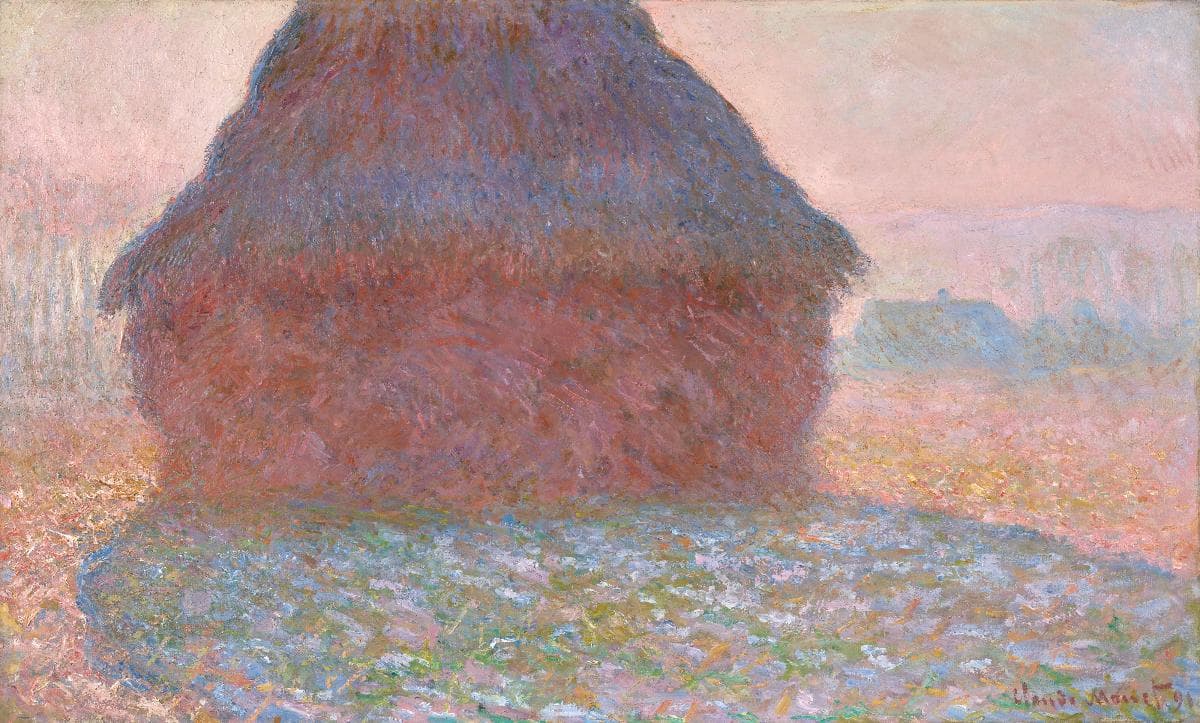
Grainstack in Sunlight
Claude Monet · 1891
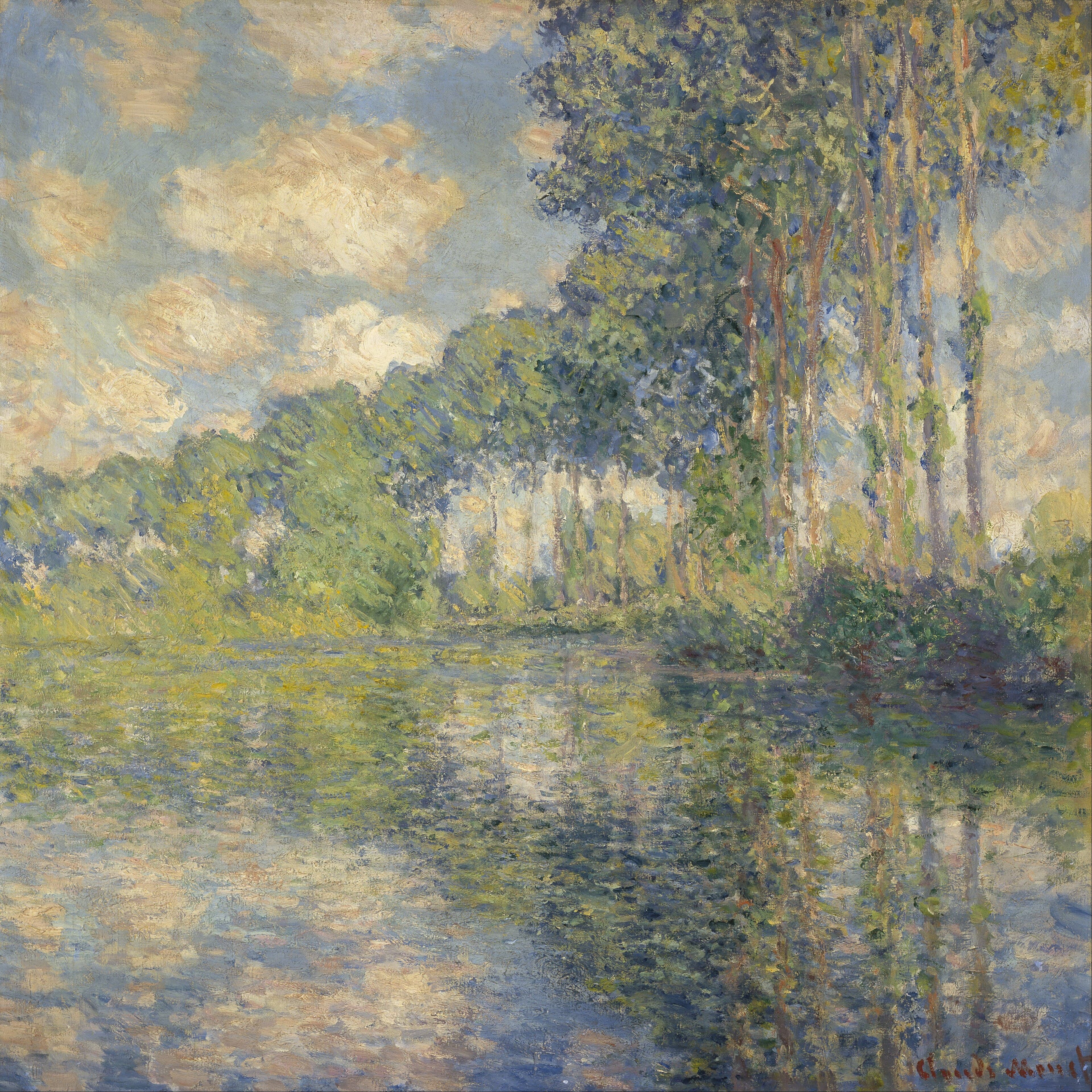
Poplars on the Epte (Edinburgh)
Claude Monet · 1891
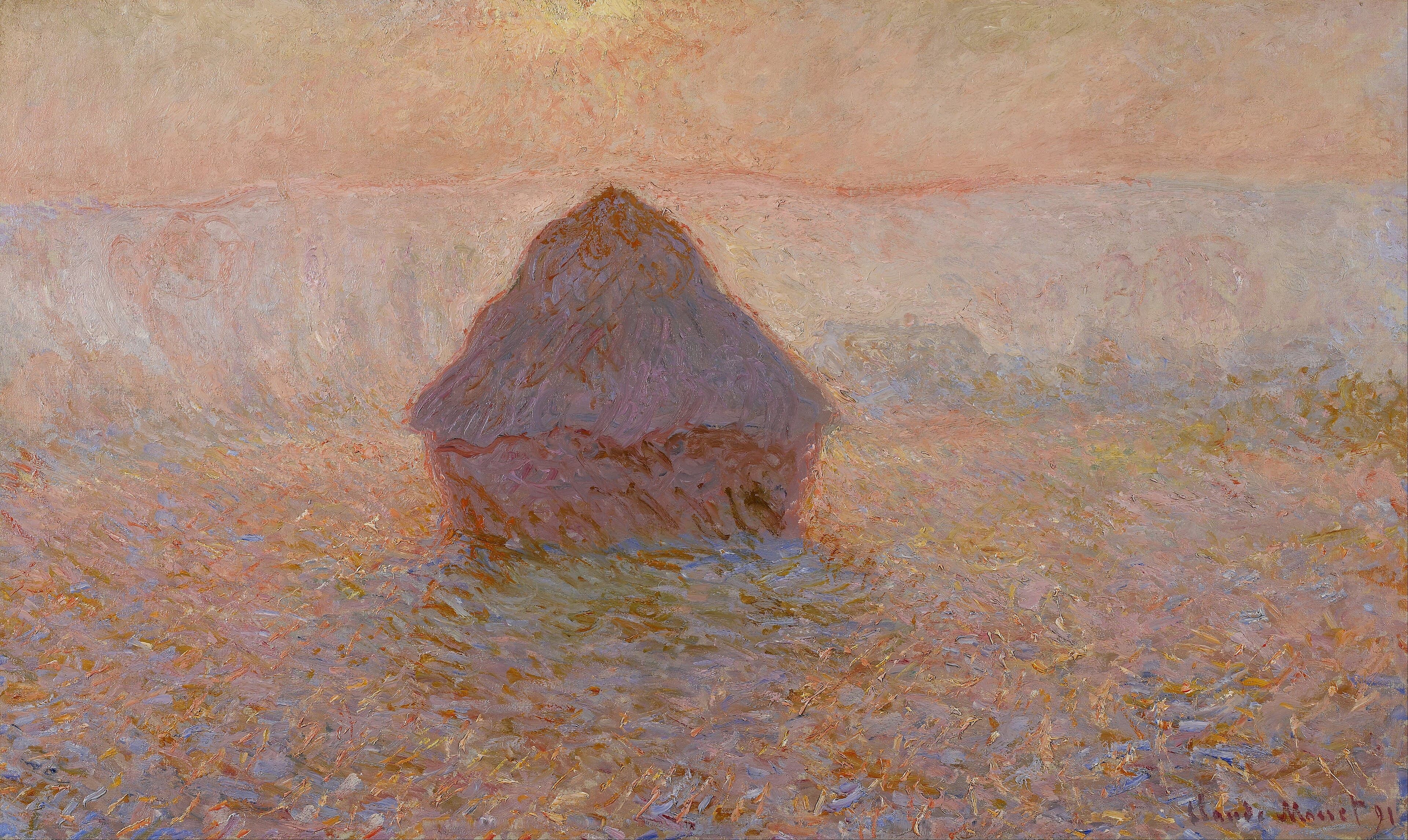
Grainstack, Sun in the Mist
Claude Monet · 1891
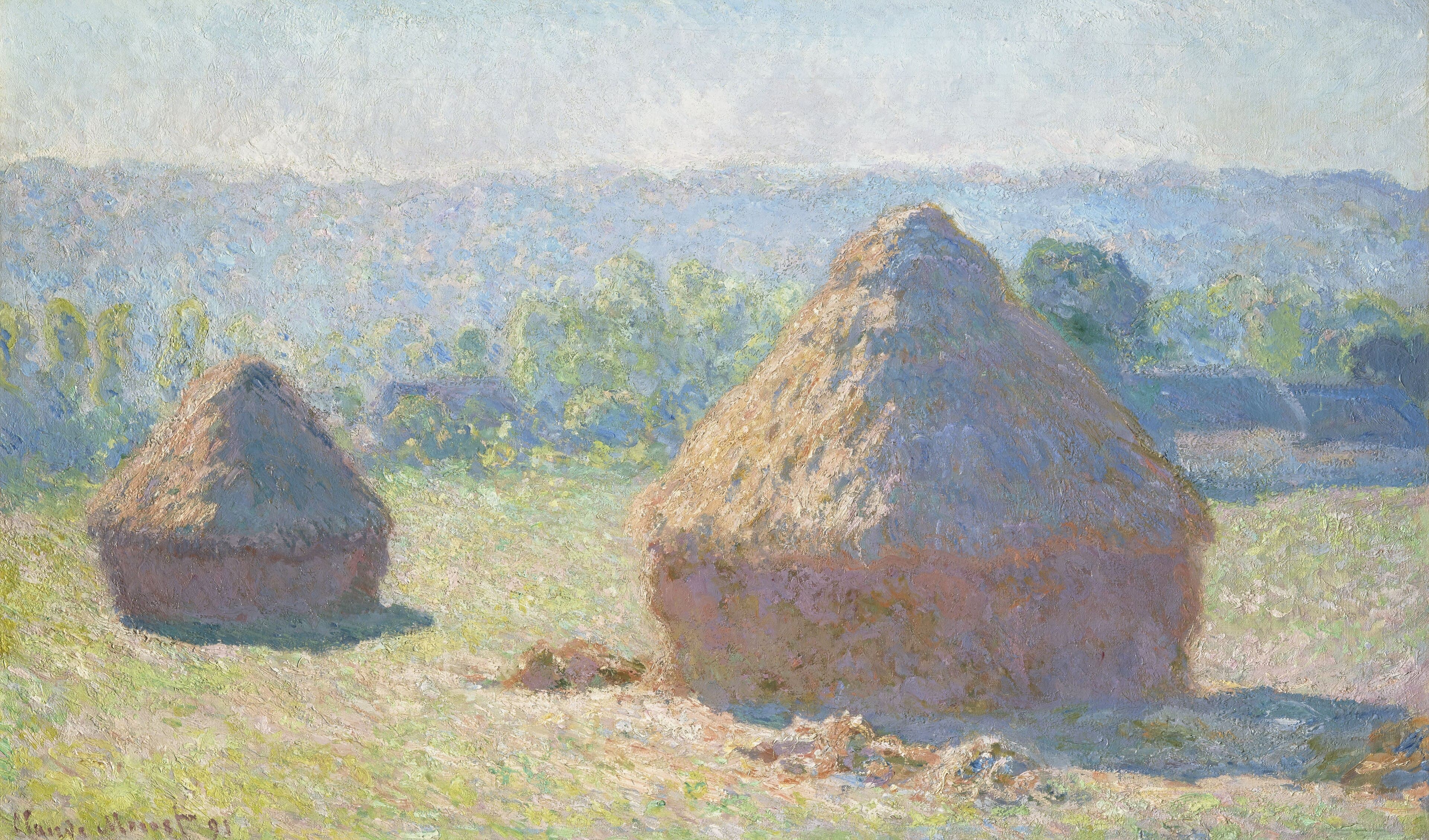
Haystacks, End of Summer
Claude Monet · 1891
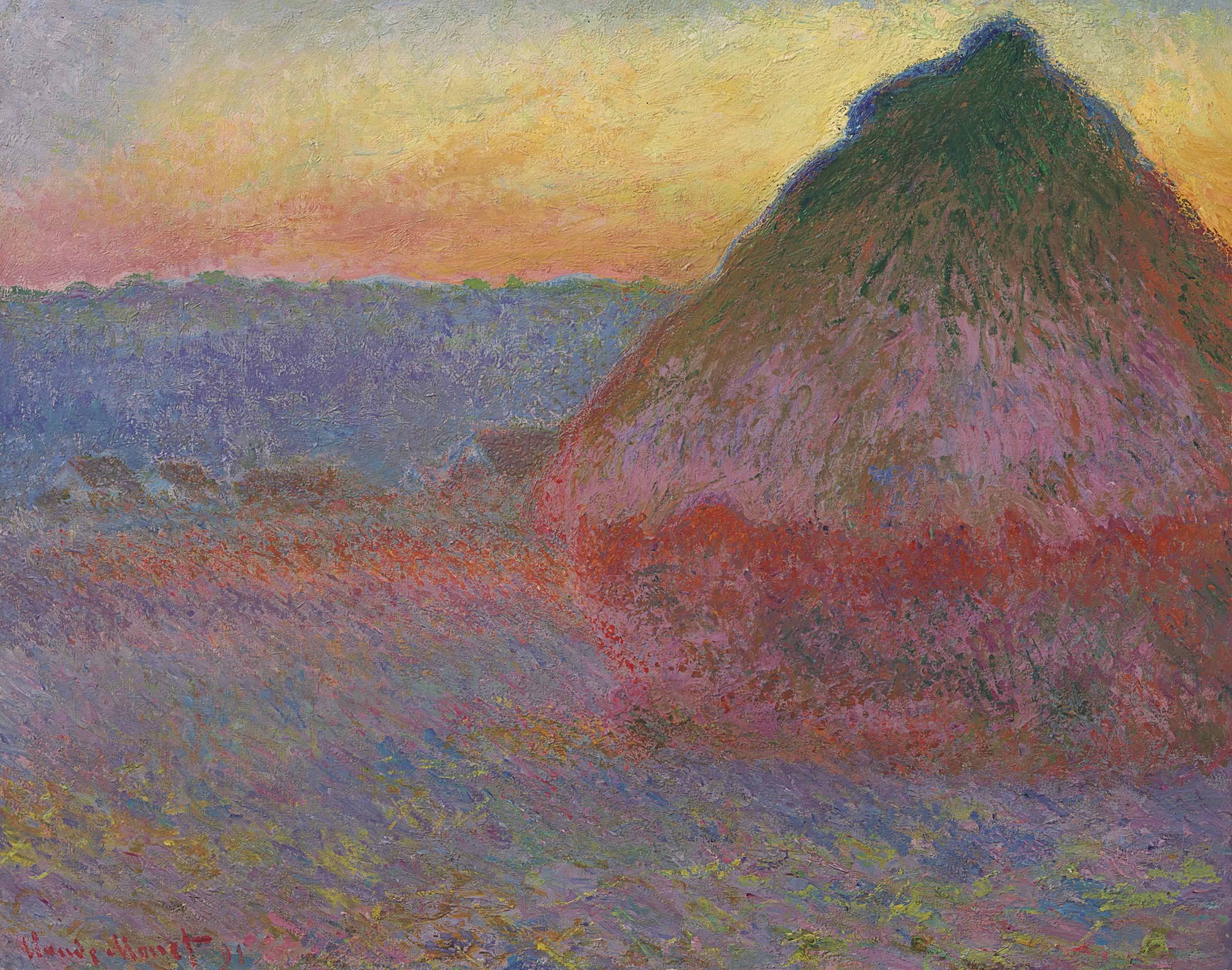
Grainstack in the Sunlight
Claude Monet · 1891
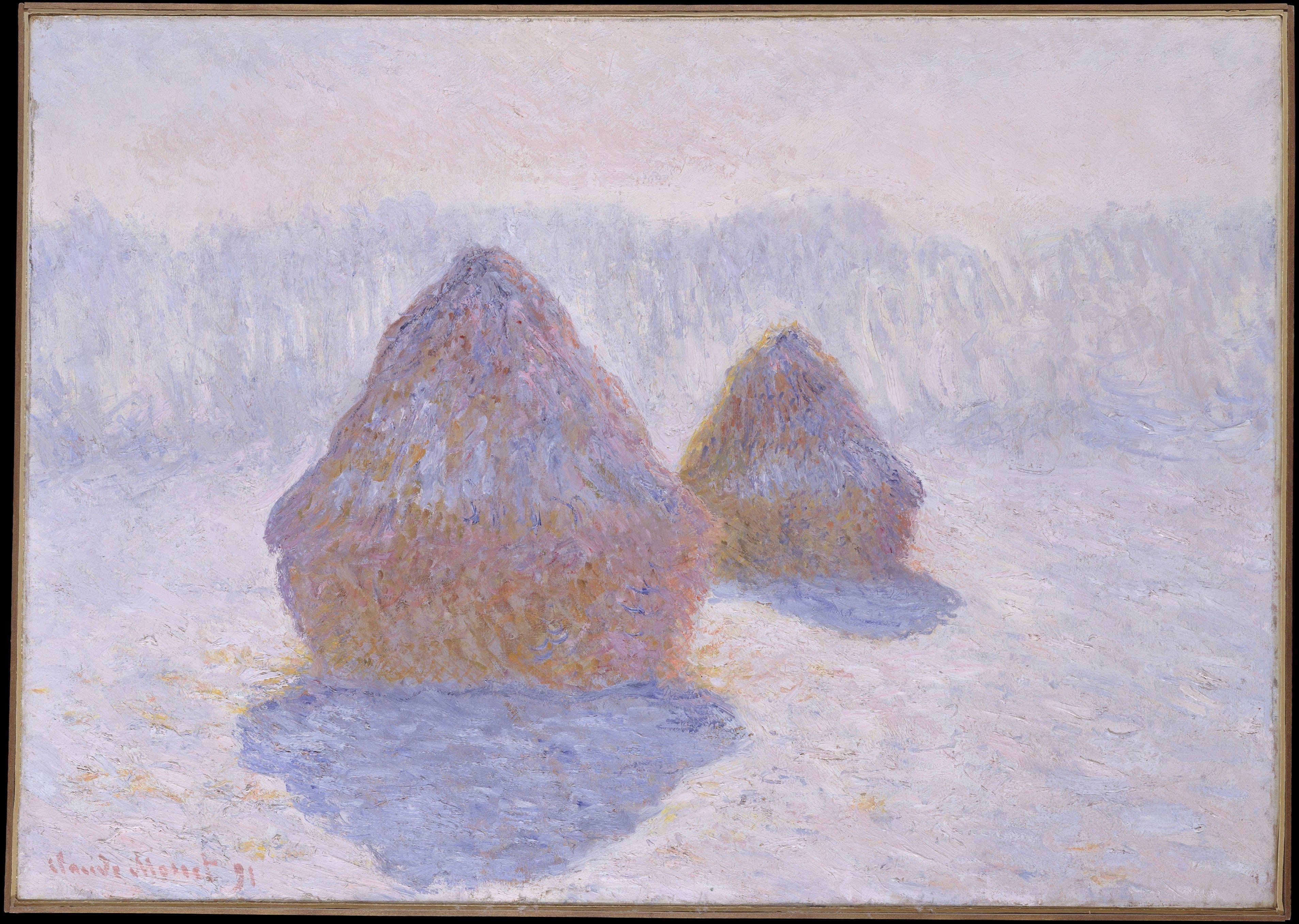
Haystacks (Effect of Snow and Sun)
Claude Monet · 1891
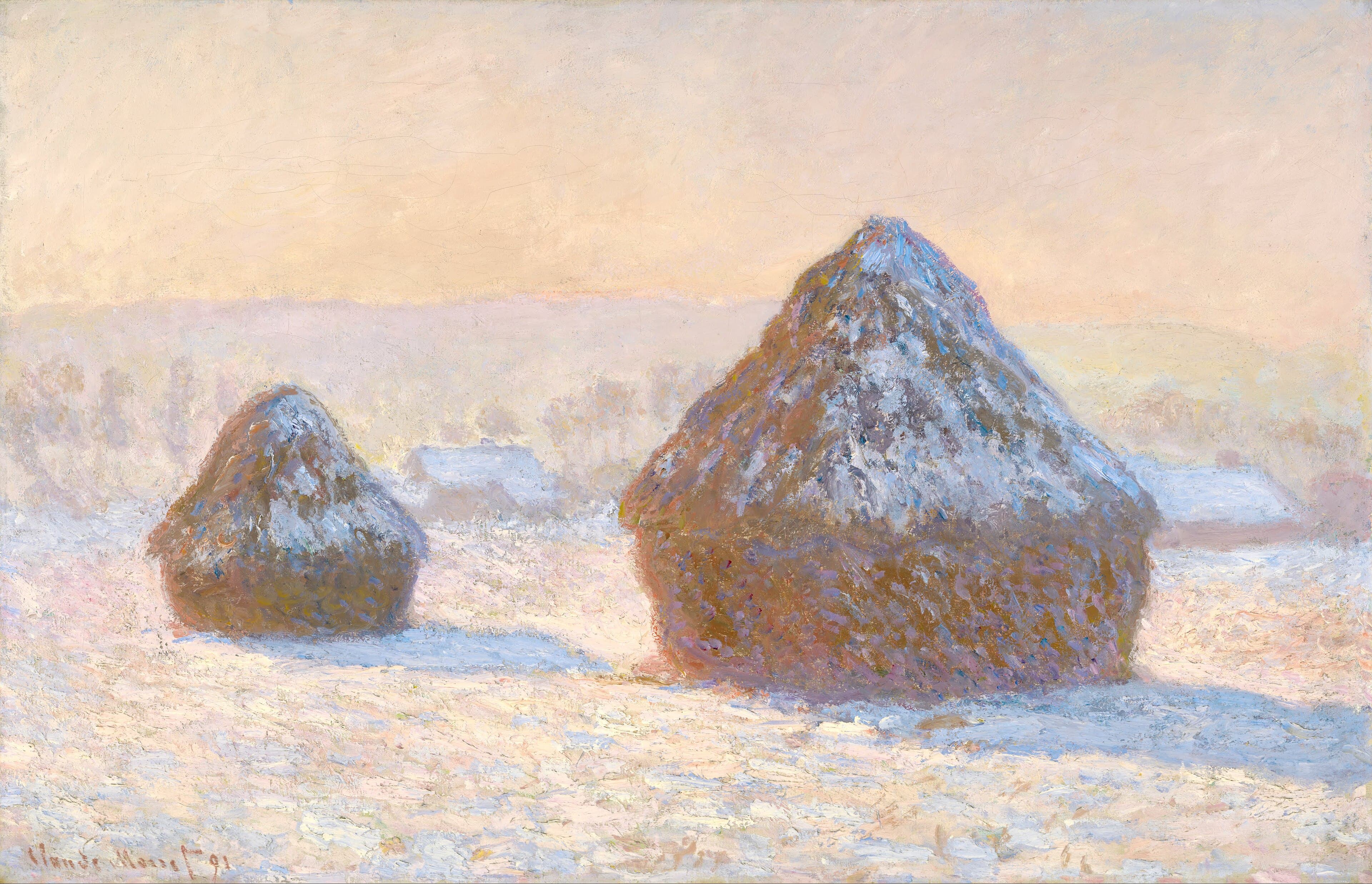
Wheatstacks, Snow Effect, Morning
Claude Monet · 1891
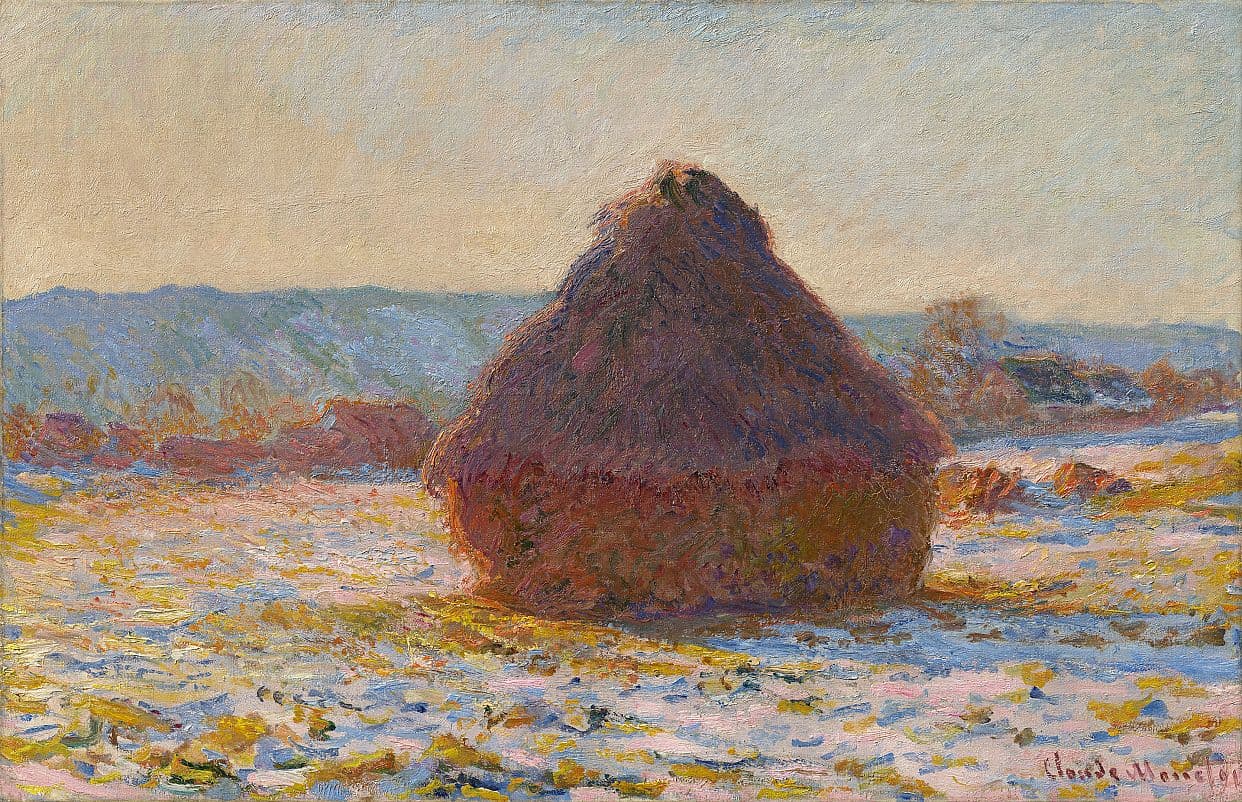
Grainstack in the Sunlight, Snow Effect
Claude Monet · 1891
Kindred works
You may also study
Peupliers au bord de l'Epte, crépuscule
Claude Monet · 1891
Poplars, Pink Effect
Claude Monet · 1891
Poplars on the Banks of the River Epte
Claude Monet · 1891
Three Poplars, Summer
Claude Monet · 1891
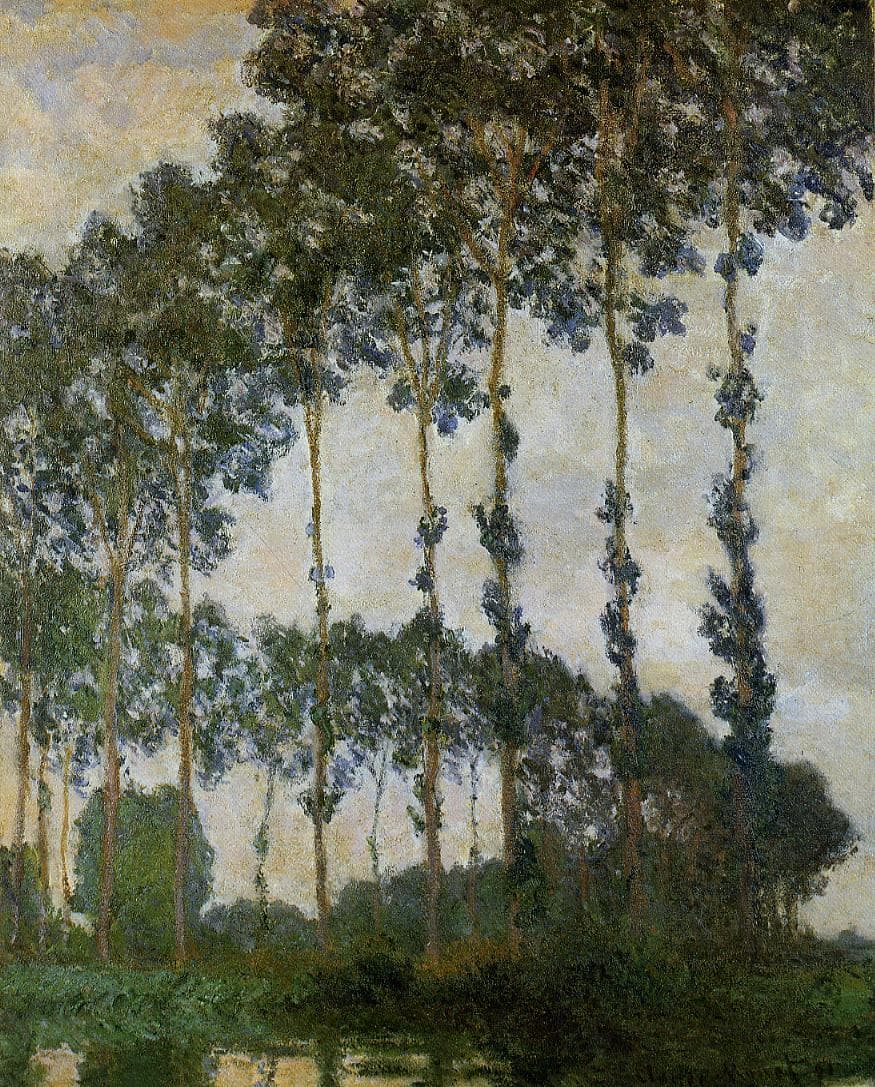
Poplars near Giverny, Overcast Weather
Claude Monet · 1891
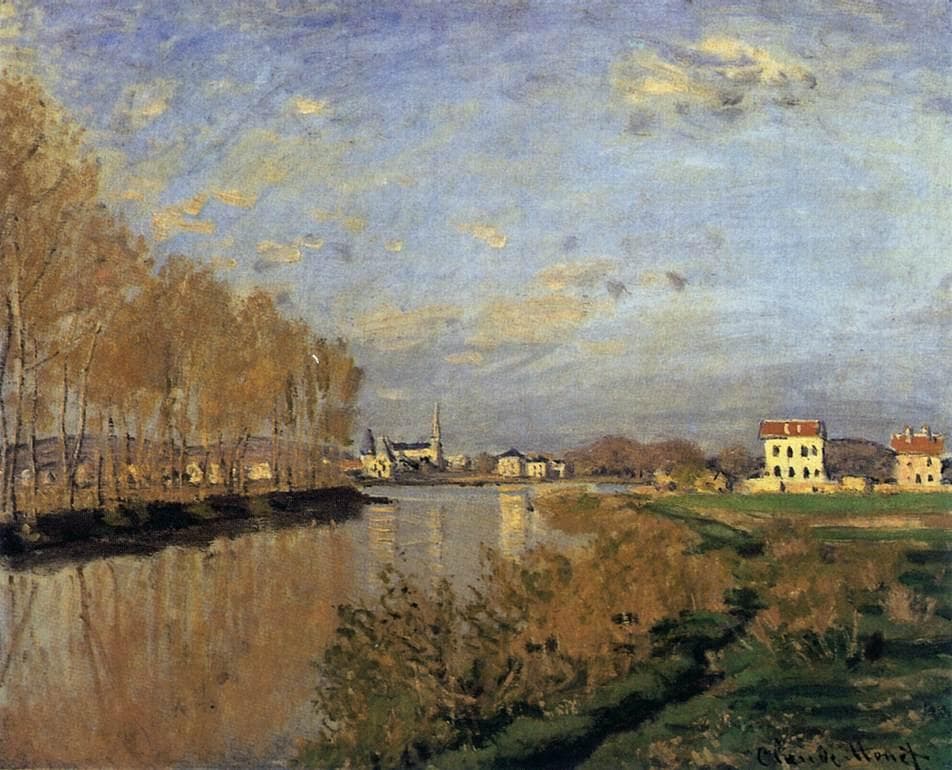
The Seine at Argenteuil
Claude Monet · 1873
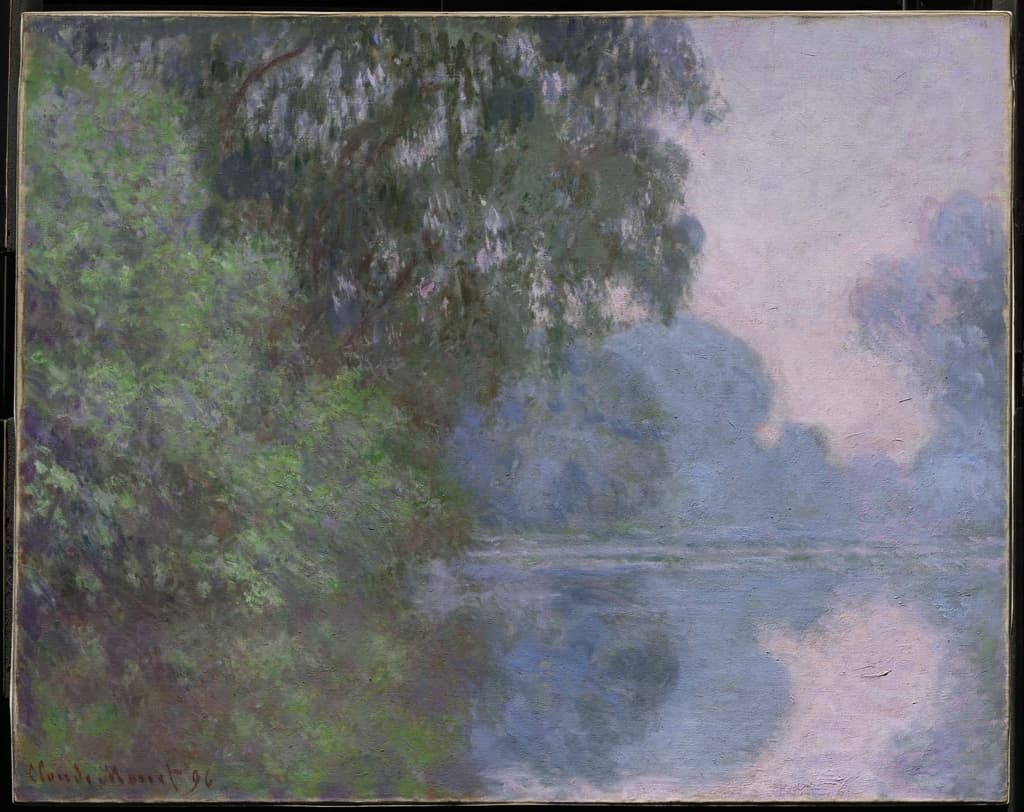
Morning on the Seine, near Giverny (1896)
Claude Monet · 1896
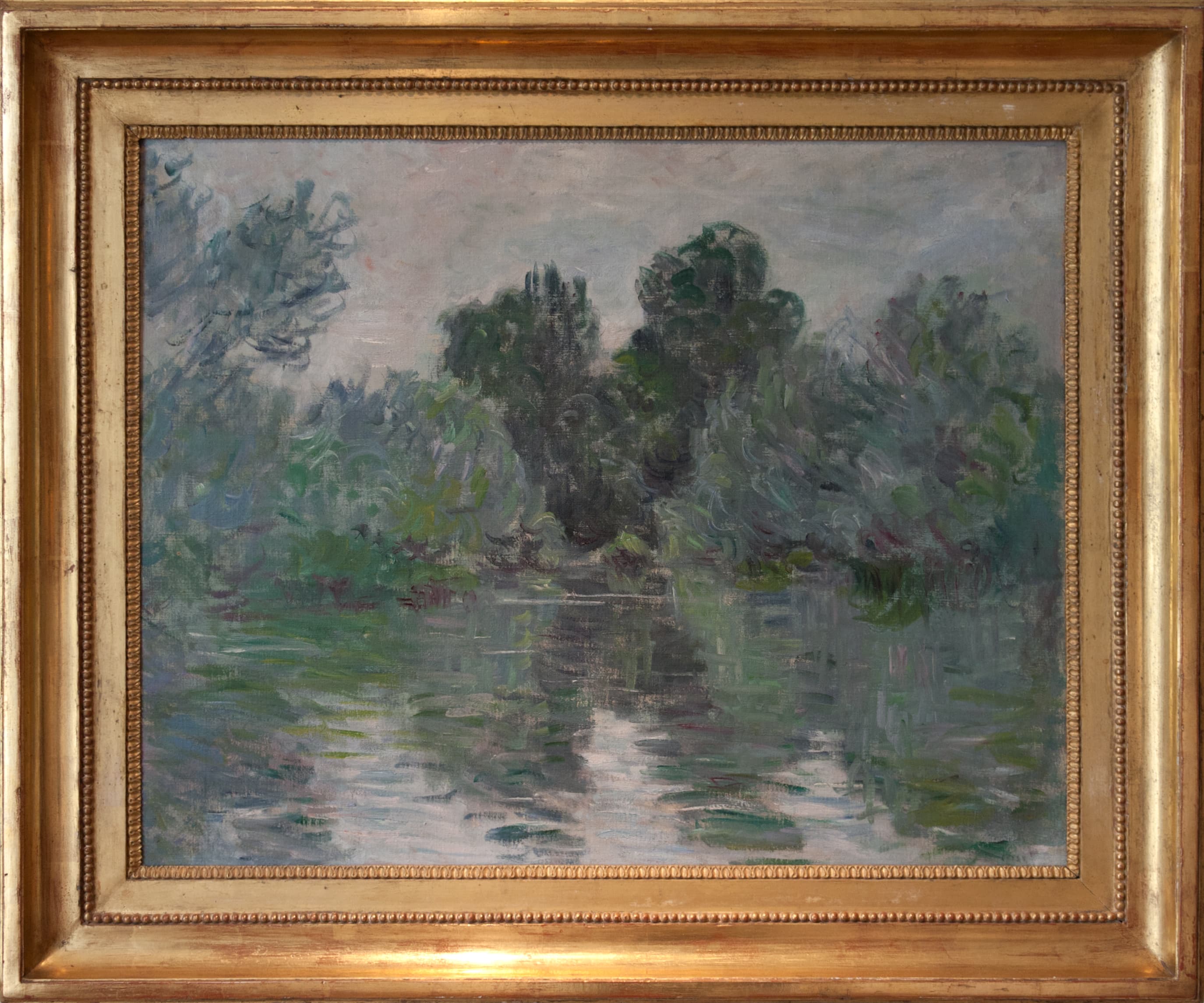
Un bras de Seine près de Vétheuil
Claude Monet · 1878