Image: Claude Monet; Dallas Museum of Art (source: Dallas Museum of Art) · Public domain · via Wikimedia Commons
Poplars, Pink Effect
Claude Monet, 1891
Poplars, Pink Effect is an 1891 painting by Claude Monet from his Poplars series, showing slender poplars on the Epte near Giverny in pale lilac light, their pink trunks reflected in the river. It is in the Dallas Museum of Art, from the McDermott collection.
- Artist
- Claude Monet
- Date
- 1891
- Medium
- Oil on canvas
- Collection
- Dallas Museum of Art, Dallas, United States
- Movement
- Impressionism
- Nature & Landscape
- Water & Sea
What you are looking at
Three tall, thin trunks rise from the bottom of the canvas almost to the top edge, spaced like the uprights of a screen. Each carries only small clumps of leaves, green and blue tufts clinging along its length up to a feathery crown. Behind them a second rank of poplars curves away to the right in a soft S, their foliage a haze of mint green, turquoise and pale blue, their trunks a pinkish cream. Lower down, a bank of bright spring-green grass crosses the picture, and below it the river returns the trees as pink and lilac streaks in pale water.
What gives the canvas its name is the color of the air. The sky is not blue but a milky lilac, warming to pink near the horizon, and that tint runs through everything: the trunks, the reflections, the gaps between leaves. There are no deep shadows anywhere. It is a high-key, almost pastel picture, the opposite of the saturated autumn canvases in the same series.
Monet signed and dated it at lower left, Claude Monet 91, in pink paint laid over the reflections.
The poplars on the Epte
Claude Monet spent the spring, summer and autumn of 1891 painting a line of poplars on the river Epte at Limetz, a short way upstream from his home at Giverny. He worked from his studio boat, so his eye level sits just above the water. When the trees were put up for sale for timber, he paid the buyer to leave them standing until he had finished.
This canvas combines the two main ideas of the Poplars series. In front are the isolated trunks of the frontal compositions, as in Three Poplars, Summer; behind is the serpentine row that bends away along the meander, the subject of canvases such as Poplars on the Banks of the River Epte. The result is a picture with depth as well as pattern: a near plane of verticals and a far plane of rounded crowns.
How it was painted
Monet keeps the paint thin and the touch light. The sky is brushed in with short, crisscrossing strokes of lilac and white that let the canvas texture show. The trunks are single long drags of pink, cream and orange, and the tufts of leaves are dabbed on with a loaded brush, a few strokes each. In the water he uses horizontal dashes and lets the reflections of the trunks break into segments, which is how still water actually returns a vertical in a light breeze.
The palette is limited to cool greens and blues set against pink and lilac, with almost no earth colors. That restraint is the point. The canvas records a particular hour, probably early or late in the day, when the light itself was tinted and every surface took on its color.
How this version differs
Compared with Poplars, Three Pink Trees, Autumn in Philadelphia, which also turns on pink, this picture is cooler and greener: the leaves are still those of late spring or summer, and the pink belongs to the light rather than to the trees. Compared with the sunlit Tokyo canvas, it has no strong blue sky and no white cloud. And unlike the bold close-ups such as the Tate's Poplars on the Epte, it keeps a full view of the river and the far row, so the effect is airy rather than graphic.
A late addition to Dallas
The Dallas Museum of Art's Monets were transformed by the McDermott bequest, which brought several works by the painter into the museum at once, including a late water lily canvas. Poplars, Pink Effect gives the collection a representative of the 1891 series, the point at which Monet's serial method became his main way of working.
Ownership and where to see it
The painting is in the Dallas Museum of Art, accession number 2019.67.14.McD. It came to the museum from the collection of Eugene and Margaret McDermott, longtime Dallas patrons, after Margaret McDermott's death in 2018. The museum has also lent it abroad, so check before visiting. For more Monets on view in North America, see our guide to where to see Monet's paintings.
Questions & answers
Where is Monet's Poplars, Pink Effect?
It is in the Dallas Museum of Art in Texas, accession number 2019.67.14.McD. It entered the museum from the collection of Eugene and Margaret McDermott following Margaret McDermott's bequest. Like many Monets it travels to exhibitions, so check the museum's website before a visit.
When and where was Poplars, Pink Effect painted?
Monet painted it in 1891 and dated it '91' beside the signature. The trees stood along the river Epte at Limetz, near his home at Giverny in Normandy. He painted them from his studio boat on the river, which accounts for the low viewpoint and the prominent reflections.
What does the pink effect mean?
It refers to the color of the light. The sky, trunks and reflections are all tinted pink and lilac, the kind of atmosphere seen near dawn or dusk. Monet's titles for the series often named the effect of light or weather rather than the motif, which was the same in every canvas.
How is this different from Monet's other poplar paintings?
It combines the frontal trunks of the close-up compositions with the curving row of trees behind, and it is unusually pale and high in key. Other versions show blue summer skies, blazing autumn color, wind, or overcast weather on the same stretch of river.
More by the artist
Claude Monet
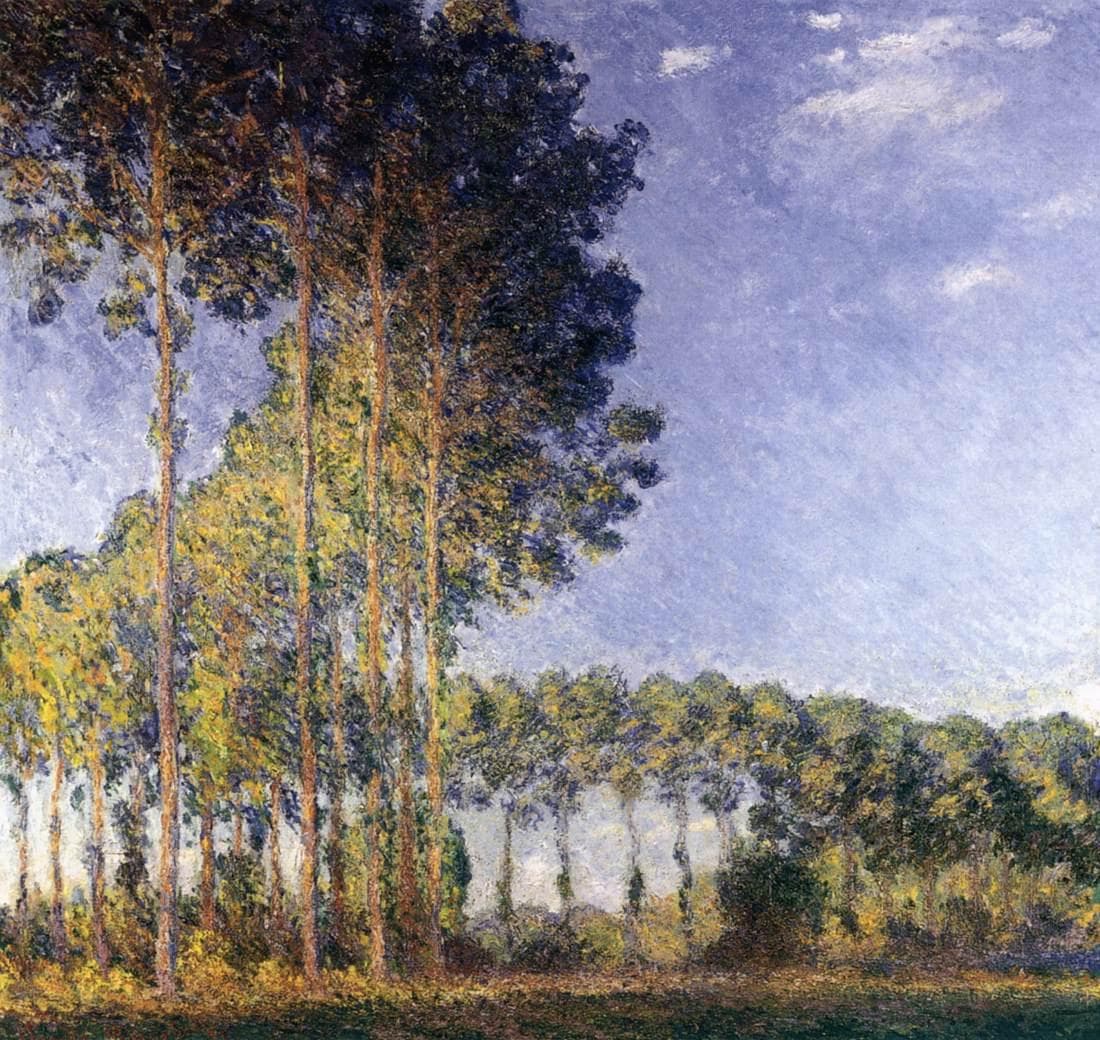
Poplars at the Banks of Epte
Claude Monet · 1891–92
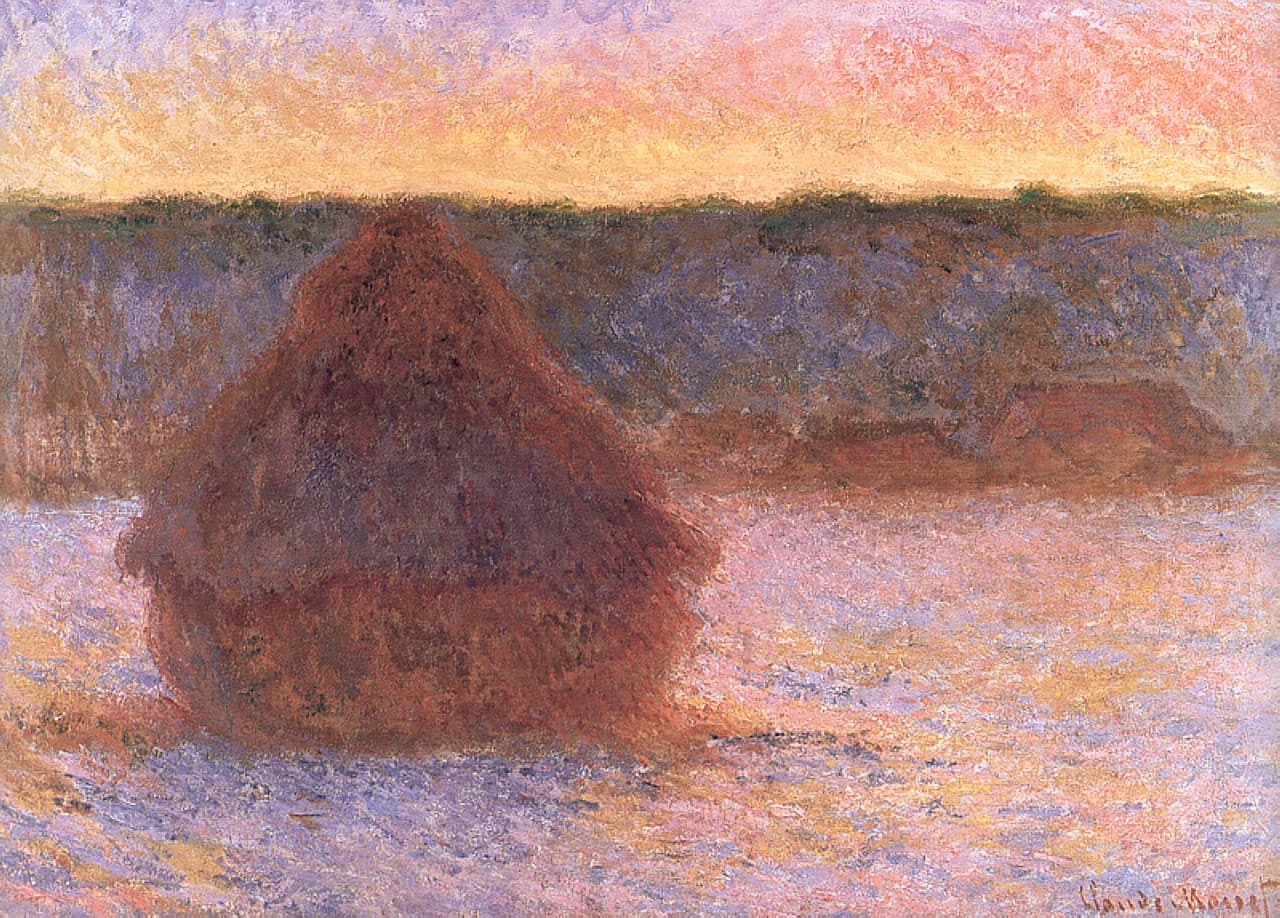
Haystacks at Sunset, Frosty Weather
Claude Monet · 1891
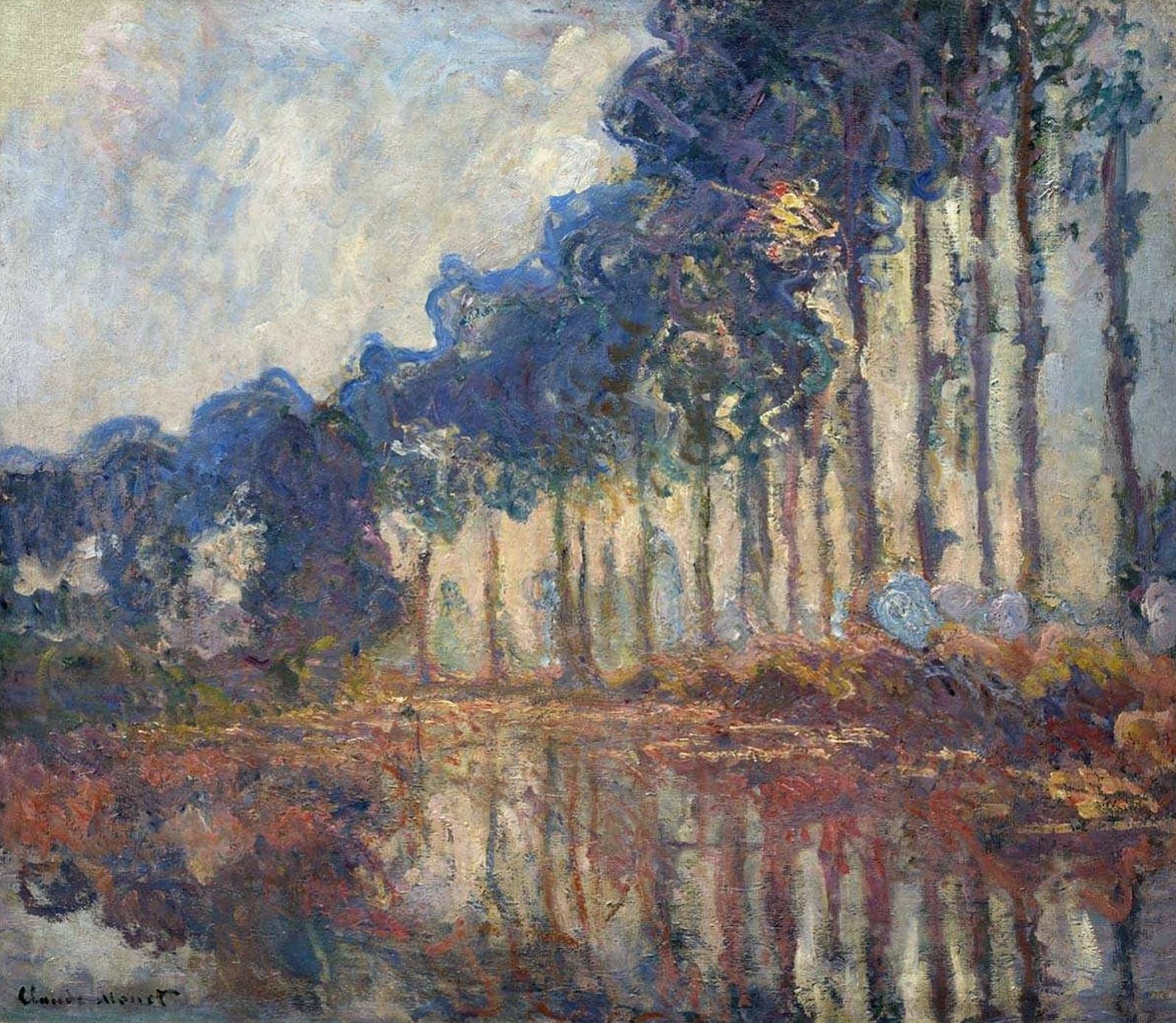
Les peupliers, automne
Claude Monet · 1891
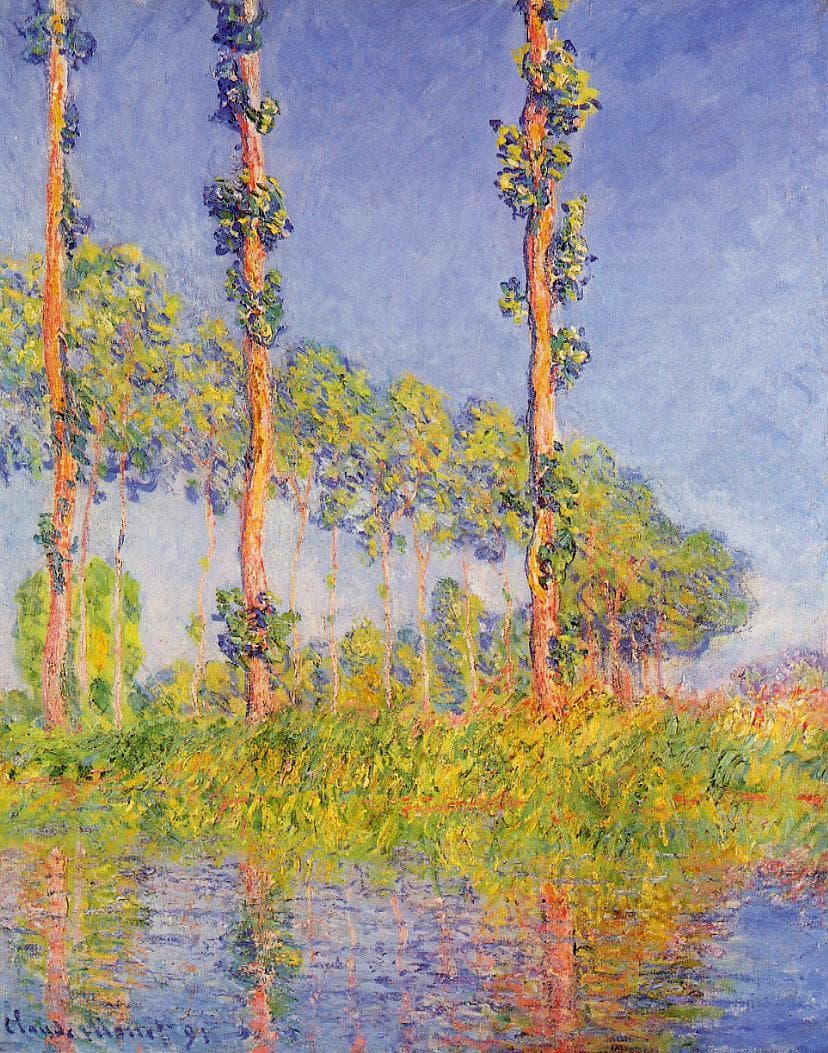
Three Poplars, Autumn Effect
Claude Monet · 1891
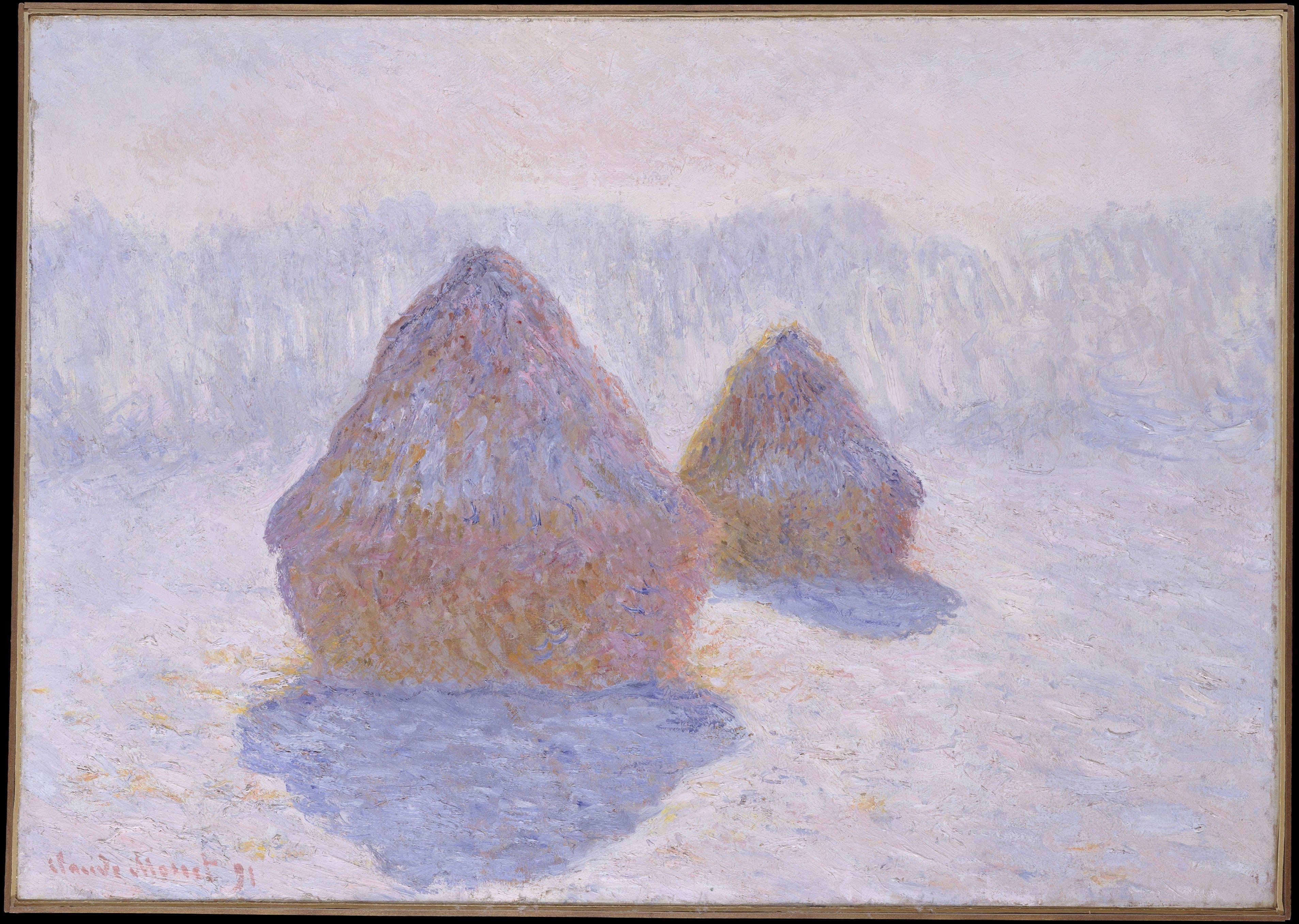
Haystacks (Effect of Snow and Sun)
Claude Monet · 1891
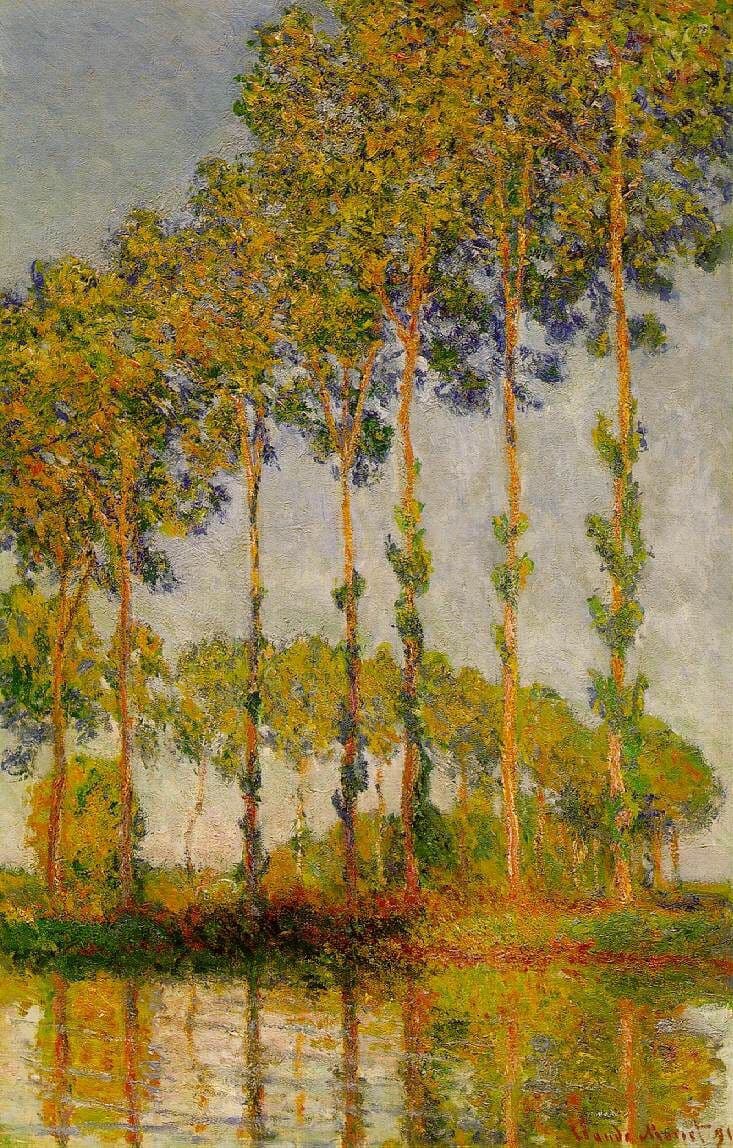
Row of Poplars in Autumn
Claude Monet · 1891
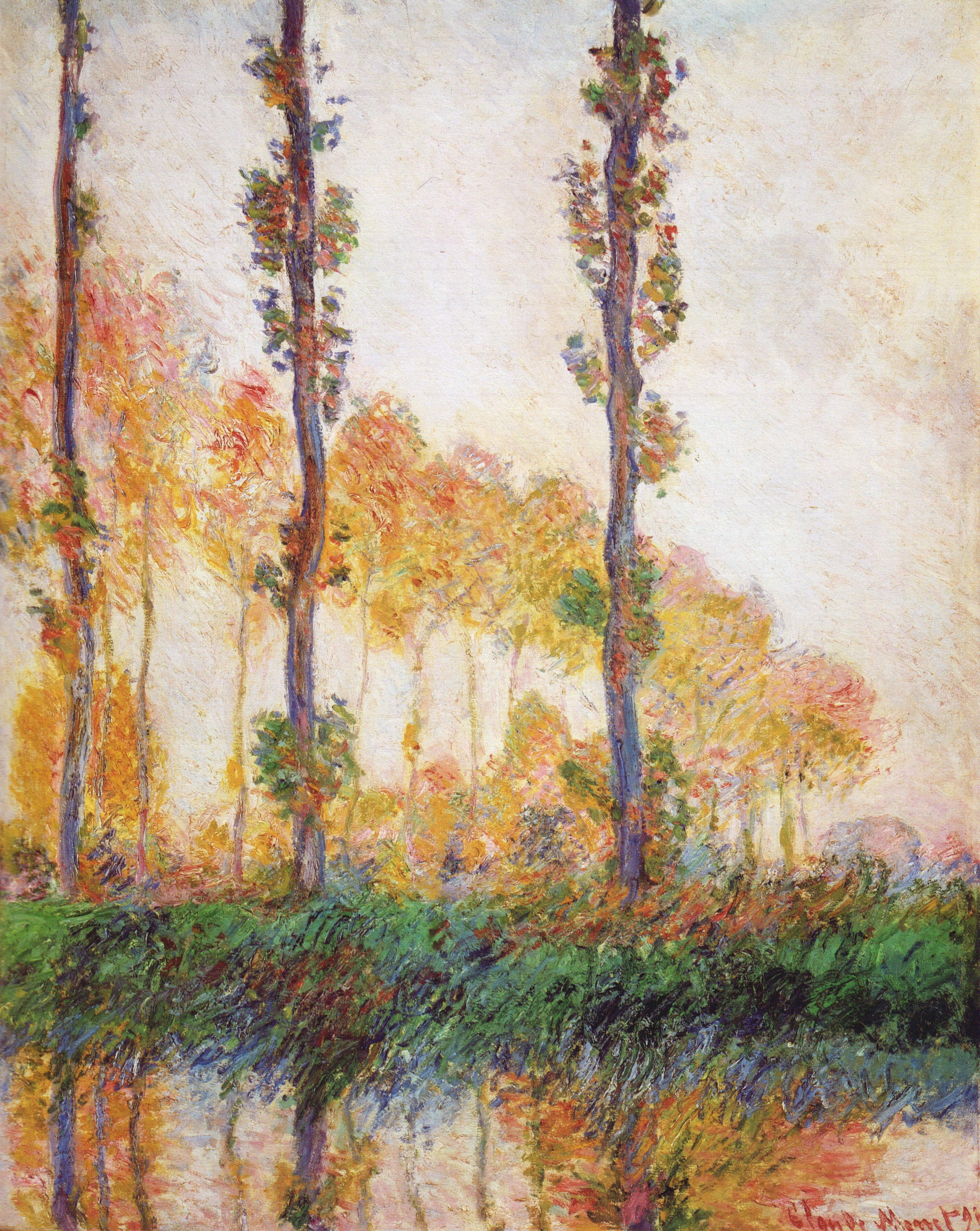
Poplars (Autumn)
Claude Monet · 1891
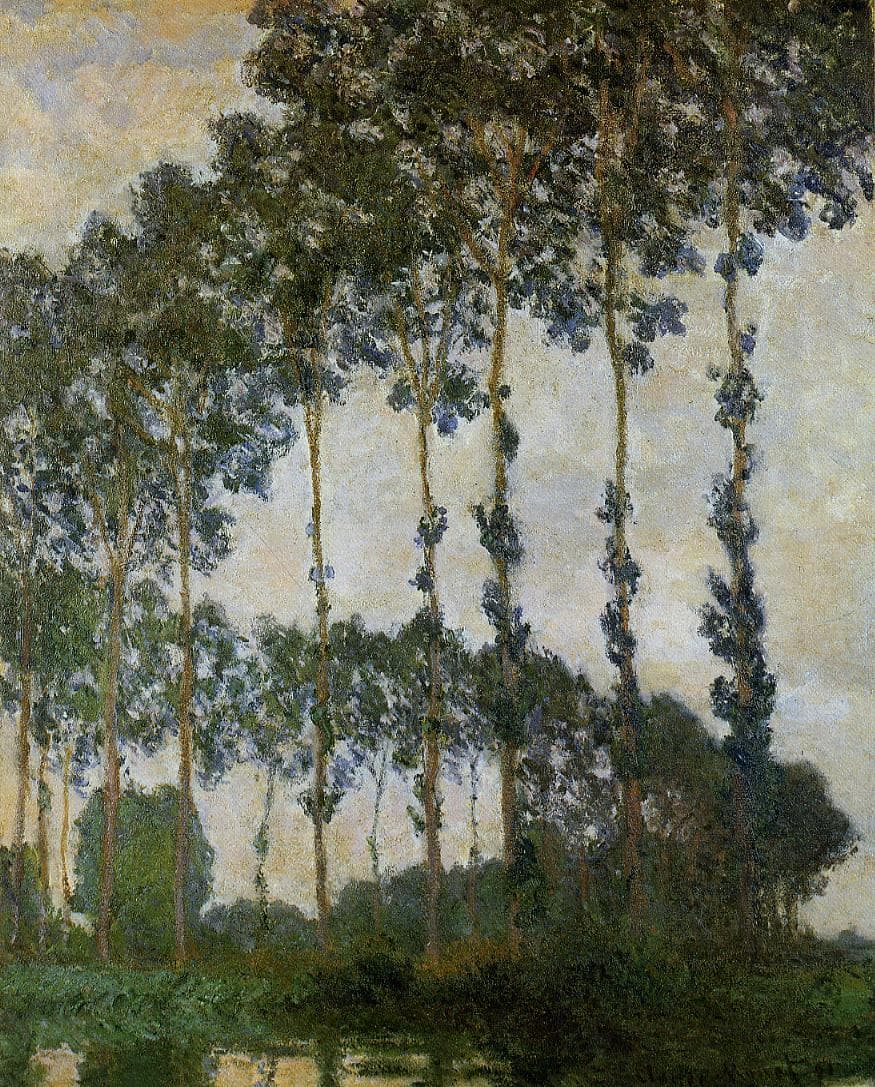
Poplars near Giverny, Overcast Weather
Claude Monet · 1891
Also painted in 1891
The same year
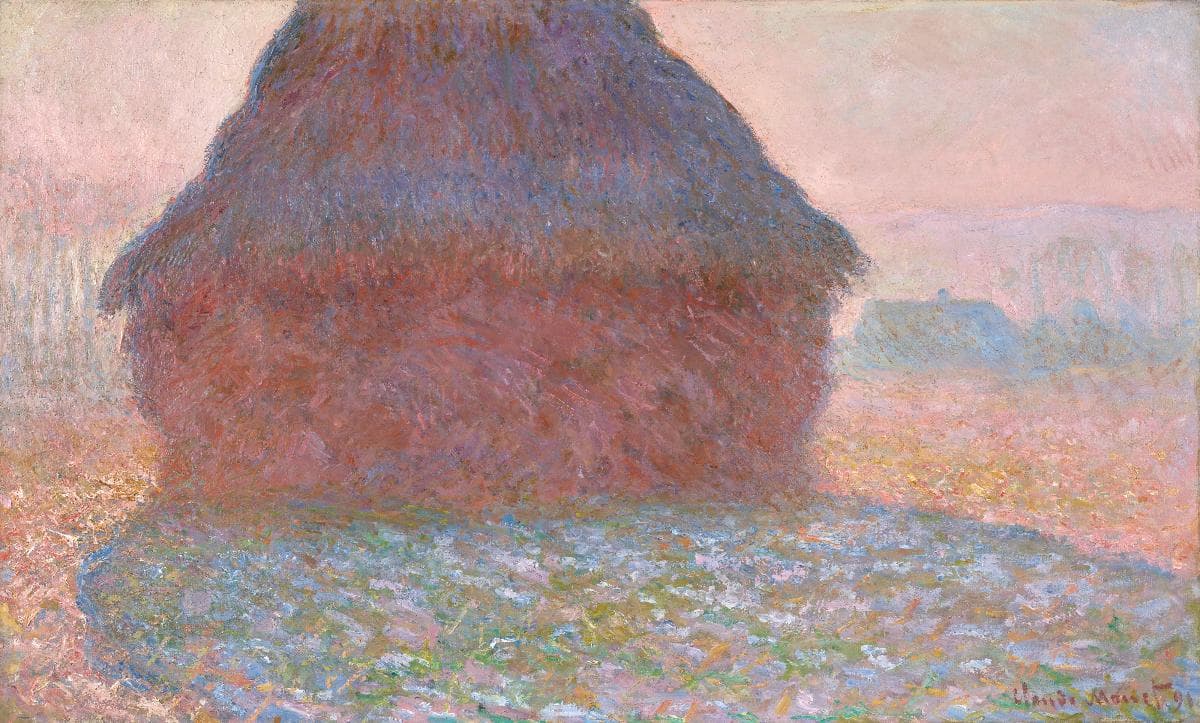
Grainstack in Sunlight
Claude Monet · 1891
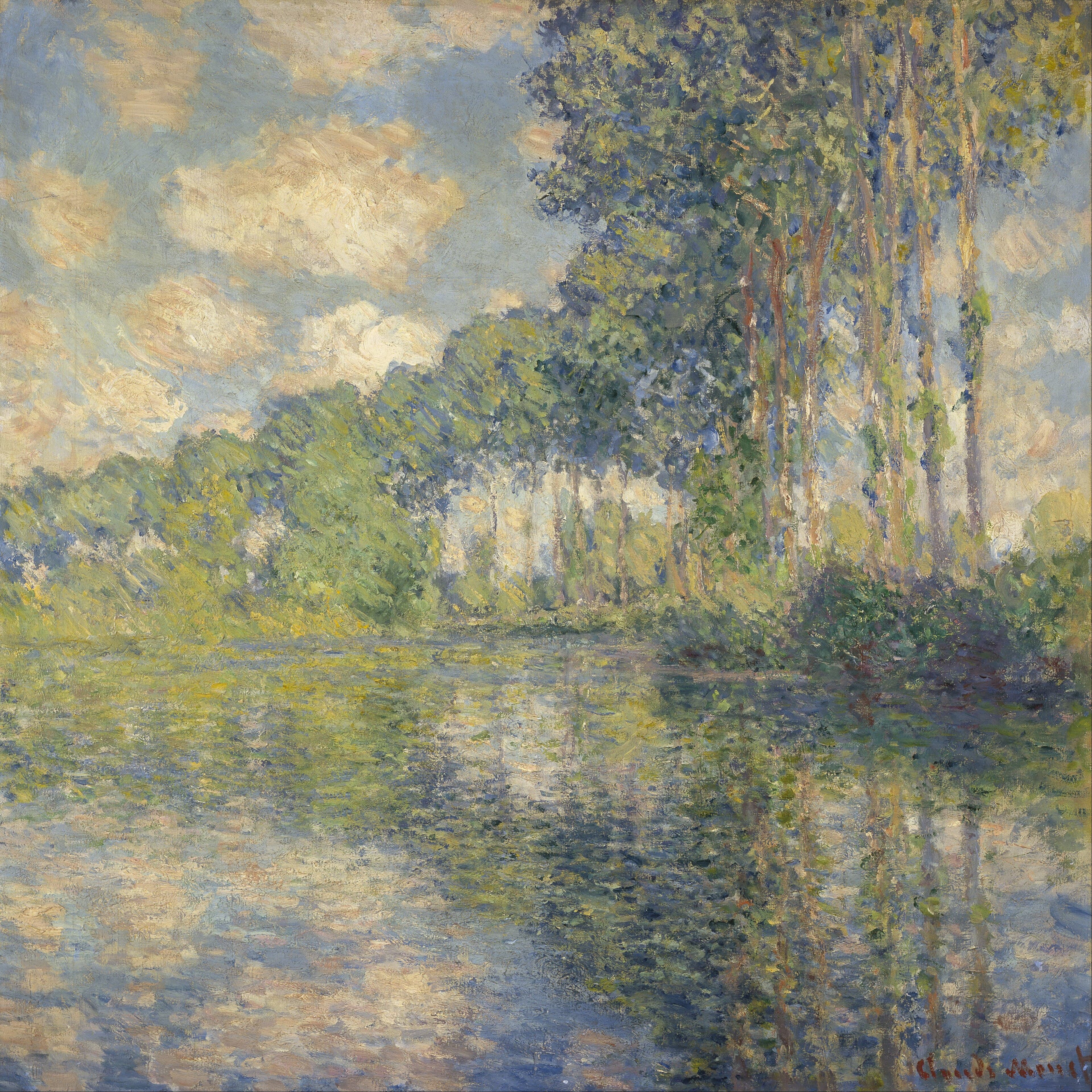
Poplars on the Epte (Edinburgh)
Claude Monet · 1891
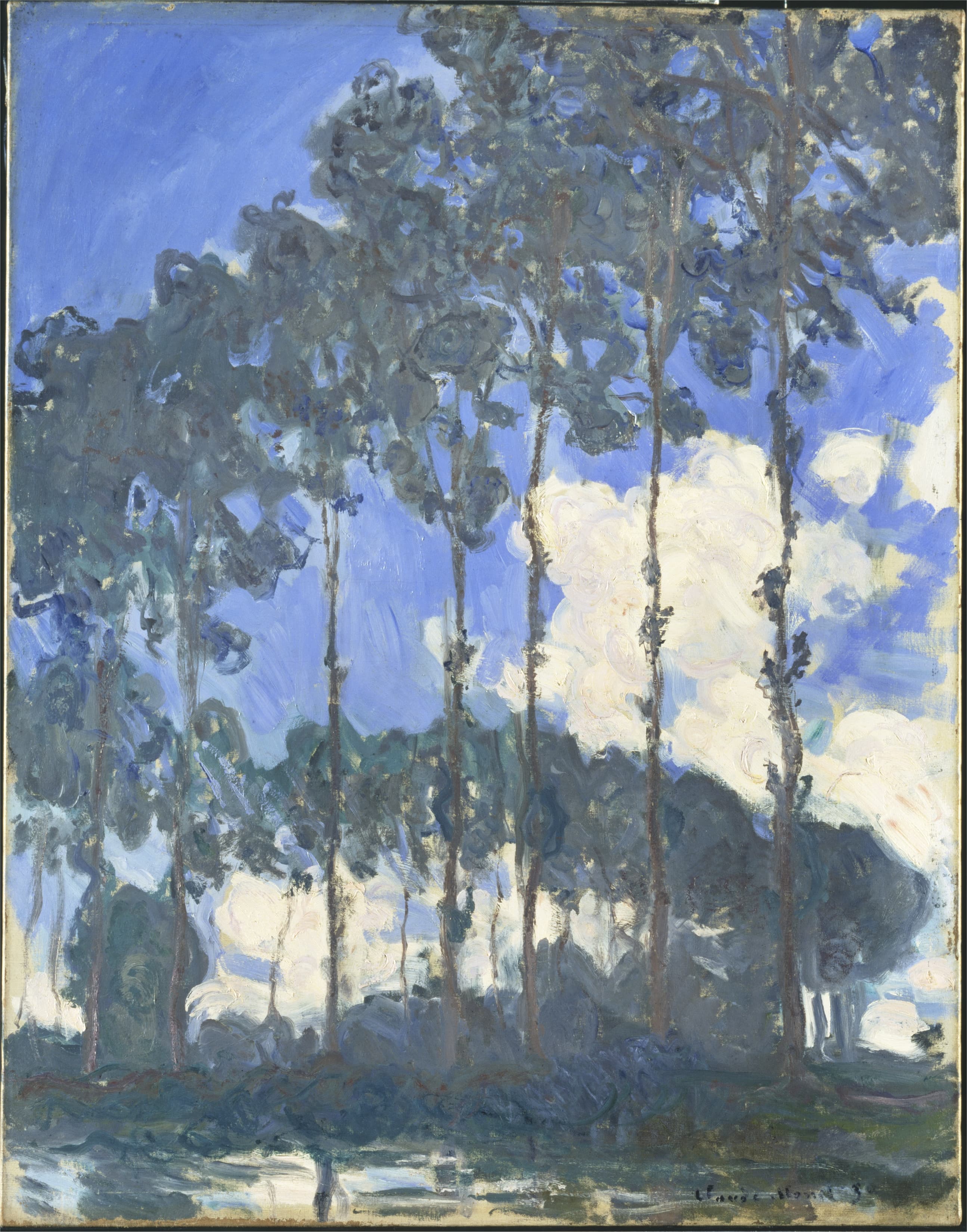
Poplars on the Epte (London)
Claude Monet · 1891
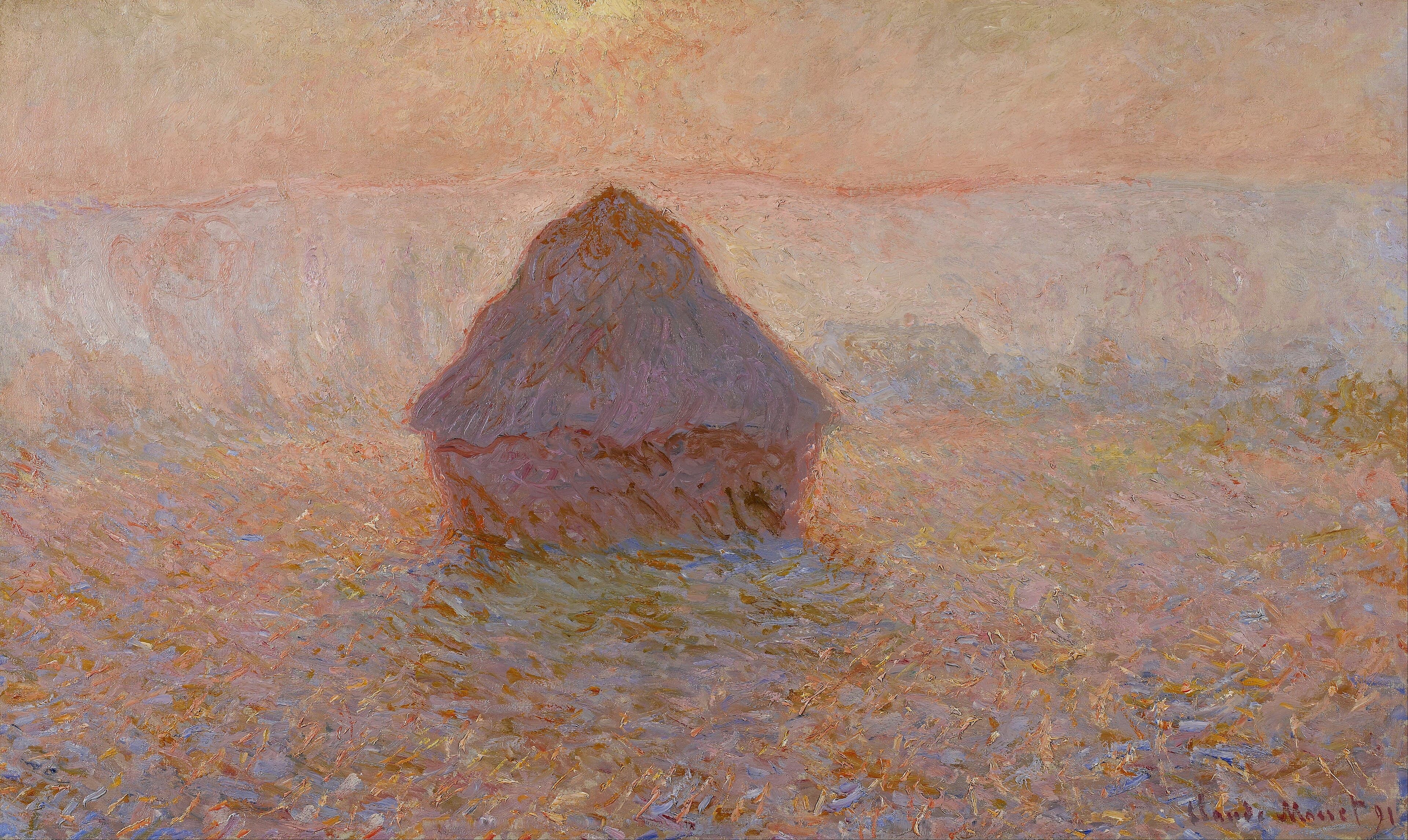
Grainstack, Sun in the Mist
Claude Monet · 1891
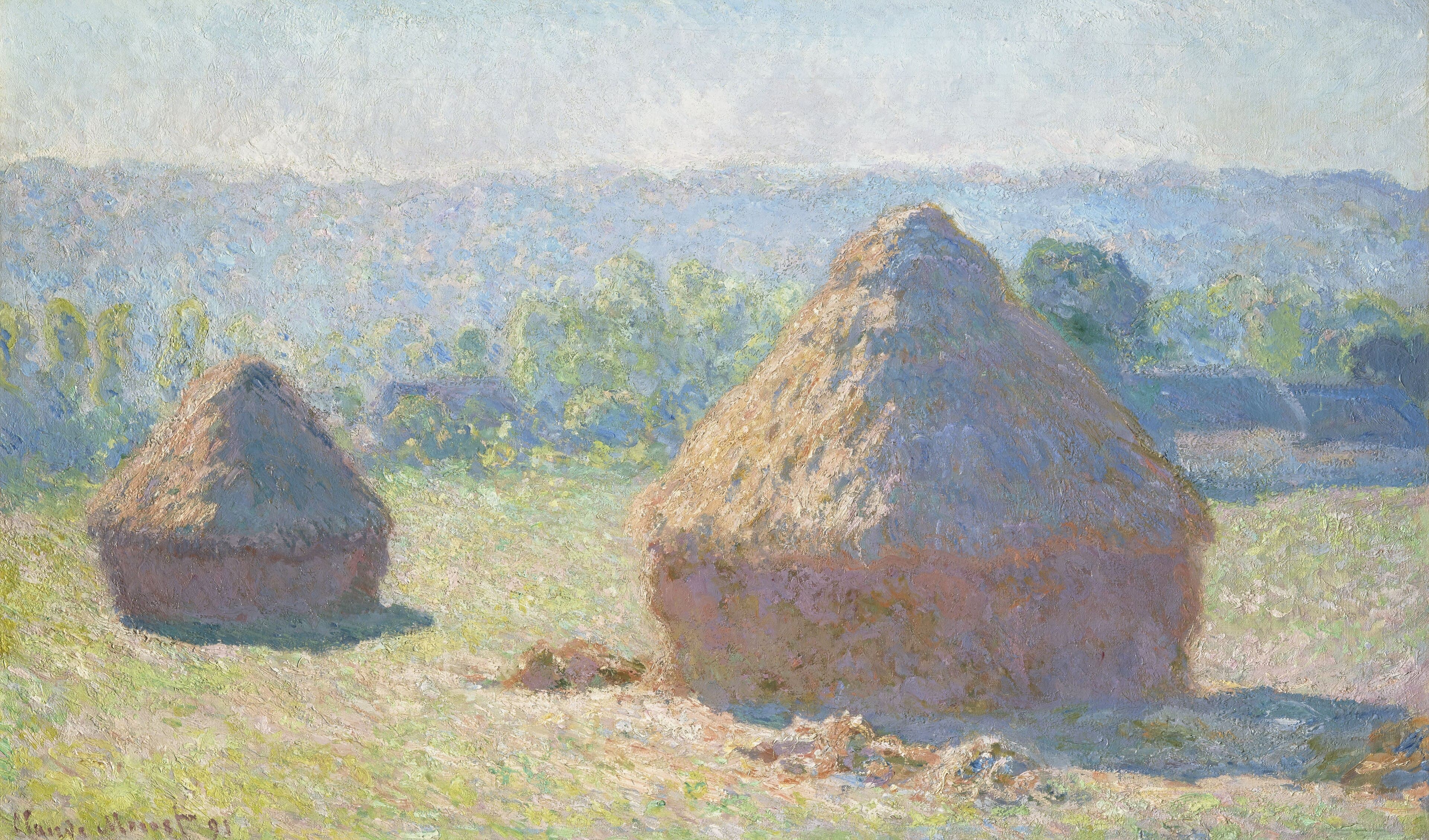
Haystacks, End of Summer
Claude Monet · 1891
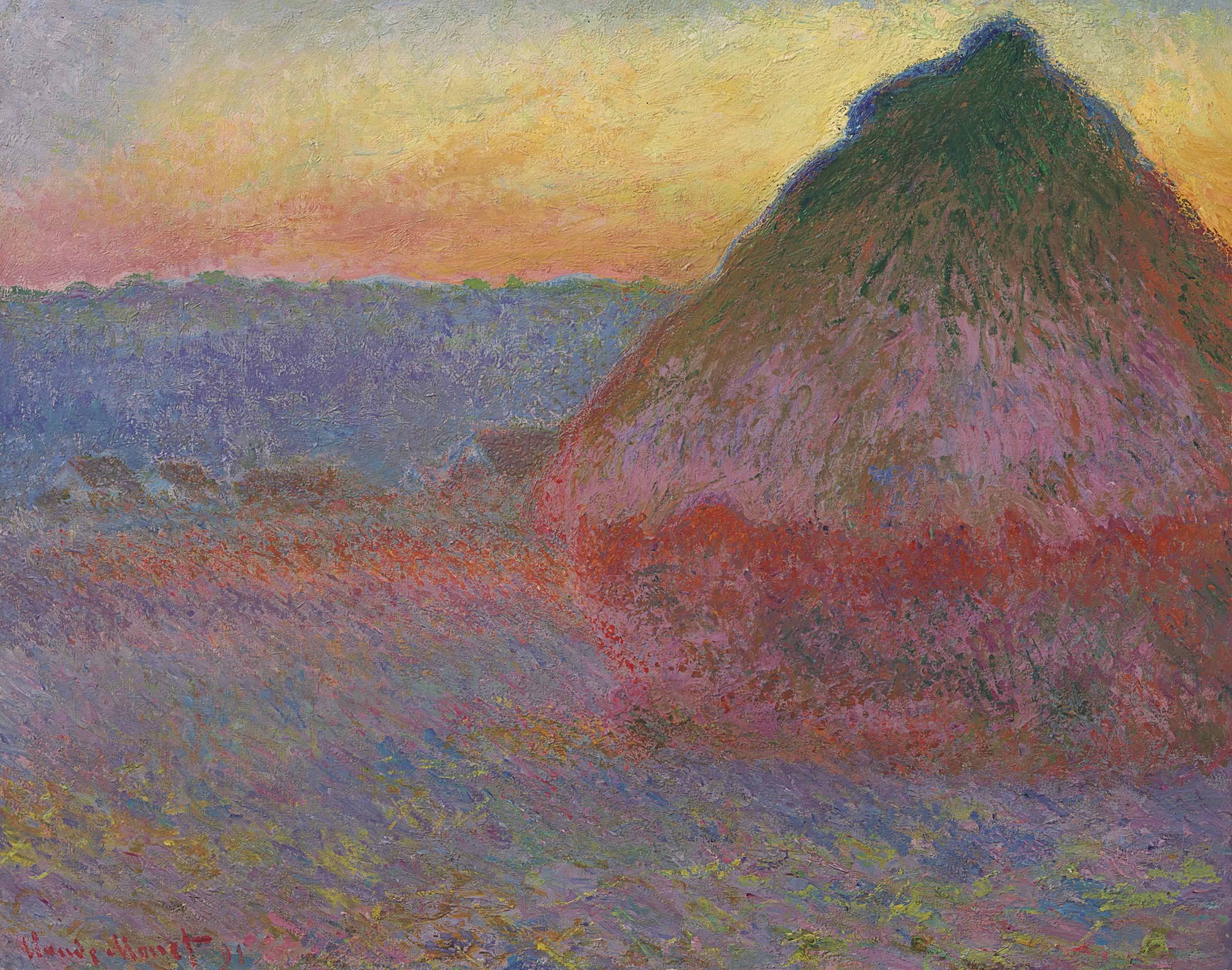
Grainstack in the Sunlight
Claude Monet · 1891
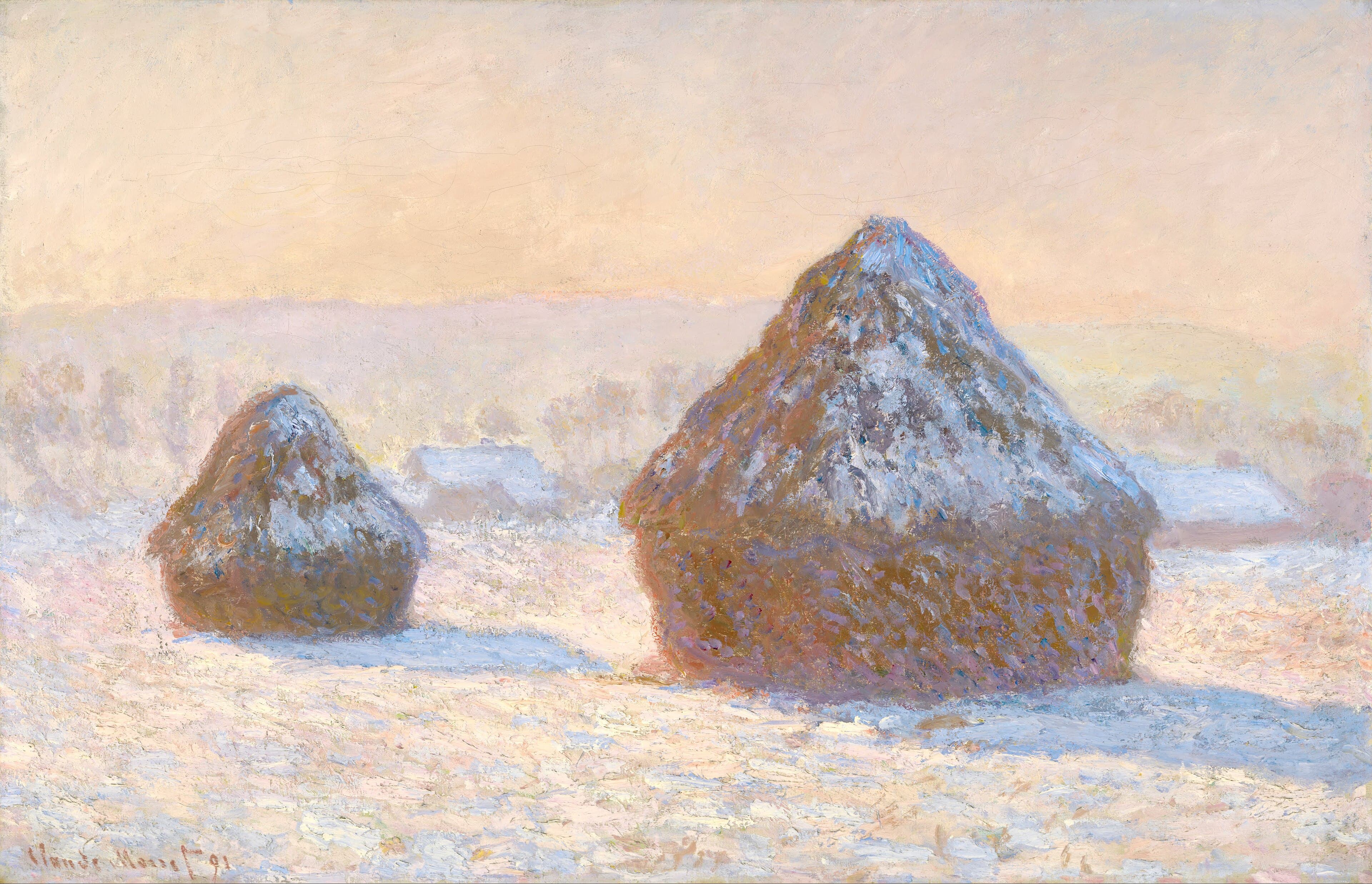
Wheatstacks, Snow Effect, Morning
Claude Monet · 1891
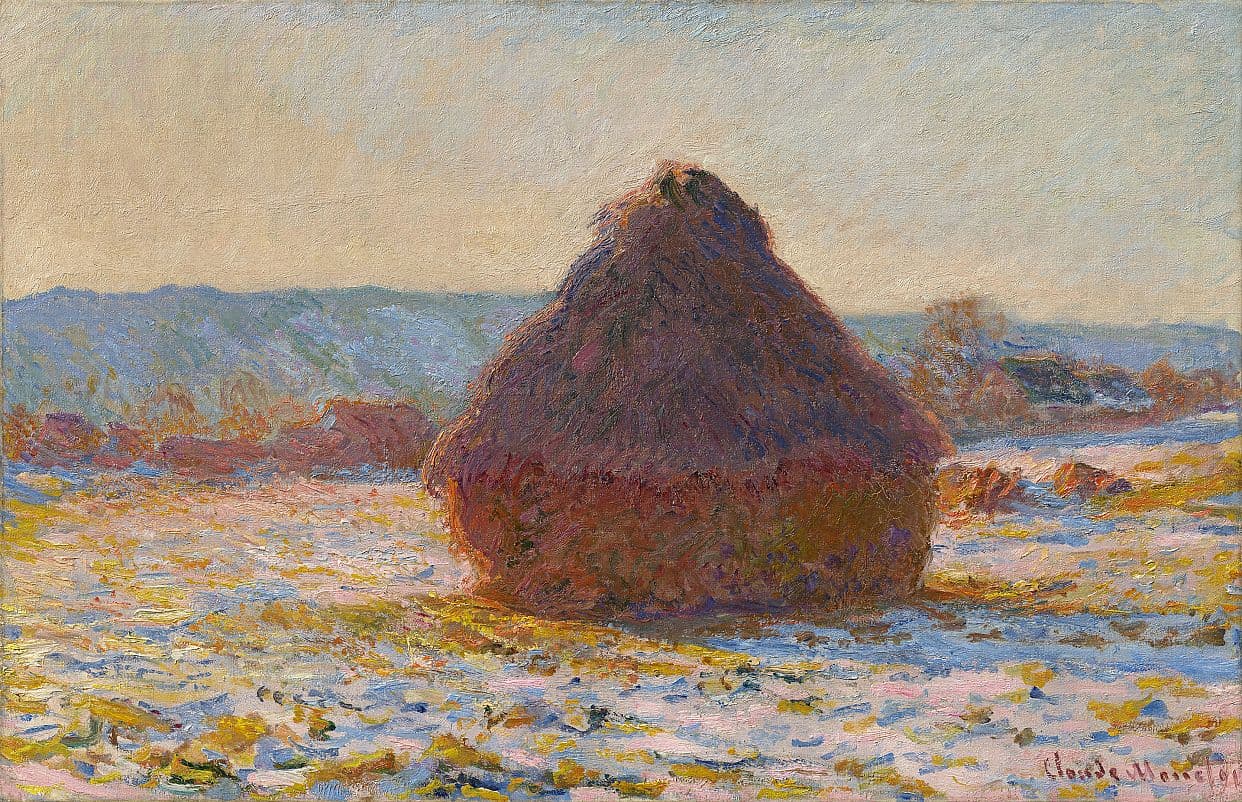
Grainstack in the Sunlight, Snow Effect
Claude Monet · 1891
Kindred works
You may also study
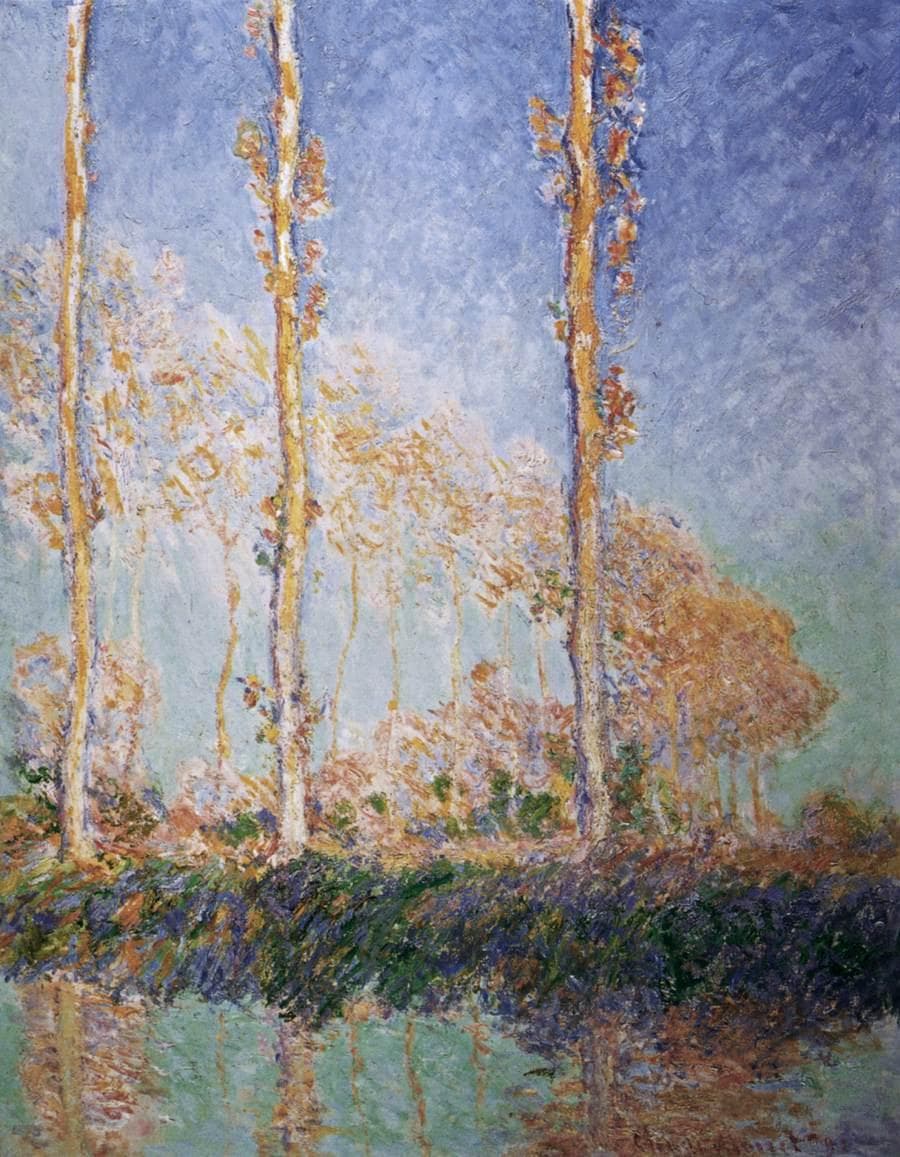
Poplars, Three Pink Trees, Autumn
Claude Monet · 1891
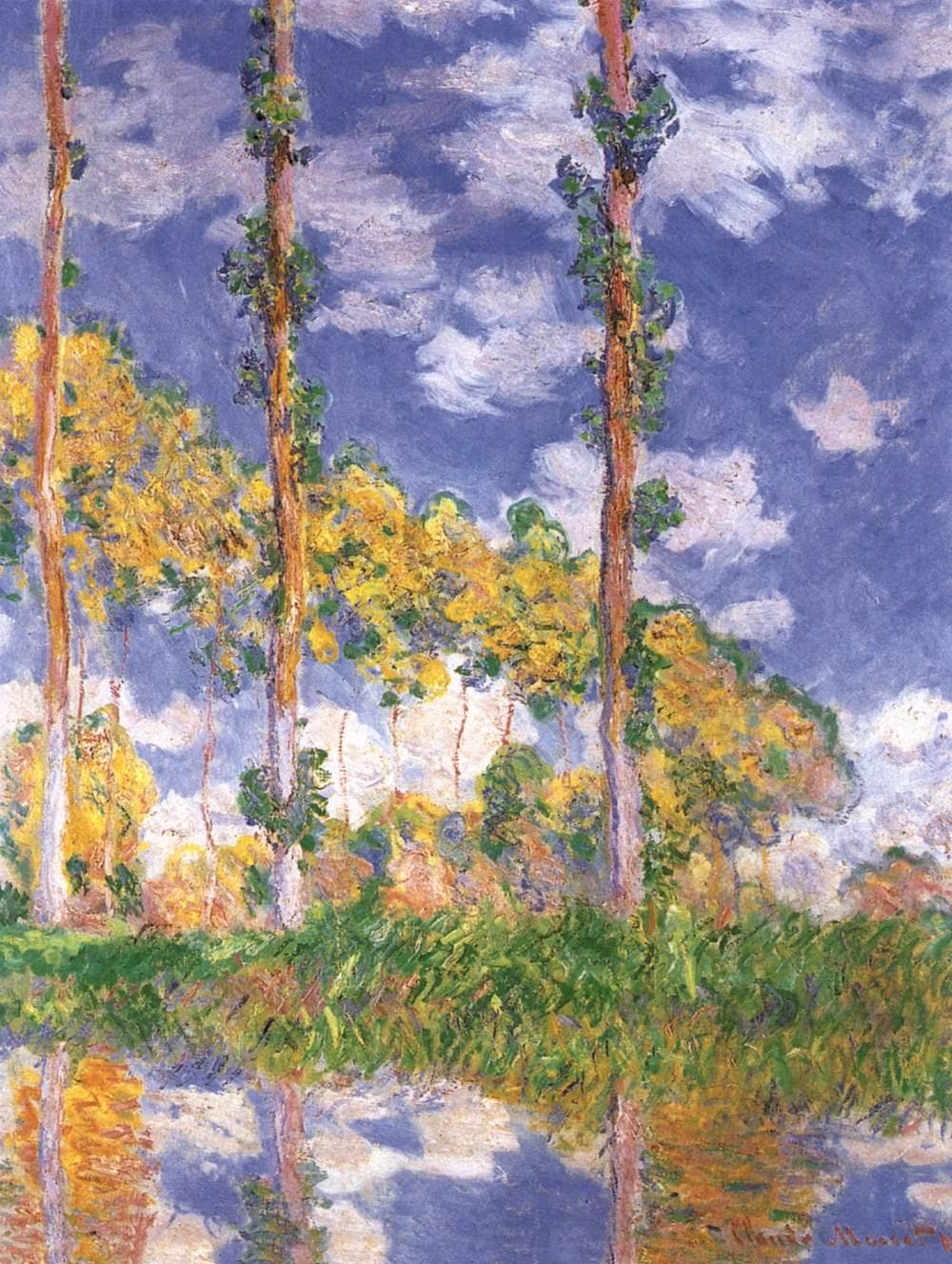
Three Poplars, Summer
Claude Monet · 1891
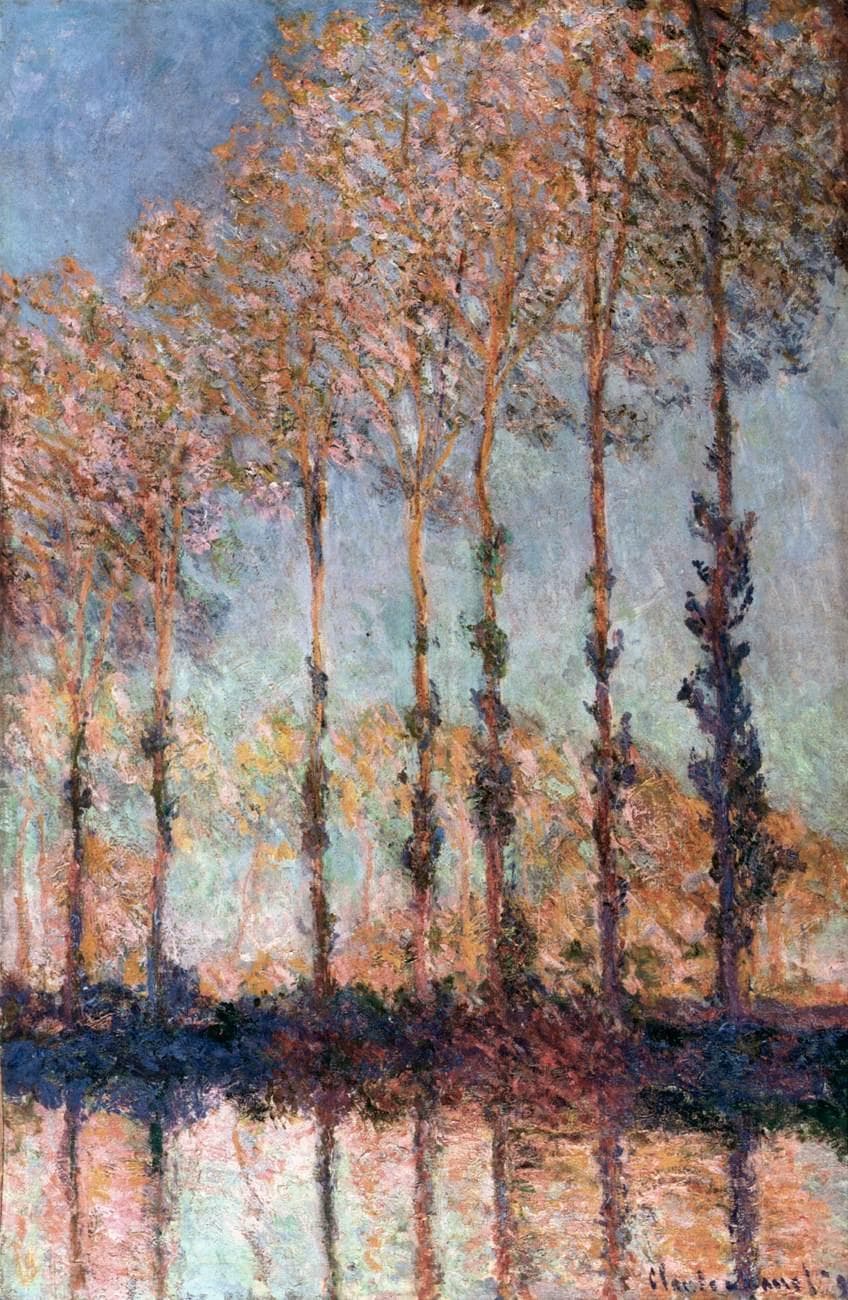
Poplars on the Banks of the River Epte
Claude Monet · 1891
Poplars on the Epte (London)
Claude Monet · 1891
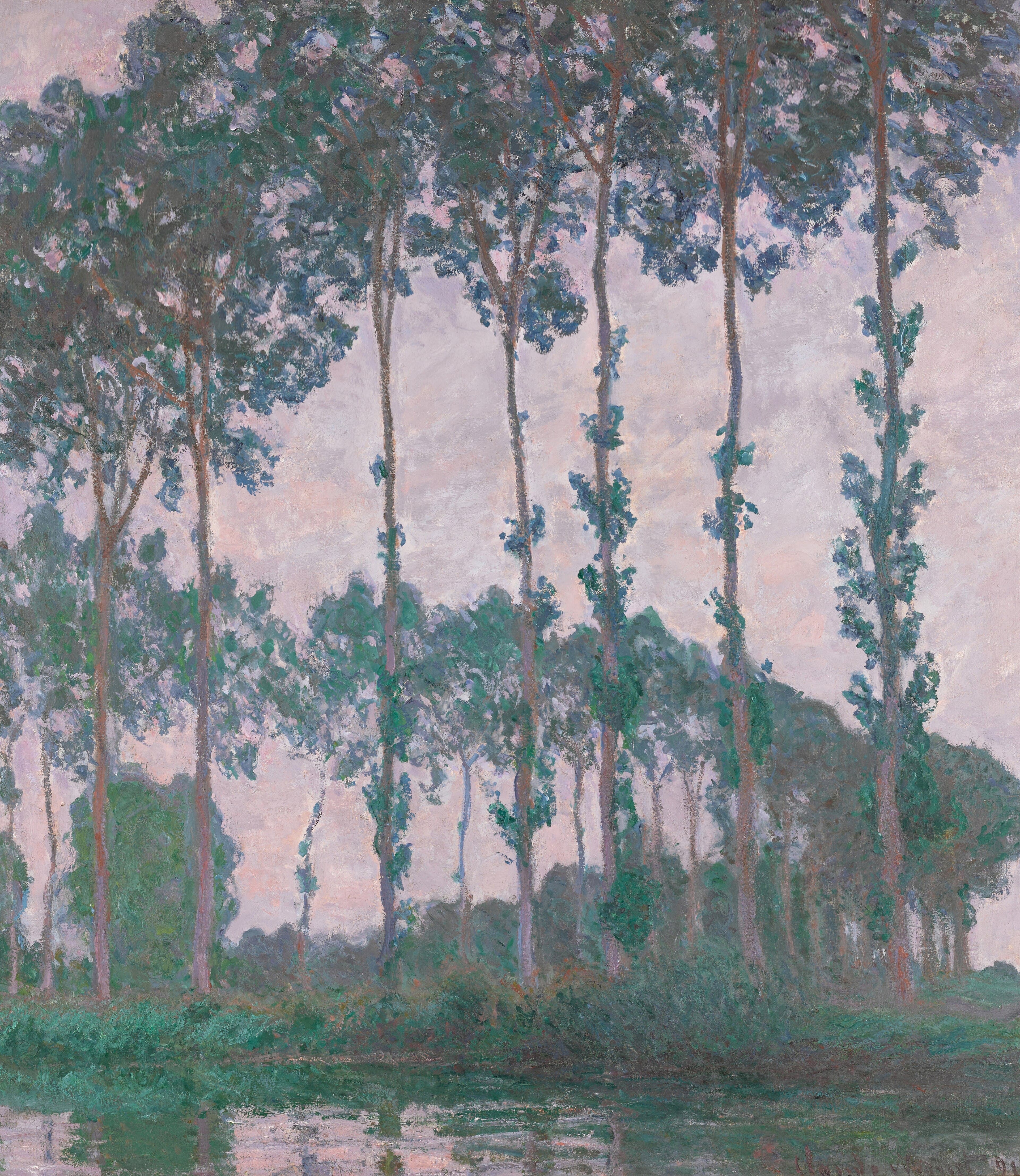
Peupliers au bord de l'Epte, temps couvert
Claude Monet · 1891
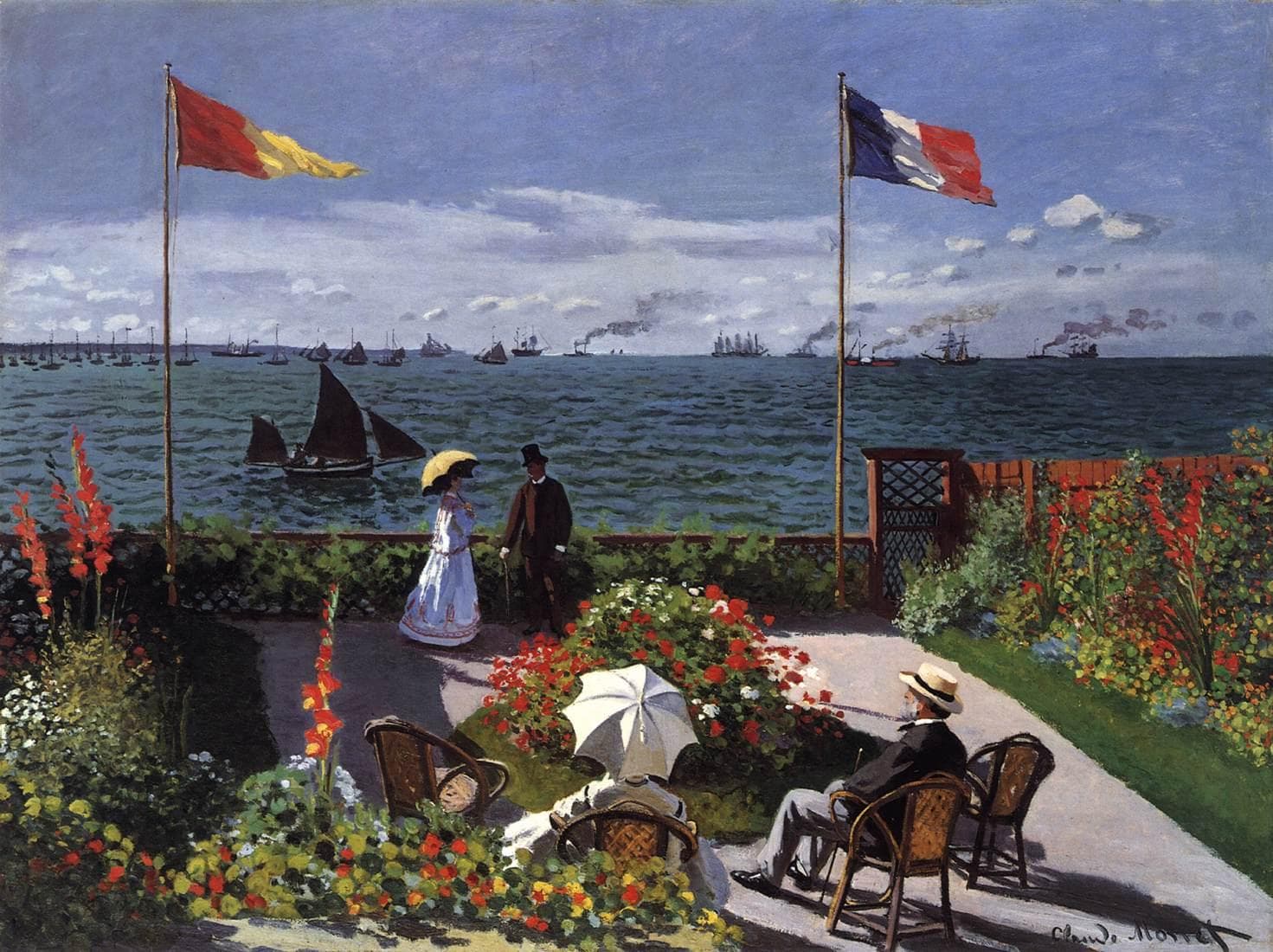
Garden at Sainte-Adresse
Claude Monet · 1867
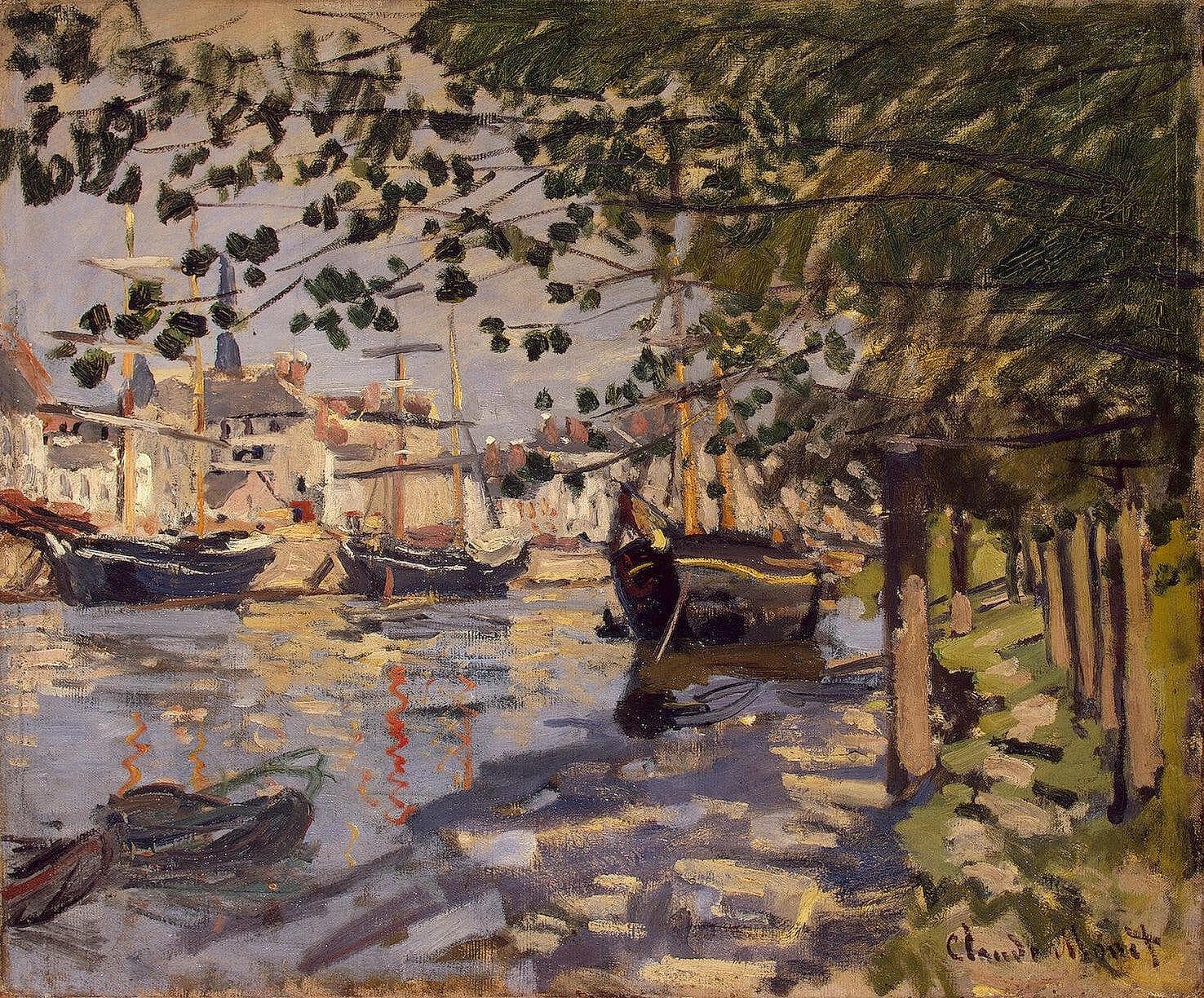
The Seine at Rouen
Claude Monet · 1872
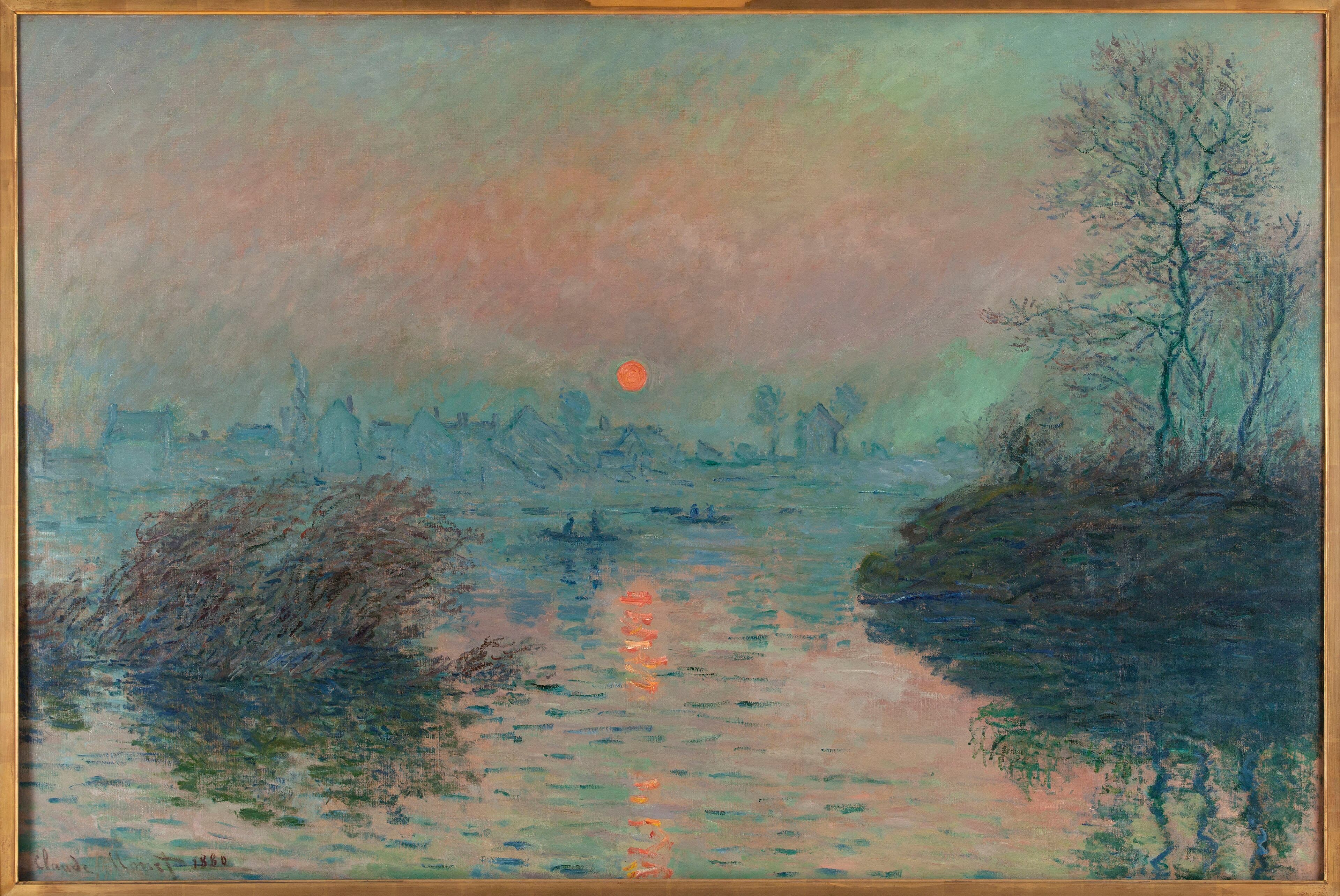
Sunset on the Seine at Lavacourt, Winter Effect
Claude Monet · 1880