Image: Art Institute of Chicago · Public domain · via Wikimedia Commons
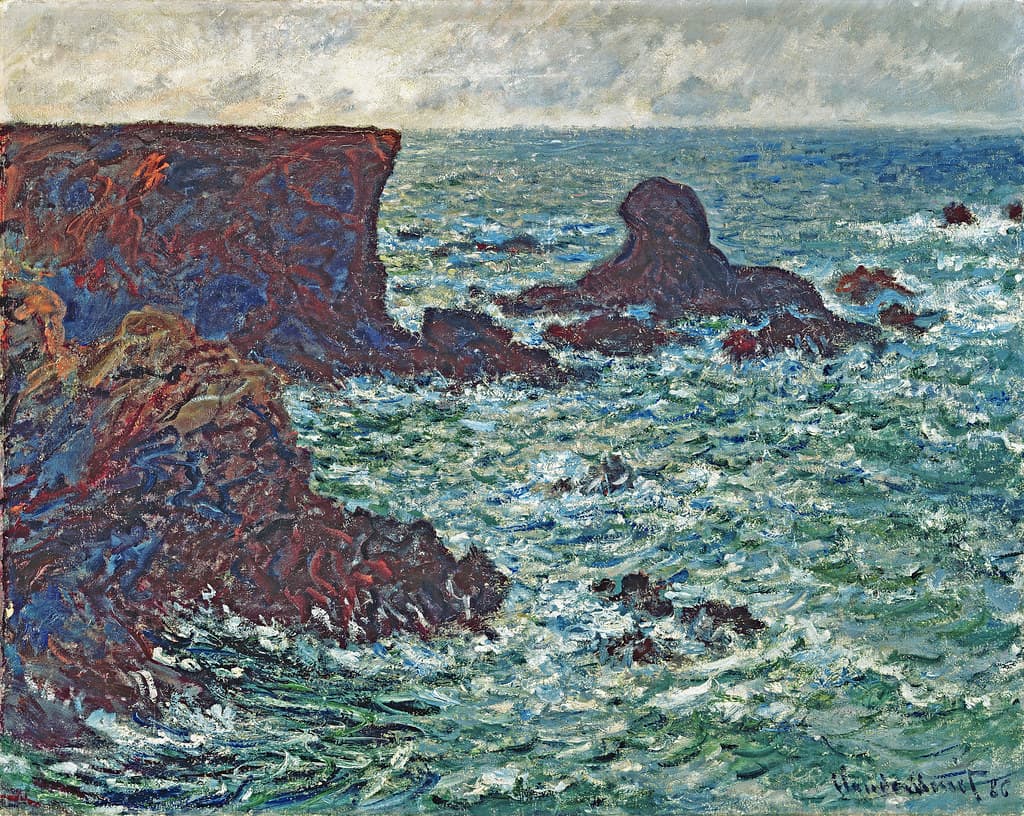
Rocks at Port-Goulphar, Belle-Île
Claude Monet, 1886
Rocks at Port-Goulphar, Belle-Île is an 1886 painting by Claude Monet of rust-and-violet rock formations rising from a glittering inlet on Belle-Île, off the coast of Brittany. It is in the Art Institute of Chicago.
- Artist
- Claude Monet
- Date
- 1886
- Medium
- Oil on canvas
- Dimensions
- 66 × 81.8 cm
- Collection
- Art Institute of Chicago, Chicago, United States
- Movement
- Impressionism
- Catalogue
- Wildenstein 1095
- Water & Sea
- Nature & Landscape
Claude Monet's Rocks at Port-Goulphar, Belle-Île was painted in the autumn of 1886 on Belle-Île-en-Mer, the rugged island off the southern coast of Brittany. It shows the frieze of rocks and sea stacks that guard the inlet of Port-Goulphar, with sunlight breaking across the water between them. The canvas, 66 by 81.8 centimeters (Wildenstein 1095), is inscribed "Claude Monet 86" at lower right. It is in the Art Institute of Chicago, where it hangs in the Impressionist galleries.
What you are looking at
Monet looks down into a narrow channel from the cliff above. Massive rocks crowd in from both sides: a dark, layered headland at left, a big rounded block in the center, and a tall, ruddy wall at right. Between them, the sea opens out toward a pale horizon, glimpsed in two small gaps at the top of the canvas. Further back, low dark cliffs close the view on each side.
The rocks are painted in rust, brick red, violet and deep blue, with patches of green where turf and lichen cling to their tops. They look heavy and wet. Below them, the water fills the lower half of the canvas, and it is anything but uniform: deep bottle green and blue in the shadow of the rocks, then a broad band of light, broken into hundreds of short white, lilac and pale blue strokes, where the sun hits the surface. The sky is a soft, cloudy gray-white with a few patches of blue.
The thing to notice is the path of light on the water. It runs diagonally from the lower left up toward the central rock, and it is painted almost like a pattern, in small separate marks. It turns the sea into a shimmering surface that contrasts with the dense, matte rocks.
Where and when
Monet arrived on Belle-Île in September 1886, intending to stay a couple of weeks. He stayed more than two months, lodging in the tiny hamlet of Kervilahouen a short walk from the coast, and worked in wind and rain on the island's "wild coast," the Côte Sauvage. The Art Institute quotes him calling the place lugubrious, terrifying and very beautiful, all at once. He painted around forty canvases of the rocks at Port-Coton, Port-Domois and Port-Goulphar, and this is one of a group showing the Port-Goulphar formations.
Belle-Île marked a change in his work. After the warm color of Bordighera and the chalk white of Étretat, the dark granite and violent Atlantic pushed him toward denser, darker, more somber pictures, and toward working on the same motif again and again under changing conditions.
How this version differs
Many of the Belle-Île canvases are about storm and spray, like the Musée d'Orsay's The Rocks of Belle-Île, Rough Sea and Storm off Belle-Île. Others, such as the Pushkin Museum's The Pyramides at Port-Coton and the Fitzwilliam's Rocks at Port-Coton, the Lion Rock, focus on single offshore needles. The Chicago picture is calmer and more enclosed: a sheltered inlet on a bright, broken day, where the sea glitters instead of boiling. The rocks surround the viewer instead of standing apart.
How it was painted
The rocks are built up with long, dragged, overlapping strokes in a dense weave of reds, violets and blues, laid over darker underlayers. The water is handled in the opposite way, with short, discrete strokes of pure color set side by side so that they mix in the eye. The sky is thin and lightly brushed. The surface is heavily worked overall, a sign of the repeated sessions Monet spent on each canvas, often finishing them later in the studio at Giverny.
Ownership and where to see it
Monet sold the painting to Durand-Ruel in 1892. It went to his New York branch and was bought in 1897 by Mrs. Harriet Borland of Chicago, one of the city's early Monet collectors. Her son Chauncey B. Borland and his wife gave it to the Art Institute in stages from 1964, completing the gift in 1973. For the Art Institute's other Monets, including the Stacks of Wheat, see Monet at the Art Institute of Chicago; for the painter, Claude Monet.
Questions & answers
Where is Monet's Rocks at Port-Goulphar, Belle-Île?
It is in the Art Institute of Chicago, where it is usually on view in the Impressionist galleries (Gallery 240 in recent years). It was given by Mr. and Mrs. Chauncey B. Borland, whose family had owned it since 1897.
When and where did Monet paint Rocks at Port-Goulphar?
Monet painted it in the autumn of 1886 on Belle-Île-en-Mer, an island off the southern coast of Brittany. He stayed more than two months, from September to late November, working on the island's rugged Atlantic coast.
What does Rocks at Port-Goulphar show?
It shows a narrow inlet surrounded by massive rust, violet and blue rocks, seen from the cliff above, with sunlight breaking across the green water in a glittering diagonal path. Low cliffs and a pale horizon close the view.
How many Belle-Île paintings did Monet make?
Monet painted around forty canvases on Belle-Île in 1886, many of them repeated views of the rocks at Port-Coton, Port-Domois and Port-Goulphar under different weather. This painting belongs to a group depicting the Port-Goulphar rock formations.
More by the artist
Claude Monet
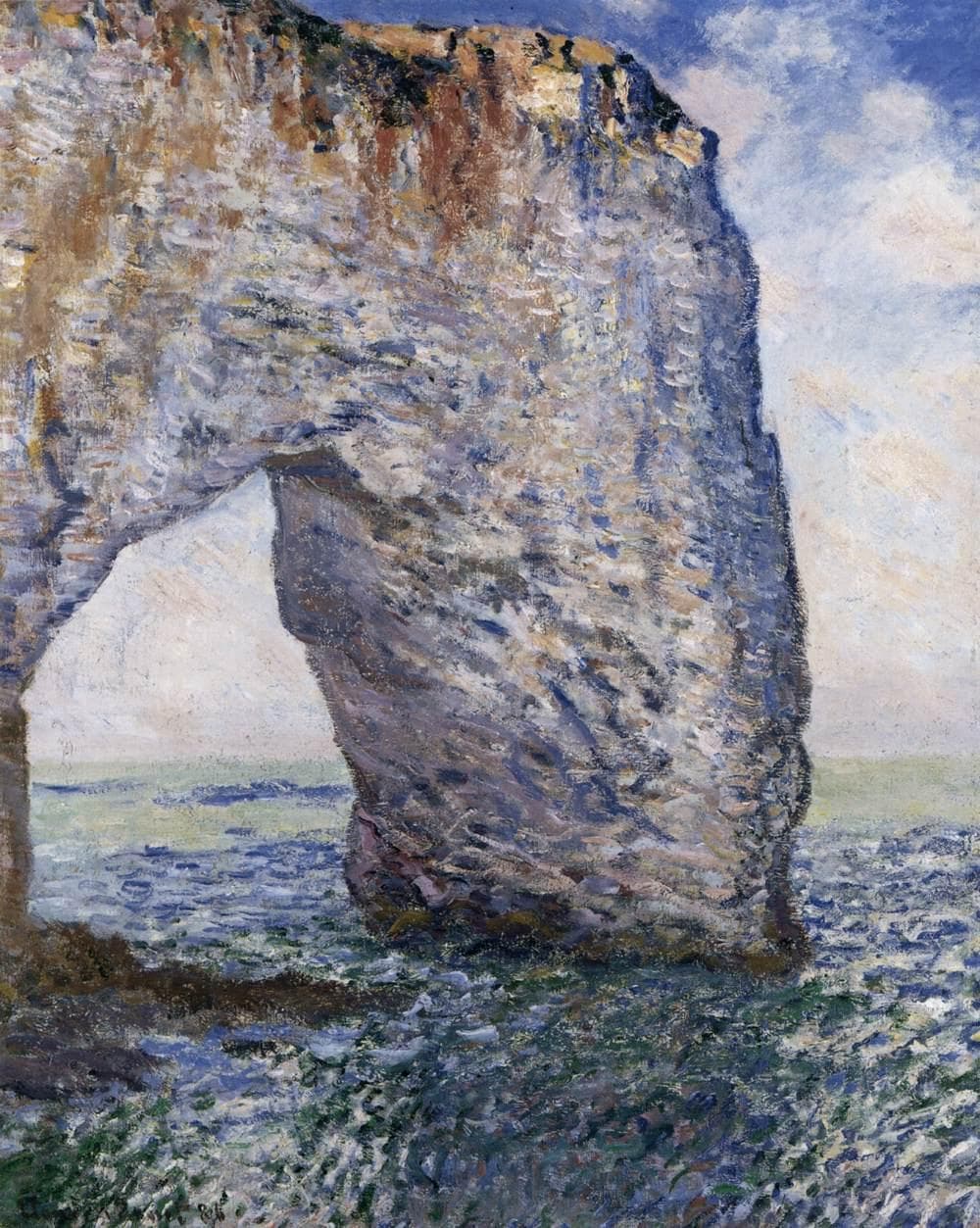
The Manneporte near Étretat
Claude Monet · 1886
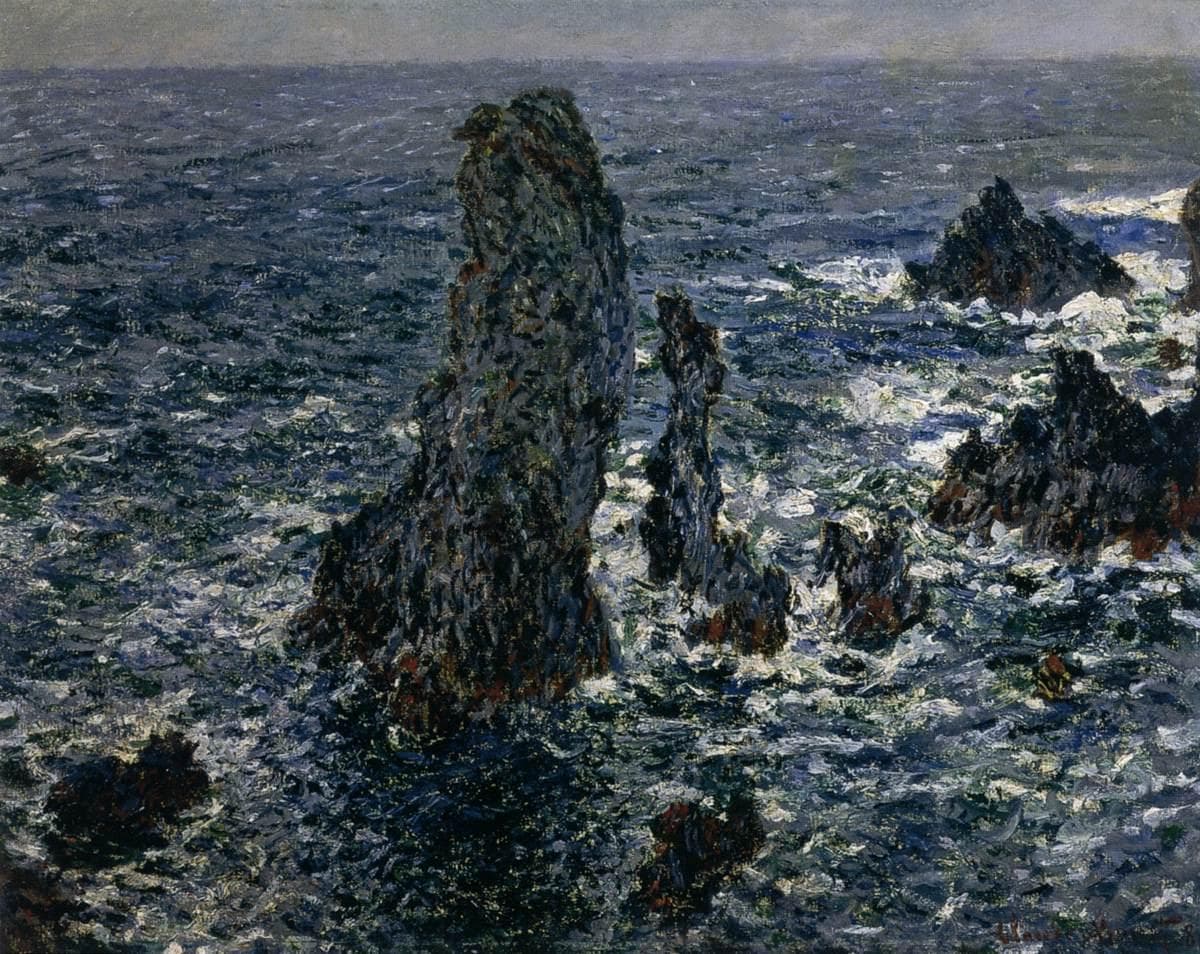
The Pyramides at Port-Coton, Rough Sea
Claude Monet · 1886
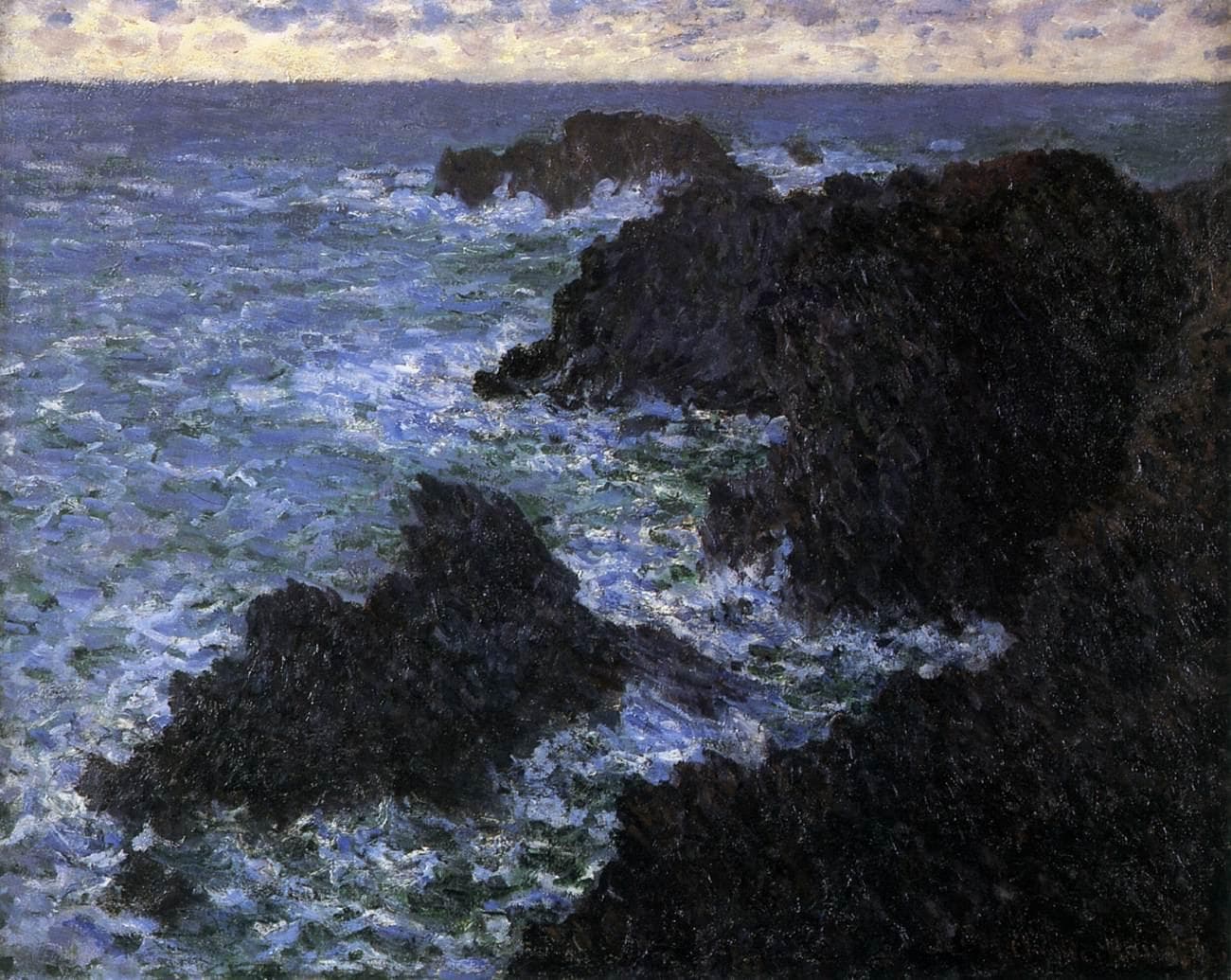
The Rocks of Belle-Île, the Wild Coast
Claude Monet · 1886
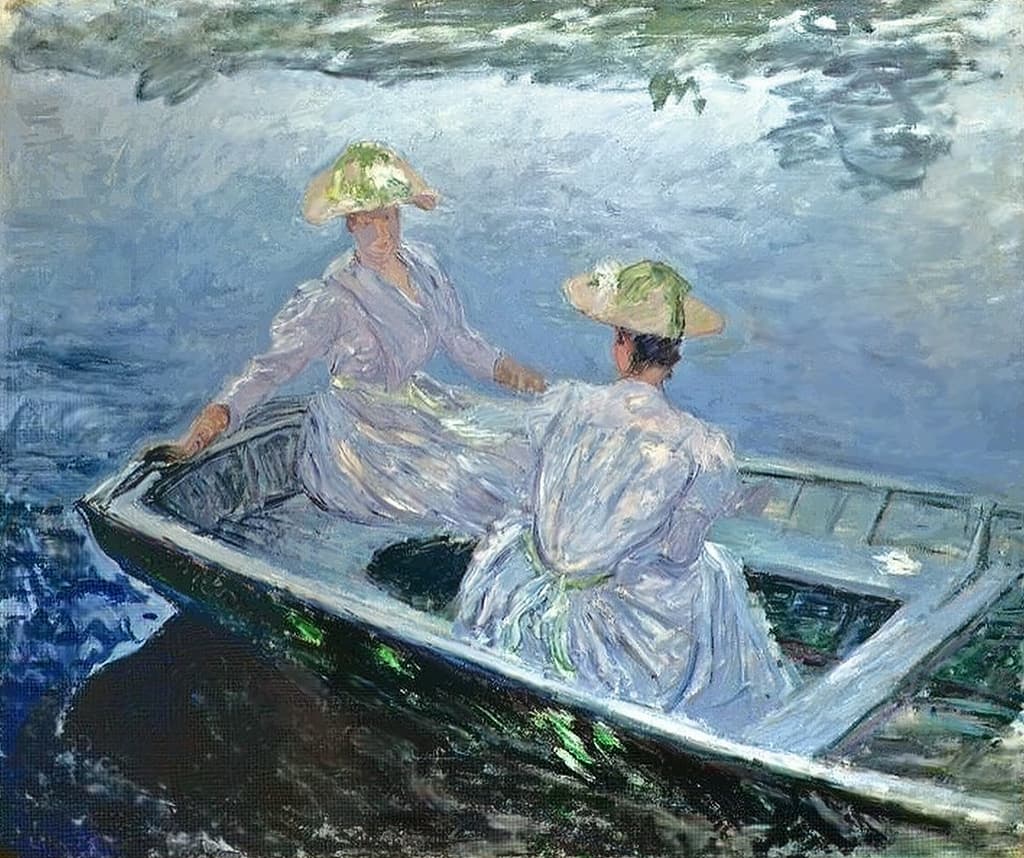
The Blue Boat
Claude Monet · 1887
Rocks at Port-Coton, the Lion Rock, Belle-Île
Claude Monet · 1886
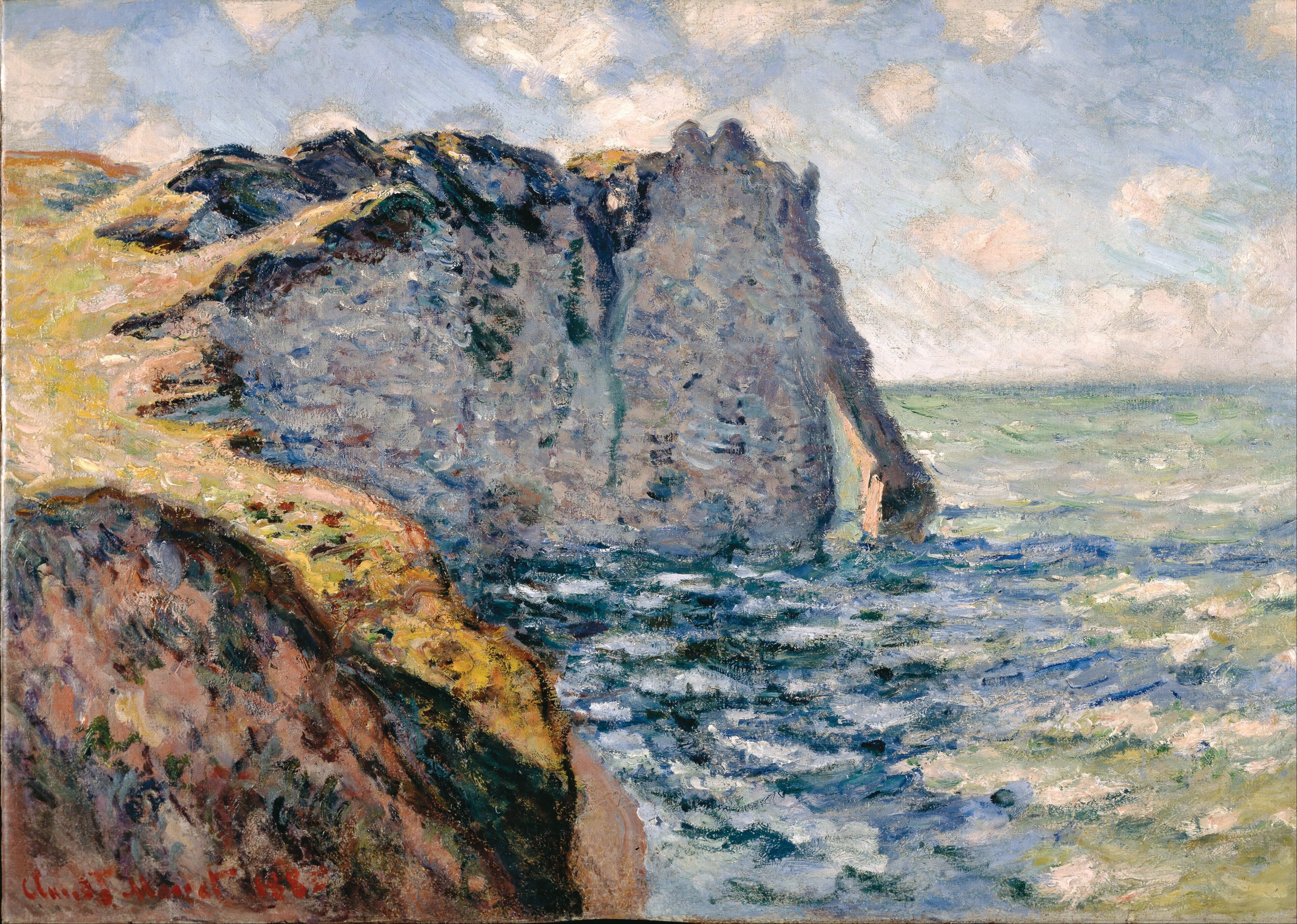
The Cliff of Aval, Étretat
Claude Monet · 1885
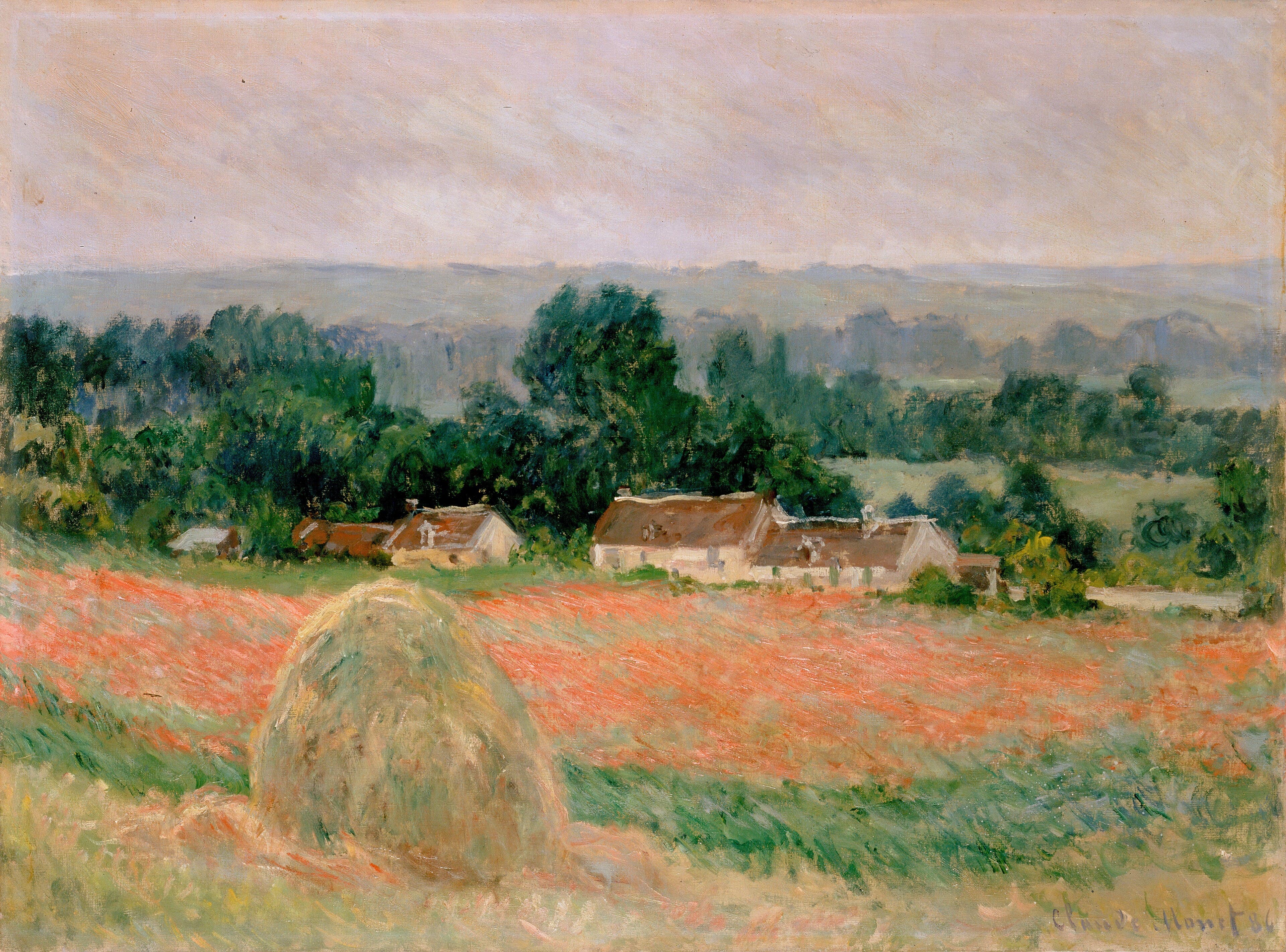
Haystack at Giverny
Claude Monet · 1886
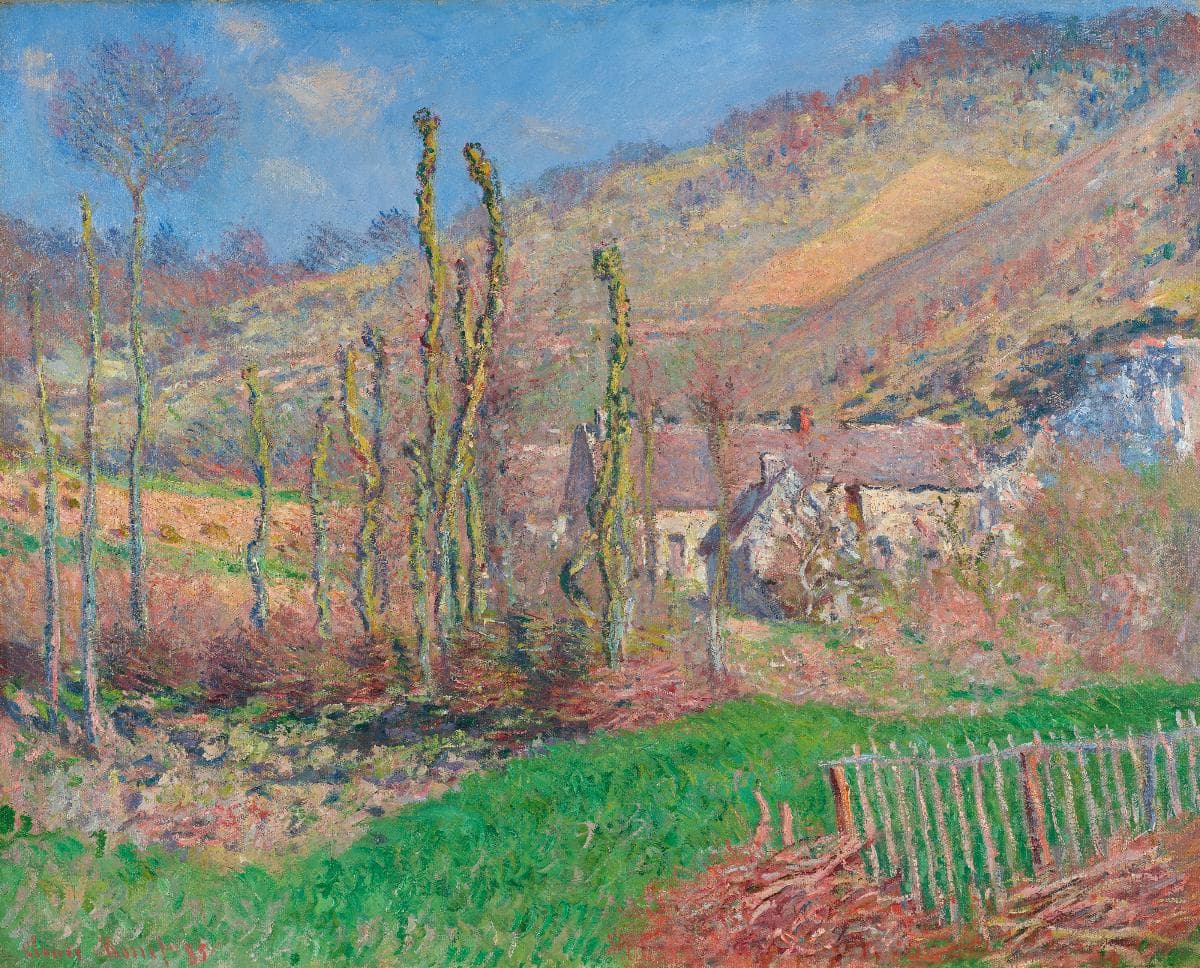
Winter Landscape at the Val de Falaise (Giverny)
Claude Monet · 1885
Also painted in 1886
The same year
The Cliffs at Étretat
Claude Monet · 1886
Storm off Belle-Île
Claude Monet · 1886
Tulip Fields in Holland
Claude Monet · 1886
Willows at Giverny
Claude Monet · 1886
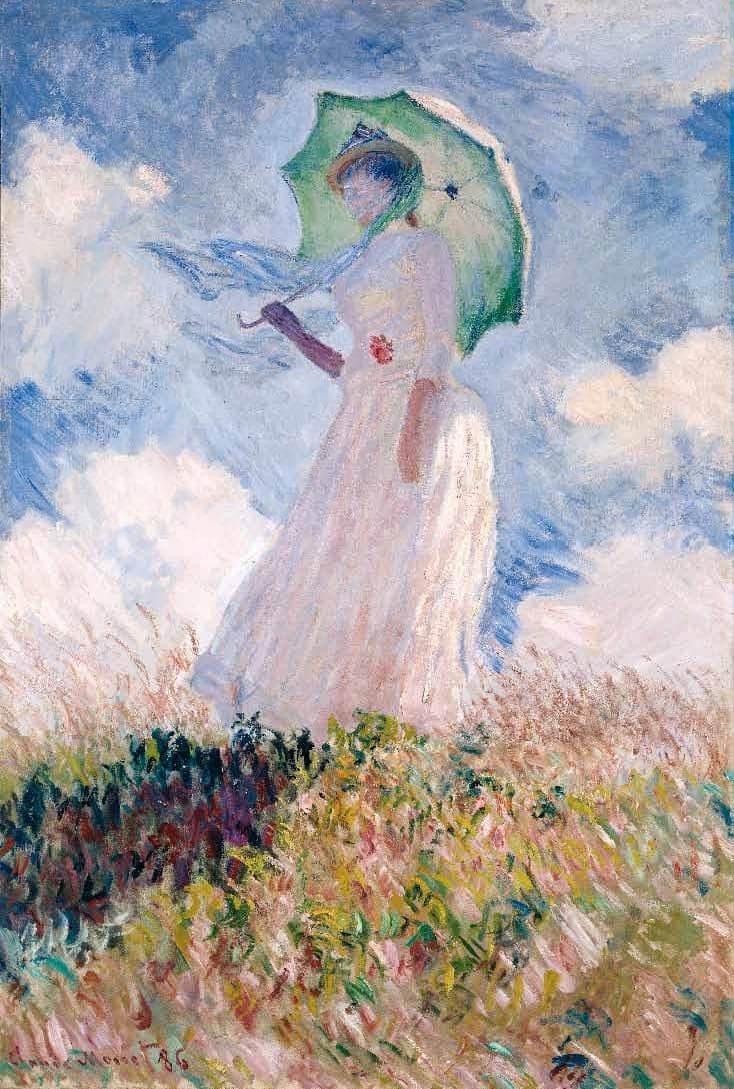
Woman with a Parasol, Facing Left
Claude Monet · 1886
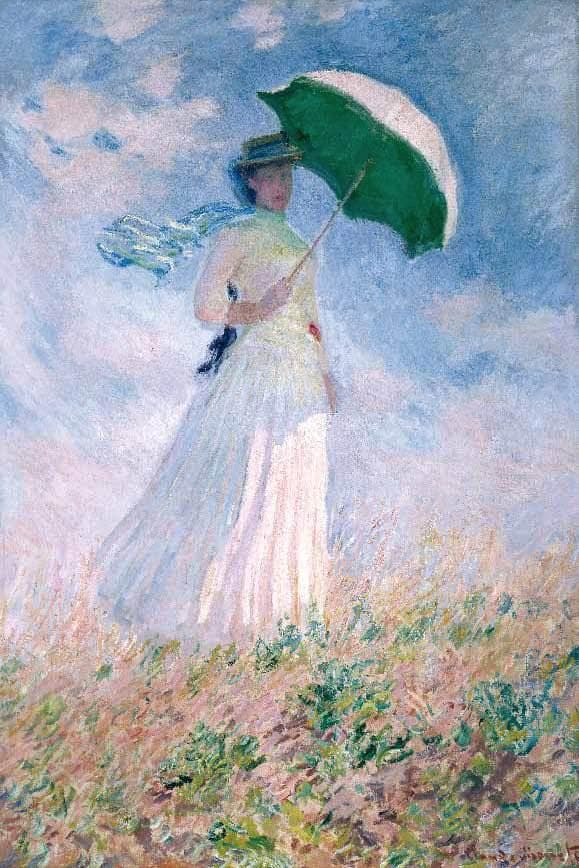
Woman with a Parasol, Facing Right
Claude Monet · 1886
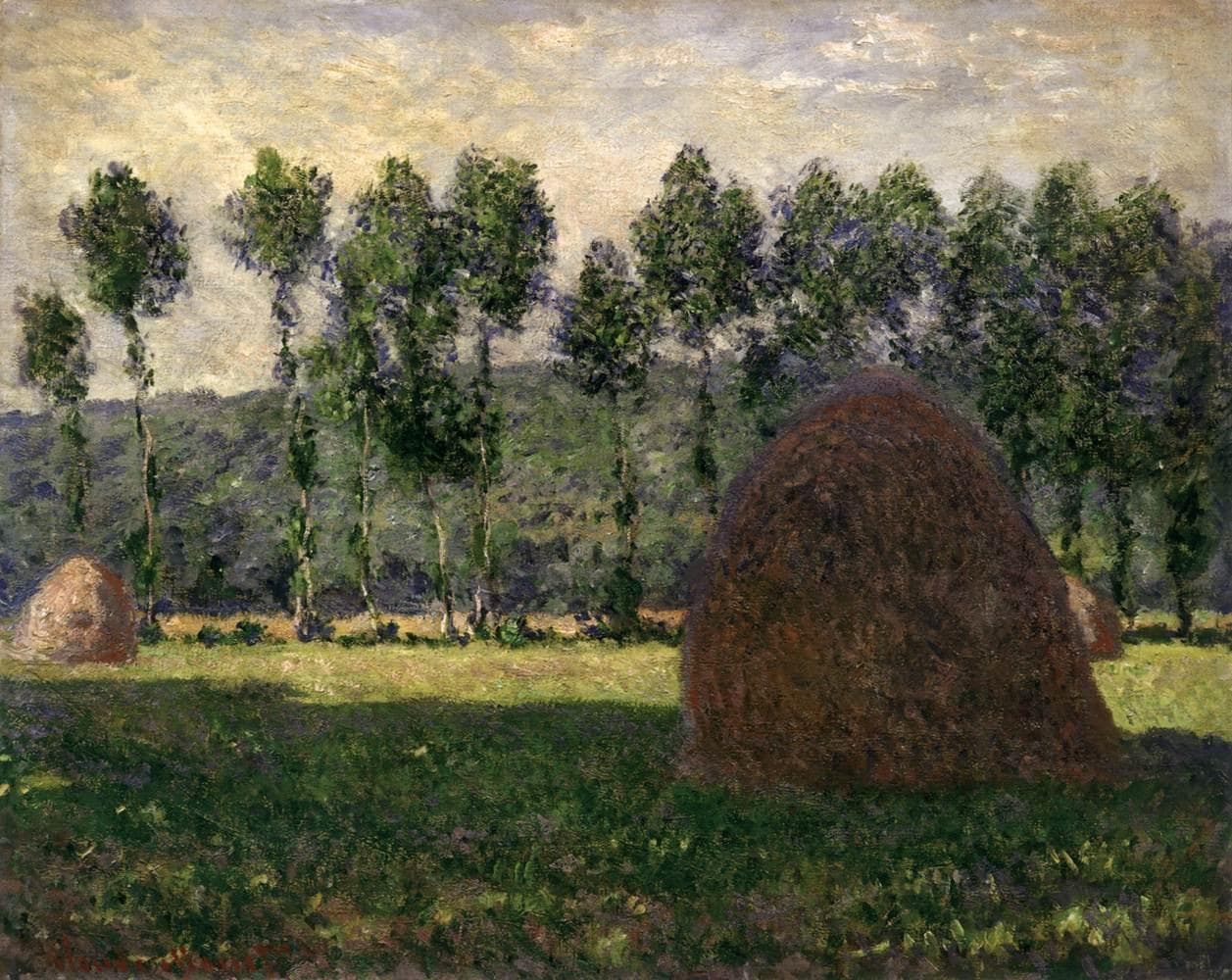
Haystack near Giverny
Claude Monet · 1884–89
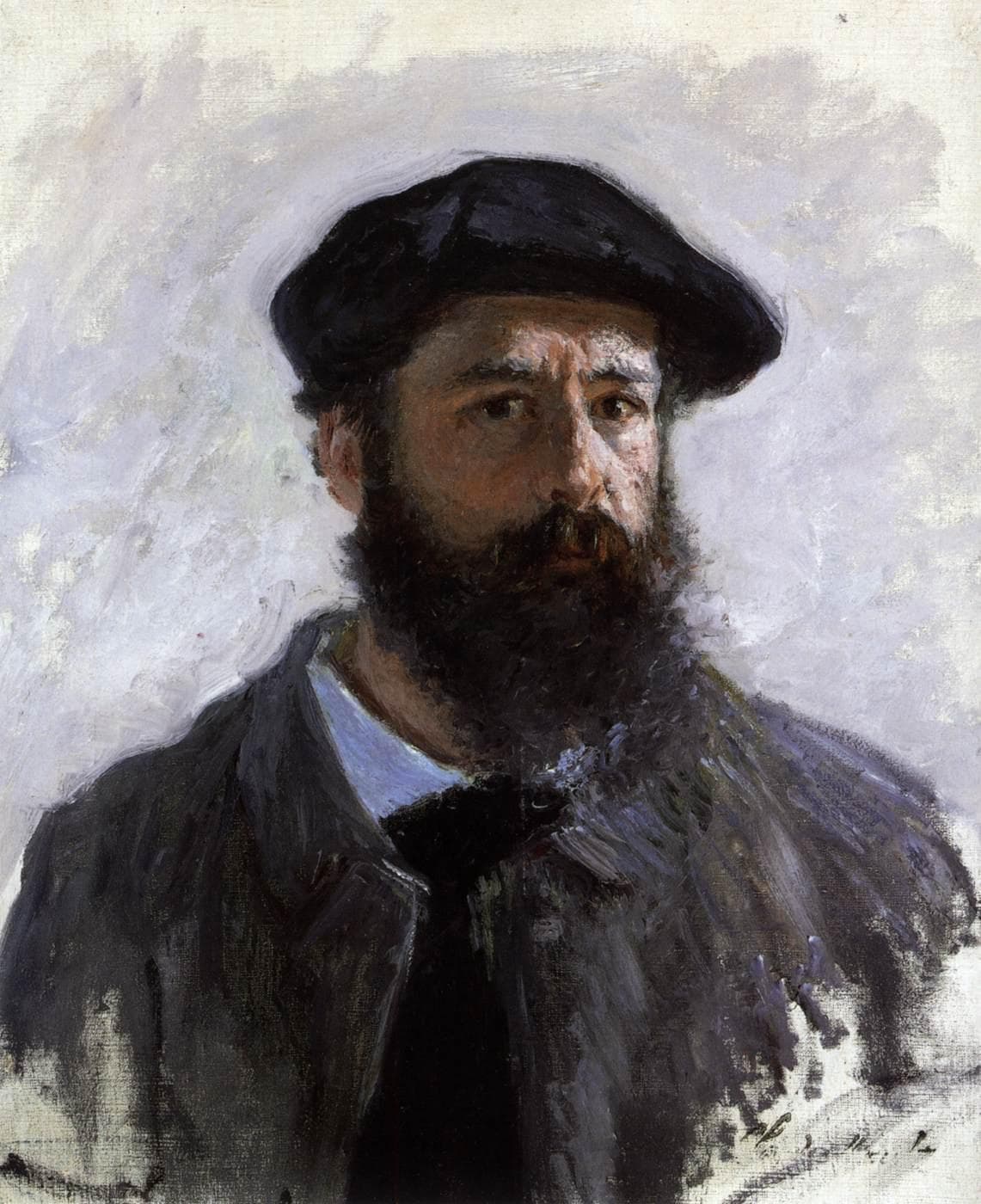
Self-Portrait in Beret
Claude Monet · 1886
Kindred works
You may also study
Storm off Belle-Île
Claude Monet · 1886
The Cliffs at Étretat
Claude Monet · 1886
Three Poplars, Autumn Effect
Claude Monet · 1891
The Beach at Honfleur
Claude Monet · 1864–66
Poplars, Three Pink Trees, Autumn
Claude Monet · 1891
Water Lilies, Evening Effect
Claude Monet · 1897
Morning on the Seine, Giverny
Claude Monet · 1897
Morning on the Seine, near Giverny (1897)
Claude Monet · 1897