Image: Claude Monet; National Museum Cardiff · CC0 · via Wikimedia Commons
Rouen Cathedral: Setting Sun (Symphony in Pink and Grey)
Claude Monet, 1892–94
Rouen Cathedral: Setting Sun (Symphony in Pink and Grey) is a Claude Monet painting from the Rouen Cathedral series, begun in 1892 and dated 1894: the façade in soft pink and blue-gray at sunset against a pale green sky. It is in National Museum Cardiff, Wales.
- Artist
- Claude Monet
- Date
- 1892–94
- Medium
- Oil on canvas
- Dimensions
- 100 × 65 cm
- Collection
- National Museum Cardiff, Cardiff, United Kingdom
- Movement
- Impressionism
- Catalogue
- Wildenstein 1323
- Architecture & Ruins
- Religion & Saints
What you are looking at
The west front of Rouen Cathedral is seen almost head on, cropped at both sides, its gables silhouetted against a sky of pale, minty turquoise. The stone is pink, but a muted, powdery pink, threaded everywhere with blue-gray and lavender. Nothing is bright. The sun is setting, and its light no longer strikes the façade directly; instead the whole building seems to glow faintly from within, like embers under ash.
The upper façade, with its row of pinnacles and the pointed gable over the central portal, carries most of the pink. Lower down, the color drains toward gray and blue, and the three portals at the bottom are soft, undefined arches with warm, rosy doors. In the center, below the great rose window, the clock dial is a small white disk ringed with pink, the brightest point on the canvas.
The signature and date, Claude Monet 94, are at lower left.
Rouen, 1892–94
Claude Monet painted the cathedral in two campaigns, in February to April 1892 and the same months of 1893, working from rooms that faced the façade across the cathedral square. He kept many canvases going at once and painted each only when its particular light returned. Sunset gave him a short window each day. He reworked the canvases at Giverny and dated most of them 1894.
The musical title, Symphony in Pink and Grey, recalls James McNeill Whistler, whose Symphonies and Harmonies Monet knew; the two painters were friends. Several of the cathedral canvases acquired such titles describing their color harmony, a reminder that the Rouen Cathedral series was conceived as variations on a theme.
How it was painted
The paint is dense and dry, worked in small, crisscrossing touches that make the surface look granular, like sandstone. Monet layers pink over blue and gray over pink, so that each patch of color is really a mixture of three or four, and the eye blends them at a distance. The sky is smoother, laid in with broad, flat strokes of green-blue that make the pinkish stone stand forward.
The canvas measures 100 by 65 centimeters, the standard size Monet used for most of the series.
How this version differs
Its nearest relative is the Belgrade Rouen Cathedral, with the same turquoise sky and pink stone. The Cardiff canvas is cooler and grayer, closer to twilight. The Marmottan's Sunlight Effect, End of the Day shows an earlier moment, the upper façade still on fire with orange and gold, and the Pushkin's Rouen Cathedral, Evening a later and darker one. Together they work almost like frames of film tracking the sun as it goes down.
The Davies sisters and Monet
Gwendoline and Margaret Davies began buying Impressionist pictures in 1908, and Monet was their favorite. They bought his late Venice canvases and water lilies as well as this cathedral, and their purchases were bold for British collectors of the time, when Impressionism was still regarded with suspicion in Britain. Gwendoline acquired the cathedral during the First World War, in December 1917.
Ownership and where to see it
Catalogued as Wildenstein 1323, the canvas is owned by Amgueddfa Cymru – Museum Wales (NMW A 2482) and hangs at National Museum Cardiff. Gwendoline Davies bought it in Paris in December 1917, and it came to the museum with her bequest in 1952. She and her sister Margaret gave Wales one of Britain's finest collections of Impressionism. Cardiff also owns Monet's Sunset in Venice and other late works. See our guide to where to see Monet's paintings.
Questions & answers
Where is Monet's Rouen Cathedral in Cardiff?
It is in National Museum Cardiff, part of Amgueddfa Cymru – Museum Wales, accession NMW A 2482. Gwendoline Davies bought it in Paris in 1917 and bequeathed it to the museum, where it arrived in 1952. It is normally on display with the Davies sisters' Impressionist collection.
When was it painted?
Monet began it in Rouen during his 1892 campaign, returned to the series in 1893, and finished it in his studio at Giverny, dating it 'Claude Monet 94'. The cathedral paintings were exhibited at Durand-Ruel's gallery in Paris in 1895.
What does Symphony in Pink and Grey mean?
It describes the painting's color harmony: soft pink and blue-gray stone against a pale green sky at sunset. The musical title echoes Whistler's habit of naming pictures as symphonies and harmonies, and stresses color over subject.
How is it different from the other sunset cathedrals?
It is cooler and more muted than the Marmottan's orange and gold version and lighter than the Pushkin Museum's evening view. The light no longer strikes the façade directly, so the stone glows softly rather than blazing.
More by the artist
Claude Monet
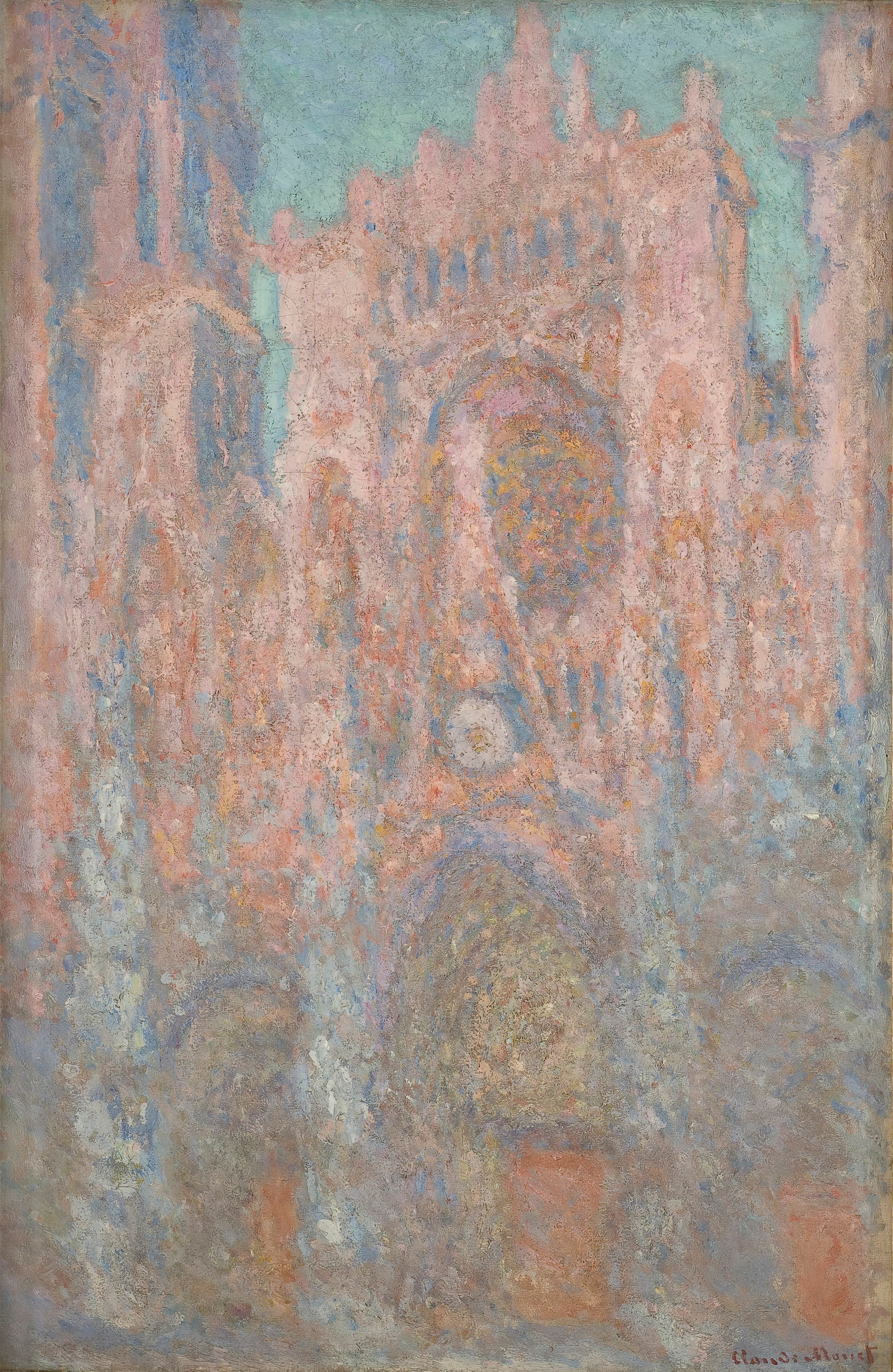
Rouen Cathedral
Claude Monet · 1892–94
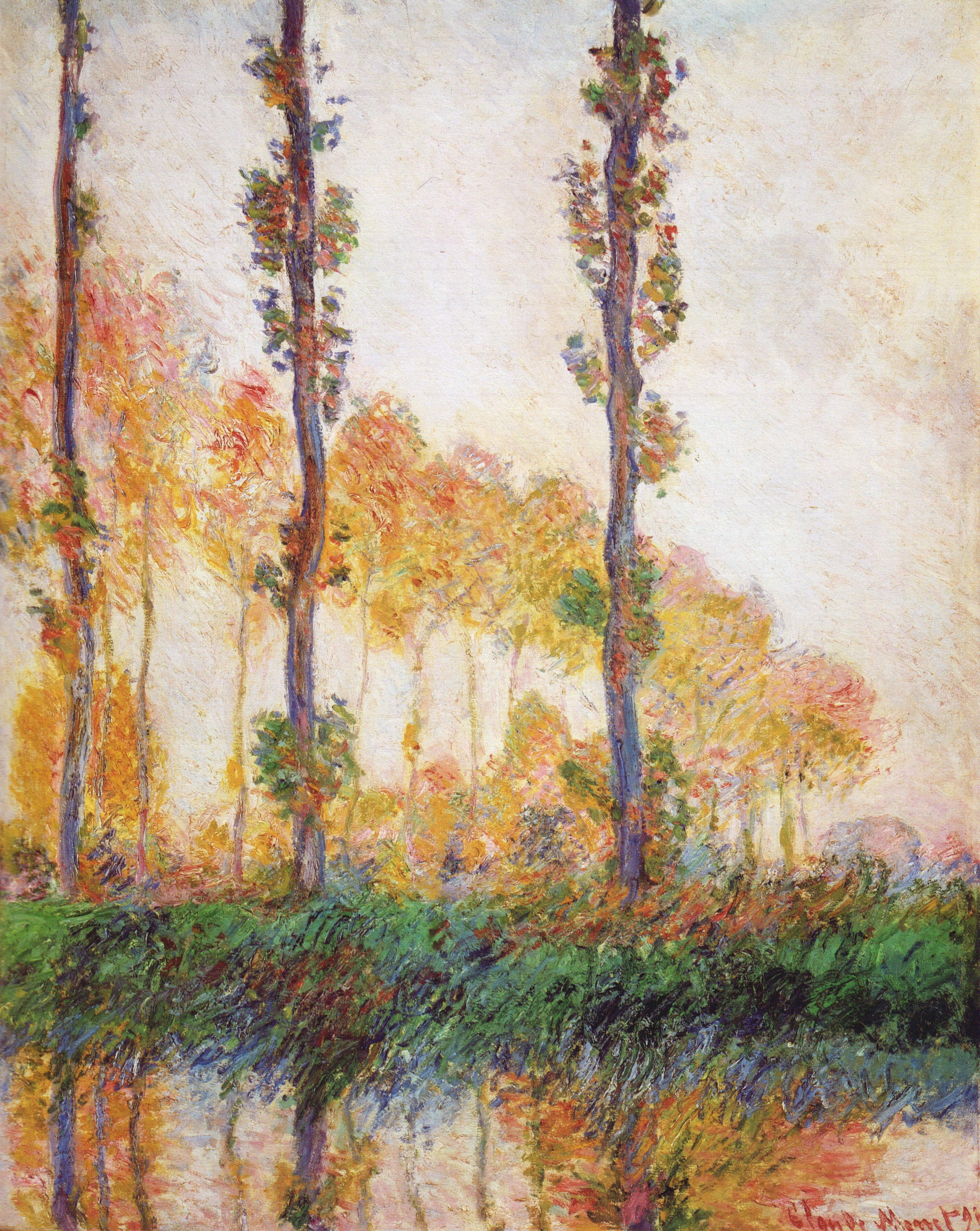
Poplars (Autumn)
Claude Monet · 1891
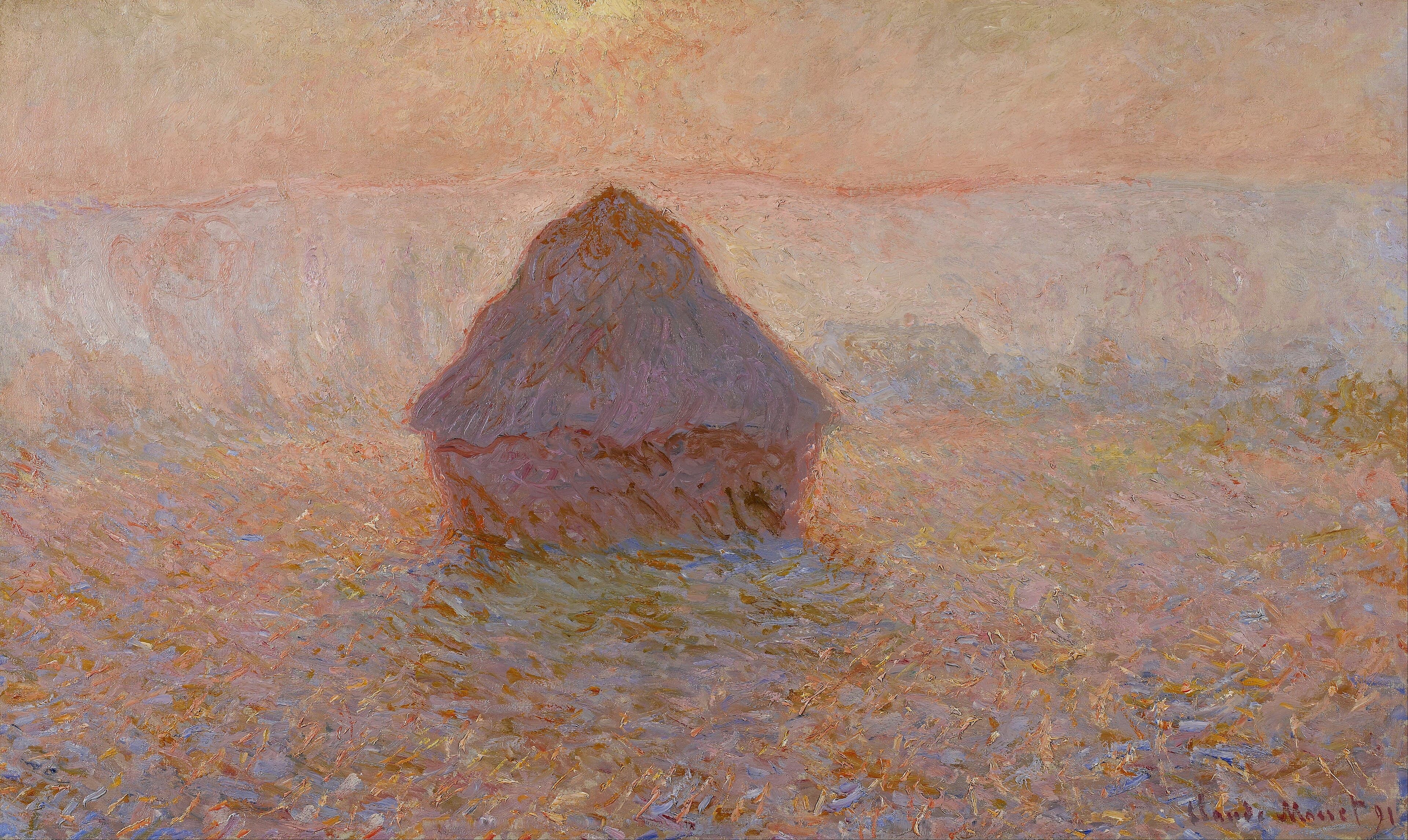
Grainstack, Sun in the Mist
Claude Monet · 1891
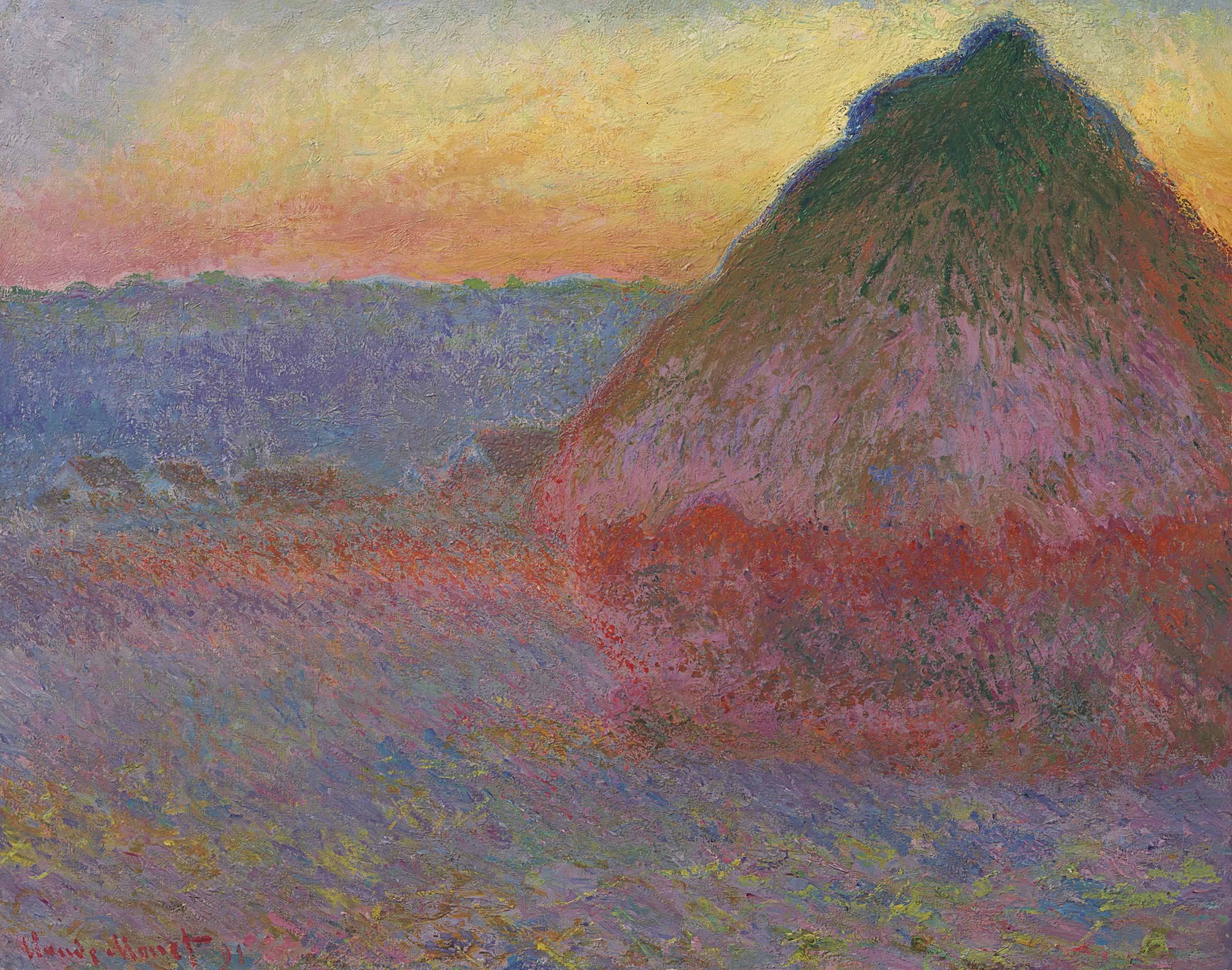
Grainstack in the Sunlight
Claude Monet · 1891
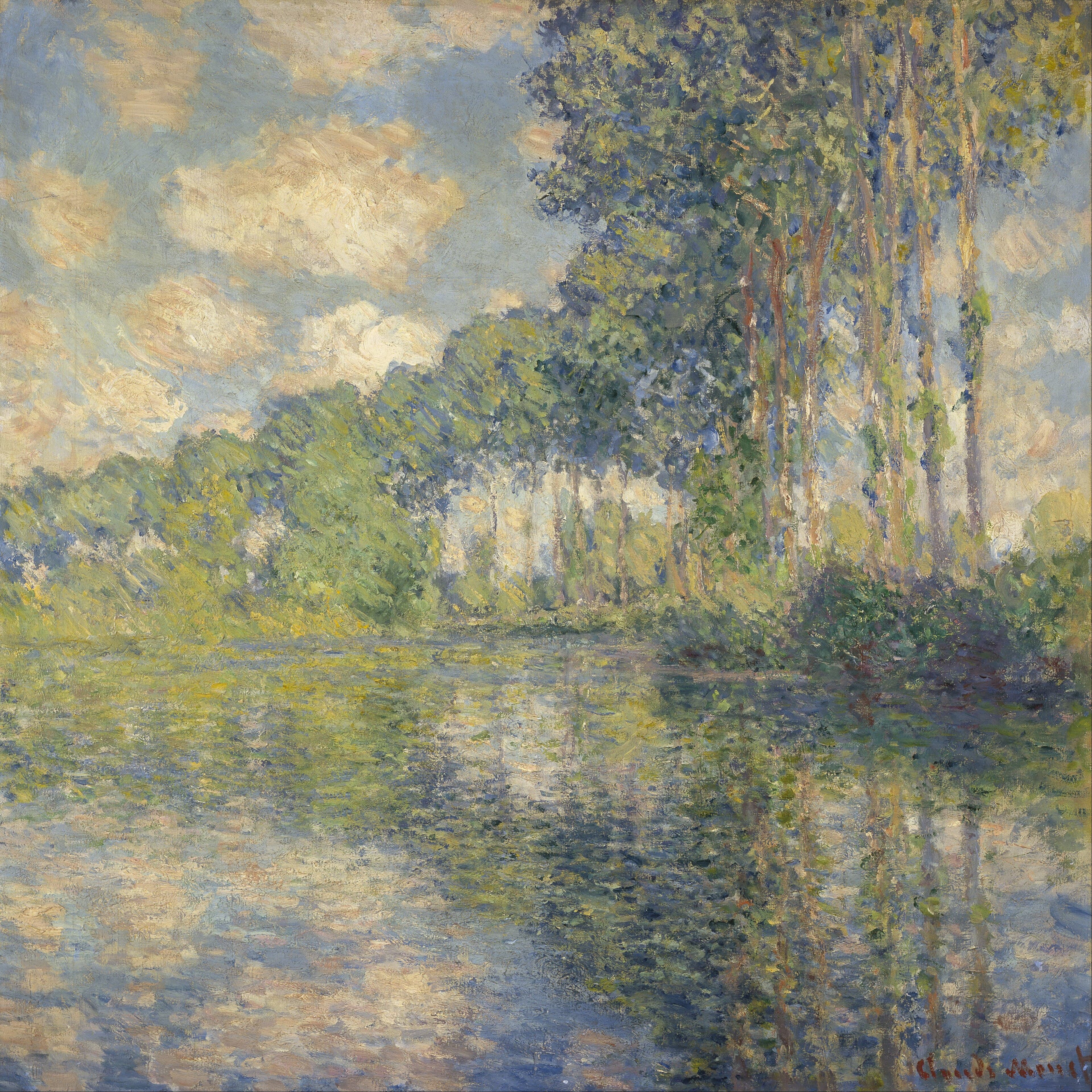
Poplars on the Epte (Edinburgh)
Claude Monet · 1891
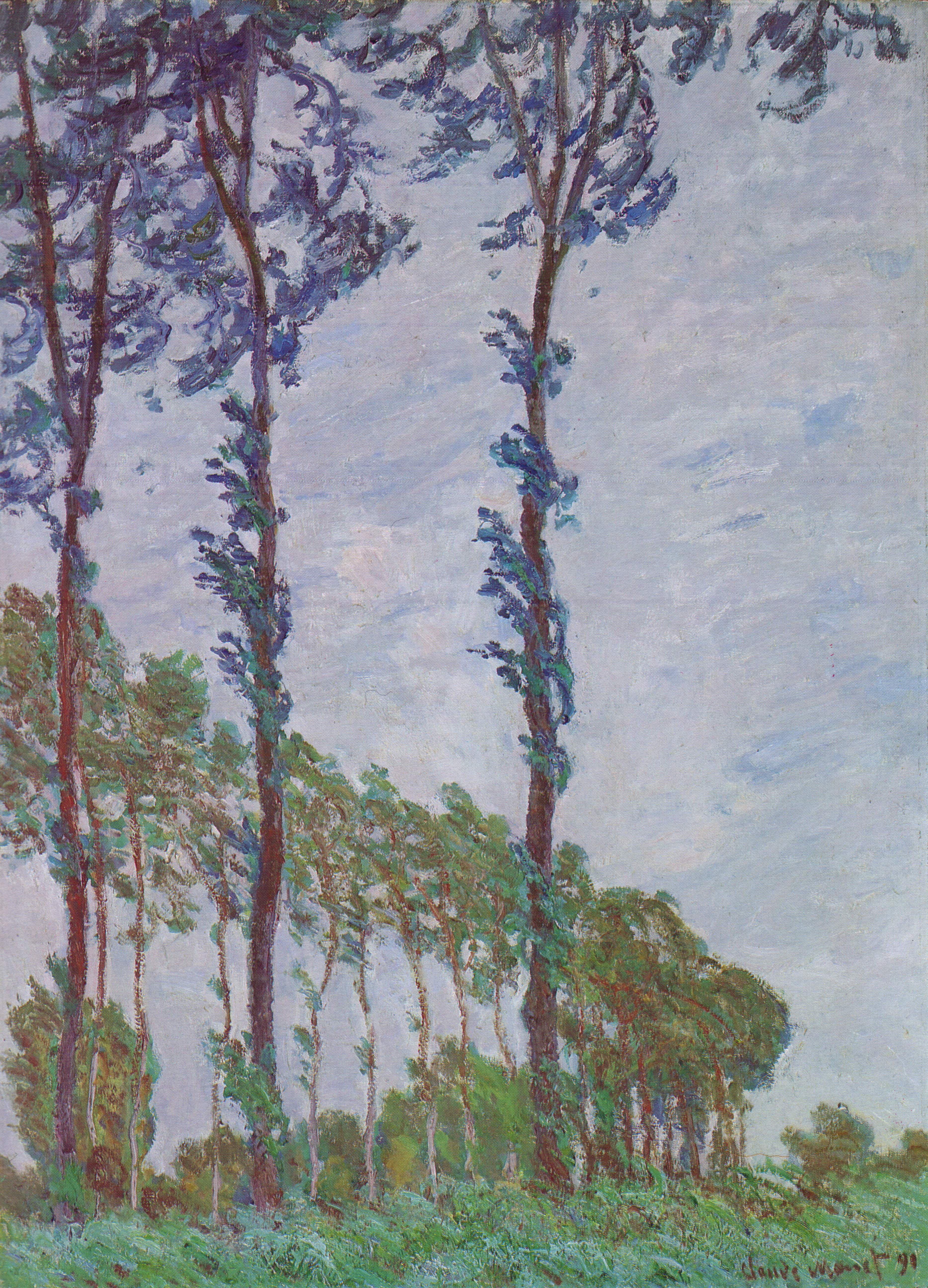
Wind Effect, Series of The Poplars
Claude Monet · 1891
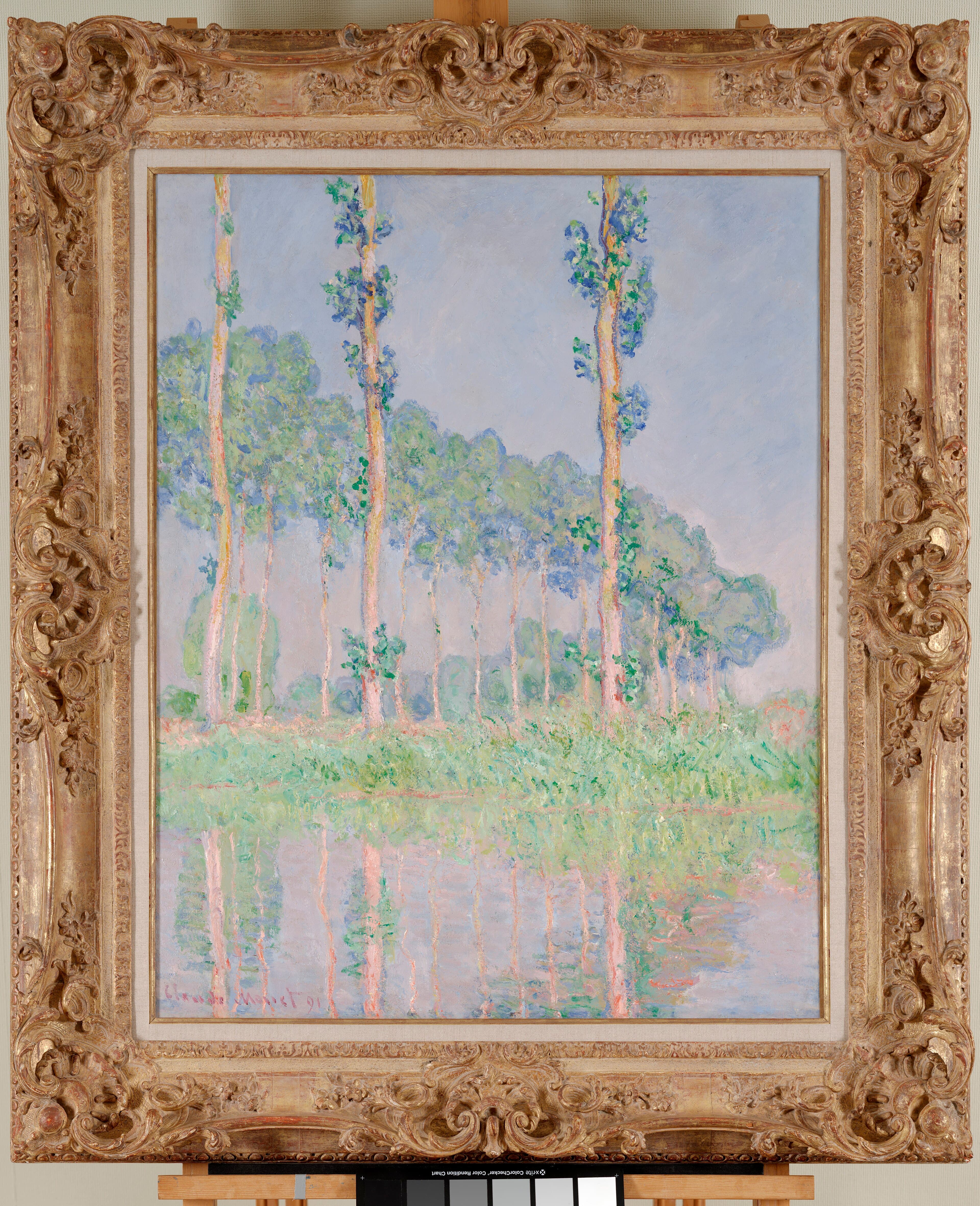
Poplars, Pink Effect
Claude Monet · 1891
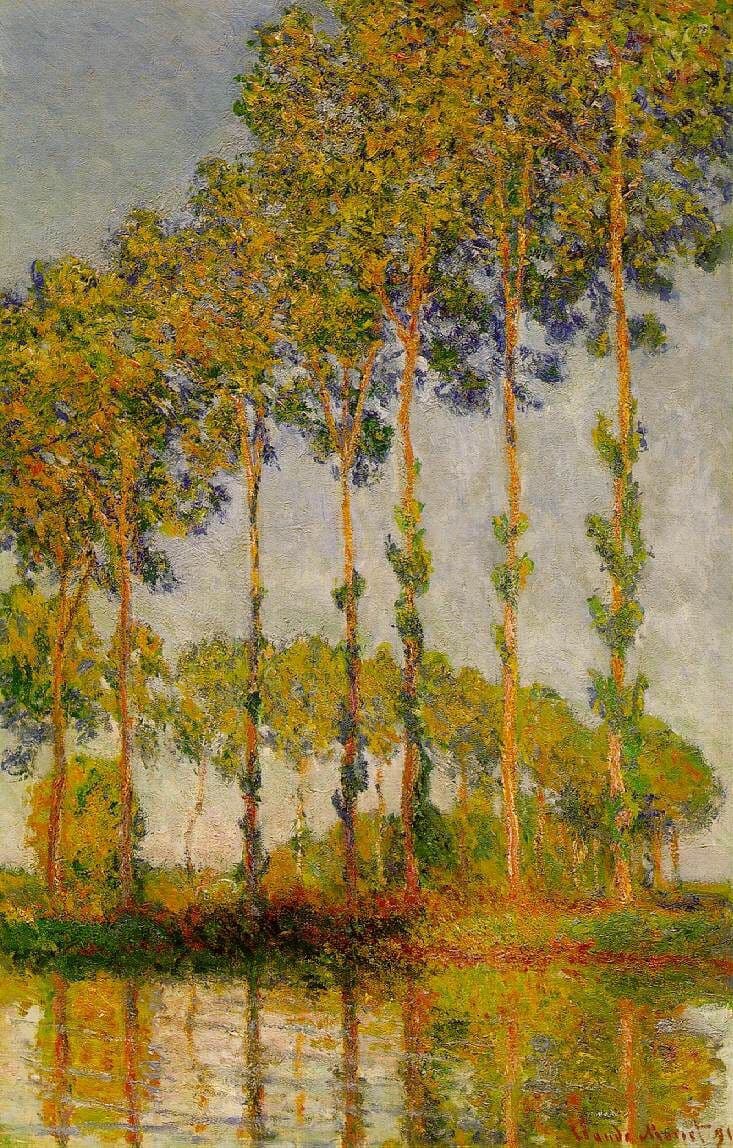
Row of Poplars in Autumn
Claude Monet · 1891
Also painted in 1892
The same year
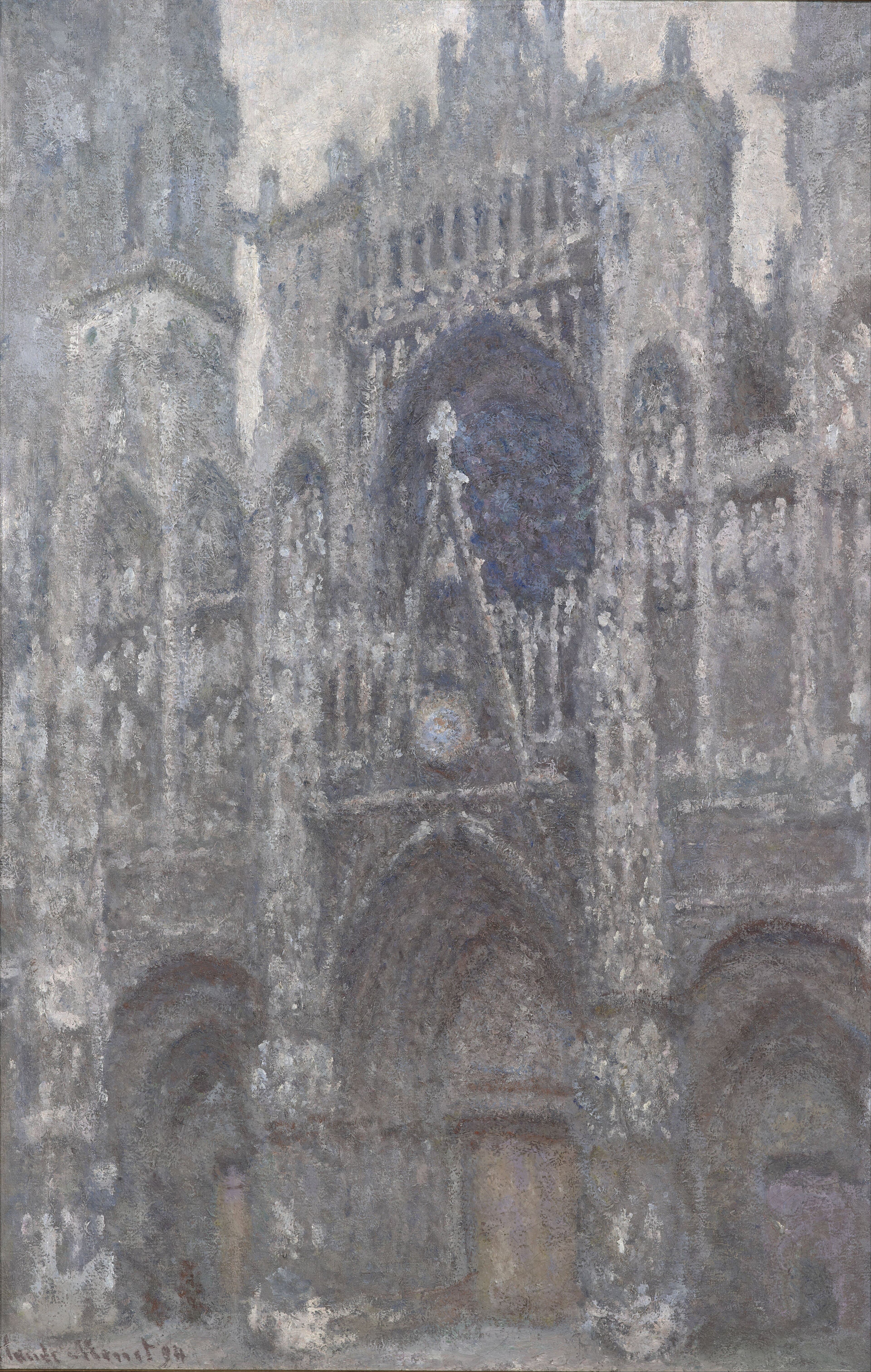
Rouen Cathedral, the Portal, Grey Weather
Claude Monet · 1892–94
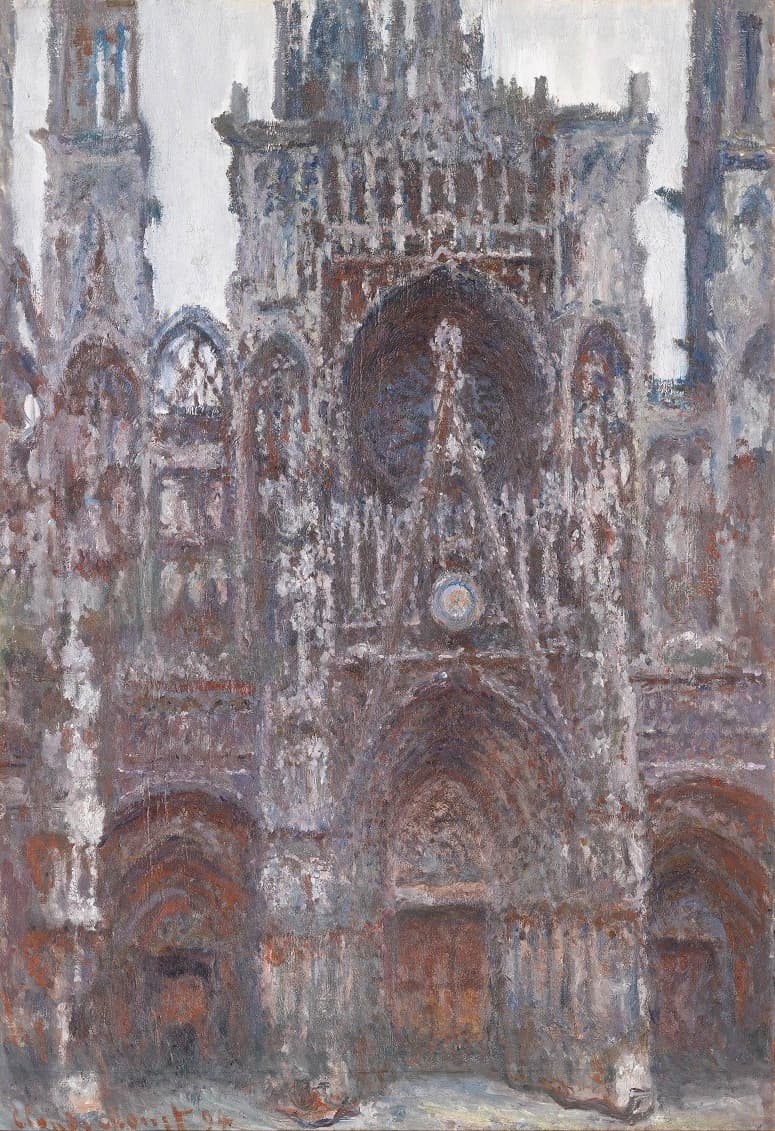
Rouen Cathedral, the Portal, Front View (Harmony in Brown)
Claude Monet · 1892–94
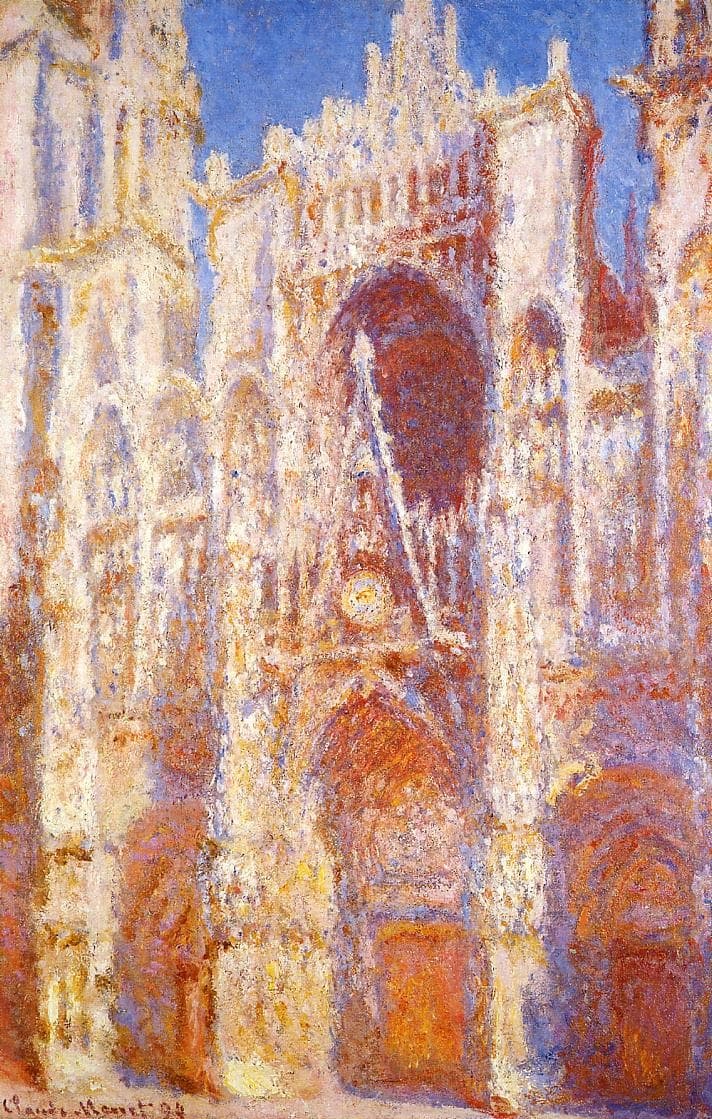
Rouen Cathedral, Portal, Sunlight (W 1322)
Claude Monet · 1892–94
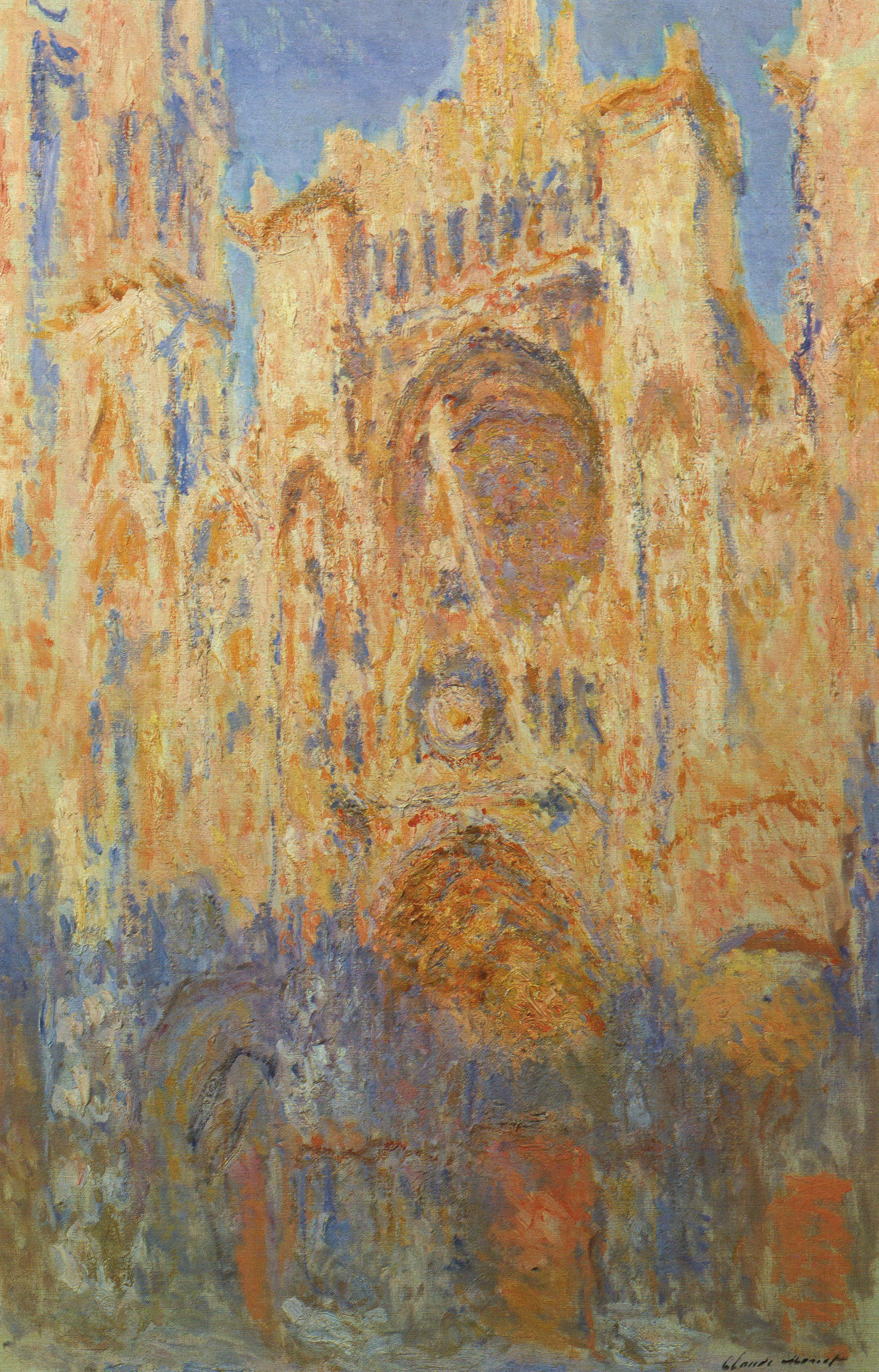
Rouen Cathedral, Sunlight Effect, End of the Day
Claude Monet · 1892
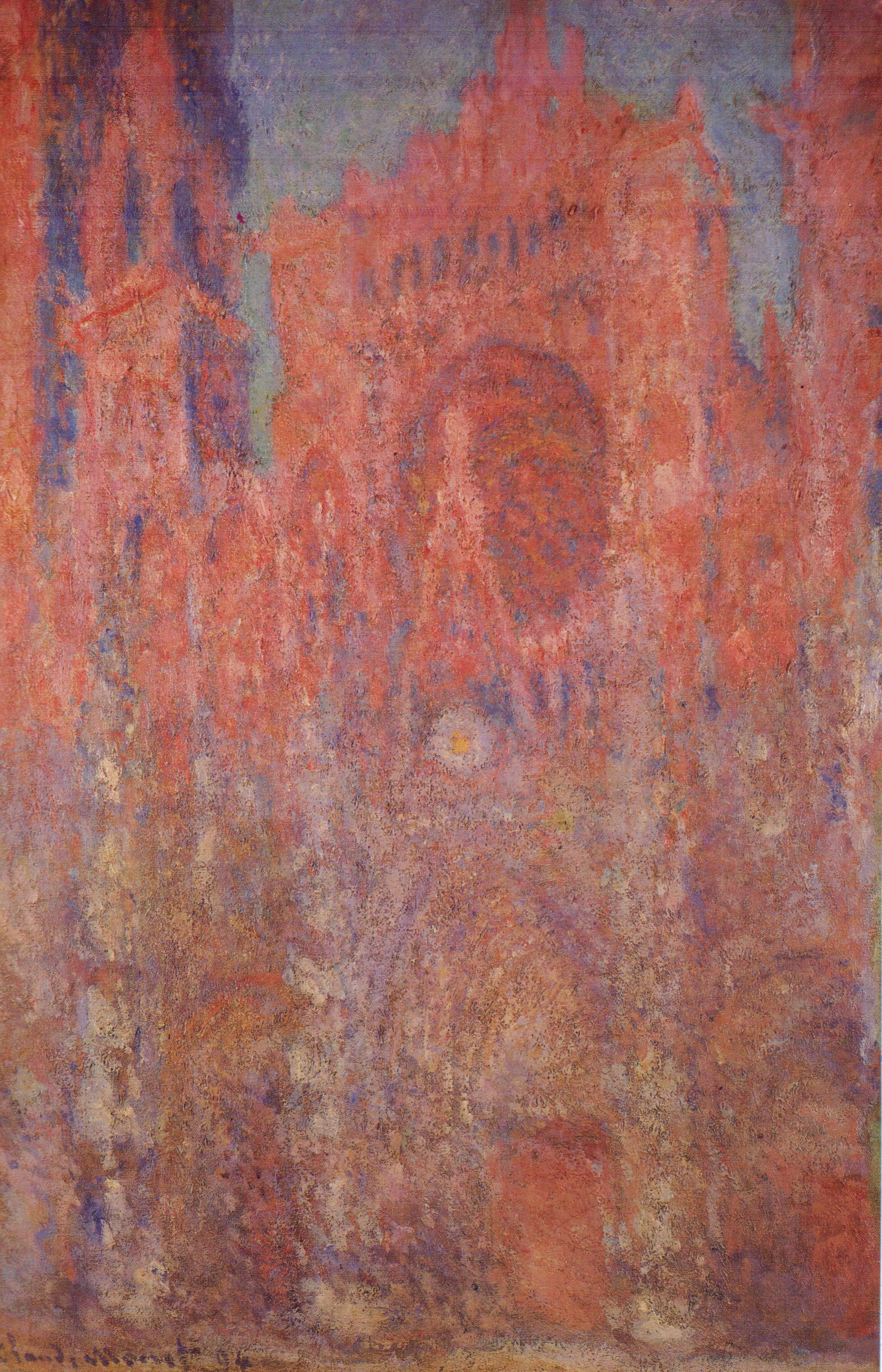
Rouen Cathedral, Portal
Claude Monet · 1892–94
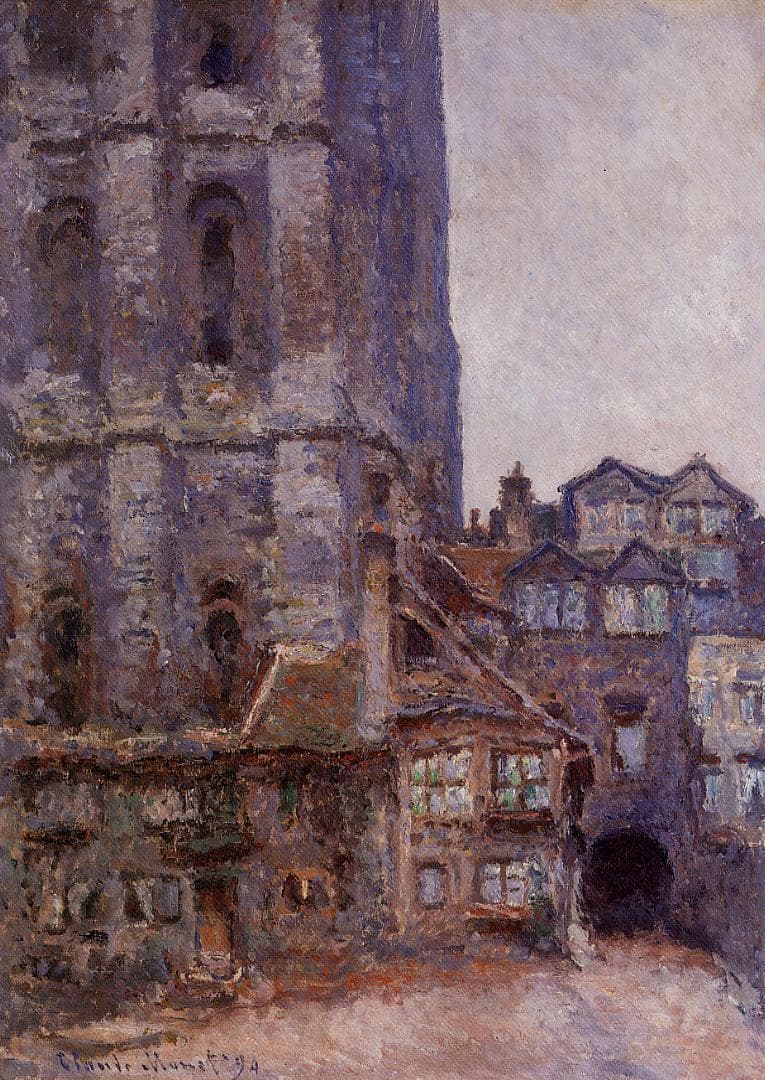
La Cour d'Albane, temps gris
Claude Monet · 1892–94
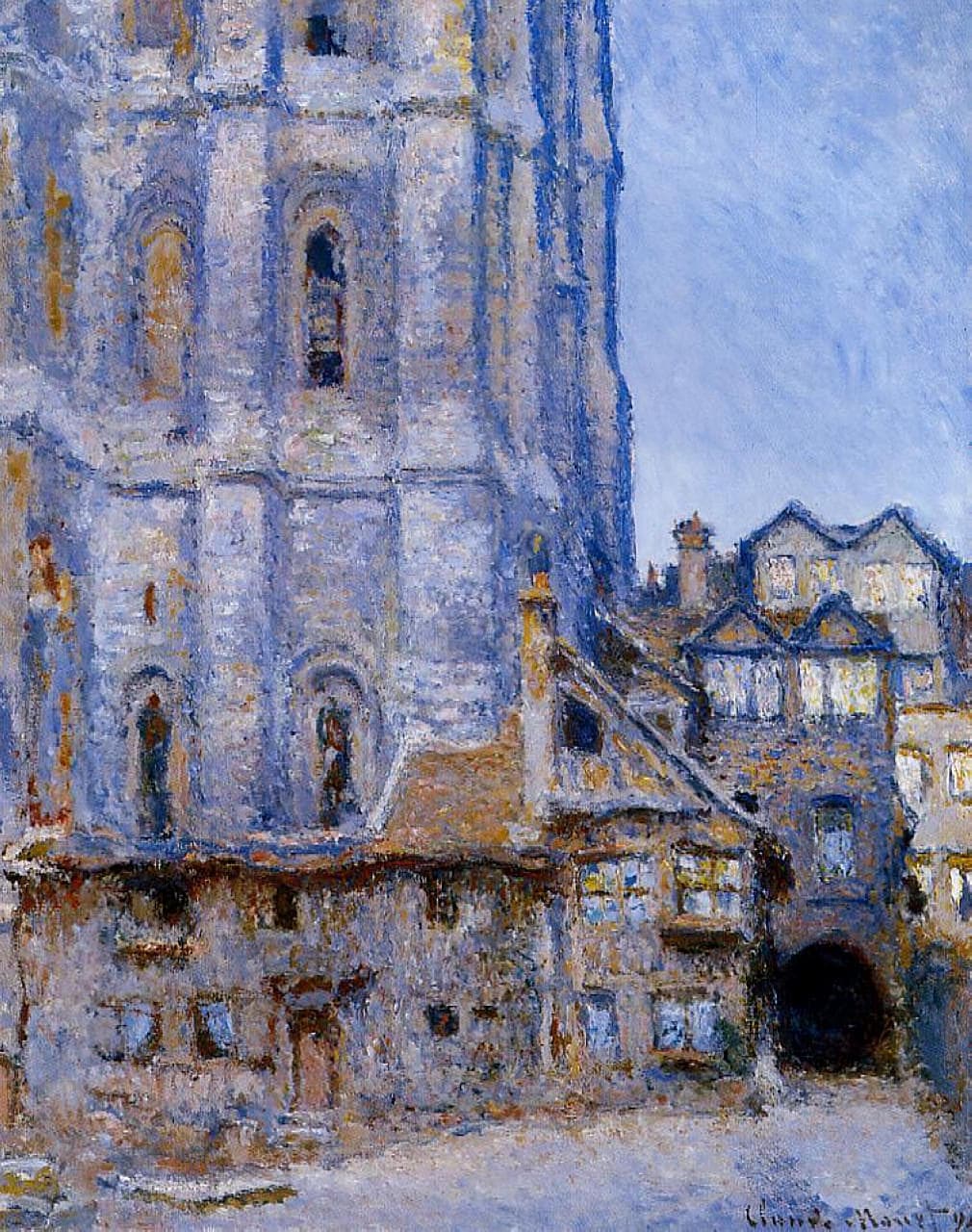
La Cour d'Albane, Rouen
Claude Monet · 1892–94
Kindred works
You may also study
Rouen Cathedral, Sunlight Effect, End of the Day
Claude Monet · 1892
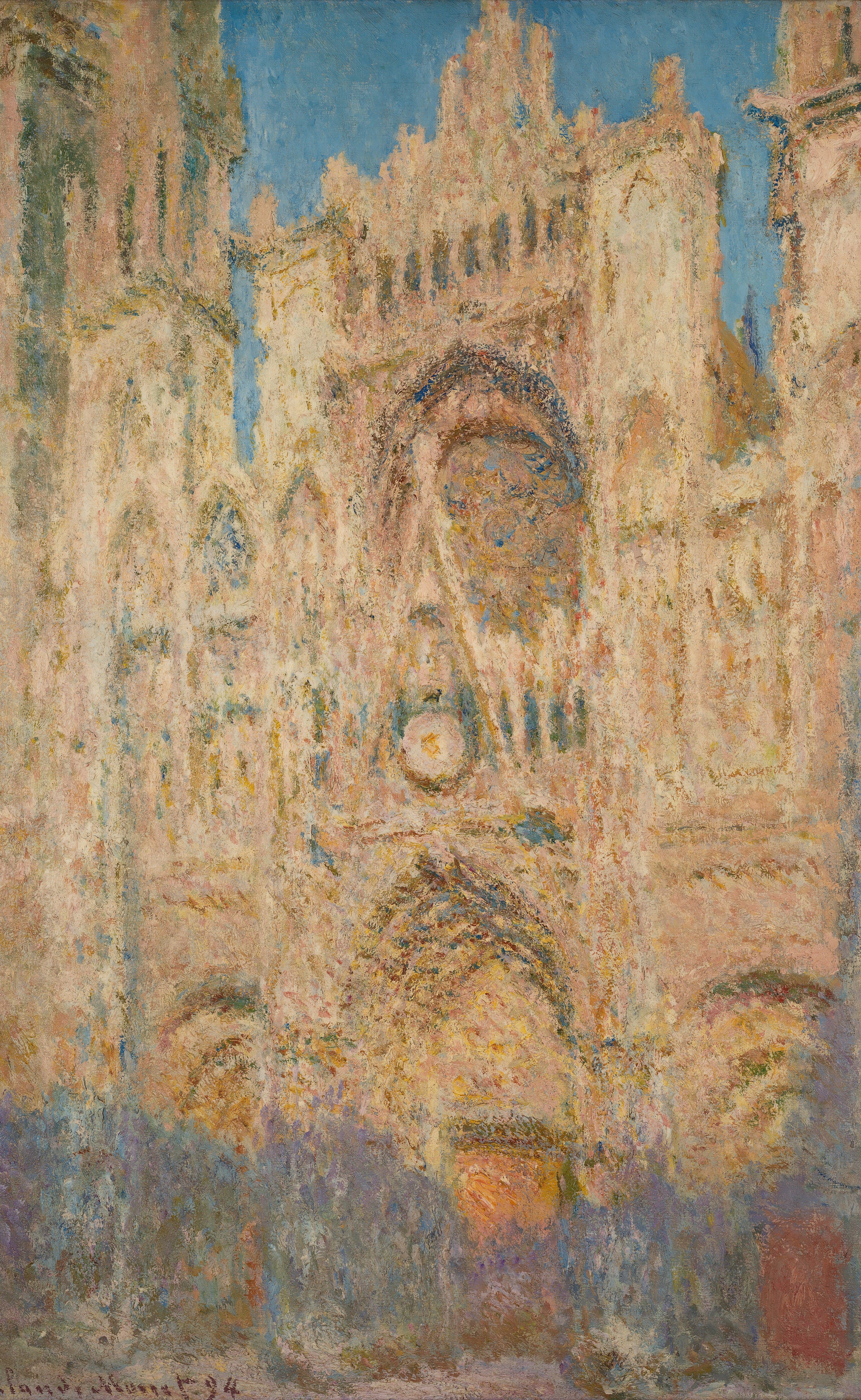
Rouen Cathedral, Evening
Claude Monet · 1894
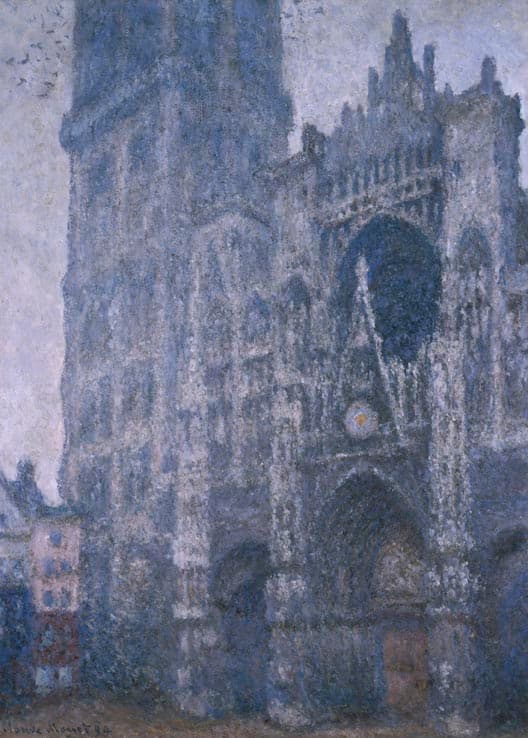
Rouen Cathedral, the Portal, Grey Weather
Claude Monet · 1892–94

Sunset in Venice
Claude Monet · 1908–12
Rouen Cathedral, the Portal and the Tour d'Albane, Grey Weather
Claude Monet · 1893–94
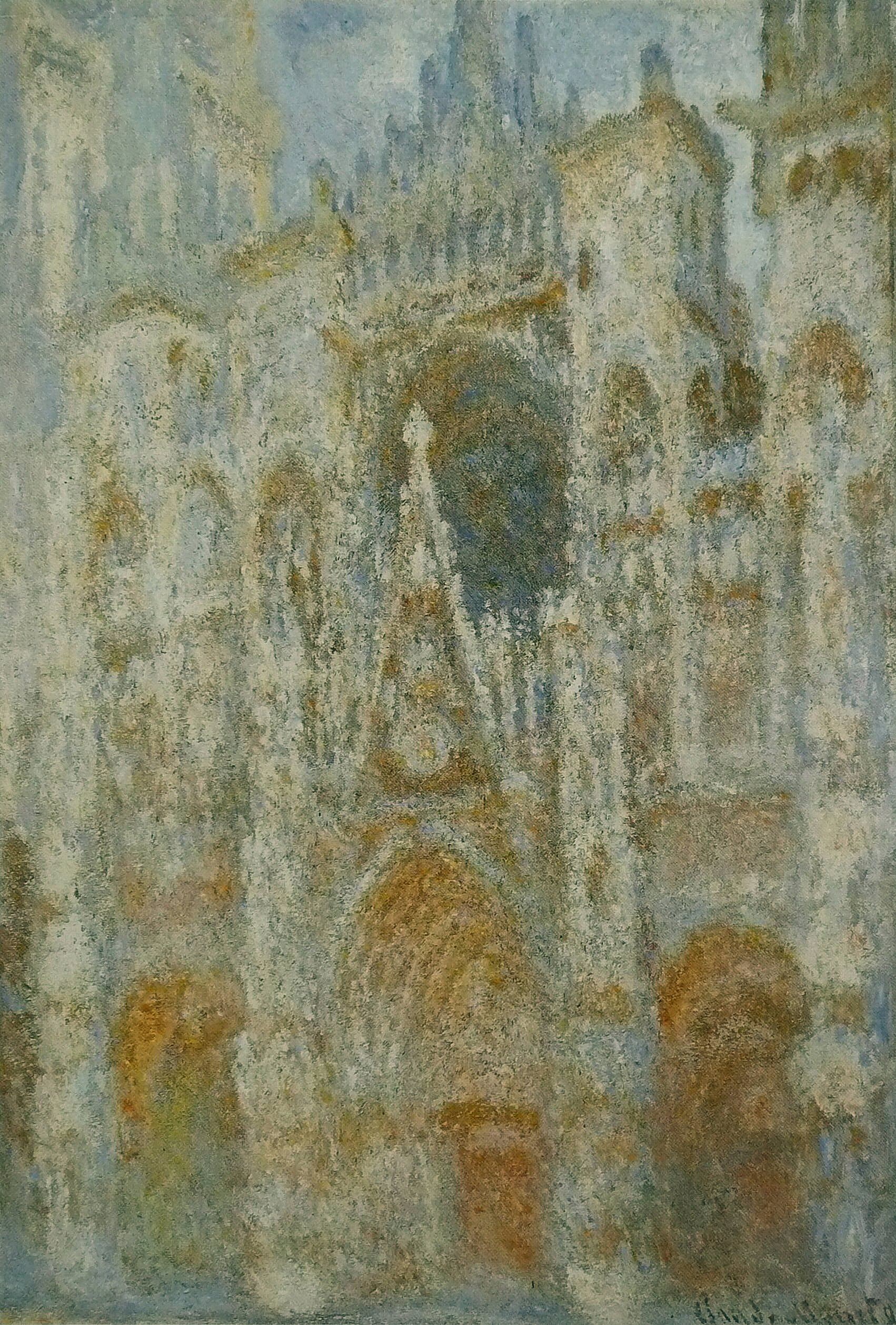
Rouen Cathedral, the Portal, Morning Sun (Harmony in Blue)
Claude Monet · 1893–94
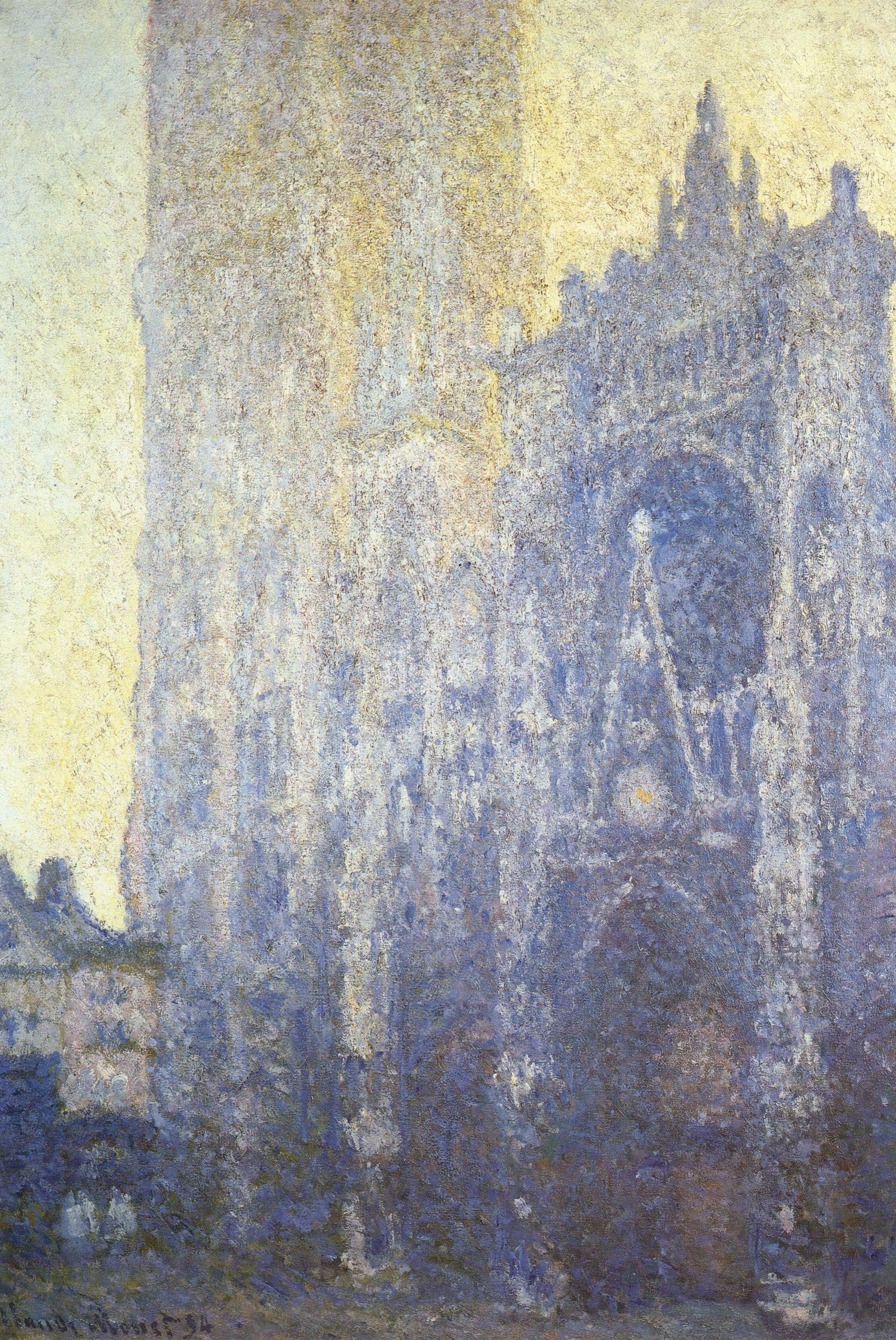
Rouen Cathedral, the Portal, Morning Effect
Claude Monet · 1893–94
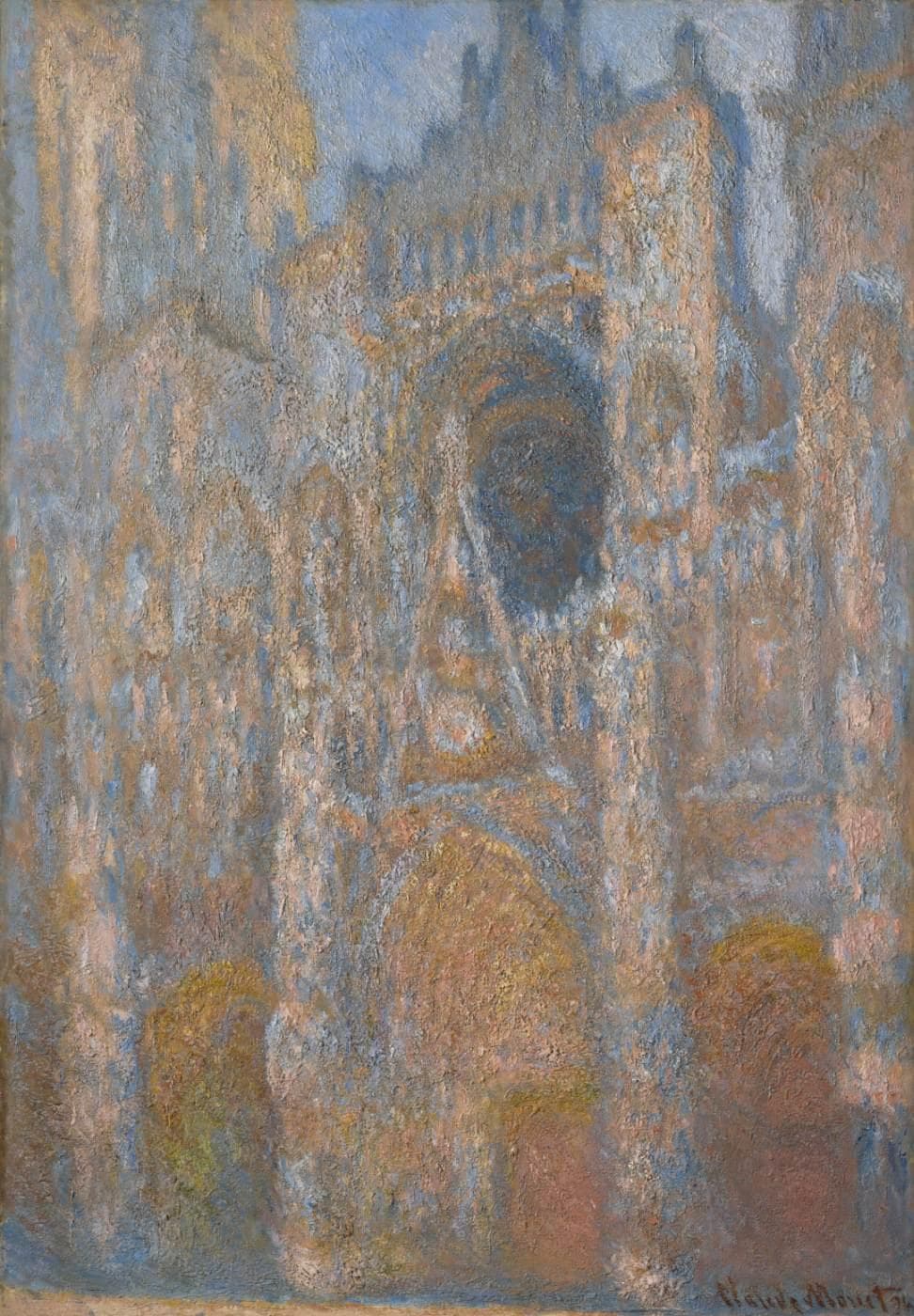
Rouen Cathedral in Sunlight
Claude Monet · c. 1892–94