Image: Museum of Modern Art, Saitama · Public domain · via Wikimedia Commons
Grainstacks at Giverny, the Evening Sun
Claude Monet, 1888–89
Grainstacks at Giverny, the Evening Sun (1888–89) is Claude Monet's view of two grainstacks glowing red against a blazing orange sunset sky. It is one of the direct prototypes of his Haystacks series, in the Museum of Modern Art, Saitama, Japan.
- Artist
- Claude Monet
- Date
- 1888–89
- Medium
- Oil on canvas
- Dimensions
- 65 × 92 cm
- Collection
- Museum of Modern Art, Saitama, Saitama, Japan
- Movement
- Impressionism
- Catalogue
- Wildenstein 1213
- Nature & Landscape
Grainstacks at Giverny, the Evening Sun (Les Meules à Giverny, soleil couchant) is one of three canvases Claude Monet painted in 1888–89 from the same spot in a field near his house, each under a different light. Here the sun is setting: two grainstacks stand side by side against a sky of burning orange, gold and rose, their sunlit faces glowing red, while the hills across the valley turn blue-gray and the frosted field catches flecks of color. It belongs to the Museum of Modern Art, Saitama, Japan.
What you are looking at
The canvas is wide, about 65 by 92 cm. Two stacks occupy the lower half. The larger, at left, has a tall pointed thatch above a squat cylindrical base; the smaller stands at right, further back. Both are lit from behind and to the left by the low sun, so their thatched roofs glow in orange and rose, their bases burn deep red and vermilion, and their shaded sides drop into violet.
Behind them a long ridge of hills runs across the picture, painted in cool blue, lilac and gray, with pale suggestions of houses and trees at its foot. Above, the sky is the most intense passage: bands of orange, yellow and pink, brightest just above the hills, worked in quick horizontal and diagonal strokes. The field in the foreground is a mottled mix of green, rose and blue, as if traces of frost were catching the sunset. The signature is at lower left.
Where and when it was painted
In the autumn and winter of 1888–89, Monet returned to the grainstacks in the fields near his house at Giverny, but now in a new way. He dropped the poplars and figures of his mid-1880s meadow scenes, moved in close and painted two stacks against the low hills on the far side of the valley, under specific effects of light: sunset, morning, white frost. Three canvases (Wildenstein 1213–1215) share almost exactly the same viewpoint and composition. These pictures are the direct prototypes of the Haystacks series of 1890–91, the work that made Monet famous. The stacks stood in a field next to Monet's property, belonging to a local farmer. See our Giverny hub for the setting.
How it was painted
The picture is built on the contrast of complementary colors: hot orange and red in the stacks and sky against the cool blue and violet of the hills and shadows. Monet laid the paint thickly in the sky and on the stacks' lit edges, more thinly in the hills. The brushwork follows form: curving on the thatch, horizontal in the sky and field. Compared with the later series, the stacks are more fully described, their structure of roof and base clearly drawn.
How this version differs
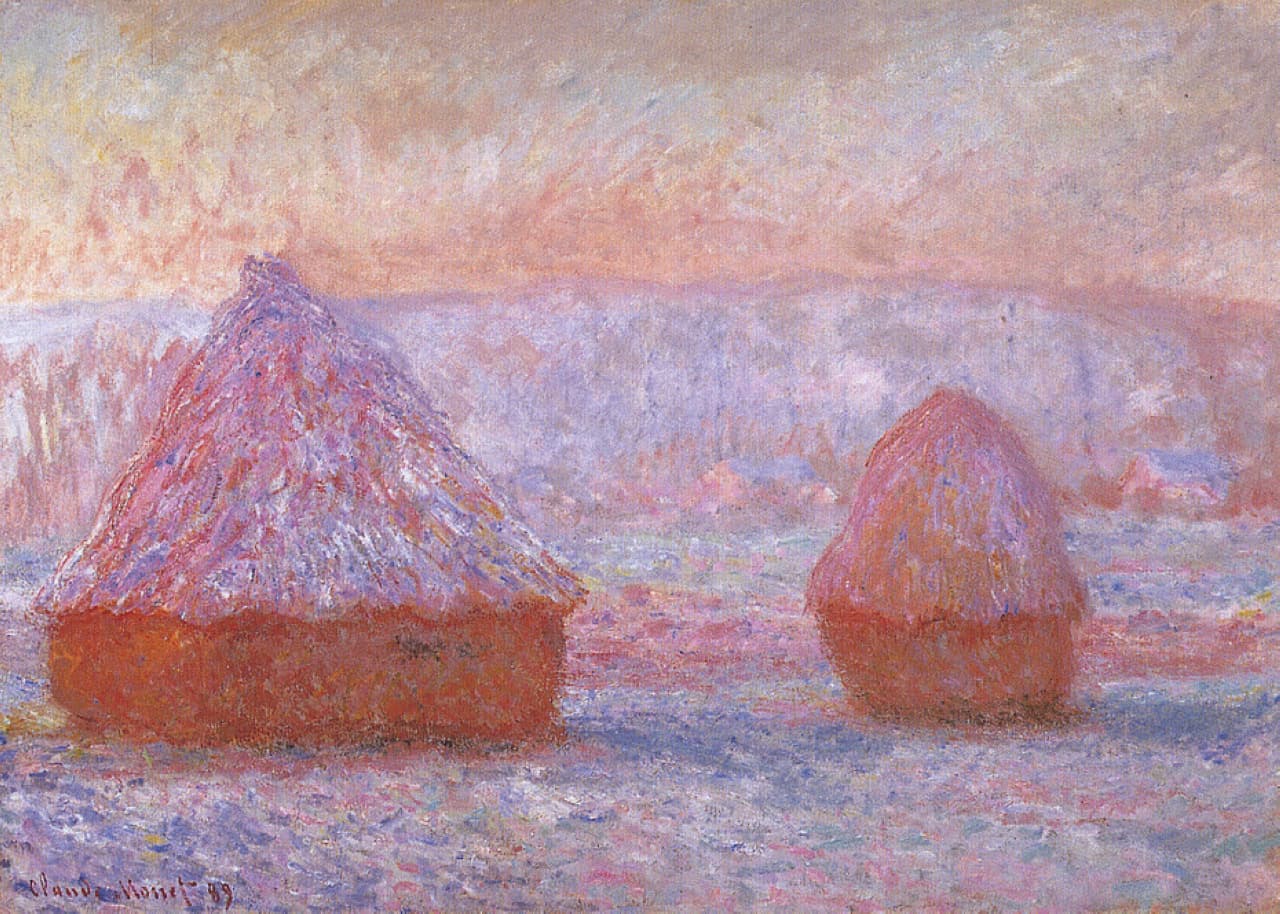
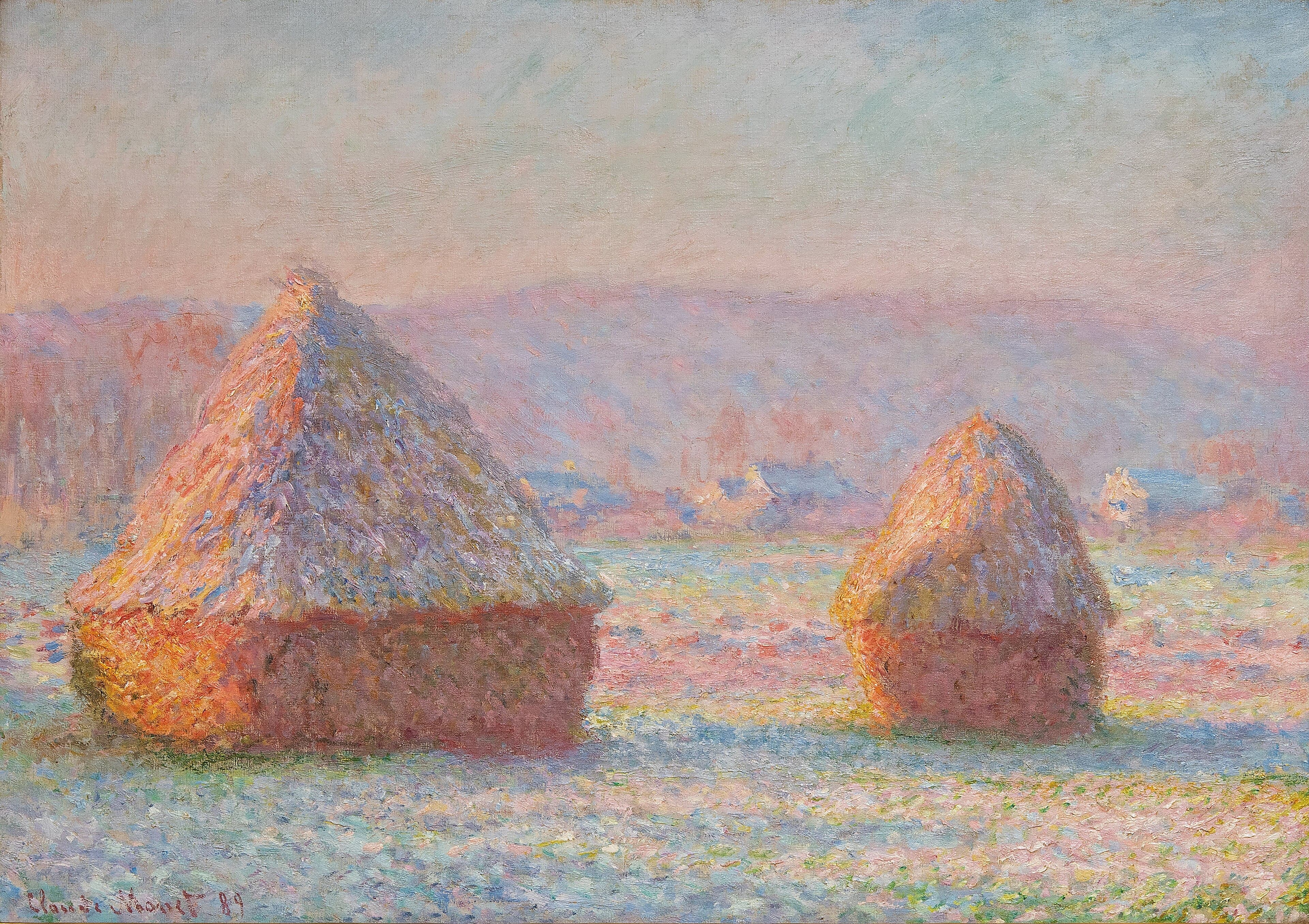
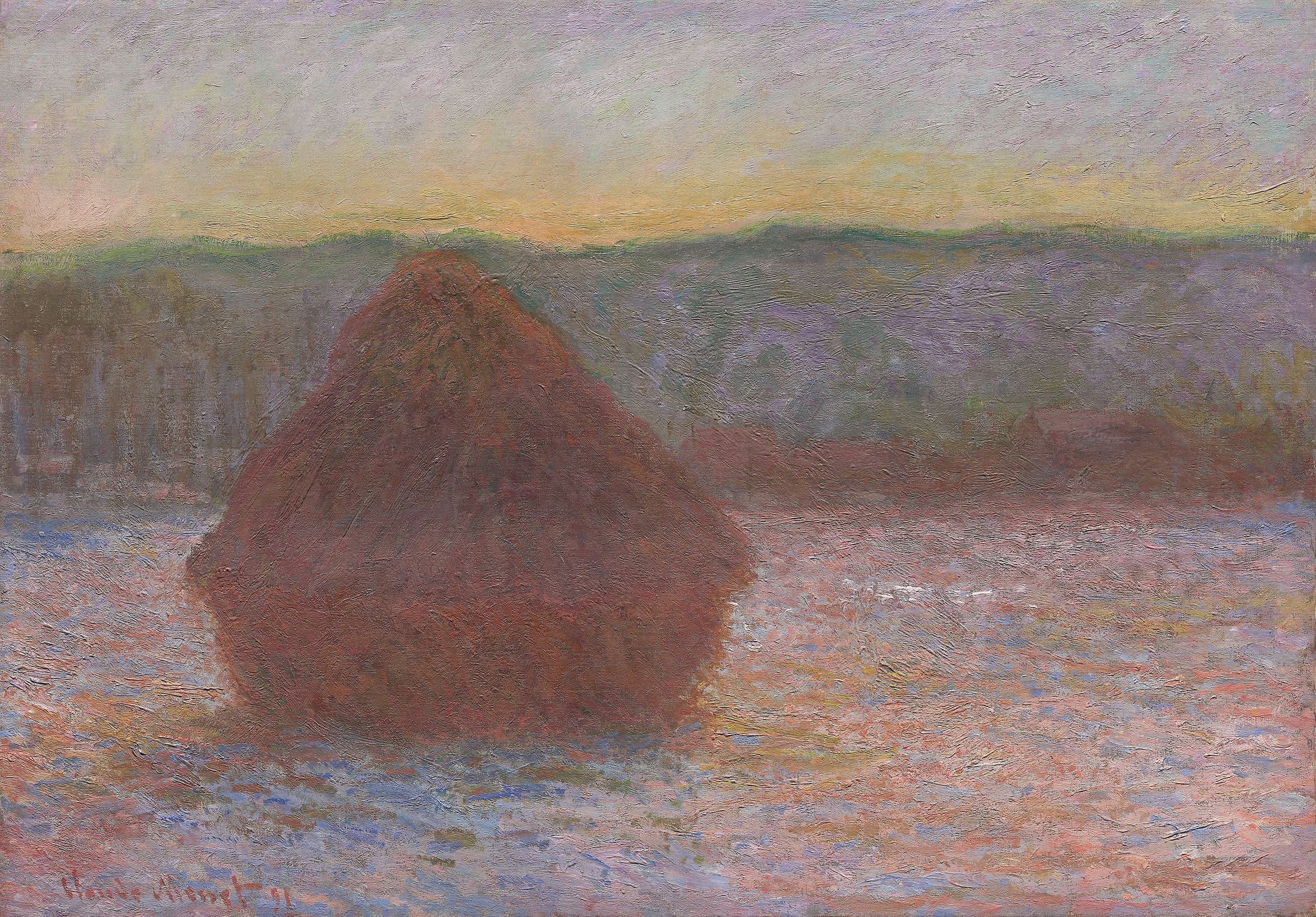
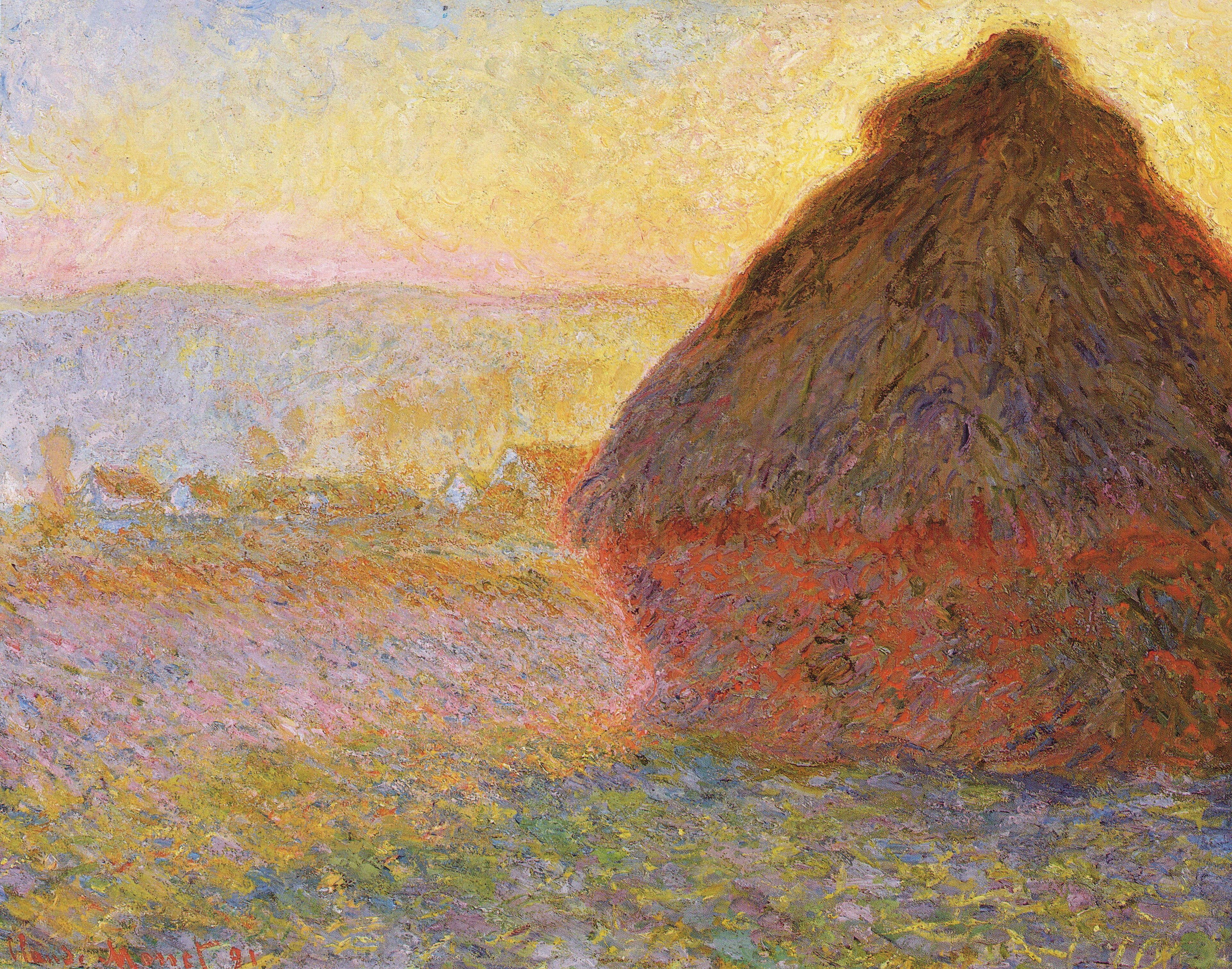
The three 1888–89 canvases are like a short sequence of the same view through a day. This is the evening; Les Meules, Giverny, effet du matin shows the same two stacks in a pink morning haze; and Grainstacks, White Frost Effect at Hill-Stead shows them in frost under low morning sun. Of the three, the Saitama picture has the most saturated color. Compare it with the sunset pictures of the 1890–91 series, such as the Art Institute of Chicago's Stack of Wheat (Thaw, Sunset) or the MFA's Grainstack (Sunset), where the stacks become darker, simpler silhouettes.
A field next to the garden
The grainstacks Monet painted stood in a field next to his property and belonged to a farmer neighbor, Monsieur Quéruel. In 1890 his stepdaughter Blanche Hoschedé would help him carry canvases out to the same field by wheelbarrow, so that he could switch between them as the light changed. The 1888–89 pictures are the first record of that working method on this motif: the same view, a fixed easel position, and a separate canvas for each effect of light.
Where to see it
The Museum of Modern Art, Saitama, in Kita-Urawa Park, collects Western and Japanese modern art and owns this Monet as one of its key works. Display rotates, so check its program. See also where to see Monet's paintings.
Questions & answers
Where is Monet's Grainstacks at Giverny, the Evening Sun?
In the Museum of Modern Art, Saitama, in Kita-Urawa Park, Saitama, Japan. Display rotates with the museum's program, so check before visiting.
When was it painted?
In the autumn or winter of 1888–89, in a field near Monet's house at Giverny, about two years before his famous Haystacks series of 1890–91.
What does the painting show?
Two grainstacks glowing red and orange in the light of a setting sun, with a blazing sky of orange and pink above and the blue hills of the Seine valley behind.
How is it related to the Haystacks series?
It is one of three canvases of 1888–89 painting the same two stacks from the same viewpoint under different light: evening, morning and white frost. These were the prototypes for the 1890–91 series, in which Monet carried the idea through some 25 canvases.
More by the artist
Claude Monet
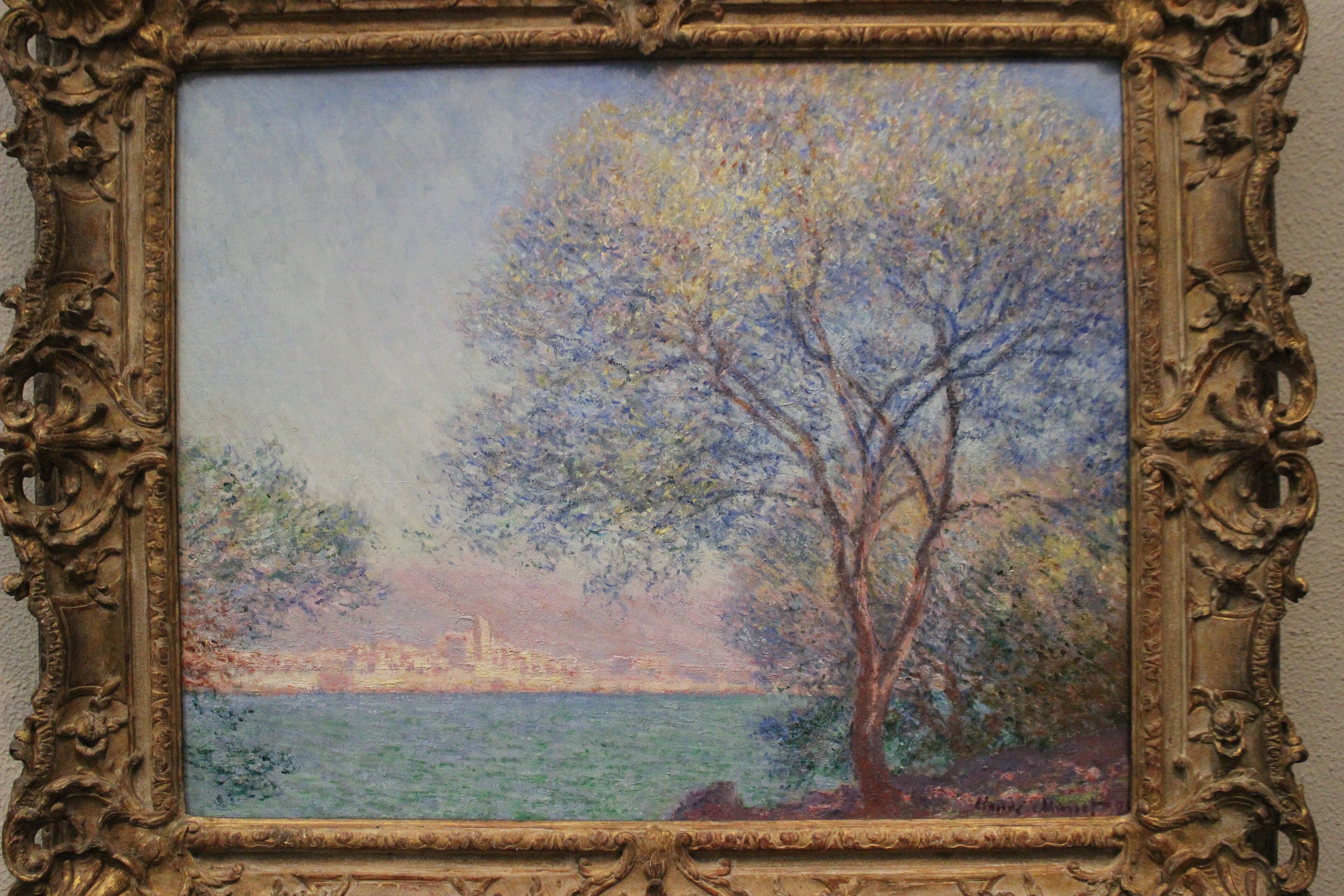
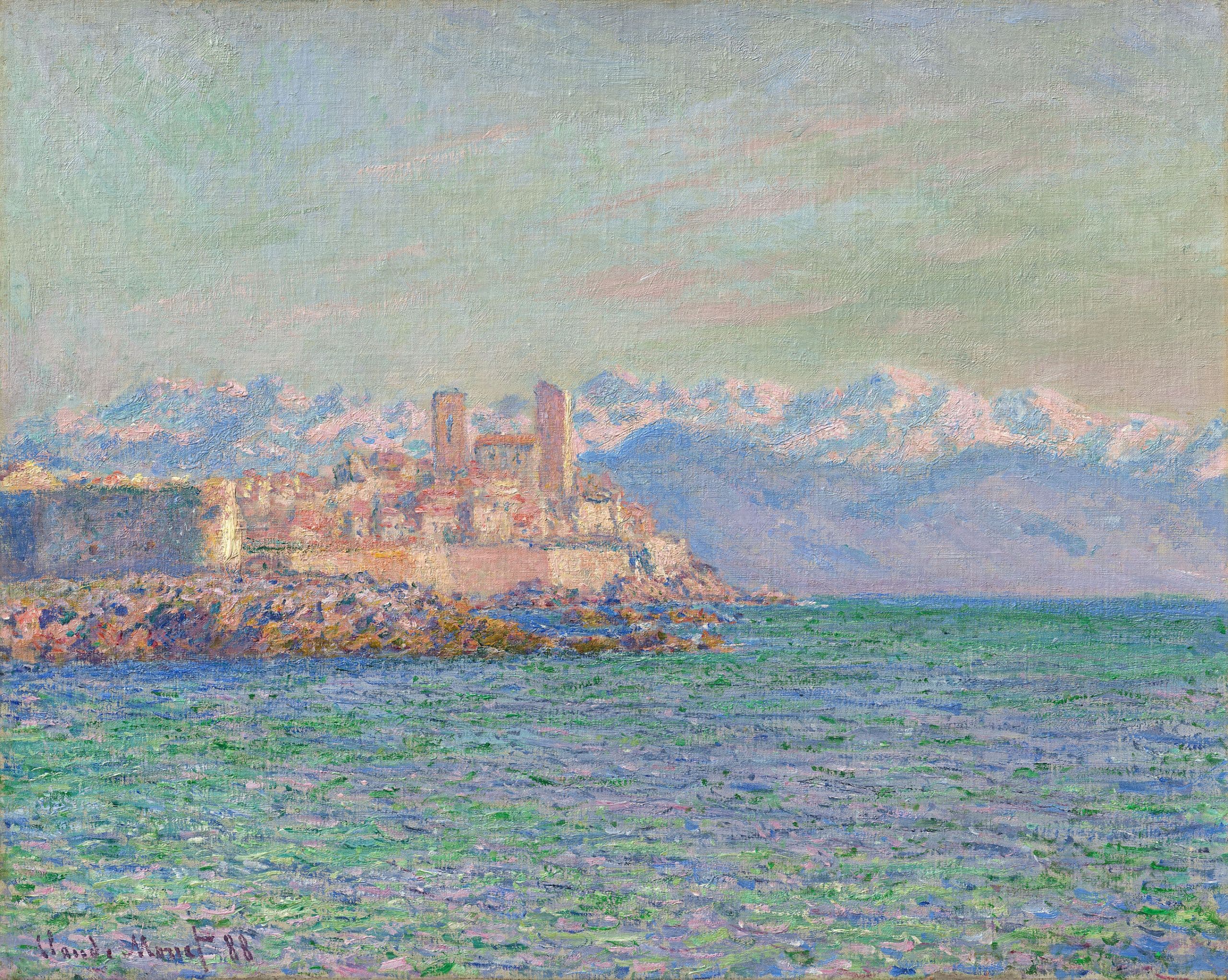
Morning at Antibes
Claude Monet · 1888
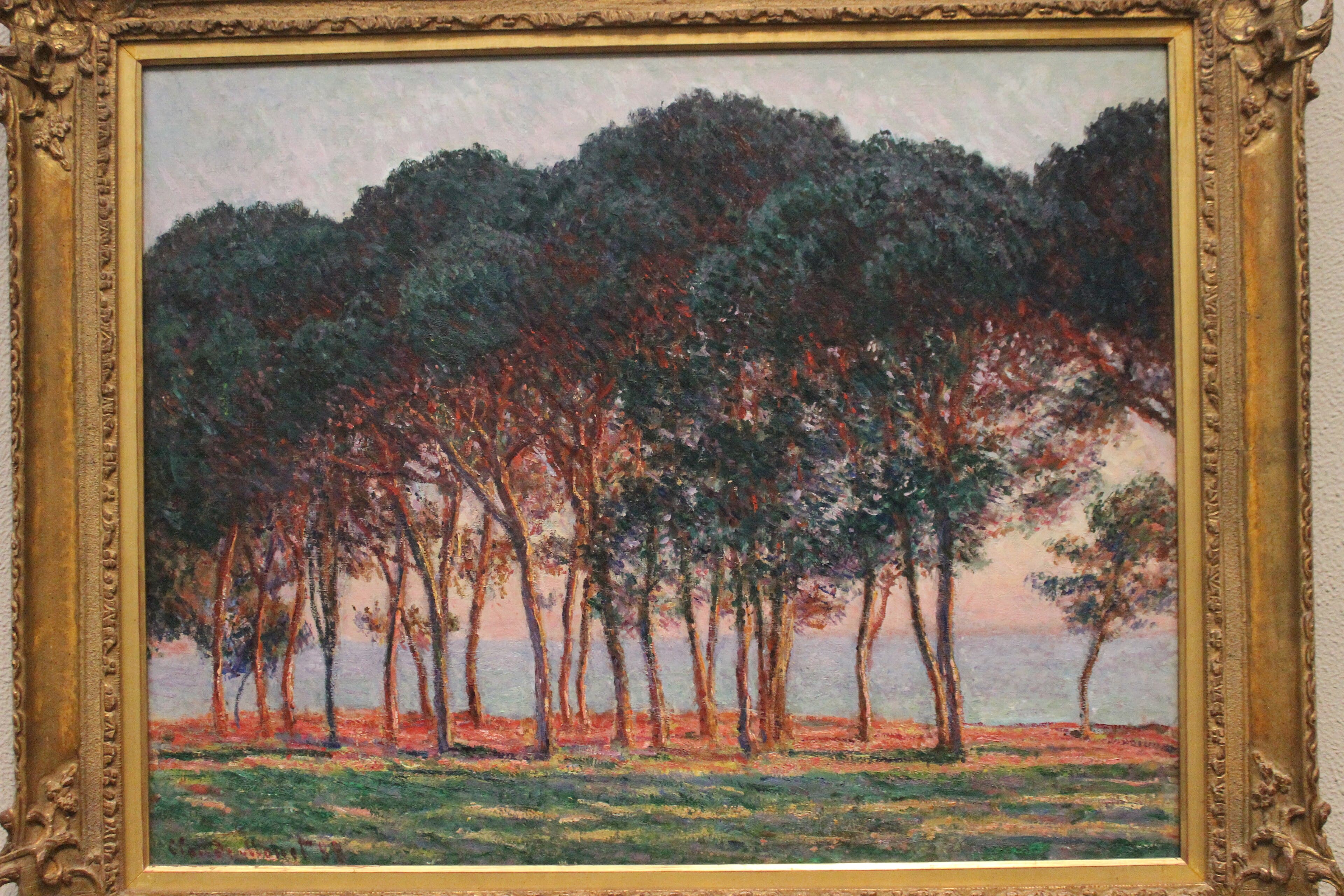
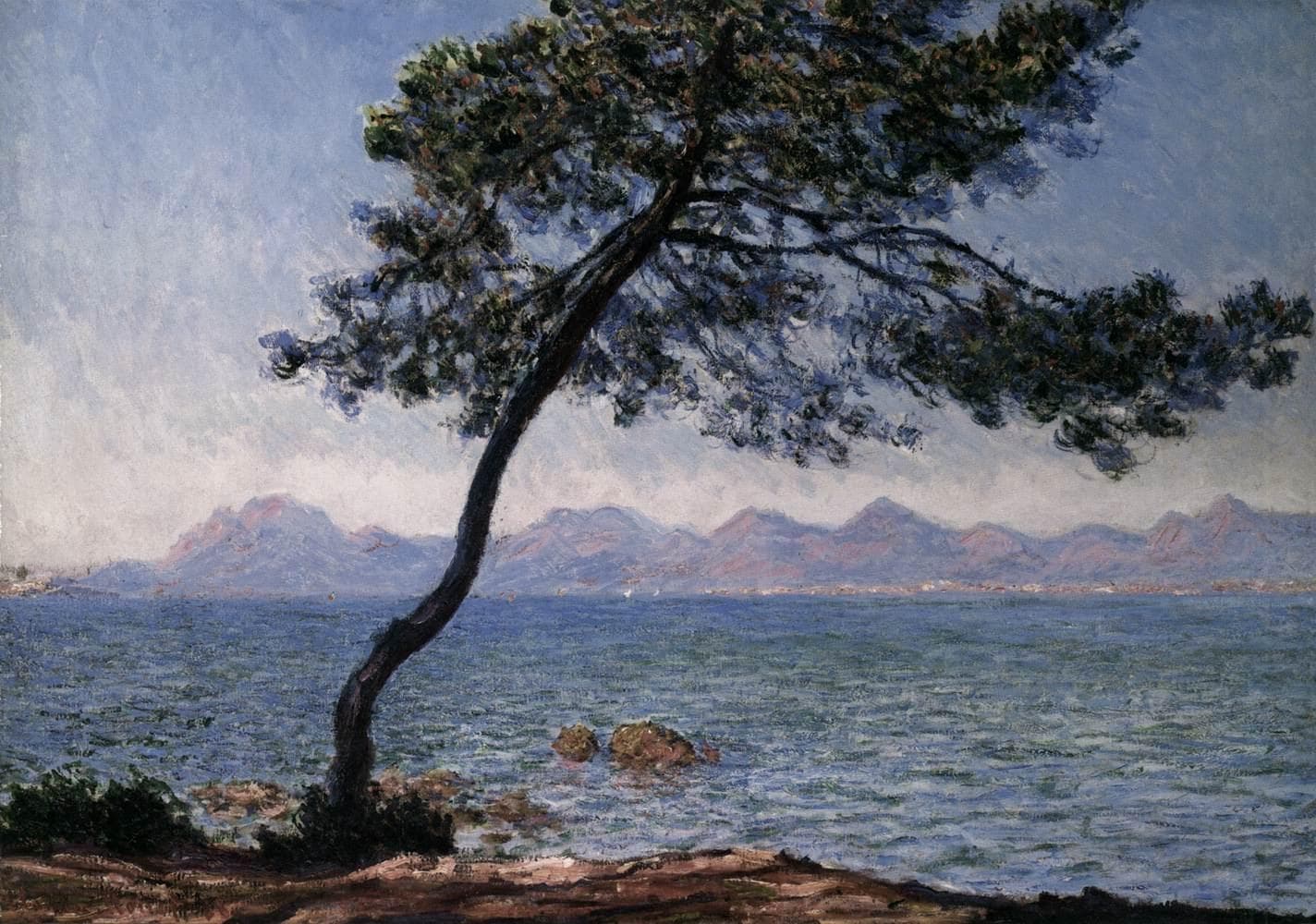
Under the Pines, Evening
Claude Monet · 1888
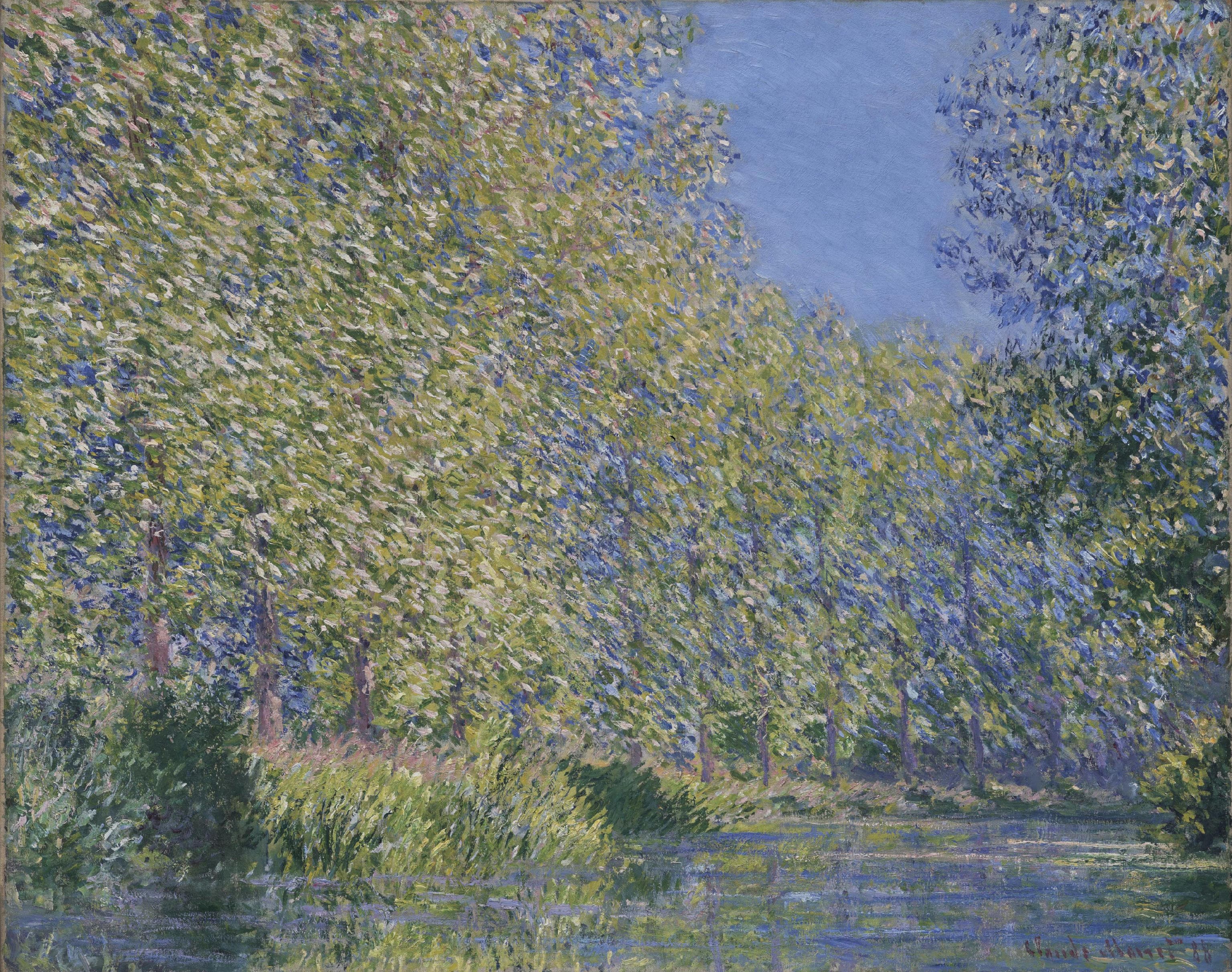
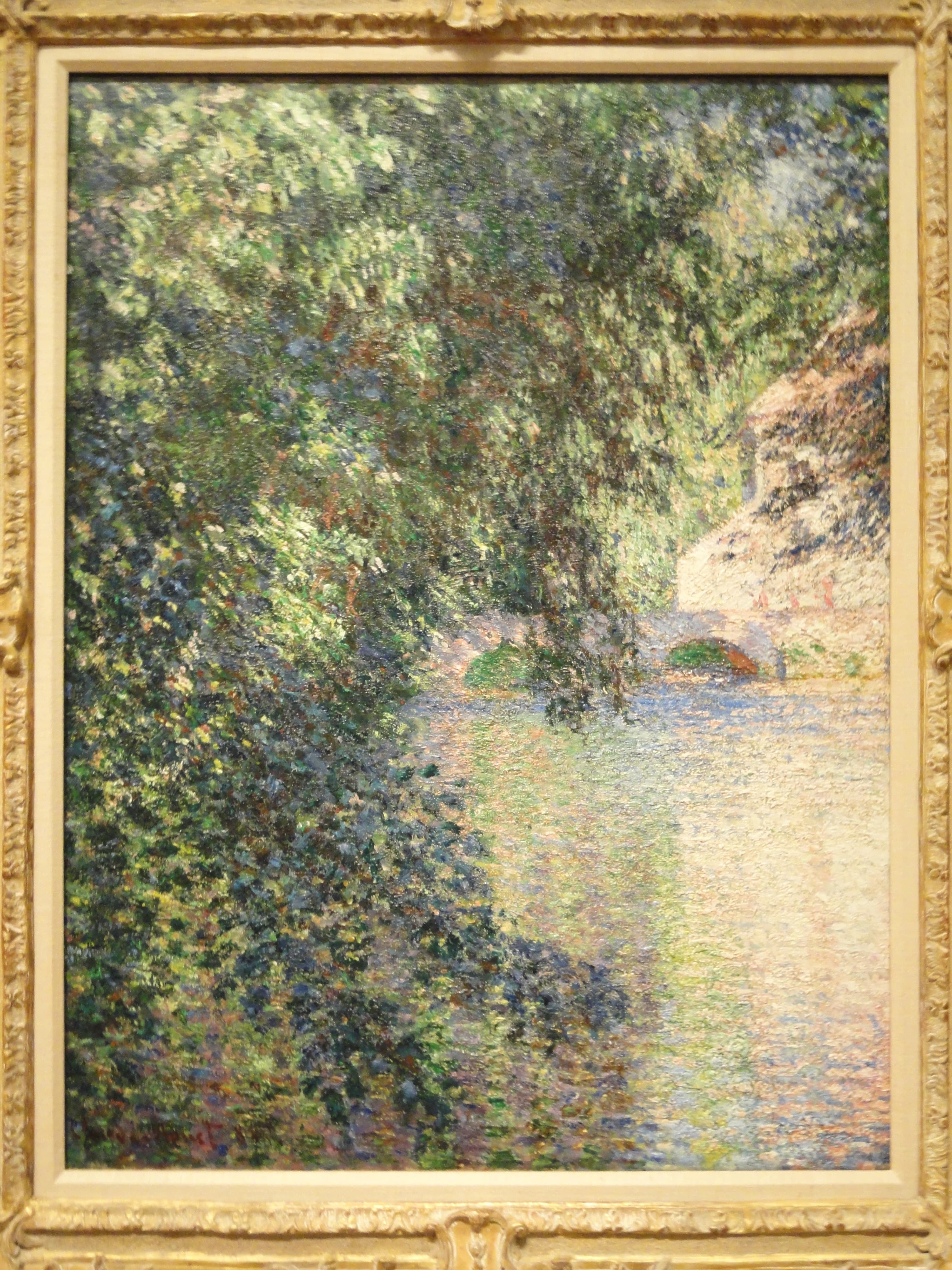
Bend in the Epte River near Giverny
Claude Monet · 1888
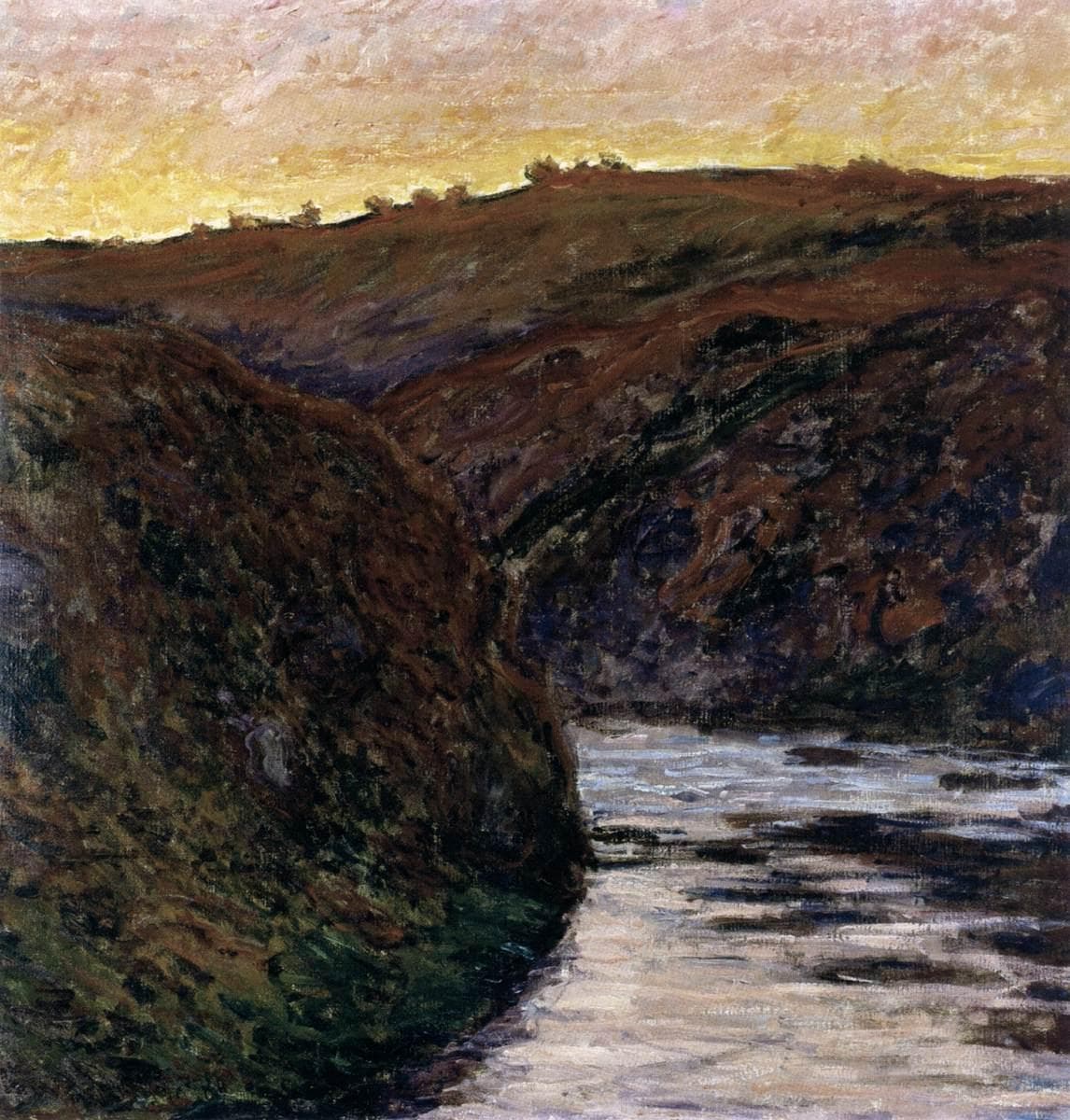
The Creuse, Sunset
Claude Monet · 1889
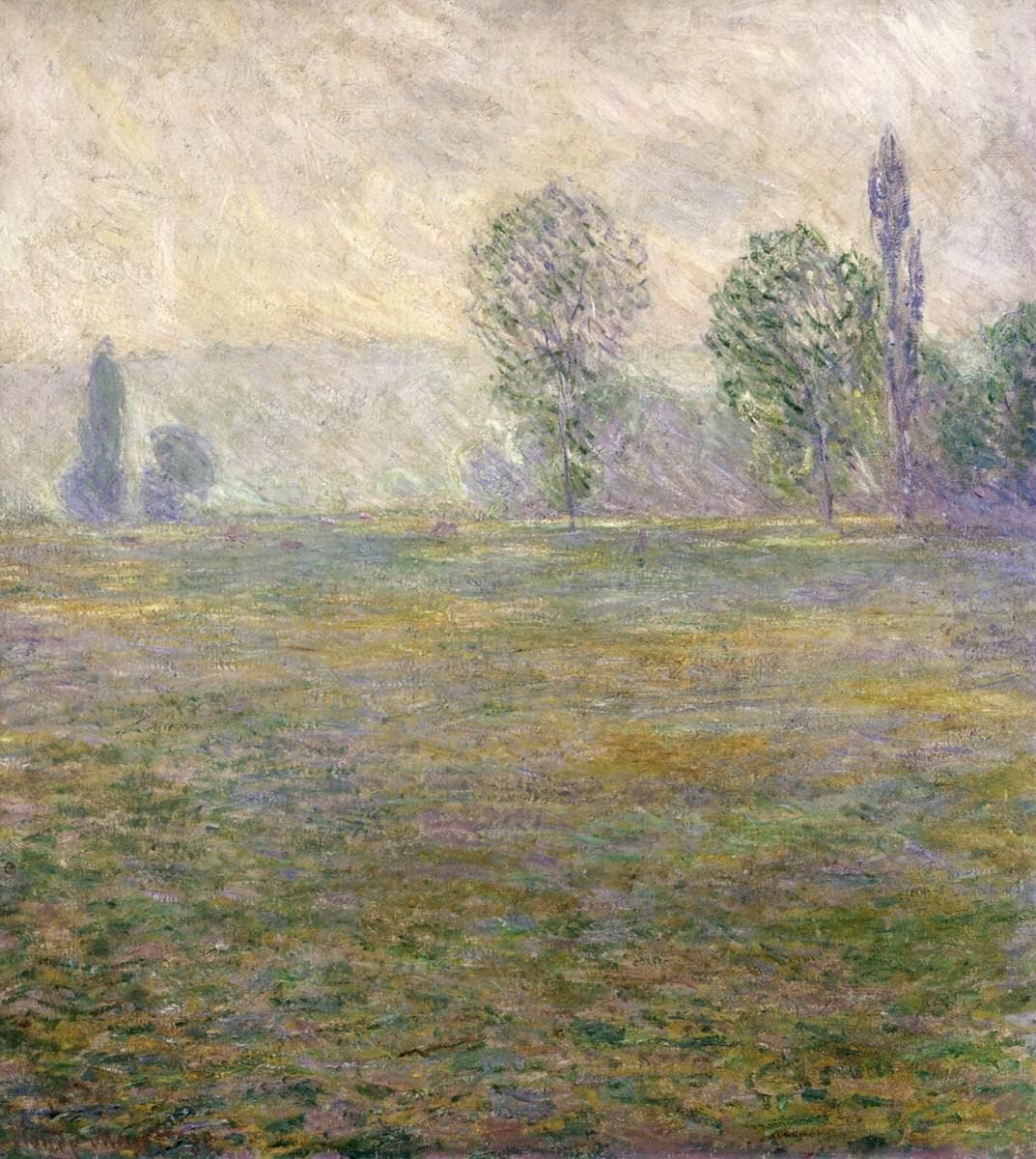
Meadow at Giverny
Claude Monet · 1888
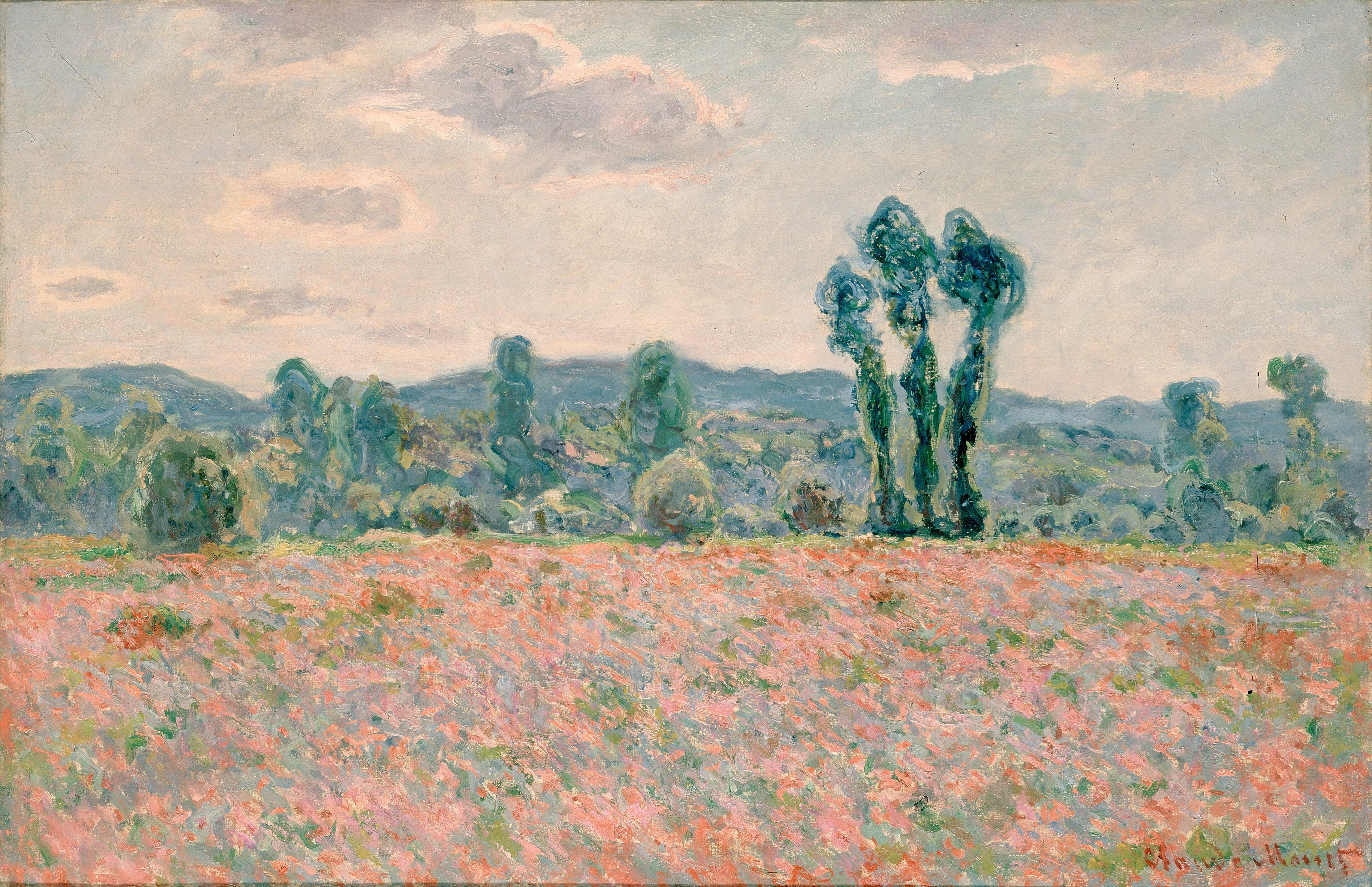
Poppy Field
Claude Monet · c. 1890
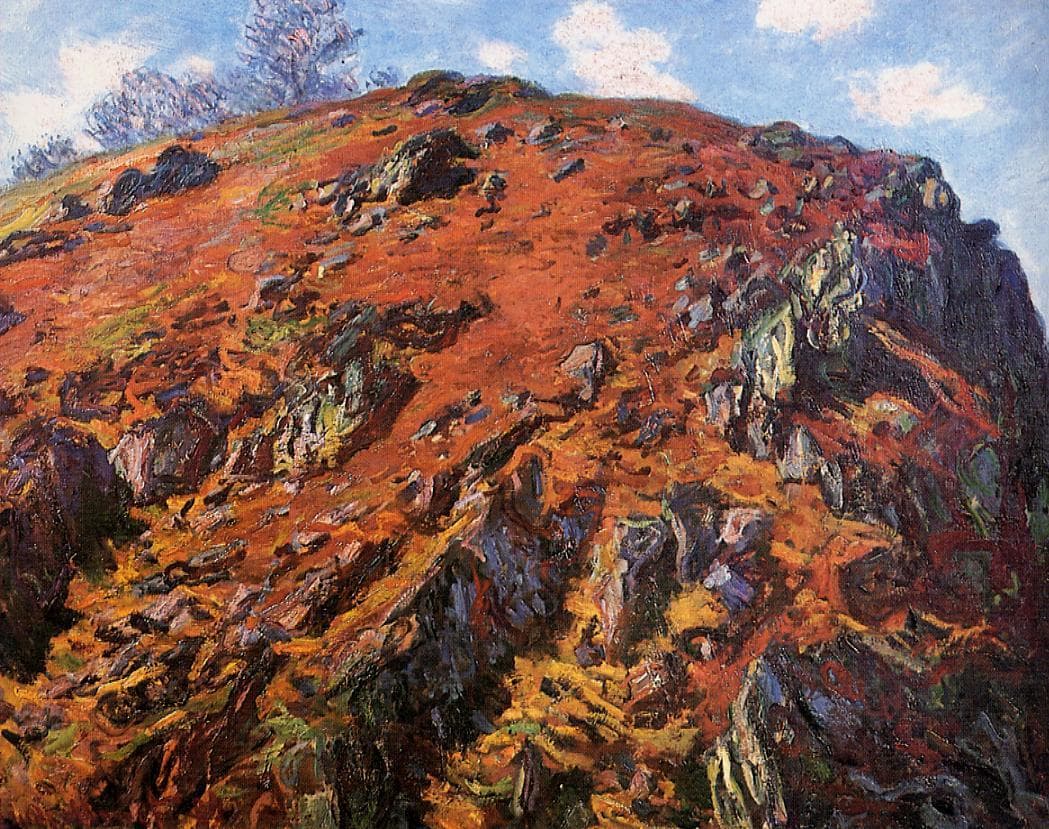
Study of Rocks, Creuse ('Le Bloc')
Claude Monet · 1889
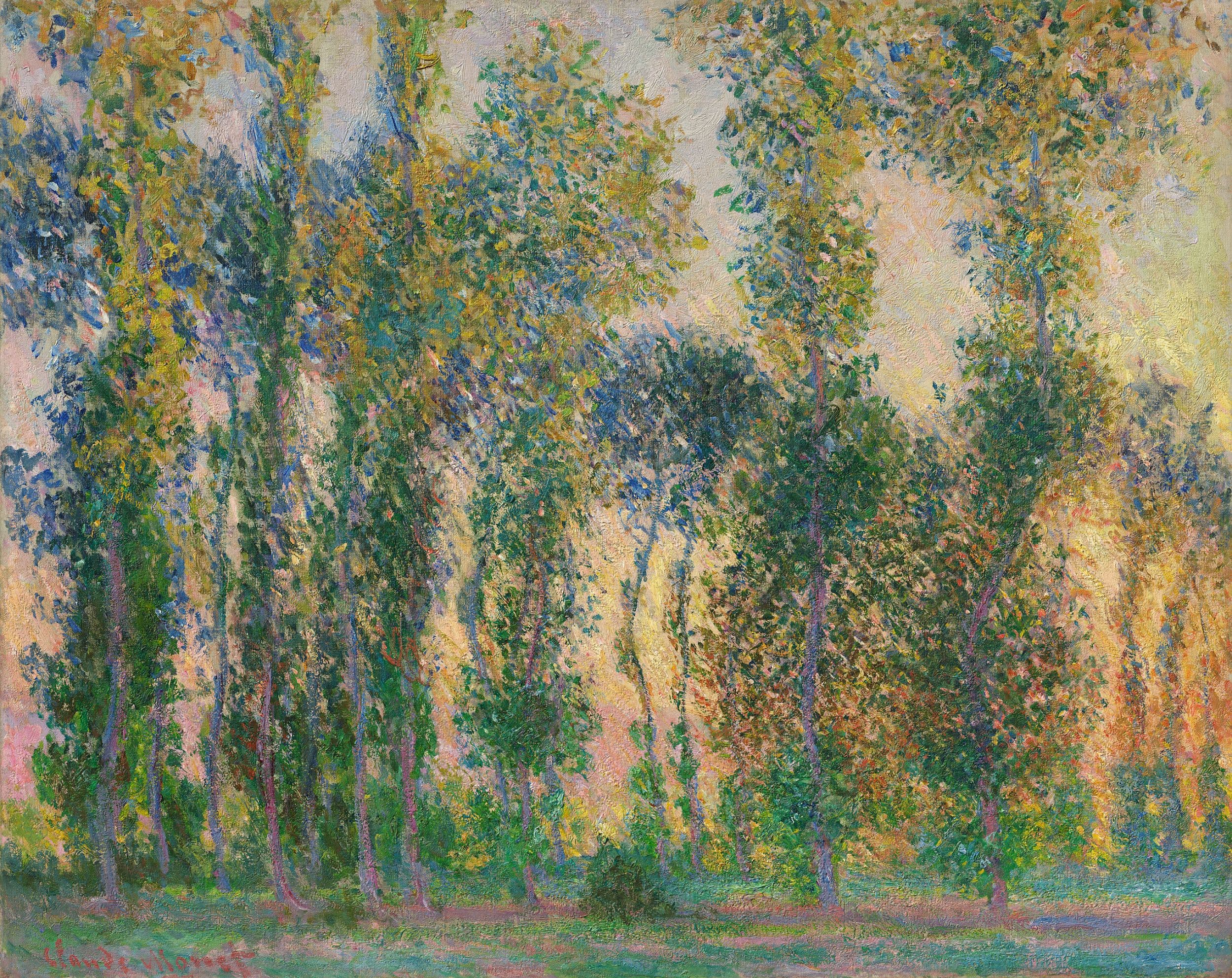
Poplars at Giverny
Claude Monet · 1887
Also painted in 1888
The same year
Kindred works
You may also study
Grainstacks at Giverny, Morning Effect
Claude Monet · 1889
Grainstacks, White Frost Effect
Claude Monet · 1888–89
Grainstack at Giverny
Claude Monet · 1889
Stack of Wheat (Thaw, Sunset)
Claude Monet · 1890–91
Grainstack (Sunset)
Claude Monet · 1891
The Railway Bridge at Argenteuil
Claude Monet · c. 1873–74
Garden at Sainte-Adresse
Claude Monet · 1867
The Seine at Argenteuil
Claude Monet · 1873