Image: Private collection · Public domain · via Wikimedia Commons
Poplars on the Banks of the Epte, Autumn
Claude Monet, 1891
Poplars on the Banks of the Epte, Autumn is an 1891 Claude Monet painting from his Poplars series: a tall row of trees in rust, coral and gold, their green-wrapped trunks doubled in the Epte. It is in a private collection.
- Artist
- Claude Monet
- Date
- 1891
- Medium
- Oil on canvas
- Collection
- Private collection
- Movement
- Impressionism
- Catalogue
- Wildenstein 1297
- Nature & Landscape
- Water & Sea
Peupliers au bord de l'Epte, automne (Poplars on the Banks of the Epte, Autumn) is a painting from Claude Monet's 1891 series of poplars on the river Epte near Giverny, catalogued by Wildenstein as no. 1297. It is a tall, narrow upright canvas, signed and dated Claude Monet 91 at the lower right, and it is in a private collection.
What you're looking at
The canvas is about one and a half times as tall as it is wide, and Monet fills it with trees. Six or seven poplars stand in a row along the riverbank, their trunks evenly spaced across the picture like the bars of a fence, rising from the water's edge to the top of the canvas. The trunks are pale pink and lilac, wrapped from bottom to top in clumps of blue-green and teal leaves, the ivy or shoots that grow along poplar trunks.
The crowns of the trees are in full autumn color. At the top of the canvas they form a broad canopy of rust, brick red, coral, orange and olive, painted in thick, flickering strokes, highest on the right and stepping down toward the left. Behind the trunks, a lower row of bushes and younger trees glows in orange and gold. Between them, the sky shows in pale cream and pink.
At the bottom, a dark band of blue and green grass marks the bank, and below that the Epte reflects the scene in orange, cream and blue, the trunks continuing downward as wavering green verticals. The signature, in red, is at the lower right.
The Poplars series
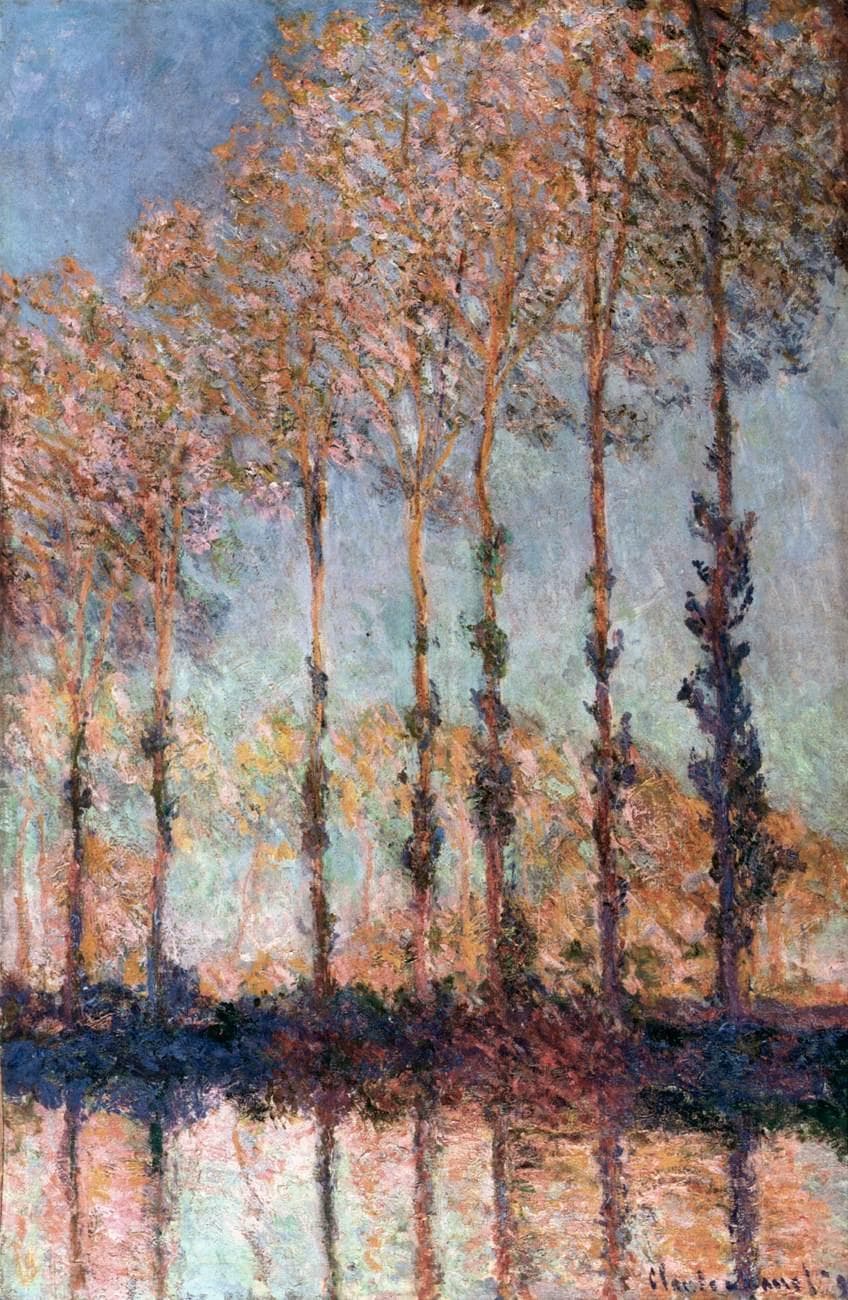
Monet painted the line of poplars on the Epte near Limetz in the summer and autumn of 1891 from his studio boat. When the commune sold the trees for timber, he arranged with the buyer to leave them standing until he had finished. This canvas belongs to the group in which the whole row is seen from close to, filling a tall canvas, like Philadelphia's Poplars on the Banks of the River Epte and the twilight Poplars on the Banks of the Epte, Dusk.
How it was painted
Monet builds the picture on a grid: the vertical trunks, evenly spaced, against the horizontal of the bank and the step-like line of the crowns. Within that structure the brushwork is loose and varied, short dabs in the foliage, long vertical strokes for the trunks and their green wrappings, horizontal touches in the water. The contrast between the cool blue-green trunks and the hot autumn crowns gives the picture its energy.
How this version differs
Most autumn canvases in the series show three trees, such as Poplars (Autumn). This one shows the whole row up close, and its crowns are deeper and redder, a late-autumn rust rather than pink. Compared with Row of Poplars in Autumn, which shows a similar row in gold against a gray sky, it is warmer and more saturated. See the whole series in the Poplars series and the countryside in Monet's Giverny.
Where to see it
The painting is privately owned and not on public view. For poplars from the series in public museums, including the Philadelphia Museum of Art, the Metropolitan Museum, Tate and the Musée d'Orsay, see where to see Monet's paintings and the Claude Monet page.
Questions & answers
Where is Monet's Poplars on the Banks of the Epte, Autumn?
It is in a private collection and not on public view. Related tall-format canvases of the row of poplars are in the Philadelphia Museum of Art and other museums.
When and where was it painted?
In autumn 1891, on the banks of the Epte near Limetz, a few kilometers upstream from Monet's home at Giverny (Wildenstein 1297).
What does it show?
It shows a close row of tall poplars, their pale trunks wrapped in blue-green leaves, with crowns in rust, coral and gold autumn color, reflected in the river Epte below.
Why did Monet paint the poplars so many times?
He used them, as he had the Haystacks, to study changing light, weather and season. He painted about two dozen canvases of the same trees in 1891, from summer green to late autumn.
More by the artist
Claude Monet
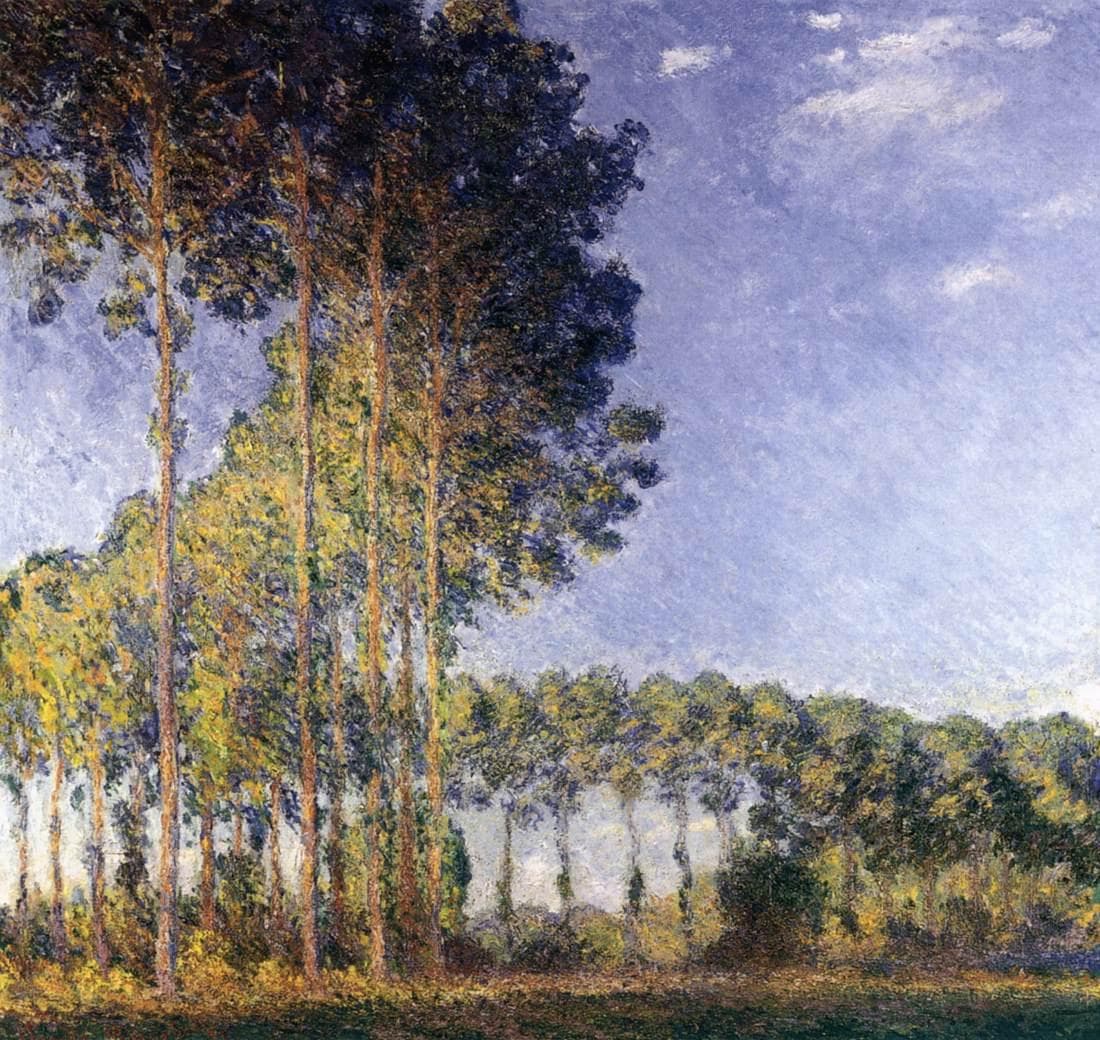
Poplars at the Banks of Epte
Claude Monet · 1891–92
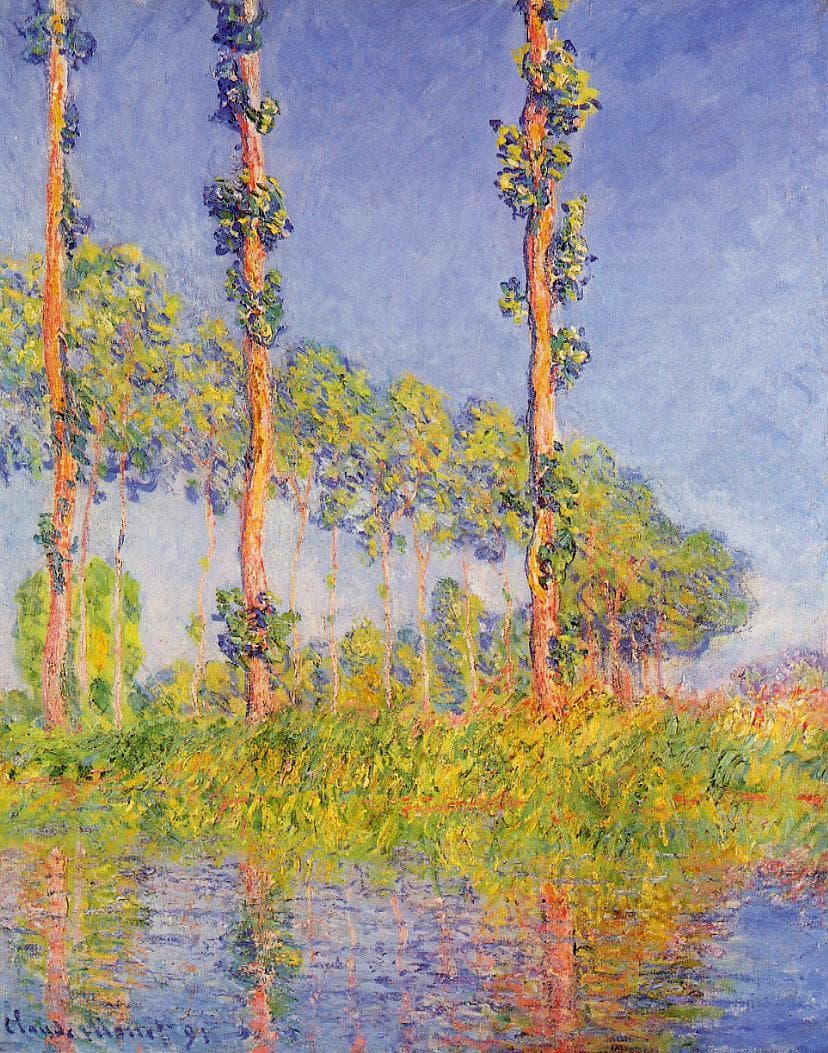
Three Poplars, Autumn Effect
Claude Monet · 1891
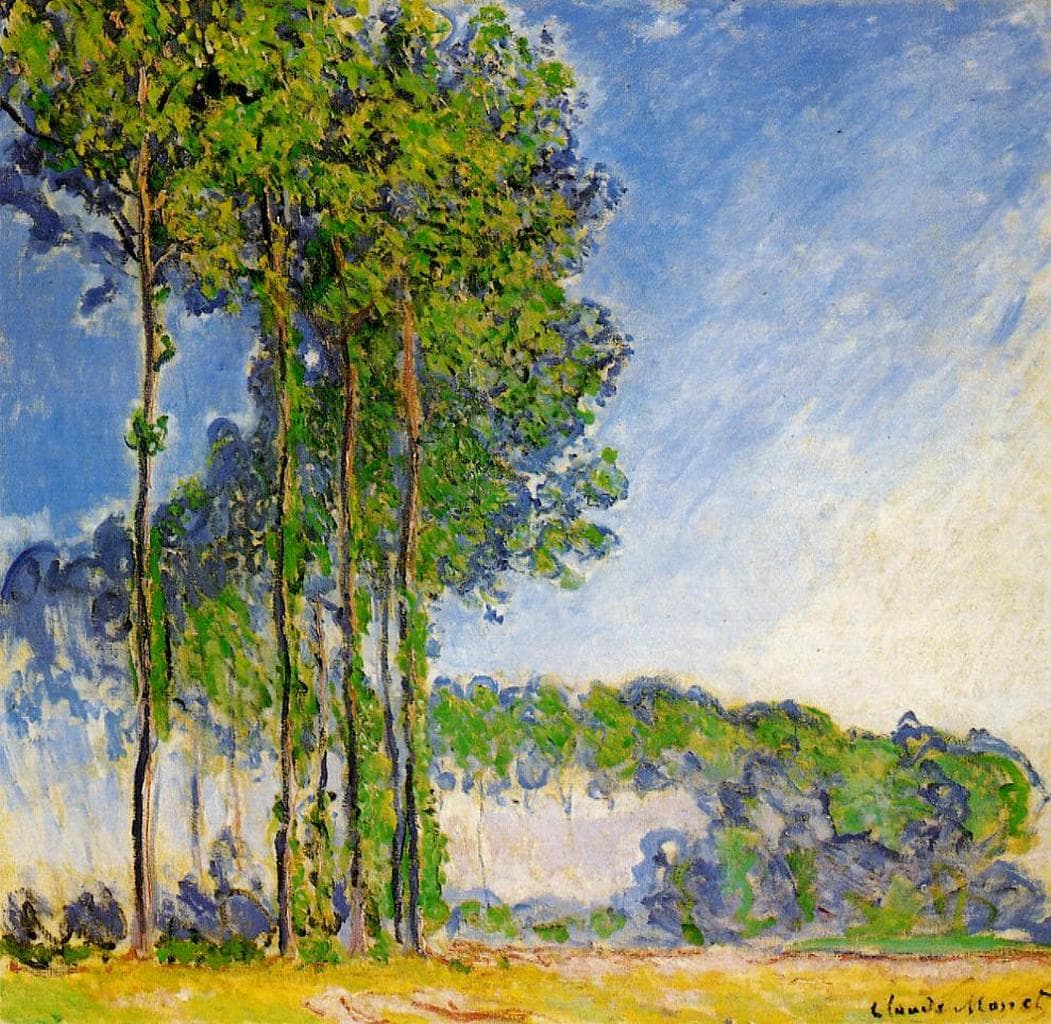
Les Peupliers
Claude Monet · 1891
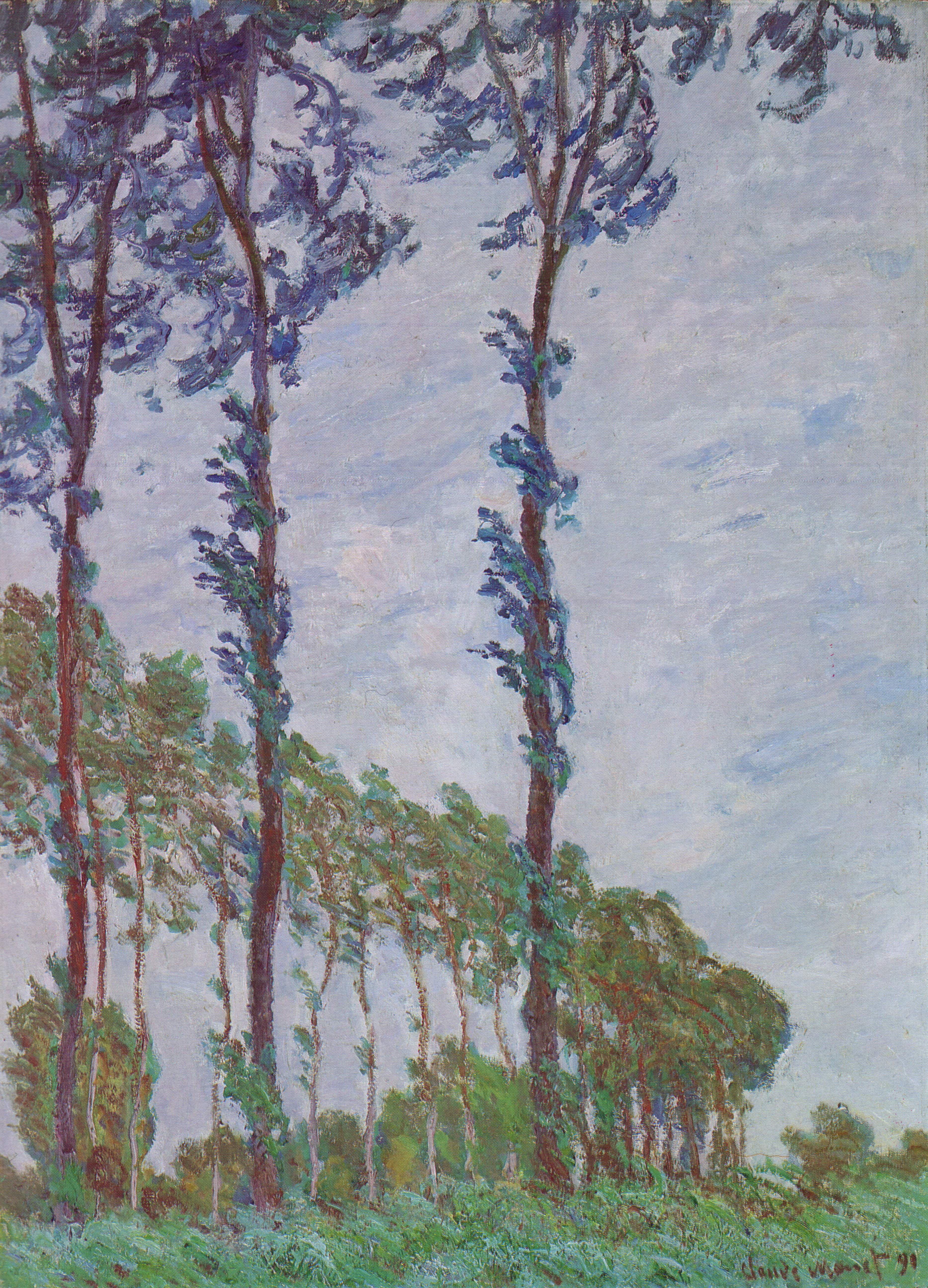
Wind Effect, Series of The Poplars
Claude Monet · 1891
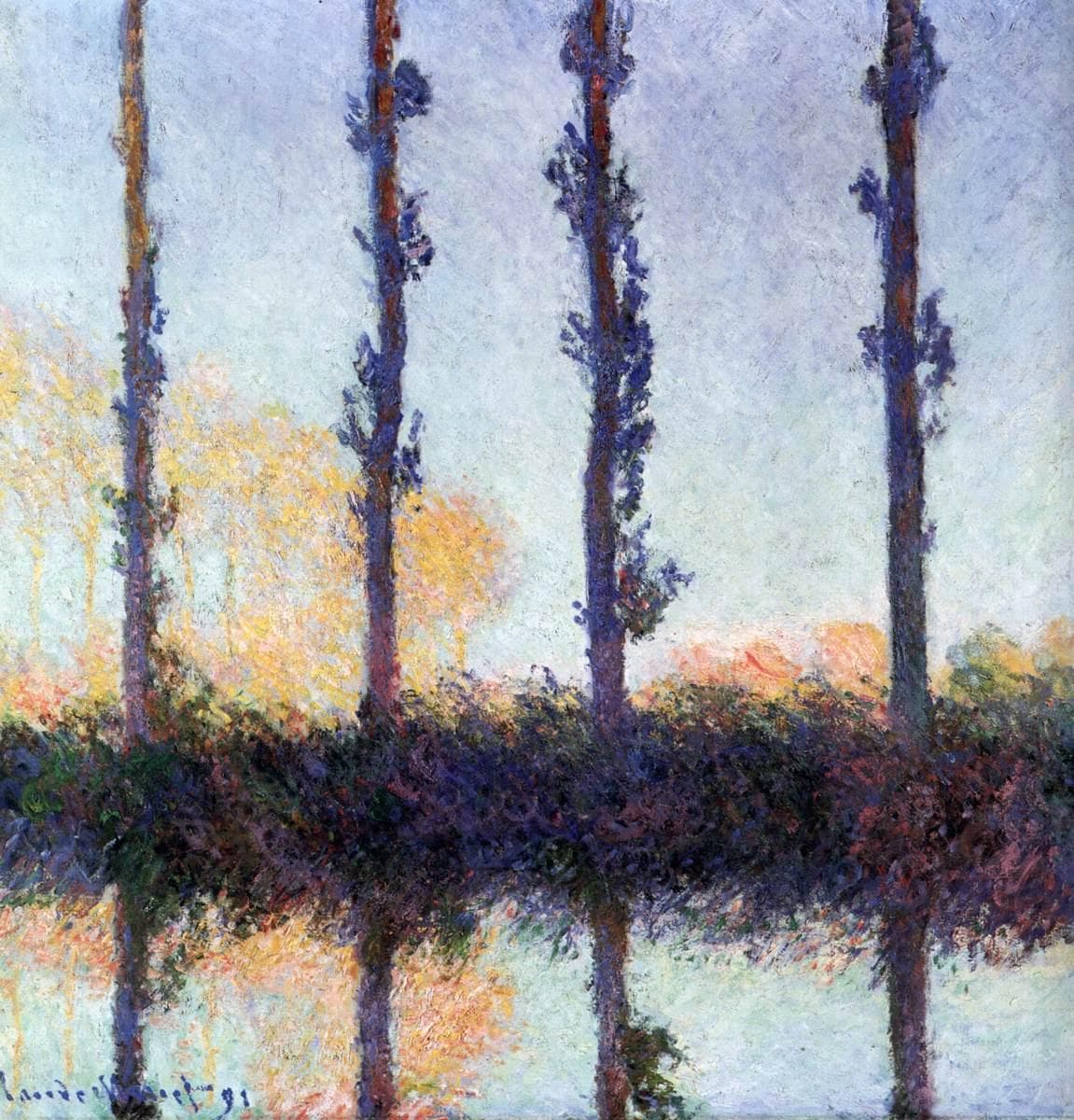
The Four Trees
Claude Monet · 1891
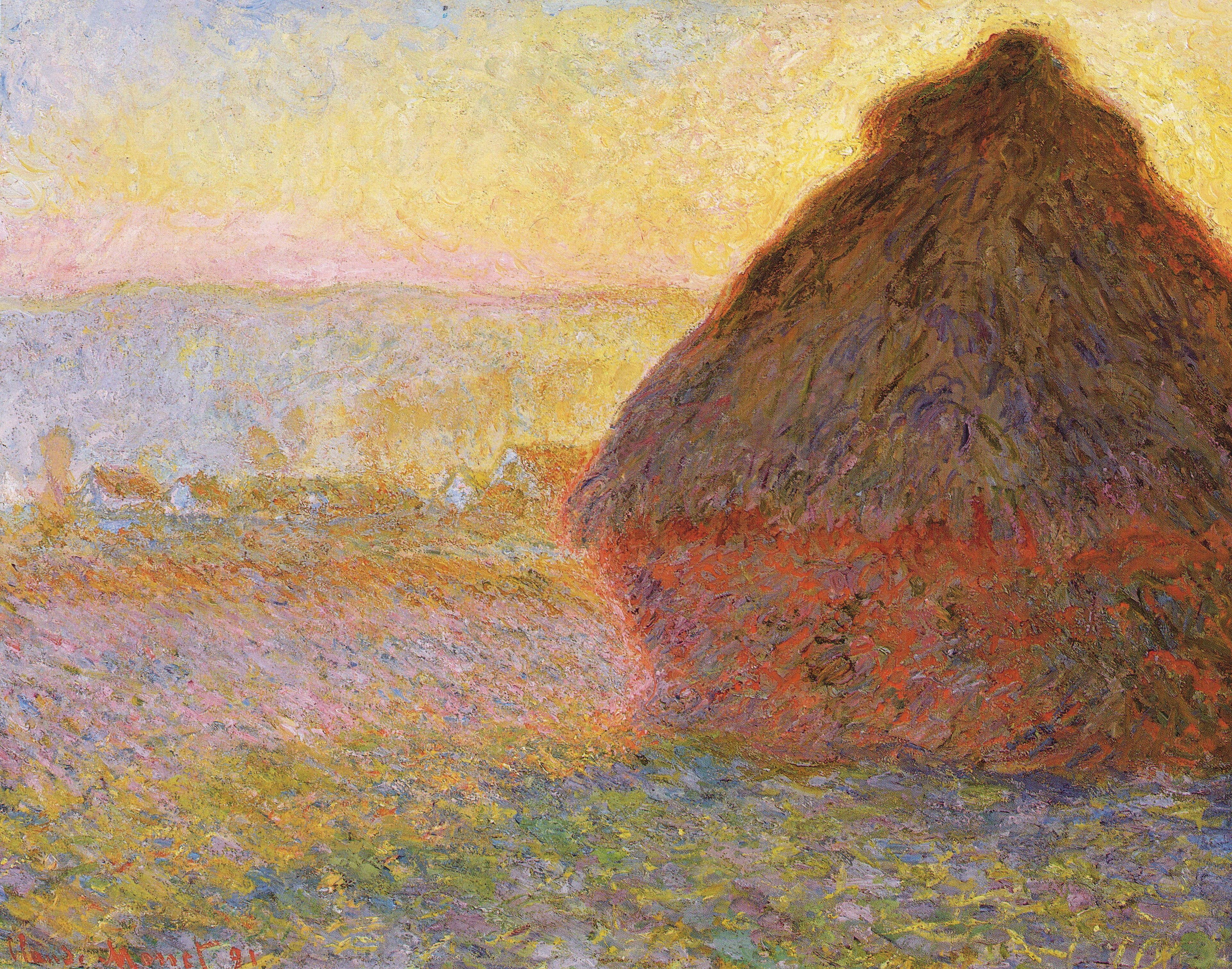
Grainstack (Sunset)
Claude Monet · 1891

Boating on the River Epte
Claude Monet · 1890
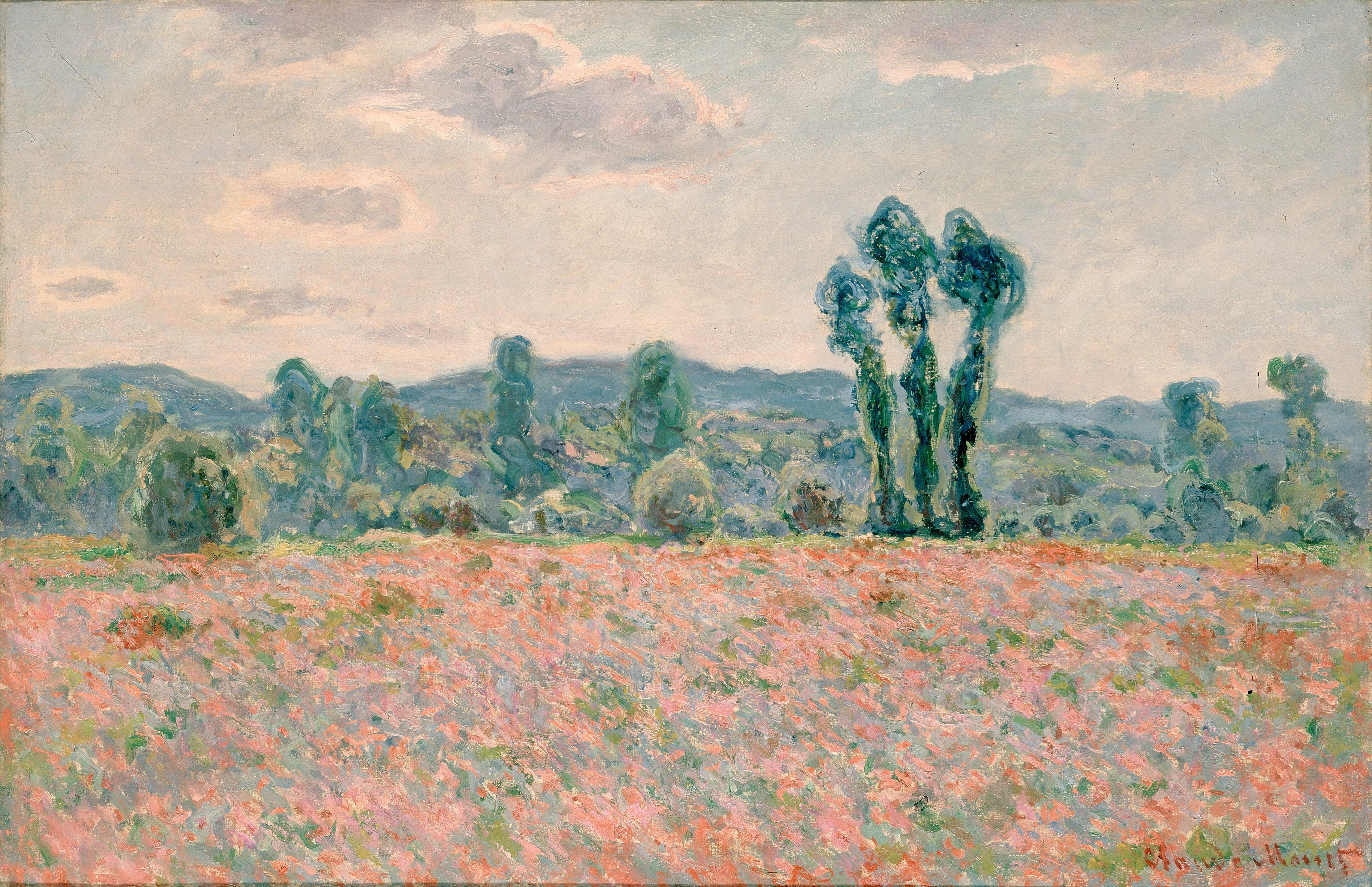
Poppy Field
Claude Monet · c. 1890
Also painted in 1891
The same year
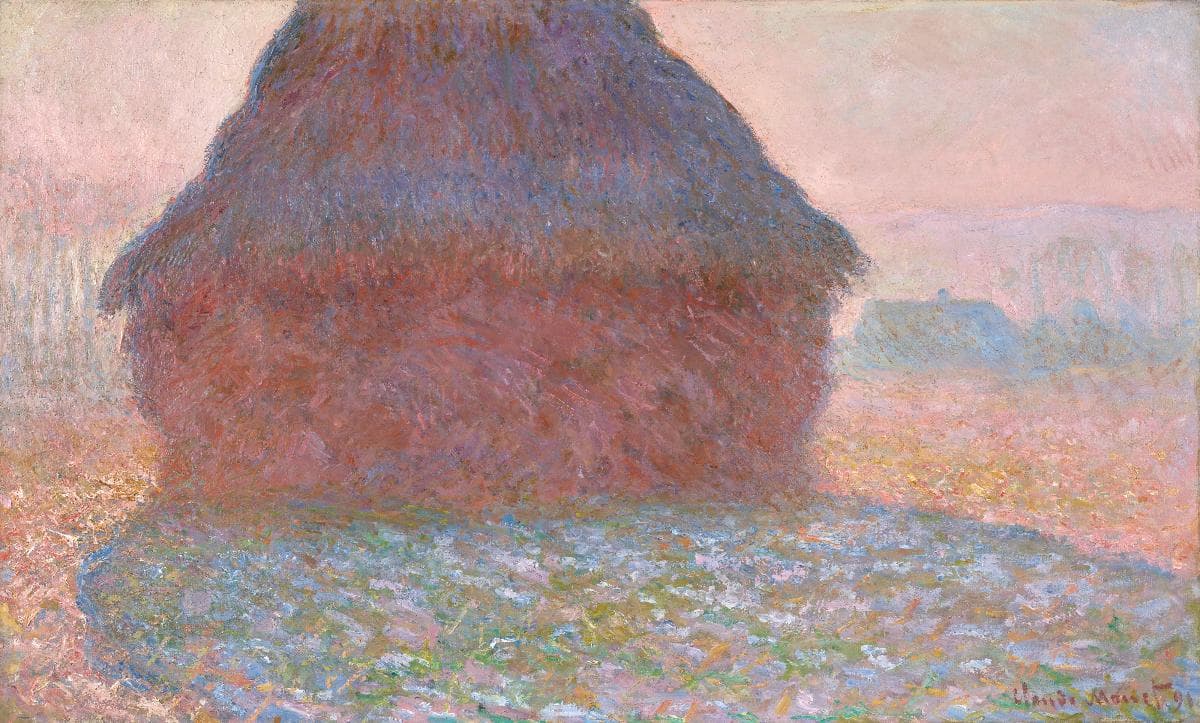
Grainstack in Sunlight
Claude Monet · 1891
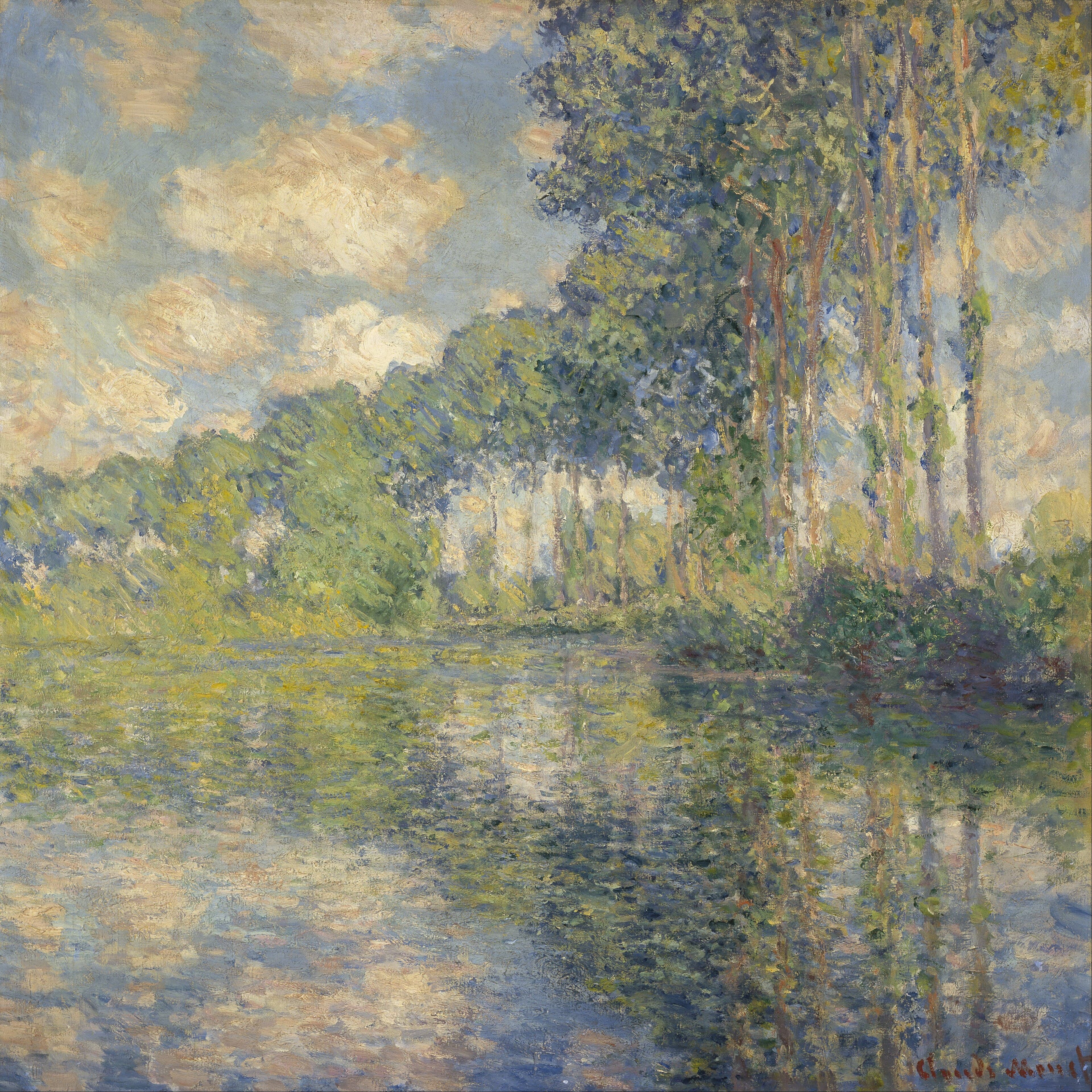
Poplars on the Epte (Edinburgh)
Claude Monet · 1891
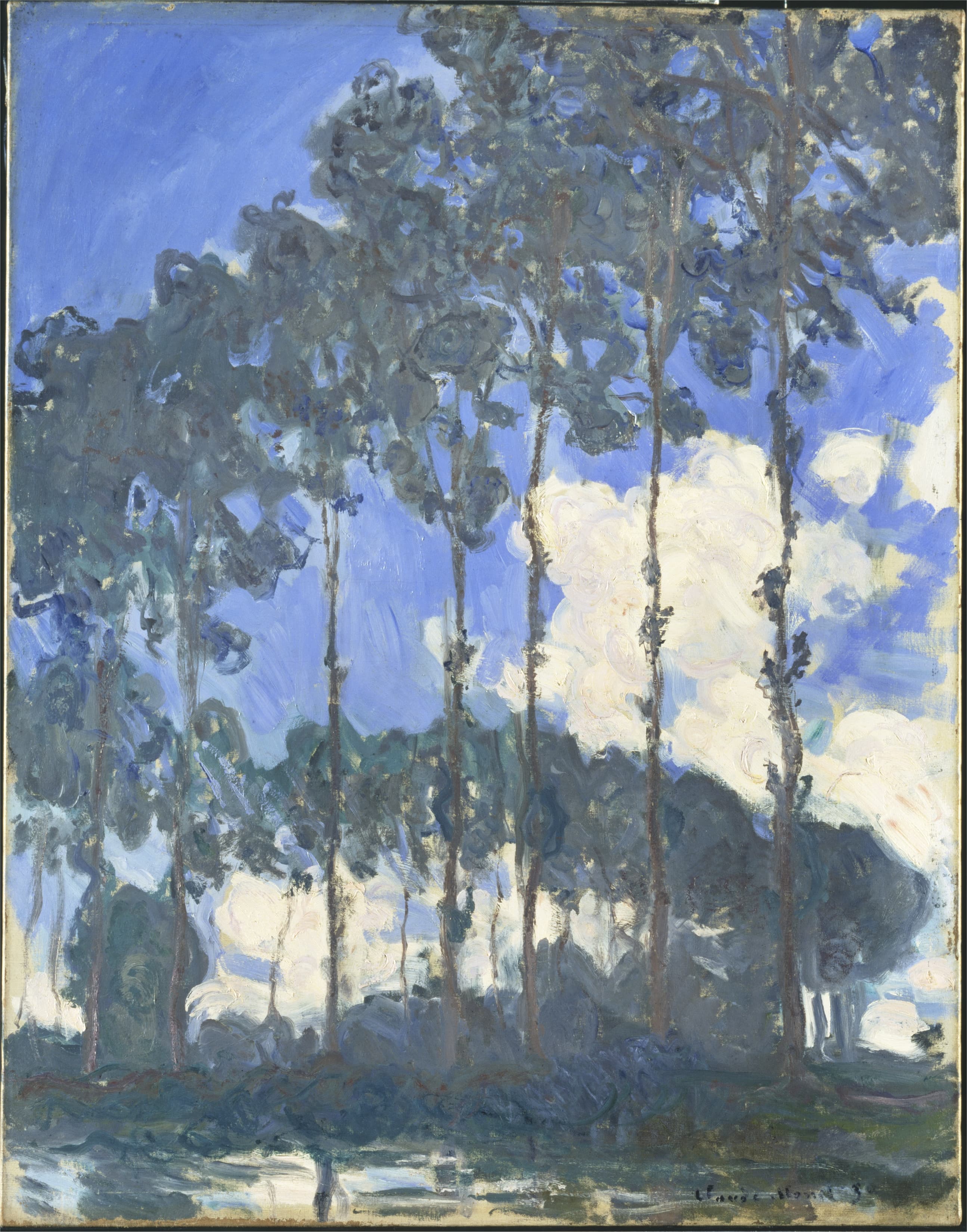
Poplars on the Epte (London)
Claude Monet · 1891
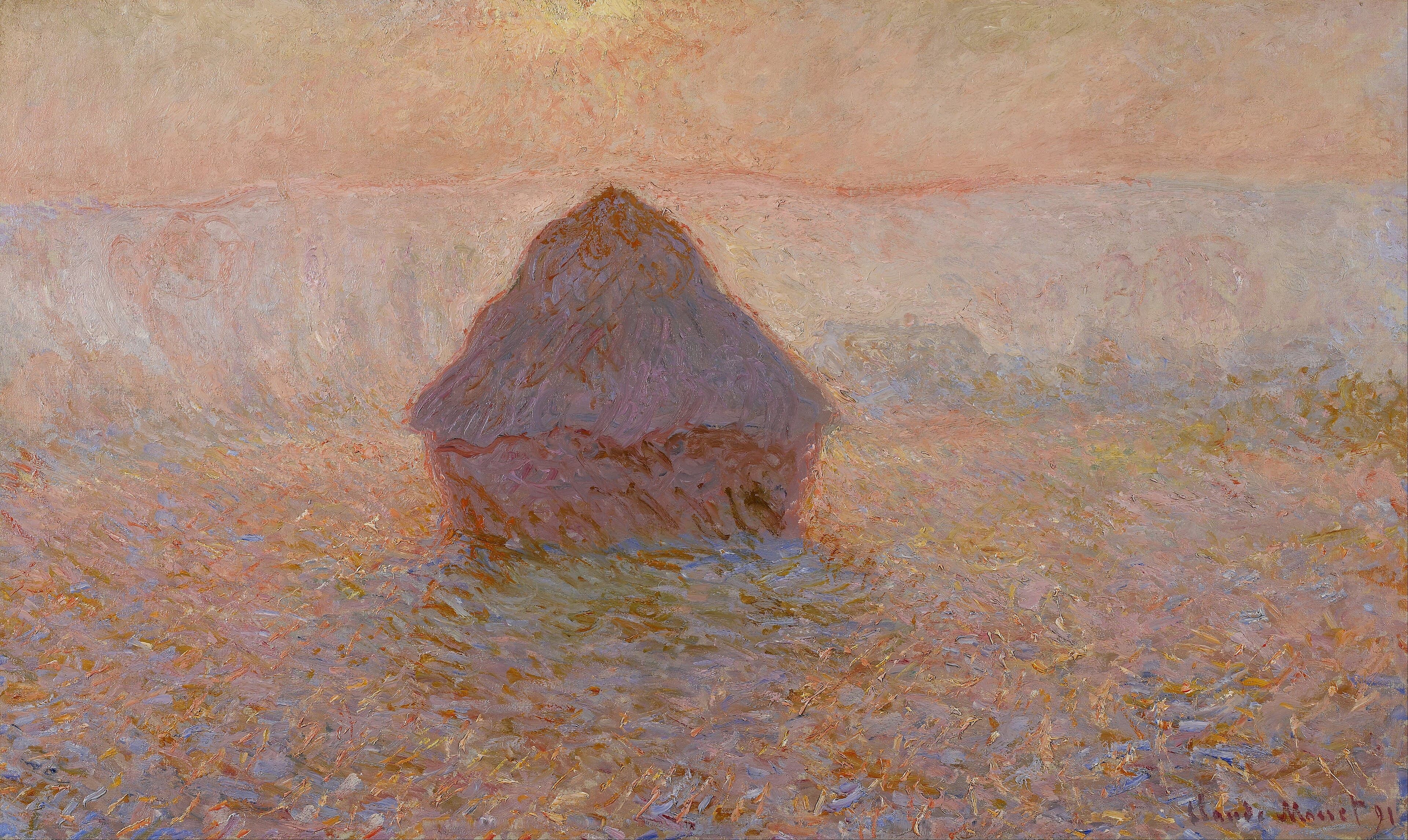
Grainstack, Sun in the Mist
Claude Monet · 1891
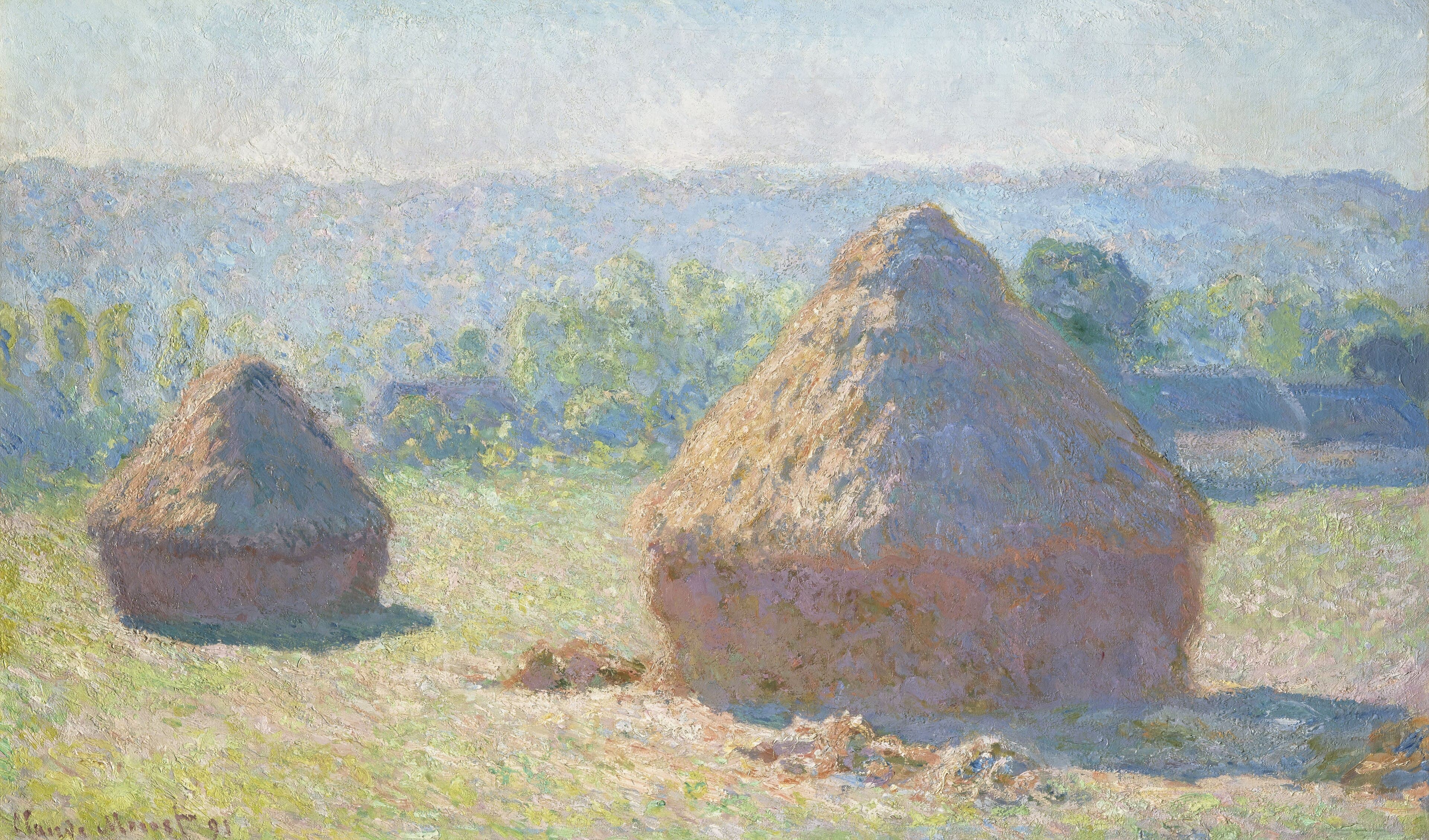
Haystacks, End of Summer
Claude Monet · 1891
Grainstack in the Sunlight
Claude Monet · 1891
Haystacks (Effect of Snow and Sun)
Claude Monet · 1891
Wheatstacks, Snow Effect, Morning
Claude Monet · 1891
Kindred works
You may also study
Poplars on the Banks of the River Epte
Claude Monet · 1891
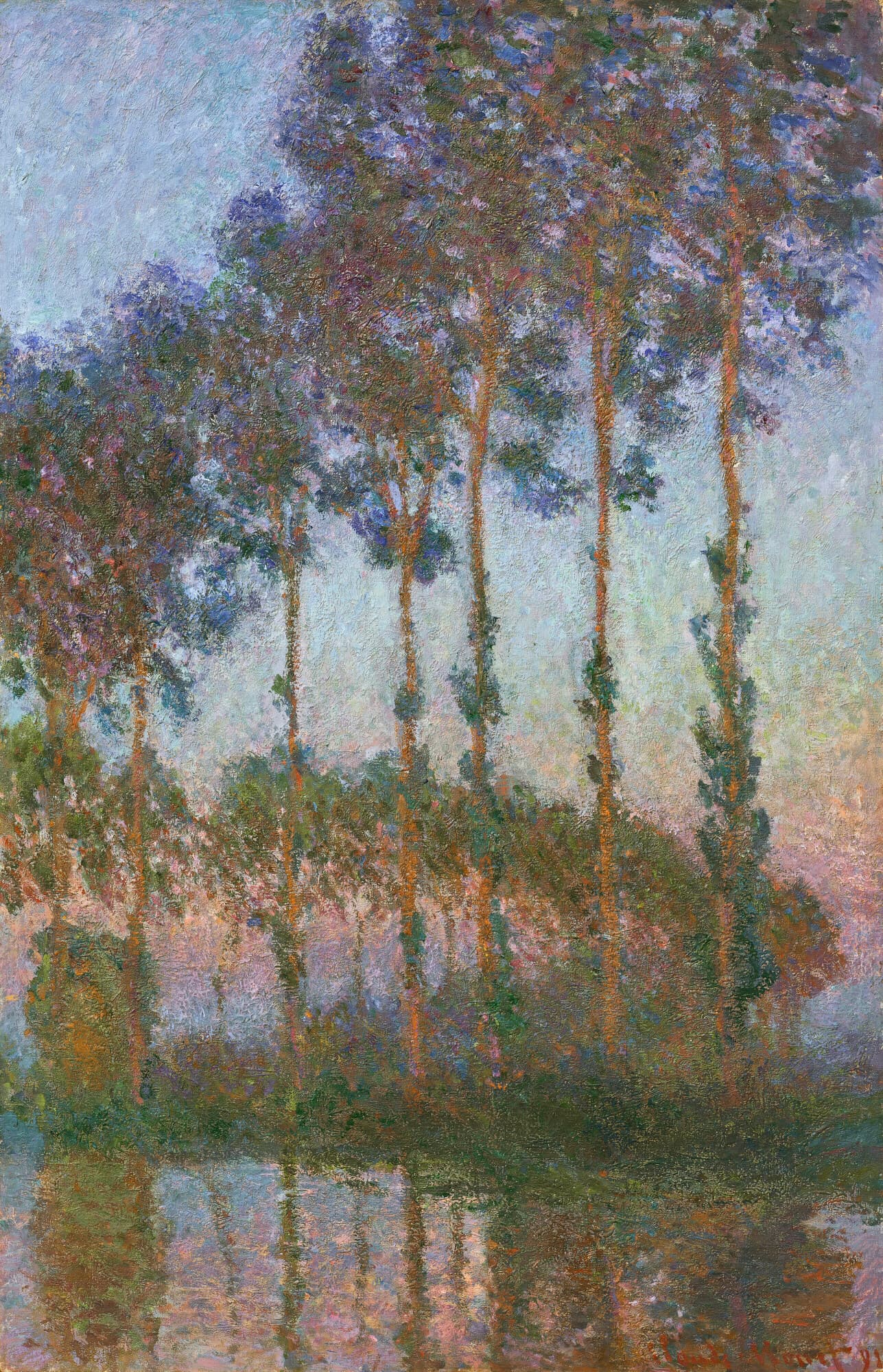
Peupliers au bord de l'Epte, crépuscule
Claude Monet · 1891
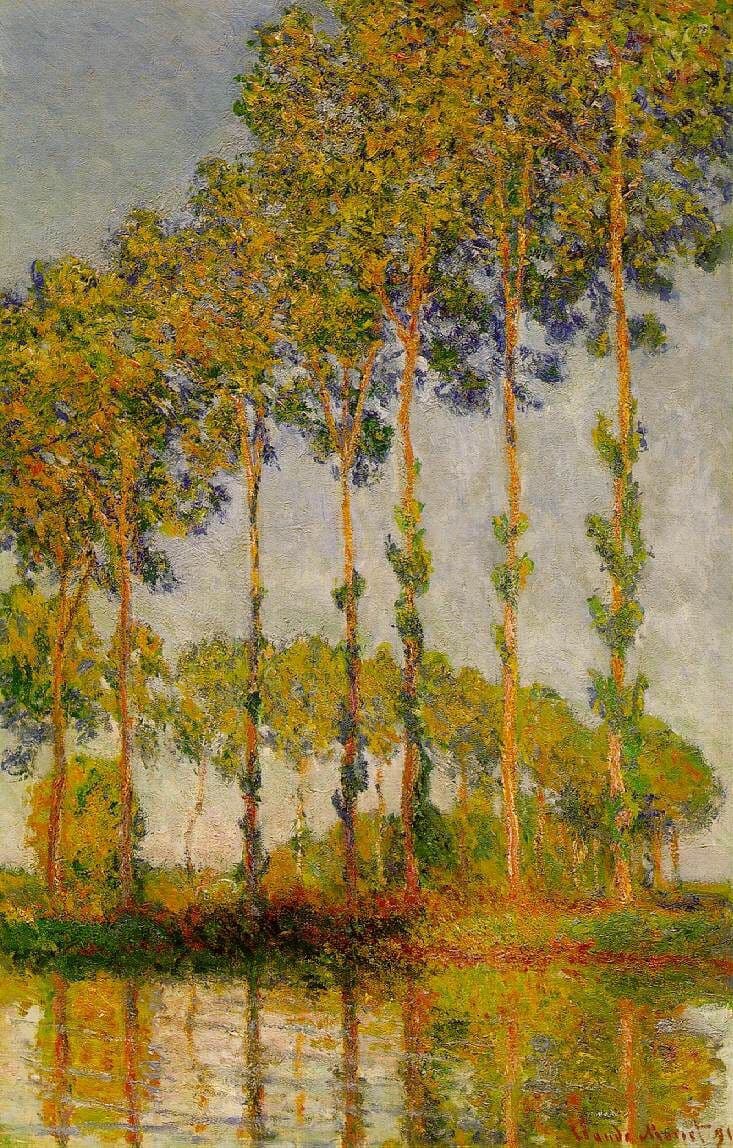
Row of Poplars in Autumn
Claude Monet · 1891
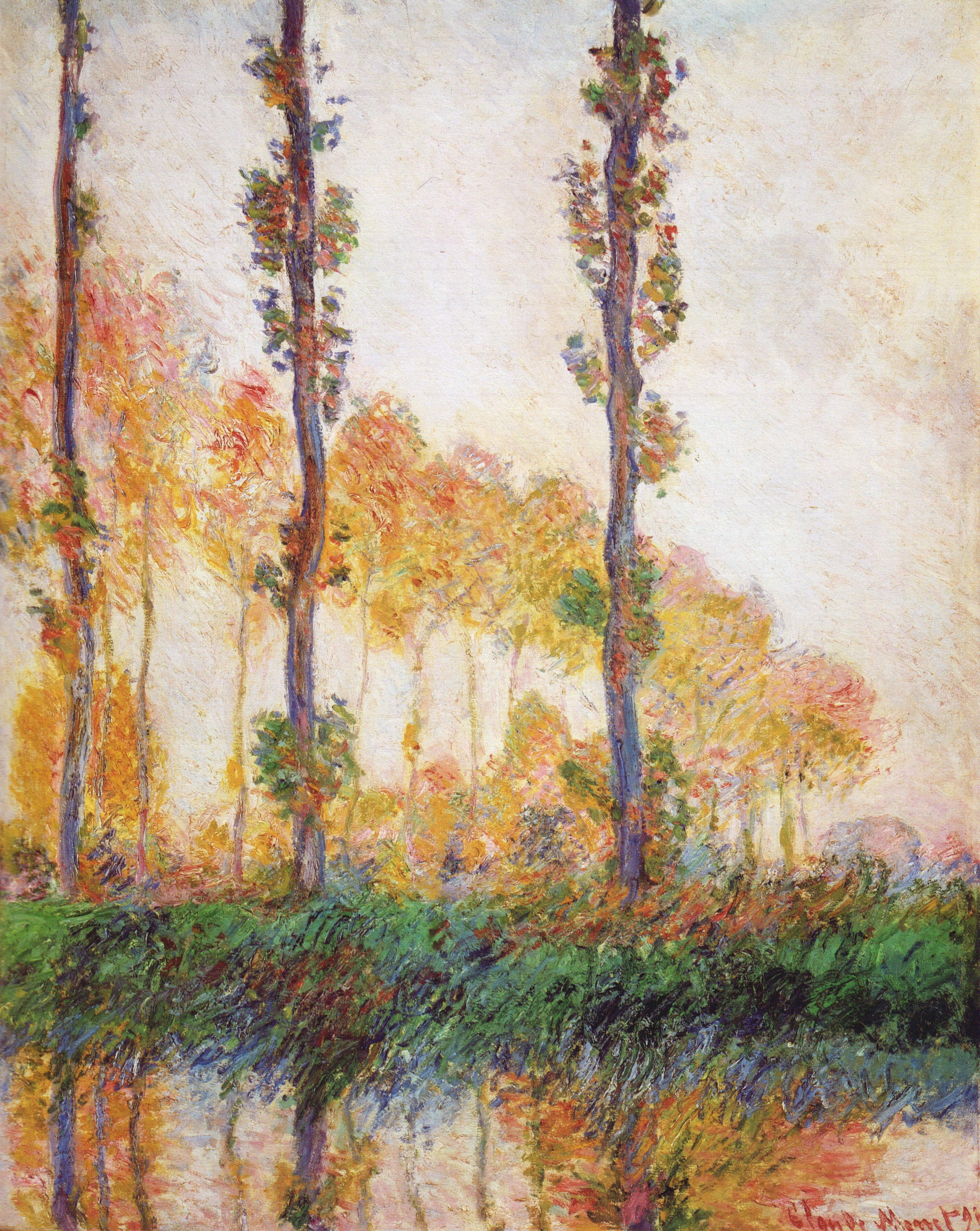
Poplars (Autumn)
Claude Monet · 1891
Rough Sea at Étretat
Claude Monet · 1883
Sunset on the Seine at Lavacourt, Winter Effect
Claude Monet · 1880
Railroad Bridge, Argenteuil
Claude Monet · 1873
Under the Pines, Evening
Claude Monet · 1888