Impressionism
Poplars, Three Pink Trees, Autumn
Claude Monet, 1891
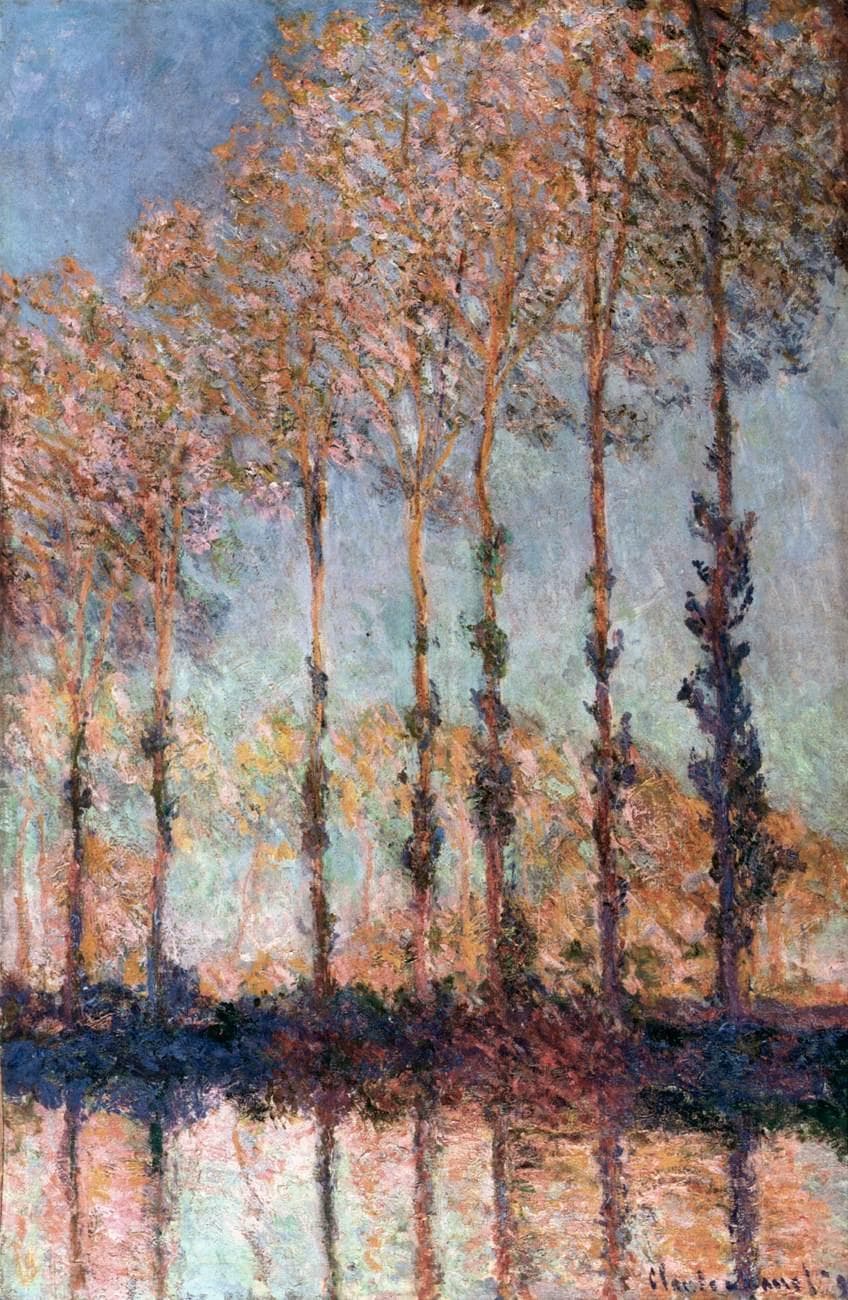
Poplars, Three Pink Trees, Autumn is an 1891 painting by Claude Monet from his Poplars series, showing three tall poplars on the Epte near Giverny glowing pink in autumn light. It measures 93 × 74.1 cm (Wildenstein 1307) and is in the Philadelphia Museum of Art.
- Artist
- Claude Monet
- Date
- 1891
- Medium
- Oil on canvas
- Dimensions
- 93 × 74.1 cm
- Collection
- Philadelphia Museum of Art, Philadelphia, United States
- Movement
- Impressionism
- Catalogue
- Wildenstein 1307
What you are looking at
Three poplar trunks run straight up through the canvas and off the top edge, like the strings of an instrument. They are spaced almost evenly: the left one close to the frame, the middle one a little left of center, the right one well in from the edge. Their bark is painted in warm cream and coral, and small tufts of orange leaves cling to them in a broken line. Behind them a second row of trees curves away along the bank, its foliage a soft cloud of pink and apricot that thickens at the right into a dense, rounded mass of russet. Below, a dark band of riverbank in violet, green and blue crosses the picture, and under that the Epte reflects the scene in pale turquoise and rose.
The sky is the largest single area of the painting and the most worked: a mesh of tiny strokes in lavender, blue and white, applied over one another until the surface has a thick, chalky texture. It deepens to a stronger blue at upper right, which makes the orange foliage there glow. Against it, the three trunks hold the composition in place, and the flatness of the arrangement is deliberate. There is little depth, just layers stacked like stage scenery: trunks, background trees, bank, water.
Look at the reflections at the bottom: the three trunks reappear as short, wavering verticals in cream and gold, cut off by the frame almost as soon as they start.
Where and when
The trees stood on the Epte near Limetz, a short way upstream from Monet's house at Giverny. They were commune property, planted for timber, and they went to auction in 1891 while Monet was still painting them; he came to terms with the timber merchant to keep them up a little longer. Working from his studio boat, he could move between canvases as the light changed, which is how such closely related variants came about. This one was painted in the autumn, when the leaves had turned and the sun was low.
How it was painted
The canvas is just under a meter high. Monet laid in the design simply, three verticals and two horizontals, and then built the color over several sessions in small, dry, overlapping strokes. The sky's crust shows how much reworking he did, probably partly in the studio. The trunks were left until late and painted over the sky with loaded strokes of light paint, which is why they stand slightly proud of the surface.
The three-tree canvases
Within the Poplars series is a group of pictures showing just three or four trunks close up, cut by the top of the frame, painted in different weather: grey, spring sun, summer wind and autumn. This is the autumn version, and with The Four Trees at the Met it is the most famous. Three Poplars, Summer in Tokyo shows nearly the same arrangement in green. Seen together, the variants show Monet treating a fixed design almost like a printmaker pulling states of the same plate, each in a different color key. Compare also the full row in Poplars on the Banks of the River Epte, which hangs in the same museum.
Meaning
There is no story, and the title is purely descriptive. What the picture communicates is a sensation: the pink glow of autumn foliage lit by a low sun, and the stillness of the river. The strict geometry also points ahead. Critics have long seen in these vertical bands, and in the late water lilies, a step toward the decorative, flattened painting of the following century. For Claude Monet, though, it remained a record of one place at one time of year.
Where to see it
The painting is in the Philadelphia Museum of Art, which also owns a second canvas from the series. For other museums with Monet's poplars, see where to see Monet's paintings.
Questions & answers
Where is Monet's Three Pink Trees, Autumn?
The painting is in the Philadelphia Museum of Art. It was painted in 1891 on the river Epte near Giverny, measures 93 by 74.1 centimeters, and is catalogued as Wildenstein 1307. The museum also owns another canvas from Monet's Poplars series.
When was Poplars, Three Pink Trees, Autumn painted?
In the autumn of 1891, from Monet's studio boat on the Epte near Limetz, a few kilometers from Giverny. He had been painting the row of poplars since spring and kept returning to it as the season changed the color of the leaves.
Why did Monet paint the same poplars so many times?
Keeping the motif fixed let him concentrate on what changed: the season, the weather and the angle of the sun. The three-tree canvases repeat almost the same design in grey weather, spring, summer and autumn, so each one reads as a different color harmony.
What happened to the real poplars?
They belonged to the commune of Limetz and were sold for timber in 1891 while Monet was still painting them. He made an arrangement with the timber merchant who bought them so the trees would stay standing until he had finished; afterward they were cut down.
More by the artist
Claude Monet

Bridge over a Pond of Water Lilies
Claude Monet · 1899

Woman with a Parasol – Madame Monet and Her Son
Claude Monet · 1875

Sunset in Venice
Claude Monet · 1908–12

La Grenouillère
Claude Monet · 1869

Beach in Pourville
Claude Monet · 1882

Springtime
Claude Monet · 1872

Boating on the River Epte
Claude Monet · 1890

The Seine at Asnières (Hermitage)
Claude Monet · 1873
Also painted in 1891
The same year
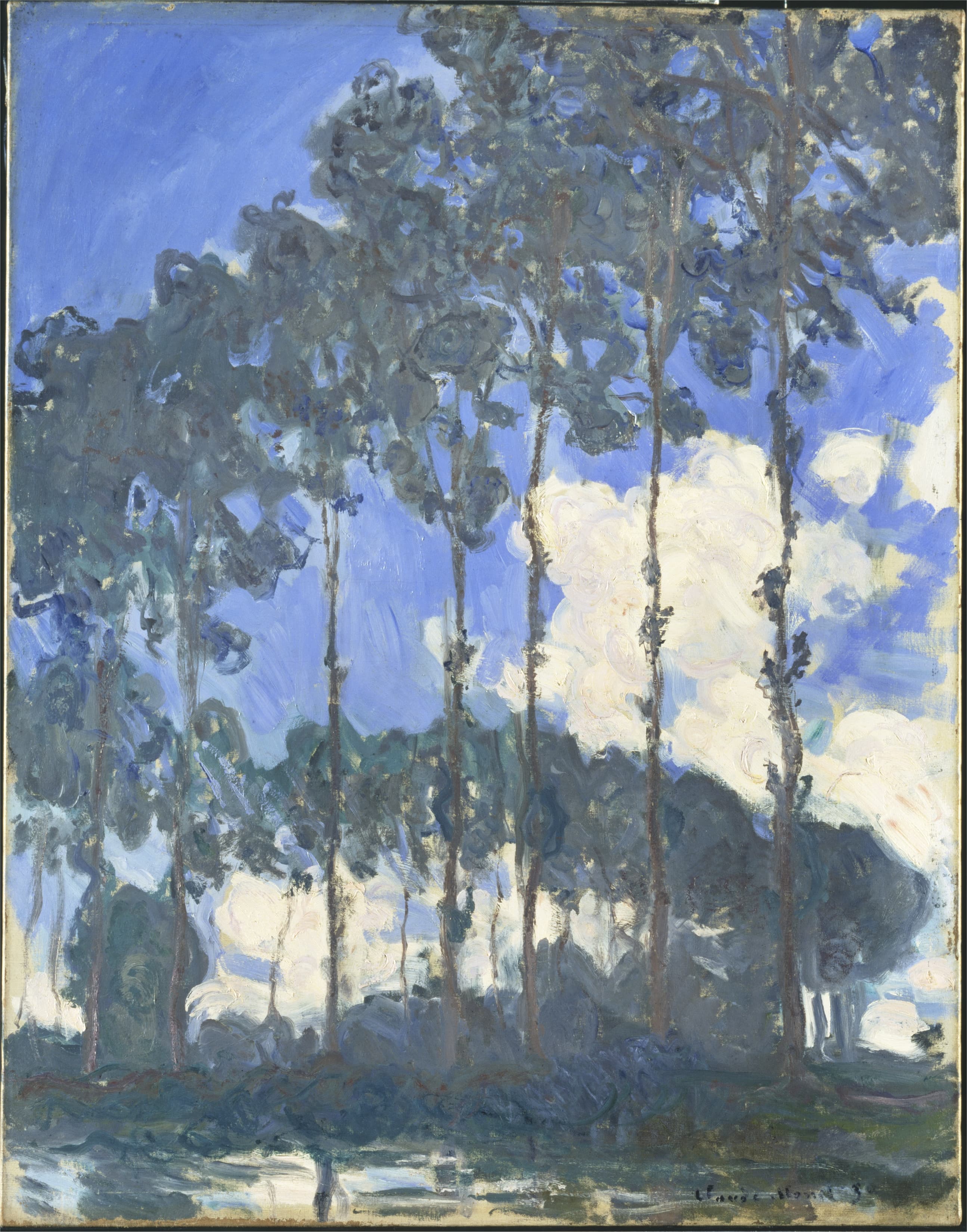
Poplars on the Epte (London)
Claude Monet · 1891
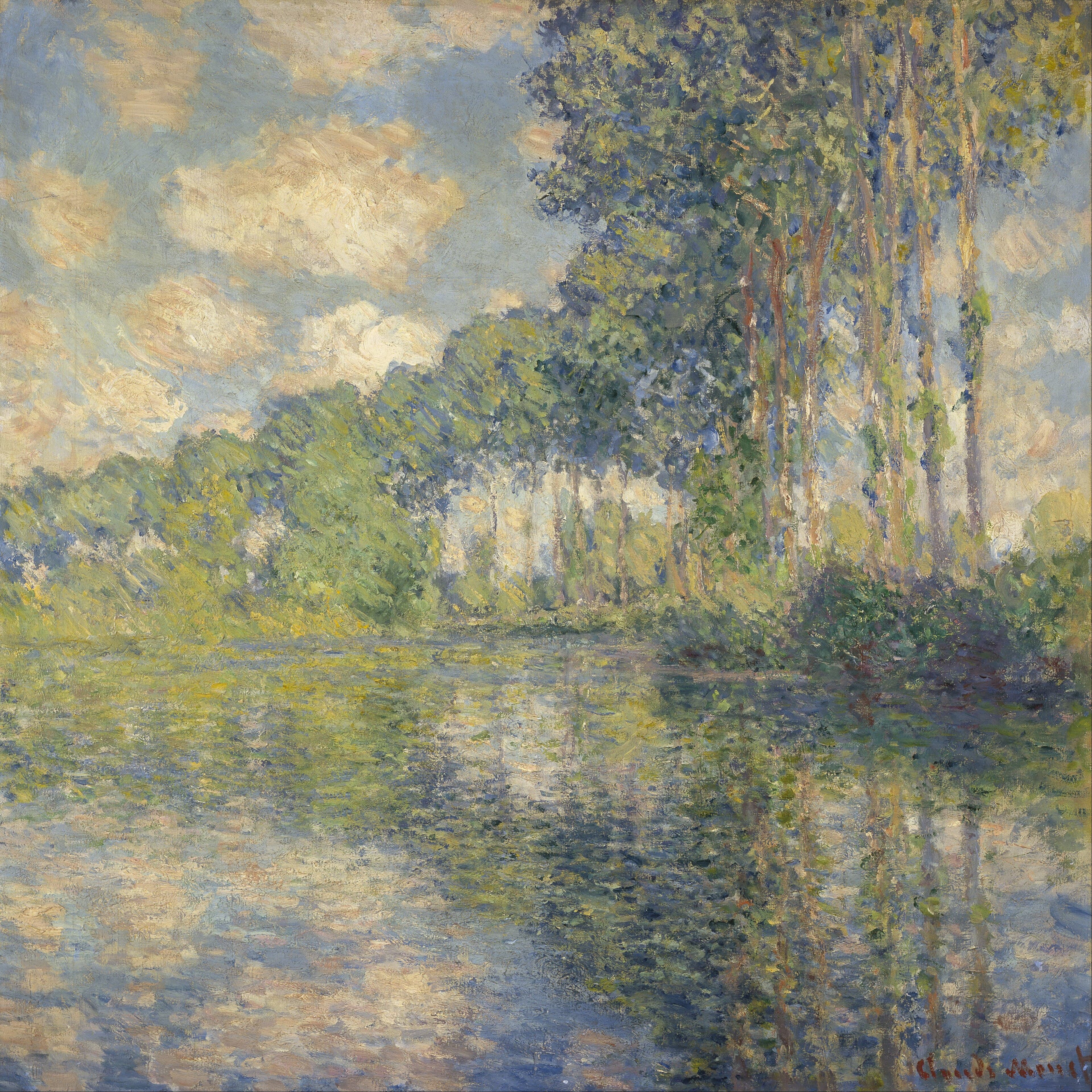
Poplars on the Epte (Edinburgh)
Claude Monet · 1891
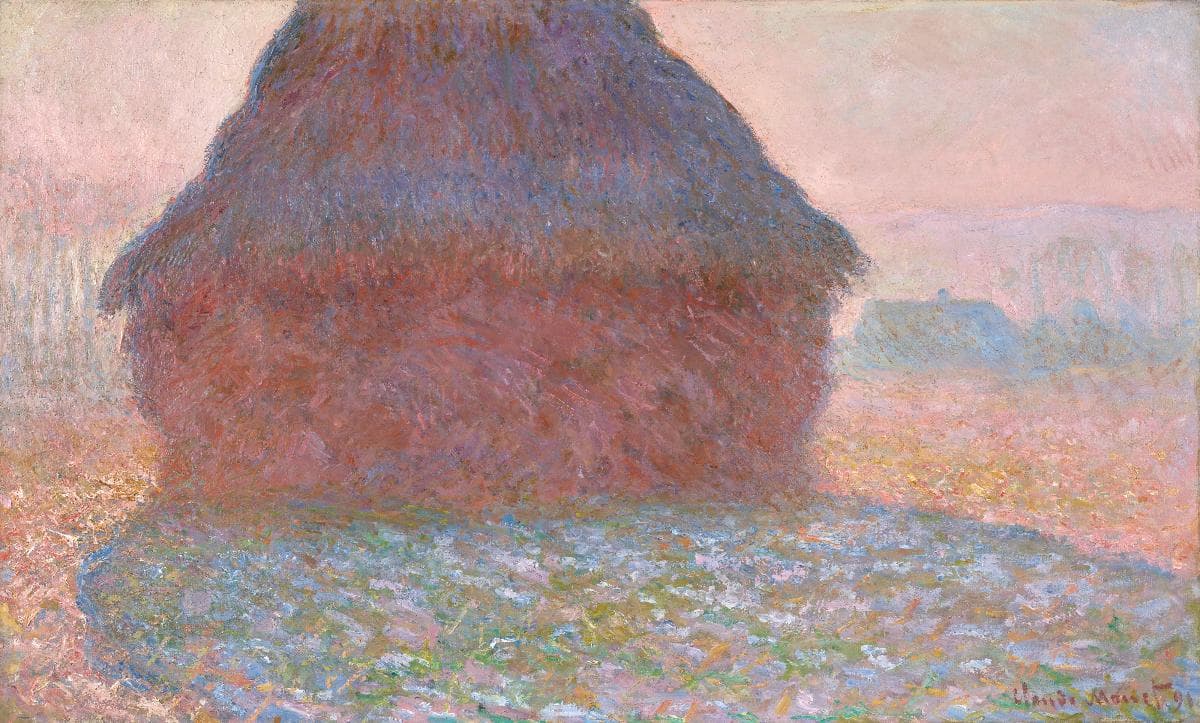
Grainstack in Sunlight
Claude Monet · 1891
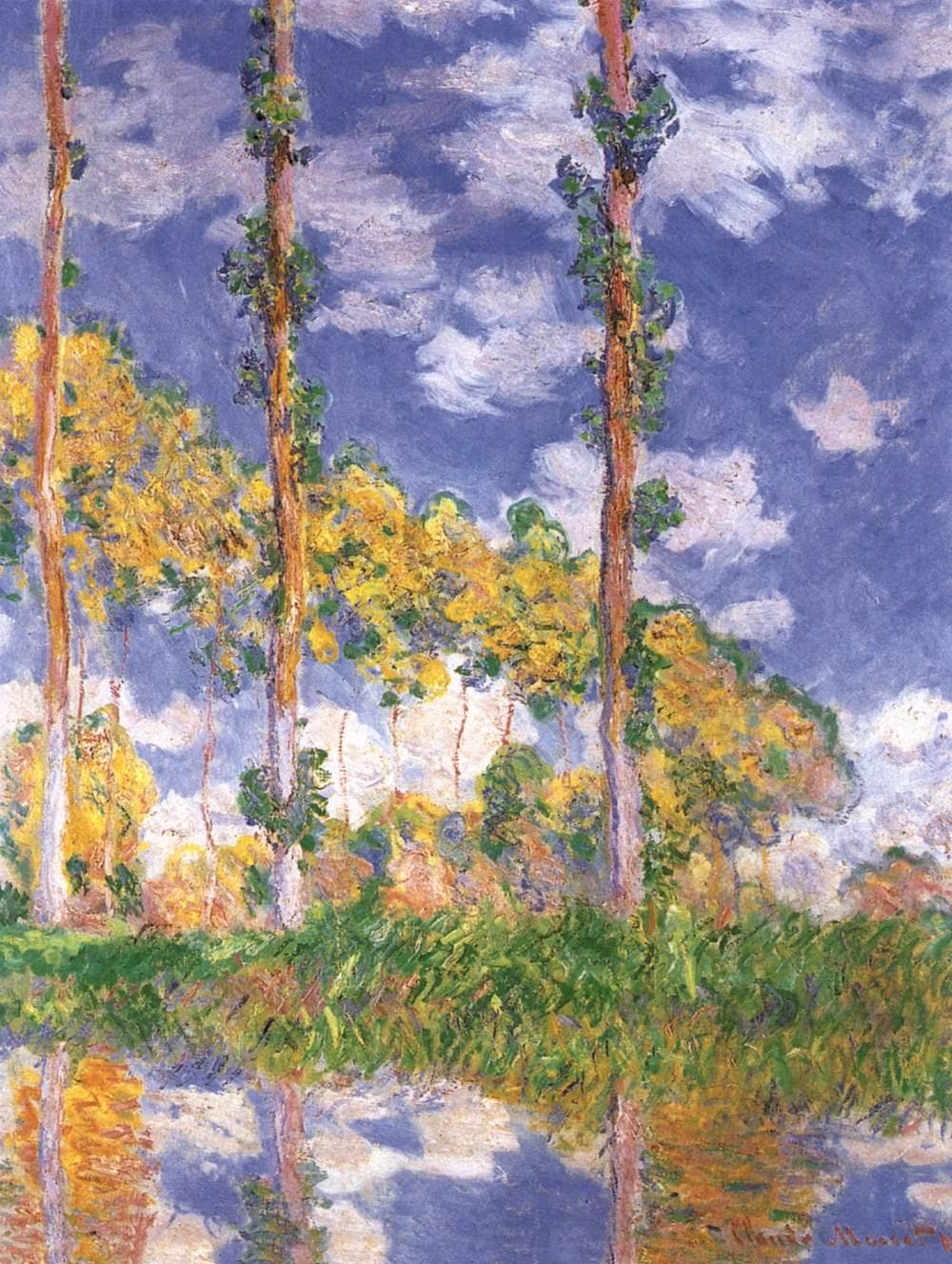
Three Poplars, Summer
Claude Monet · 1891
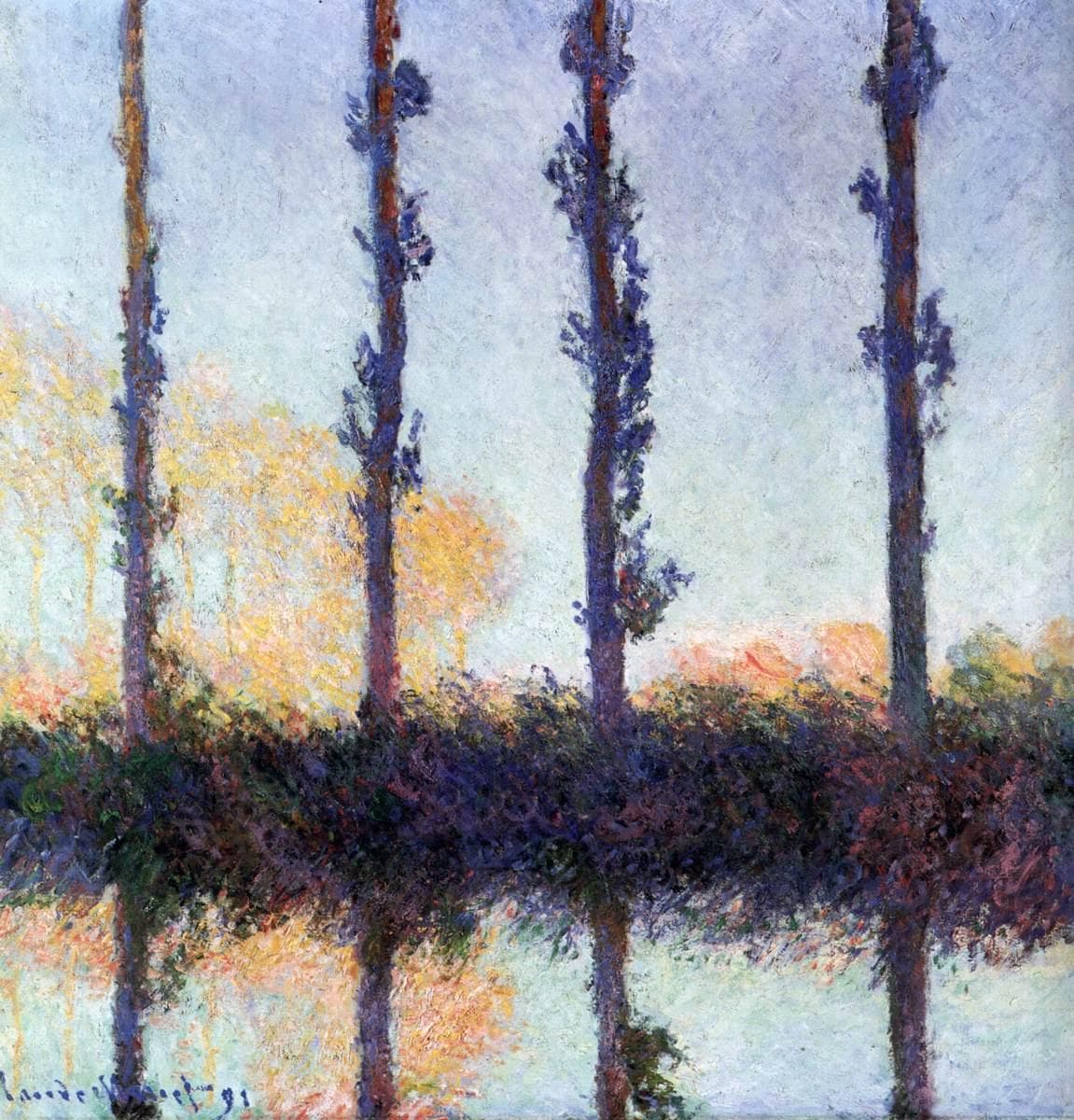
The Four Trees
Claude Monet · 1891
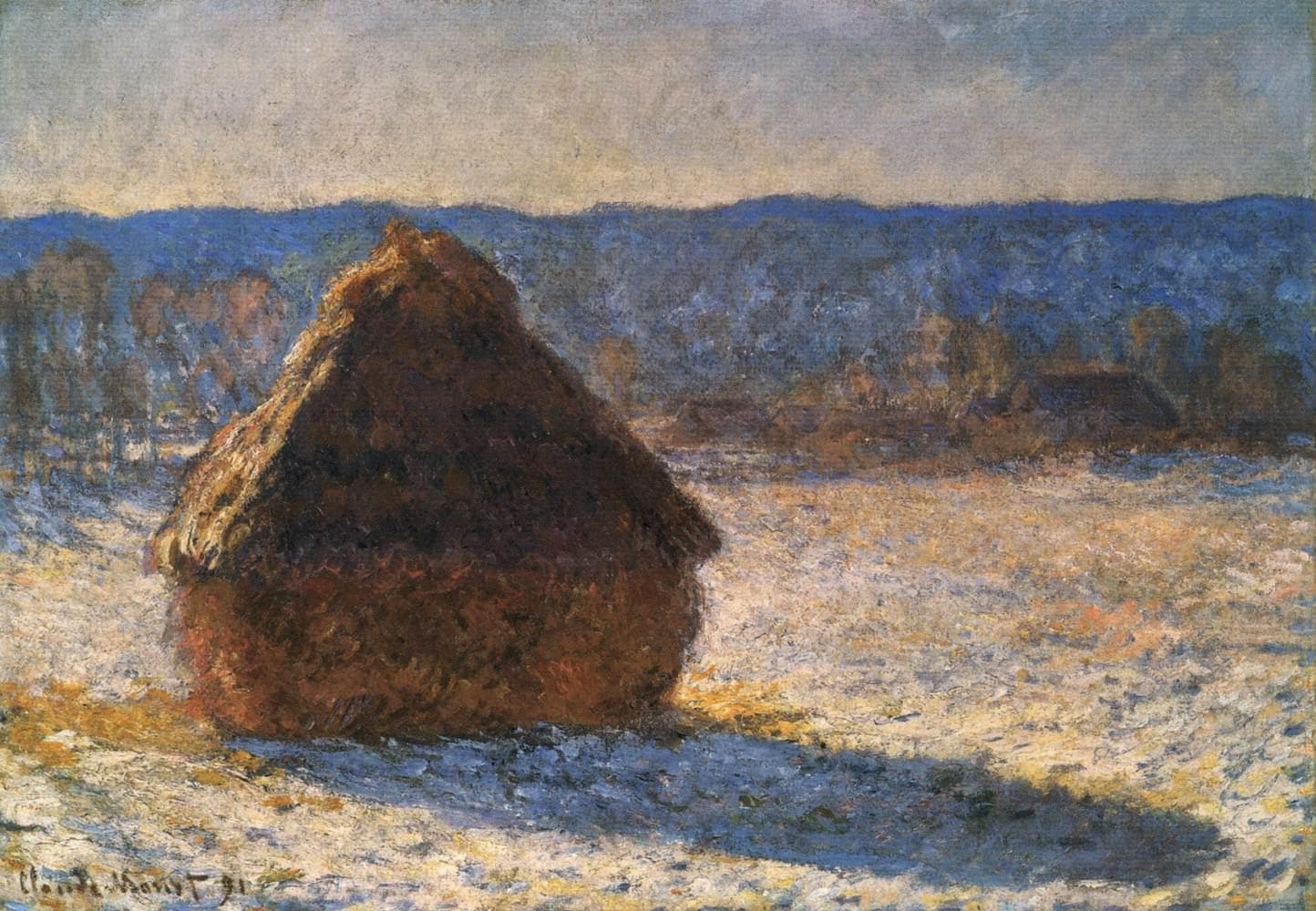
Grainstack (Snow Effect)
Claude Monet · 1891
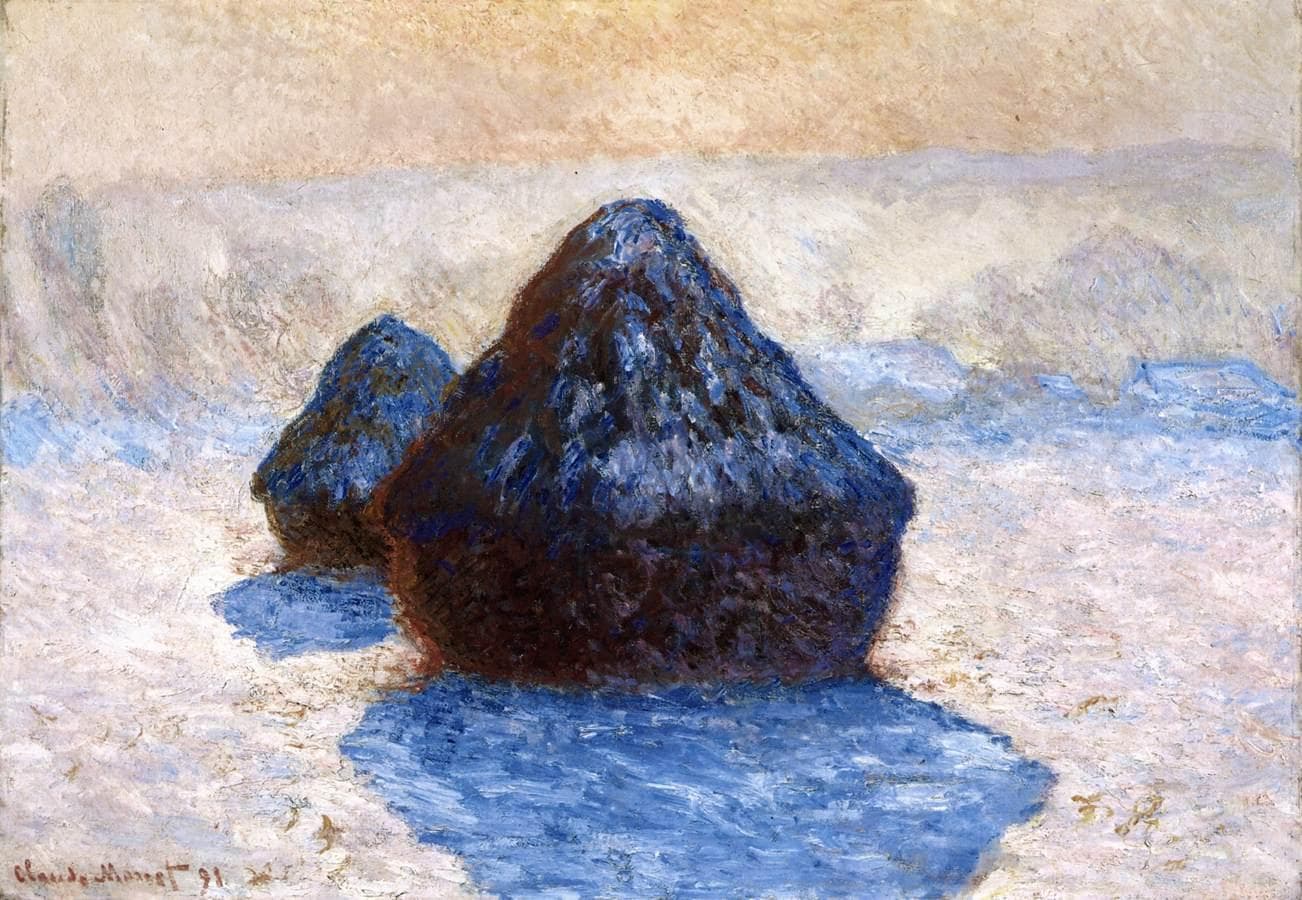
Haystacks, Snow Effect
Claude Monet · 1891
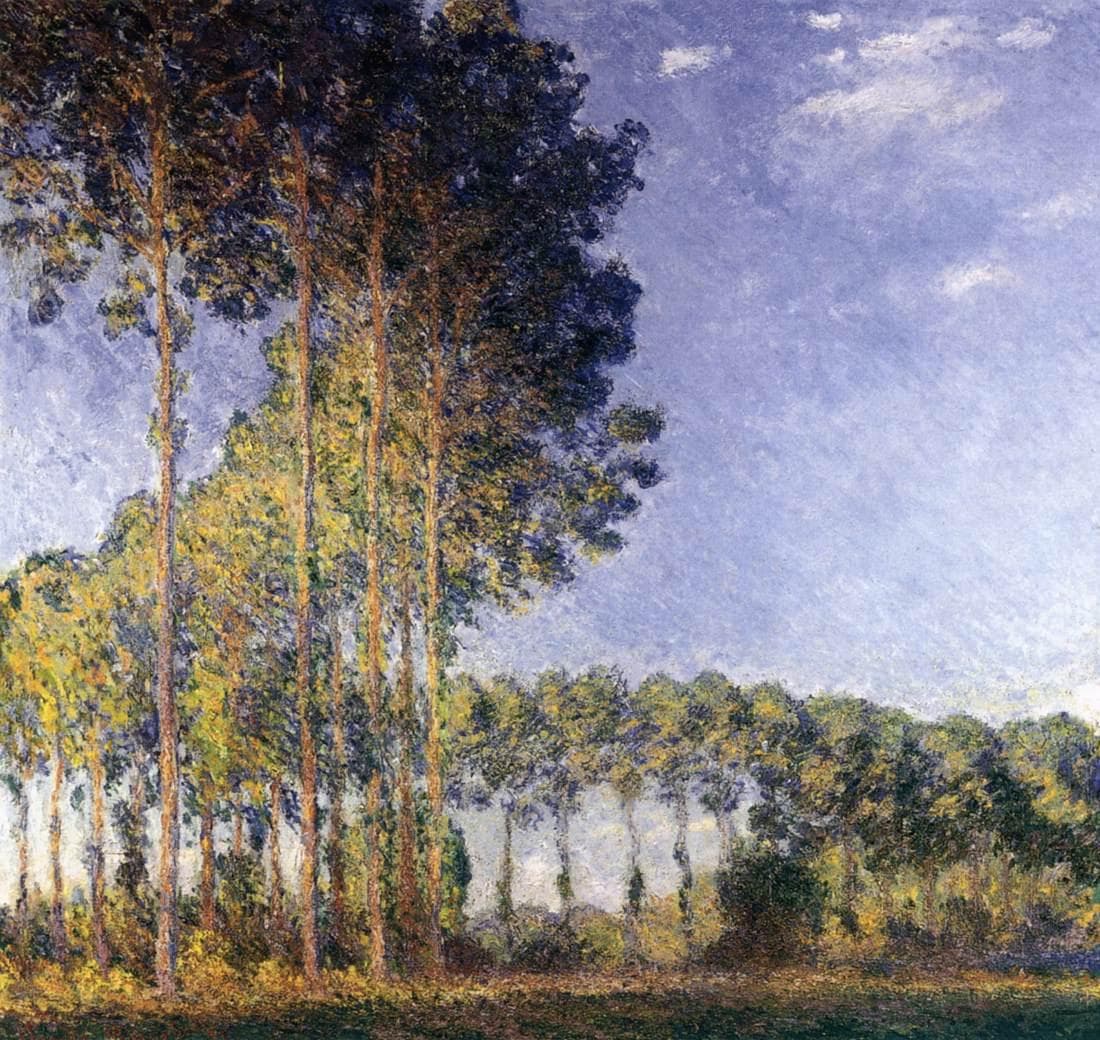
Poplars at the Banks of Epte
Claude Monet · 1891–92
Kindred works
You may also study
Poplars on the Banks of the River Epte
Claude Monet · 1891
The Four Trees
Claude Monet · 1891
Three Poplars, Summer
Claude Monet · 1891
Poplars at the Banks of Epte
Claude Monet · 1891–92
Poplars on the Epte (Edinburgh)
Claude Monet · 1891

The Scream
Edvard Munch · 1893

Ophelia
John Everett Millais · 1851–52

The Great Wave off Kanagawa
Katsushika Hokusai · c. 1830–32