Impressionism
The Creuse, Sunset
Claude Monet, 1889
The Creuse, Sunset is an 1889 painting by Claude Monet of the dark, rugged Creuse valley in central France as the last light fades over the hills. It is in the Musée Unterlinden, Colmar.
- Artist
- Claude Monet
- Date
- 1889
- Medium
- Oil on canvas
- Dimensions
- 73 × 70 cm
- Collection
- Musée Unterlinden, Colmar, France
- Movement
- Impressionism
- Catalogue
- Wildenstein 1226
The Creuse, Sunset (La Vallée de la Creuse, soleil couchant) is one of the series of about two dozen canvases Claude Monet painted in the spring of 1889 in the gorge of the river Creuse, in the Massif Central of central France. This nearly square version, 73 by 70.5 centimeters and number 1226 in Wildenstein's catalogue, is in the Musée Unterlinden in Colmar, Alsace.
What you are looking at
The picture is dark. A great rounded hillside, covered in heather and scrub, fills the left half and slopes steeply down to the water; behind it a second ridge runs across the canvas from left to right, its flanks folded into ravines. Both are painted in deep plum, rust, bottle green and near-black, with streaks of violet where the slopes turn away from the light.
At the lower right the river slides out of the gorge as a pale band of gray, lilac and cream, crossed by dark horizontal ripples. It is the only bright passage in the lower part of the picture, catching the last light reflected from the sky. Above the far ridge the sky burns in a narrow strip of yellow and orange, edged with pink, and a line of small bushes or trees is silhouetted along the crest. The sun itself has already gone.
How it was painted
Monet lays the paint on thickly and dryly, with a stiff brush, so the hillsides have a crusty, almost woven texture, like the coarse vegetation they describe. Strokes follow the forms of the slopes, curving over the rounded shoulder at left and running diagonally down the ravines. The sky, by contrast, is laid in with long horizontal sweeps of warm color, and the river with flat, broken strokes that carry the sky's light down into the gorge.
The square format is unusual and deliberate. It crowds the view, cutting off any wide panorama and pressing the dark hills up against the picture plane. Light enters only at the top and the lower right corner, and the composition depends on that diagonal between them.
Monet in the Creuse
Monet went to Fresselines, a village where the Petite Creuse and the Creuse meet, in February 1889, after a visit there with the critic Gustave Geffroy, and was welcomed by the poet Maurice Rollinat, who lived nearby. He stayed until May, working on many canvases at once and switching between them as the light changed through the day. The weather was harsh and wet, and he wrote to Alice Hoschedé about storms, floods and the despair of waiting for the right effect. When spring came early and an old oak he was painting began to leaf, he paid its owner to have the new leaves stripped so he could finish his winter pictures.
The resulting canvases are among the most somber of his career: no figures, no boats, no gardens, only rock, water and weather. The Creuse group is often described as Monet's first true series, a deliberate set of variations on almost the same view under different conditions, made side by side. The method led directly to the Haystacks of 1890–91, the Poplars and the facades of Rouen Cathedral. A sunlit version of the same gorge, Valley of the Creuse, Sunlight Effect in Boston, shows how completely the mood could change, and Study of Rocks, Creuse in the Royal Collection is another view from the same weeks.
Exhibition
Monet showed a group of the Creuse paintings in June 1889 at the Galerie Georges Petit in Paris, in a large joint exhibition with the sculptor Auguste Rodin. It was a critical success and marked his arrival as a leading figure, the year before he began the grainstacks such as Stack of Wheat.
Where to see it
The painting is in the Musée Unterlinden in Colmar, better known for Grünewald's Isenheim Altarpiece. For other collections, see where to see Monet's paintings. More on Claude Monet.
Questions & answers
Where is Monet's The Creuse, Sunset?
This version is in the Musée Unterlinden in Colmar, in Alsace, eastern France. Monet painted about two dozen views of the Creuse valley in 1889, and they are now dispersed among museums, including the Museum of Fine Arts, Boston, and private collections.
When and where was The Creuse, Sunset painted?
Monet painted it between February and May 1889 in the gorge of the Creuse near Fresselines, a village in central France where the Petite Creuse joins the Creuse. He worked on many canvases at once, switching between them as the light changed.
What does The Creuse, Sunset show?
Dark, heather-covered hills slope into a gorge, painted in plum, rust and deep green, with the pale river at lower right catching the last light. Above the far ridge a narrow strip of yellow and orange sky glows after the sun has set.
Why is the Creuse series important?
It is often called Monet's first true series: a group of paintings of nearly the same view under different light and weather, made at the same time. The method led directly to his series of haystacks, poplars and Rouen Cathedral in the early 1890s, and later to the water lilies.
More by the artist
Claude Monet

Bridge over a Pond of Water Lilies
Claude Monet · 1899

Woman with a Parasol – Madame Monet and Her Son
Claude Monet · 1875

Sunset in Venice
Claude Monet · 1908–12

La Grenouillère
Claude Monet · 1869

Beach in Pourville
Claude Monet · 1882

Springtime
Claude Monet · 1872

Boating on the River Epte
Claude Monet · 1890

The Seine at Asnières (Hermitage)
Claude Monet · 1873
Also painted in 1889
The same year
Kindred works
You may also study
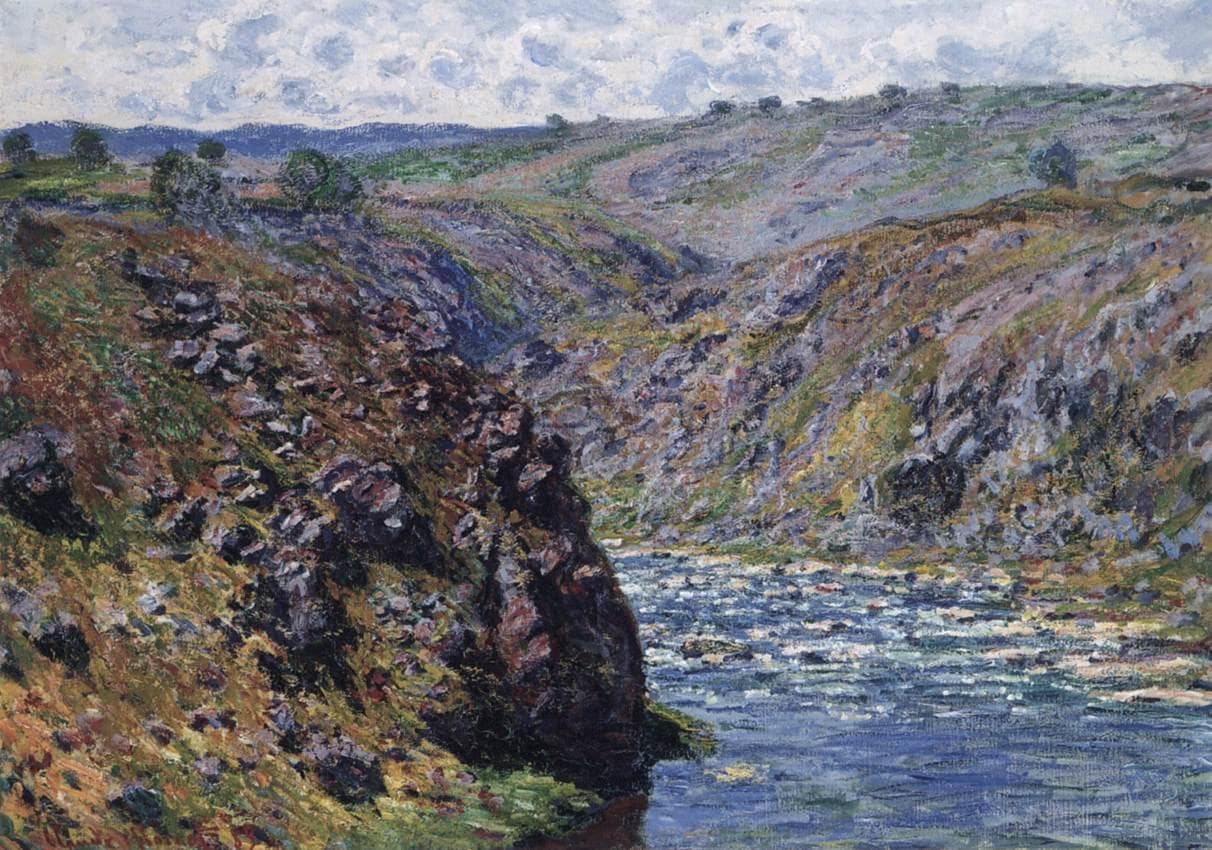
Valley of the Creuse (Sunlight Effect)
Claude Monet · 1889
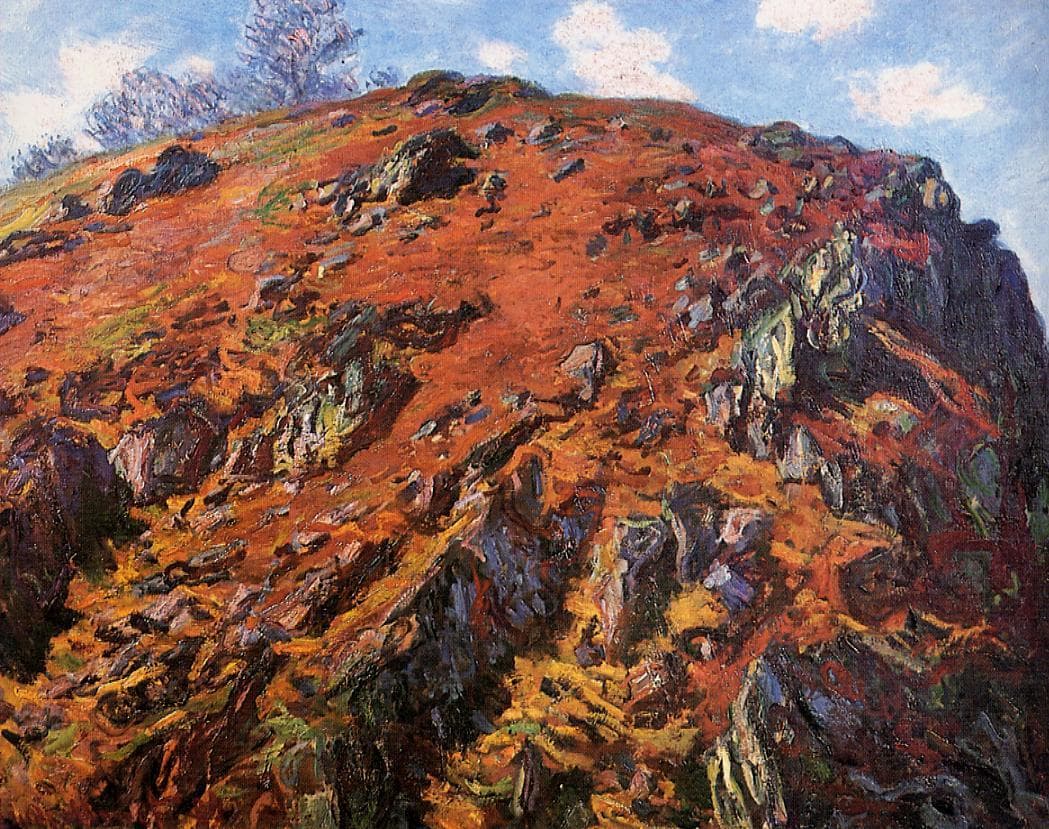
Study of Rocks, Creuse ('Le Bloc')
Claude Monet · 1889
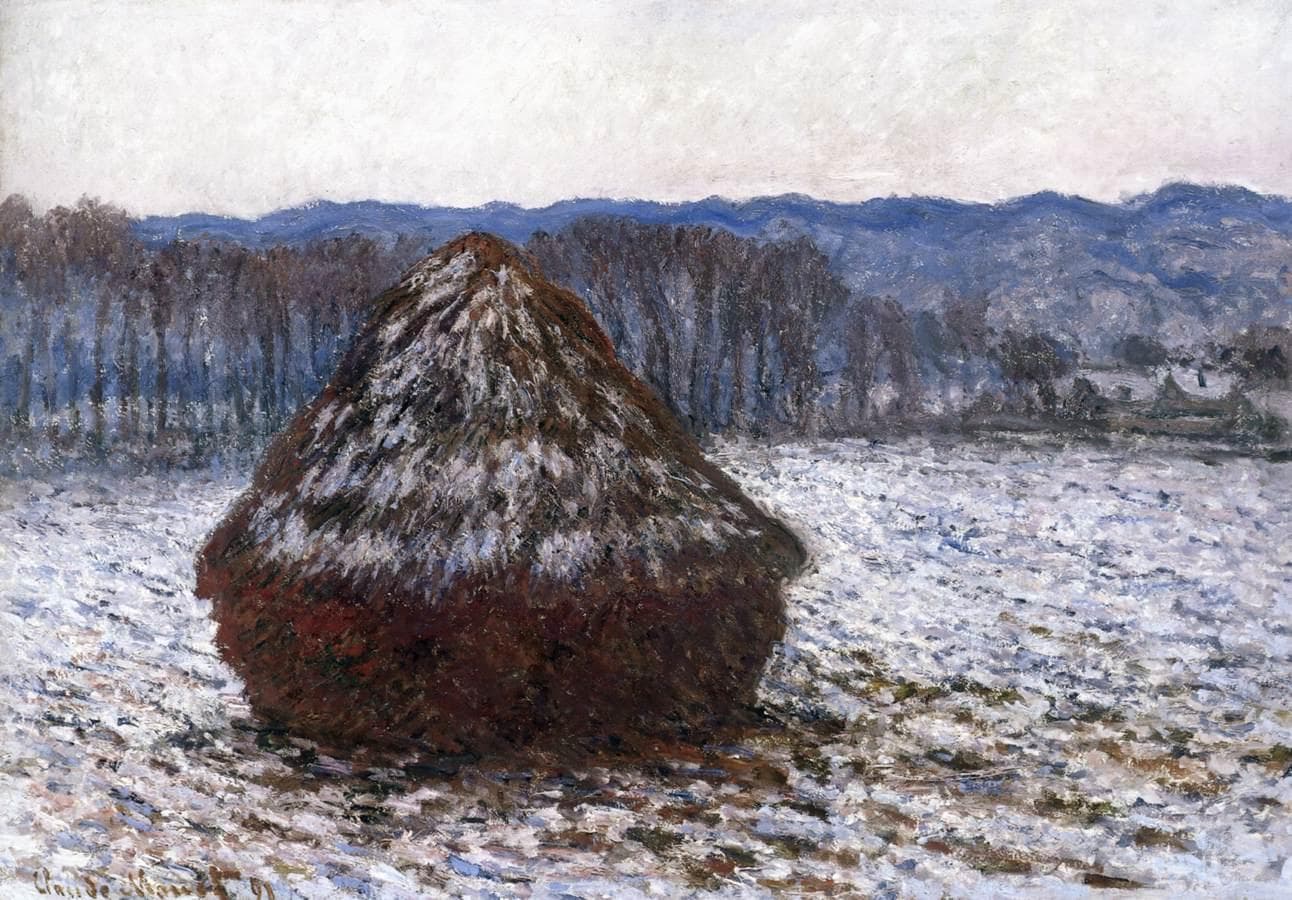
Stack of Wheat
Claude Monet · 1890–91
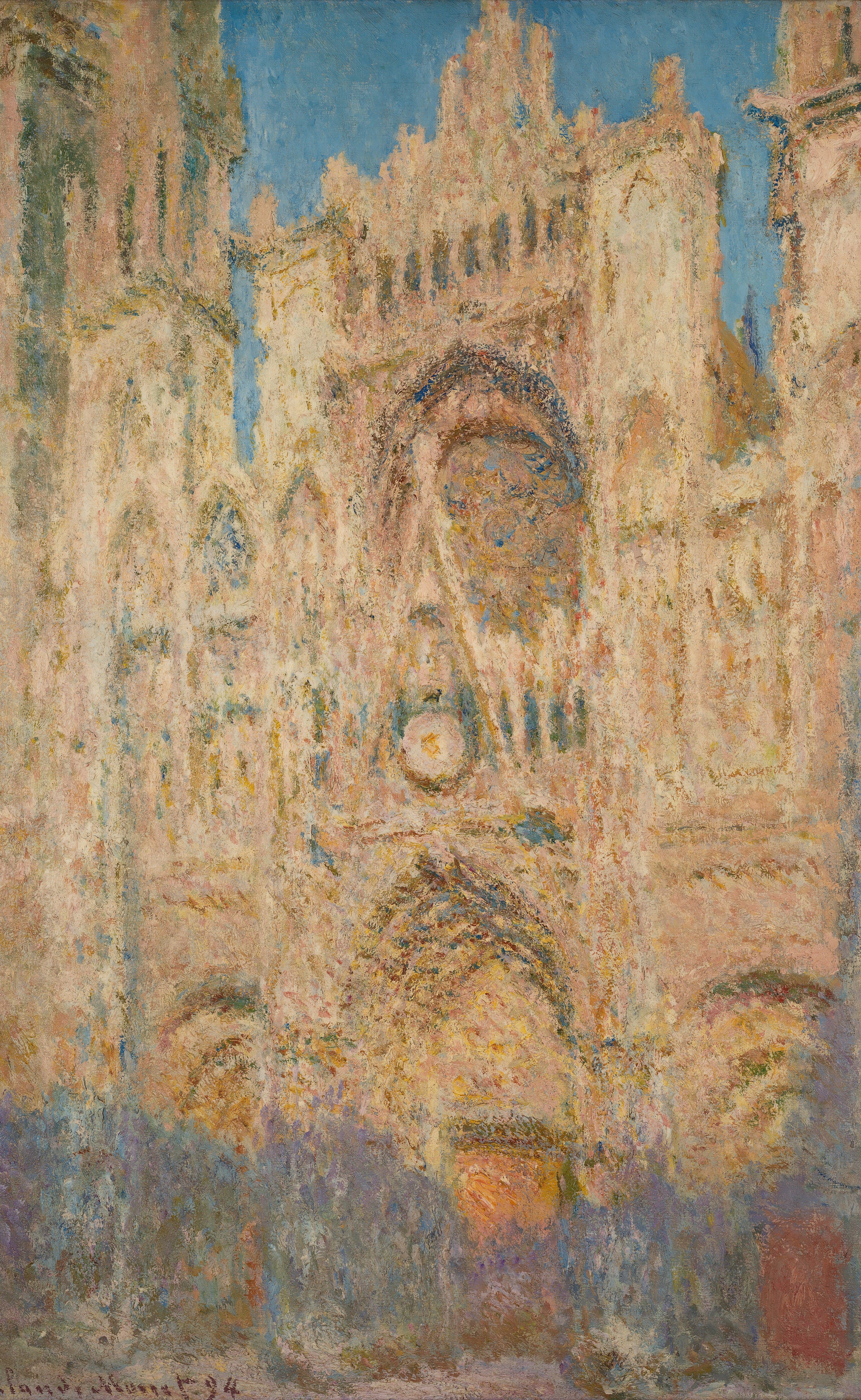
Rouen Cathedral, Evening
Claude Monet · 1894
Poplars on the Banks of the River Epte
Claude Monet · 1891

Nymphs Dancing to Pan's Flute
Joseph Tomanek

The Scream
Edvard Munch · 1893

Ophelia
John Everett Millais · 1851–52