Image: Museo del Prado, Madrid · Public domain · via Wikimedia Commons
Romanticism
A Pilgrimage to San Isidro
Francisco Goya, c. 1819–1823
A Pilgrimage to San Isidro is one of Francisco Goya's Black Paintings, painted on a wall of his house near Madrid around 1819–1823. A dark crowd of singing pilgrims winds through a nocturnal landscape. It is in the Prado.
- Artist
- Francisco Goya
- Date
- c. 1819–1823
- Medium
- Oil mural transferred to canvas
- Dimensions
- 138.5 × 436 cm
- Collection
- Museo del Prado, Madrid, Spain
- Movement
- Romanticism
What you're looking at
A long, low frieze of people moving through a dark landscape. At the left, crammed into the foreground, a group of men and women sing with their mouths wide open, heads thrown back, eyes rolled or squeezed shut. One near the front seems to be playing a guitar. Behind them the crowd thickens into a mass of hats, shawls and faces, and then streams away to the right as a procession that winds up a rocky slope and dwindles to tiny marks against the gray sky.
There are hints of different classes in the crowd: humble shawls and caps in the foreground, top hats and what look like nuns' habits further back. At the far right edge, cut off by the frame, a single figure in profile opens his mouth in what could be a song or a groan.
The palette is black, brown, ocher and gray, with a few touches of white on faces and collars. The canvas is huge, about 138 by 436 cm, and the paint is laid on in fast, loose strokes, so that the crowd looks less like a set of individuals than a single creature with many mouths.
What is A Pilgrimage to San Isidro?
The title refers to the romería, the popular pilgrimage, to the hermitage of San Isidro, Madrid's patron saint, held every year around his feast day on May 15. Madrileños crossed the Manzanares to the hermitage on the west bank to drink from its spring, picnic in the meadow and celebrate late into the night. Goya's house, the Quinta del Sordo, stood on that same side of the river, so the festival took place close to the walls on which he painted it.
Goya had painted the same festival once before, in a completely different mood. The Meadow of San Isidro (1788), a small oil sketch for a wall hanging to be woven at the royal workshop of Santa Bárbara, now also in the Prado, shows elegant crowds picnicking in bright afternoon light, with a clear view of Madrid's skyline across the river. In the Black Painting the city has gone, the light has gone and the cheerful picnickers have become a dark, chanting mob.
What does A Pilgrimage to San Isidro mean?
Goya gave none of the Black Paintings titles or explanations, so the meaning is inferred from the image and its setting. Most readings stress the contrast with 1788. A festival that once stood for Madrid's sociable public life has become, thirty years later, an image of a people intoxicated, disoriented and moving in a mass toward something they cannot see. The writer John J. Ciofalo suggested a more personal twist: that the procession is heading for Goya's own house and his haunted imagination.
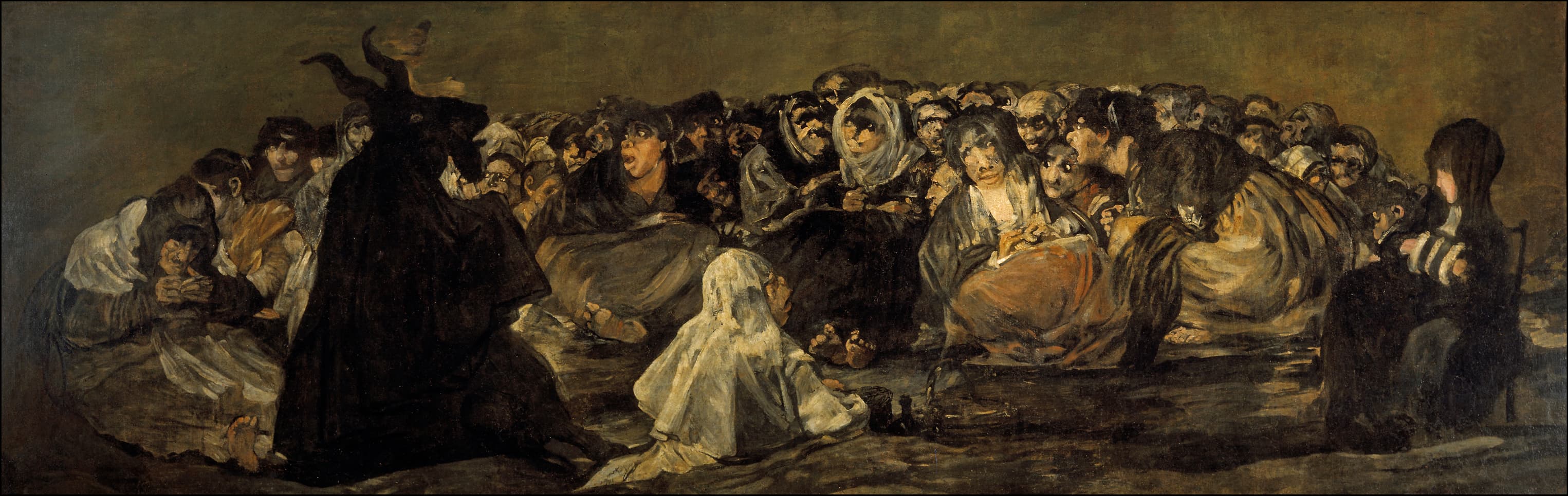
The picture also had a partner. It was painted on a long wall of the ground-floor room of the house, directly facing Witches' Sabbath (The Great He-Goat). The two are the largest of the fourteen murals and mirror each other: on one wall a nocturnal coven gathered around a goat-devil, on the other a nocturnal pilgrimage singing its way to a saint's shrine. Religion and superstition face each other, and the crowds look much the same.
Its loss of individuality, the way the procession melts into the hillside, has led critics to see it as a forerunner of Expressionism, and especially of the masked crowds of the Belgian painter James Ensor.
Where it hung, and what happened to it
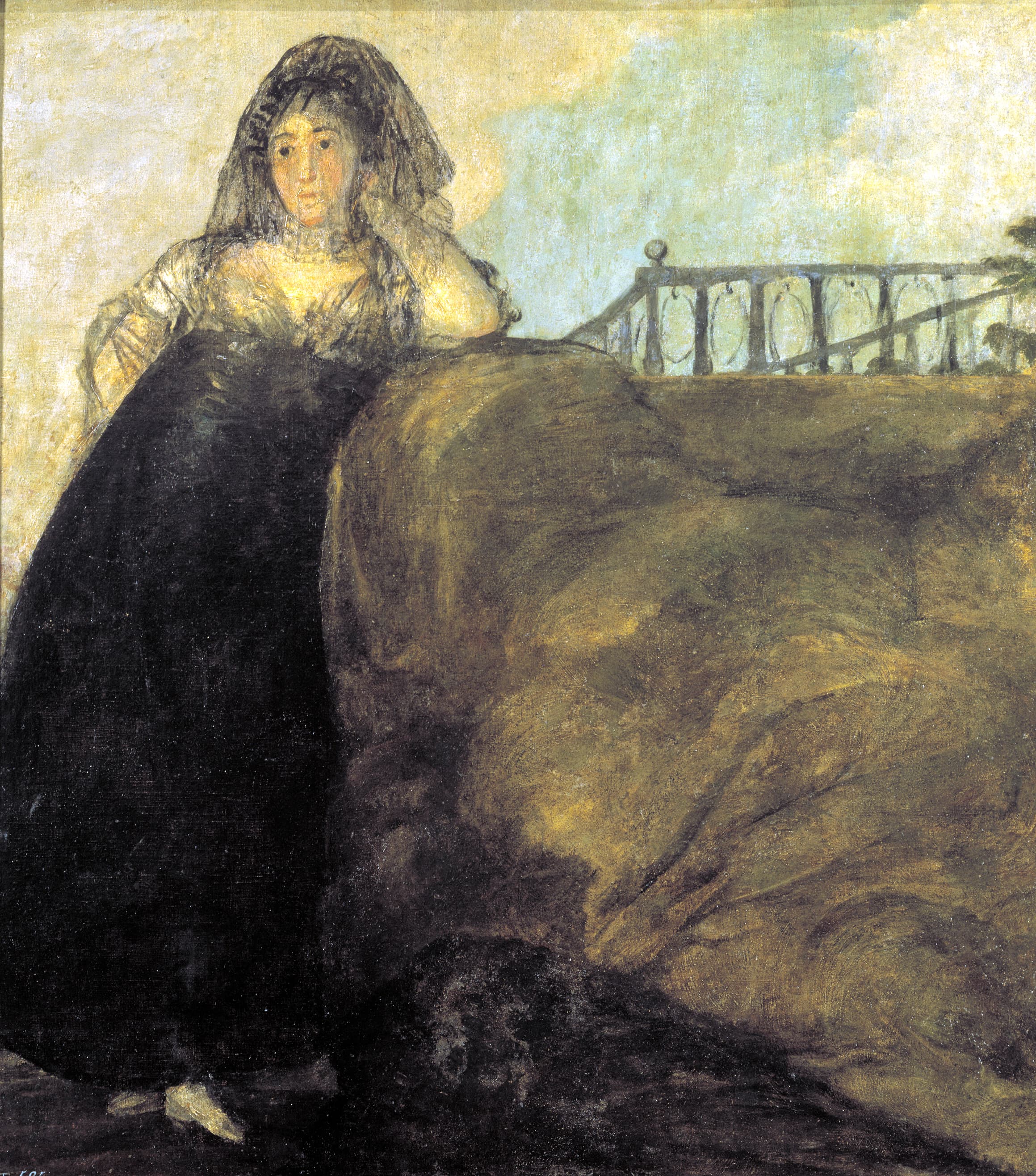
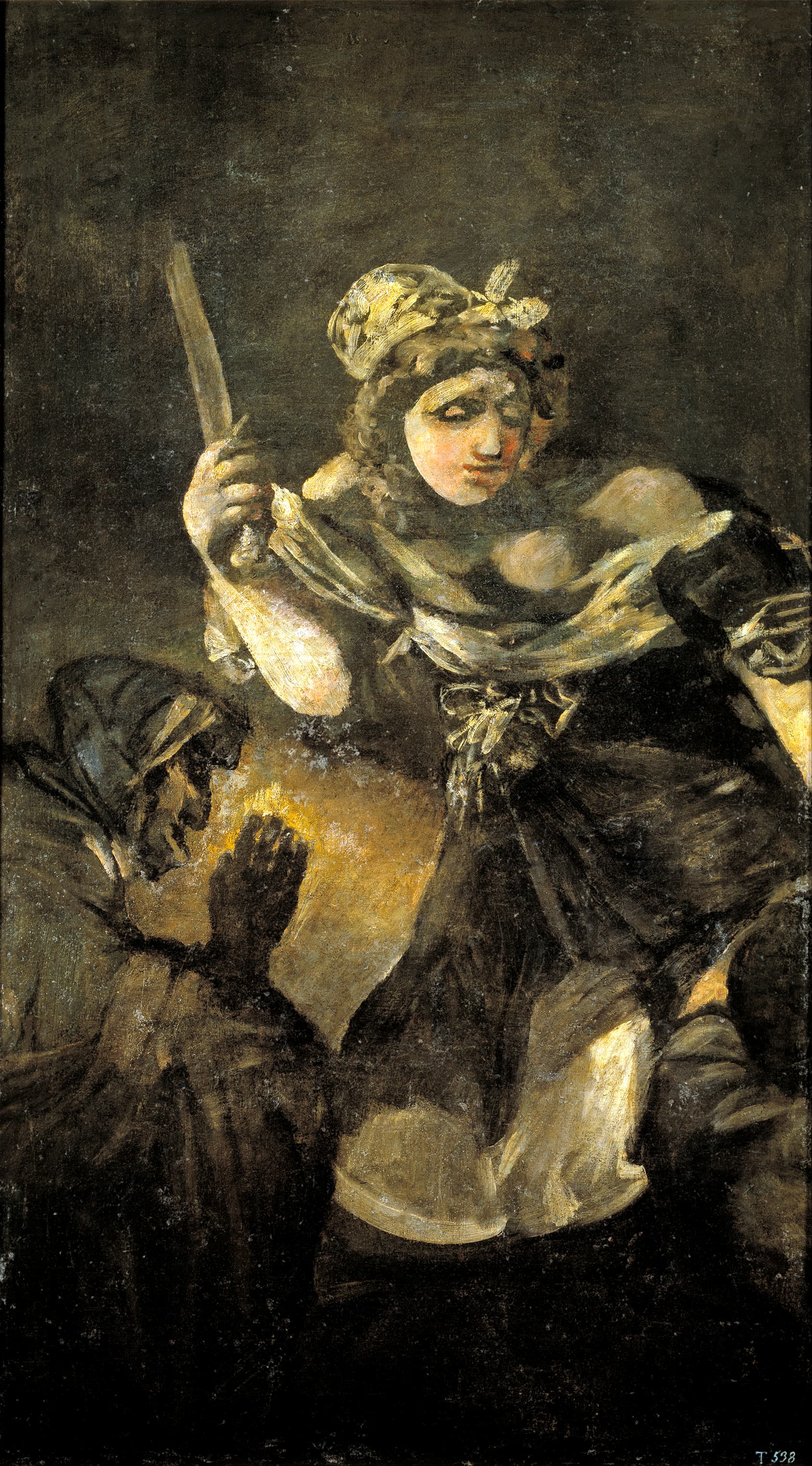
The same ground-floor room held Saturn Devouring His Son, Judith and Holofernes and La Leocadia. All were painted in oil directly on the plaster between about 1819 and 1823.
In 1873–74 the banker Baron Émile d'Erlanger, who had bought the house, had the murals lifted from the walls and transferred to canvas by the Prado restorer Salvador Martínez Cubells. The transfer saved them but damaged them, with losses and retouching throughout. D'Erlanger showed the canvases at the Paris Exposition Universelle of 1878 and then gave them to the Spanish state, which accepted the gift in 1881.
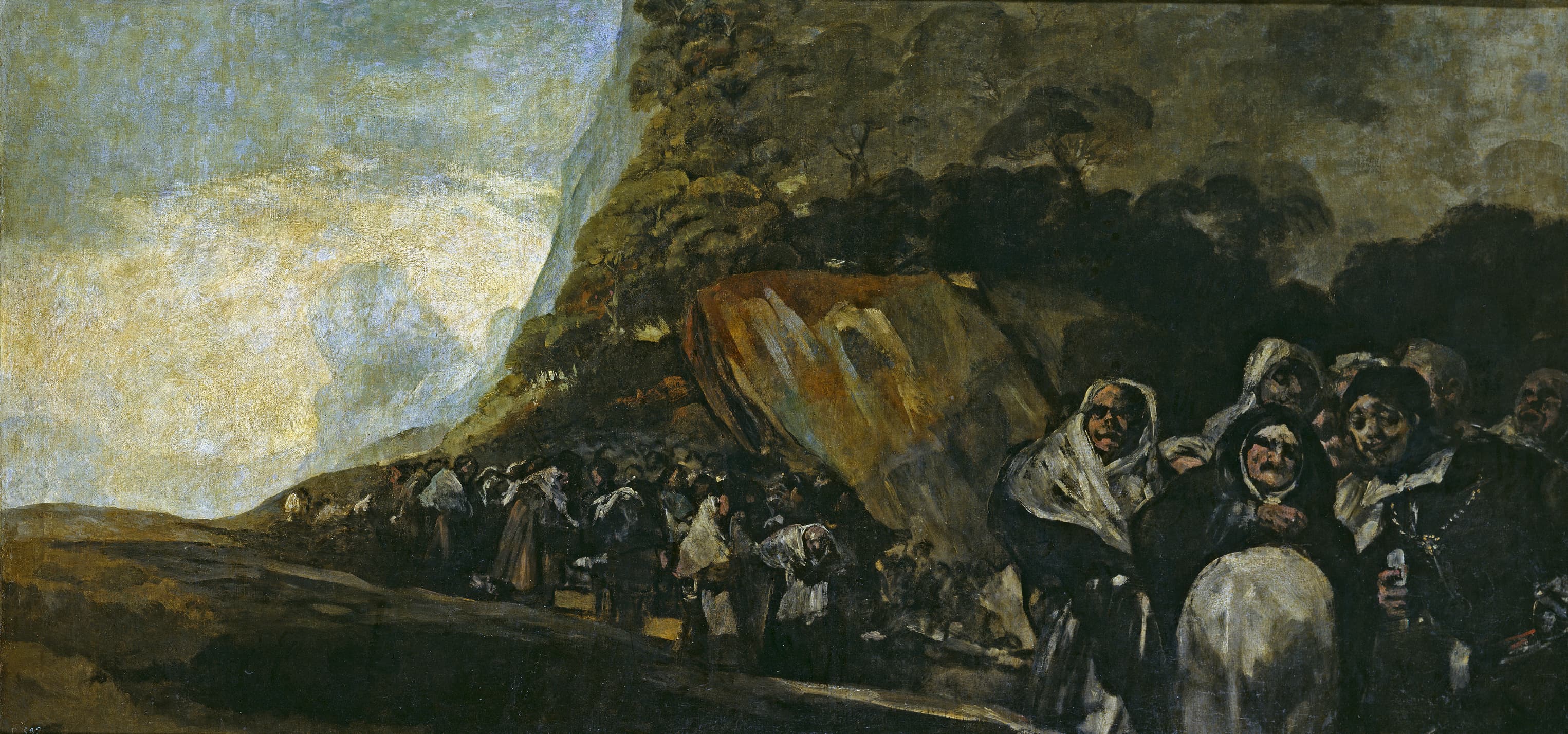
This painting should not be confused with another Black Painting with a similar name, The Holy Office (Pilgrimage to the Fountain of San Isidro), a smaller scene of a group of figures in the foreground of a landscape, which hung upstairs.
What to notice
Look at the open mouths in the foreground. Goya paints them as dark holes, almost identical from face to face, and repeats them so often that the eye starts to hear the noise. Then follow the procession back to the right. The figures shrink to dabs, then to a ragged line along the ridge, and finally to nothing. The pilgrimage never arrives anywhere in the picture.
Where to see A Pilgrimage to San Isidro today
The painting is in the Museo del Prado in Madrid, catalogued as La romería de San Isidro. It hangs with the other Black Paintings in a single room on the ground floor, usually opposite the Witches' Sabbath, as in Goya's house. The 1788 Meadow of San Isidro is also in the Prado, which makes it possible to compare Goya's two views of the same festival in one visit.
Questions & answers
What does Goya's A Pilgrimage to San Isidro mean?
Goya left no explanation. The picture turns Madrid's cheerful spring festival, which he had painted in bright daylight in 1788, into a dark crowd of singing, gaping pilgrims. It is usually read as an image of a disoriented, intoxicated people, and it faced the Witches' Sabbath across the same room.
Where is A Pilgrimage to San Isidro?
It is in the Museo del Prado in Madrid, displayed with the other Black Paintings. Goya painted it on a ground-floor wall of his house, the Quinta del Sordo; it was transferred to canvas in 1873–74 and entered the Spanish state collection in 1881.
What is the San Isidro pilgrimage?
It is a popular pilgrimage, or romería, to the hermitage of San Isidro, Madrid's patron saint, held around his feast day on May 15. People crossed the Manzanares to drink from the saint's spring and picnic in the meadow. Goya's house stood on the same bank of the river.
Is A Pilgrimage to San Isidro the same as The Holy Office?
No. They are two different Black Paintings. A Pilgrimage to San Isidro is the huge frieze of singing pilgrims on the ground floor. The Holy Office, also called Pilgrimage to the Fountain of San Isidro, is a smaller scene of figures in a landscape that hung upstairs.
How big is A Pilgrimage to San Isidro?
It measures about 138.5 by 436 cm, making it one of the two largest Black Paintings together with the Witches' Sabbath, which it faced across the ground-floor room of Goya's house.
More by the artist
Francisco Goya

Saturn Devouring His Son
Francisco Goya · c. 1819–1823
The Third of May 1808
Francisco Goya · 1814
The Sleep of Reason Produces Monsters
Francisco Goya · 1797–99 (published 1799)
Fantastic Vision (Asmodea)
Francisco Goya · c. 1819–1823
La Leocadia
Francisco Goya · c. 1819–1823
Judith and Holofernes
Francisco Goya · c. 1819–1823
The Dog
Francisco Goya · c. 1819–1823
The Holy Office (Pilgrimage to the Fountain of San Isidro)
Francisco Goya · c. 1819–1823
Also painted in 1820
The same year
Women Laughing
Francisco Goya · c. 1819–1823
Men Reading
Francisco Goya · c. 1819–1823
Witches' Sabbath (The Great He-Goat)
Francisco Goya · c. 1819–1823
Fight with Cudgels
Francisco Goya · c. 1819–1823
Two Old Men Eating Soup
Francisco Goya · c. 1819–1823
Two Old Men
Francisco Goya · c. 1819–1823
Atropos (The Fates)
Francisco Goya · c. 1819–1823
Kindred works
You may also study
Witches' Sabbath (The Great He-Goat)
Francisco Goya · c. 1819–1823

Nymphs Dancing to Pan's Flute
Joseph Tomanek

The Scream
Edvard Munch · 1893

The Thinker
Auguste Rodin · Modeled 1880–82; enlarged 1902–03; this cast 1904
The Creation of Adam
Michelangelo · c. 1511–12

Ophelia
John Everett Millais · 1851–52
Lucifer
Franz von Stuck · 1890
Head of a Skeleton with a Burning Cigarette
Vincent van Gogh · 1886