Image: Museo del Prado, Madrid · Public domain · via Wikimedia Commons
Romanticism
The Holy Office (Pilgrimage to the Fountain of San Isidro)
Francisco Goya, c. 1819–1823
The Holy Office (Pilgrimage to the Fountain of San Isidro) is a Black Painting by Francisco Goya, painted on a wall of his house near Madrid around 1819–1823. Grim figures stand before a procession and a dark hill. It is in the Prado.
- Artist
- Francisco Goya
- Date
- c. 1819–1823
- Medium
- Oil mural transferred to canvas
- Dimensions
- 127 × 266 cm
- Collection
- Museo del Prado, Madrid, Spain
- Movement
- Romanticism
What you're looking at
A huge dark hill, shaggy with scrub, fills the right half of the picture. At its foot, packed into the right foreground, stands a cluster of figures who face us: old women in white headscarves and shawls, with deep-set, staring eyes, and among them men in dark clothes, one or two of whom seem to wear hoods. Behind them, a long column of small figures stretches away to the left along a path or road, toward a stretch of open ground and a pale, cloudy sky.
The colors are earth and smoke: brown, ocher, gray and black, with the whites of the women's headscarves and a few faces catching the light. The canvas, about 127 by 266 cm, is wider than it is tall, a long landscape format like several of the murals from the same upper room.
The foreground figures are close enough to read as individuals, but Goya gives them very little individuality. Their eyes are dark smudges, their mouths small and set. They look less like pilgrims on a holiday than like witnesses at something grim.
What is The Holy Office (Pilgrimage to the Fountain of San Isidro)?
The painting has two titles, and both are later inventions; Goya named none of the Black Paintings. The Prado catalogues it as Peregrinación a la fuente de San Isidro, or Pilgrimage to the Fountain of San Isidro. The alternative title, El Santo Oficio, The Holy Office, is the old official name of the Spanish Inquisition, and it reflects a reading of the foreground group as officials or followers of the Inquisition in procession.
The first title links it to the spring at the hermitage of San Isidro, on the west bank of the Manzanares near Goya's house, whose waters were believed to heal. The second makes it political. Neither can be proved. What the picture shows is a procession and a group of grim, staring people in a desolate place, and the two titles show how early viewers tried to name what they felt in front of it.
Why the Inquisition reading matters
Goya had been mocking the Inquisition for decades. In the Caprichos prints of 1799 he showed victims in the tall paper hats of the condemned, and in drawings from the 1810s he recorded people punished by the Inquisition for being born elsewhere or for being of Jewish descent. In 1814 Ferdinand VII restored the Inquisition after the Peninsular War; the liberal government abolished it again in 1820, during the very years Goya was covering the walls of his house. A painting of a dark, solemn procession in the upper room of a liberal's private home invites the reading the second title gives it, even if Goya never wrote a word about it.
Not to be confused with A Pilgrimage to San Isidro
The house held two pictures connected with San Isidro, and they are often mixed up. A Pilgrimage to San Isidro (La romería de San Isidro) is the huge ground-floor frieze of singing, gaping pilgrims at night, which faced the Witches' Sabbath. The Holy Office is a smaller, quieter picture from the upper room, with the crowd pushed into the distance and a few hard-faced figures brought close.
Where it hung
This painting was in the upper room of the Quinta del Sordo, on the right-hand wall beyond the window, near Fantastic Vision (Asmodea). Facing it across the room were Atropos (The Fates) and Fight with Cudgels. All four share the long landscape format and the motif of figures set against a wide, empty countryside, which suggests Goya planned the room's long walls as a group.
The best-known image from the house, Saturn Devouring His Son, hung downstairs.
How it survived
The Black Paintings were painted in oil directly on plaster between about 1819 and 1823. In 1873–74 the banker Baron Émile d'Erlanger, then the owner of the house, had them transferred to canvas by the Prado restorer Salvador Martínez Cubells. Paint was lost and retouched in the process. D'Erlanger showed the canvases in Paris in 1878 and gave them to the Spanish state, which accepted them in 1881. Photographs taken by Jean Laurent around 1874, before the transfer, record the murals as they looked on the walls and are an important source for judging how much the restorers changed.
What to notice
Look at the hill. It takes up half the canvas and is painted more freely than anything else, scraped and dabbed in browns that seem to move. The figures are pressed into the space between it and the frame, as if the land itself were crowding them. Then find the white headscarves: they form a chain of pale shapes across the foreground that leads the eye from face to face.
Where to see The Holy Office today
The painting is in the Museo del Prado in Madrid, where the Black Paintings hang together in one room on the ground floor.
Questions & answers
Why is Goya's painting called The Holy Office?
The Holy Office was the official name of the Spanish Inquisition. The title reflects a reading of the solemn foreground figures as an Inquisition procession. Goya did not title the painting; the Prado uses the other name, Pilgrimage to the Fountain of San Isidro.
Where is The Holy Office (Pilgrimage to the Fountain of San Isidro)?
It is in the Museo del Prado in Madrid, displayed with the other Black Paintings. Goya painted it on a wall of the upper room of his house, the Quinta del Sordo; it was transferred to canvas in 1873–74 and entered the Spanish state collection in 1881.
Is The Holy Office the same as A Pilgrimage to San Isidro?
No. A Pilgrimage to San Isidro is the large ground-floor frieze of singing pilgrims at night. The Holy Office, or Pilgrimage to the Fountain of San Isidro, is a smaller landscape scene from the upper room, with a distant procession and a few grim figures in the foreground.
What does The Holy Office mean?
Goya left no explanation. If the figures are linked to the Inquisition, the picture fits his long hostility to it, from the Caprichos prints of 1799 onward. If it simply shows pilgrims at San Isidro's spring, it still turns a popular devotion into a grim and joyless scene.
More by the artist
Francisco Goya

Saturn Devouring His Son
Francisco Goya · c. 1819–1823
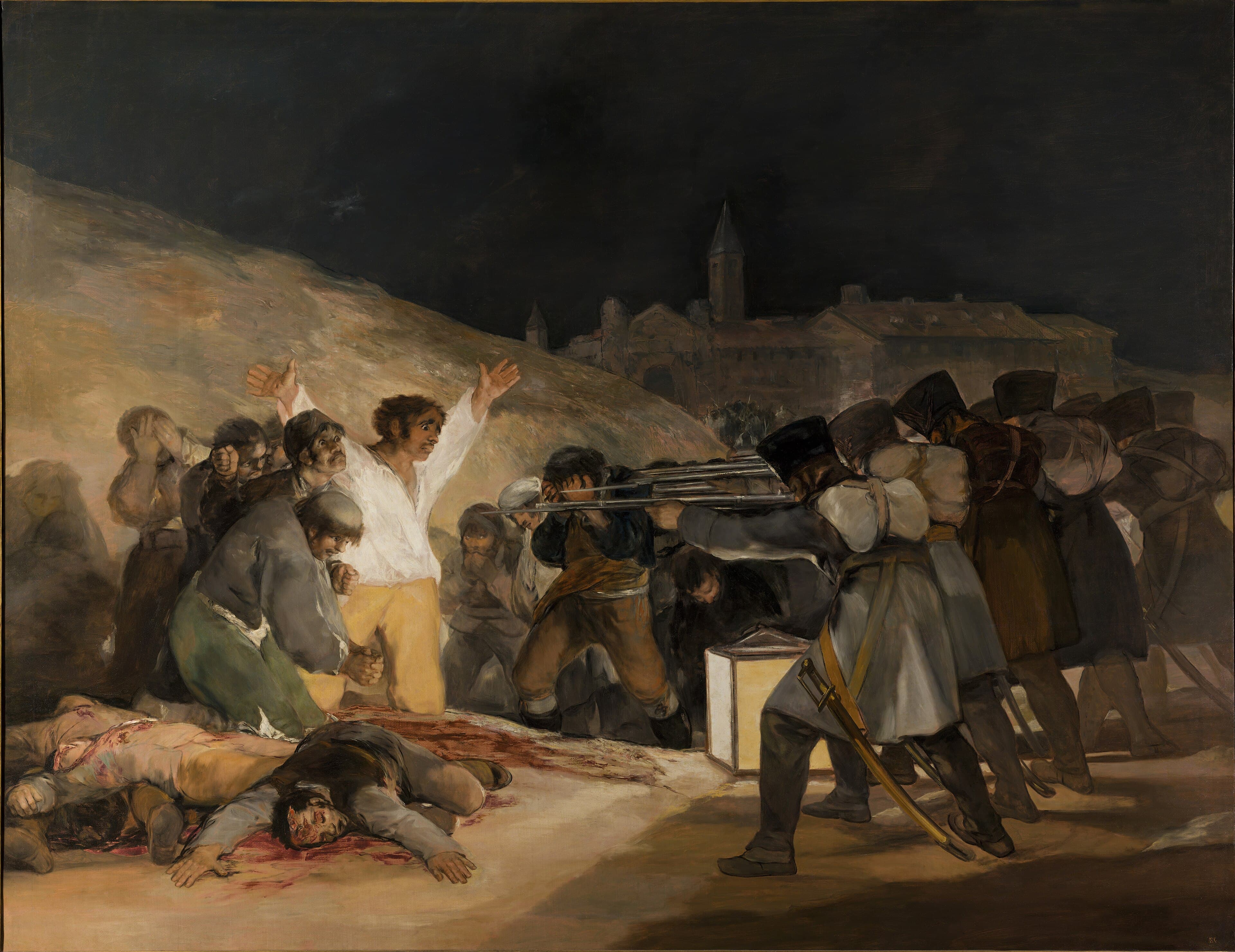
The Third of May 1808
Francisco Goya · 1814
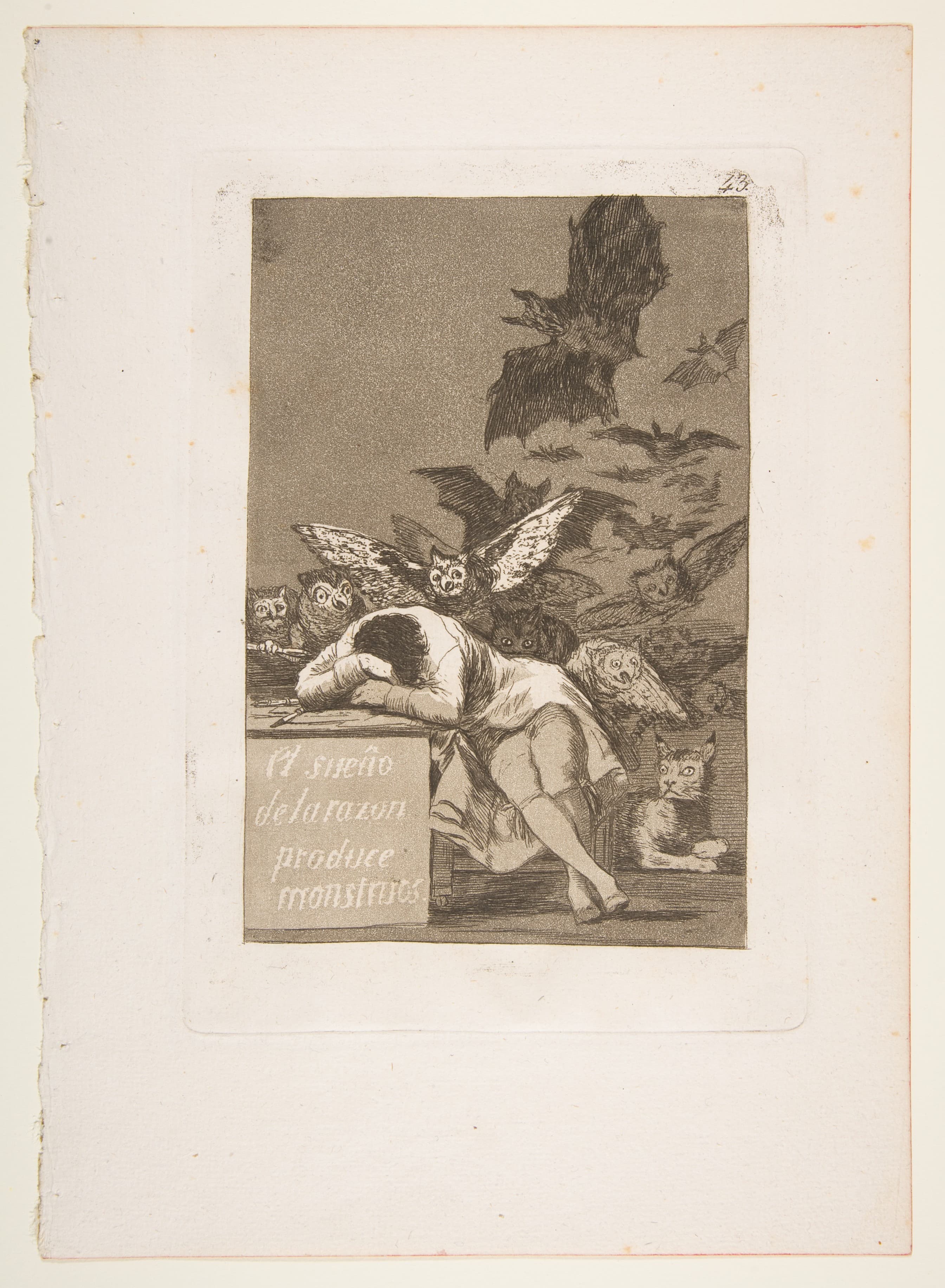
The Sleep of Reason Produces Monsters
Francisco Goya · 1797–99 (published 1799)
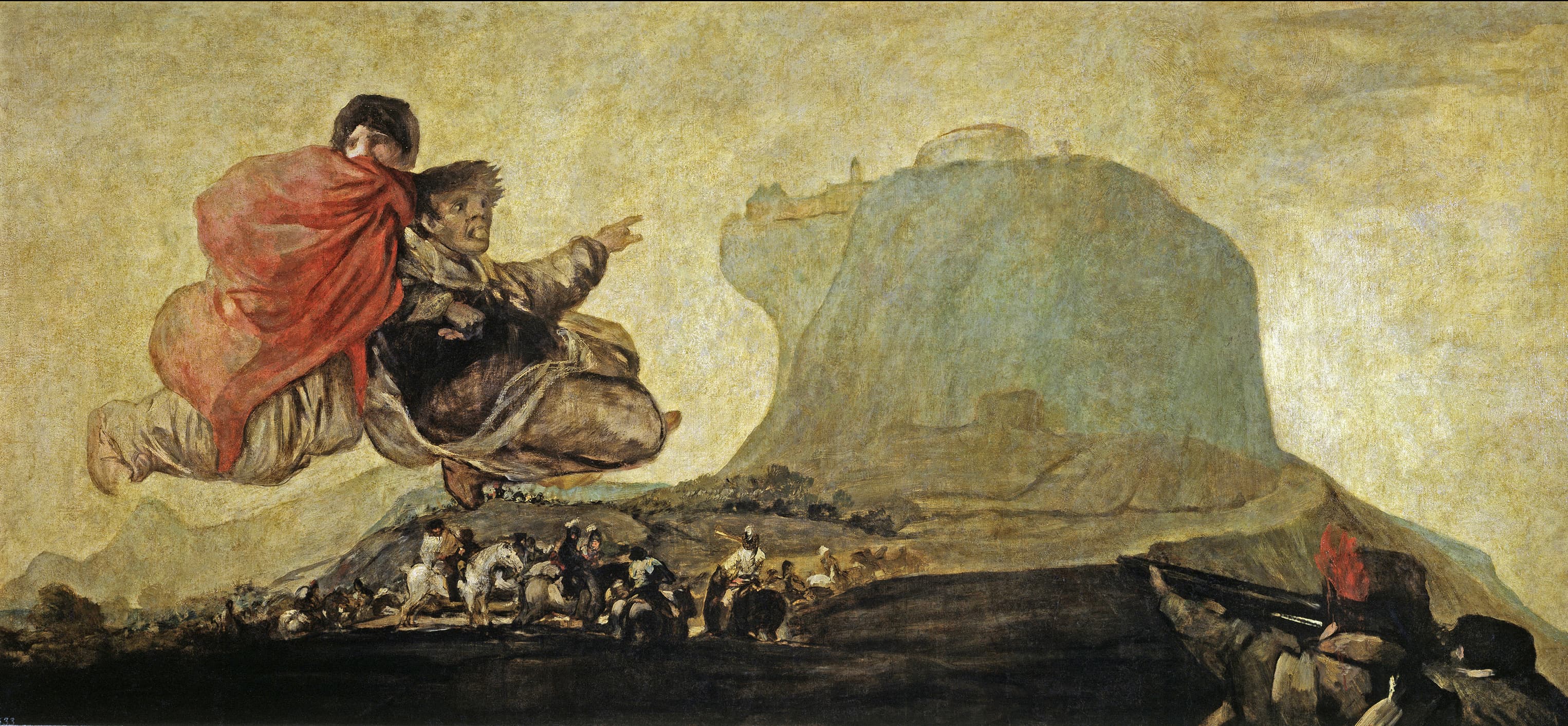
Fantastic Vision (Asmodea)
Francisco Goya · c. 1819–1823
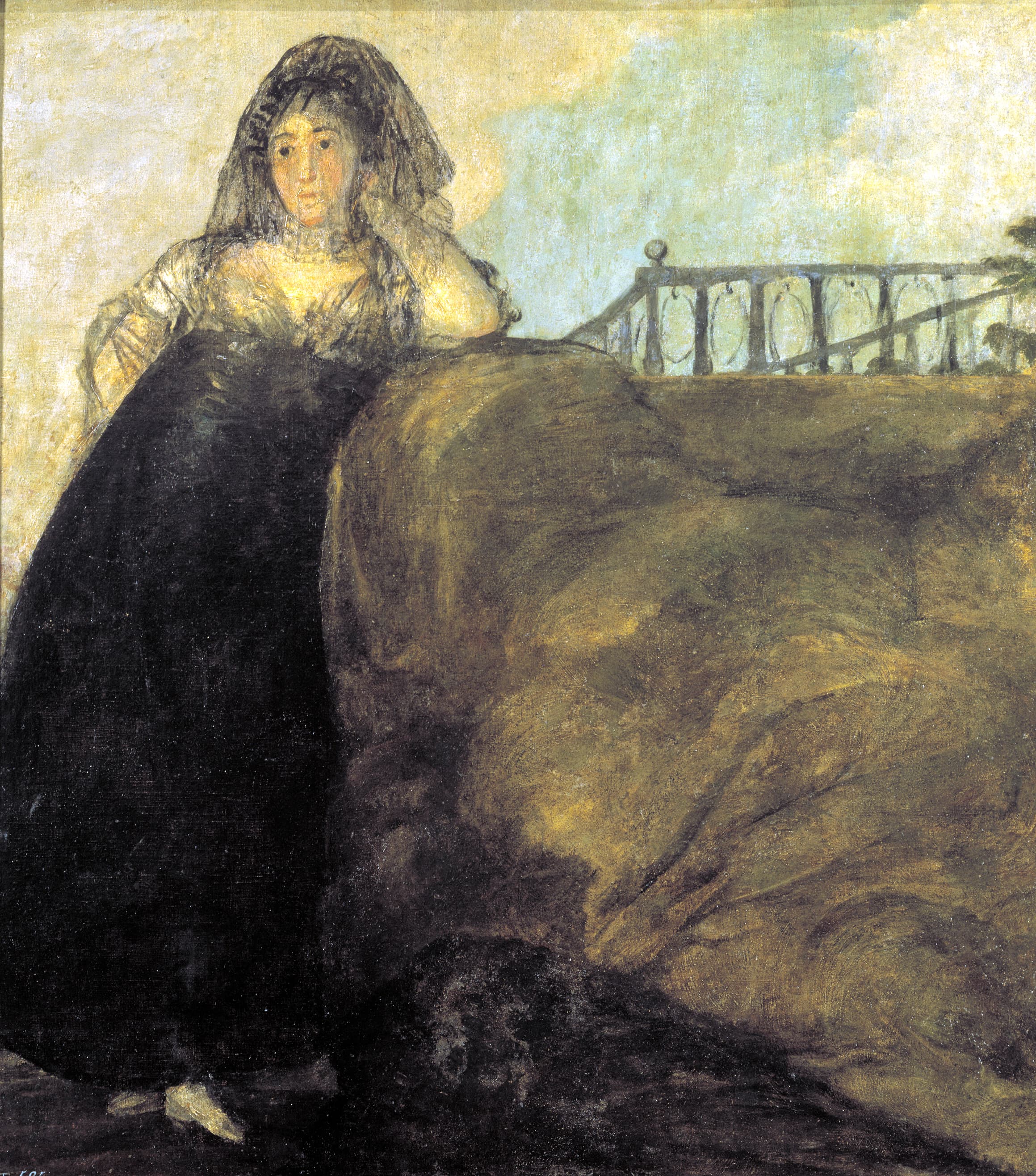
La Leocadia
Francisco Goya · c. 1819–1823
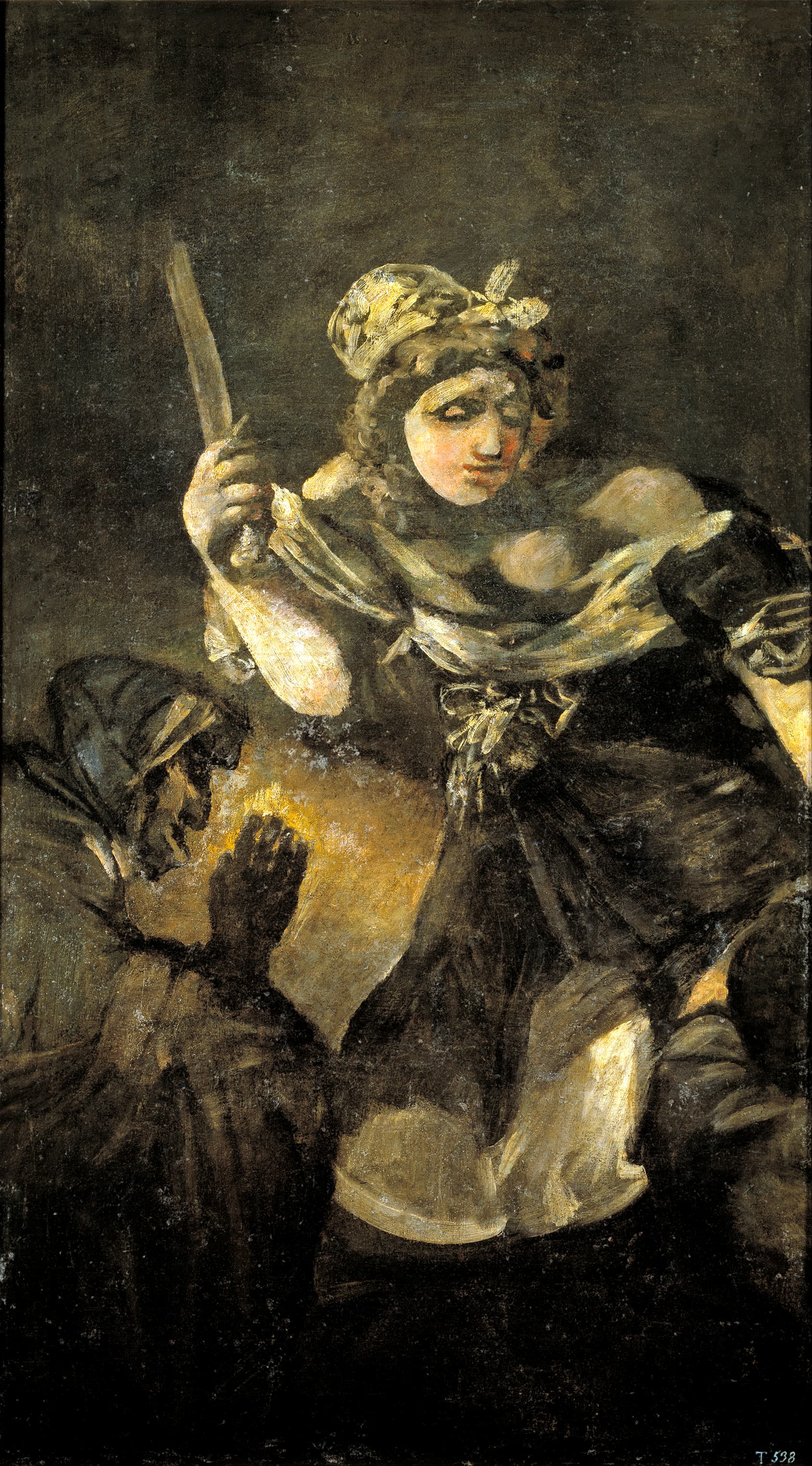
Judith and Holofernes
Francisco Goya · c. 1819–1823
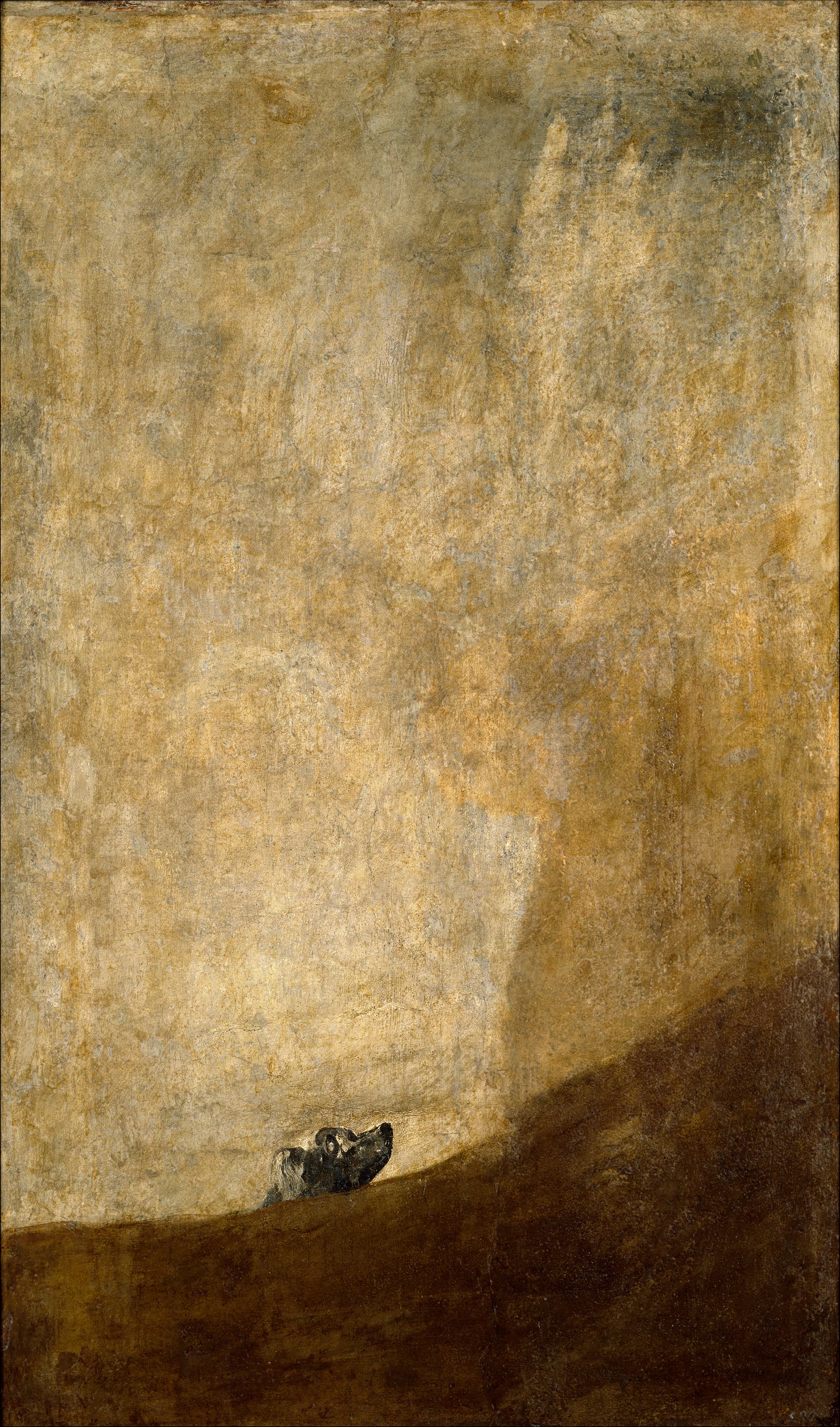
The Dog
Francisco Goya · c. 1819–1823
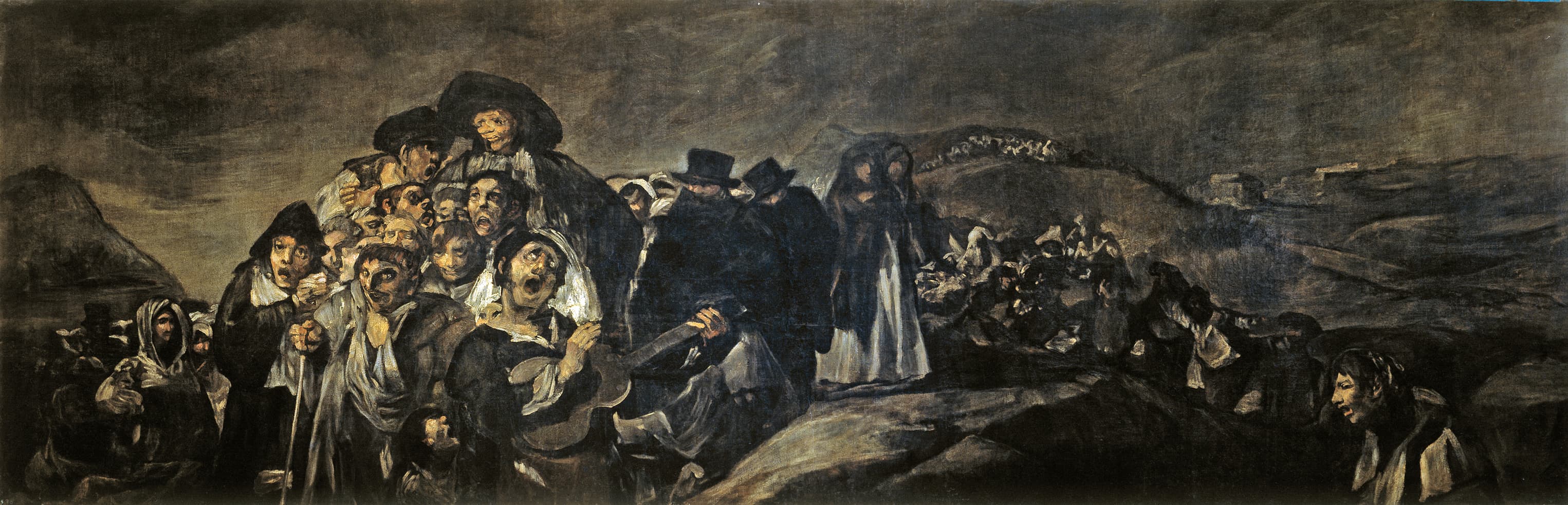
A Pilgrimage to San Isidro
Francisco Goya · c. 1819–1823
Also painted in 1820
The same year
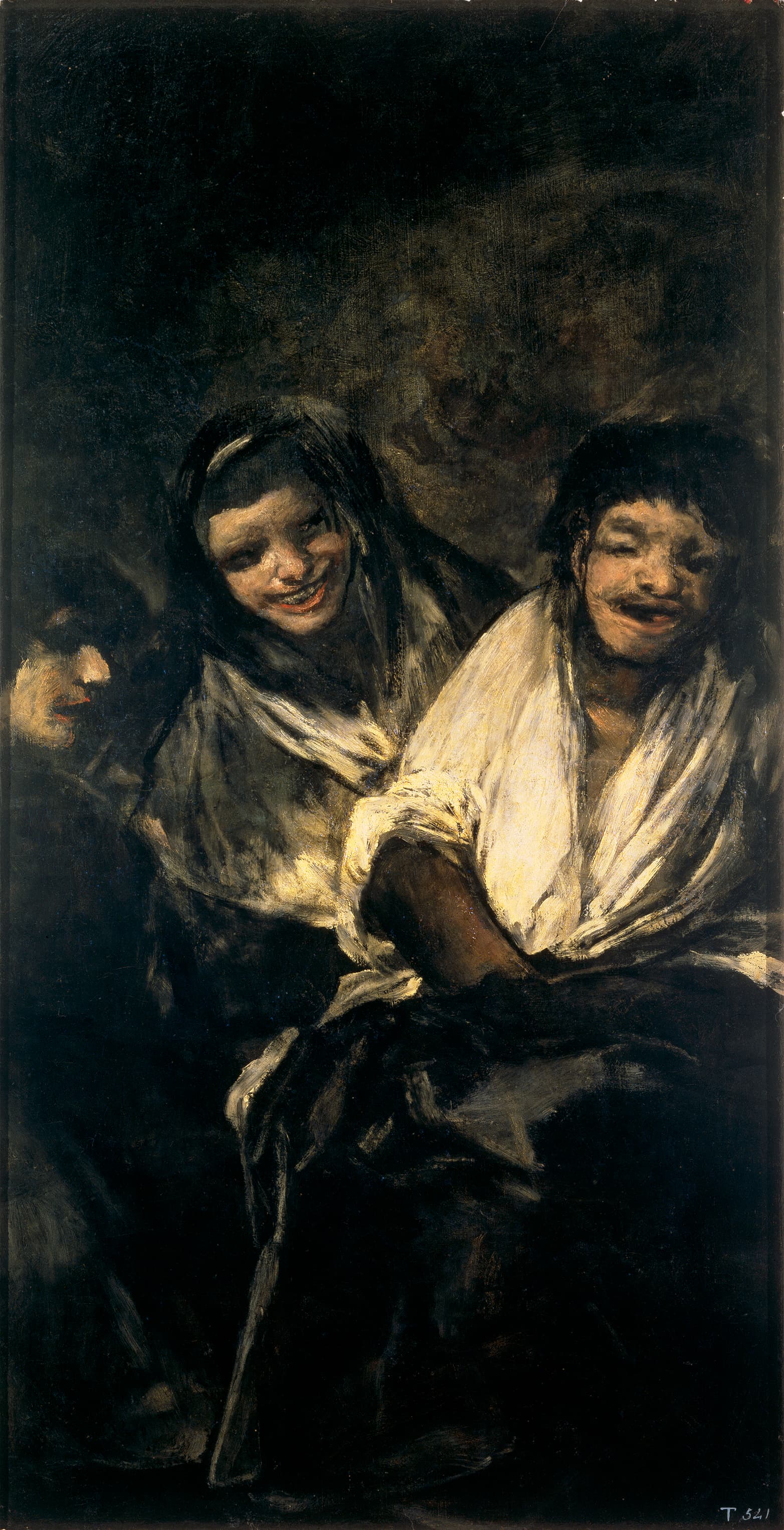
Women Laughing
Francisco Goya · c. 1819–1823
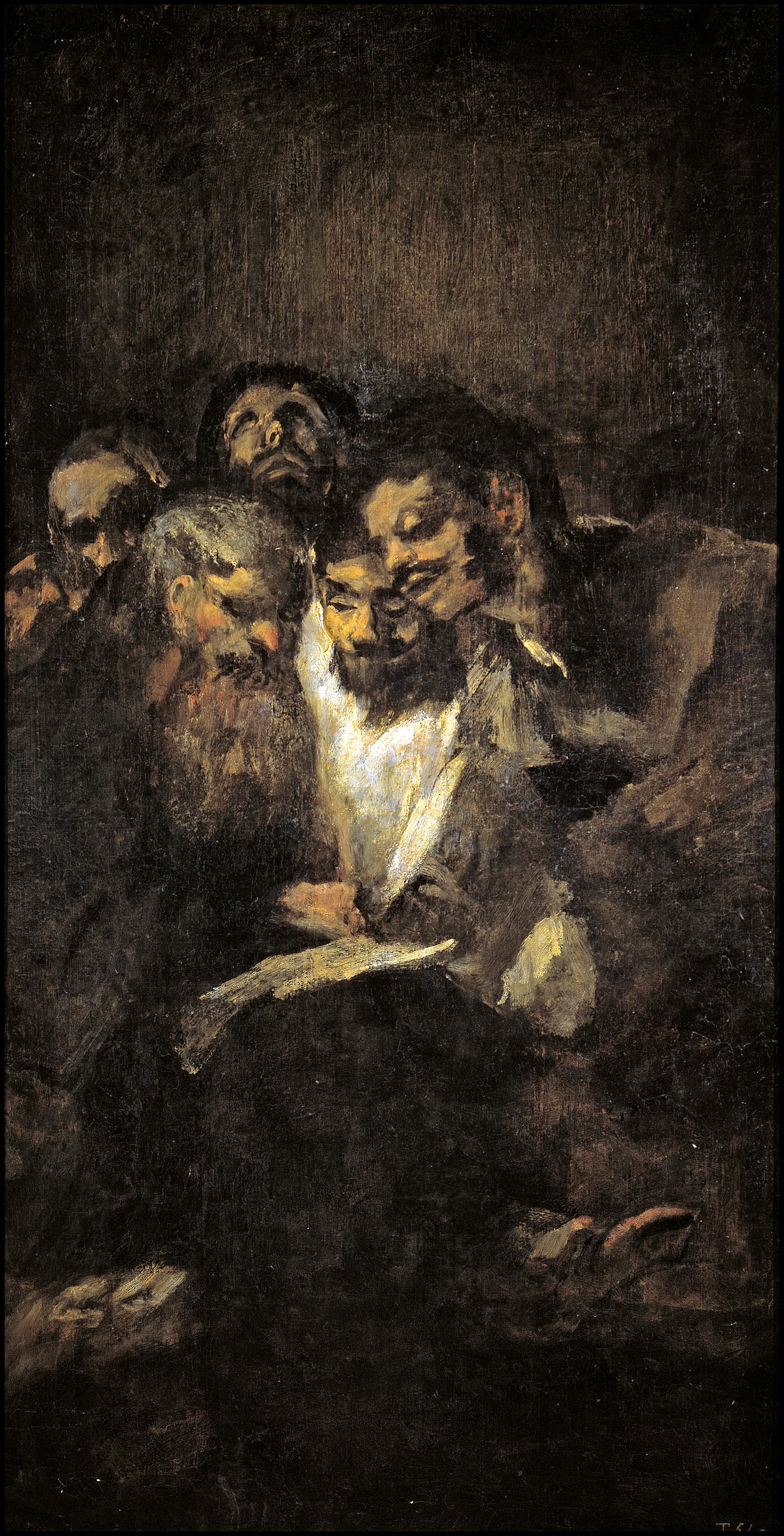
Men Reading
Francisco Goya · c. 1819–1823
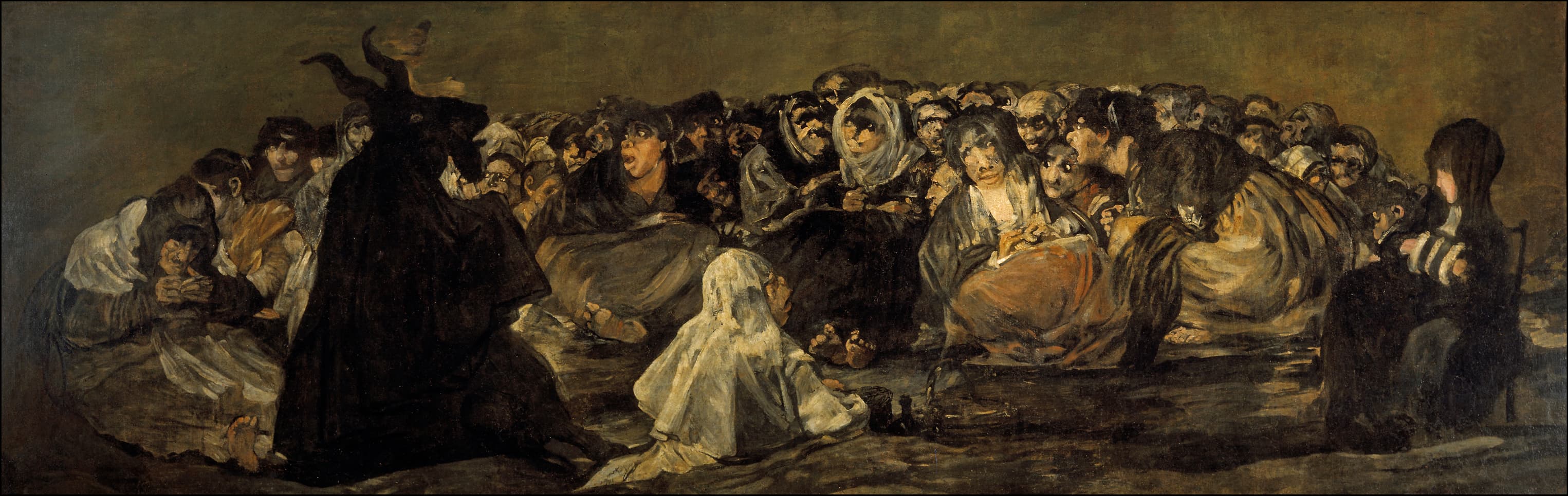
Witches' Sabbath (The Great He-Goat)
Francisco Goya · c. 1819–1823
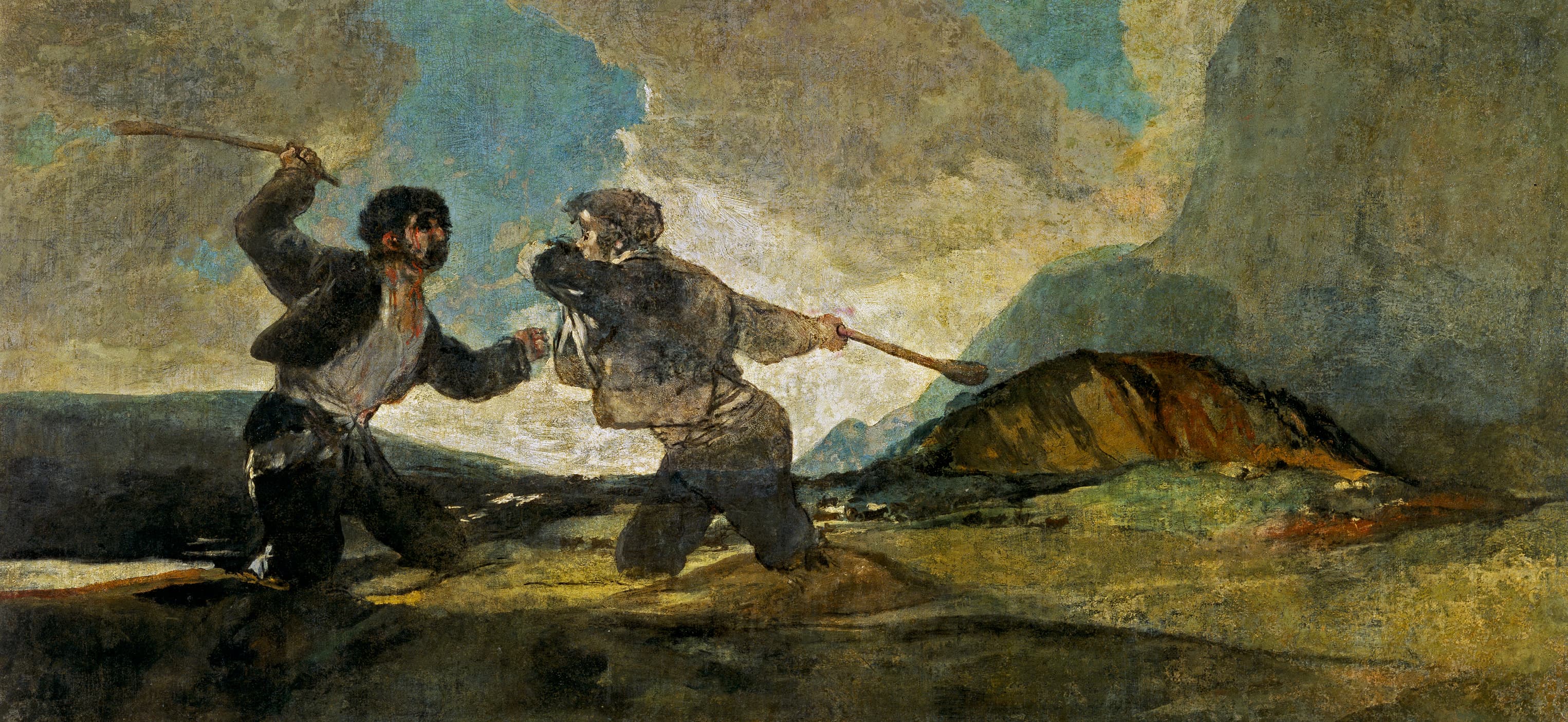
Fight with Cudgels
Francisco Goya · c. 1819–1823
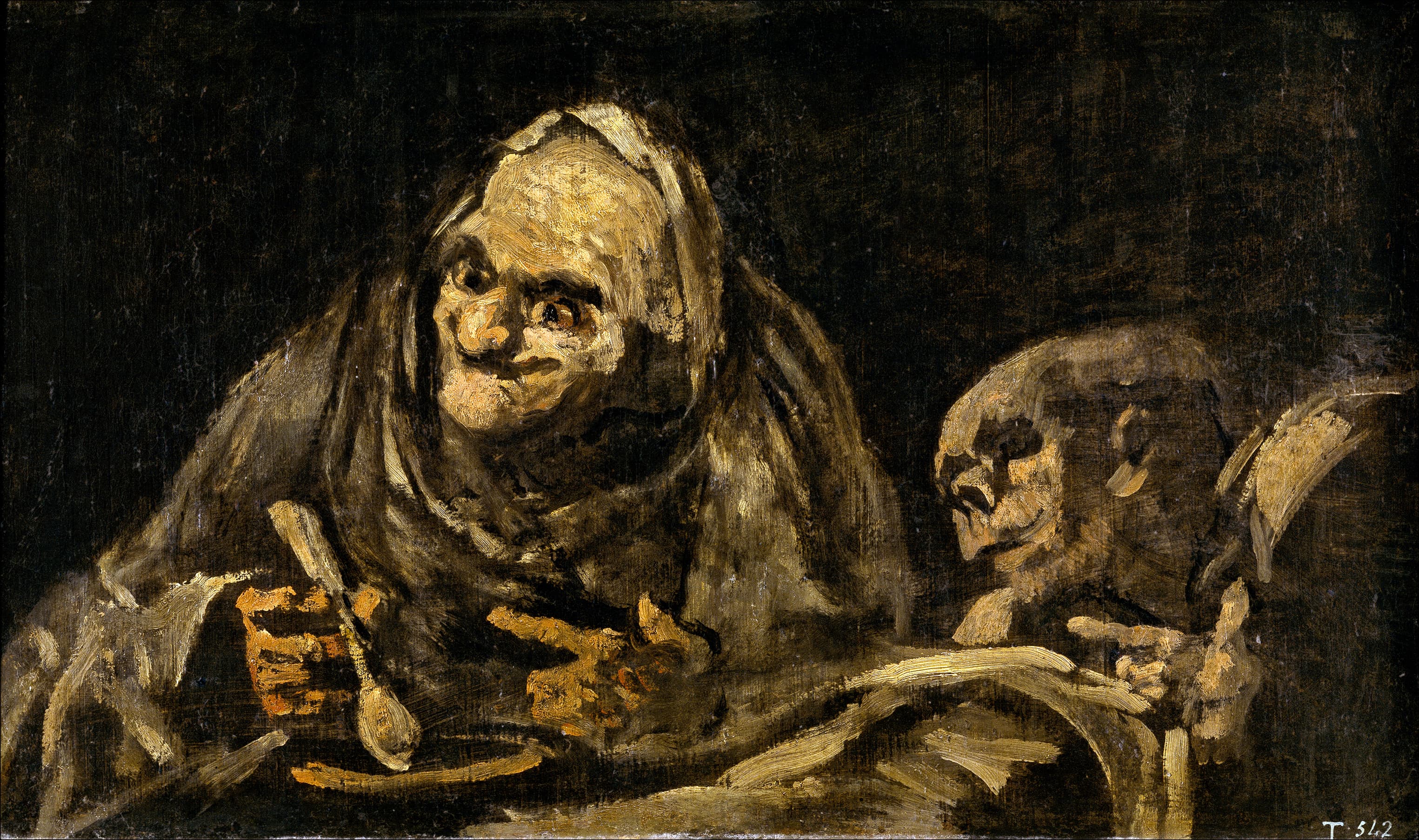
Two Old Men Eating Soup
Francisco Goya · c. 1819–1823
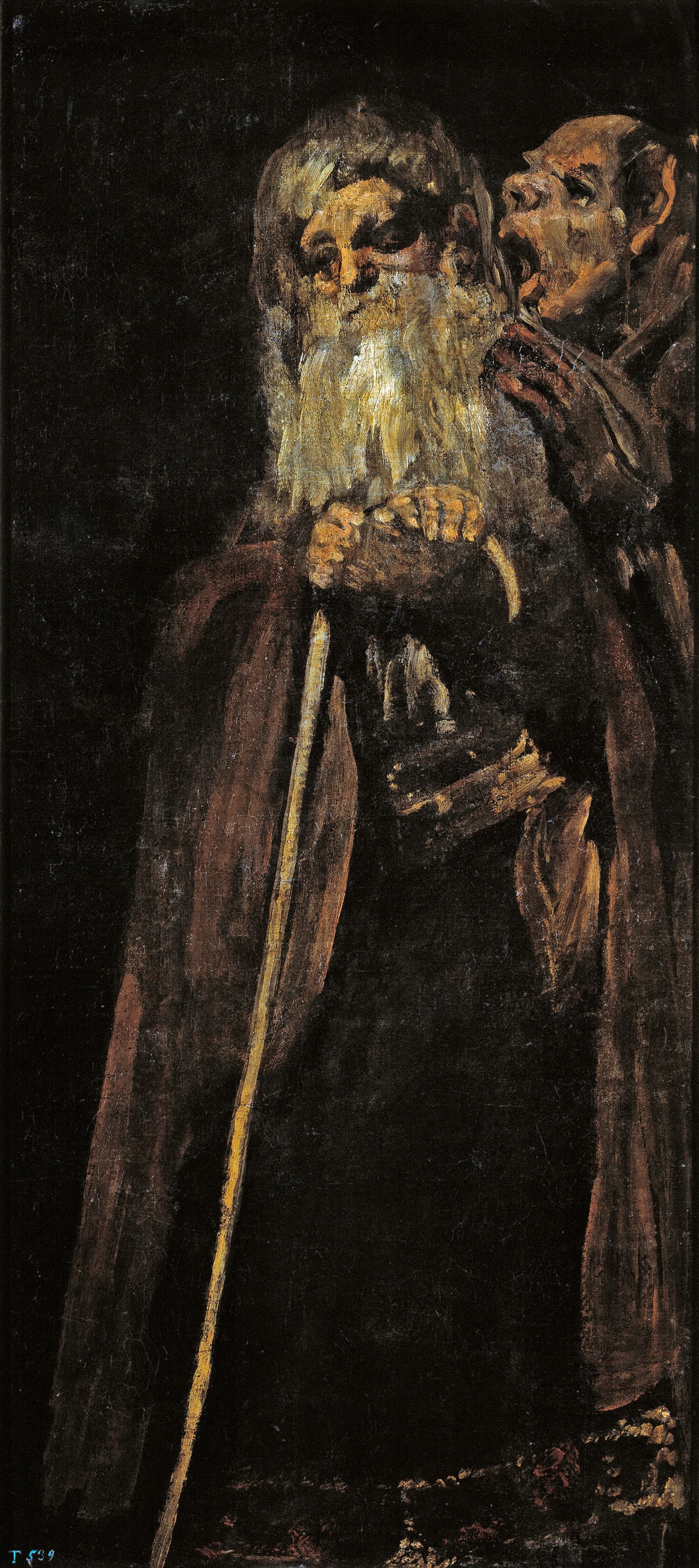
Two Old Men
Francisco Goya · c. 1819–1823
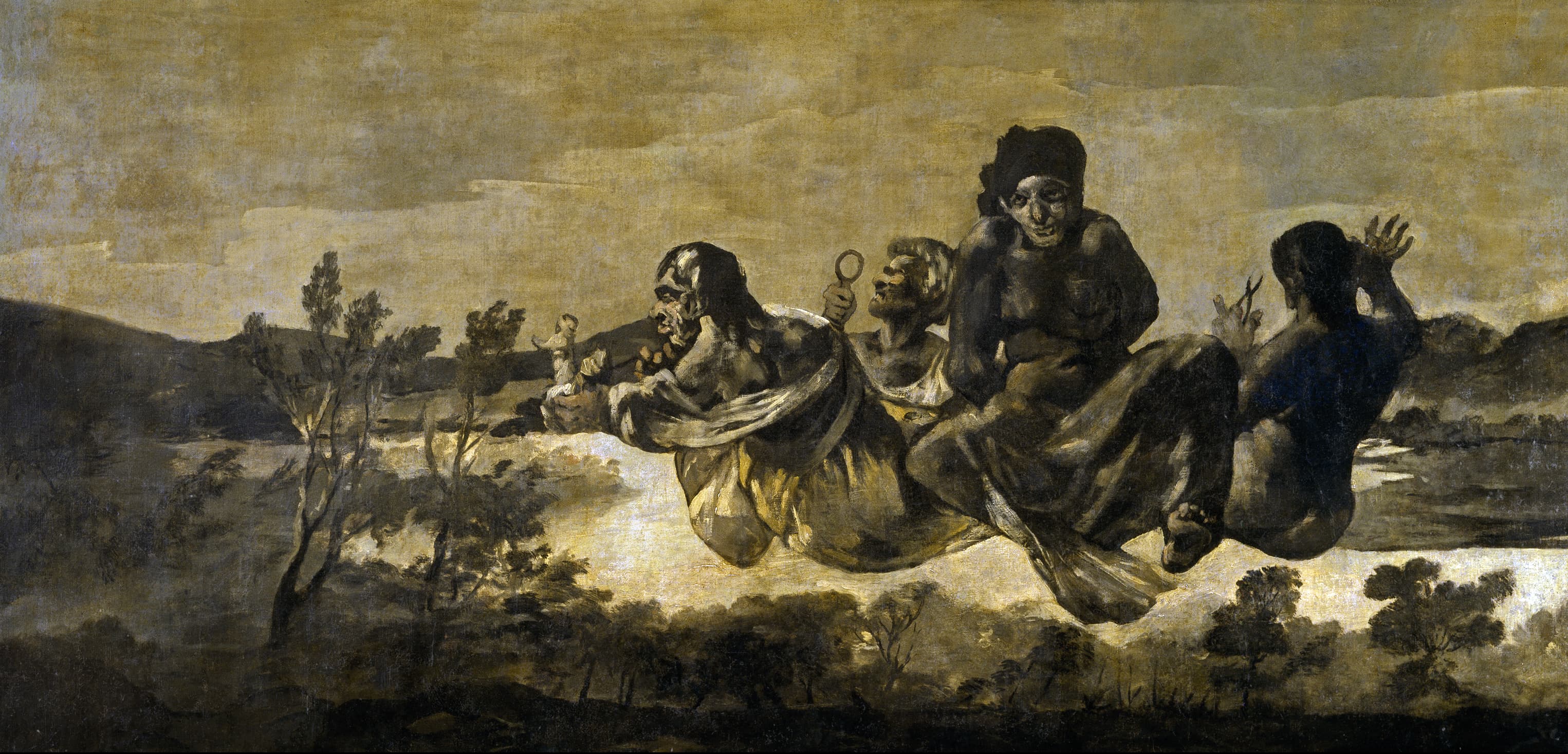
Atropos (The Fates)
Francisco Goya · c. 1819–1823
Kindred works
You may also study
Witches' Sabbath (The Great He-Goat)
Francisco Goya · c. 1819–1823
Fight with Cudgels
Francisco Goya · c. 1819–1823

Bridge over a Pond of Water Lilies
Claude Monet · 1899

The Scream
Edvard Munch · 1893
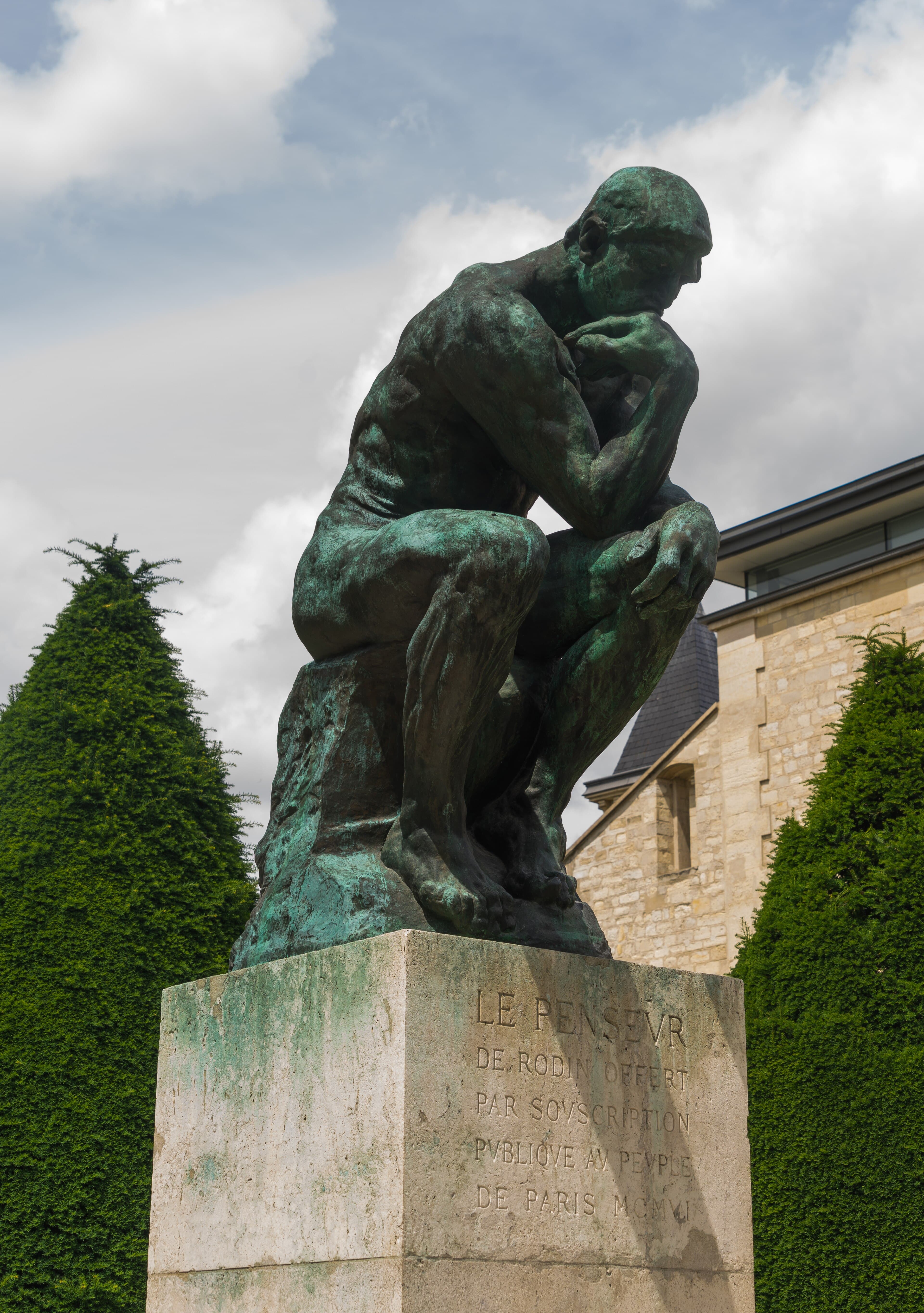
The Thinker
Auguste Rodin · Modeled 1880–82; enlarged 1902–03; this cast 1904
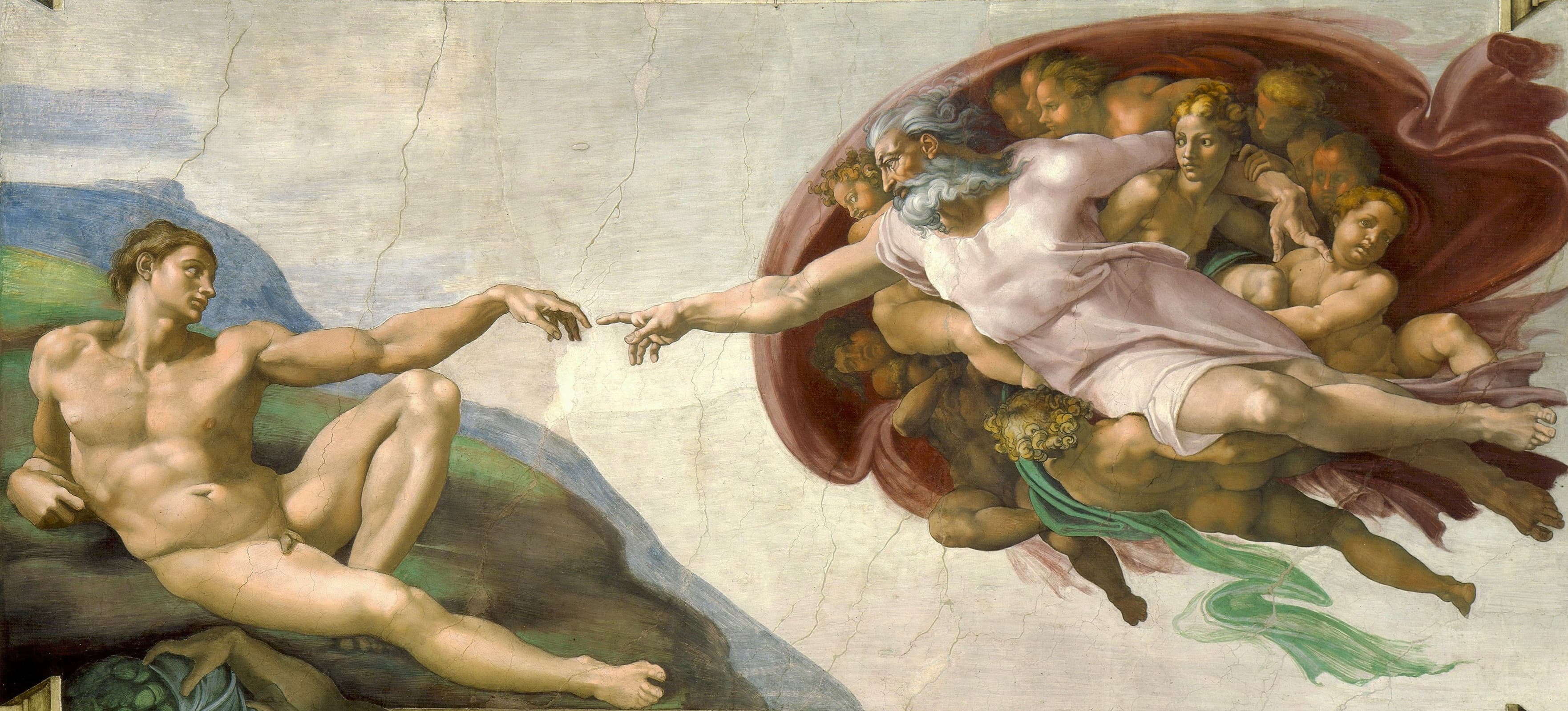
The Creation of Adam
Michelangelo · c. 1511–12

Ophelia
John Everett Millais · 1851–52

Woman with a Parasol – Madame Monet and Her Son
Claude Monet · 1875