Image: Museo del Prado, Madrid · Public domain · via Wikimedia Commons
Romanticism
Women Laughing
Francisco Goya, c. 1819–1823
Women Laughing, also called Man Mocked by Two Women, is a Black Painting by Francisco Goya, painted on a wall of his house near Madrid around 1819–1823. Two women leer at a grinning man in the dark. It is in the Prado.
- Artist
- Francisco Goya
- Date
- c. 1819–1823
- Medium
- Oil mural transferred to canvas
- Dimensions
- 125 × 66 cm
- Collection
- Museo del Prado, Madrid, Spain
- Movement
- Romanticism
What you're looking at
Three figures emerge from a black ground, lit from the front left. At the right, a figure with a round, flushed face and a loose white shirt open at the neck grins straight out at us, eyes narrowed, mouth half open. Its hands are low in its lap, hidden in a heap of dark cloth. Beside it, a woman with her hair pulled back under a band leans in, smiling broadly, her teeth showing. At the far left, almost lost in the shadow, a third face is seen in profile, also turned toward the grinning figure.
Nothing else is shown: no room, no furniture, no story. Goya paints the white shirt with a few thick, fast strokes, lets the faces glow out of the dark like masks and leaves the bottom half of the canvas, 125 by 66 cm, to a churn of brown and black.
What does Women Laughing show?
The picture has several titles, none of them Goya's. The Prado calls it Mujeres riendo (Women Laughing). It is also known as Dos mujeres y un hombre (Two Women and a Man) and, in English, Man Mocked by Two Women. The last title reflects the usual reading of the scene: the figure in white at the right is a man, his hands at his crotch, and the two women are laughing at him.
Many writers, including the critic Fred Licht, read the man's gesture as masturbation and his fixed grin as a sign of compulsion or exhibitionism. The women's smiles are not warm: they leer and mock. They are often taken to be prostitutes, a type Goya had drawn and etched many times, frequently in pairs, in the Caprichos and his private albums. This is one of the few overtly sexual subjects among the Black Paintings, and Goya, who was blunt about violence and decay, still keeps the sexual act itself hidden in shadow.
What does Women Laughing mean?
Goya left no comment, so interpretation is inference. Licht saw a self-mocking element: the exposed man, ridiculed by onlookers, might stand for the old artist himself, exposed in his private obsessions and laughed at. Others read the scene as an image of futility, sterile pleasure watched by people who find it absurd.
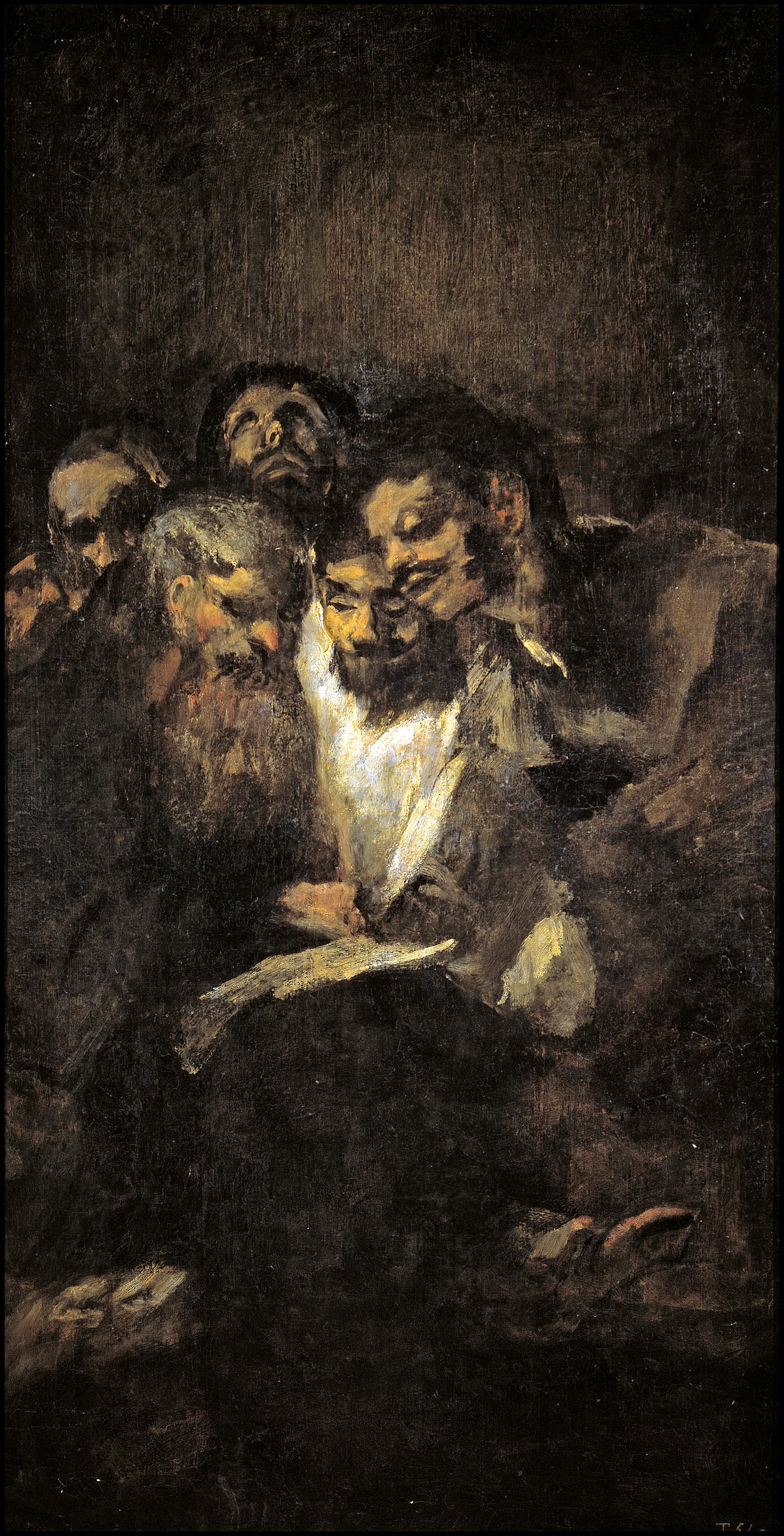
The picture also belongs to a pair. It is usually read alongside Men Reading, a canvas of the same tall format, lit the same way, in which a group of men crowd around a page. The historian Francisco-Xavier de Salas Bosch suggested that Goya meant the politicians' endless talk in one picture to seem as fruitless as the solitary act in the other. The inventory compiled by Goya's friend Antonio Brugada around 1828–1830 places both in the upper room of the Quinta del Sordo, his house outside Madrid.
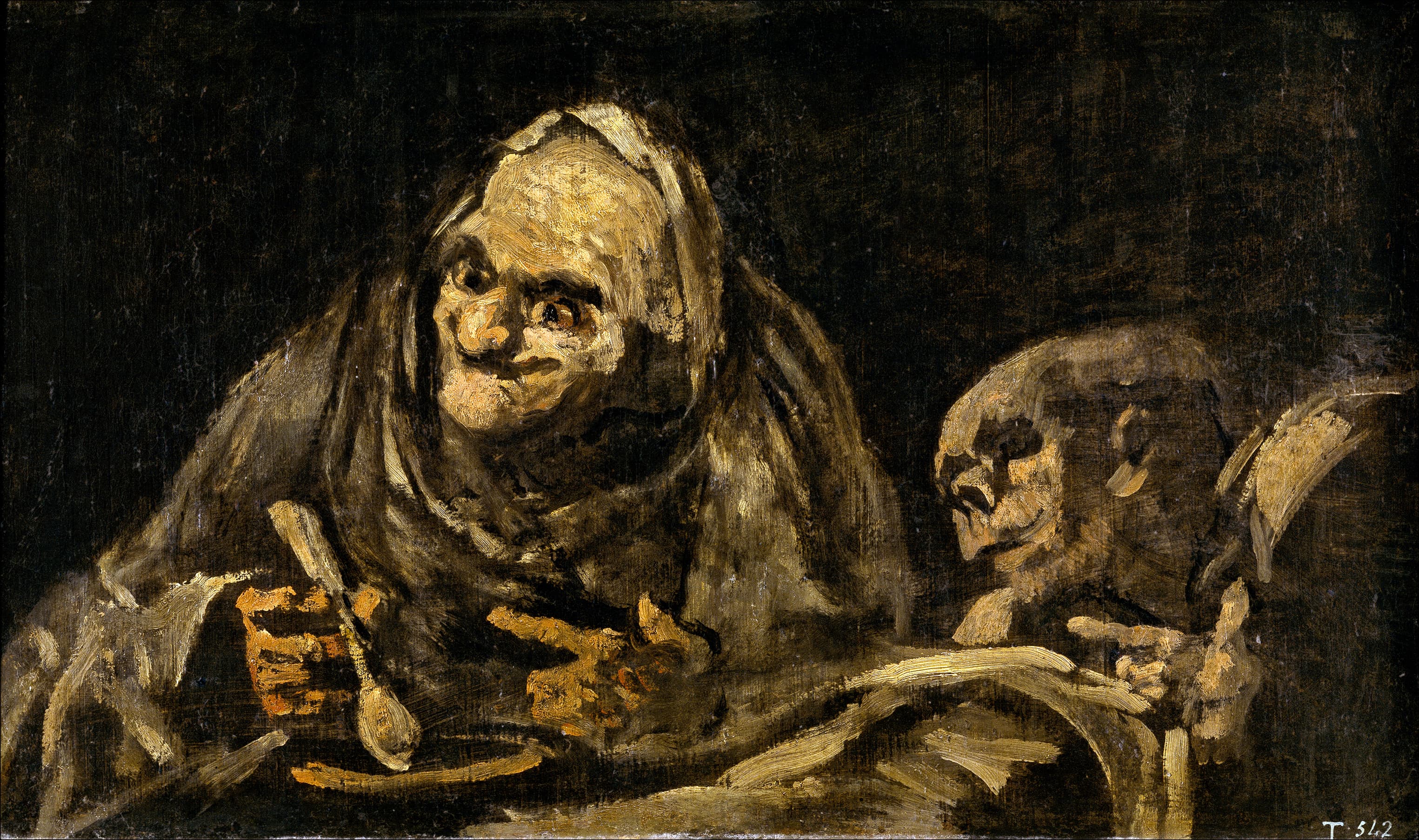
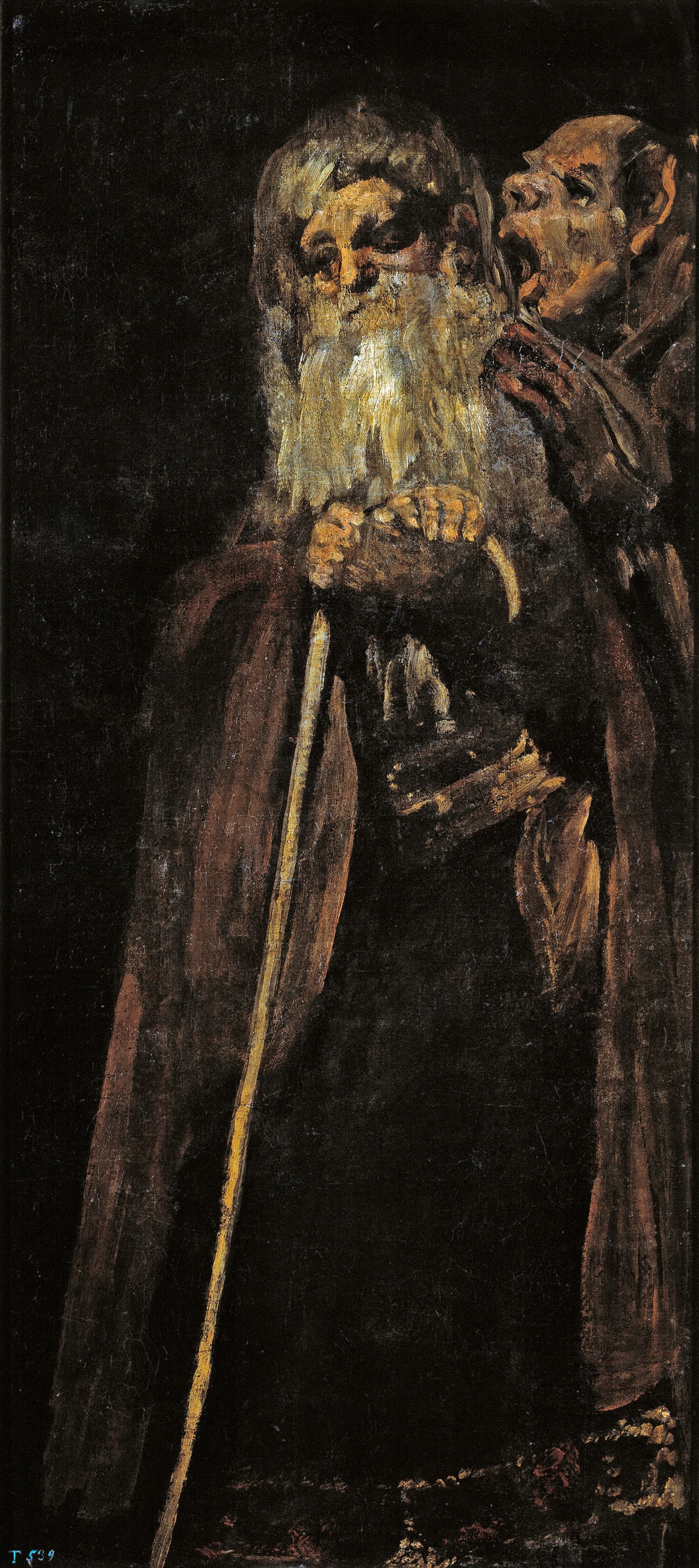
Robert Hughes pointed to a motif that runs through the whole series, the open mouth, or as he put it a "gaping void." The open, grinning mouths here belong with the shouting figure in Two Old Men, the singing pilgrims of A Pilgrimage to San Isidro and the jaws of Saturn Devouring His Son.
Changes under the surface
X-ray study has shown that Goya reworked this composition. The man's hand was moved, and an earlier version may have shown the women looking at a book held on his knees, which would have made the picture a much closer twin of Men Reading. If so, Goya turned a scene of reading into a scene of mockery as he painted.
Like all the murals in the house, it was transferred from plaster to canvas in 1873–74 under the Prado restorer Salvador Martínez Cubells, for the banker Baron Émile d'Erlanger. Parts of the lower canvas are dark and hard to read, partly because of that transfer. D'Erlanger exhibited the paintings in Paris in 1878 and gave them to the Spanish state, which accepted them in 1881.
What to notice
Look at the head of the woman in the center. Goya paints her hair band as a single pale curve, the same color as the man's shirt, and it ties the two figures together across the dark. Then compare her smile with his. Hers is open and showing teeth; his is lopsided and loose. Goya gives the observer and the observed two different kinds of laugh.
Finally, find the third face, the profile at the far left. It is so deeply shadowed that many viewers never notice it. It turns the scene from a private moment into a small audience: the man is not just laughed at, he is watched.
Where to see Women Laughing today
Women Laughing is in the Museo del Prado in Madrid, where the fourteen Black Paintings are displayed together in one room on the ground floor. It is one of the smaller works in the group and easy to miss next to the long friezes, but it repays a close look.
Questions & answers
What is happening in Goya's Women Laughing?
Two women smile and leer at a man in a white shirt whose hands are at his crotch. Most writers read his gesture as masturbation and the women's laughter as mockery. The figures sit against a plain black background with no setting or story.
Where is Women Laughing by Goya?
It is in the Museo del Prado in Madrid, displayed with the other Black Paintings. Goya painted it on a wall of the upper room of his house, the Quinta del Sordo; it was transferred to canvas in 1873–74 and entered the Spanish state collection in 1881.
Why is it also called Man Mocked by Two Women?
Goya gave the Black Paintings no titles, so several names have circulated. The Prado uses Mujeres riendo (Women Laughing); the alternative titles Dos mujeres y un hombre and Man Mocked by Two Women describe the same scene, with the emphasis on the man being ridiculed.
Is Women Laughing paired with another painting?
Yes. It is usually paired with Men Reading. Both are tall, narrow canvases lit from the upper left against black, and both hung in the upper room of Goya's house. One historian suggested Goya meant the men's political talk to seem as sterile as the man's solitary act here.
More by the artist
Francisco Goya

Saturn Devouring His Son
Francisco Goya · c. 1819–1823
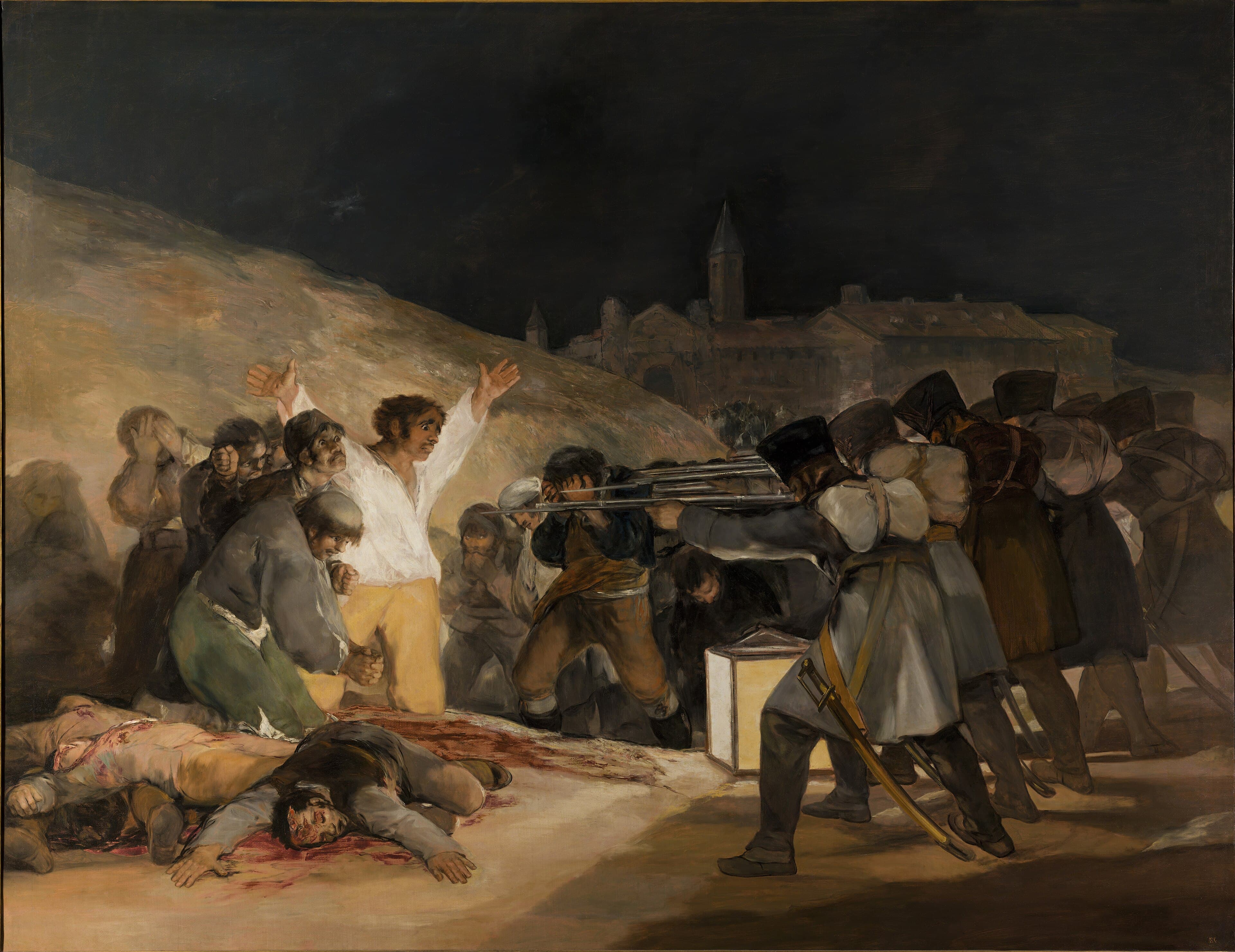
The Third of May 1808
Francisco Goya · 1814
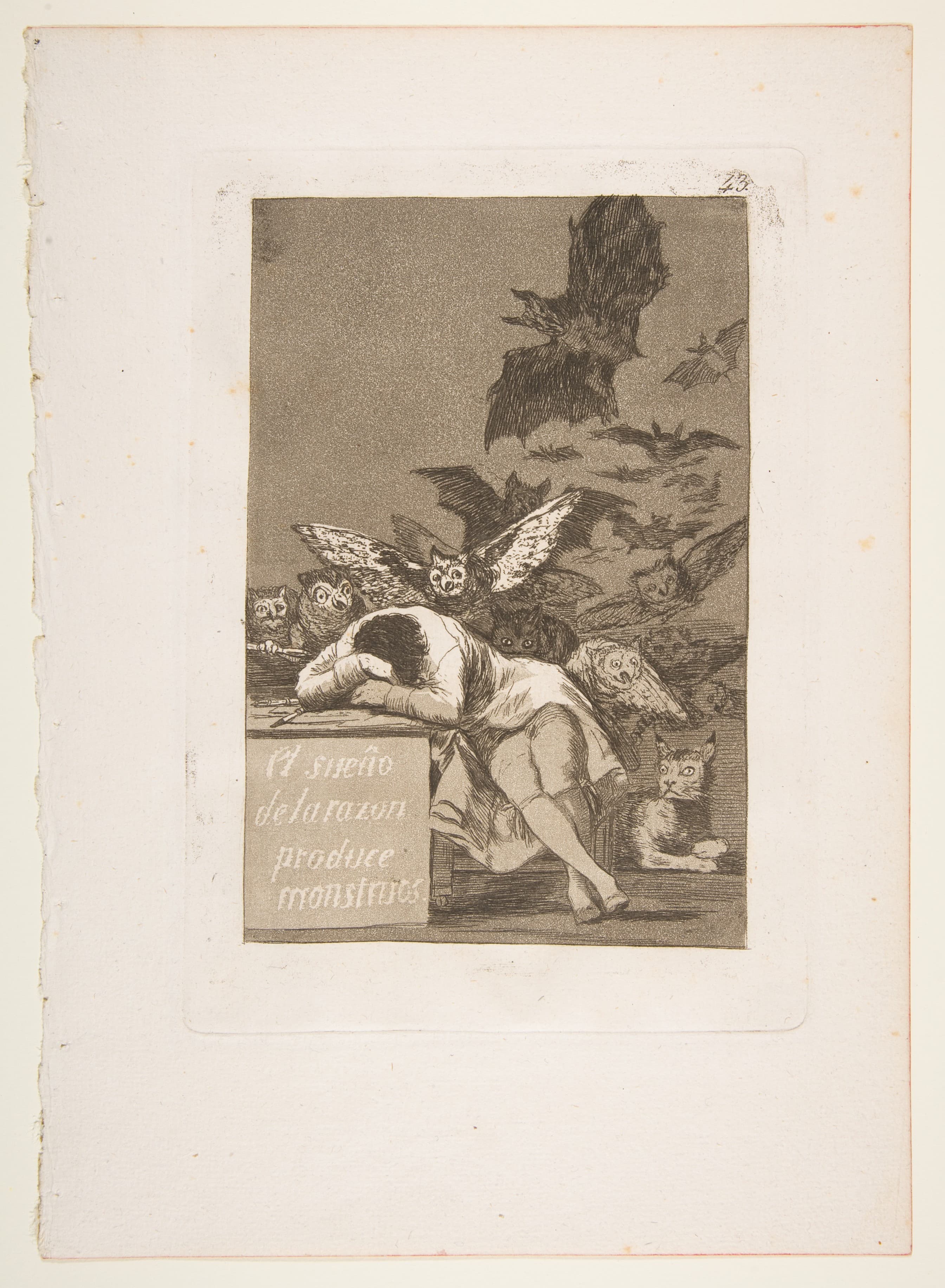
The Sleep of Reason Produces Monsters
Francisco Goya · 1797–99 (published 1799)
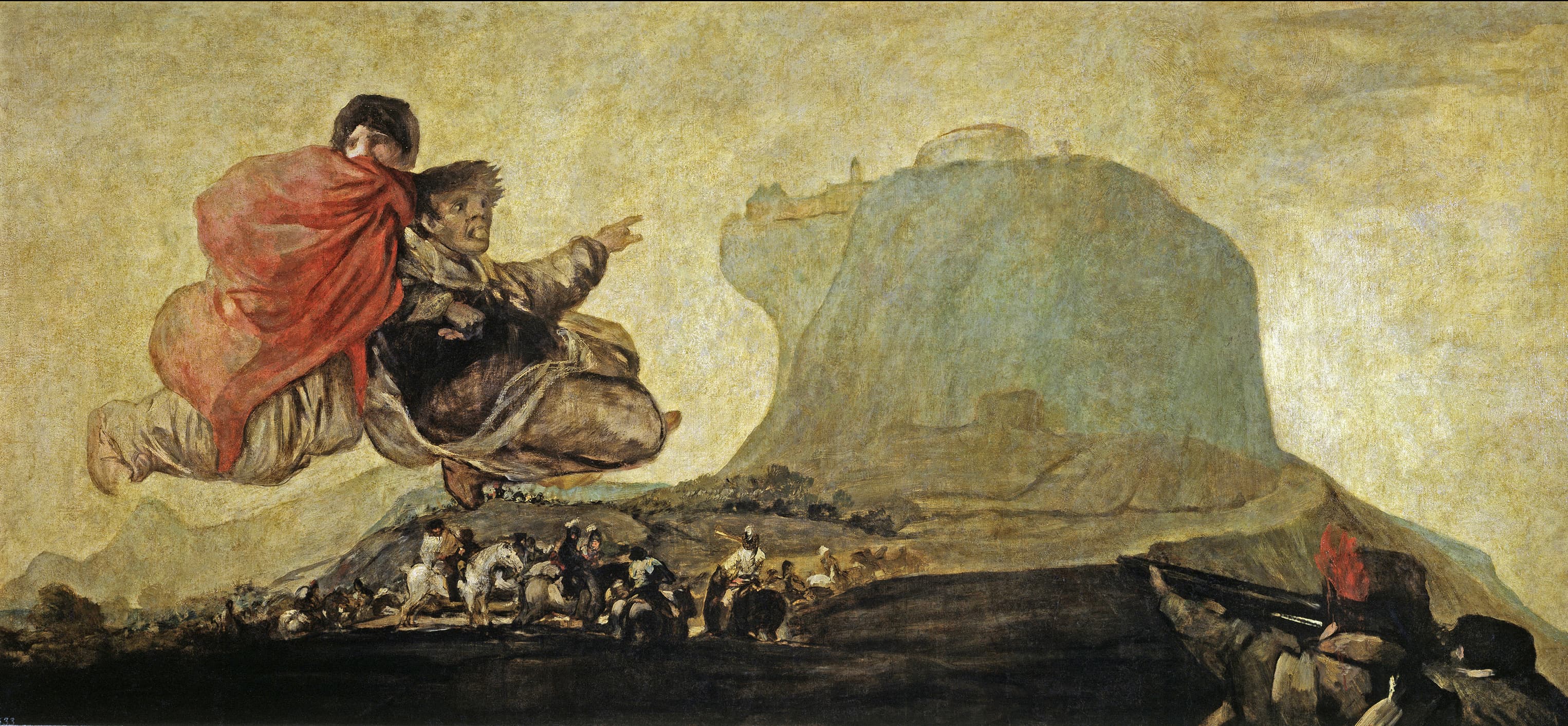
Fantastic Vision (Asmodea)
Francisco Goya · c. 1819–1823
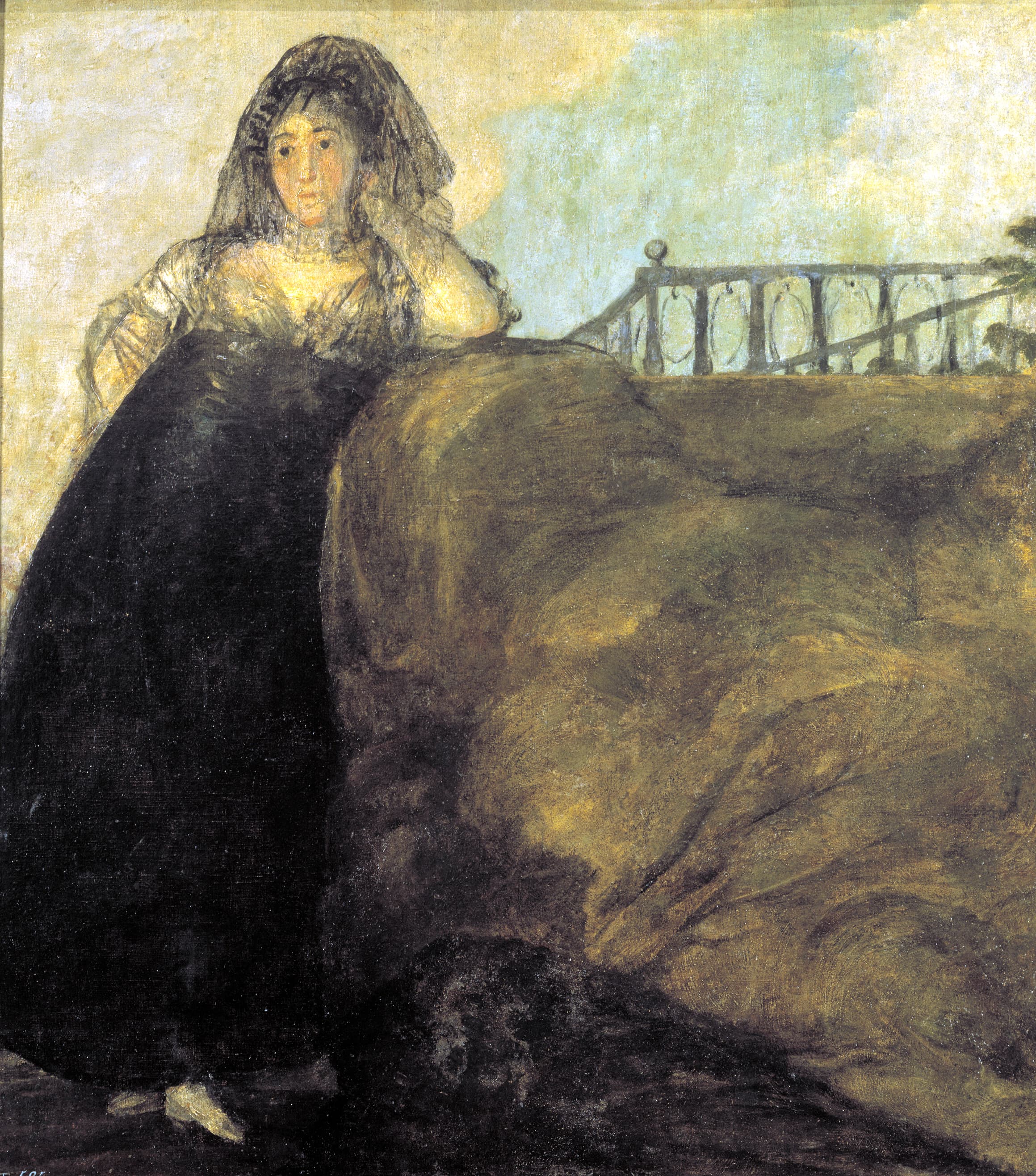
La Leocadia
Francisco Goya · c. 1819–1823
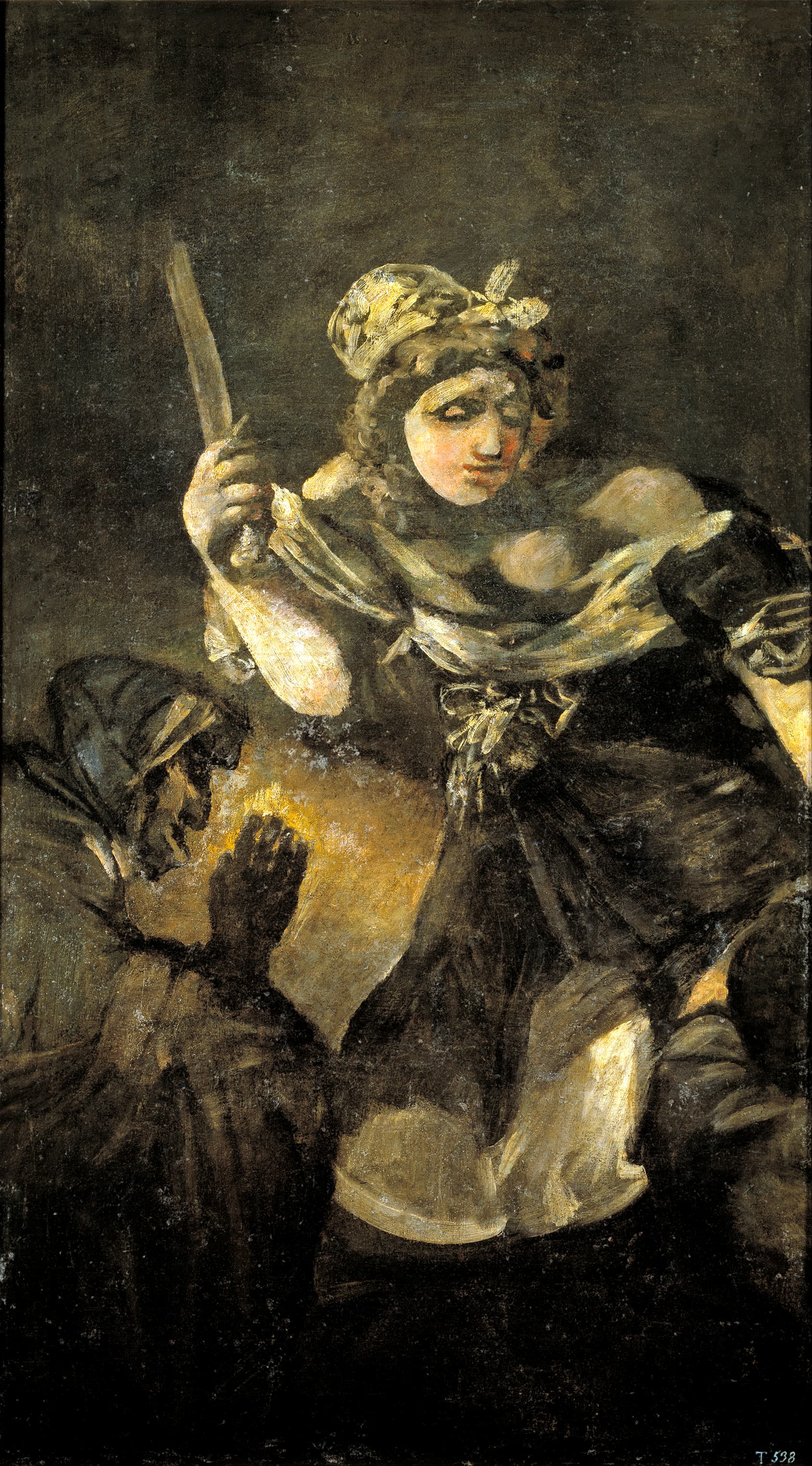
Judith and Holofernes
Francisco Goya · c. 1819–1823
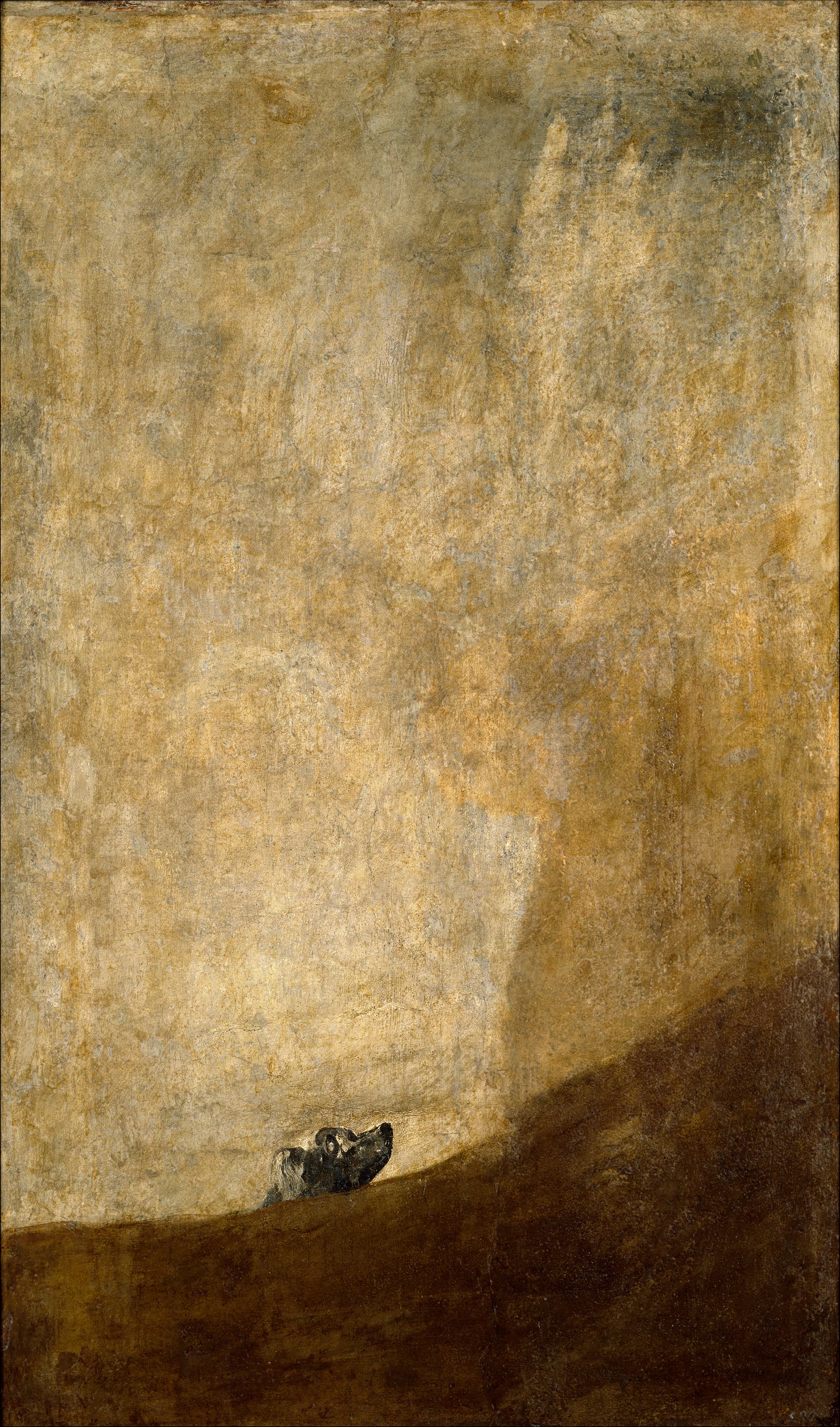
The Dog
Francisco Goya · c. 1819–1823
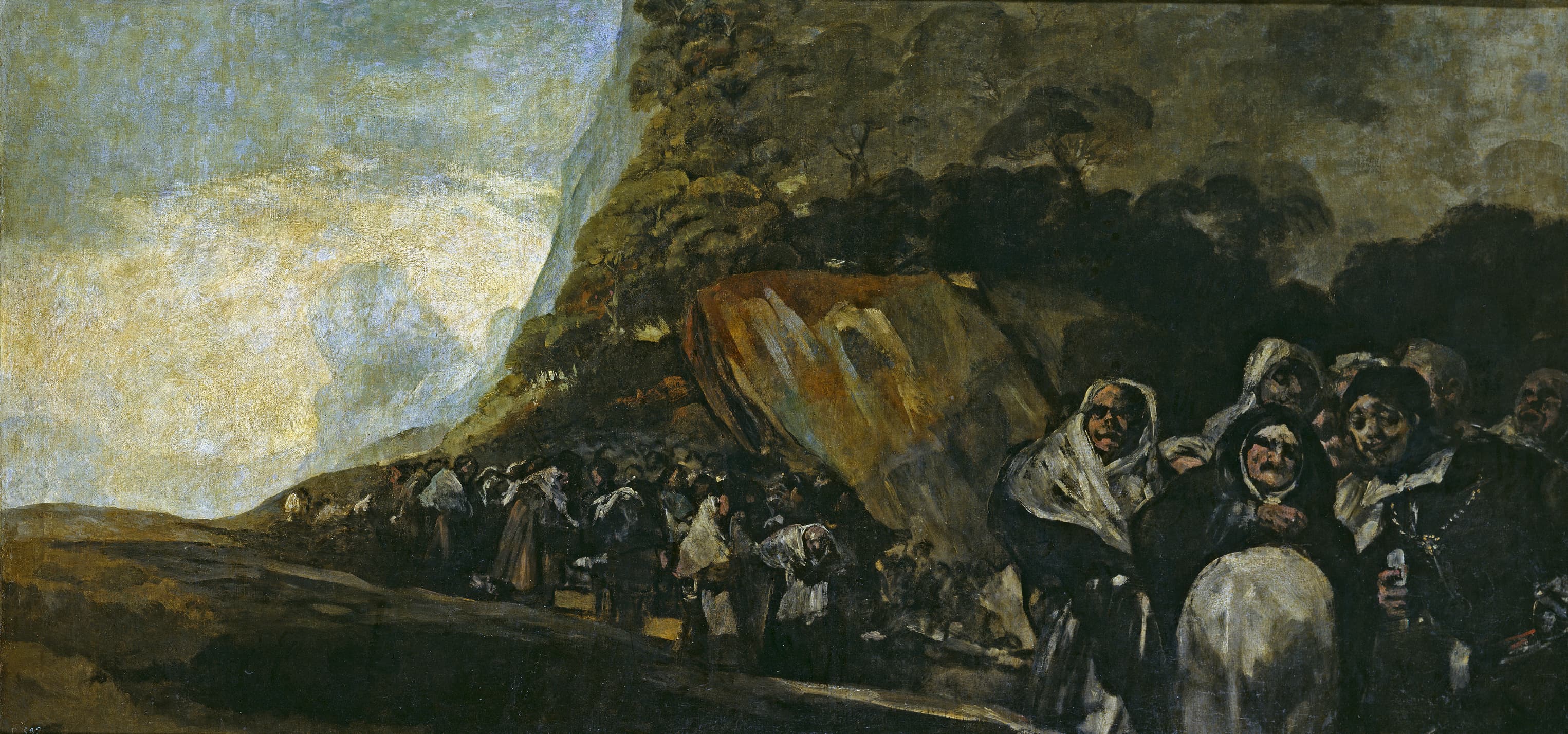
The Holy Office (Pilgrimage to the Fountain of San Isidro)
Francisco Goya · c. 1819–1823
Also painted in 1820
The same year
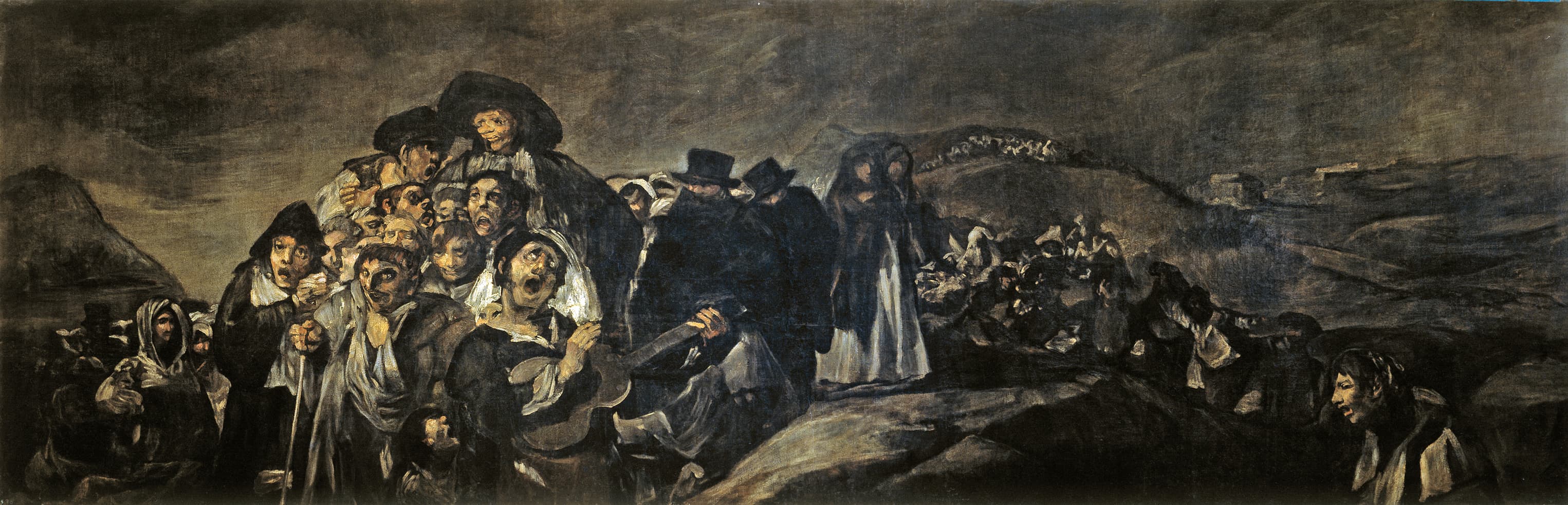
A Pilgrimage to San Isidro
Francisco Goya · c. 1819–1823
Men Reading
Francisco Goya · c. 1819–1823
Witches' Sabbath (The Great He-Goat)
Francisco Goya · c. 1819–1823
Fight with Cudgels
Francisco Goya · c. 1819–1823
Two Old Men Eating Soup
Francisco Goya · c. 1819–1823
Two Old Men
Francisco Goya · c. 1819–1823
Atropos (The Fates)
Francisco Goya · c. 1819–1823
Kindred works
You may also study
Men Reading
Francisco Goya · c. 1819–1823
Two Old Men
Francisco Goya · c. 1819–1823
A Pilgrimage to San Isidro
Francisco Goya · c. 1819–1823
Two Old Men Eating Soup
Francisco Goya · c. 1819–1823

Venus de Milo
Alexandros of Antioch · c. 150–125 BC

The Scream
Edvard Munch · 1893

The Thinker
Auguste Rodin · Modeled 1880–82; enlarged 1902–03; this cast 1904

Ophelia
John Everett Millais · 1851–52