Image: Museo del Prado, Madrid · Public domain · via Wikimedia Commons
Romanticism
Fight with Cudgels
Francisco Goya, c. 1819–1823
Fight with Cudgels is one of Francisco Goya's Black Paintings, painted on a wall of his house near Madrid around 1819–1823. Two men, sunk to the knees in the ground, club each other in an empty landscape. It is now in the Prado.
- Artist
- Francisco Goya
- Date
- c. 1819–1823
- Medium
- Oil mural transferred to canvas
- Dimensions
- 125 × 261 cm
- Collection
- Museo del Prado, Madrid, Spain
- Movement
- Romanticism
What you're looking at
Two men face each other in an open landscape, swinging heavy wooden clubs. The man on the left has his weapon raised high behind his head, ready to bring it down. The man on the right lunges in, his left arm thrown up across his face to shield it, his own club swung out behind him at shoulder height. They are close enough to touch. Neither can step away, because below the knee their legs disappear into the ground.
Behind them the land opens into a wide valley under a sky of torn gray and blue cloud. A brown hill sits to the right, and a pale, sunlit plain stretches into the distance. Compared with most of the Black Paintings, the scene is bright, but the brightness only makes the violence clearer: two figures, no spectators, no reason given, and no way out.
Goya paints the men in browns and dull whites, the clubs as single dark strokes. Their movements mirror each other so closely that the composition reads almost as a single figure fighting its reflection.
What does Fight with Cudgels mean?
Like all fourteen Black Paintings, the picture has no title from Goya himself. Early inventories called it The Strangers or Cowherds; the Spanish titles Duelo a garrotazos and Riña a garrotazos simply mean a fight or duel with cudgels.
The most common reading is political. Goya painted it between about 1819 and 1823, in a Spain torn between liberals and absolutists, a few years after the Peninsular War had set Spaniards against each other as well as against the French. Two countrymen clubbing each other to death while trapped in the same ground has become one of the defining images of Spanish civil strife, and it has been reproduced in that sense for two centuries.
The historian Francisco-Xavier de Salas Bosch proposed a more specific source: an emblem in Diego de Saavedra Fajardo's Empresas políticas (1640) based on the myth of Cadmus, whose sown dragon's teeth sprang up as warriors who killed one another. Saavedra used the image to discuss rulers who let their subjects fight among themselves. Read this way, the picture glances at the policies of Ferdinand VII.
The French philosopher Michel Serres took it somewhere else entirely. He opened The Natural Contract (1990) with this painting, pointing out that while the two men fight, the ground is swallowing them both. For Serres it was an image of humans so absorbed in their quarrels that they ignore the world under their feet.
Are they sinking in mud?
That reading depends on a detail that is less certain than it looks. A photograph taken by Jean Laurent around 1874, before the mural was lifted from the wall, shows the lower legs already obscured. The French writer Charles Yriarte, who saw the paintings in the house, described the men as fighting in grass, not mud. In 2010 the painter and historian Carlos Foradada argued that they stand in tall grass or on a slope that hides their lower legs, and that damage in the transfer to canvas, which lost large areas of paint below the knees, encouraged the idea that they are buried.
The question cannot be fully settled. What is certain is that the version we see today, with the men planted in the earth, is the one that has shaped the painting's fame.
Where it hung
Fight with Cudgels was painted in oil on the plaster of the upper room of the Quinta del Sordo, Goya's house across the Manzanares from Madrid. It shared a wall with Atropos (The Fates), another wide, landscape-format scene, and faced Fantastic Vision (Asmodea) and the Holy Office. The ground floor below held Saturn Devouring His Son, whose subject, a father destroying his own children, makes a grim pair with two compatriots destroying each other.
The murals were transferred to canvas in 1873–74 by the Prado restorer Salvador Martínez Cubells for the banker Baron Émile d'Erlanger, who exhibited them in Paris in 1878 and gave them to the Spanish state in 1881.
What to notice
Look at the faces. The left-hand fighter glares, mouth set; the right-hand fighter's face is a blur of paint half hidden behind his own forearm, as if he were already reeling from a blow. Then look at the light. It falls from the left, picking out both men's raised arms and the left fighter's chest, while the landscape behind is lit with the flat brightness of midday. Goya sets the most brutal act in the house in broad daylight, and that may be the most unsettling choice he made.
Where to see Fight with Cudgels today
The painting is in the Museo del Prado in Madrid, which catalogues it as Duelo a garrotazos. It hangs with the rest of the Black Paintings in a single room on the ground floor. The canvas measures about 125 by 261 cm.
Questions & answers
What is the meaning of Goya's Fight with Cudgels?
Goya left no explanation. It is most often read as an image of Spaniards destroying one another, painted during the conflict between liberals and absolutists after the Peninsular War. Other readings link it to an emblem of Cadmus's warriors in Saavedra Fajardo's Empresas políticas, and Michel Serres used it as an image of humans fighting while the earth swallows them.
Are the men in Fight with Cudgels sinking in mud?
Perhaps not. Their lower legs are hidden, and that is usually read as sinking in mud or sand. But Charles Yriarte, who saw the mural on the wall, described them in grass, and a 2010 study argued that damage during the transfer to canvas helped create the sunken look.
Where is Fight with Cudgels by Goya?
It is in the Museo del Prado in Madrid, displayed with the other Black Paintings. Goya painted it on a wall of the upper room of his house, the Quinta del Sordo; it was transferred to canvas in 1873–74 and entered the Spanish state collection in 1881.
Why is Fight with Cudgels important?
It has become one of the defining images of civil conflict, reproduced for two centuries as a symbol of fratricidal violence in Spain and beyond. Its open, daylit landscape and stark mirrored composition also make it one of the most modern-looking works in the series.
More by the artist
Francisco Goya

Saturn Devouring His Son
Francisco Goya · c. 1819–1823
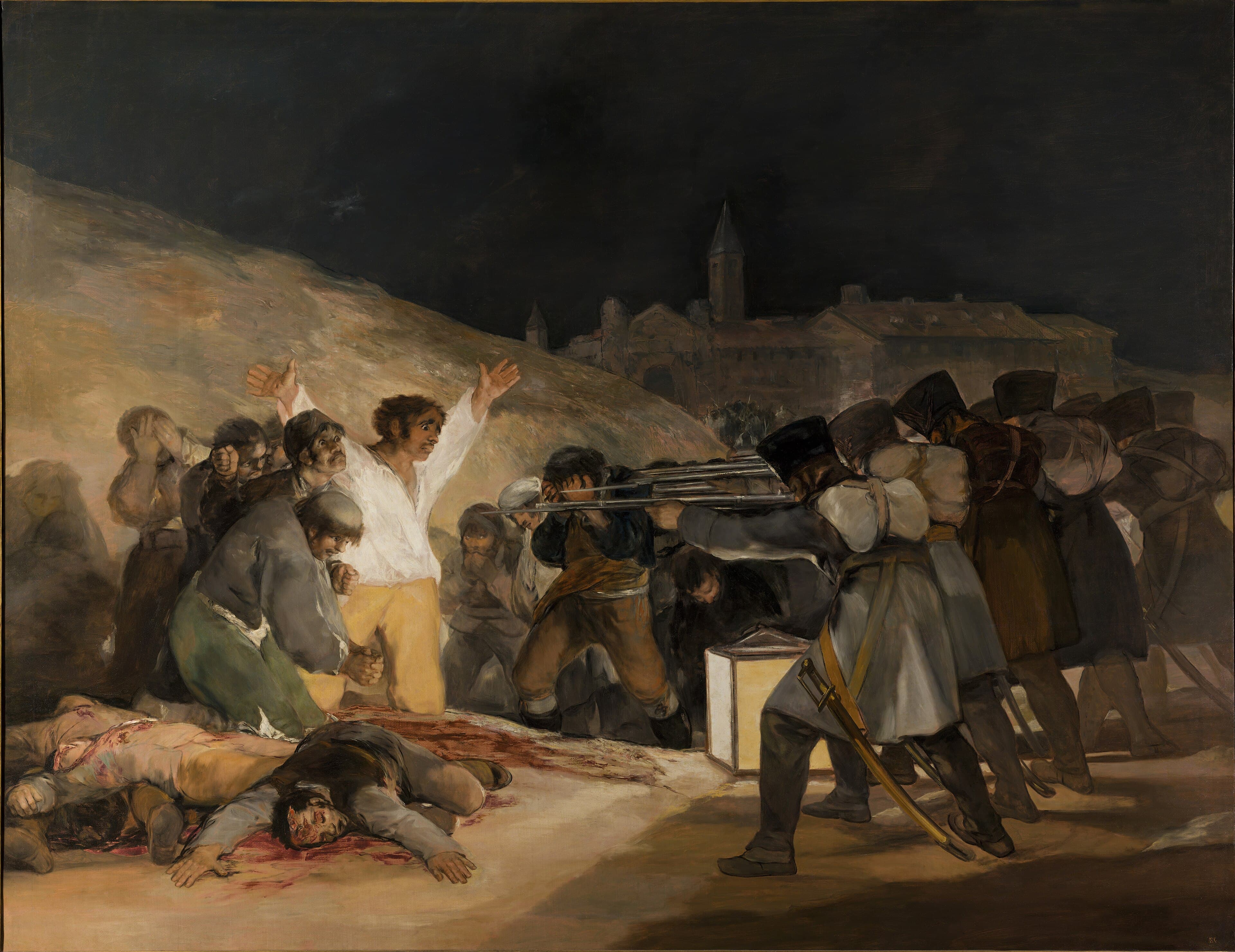
The Third of May 1808
Francisco Goya · 1814
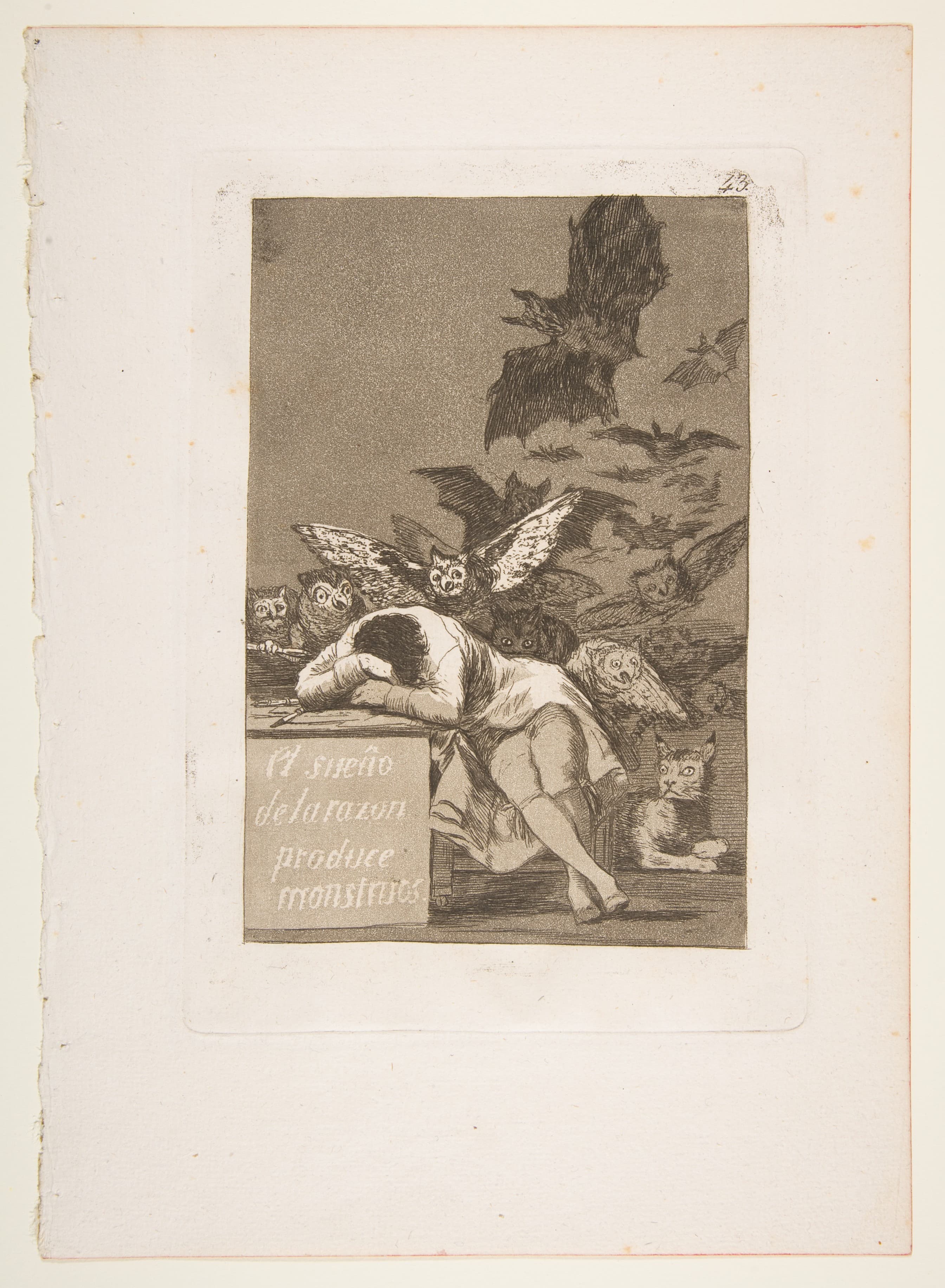
The Sleep of Reason Produces Monsters
Francisco Goya · 1797–99 (published 1799)
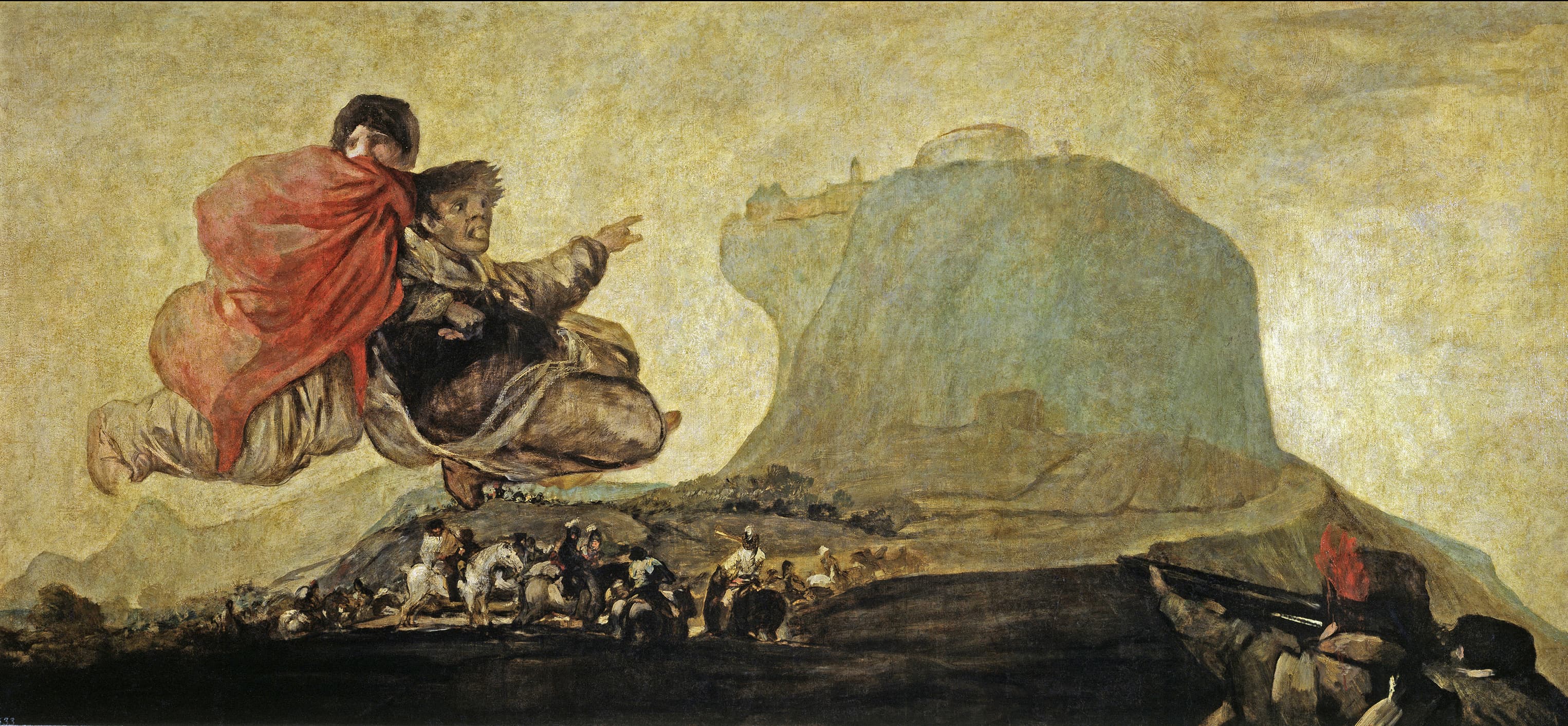
Fantastic Vision (Asmodea)
Francisco Goya · c. 1819–1823
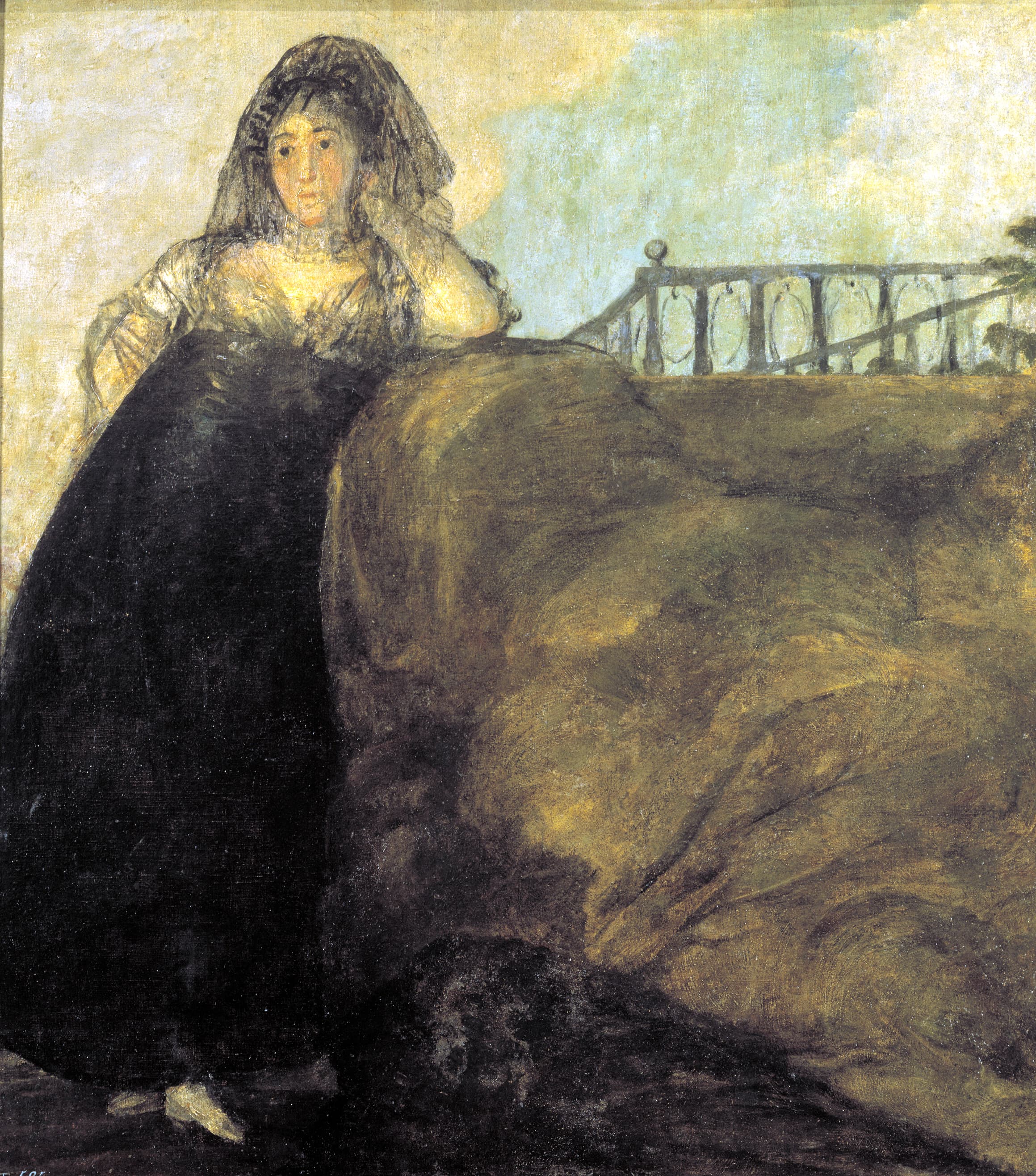
La Leocadia
Francisco Goya · c. 1819–1823
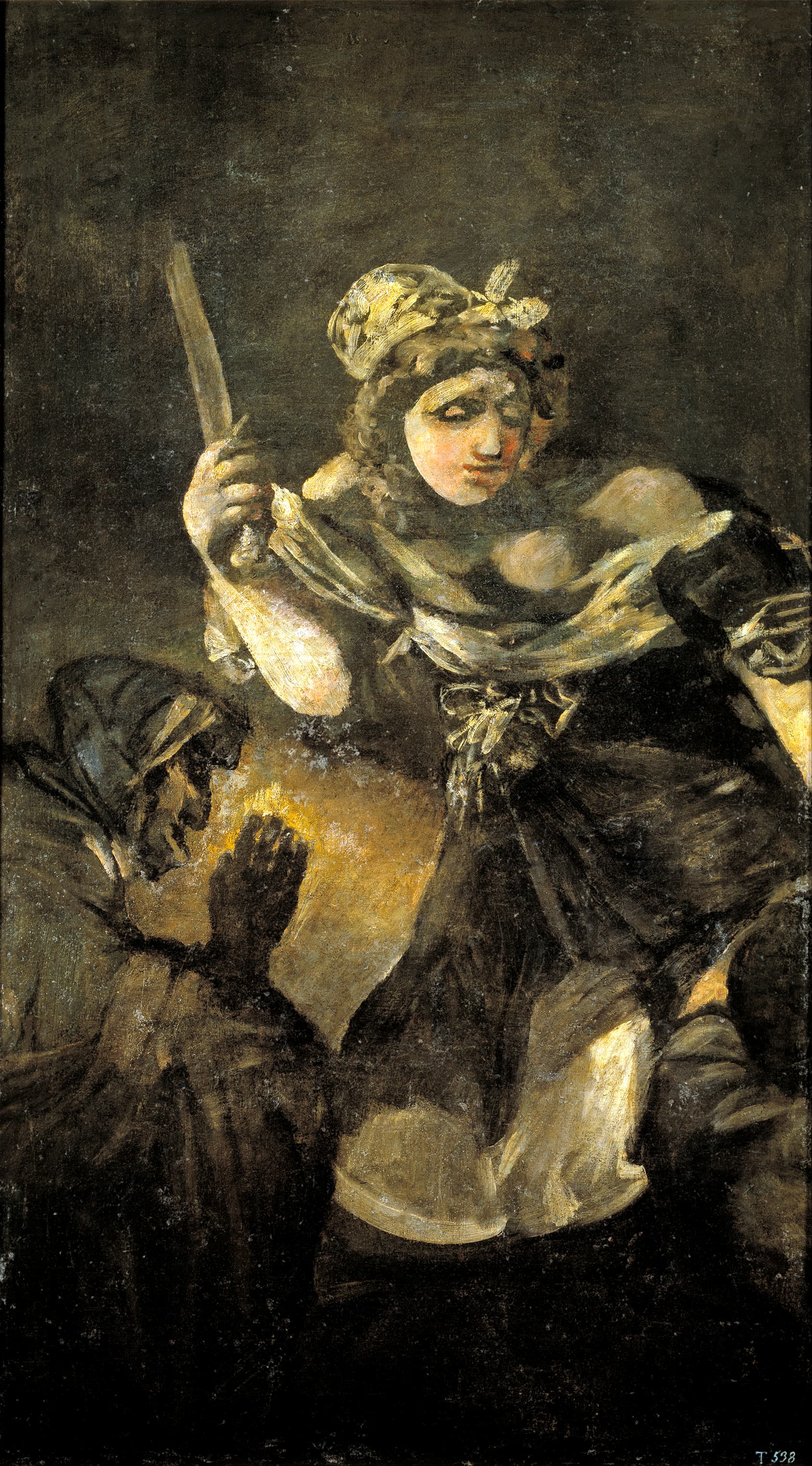
Judith and Holofernes
Francisco Goya · c. 1819–1823
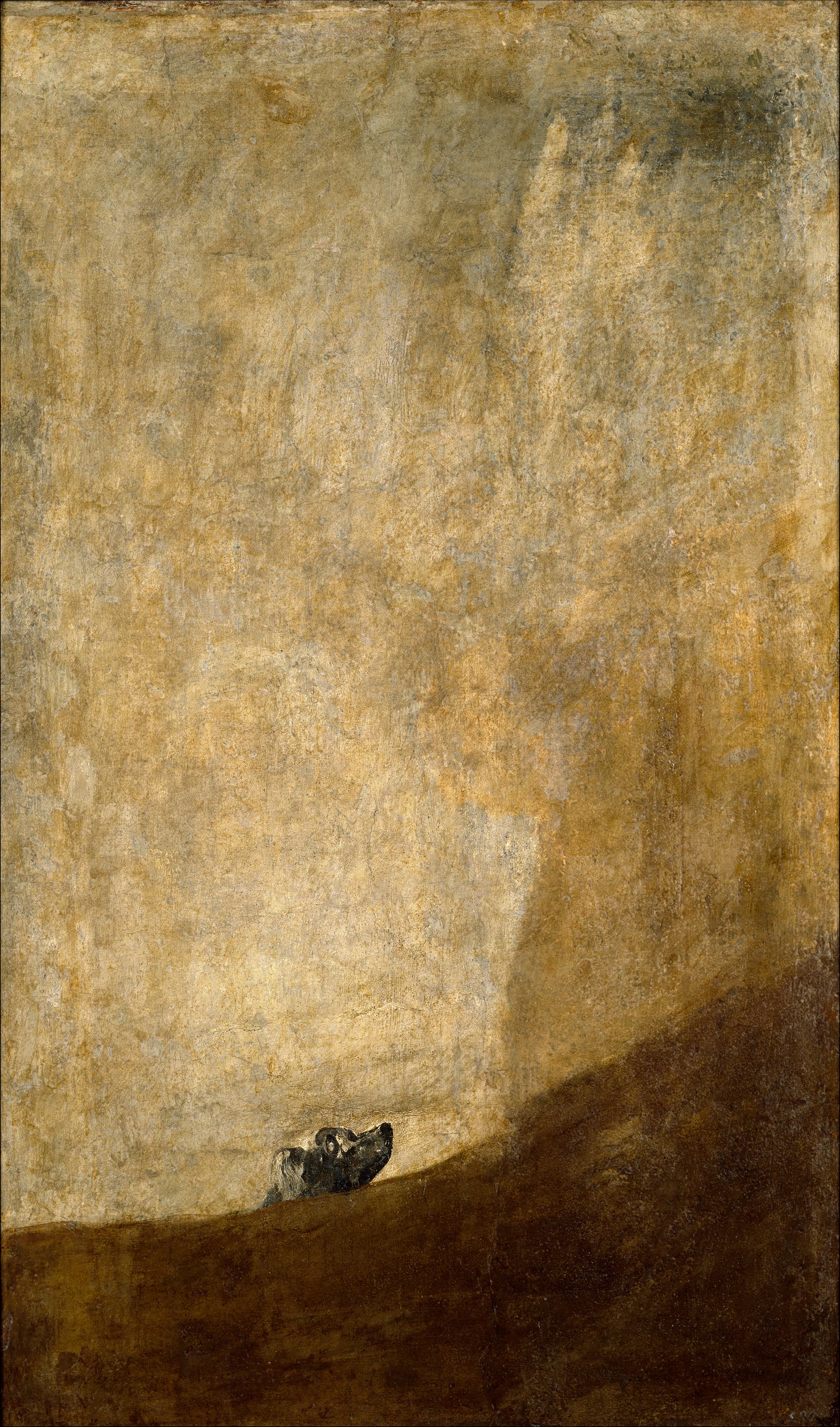
The Dog
Francisco Goya · c. 1819–1823
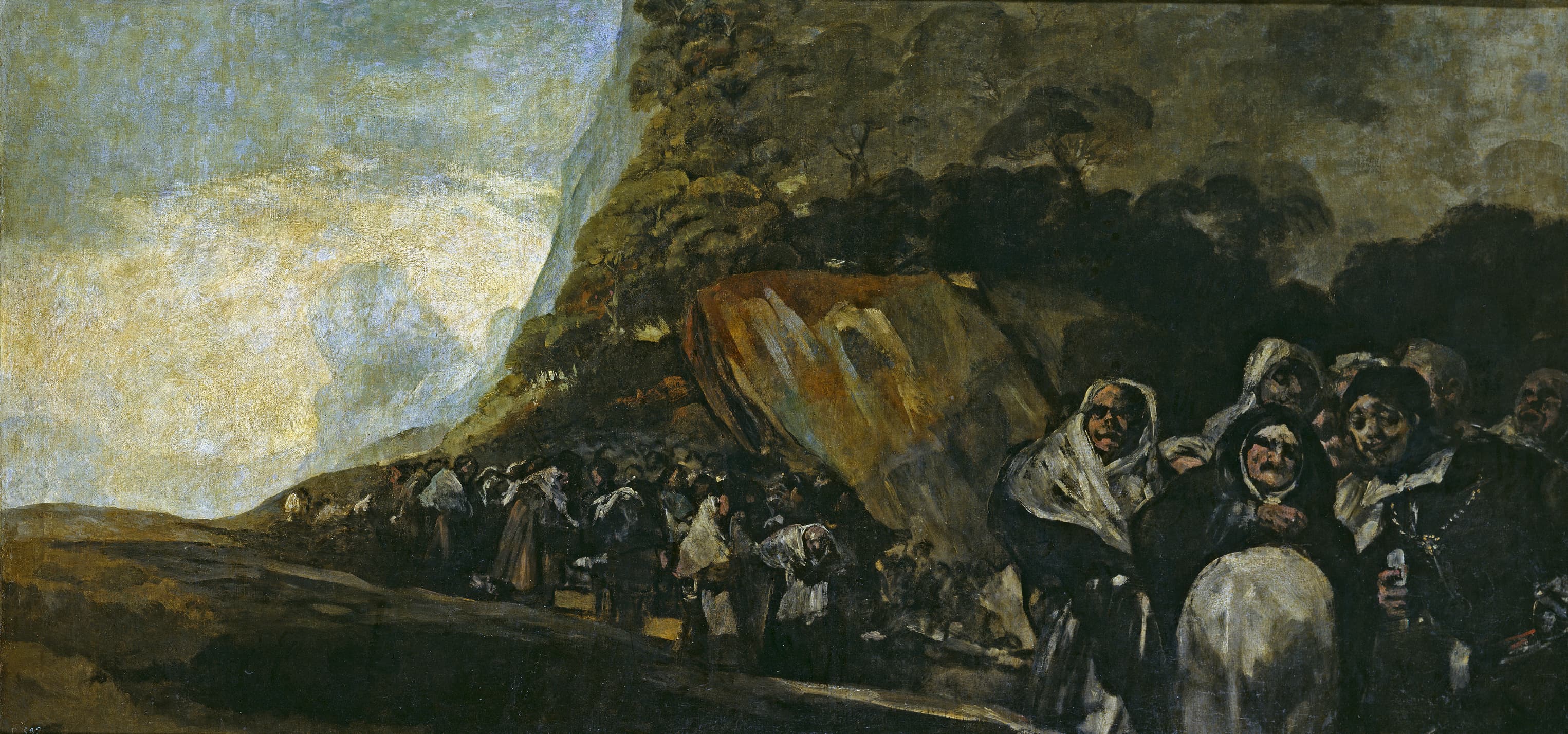
The Holy Office (Pilgrimage to the Fountain of San Isidro)
Francisco Goya · c. 1819–1823
Also painted in 1820
The same year
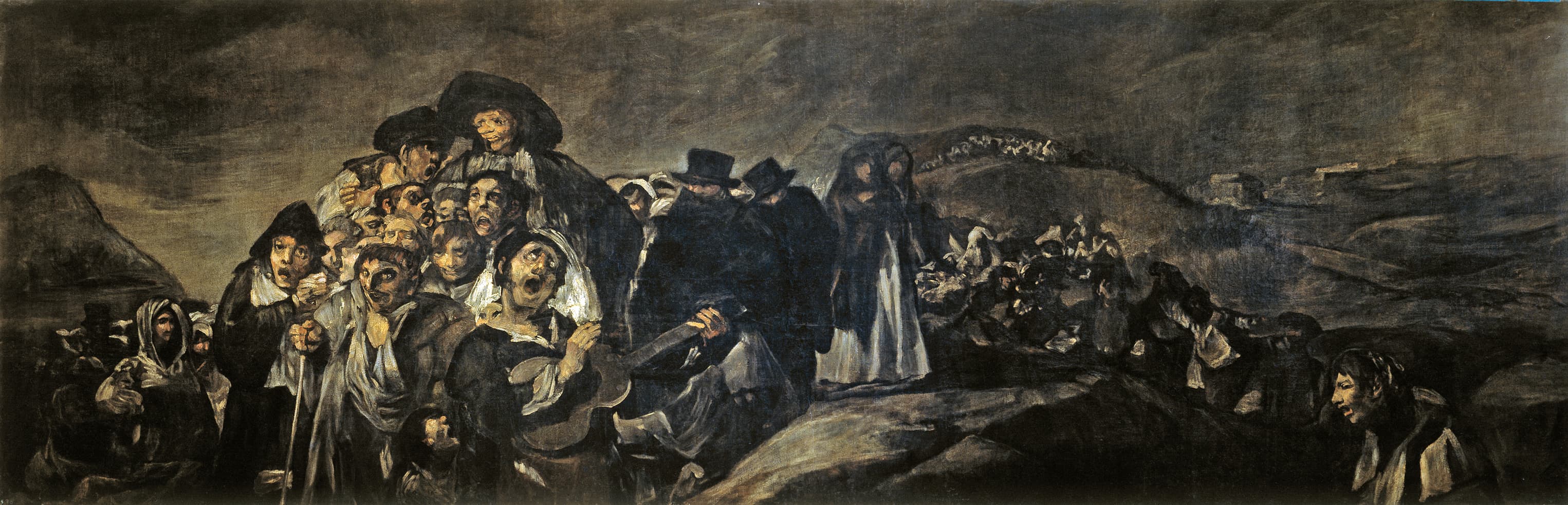
A Pilgrimage to San Isidro
Francisco Goya · c. 1819–1823
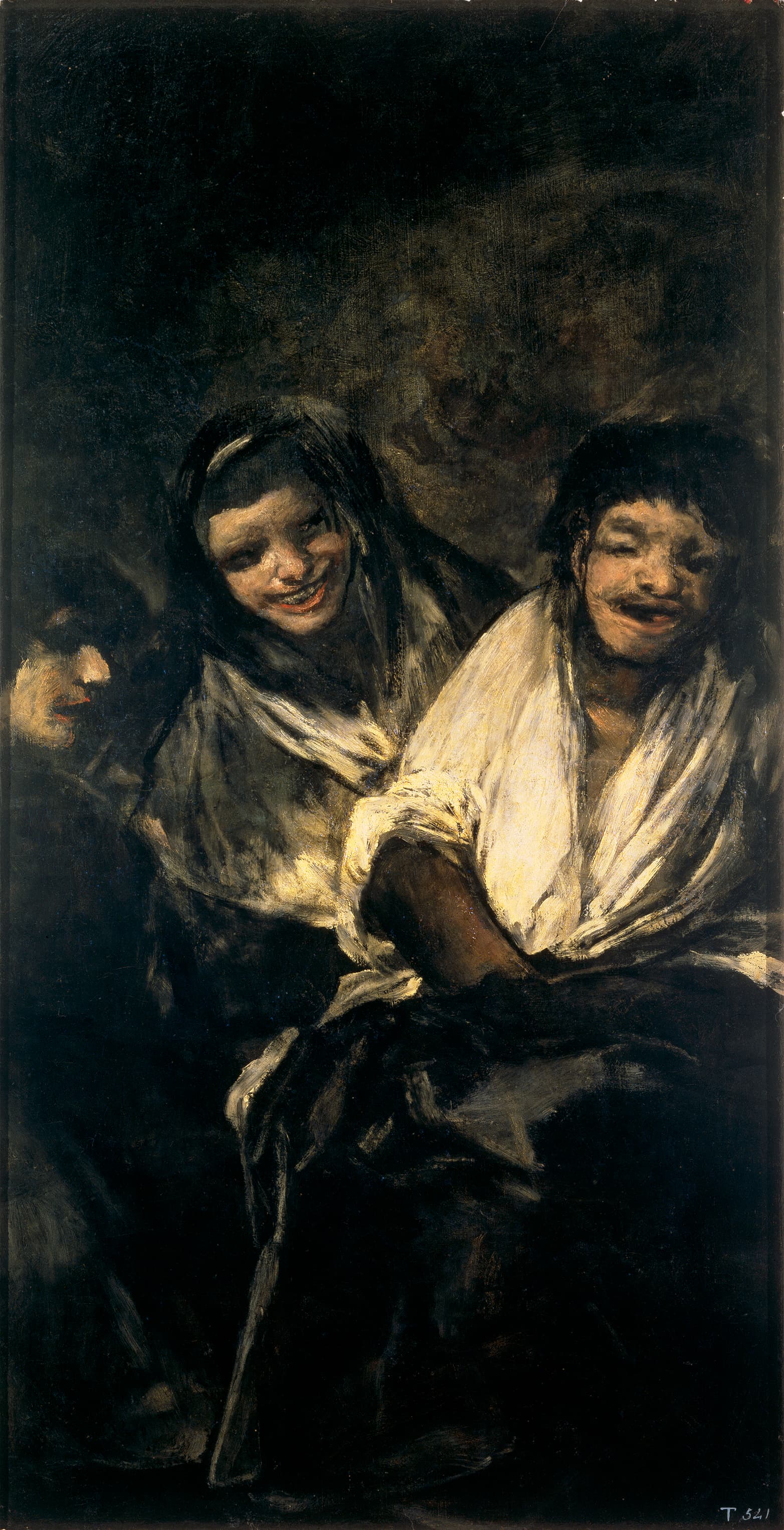
Women Laughing
Francisco Goya · c. 1819–1823
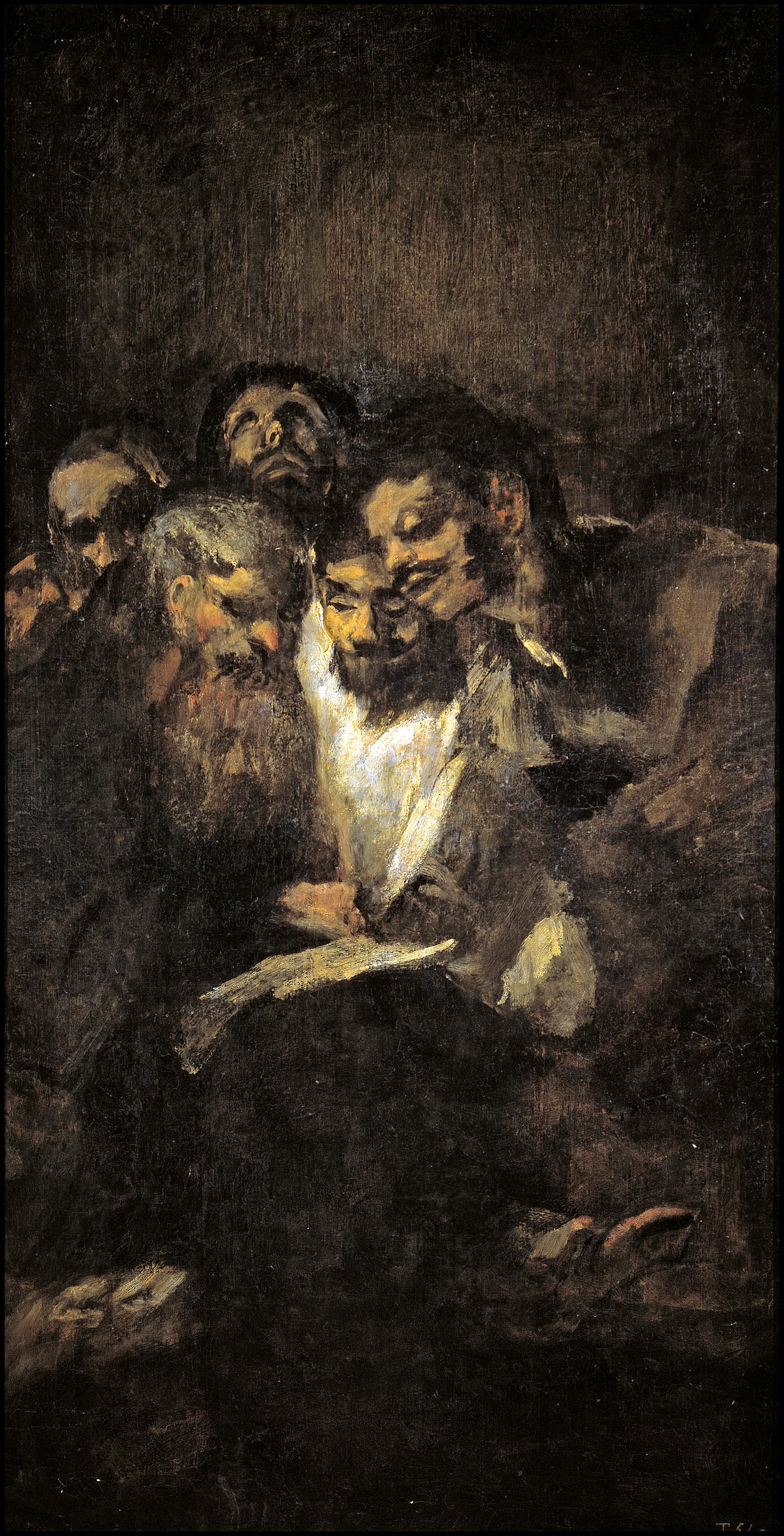
Men Reading
Francisco Goya · c. 1819–1823
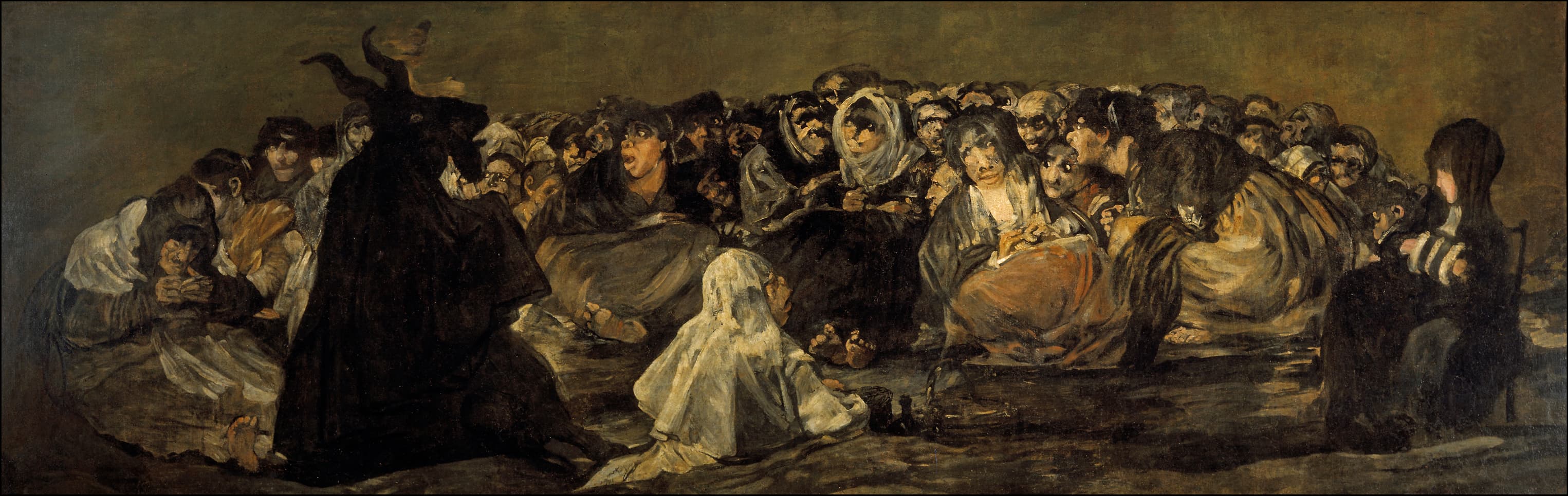
Witches' Sabbath (The Great He-Goat)
Francisco Goya · c. 1819–1823
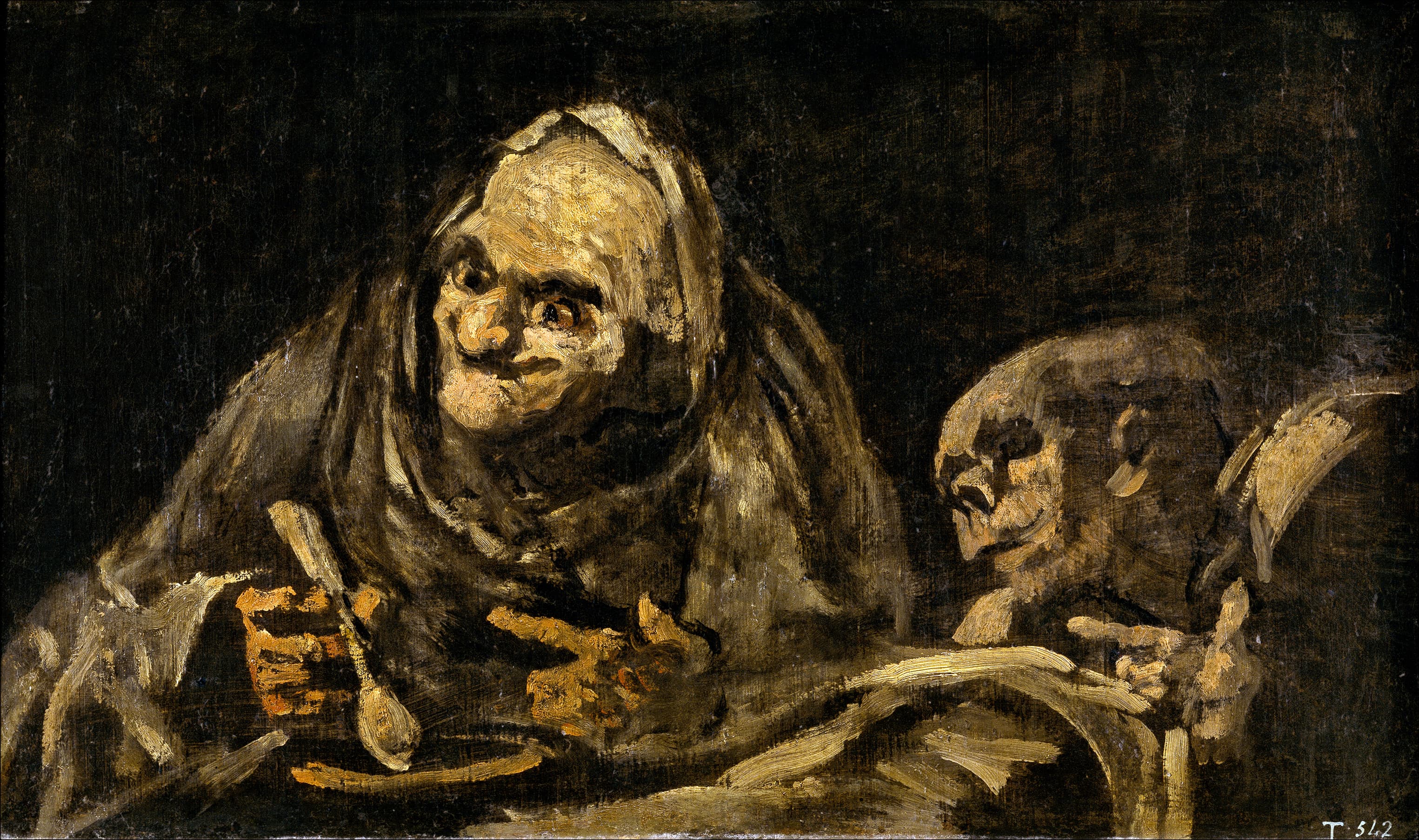
Two Old Men Eating Soup
Francisco Goya · c. 1819–1823
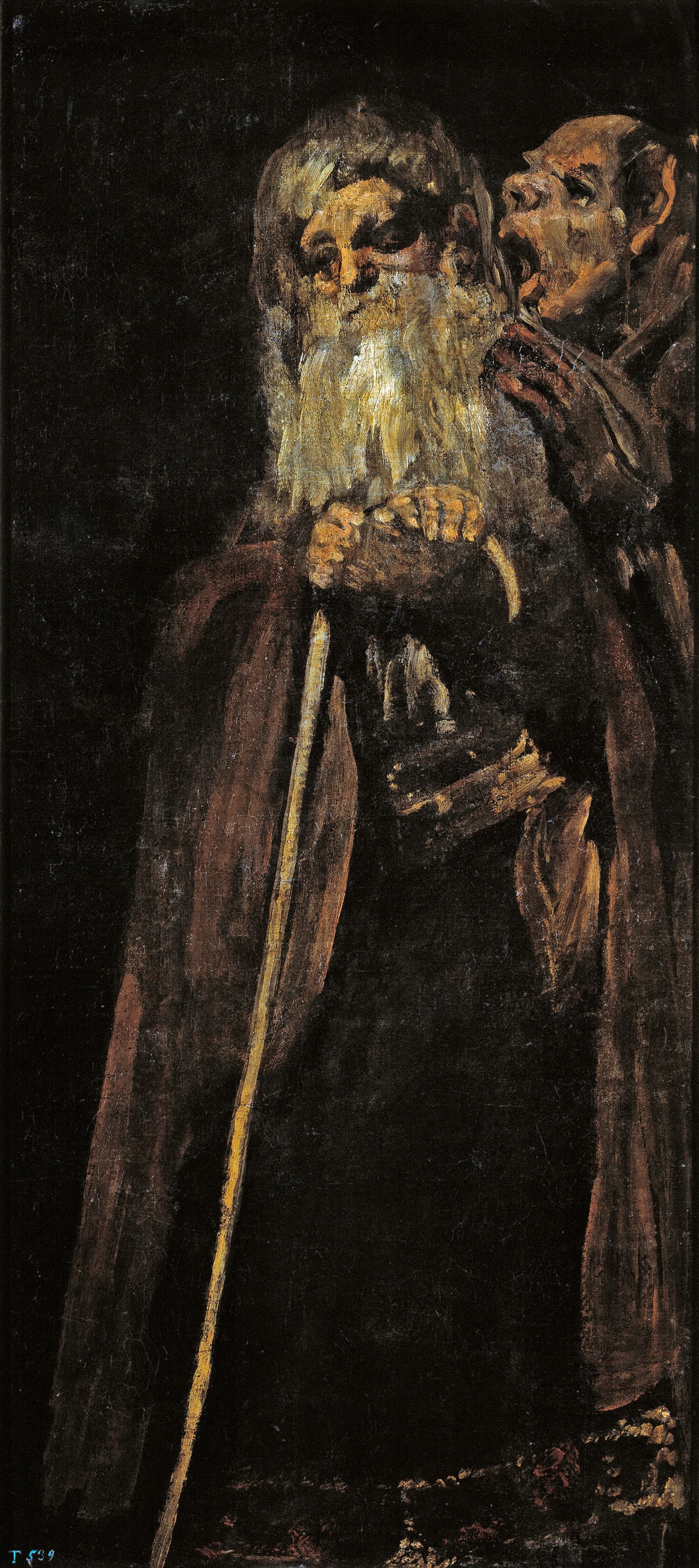
Two Old Men
Francisco Goya · c. 1819–1823
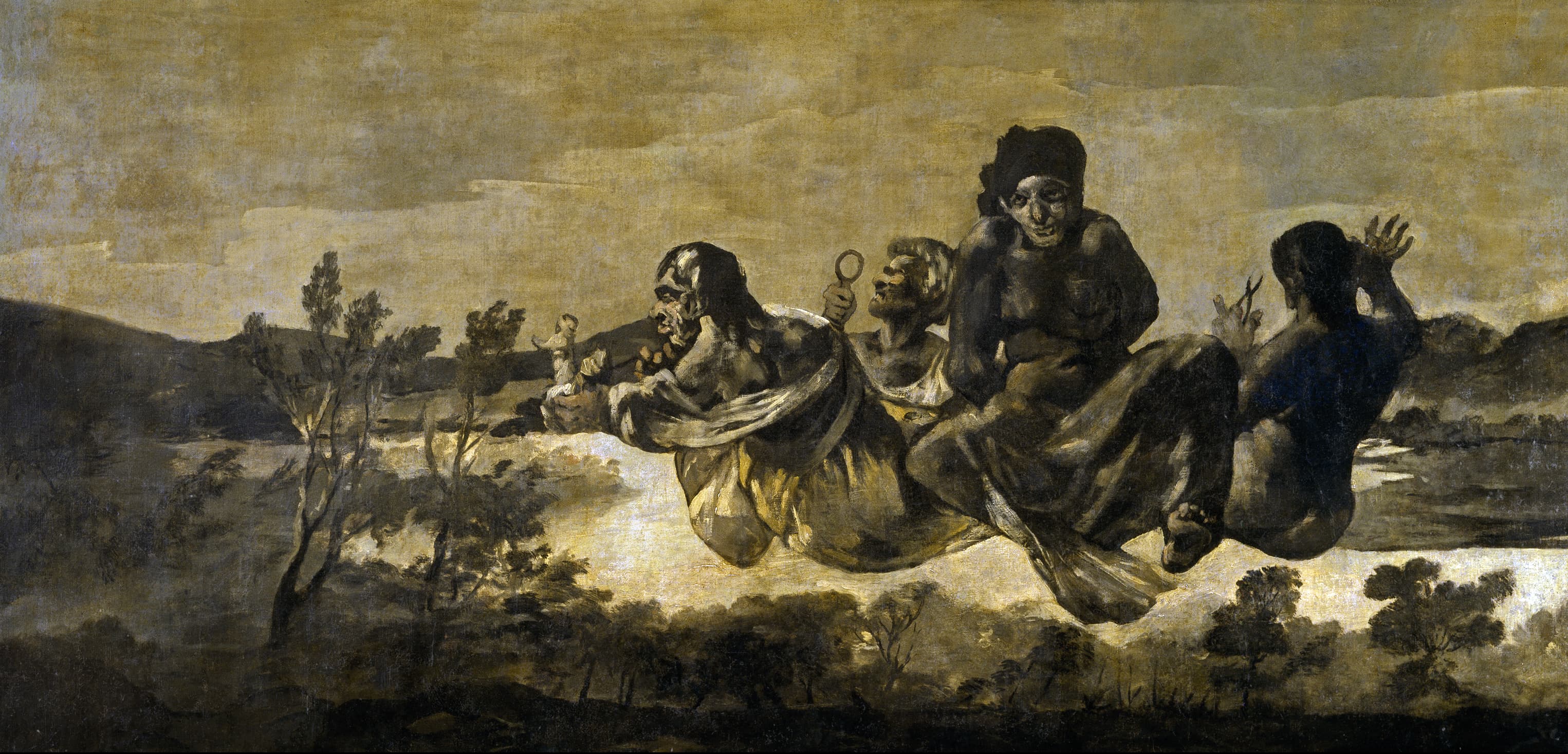
Atropos (The Fates)
Francisco Goya · c. 1819–1823
Kindred works
You may also study
Atropos (The Fates)
Francisco Goya · c. 1819–1823

Bridge over a Pond of Water Lilies
Claude Monet · 1899

The Scream
Edvard Munch · 1893

The Thinker
Auguste Rodin · Modeled 1880–82; enlarged 1902–03; this cast 1904

Ophelia
John Everett Millais · 1851–52

Woman with a Parasol – Madame Monet and Her Son
Claude Monet · 1875

The Great Wave off Kanagawa
Katsushika Hokusai · c. 1830–32
Las Meninas
Diego Velázquez · 1656