Image: Museo del Prado, Madrid · Public domain · via Wikimedia Commons
Romanticism
Judith and Holofernes
Francisco Goya, c. 1819–1823
Judith and Holofernes is a Black Painting by Francisco Goya, painted on a wall of his house near Madrid around 1819–1823. Judith raises her blade in torchlight while her maid prays. It hung near Saturn and is now in the Prado.
- Artist
- Francisco Goya
- Date
- c. 1819–1823
- Medium
- Oil mural transferred to canvas
- Dimensions
- c. 146 × 84 cm
- Collection
- Museo del Prado, Madrid, Spain
- Movement
- Romanticism
What you're looking at
A heavy, full-bodied woman steps forward out of darkness with a blade raised in her right hand. Her head is wrapped in a pale, loosely knotted headdress, her shoulders and chest are bare above a dark gown bound with a sash, and her face, lit from below and to the side, is set and inward-looking. She does not look at us. She looks down, at something below the frame.
At the left, crouched in shadow, an old woman in a dark hood presses her hands together in prayer. Her face is a dark profile, almost a silhouette. The lower right corner dissolves into murky shapes, and there is no clear sign of the man Judith is about to kill. There is no blood.
The palette is black, ocher, dirty white and a few warm notes of red and brown. The light seems to come from a torch or lamp low at the left, striking Judith's raised arm, face and breast and leaving everything else in shadow. Goya paints her gown and the servant's cloak in broad, fast sweeps, so that the two figures almost merge into one dark mass from which the lit arm and blade rise.
What is the story of Judith and Holofernes?
The subject comes from the Book of Judith, part of the Catholic Old Testament. When the Assyrian general Holofernes besieged the Jewish town of Bethulia, the widow Judith went to his camp with her maid, won his trust and, when he lay drunk in his tent, cut off his head with his own sword. The besieging army fled. In European art Judith became a heroine of courage and virtue and a symbol of the tyrant overthrown, painted by artists from Donatello to Caravaggio and Artemisia Gentileschi.
Most of those versions show the act itself, with Holofernes struggling and blood spurting. Goya's does not. He shows the moment before, or perhaps the moment of, the blow, but keeps the victim out of sight. What we see is the decision.
What does Goya's Judith and Holofernes mean?
Goya left no explanation, and the title was given after his death, but this is the one Black Painting whose subject can be identified with near certainty, because the story is so well known. Its meaning depends partly on where it hung.
It was painted in oil on the plaster wall of the ground-floor room of the Quinta del Sordo, Goya's house outside Madrid, near Saturn Devouring His Son. The pairing is pointed. Saturn is a father who devours his children; Judith is a woman who kills a tyrant to save her people. Both are images of devouring and decapitation, and both feature a figure lit violently out of darkness. Many scholars read them as a deliberate pair, perhaps one for each side of the room's main window.
There is also a political reading. After 1814 Ferdinand VII abolished the liberal constitution and ruled as an absolute monarch, and Goya, who had served as his court painter, had little reason to admire him. A picture of a tyrant about to lose his head would have been dangerous to show in public. On the private walls of his own house, where Goya seems to have expected no visitors to judge it, it was safe.
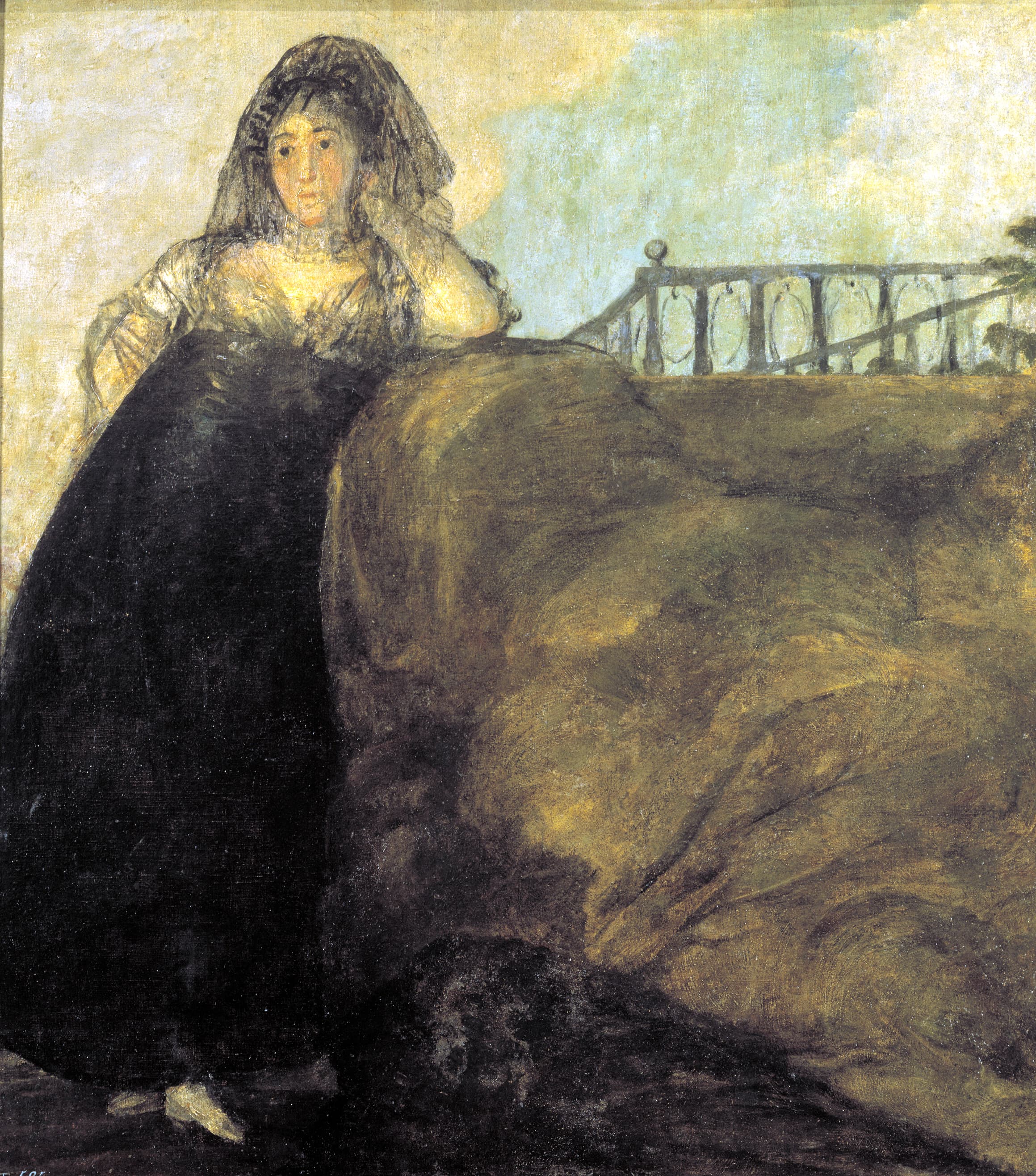
Others read Judith more personally, as one of the powerful, unsettling women who fill the ground floor, alongside La Leocadia and the coven of the Witches' Sabbath. The critic Lawrence Gowing saw the room as divided between male and female subjects.
How it was made and preserved
Judith, like the rest of the Black Paintings, was painted between about 1819 and 1823 with black underpainting and broad, energetic brushwork. In 1873–74 the banker Baron Émile d'Erlanger, then the owner of the house, had the murals transferred from the walls to canvas under the Prado restorer Salvador Martínez Cubells. The transfer saved them at the cost of losses and retouching, especially in the dark areas, which may be one reason the lower right of this picture is so hard to read. D'Erlanger exhibited the canvases in Paris in 1878 and gave them to the Spanish state, which accepted them in 1881.
What to notice
Look at Judith's eyes. They are almost closed, lowered toward her victim, and her expression is less triumph than concentration. Then look at the servant: in most Judith paintings the maid holds the sack for the head, but here she prays. Goya turns the old woman from an accomplice into a witness asking forgiveness for what she is about to see.
Where to see Judith and Holofernes today
The painting is in the Museo del Prado in Madrid, where the Black Paintings hang together in one room on the ground floor. It is usually displayed close to Saturn, which lets visitors see the two images as Goya's household would have, side by side.
Questions & answers
What does Goya's Judith and Holofernes mean?
Goya left no explanation. The biblical Judith kills the tyrant Holofernes to save her people, and the picture is often read as a veiled wish for the end of Ferdinand VII's absolutist rule. It also pairs with Saturn Devouring His Son, which hung nearby: one image of a father devouring, one of a woman beheading.
Where is Goya's Judith and Holofernes?
It is in the Museo del Prado in Madrid, displayed with the other Black Paintings. Goya painted it on a ground-floor wall of his house, the Quinta del Sordo, near Saturn Devouring His Son. It was transferred to canvas in 1873–74 and entered the Spanish state collection in 1881.
Why is Holofernes not shown in Goya's painting?
Goya keeps the victim out of sight, unlike Caravaggio and Artemisia Gentileschi, who show the beheading in full. He focuses on Judith's lit face and raised blade and on the praying servant, so the picture is about the decision to kill rather than the gore.
Who is the old woman in Goya's Judith?
She is Judith's maid, who in the Bible accompanies her into the enemy camp and carries away the head. Goya shows her crouched in shadow with her hands joined in prayer, a witness rather than an accomplice.
More by the artist
Francisco Goya

Saturn Devouring His Son
Francisco Goya · c. 1819–1823
The Third of May 1808
Francisco Goya · 1814
The Sleep of Reason Produces Monsters
Francisco Goya · 1797–99 (published 1799)
Fantastic Vision (Asmodea)
Francisco Goya · c. 1819–1823
La Leocadia
Francisco Goya · c. 1819–1823
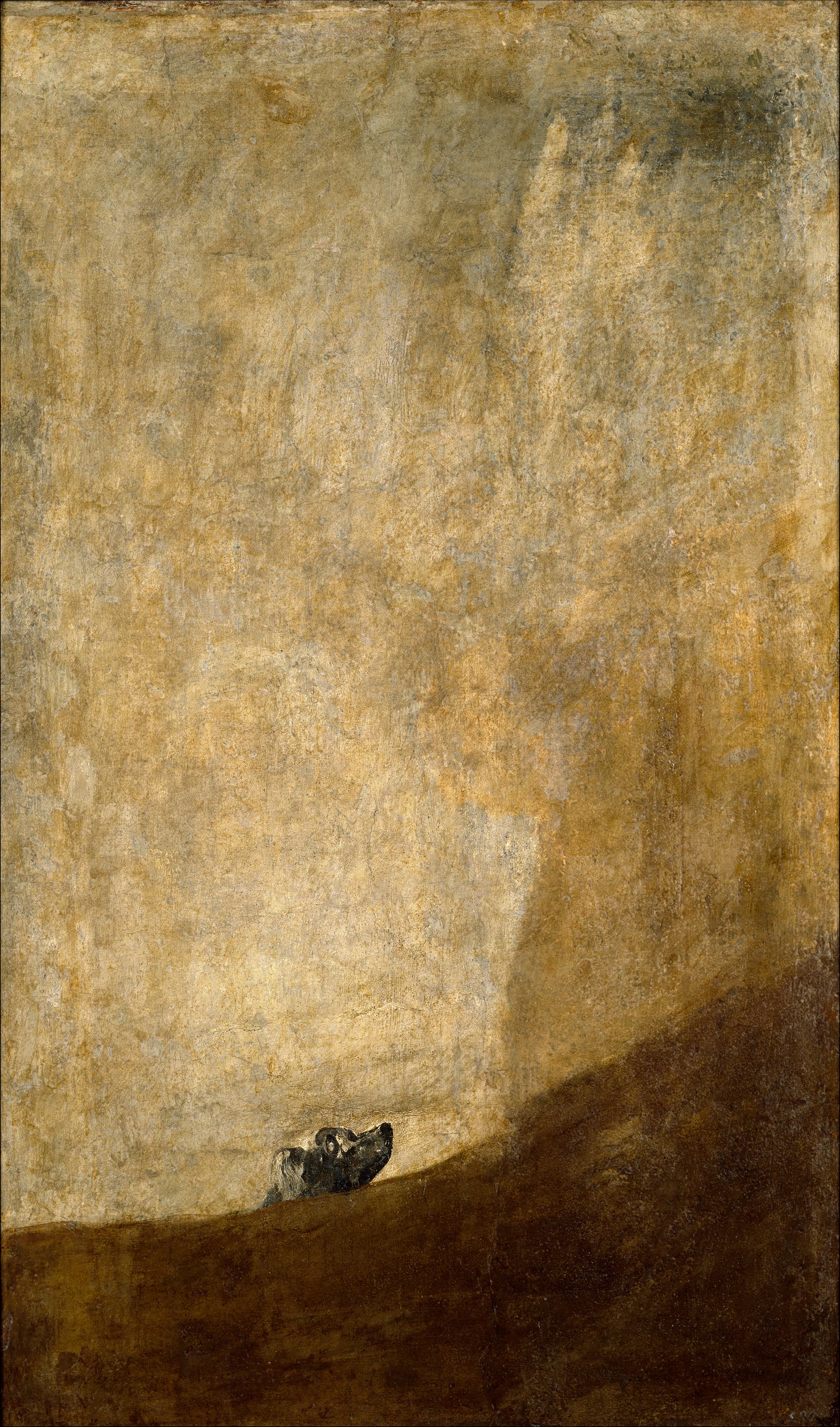
The Dog
Francisco Goya · c. 1819–1823
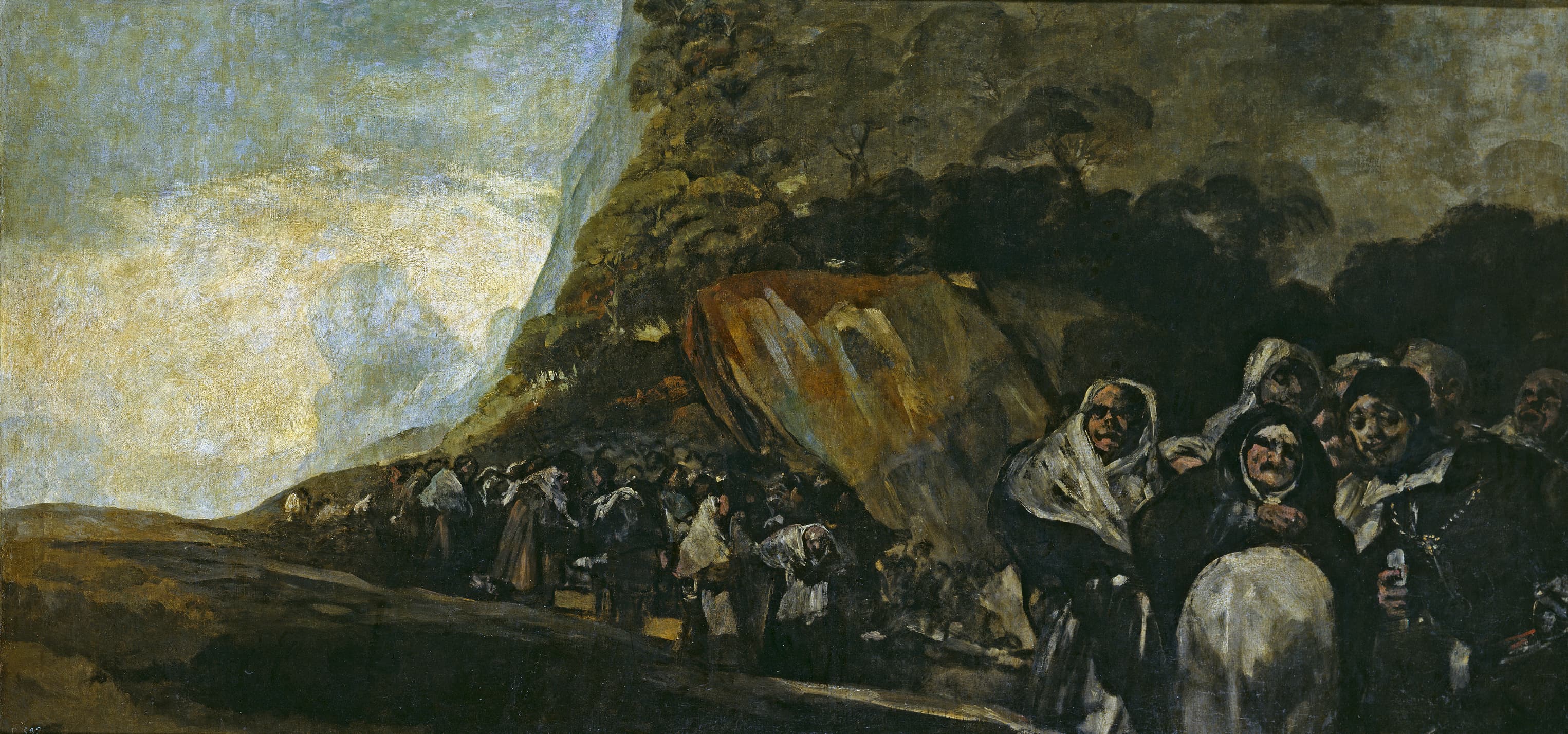
The Holy Office (Pilgrimage to the Fountain of San Isidro)
Francisco Goya · c. 1819–1823
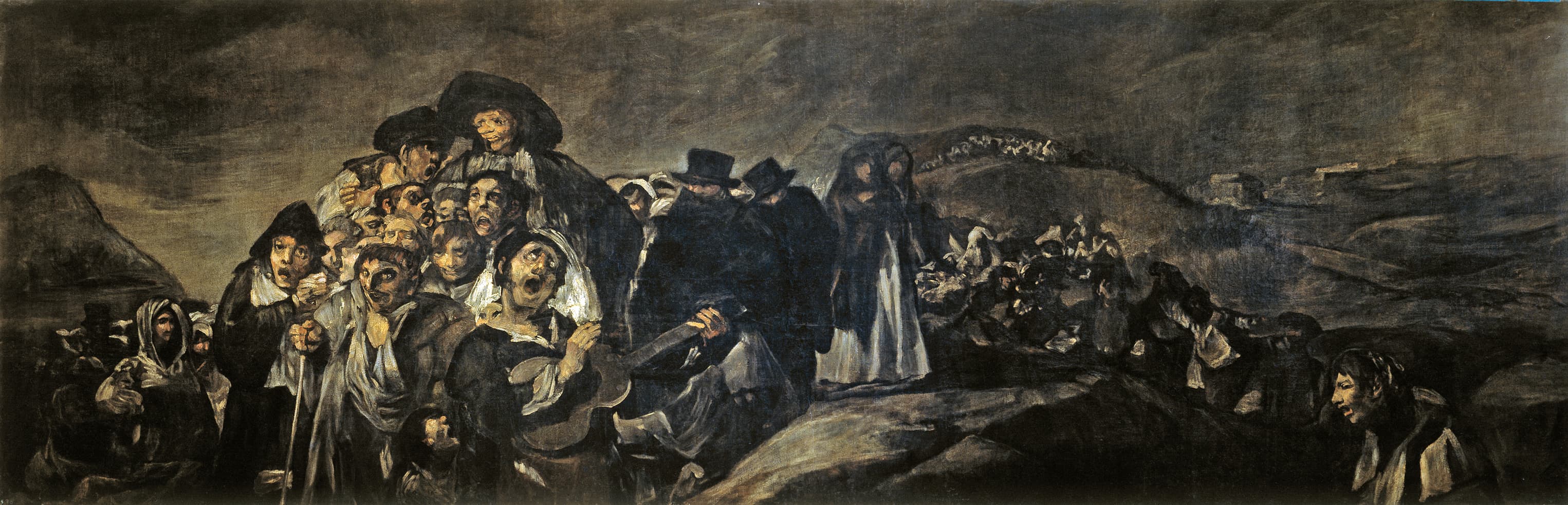
A Pilgrimage to San Isidro
Francisco Goya · c. 1819–1823
Also painted in 1820
The same year
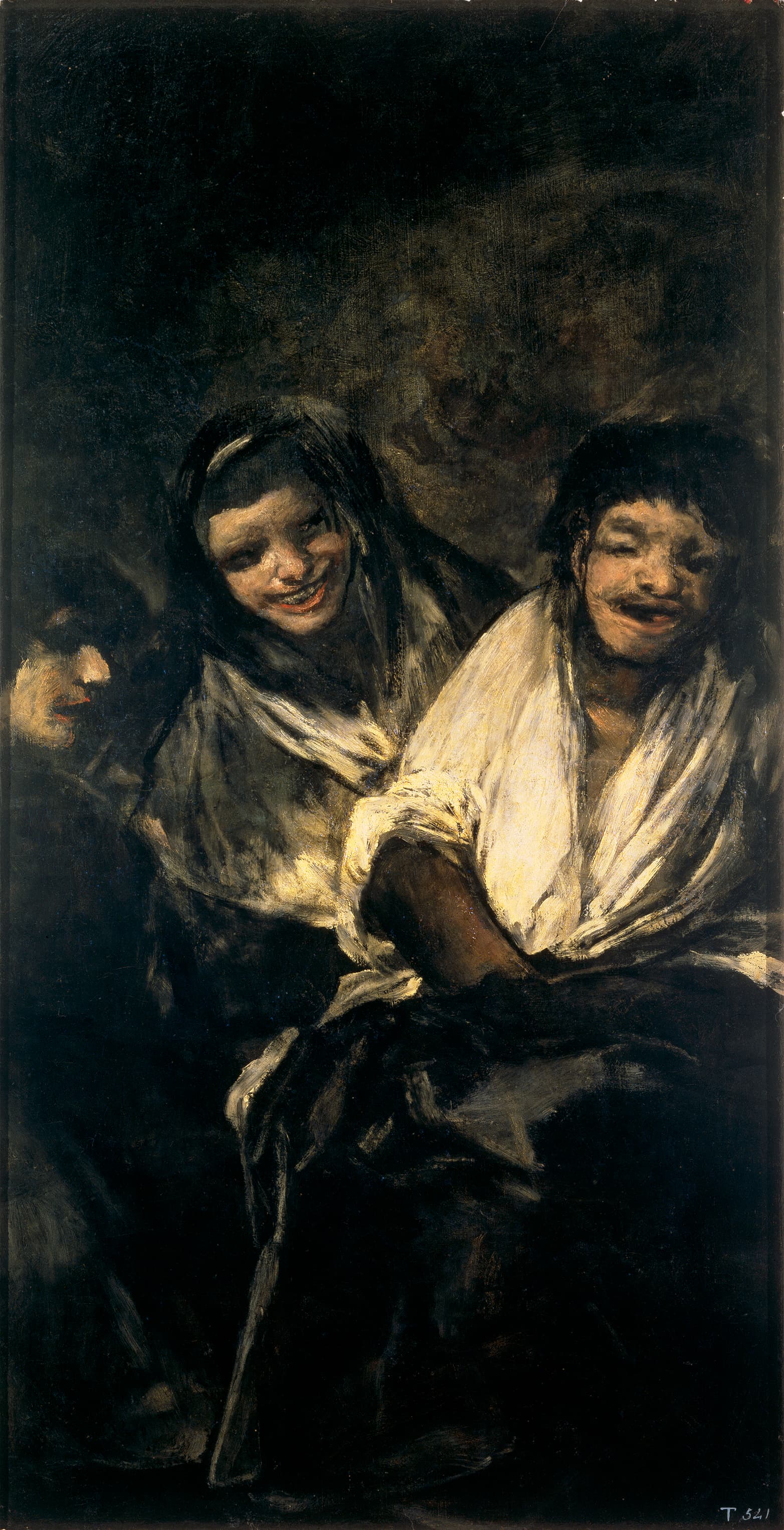
Women Laughing
Francisco Goya · c. 1819–1823
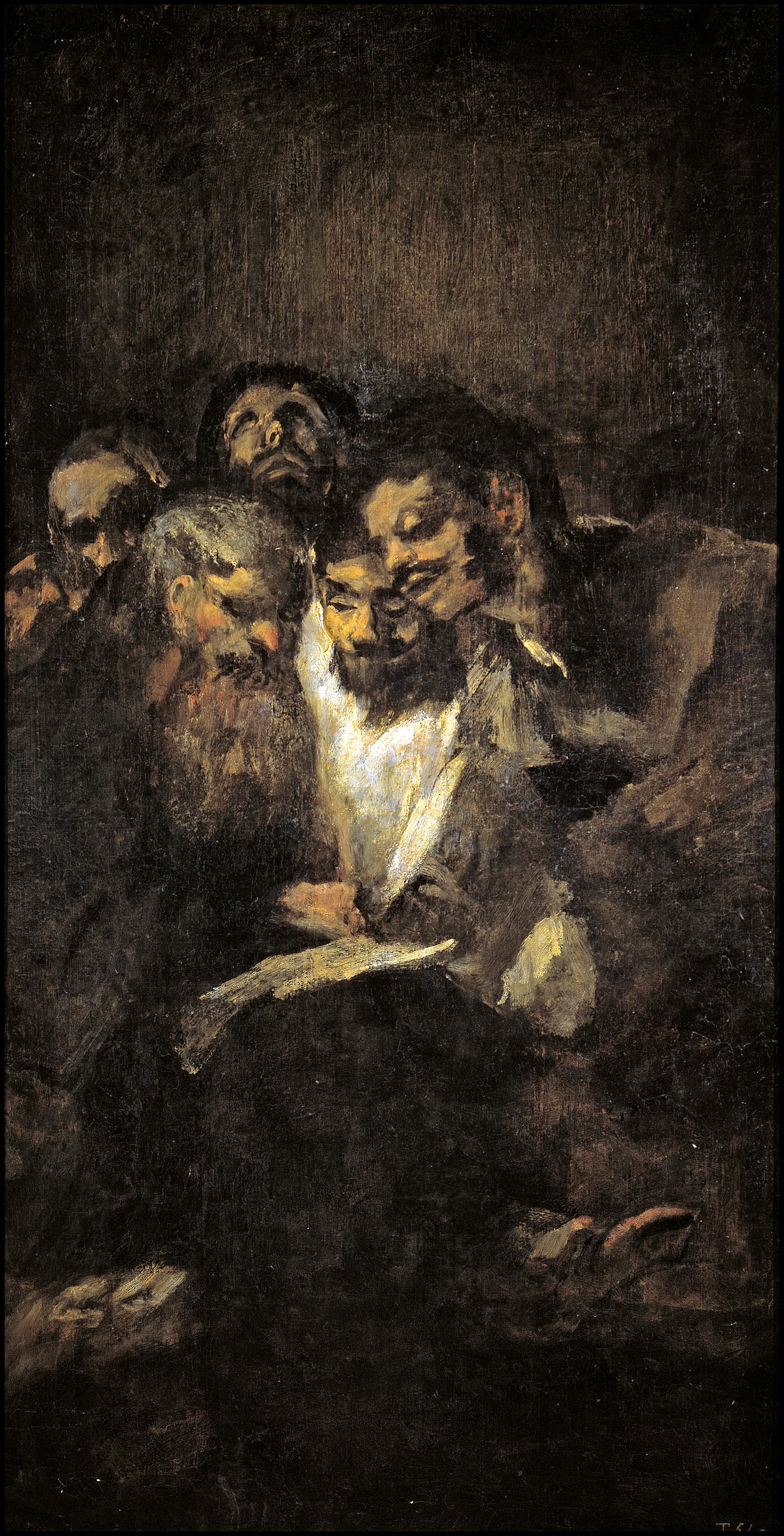
Men Reading
Francisco Goya · c. 1819–1823
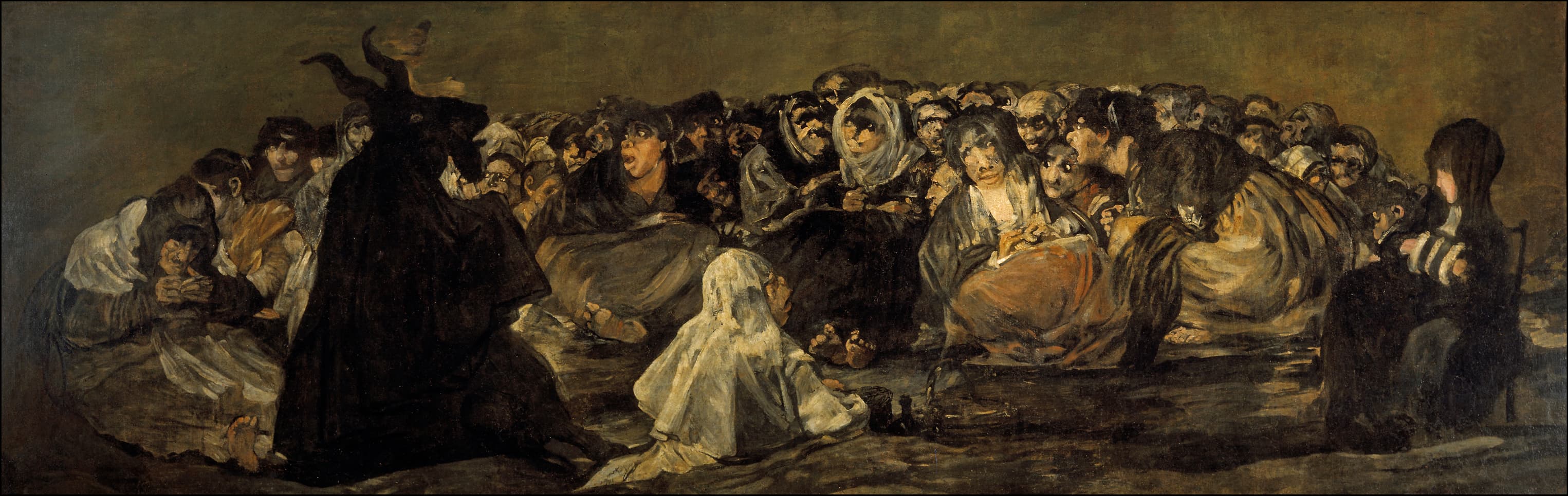
Witches' Sabbath (The Great He-Goat)
Francisco Goya · c. 1819–1823
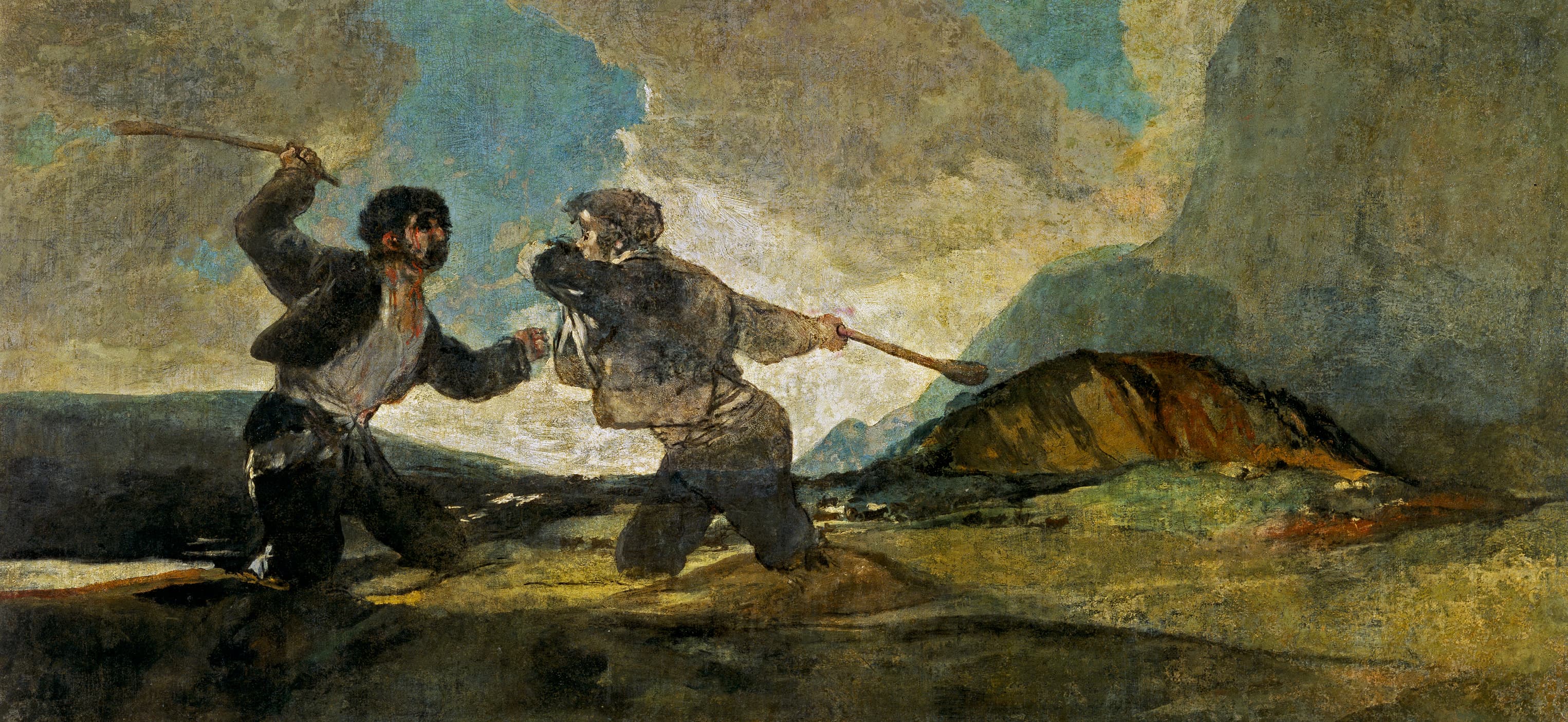
Fight with Cudgels
Francisco Goya · c. 1819–1823
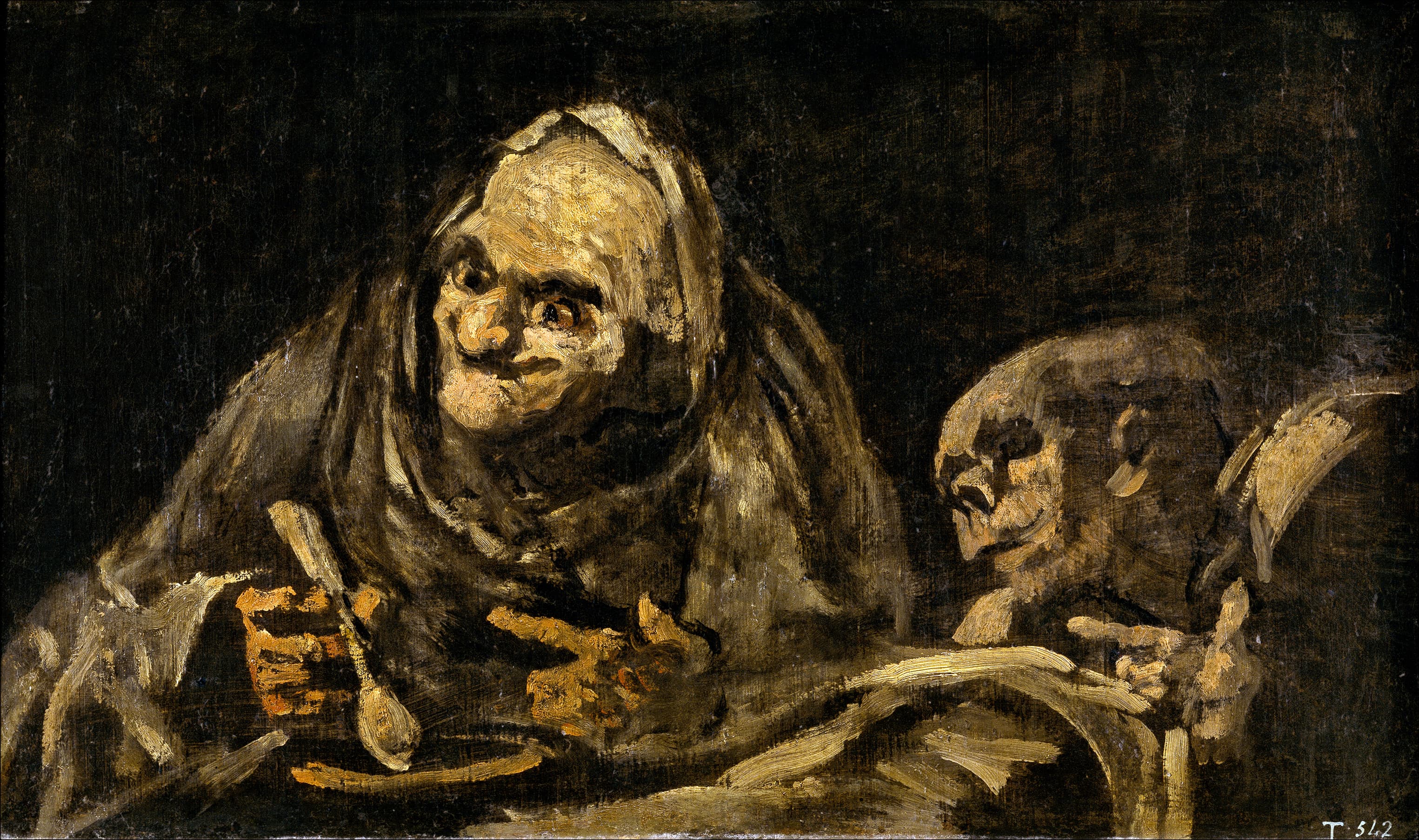
Two Old Men Eating Soup
Francisco Goya · c. 1819–1823
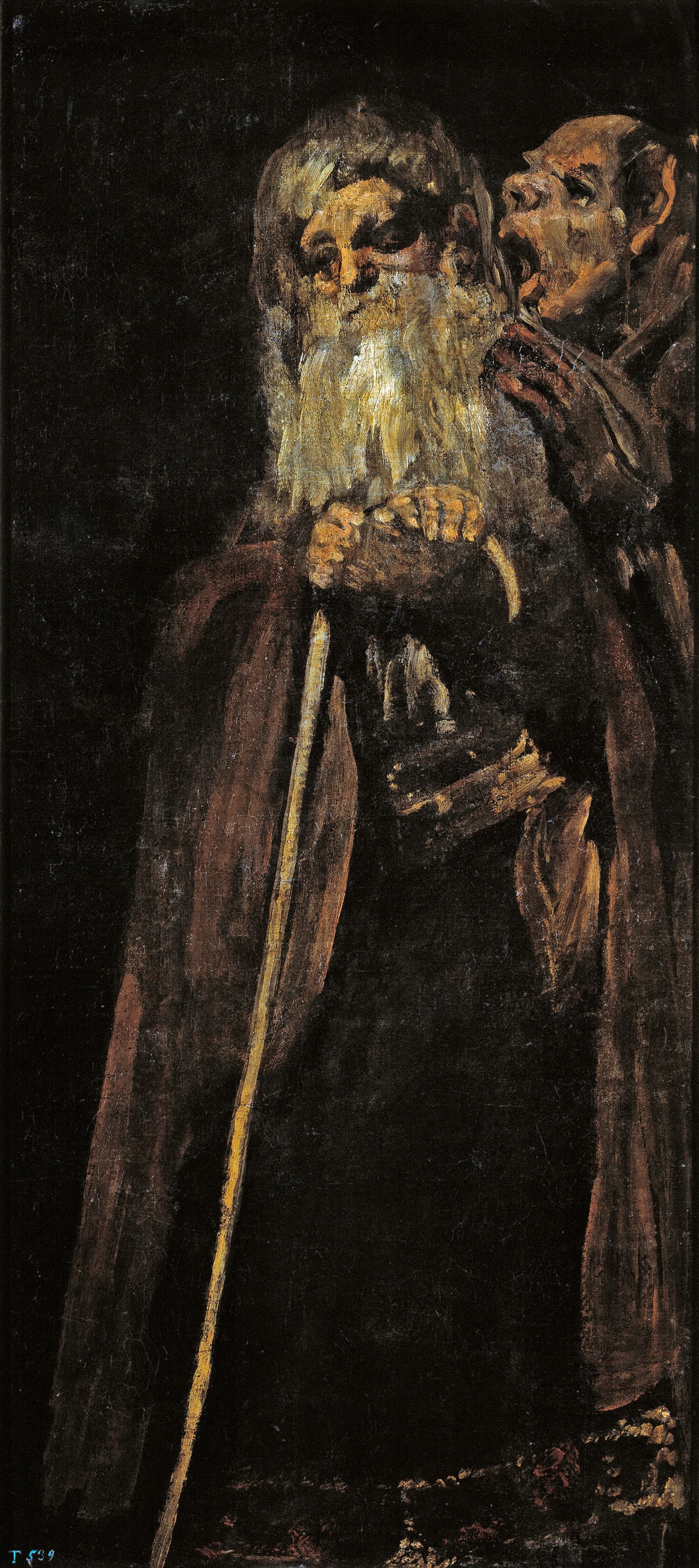
Two Old Men
Francisco Goya · c. 1819–1823
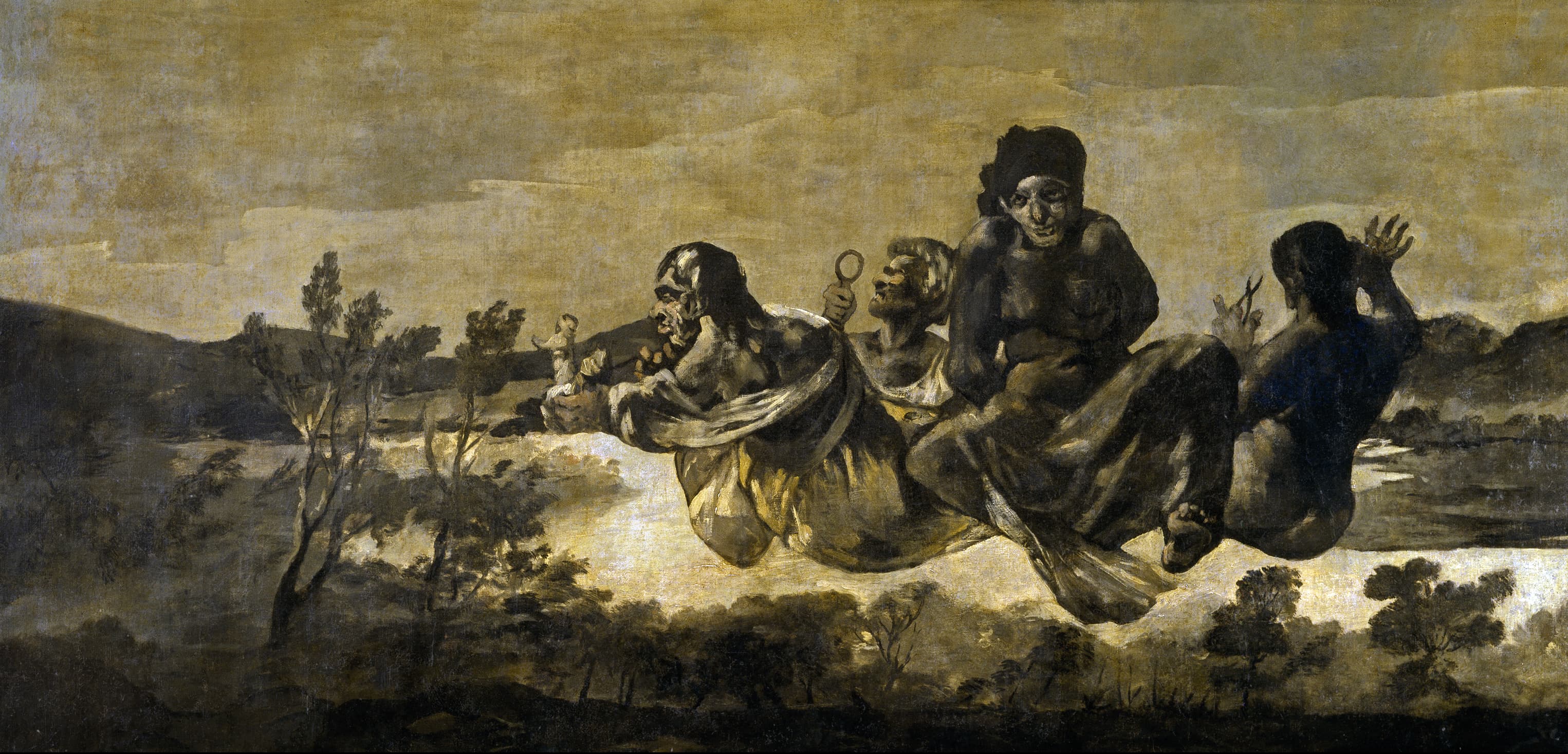
Atropos (The Fates)
Francisco Goya · c. 1819–1823
Kindred works
You may also study
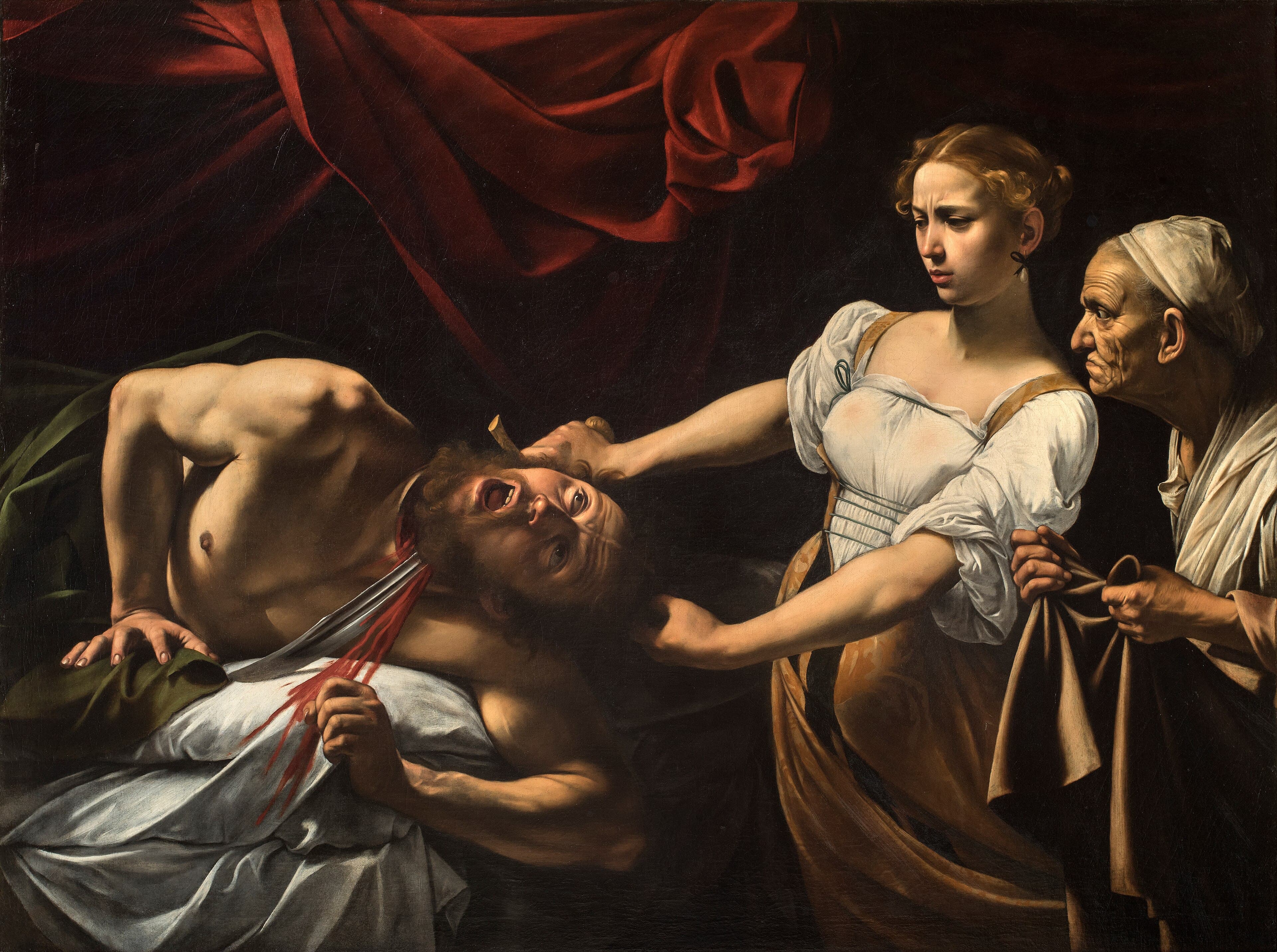
Judith Beheading Holofernes
Caravaggio · c. 1598–1599
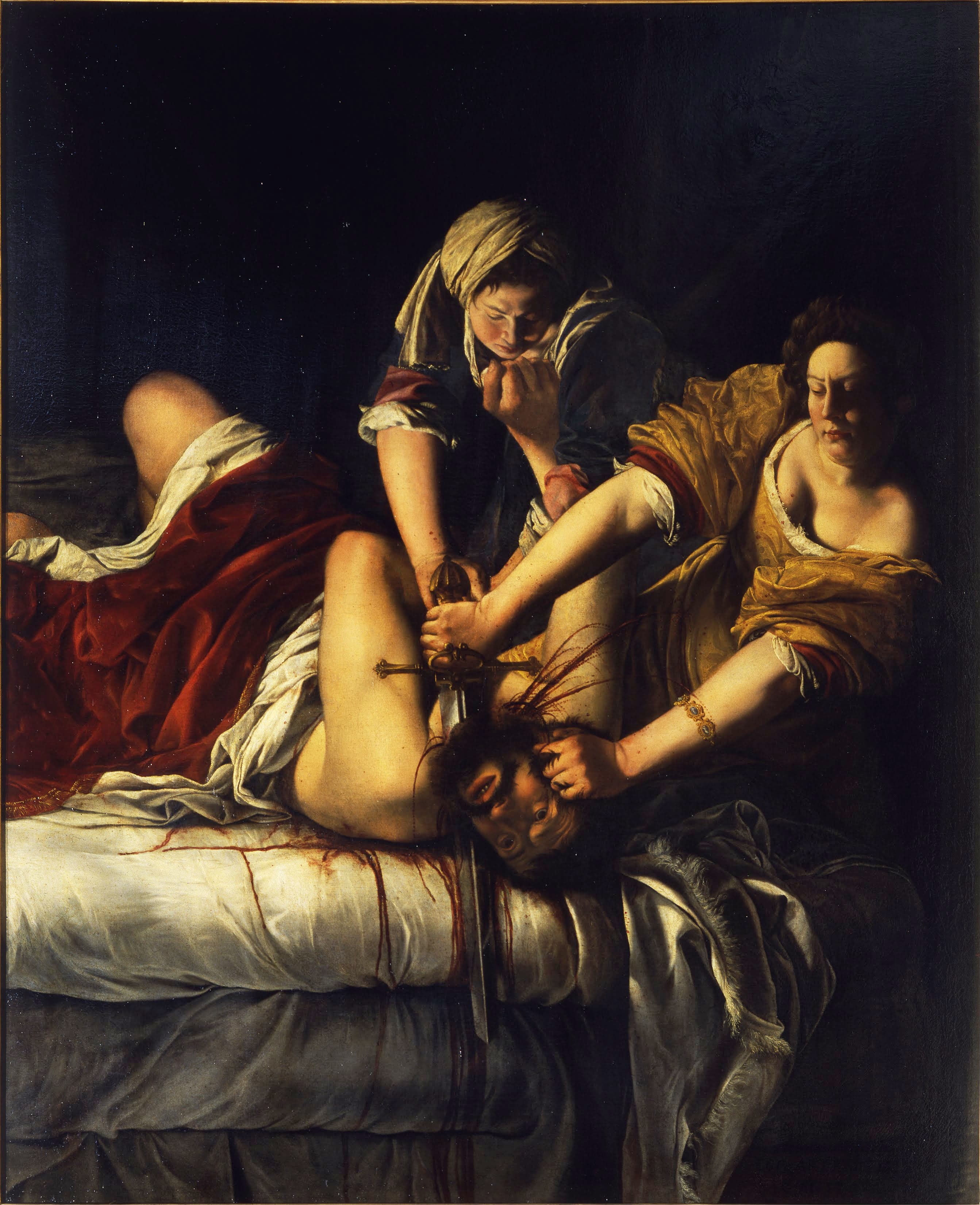
Judith Slaying Holofernes
Artemisia Gentileschi · c. 1620
Witches' Sabbath (The Great He-Goat)
Francisco Goya · c. 1819–1823

Venus de Milo
Alexandros of Antioch · c. 150–125 BC

The Scream
Edvard Munch · 1893
The Creation of Adam
Michelangelo · c. 1511–12

Ophelia
John Everett Millais · 1851–52

Woman with a Parasol – Madame Monet and Her Son
Claude Monet · 1875