Image: Museo del Prado, Madrid · Public domain · via Wikimedia Commons
Romanticism
The Dog
Francisco Goya, c. 1819–1823
The Dog, or Half-Submerged Dog, is one of Francisco Goya's Black Paintings, painted on a wall of his house near Madrid around 1819–1823. A dog's head peers up from a dark slope into an empty ocher sky. It is in the Prado.
- Artist
- Francisco Goya
- Date
- c. 1819–1823
- Medium
- Oil mural transferred to canvas
- Dimensions
- 131.5 × 79.3 cm
- Collection
- Museo del Prado, Madrid, Spain
- Movement
- Romanticism
What you're looking at
Almost nothing, and that is the point. A tall canvas is divided into two unequal zones. The lower part is a dark brown slope that rises from left to right, like a bank of earth or sand. The upper three quarters is an empty field of yellowish ocher, scuffed and stained, with a faint darker shadow in the upper right. Just above the edge of the slope, small and very low in the picture, is the head of a dog.
Only the head is visible. The dog's body is hidden behind or beneath the dark mass. Its muzzle points up and to the right, its ear is folded back and its eye looks upward into the empty space. It might be sinking, swimming, hiding or simply peering over a ridge. Goya gives no clue beyond the angle of the head and that upward look.
The painting is 131.5 by 79.3 cm. The dog's head would fit in the palm of a hand.
Look closely at the field above the head. It is not flat. Goya dragged and scumbled thin ocher over darker layers, so that the surface shifts between yellow, gray and brown, and the emptiness seems to move like air or light. It is a sky, a wall and a void at once.
What does The Dog mean?
Goya never explained it, and the titles are not his: the picture is known as El perro (The Dog) and Perro semihundido (Half-Submerged Dog), the second being the name the Prado uses. Because there is no story, interpretation has been unusually free.
The most common reading sees a creature being swallowed by the earth or by quicksand, looking up in vain for help: an image of helplessness against forces too large to fight. Others see a dog waiting for its master who will not come, an image of abandonment and loneliness. Some see the dog cautiously lifting its head to look at something beyond the frame. The art critic Robert Hughes admitted that "we do not know what it means," and argued that its pathos works below the level of narrative.
Painted by a deaf man in his seventies, living through political repression in a house outside Madrid, the picture is often read as a self-image or as an image of the human condition. That reading belongs to its later viewers. What the paint itself offers is scale: a small living thing, a huge indifferent space.
The painting's original appearance
Like all fourteen Black Paintings, The Dog was painted in oil directly onto a wall of the Quinta del Sordo, in this case in the upper room. The photographer Jean Laurent recorded it around 1874, before it was lifted from the wall, and his photograph suggests the composition was once less empty. The dog appears to look toward a rocky outcrop, and there are shapes above it that look like birds. Some of this was lost when the murals were transferred to canvas in 1873–74 under the Prado restorer Salvador Martínez Cubells, for the banker Baron Émile d'Erlanger. The darker shadow in the upper right of the canvas today may be damage, or the ghost of an earlier image.
So the radical emptiness that makes The Dog look so modern may be partly an accident of conservation. It remains the version the world knows.
D'Erlanger exhibited the paintings at the 1878 Exposition Universelle in Paris and gave them to the Spanish state, which accepted the gift in 1881.
Why artists revere it
No Black Painting has meant more to later painters. The Spanish abstract painter Antonio Saura called it "the world's most beautiful picture." Rafael Canogar described it as a visual poem and the first Symbolist painting in the West. Joan Miró asked to see it, together with Velázquez's Las Meninas, on his last visit to the Prado. The Prado's own curator Manuela Mena has said that there is no contemporary painter who does not stand in reverence before it.
The reason is easy to see. With a single small motif and a nearly empty field, The Dog comes close to what twentieth-century painters were trying to do with color fields and minimal means, a century early. Its echo has been traced in Pierre Bonnard's The Red-Checkered Tablecloth (1910), and the opera Facing Goya by Michael Nyman opens with a reference to dogs drowning in sand.
The dog among the other Black Paintings
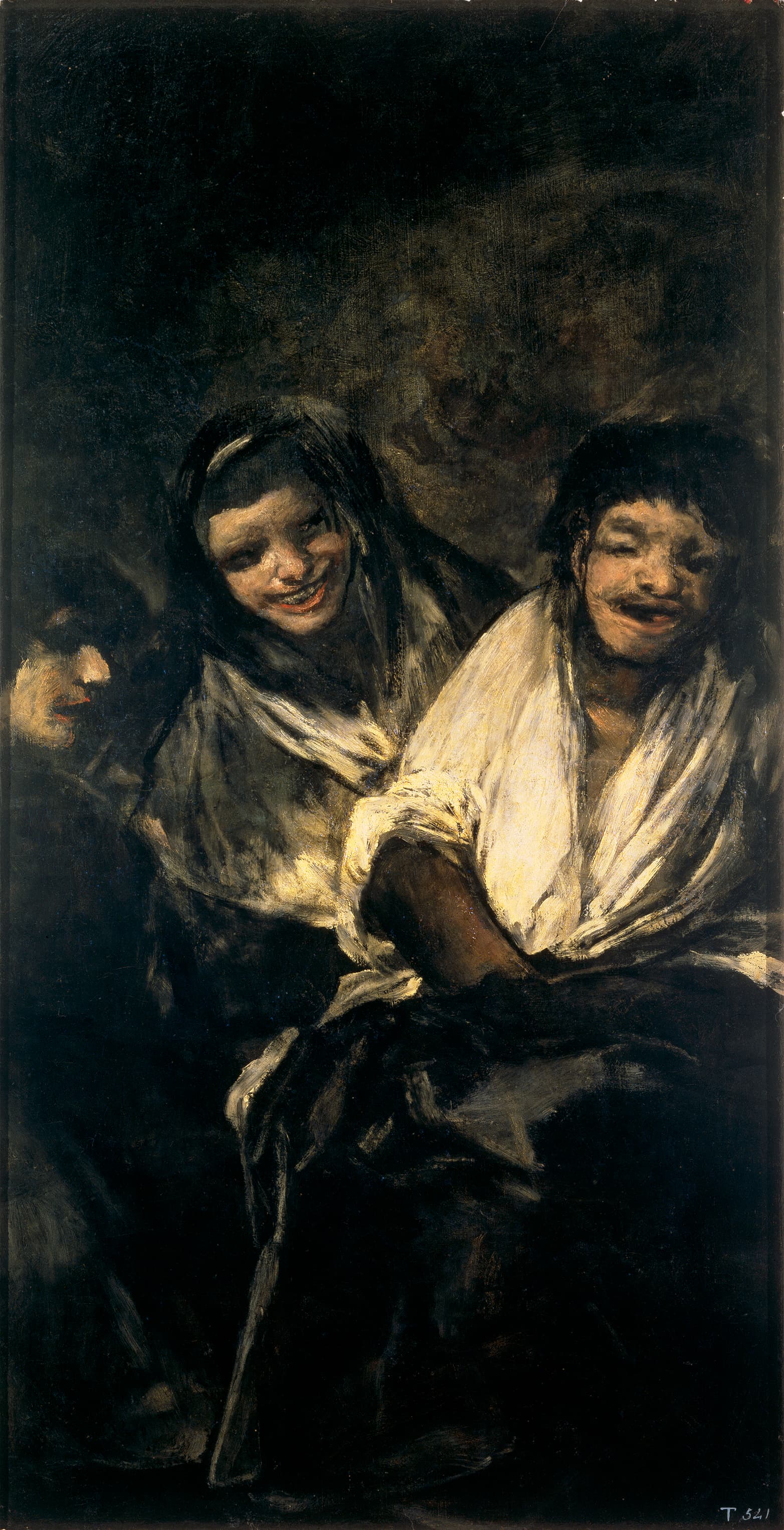
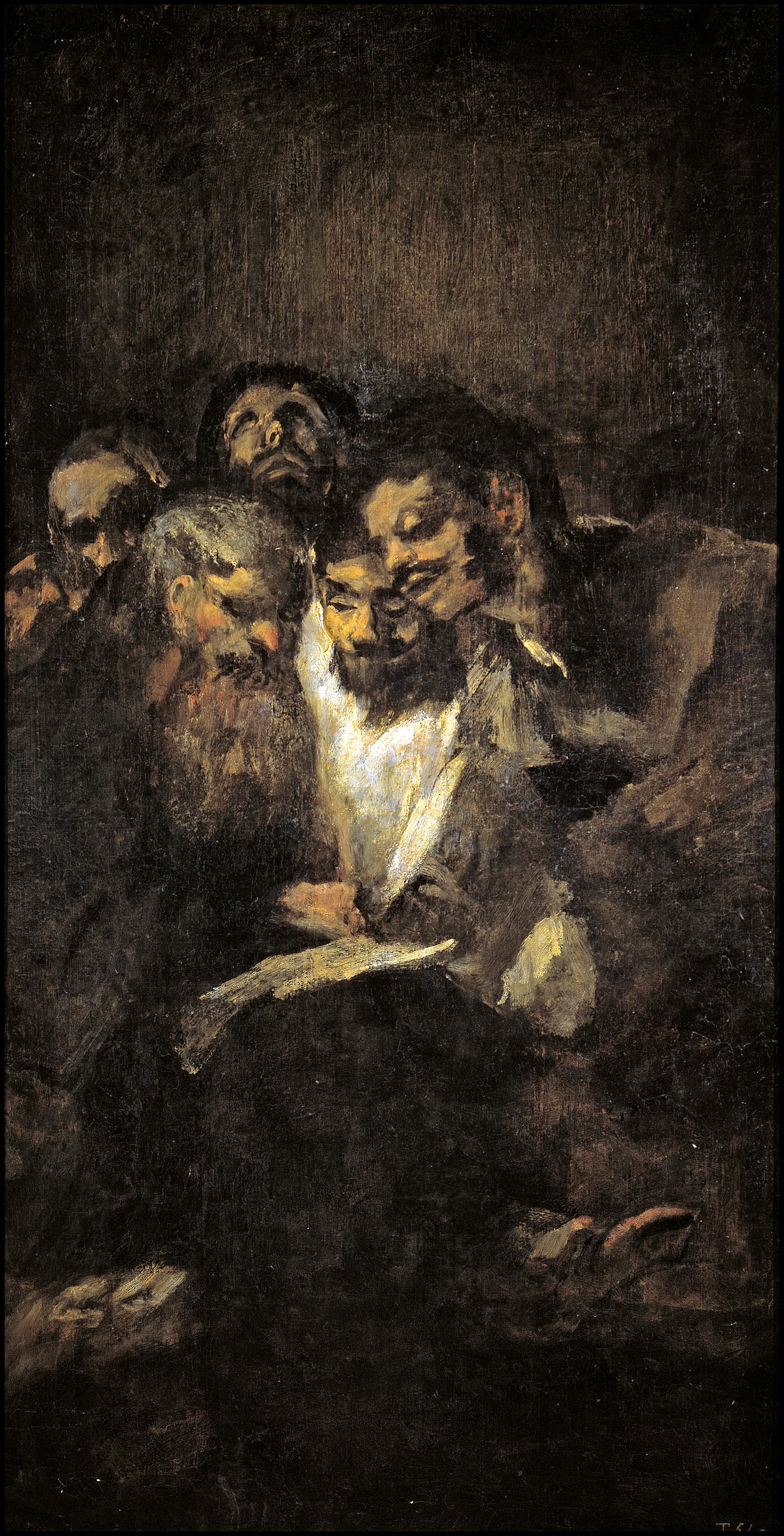
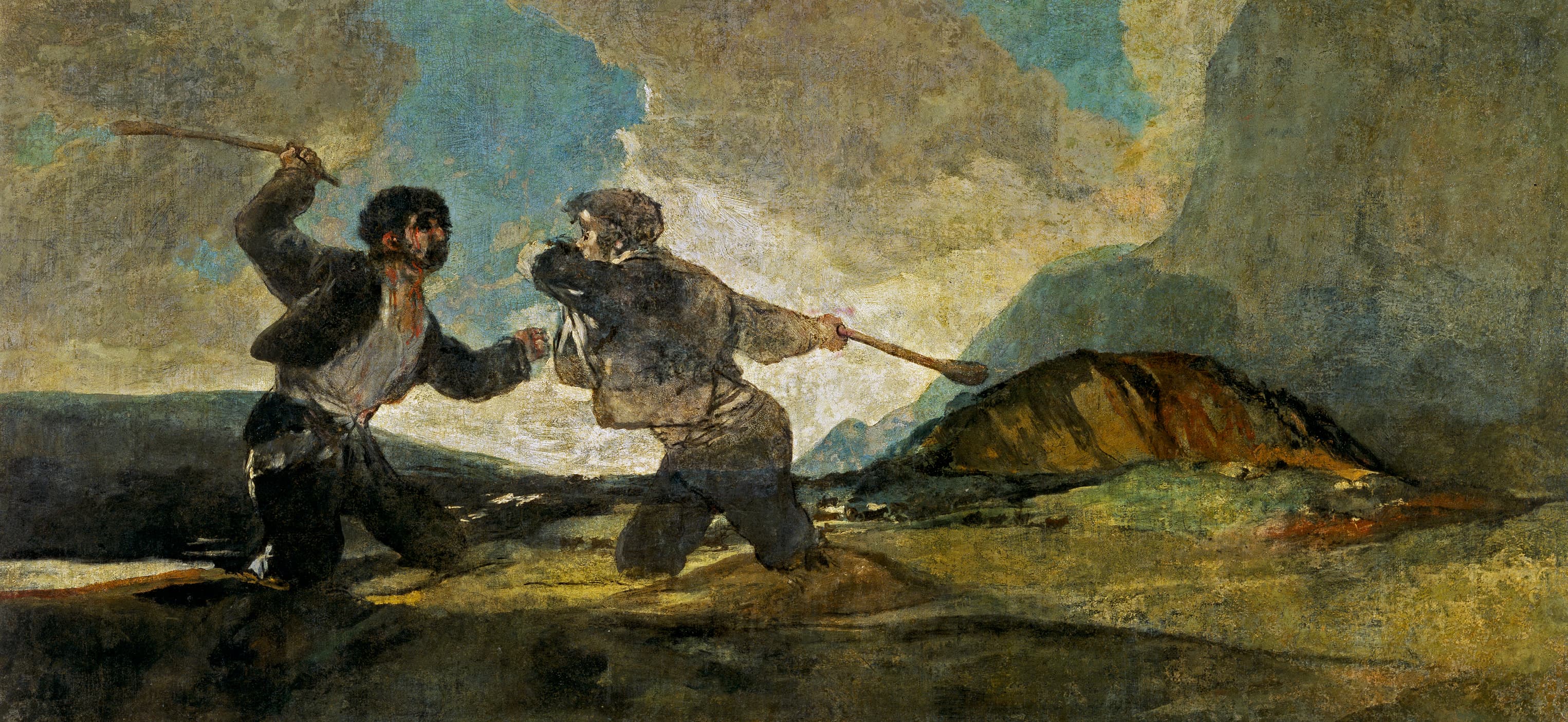
The upper room also held Atropos (The Fates), Fight with Cudgels and the pair Men Reading and Women Laughing. Downstairs was Saturn Devouring His Son. Against the crowded violence of those scenes, The Dog is the one picture in the house with no human being in it, and perhaps for that reason the one people find hardest to forget.
Where to see The Dog today
The Dog is in the Museo del Prado in Madrid, displayed with the other Black Paintings in a single room on the ground floor. Many visitors walk in for Saturn and stay longest in front of the dog.
Questions & answers
What does Goya's The Dog mean?
Goya left no explanation. The small dog's head, almost swallowed by a dark slope and looking up into empty space, is most often read as an image of helplessness, abandonment or futile hope. Robert Hughes admitted nobody knows what it means but felt its pathos works below the level of story.
Where is The Dog by Goya?
It is in the Museo del Prado in Madrid, displayed with the other Black Paintings and catalogued as Perro semihundido (Half-Submerged Dog). Goya painted it on a wall of the upper room of his house, the Quinta del Sordo; it was transferred to canvas in 1873–74.
Is the dog in Goya's painting drowning?
Possibly. The Prado's title, Half-Submerged Dog, implies sinking, and many viewers see quicksand or water. But the dark mass could also be a bank of earth the dog is looking over. A photograph taken before the transfer suggests the dog once looked toward a rocky outcrop with birds above it.
Why is The Dog so admired by artists?
Its near-empty field and single small motif look strikingly modern. Antonio Saura called it the world's most beautiful picture, Joan Miró asked to see it on his last Prado visit, and critics have seen it as a forerunner of Symbolism and abstract painting.
How big is The Dog by Goya?
The canvas measures 131.5 by 79.3 cm. The dog's head occupies only a tiny area near the bottom, which is what gives the empty space above it so much force.
More by the artist
Francisco Goya

Saturn Devouring His Son
Francisco Goya · c. 1819–1823
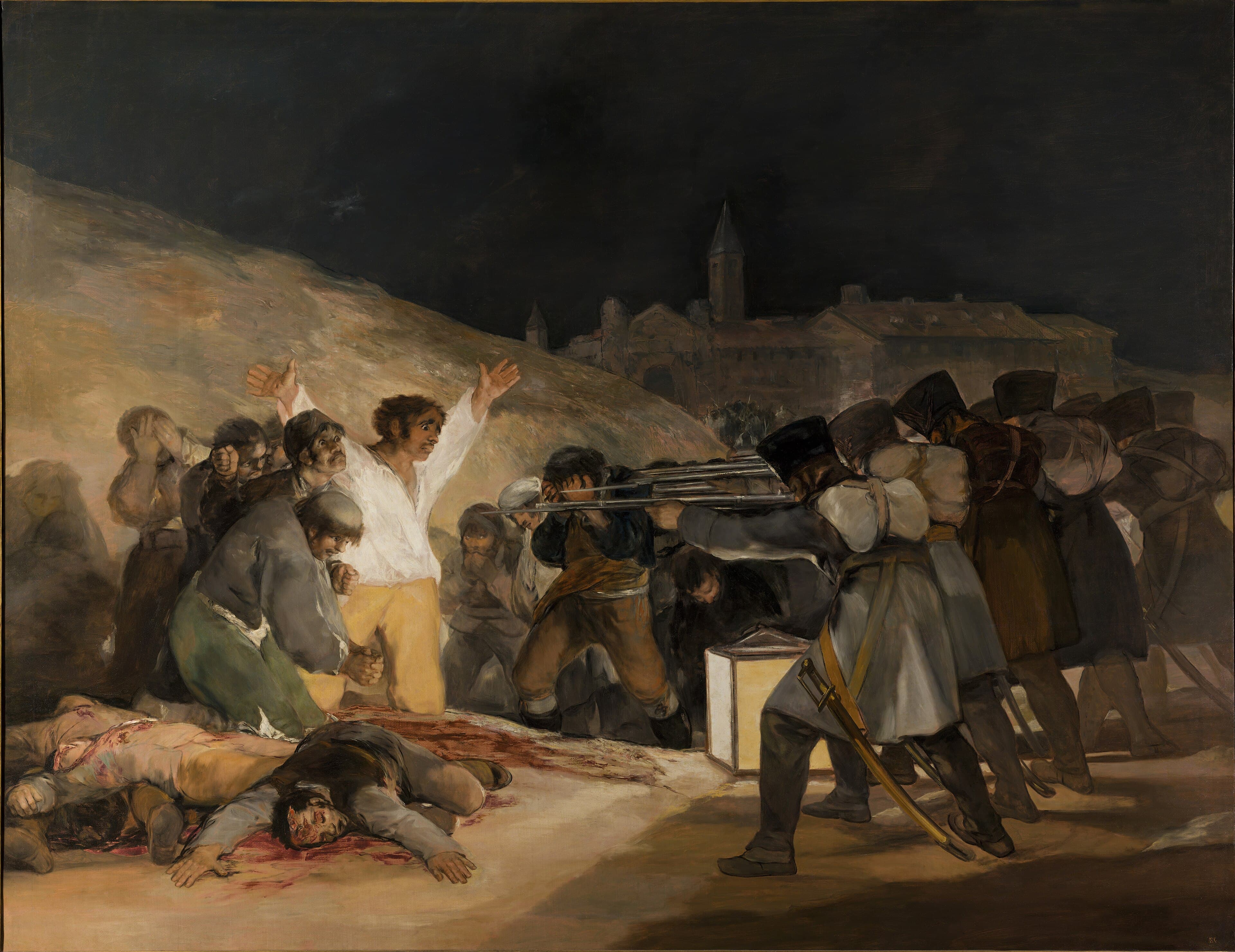
The Third of May 1808
Francisco Goya · 1814
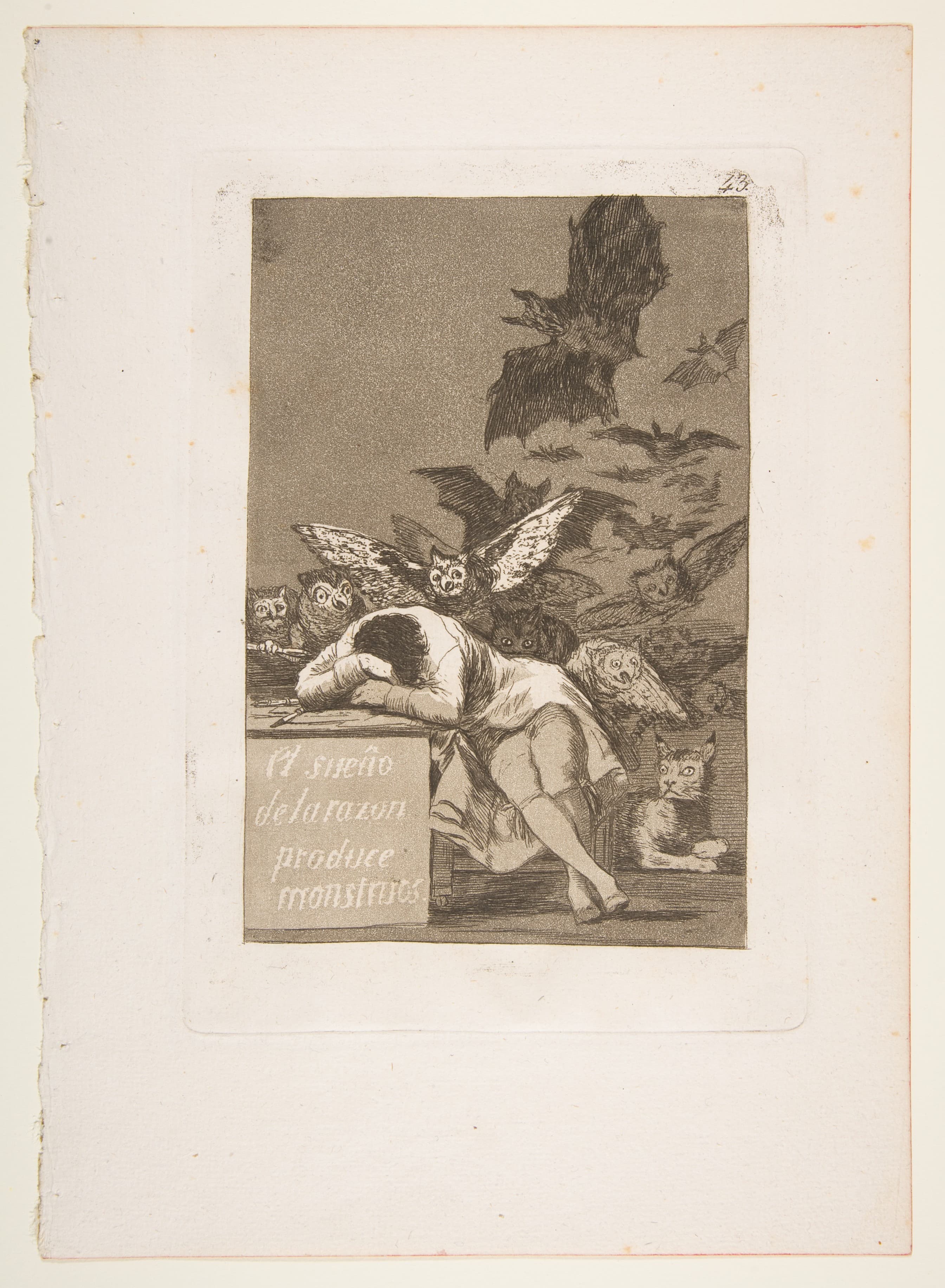
The Sleep of Reason Produces Monsters
Francisco Goya · 1797–99 (published 1799)
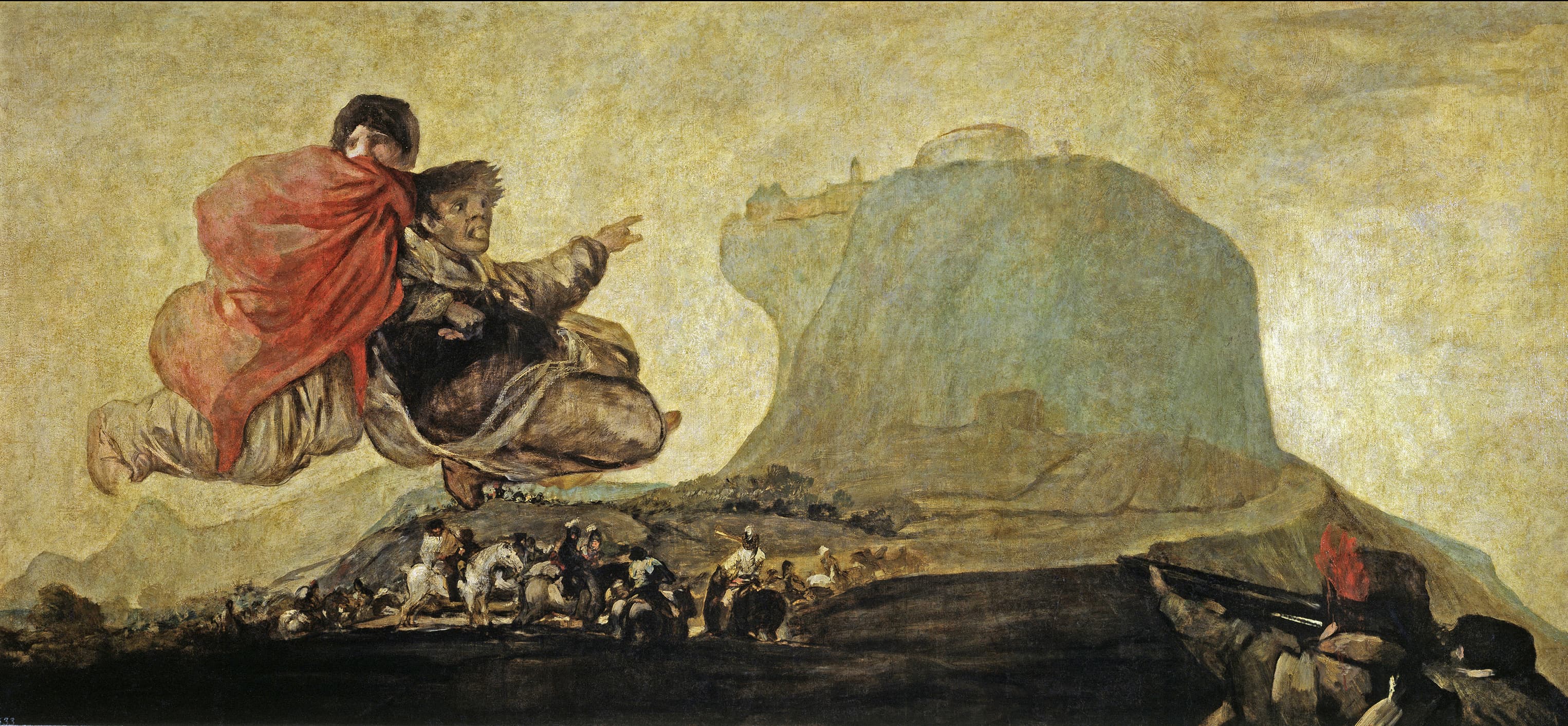
Fantastic Vision (Asmodea)
Francisco Goya · c. 1819–1823
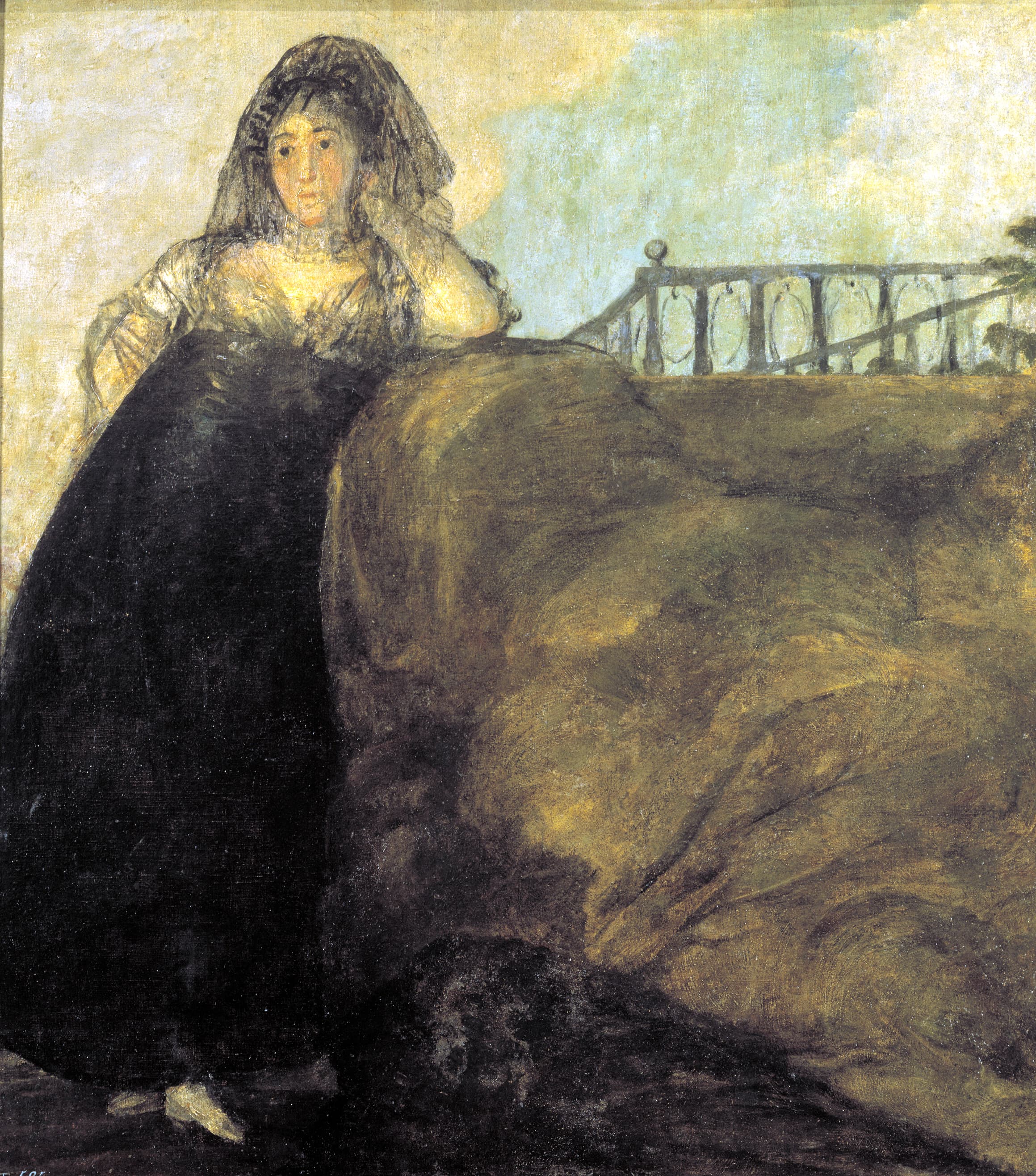
La Leocadia
Francisco Goya · c. 1819–1823
Judith and Holofernes
Francisco Goya · c. 1819–1823
The Holy Office (Pilgrimage to the Fountain of San Isidro)
Francisco Goya · c. 1819–1823
A Pilgrimage to San Isidro
Francisco Goya · c. 1819–1823
Also painted in 1820
The same year
Women Laughing
Francisco Goya · c. 1819–1823
Men Reading
Francisco Goya · c. 1819–1823
Witches' Sabbath (The Great He-Goat)
Francisco Goya · c. 1819–1823
Fight with Cudgels
Francisco Goya · c. 1819–1823
Two Old Men Eating Soup
Francisco Goya · c. 1819–1823
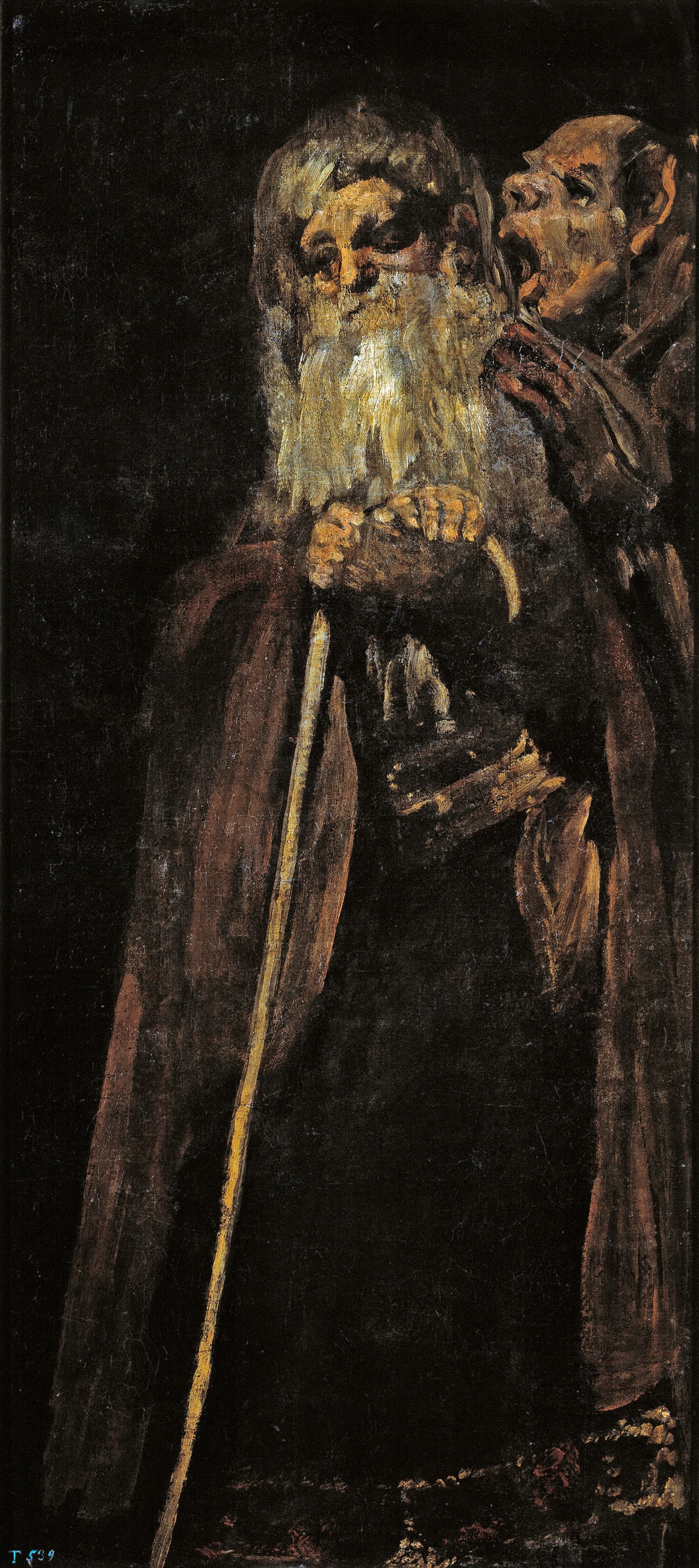
Two Old Men
Francisco Goya · c. 1819–1823
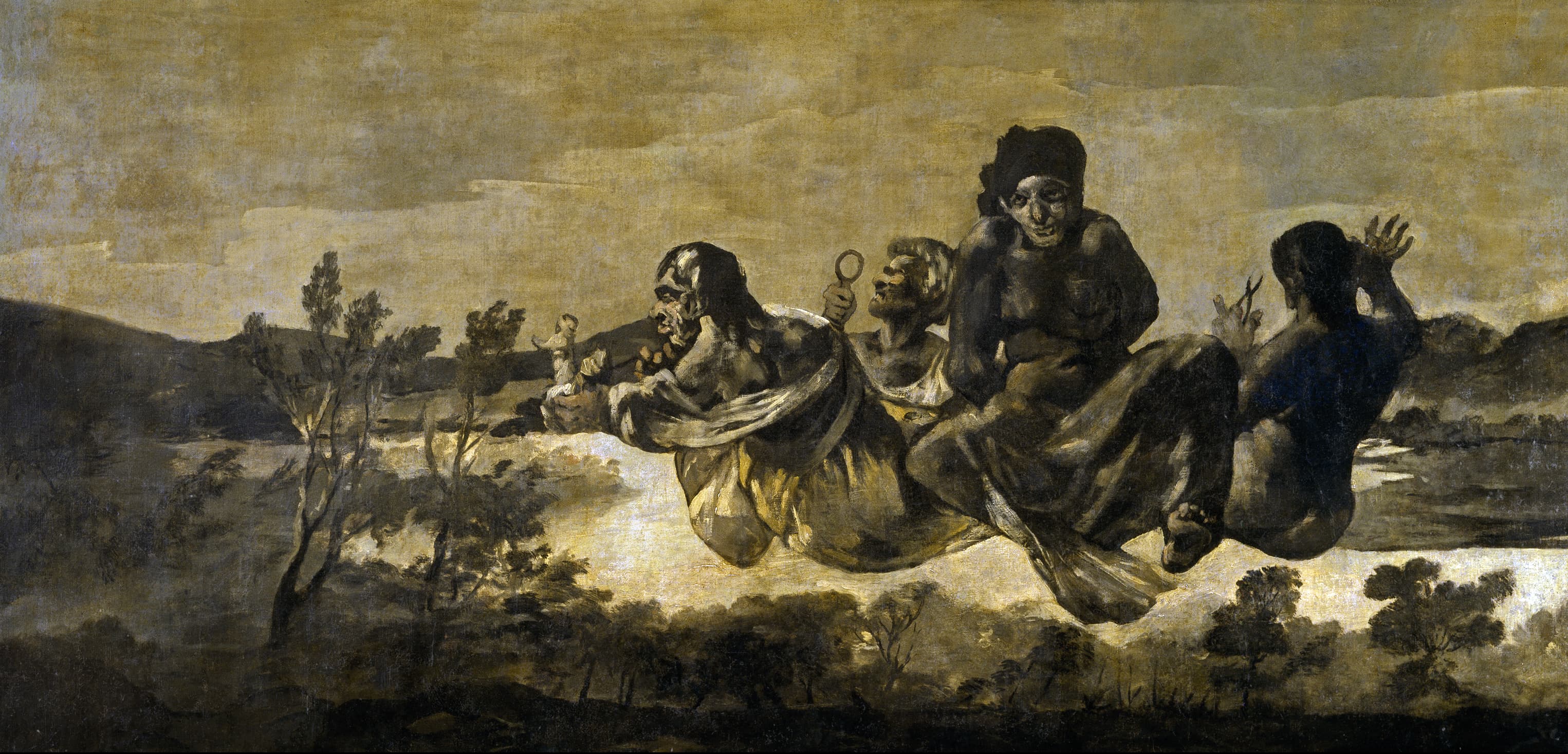
Atropos (The Fates)
Francisco Goya · c. 1819–1823
Kindred works
You may also study
Atropos (The Fates)
Francisco Goya · c. 1819–1823
Fight with Cudgels
Francisco Goya · c. 1819–1823
Men Reading
Francisco Goya · c. 1819–1823

Nymphs Dancing to Pan's Flute
Joseph Tomanek

The Scream
Edvard Munch · 1893
The Thinker
Auguste Rodin · Modeled 1880–82; enlarged 1902–03; this cast 1904

Ophelia
John Everett Millais · 1851–52
Lucifer
Franz von Stuck · 1890