Image: Museo del Prado, Madrid · Public domain · via Wikimedia Commons
Romanticism
La Leocadia
Francisco Goya, c. 1819–1823
La Leocadia is a Black Painting by Francisco Goya, painted on a wall of his house near Madrid around 1819–1823. A woman in black, probably his companion Leocadia Zorrilla, leans on a railed mound. It is now in the Prado.
- Artist
- Francisco Goya
- Date
- c. 1819–1823
- Medium
- Oil mural transferred to canvas
- Dimensions
- 145.7 × 129.4 cm
- Collection
- Museo del Prado, Madrid, Spain
- Movement
- Romanticism
What you're looking at
A woman in black stands at the left of the canvas, leaning her right elbow on a large, rounded mound and resting her head against her hand. She wears the dress of a maja, the fashionable working-class woman of Madrid: a dark gown and a black lace mantilla falling over her hair and shoulders. Her face is pale and calm, turned slightly toward us, with a look that could be sorrow, reflection or simple tiredness.
The mound she leans on fills most of the picture. It is brown and green, painted in broad, smeared strokes, and on top of it runs a low iron railing with curled uprights, of the kind that surrounded graves in nineteenth-century cemeteries. Behind it is sky: pale blue, white and a warm ocher haze. At her feet, under the hem of the gown, a white shoe shows.
Compared with the other Black Paintings, the color is gentle and the light is daylight. The canvas is nearly square, 145.7 by 129.4 cm, and the figure is close to life size.
The costume matters. Goya had painted majas since his early years designing for the royal weaving workshop, and in his Spain the dress of the maja, with its black lace and dark silk, carried a sense of independence and of native Spanish style as opposed to imported French fashion. Here it has turned somber, almost funereal, but it still marks the sitter as a particular kind of woman: proud, local and self-possessed.
Who is La Leocadia?
The woman is traditionally identified as Leocadia Zorrilla (1788–1856), known after her marriage as Leocadia Weiss. She was a distant relative of Goya's, decades younger, and separated from her husband, the jeweler Isidoro Weiss. In the years after the death of Goya's wife, Josefa Bayeu, in 1812, she came to keep his house and probably became his companion; her daughter Rosario, whom Goya taught to draw, may have been his child. When Goya left Spain for France in 1824, Leocadia and Rosario followed him, and Leocadia was with him in Bordeaux when he died in 1828.
The identification is traditional rather than documented. The painting carries no name, and Goya gave none of the Black Paintings titles. The Prado catalogues it cautiously as Una manola: doña Leocadia Zorrilla, "A manola: Doña Leocadia Zorrilla." Some historians, among them Juan José Junquera, consider the identification more romantic than certain.
What does La Leocadia mean?
The answer depends on what the mound is. Read as a grave, with its iron railing, it makes the woman a mourner, dressed in black and leaning on a tomb. Since Goya was in his seventies and had recently been dangerously ill, some writers see her as mourning him in advance, a premonition of his death painted on his own wall.
Technical study complicates that reading. X-rays suggest that the mound may originally have been painted as a fireplace or mantelpiece, an ordinary piece of domestic furniture, and that the veil may have been added later. If so, Goya first painted a woman at ease by the hearth and later transformed her into a widow at a grave. Junquera read the figure as an emblem of the fire of love and of the home, shadowed by the presentiment of death, which accommodates both versions.
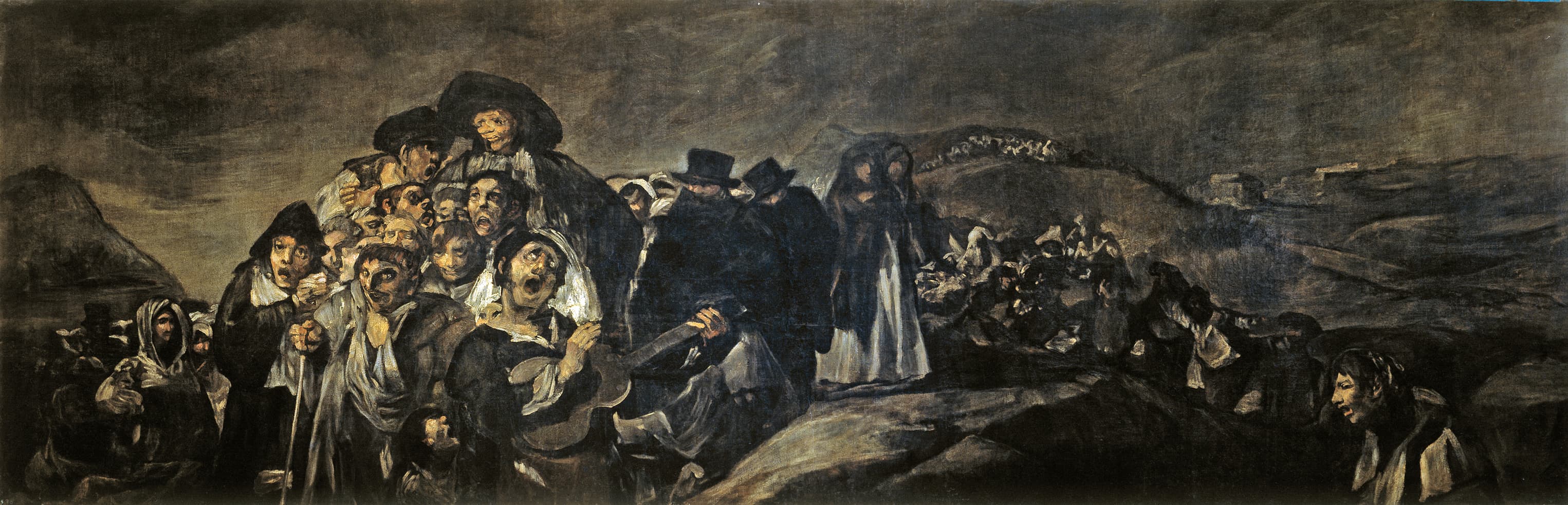
The picture also has a place in the scheme of the ground floor of the Quinta del Sordo, Goya's house across the Manzanares from Madrid. The room was dominated by Saturn Devouring His Son and Judith and Holofernes, and held the two great crowd scenes, Witches' Sabbath and A Pilgrimage to San Isidro. The critic Lawrence Gowing saw it as divided into male and female subjects, with Leocadia among the women. Amid scenes of devouring, killing and mass hysteria, she is the one calm, recognizably individual person, and many viewers find in her the only note of peace in the house.
How it was made and preserved
Like the other murals, La Leocadia was painted in oil on plaster, probably between 1819 and 1823. In 1873–74 the banker Baron Émile d'Erlanger, who had bought the house, had the murals transferred to canvas under the Prado restorer Salvador Martínez Cubells. The process caused losses and repainting across the series. D'Erlanger exhibited the paintings in Paris in 1878 and gave them to the Spanish state, which accepted them in 1881.
What to notice
Look at the railing. Goya paints it with a few quick, sure strokes of dark paint and pale highlights, and it is the only crisp, linear element in the picture. It is what turns a heap of earth into a tomb. Then compare the woman's black dress with the black backgrounds of the other Black Paintings: here black is not a void but clothing, and it frames a face painted with more tenderness than almost any other in the series.
Where to see La Leocadia today
La Leocadia is in the Museo del Prado in Madrid, displayed with the other Black Paintings in a single room on the ground floor.
Questions & answers
Who is the woman in Goya's La Leocadia?
She is traditionally identified as Leocadia Zorrilla, later Weiss (1788–1856), a distant relative who kept Goya's house, was probably his companion and followed him to Bordeaux in 1824. The identification is not documented, and some historians treat it with caution.
What is La Leocadia leaning on?
A large mound topped with an iron railing, usually read as a grave, which makes her a mourner in black. X-ray study suggests the mound may first have been painted as a fireplace or mantelpiece, with the funerary meaning added later.
Where is La Leocadia by Goya?
It is in the Museo del Prado in Madrid, displayed with the other Black Paintings. Goya painted it on a ground-floor wall of his house, the Quinta del Sordo; it was transferred to canvas in 1873–74 and entered the Spanish state collection in 1881.
What does La Leocadia mean?
Goya left no explanation. If the mound is a grave, the picture may show Leocadia mourning Goya in advance of his death. If it began as a fireplace, it may first have been an image of home and affection. Among the violent Black Paintings, it is the calmest and most personal.
More by the artist
Francisco Goya

Saturn Devouring His Son
Francisco Goya · c. 1819–1823
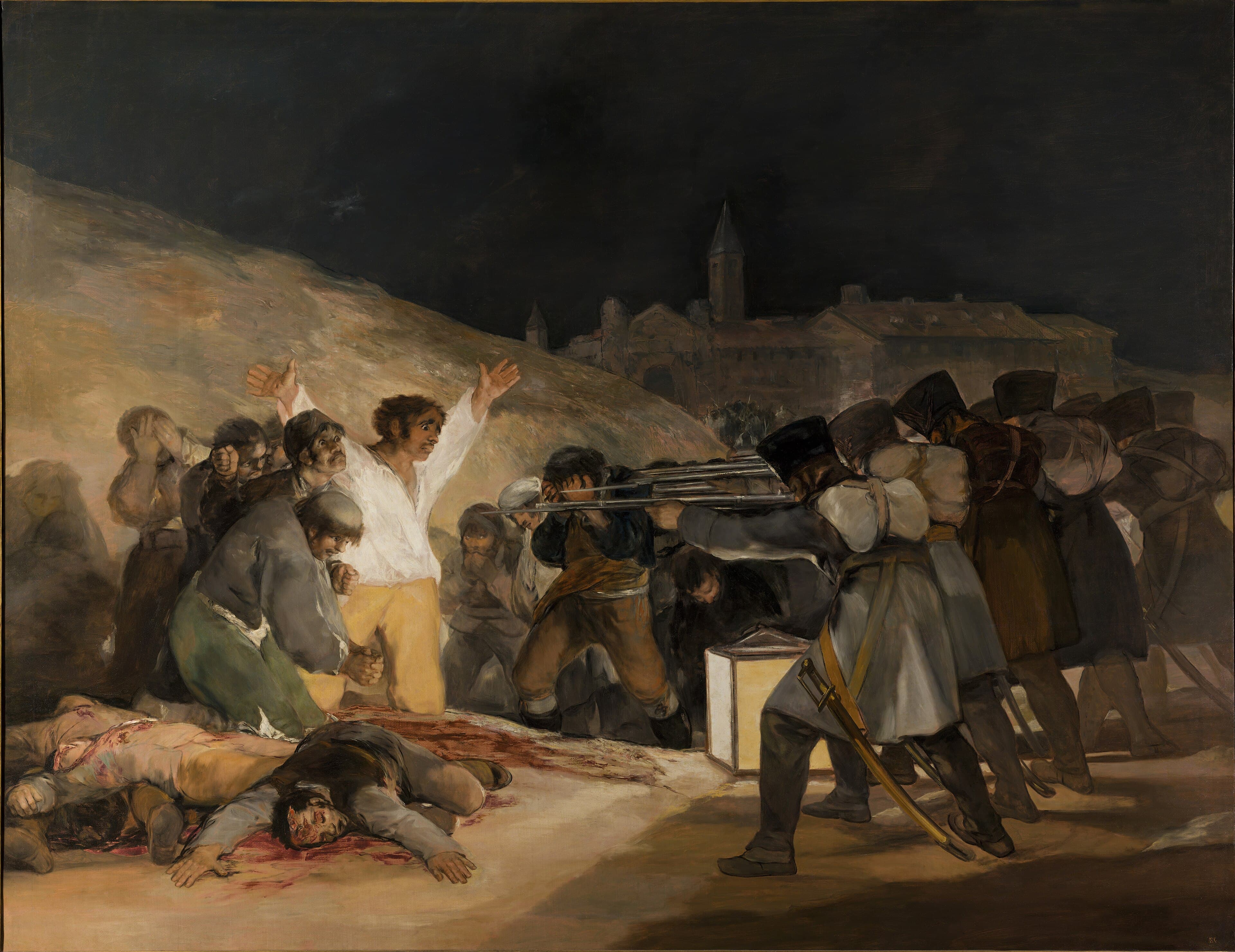
The Third of May 1808
Francisco Goya · 1814
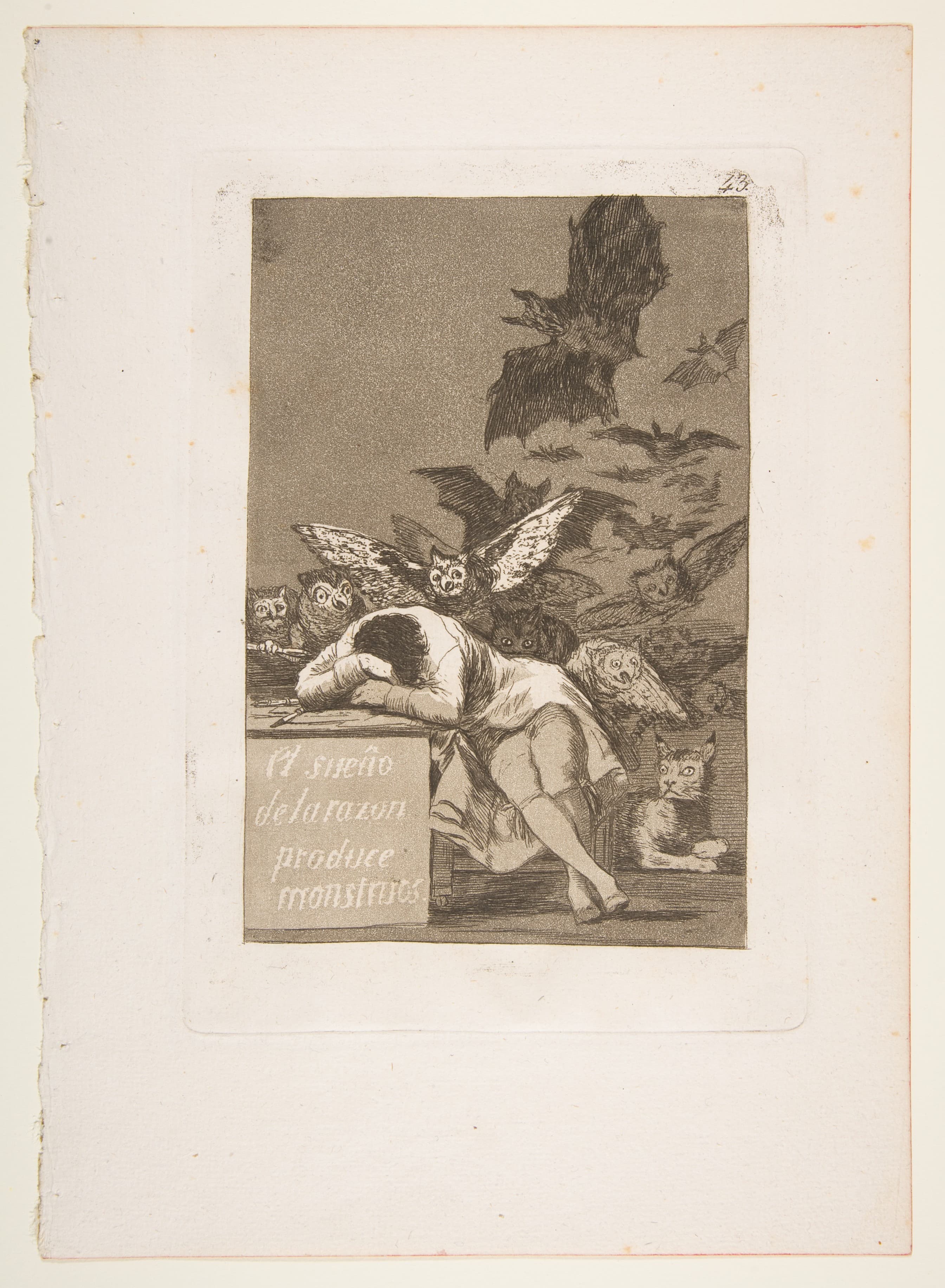
The Sleep of Reason Produces Monsters
Francisco Goya · 1797–99 (published 1799)
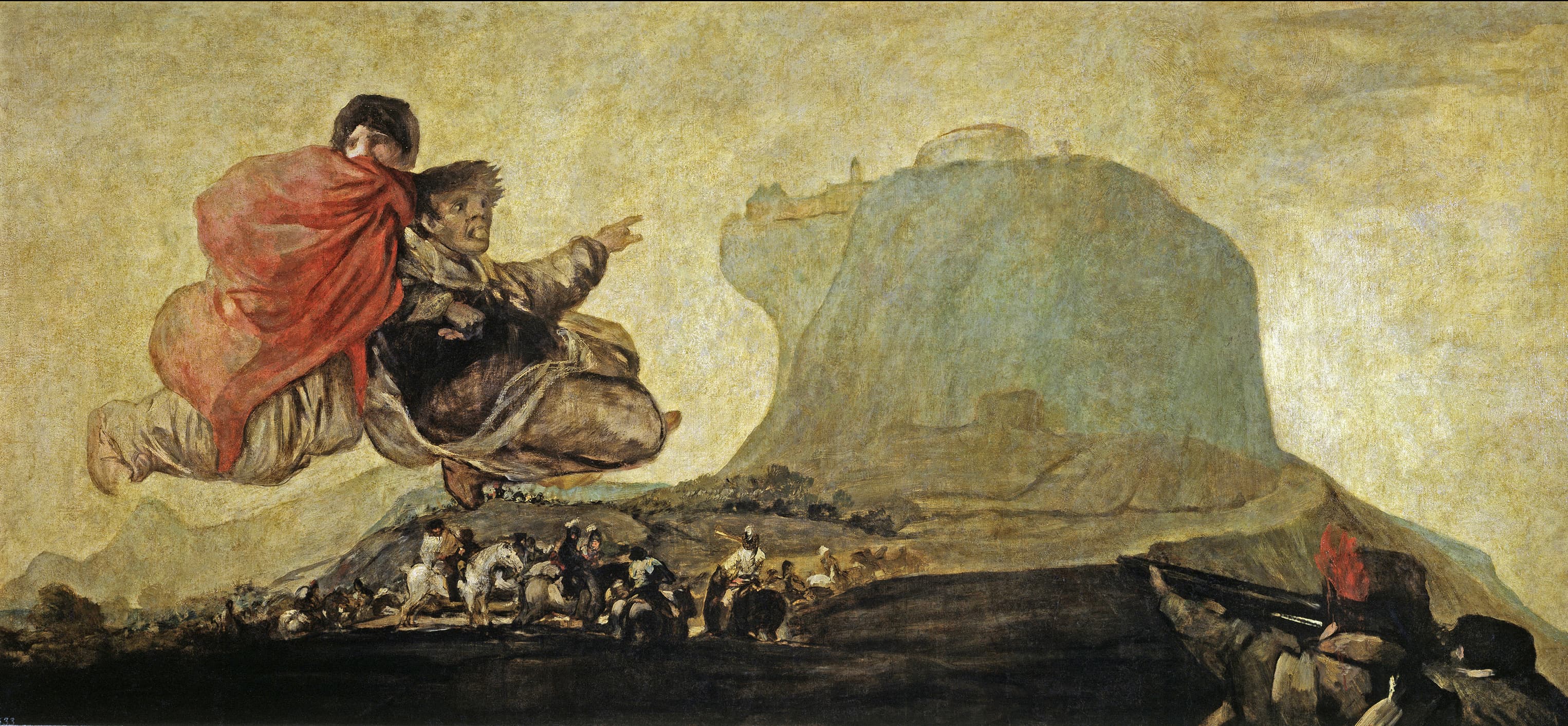
Fantastic Vision (Asmodea)
Francisco Goya · c. 1819–1823
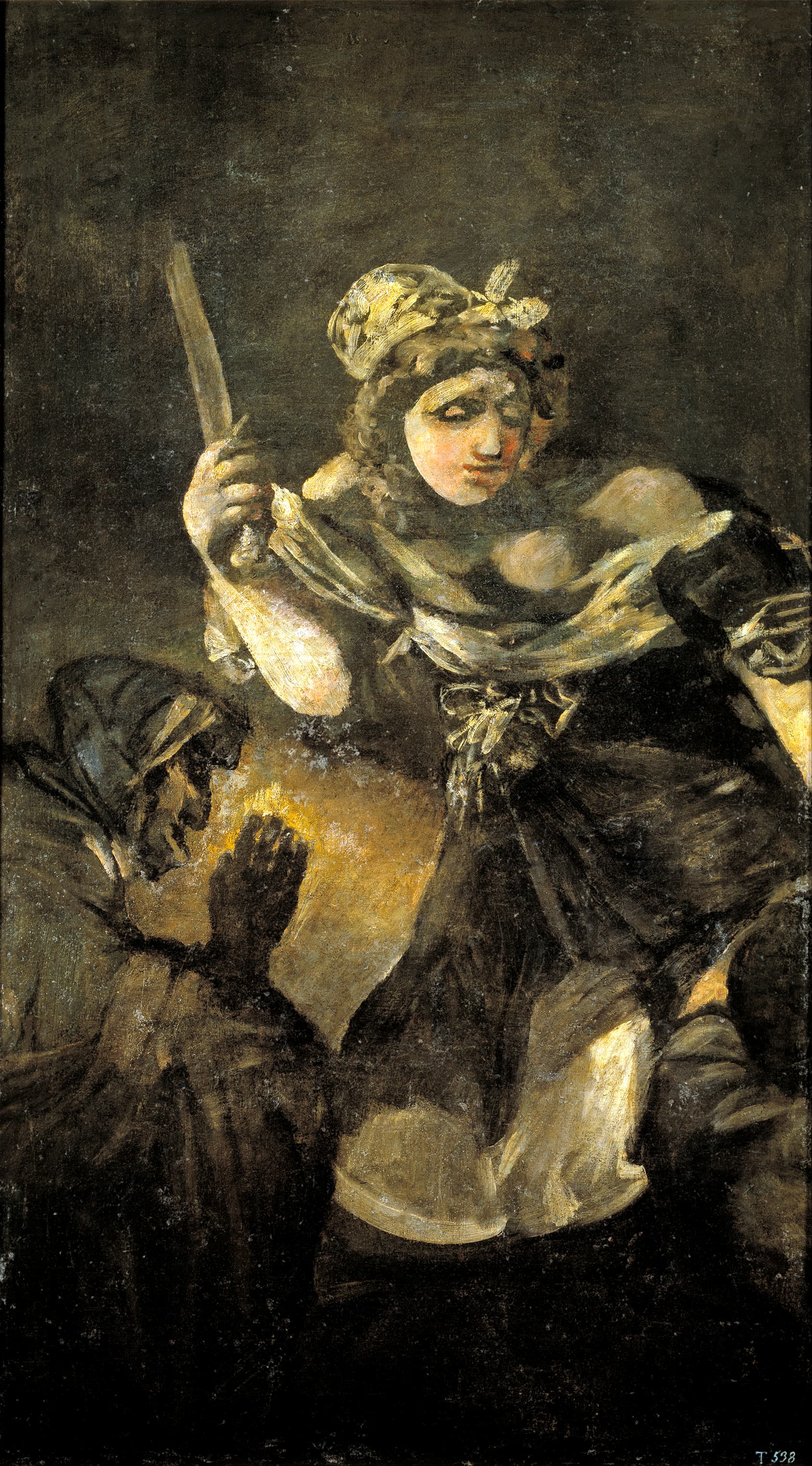
Judith and Holofernes
Francisco Goya · c. 1819–1823
The Dog
Francisco Goya · c. 1819–1823
The Holy Office (Pilgrimage to the Fountain of San Isidro)
Francisco Goya · c. 1819–1823
A Pilgrimage to San Isidro
Francisco Goya · c. 1819–1823
Also painted in 1820
The same year
Women Laughing
Francisco Goya · c. 1819–1823
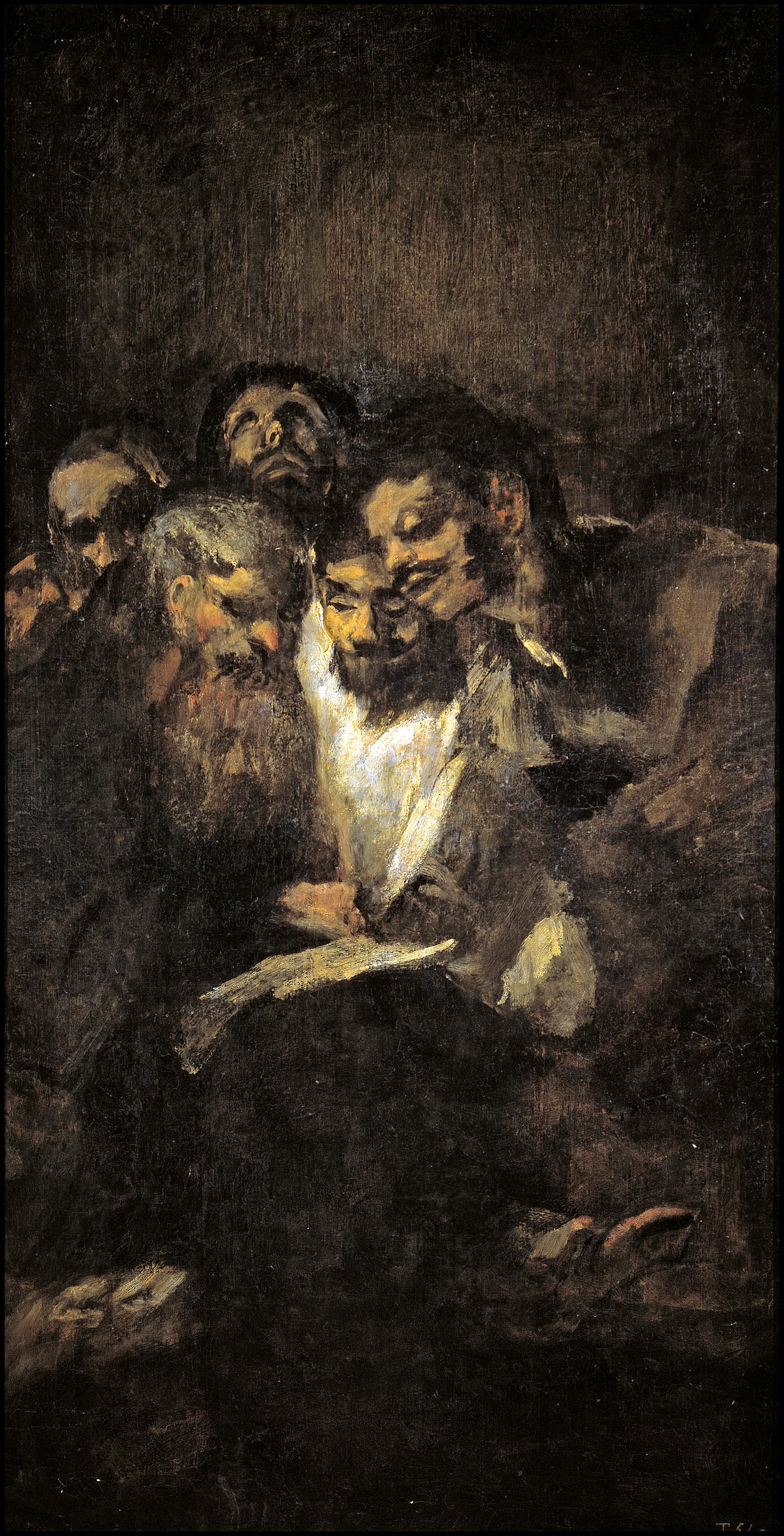
Men Reading
Francisco Goya · c. 1819–1823
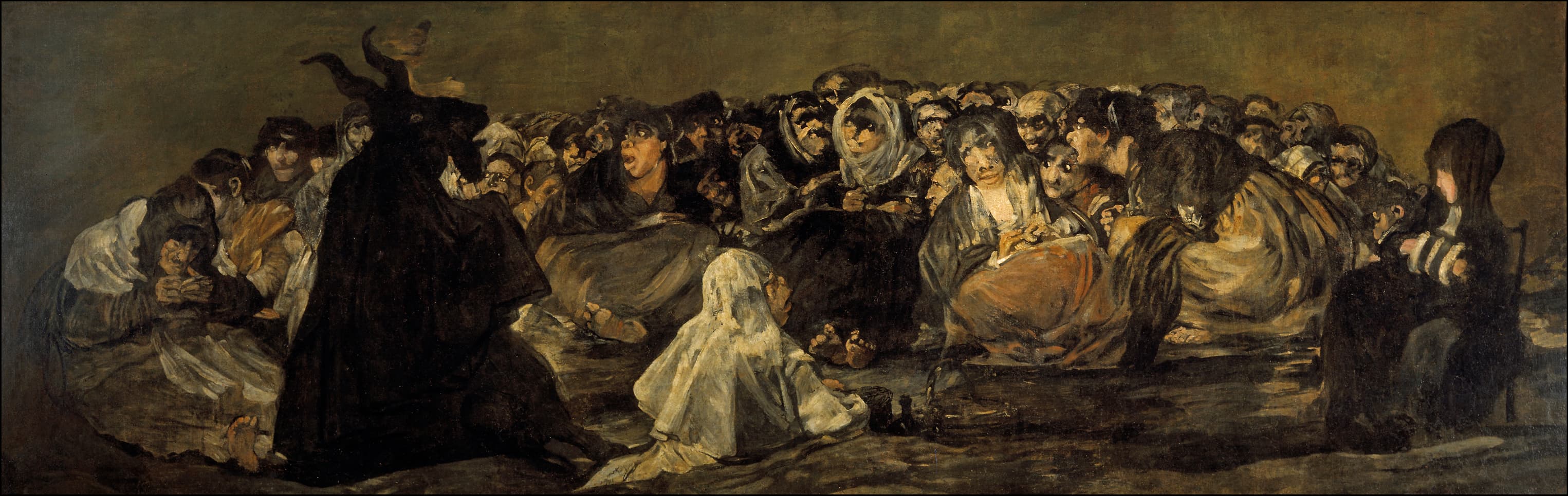
Witches' Sabbath (The Great He-Goat)
Francisco Goya · c. 1819–1823
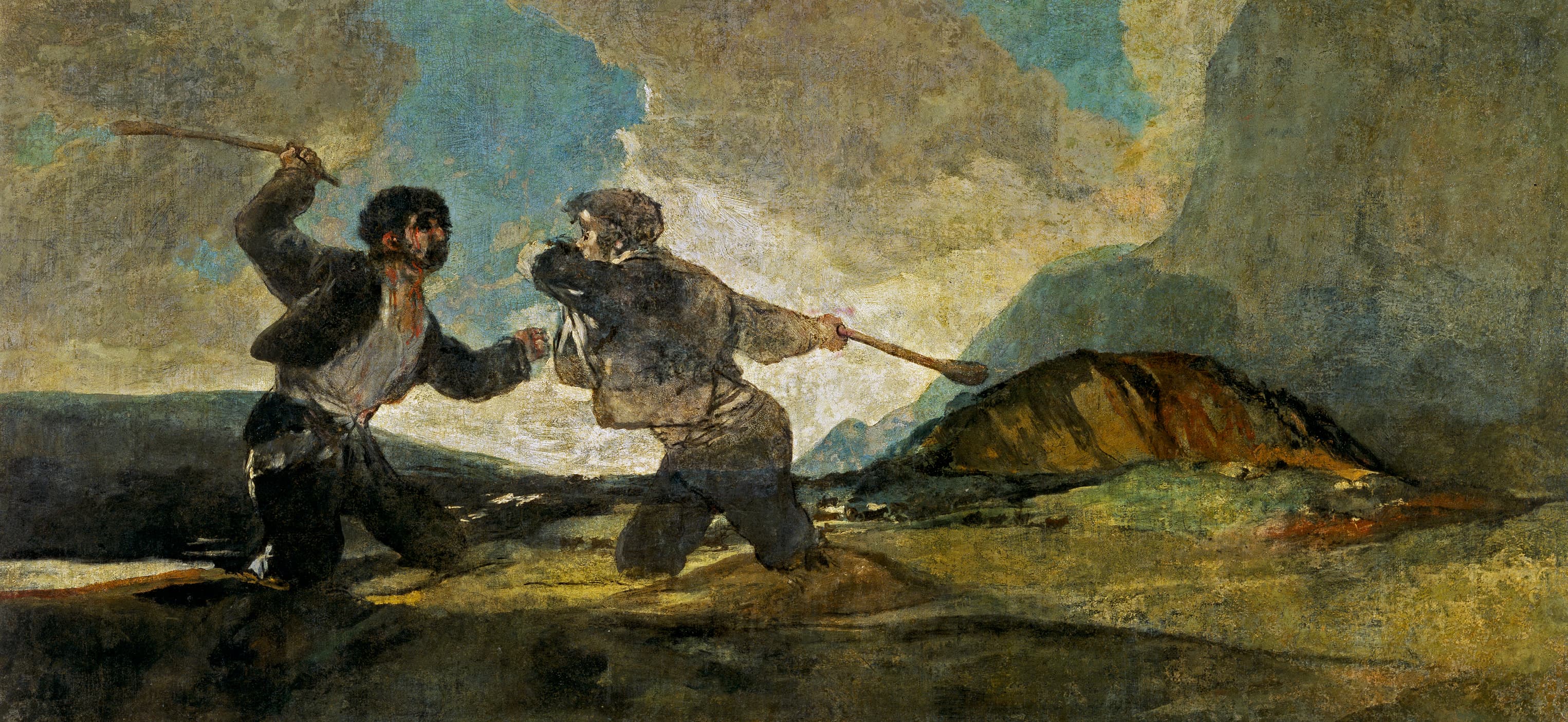
Fight with Cudgels
Francisco Goya · c. 1819–1823
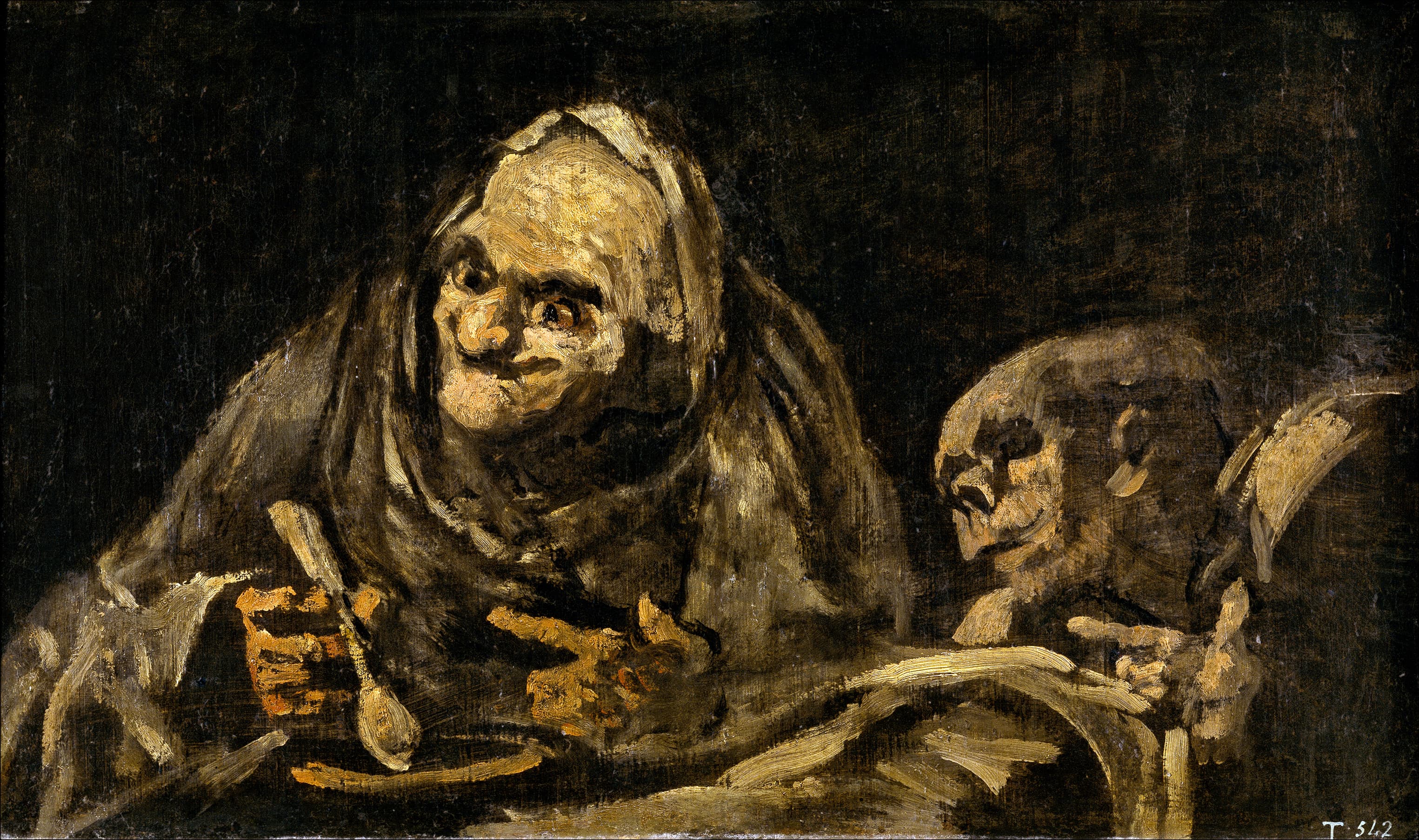
Two Old Men Eating Soup
Francisco Goya · c. 1819–1823
Two Old Men
Francisco Goya · c. 1819–1823
Atropos (The Fates)
Francisco Goya · c. 1819–1823
Kindred works
You may also study
Witches' Sabbath (The Great He-Goat)
Francisco Goya · c. 1819–1823
Two Old Men
Francisco Goya · c. 1819–1823

Venus de Milo
Alexandros of Antioch · c. 150–125 BC

The Scream
Edvard Munch · 1893

Ophelia
John Everett Millais · 1851–52

Woman with a Parasol – Madame Monet and Her Son
Claude Monet · 1875
Las Meninas
Diego Velázquez · 1656
The Birth of Venus
Sandro Botticelli · c. 1484–1486