Spanish · Romanticism · Rococo (early work)
Francisco Goya
b. 30 March 1746, Fuendetodos, Aragon, Spain — d. 16 April 1828, Bordeaux, France
Francisco Goya (1746–1828) was the Spanish court painter and printmaker who moved from sunny tapestry designs to the war scenes of The Third of May 1808 and the private nightmares of the Black Paintings, now in the Prado.
16 works in the collection
Works by Francisco Goya

Saturn Devouring His Son
Francisco Goya · c. 1819–1823
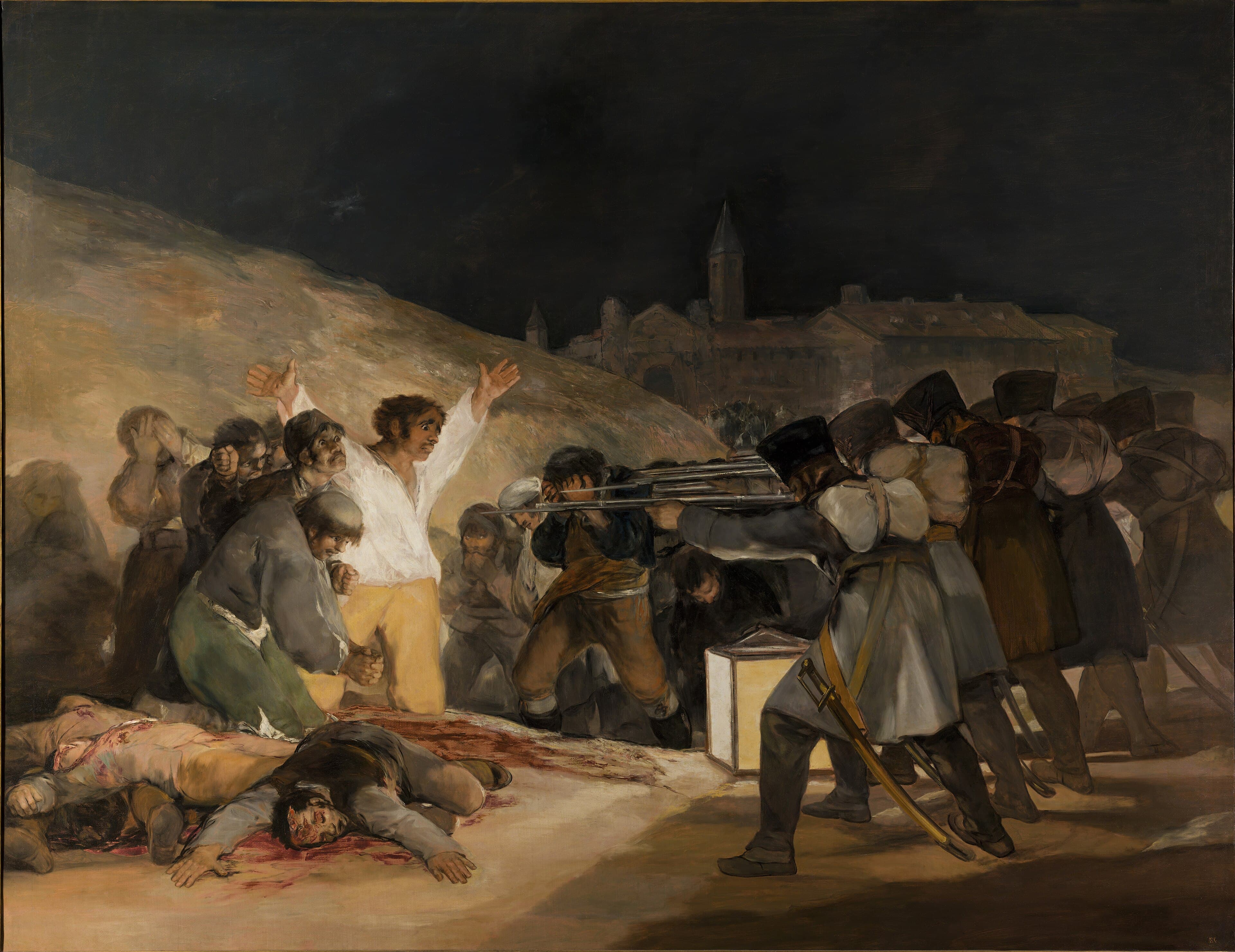
The Third of May 1808
Francisco Goya · 1814
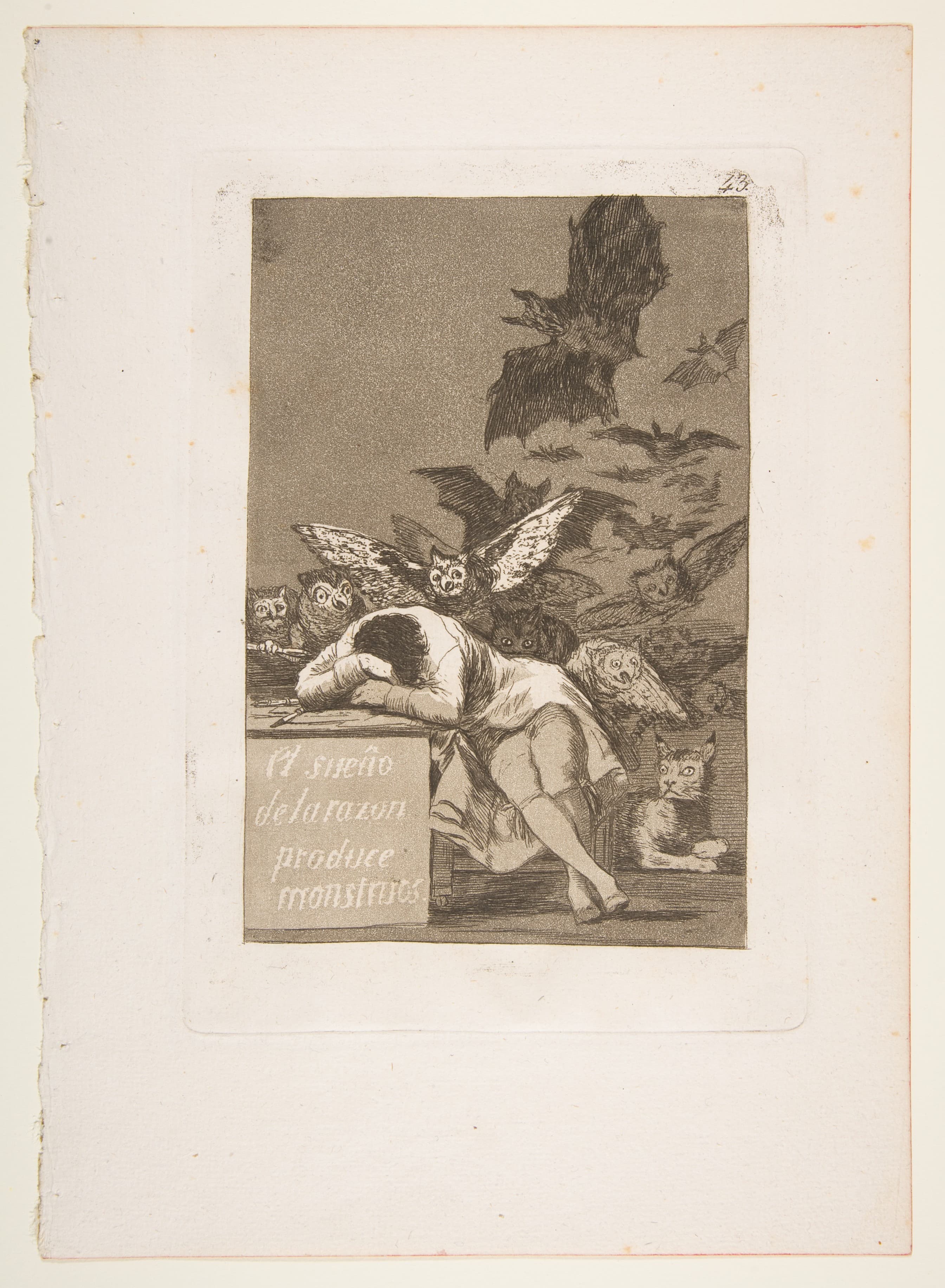
The Sleep of Reason Produces Monsters
Francisco Goya · 1797–99 (published 1799)
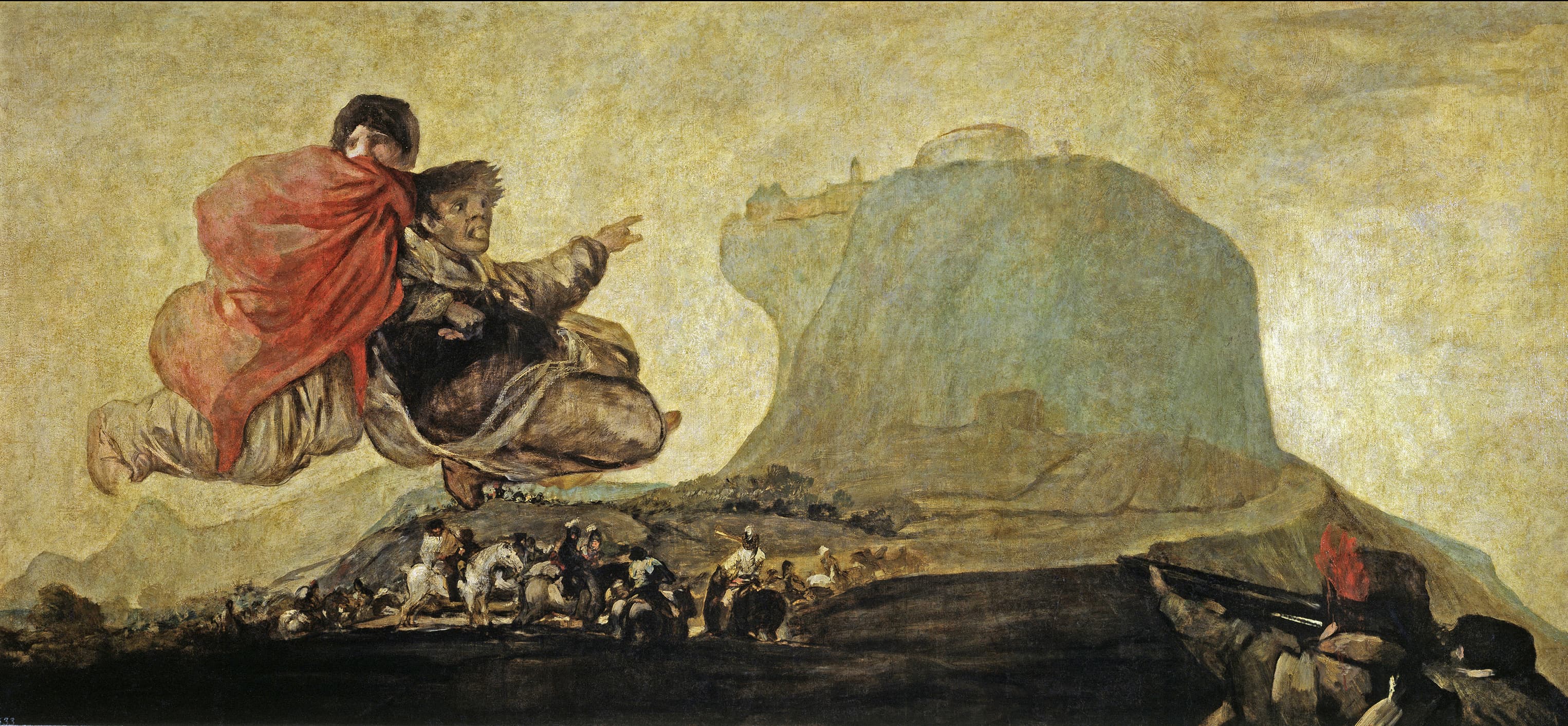
Fantastic Vision (Asmodea)
Francisco Goya · c. 1819–1823
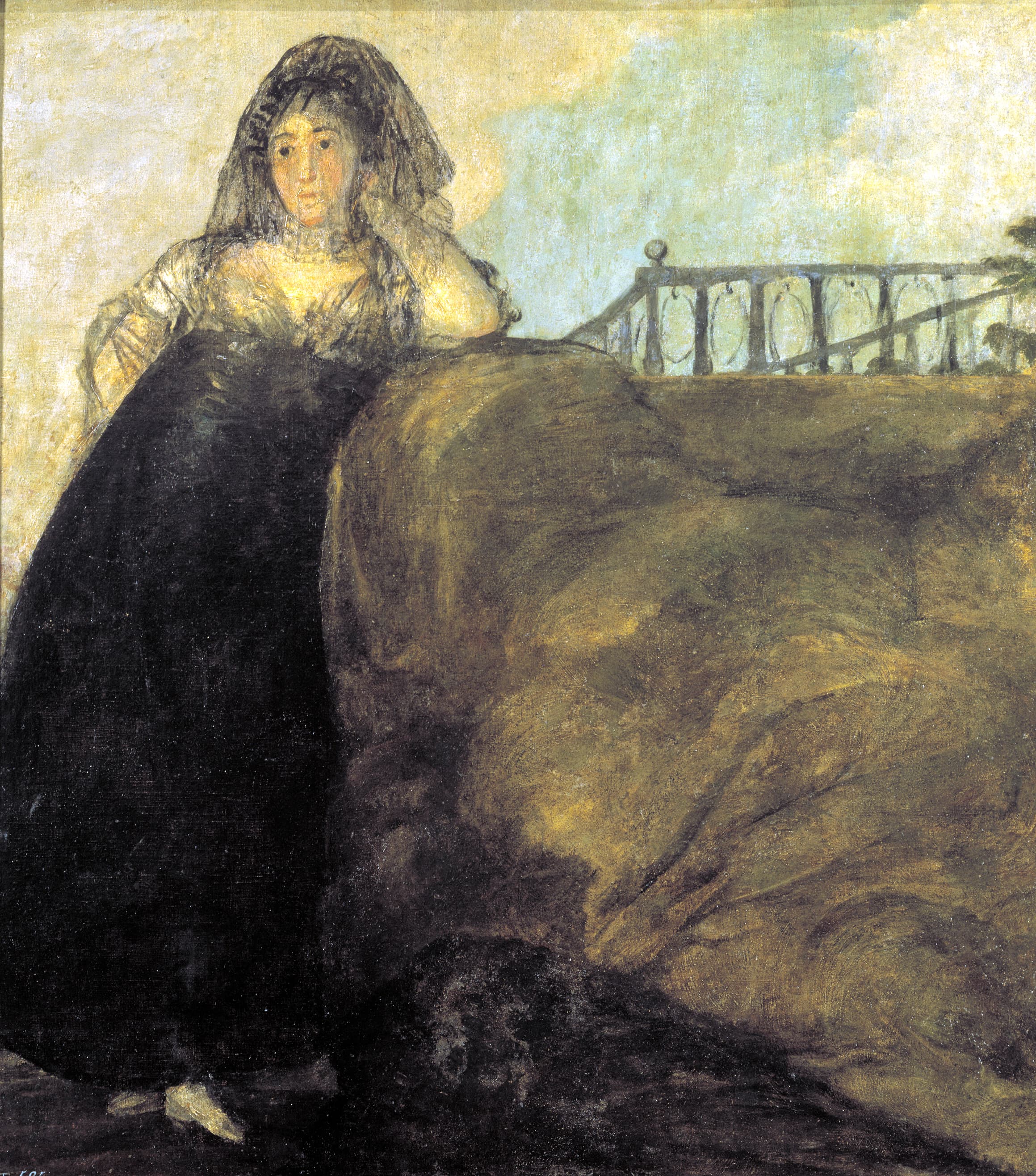
La Leocadia
Francisco Goya · c. 1819–1823
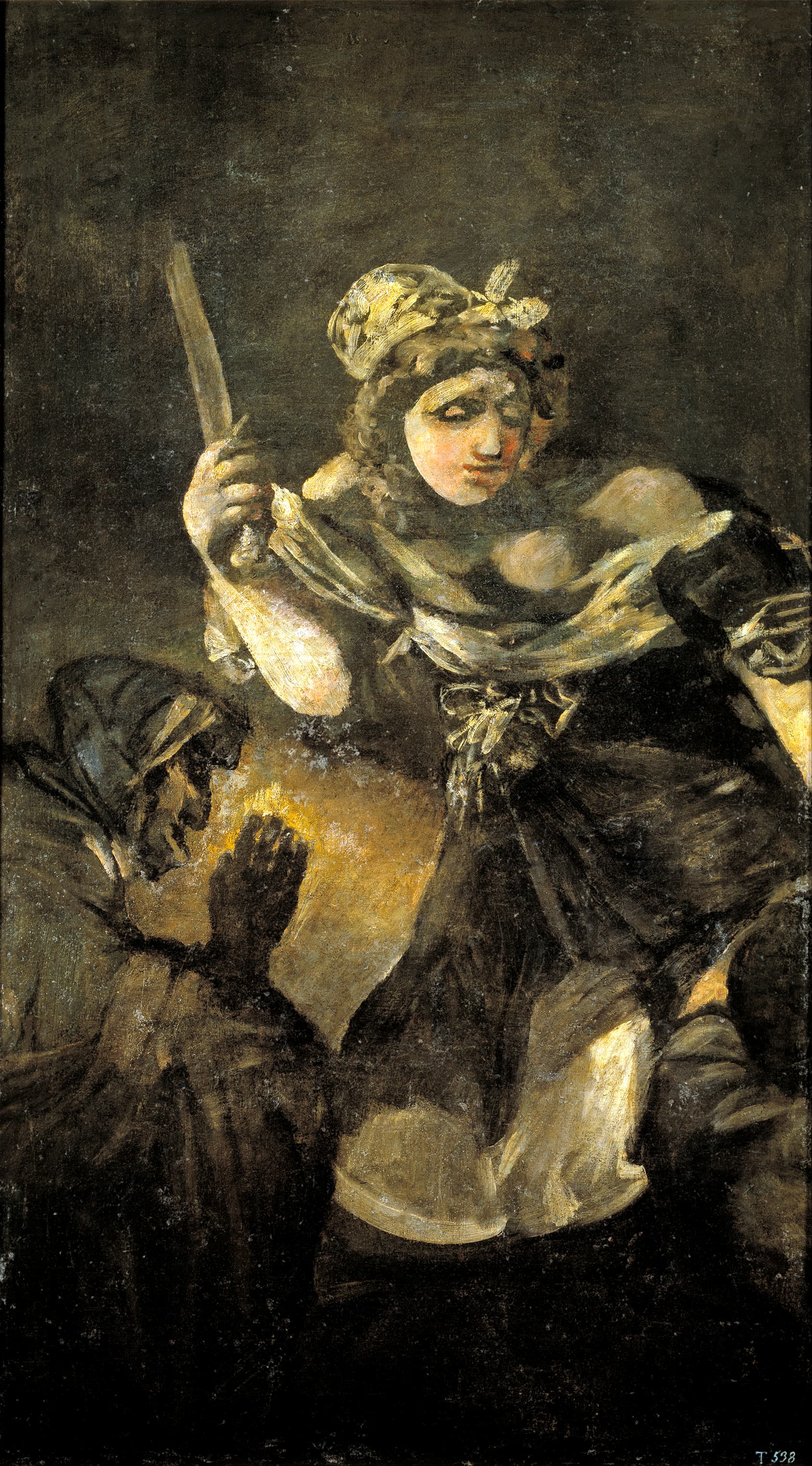
Judith and Holofernes
Francisco Goya · c. 1819–1823
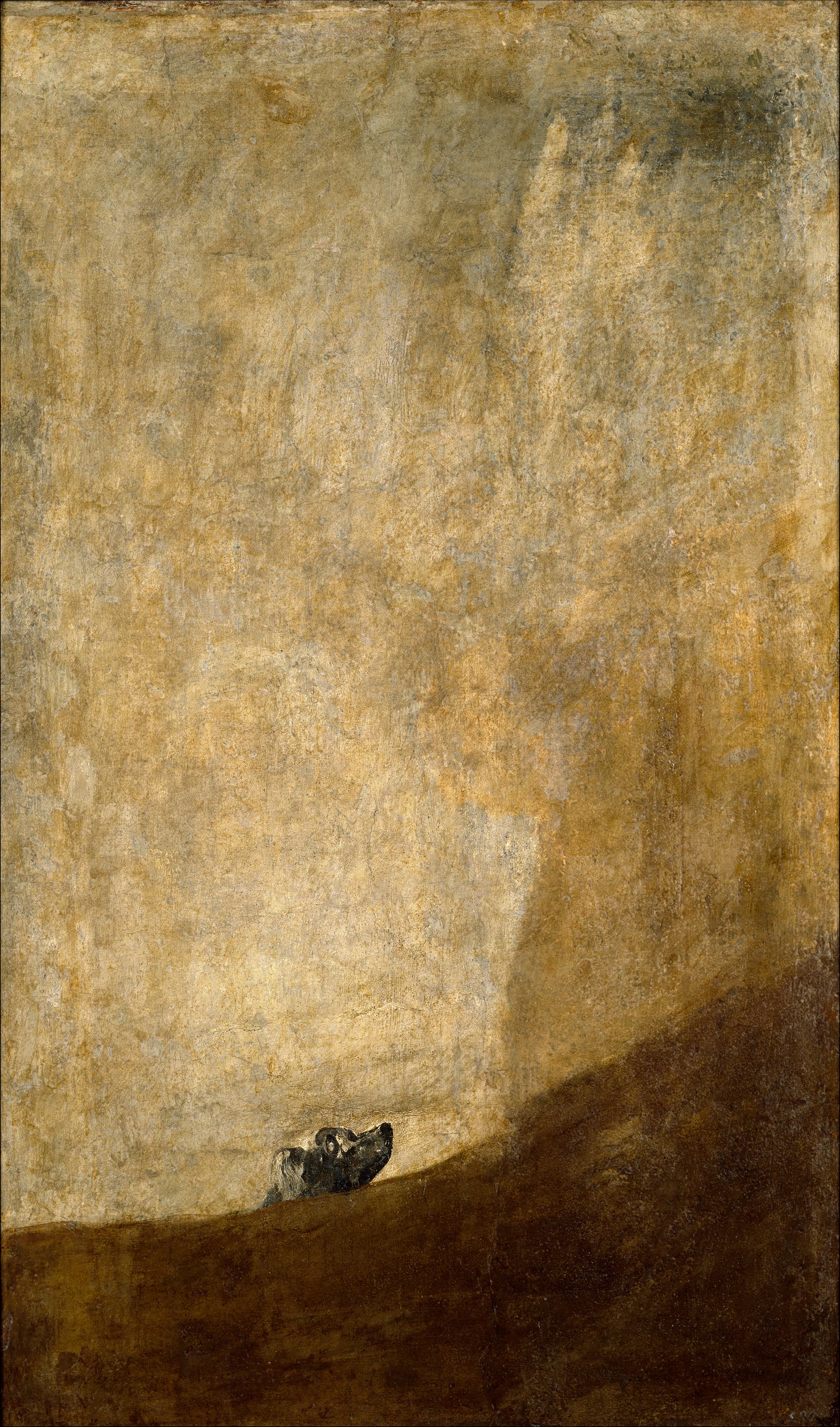
The Dog
Francisco Goya · c. 1819–1823
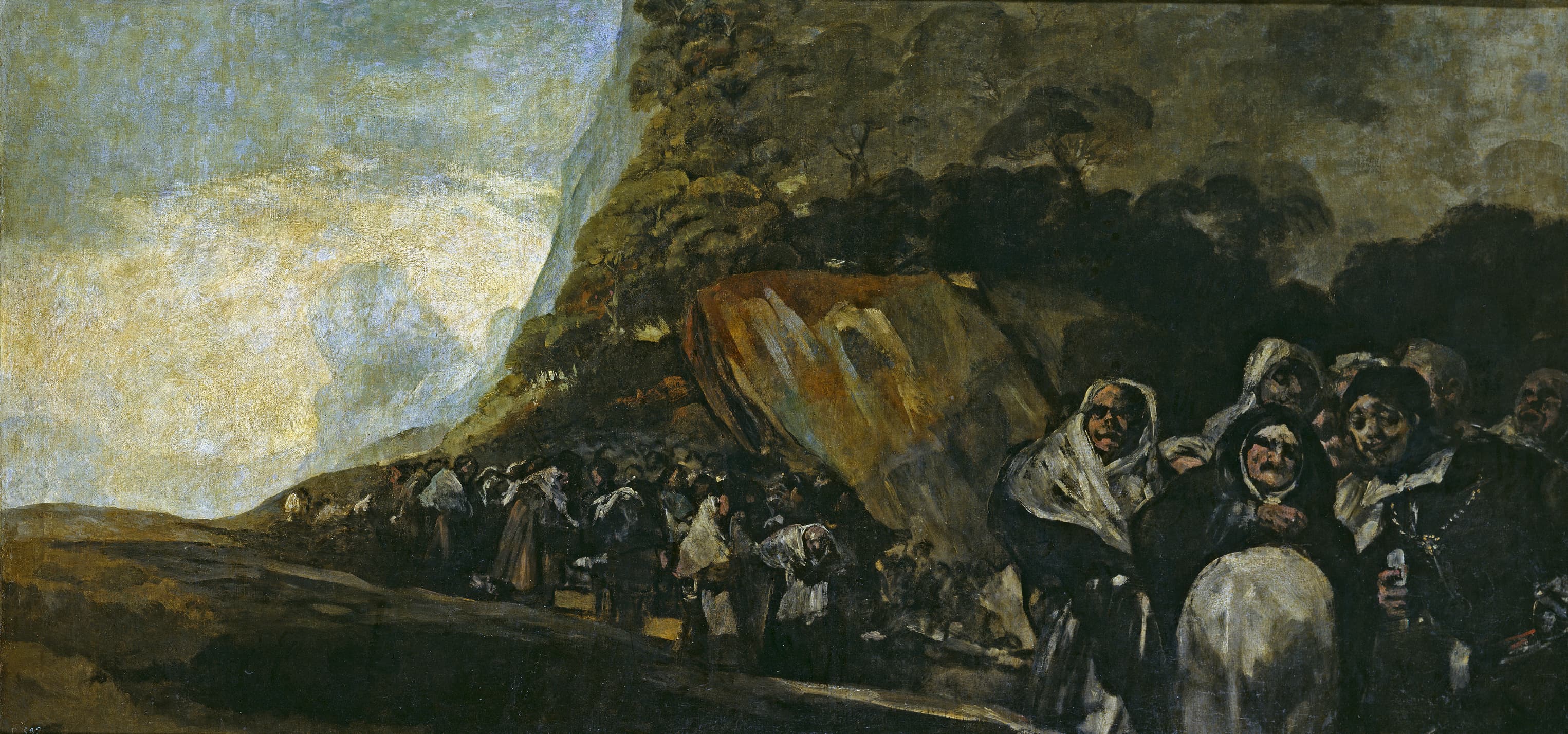
The Holy Office (Pilgrimage to the Fountain of San Isidro)
Francisco Goya · c. 1819–1823
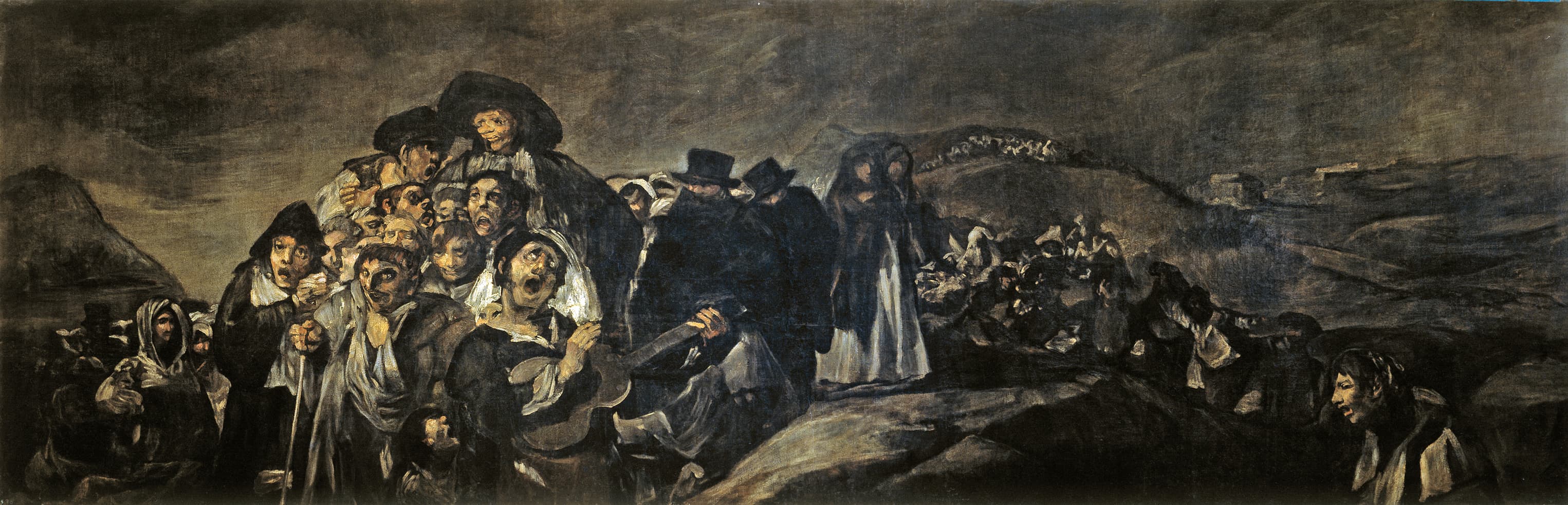
A Pilgrimage to San Isidro
Francisco Goya · c. 1819–1823
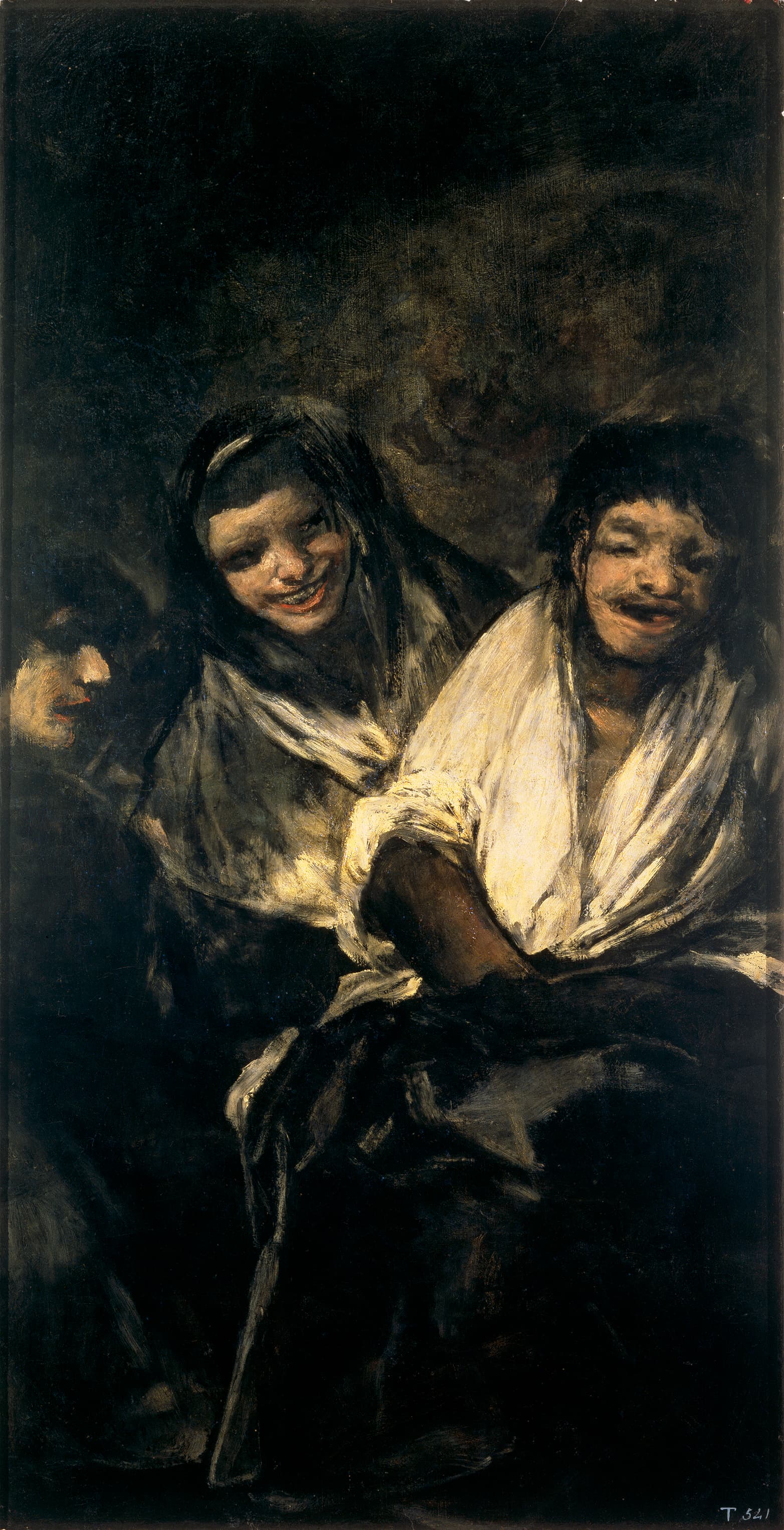
Women Laughing
Francisco Goya · c. 1819–1823
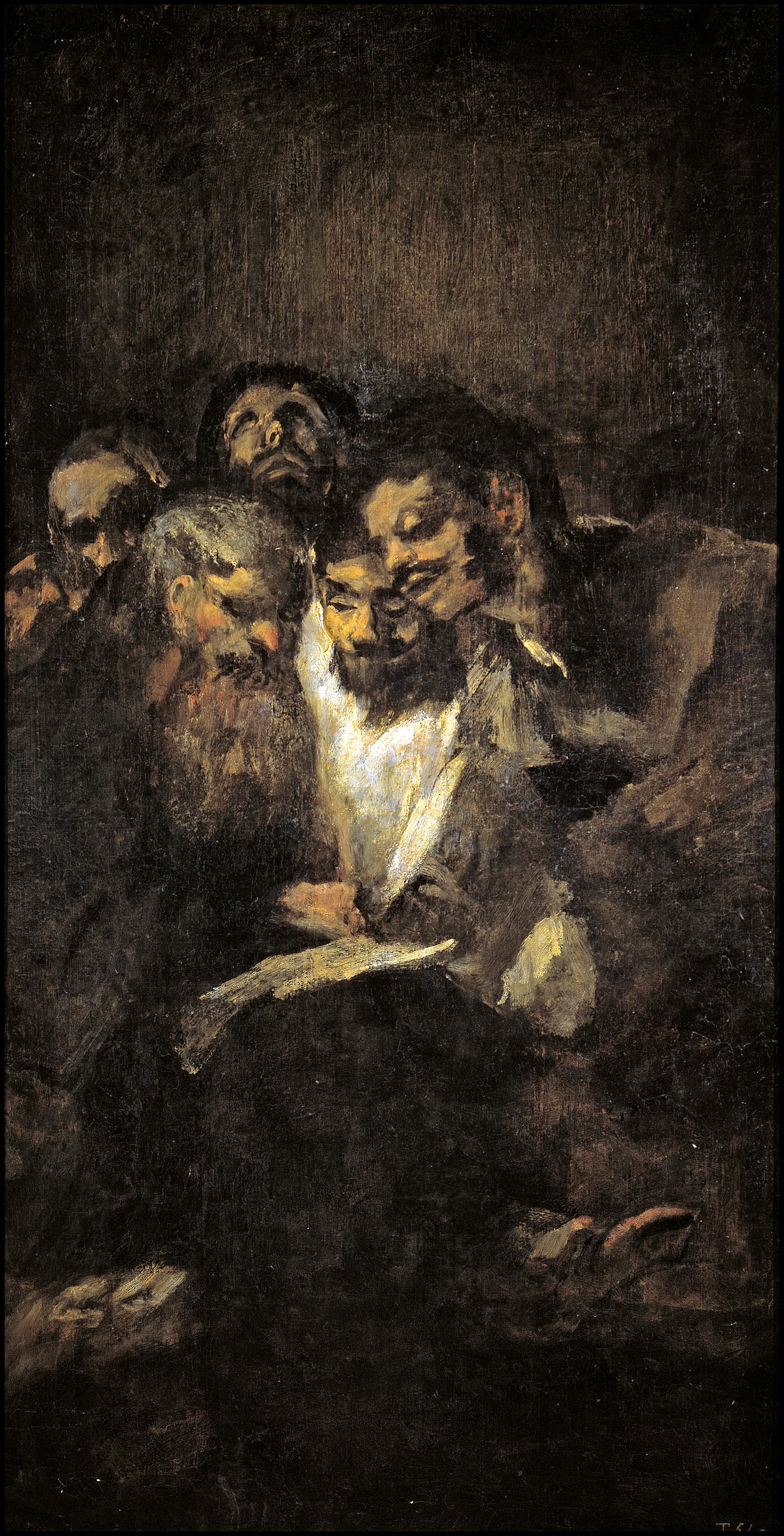
Men Reading
Francisco Goya · c. 1819–1823
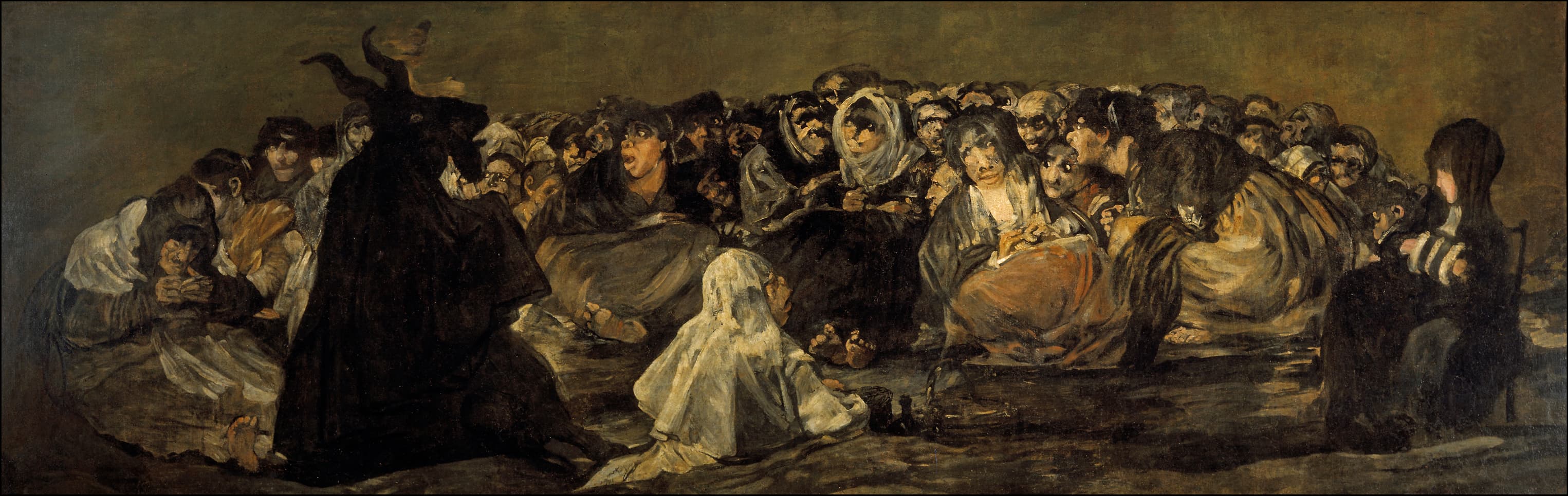
Witches' Sabbath (The Great He-Goat)
Francisco Goya · c. 1819–1823
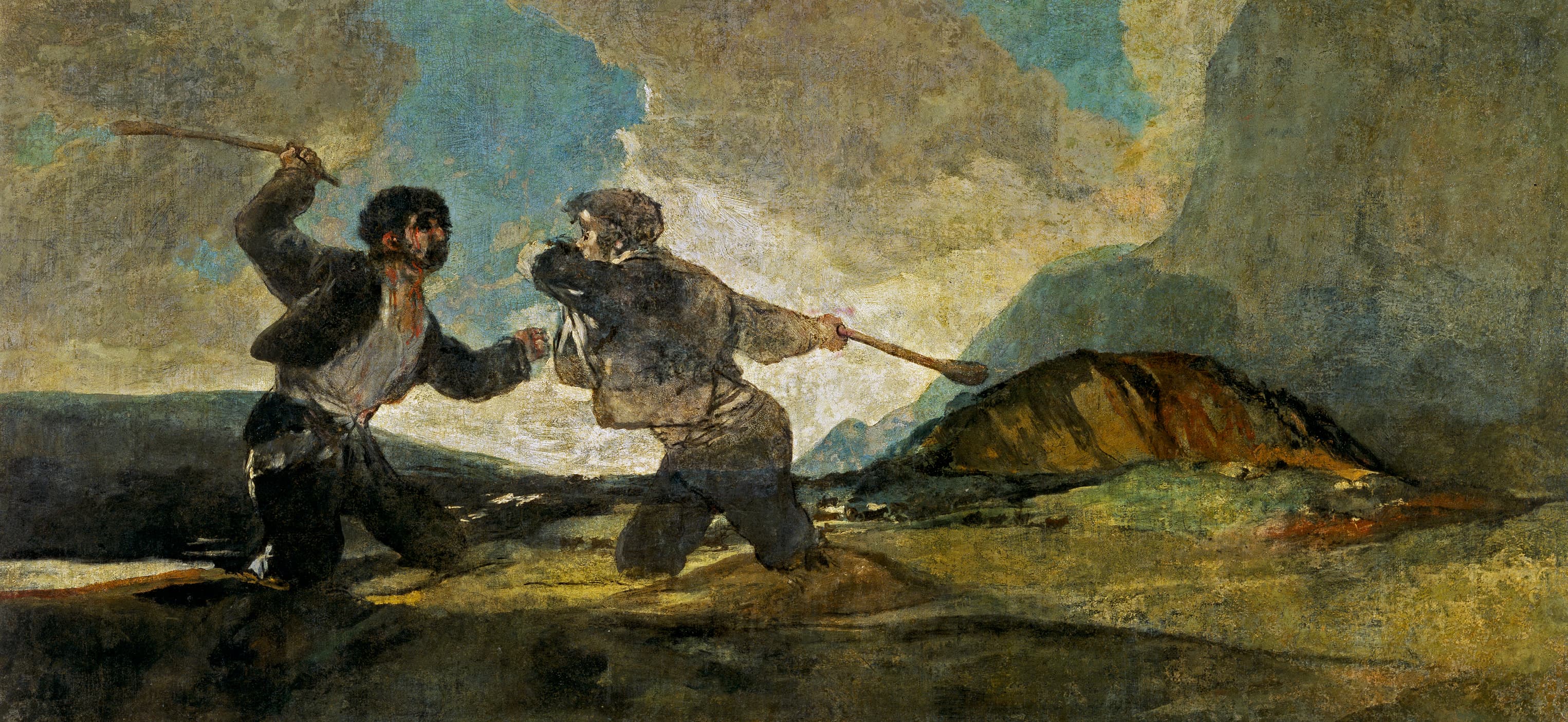
Fight with Cudgels
Francisco Goya · c. 1819–1823
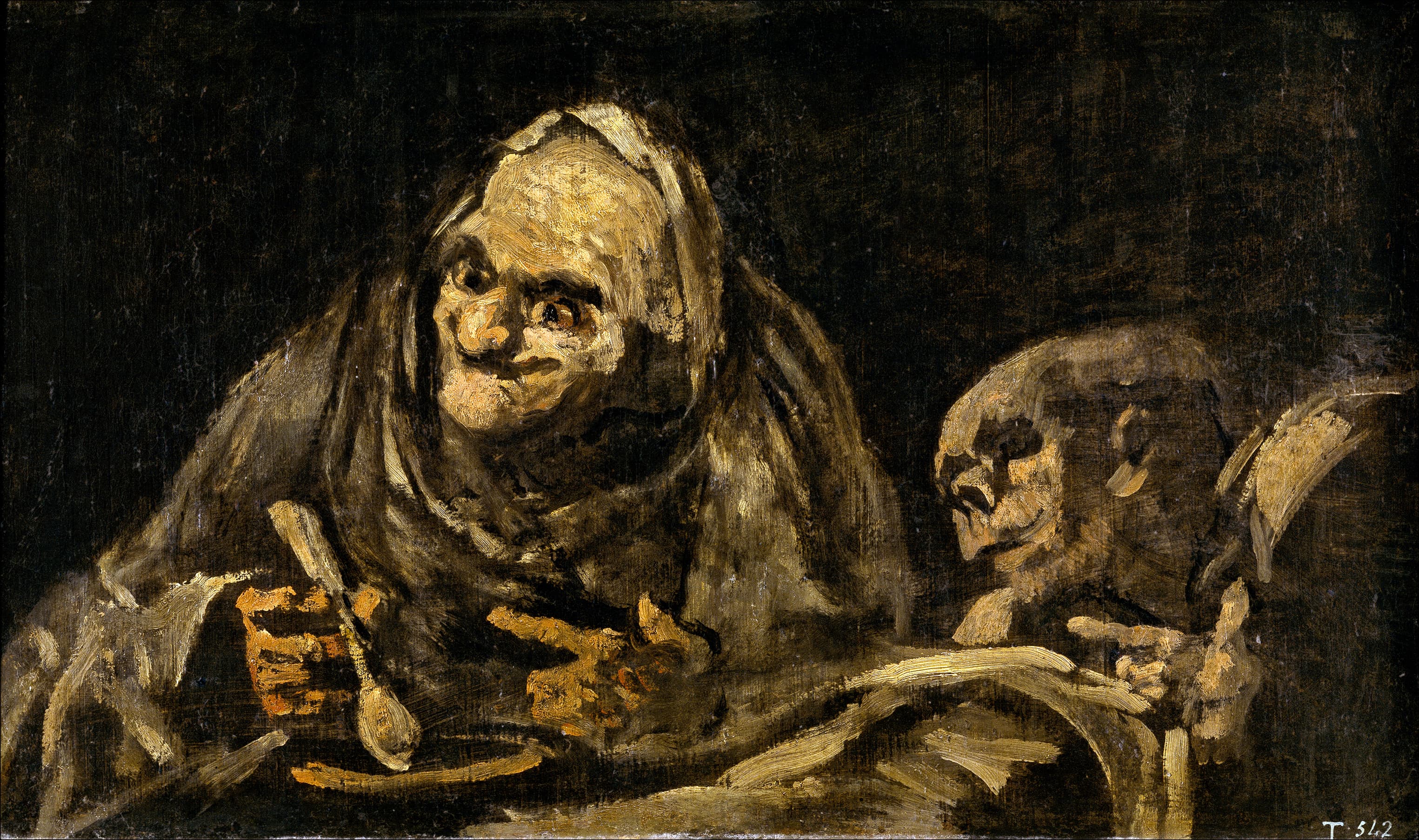
Two Old Men Eating Soup
Francisco Goya · c. 1819–1823
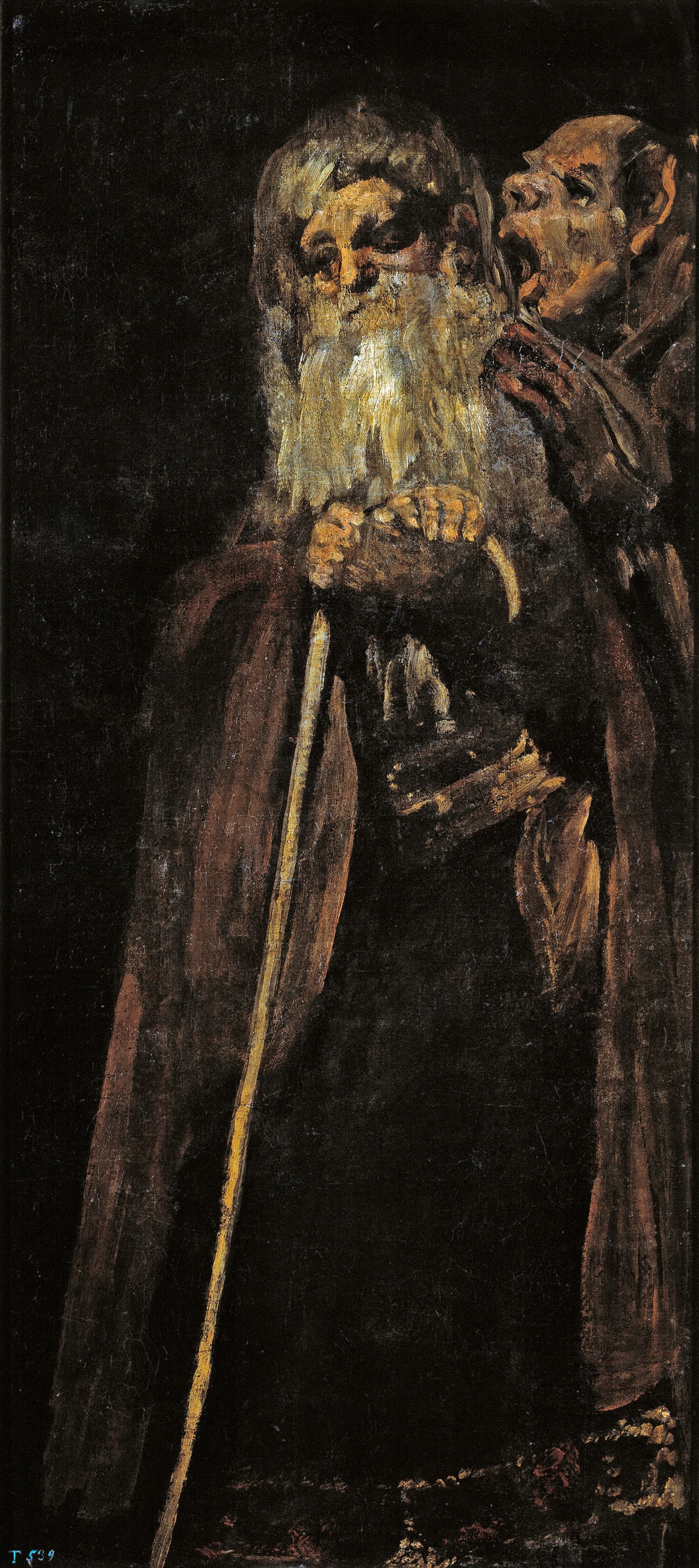
Two Old Men
Francisco Goya · c. 1819–1823
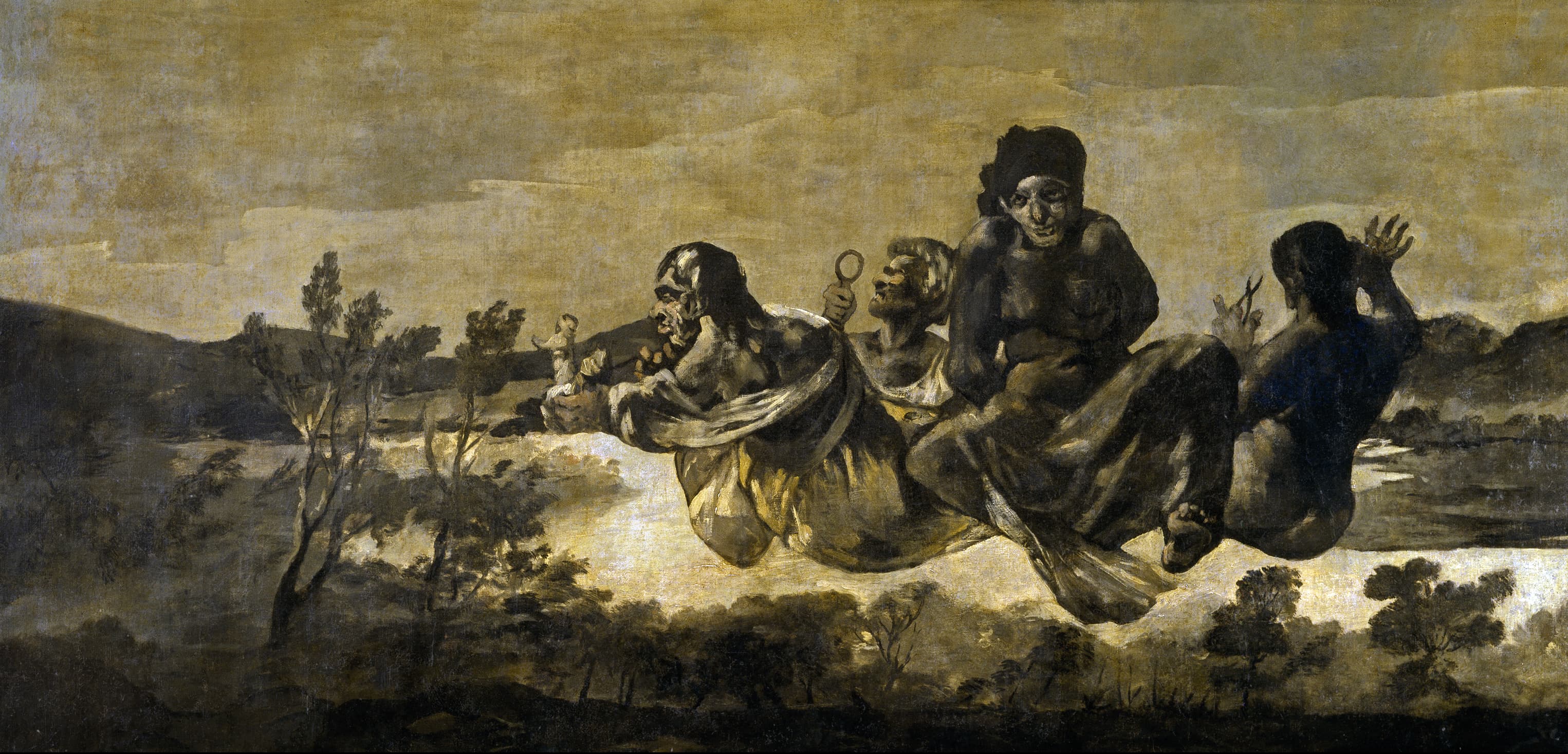
Atropos (The Fates)
Francisco Goya · c. 1819–1823
Francisco José de Goya y Lucientes was a Spanish painter and printmaker, First Court Painter to Charles IV, and the artist who carried European painting from the Rococo into the modern age. His most famous works, including The Third of May 1808 and the Black Paintings such as Saturn Devouring His Son, are in the Museo del Prado in Madrid.
Life in brief
Goya was born in 1746 in Fuendetodos, a small village in Aragon, and grew up in Zaragoza, where he trained under the painter José Luzán. After failing twice to win scholarships at the Royal Academy in Madrid, he went to Italy at his own expense around 1770–71. In 1773 he married Josefa Bayeu, sister of the court painter Francisco Bayeu, who brought him to Madrid to design tapestry cartoons for the Royal Tapestry Factory: bright scenes of picnics, games and fairs.
His rise was steady. He entered the Royal Academy of San Fernando in 1780, became painter to the king in 1786 and court painter in 1789, and in 1799 First Court Painter. In late 1792 a severe illness left him permanently deaf. Afterwards his work turned more personal and more critical. In 1799 he published Los Caprichos, eighty etchings satirizing superstition, the clergy and the follies of society, including The Sleep of Reason Produces Monsters.
The Napoleonic invasion of Spain in 1808 and the brutal Peninsular War that followed changed him again. He recorded its atrocities in the etchings of The Disasters of War, not published until 1863, long after his death. In 1819, aged 73, he bought a country house outside Madrid, the Quinta del Sordo (“Deaf Man's Villa”), and covered its walls with the Black Paintings. Out of sympathy with the absolutist regime of Ferdinand VII, he left Spain in 1824 and settled in Bordeaux, where he died in 1828.
Style and technique
Goya's early manner is light and decorative, close to Tiepolo and the Rococo. He named his true masters as Velázquez, Rembrandt and Nature. His mature painting is fast and free: figures are built from broad, rough strokes, faces caught with a few touches, and darkness is allowed to swallow whole areas of the canvas. He was also one of the greatest printmakers in history, using aquatint to produce velvety blacks and graded tones.
His portraits do not flatter. In Charles IV of Spain and His Family (1800, Prado) the royal family glitters with silks and jewels, and many viewers have found the faces devastatingly frank.
The Third of May 1808
Painted in 1814, after the expulsion of the French, The Third of May 1808 shows the executions of Madrid civilians by a French firing squad on the night after the uprising of 2 May. A single lantern lights a man in a white shirt who flings his arms wide before the faceless line of soldiers. It has been called the first great modern painting of war, an image of victims rather than heroes.
The Black Paintings
Goya painted fourteen scenes in oil directly onto the plaster walls of two rooms of the Quinta del Sordo, around 1819–23. He never titled them, and no record of his intentions survives; the names come from later inventories. In 1874 they were transferred to canvas for the house's new owner, Baron Émile d'Erlanger, who gave them to the Prado in 1881. A minority of scholars have questioned whether Goya painted them, but most accept them as his.
On the ground floor, the dining room held Saturn Devouring His Son, Judith and Holofernes, La Leocadia, perhaps a portrait of his companion Leocadia Weiss leaning on a tomb, Witches' Sabbath (The Great He-Goat), A Pilgrimage to San Isidro, Two Old Men and Two Old Men Eating Soup.
Upstairs were Fantastic Vision (Asmodea), with two figures floating over a landscape, Atropos (The Fates), Fight with Cudgels, in which two men, sunk to their knees, beat each other with clubs, The Holy Office, Men Reading, Women Laughing and The Dog, a small head peering over a slope into an almost empty field of ochre.
The palette is reduced to blacks, browns, ochres and grays, with flashes of white and red. Crowds of gaping faces, old age, violence, witchcraft and isolation recur. Whatever Goya meant, the cycle reads as a private reckoning with fear and mortality.
Influence
Goya's frankness made him a hero for the nineteenth century. Delacroix studied his prints, and Manet's Execution of Emperor Maximilian borrows directly from The Third of May. In the twentieth century, Expressionists, Surrealists and Picasso, whose Guernica answers Goya's war imagery, all claimed him.
Where to see his work
The Prado has by far the largest collection, including the Black Paintings, The Second of May 1808 and The Third of May 1808, the royal portraits and the Majas. In Madrid, his frescoes in the chapel of San Antonio de la Florida, where he is buried, and the Real Academia de Bellas Artes de San Fernando are also essential. Explore Goya's Black Paintings, Dark Academia and Death in Art.
Questions & answers
What are Goya's Black Paintings?
The Black Paintings are fourteen dark, untitled scenes Goya painted in oil on the walls of his house outside Madrid, the Quinta del Sordo, around 1819–23. They include Saturn Devouring His Son and Witches' Sabbath. Transferred to canvas in 1874, they have been in the Prado since 1881.
Where can I see Goya's paintings?
The Museo del Prado in Madrid holds the largest collection, including The Third of May 1808, the Black Paintings and the portrait of Charles IV and his family. His frescoes are in San Antonio de la Florida, Madrid, and other works are in London, Paris, New York and Washington.
Why did Goya paint Saturn Devouring His Son?
No one knows. Goya painted it on his own dining room wall, never titled it and left no explanation. It is often read as an image of time devouring everything, of old age, of Spain consuming its own people, or of Goya's own fears, but all such readings are later interpretations.
Was Goya deaf?
Yes. A severe illness in late 1792 left Goya permanently deaf at about 46. Its cause is unknown; lead poisoning from paint and various infections have been proposed. His work became darker and more personal afterward, and his last Madrid house was known as the Deaf Man's Villa.
What is Goya's most famous painting?
Goya's most famous painting is probably The Third of May 1808 (1814), showing a French firing squad executing Spanish civilians, in the Prado. Saturn Devouring His Son, from the Black Paintings, is the most widely recognized of his late works.