Image: Photo: Wikimedia Commons contributor, CC BY-SA 4.0, via Wikimedia Commons (Lowe Art Museum, University of Miami) · CC BY-SA 4.0 · via Wikimedia Commons
Le pont de Waterloo
Claude Monet, 1903
Le pont de Waterloo is a Claude Monet view of London's Waterloo Bridge, dated 1903 by its museum, unusual in the series for its high bridge and sailing barges on the Thames. It is in the Lowe Art Museum, University of Miami.
- Artist
- Claude Monet
- Date
- 1903
- Medium
- Oil on canvas
- Dimensions
- 63.8 × 79.4 cm (sight)
- Collection
- Lowe Art Museum, University of Miami, Coral Gables, Florida, United States
- Movement
- Impressionism
- Catalogue
- Wildenstein 1584
- The City
- Water & Sea
Le pont de Waterloo is a Claude Monet painting of Waterloo Bridge over the Thames in London, one of the forty-odd canvases in his series of the bridge. The Lowe Art Museum at the University of Miami in Coral Gables, which received it as a gift from Ione T. Staley, dates it 1903; it is no. 1584 in the Wildenstein catalogue. It is one of the most unusual versions, closer to the river and full of boats.
What you're looking at
In most of the Waterloo Bridge pictures the bridge sits in the middle of a wide canvas with the smoking south bank behind it. Here Monet pushes the bridge up to the top of the picture and lets the Thames take over. The arches are a pale blue-gray band near the upper edge, with only a strip of trees and roofs above them, and the light comes through the arches from behind, so their openings glow a soft greenish white.
Below, the river is almost the whole subject. It is painted in loose, broad strokes of pale green, silver, lilac and cream. Two Thames sailing barges with rust-red sails move across it: one in the middle distance under the bridge, its sail a warm triangle against the cool water, and a larger one in the foreground, low and dark in the hull, with a smaller boat beside it. At the right edge a third sail is just visible. The signature runs along the lower right in dark paint.
The palette is cooler and greener than most of the series, and there is no sun disc or pink sky. The museum describes the scene as backlit by morning sun, the arches dissolving into haze.
Where and when it was painted
Monet painted Waterloo Bridge from his room at the Savoy Hotel during stays in London in 1899, 1900 and 1901. The bridge lay downstream, to the east, so in the morning it stood against the light. Working on many canvases at once, he moved between them as the weather and the light changed, and then finished them at Giverny, signing most of them in 1903 or 1904. The Lowe dates this picture 1903; a Sotheby's catalogue of 2006 placed it in 1899–1901, the years he worked on the motif, which is a reminder that these pictures were made over several years. See the Waterloo Bridge series and Monet in London.
How it was painted
The canvas is smaller and squarer than the standard 65 by 100 centimeter format Monet used for most of the series, roughly 64 by 79 centimeters. The paint is thinner and more open, with the weave of the canvas showing through in places, and the barges are drawn with a few quick, wet strokes. That sketchier handling, and the boats themselves, give the picture more of the immediacy of the London sessions and less of the dense, reworked surface typical of the Giverny-finished canvases.
How this version differs
The difference is the viewpoint. Instead of a frieze of arches with chimneys behind, as in the Worcester Waterloo Bridge or the Bern canvas, Monet tips his gaze down toward the water and the working river traffic. The sailing barges, the workhorses of the Thames, appear in other versions only as small dark shapes; here they are the protagonists. The cool green-silver tonality also separates it from the pink and violet effects of pictures like Waterloo Bridge, Veiled Sun.
Where to see it
The painting is in the Lowe Art Museum on the University of Miami campus in Coral Gables, Florida, catalogued as object 60.057.000, a gift of Ione T. Staley. It has been lent to other Florida museums, including the Harn Museum of Art in Gainesville. For other Monet collections, see where to see Monet's paintings.
Questions & answers
Where is the Lowe Art Museum's Monet?
Monet's Waterloo Bridge is in the Lowe Art Museum at the University of Miami in Coral Gables, Florida (object 60.057.000). It was a gift of Ione T. Staley. Check the museum's website for current display.
When was this Waterloo Bridge painted?
Monet worked on the Waterloo Bridge motif from the Savoy Hotel in London in 1899, 1900 and 1901 and finished most canvases at Giverny. The Lowe dates this one 1903; a 2006 Sotheby's catalogue gave 1899–1901.
What does the painting show?
It shows Waterloo Bridge high in the picture, backlit and pale, with the Thames below and Thames sailing barges with rust-red sails crossing the water in the foreground and under the arches.
How is it different from other Waterloo Bridge paintings?
Most versions show the bridge across the middle with factory chimneys behind. This one sets the bridge near the top edge, focuses on the river and its boats, and uses a cooler green-silver palette and a smaller canvas.
More by the artist
Claude Monet
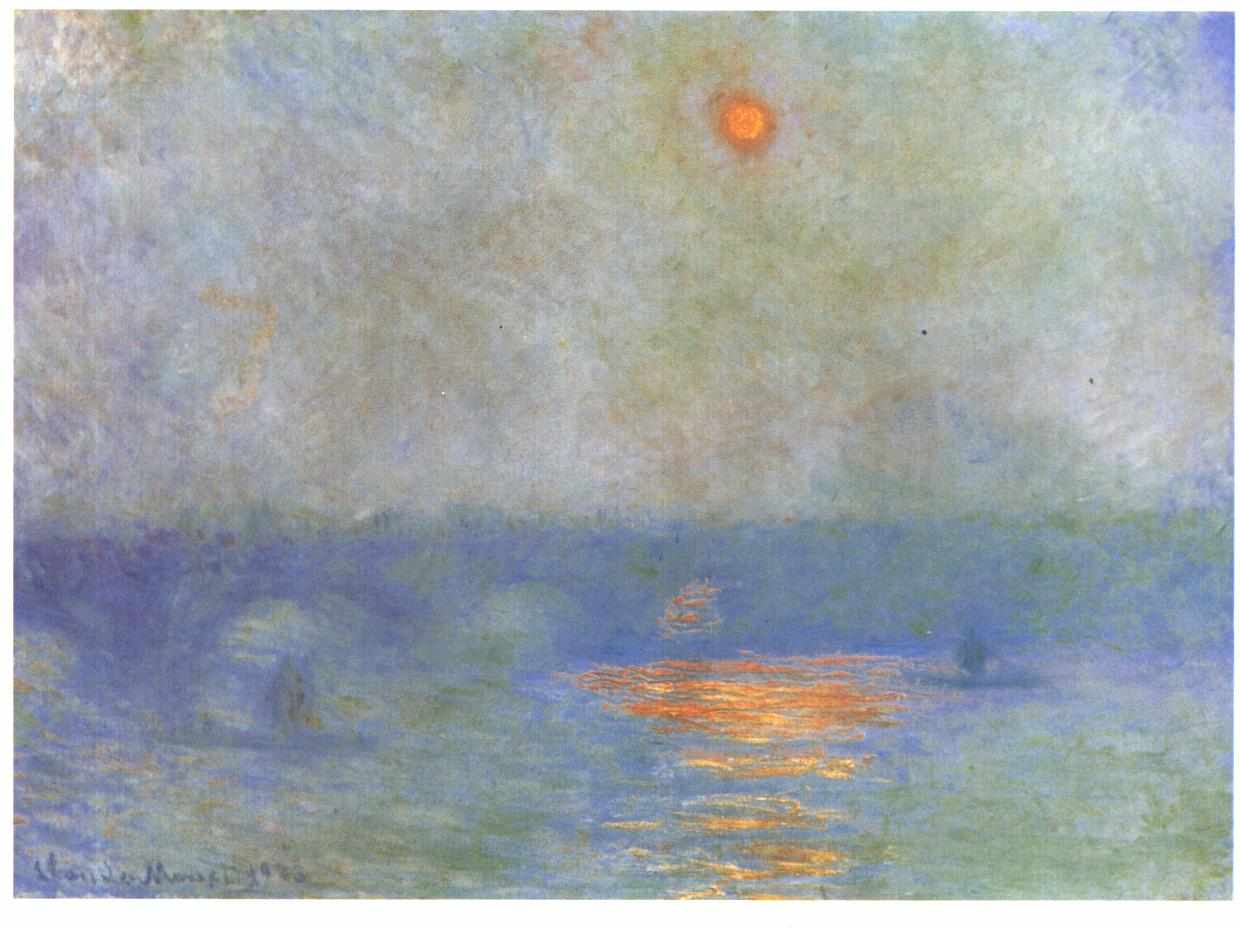
Waterloo Bridge: the Sun in a Fog
Claude Monet · 1903
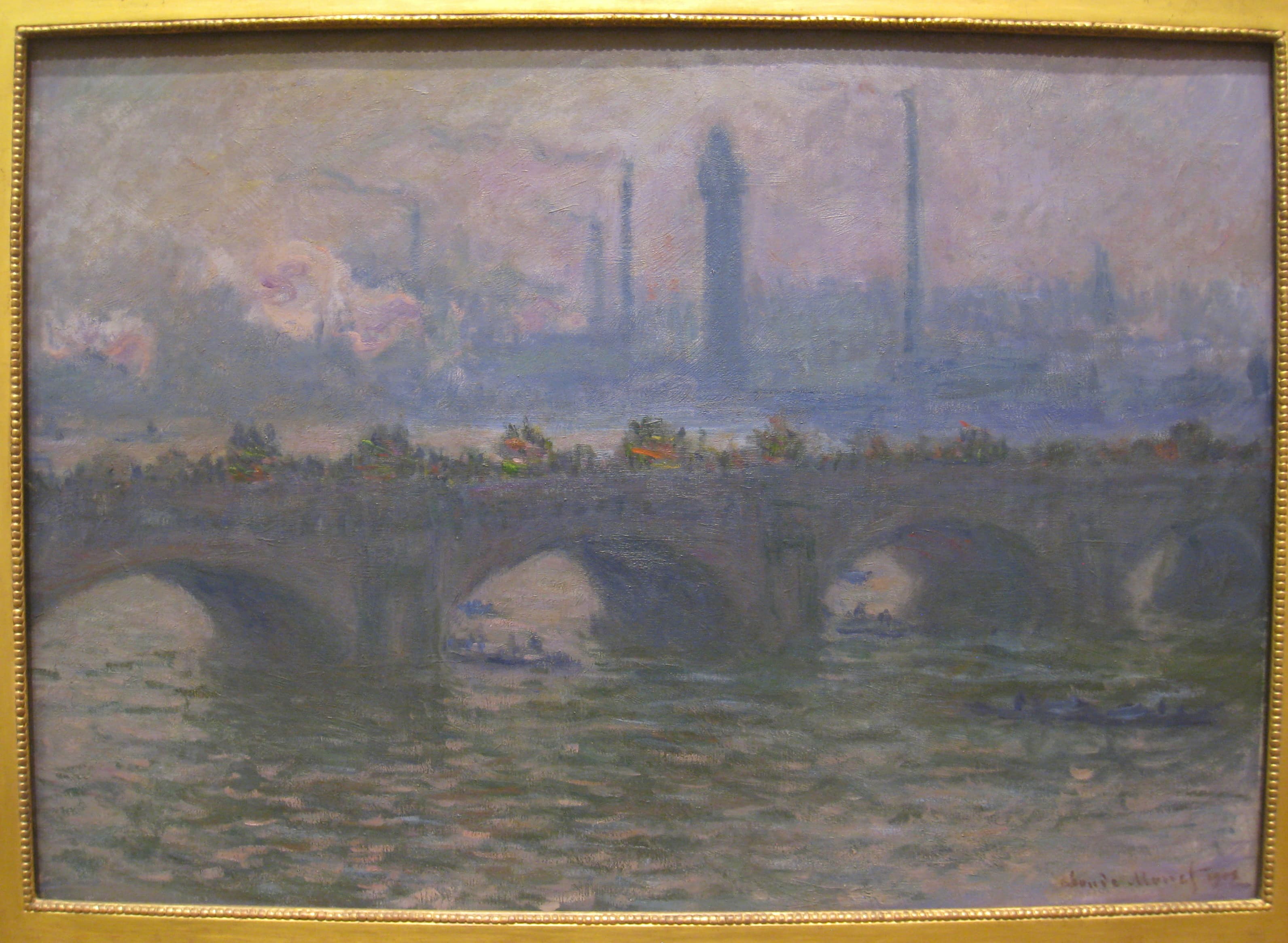
Waterloo Bridge (Worcester Art Museum)
Claude Monet · 1903
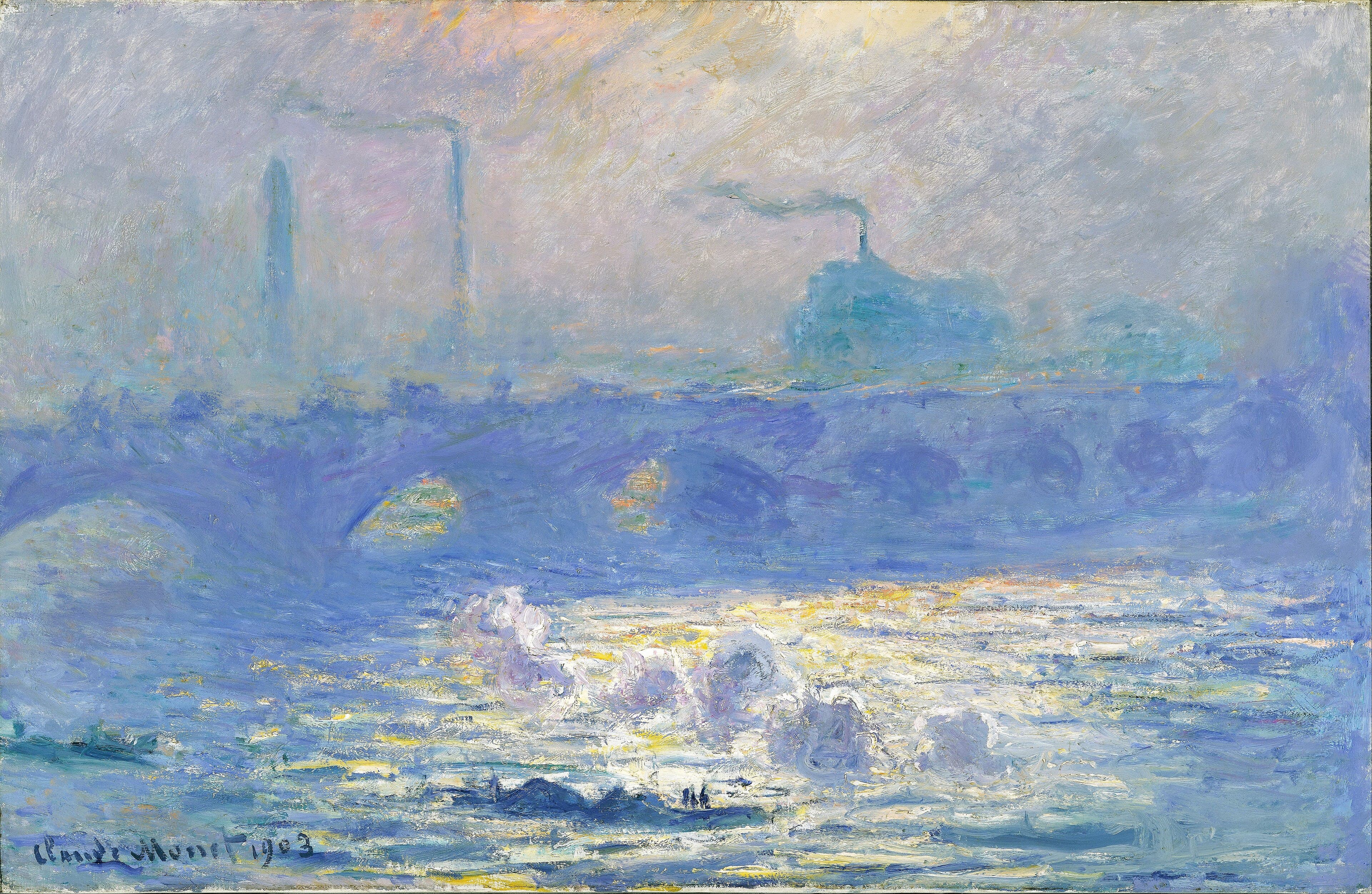
Waterloo Bridge, Sunlight Effect (Denver Art Museum)
Claude Monet · 1903
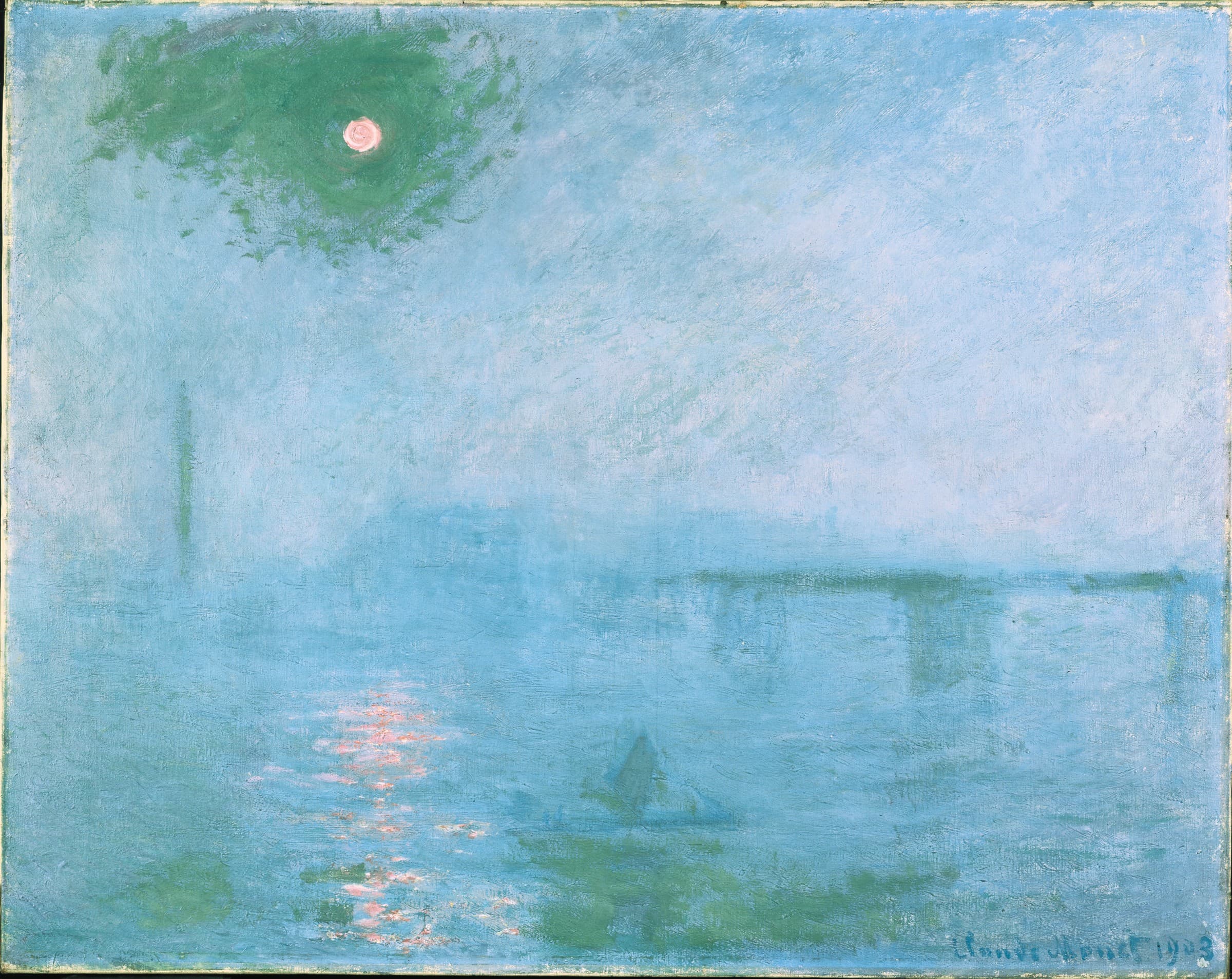
Charing Cross Bridge: Fog on the Thames
Claude Monet · 1903
Waterlilies (1903, Dayton Art Institute)
Claude Monet · 1903
Houses of Parliament, Sunlight Effect
Claude Monet · 1903
Waterloo Bridge, Sunlight Effect
Claude Monet · 1903
Waterloo Bridge, Effect of Fog
Claude Monet · 1903
Also painted in 1903
The same year
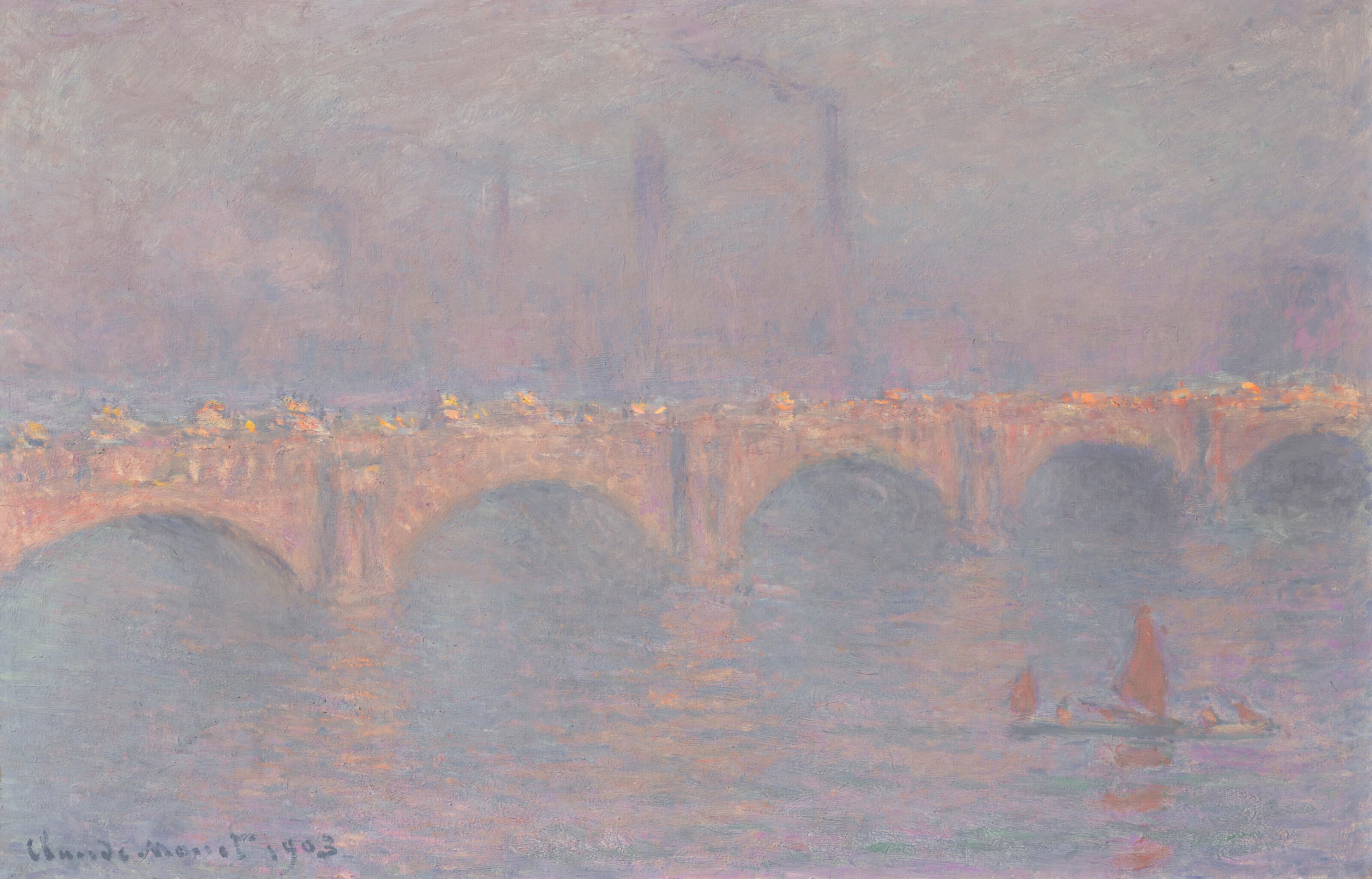
Waterloo Bridge, Hazy Sun
Claude Monet · 1903
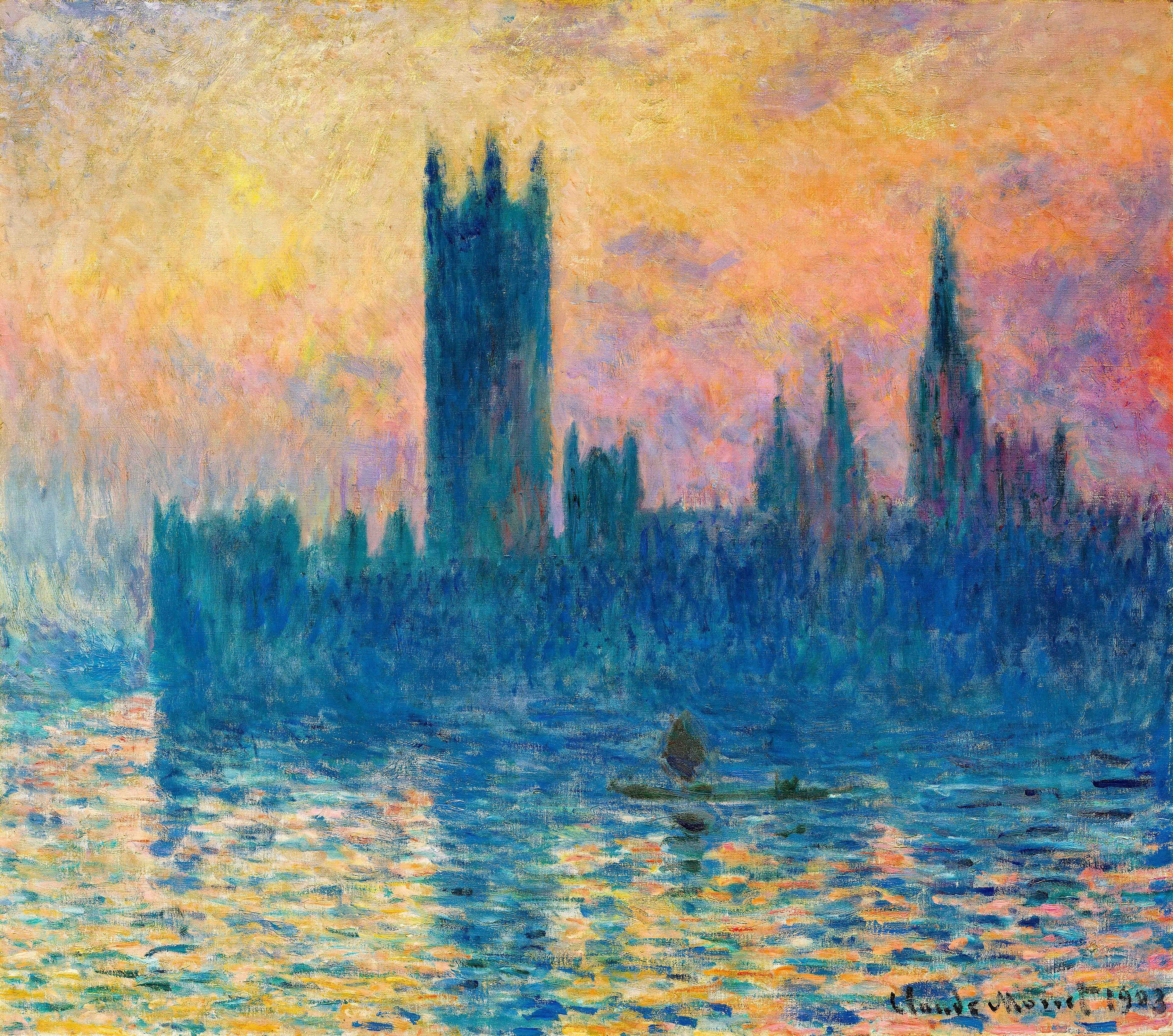
The Houses of Parliament, Sunset
Claude Monet · 1903
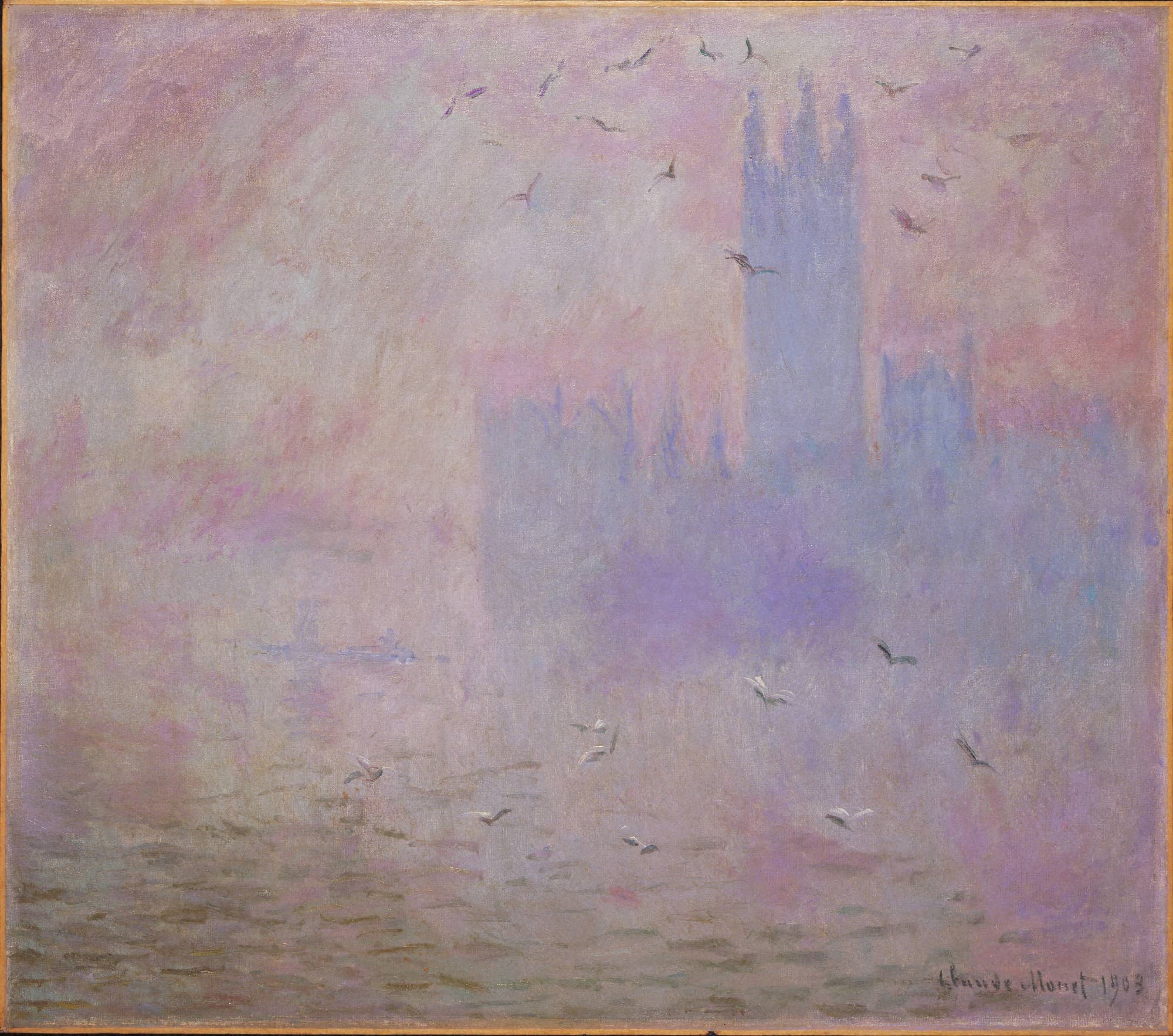
The Houses of Parliament, Seagulls
Claude Monet · 1903
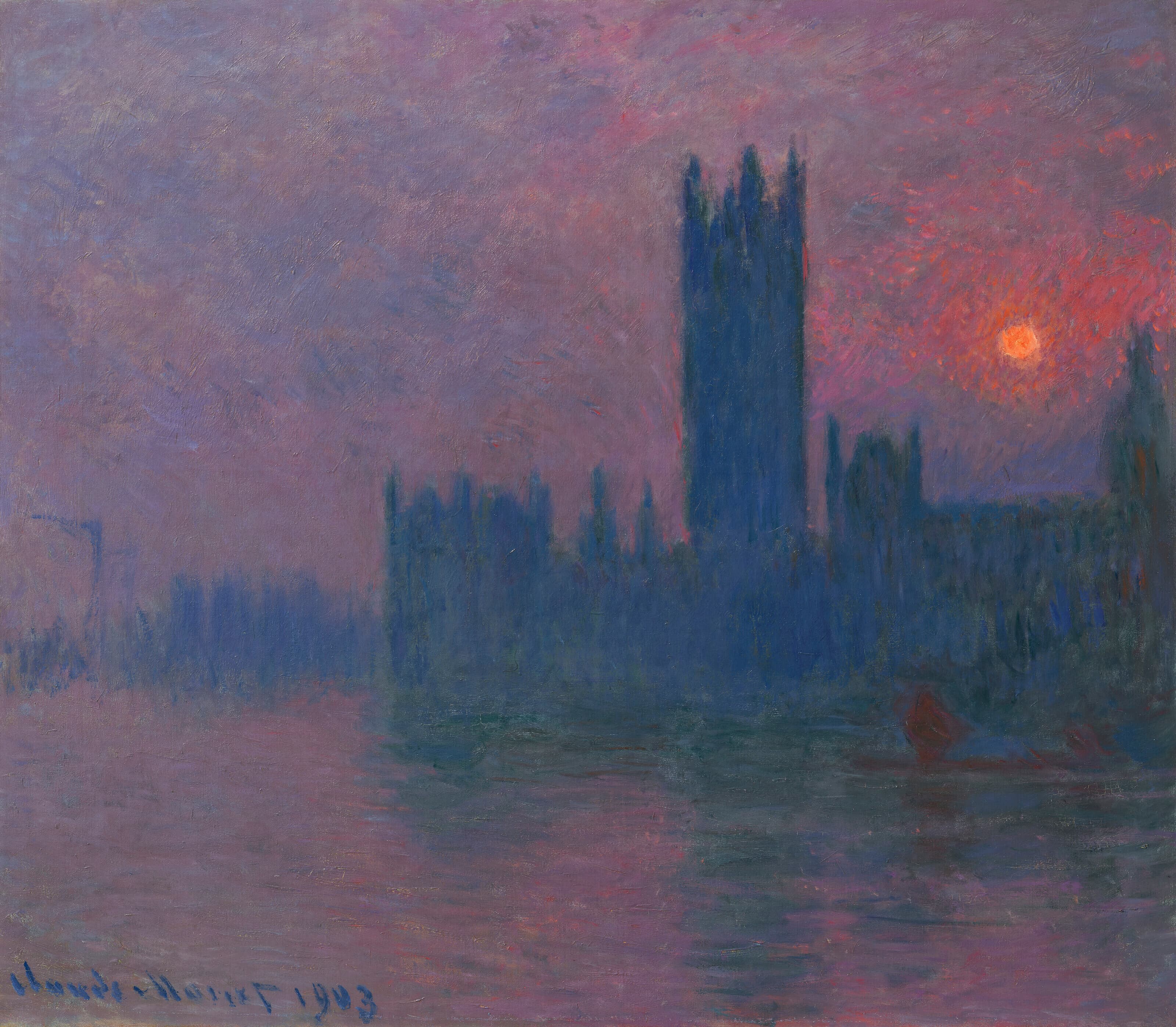
Houses of Parliament, Sunset
Claude Monet · 1903
Le Parlement de Londres, effet de brouillard
Claude Monet · 1903
The Houses of Parliament (Effect of Fog)
Claude Monet · 1903–04
Houses of Parliament, Symphony in Blue
Claude Monet · 1903
Waterloo Bridge, Gray Day
Claude Monet · 1903
Kindred works
You may also study
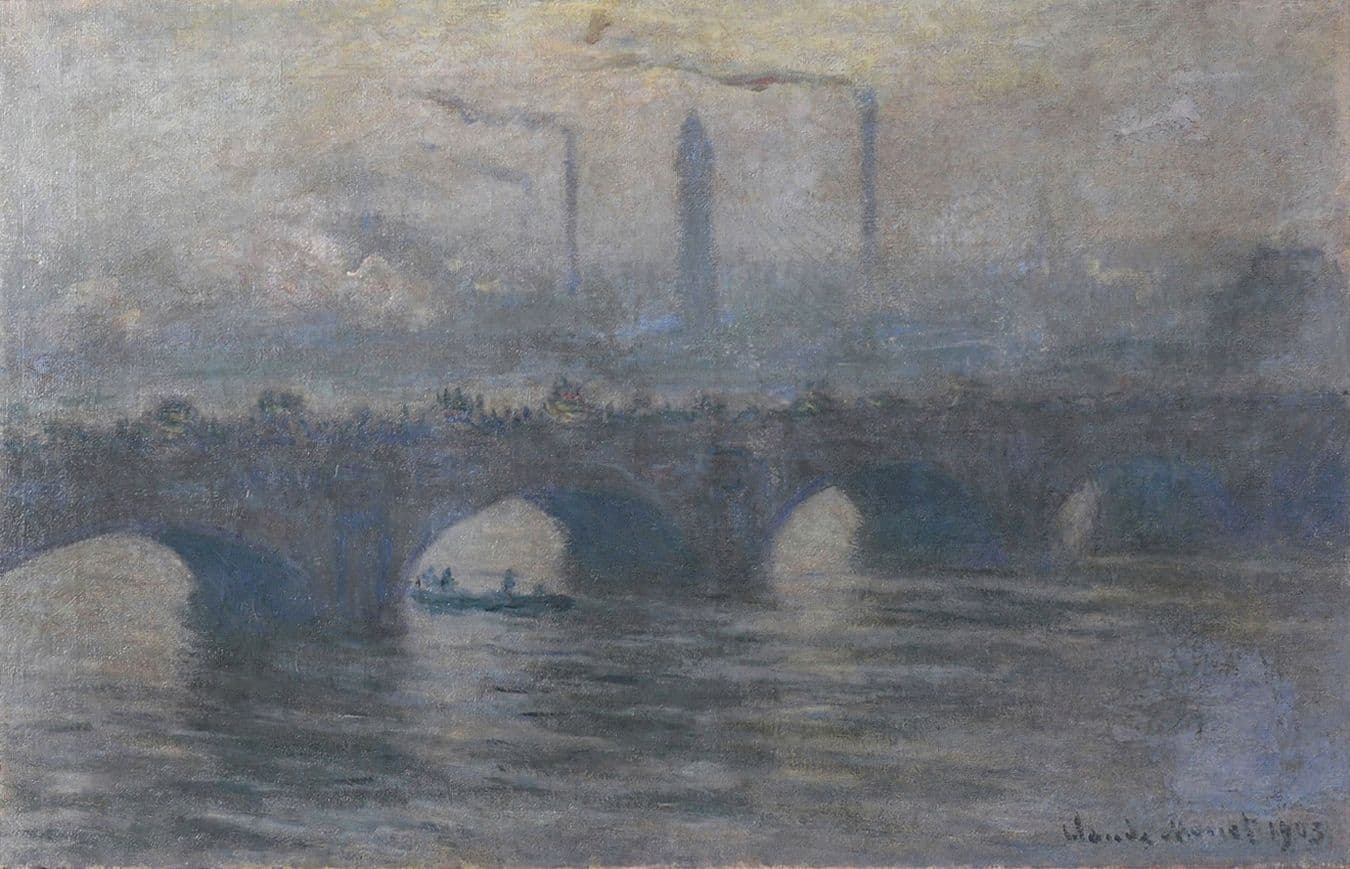
Waterloo Bridge, Gray Weather (Gurlitt Bequest)
Claude Monet · 1903
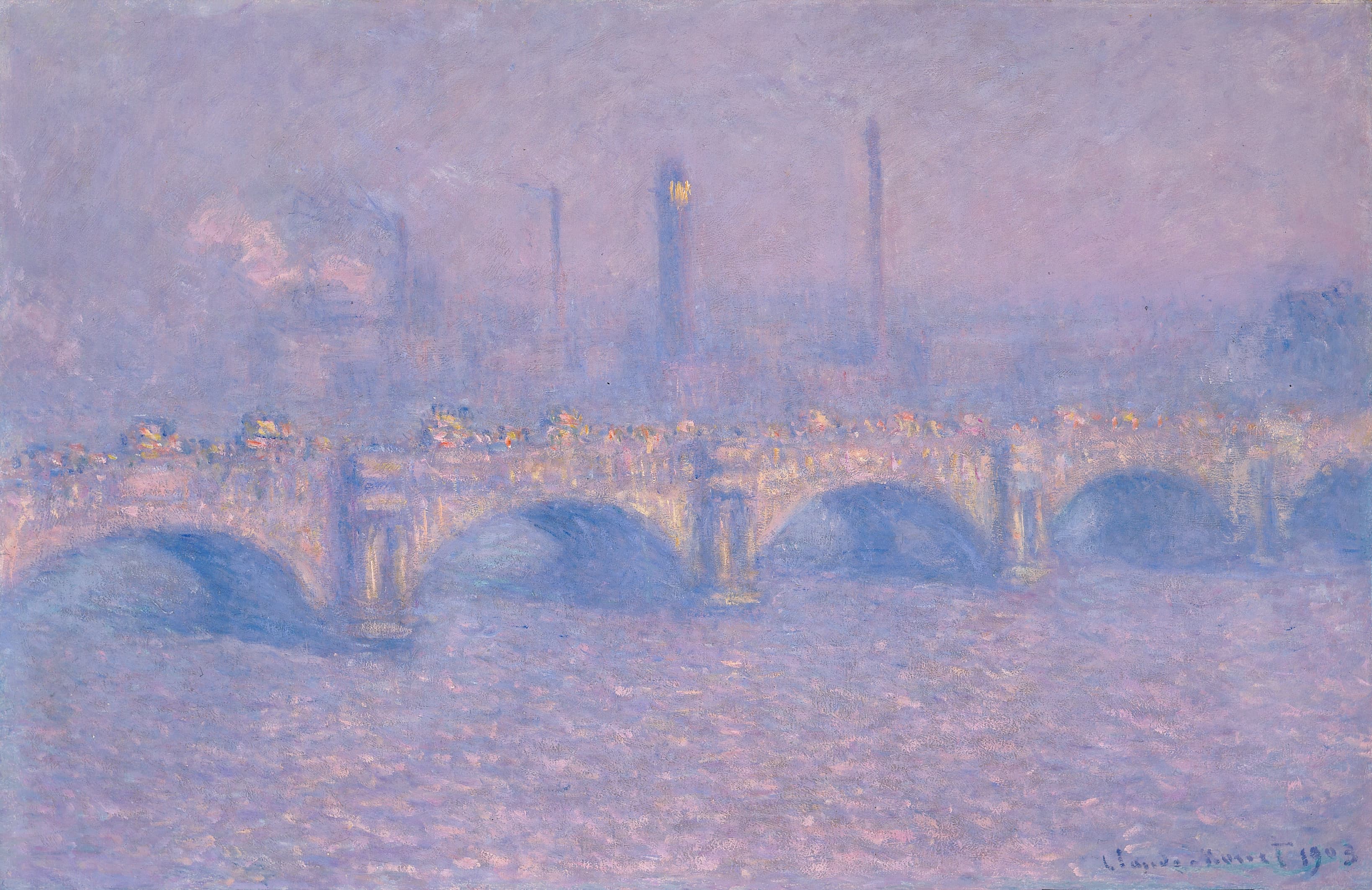
Waterloo Bridge, Veiled Sun
Claude Monet · 1903
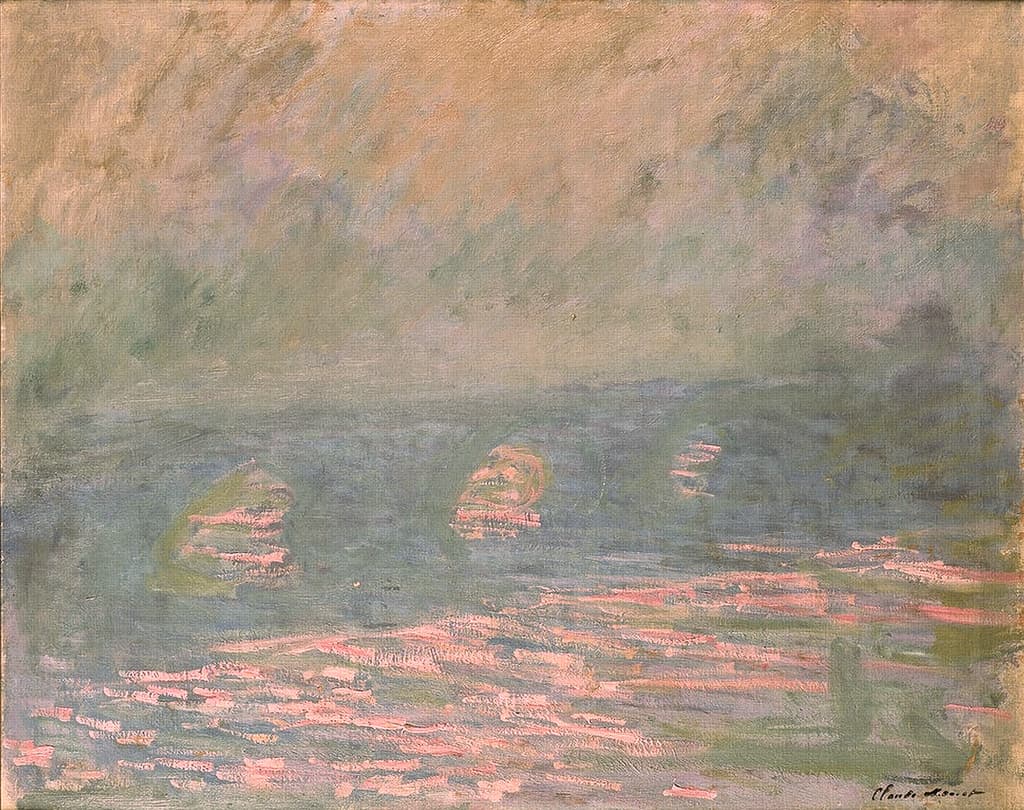
Waterloo Bridge (Matsushita Museum of Art)
Claude Monet · 1899–1901
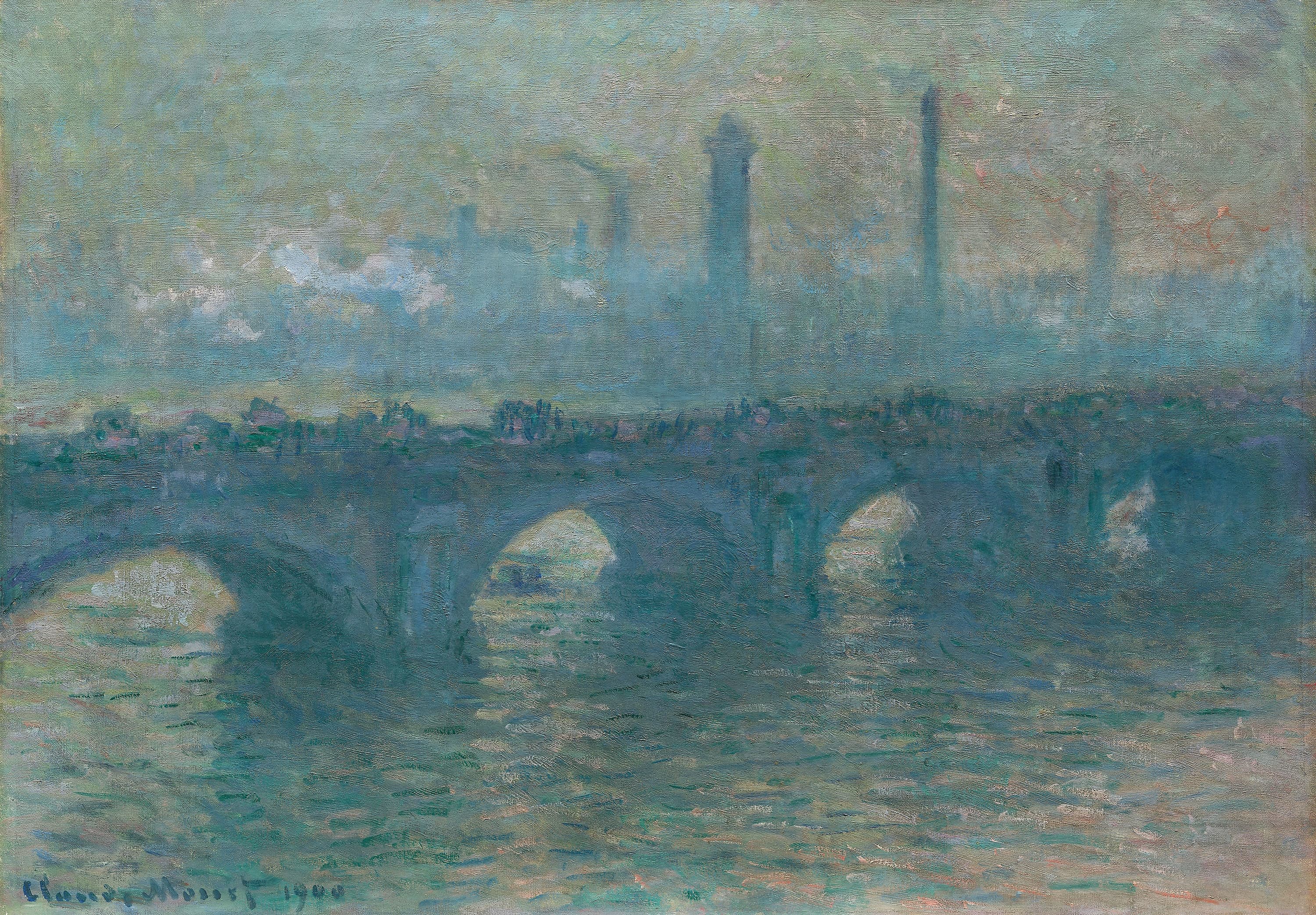
Waterloo Bridge, Gray Weather
Claude Monet · 1900
Charing Cross Bridge (Overcast Day)
Claude Monet · 1900
Houses of Parliament, Sunset
Claude Monet · 1904
Le Parlement, soleil couchant
Claude Monet · 1902–03
Waterloo Bridge in London
Claude Monet · 1902