Image: McMaster Museum of Art; reproduction via Wikimedia Commons · Public domain · via Wikimedia Commons
Waterloo Bridge, Sunlight Effect
Claude Monet, 1903
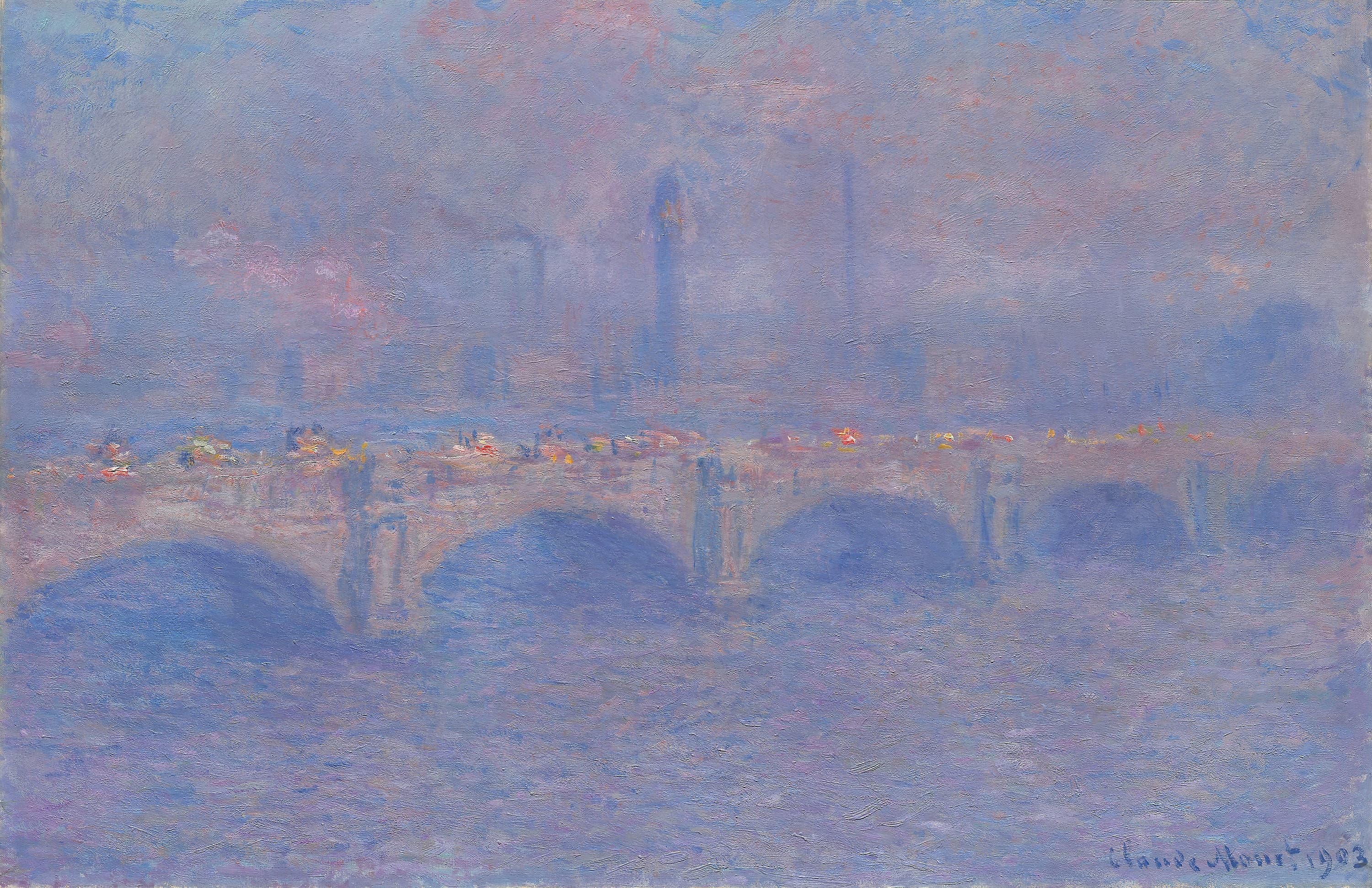
Waterloo Bridge, Sunlight Effect is a 1903 canvas by Claude Monet from his London series: the arches of Waterloo Bridge in a lilac haze, with sunlight glinting on the Thames. It is in the McMaster Museum of Art, Hamilton, Ontario.
- Artist
- Claude Monet
- Date
- 1903
- Medium
- Oil on canvas
- Dimensions
- 65 × 100 cm
- Collection
- McMaster Museum of Art, Hamilton, Ontario, Canada
- Movement
- Impressionism
- Catalogue
- Wildenstein 1587
- The City
- Water & Sea
Waterloo Bridge, Sunlight Effect (Waterloo Bridge, effet de soleil) is one of the forty-odd views of Waterloo Bridge that Claude Monet began from his room at the Savoy Hotel in London between 1899 and 1901 and finished at Giverny. This version, signed and dated 1903 and catalogued by Wildenstein as no. 1587, belongs to the McMaster Museum of Art in Hamilton, Ontario, which received it from the Hamilton collector Herman H. Levy in 1984.
What you're looking at
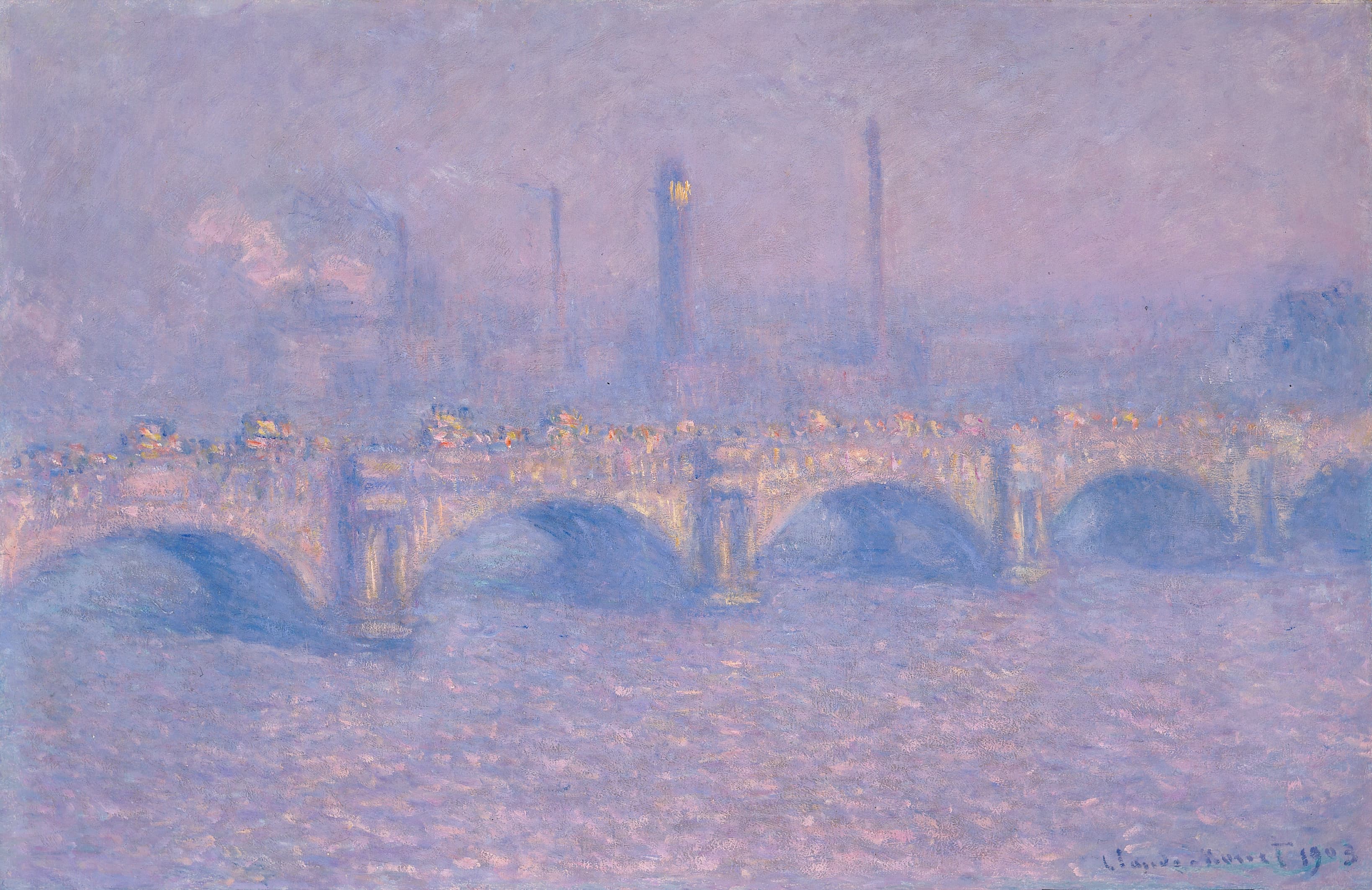
The whole canvas is pitched in one key: lavender, powder blue and a milky pink, as if the air itself had been tinted. The bridge runs straight across the middle of the picture, five arches visible from left to right, the last one cut by the edge. The arches are the darkest things in the painting, but even they are only a deeper blue, and their undersides glow slightly where light bounces up from the water.
Along the top of the parapet Monet sets a broken row of warm touches: peach, pale orange, a few flecks of cream and red. These are the omnibuses, cabs and crowds crossing the bridge, reduced to points of color that catch the sun. Behind, the south bank is a pale wall of buildings with three or four factory chimneys and a tall tower rising out of the haze, the smoke drifting left as soft pink clouds.
The river fills the lower third. Here the sunlight of the title appears: the surface is worked in short, horizontal strokes of pink, apricot and pale yellow laid over blue, so that the water seems to shimmer rather than reflect. There are no boats. The signature and date sit in a darker violet at lower right.
Where and when it was painted
Monet came to London in the autumn of 1899 and returned in early 1900 and early 1901, each time taking a room high up in the Savoy Hotel on the Embankment. From the window he could look downstream to Waterloo Bridge and upstream to Charing Cross Bridge, and he worked on dozens of canvases at once, switching as the light changed. The Waterloo Bridge pictures look east, so in the morning the sun stood behind or beside the bridge, turning it into a silhouette in the haze. The bridge itself, designed by John Rennie and opened in 1817, was demolished in the 1930s; Monet's pictures are among its best records.
He did not finish the series in London. Back at Giverny he kept reworking the canvases, comparing them with one another, and only signed and dated them when he was ready to show them. Most of the Waterloo Bridge pictures carry the date 1903, the year before Paul Durand-Ruel exhibited the London views in Paris in 1904. For the whole series, see Monet's Waterloo Bridge series, and for the London years as a whole, Monet in London.
How it was painted
The surface is dense and layered. Monet laid the composition in on site, then built it up over many sessions with small, crusty dabs, especially along the parapet and in the water. The paint in the sky is softer and more blended, so the chimneys seem to dissolve upward. He keeps almost every value close together: the difference between the bridge and the sky is mostly a difference of temperature, cool blue against warm pink, not of light and dark.
How this version differs
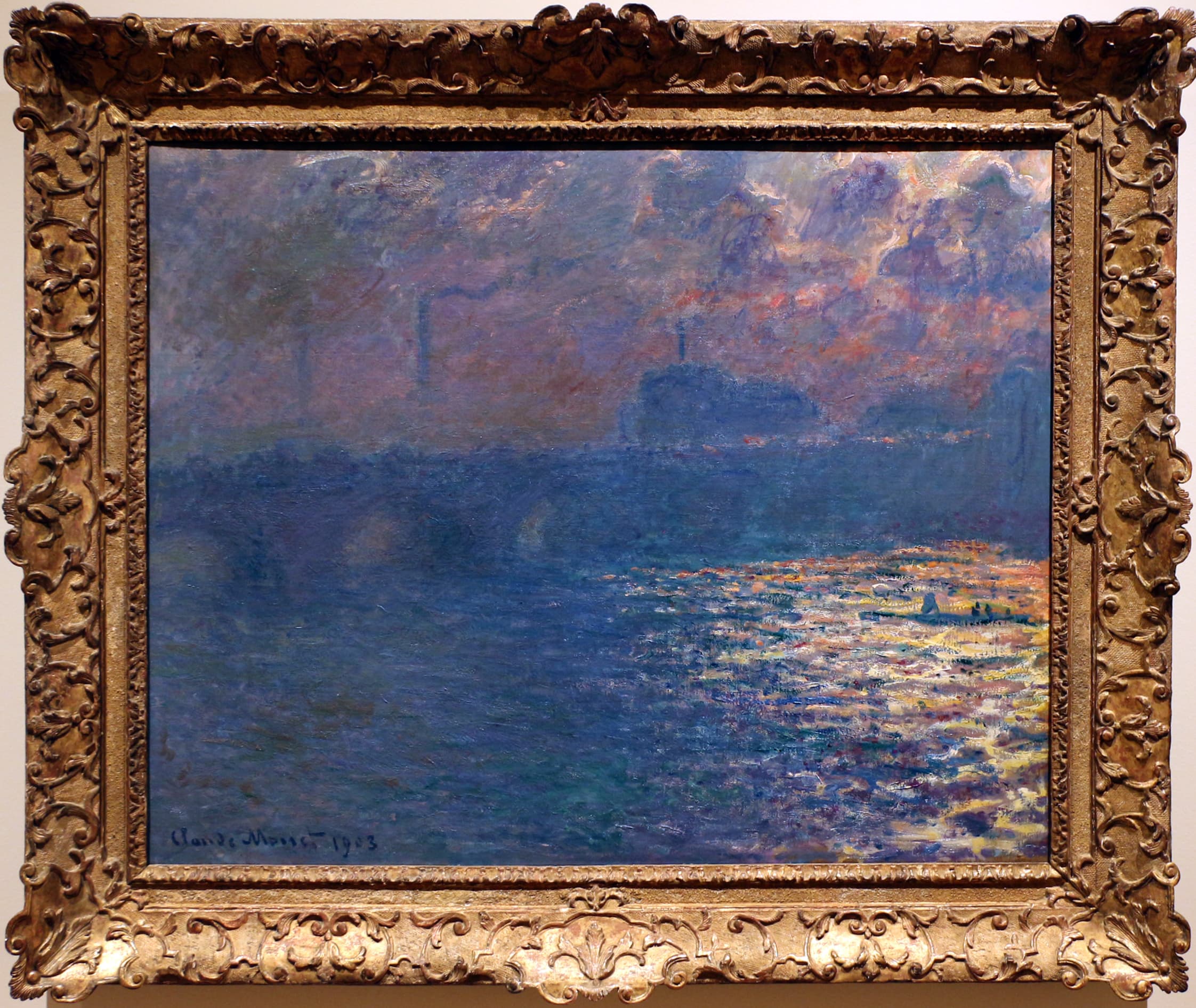
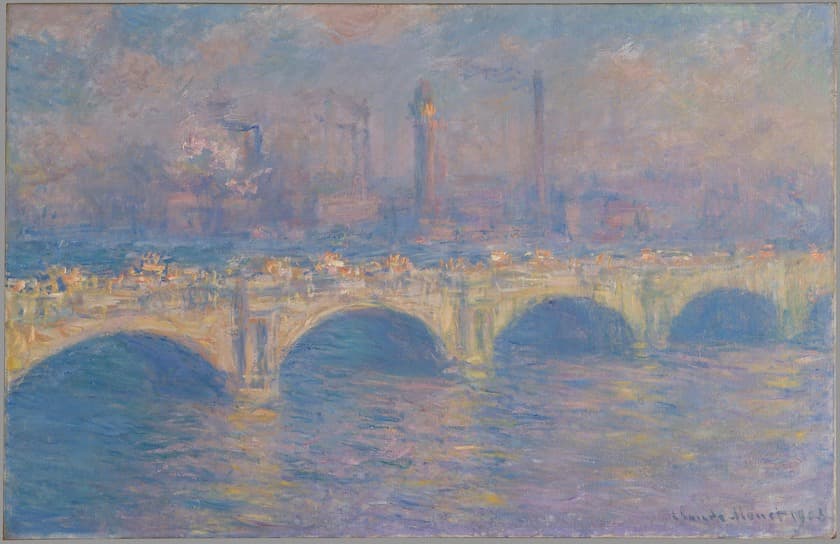
Set beside its siblings, the McMaster canvas is one of the most evenly lit and least dramatic. In the Art Institute of Chicago's Sunlight Effect the sun breaks through more strongly, and in the Milwaukee version it burns a bright path across a dark blue river. Here the light is diffused through the whole sky, and the sunlit water is a gentle pink sheen rather than a blaze. It is closest in mood to Waterloo Bridge, Veiled Sun in Rochester, which repeats almost the same composition and the same canvas size, 65 by 100 centimeters, one of the standard formats Monet used for the series.
Ownership and where to see it
Herman H. Levy, a Hamilton businessman, gave his collection of European paintings to McMaster University in 1984, with this canvas as its best-known work, and later left a bequest to fund further purchases. The painting has traveled widely since, to Ordrupgaard in Denmark in 2016 and to the Art Gallery of Ontario in 2019, and it anchored the touring exhibition A Cultivating Journey: The Herman H. Levy Legacy in 2017–18. It is the only Monet at McMaster and one of very few in Canada; for other places to see the series, see where to see Monet's paintings.
Questions & answers
Where is Monet's Waterloo Bridge, Sunlight Effect at McMaster?
It is in the McMaster Museum of Art at McMaster University in Hamilton, Ontario, Canada. The Hamilton collector Herman H. Levy gave it to the museum in 1984 with the rest of his European collection. It is often lent to exhibitions, so check the museum before visiting.
When and where was it painted?
Monet began it from his room at the Savoy Hotel in London, which overlooked Waterloo Bridge, during stays between 1899 and 1901. He finished it in his studio at Giverny and signed and dated it 1903.
What does Waterloo Bridge, Sunlight Effect show?
It shows the arches of Waterloo Bridge across the Thames in a lilac haze, with traffic on the bridge as warm flecks of color, factory chimneys on the south bank behind, and pink sunlight shimmering on the water below.
How many versions of Waterloo Bridge did Monet paint?
Around forty-one. Several share the title Sunlight Effect, including canvases in Chicago, Milwaukee and Denver. Each records a different weather and light, and they are now spread across museums and private collections.
More by the artist
Claude Monet
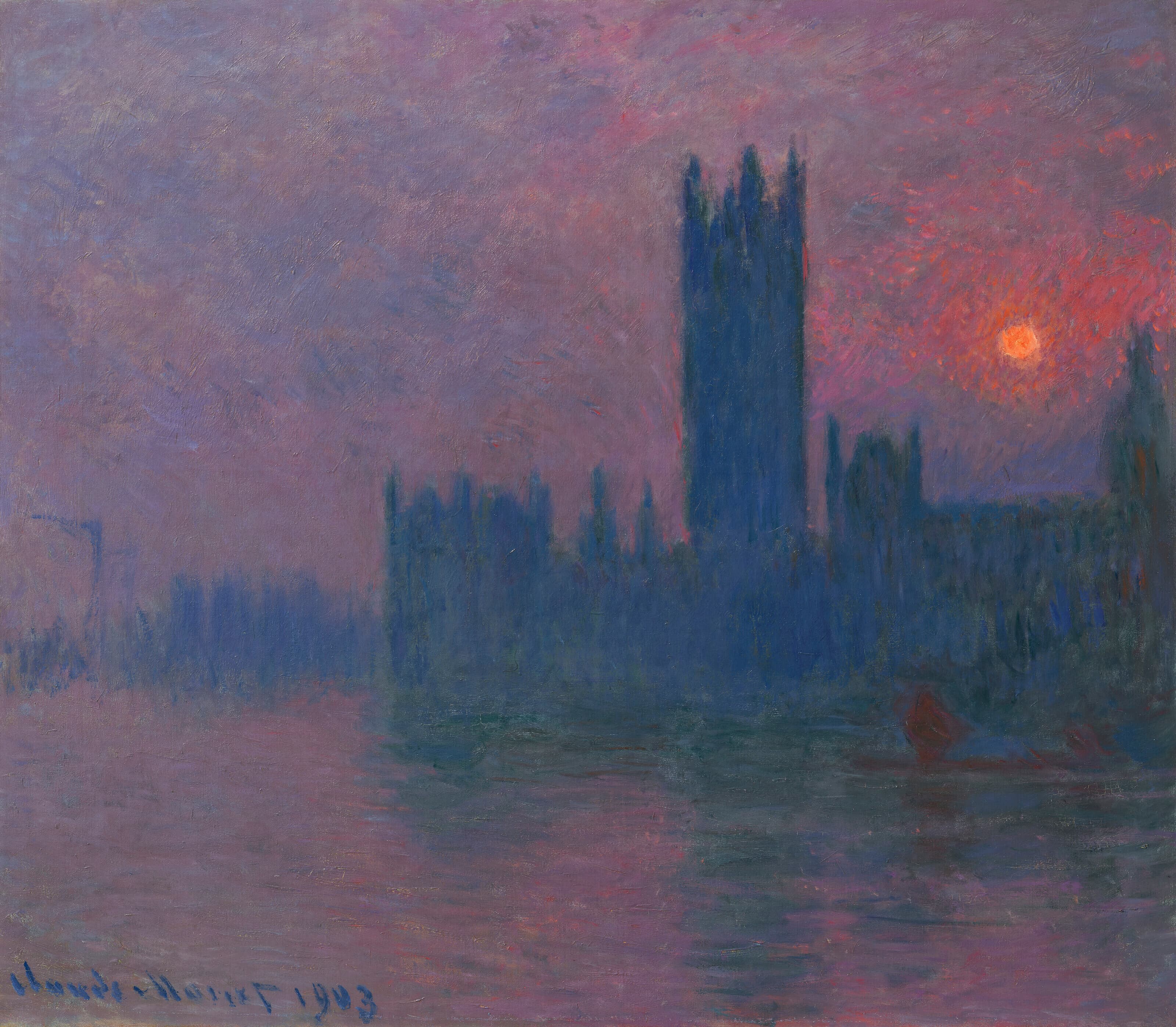
Houses of Parliament, Sunset
Claude Monet · 1903
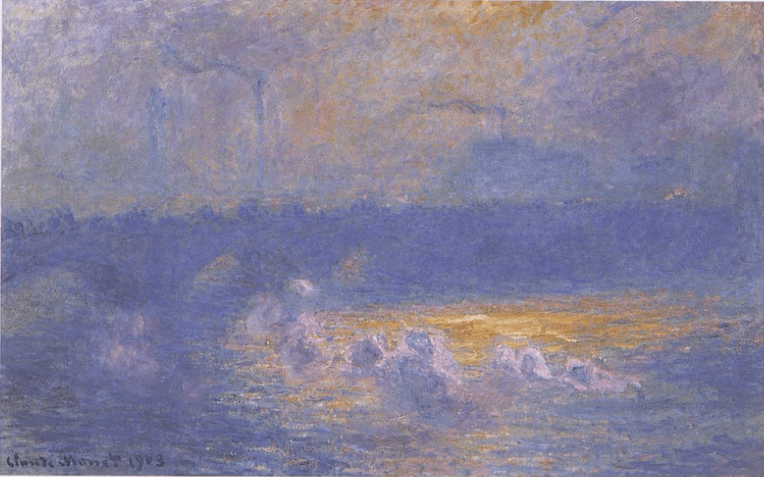
Waterloo Bridge, Sunlight Effect with Smoke
Claude Monet · 1903
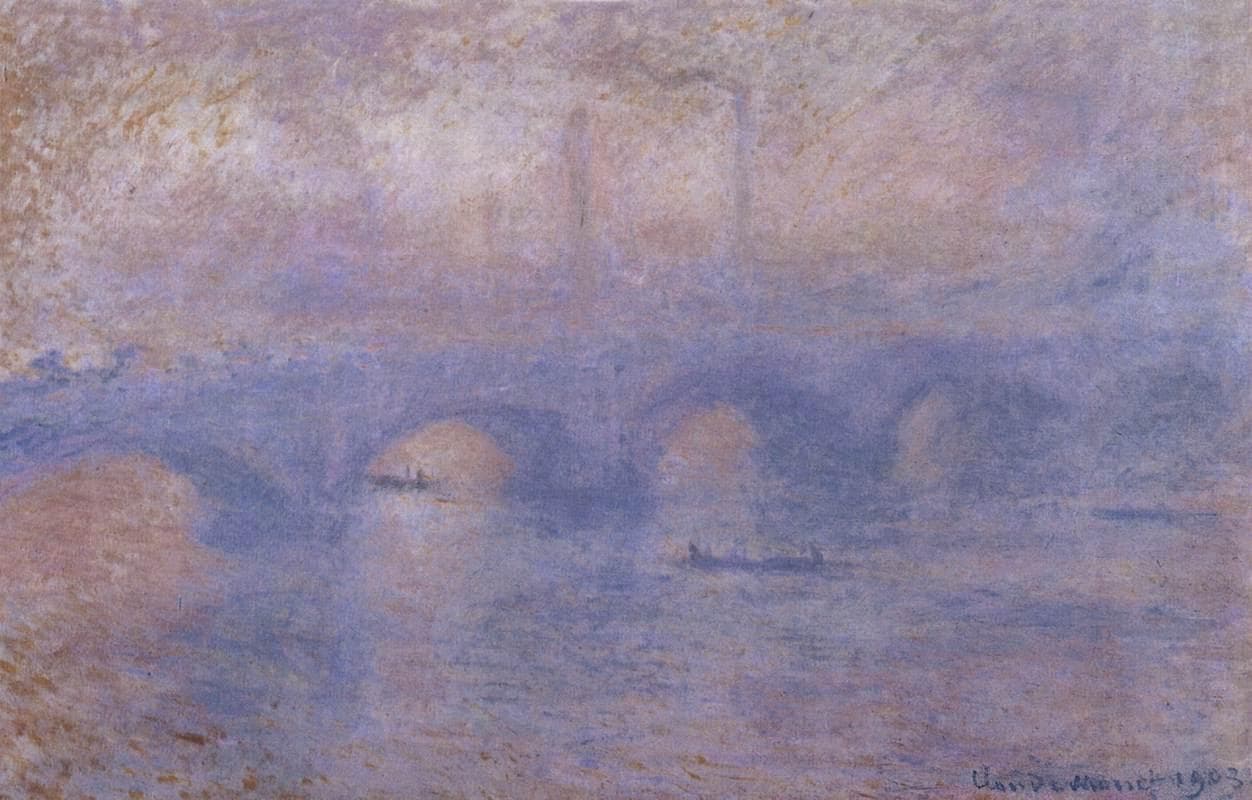
Waterloo Bridge, Effect of Fog
Claude Monet · 1903
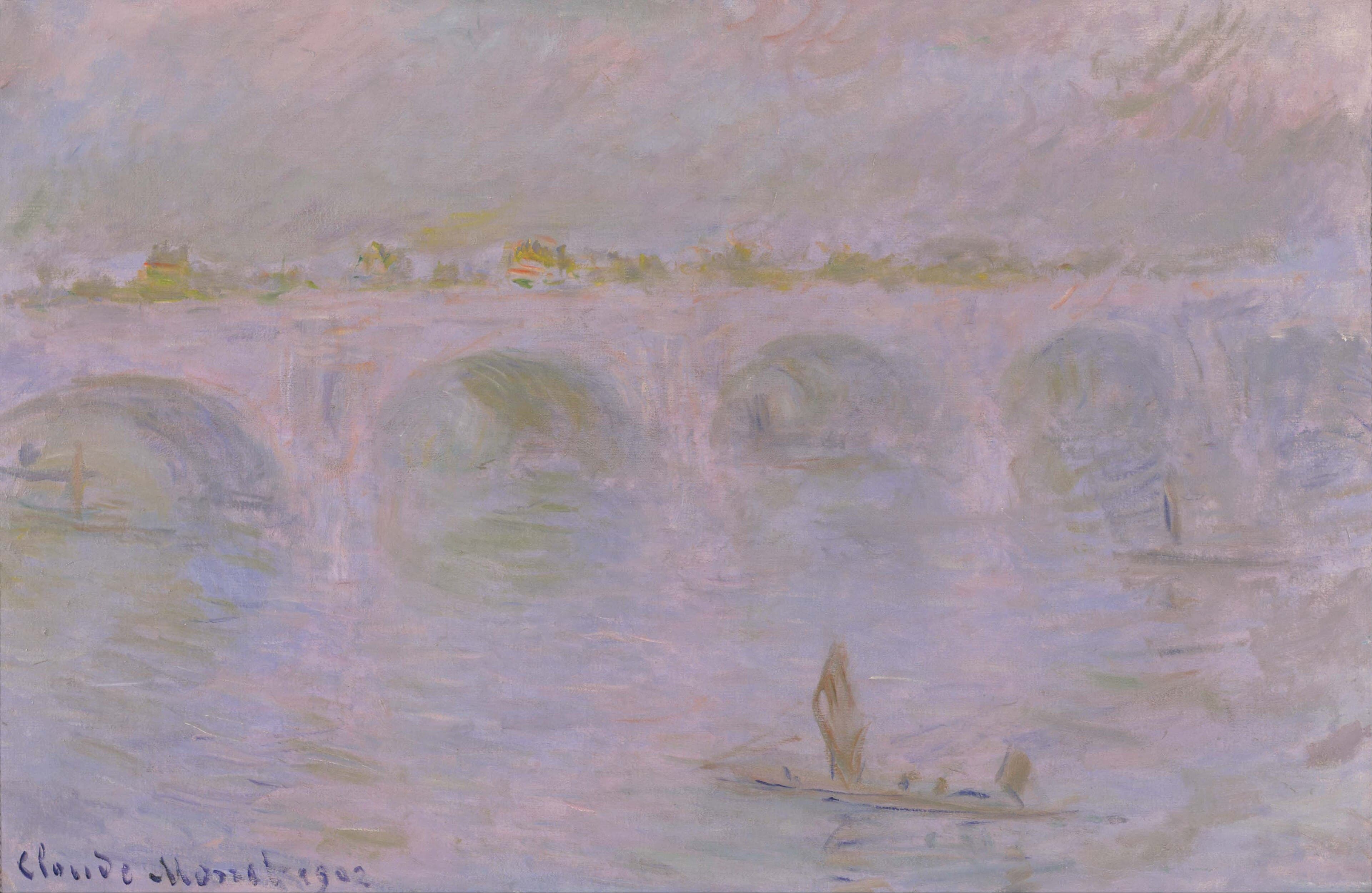
Waterloo Bridge in London
Claude Monet · 1902
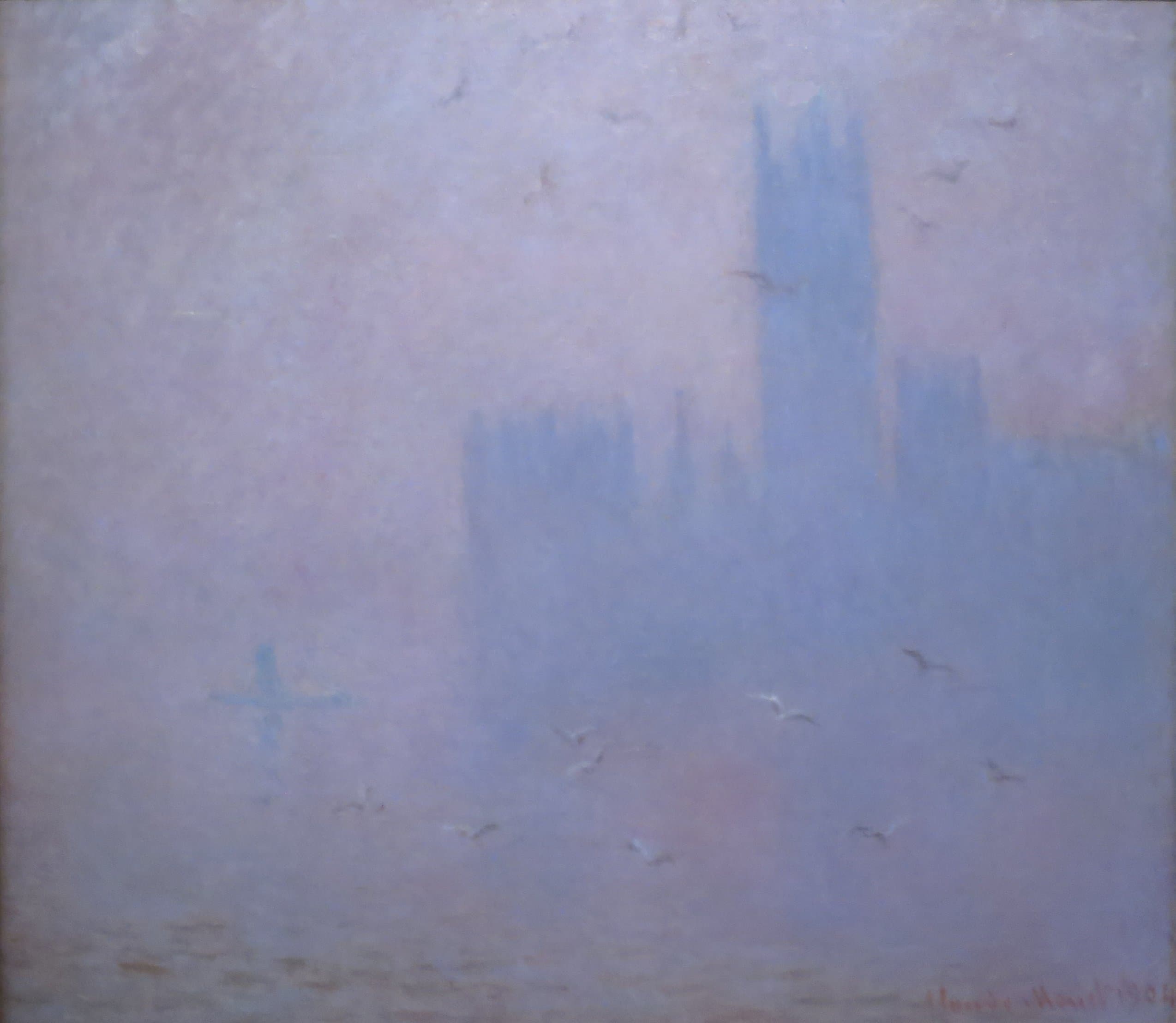
Seagulls, the River Thames and the Houses of Parliament
Claude Monet · 1904
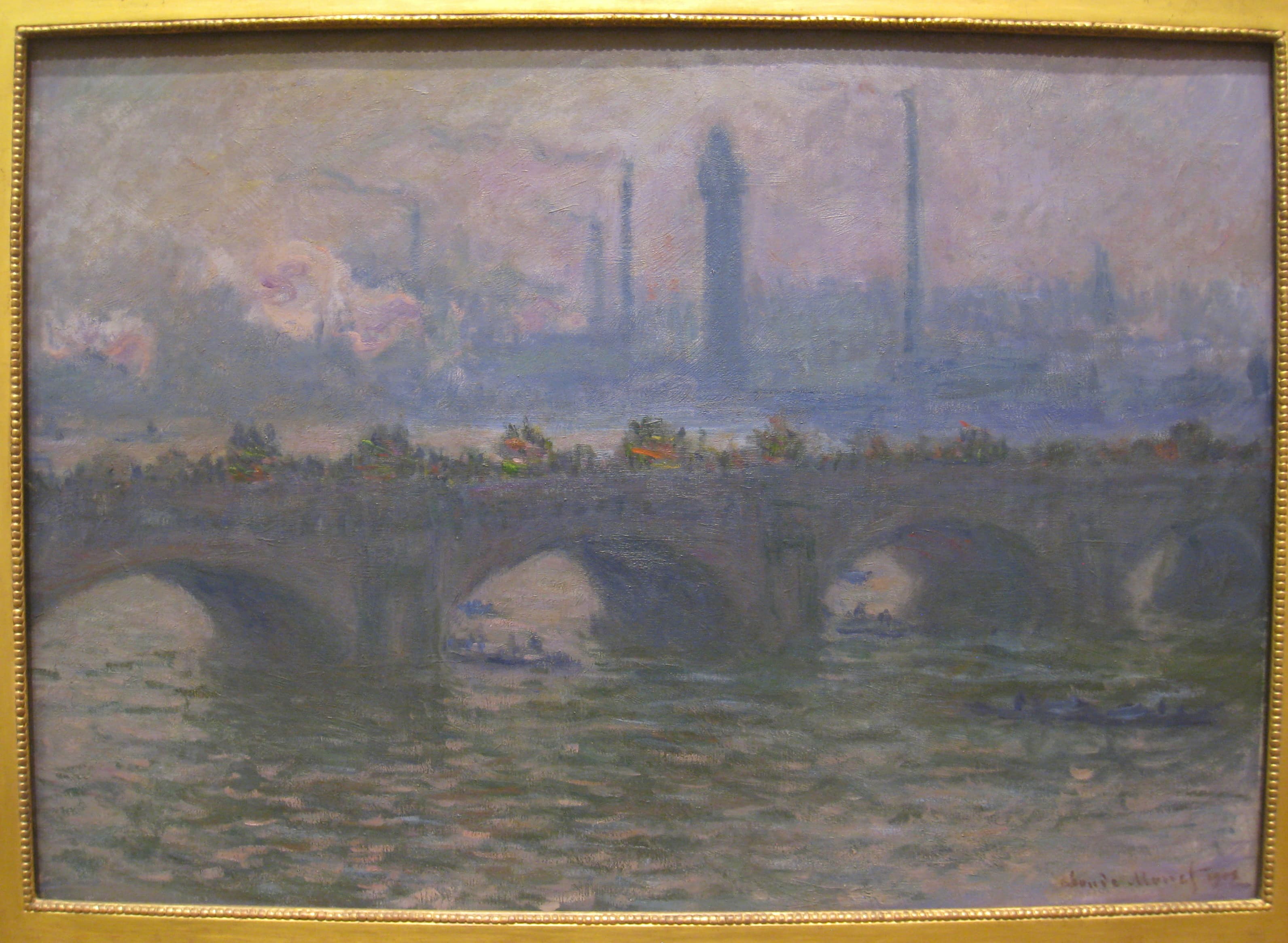
Waterloo Bridge (Worcester Art Museum)
Claude Monet · 1903
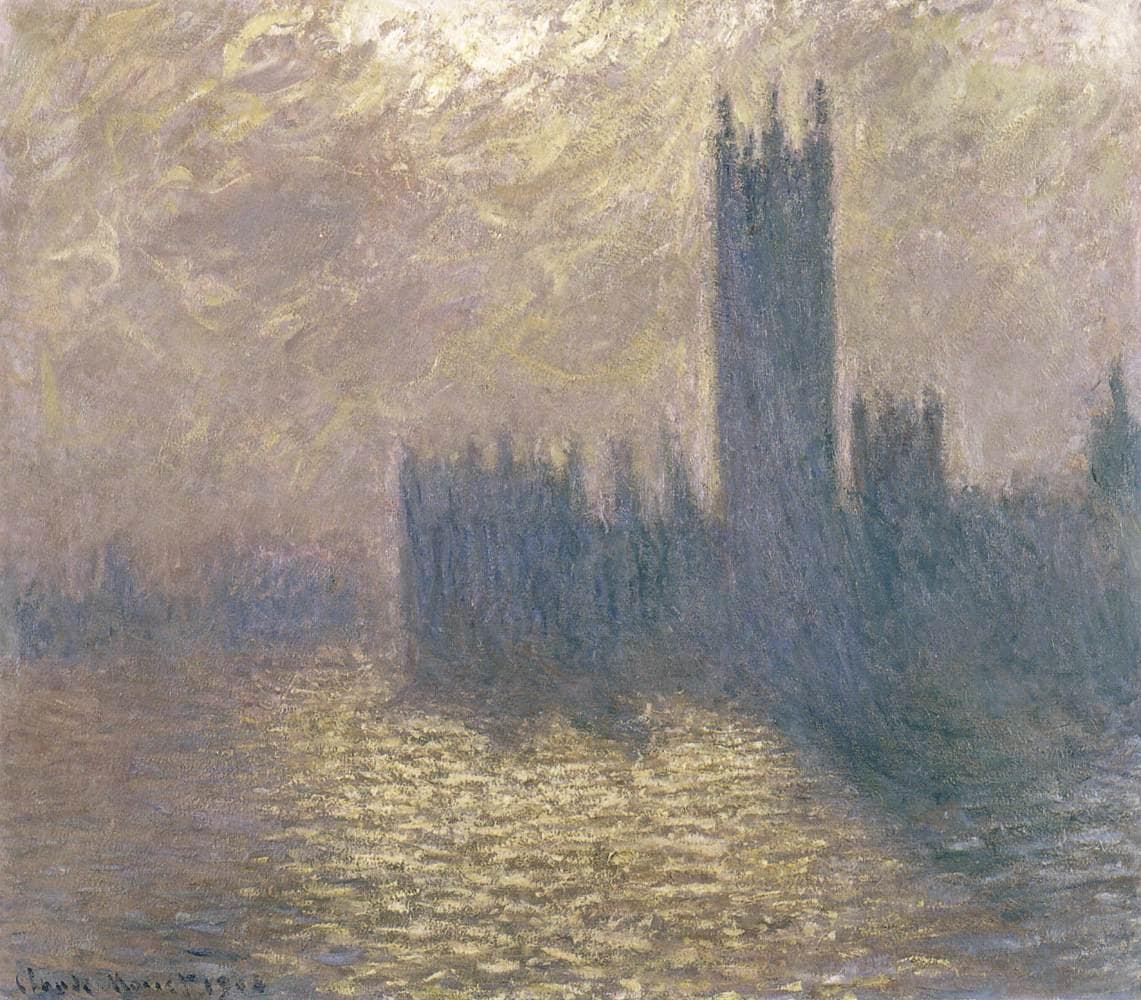
The Houses of Parliament, London
Claude Monet · 1904
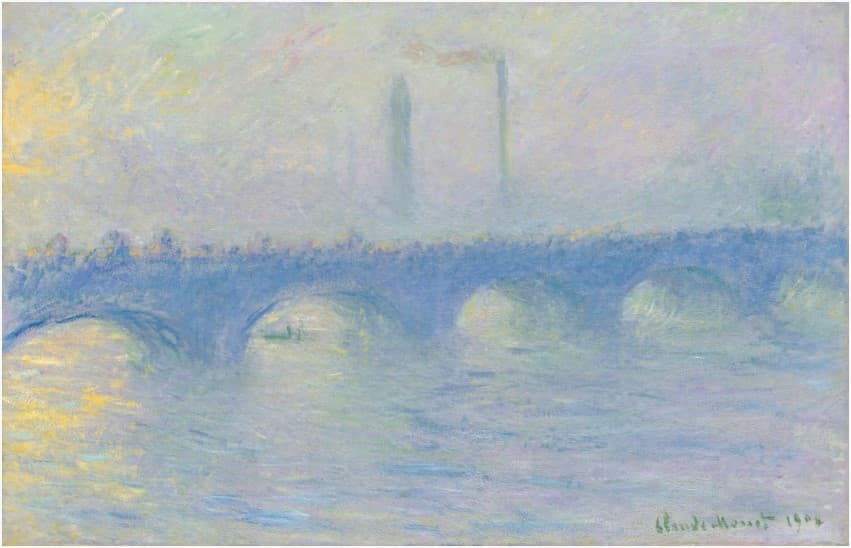
Waterloo Bridge, effet de brume
Claude Monet · 1904
Also painted in 1903
The same year
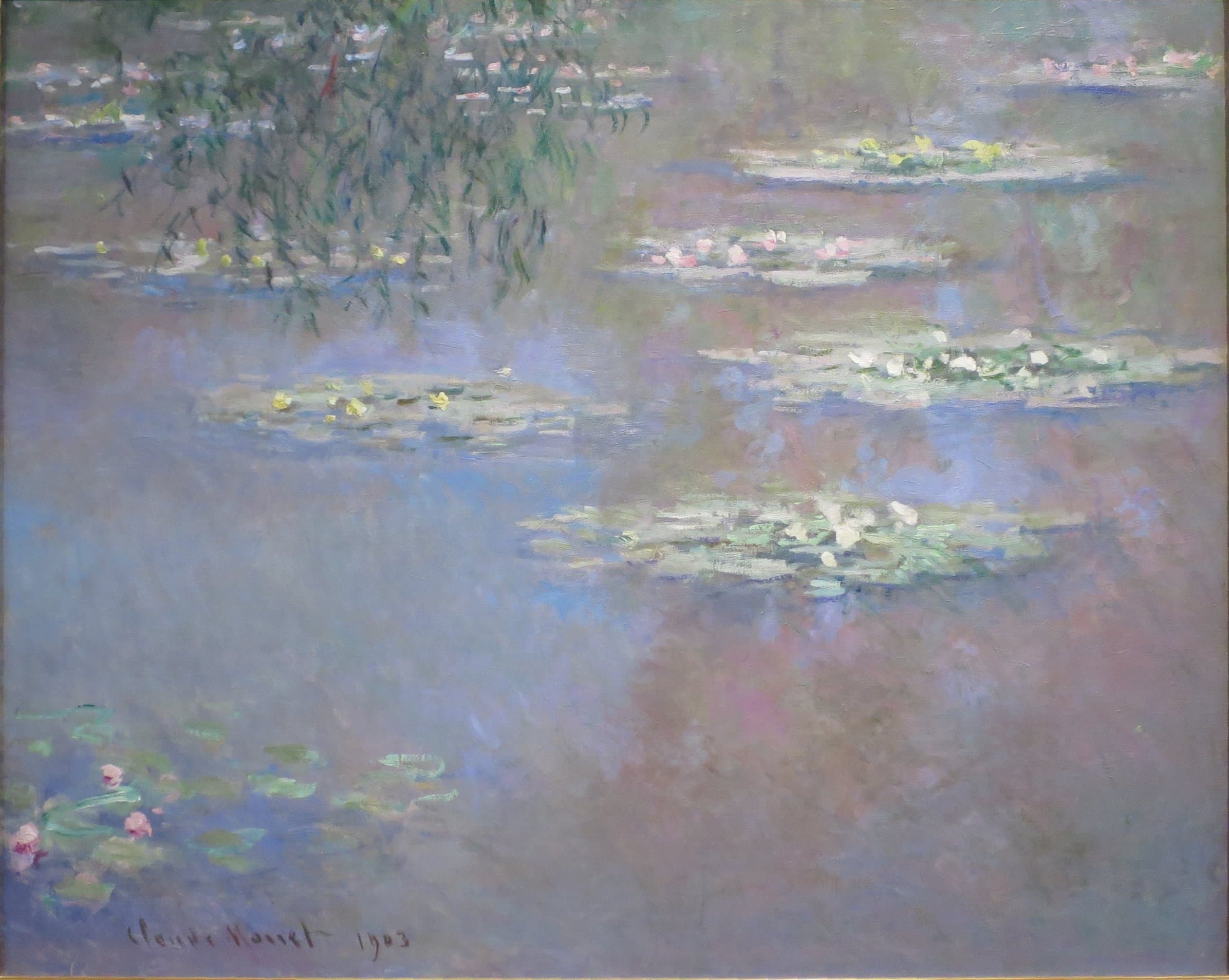
Waterlilies (1903, Dayton Art Institute)
Claude Monet · 1903
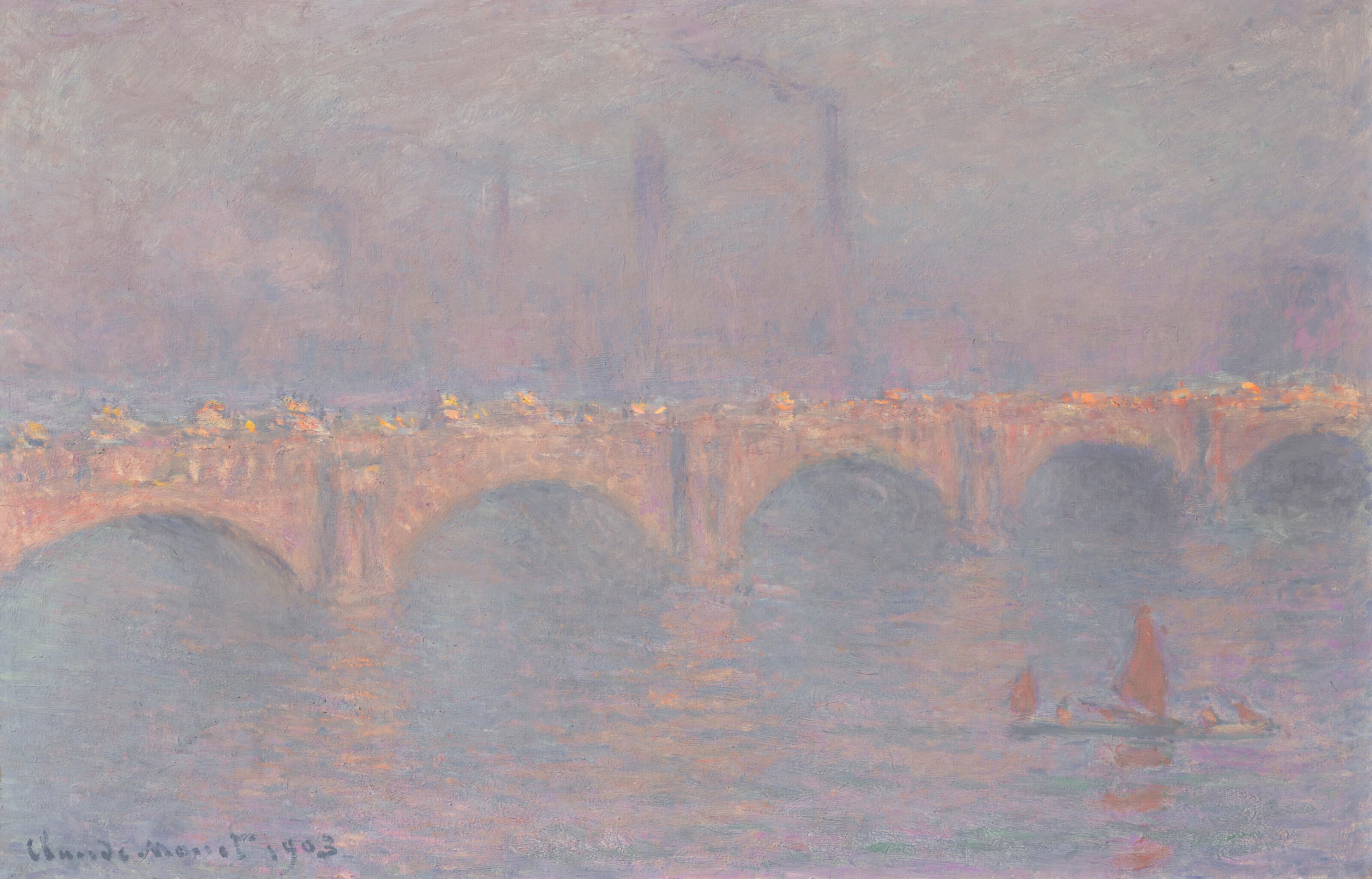
Waterloo Bridge, Hazy Sun
Claude Monet · 1903
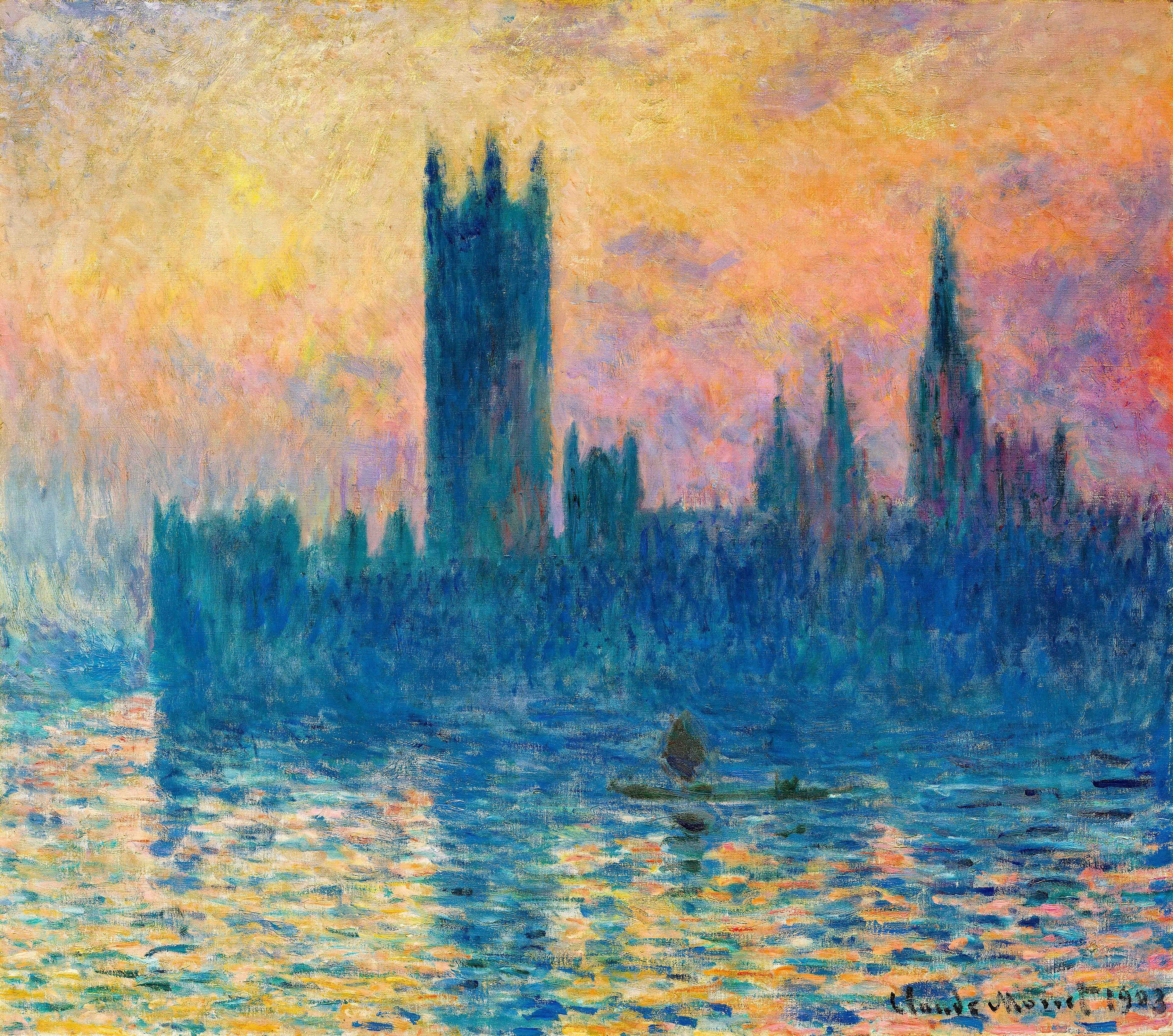
The Houses of Parliament, Sunset
Claude Monet · 1903
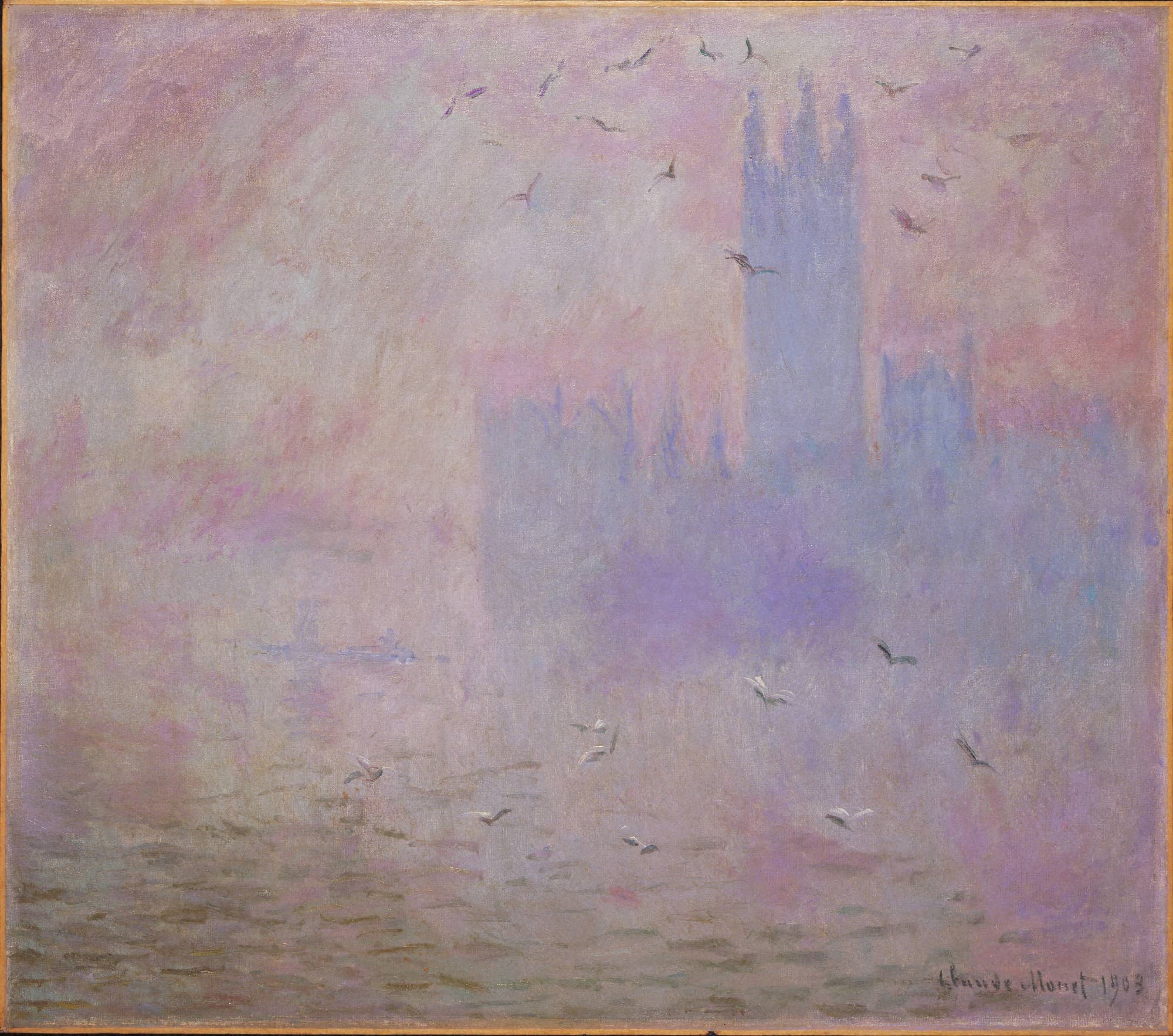
The Houses of Parliament, Seagulls
Claude Monet · 1903
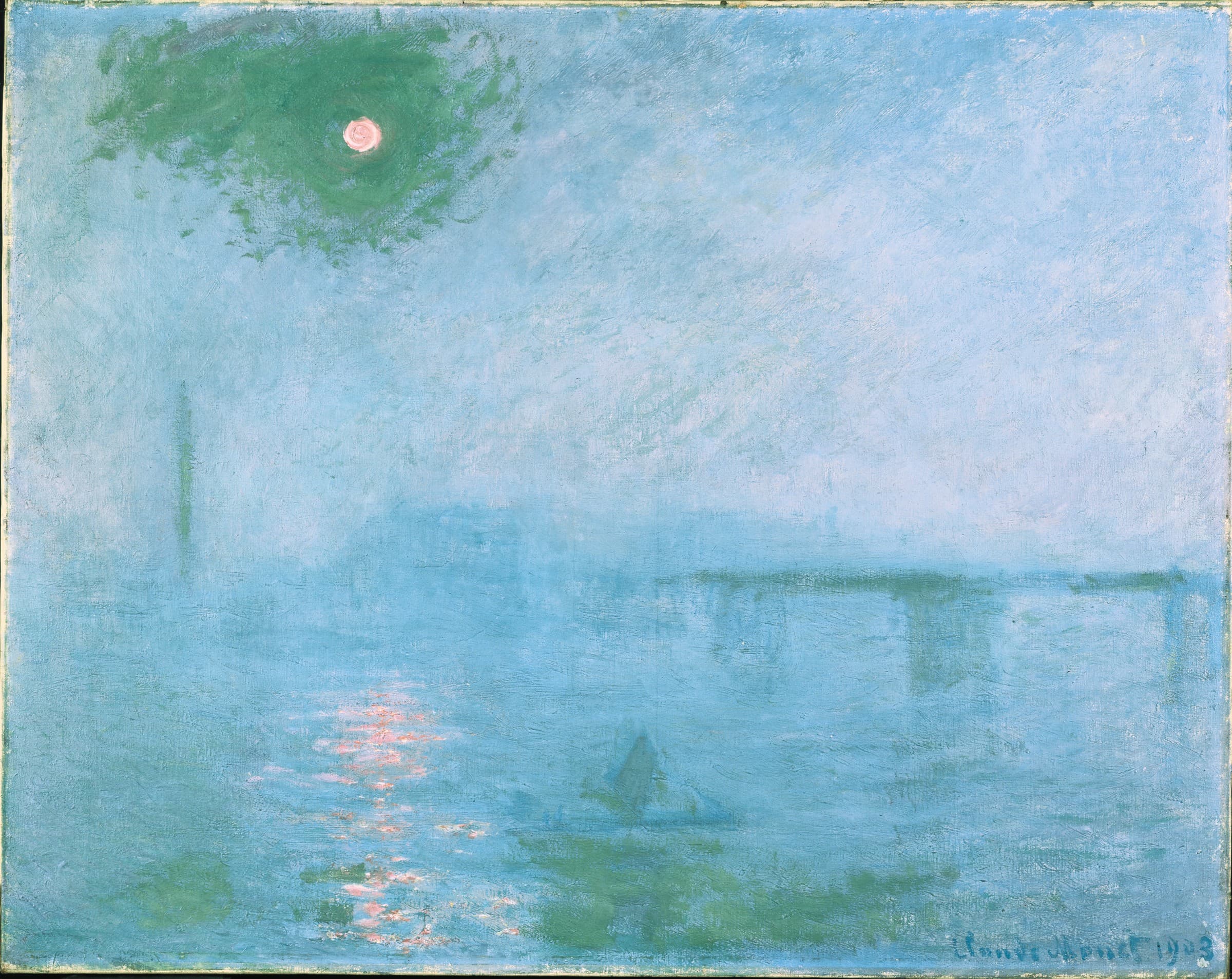
Charing Cross Bridge: Fog on the Thames
Claude Monet · 1903
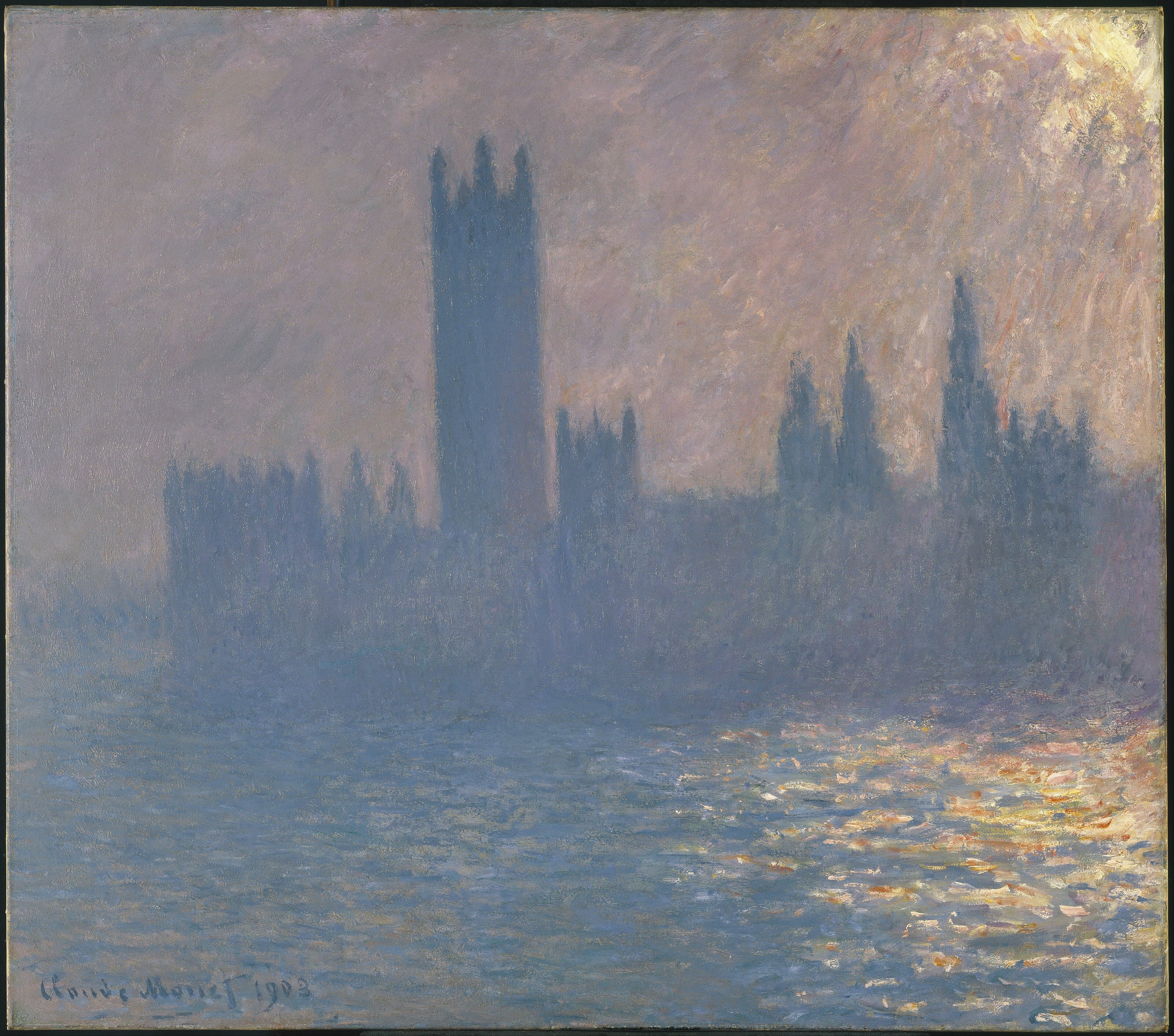
Houses of Parliament, Sunlight Effect
Claude Monet · 1903
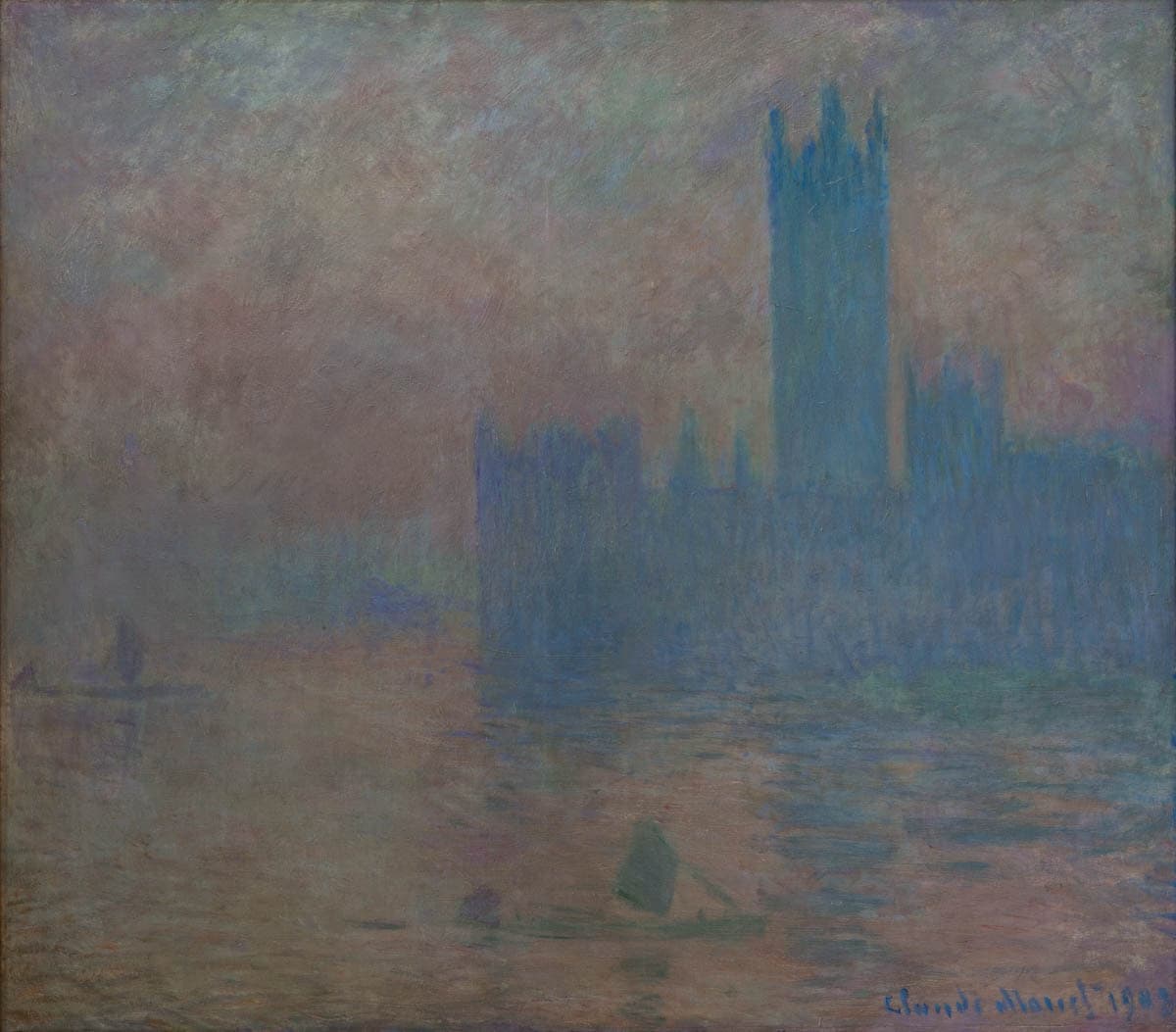
Le Parlement de Londres, effet de brouillard
Claude Monet · 1903
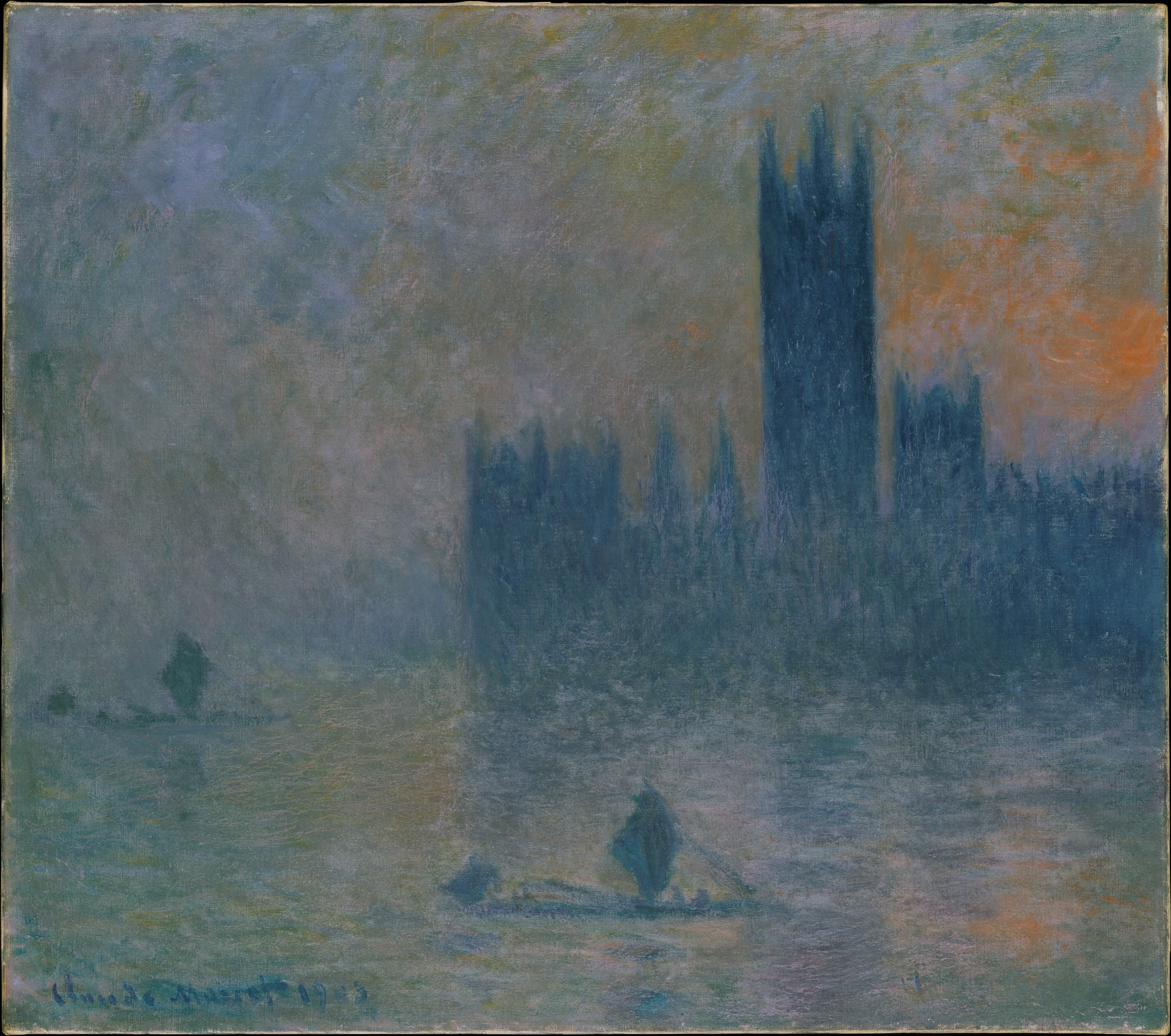
The Houses of Parliament (Effect of Fog)
Claude Monet · 1903–04
Kindred works
You may also study
Waterloo Bridge, Veiled Sun
Claude Monet · 1903
Waterloo Bridge, Sunlight Effect
Claude Monet · 1903
Waterloo Bridge, Sunlight Effect
Claude Monet · c. 1900 (dated 1903)
Waterloo Bridge, London
Claude Monet · 1903
Waterloo Bridge, Gray Day
Claude Monet · 1903
The Rio della Salute
Claude Monet · 1908
The Palazzo Ducale, Seen from San Giorgio Maggiore (Guggenheim)
Claude Monet · 1908
Waterloo Bridge, Gray Weather
Claude Monet · 1900