Image: Museum of Fine Arts, Houston · Public domain · via Wikimedia Commons
Water Lilies (Nymphéas), 1907 (Houston)
Claude Monet, 1907
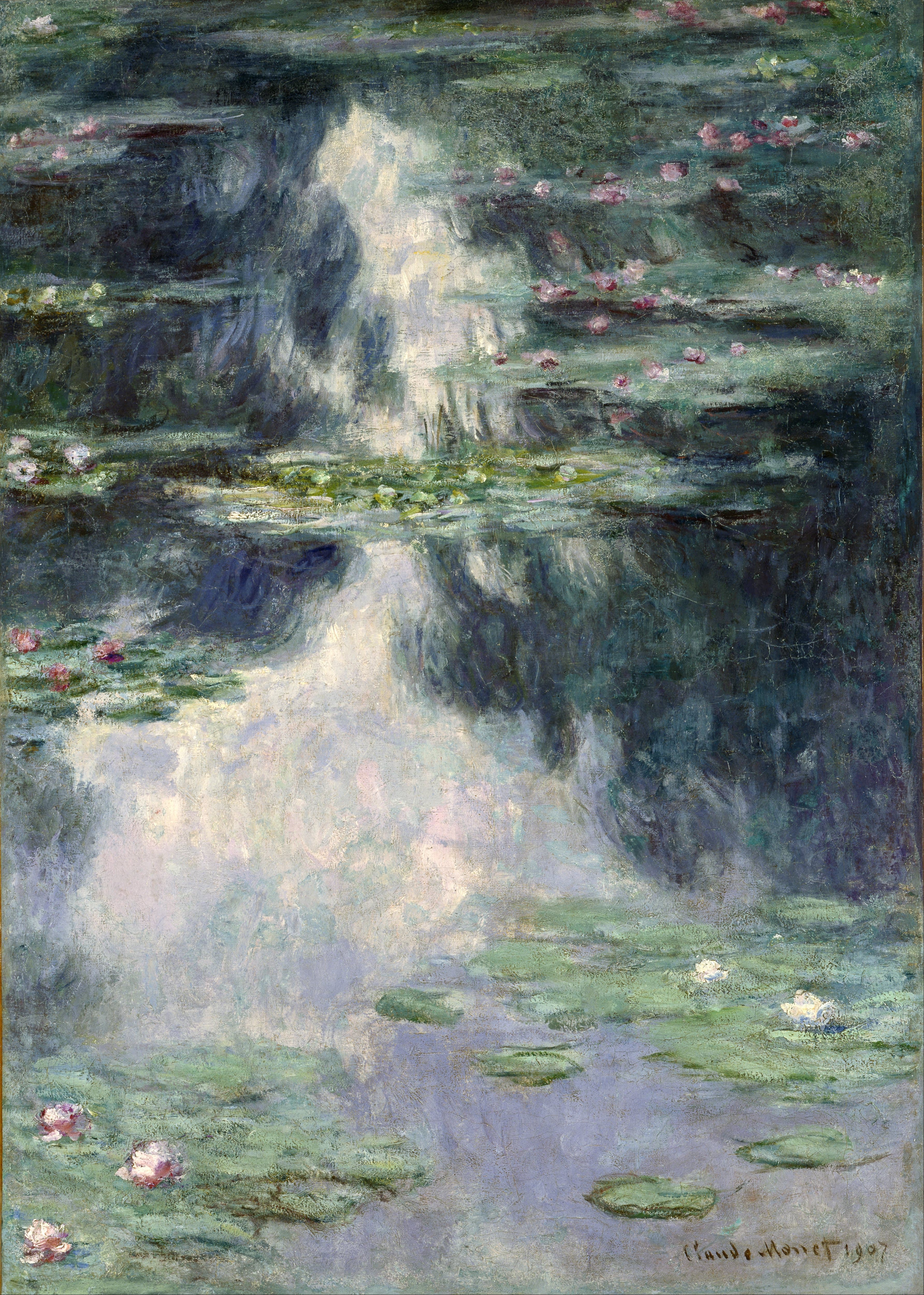
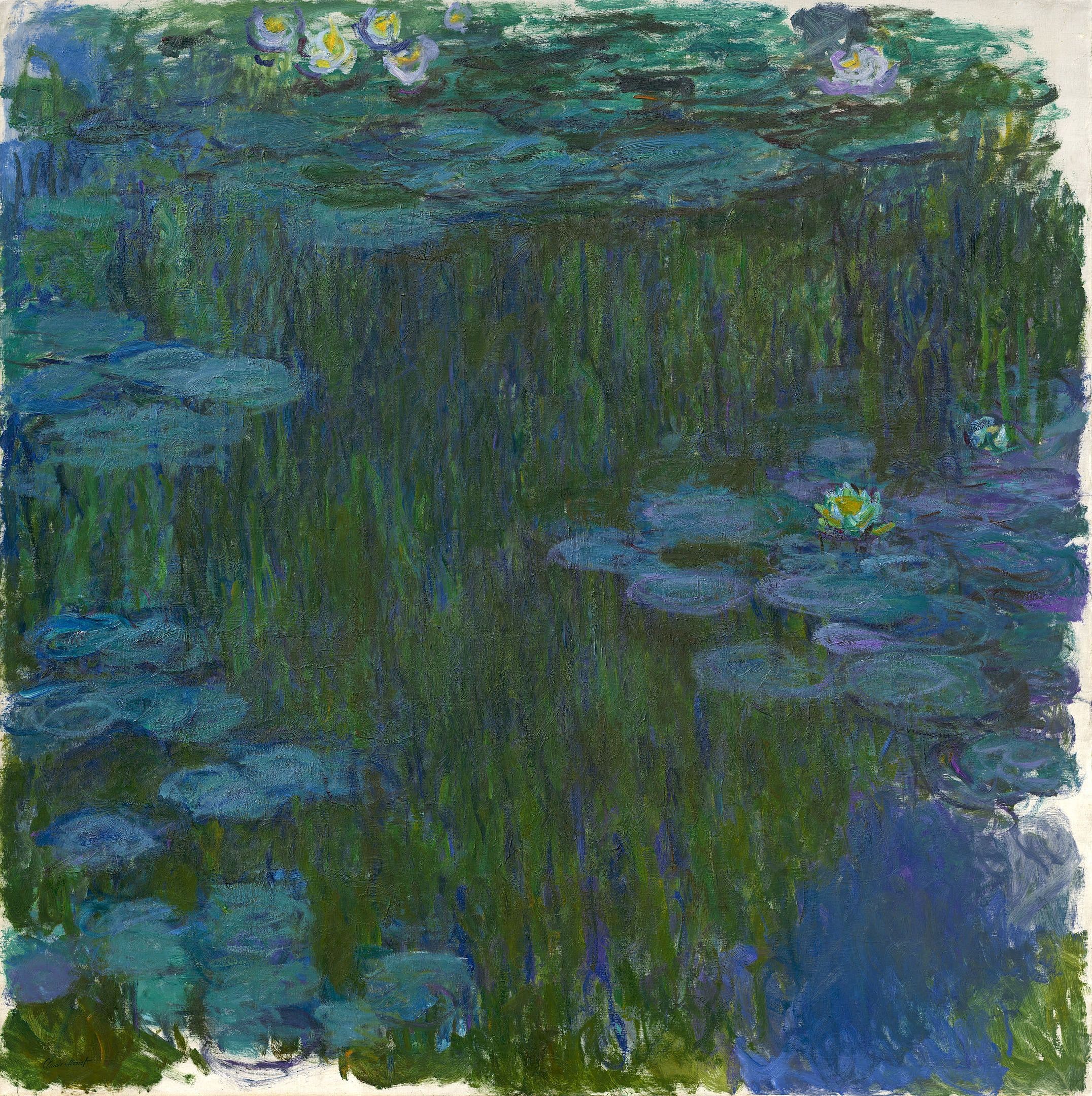
Water Lilies (Nymphéas) is a 1907 painting by Claude Monet of his lily pond in an upright format, a column of white reflected light falling through dark water between floating pads. It is in the Museum of Fine Arts, Houston.
- Artist
- Claude Monet
- Date
- 1907
- Medium
- Oil on canvas
- Dimensions
- 92.1 × 81.2 cm
- Collection
- Museum of Fine Arts, Houston, Houston, United States
- Movement
- Impressionism
- Catalogue
- Wildenstein 1703
- Nature & Landscape
- Water & Sea
Water Lilies (Nymphéas) is a 1907 canvas by Claude Monet of the surface of his lily pond at Giverny, in the Museum of Fine Arts, Houston, a gift of Mrs. Harry C. Hanszen in 1968. It is an upright picture, 92.1 by 81.2 centimeters, signed and dated Claude Monet 1907 at lower right, and it belongs to a group of vertical lily paintings Monet made that year in which the reflections of trees and sky form a column of light down the canvas.
What you're looking at
The structure is a vertical, which is unusual for a pond. Down the center of the canvas falls a broad, irregular band of white and pale lilac: the reflection of a sunlit tree, or of bright cloud between the trees, seen upside down in the water. It starts at the top as a narrow, bright shape, spreads into a cloud-like mass in the middle and fades into lilac at the bottom. On either side, the water is dark, deep blue-green and slate, streaked with the vertical reflections of foliage.
Across this vertical, Monet lays horizontal bands of lily pads. Near the top, a band of pads in gray-green with red and pink flowers; a little lower, another with yellow blooms; on the left, a cluster with pink and red flowers; and at the bottom, larger pads in pale green with a white flower and a blue-white one at the right, and pink blossoms at the lower left. The pads get larger toward the bottom, telling us we are looking down and away across the water.
The contrast between the pale column and the dark water makes this one of the most dramatic of the 1907 pictures.
The pond in 1907
Monet had dug the pond in 1893 and enlarged it in 1901–02. From 1903 to 1908 he painted its surface in the campaign he called the paysages d'eau. In May 1909 Durand-Ruel exhibited forty-eight of these canvases, dated 1903 to 1908, in Paris under the title Les Nymphéas, séries de paysages d'eau (Water Lilies, a series of water landscapes). In 1907 he experimented with format, painting tall canvases and even a few circular ones, and the vertical pictures, with their central fall of reflected light, are a distinct group within the series. Google Arts & Culture, describing the Houston canvas, places it in Monet's first concentrated effort to capture the flowers at different times of day and under varying atmosphere.
How this version differs
The Israel Museum's Pond with Water Lilies of the same year is almost a twin, with the same central column and bands of pads. The Houston canvas is wider in proportion and slightly cooler, with more blue in the dark water and the column of light more broken into cloud shapes. By contrast, the horizontal 1906 canvases, such as Chicago's Water Lilies, arrange pads around an open space rather than across a vertical. And the London Water-Lilies, Setting Sun uses the same willow reflections in a warm, dusky key.
How it was painted
The column of light is built in thick, dry strokes of white, lilac and pale blue, dragged so the underlying darks show through at the edges. The dark water is painted in long, vertical strokes of blue and green. The lily pads are short horizontal ellipses with darker undersides, and the flowers are small loaded touches. The two directions of stroke, vertical for reflection and horizontal for what floats, are the key to reading the picture.
Ownership and where to see it
The painting passed from the artist through Durand-Ruel and Bernheim-Jeune, belonged to the collector Henri Canonne, and later went through Alex. Reid & Lefevre in London. Mrs. Harry C. Hanszen bought it in 1968 and gave it to the MFAH the same year. It hangs in the museum's Audrey Jones Beck Building. For the series see Monet's Water Lilies; for the garden, Giverny; for other public Monet collections, Where to See Monet's Paintings.
Questions & answers
Where is Monet's 1907 Water Lilies in Houston?
It is in the Museum of Fine Arts, Houston, in the Audrey Jones Beck Building. Mrs. Harry C. Hanszen bought it in 1968 and gave it to the museum the same year.
When was it painted?
In 1907, at Monet's lily pond in Giverny. It is signed and dated 1907 and belongs to a group of upright water-lily canvases he painted that year.
What does it show?
The pond's surface in a tall format: a column of white and lilac reflected light falling down the center through dark blue-green water, crossed by bands of lily pads with red, pink, yellow and white flowers.
Is there another version of this composition?
Yes. The Israel Museum's Pond with Water Lilies, also 1907, is nearly identical in design. Houston's is slightly wider and cooler, with the column of light more broken into cloud shapes.
More by the artist
Claude Monet
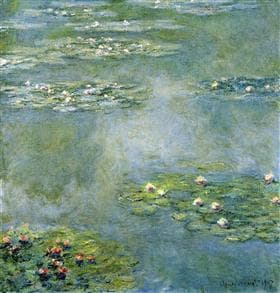
Water Lilies (1907, Pola Museum of Art)
Claude Monet · 1907
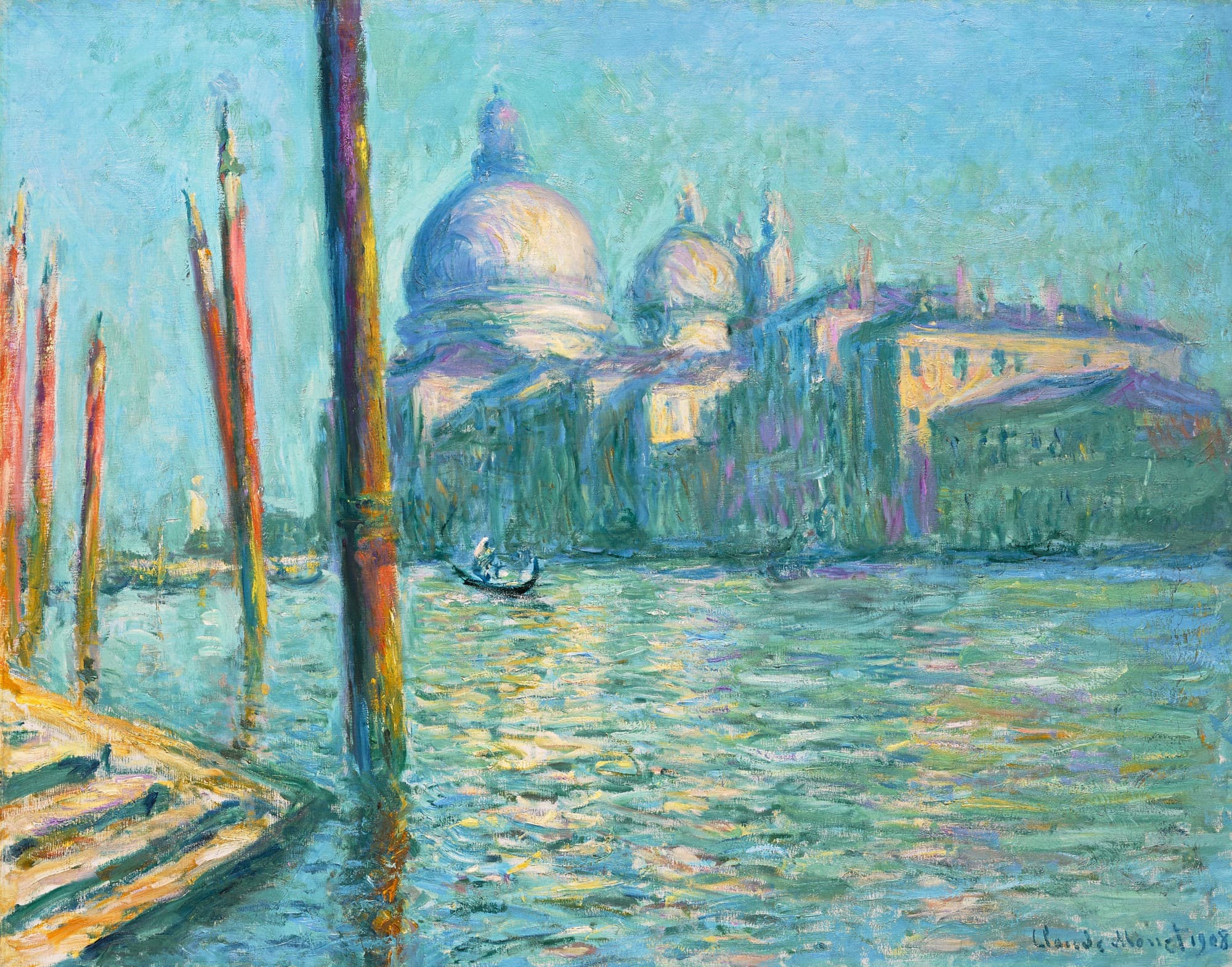
Le Grand Canal et Santa Maria della Salute
Claude Monet · 1908
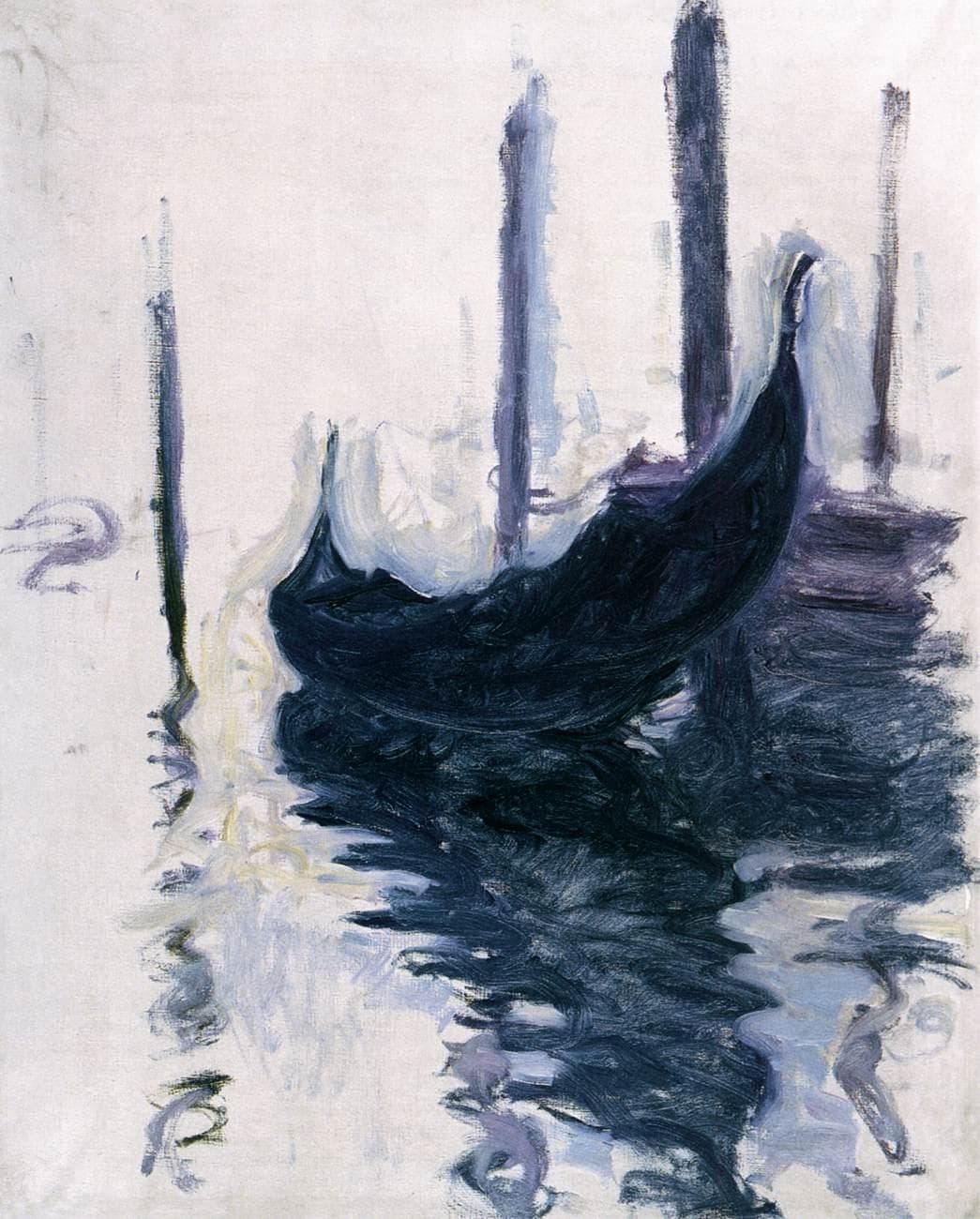
Gondola in Venice
Claude Monet · 1908
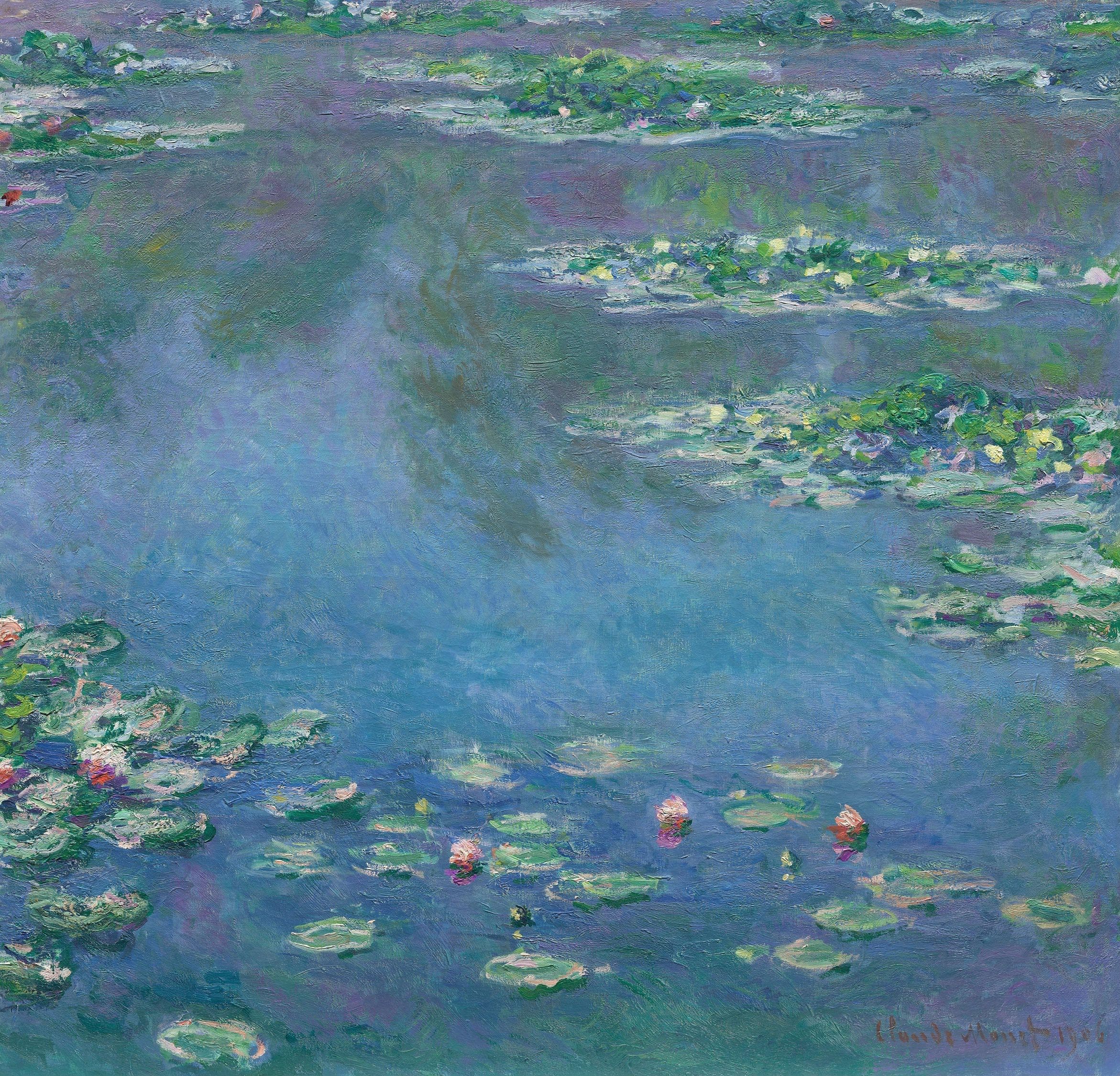
Water Lilies (1906, Art Institute of Chicago)
Claude Monet · 1906
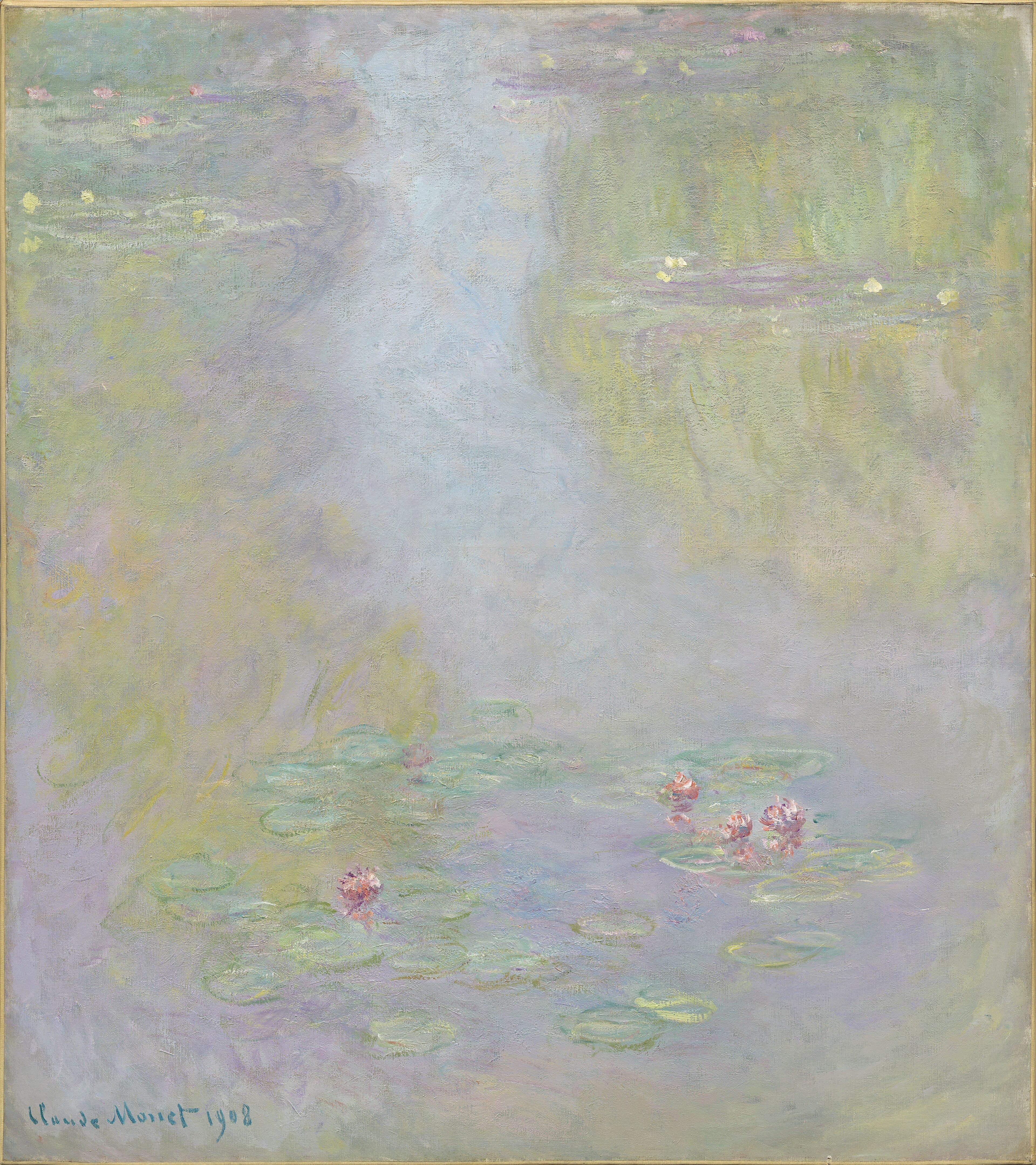
Water Lilies (1908, Tokyo Fuji Art Museum)
Claude Monet · 1908
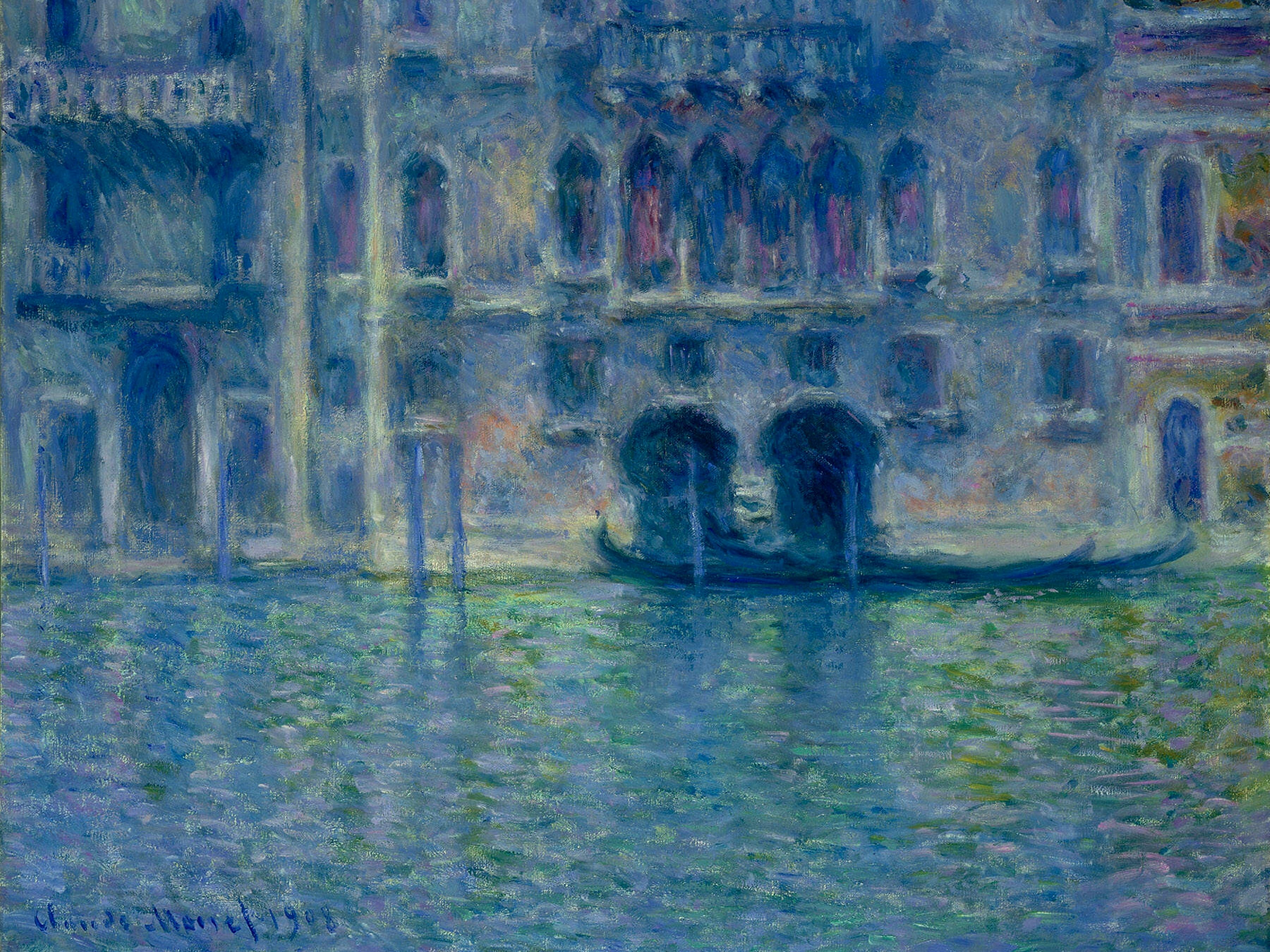
Palazzo da Mula, Venice
Claude Monet · 1908
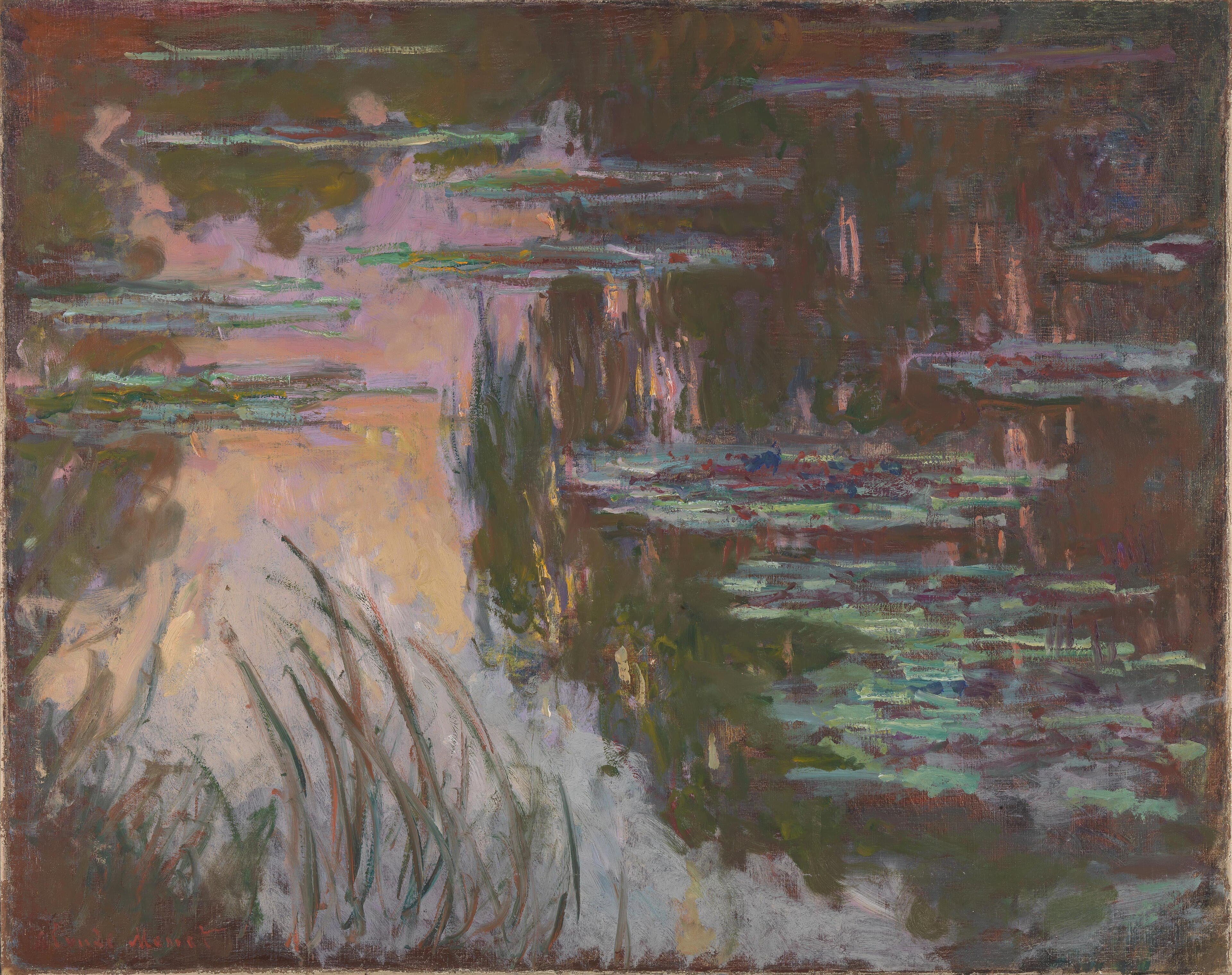
Water-Lilies, Setting Sun (National Gallery, London)
Claude Monet · c. 1907
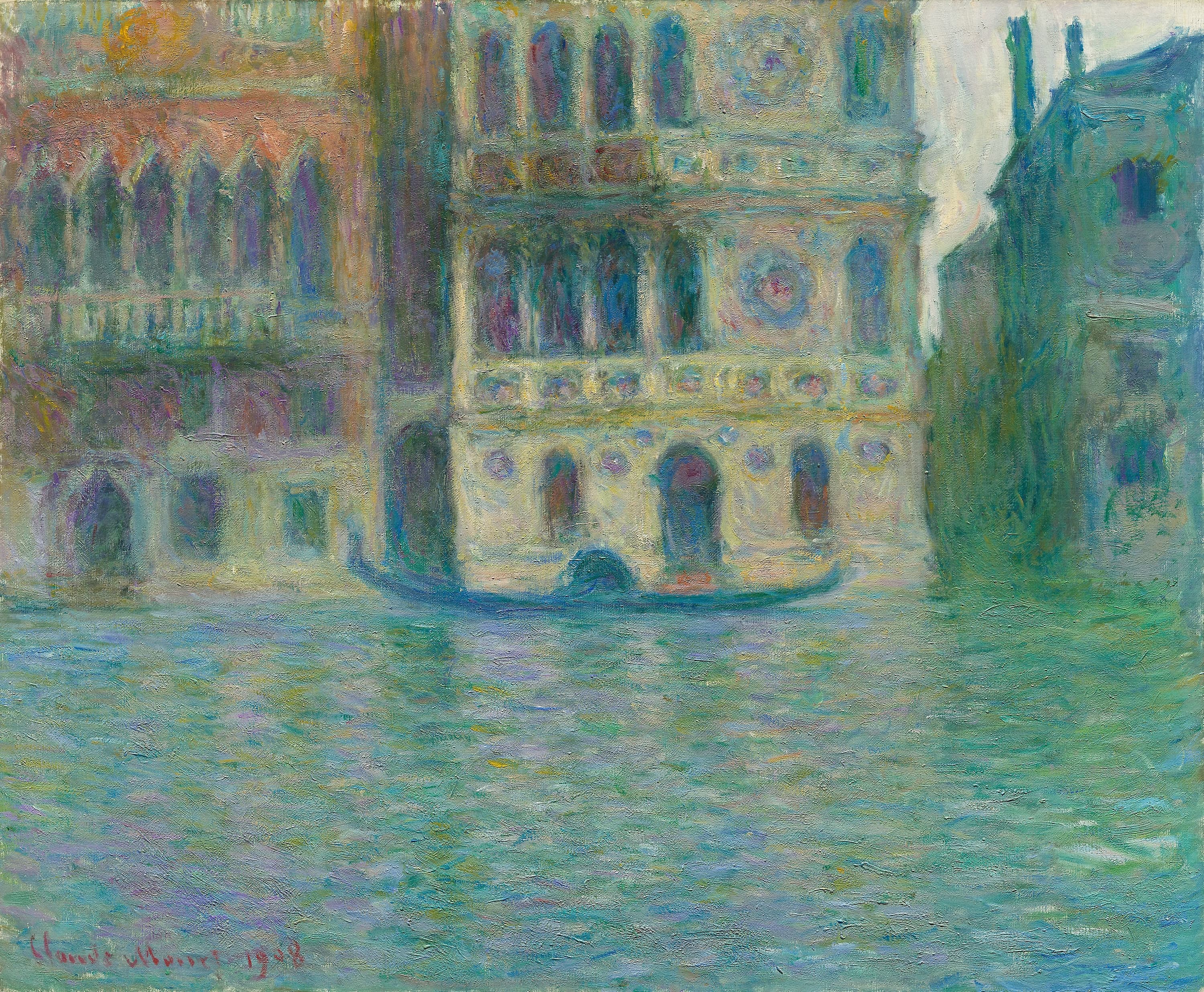
Venice, Palazzo Dario
Claude Monet · 1908
Also painted in 1907
The same year
Kindred works
You may also study
Pond with Water Lilies (Israel Museum)
Claude Monet · 1907
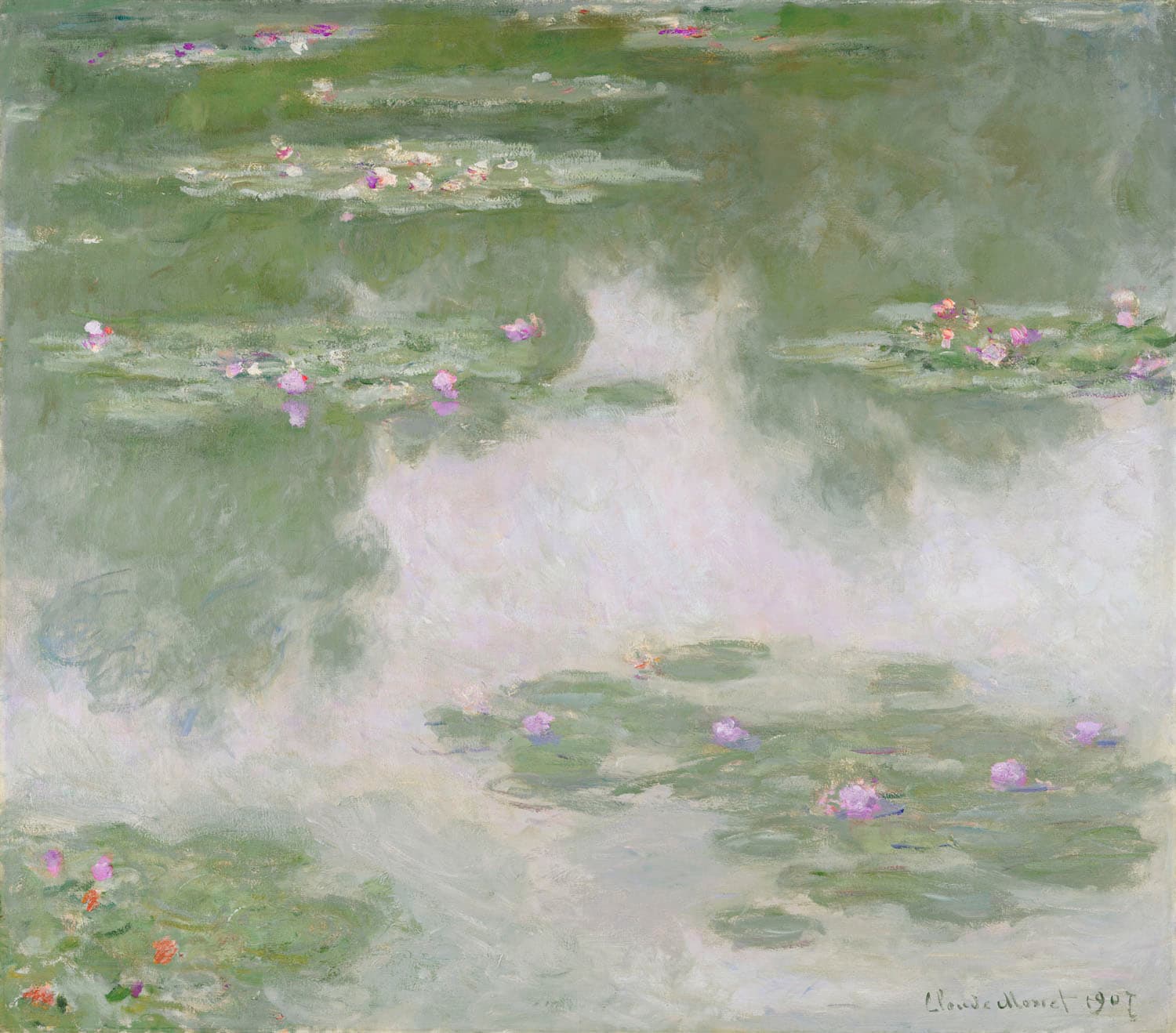
Nymphéas (Water Lilies), 1907 (Wadsworth Atheneum)
Claude Monet · 1907
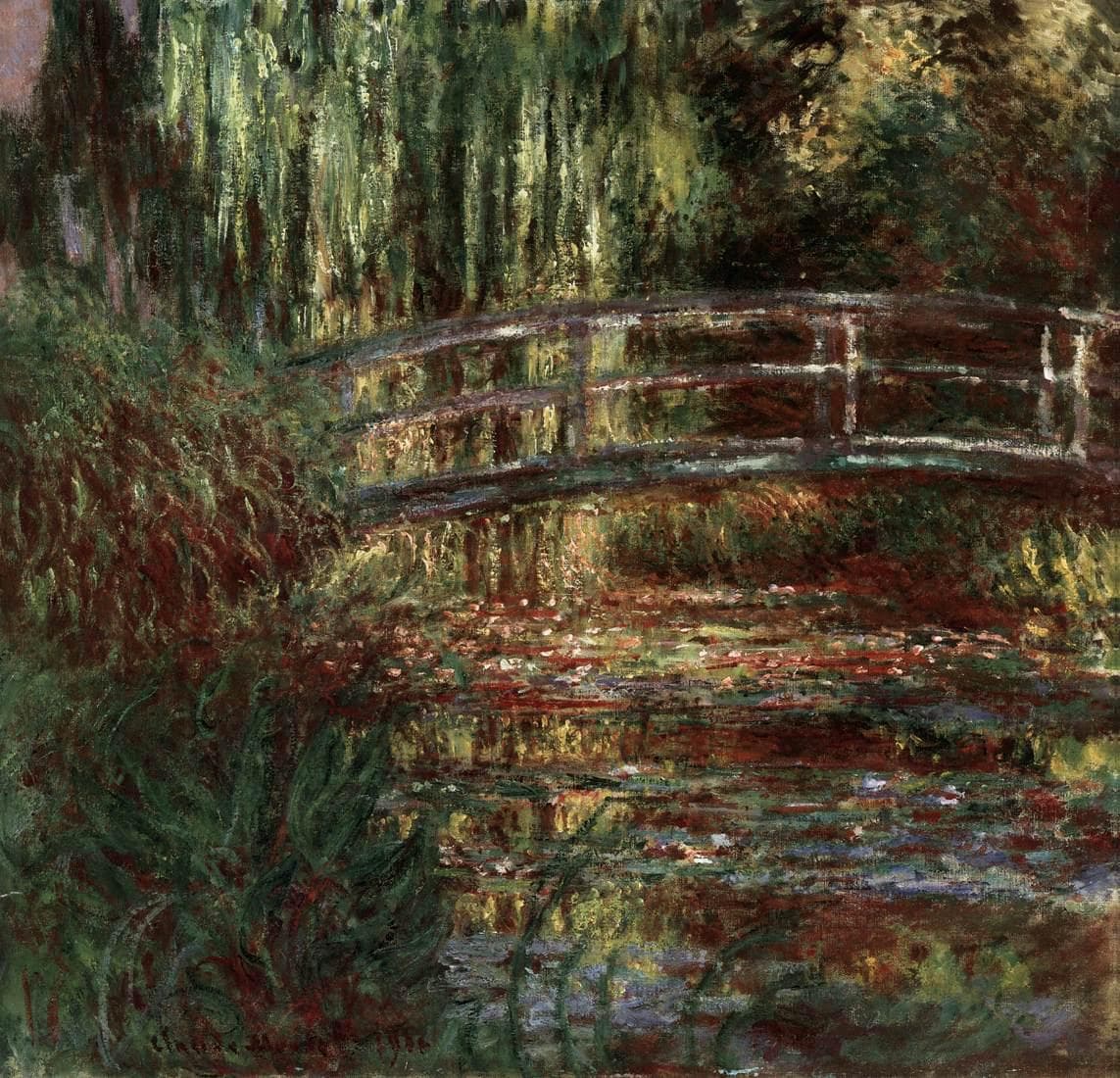
The Water Lily Pond
Claude Monet · 1900
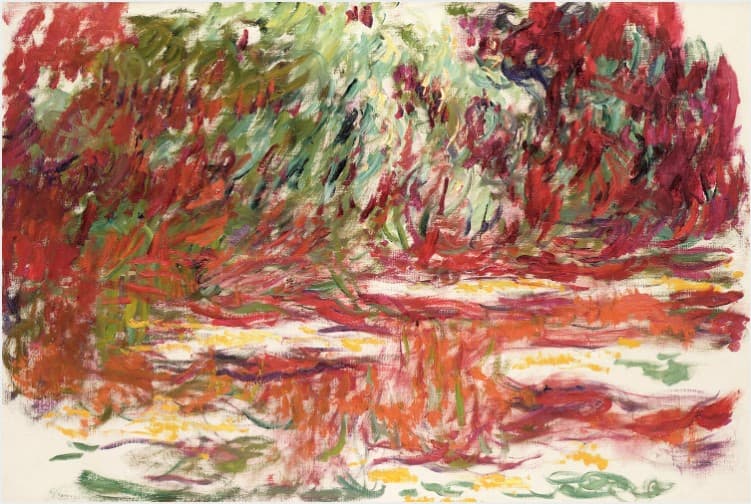
Water-Lily Pond (Bassin aux nymphéas, 1918–19)
Claude Monet · 1918–19
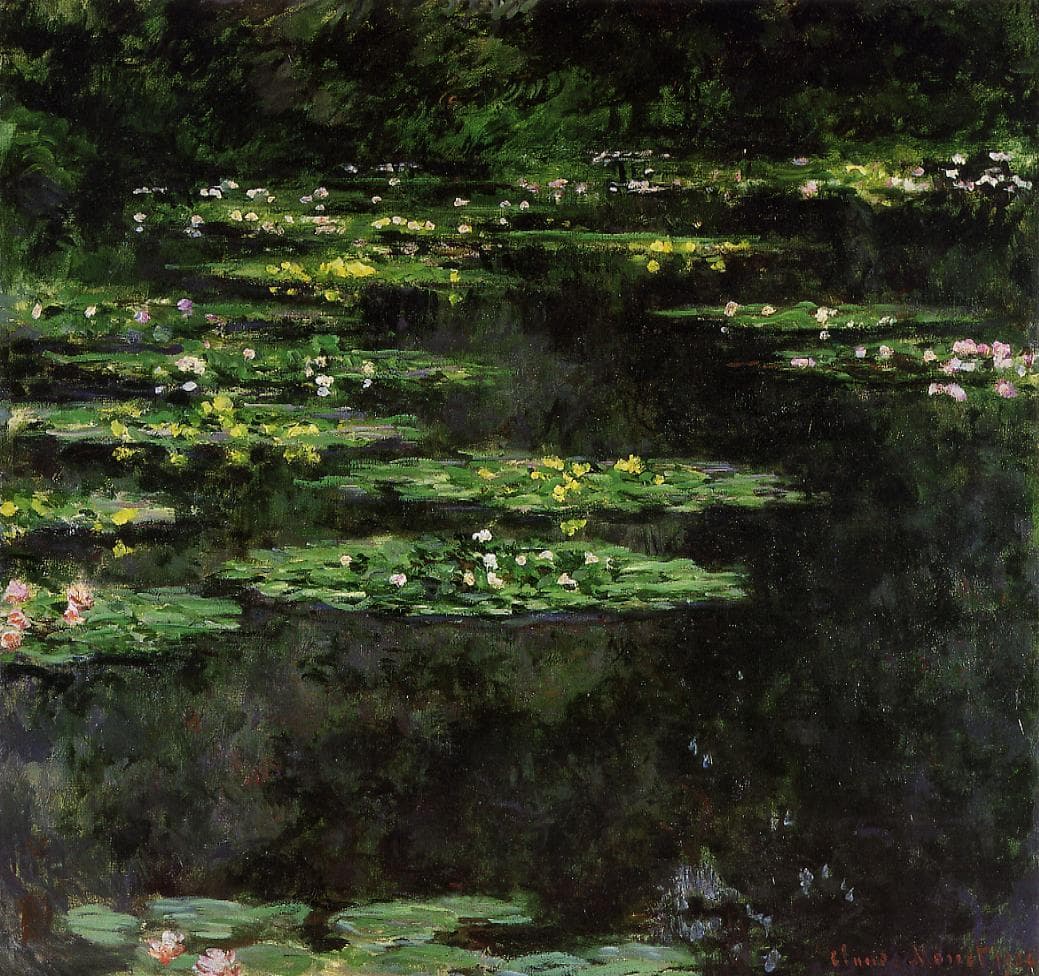
Water Lilies (1904, MuMa Le Havre)
Claude Monet · 1904
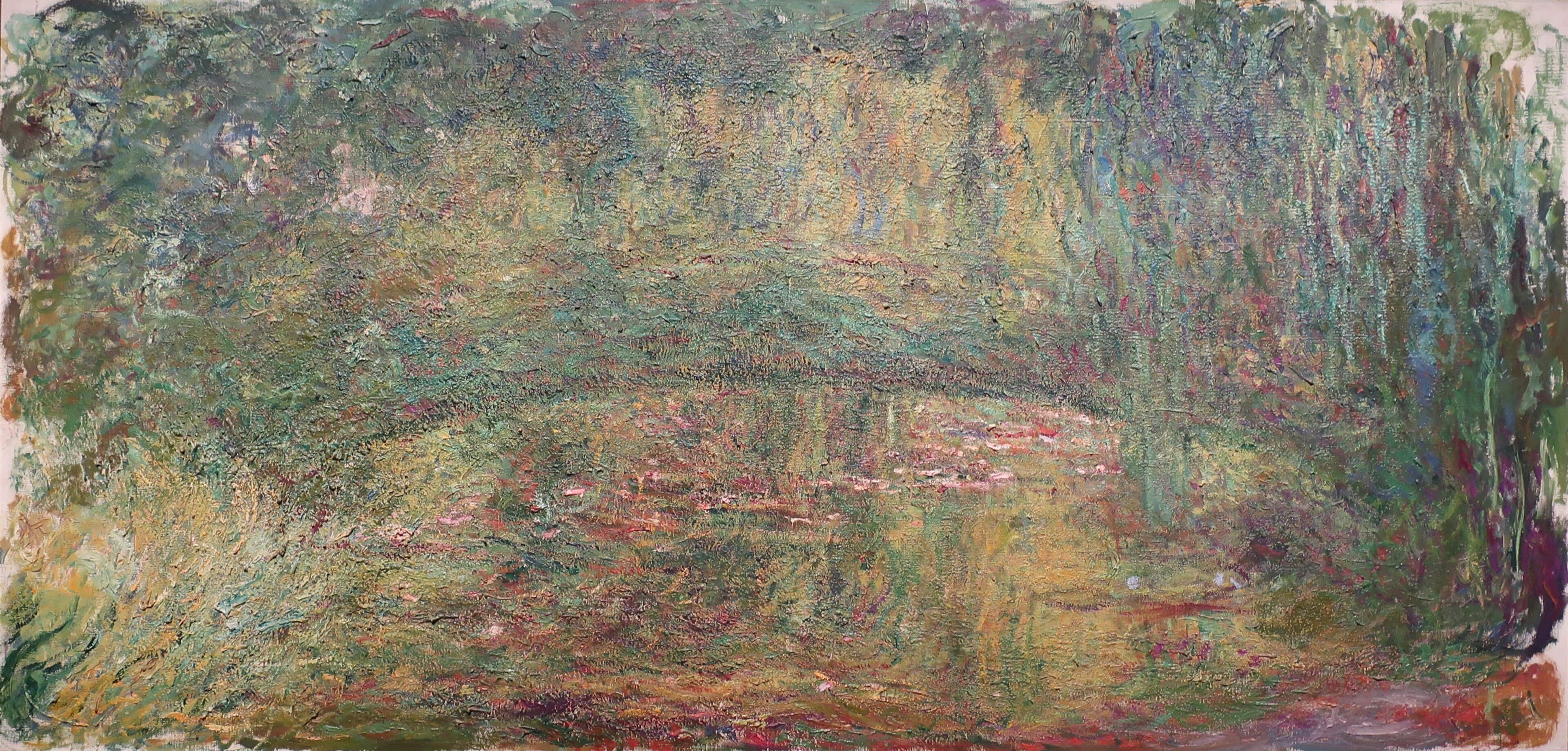
The Japanese Bridge
Claude Monet · 1918
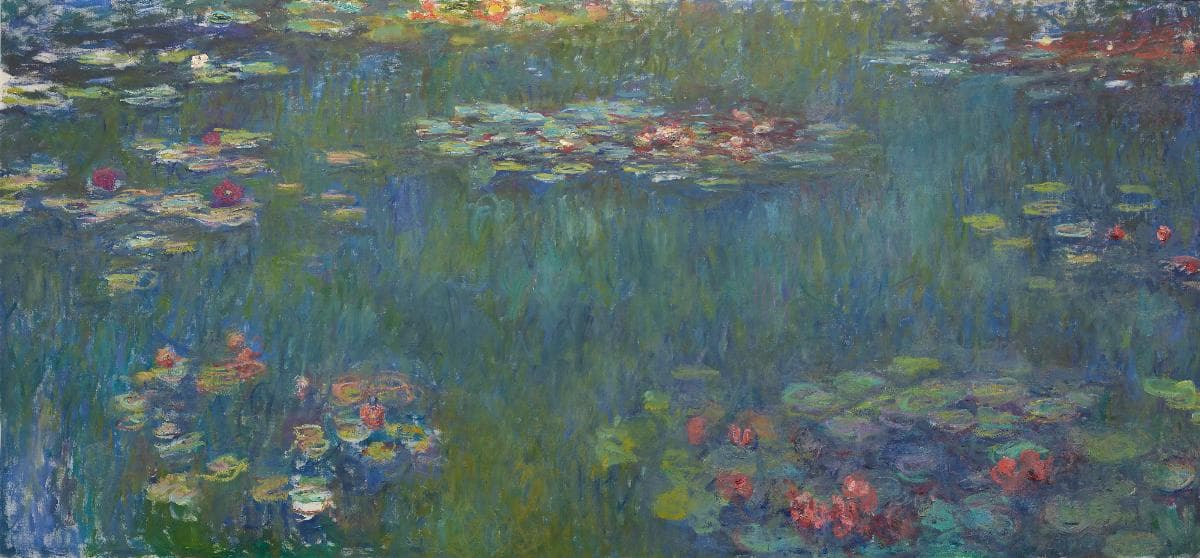
The Water-Lily Pond, Green Reflections
Claude Monet · 1920–26
Water Lilies (1914–17, Museum Barberini)
Claude Monet · 1914–17