Image: National Gallery of Australia, Canberra · CC BY-SA 4.0 · via Wikimedia Commons
Nymphéas [Waterlilies] (National Gallery of Australia)
Claude Monet, c. 1914–17
Nymphéas [Waterlilies] is a large late painting by Claude Monet, about 1914–17, of his Giverny pond in violet-blue with pink-flowered pads and a strip of blue and green bank at the bottom. It is in the National Gallery of Australia, Canberra.
- Artist
- Claude Monet
- Date
- c. 1914–17
- Medium
- Oil on canvas
- Dimensions
- 201.6 × 181 cm
- Collection
- National Gallery of Australia, Canberra, Australia
- Movement
- Impressionism
- Catalogue
- Wildenstein 1807
- Nature & Landscape
- Water & Sea
Nymphéas [Waterlilies] is a large canvas of about 1914–17 by Claude Monet of his lily pond at Giverny, in the National Gallery of Australia in Canberra (NGA 79.2858). Bought in 1979, it comes from the years when Monet was working toward his great decorative panels, and it was still in his studio when he died.
What you're looking at
The canvas is about two meters tall and almost as wide, and it is filled with water painted in violet, lavender and pale blue, the reflection of an open sky. In the middle, islands of lily pads drift in a loose ring: round pads in bright yellow-green and lime, outlined in darker strokes, with pink and coral flowers and a few red buds among them. A few more pads float near the top right, and in the far upper left corner a single violet flower stands out.
At the right, the water darkens into green and blue, with vertical strokes that suggest the reflections of trees or iris leaves on the bank. Across the bottom runs something unusual for the late lily pictures: a strip of the near bank itself, a thick band of grass and plants painted in saturated green and electric blue with touches of violet. It gives the viewer a place to stand.
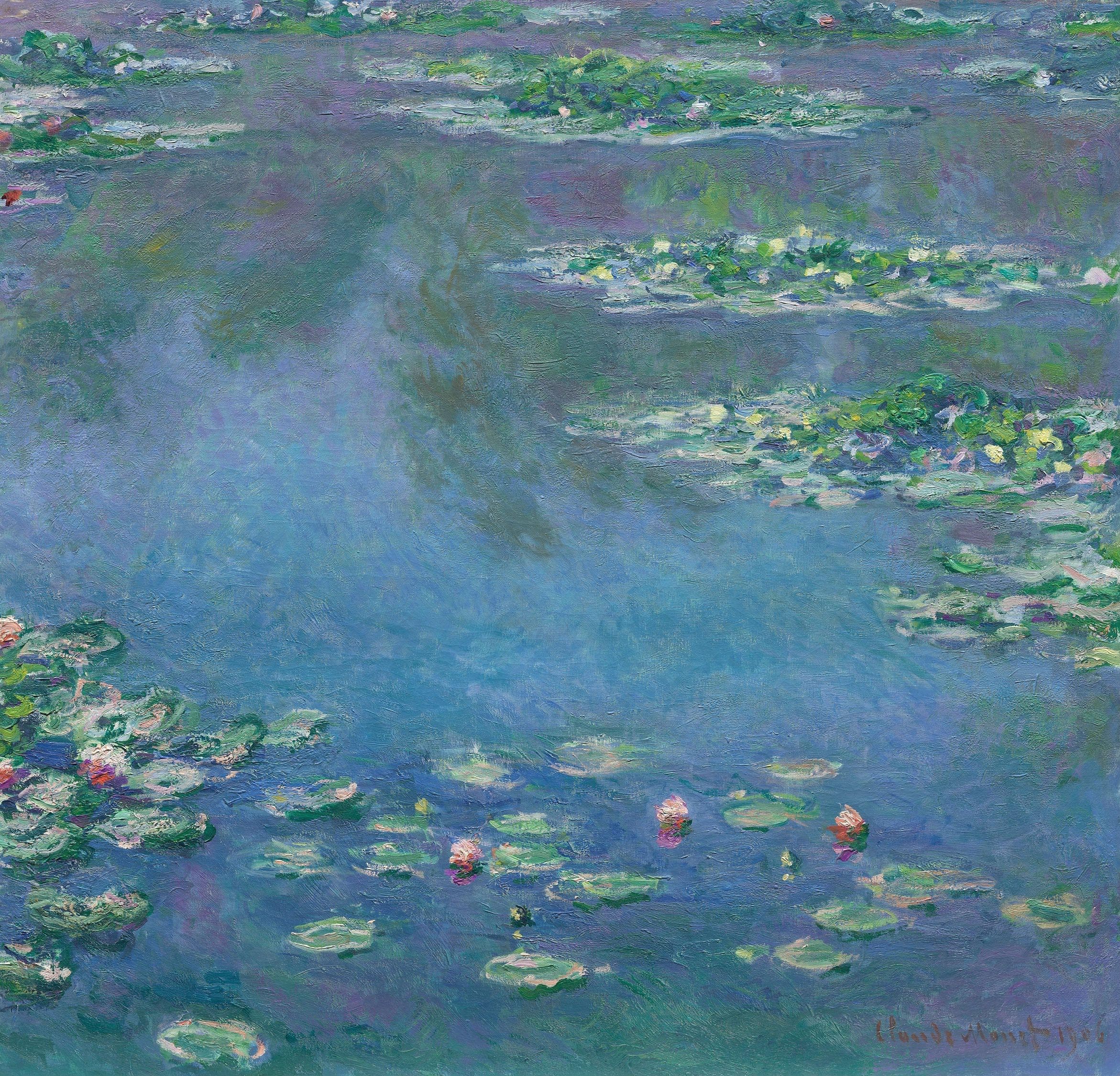
The color is bold and the brushwork broad, much freer than in the canvases of 1903–08.
The late pond
Monet had painted the surface of his pond since 1897. After a lull following the deaths of his wife Alice in 1911 and his son Jean in 1914, and with his eyesight troubled by cataracts, he returned to it in 1914 with a new ambition: a cycle of huge decorative panels. He built a large studio at Giverny in 1915 for the purpose, and painted dozens of big canvases, many of them studies or independent works, alongside the panels that went to the Musée de l'Orangerie in 1927. The gallery notes that because Monet seldom let these canvases leave his studio, most are neither signed nor dated.
How this version differs
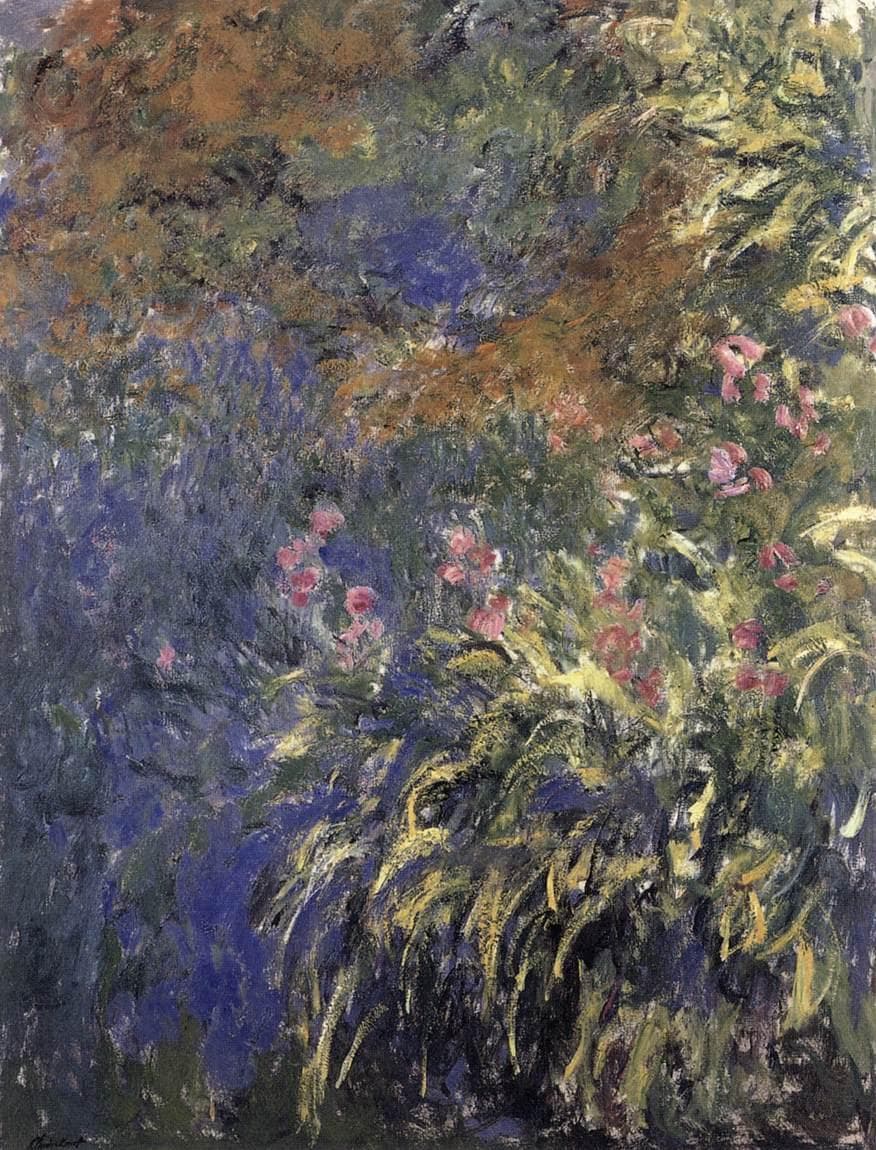
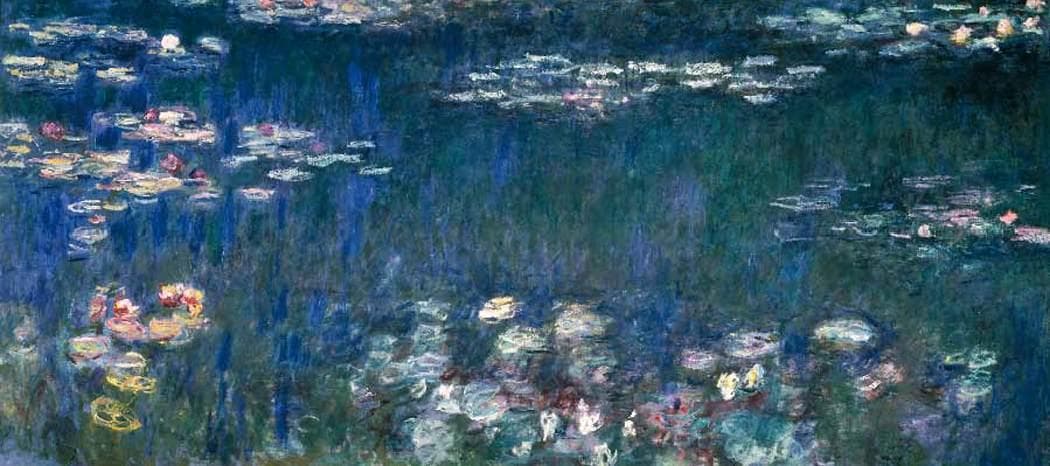
Most late lily canvases leave out the bank. This one keeps a foreground band of vegetation, as do the large irises-and-lilies works of the same years such as the Virginia Irises by the Pond and the Marmottan's Water Lilies and Agapanthus. Compared with the darker, more broken Museum Barberini Water Lilies of 1914–17, the Canberra canvas is lighter and clearer, its lilies drawn more firmly. The Orangerie panel Green Reflections shows where these experiments led.
How it was painted
The water is laid in broad, sweeping horizontal and diagonal strokes, the paint thinner in the violet areas and thicker in the pads. The pads are drawn with a loaded brush as round shapes with dark outlines. The bank is the most energetic passage, with vertical and curving strokes of pure blue and green side by side.
Where to see it
The National Gallery of Australia bought the painting in 1979, during the period when it was building its international collection before opening in Canberra in 1982. It is shown in the gallery's international art rooms. For the series see Monet's Water Lilies; for the garden, Giverny; for the late panels, the Orangerie; and for other places to see Monet, Where to See Monet's Paintings.
Questions & answers
Where is this Monet Waterlilies?
It is in the National Gallery of Australia in Canberra (NGA 79.2858), bought in 1979, during the years when the gallery was building its international collection before opening in 1982.
When was it painted?
About 1914–17, at Giverny, when Monet was working toward his large decorative panels. It was still in his studio when he died in 1926, and like most of these canvases it is not dated.
What does it show?
Monet's lily pond in violet and lavender reflected sky, with a ring of yellow-green pads and pink flowers in the center, darker green reflections at right and a band of blue and green bank across the bottom.
How big is it?
About two meters tall and nearly as wide (published as 201.6 × 181 cm), far larger than the lily canvases of 1903–08, and typical of the big studio canvases Monet painted after 1914.
More by the artist
Claude Monet
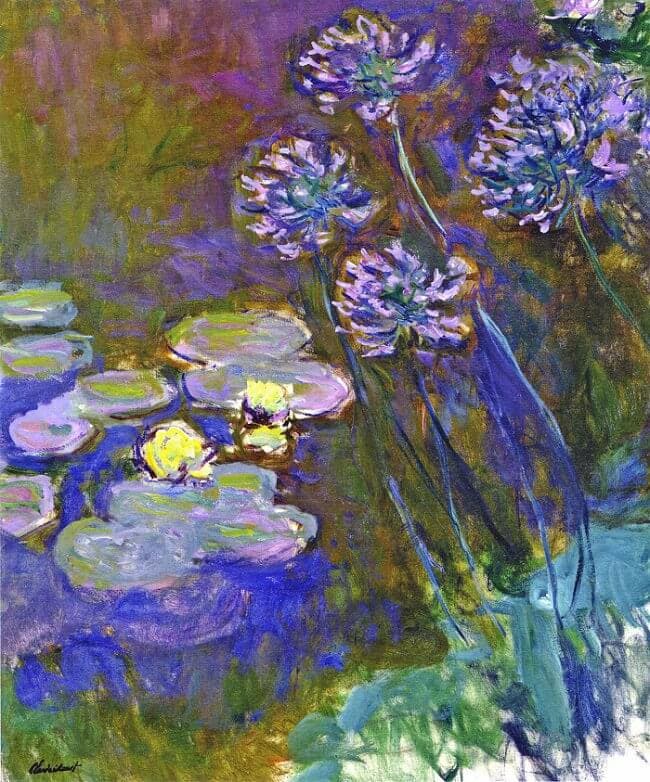
Water Lilies and Agapanthus
Claude Monet · 1914–17
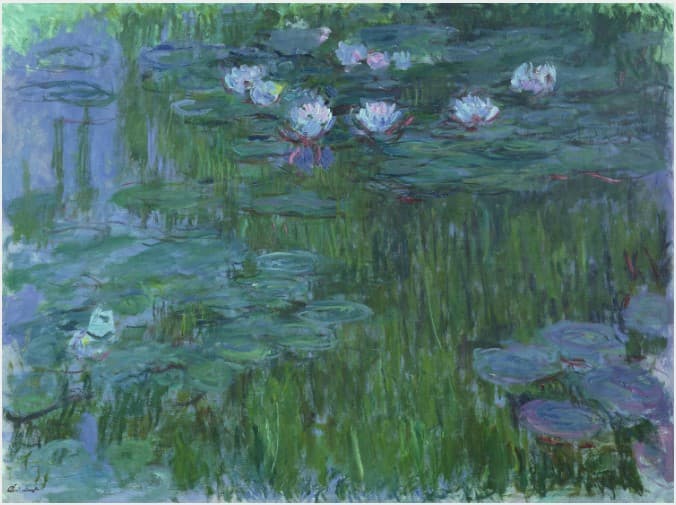
Nymphéas (Musée Marmottan Monet, 1914–17)
Claude Monet · 1914–17
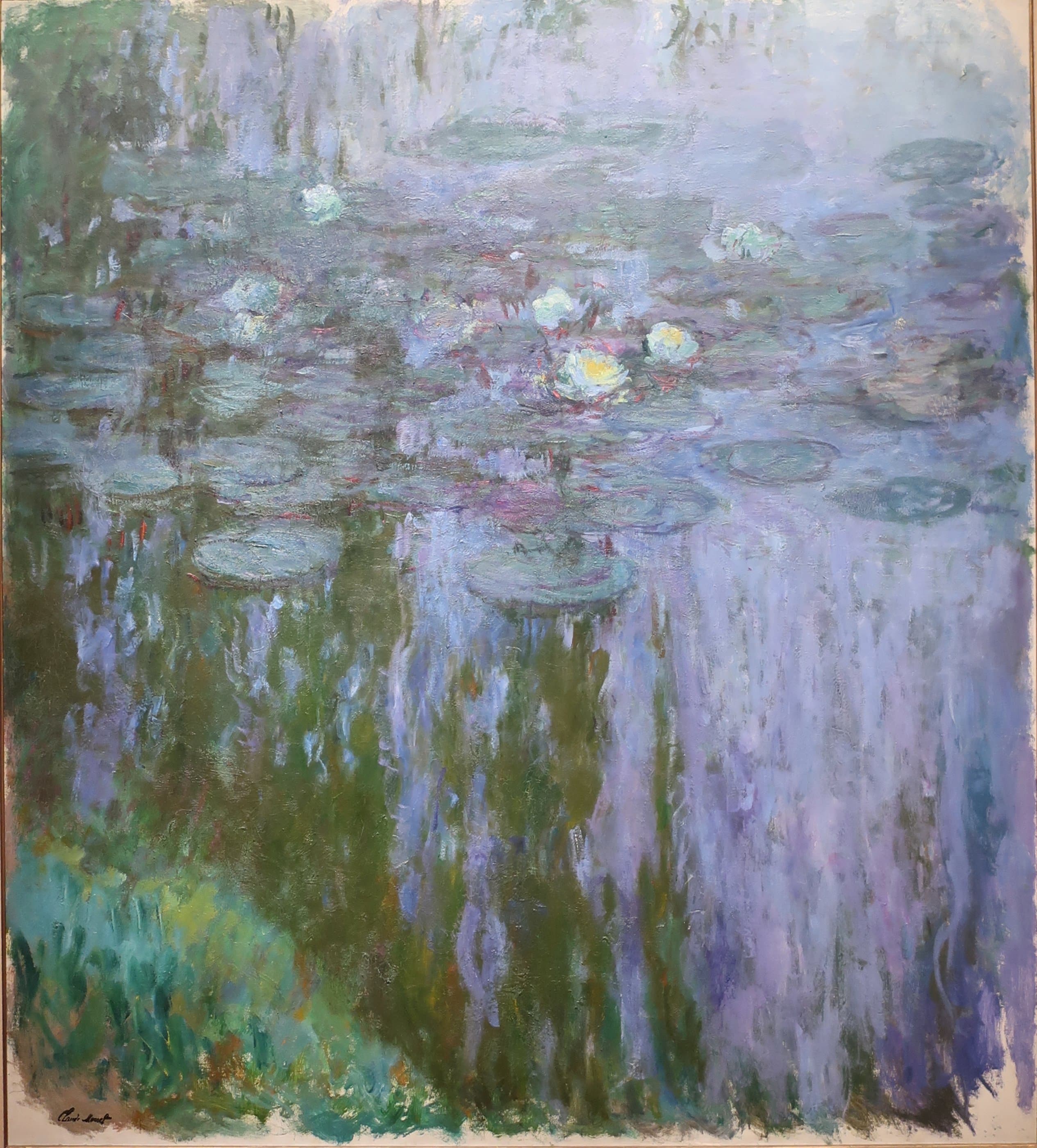
Nymphéas (Musée Marmottan Monet, 1916–19, inv. 5119)
Claude Monet · 1916–19
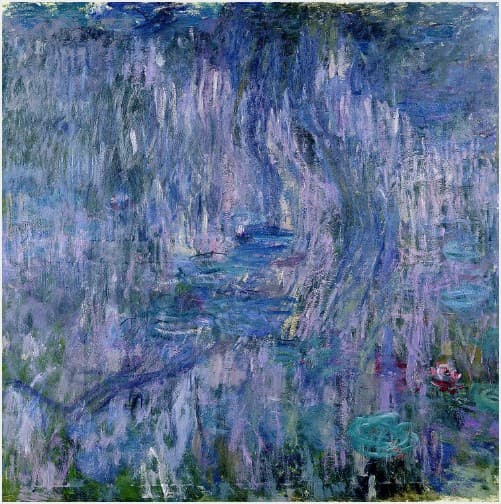
Water-Lilies, Reflection of a Weeping Willow
Claude Monet · 1916–19
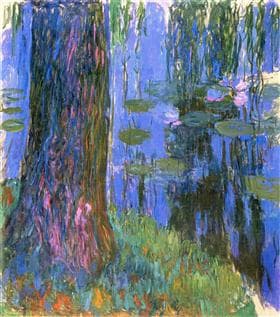
Weeping Willow and the Water-Lily Pond
Claude Monet · c. 1916–19
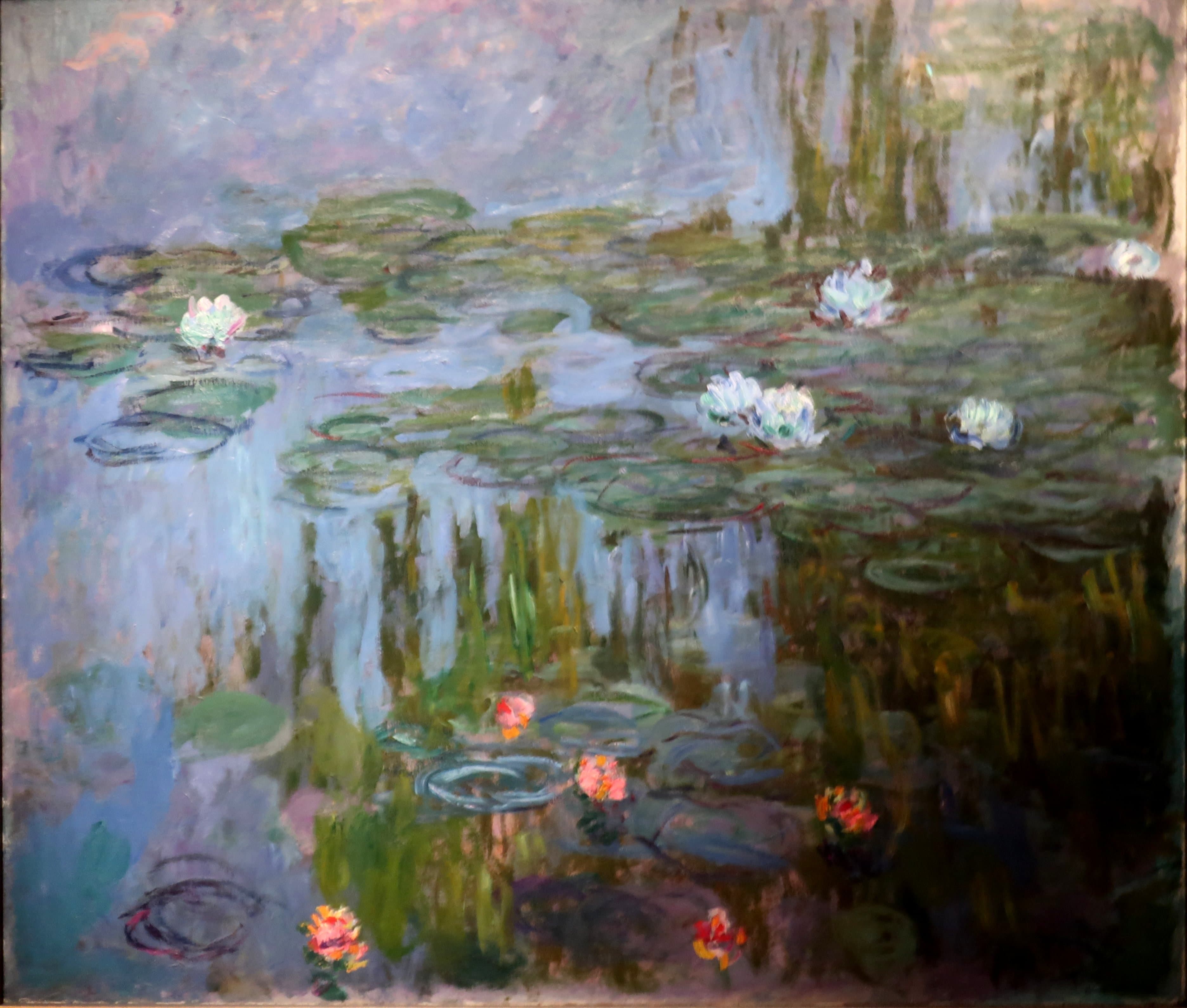
Waterlilies (c. 1914–15, Portland Art Museum)
Claude Monet · c. 1914–15

Water Lilies (MoMA triptych)
Claude Monet · 1914–26
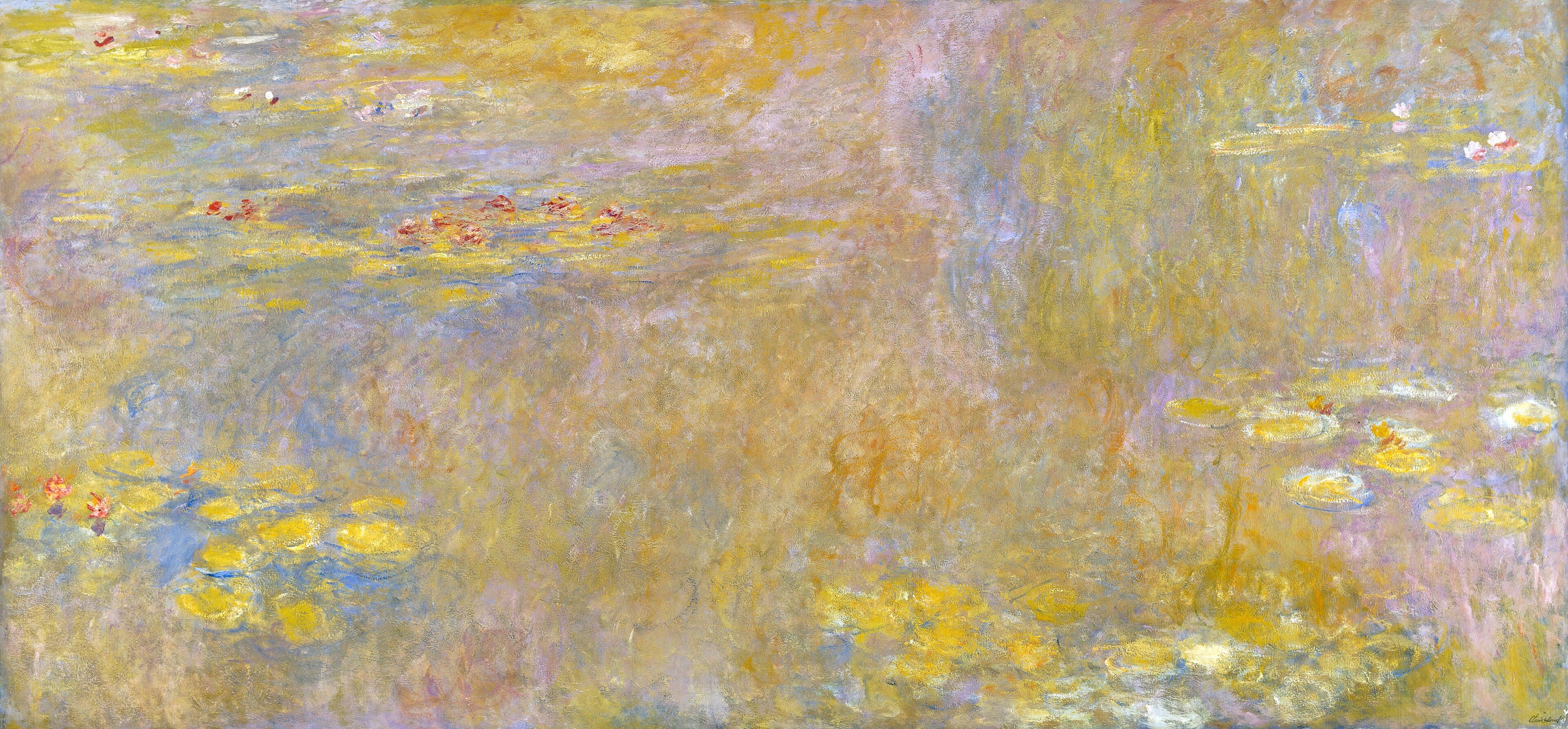
Water-Lilies
Claude Monet · after 1916
Also painted in 1914
The same year
Kindred works
You may also study
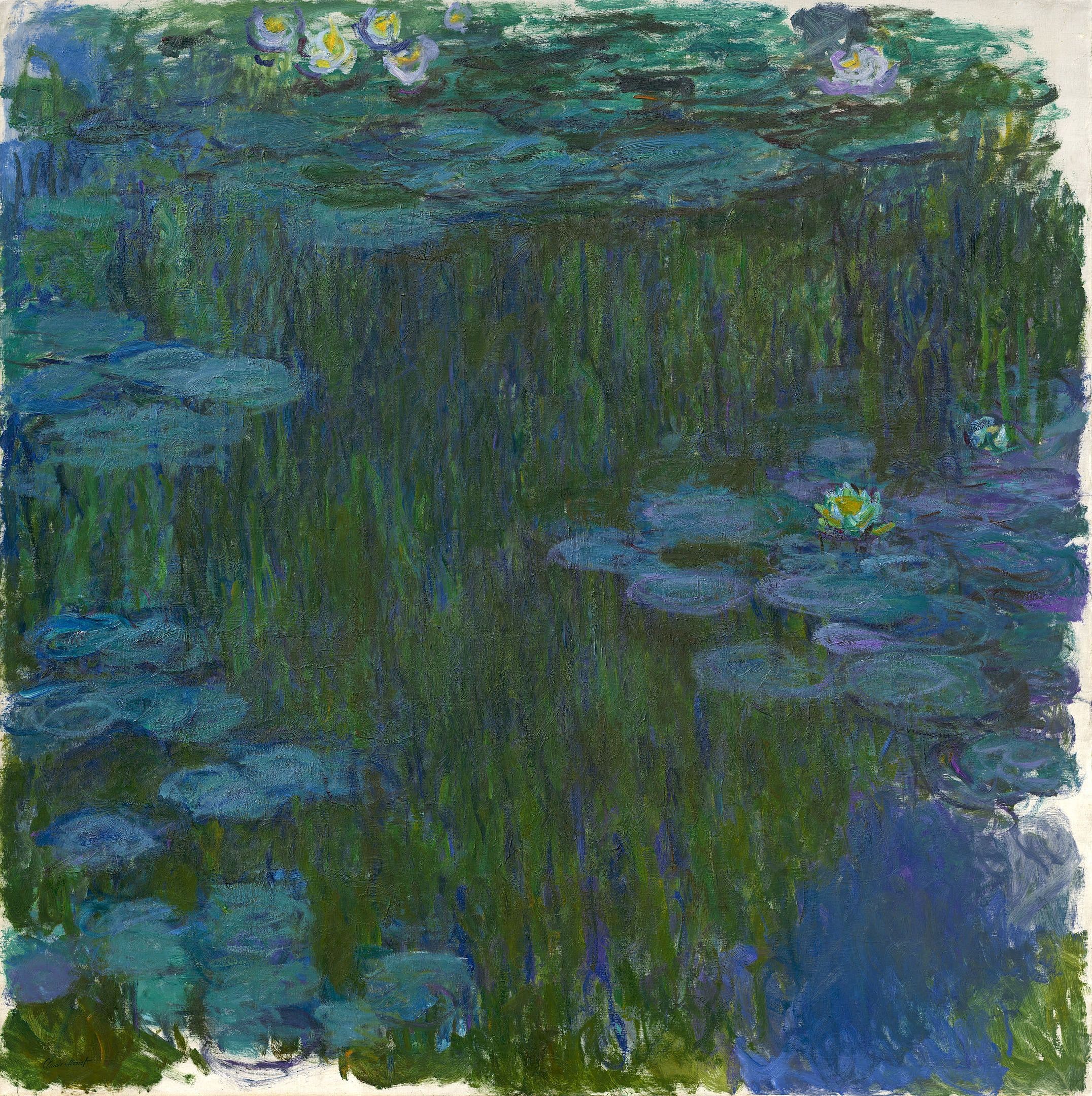
Water Lilies (1914–17, Museum Barberini)
Claude Monet · 1914–17
Irises by the Pond
Claude Monet · c. 1914–17
Water Lilies: Green Reflections
Claude Monet · 1914–26
Water Lilies (Honolulu Museum of Art)
Claude Monet · 1917–19
Water Lilies (1906, Art Institute of Chicago)
Claude Monet · 1906
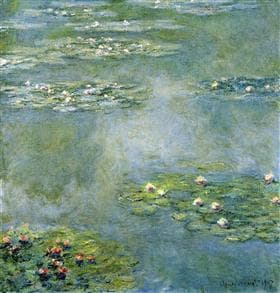
Water Lilies (1907, Pola Museum of Art)
Claude Monet · 1907
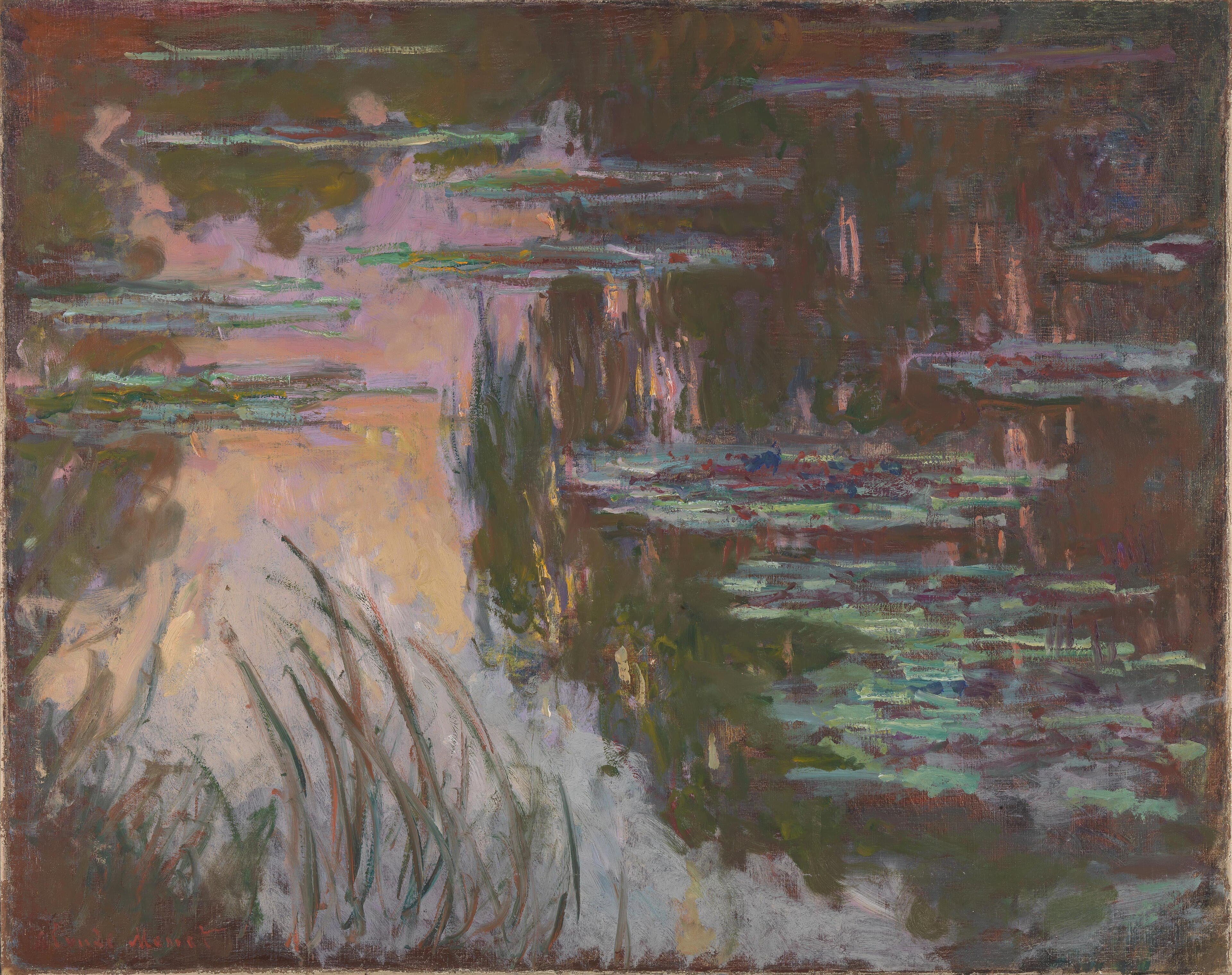
Water-Lilies, Setting Sun (National Gallery, London)
Claude Monet · c. 1907
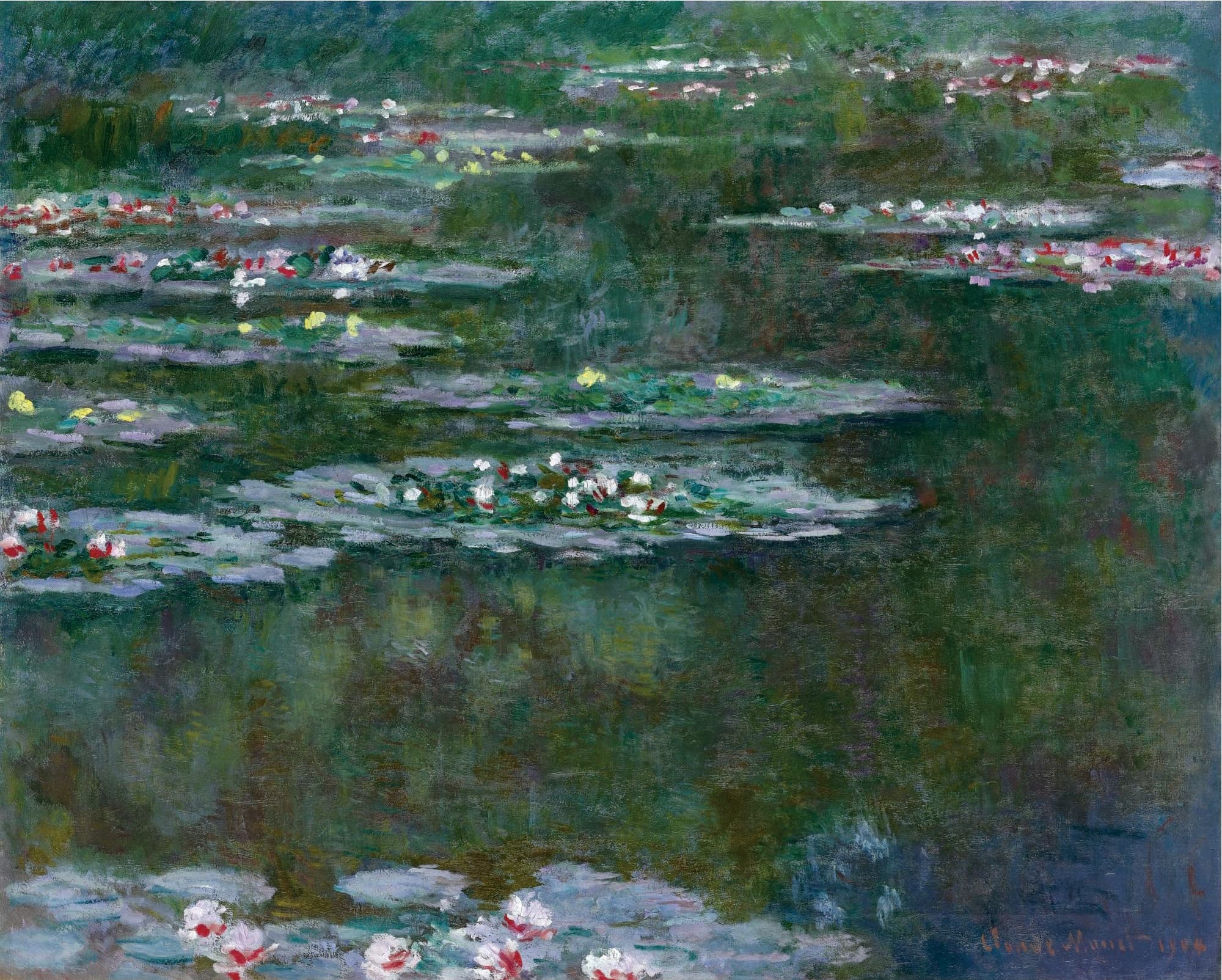
Water Lilies (1904)
Claude Monet · 1904