Image: The Museum of Modern Art, Gunma · CC BY-SA 4.0 · via Wikimedia Commons
Water Lilies (Nymphéas), 1915 (Gunma)
Claude Monet, 1915
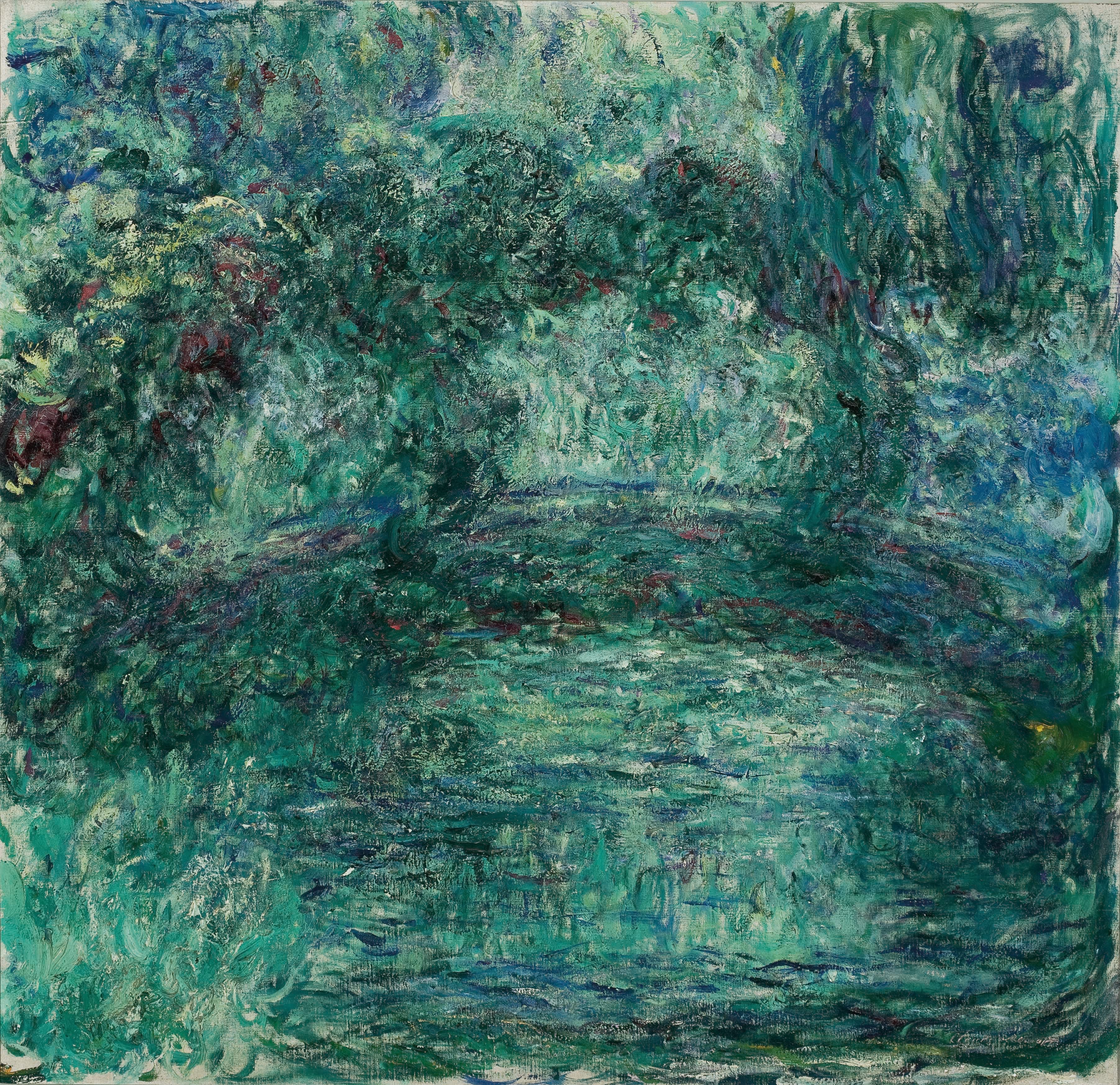
Water Lilies (Nymphéas) is a 1915 painting by Claude Monet of his Giverny pond in a tall format, red-rimmed pads and pink and gold flowers among vertical green reflections. It is in the Museum of Modern Art, Gunma, Japan.
- Artist
- Claude Monet
- Date
- 1915
- Medium
- Oil on canvas
- Dimensions
- 131 × 95 cm
- Collection
- The Museum of Modern Art, Gunma, Takasaki, Gunma Prefecture, Japan
- Movement
- Impressionism
- Catalogue
- Wildenstein 1794
- Nature & Landscape
- Water & Sea
Water Lilies (Nymphéas) is a canvas of 1915 by Claude Monet of the lily pond at Giverny, in the Museum of Modern Art, Gunma, in Takasaki, Japan. It is an upright picture, 131 by 95 centimeters, from the first years of the late period when Monet returned to the pond on a large scale. Tall and densely worked, it is closer in feeling to the decorative panels than to the lily paintings of a decade earlier.
What you're looking at
The canvas is filled with water seen from above, with no bank or sky. Its ground is a dense weave of vertical strokes in green, blue and violet: the reflections of the willows and plants around the pond, which run down the whole picture like a curtain. Across this curtain float the lily pads, painted as broad, flat ovals in blue-green and gray-green, many with rims of red and rose that catch the light at their edges.
The pads are larger and nearer toward the bottom of the canvas, smaller and more crowded toward the top, so we look down and away across the water. Flowers are scattered among them: a pink bud near the top left, two small pinks at the left, a white-pink bloom at the lower center, and, just below the center, a larger flower in warm gold, orange and pink that is the focus of the picture. At the top, the vertical reflections thicken into a dark band of green.
The late pond
After the deaths of his wife Alice in 1911 and his son Jean in 1914, Monet returned to his lily pond in 1914 with the plan of a vast cycle of decorative panels. In 1915 he built a new studio at Giverny large enough to paint them. Alongside the panels, which were installed in the Musée de l'Orangerie in 1927, he painted many independent canvases of the pond, often tall or square, exploring the same play of reflection and floating pad at an easel-friendly size. This canvas belongs to that group.
How this version differs
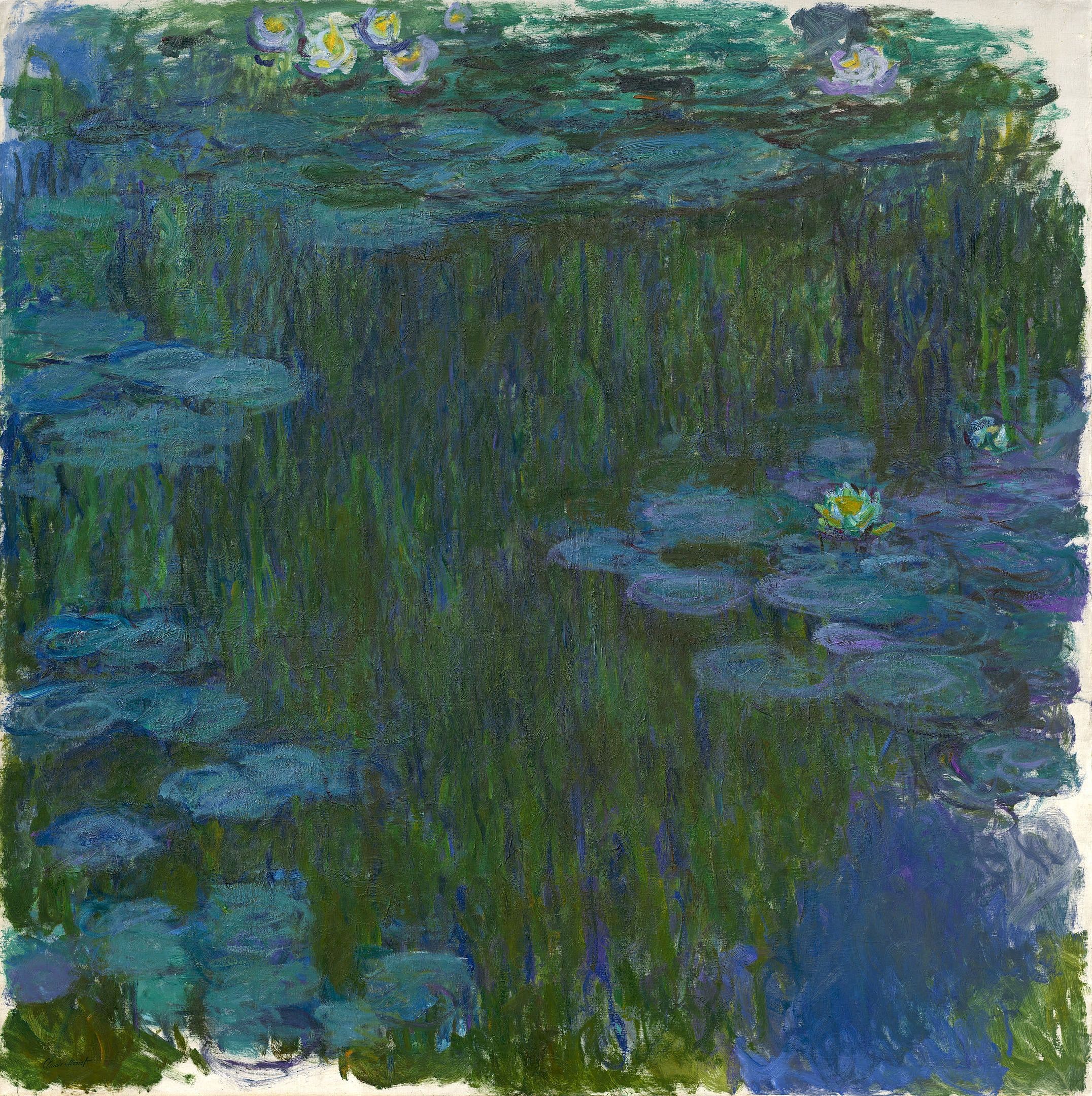
Compared with the square Museum Barberini Water Lilies of 1914–17, which is darker and partly unfinished, the Gunma canvas is more fully worked and warmer, with red-rimmed pads and a glowing central flower. Compared with Portland's Waterlilies, it is more vertical and more enclosed: the willow reflections fill the whole surface rather than one corner. The Marmottan's Nymphéas of the same year is, by contrast, pale and airy, full of reflected cloud. The tall format looks back to the upright lily pictures of 1907, such as Houston's Water Lilies (Nymphéas), but the handling is broader and the color deeper.
How it was painted
The reflections are laid in with long, loaded vertical strokes, wet into wet, so that green, blue and violet blend at their edges. The pads are flatter and drier, brushed horizontally over the verticals, and their red rims are single strokes of color along one edge. The central flower is thickly built up in several warm hues.
Where to see it
The Museum of Modern Art, Gunma, opened in 1974 in a park in Takasaki, in a building designed by Arata Isozaki. Its collection includes French Impressionist painting alongside modern Japanese art. Check the museum's displays for whether the Monet is on view. For the series see Monet's Water Lilies; for the garden, Giverny; for other public collections of Monet, Where to See Monet's Paintings.
Questions & answers
Where is this Monet Water Lilies of 1915?
It is in the Museum of Modern Art, Gunma, in Takasaki, Japan, a museum opened in 1974 in a building by Arata Isozaki. Check the museum's collection displays to see whether it is on view.
When was it painted?
In 1915, at Giverny, in the first years of Monet's late period, when he returned to his lily pond to work toward the great decorative panels now in the Orangerie.
What does it show?
The pond surface in a tall format: a curtain of vertical green, blue and violet reflections of willows, crossed by broad pads with red rims and pink, white and gold flowers, with a glowing flower just below center.
How does it differ from Monet's earlier water lilies?
It is larger and more densely painted than the 1903–08 canvases, with broad, loaded strokes and deeper color. The willow reflections fill the whole surface rather than appearing as a single column of light.
More by the artist
Claude Monet
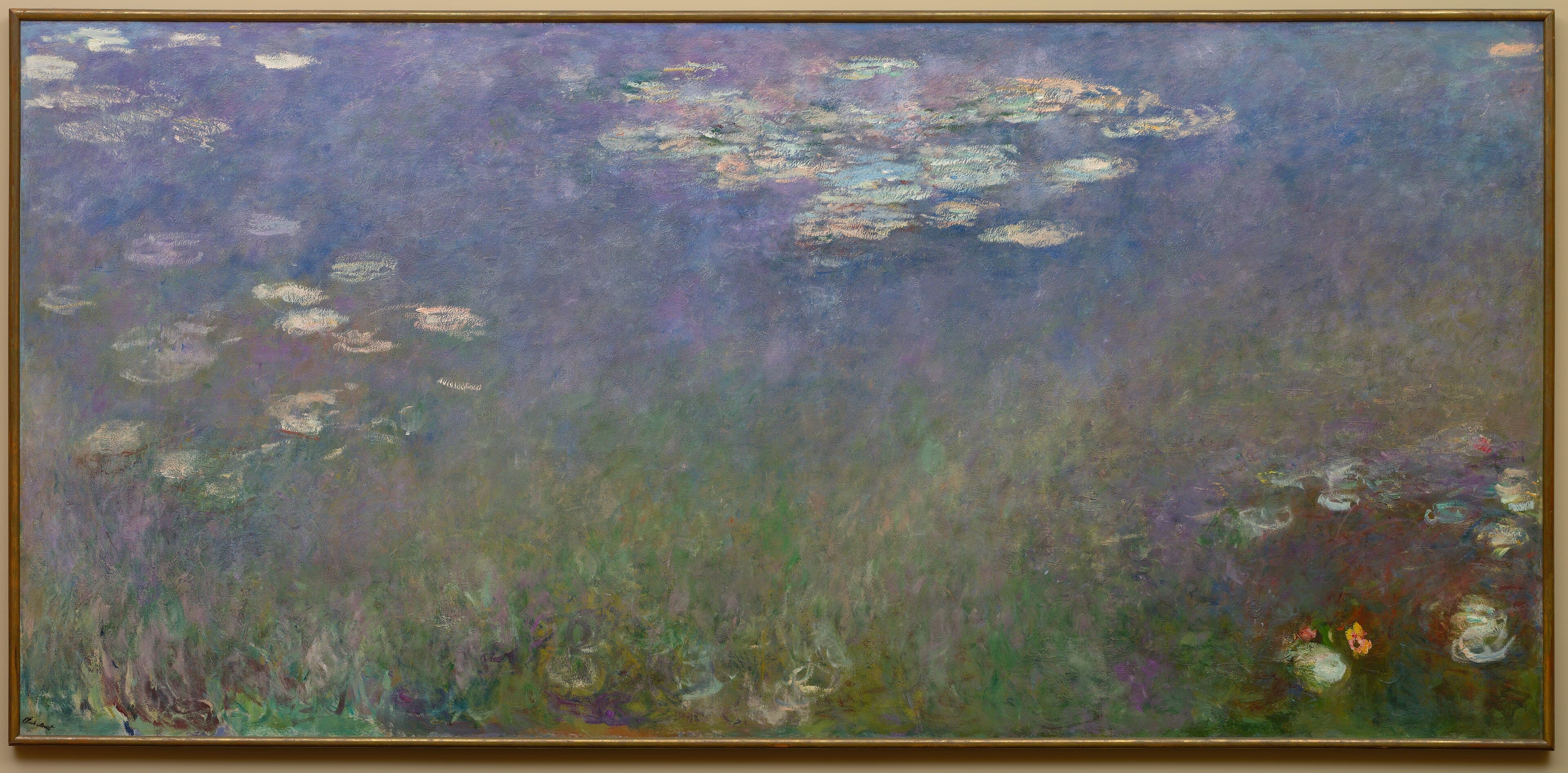
Water Lilies (Agapanthus)
Claude Monet · c. 1915–26

Nymphéas [Waterlilies] (National Gallery of Australia)
Claude Monet · c. 1914–17
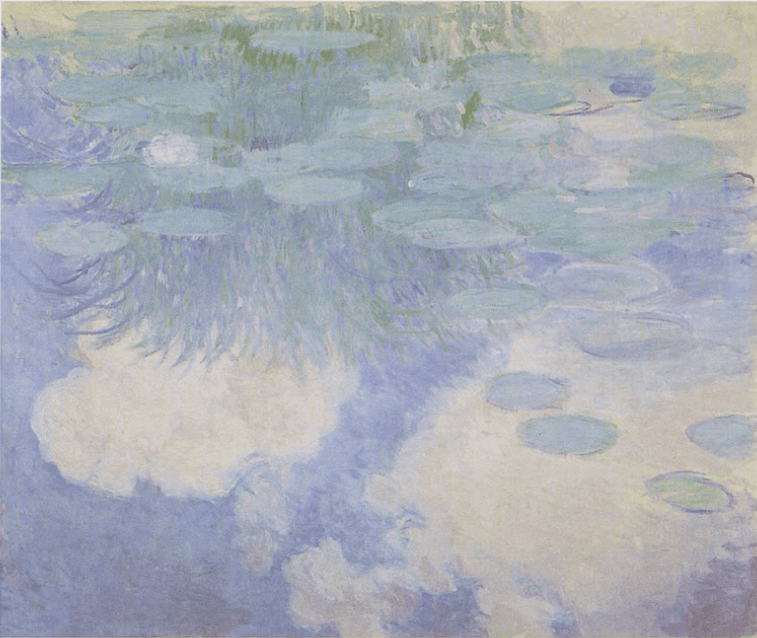
Nymphéas (1915, Musée Marmottan Monet)
Claude Monet · 1915
Weeping Willow and the Water-Lily Pond
Claude Monet · c. 1916–19
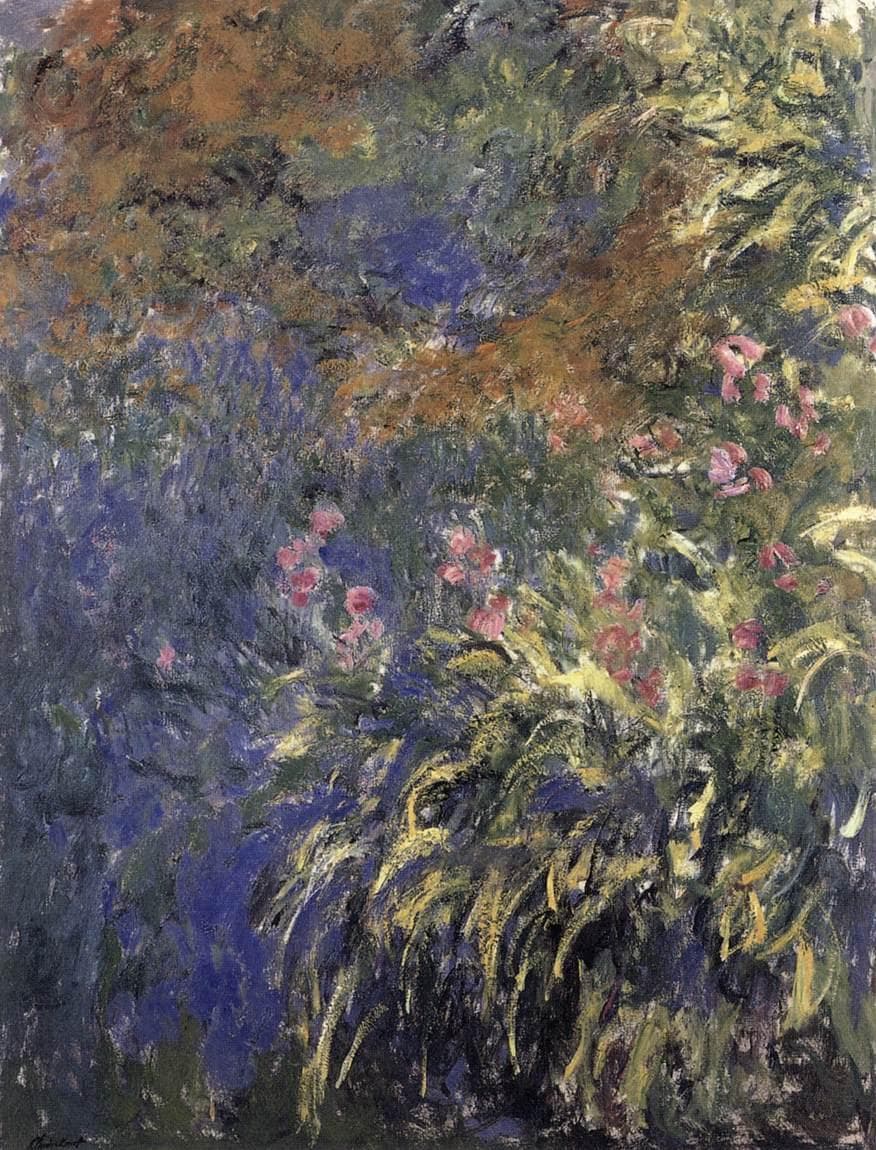
Irises by the Pond
Claude Monet · c. 1914–17
Self-Portrait (1917)
Claude Monet · 1917
Water Lilies (1914–17, Museum Barberini)
Claude Monet · 1914–17
Nymphéas (Water Lilies)
Claude Monet · c. 1914–1919
Also painted in 1915
The same year
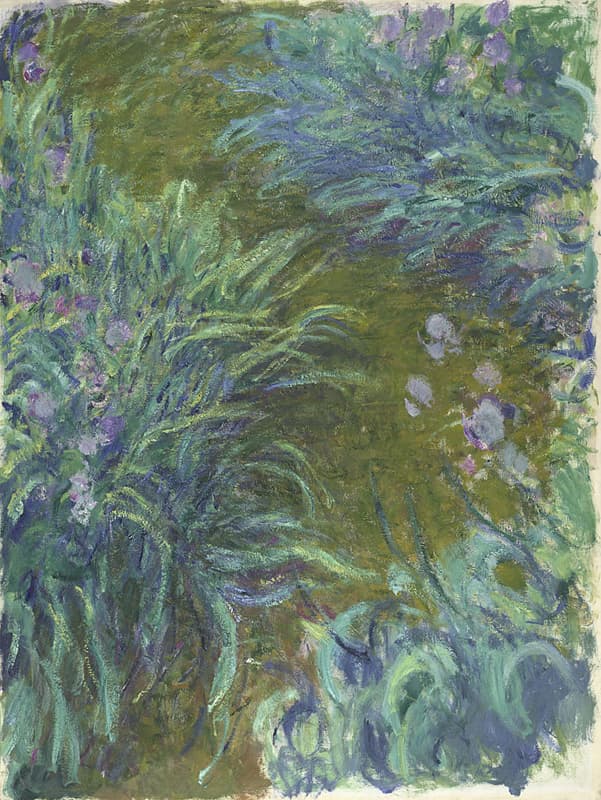
Kindred works
You may also study
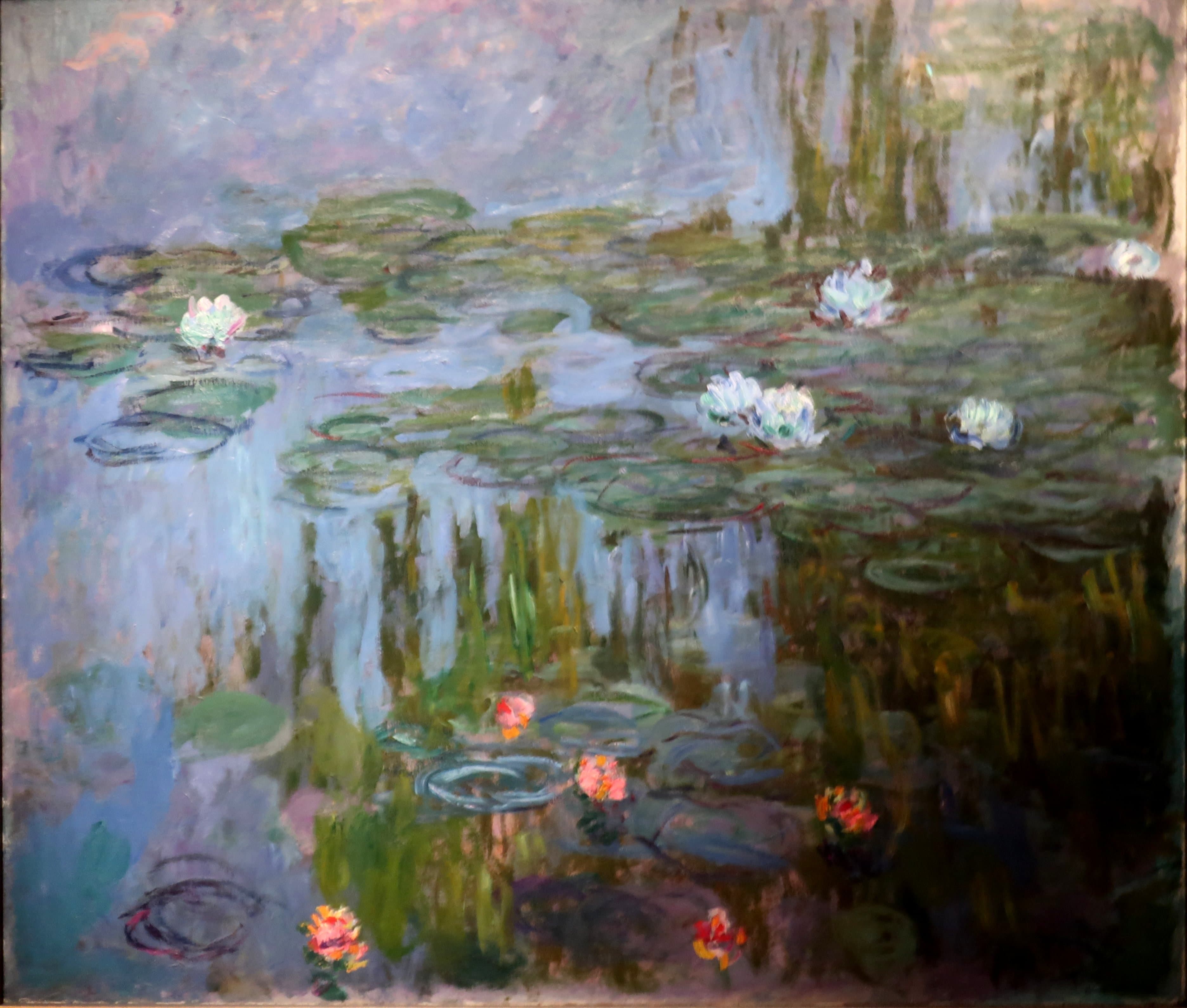
Waterlilies (c. 1914–15, Portland Art Museum)
Claude Monet · c. 1914–15
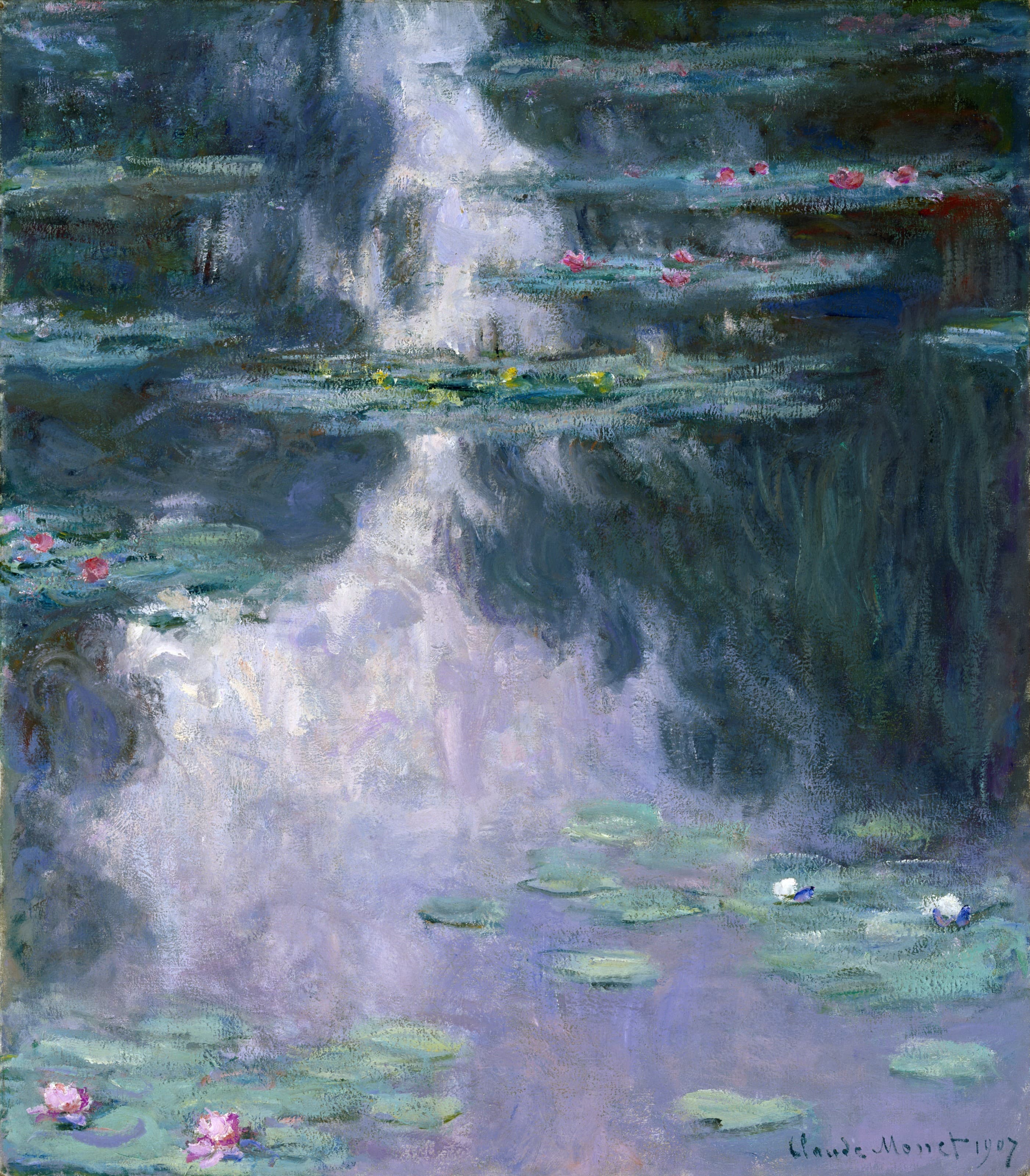
Water Lilies (Nymphéas), 1907 (Houston)
Claude Monet · 1907
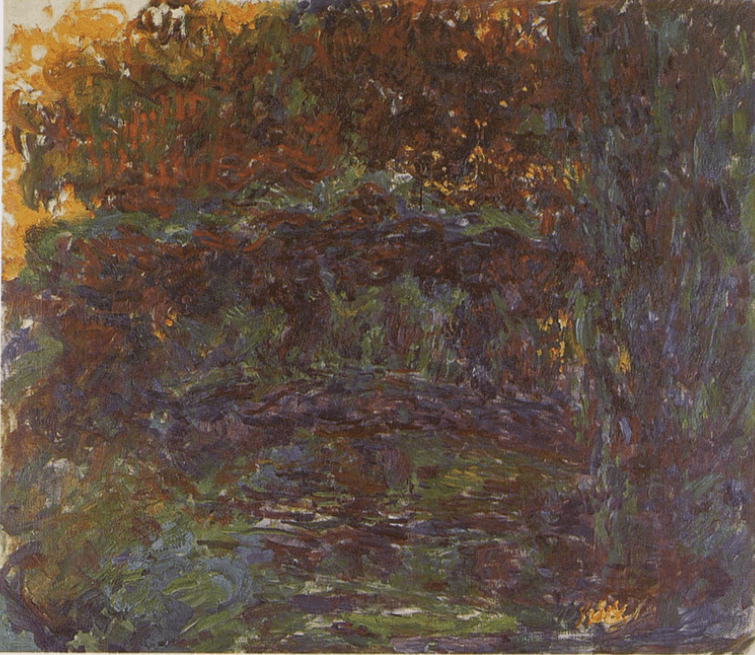
The Japanese Bridge
Claude Monet · 1918–24
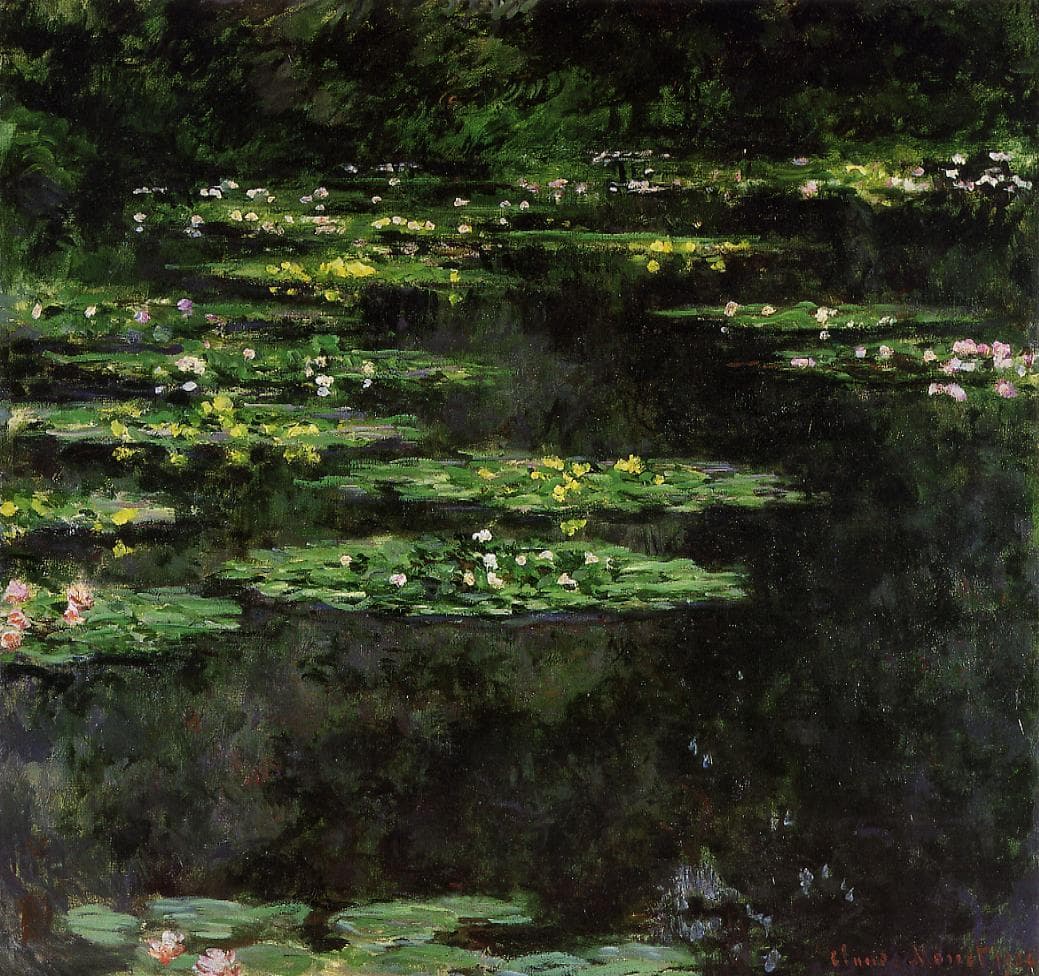
Water Lilies (1904, MuMa Le Havre)
Claude Monet · 1904
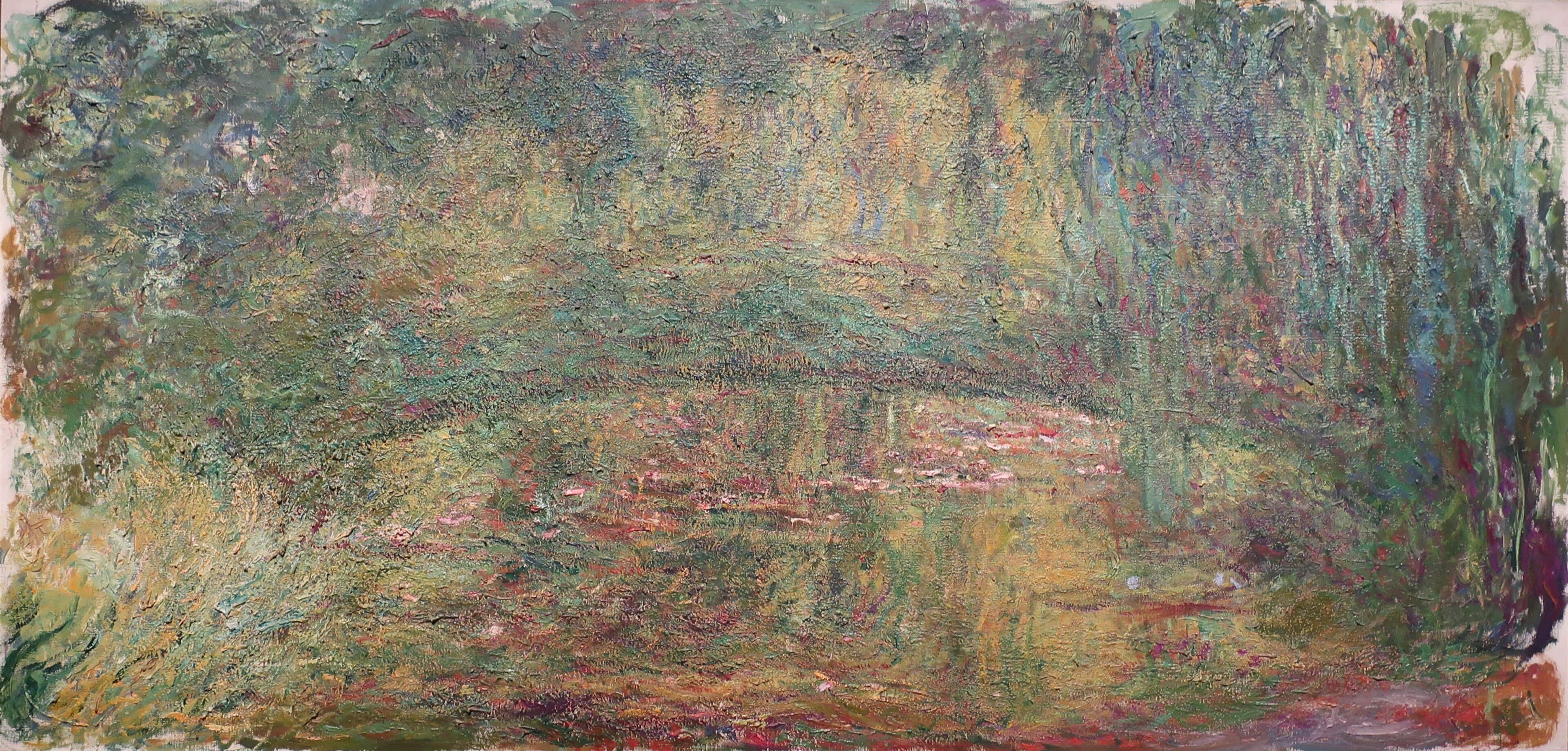
The Japanese Bridge
Claude Monet · 1918
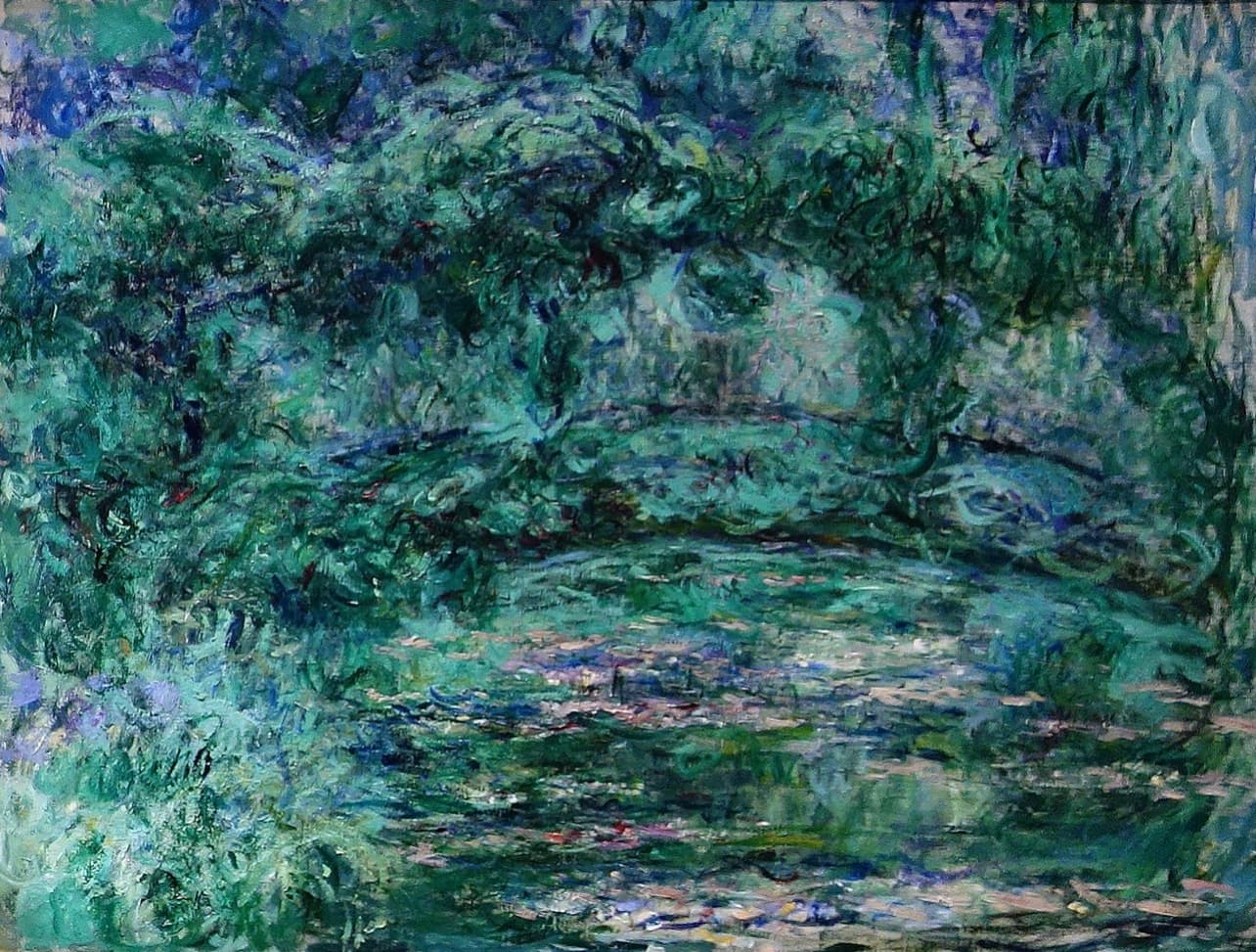
The Japanese Bridge
Claude Monet · c. 1919–24
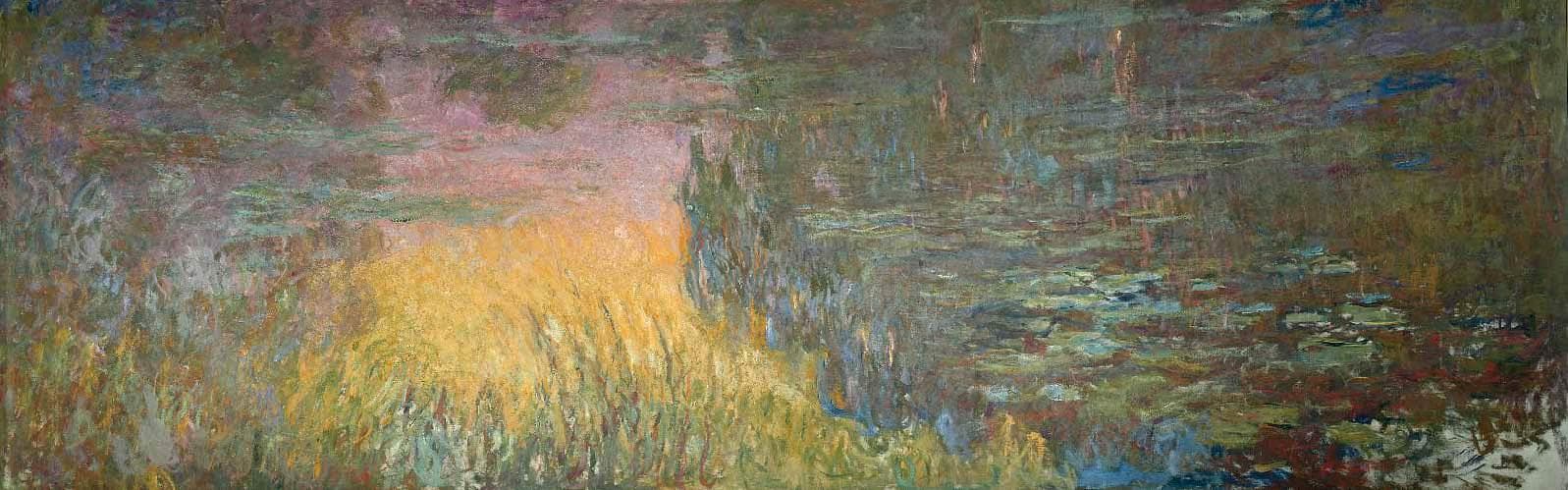
Water Lilies: Setting Sun
Claude Monet · 1914–26
The Japanese Bridge over the Water-Lily Pond in Giverny
Claude Monet · 1920–24