Image: The National Gallery, London · Public domain · via Wikimedia Commons
Irises
Claude Monet, c. 1914–17
Irises is a large canvas of about 1914–17 by Claude Monet showing a path through clumps of purple irises in his water garden at Giverny, painted with loose, sweeping strokes. It is in the National Gallery, London.
- Artist
- Claude Monet
- Date
- c. 1914–17
- Medium
- Oil on canvas
- Dimensions
- 200.7 × 149.9 cm
- Collection
- National Gallery, London, United Kingdom
- Movement
- Impressionism
- Catalogue
- Wildenstein 1829
- Nature & Landscape
Claude Monet's Irises is a tall canvas, about two meters high, painted around 1914–17 in the garden at Giverny. It looks down at a path running between thick clumps of iris leaves and flowers beside the water-lily pond. The canvas, 200.7 by 149.9 centimeters (Wildenstein 1829), stayed in Monet's studio until his death and was bought by the National Gallery in London in 1967. It hangs in Room 46.
What you are looking at
At first the picture is a tangle of green. Long, sweeping strokes of turquoise, blue-green and olive curve and cross over the canvas, the blade-like leaves of the irises. They fill the left side and the lower right, and spill in from the top. Among them, in pale and deep violet, lilac and blue, the flowers appear as loose, rounded blots, more numerous at upper right and lower left.
Through the middle, running diagonally from the upper left down toward the lower right, is a band of warmer, flatter olive and brown: the path. It is less a drawn path than a gap between the masses of leaves, painted in broad, scrubbed strokes. The National Gallery suggests the viewpoint may be from the Japanese bridge, looking down on a path lined with flowers, which would explain the steep, plunging angle and the absence of any horizon.
The detail most people miss is the white of the canvas. In several places, especially at the edges, Monet left the white priming bare between his strokes. The National Gallery notes that he laid in the path first and then worked the flower borders over its edges, and you can see where the leaves overlap the brown.
Where and when
Monet had planted irises along the banks of his water-lily pond and in the flower garden at Giverny since the 1890s, and he loved them both for their many varieties and for their association with the Japanese prints he collected. In 1914, after the death of his wife Alice in 1911 and his eldest son Jean in early 1914, he returned to work with a new ambition: a vast cycle of water-lily paintings, the Grandes Décorations, now in the Musée de l'Orangerie. For it he built a huge new studio in 1915. Irises is one of about twenty views of irises around the pond made during these years.
How this version differs
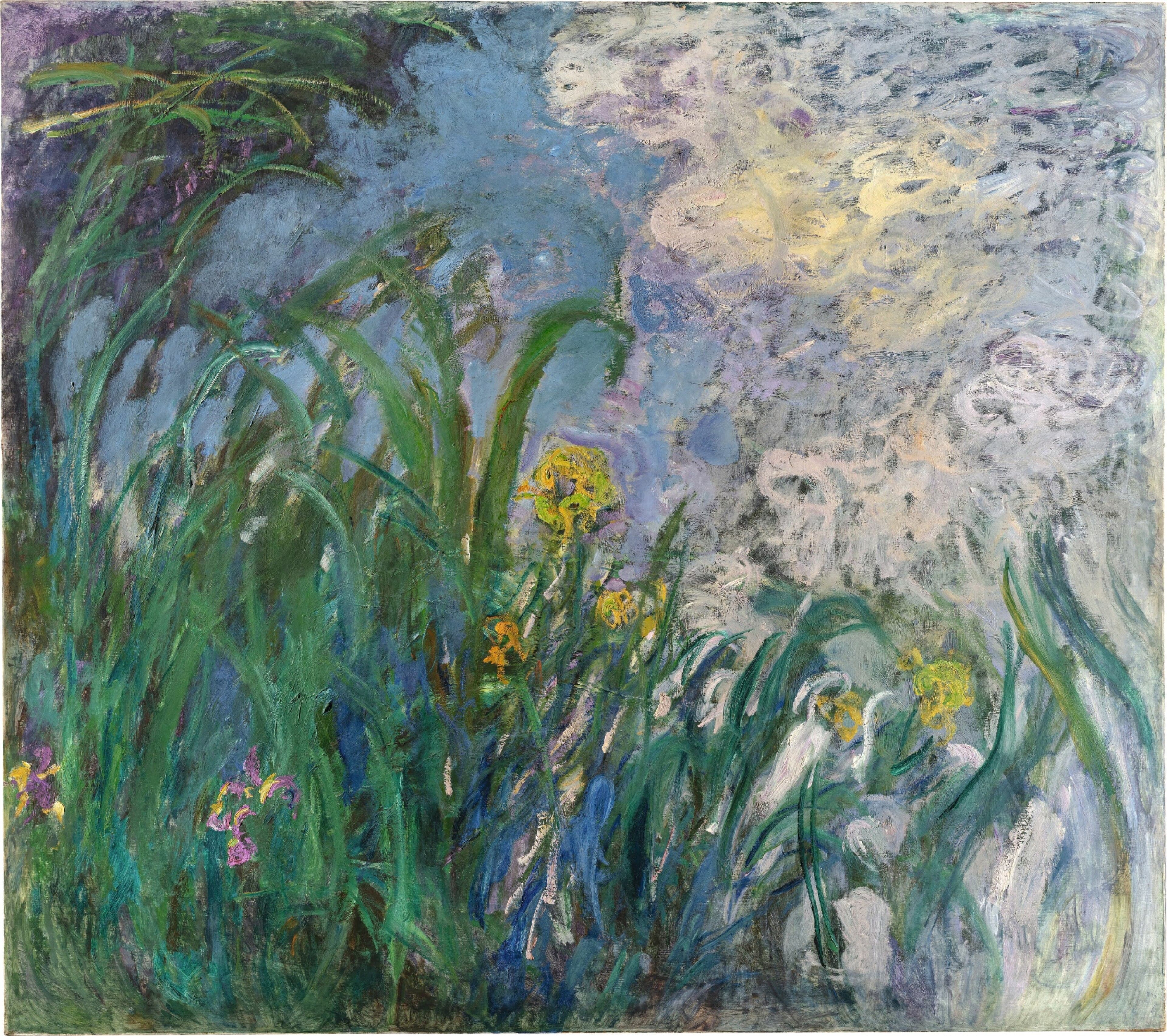
The iris canvases vary in format and focus. Some, like the later Iris of about 1924–25, combine the flowers with reflections of the sky in the pond; others, like the Virginia Museum of Fine Arts' Irises by the Pond, crowd the leaves and blooms along the edge of the water. The National Gallery's version is about the path and the movement of the leaves, a dense, almost abstract field of curving strokes with no water at all. Its size, like that of the water lilies, suggests it may have been a study for the Grandes Décorations, though irises did not appear in the final scheme. Compare the earlier Irises in Monet's Garden at Giverny of 1900, with the pink house glimpsed through the trees, to see how far Monet's handling had moved.
How it was painted
The painting was done rapidly. Thick strokes of purple, blue and green are laid side by side and over each other with a large brush, wet into wet, and the white ground is left exposed in places. Monet's cataracts, which were worsening in these years, may have contributed to the loose, broad style and the shift in color toward blues and greens, though the National Gallery treats this cautiously. Because the canvas was still in his studio when he died, it is unclear whether he considered it finished.
For the pond and its plants, see Water Lilies and Giverny: Monet's House and Garden.
Where to see it
After Monet's death the picture passed to his son Michel. The Paris dealer Katia Granoff, a key champion of the late work, bought it from him around 1950, and the National Gallery purchased it from her in 1967 with Grant-in-Aid funds. It is on display in Room 46. See Where to See Monet's Paintings and Claude Monet.
Questions & answers
Where is Monet's Irises?
This large Irises of about 1914–17 is in the National Gallery in London (NG6383), on display in Room 46. The Gallery bought it in 1967 from the dealer Katia Granoff, who had acquired it from Monet's son Michel around 1950.
When did Monet paint Irises?
He painted it around 1914–17 in his water garden at Giverny, during the years he was working on the huge water-lily cycle now in the Musée de l'Orangerie. It stayed in his studio until his death in 1926.
What does Monet's Irises show?
It shows a path seen from above, running diagonally between thick clumps of iris leaves and purple and lilac flowers beside the water-lily pond. The National Gallery suggests the view may be from the Japanese bridge.
How many iris paintings did Monet make?
Monet made about twenty views of irises around the lily pond at Giverny between about 1914 and 1917, according to the National Gallery, and returned to the subject in the 1920s. They vary from close-ups of the flowers to views of paths and pond edges.
More by the artist
Claude Monet
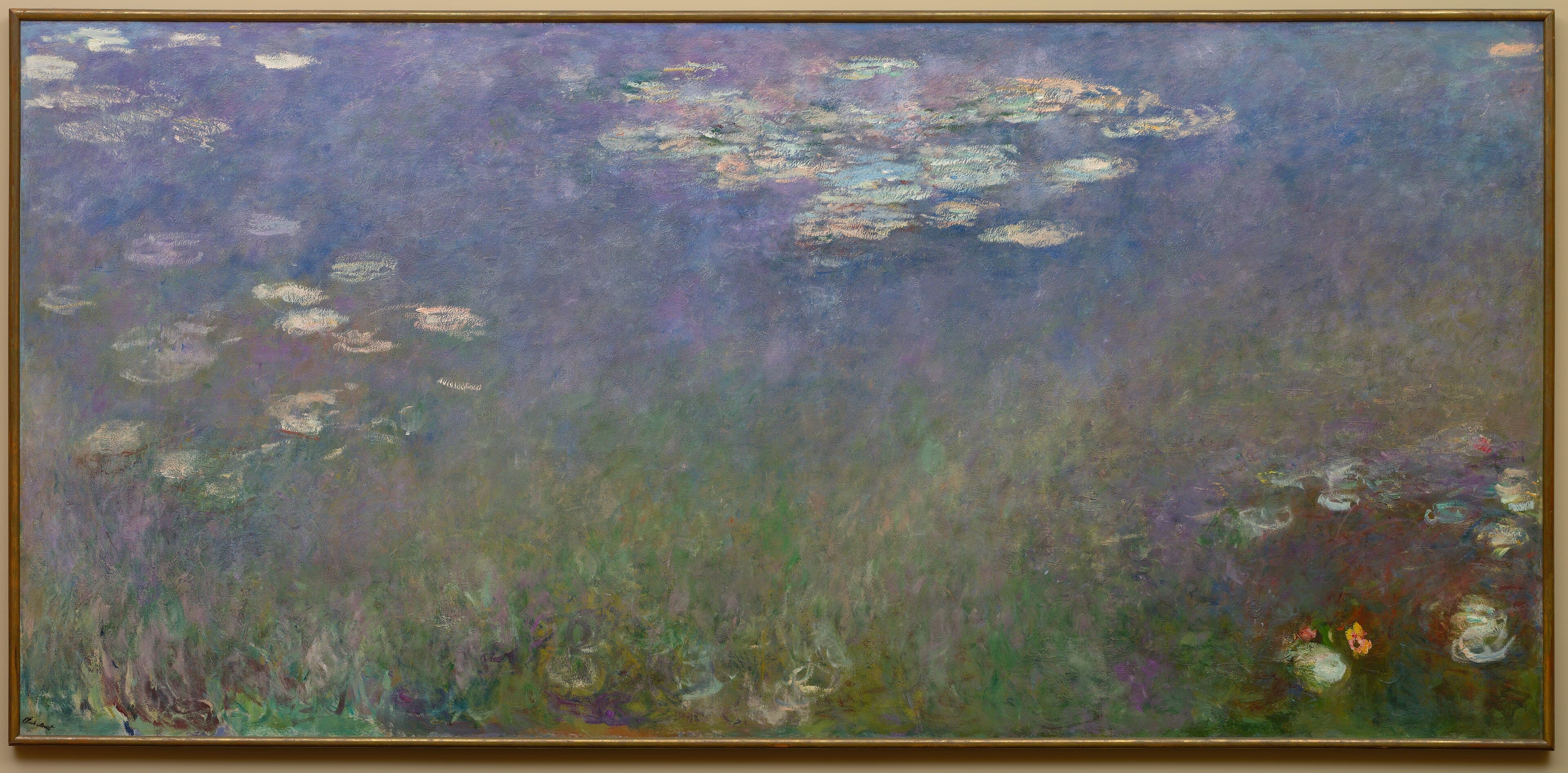
Water Lilies (Agapanthus)
Claude Monet · c. 1915–26
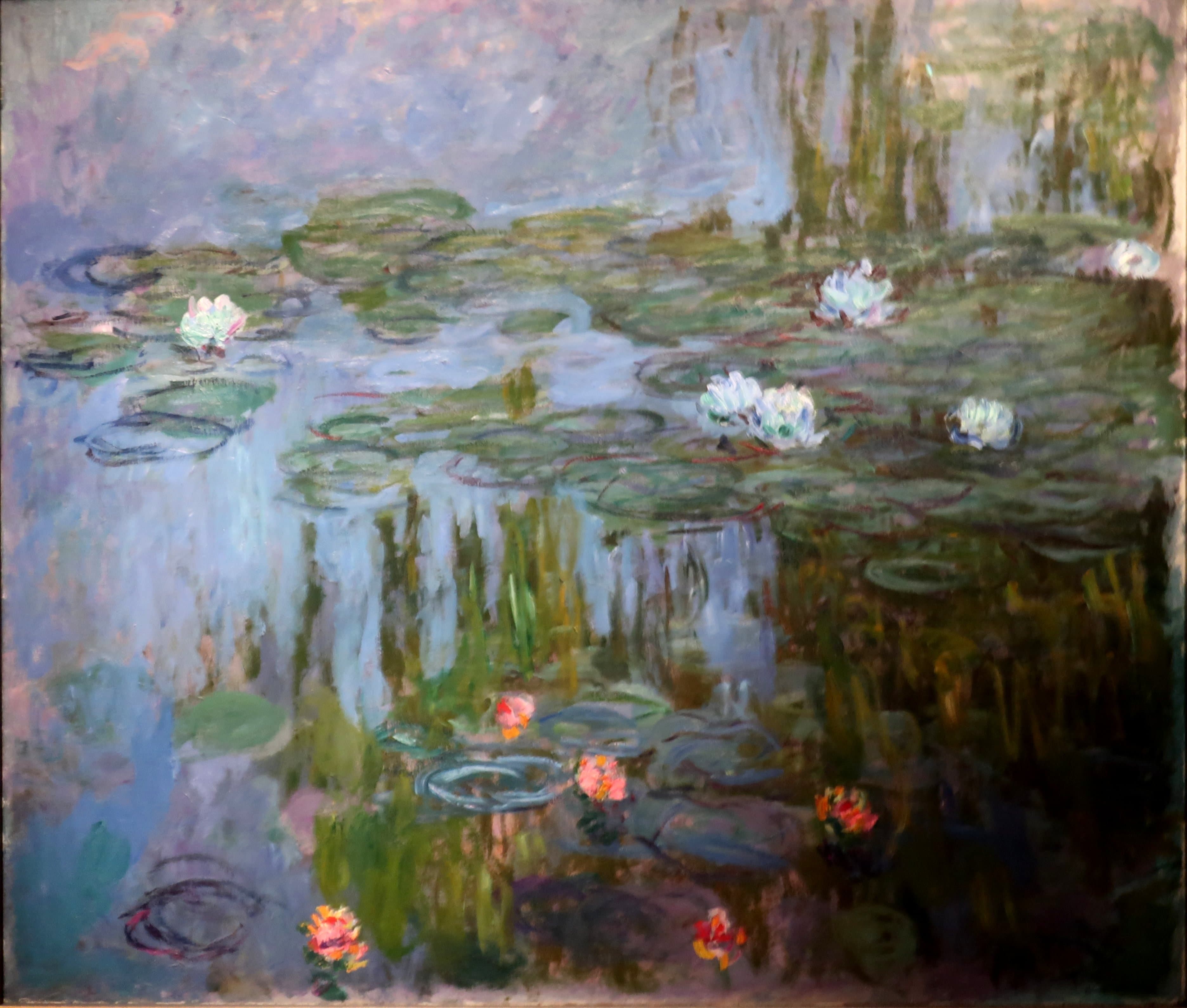
Waterlilies (c. 1914–15, Portland Art Museum)
Claude Monet · c. 1914–15
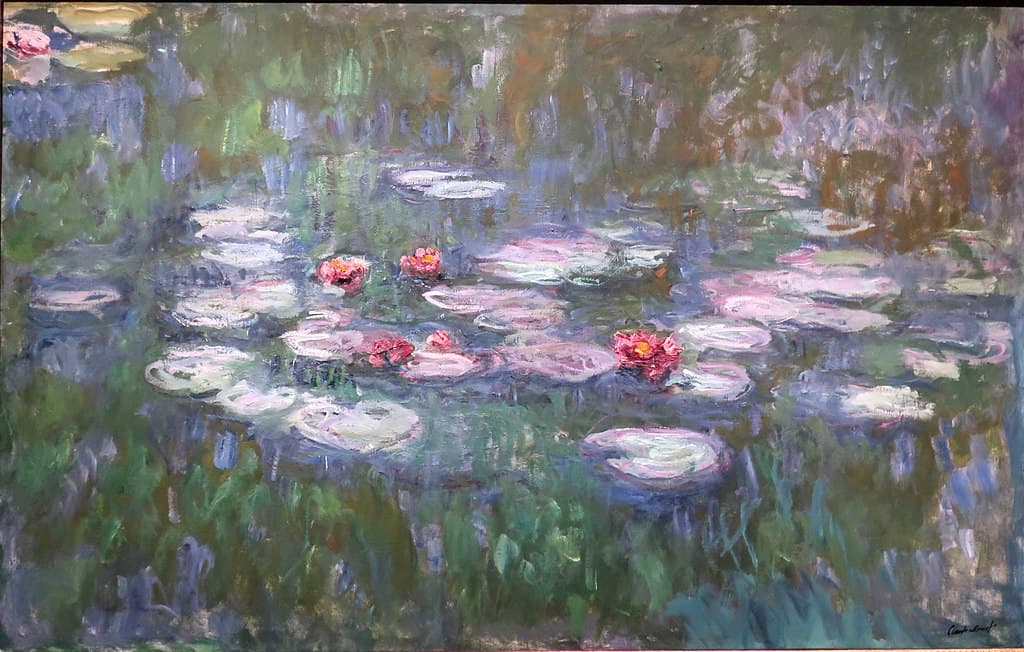
Nymphéas (Water Lilies)
Claude Monet · c. 1914–1919
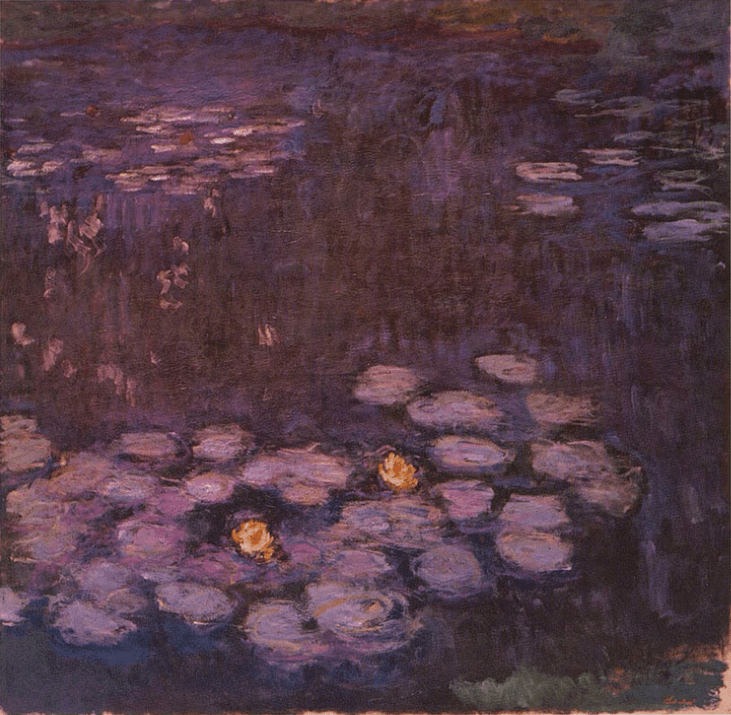
Water Lilies (Asahi Group Oyamazaki Villa Museum)
Claude Monet · c. 1914–17
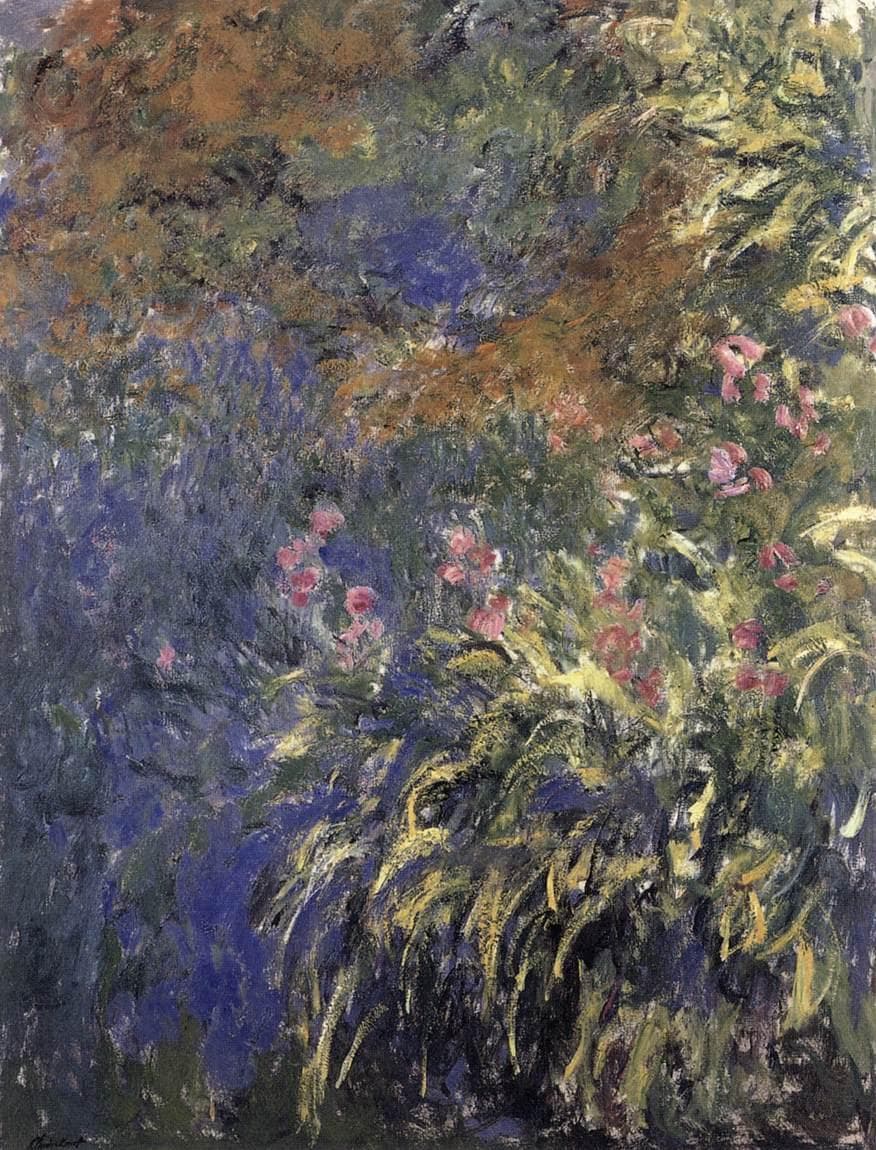
Irises by the Pond
Claude Monet · c. 1914–17
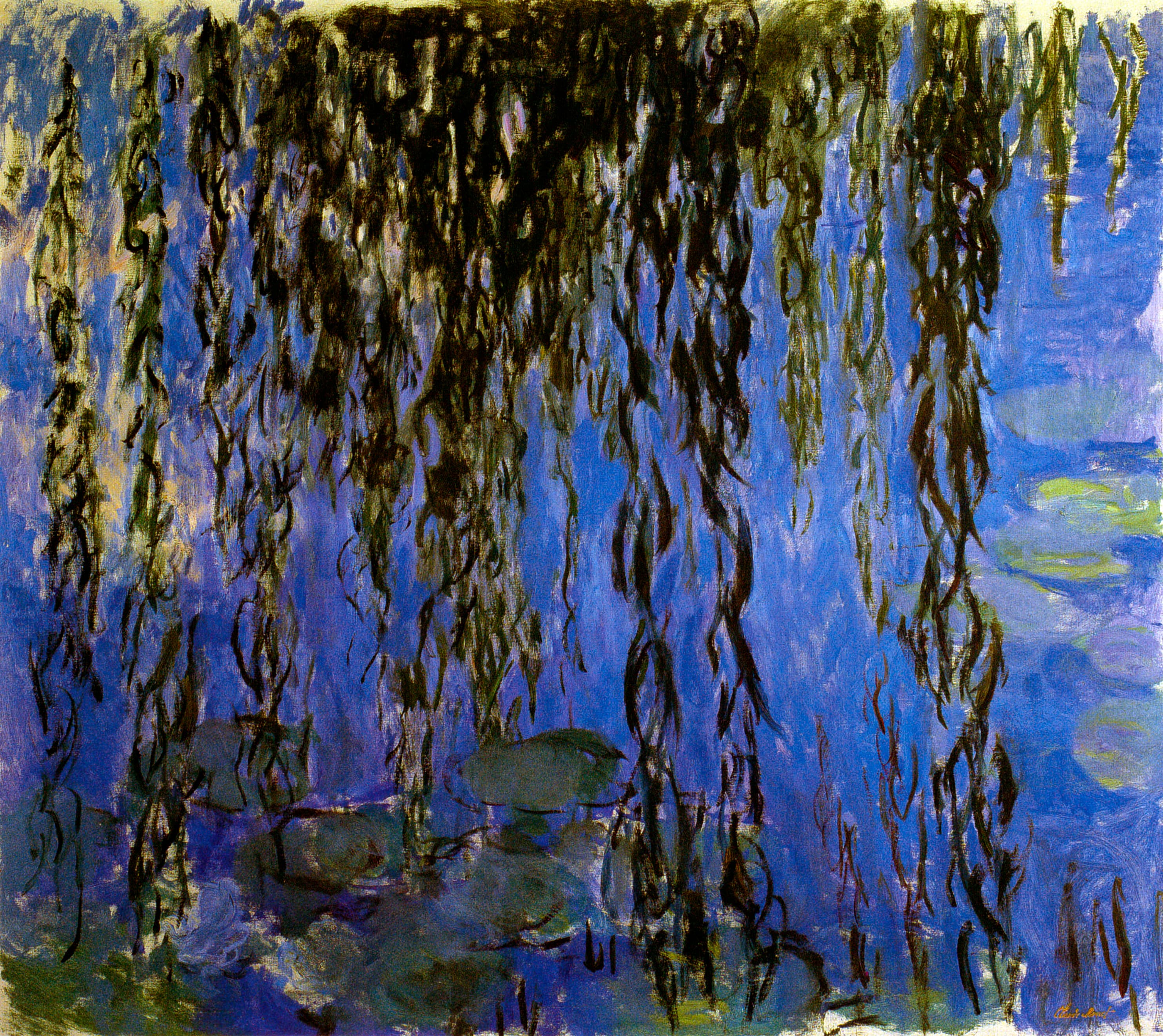
Water Lilies with Willow Branches
Claude Monet · c. 1916–17
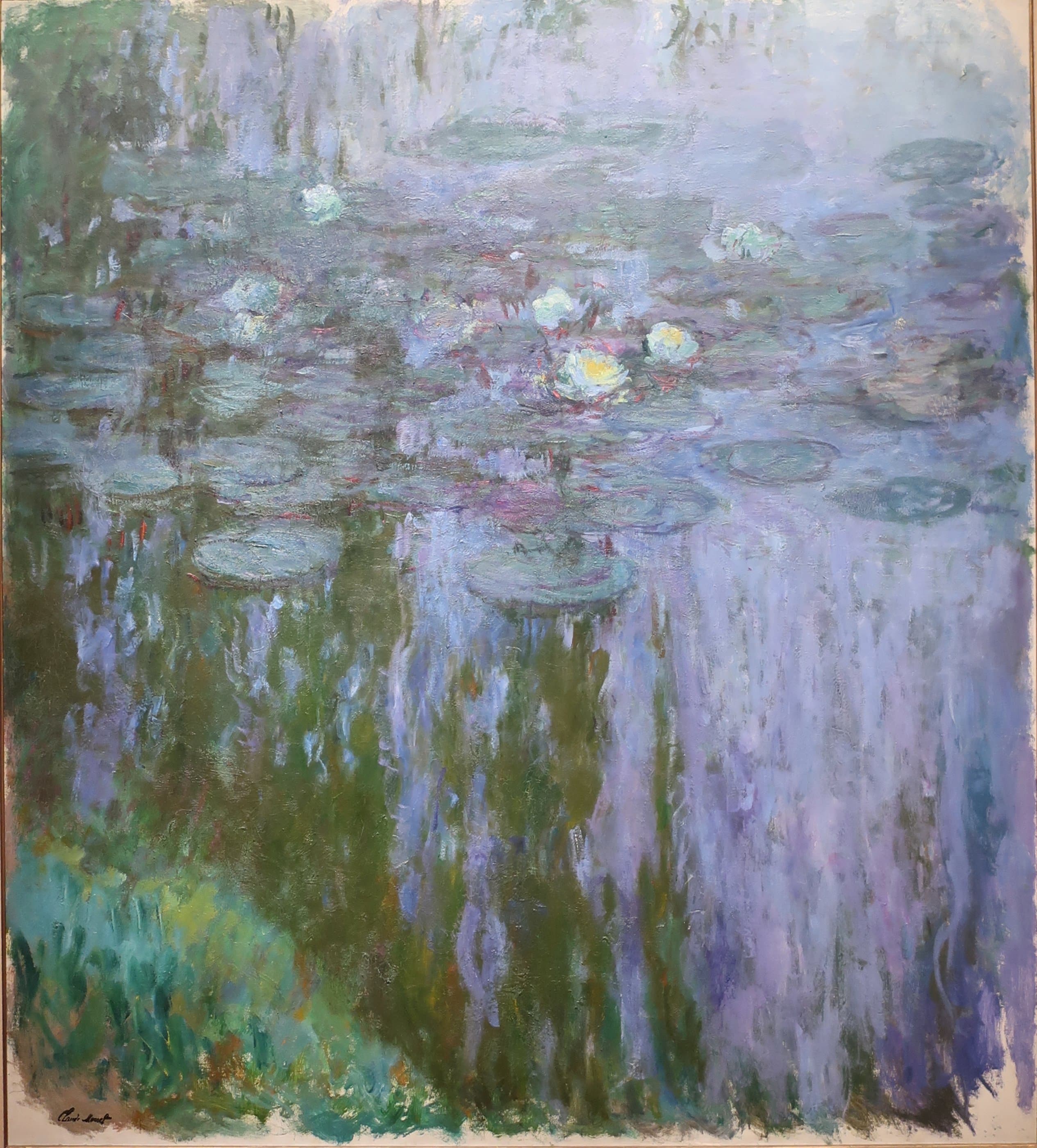
Nymphéas (Musée Marmottan Monet, 1916–19, inv. 5119)
Claude Monet · 1916–19
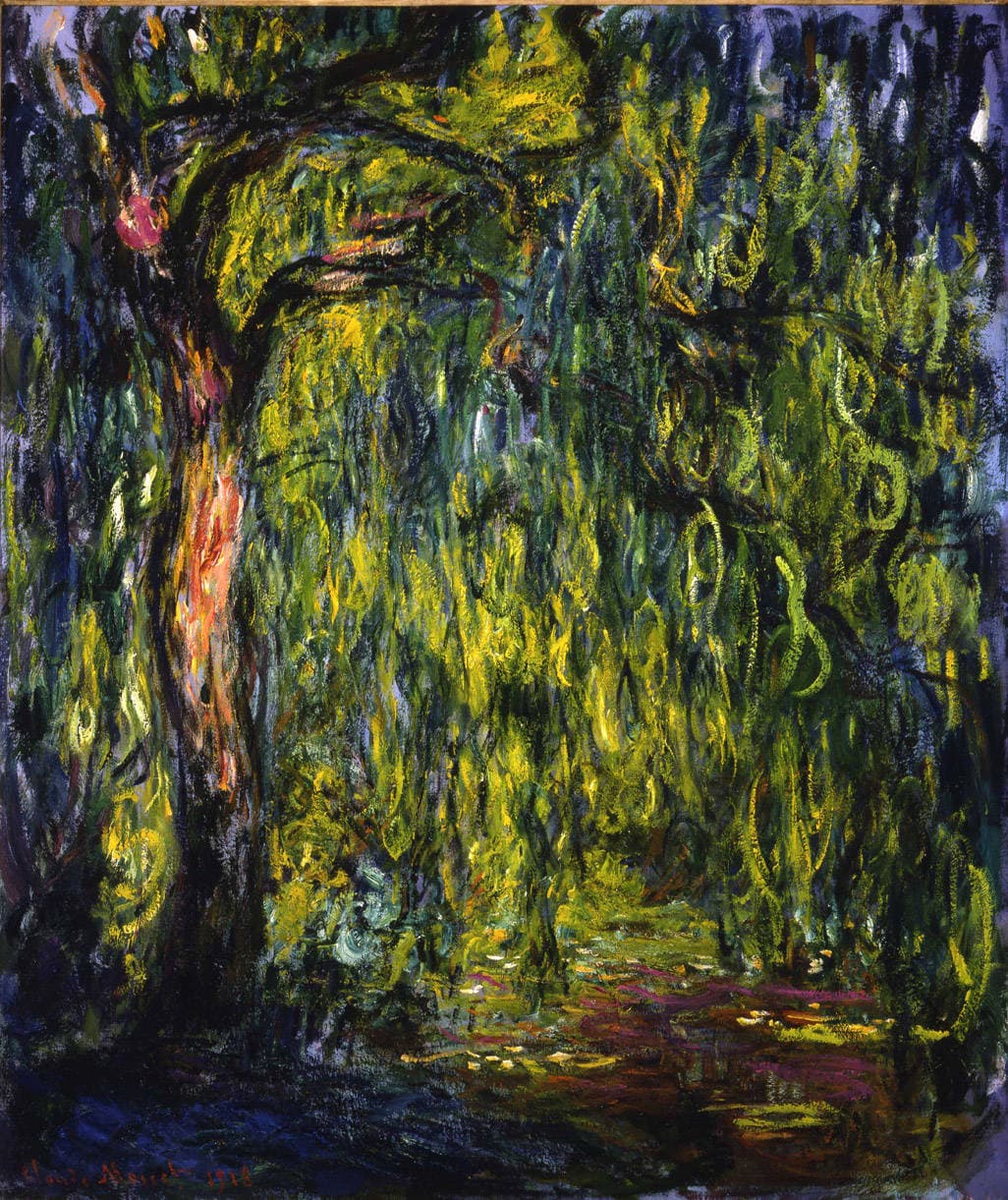
Weeping Willow (Columbus)
Claude Monet · 1918
Also painted in 1915
The same year
Kindred works
You may also study
Iris
Claude Monet · c. 1924–25
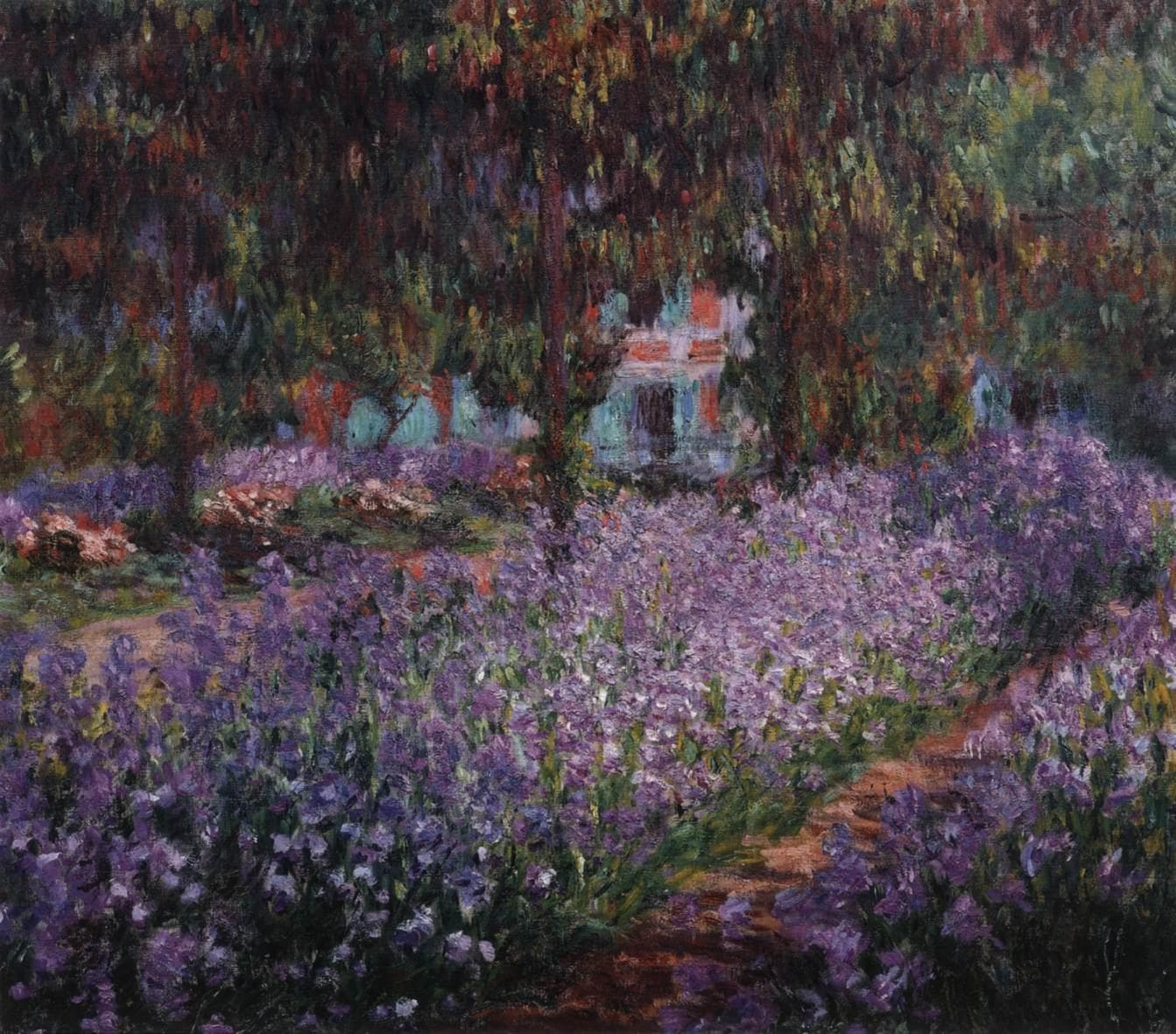
Irises in Monet's Garden at Giverny
Claude Monet · 1900
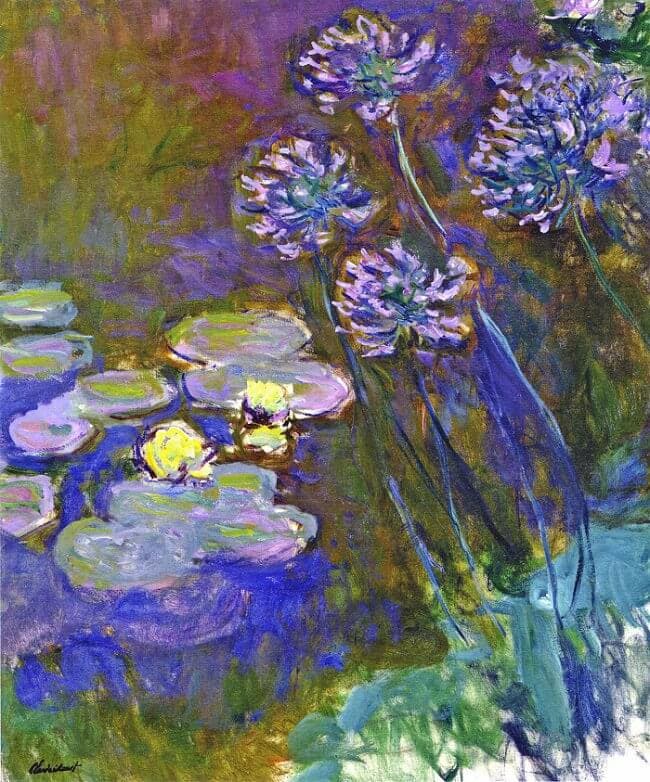
Water Lilies and Agapanthus
Claude Monet · 1914–17
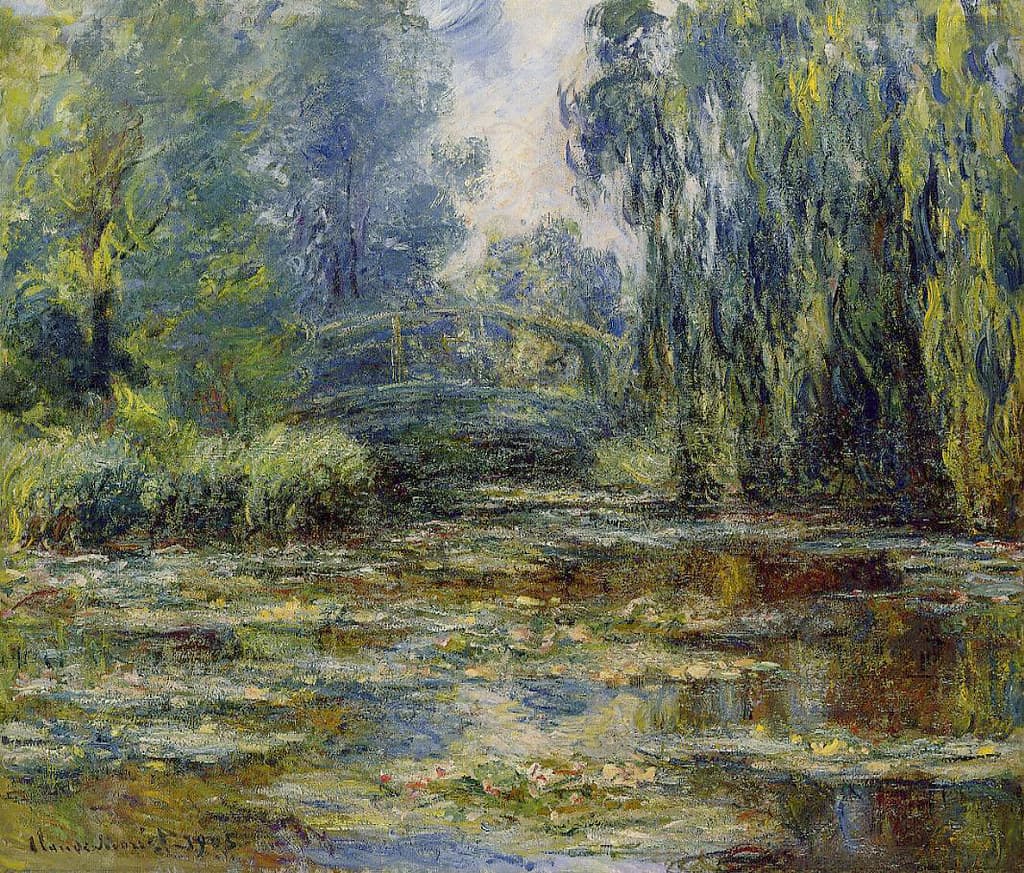
The Water-Lily Pond and Bridge
Claude Monet · 1905
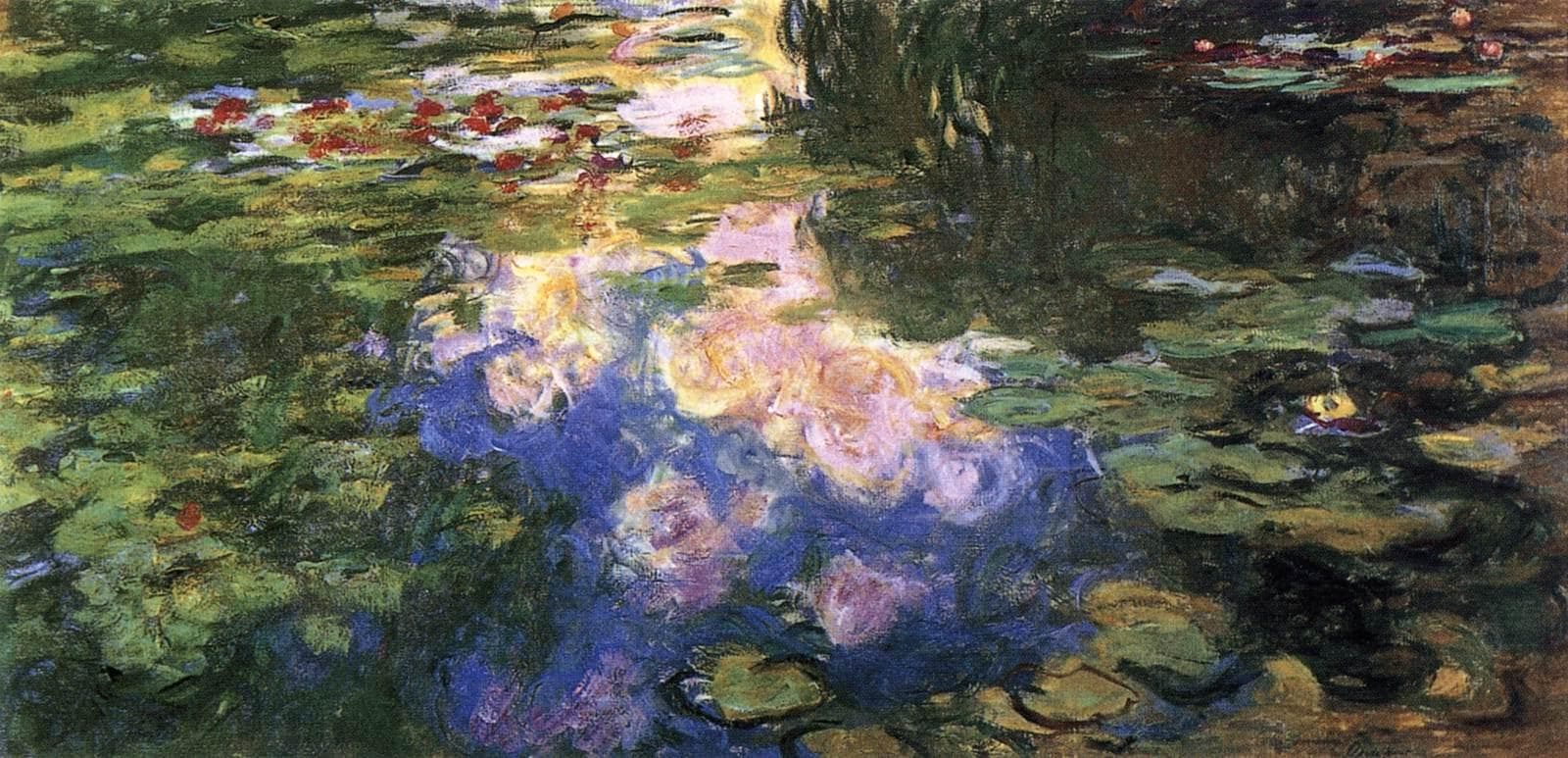
Water-Lily Pond (Le Bassin aux nymphéas), 1917–19
Claude Monet · 1917–19
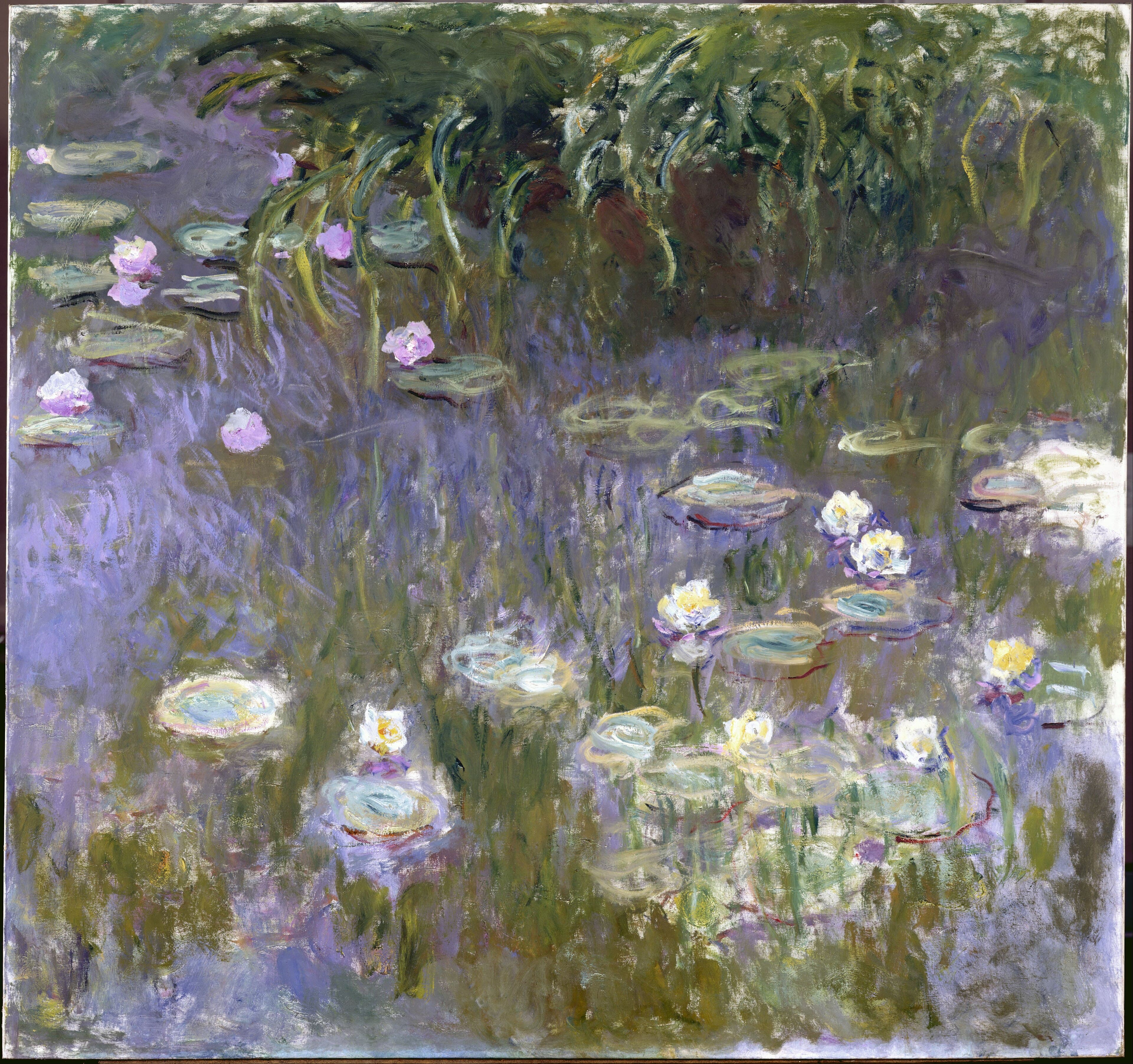
Water Lilies (Toledo Museum of Art)
Claude Monet · c. 1922
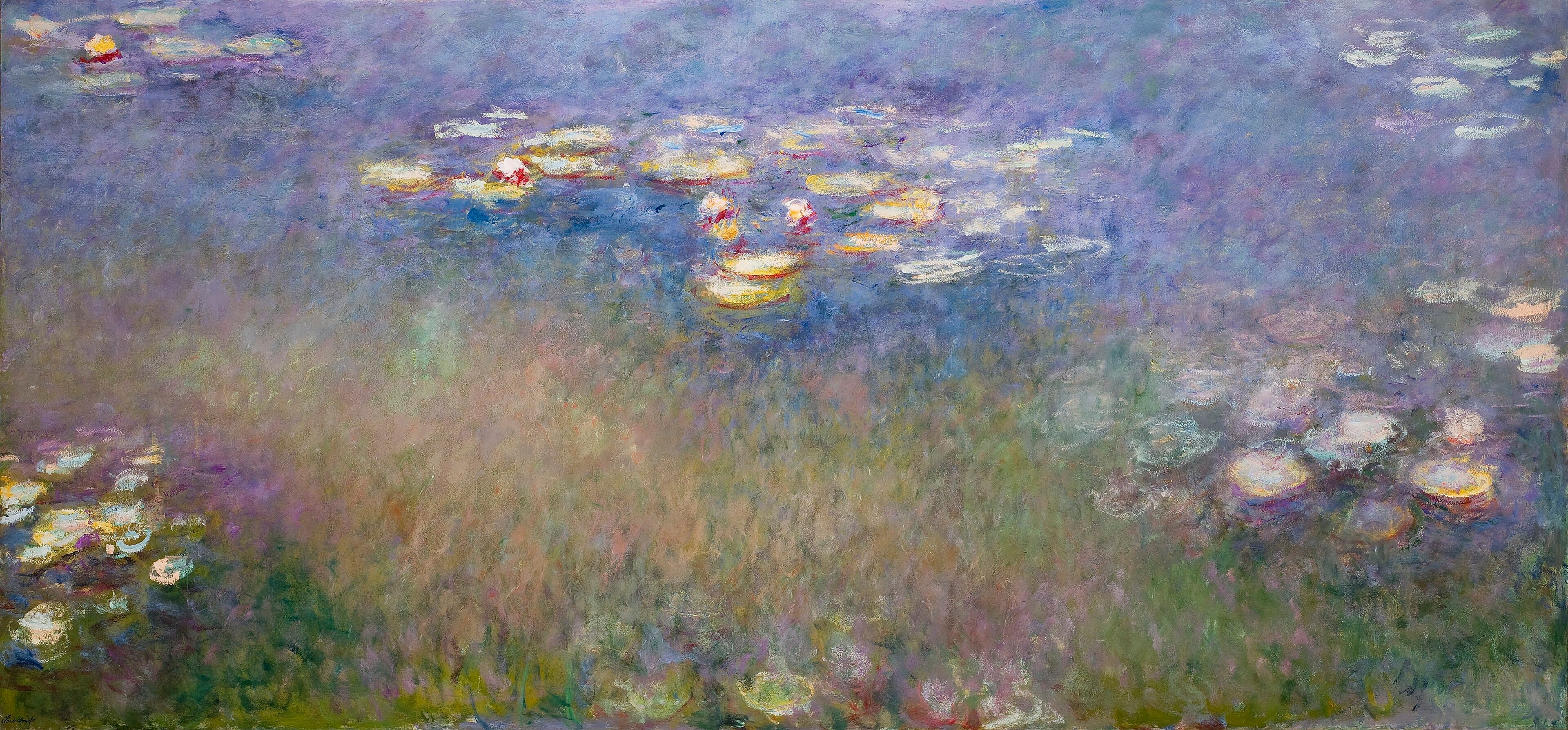
Water Lilies (Saint Louis Art Museum)
Claude Monet · c. 1915–26
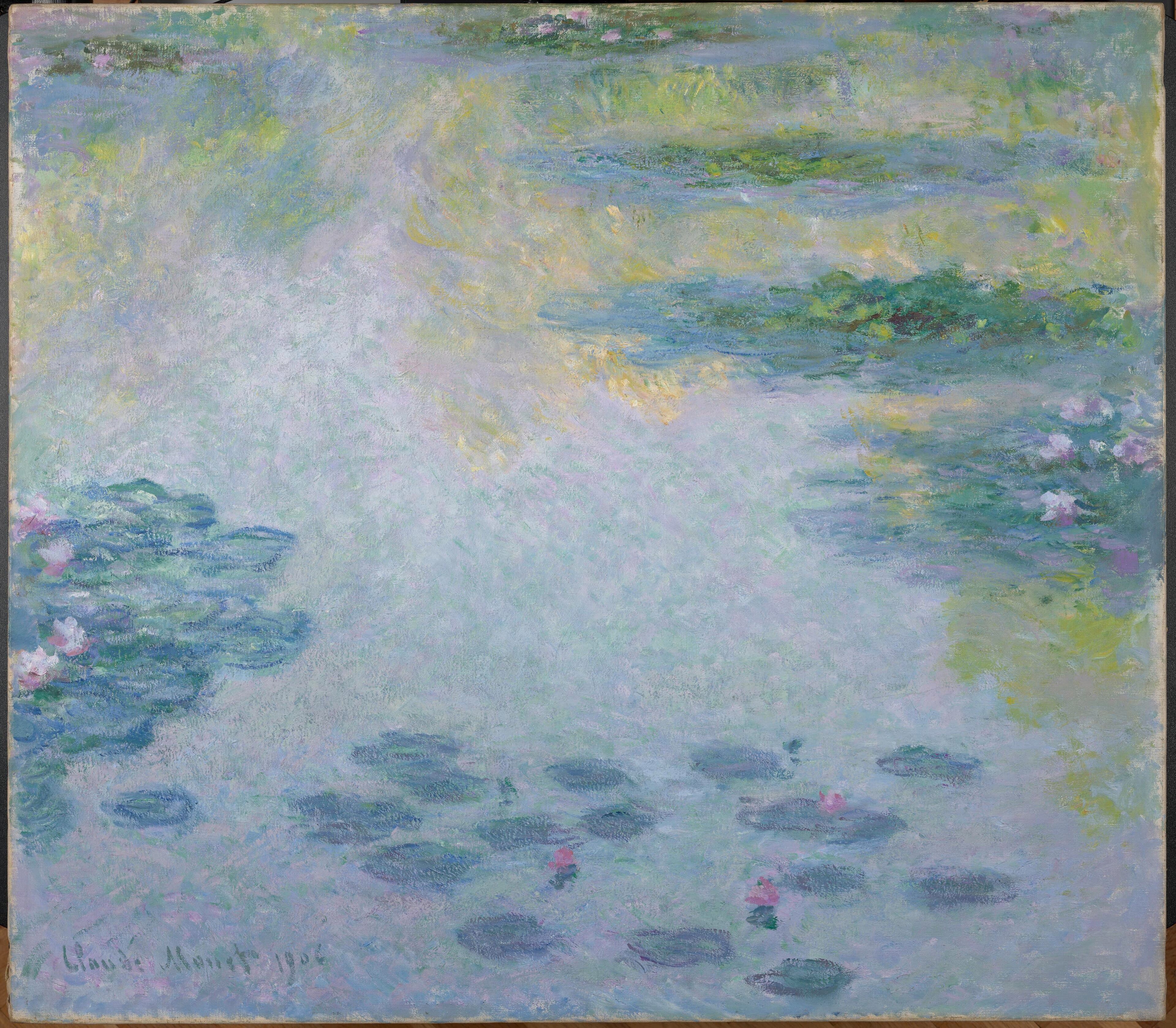
Waterlilies (1906, National Museum Cardiff)
Claude Monet · 1906