Image: Art Institute of Chicago; image via Wikimedia Commons · Public domain · via Wikimedia Commons
Water Lilies (1906, Art Institute of Chicago)
Claude Monet, 1906
Water Lilies is a 1906 painting by Claude Monet of his Giverny pond with no bank or sky, only lily pads and the reflections of clouds and trees in deep blue water. It is in the Art Institute of Chicago, from the Ryerson collection.
- Artist
- Claude Monet
- Date
- 1906
- Medium
- Oil on canvas
- Dimensions
- 89.9 × 94.1 cm
- Collection
- Art Institute of Chicago, Chicago, United States
- Movement
- Impressionism
- Catalogue
- Wildenstein 1683
- Nature & Landscape
- Water & Sea
Water Lilies is a 1906 canvas by Claude Monet of the surface of his lily pond at Giverny, in the Art Institute of Chicago (Mr. and Mrs. Martin A. Ryerson Collection, 1933.1157). Nearly square, 89.9 by 94.1 centimeters, and inscribed Claude Monet 1906 at the lower right, it is one of the group of water landscapes he painted between 1903 and 1908, and one of the first in which the bank disappears entirely.
What you're looking at
There is no shore, no willow, no sky above. The whole canvas is water, seen from slightly above, and the only things on it are lily pads. Clusters of pads frame the picture: a long island across the top, another curving down the right side with white and yellow flowers, a large group at the left edge with pink and red blooms, and a scatter of small pads and red buds along the bottom. Between them, an open passage of water runs from the lower center up toward the top left.
That open water is where the sky is. It is painted a deep, saturated blue, darkening to violet and green at the edges, and across it drift the reflections of white and pale gray clouds. On the left and at the top, darker green and violet patches are the reflected trees around the pond. So the picture reads two ways at once: as flat pads lying on the surface, and as a deep, inverted sky below them. The Art Institute's own description puts it well: the lily clusters at bottom left and top right frame a watery path, while the surface reflects trees and clouds.
The pond and the obsession
Monet had dug the pond in 1893 and enlarged it in 1901–02. From 1903 he painted its surface over and over, scraping down and reworking canvases for years. He called the project an obsession, and the Art Institute notes that technical examination of this canvas bears that out. In May 1909 Durand-Ruel exhibited forty-eight of these canvases, dated 1903 to 1908, in Paris under the title Les Nymphéas, séries de paysages d'eau (Water Lilies, a series of water landscapes). This canvas was among the works handled after that show: Durand-Ruel and Bernheim-Jeune bought it from Monet in June 1909, recording it as Les nymphéas, paysage d'eau, série de 1906.
How this version differs
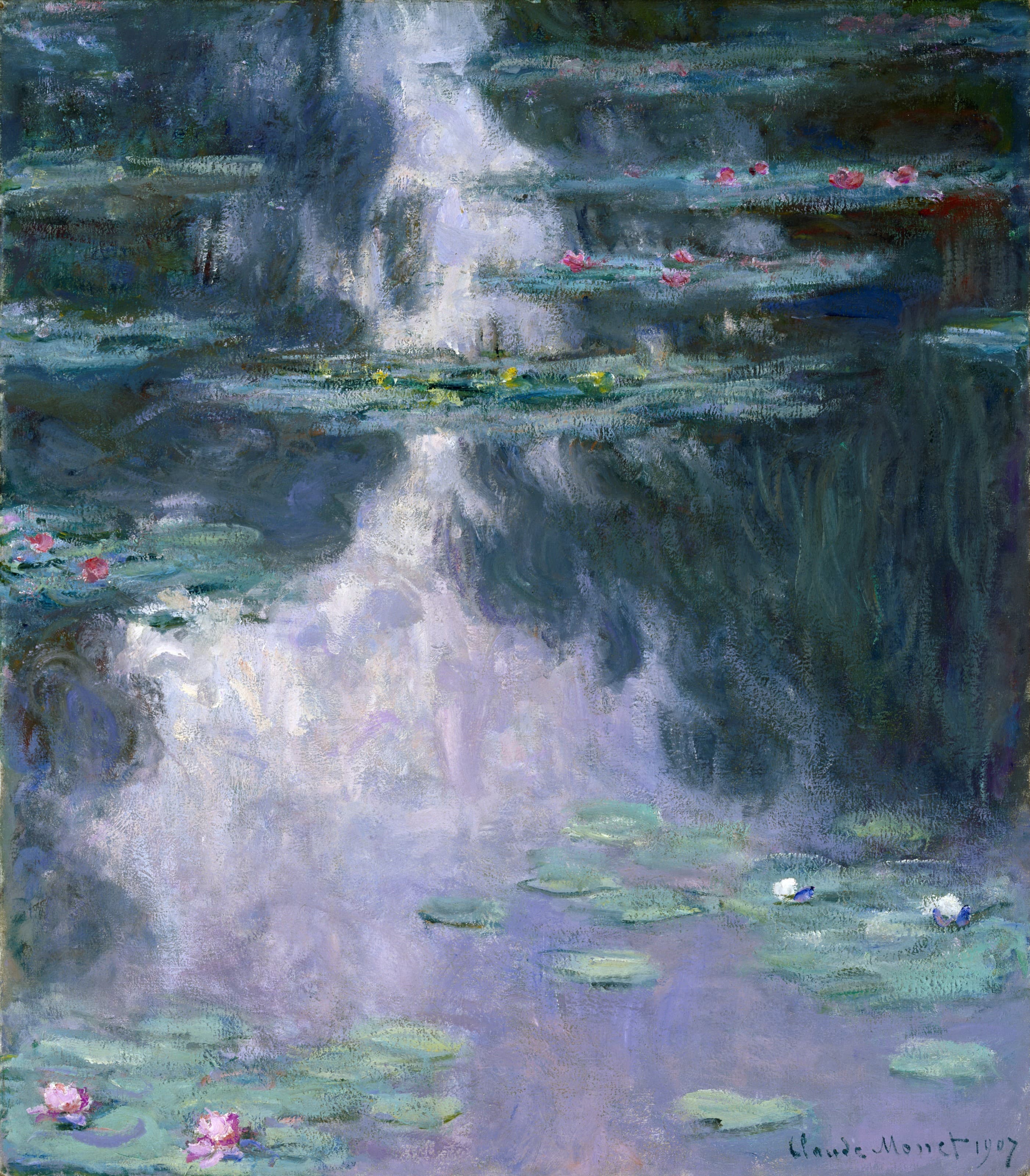
Compare the 1904 canvases in Denver, Le Bassin des Nymphéas, and Le Havre, Water Lilies, both of which keep a band of far bank at the top. Here the bank has gone, and the picture gains a disorienting, floating quality. Cardiff's Waterlilies of the same year shows the same kind of composition in a much paler key; Chicago's is the more saturated, with a strong central blue. Later canvases, such as the 1907 verticals like Houston's Water Lilies (Nymphéas), turn the reflected trees into a column of light.
How it was painted
The blue water is laid in with smooth, horizontal and slightly curving strokes, the clouds as softer, lighter passages worked into it. The pads are crisper, small ovals and ellipses outlined with darker strokes, and the flowers are single touches of red, pink, white and yellow. The paint is layered and dense, consistent with repeated reworking.
Ownership and where to see it
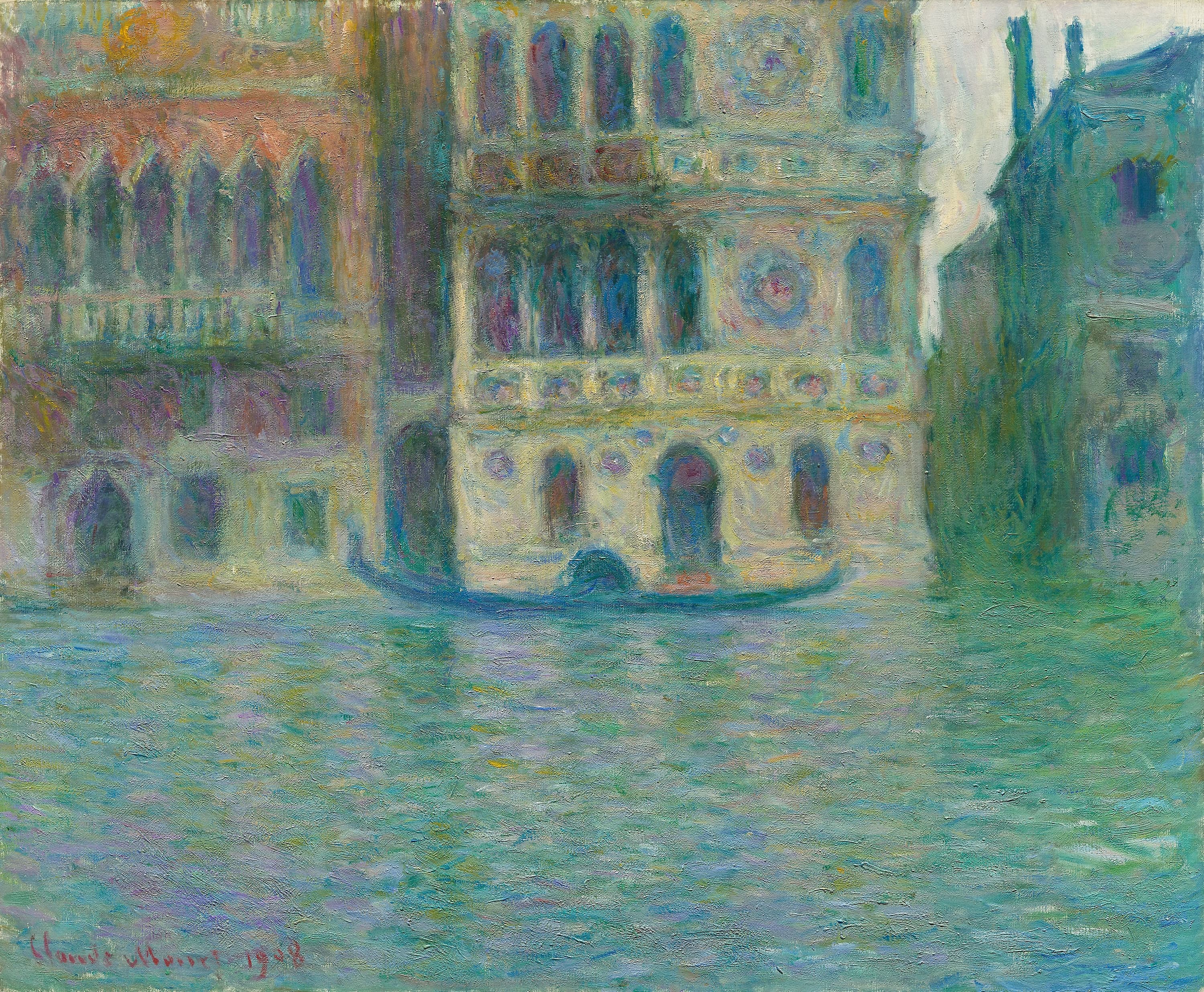
After Durand-Ruel and Bernheim-Jeune, the painting passed to the playwright Henri Bernstein in 1909, back to Durand-Ruel, and later to Martin A. Ryerson, the Chicago collector and trustee whose bequest of 1933 brought many Impressionist paintings to the museum. It hangs in the Art Institute's Impressionist galleries. See also Monet at the Art Institute of Chicago, Monet's Water Lilies and Giverny, and for Monet's Venice canvas in the same museum, Venice, Palazzo Dario.
Questions & answers
Where is Monet's 1906 Water Lilies?
It is in the Art Institute of Chicago, in the Mr. and Mrs. Martin A. Ryerson Collection (1933.1157). It usually hangs in the museum's Impressionist galleries alongside other Monets.
When was it painted?
In 1906, at Monet's water garden in Giverny. It is inscribed Claude Monet 1906 and was sold by the artist to Durand-Ruel and Bernheim-Jeune in June 1909, after the water-landscapes exhibition.
What does it show?
Only the pond's surface: clusters of lily pads with red, pink, white and yellow flowers around an open passage of deep blue water that reflects white clouds and the surrounding trees.
Why is there no bank or sky in the painting?
From about 1905 Monet lowered his gaze until the far bank disappeared, so the sky appears only as a reflection. This makes the surface read as both flat and deep, a step toward the Orangerie panels.
More by the artist
Claude Monet
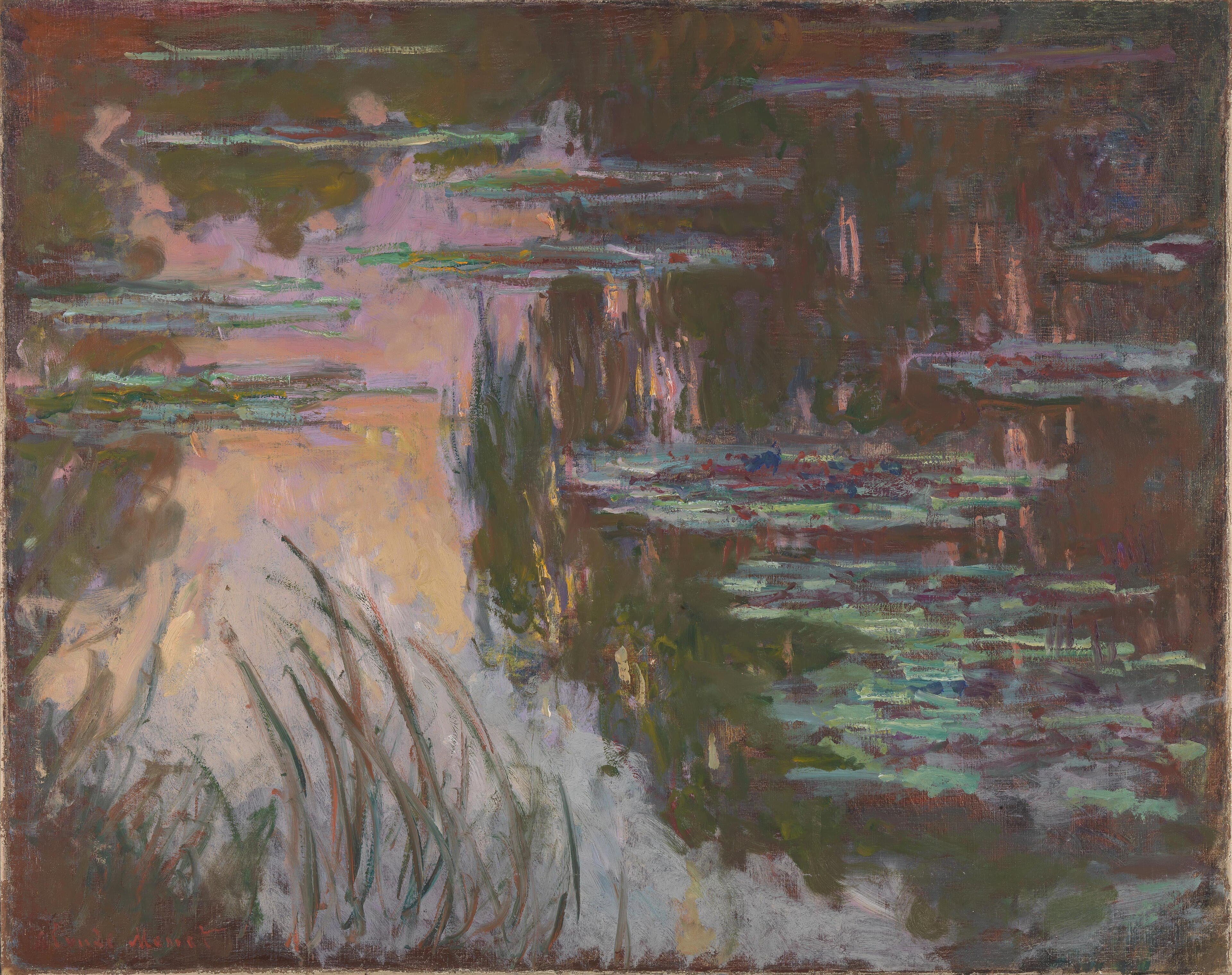
Water-Lilies, Setting Sun (National Gallery, London)
Claude Monet · c. 1907
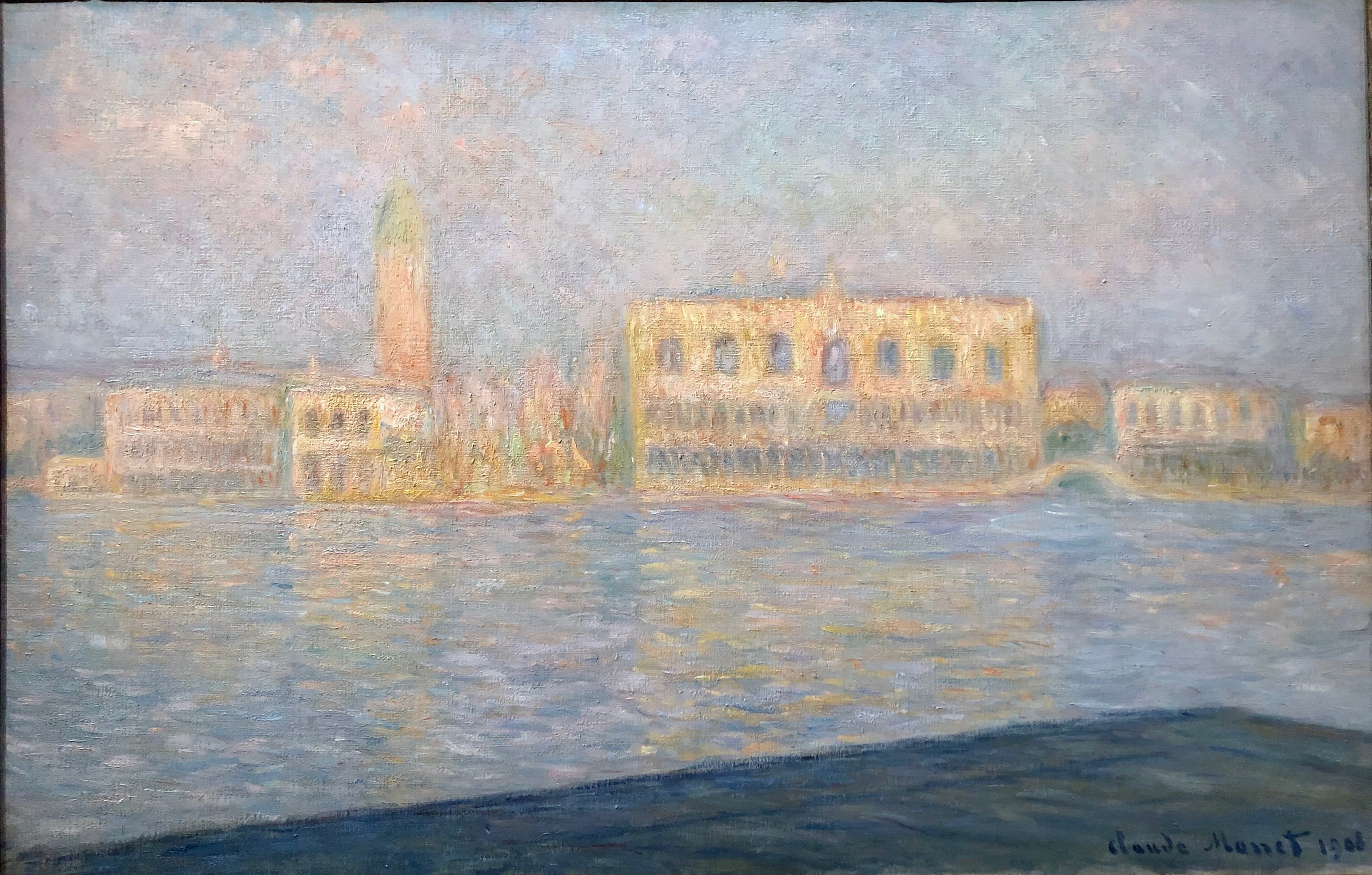
The Palazzo Ducale, Seen from San Giorgio Maggiore (Guggenheim)
Claude Monet · 1908

Still Life with Eggs
Claude Monet · 1907
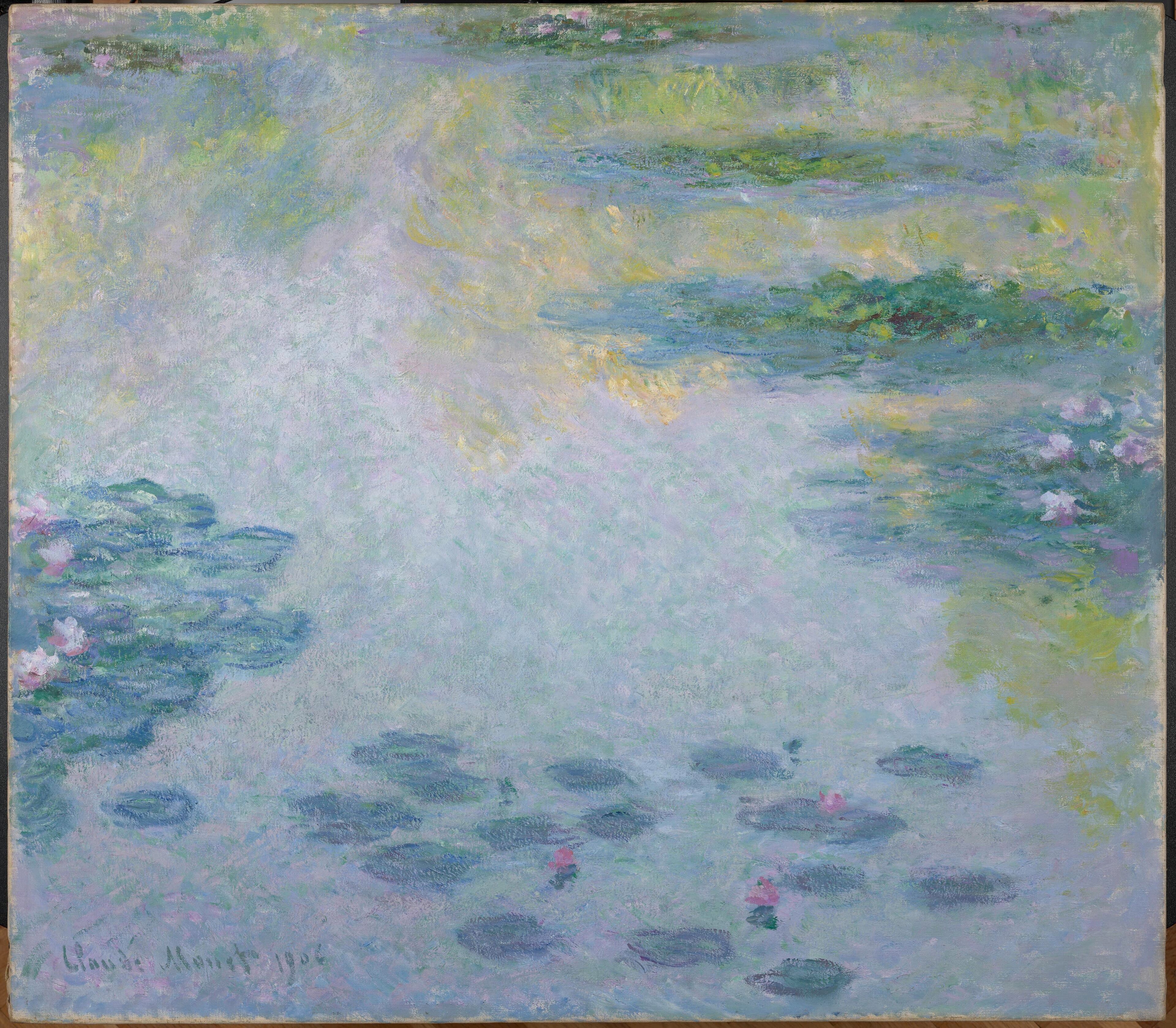
Waterlilies (1906, National Museum Cardiff)
Claude Monet · 1906
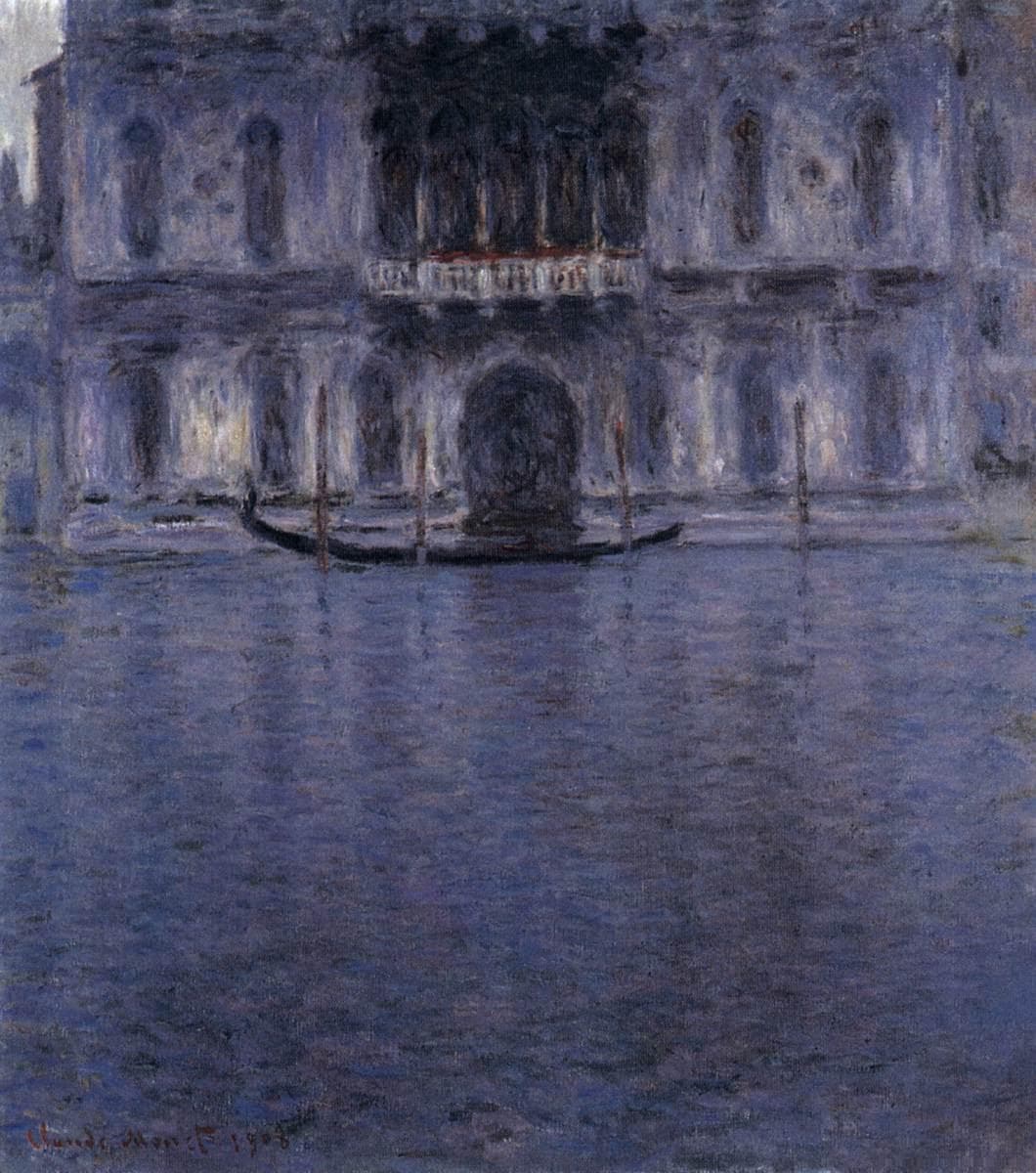
Palazzo Contarini
Claude Monet · 1908
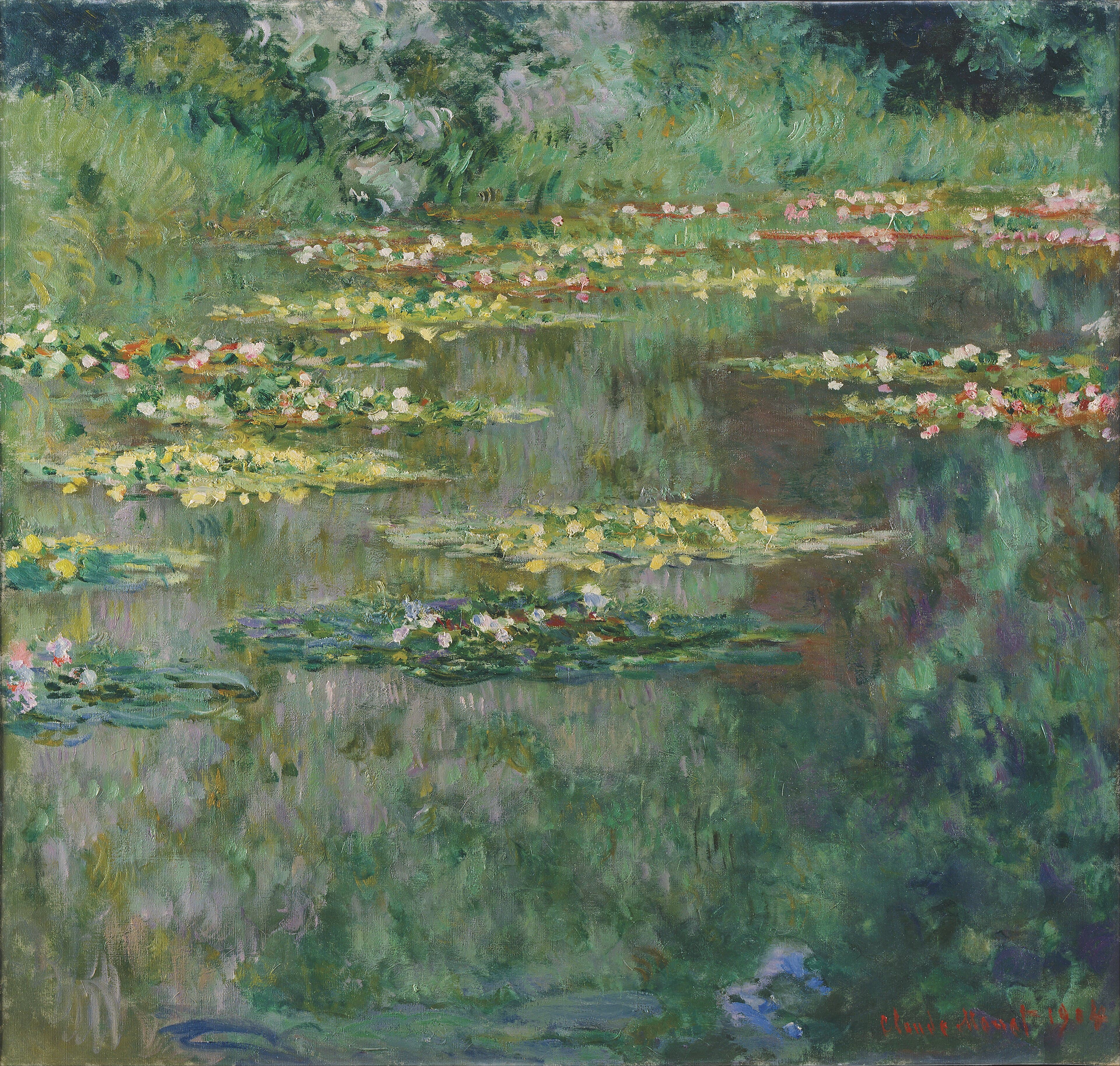
Le Bassin des Nymphéas (Denver)
Claude Monet · 1904
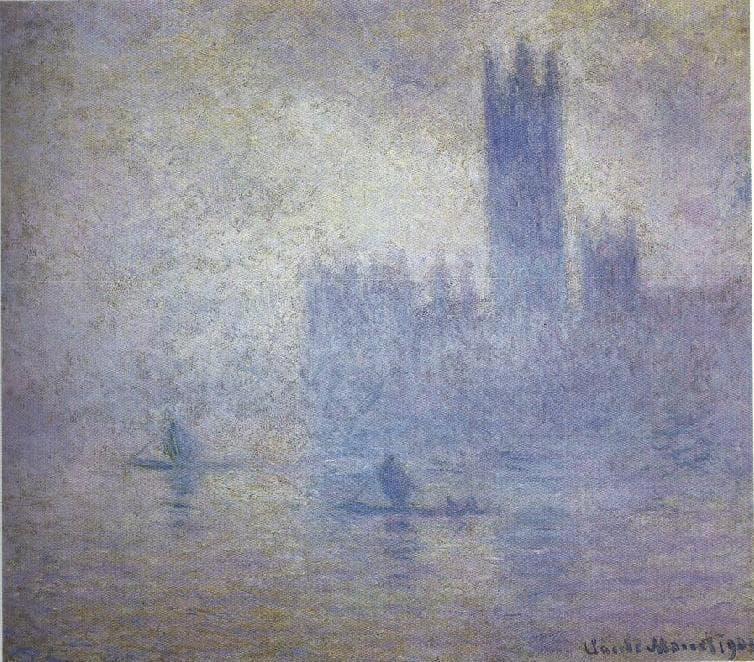
Houses of Parliament, Effect of Fog
Claude Monet · 1904
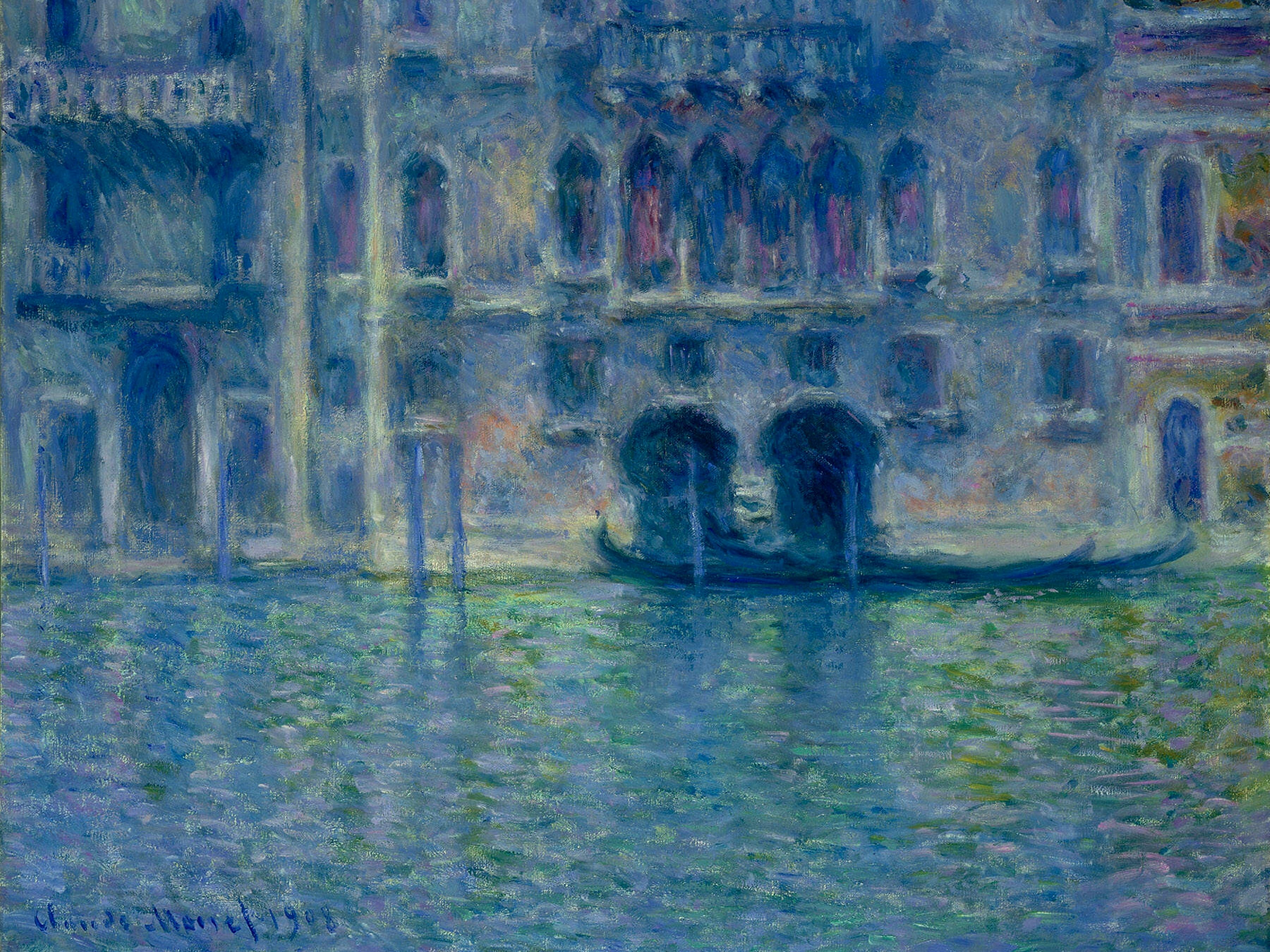
Palazzo da Mula, Venice
Claude Monet · 1908
Kindred works
You may also study
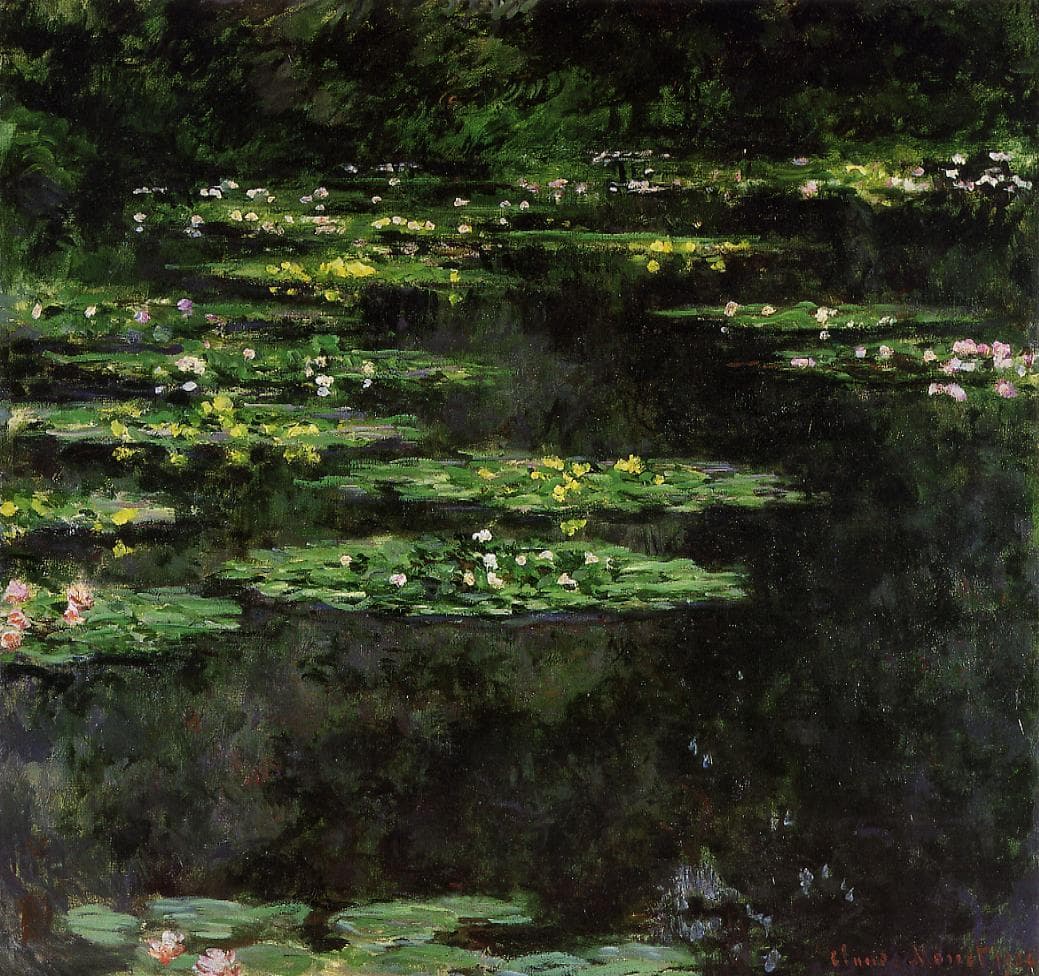
Water Lilies (1904, MuMa Le Havre)
Claude Monet · 1904
Water Lilies (Nymphéas), 1907 (Houston)
Claude Monet · 1907
Venice, Palazzo Dario
Claude Monet · 1908
Water Lilies: Setting Sun
Claude Monet · 1914–26
Water-Lily Pond (Bassin aux nymphéas, 1918–19)
Claude Monet · 1918–19
The Japanese Footbridge, Giverny
Claude Monet · c. 1922
Le Pont japonais (The Japanese Bridge)
Claude Monet · 1918
Le pont japonais
Claude Monet · 1918–24