Impressionism
Antibes
Claude Monet, 1888
Antibes, often called Cap d'Antibes, is an 1888 painting by Claude Monet of a single leaning pine on the shore at Antibes against a blue sea and pink mountains. It is in the Courtauld Gallery, London.
- Artist
- Claude Monet
- Date
- 1888
- Medium
- Oil on canvas
- Dimensions
- 65.5 × 92.4 cm
- Collection
- The Courtauld Gallery, London, United Kingdom
- Movement
- Impressionism
- Catalogue
- Wildenstein 1192
Painted at Monet on the Mediterranean
Claude Monet's Antibes, often listed as Cap d'Antibes, was painted in the spring of 1888 during a four-month stay on the French Riviera. The canvas, 65.5 by 92.4 centimeters and number 1192 in Wildenstein's catalogue, is in the Courtauld Gallery in London.
What you are looking at
A single maritime pine grows from a low rocky bank at the bottom of the picture, a little left of center, and leans out across the view. Its trunk bends in a slow S-curve, thin and dark, before the crown spreads in a broad, wind-shaped canopy that fills the top of the canvas and reaches almost to the right edge. That one tree organizes the whole composition: it splits the sea and sky into two unequal halves and sets the dark green of its needles against the pale air.
Behind it the sea fills the middle band in short horizontal strokes of turquoise, cobalt and lilac, with a few warm brown rocks breaking the surface near the shore. Across the water a range of mountains runs along the horizon in soft pink and violet, the color distant rock takes on in strong haze, and a thin line of white marks the far shore at its foot. The sky is streaked with cream, pale blue and lilac. The foreground bank is a strip of ochre and rust, with a dark clump of shrubs at the lower left.
How it was painted
The surface is dense and evenly worked. Monet builds the sea from thousands of small, flat touches laid side by side, so the water shimmers without any single wave being drawn. The sky is done with longer, thinner strokes that let the pale ground show through. The pine's foliage is the boldest passage: short, ragged dabs of dark green and blue-black, with sky color left between them so the crown looks airy rather than solid.
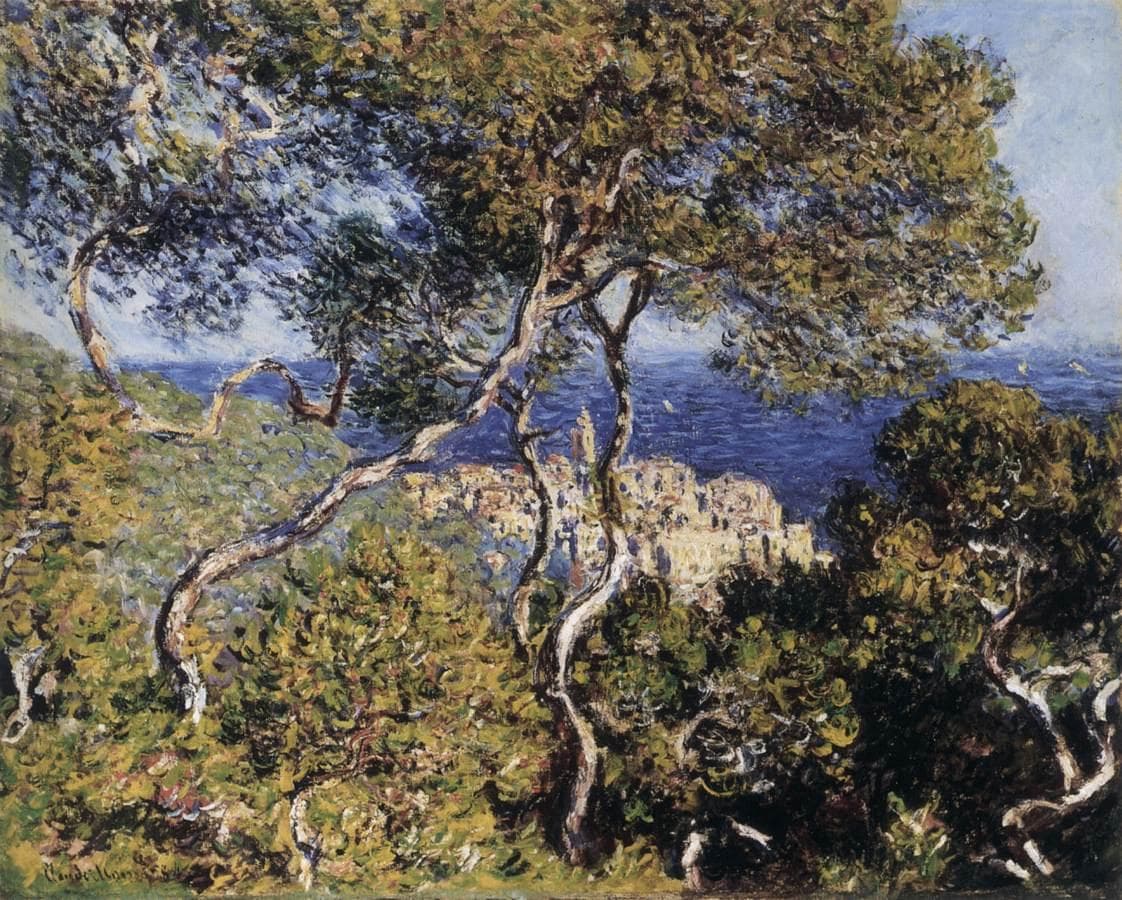
The palette is high and pastel, and Monet keeps contrasts low everywhere except in the tree. The result is the soft, pearly light of a Mediterranean spring, quite different from the fierce saturation he had chased at Bordighera four years earlier.
Japanese prints and the Riviera
The single tree cutting across the view, placed off-center and cropped by the frame, recalls the Japanese woodblock prints Monet collected, especially the landscapes of Hokusai and Hiroshige, where a pine often frames a mountain or a bay. In the south Monet used these devices with new confidence. Several other Antibes canvases repeat the arrangement with the tree seen from slightly different positions, and the series-like repetition of a motif under changing light points toward the Haystacks he would begin two years later.
Monet at Antibes
Monet arrived at Antibes in January 1888 and stayed until early May, lodging at the Château de la Pinède, a residence that took in artists. He worked on dozens of canvases, complaining in letters about the difficulty of the light and the changing weather. The soft light he chased here is the opposite of the stormy Atlantic pictures of Belle-Île he had made in 1886, such as The Rocks of Belle-Île, with their black rocks and churning surf.
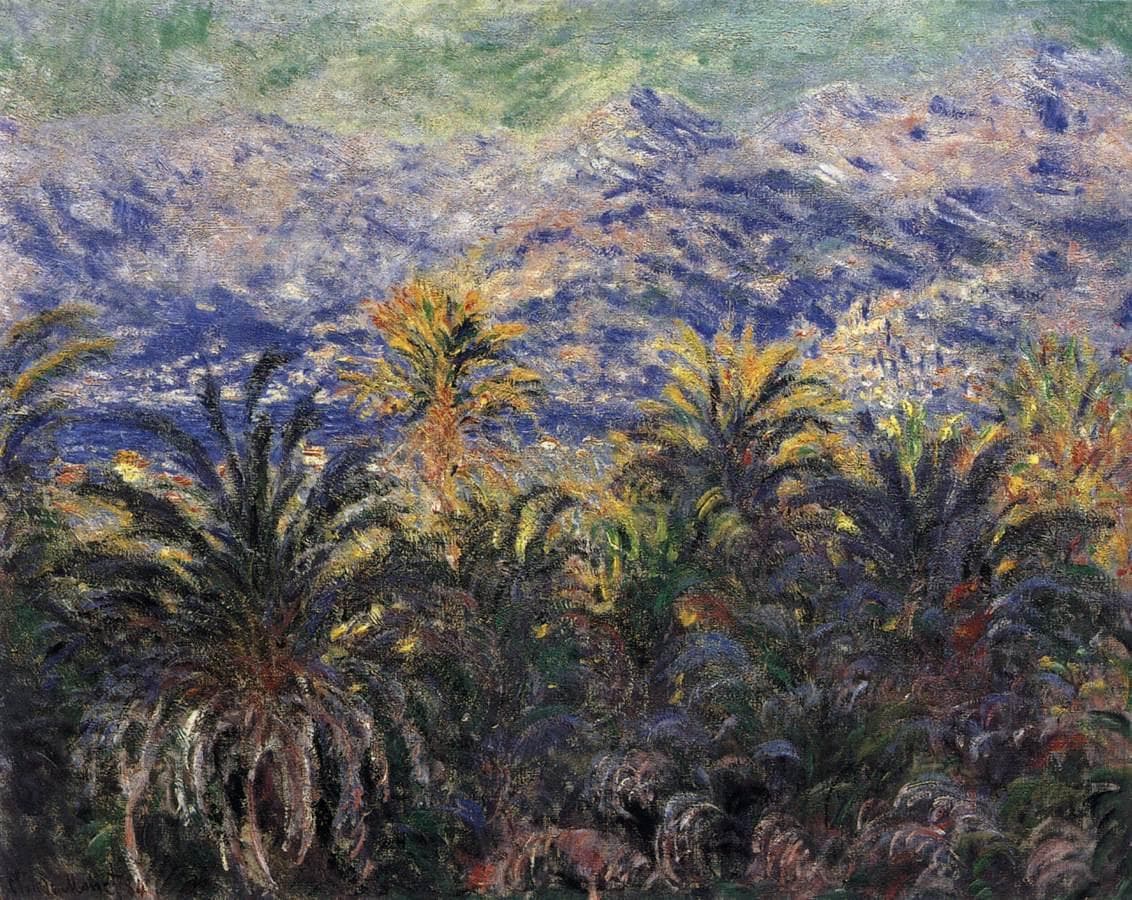
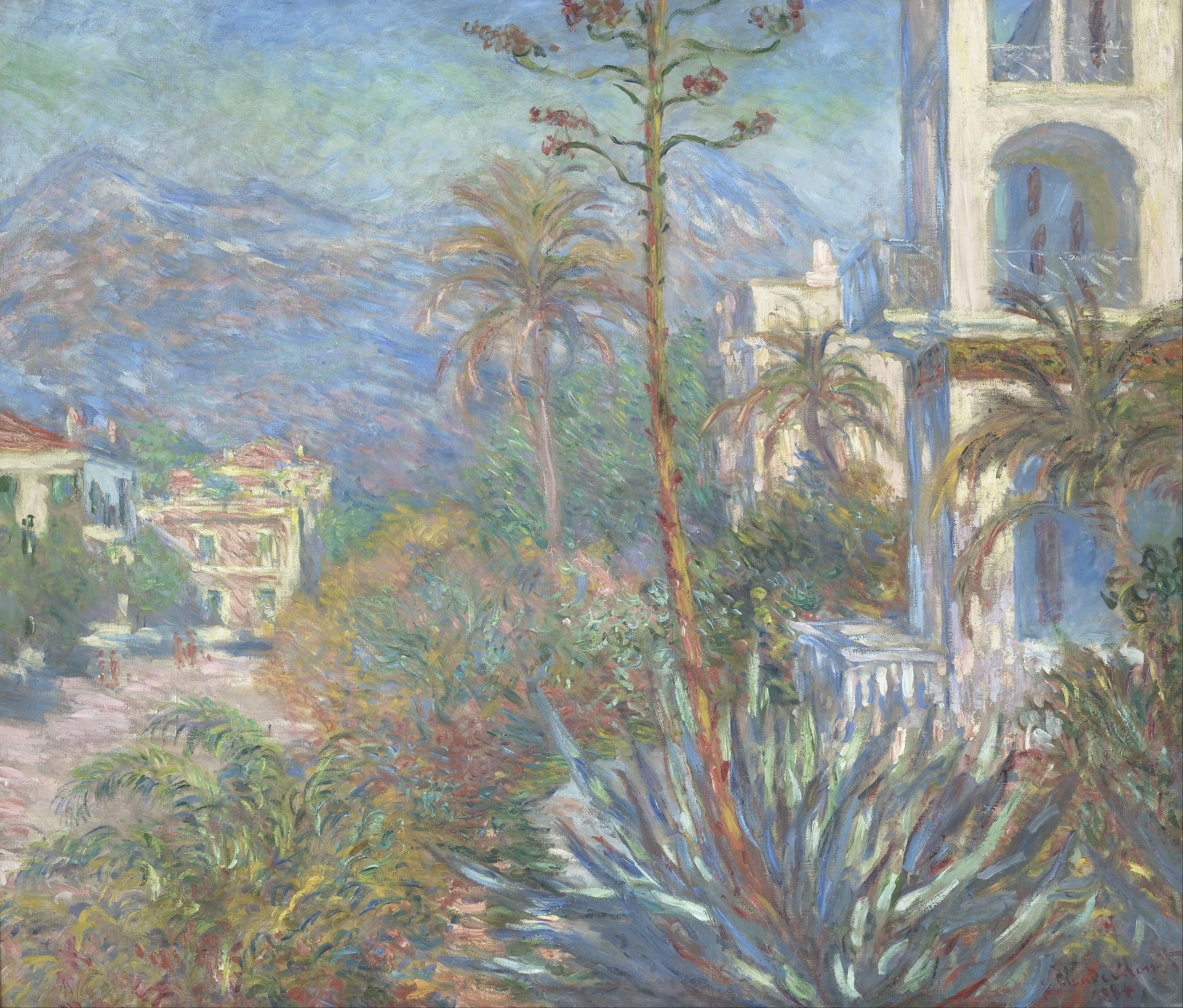
That summer ten of the Antibes pictures were shown in Paris at Boussod, Valadon & Cie, where Theo van Gogh, Vincent's brother, ran the modern department. The show sold well and helped confirm Monet's growing reputation, at the moment Theo's brother Vincent was in Arles painting his own southern light. For both of his southern campaigns, see our hub on Monet on the Mediterranean, which also covers Palm Trees at Bordighera and Villas at Bordighera.
Where to see it
The painting belongs to the Courtauld Gallery at Somerset House, London, and came to it in 1948 with the bequest of Samuel Courtauld, the textile industrialist who formed one of Britain's finest Impressionist collections. The same gallery holds Monet's Vase of Flowers. For other collections worldwide, see where to see Monet's paintings. More on Claude Monet.
Questions & answers
Where is Monet's Antibes painting with the pine tree?
This 1888 view of a single pine against the sea and mountains is in the Courtauld Gallery at Somerset House in London. It came to the gallery in 1948 with the bequest of Samuel Courtauld. Monet painted several other Antibes views with similar trees, now in museums and private collections.
When and where was Antibes painted?
Monet painted it at Antibes on the French Riviera between January and May 1888, while staying at the Château de la Pinède. He produced about three dozen canvases there, and ten were exhibited in Paris that summer by Boussod, Valadon & Cie, in a show organized by Theo van Gogh.
What does Monet's Antibes show?
A single wind-bent pine leans across the picture from a rocky shore, its dark crown spreading against a pale sky. Behind it lie a turquoise and lilac sea with a few rocks and a range of pink and violet mountains on the far side of the bay.
Why does the tree lean across the painting?
Monet chose a wind-bent pine and placed it off-center so that it cuts across the view. The device comes from the Japanese woodblock prints he collected, where trees often frame a distant landscape. It also creates tension between the dark tree and the pale sea and sky.
More by the artist
Claude Monet

Bridge over a Pond of Water Lilies
Claude Monet · 1899

Woman with a Parasol – Madame Monet and Her Son
Claude Monet · 1875

Sunset in Venice
Claude Monet · 1908–12

La Grenouillère
Claude Monet · 1869

Beach in Pourville
Claude Monet · 1882

Springtime
Claude Monet · 1872

Boating on the River Epte
Claude Monet · 1890

The Seine at Asnières (Hermitage)
Claude Monet · 1873
Also painted in 1888
The same year
Kindred works
You may also study
Bordighera
Claude Monet · 1884
Palm Trees at Bordighera
Claude Monet · 1884
Villas at Bordighera
Claude Monet · 1884
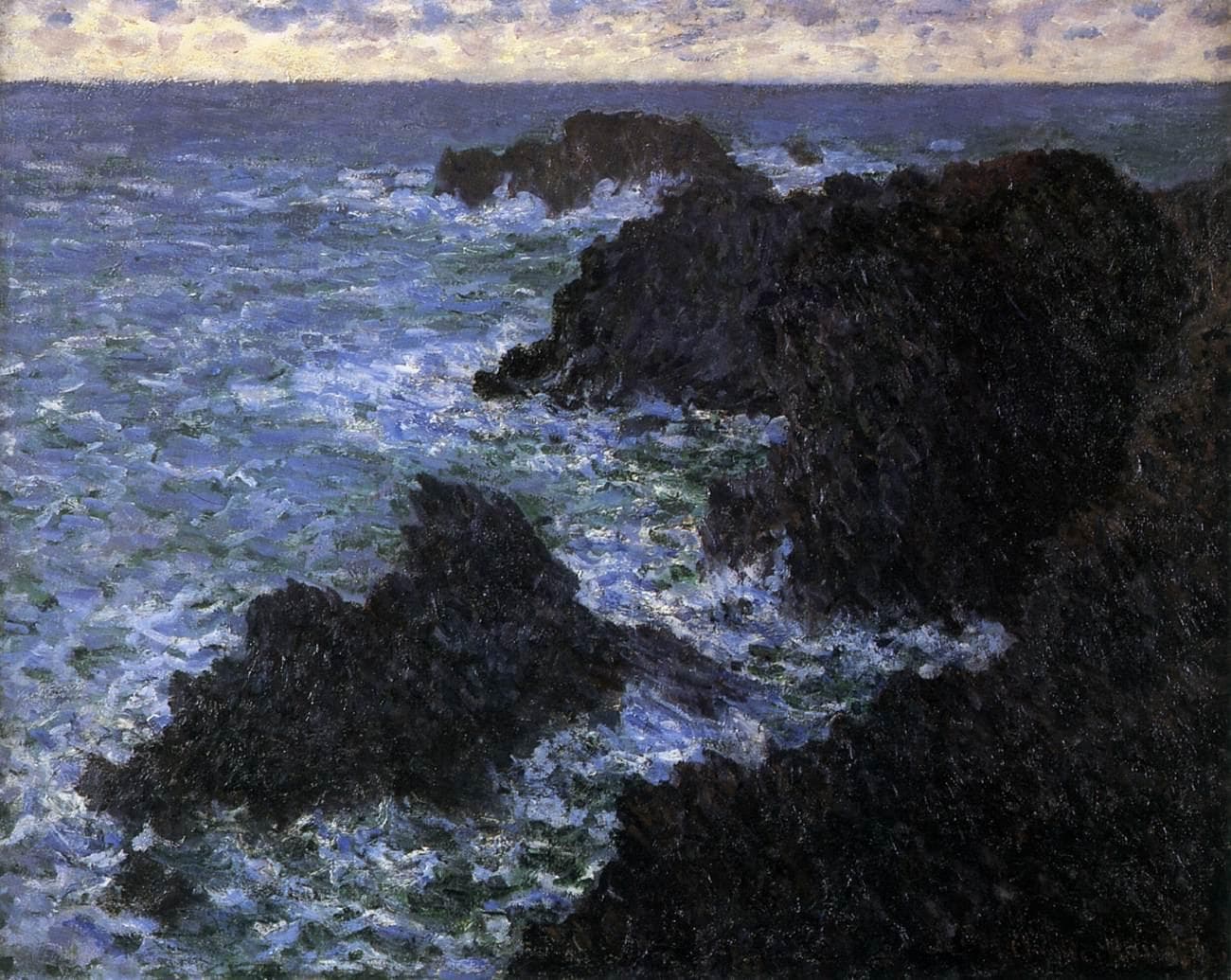
The Rocks of Belle-Île, the Wild Coast
Claude Monet · 1886
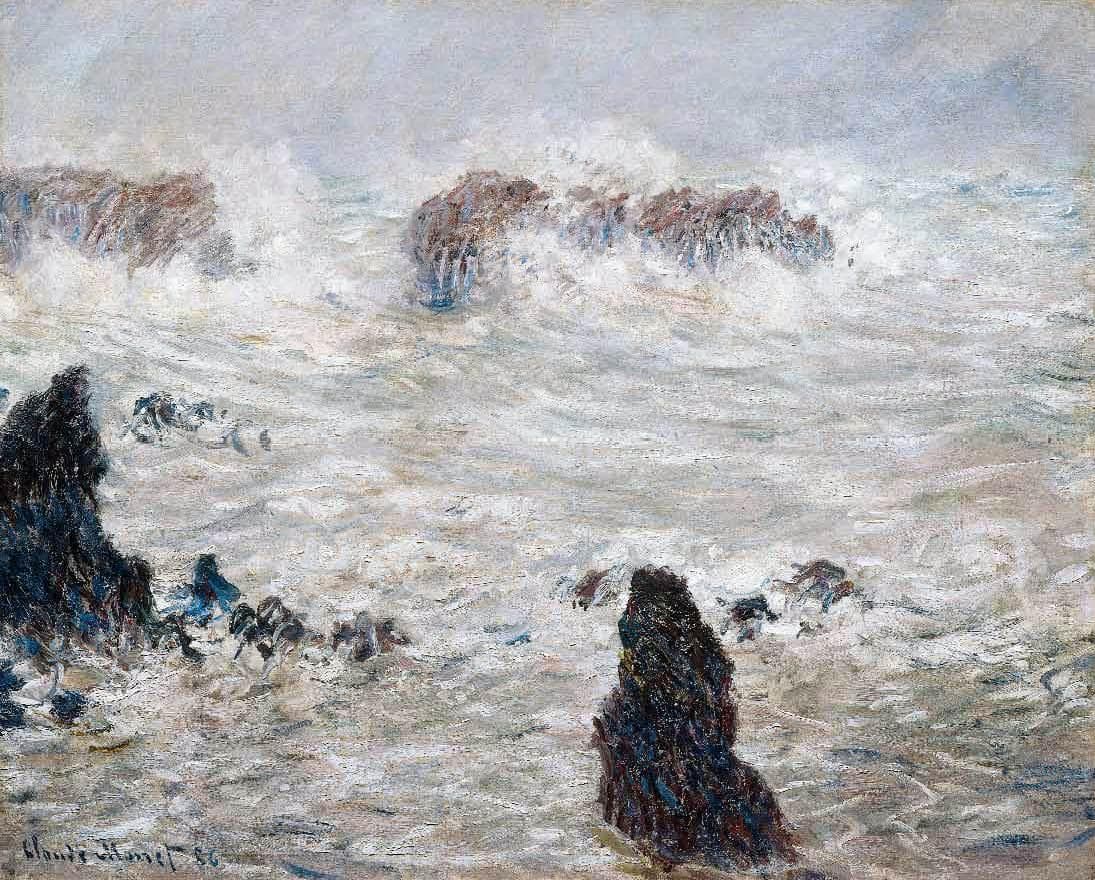
Storm off Belle-Île
Claude Monet · 1886
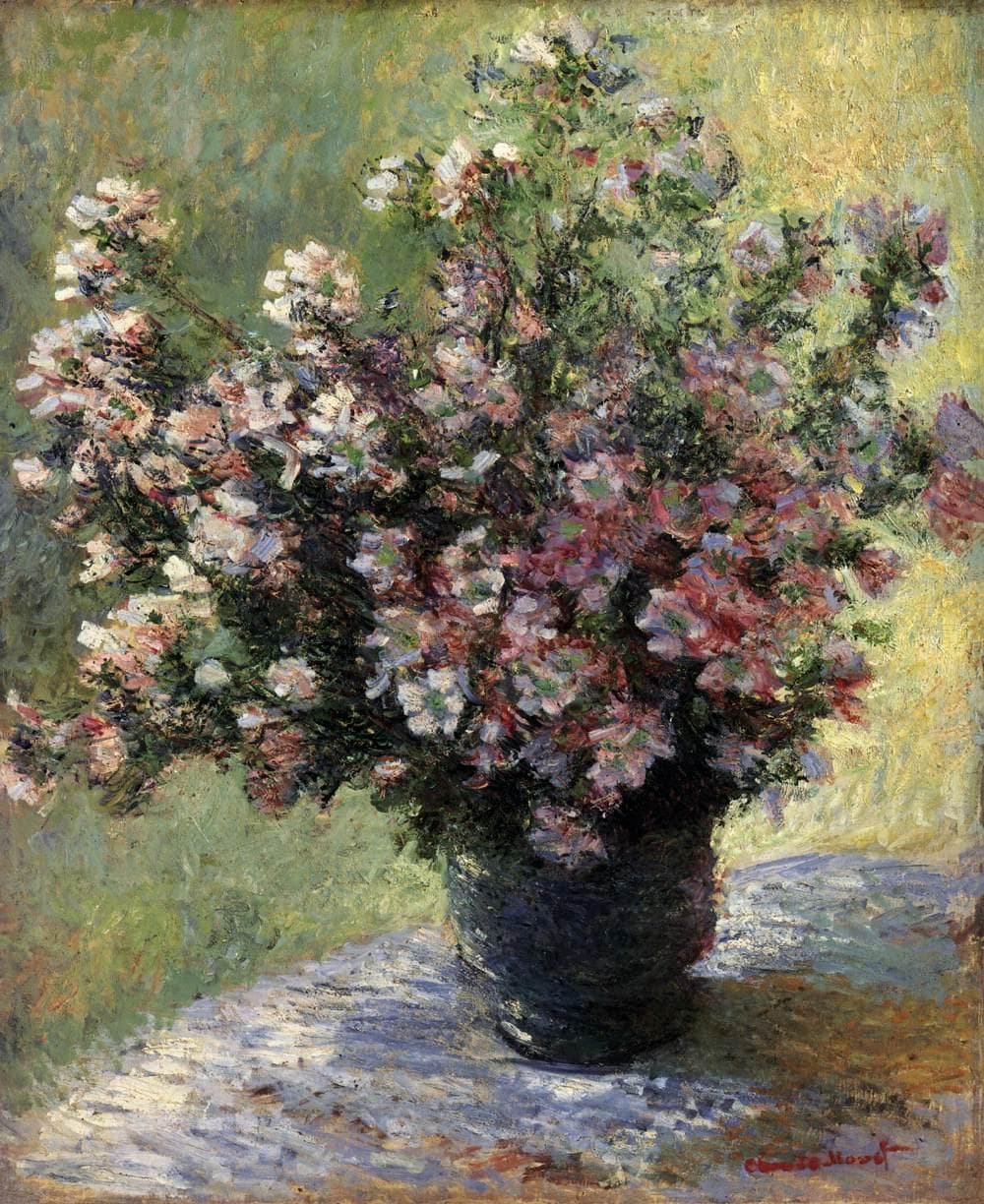
Vase of Flowers
Claude Monet · c. 1881–82

The Scream
Edvard Munch · 1893

Ophelia
John Everett Millais · 1851–52