Image: Israel Museum, Jerusalem, via Google Arts & Culture · Public domain · via Wikimedia Commons
Pond with Water Lilies (Israel Museum)
Claude Monet, 1907
Pond with Water Lilies is a 1907 painting by Claude Monet of his Giverny lily pond in a tall format, a white reflection falling through dark water crossed by bands of pink-flowered pads. It is in the Israel Museum, Jerusalem.
- Artist
- Claude Monet
- Date
- 1907
- Medium
- Oil on canvas
- Collection
- Israel Museum, Jerusalem, Israel
- Movement
- Impressionism
- Catalogue
- Wildenstein 1710
- Nature & Landscape
- Water & Sea
Pond with Water Lilies is a 1907 canvas by Claude Monet of the surface of his lily pond at Giverny, in the Israel Museum in Jerusalem, where it is credited to the Sam Spiegel Collection. It is one of the tall, upright lily paintings Monet made in 1907, in which the reflection of light through the trees falls down the canvas like a waterfall. It is signed and dated Claude Monet 1907 at the lower right.
What you're looking at
The canvas is markedly taller than it is wide. At the top, a band of water is crowded with lily pads and flowers: many pink and rose blossoms on the right, white ones at the far left. Below this band, a bright white shape drops down the canvas, narrow at the top and spreading into a large, soft mass of white and lilac in the middle: the reflection of a sunlit tree or of bright sky between trees. To the right, the water is dark, a deep blue-green and slate gray streaked with vertical reflections of foliage.
Across the middle runs a thin band of pads with yellow flowers. Lower down, at the left, a cluster of pads bears pink and red blossoms. At the bottom, the pads become larger and paler, a white flower and a blue-white one sit at the right, and three or four pink blossoms float in the lower left corner. As in all the 1907 verticals, the pads grow toward the bottom edge, so we feel we are standing on the bank looking down and out over the water.
The pond in 1907
Monet dug the pond in 1893 and enlarged it in 1901–02. From 1903 he painted its surface continually, in the series he called the paysages d'eau, and in May 1909 Durand-Ruel showed forty-eight of them in Paris. In 1907 he tried new formats: tall canvases like this one, and a few circular ones, such as the Vernon Nymphéas of 1908. The tall format suits the reflections of the trees around the pond, which fall vertically into the water.
How this version differs
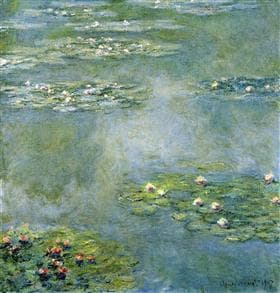
The closest relative is Houston's Water Lilies (Nymphéas), with almost the same design. The Jerusalem canvas is narrower and taller, and its top band is richer in pink flowers, so the upper part of the picture is warmer. The central white is more concentrated, a single bright fall rather than broken cloud, and the dark water on the right is a little grayer. Compare also the cooler, more evenly lit square canvases of 1907, such as the Pola Museum's Water Lilies or the Wadsworth's Nymphéas, which keep the reflections soft rather than dramatic.
How it was painted
The white reflection is laid in with thick, dry, mostly vertical strokes over a darker underlayer, which shows at the edges and gives the shape its soft, feathered outline. The dark water is brushed in long vertical strokes of blue, green and gray. The lily pads are short, horizontal ellipses, outlined in darker color, and the flowers are single loaded touches of pink, white and yellow.
Ownership and where to see it
The painting came to the Israel Museum from the collection of Sam Spiegel (1901–1985), the film producer of The Bridge on the River Kwai and Lawrence of Arabia, whose collection of Impressionist and modern art went to the museum. It has also been lent abroad, including to an exhibition of works from the Israel Museum at the Seoul Arts Center. Published dimensions vary between sources, so they are not given here. For the series see Monet's Water Lilies; for the garden, Giverny; for other public Monet collections, Where to See Monet's Paintings.
Questions & answers
Where is Monet's Pond with Water Lilies?
It is in the Israel Museum in Jerusalem, where it is credited to the Sam Spiegel Collection, from the film producer Sam Spiegel. It has occasionally been lent abroad, including to Seoul.
When was it painted?
In 1907, at Monet's lily pond in Giverny. It is signed and dated 1907 and belongs to a group of tall water-lily canvases he painted that year.
What does it show?
The surface of the lily pond in a tall format: a bright white reflection falling down the center through dark blue-green water, crossed by bands of pads with pink, white and yellow flowers.
Is there a similar painting?
Yes, Water Lilies (Nymphéas) of 1907 in the Museum of Fine Arts, Houston, has nearly the same composition. The Jerusalem canvas is taller and narrower, with more pink flowers at the top.
More by the artist
Claude Monet
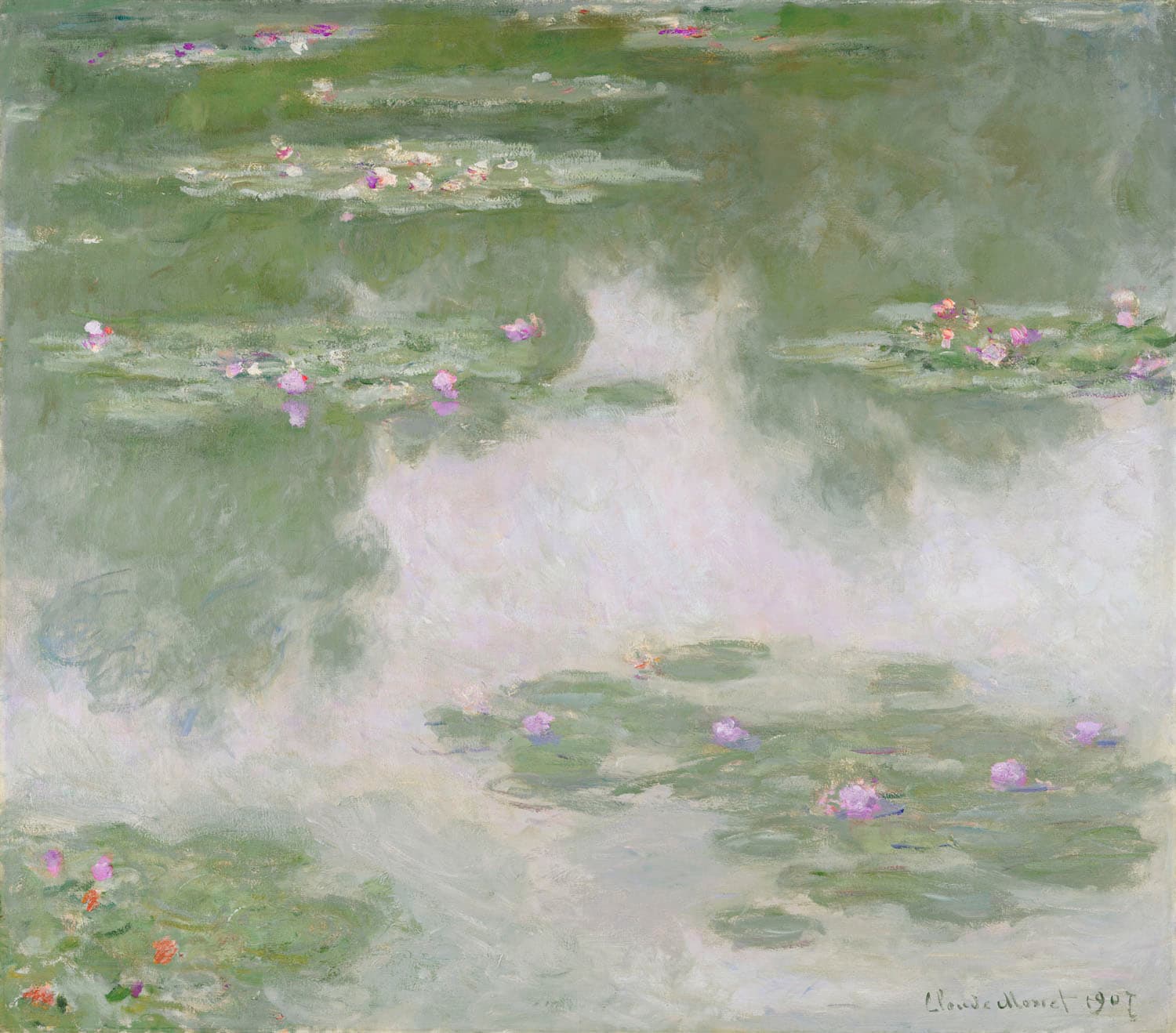
Nymphéas (Water Lilies), 1907 (Wadsworth Atheneum)
Claude Monet · 1907
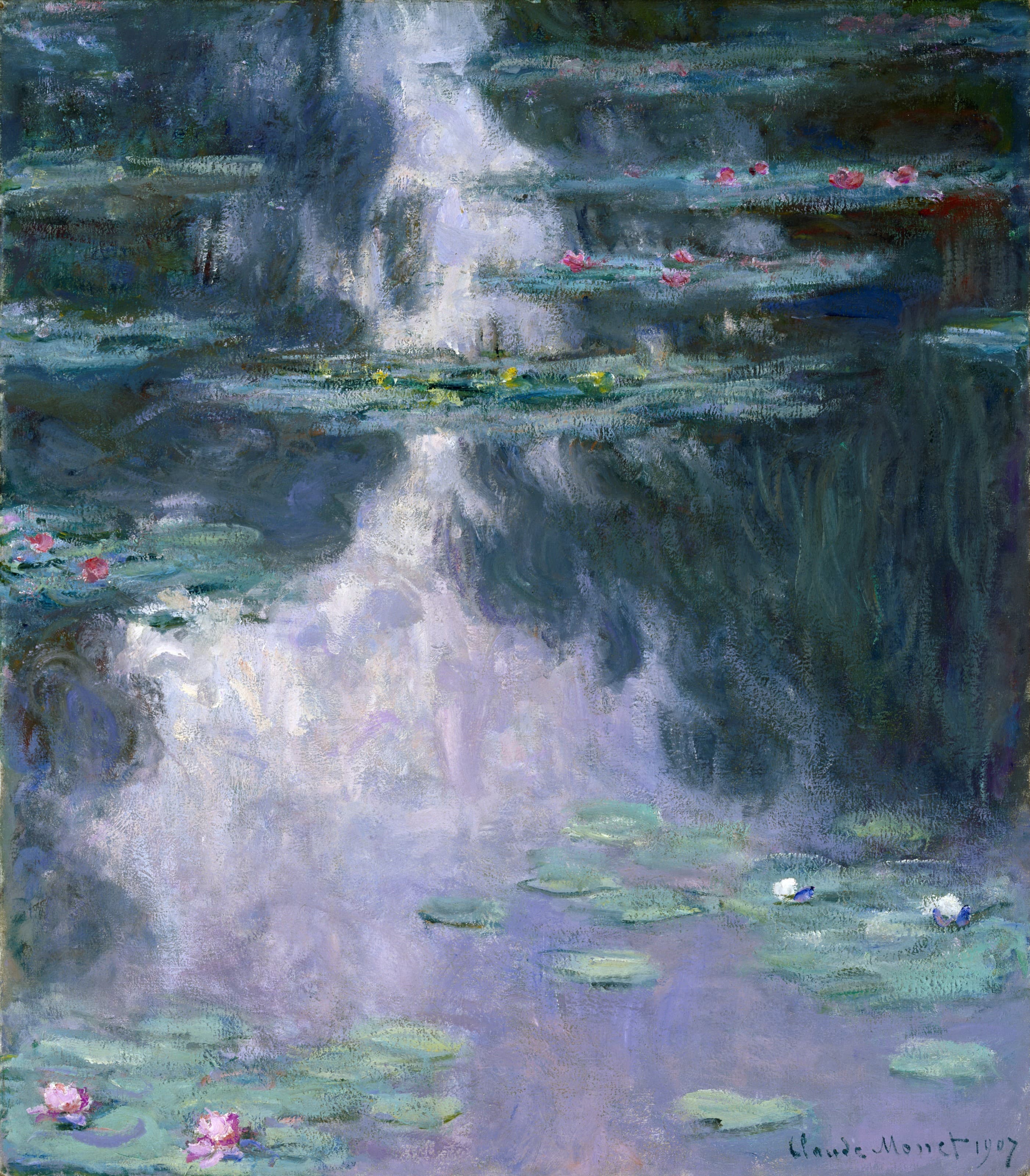
Water Lilies (Nymphéas), 1907 (Houston)
Claude Monet · 1907
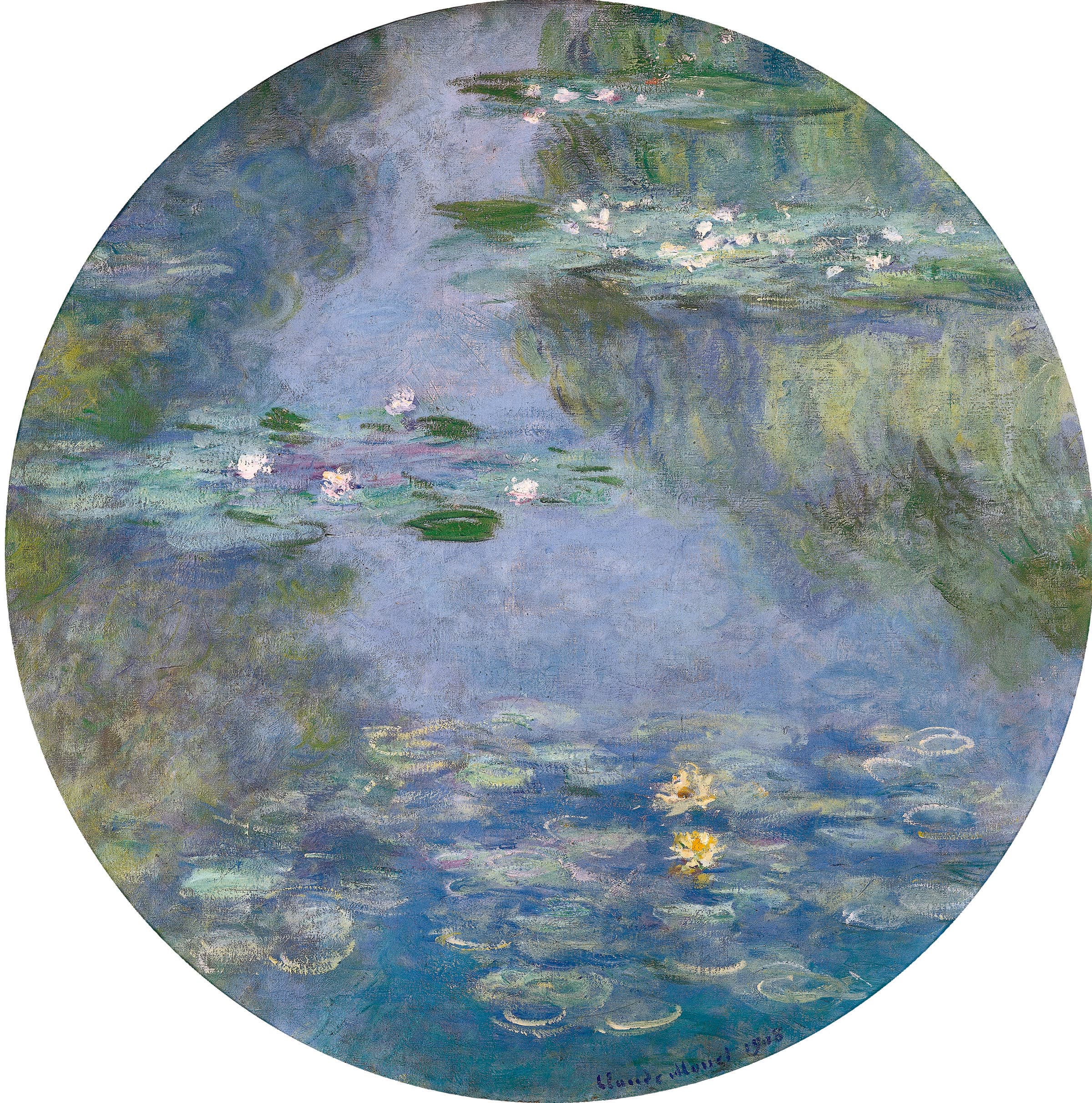
Nymphéas (1908 tondo, Vernon)
Claude Monet · 1908
The Doge's Palace Seen from San Giorgio Maggiore (Zürich)
Claude Monet · 1908
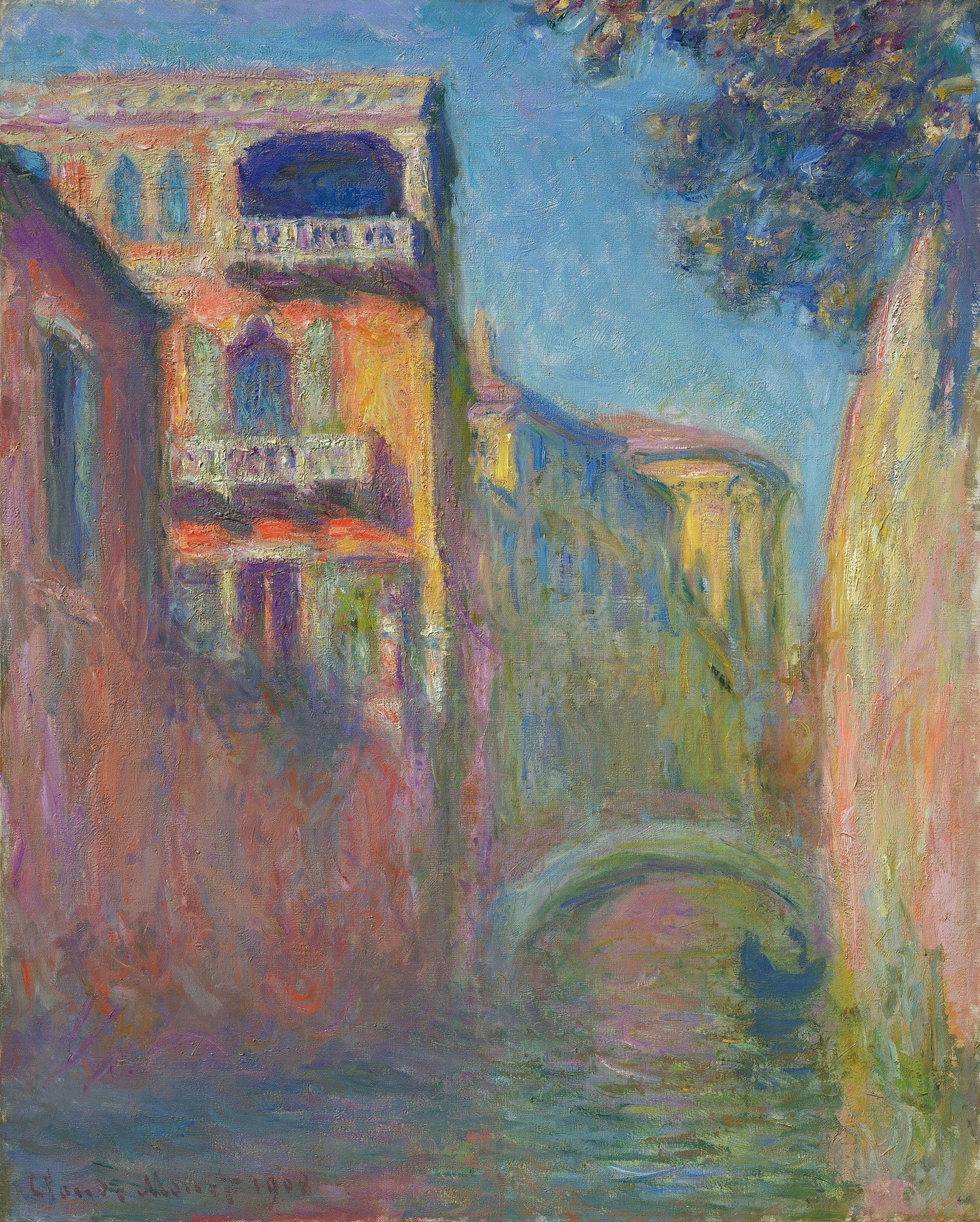
The Rio della Salute
Claude Monet · 1908
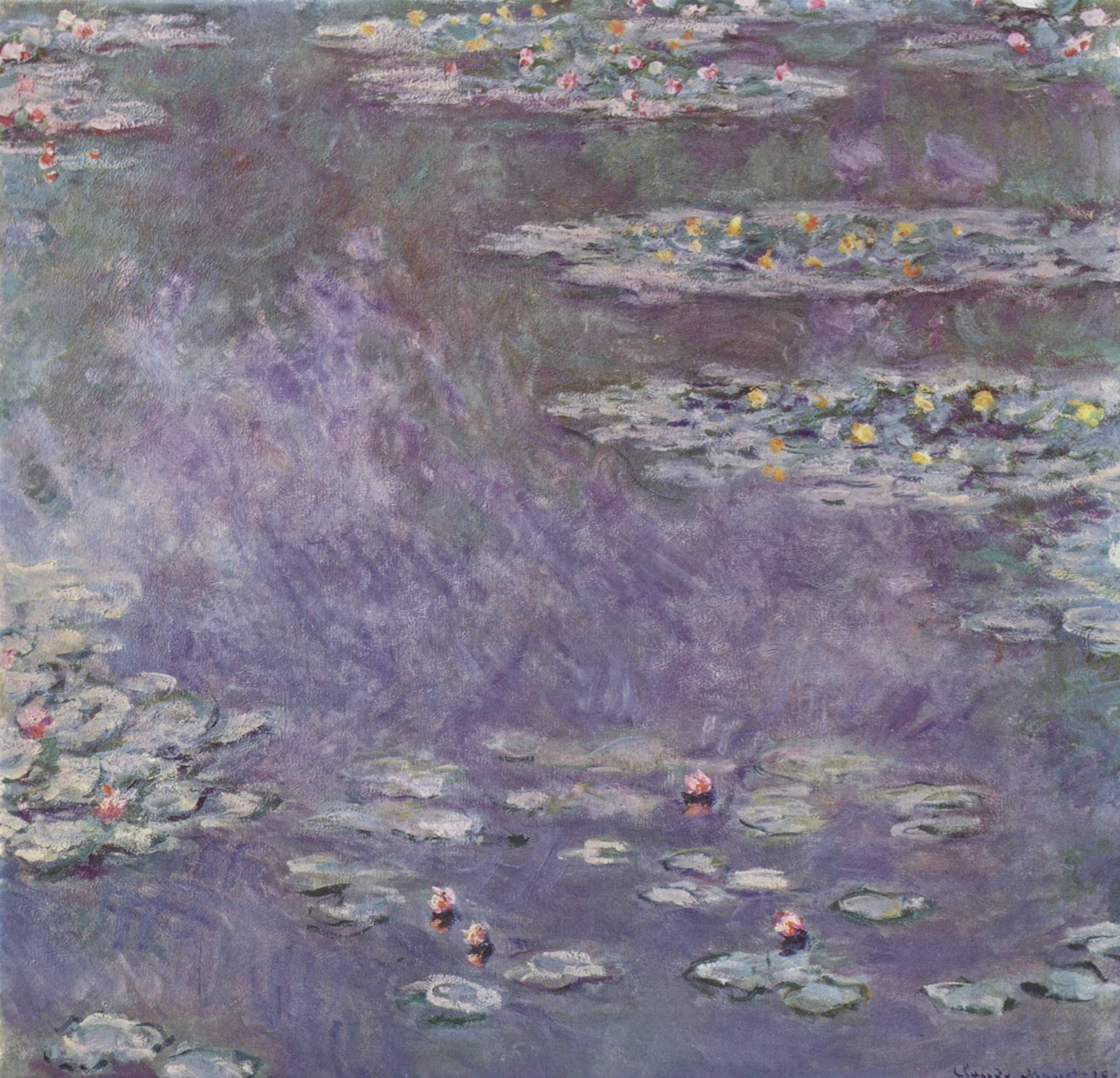
Nymphéas (Oyamazaki Villa Museum)
Claude Monet · 1908
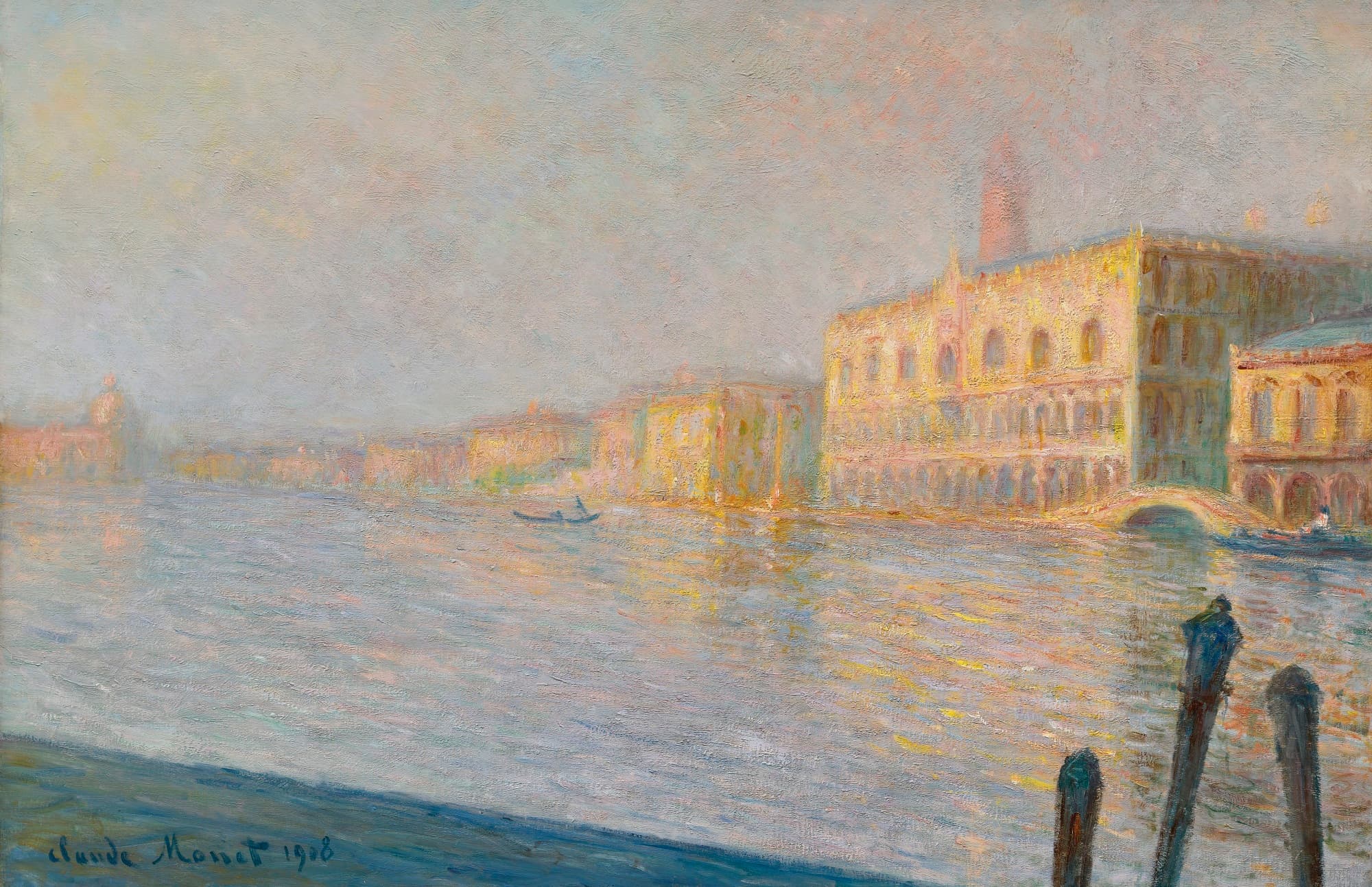
The Palazzo Ducale (Le Palais Ducal), 1908
Claude Monet · 1908
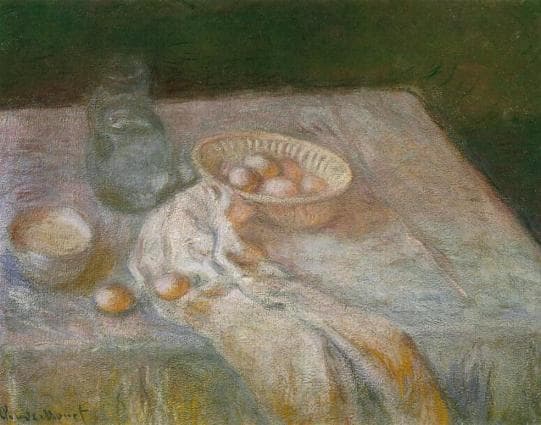
Still Life with Eggs
Claude Monet · 1907
Also painted in 1907
The same year
Kindred works
You may also study
Water Lilies (1907, Pola Museum of Art)
Claude Monet · 1907
Water-Lilies, Setting Sun (National Gallery, London)
Claude Monet · c. 1907
Nymphéas en fleur
Claude Monet · c. 1914–17
Waterlilies (1903, Dayton Art Institute)
Claude Monet · 1903
Le pont japonais (Japanese Bridge)
Claude Monet · 1918–24

Nymphéas [Waterlilies] (National Gallery of Australia)
Claude Monet · c. 1914–17
The Japanese Bridge
Claude Monet · 1918
The Japanese Bridge
Claude Monet · c. 1919–24