Impressionism
Palazzo Contarini
Claude Monet, 1908
Palazzo Contarini is Claude Monet's 1908 painting of a Renaissance palace facade on Venice's Grand Canal, seen across violet-blue water with a gondola moored at its door. The upright canvas is in the Kunstmuseum St. Gallen, Switzerland.
- Artist
- Claude Monet
- Date
- 1908
- Medium
- Oil on canvas
- Dimensions
- 92 × 81 cm
- Collection
- Kunstmuseum St. Gallen, St. Gallen, Switzerland
- Movement
- Impressionism
- Catalogue
- Wildenstein W 1767
Painted at Monet in Venice
Palazzo Contarini is Claude Monet's 1908 painting of a palace of the Contarini family on Venice's Grand Canal, its facade seen head-on across violet-blue water with a gondola moored at the water door. The upright canvas, 92 × 81 cm, signed and dated Claude Monet 1908 at lower left, is in the Kunstmuseum St. Gallen in Switzerland. It is number 1767 in Wildenstein's catalogue.
What you are looking at
The canvas divides almost exactly in two. The upper half is all facade: the palace front fills the width of the picture and runs off the top edge, so that only a sliver of pale haze shows at the upper left. Monet gives us no roofline, no sky and no neighboring buildings, just a wall of stone hanging over the water.
The facade is a Renaissance design of round-headed windows set in rows across two upper floors. At the center of the main floor a deeper, darker group of arched openings sits above a balcony with a white balustrade, and on the balustrade Monet places a few small touches of red, flowers or a hanging cloth, the only warm accent in the upper half. Directly below, a tall arched water door opens straight onto the canal, its interior a pool of blue-black.
In front of the door lies a long black gondola, its hull curving up at both ends, tied between tall mooring poles that rise out of the water like posts of a fence. The lower half of the picture is the canal itself: a broad, calm surface of lavender, blue and gray, worked in short horizontal strokes. The poles and the pale stone are reflected as faint vertical streaks that break up as they go down.
Color and handling
Everything is painted in a narrow key of lilac, violet, blue, rose and pearl gray. The stone is not described block by block; its ornament is suggested by darker flicks and lighter dabs that read as relief from a distance and dissolve when you come close. The signature at lower left is in orange-red, a deliberate spark against the cool water.
Monet's surface here is dense and worked over, with small interwoven touches of closely related color built up in successive layers. That density is typical of the Venice pictures, which he began on the spot and then reworked at Giverny for more than three years before showing them.
Monet in Venice, autumn 1908
Monet went to Venice only once, with his wife Alice, from early October to early December 1908. For the first two weeks they were guests of the American patron Mary Young Hunter at the Palazzo Barbaro on the Grand Canal, then moved to the Hotel Britannia. According to the Museum Barberini in Potsdam, Monet painted the Contarini facade from the Palazzo Barbaro, looking across to a palace on the south side of the canal. He worked on 37 Venetian compositions in all, eleven of them palace facades.
He painted the Palazzo Contarini twice. The other version, a horizontal canvas of 73 × 92 cm (Le Palais Contarini, W 1766), is now in the Museum Barberini; the St. Gallen picture is the vertical one, which pushes the facade higher and gives the water more room. Compare also Gondola in Venice in Nantes, The Grand Canal in Boston and The Palazzo Ducale Seen from San Giorgio Maggiore at the Met.
Why paint a facade straight on?
The frontal, close-cropped view repeats a method Monet had used for the Rouen Cathedral series in 1892–94: the building becomes a flat screen on which light and air can be painted, rather than an architectural record. In Venice the subject adds water, so that the facade has a double, the reflection, and the picture is half stone and half liquid light.
The Venice pictures were shown at the Bernheim-Jeune gallery in Paris in May and June 1912 under the title Claude Monet: Venise, a year after Alice's death. For Claude Monet, who was by then beginning to suffer from cataracts, they were among the last pictures painted away from Giverny.
Where to see it
The painting belongs to the Kunstmuseum St. Gallen in eastern Switzerland. It is not always on display, so check before visiting. For other museums with important Monets, see where to see Monet's paintings.
Questions & answers
Where is Monet's Palazzo Contarini?
This upright version, 92 × 81 cm and dated 1908, is in the Kunstmuseum St. Gallen in Switzerland. Monet painted the palace twice; the other version, a horizontal canvas of 73 × 92 cm, is in the Museum Barberini in Potsdam, Germany. Both show the facade frontally across the Grand Canal.
When did Monet paint Palazzo Contarini?
He began it during his only visit to Venice, from early October to early December 1908, when he stayed first at the Palazzo Barbaro and then at the Hotel Britannia. Like most of his Venice canvases, it was reworked at Giverny afterward and shown at the Bernheim-Jeune gallery in Paris in 1912.
What does Monet's Palazzo Contarini show?
The front of a palace of the Contarini family, one of Venice's oldest dynasties, filling the upper half of the canvas, with round-arched windows, a central balcony and a water door where a black gondola is moored. The lower half is the canal, painted in violet, blue and gray with faint reflections of the poles.
How many versions of Palazzo Contarini did Monet paint?
Two, out of 37 Venetian compositions. The St. Gallen canvas (Wildenstein 1767) is vertical and gives more room to the water; the Museum Barberini canvas (Wildenstein 1766) is horizontal. Both use the frontal, close-up view of a facade that Monet had developed in his Rouen Cathedral series.
More by the artist
Claude Monet

Bridge over a Pond of Water Lilies
Claude Monet · 1899

Woman with a Parasol – Madame Monet and Her Son
Claude Monet · 1875

Sunset in Venice
Claude Monet · 1908–12

La Grenouillère
Claude Monet · 1869

Beach in Pourville
Claude Monet · 1882

Springtime
Claude Monet · 1872

Boating on the River Epte
Claude Monet · 1890

The Seine at Asnières (Hermitage)
Claude Monet · 1873
Also painted in 1908
The same year
Kindred works
You may also study
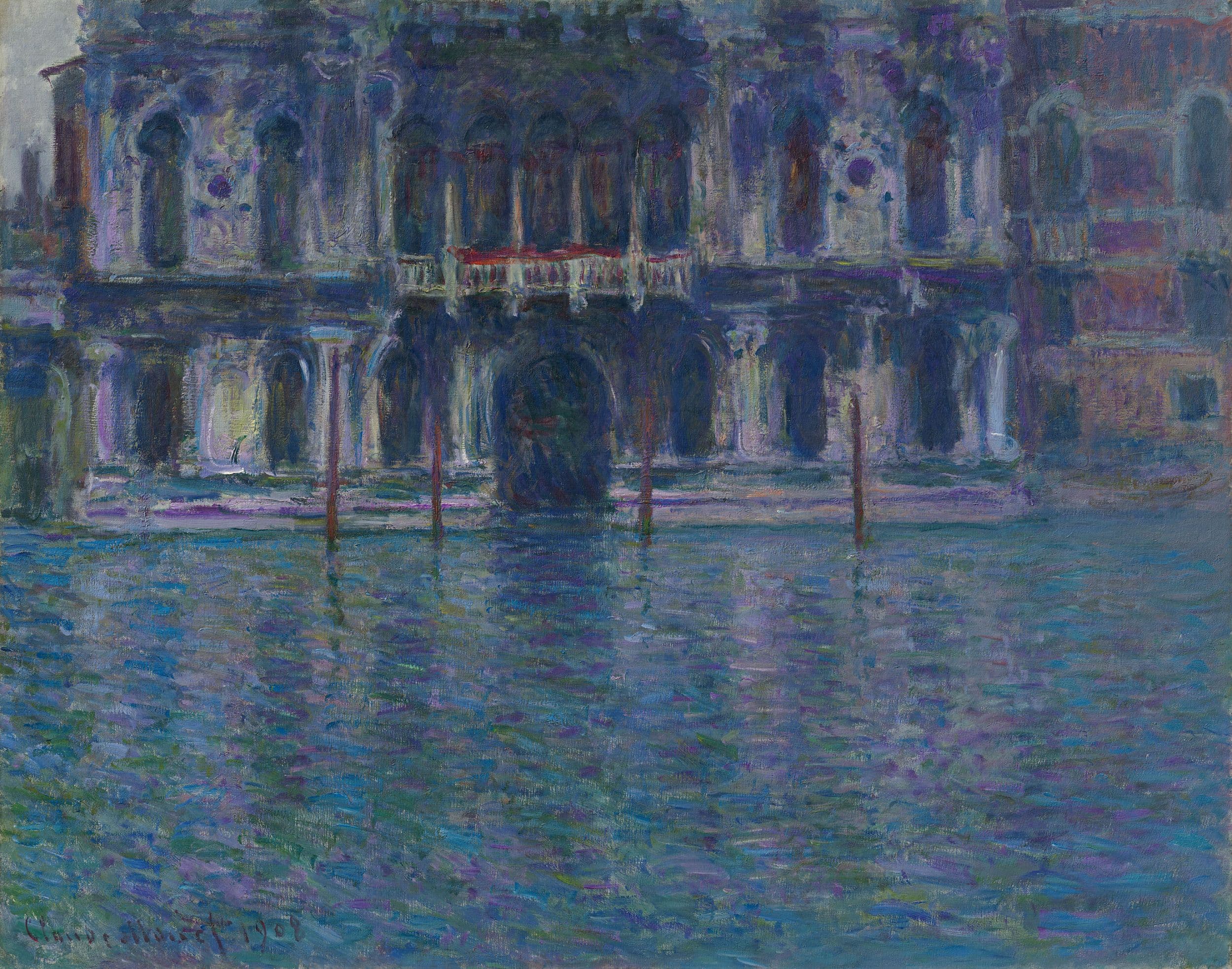
Le Palais Contarini (Potsdam)
Claude Monet · 1908
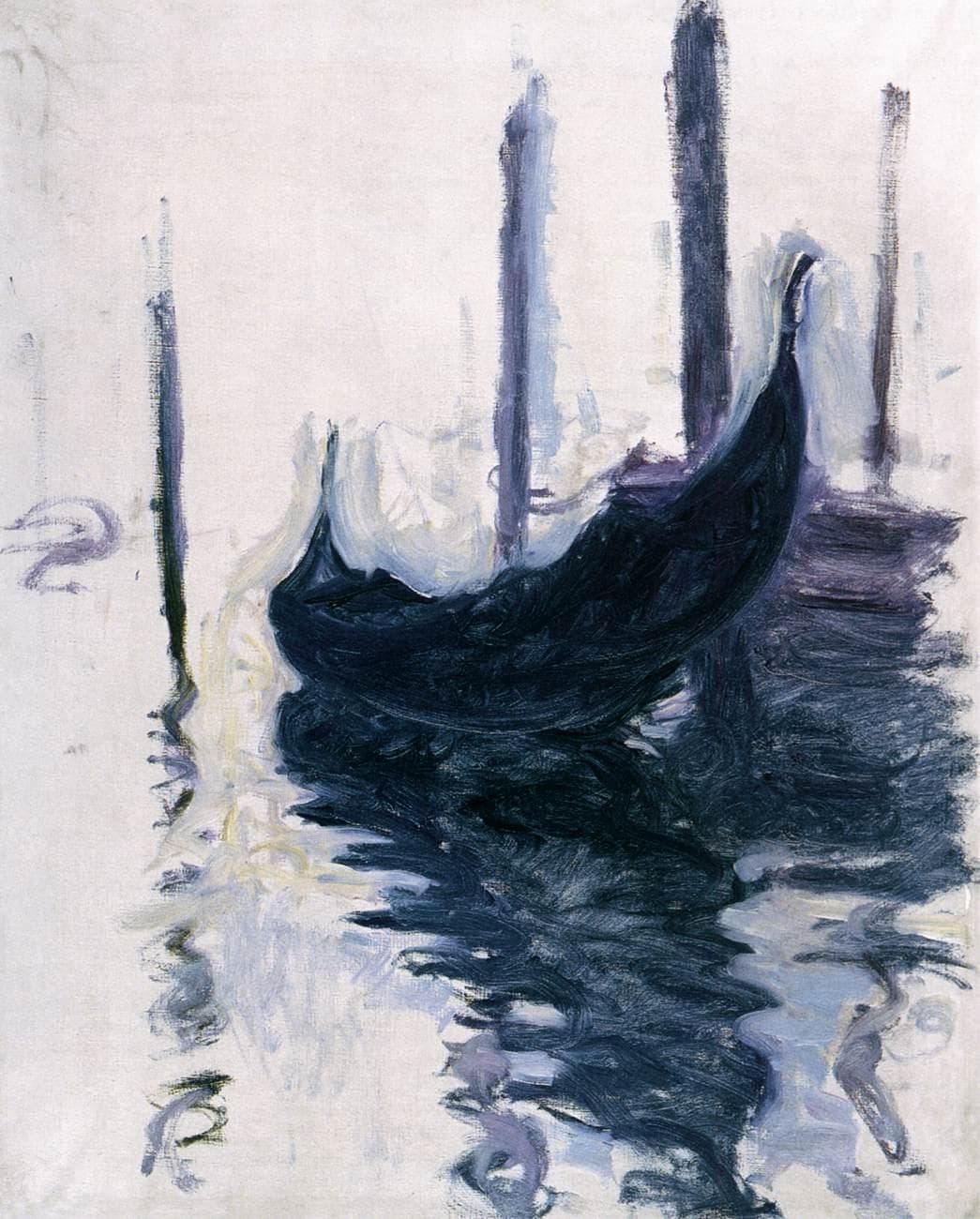
Gondola in Venice
Claude Monet · 1908
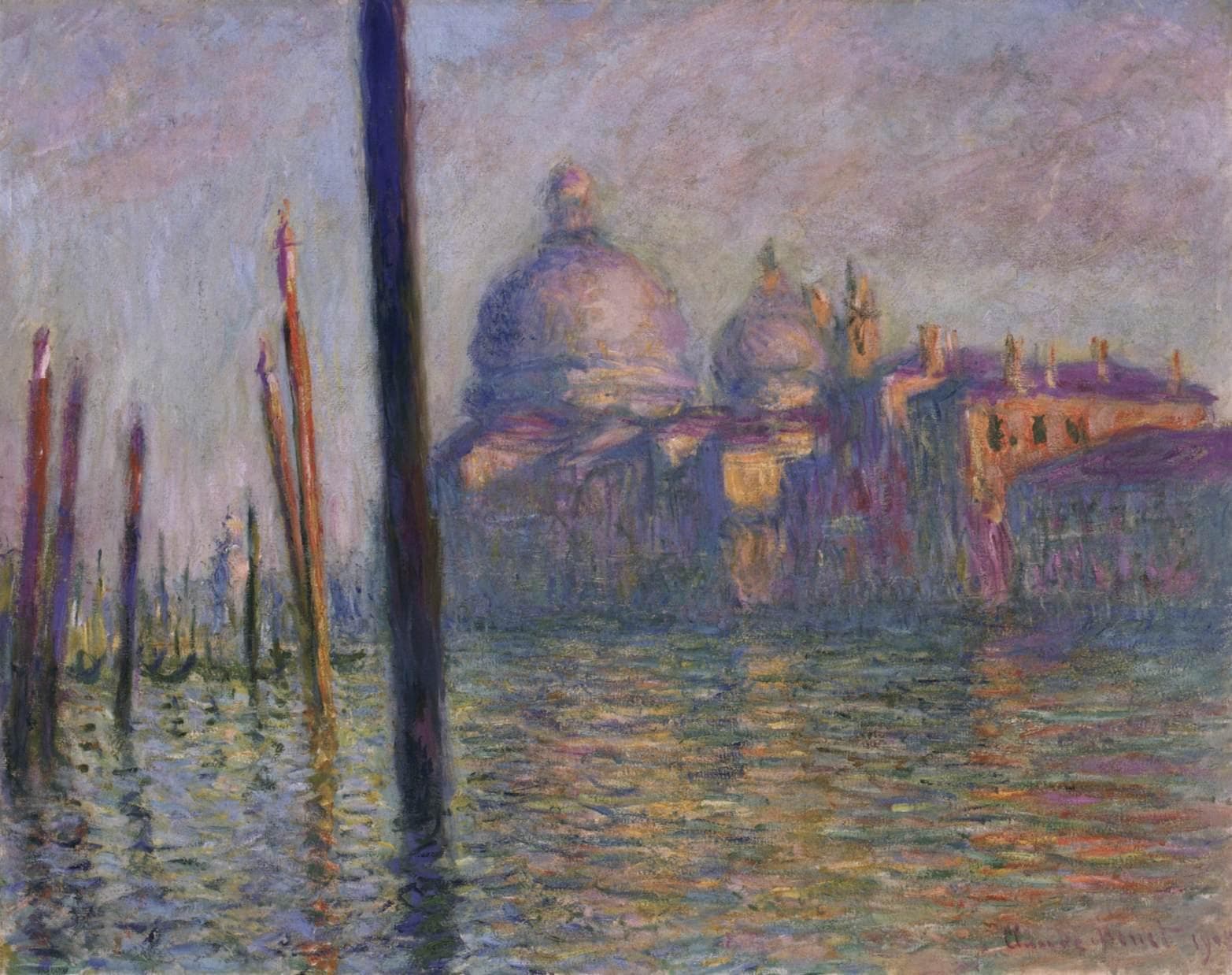
The Grand Canal in Venice
Claude Monet · 1908
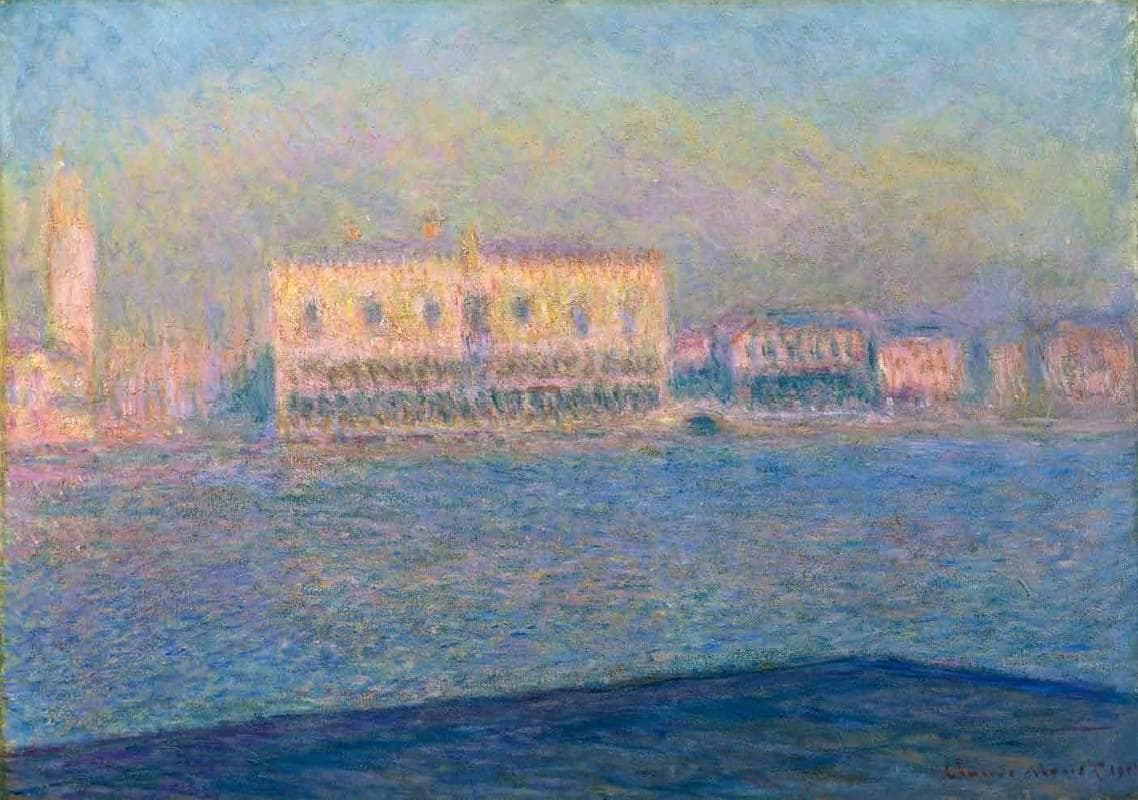
The Palazzo Ducale Seen from San Giorgio Maggiore
Claude Monet · 1908
The Palazzo Ducale (Le Palais Ducal), 1908
Claude Monet · 1908

Ophelia
John Everett Millais · 1851–52

The Great Wave off Kanagawa
Katsushika Hokusai · c. 1830–32
The Birth of Venus
Sandro Botticelli · c. 1484–1486