
Place
Monet in Venice: The 1908 Paintings and Sunset in Venice
One autumn, thirty-seven canvases: how a sixty-eight-year-old Monet, who had sworn Venice was too famous to paint, turned its palaces into floating color.
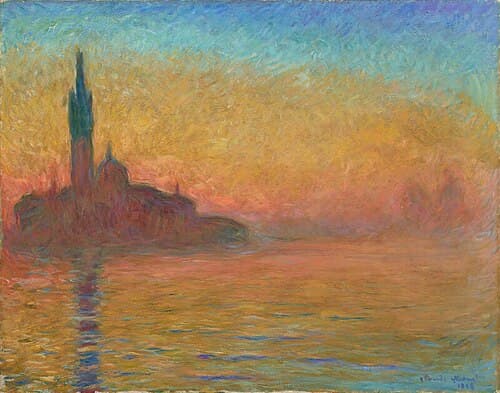
Monet in Venice lasted barely ten weeks. Claude Monet and his wife Alice arrived on 1 October 1908 and left in early December, and in that time he began some thirty-seven canvases of the Doge's Palace, San Giorgio Maggiore, the Grand Canal and its palaces, which he finished at Giverny and exhibited in Paris in 1912. The best known, Sunset in Venice (also called San Giorgio Maggiore at Dusk), is in National Museum Cardiff.
It was his last painting journey. After Venice he never again worked far from his garden. The Venice pictures sit between the London series and the late Water Lilies: buildings reduced to colored silhouettes floating on reflections, painted by a man already turning his attention to water and light alone. This page collects the Venice canvases in the Monet archive and explains how they were made.
Sunset in Venice
Claude Monet · 1908–12
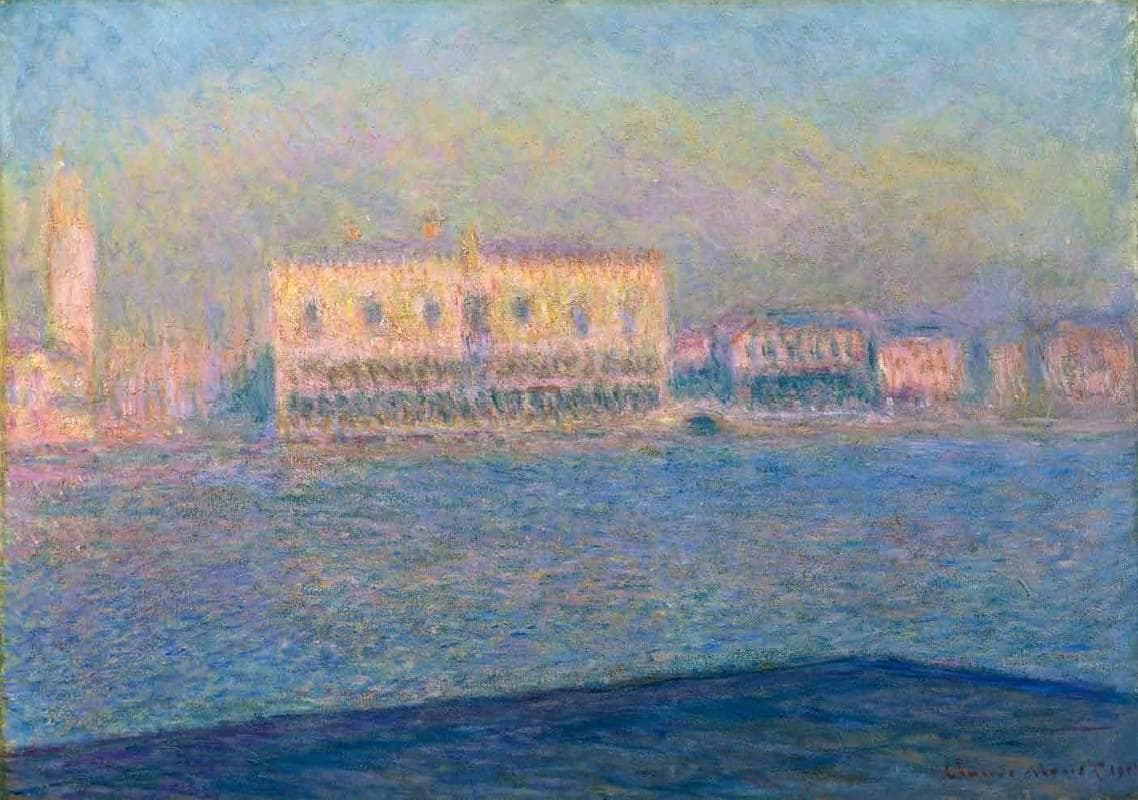
The Palazzo Ducale Seen from San Giorgio Maggiore
Claude Monet · 1908
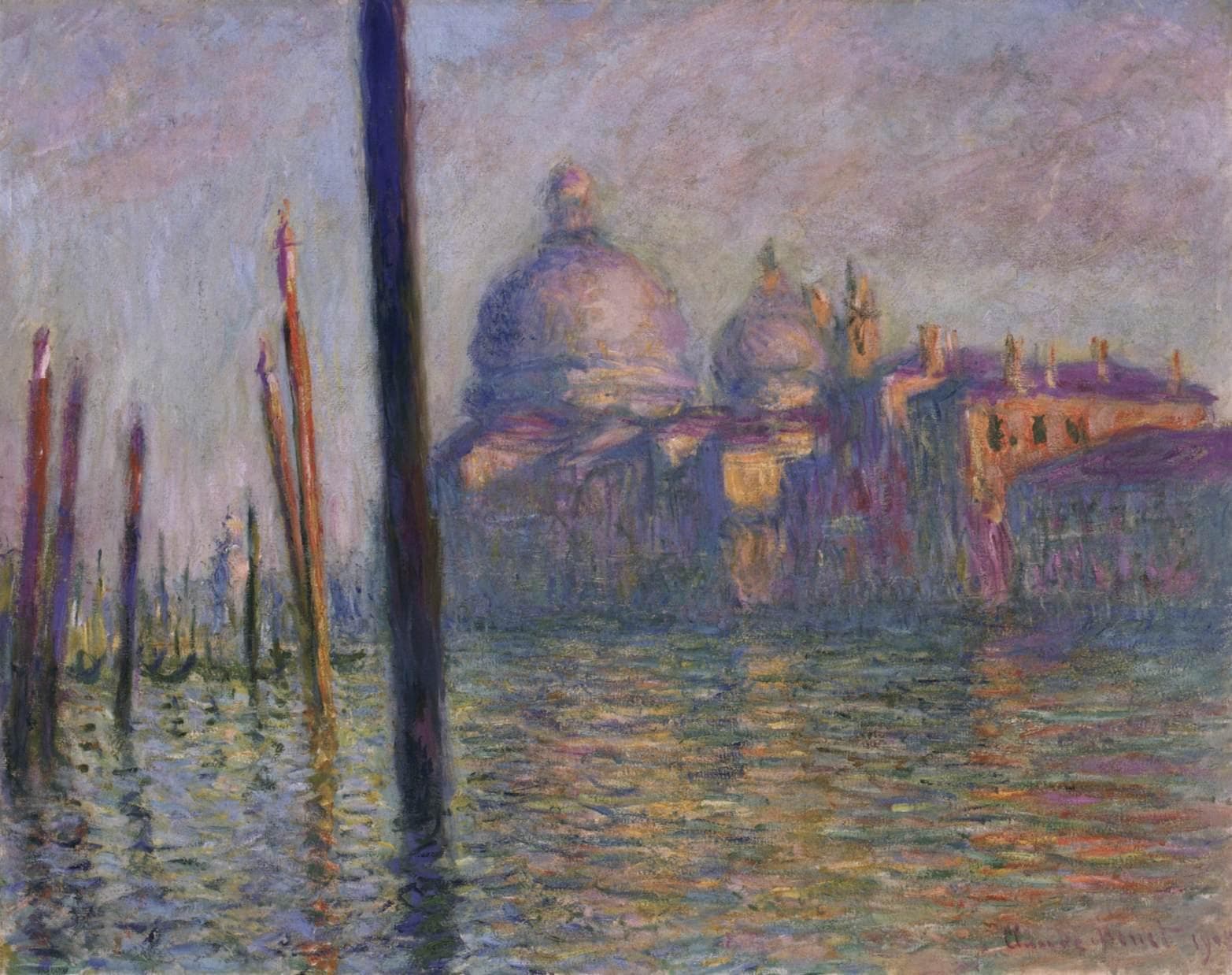
The Grand Canal in Venice
Claude Monet · 1908
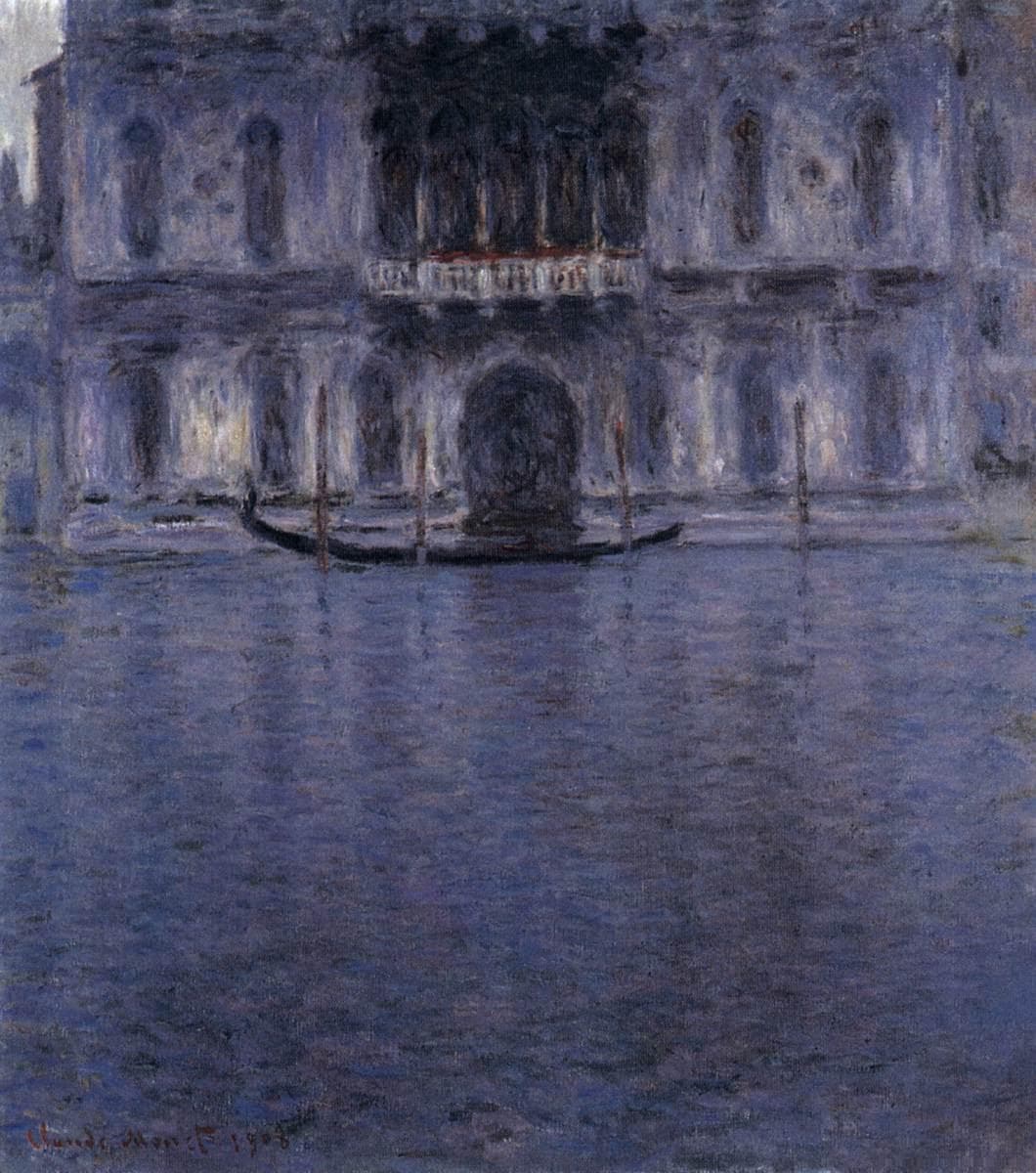
Palazzo Contarini
Claude Monet · 1908
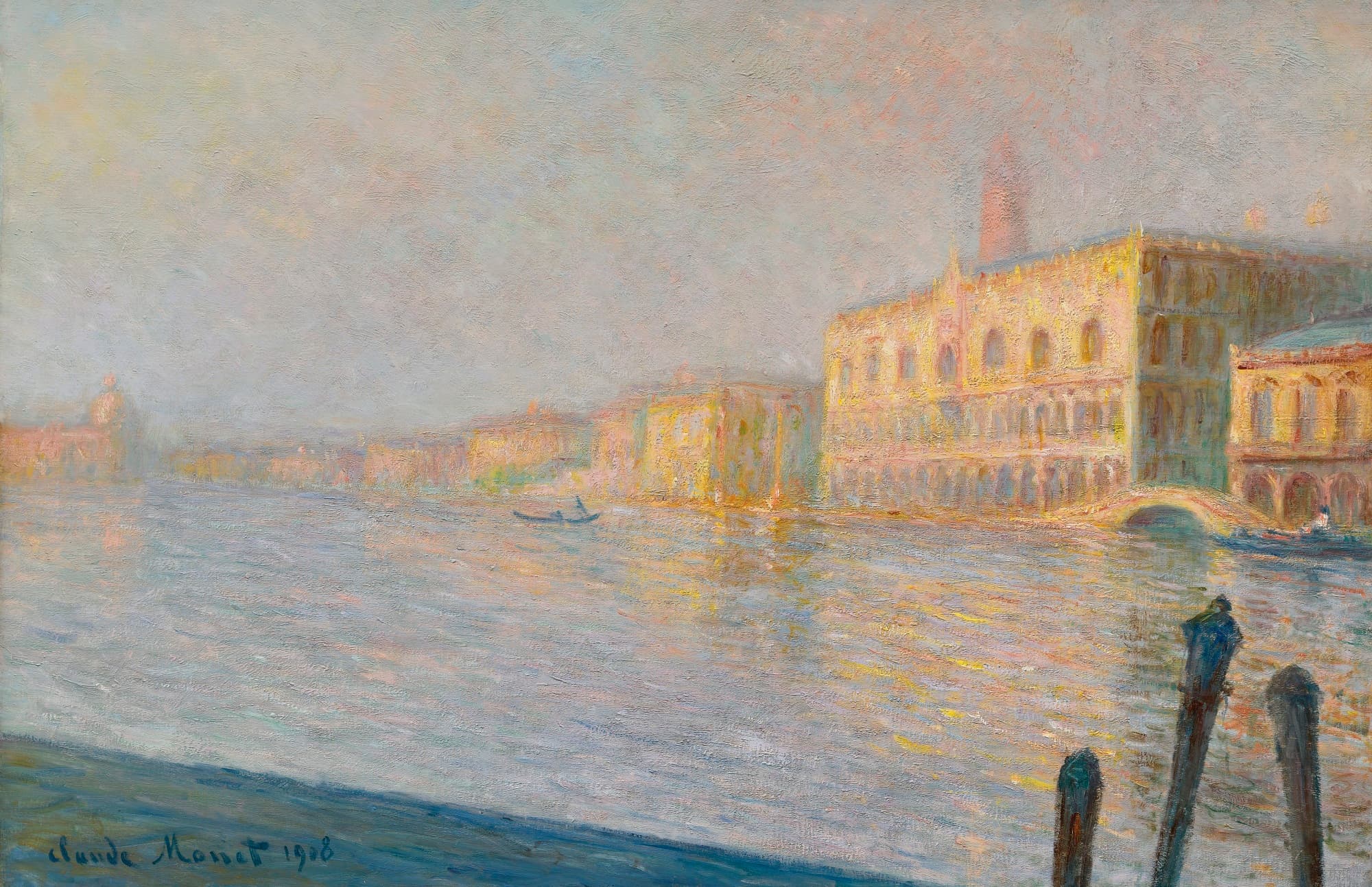
The Palazzo Ducale (Le Palais Ducal), 1908
Claude Monet · 1908
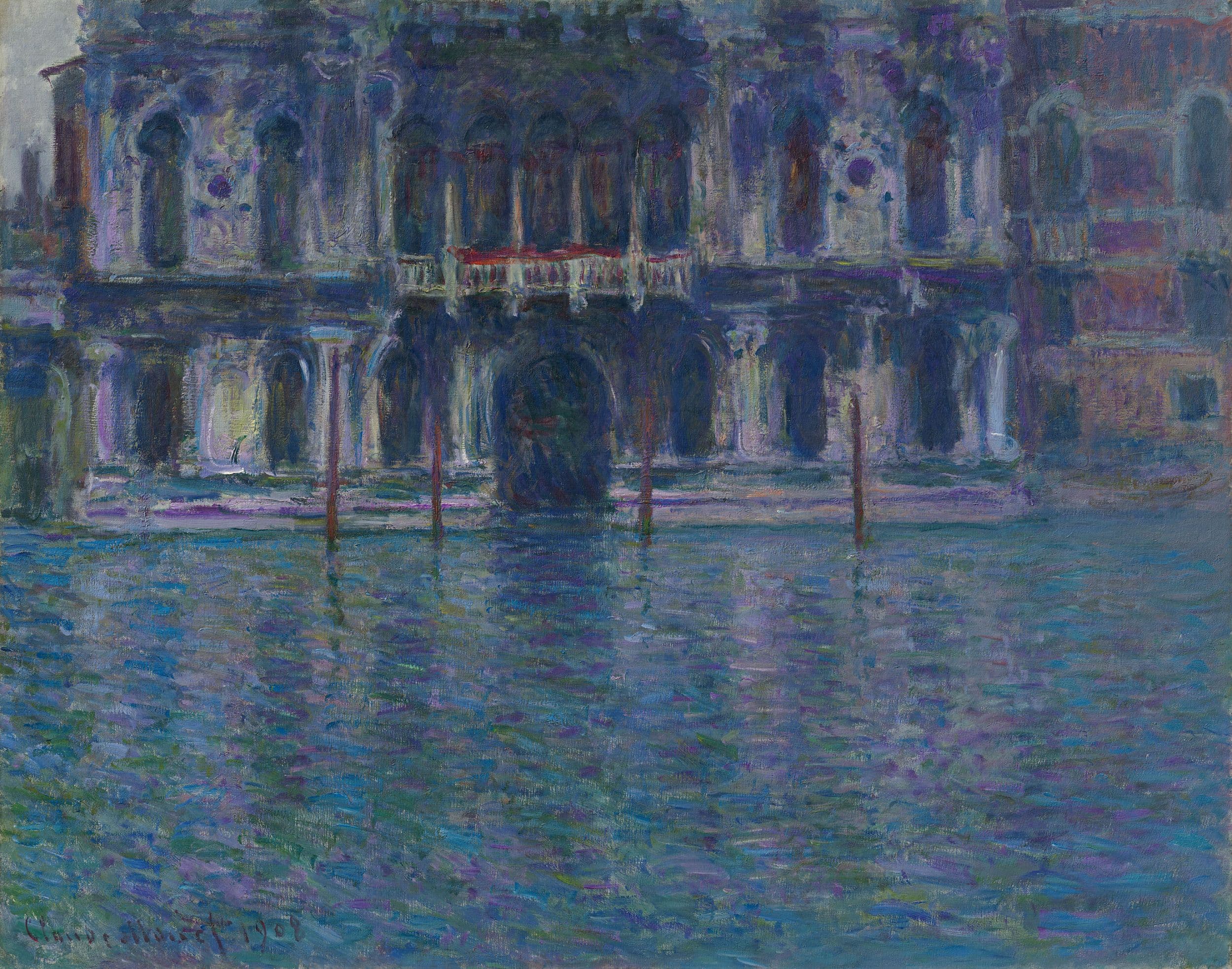
Le Palais Contarini (Potsdam)
Claude Monet · 1908
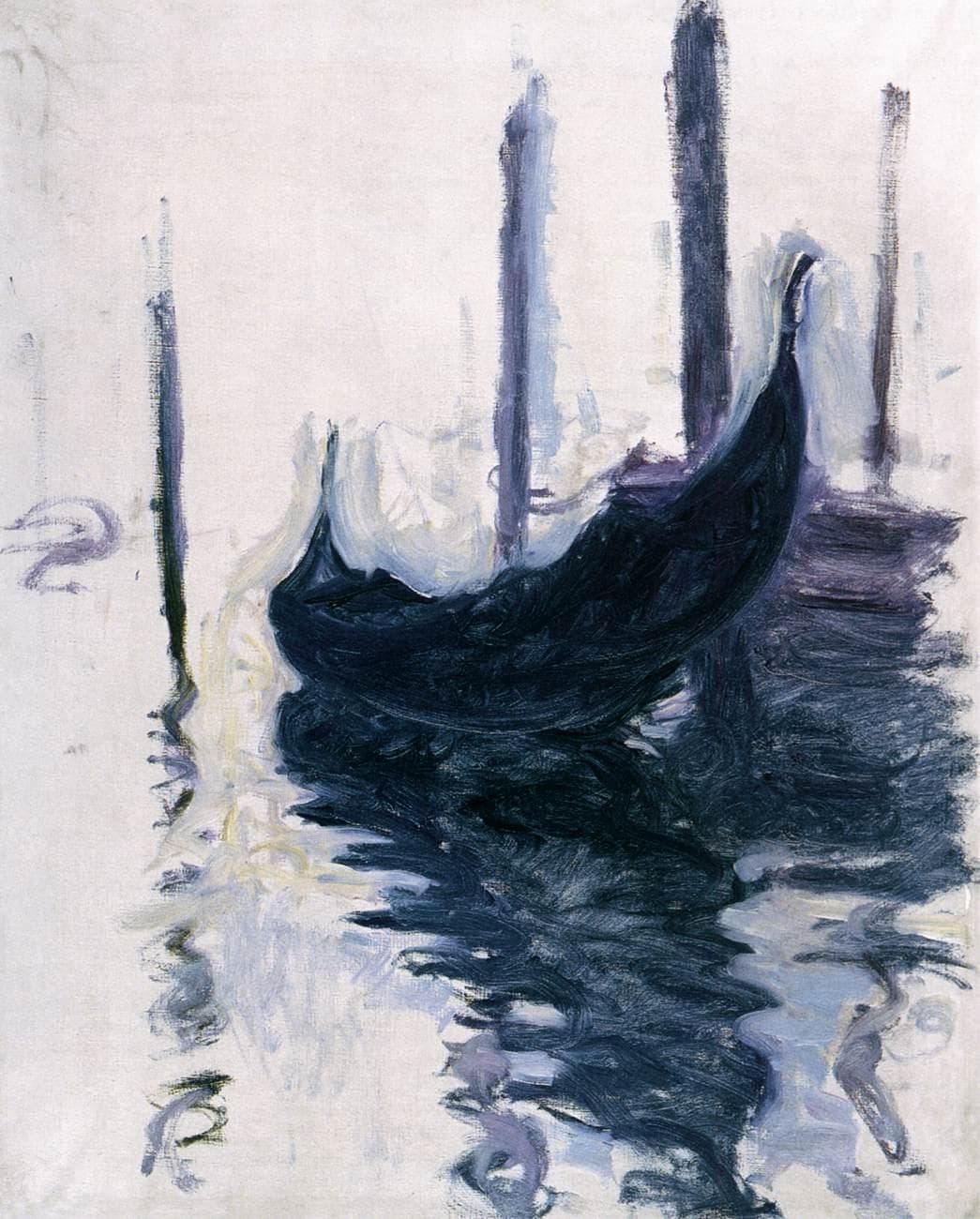
Gondola in Venice
Claude Monet · 1908
The complete set
All 25 known canvases
From the catalogue raisonné. Works with a full close reading are marked ✦.
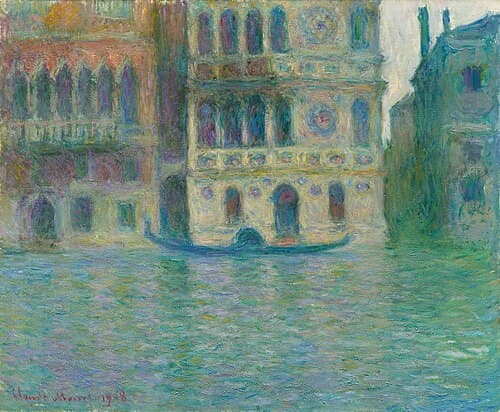
Venice, Palazzo Dario
1908 · Art Institute of Chicago
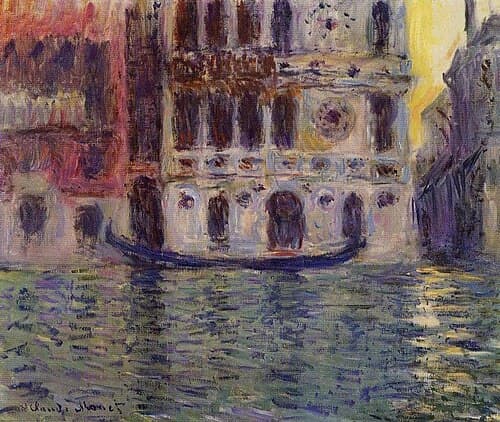
Le Palais Dario
1908
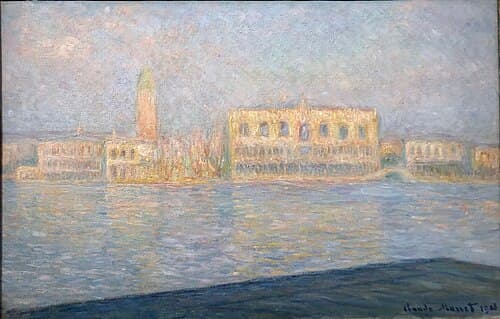
The Palazzo Ducale, Seen from San Giorgio Maggiore
1908 · Solomon R. Guggenheim Museum
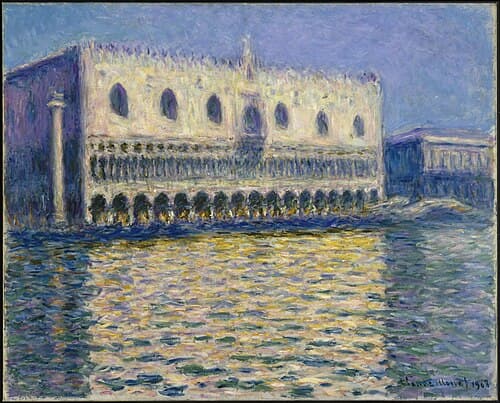
The Doges Palace (Le Palais ducal)
1908 · Brooklyn Museum
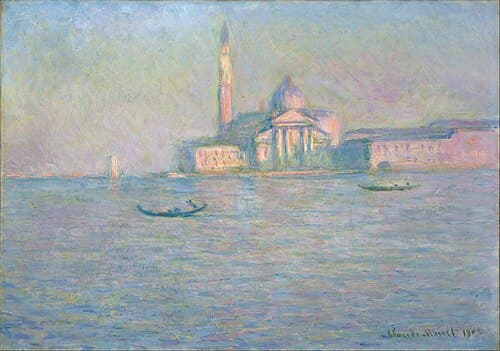
The Church of San Giorgio Maggiore, Venice
1908 · Musée d'Art d'Indianapolis
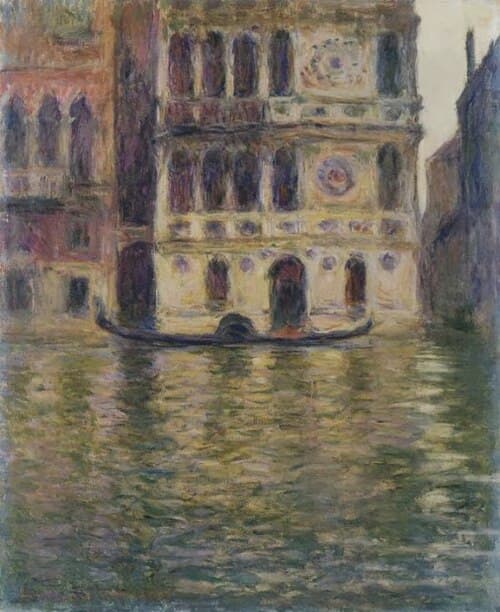
Palazzo Dario
1908
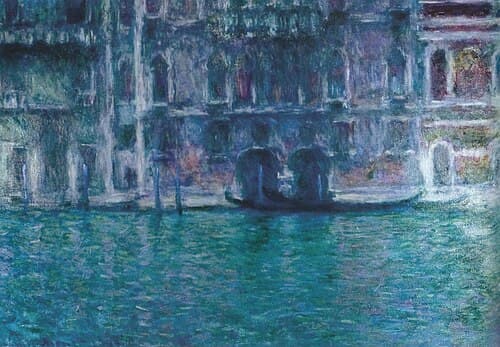
Palazzo Da Mula Morosini
1908 · Paul G. Allen Collection
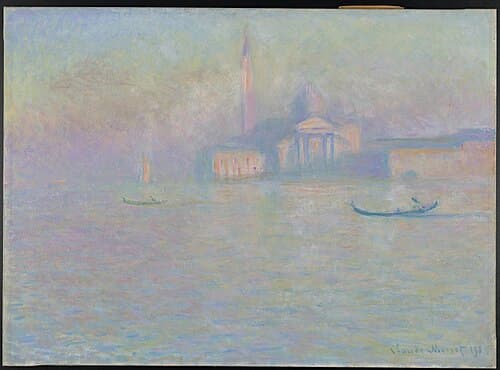
San Giorgio Maggiore
1908 · Amgueddfa Cymru – Museum Wales
Twilight, Venice
1908 · Artizon Museum
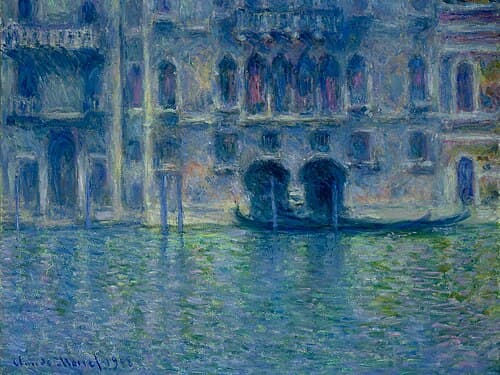
Palazzo da Mula, Venice
1908 · National Gallery of Art
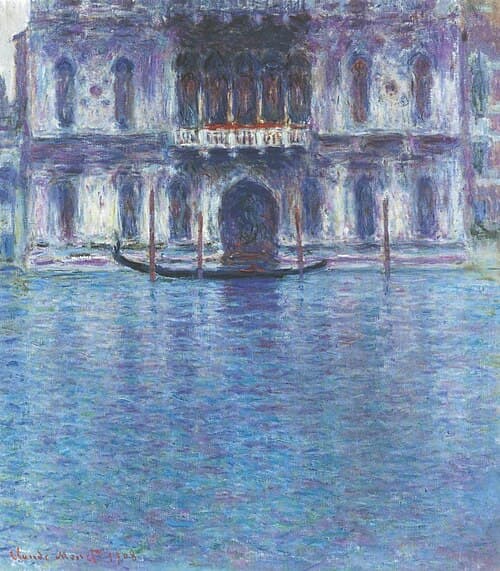
✦Palazzo Contarini
1908 · St. Gallen Museum of Art
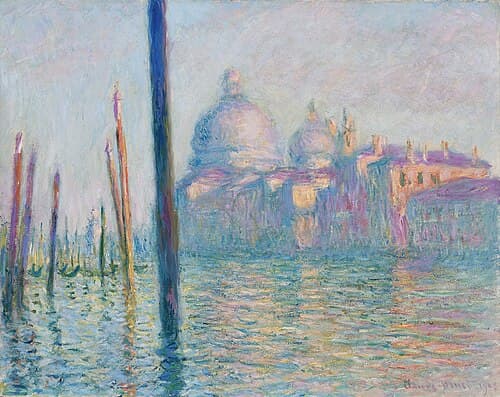
✦The Grand Canal
1908 · Museum of Fine Arts Boston
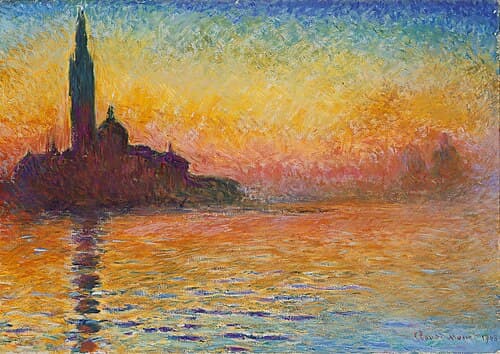
✦San Giorgio Maggiore at Dusk
1908 · Amgueddfa Cymru – Museum Wales
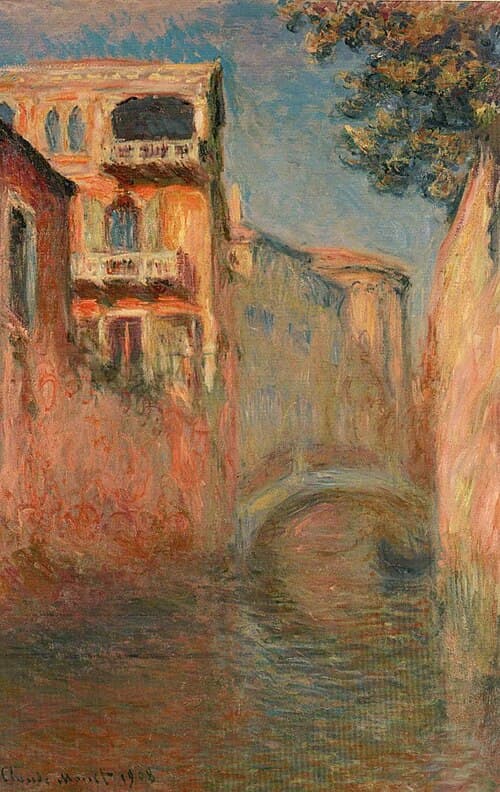
The Rio della Salute
1908 · Pola Museum of Art
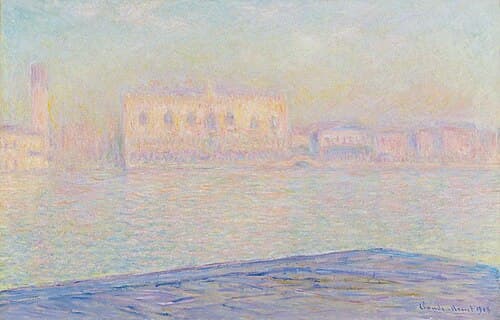
The Doge's Palace Seen from San Giorgio Maggiore
1908 · Kunsthaus Zürich
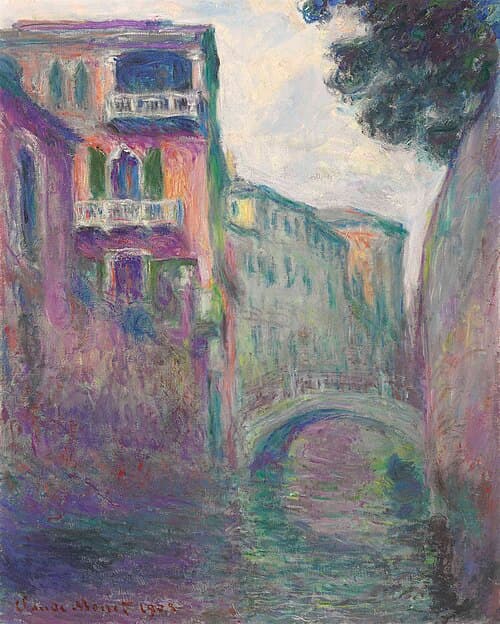
The Rio della Salute
1908
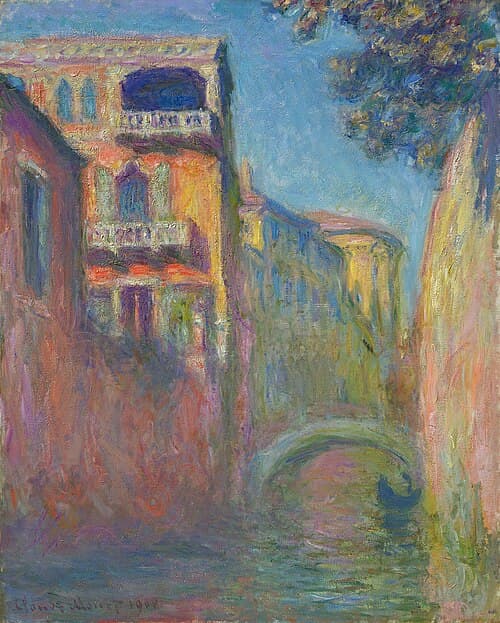
The Rio della Salute, 1908
1908 · Impressionism: The Hasso Plattner Collection
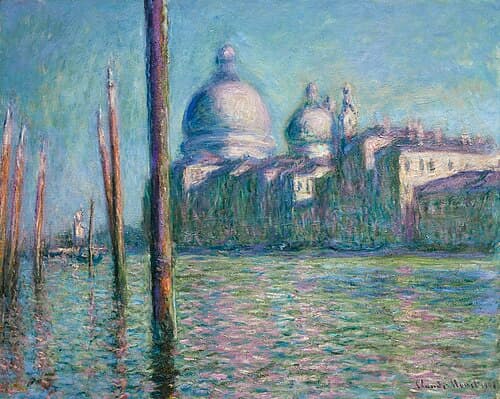
The Grand Canal, Venice
1908 · National Gallery
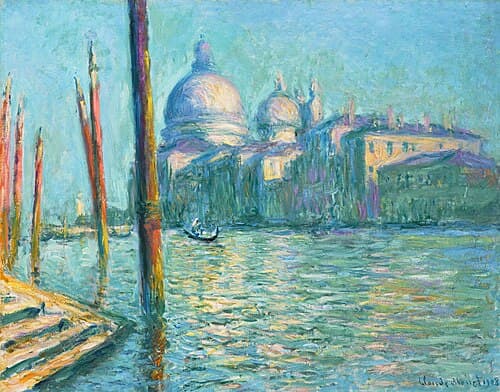
Le Grand Canal et Santa Maria della Salute
1908
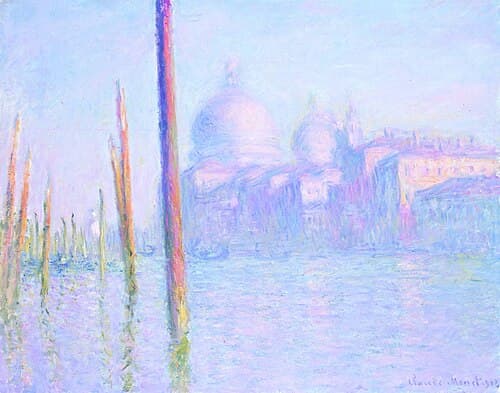
The Grand Canal, Venice
1908 · Fine Arts Museums of San Francisco
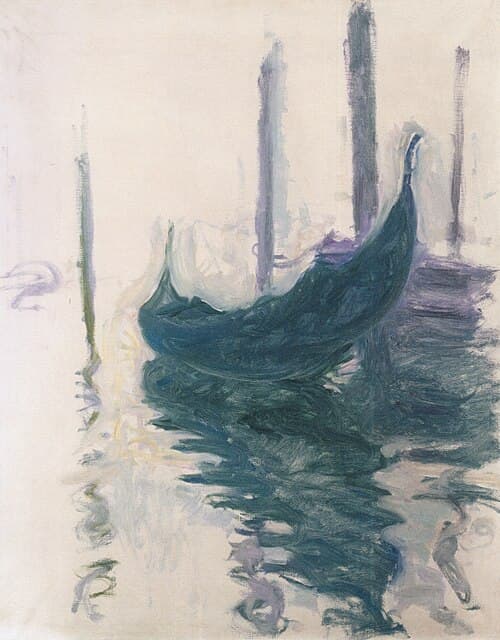
✦Gondola in Venice
1908 · Nantes Museum of Arts
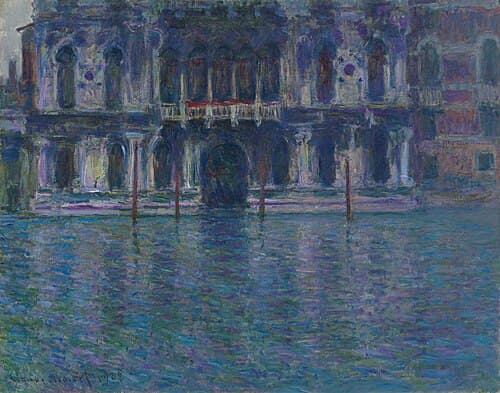
✦Le Palais Contarini
1908 · Museum Barberini
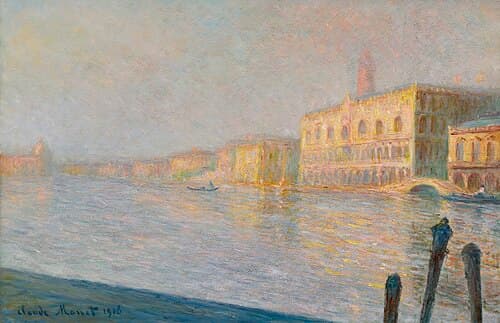
✦Le Palais Ducal
1908 · Impressionism: The Hasso Plattner Collection
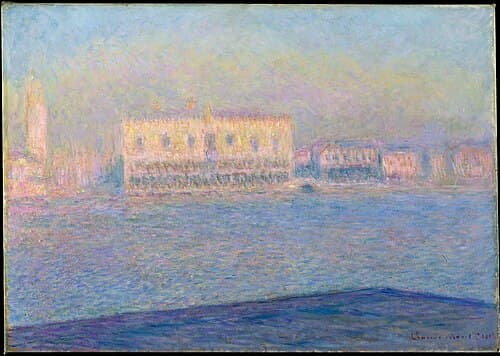
✦The Doge's Palace Seen from San Giorgio Maggiore
1908 · Metropolitan Museum of Art
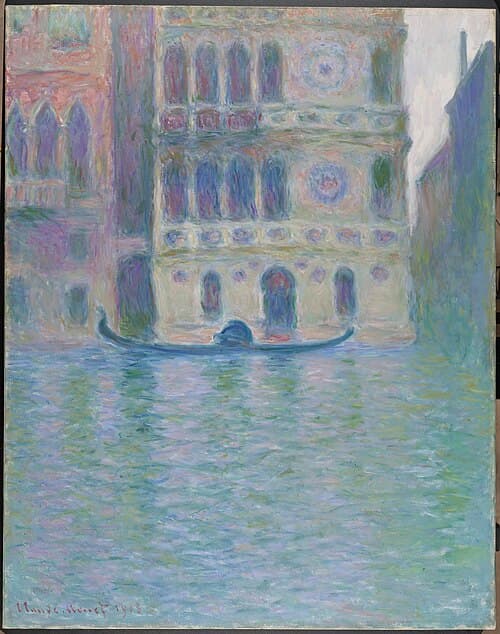
The Palazzo Dario
1908 · Amgueddfa Cymru – Museum Wales
Why Monet went to Venice so late
For most of his career Monet avoided Venice. It was the most painted city in Europe, the subject of Canaletto, Guardi and Turner, and of a whole industry of tourist views. He had built his reputation on places nobody thought worth painting: a railway station, a field of haystacks, a pond. When he finally went, at sixty-eight, it was at the invitation of Mary Hunter, an English society hostess and friend of John Singer Sargent, who was renting the Palazzo Barbaro on the Grand Canal.
Monet and Alice stayed at the Barbaro for about two weeks and then moved to the Grand Hotel Britannia, with a view across the basin of San Marco. Alice's letters to her daughter describe the routine: early mornings at one motif, then another, a gondola ride to the next viewpoint, a few hours of work in each light. Monet had arrived saying he would not paint at all. Within days he was complaining that there was too much to do and too little time, and lamenting that he had not come when he was younger and bolder.
The motifs: a handful of views, many times
As in London, Monet chose a few fixed viewpoints and painted them repeatedly at different hours.
- San Giorgio Maggiore, Palladio's church on its island across the basin from the Doge's Palace. Seen from the hotel side at dusk, it becomes the dark violet silhouette of Sunset in Venice, where the sky burns orange and red above the dome and the reflections in the water break into stripes of gold, blue and green.
- The Doge's Palace, painted from the island of San Giorgio looking back across the water. In The Palazzo Ducale Seen from San Giorgio Maggiore (Metropolitan Museum of Art), the pink Gothic façade is a thin band across the upper part of the canvas, and most of the picture is lagoon: short horizontal strokes of blue, lilac and green. Le Palais Ducal (Hasso Plattner Collection, Museum Barberini) brings the palace closer, its arcades a rhythm of pale verticals above the waterline.
- The Grand Canal and Santa Maria della Salute, seen from near the Barbaro with mooring poles in the foreground. The Grand Canal (Museum of Fine Arts, Boston) sets the domes of the Salute in violet haze behind the dark verticals of the poles, which act like the bars of a screen between the viewer and the city.
- The palaces of the Grand Canal, painted head-on from a gondola: Palazzo Dario, Palazzo da Mula and Palazzo Contarini. In Palazzo Contarini (Kunstmuseum St. Gallen) the façade fills the canvas as a flat wall of windows, while the water below it shimmers so strongly that it is hard to tell where stone ends and reflection begins. Le Palais Contarini, another version of the motif, is now shown at the Museum Barberini in Potsdam.
- Gondolas, the subject of a single upright canvas, Gondola in Venice (Musée d'arts de Nantes), where a black gondola floats among mooring poles in blue-green water, almost an abstract arrangement of dark shapes.
What makes a Venice Monet
The Venice pictures are recognizable at once. The format is usually horizontal, the building runs as a band across the canvas, and the water takes up half or more of the surface. Monet treats the façades as almost flat planes of color, Gothic windows reduced to rhythmic dots and dashes, and lets the reflections do the work. The palette is warmer than London: pink, coral and orange in the stone, turquoise and lilac in the water, gold in the sky at sunset.
Monet was not interested in the history of Venice, its paintings or its monuments as monuments. He painted what he called the envelope, the layer of light and air that surrounds things. Venice, a city built on water and constantly mirrored in it, was the perfect subject for that interest, and in many canvases the reflection is more solid than the building.
Finished at Giverny, shown in 1912
As with London, the work did not end in Venice. Monet brought the canvases back to Giverny and reworked them in the studio for more than three years. The process was interrupted by grief.
Alice, who had shared the trip and kept its diary in her letters, fell ill and died in May 1911. Monet was devastated and for months barely painted. He took up the Venice canvases again partly as a way back to work.
In May and June 1912 the Galerie Bernheim-Jeune in Paris showed twenty-nine of them under the title Claude Monet: Venise. Critics were enthusiastic. The painter Paul Signac, who had painted Venice himself, wrote to Monet in admiration. Most of the pictures were sold quickly, and they are now spread across Europe, the United States and Japan.
One group went to Wales. The sisters Gwendoline and Margaret Davies, who built one of Britain's great Impressionist collections in the early twentieth century, bought Venice pictures, including Sunset in Venice, and left them to the National Museum in Cardiff. That is why the most famous Venice Monet is in Wales.
Venice and the late style
The Venice pictures are often treated as a coda to the series of the 1890s, but they point forward. After 1908 Monet worked almost entirely on his water garden at Giverny, and the Water Lilies carry the Venice idea to its conclusion: no building at all, only water, reflected sky and floating color. Compare the reflections in Palazzo Contarini with those in a lily panel of a few years later and the family resemblance is obvious.
They also form a pair with Monet's London paintings of 1899–1904. Both cities are seen across water, both are reduced to silhouettes, and both were finished from memory. London is cold, smoky and blue. Venice is warm and clear, its light coming from the water as much as the sky.
Seeing the Venice paintings
There is no single place to see Monet's Venice. The pictures are scattered among museums including National Museum Cardiff, the Metropolitan Museum of Art, the Museum of Fine Arts in Boston, the Art Institute of Chicago (with Venice, Palazzo Dario), the Brooklyn Museum, the Fine Arts Museums of San Francisco, the Kunstmuseum St. Gallen, the Musée d'arts de Nantes and the Museum Barberini, with others in private hands. The Brooklyn Museum, which owns its own Doge's Palace of 1908, organized the exhibition Monet and Venice with the Fine Arts Museums of San Francisco, home of another Grand Canal.
It brought together nineteen of the Venice paintings, the first exhibition devoted to them in more than a century, and ran in Brooklyn from 11 October 2025 to 1 February 2026 and in San Francisco from 21 March to 26 July 2026. Both showings have now closed. For permanent displays, see where to see Monet's paintings.
Questions & answers
When did Monet go to Venice?
Claude Monet visited Venice once, from 1 October to early December 1908, with his wife Alice. He was sixty-eight. He began about thirty-seven canvases there, finished them at Giverny over the next three years, and exhibited twenty-nine at the Galerie Bernheim-Jeune in Paris in 1912.
Where is Monet's Sunset in Venice?
Sunset in Venice, also known as San Giorgio Maggiore at Dusk, is in National Museum Cardiff, Wales. It was bought by the collector Gwendoline Davies and came to the museum with the Davies sisters' bequest. It shows Palladio's church as a dark silhouette against an orange and red evening sky.
What did Monet paint in Venice?
He painted a few views many times: San Giorgio Maggiore across the basin, the Doge's Palace seen from San Giorgio, the Grand Canal with Santa Maria della Salute, the façades of the Palazzo Dario, Palazzo Contarini and Palazzo da Mula, and gondolas among mooring poles.
Where did Monet stay in Venice?
He spent his first two weeks as a guest at the Palazzo Barbaro on the Grand Canal, which Mary Hunter was renting, then moved to the Grand Hotel Britannia, with views over the basin of San Marco toward San Giorgio Maggiore. Several of his viewpoints were within reach of these two buildings.
Is the Brooklyn Museum Monet and Venice exhibition still on?
No. Monet and Venice ran at the Brooklyn Museum from 11 October 2025 to 1 February 2026, then at the Fine Arts Museums of San Francisco until 26 July 2026. To see the Venice paintings now, visit their owners: the Brooklyn Museum itself, National Museum Cardiff, the Met and the MFA Boston.