Image: Philadelphia Museum of Art; photo by Miguel Hermoso Cuesta · Public domain · via Wikimedia Commons
Under the Pines, Evening
Claude Monet, 1888
Under the Pines, Evening is an 1888 painting by Claude Monet of a grove of umbrella pines on the Cap d'Antibes, their trunks and the ground glowing red in the last sun against a pale evening sea. It is in the Philadelphia Museum of Art.
- Artist
- Claude Monet
- Date
- 1888
- Medium
- Oil on canvas
- Dimensions
- 73 × 92.1 cm
- Collection
- Philadelphia Museum of Art, Philadelphia, United States
- Movement
- Impressionism
- Catalogue
- Wildenstein 1191
- Nature & Landscape
- Water & Sea
- Night & Dreams
Claude Monet's Under the Pines, Evening (Sous les pins, soir) was painted in 1888 on the Cap d'Antibes, during his four-month stay on the Riviera. A grove of umbrella pines stands on a headland above the sea, and the setting sun turns their trunks and the ground beneath them to burning red. The canvas, 73 by 92.1 centimeters (Wildenstein 1191), is signed and dated at lower left. It is in the Philadelphia Museum of Art, acquired in 1993 as a gift of F. Otto Haas and a partial gift of Carole Haas Gravagno.
What you are looking at
The pines form a single continuous canopy across the top two-thirds of the picture, a heavy, dark mass of blue-green and bottle green, built of rounded, overlapping crowns. Beneath it, the trunks rise in a long colonnade, thin and slightly bent, some leaning together in pairs. On the right, one small pine stands apart, near the edge of the headland.
The color does the work. The low sun catches the trunks and the underside of the branches, which flare up in orange, vermilion and pink. The ground under the trees is a band of brick red and coral, as if on fire. In front of it, a strip of grass in the foreground has already fallen into shadow, cool green streaked with blue and yellow.
Between the trunks, and above the grove, you see the evening sea and sky. The water is a pale, milky lavender, merging with a horizon of pink and peach. The sky above the canopy is a soft, faded mauve. The contrast between the dark, solid trees and the pale, glowing distance makes the grove seem like a screen held up against the light.
Where and when
Monet stayed at Antibes from January to May 1888, at the Château de la Pinède, a lodging for artists recommended to him by Guy de Maupassant. The Cap d'Antibes was covered with umbrella pines, and Monet painted them repeatedly, singly and in groups, at different hours. The Philadelphia museum's label speaks of the evening light on the Mediterranean and the decorative rhythm of the brushstrokes in the trees, and the picture is one of his clearest early experiments with the same motif seen at a particular time of day.
The Antibes pictures were a commercial success. According to the annotations to Vincent van Gogh's letters, his brother Theo, who managed the Paris gallery of Boussod, Valadon et Cie, sold a Monet pine-tree painting to the collector Paul Aubry in June 1888, citing this catalogue number.
How this version differs
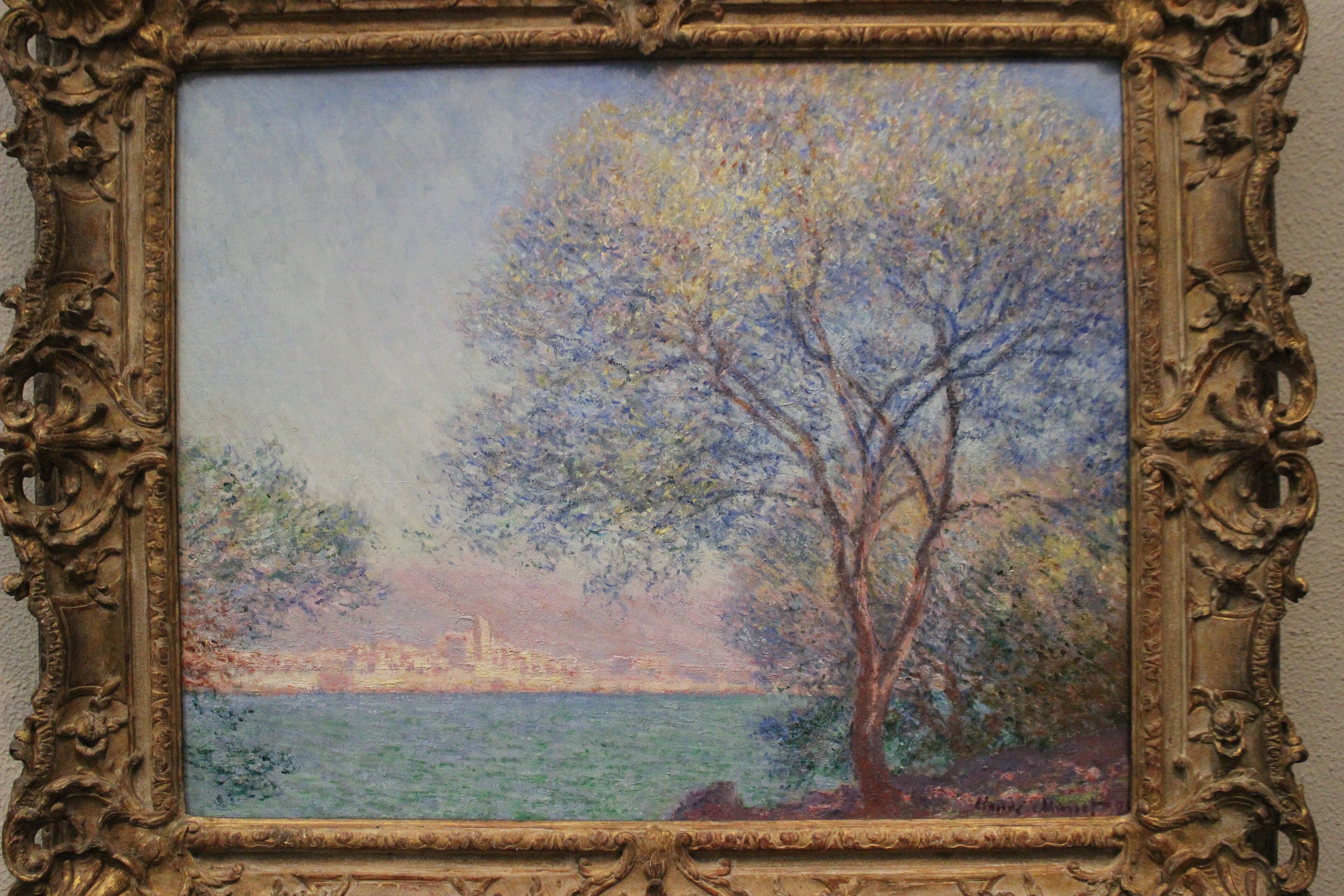
Monet's other Antibes pines tend to be single trees seen in daylight: the lone, leaning pine of the Courtauld's Antibes, or the feathery tree of Morning at Antibes, also in Philadelphia. Here, instead, a whole grove stands against the sunset, and the picture is about the effect of the last, raking light. Its nearest relative in mood is not another Antibes picture but the poplar canvases Monet would paint on the Epte three years later, where a row of trunks again stands against a glowing sky; see the Poplars series.
How it was painted
The canopy is painted in short, curving, overlapping strokes of dark green and blue, with lighter touches of turquoise where the sky shows through. The trunks are single, long strokes of orange and red, sometimes edged with blue. The red ground and the cool grass are built of horizontal dashes laid side by side. The sea and sky, by contrast, are thin and smooth. Monet relies on complementary contrasts, orange against blue, red against green, to make the low sun feel hot against the cool evening.
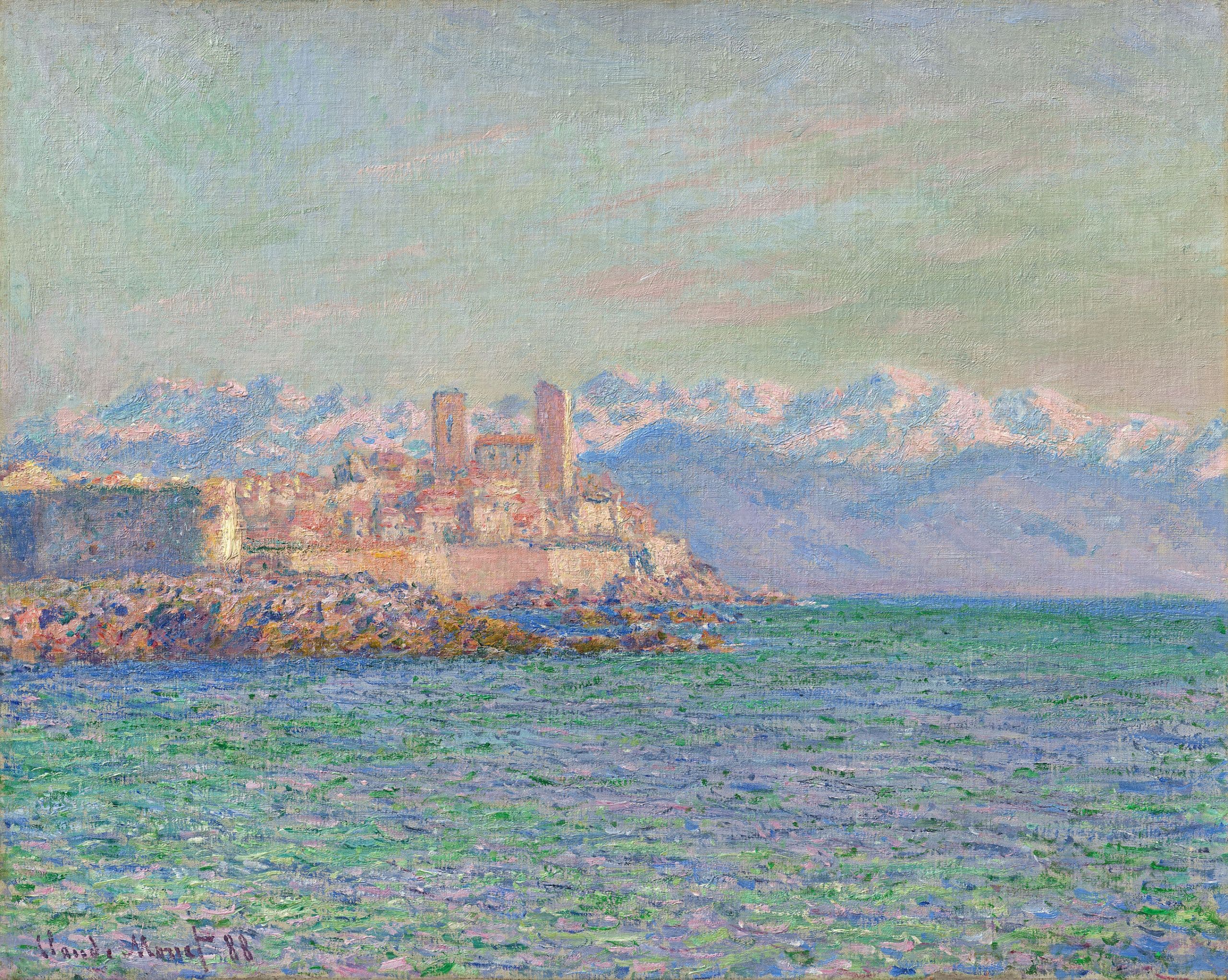
For the rest of the 1888 campaign and the Bordighera pictures of 1884, see Monet on the Mediterranean and The Fort of Antibes.
Where to see it
The painting entered the Philadelphia Museum of Art in 1993 as one of its 125th Anniversary Acquisitions. It is not always on view. The museum also holds Bend in the Epte River near Giverny and Manne-Porte, Étretat. See Where to See Monet's Paintings and Claude Monet.
Questions & answers
Where is Monet's Under the Pines, Evening?
It is in the Philadelphia Museum of Art, acquired in 1993 as a 125th Anniversary Acquisition, the gift of F. Otto Haas and partial gift of Carole Haas Gravagno (accession 1993-151-1). It is not always on view.
When and where was Under the Pines, Evening painted?
Monet painted it in 1888 on the Cap d'Antibes on the French Riviera, during a stay from January to May. The umbrella pines of the cape were one of his recurring motifs that spring.
What does Under the Pines, Evening show?
It shows a grove of umbrella pines on a headland at sunset, their trunks and the ground beneath them glowing orange and red in the low light, with a pale lavender sea and pink horizon showing between the trunks.
Is it the same as Monet's Stone Pines at the End of the Day?
Yes, the same painting appears under several titles, including Under the Pines, Evening, Stone Pines at the End of the Day and Sous les pins, soir. All refer to Wildenstein catalogue number 1191, now in Philadelphia.
More by the artist
Claude Monet
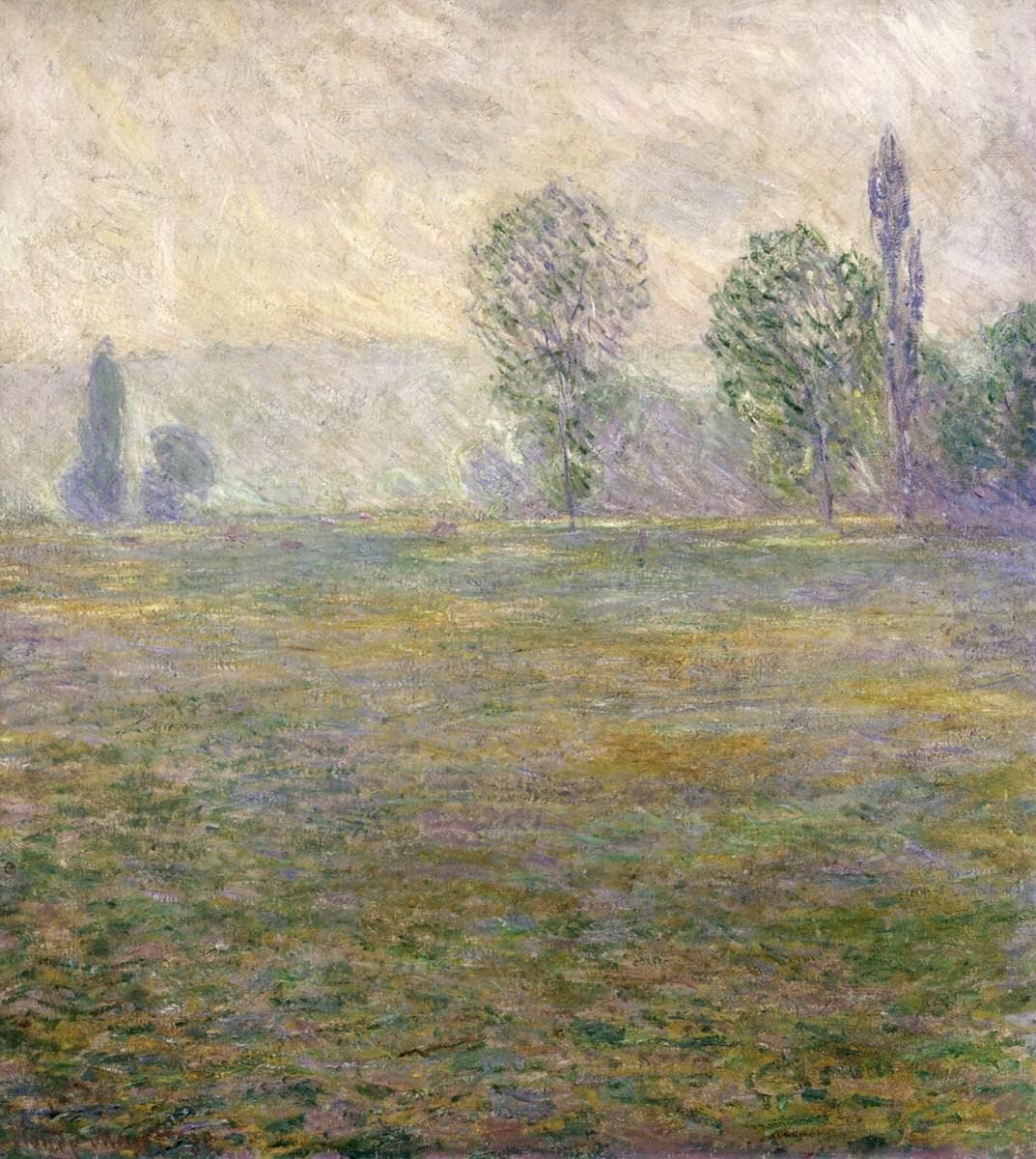
Meadow at Giverny
Claude Monet · 1888
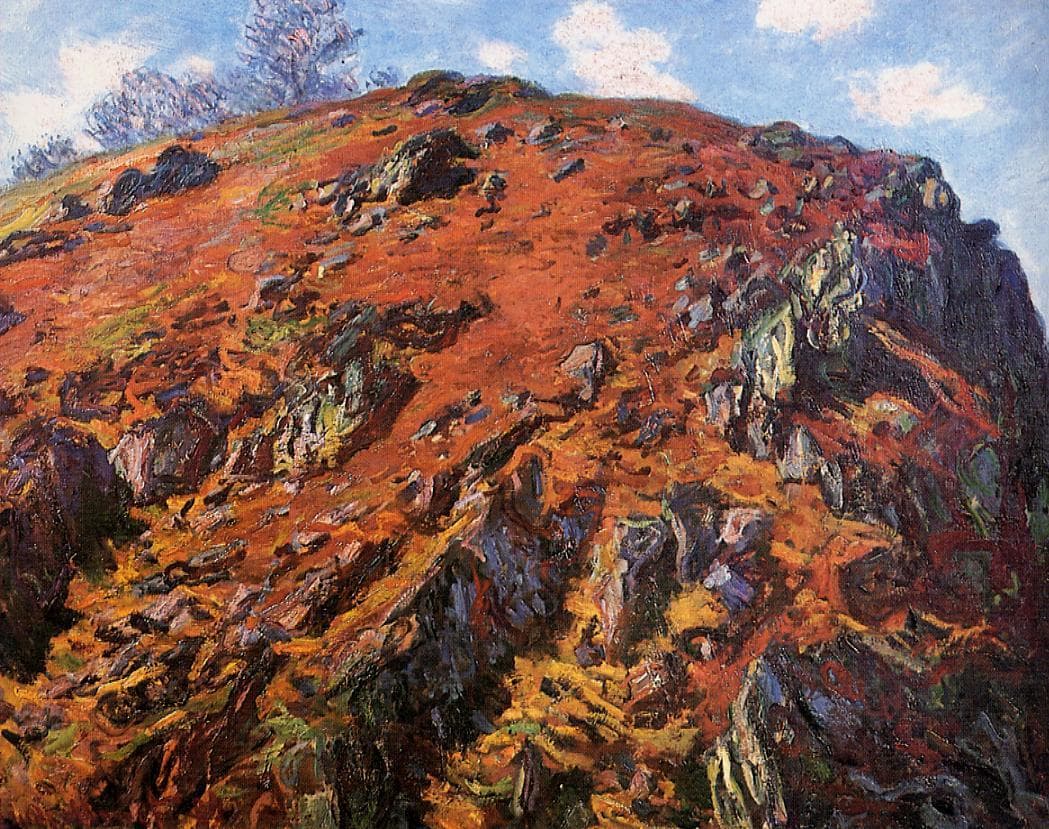
Study of Rocks, Creuse ('Le Bloc')
Claude Monet · 1889
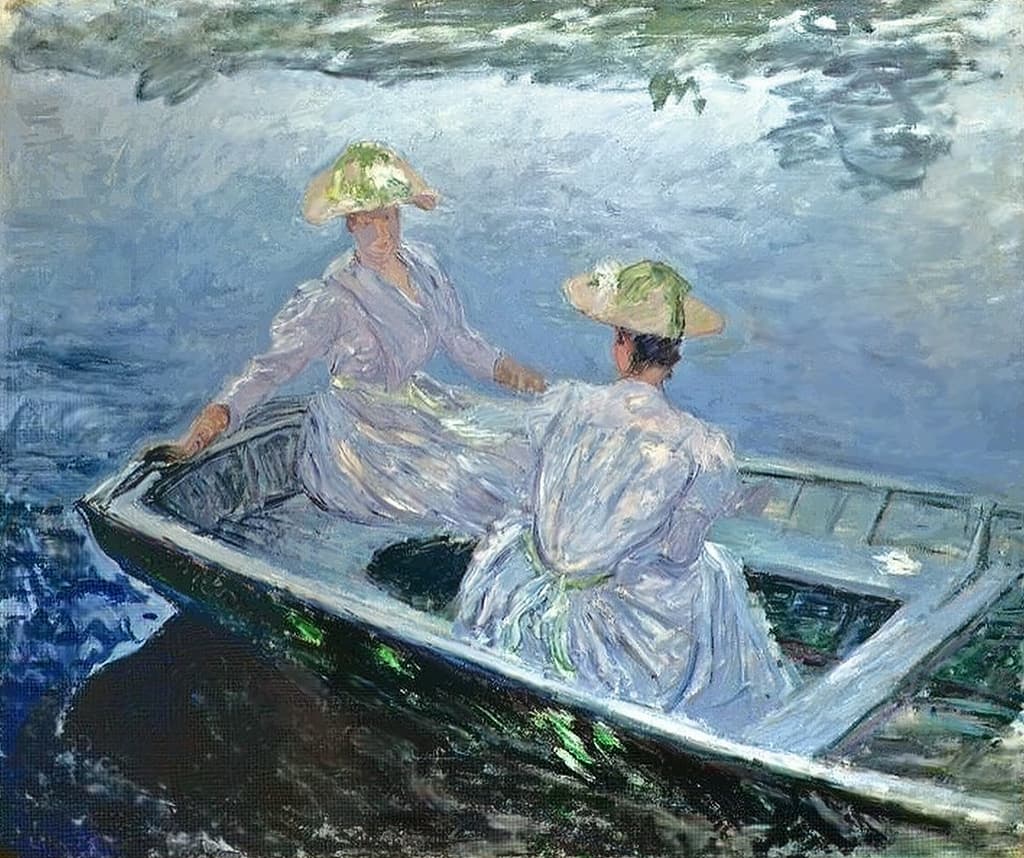
The Blue Boat
Claude Monet · 1887
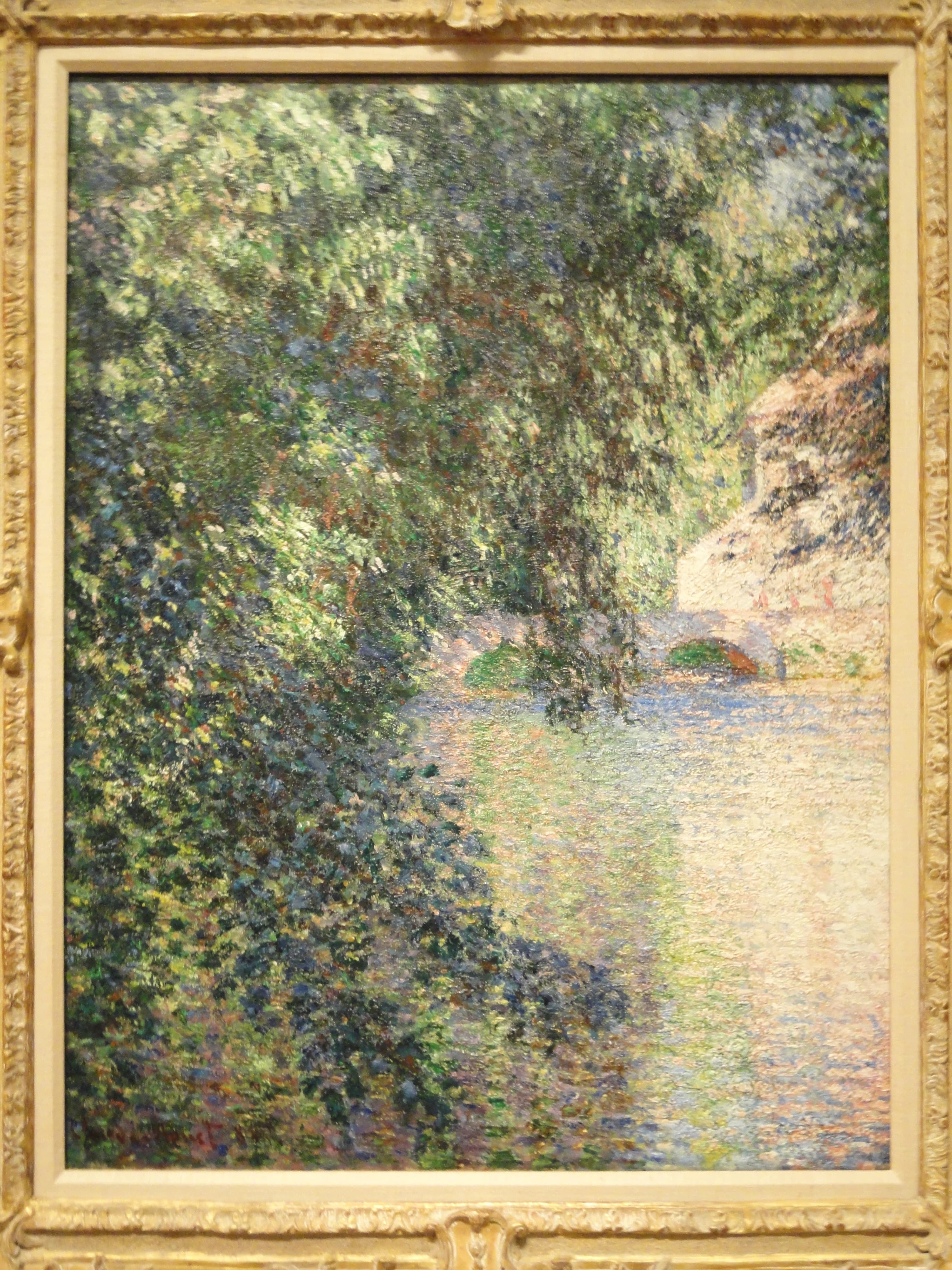
Mill at Limetz
Claude Monet · 1888
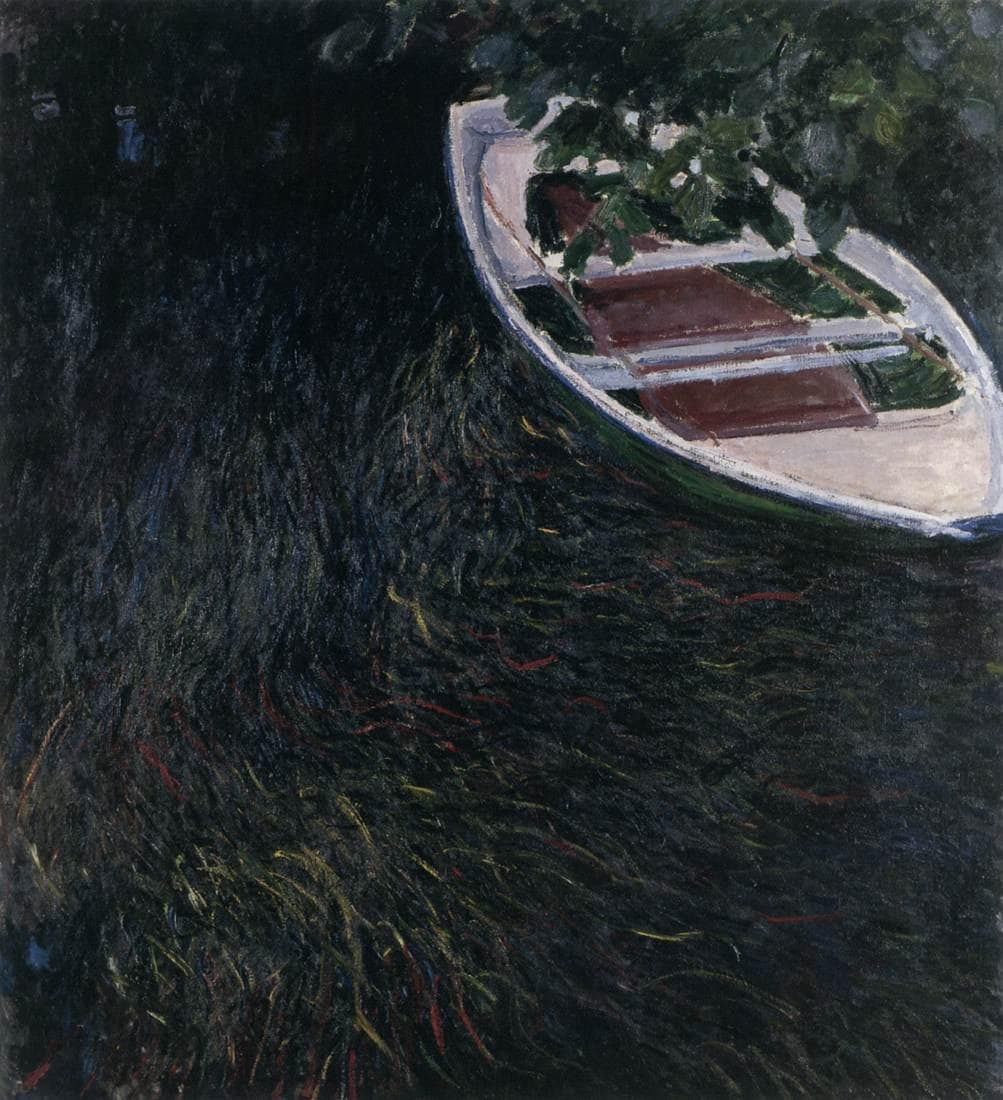
The Barque
Claude Monet · 1887
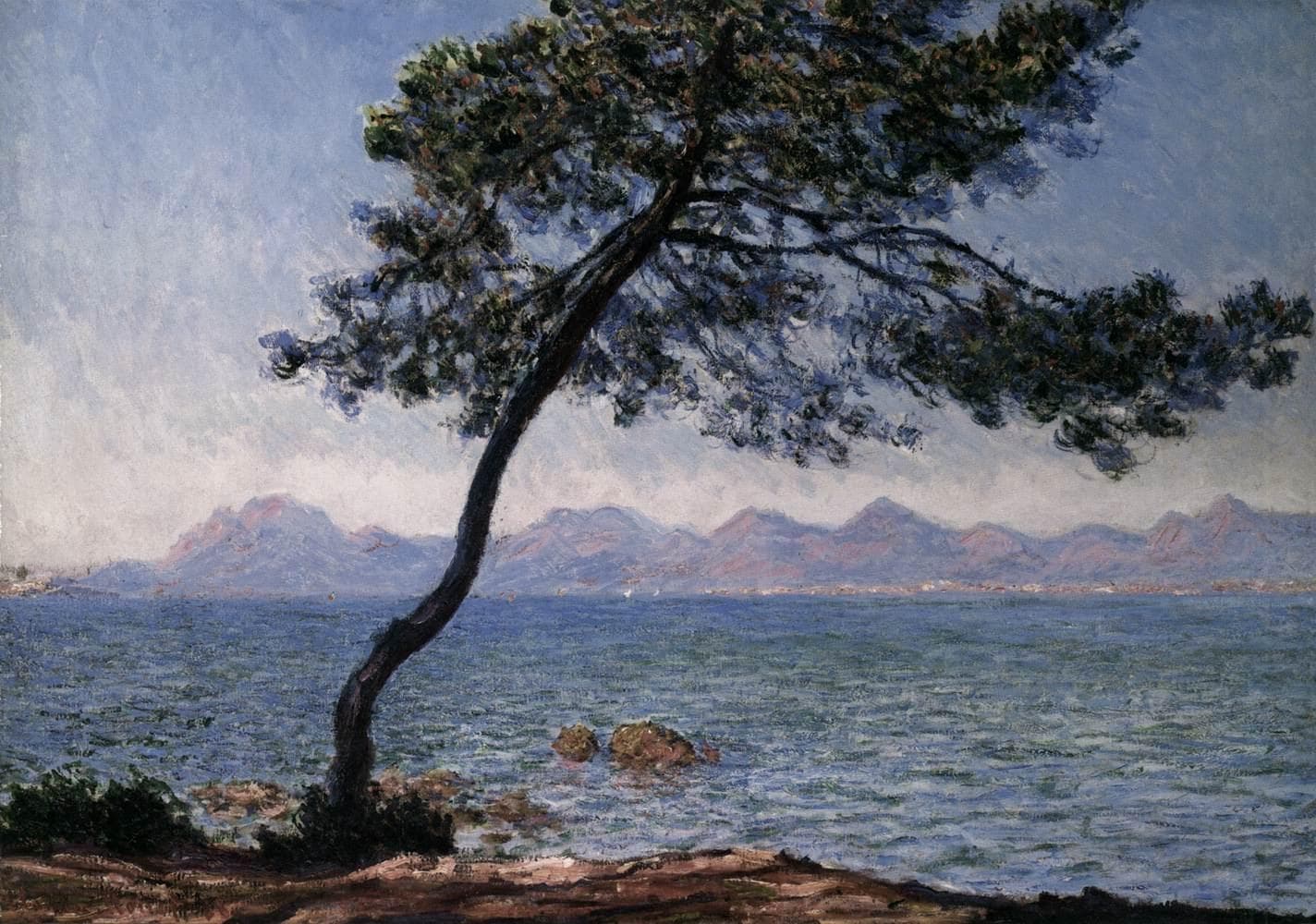
Antibes
Claude Monet · 1888
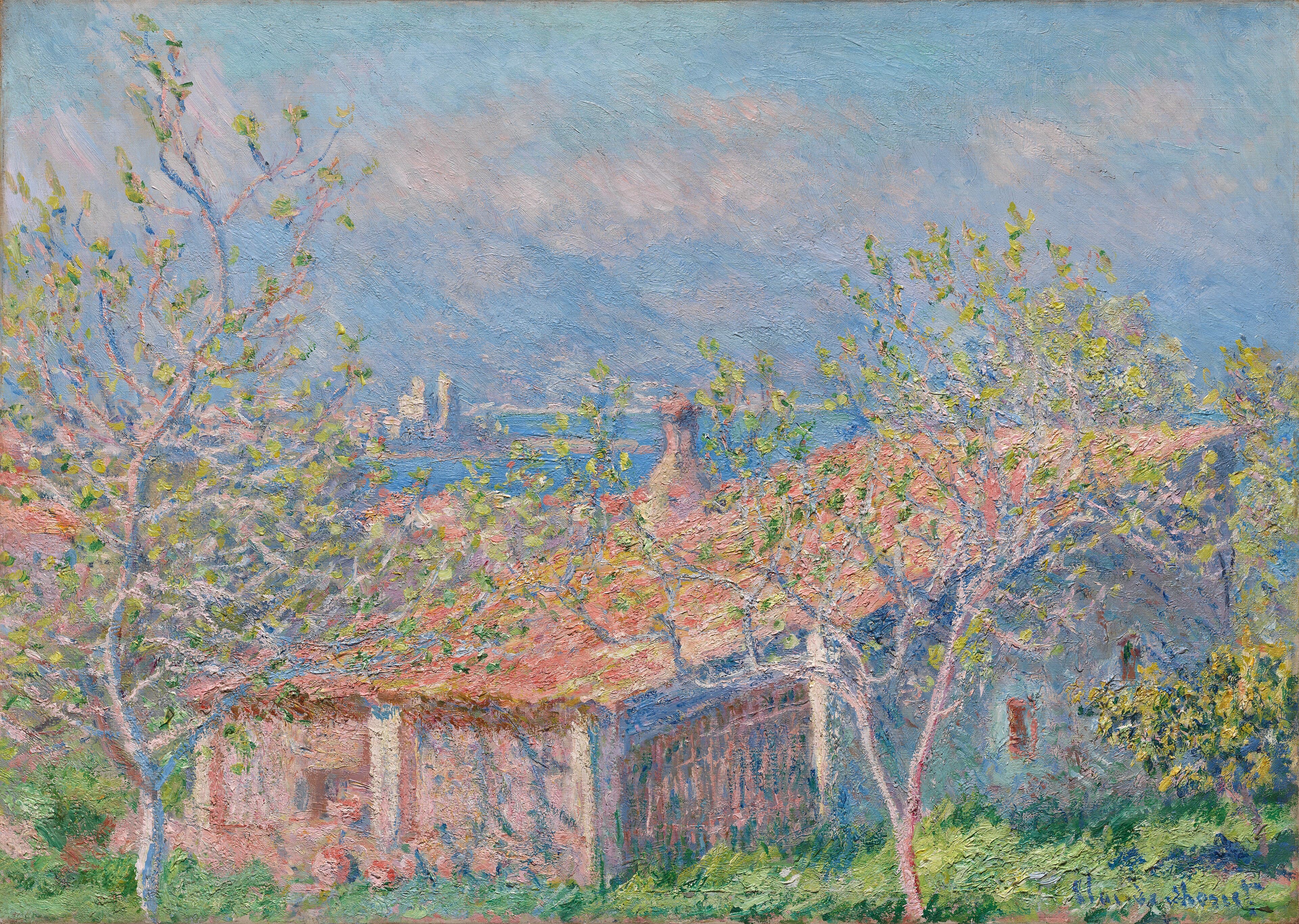
Gardener's House at Antibes
Claude Monet · 1888
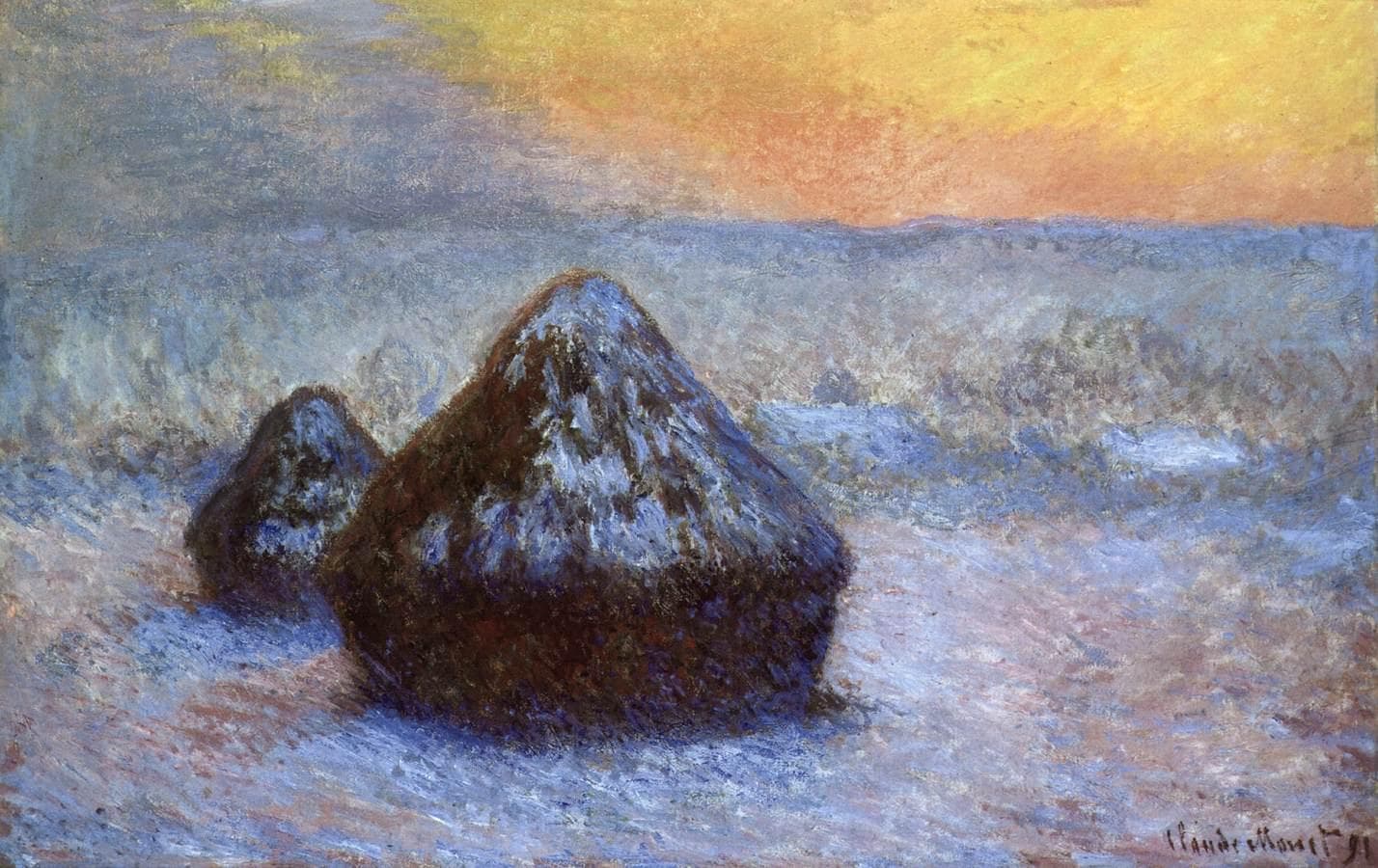
Stacks of Wheat, Sunset, Snow Effect
Claude Monet · 1890–91
Also painted in 1888
The same year
Kindred works
You may also study
Morning at Antibes
Claude Monet · 1888
The Fort of Antibes
Claude Monet · 1888
Starry Night (Munch)
Edvard Munch · 1893
Morning on the Seine, Giverny
Claude Monet · 1897
Water Lilies, Evening Effect
Claude Monet · 1897
Moonlit Landscape with a View of the New Amstel River and Castle Kostverloren
Aert van der Neer · c. 1647
The Japanese Bridge
Claude Monet · 1918–24
Water Lilies: Setting Sun
Claude Monet · 1914–26