Image: Philadelphia Museum of Art; photo by Miguel Hermoso Cuesta · CC BY-SA 4.0 · via Wikimedia Commons
Morning at Antibes
Claude Monet, 1888
Morning at Antibes is an 1888 painting by Claude Monet of a feathery tree on the shore framing a distant view of the old town of Antibes across a pale green sea in soft morning haze. It is in the Philadelphia Museum of Art.
- Artist
- Claude Monet
- Date
- 1888
- Medium
- Oil on canvas
- Dimensions
- 65.7 × 82.1 cm
- Collection
- Philadelphia Museum of Art, Philadelphia, United States
- Movement
- Impressionism
- Catalogue
- Wildenstein 1170
- Nature & Landscape
- Water & Sea
Claude Monet's Morning at Antibes (Matin à Antibes) was painted in the spring of 1888, during his stay on the Côte d'Azur. A tall, airy tree on the near shore fills the right half of the canvas, while the old town of Antibes lies far across the water, pale and weightless in the morning haze. The canvas, 65.7 by 82.1 centimeters (Wildenstein 1170), is signed at lower right. It is in the Philadelphia Museum of Art, the bequest of Charlotte Dorrance Wright in 1978.
What you are looking at
The tree is the real subject. It rises from a reddish bank at lower right, its trunk forking into several pale, rosy limbs that spread across the top of the canvas. Its foliage is not a solid mass but a delicate, transparent cloud of strokes in lilac, pale blue, cream and yellow-green, through which you see the sky. On the left edge, a second, smaller tree in blue-green frames the view, so that the town sits in a gap between them.
Across the water, Antibes is a thin band of pinks and creams on the horizon, with its two towers just visible. Behind it rises a soft, rosy haze where the mountains should be; Monet hints at them only as a faint pink glow. The sea in the lower third is a flat, calm sheet of pale green and turquoise, painted with short horizontal strokes. The sky is a high, pale blue that turns almost white near the horizon.
The overall effect is of thin morning air before the heat of the day: no hard shadows, no strong contrasts, everything softened. The tree's colors, pink, lilac and gold, are the colors of early light, not of its own leaves.
Where and when
Monet spent January to May 1888 at Antibes, lodging at the Château de la Pinède and painting some thirty-nine compositions. He picked a few motifs and returned to them under different light, an approach that would lead directly to the Haystacks two years later. The old town seen across the bay, with the Alps behind, was one of his main subjects, and he painted it at several times of day: this canvas, as its title says, records the early morning.
How this version differs
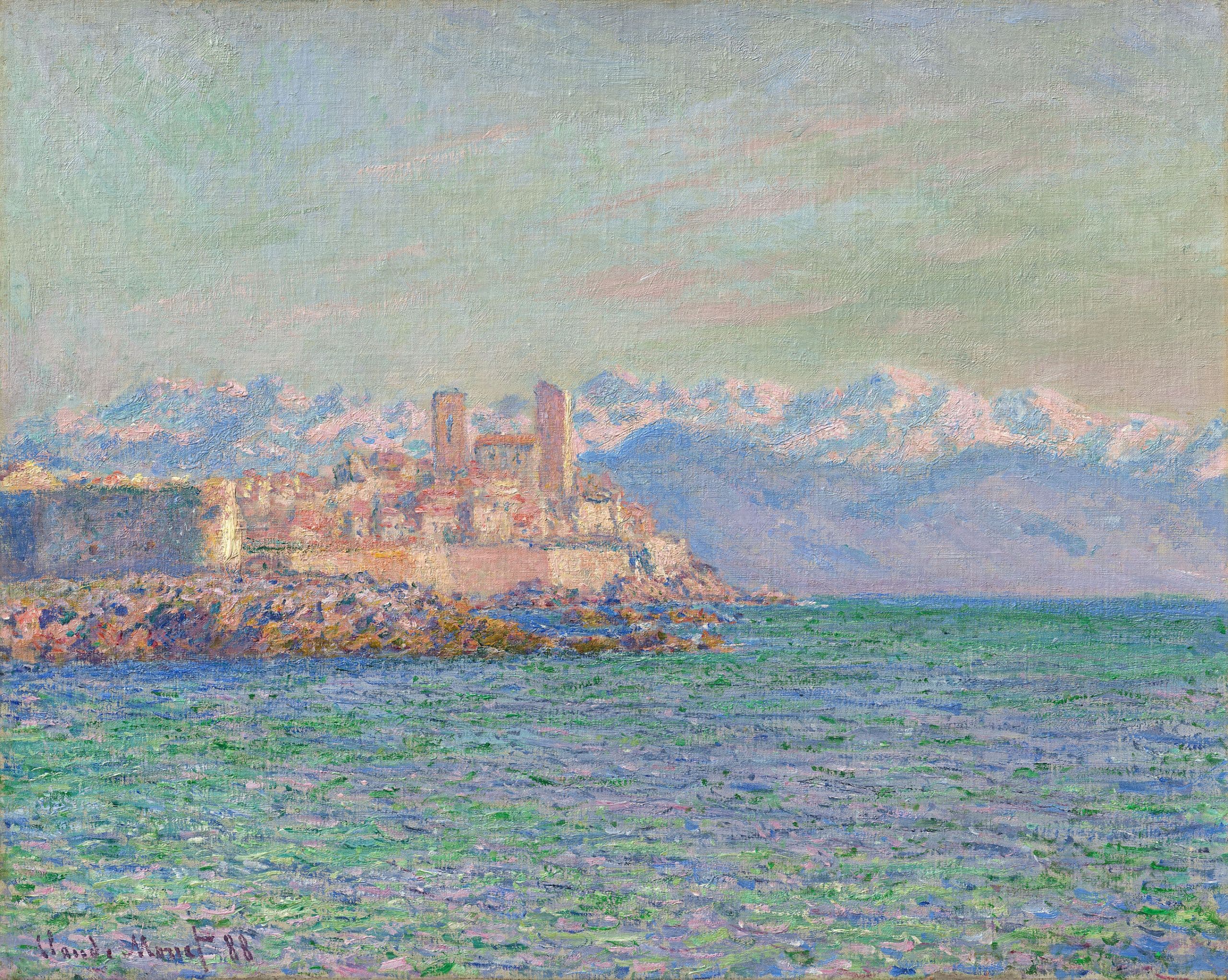
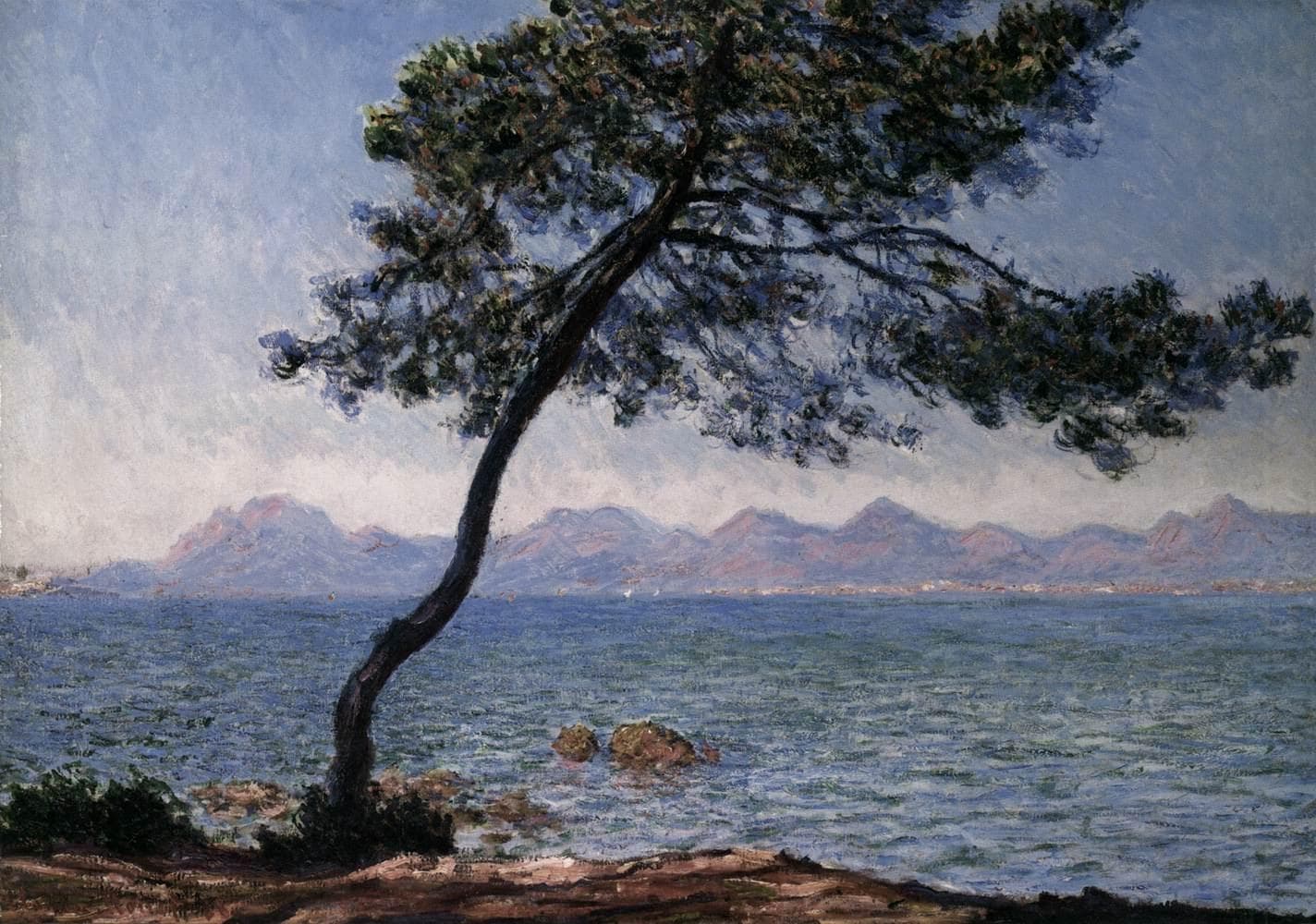
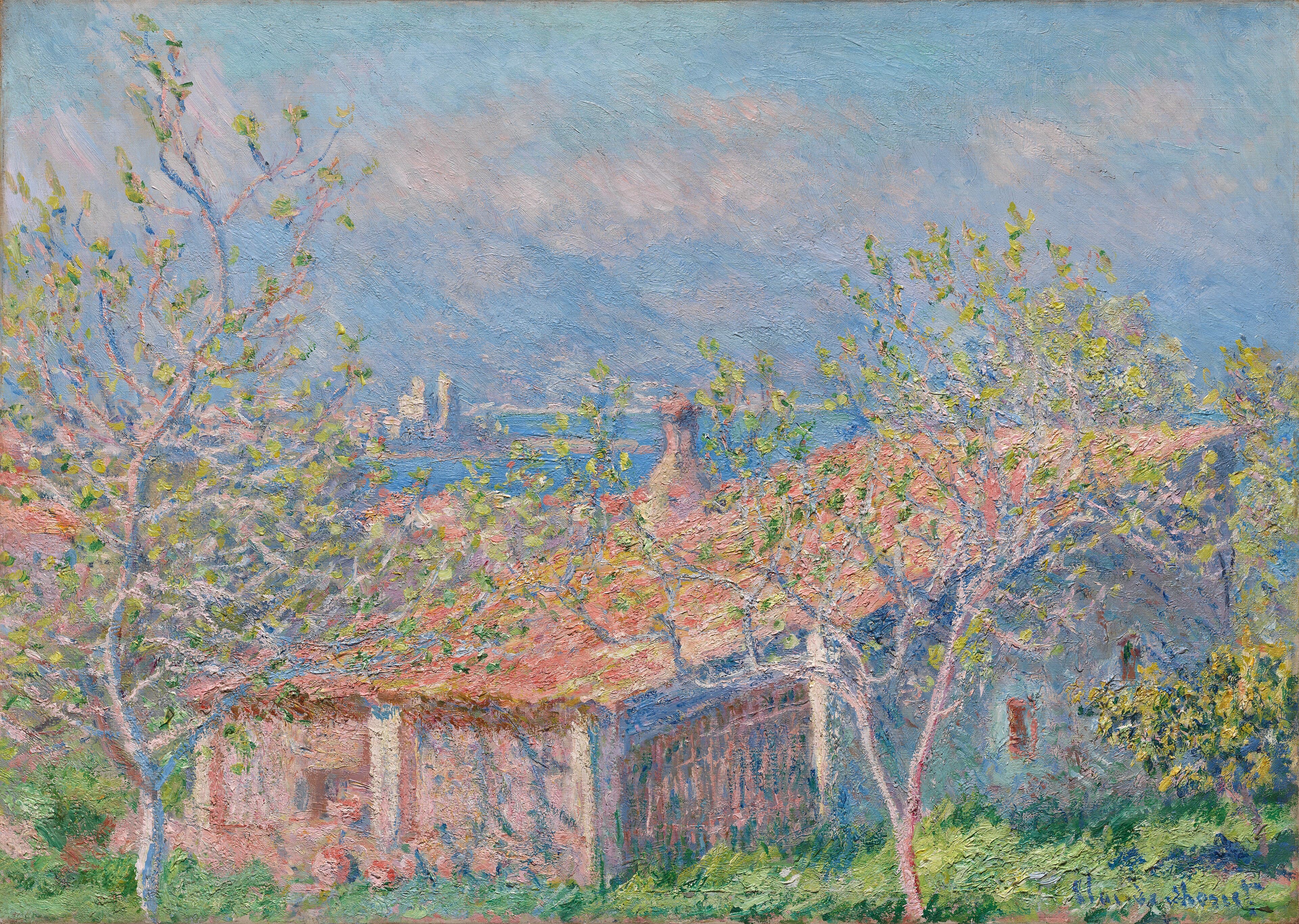
In The Fort of Antibes, now in the Hasso Plattner Collection, the town is the hero, seen frontally in strong light with snowy mountains behind. Here it is reduced to a whisper on the horizon, and a single tree takes over the composition. The same device, a tree in the foreground against sea and mountains, appears in the Courtauld's Antibes, where a lone pine leans across the view, and the town reappears as a distant accent behind a cottage in Gardener's House at Antibes.
The tree-against-the-view composition owes something to the Japanese prints Monet collected, in which a branch or trunk in the foreground often frames a distant landscape. What distinguishes the Philadelphia picture is its softness: of all the Antibes canvases, it is one of the palest and most atmospheric.
How it was painted
The foliage is built of thousands of small, separate touches of color, laid over and around each other, with the sky showing through. The trunk and branches are painted in long, fluid strokes of pink, red-brown and violet. The sea is smoother and more regular. The palette is high-keyed throughout, with almost no dark values; even the shadowed side of the tree is lilac and blue rather than brown. The result is a surface that seems to vibrate with light.
For Monet's southern campaigns at Bordighera and Antibes, see Monet on the Mediterranean, and compare the evening mood of Under the Pines, Evening, also in Philadelphia.
Where to see it
The painting came to the Philadelphia Museum of Art in 1978 as the bequest of Charlotte Dorrance Wright. The museum also holds Monet's Manne-Porte, Étretat and Bend in the Epte River near Giverny; display varies. See Where to See Monet's Paintings and Claude Monet.
Questions & answers
Where is Monet's Morning at Antibes?
It is in the Philadelphia Museum of Art, the bequest of Charlotte Dorrance Wright in 1978 (accession 1978-1-22). The museum holds several other Monets, including Manne-Porte, Étretat and Under the Pines, Evening.
When and where was Morning at Antibes painted?
Monet painted it in the spring of 1888 at Antibes on the French Riviera, where he stayed from January to May and produced around thirty-nine compositions. The title records the early-morning light.
What does Morning at Antibes show?
It shows a tall, airy tree with pale rosy branches and lilac-and-gold foliage on the near shore, framing a distant view of the old town of Antibes across a calm green sea, with a pink haze where the mountains rise.
How is it different from Monet's other Antibes paintings?
In The Fort of Antibes the town fills the center in strong light. In Morning at Antibes the town is only a pale strip on the horizon, and a foreground tree dominates in soft, hazy morning light, making it one of the most atmospheric of the series.
More by the artist
Claude Monet
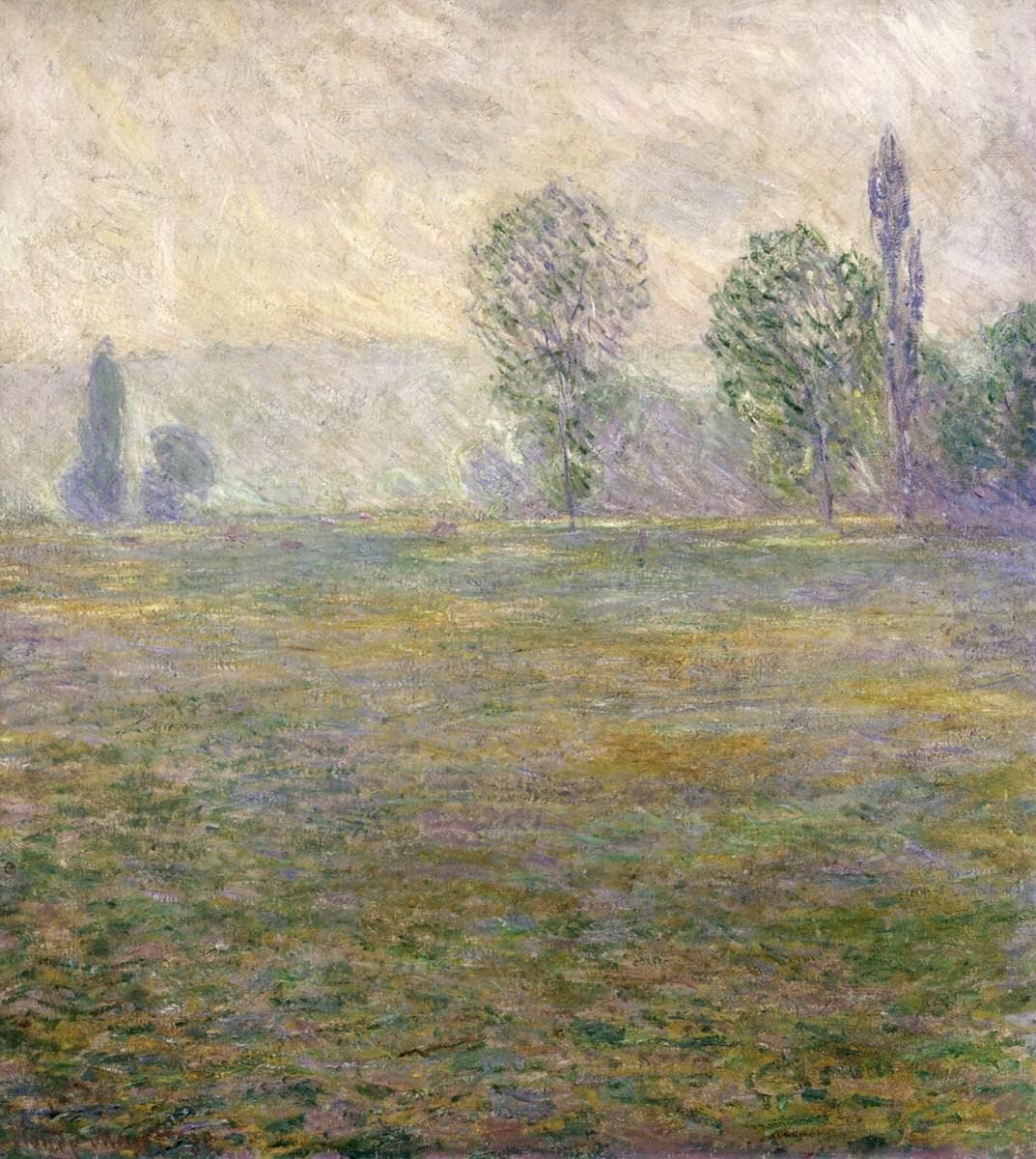
Meadow at Giverny
Claude Monet · 1888
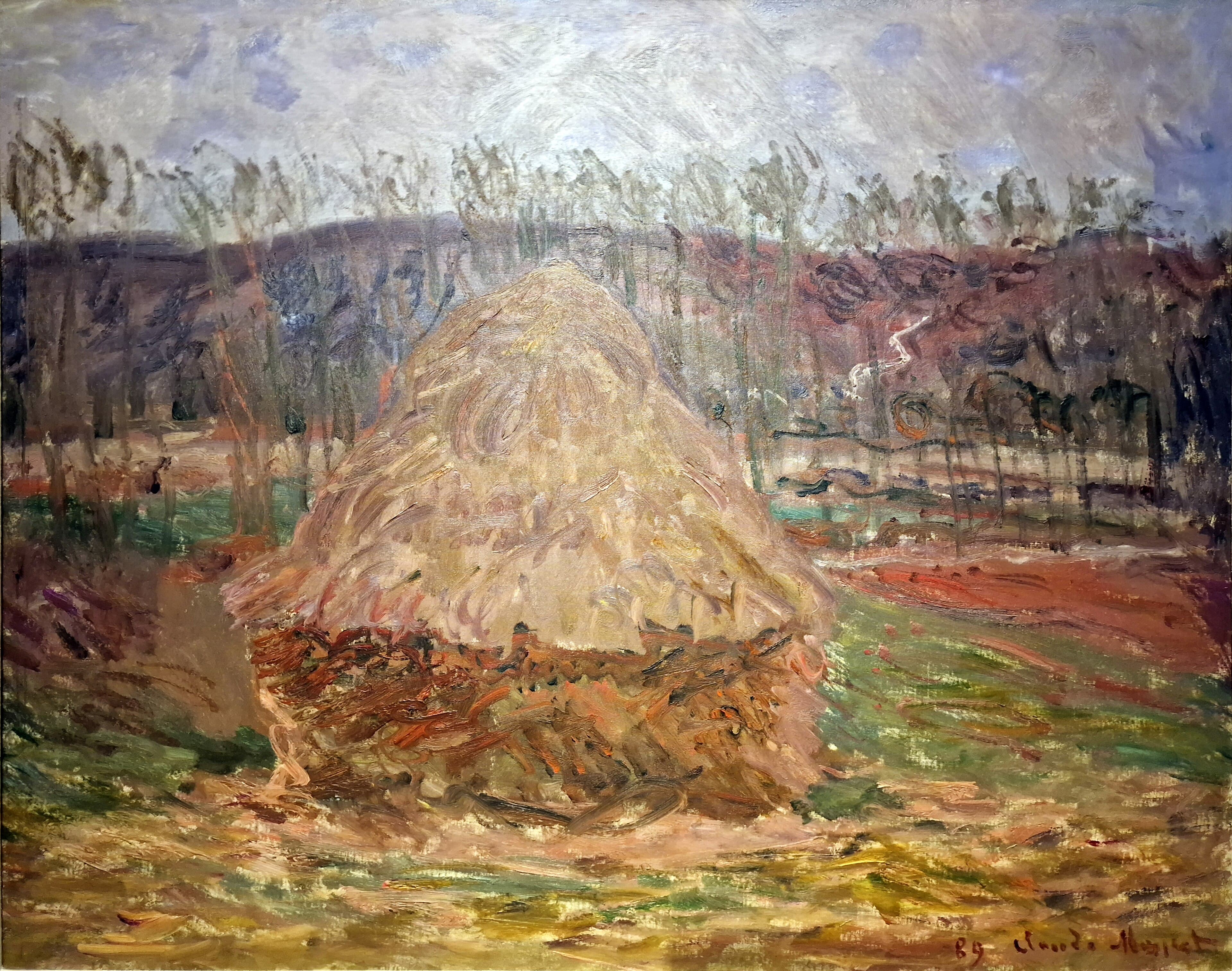
Grainstack at Giverny
Claude Monet · 1889
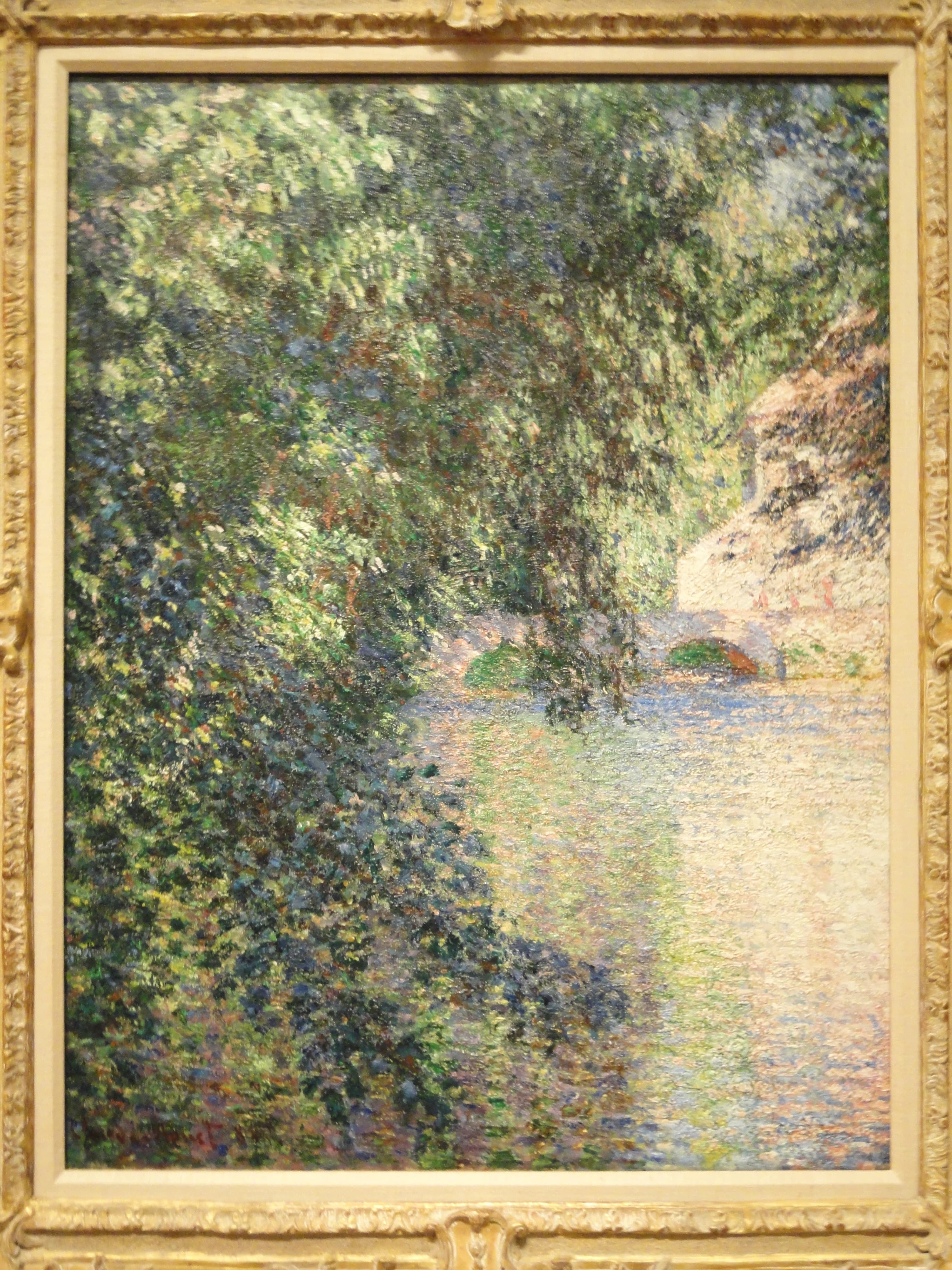
Mill at Limetz
Claude Monet · 1888
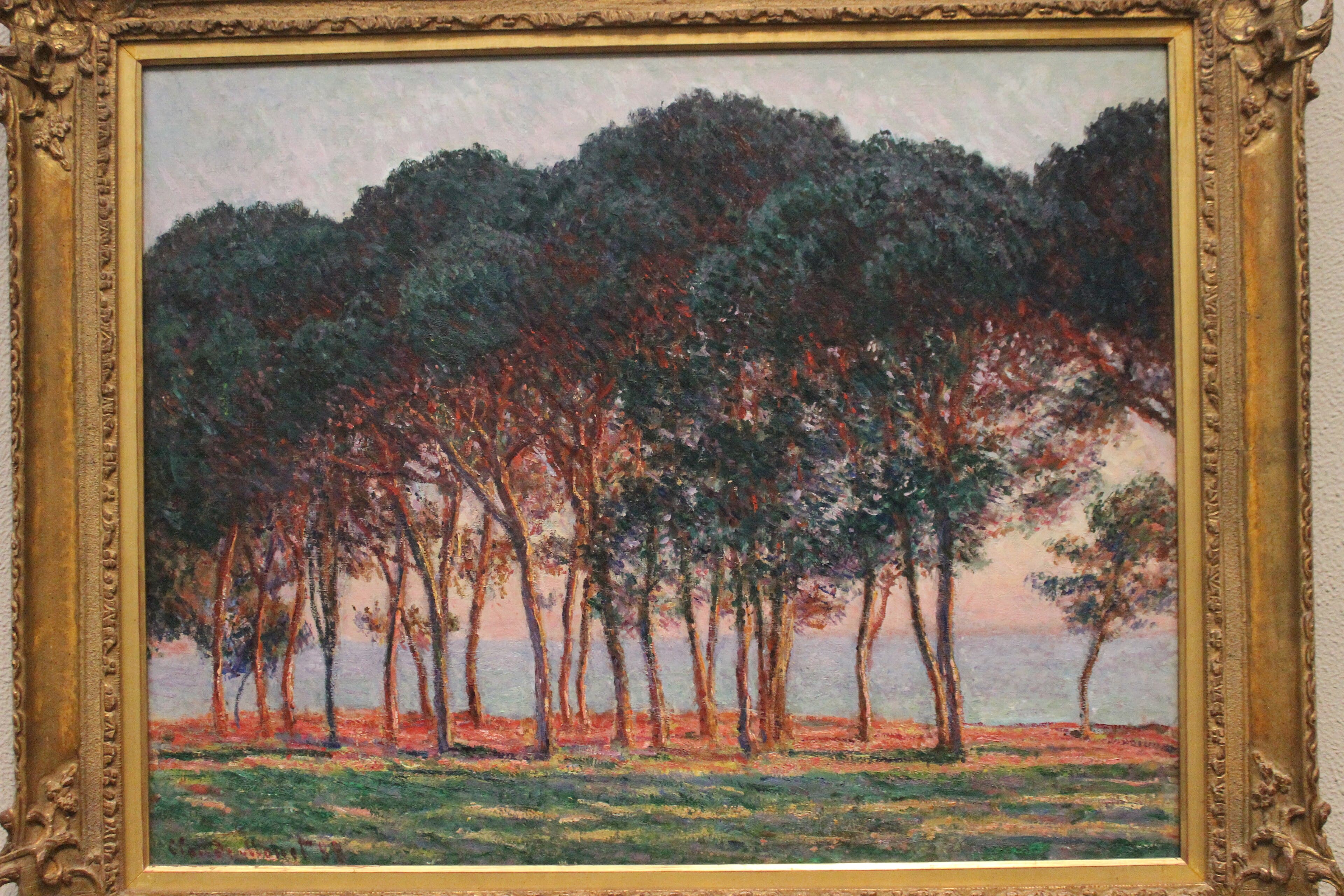
Under the Pines, Evening
Claude Monet · 1888
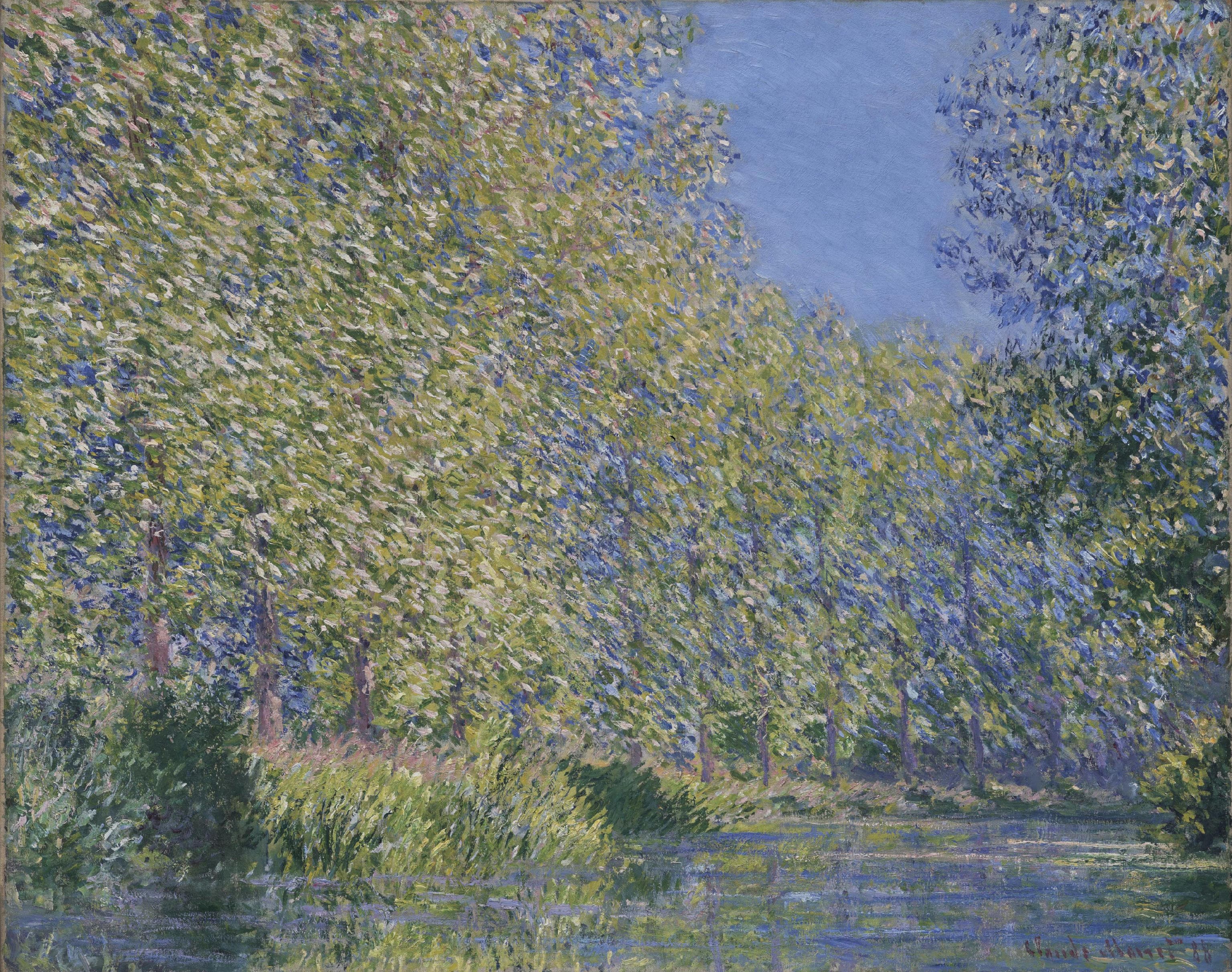
Bend in the Epte River near Giverny
Claude Monet · 1888
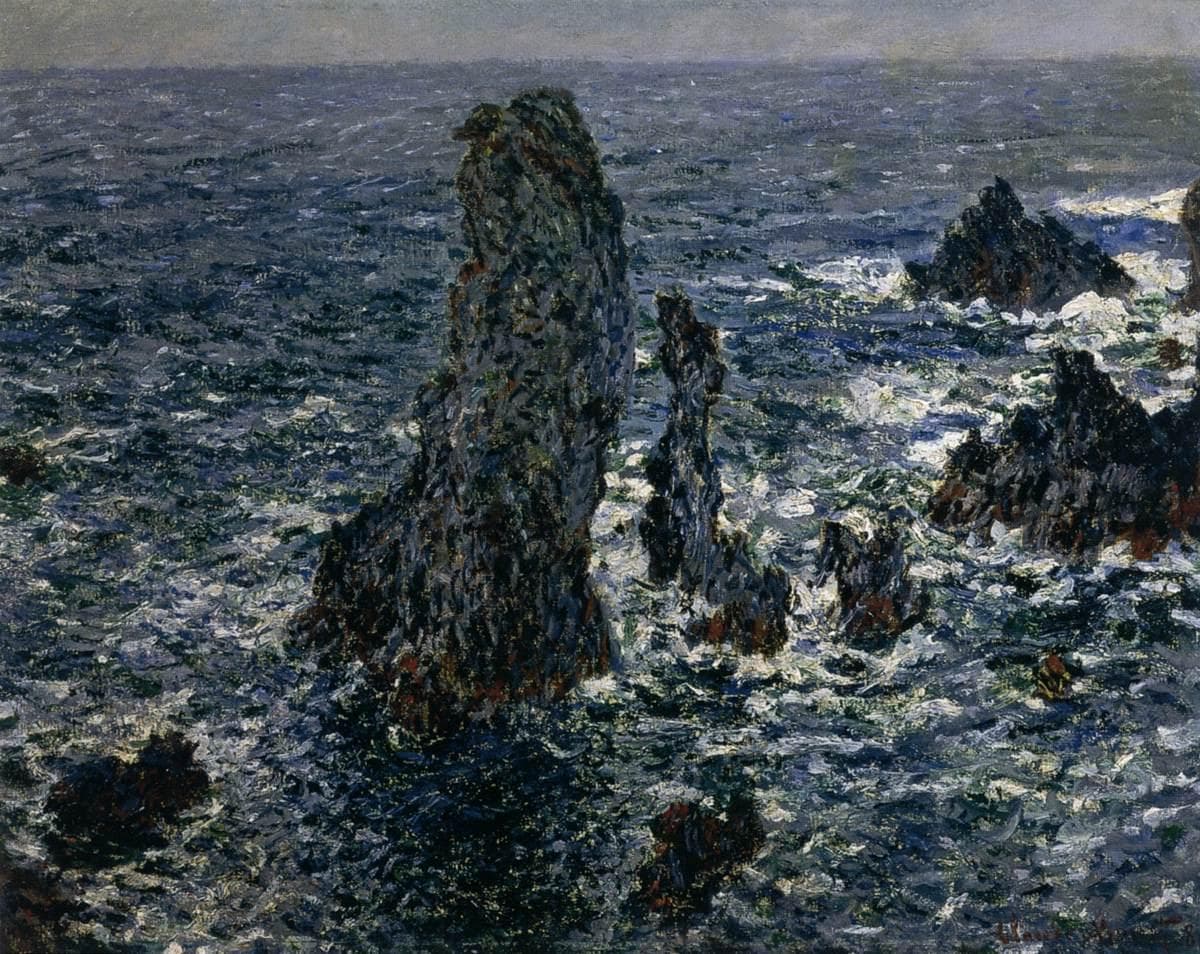
The Pyramides at Port-Coton, Rough Sea
Claude Monet · 1886
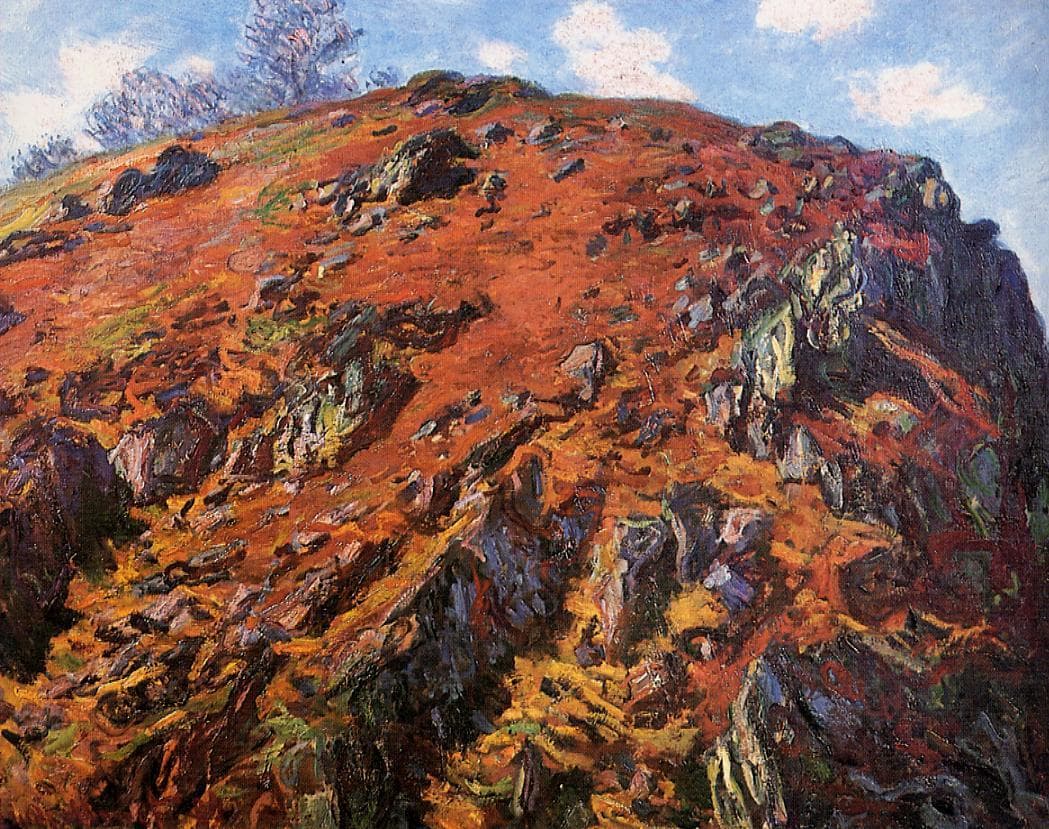
Study of Rocks, Creuse ('Le Bloc')
Claude Monet · 1889
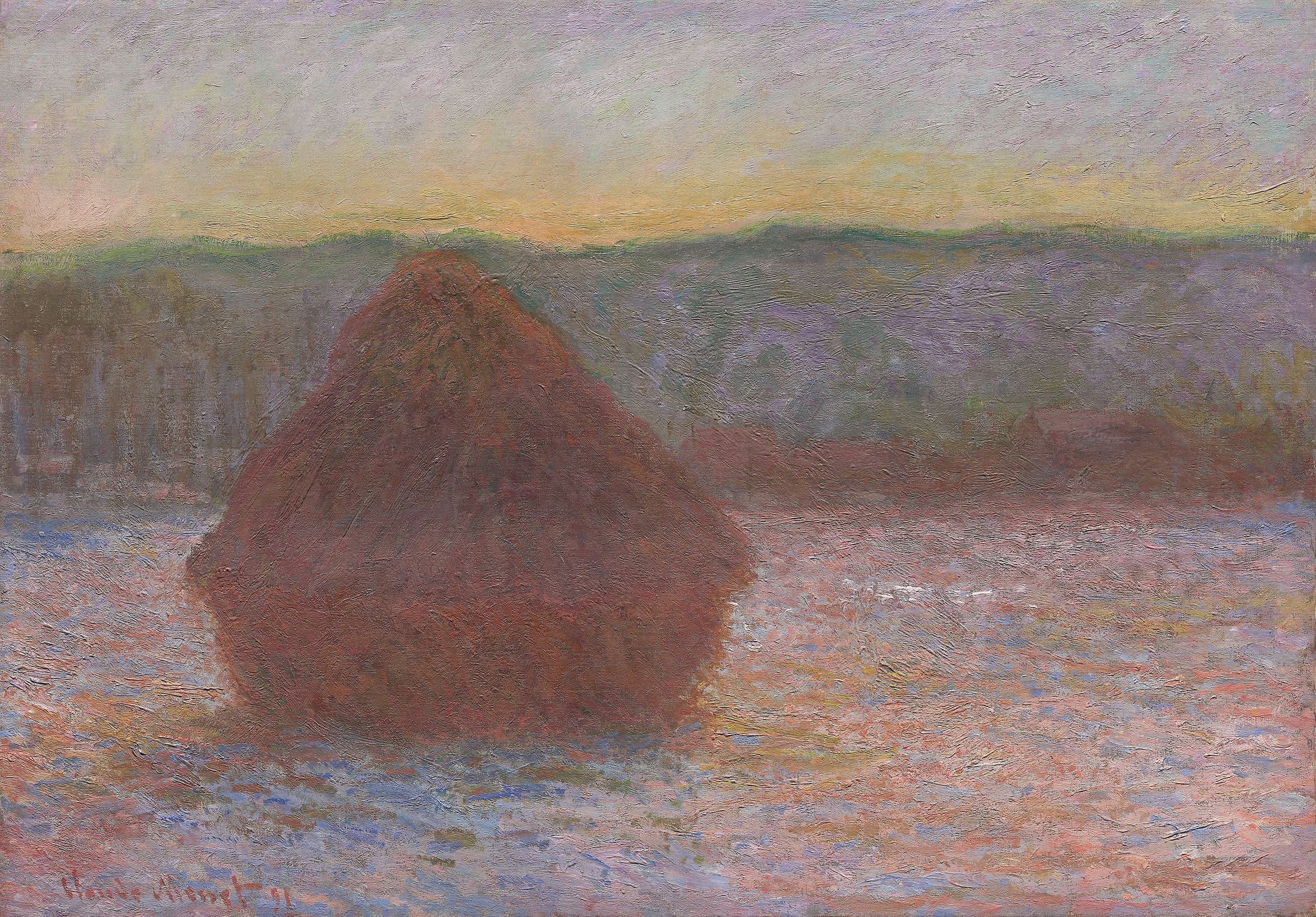
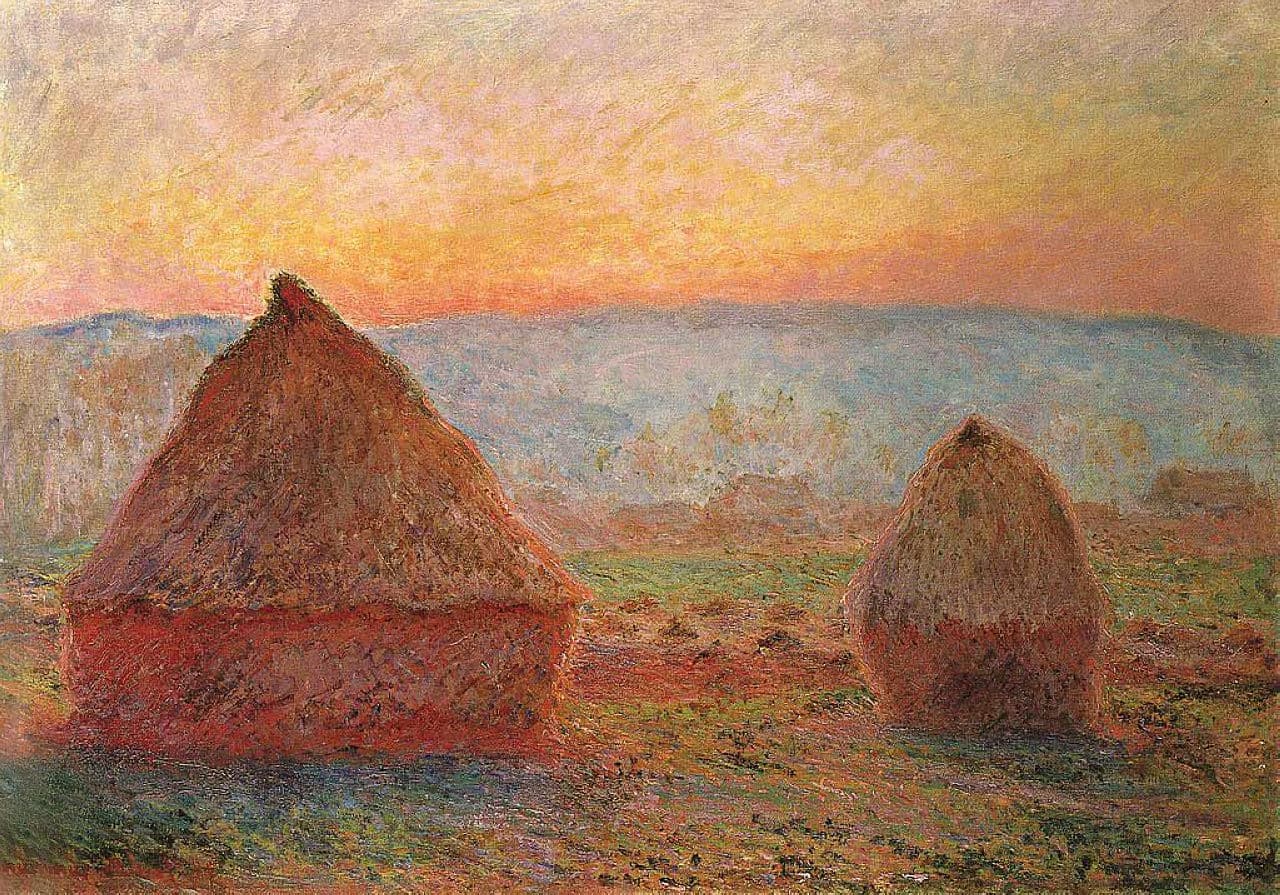
Stack of Wheat (Thaw, Sunset)
Claude Monet · 1890–91
Also painted in 1888
The same year
Kindred works
You may also study
The Fort of Antibes
Claude Monet · 1888
Antibes
Claude Monet · 1888
Gardener's House at Antibes
Claude Monet · 1888
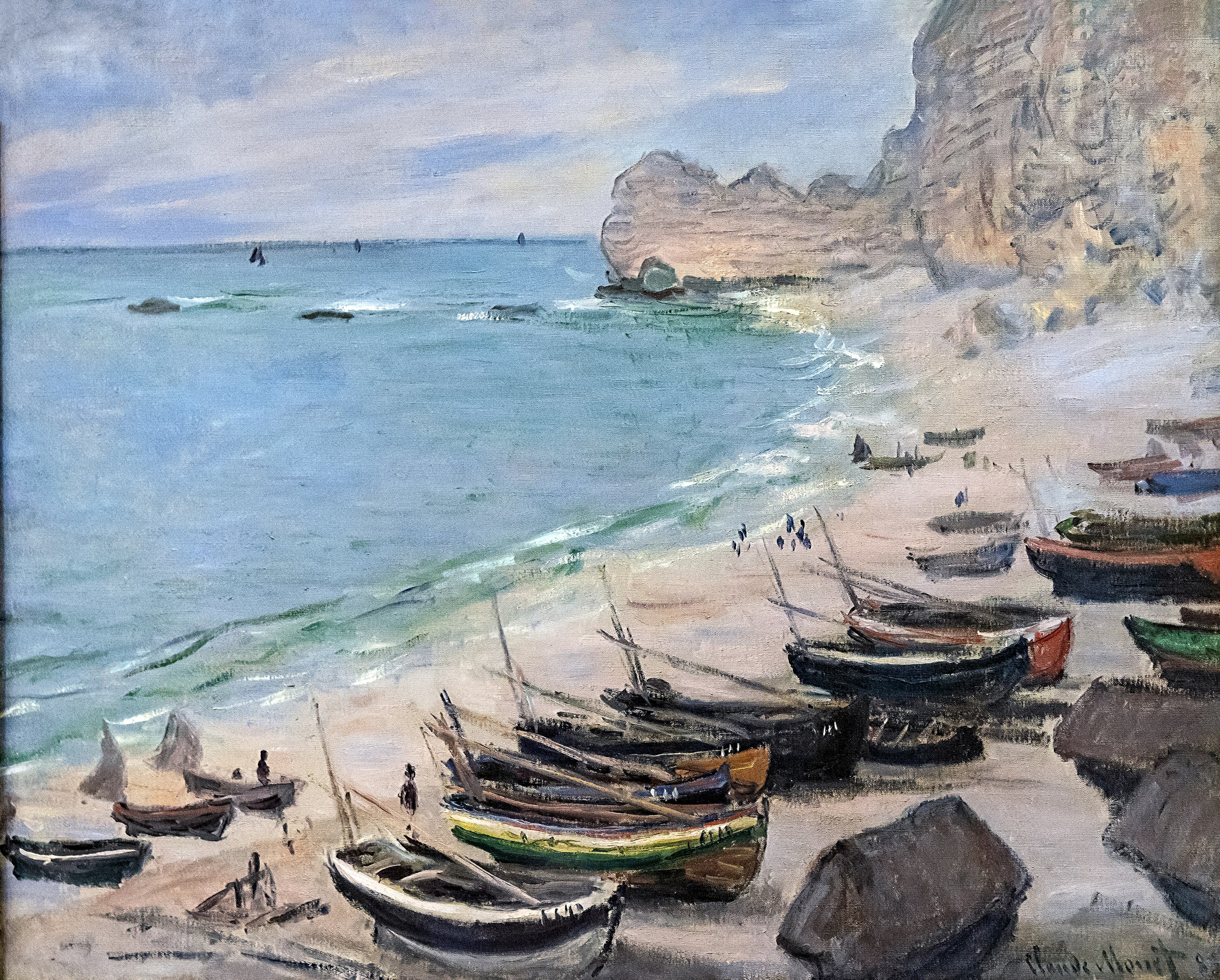
Boats on the Beach at Étretat (1883)
Claude Monet · 1883
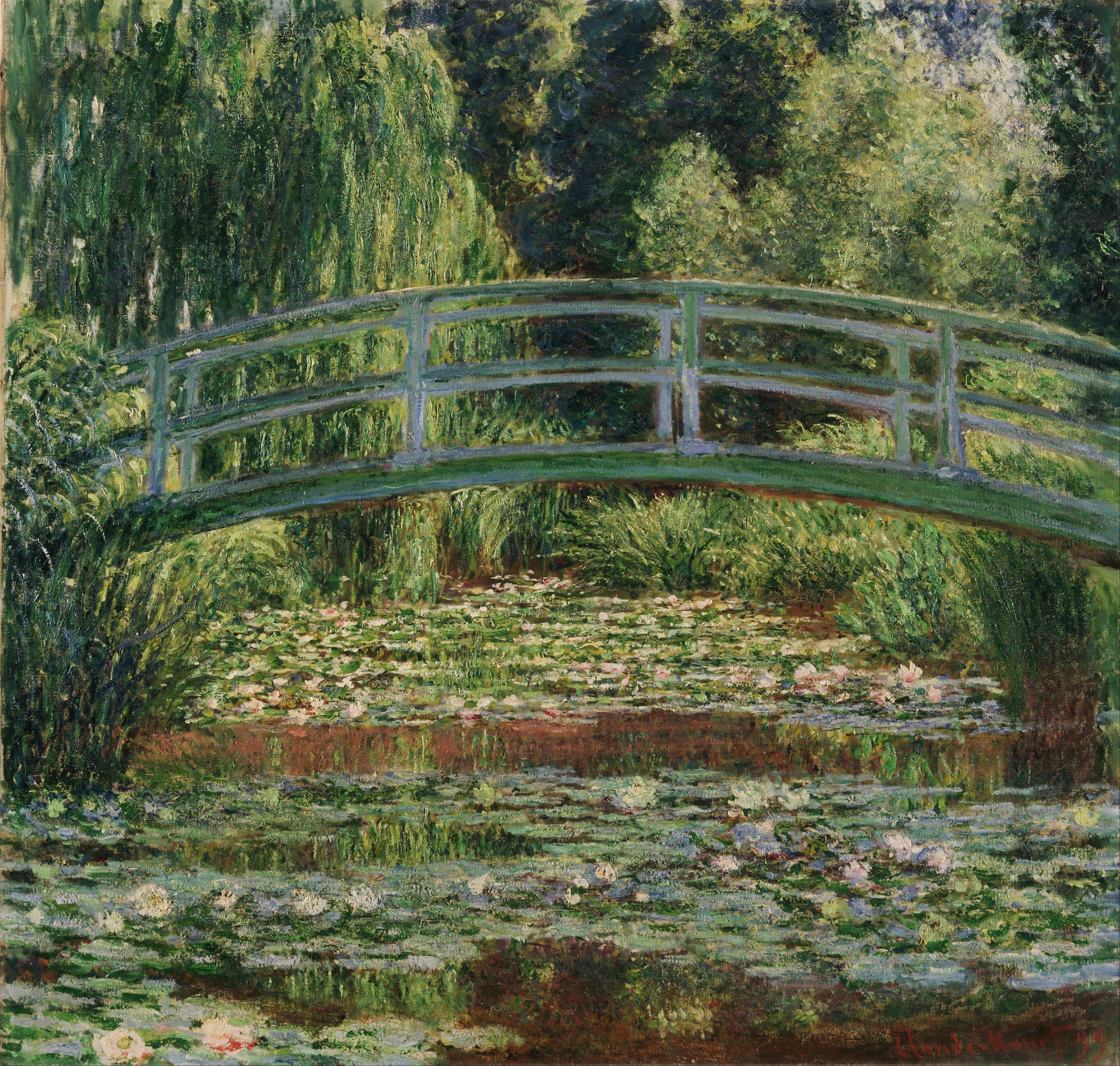
The Japanese Footbridge and the Water Lily Pool, Giverny
Claude Monet · 1899
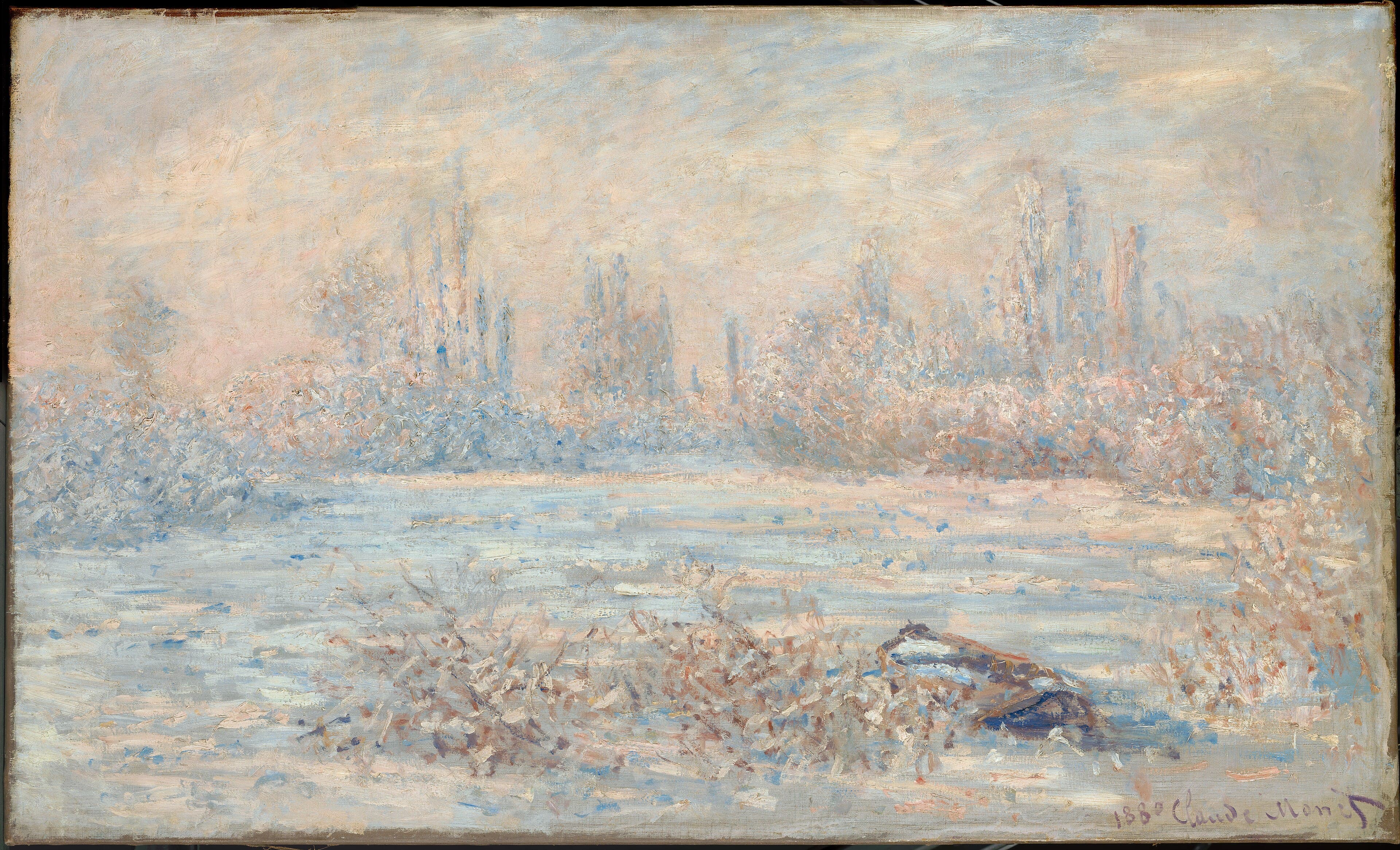
Frost (Le Givre)
Claude Monet · 1880
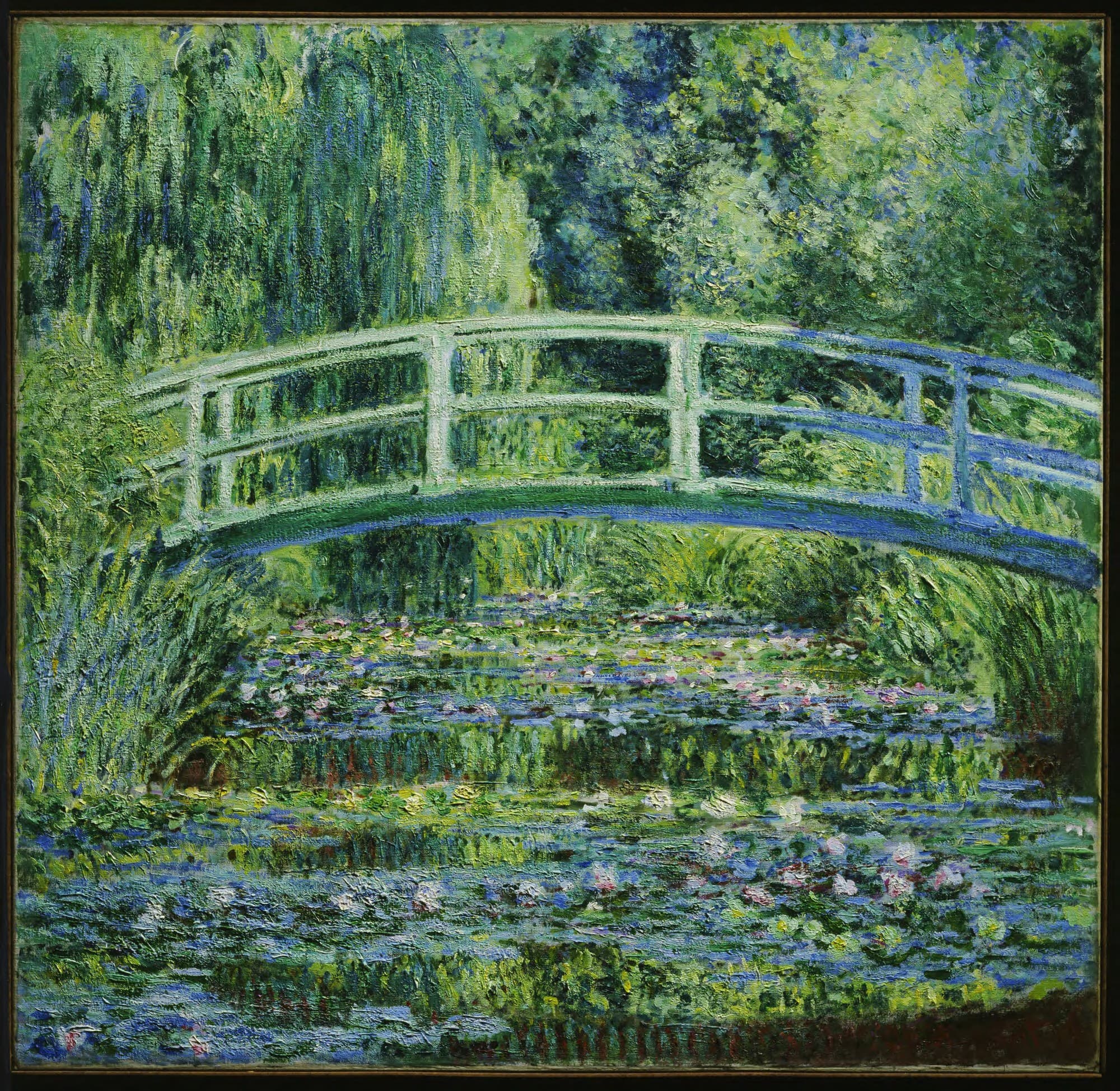
Water Lilies and Japanese Bridge
Claude Monet · 1899
Windmill and Boats near Zaandam
Claude Monet · 1871