Image: Claude Monet; Smith College Museum of Art (source: http://www.wikiart.org/en/claude-monet/the-cour-d-albane) · Public domain · via Wikimedia Commons
La Cour d'Albane, Rouen
Claude Monet, 1892–94
La Cour d'Albane, Rouen is a Claude Monet painting begun in 1892 alongside his Rouen Cathedral series: a cathedral tower rising over the old timber-framed houses of the Cour d'Albane under a blue sky. It is in the Smith College Museum of Art, Northampton, Massachusetts.
- Artist
- Claude Monet
- Date
- 1892–94
- Medium
- Oil on canvas
- Dimensions
- c. 92 × 73 cm
- Collection
- Smith College Museum of Art, Northampton, Massachusetts, United States
- Movement
- Impressionism
- Catalogue
- Wildenstein 1317
- Architecture & Ruins
- Religion & Saints
- The City
What you are looking at
This is not the famous west façade but a side view few people know. A massive Gothic tower of Rouen Cathedral fills the left two-thirds of the canvas, its pointed lancet windows dark slits in pale, sunlit stone. The stone is painted in lavender, cream and blue with touches of gold, and the tower's shadowed edge is a strong line of ultramarine against the sky. To the right, a cluster of old houses crowds against the cathedral's flank: steep roofs, dormers, a chimney, half-timbered gables with rows of bright windows, and at the bottom right a dark round archway leading out of the court.
The sky is a soft, even blue, brushed in loose diagonal strokes. At the bottom, the paved ground of the court is a pale, sunny lilac. The tower is cut off at the top, as Monet cuts off the façade in the portal pictures, so its height seems to continue beyond the frame.
The signature, Claude Monet, with a date, is at lower right.
The Cour d'Albane
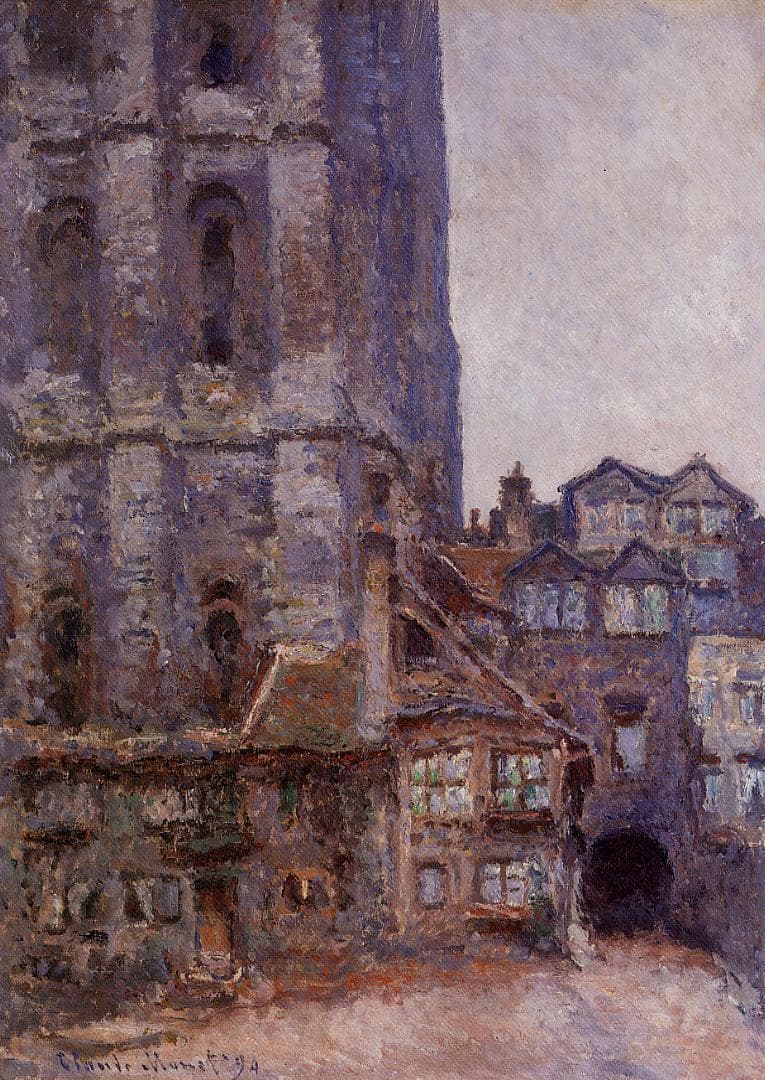
The Cour d'Albane is a courtyard on the north side of Rouen Cathedral, enclosed by the cathedral's walls and by former canons' houses. Claude Monet painted it in 1892, during his first campaign in Rouen, alongside the views of the west front that became the Rouen Cathedral series. Only a handful of Cour d'Albane pictures exist; another, La Cour d'Albane, temps gris, shows the same motif in overcast weather.
The subject let Monet set the cathedral against domestic architecture, medieval stone against the patterned timber and plaster of ordinary houses. It is a more picturesque and traditional view than the portal canvases, closer to the town views of earlier painters.
How it was painted
The paint is thick and broken, especially on the tower, where Monet builds up the stone with layers of short, dry strokes in violet, cream and blue. The houses are handled more descriptively, their windows picked out in squares of white and yellow, their timbers in dark lines. The blue of the sky is thinner, laid in sweeping strokes that contrast with the crust of the masonry.
The color logic is that of sun in a cool season: lit surfaces in cream and gold, shadows in clear blue and violet, no black anywhere.
How this version differs
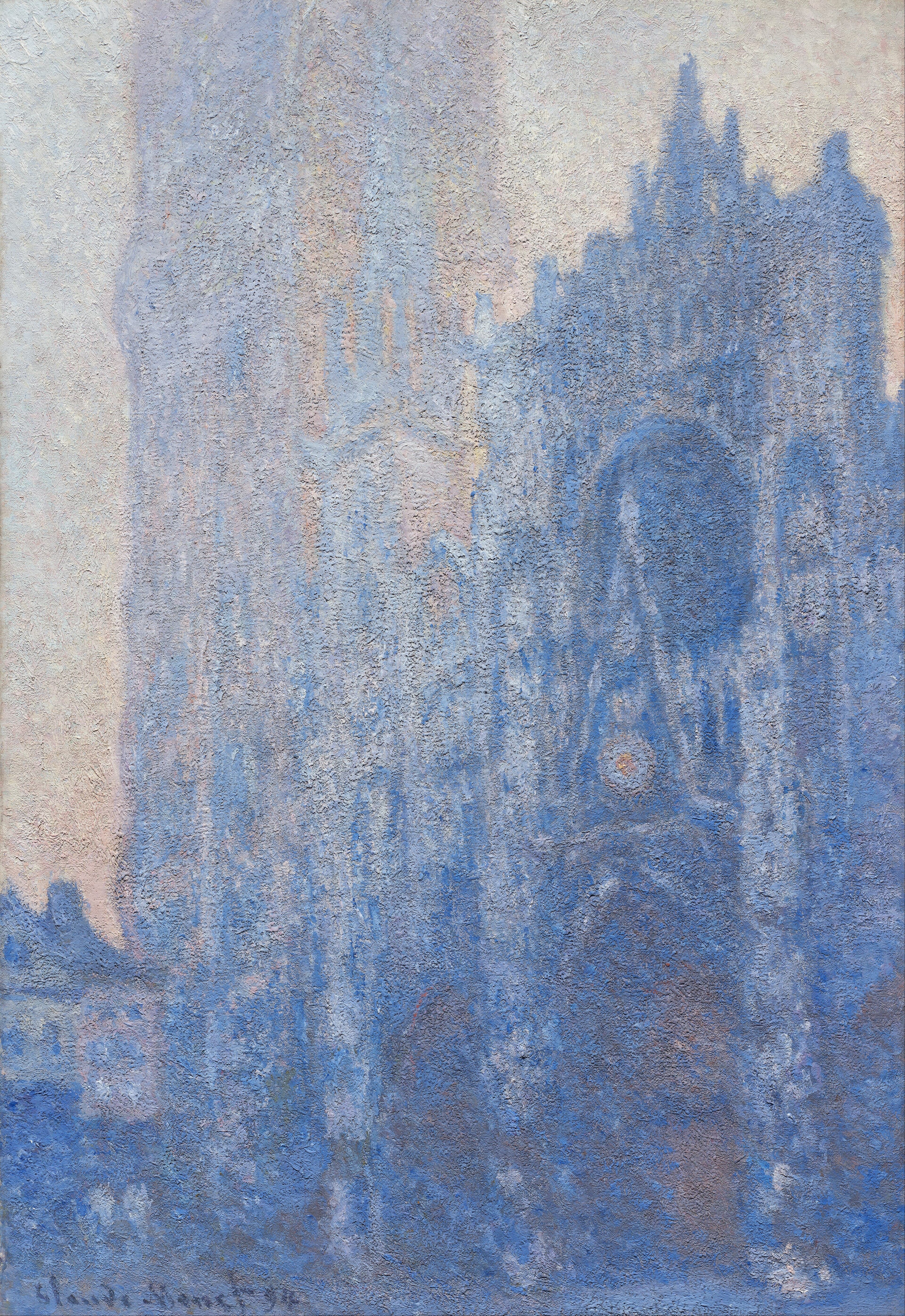
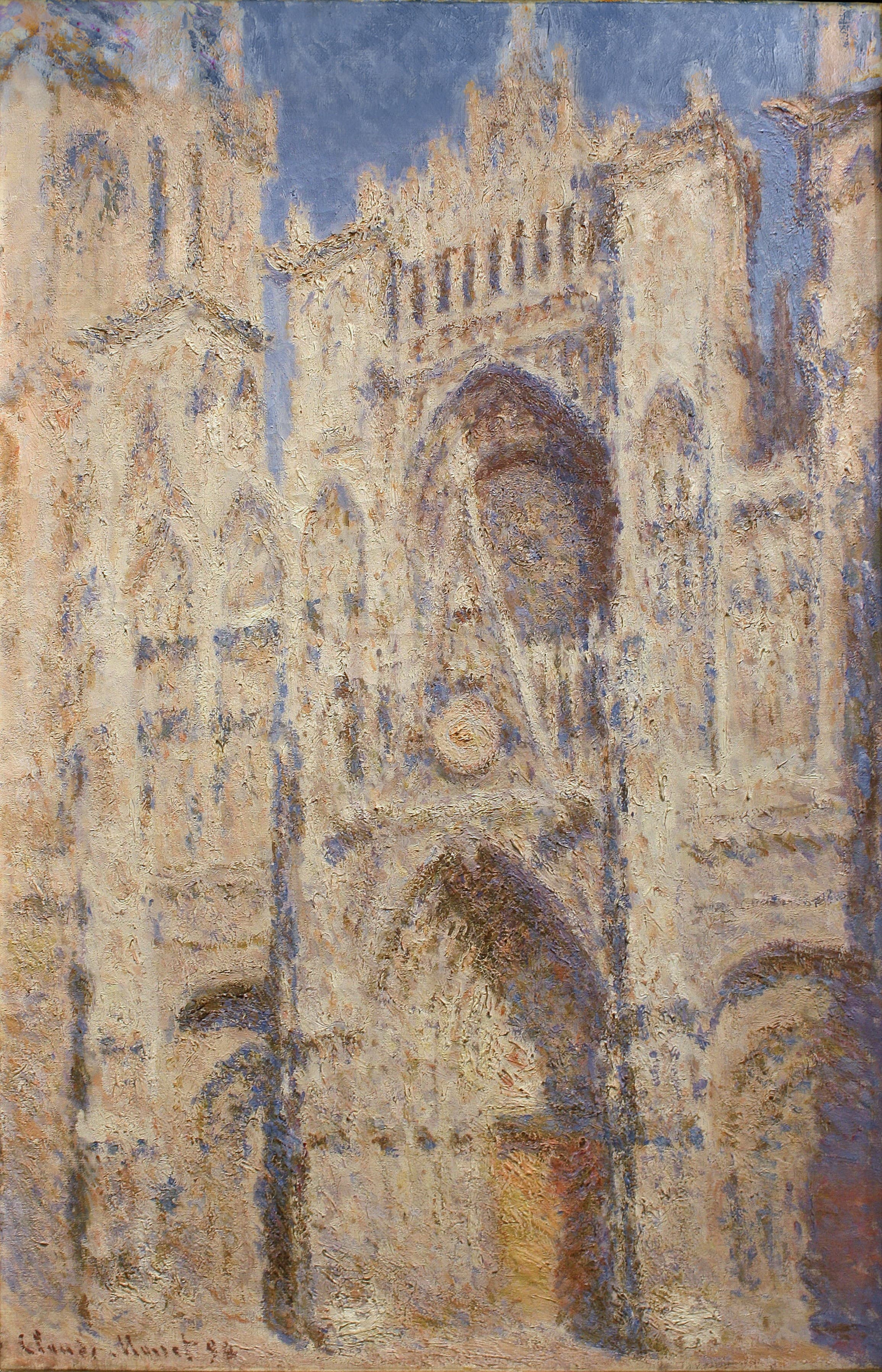
Compared with the gray-weather version, this canvas is bright and sunny, its tower glowing against a blue sky. Compared with the portal views, such as the Met's The Portal (Sunlight) or the MFA Boston's dawn view of the Façade and Tour d'Albane, it is more anecdotal: houses, windows, an archway, a sense of a real place in a real town. It shows Monet at the start of the Rouen project, still exploring which view of the cathedral to commit to.
Looking closely
Look at the windows of the timber-framed houses on the right. Each pane is a single square touch of white, pale yellow or blue, and together they glitter in the sun. On the tower, the shadowed edge is a strong ultramarine line that runs the full height of the canvas, separating stone from sky. The dark archway at the lower right is the deepest tone in the picture.
Ownership and where to see it
Catalogued as Wildenstein 1317, the painting has been in the Smith College Museum of Art in Northampton, Massachusetts, since 1956 (accession SC 1956:24). Sources differ slightly on its dimensions, giving about 92 by 73 centimeters. Smith's museum also owns Monet's earlier The Seine at Bougival, Evening. See our guide to where to see Monet's paintings.
Questions & answers
Where is Monet's La Cour d'Albane, Rouen?
It is in the Smith College Museum of Art in Northampton, Massachusetts, accession SC 1956:24. The museum, on the Smith College campus in western Massachusetts, is free to visit and also owns Monet's earlier Seine at Bougival, Evening.
What is the Cour d'Albane?
A courtyard on the north side of Rouen Cathedral, enclosed by the cathedral's walls and by old timber-framed houses. Monet painted it in 1892, during his first campaign in Rouen, alongside his views of the cathedral's west front.
When was it painted?
Monet began it in Rouen in 1892. Like the cathedral façades, it may have been reworked later, and some catalogues date it 1892–94. It is catalogued as Wildenstein 1317, next to a gray-weather version of the same view (W 1318).
Is it part of the Rouen Cathedral series?
It is closely related. The Cour d'Albane pictures were painted at the same time as the west-façade series, but they show a different, more picturesque view, with houses and an archway around the base of a cathedral tower, and are usually treated as a small side group.
More by the artist
Claude Monet
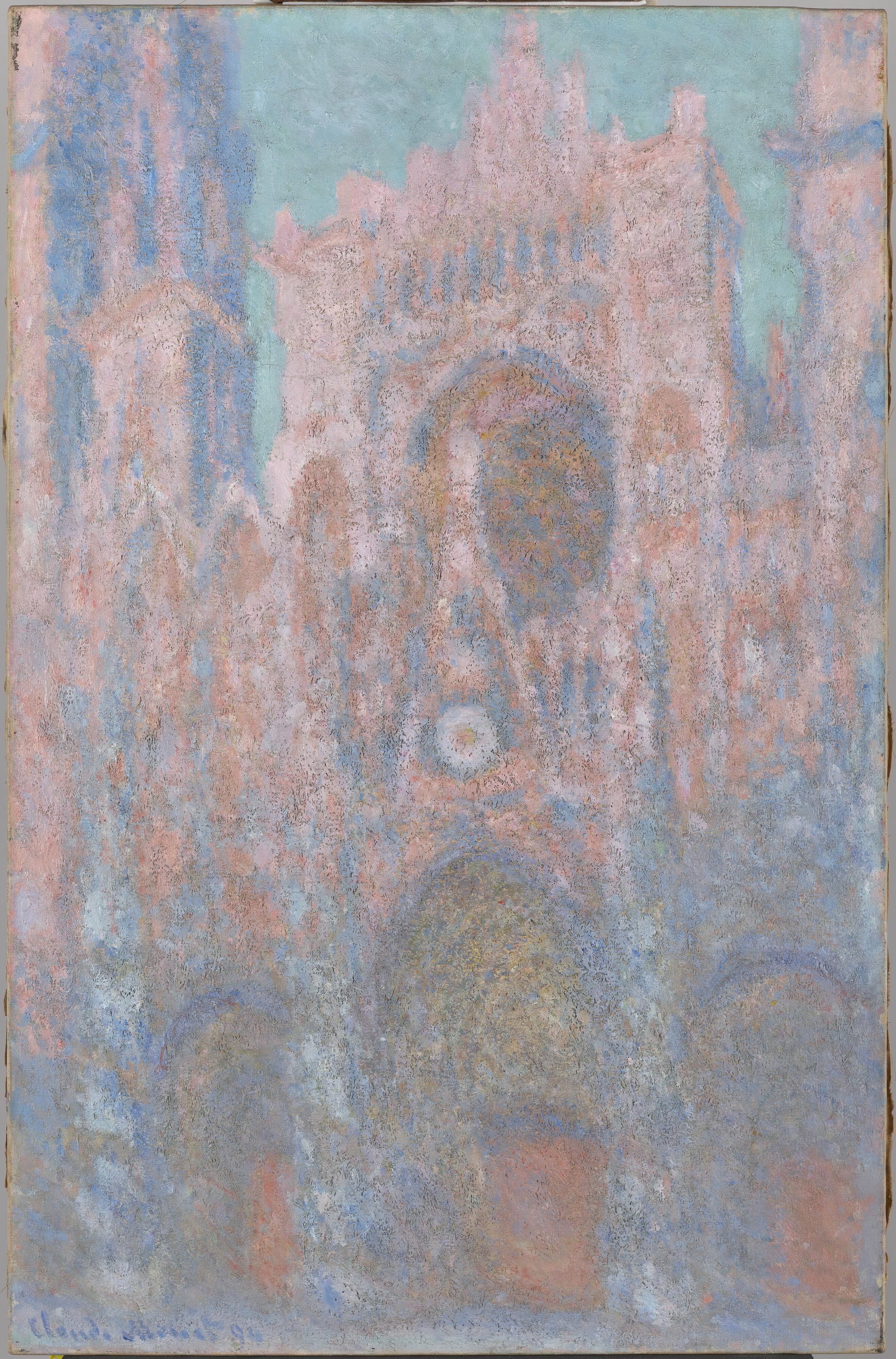
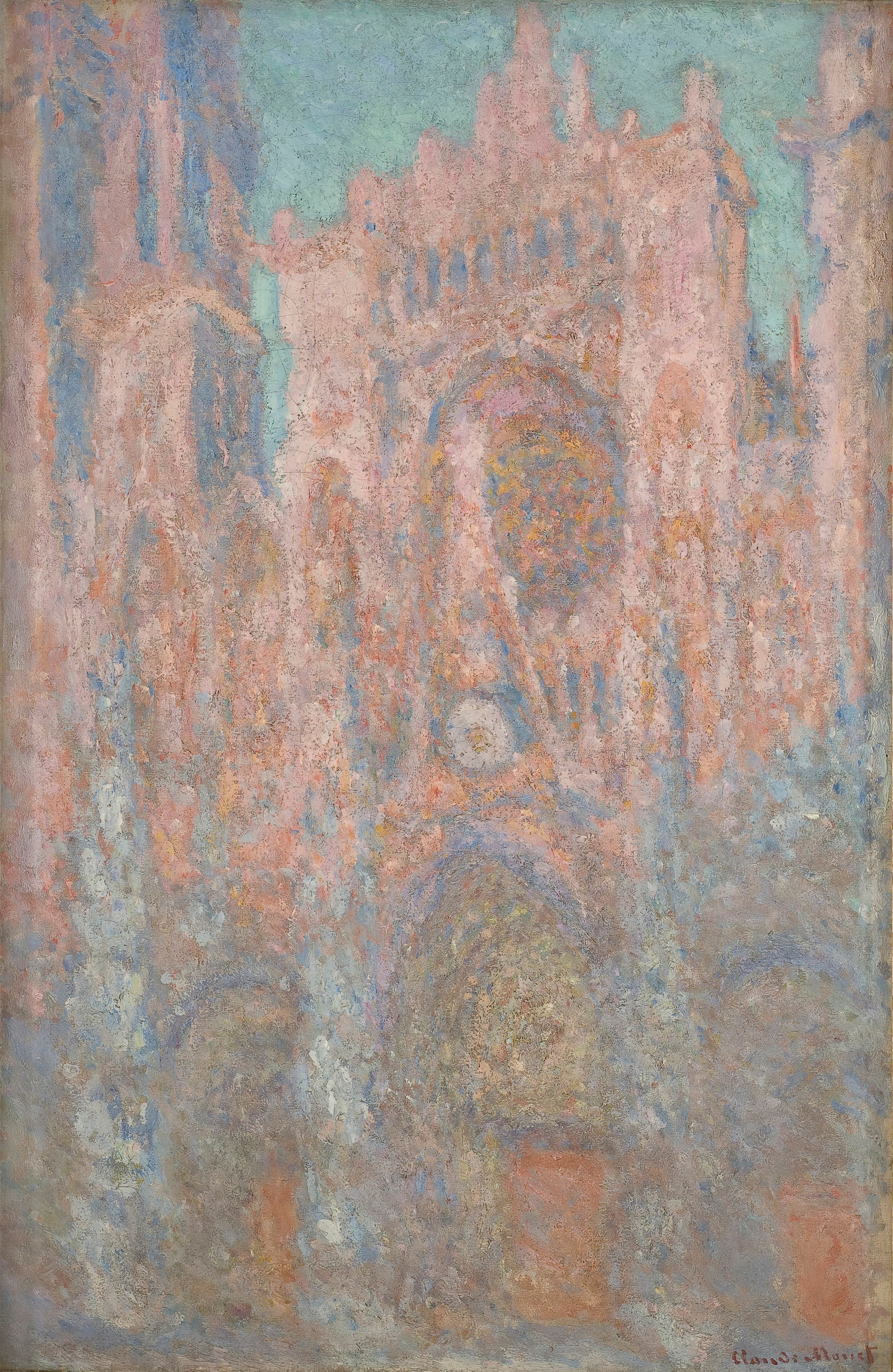
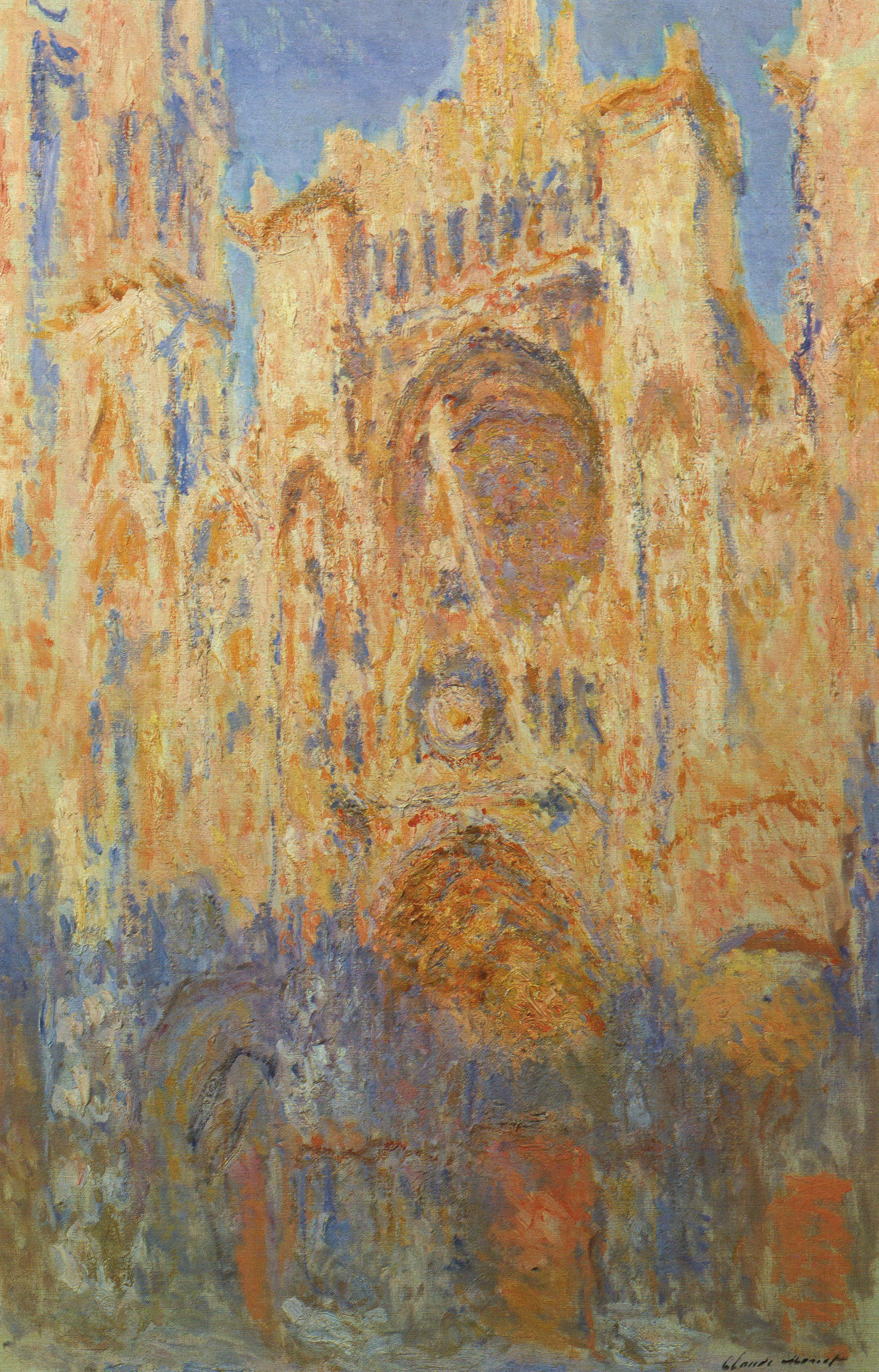
Rouen Cathedral: Setting Sun (Symphony in Pink and Grey)
Claude Monet · 1892–94
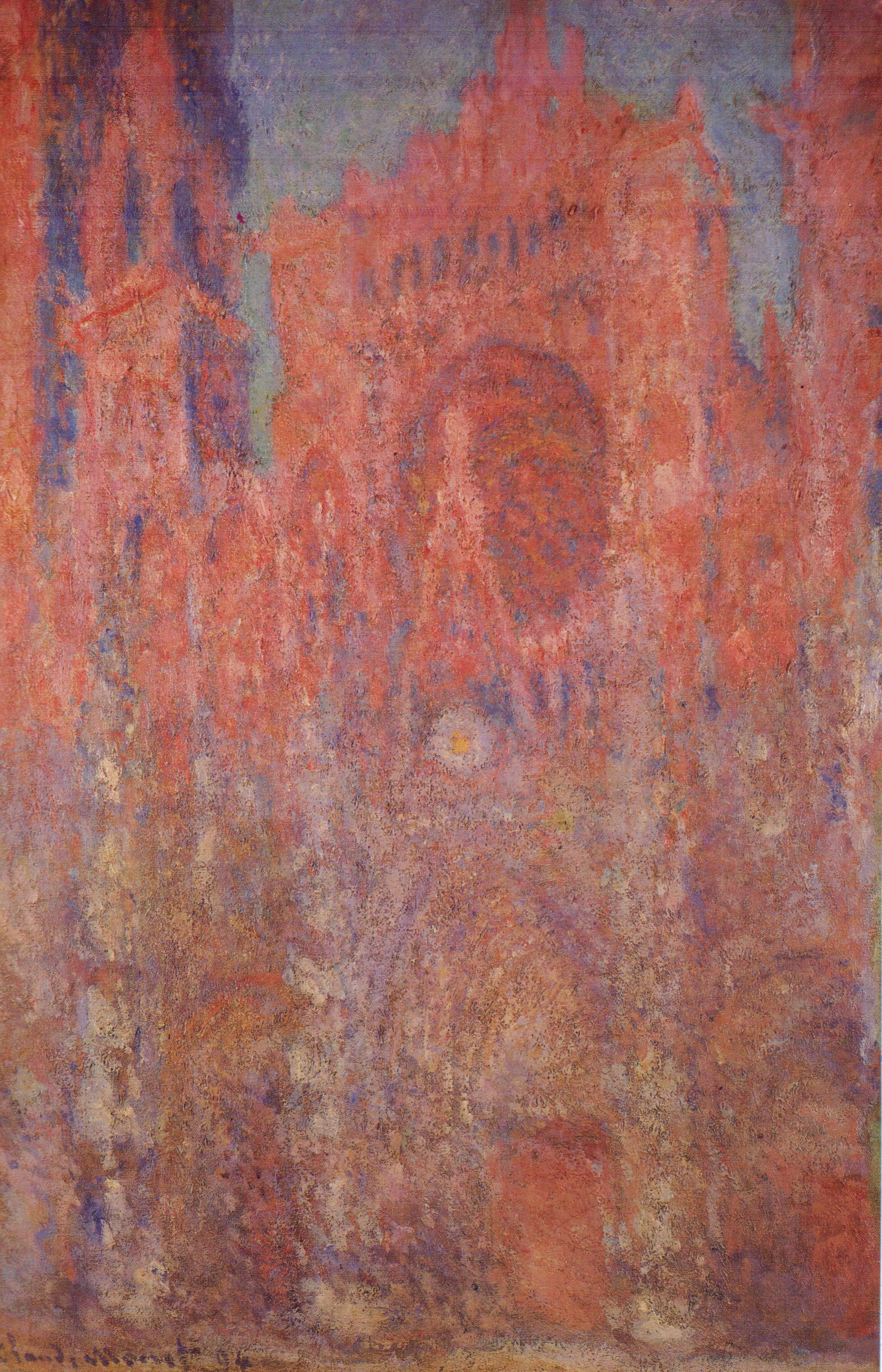
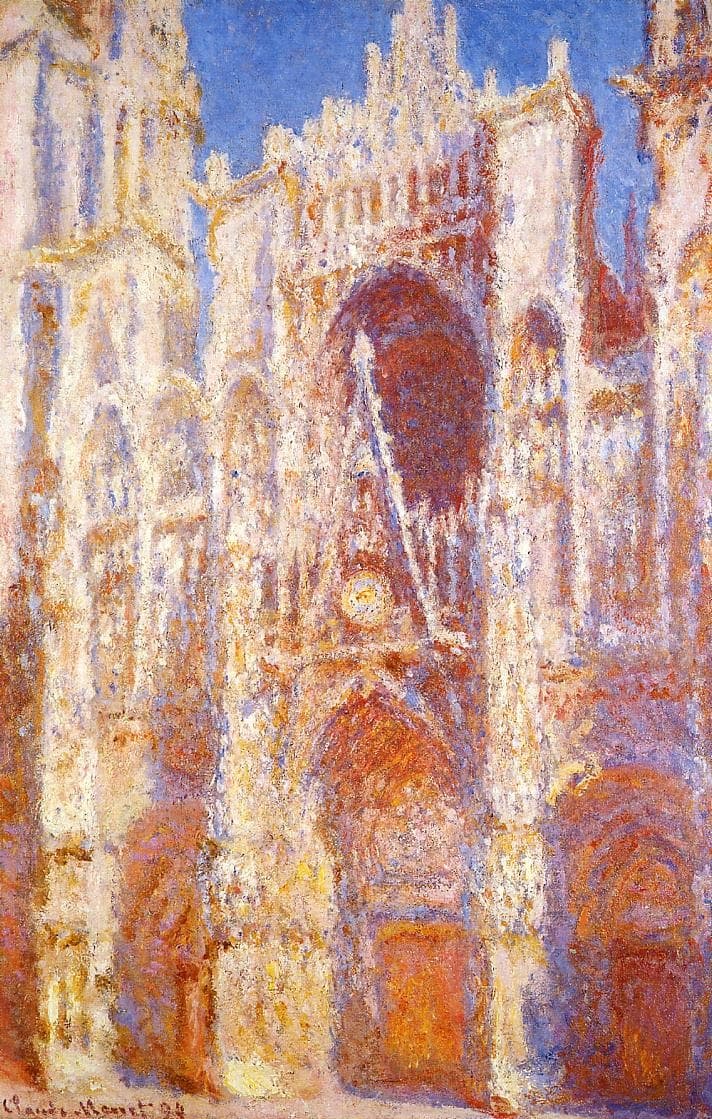
Rouen Cathedral, Portal
Claude Monet · 1892–94
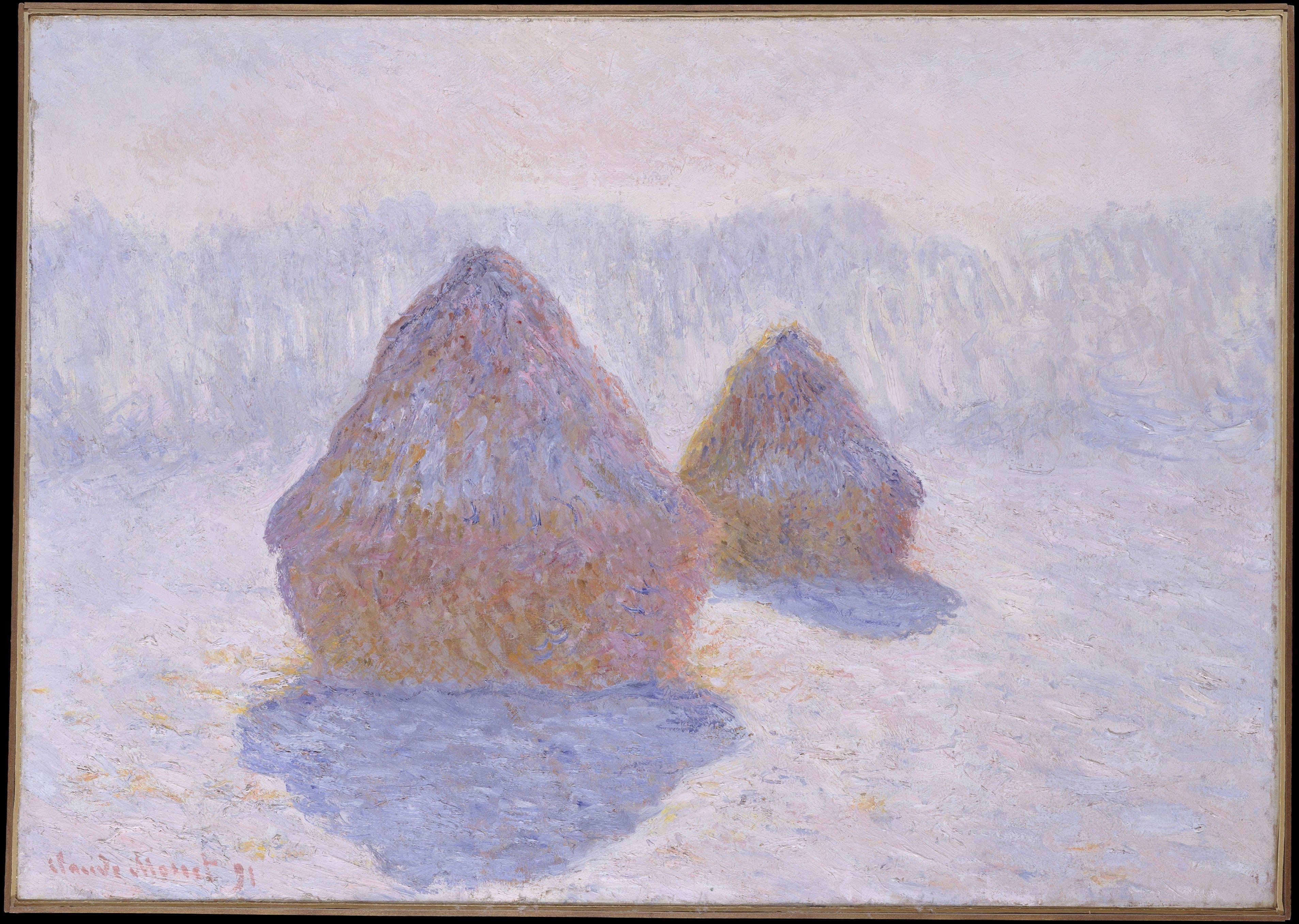
Haystacks (Effect of Snow and Sun)
Claude Monet · 1891
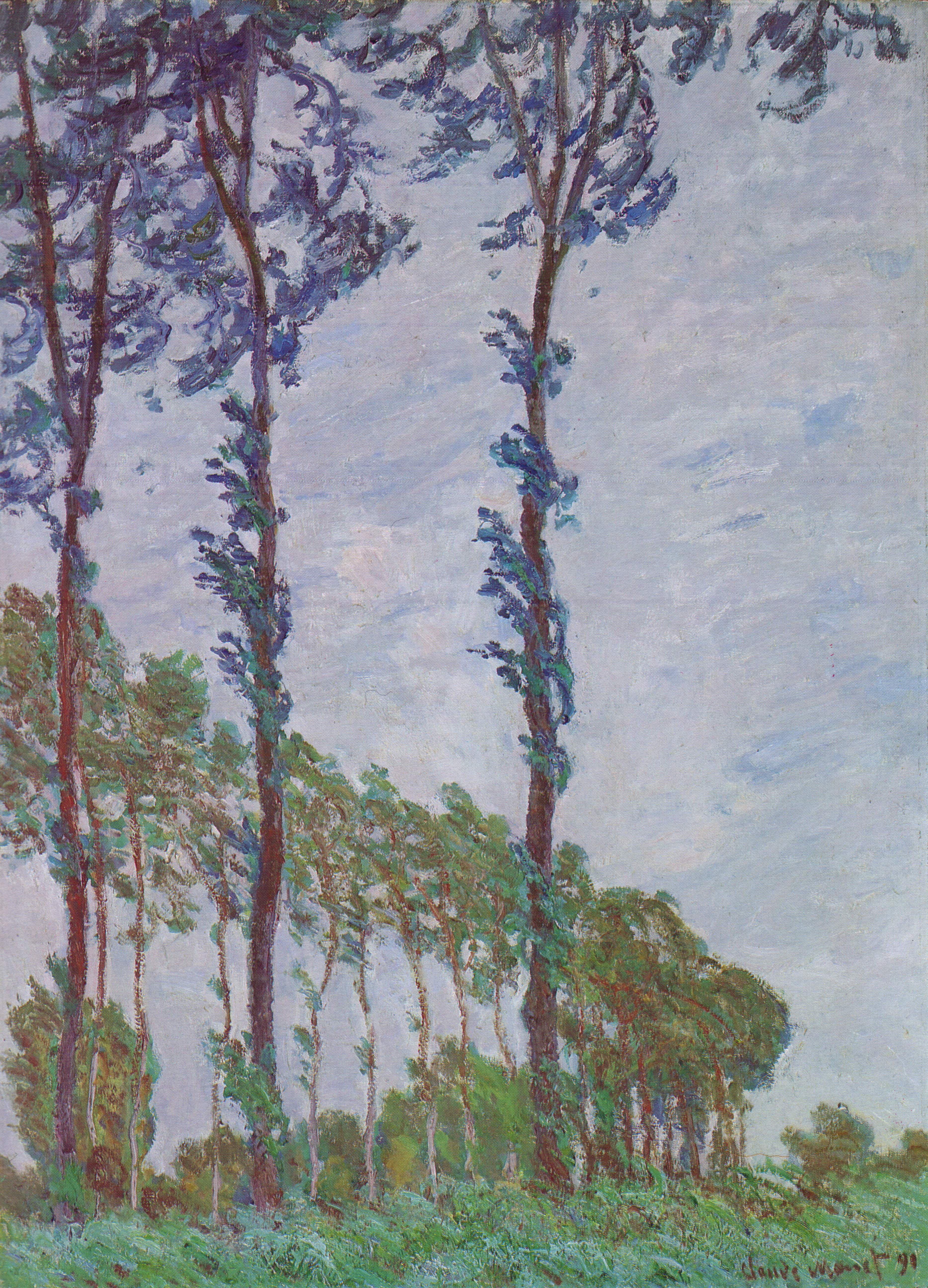
Wind Effect, Series of The Poplars
Claude Monet · 1891
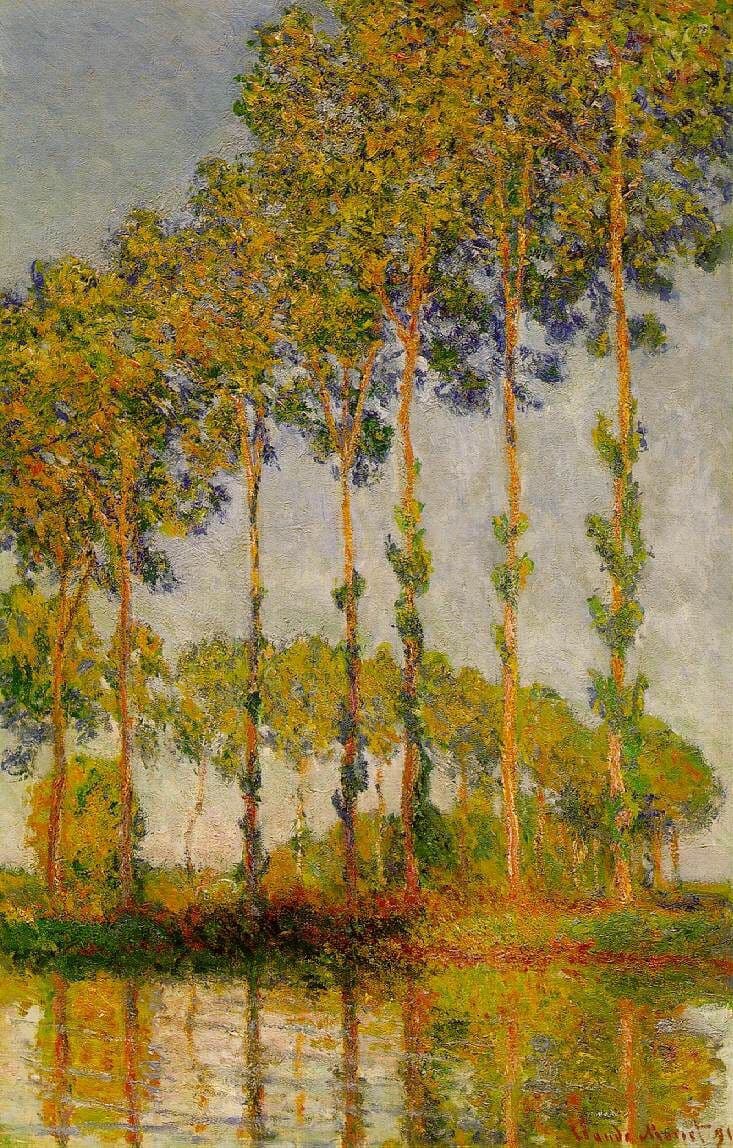
Row of Poplars in Autumn
Claude Monet · 1891
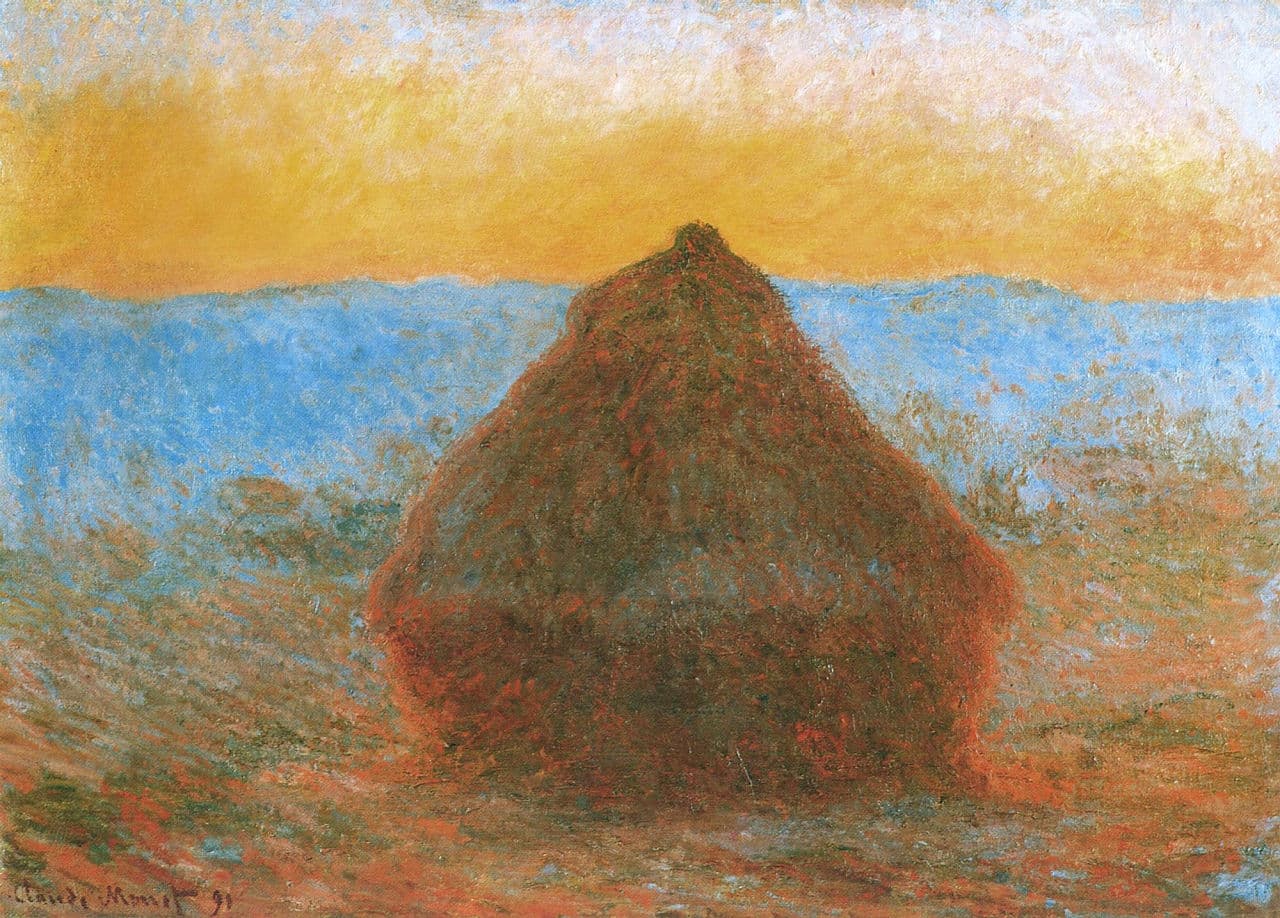
La Meule
Claude Monet · 1891
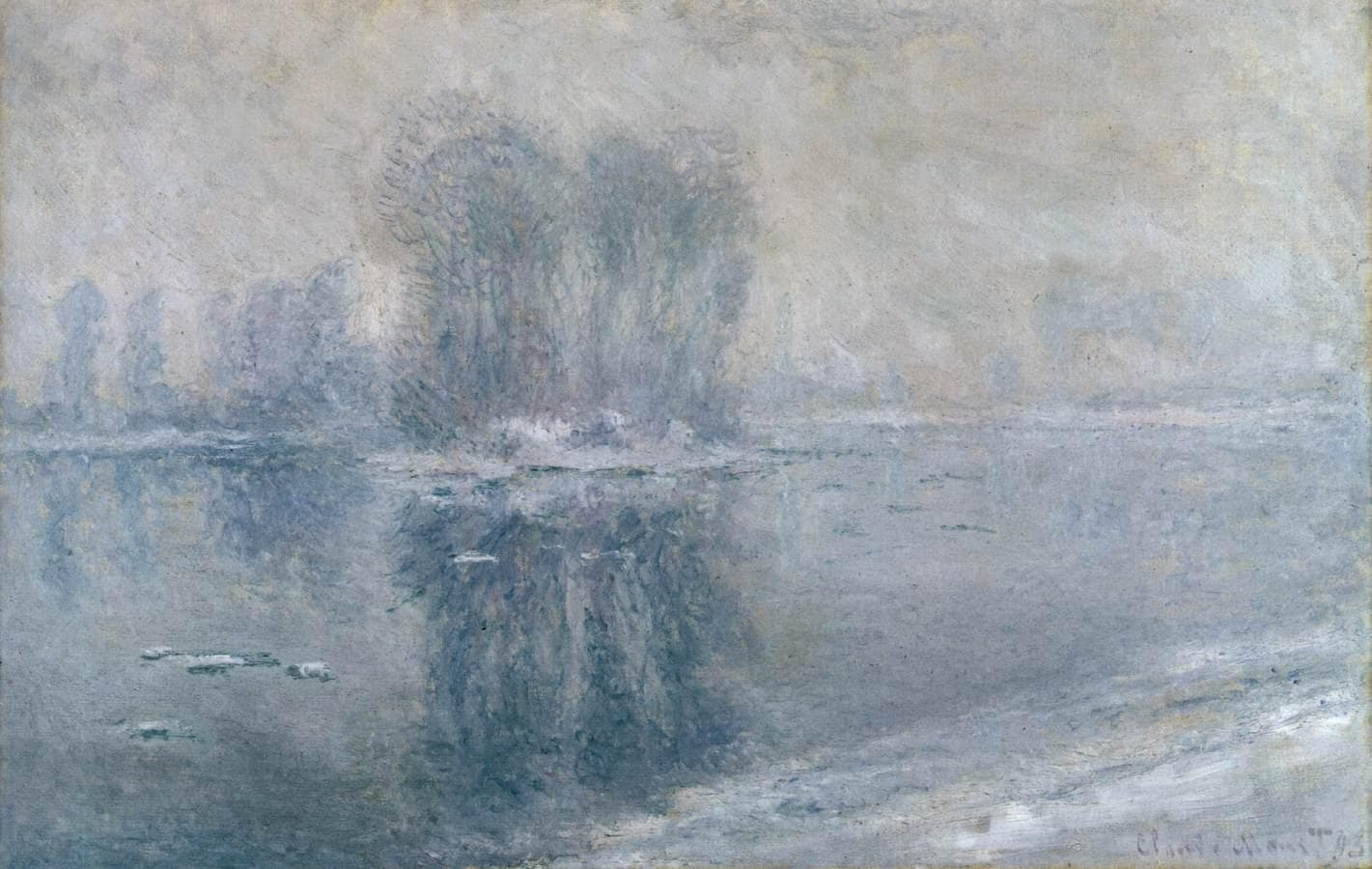
Ice Floes
Claude Monet · 1893
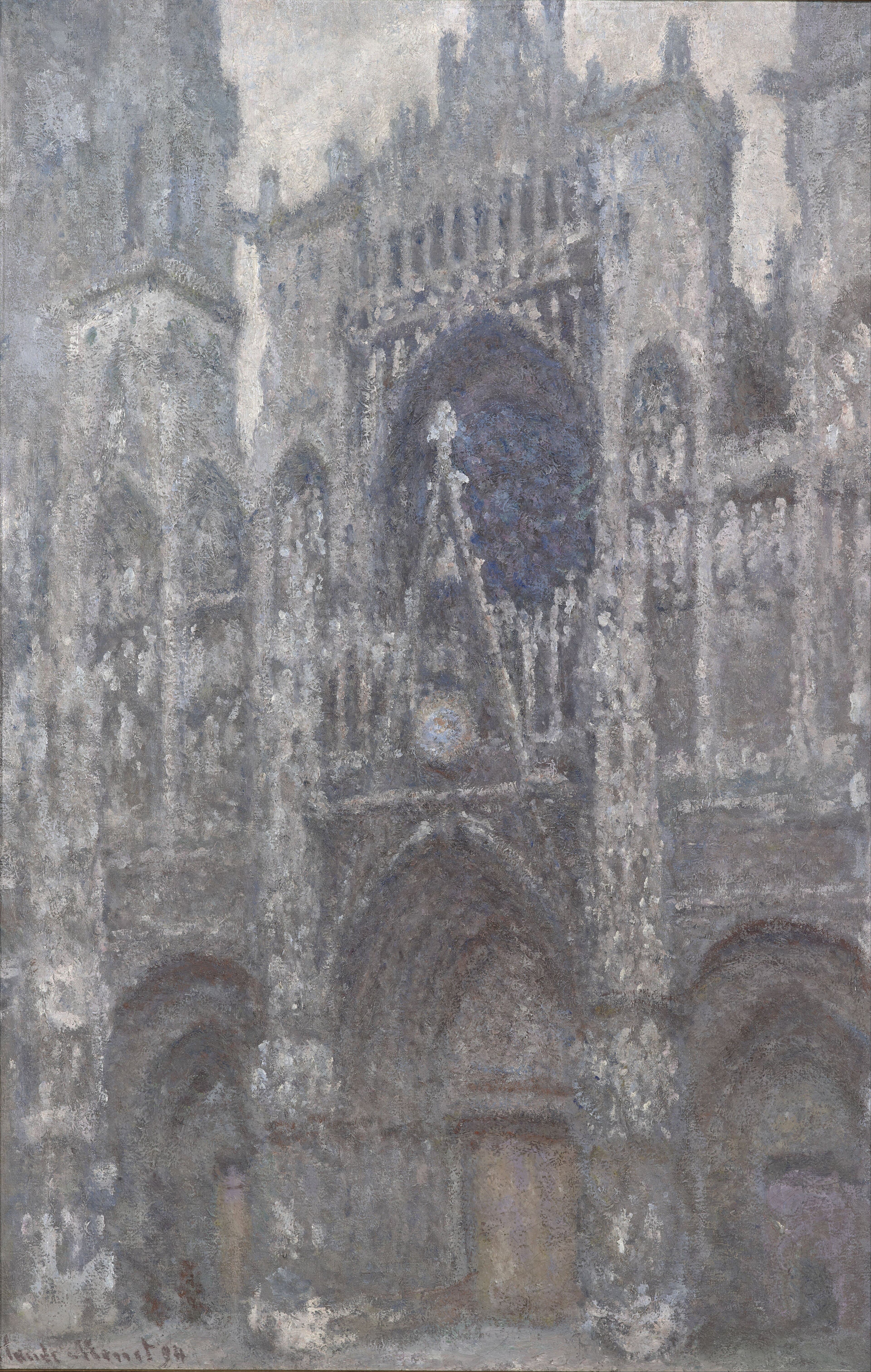
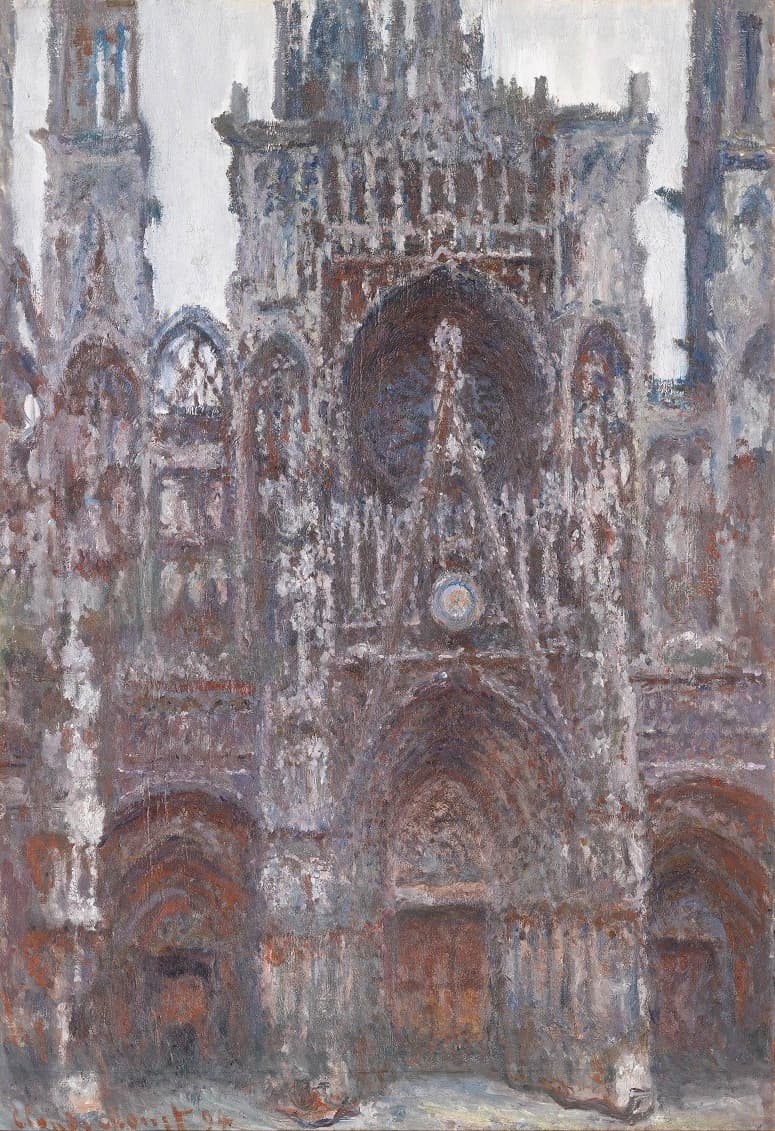
Rouen Cathedral, the Portal, Grey Weather
Claude Monet · 1892–94
Also painted in 1892
The same year
Kindred works
You may also study
La Cour d'Albane, temps gris
Claude Monet · 1892–94
Rouen Cathedral Façade and Tour d'Albane (Morning Effect)
Claude Monet · 1893–94
Rouen Cathedral: The Portal (Sunlight)
Claude Monet · 1892–94
Rouen Cathedral, West Façade, Sunlight
Claude Monet · 1892–94
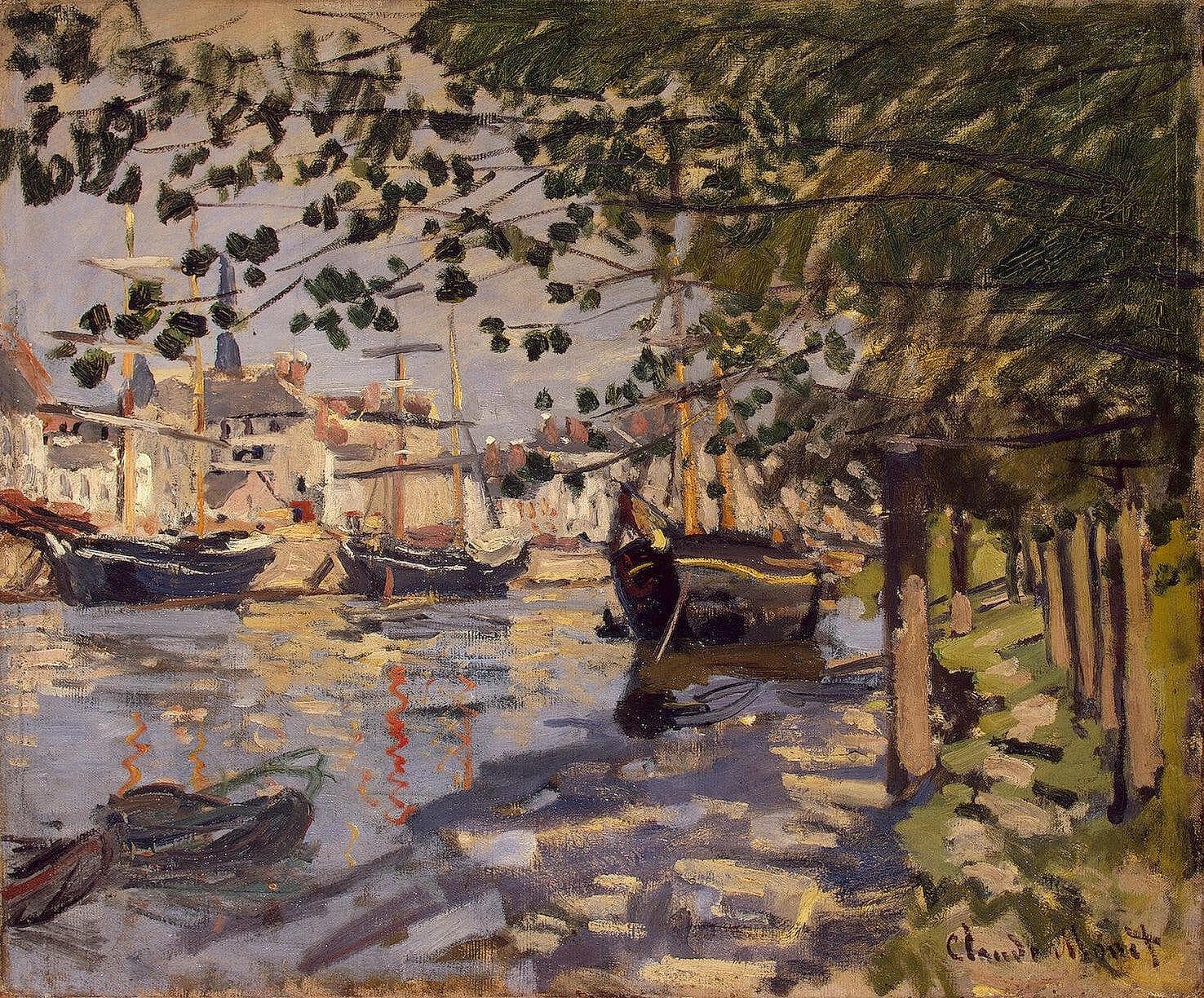
The Seine at Rouen
Claude Monet · 1872
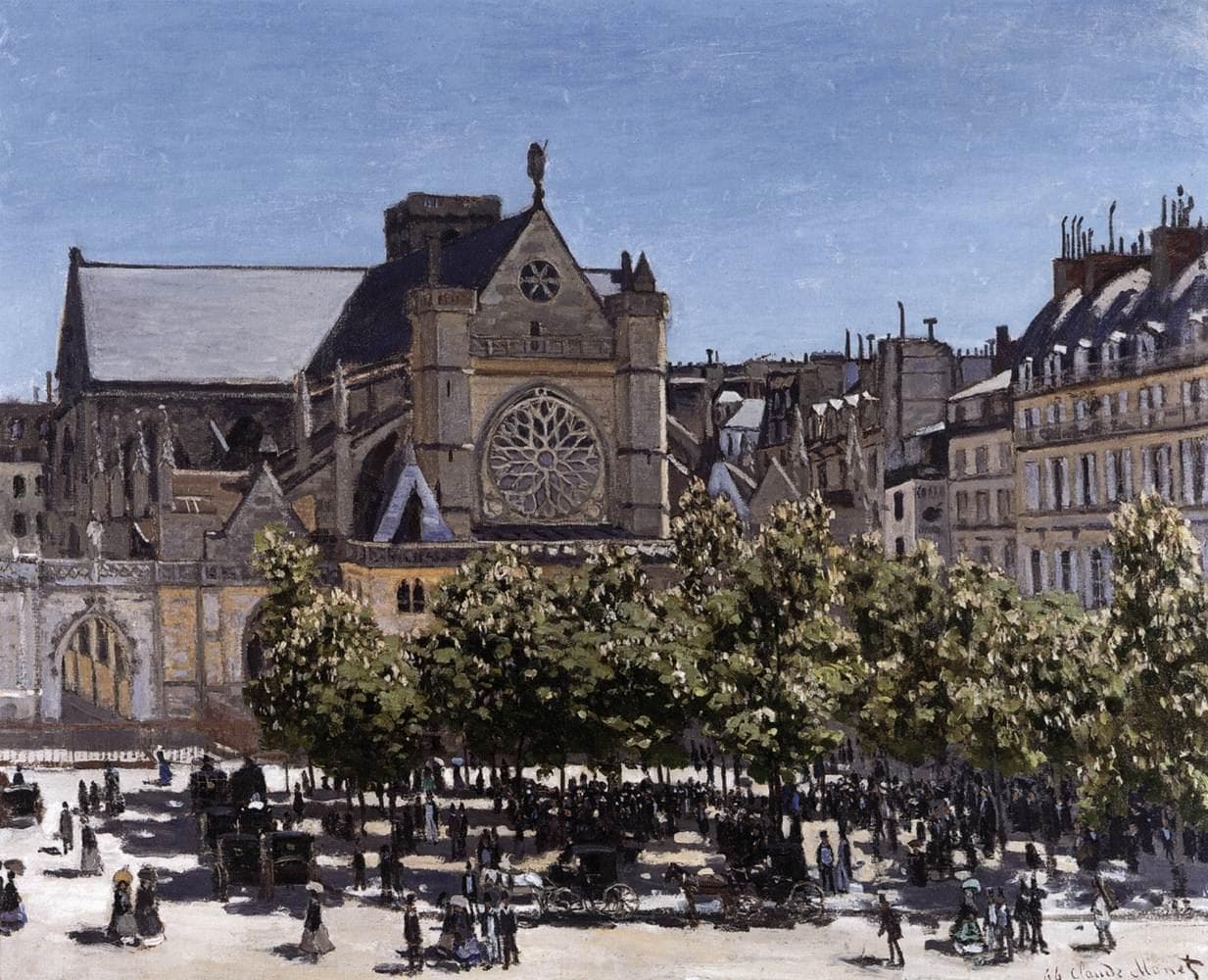
The Church of Saint-Germain-l'Auxerrois
Claude Monet · 1867
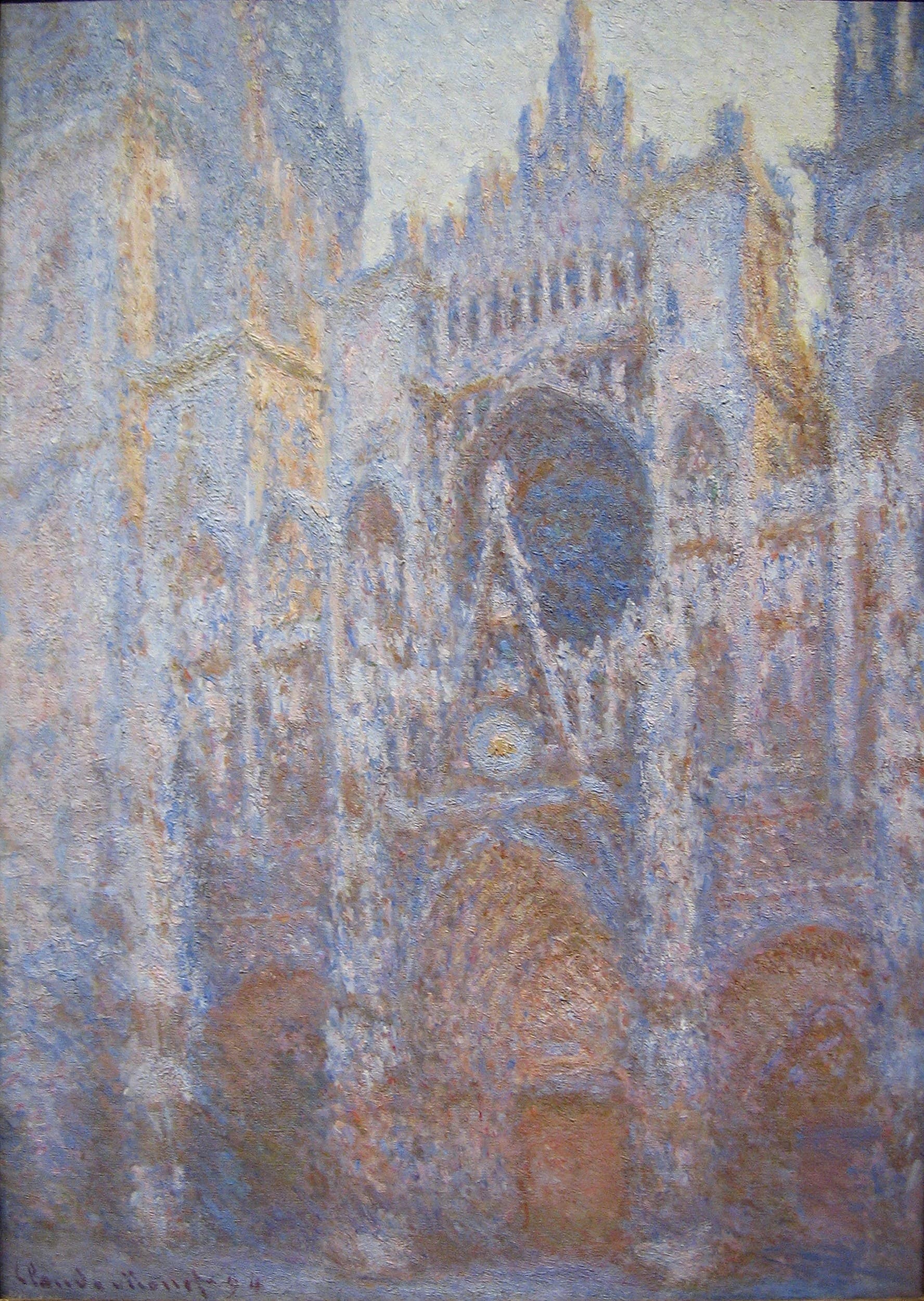
Rouen Cathedral, West Façade
Claude Monet · 1893–94
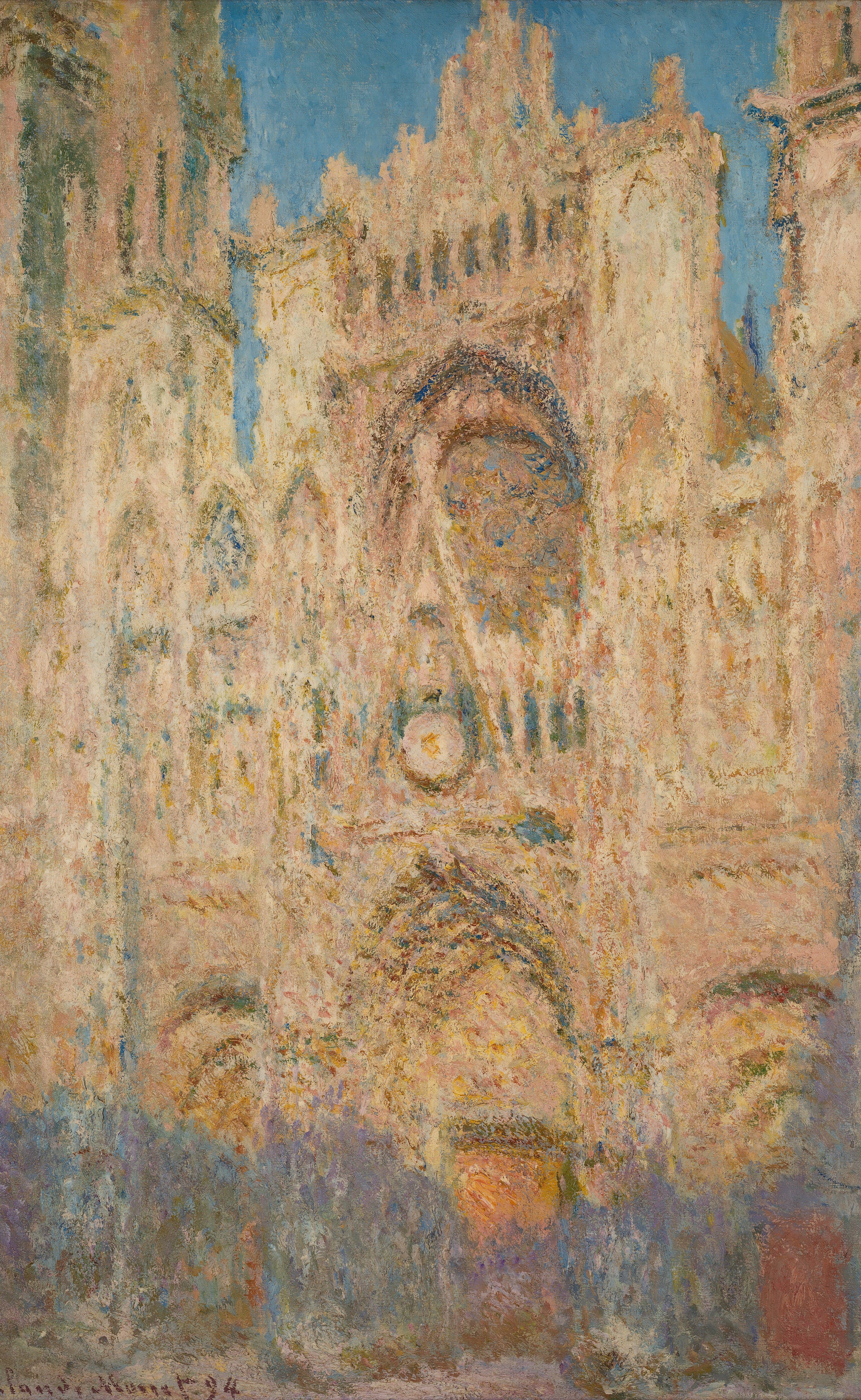
Rouen Cathedral, Evening
Claude Monet · 1894