Image: Toledo Museum of Art (Google Art Project) · Public domain · via Wikimedia Commons
Water Lilies (Toledo Museum of Art)
Claude Monet, c. 1922
Water Lilies is a nearly square, two-meter canvas Claude Monet painted at Giverny around 1922, with white and pink lilies on lilac water beneath hanging green fronds; Toledo describes it as a study for the Orangerie's Morning. It is in the Toledo Museum of Art.
- Artist
- Claude Monet
- Date
- c. 1922
- Medium
- Oil on canvas
- Dimensions
- 200.7 × 213.4 cm
- Collection
- Toledo Museum of Art, Toledo, Ohio, United States
- Movement
- Impressionism
- Catalogue
- Wildenstein 1804
- Nature & Landscape
- Water & Sea
This Water Lilies is a large canvas, about 200 × 213 cm (79 × 84 in.), painted by Claude Monet at Giverny around 1922. The Toledo Museum of Art bought it in 1981 with funds from the Libbey Endowment, gift of Edward Drummond Libbey (1981.54), and its label describes it as apparently a study for one of the panels of Morning, one of the compositions installed in the Musée de l'Orangerie in Paris. It is number 1804 in the Wildenstein catalogue raisonné.
What you're looking at
Across the top edge hang fronds of green: long, drooping strokes of olive and bright green, the leaves of willow or other plants on the bank, curving down into the picture from above. Below them, the pond surface spreads in a soft lilac-violet, laced with vertical strokes of green and grey that suggest reflections and submerged stems.
The lilies are scattered across the whole surface. At upper left, pink-lilac flowers float on grey-green pads; across the center and right, white and pale yellow flowers sit on pads painted in green, cream and silvery blue. Toward the bottom the pads become paler and blurrier, as if seen through haze or bright light.
Compared with many of the dark or red canvases of these years, this one is clear and gentle. The light is diffuse and pearly, like a morning with high cloud, which fits the connection to Morning.
Where and when it was painted
In 1922 Monet, aged 81, signed the formal agreement giving his water-lily decorations to the French state, and he spent his last years reworking the panels for the Orangerie, where they were installed after his death. His eyesight was by then badly affected by cataracts; he had surgery in 1923. Canvases such as this one, near-square and two meters high, served as studies and trial compositions for the final panels.
The Toledo canvas also shows how Monet's palette had shifted by the early 1920s. Compared with the cool blues of 1916, the lilacs here are warmer and pinker, and the greens more yellow, a change that has been linked both to his deteriorating sight and to the warmer harmonies he chose for several of the final Orangerie compositions.
How it was painted
The paint is applied in loose, layered strokes, with the pads built up more thickly than the water. The hanging foliage at the top is painted in sweeping, calligraphic marks, which help frame the picture without giving it a horizon. Monet blends violet and green in the water so that the surface seems to have depth, while the flowers sit on top in thicker touches of white, pink and yellow.
How this version differs
In the Water Lilies series, few canvases tie so directly to a specific Orangerie composition. The Orangerie's Morning panels, like Water Lilies: Green Reflections in the same building, combine pads, sky reflection and plant forms in a horizontal sweep; Toledo's canvas condenses those elements into one square. Compare the earlier, cooler Blue Water Lilies at the Orsay, or the lighter Nymphéas (1916–19) at the Marmottan.
A detail to look for
Two pink lilies at the upper left, just below the hanging fronds, are painted with a surprising density, the petals built up in thick strokes that catch light from the gallery. They are the most solid things on the canvas, and they mark the shaded corner of the pond where the plants overhang the water. Compare the flowers toward the lower right, which are thin and pale, half dissolved in reflected light. The canvas therefore holds a gradient from shade to brightness, top left to lower right. That diagonal movement is one of the ways Monet organized large surfaces without horizon or perspective, and it is visible here more clearly than in many of the studies.
Where to see it
The Toledo Museum of Art, founded with the support of glass manufacturer Edward Drummond Libbey, has one of the strongest collections of European painting in the American Midwest. For other places to see work by Claude Monet, see where to see Monet's paintings; for the garden, see Giverny.
Questions & answers
Where is Monet's Water Lilies in Toledo?
It is in the Toledo Museum of Art in Toledo, Ohio (1981.54). The museum bought it in 1981 with funds from the Libbey Endowment, gift of Edward Drummond Libbey.
When was it painted?
The museum dates it to about 1922, when Monet, aged 81, was finishing his water-lily decorations for the French state. It is Wildenstein number 1804.
Is the Toledo Water Lilies connected to the Orangerie?
Yes. The museum's label describes it as apparently a study for one of the panels of Morning, one of the large water-lily compositions installed in the Musée de l'Orangerie in Paris in 1927.
What does the painting show?
It shows Monet's pond with pink, white and yellow lilies on green and silvery pads, lilac-violet water with reflections, and long green fronds hanging down from the top edge.
More by the artist
Claude Monet
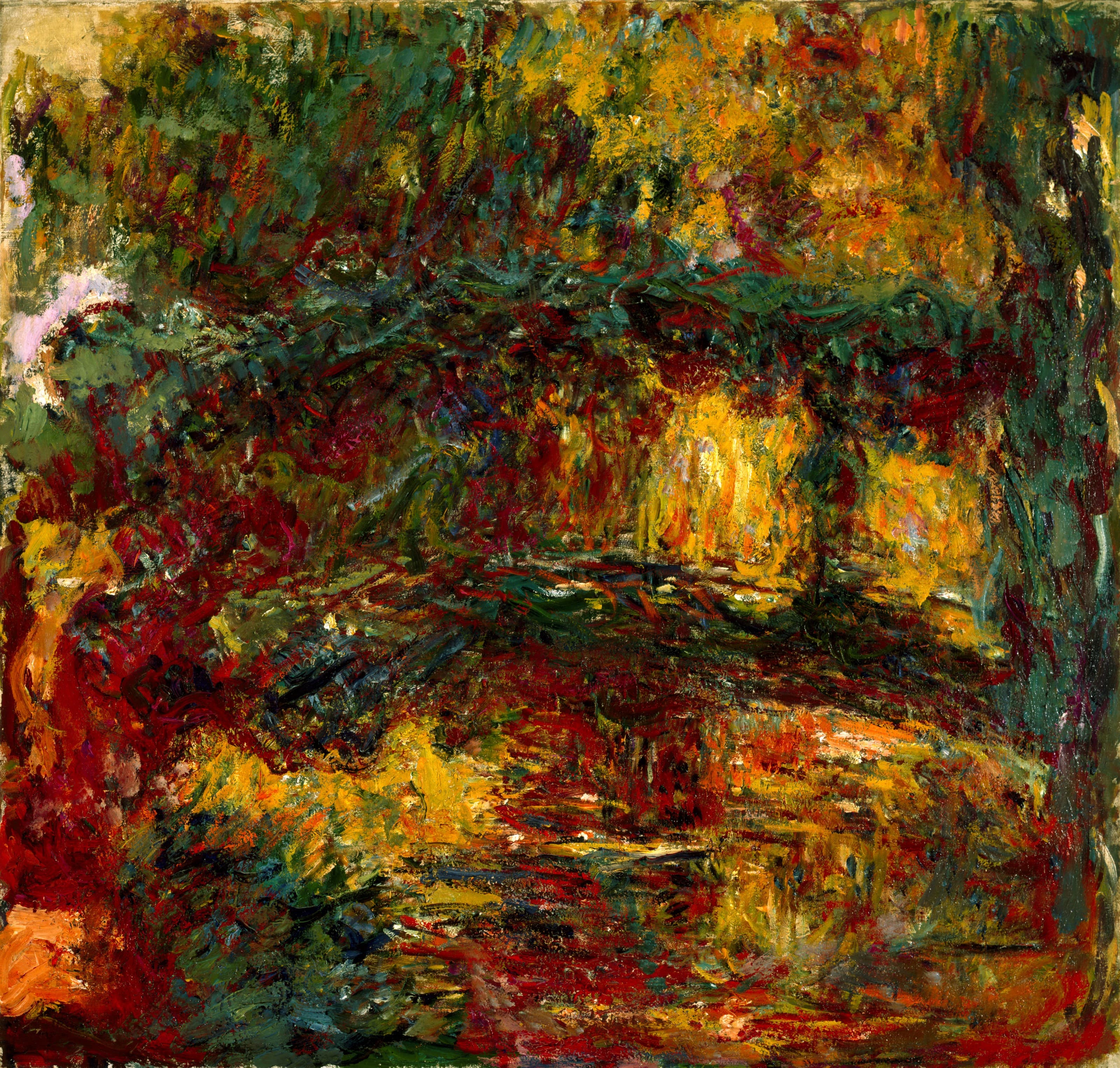
The Japanese Footbridge, Giverny
Claude Monet · c. 1922
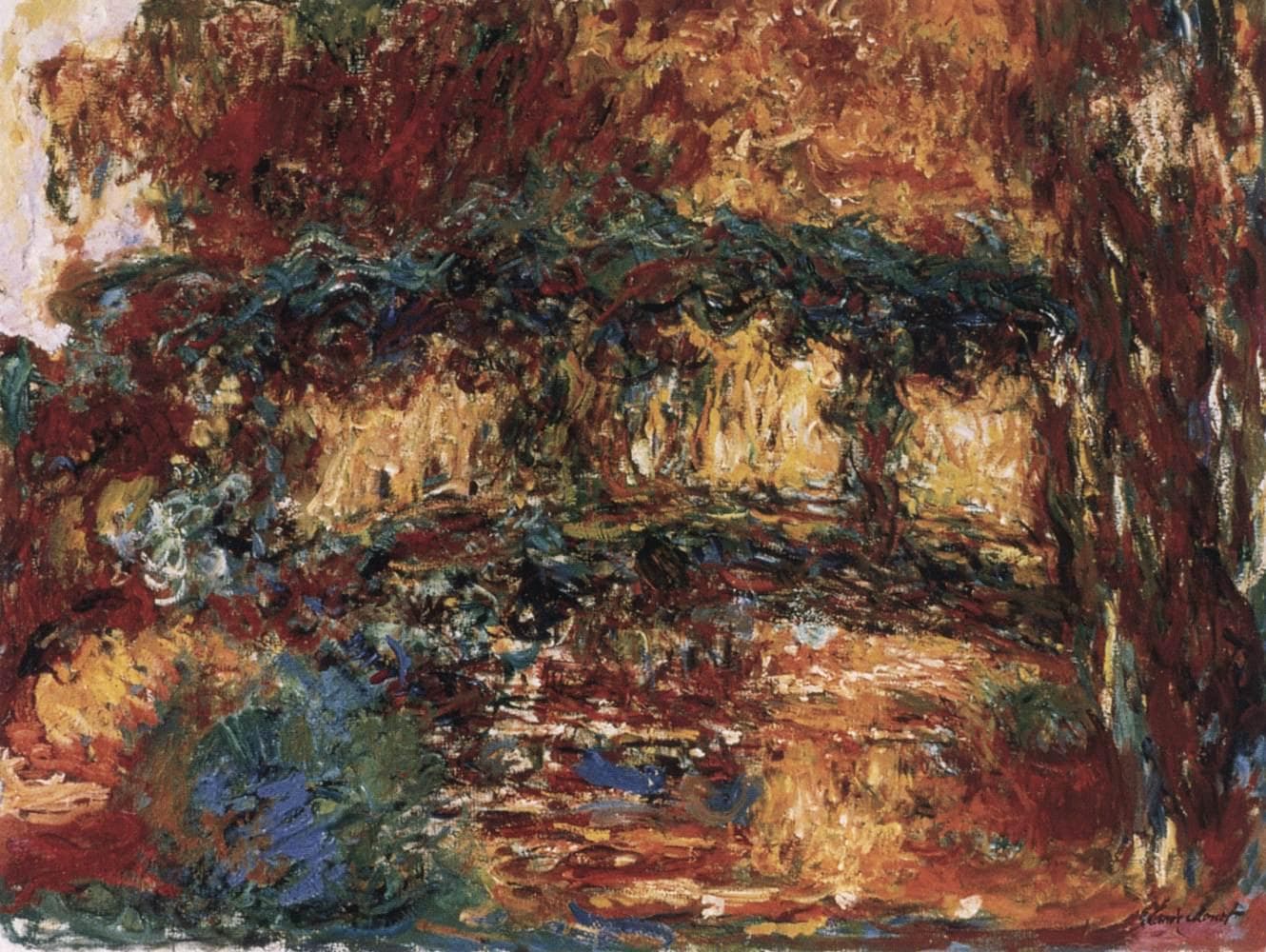
The Japanese Bridge
Claude Monet · c. 1923–25
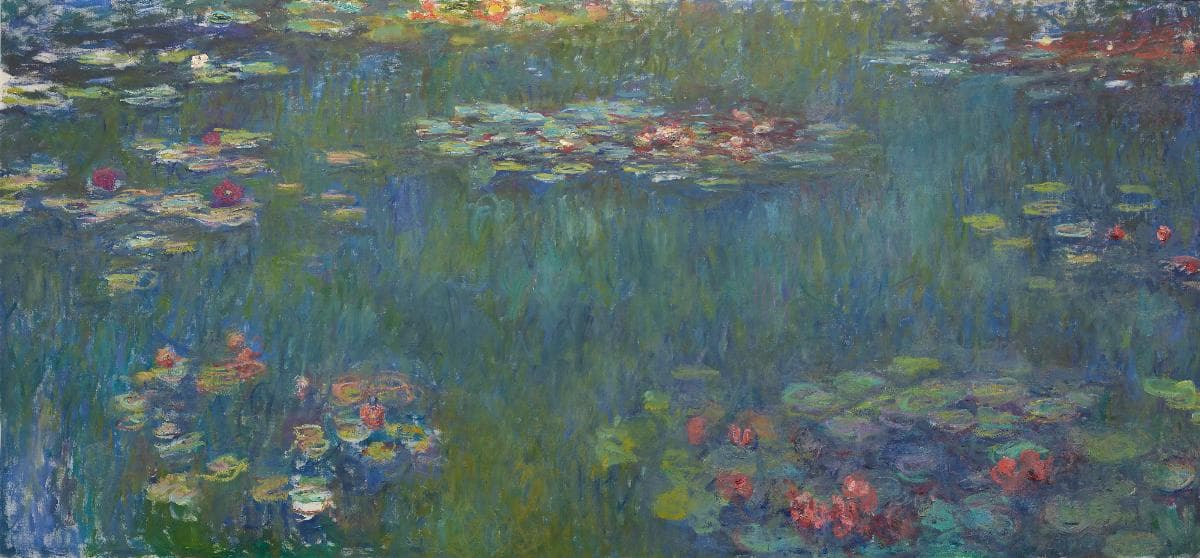
The Water-Lily Pond, Green Reflections
Claude Monet · 1920–26
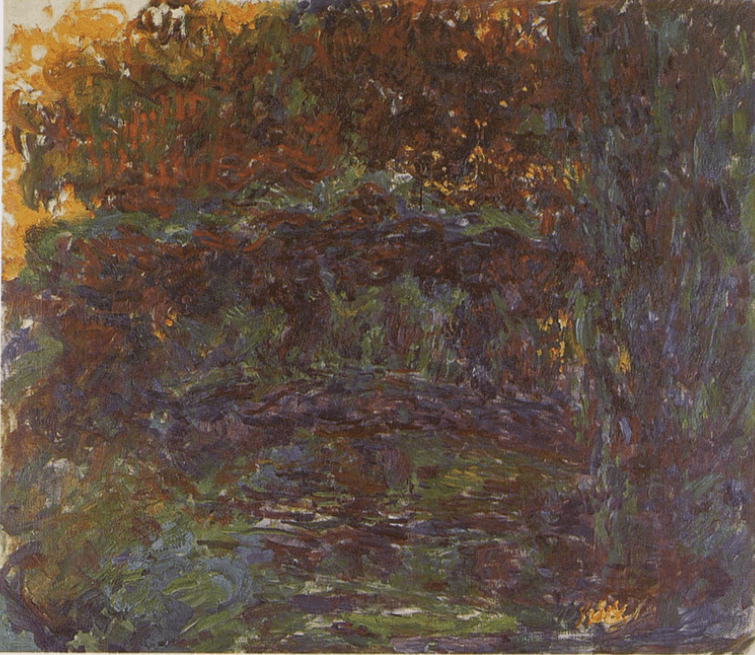
The Japanese Bridge
Claude Monet · 1918–24
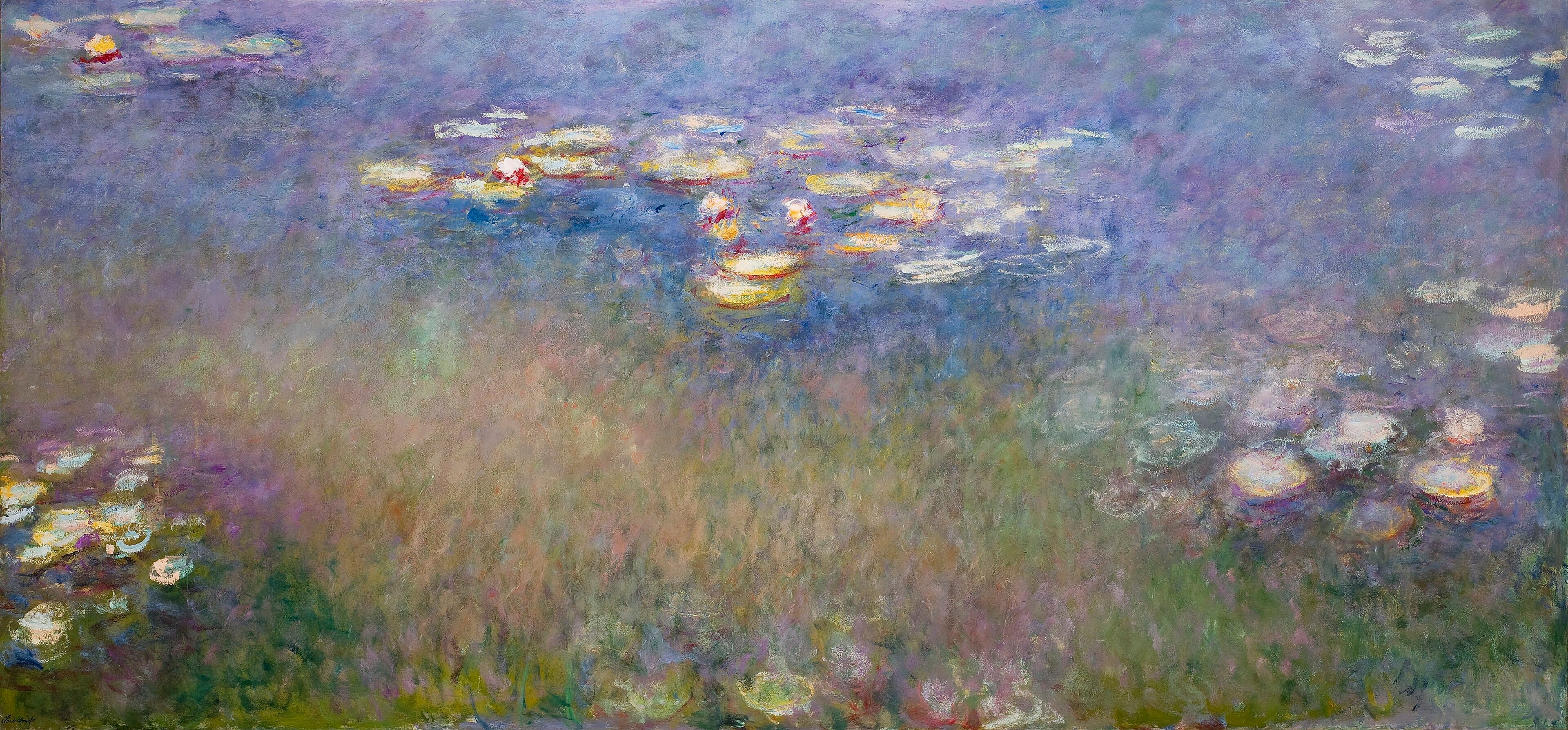
Water Lilies (Saint Louis Art Museum)
Claude Monet · c. 1915–26
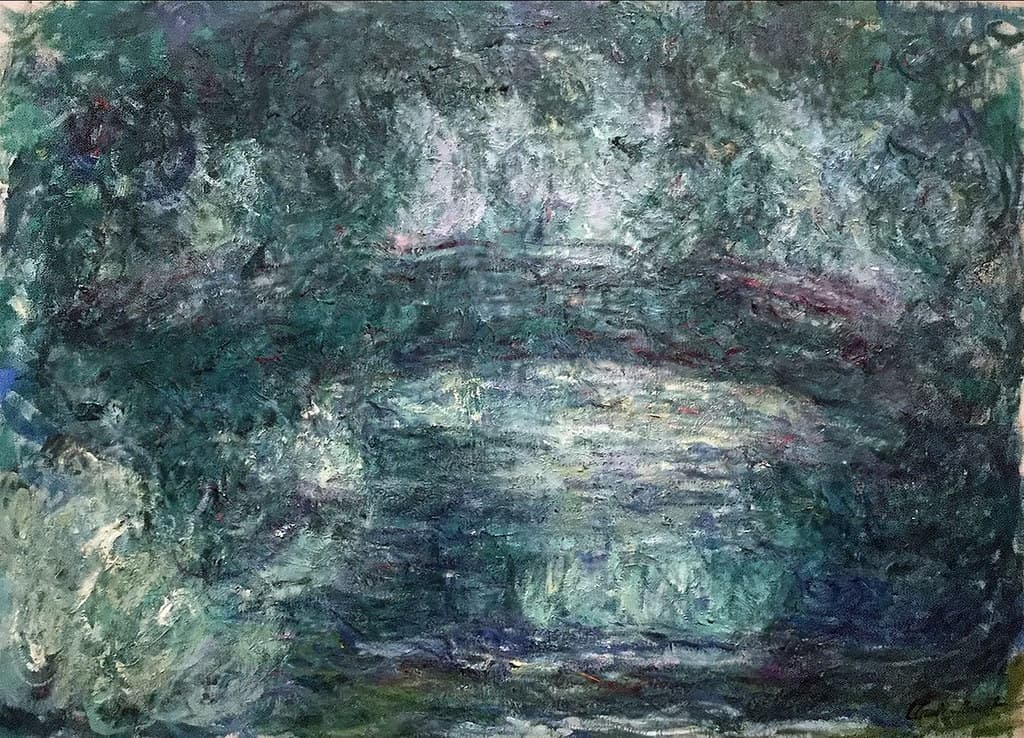
Japanese Bridge
Claude Monet · 1918–19
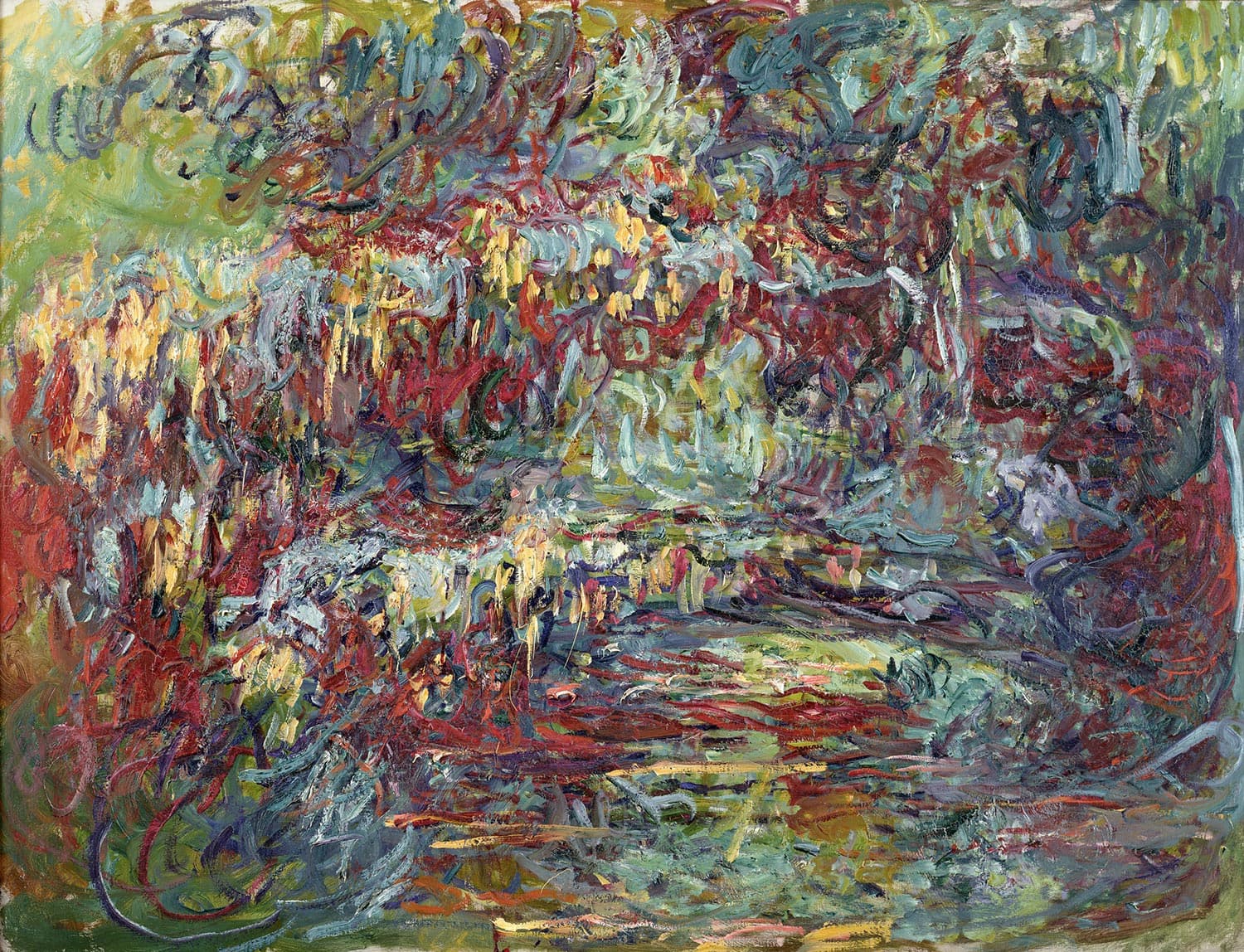
Le Pont japonais
Claude Monet · 1918–24
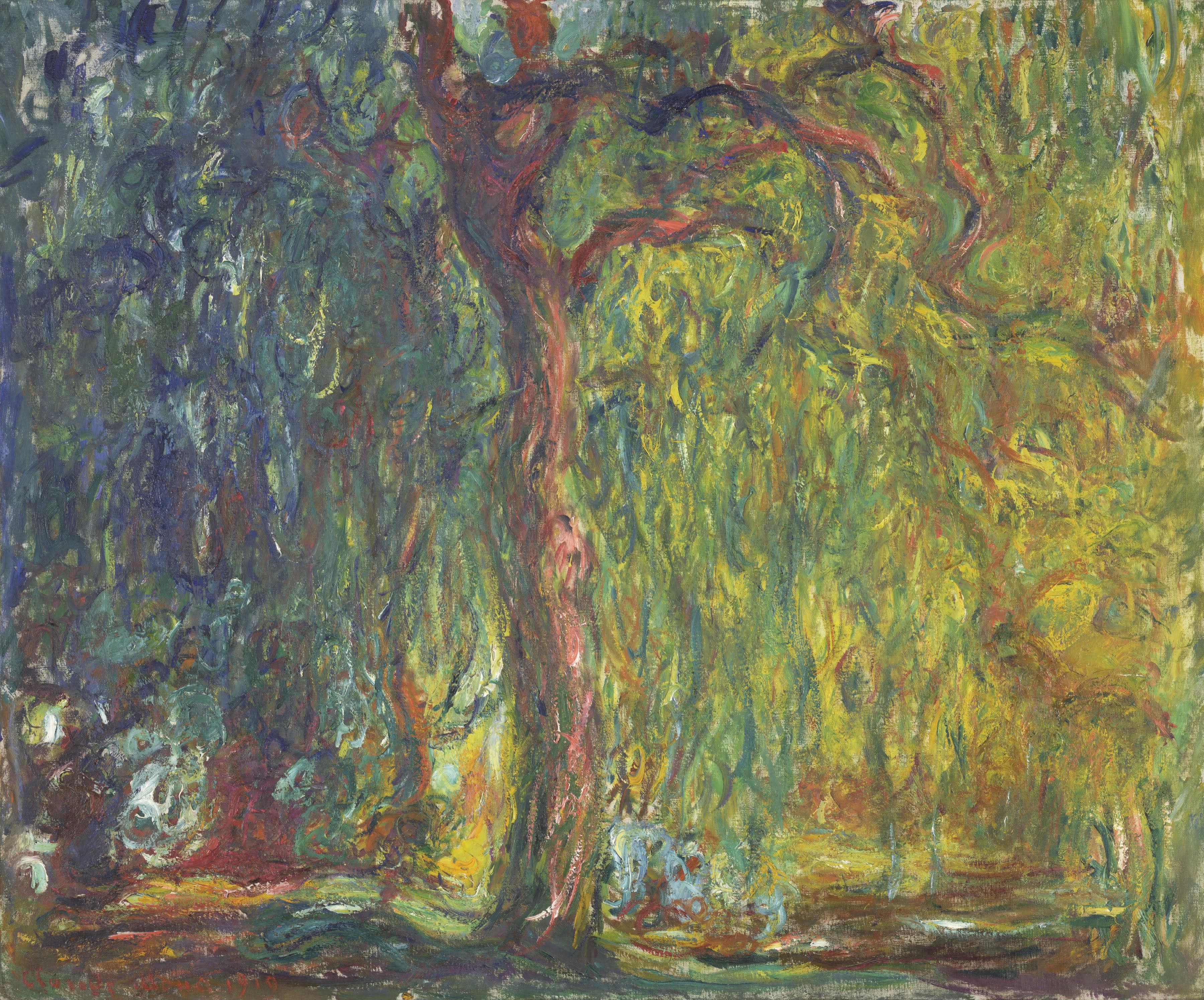
Weeping Willow
Claude Monet · 1918–19
Kindred works
You may also study
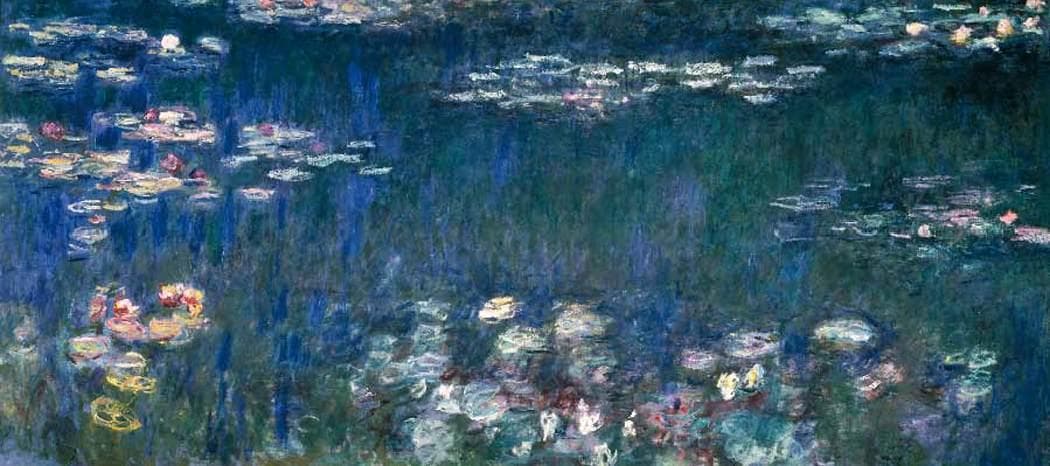
Water Lilies: Green Reflections
Claude Monet · 1914–26
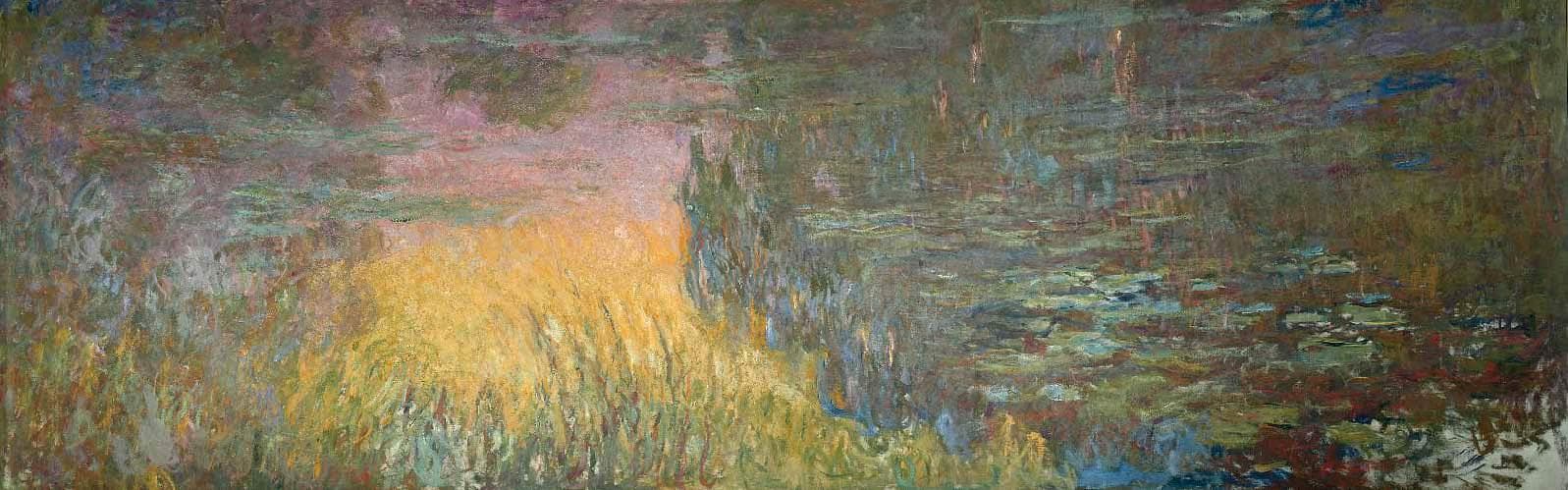
Water Lilies: Setting Sun
Claude Monet · 1914–26
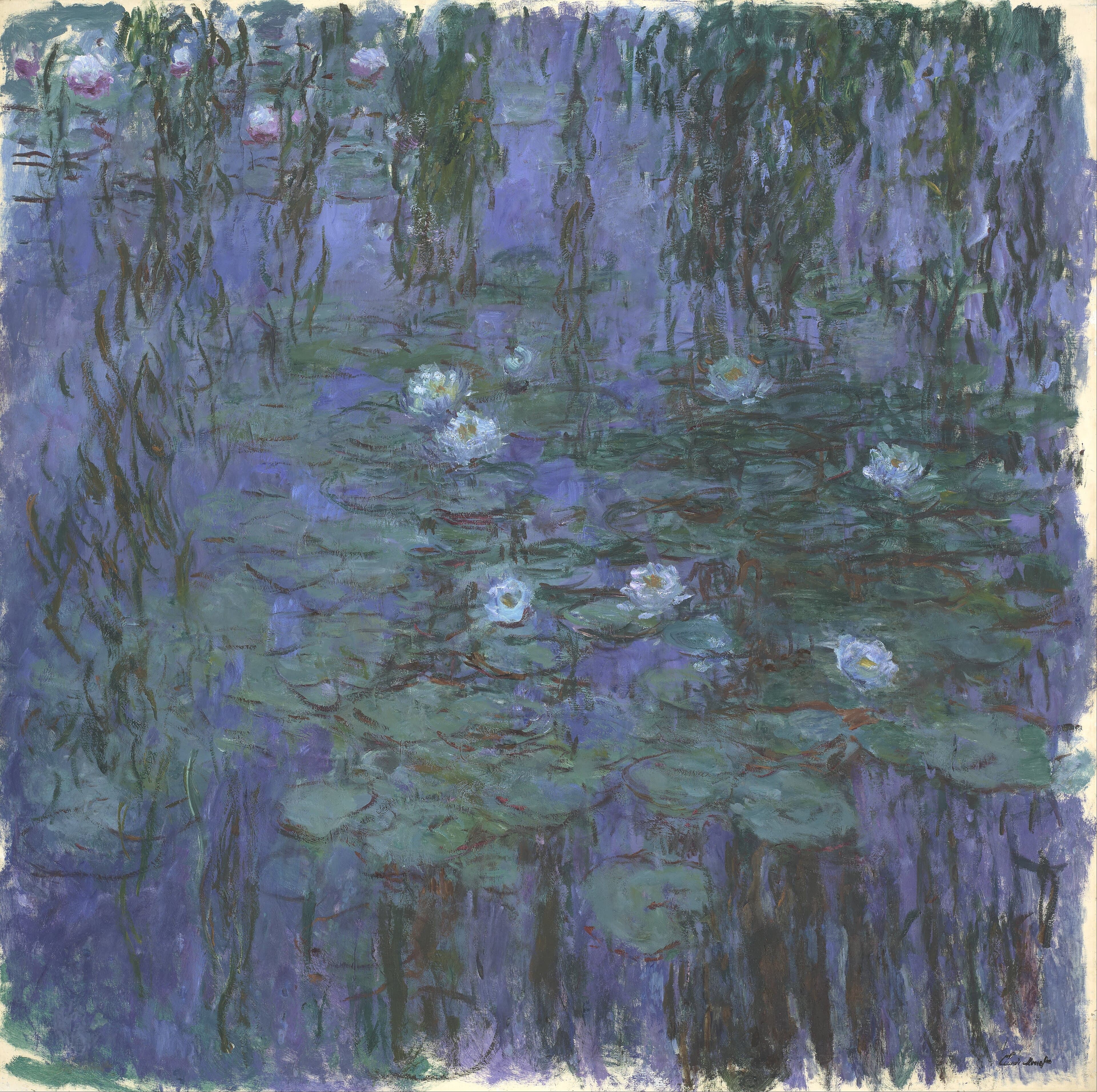
Blue Water Lilies
Claude Monet · 1916–19
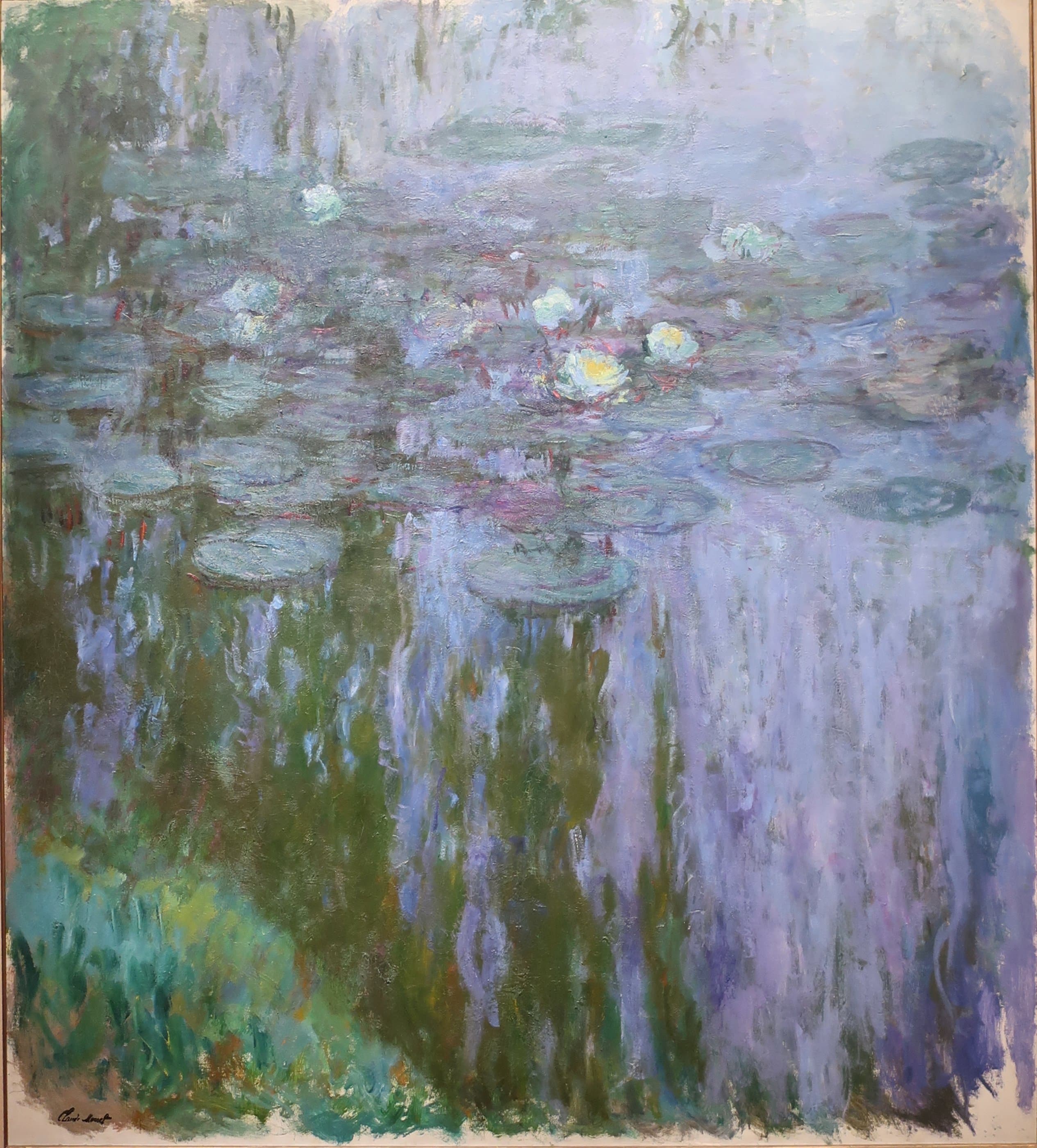
Nymphéas (Musée Marmottan Monet, 1916–19, inv. 5119)
Claude Monet · 1916–19
Pond with Water Lilies (Israel Museum)
Claude Monet · 1907
Water Lilies with Willow Branches
Claude Monet · c. 1916–17
Waterlilies (1906, National Museum Cardiff)
Claude Monet · 1906
The Japanese Bridge
Claude Monet · 1918