Impressionism
Madame Louis Joachim Gaudibert
Claude Monet, 1868
Madame Louis Joachim Gaudibert is Claude Monet's life-size 1868 portrait of the wife of a Le Havre patron, shown in profile in an olive silk gown and red cashmere shawl. It hangs in the Musée d'Orsay, Paris.
- Artist
- Claude Monet
- Date
- 1868
- Medium
- Oil on canvas
- Dimensions
- 216.5 × 138.5 cm
- Collection
- Musée d'Orsay, Paris, France
- Movement
- Impressionism
- Catalogue
- Wildenstein W 121
More at Monet at the Musée d'Orsay
Madame Louis Joachim Gaudibert is Claude Monet's life-size portrait of the wife of Louis-Joachim Gaudibert, a Le Havre businessman and collector who supported the painter in 1868, one of his worst years. Commissioned that September, the canvas, 216.5 by 138.5 centimeters and signed and dated 1868 at lower right, is in the Musée d'Orsay in Paris (RF 1951 20). It is number 121 in Wildenstein's catalogue and one of very few commissioned portraits in Monet's career.
What does the portrait of Madame Gaudibert show?
Madame Gaudibert stands full length in a quiet interior, her body turned to the left and her face in strict profile, looking out of the picture past its left edge. Her dark brown hair is drawn up into a heavy chignon, a small gold earring hangs from her ear, and a white lace jabot spills from the high neck of her bodice. Her hands meet at her waist, holding a pale pair of gloves. She does not look at us at all.
The real subject is what she wears. Her dress is a heavy silk in olive and bronze, cut close over the bodice with a long row of small buttons and then opening into a skirt that falls in deep, stiff folds and pools behind her in a long train. Monet paints the silk with long, single strokes of light ochre and cream laid over darker olive, so each fold seems to catch the light from a window at right. Down the front of the skirt hangs a column of black ribbon bows.
Over her shoulders she wears a cashmere shawl in red, rust and dark blue with a pale patterned border and fringe, slipping down her back and over her right arm in long diagonals. It is the warmest note in the picture and the one that holds the composition together, a red wedge driving across the cool dress.
The room is spare. Behind her hangs a blue-violet curtain, painted in long vertical strokes; at right a red-bordered drape and a band of daylight mark a window. A small round table with a gilded edge holds a glass vase of pale pink and cream roses and a heap of black lace, perhaps a mantilla or a second shawl. The carpet at her feet is a faded pattern of reds, greens and ochres, brushed in loosely so that it seems to dissolve toward the bottom edge.
Why is Madame Gaudibert turned away?
Monet was a landscape painter, not a society portraitist, and the profile pose let him avoid the demands of a flattering, frontal likeness. It also links the picture to his Salon success of 1866, Camille (Woman in Green Dress), where his future wife is seen from behind in a sweeping striped silk dress. In both, the dress, the train and the play of light on fabric carry the picture more than the sitter's character.
Art historians have also pointed to fashion-plate echoes: the full-length format, the turned figure and the careful description of a costume recall the illustrations in women's magazines that Monet would have known. But the scale is that of a grand portrait, more than two meters tall, and the handling is far broader than any fashion print.
The Gaudiberts and Monet in 1868
In 1868 Monet was in debt, his pictures had been seized by creditors, and he was supporting Camille and their infant son Jean, who had been born the year before. Louis-Joachim Gaudibert, a Le Havre merchant with an interest in the arts, bought several of his canvases and, according to the Orsay's provenance record, asked him on 3 September 1868 to paint his wife. The commission kept the painter going through the autumn, which he spent around Le Havre and on the Normandy coast at Étretat. Writing to his friend Frédéric Bazille from Étretat that winter, Monet credited "this gentleman from Le Havre" with giving him, for once, some peace of mind.
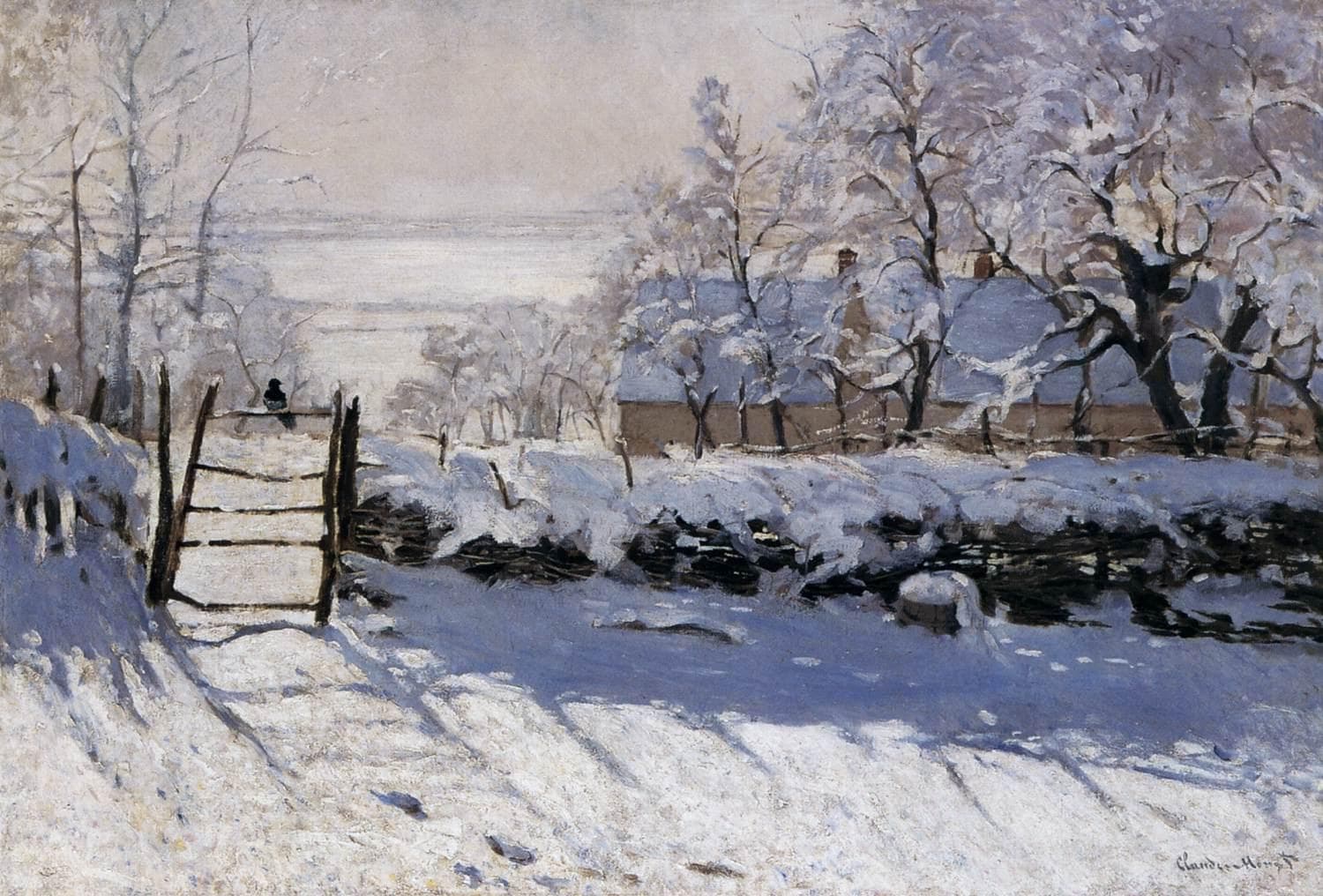
The same months produced two very different pictures: The Luncheon, a domestic interior with Camille and Jean at table, now in Frankfurt, and the winter landscape The Magpie, painted near Étretat. Set beside them, the Gaudibert portrait is Monet at his most formal, painting a patron's wife in a picture meant to hang in a Le Havre drawing room.
How was it painted?
The handling is broad and assured. The face and hands are modeled quietly, almost conventionally, but the dress and shawl are painted with long, loaded strokes that describe a fold in one movement. The roses are a few thick touches of pink and cream, and the black lace on the table is a scumble of dark paint with flecks of gray. The curtain shows Monet's habit of building a large plain area from parallel strokes of slightly different blues and violets rather than one flat tone.
Where is the portrait of Madame Gaudibert today?
The painting stayed with the Gaudibert family and their descendants in Le Havre until 1951, when the French national museums bought it with funds from an anonymous Canadian donation. It hung at the Jeu de Paume and is now in the Musée d'Orsay, Paris, with Monet's early figure paintings such as Women in the Garden. See our guide to Monet at the Musée d'Orsay and the life of Claude Monet.
Questions & answers
Where is Monet's portrait of Madame Gaudibert?
It is in the Musée d'Orsay in Paris (RF 1951 20). The French national museums bought it in 1951 with funds from an anonymous Canadian donation, after it had stayed with the sitter's family in Le Havre. The canvas, 216.5 by 138.5 centimeters, is signed and dated 1868.
When and why did Monet paint Madame Gaudibert?
Louis-Joachim Gaudibert, a Le Havre merchant who was buying Monet's work, asked him on 3 September 1868 to paint his wife. Monet was in debt and supporting Camille and their baby son, and the commission helped carry him through the autumn he spent around Le Havre and Étretat.
Why is Madame Gaudibert turned away in the portrait?
Monet shows her in strict profile, looking out of the picture, and makes her silk gown and cashmere shawl the focus. The pose suited a landscape painter more interested in fabric and light than in a flattering likeness, and it recalls his earlier Camille (Woman in Green Dress), seen from behind.
Did Monet paint many portraits?
Very few on commission. Madame Gaudibert is the grandest of them. Monet's portraits are mostly of his family, above all Camille, as in Camille (Woman in Green Dress) and La Japonaise, and of his son Jean. He soon gave up formal portraiture for landscape and outdoor figure painting.
More by the artist
Claude Monet

Bridge over a Pond of Water Lilies
Claude Monet · 1899

Woman with a Parasol – Madame Monet and Her Son
Claude Monet · 1875

Sunset in Venice
Claude Monet · 1908–12

La Grenouillère
Claude Monet · 1869

Beach in Pourville
Claude Monet · 1882

Springtime
Claude Monet · 1872

Boating on the River Epte
Claude Monet · 1890

The Seine at Asnières (Hermitage)
Claude Monet · 1873
Also painted in 1868
The same year
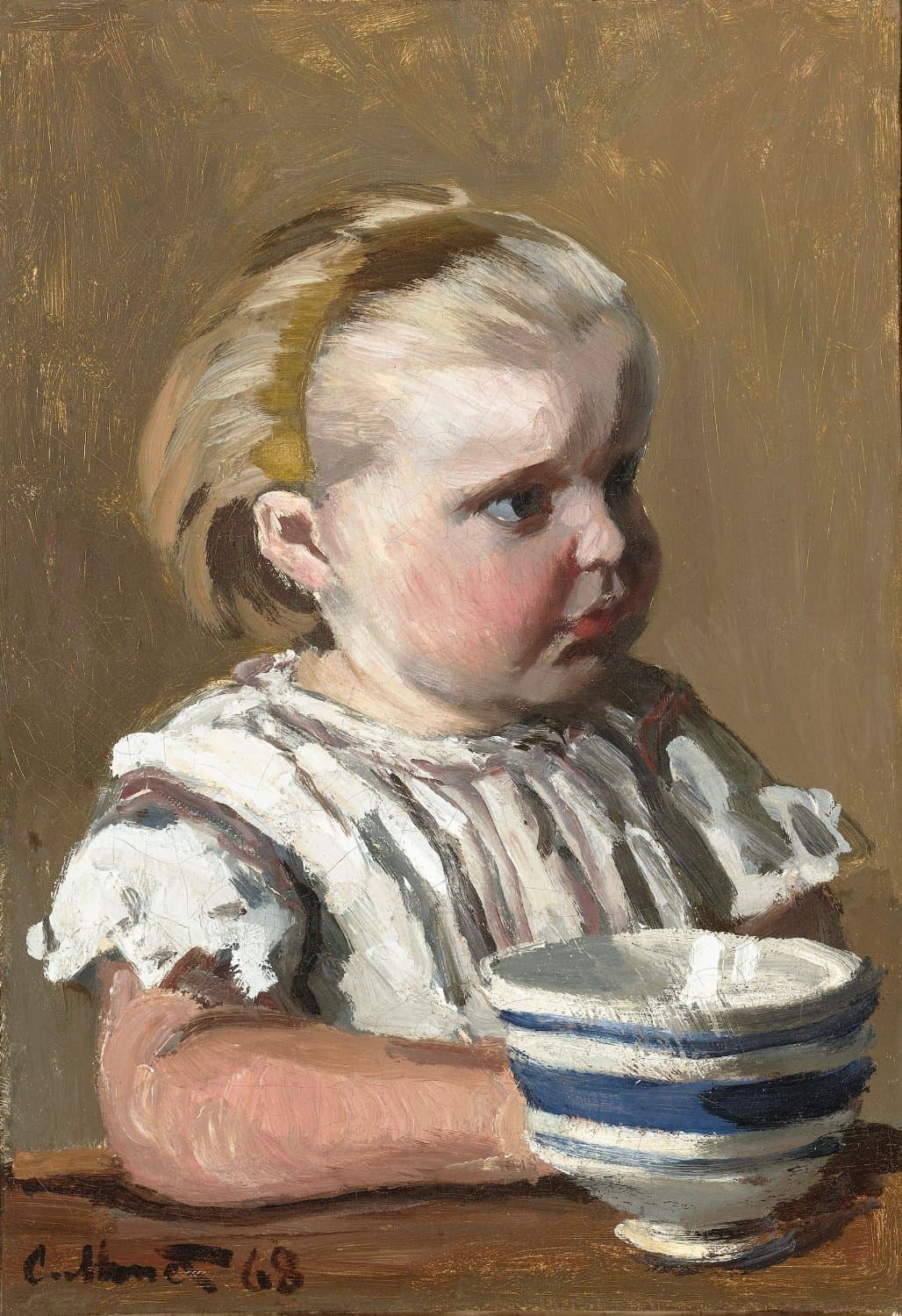
L'Enfant à la tasse (Portrait of Jean Monet)
Claude Monet · 1868
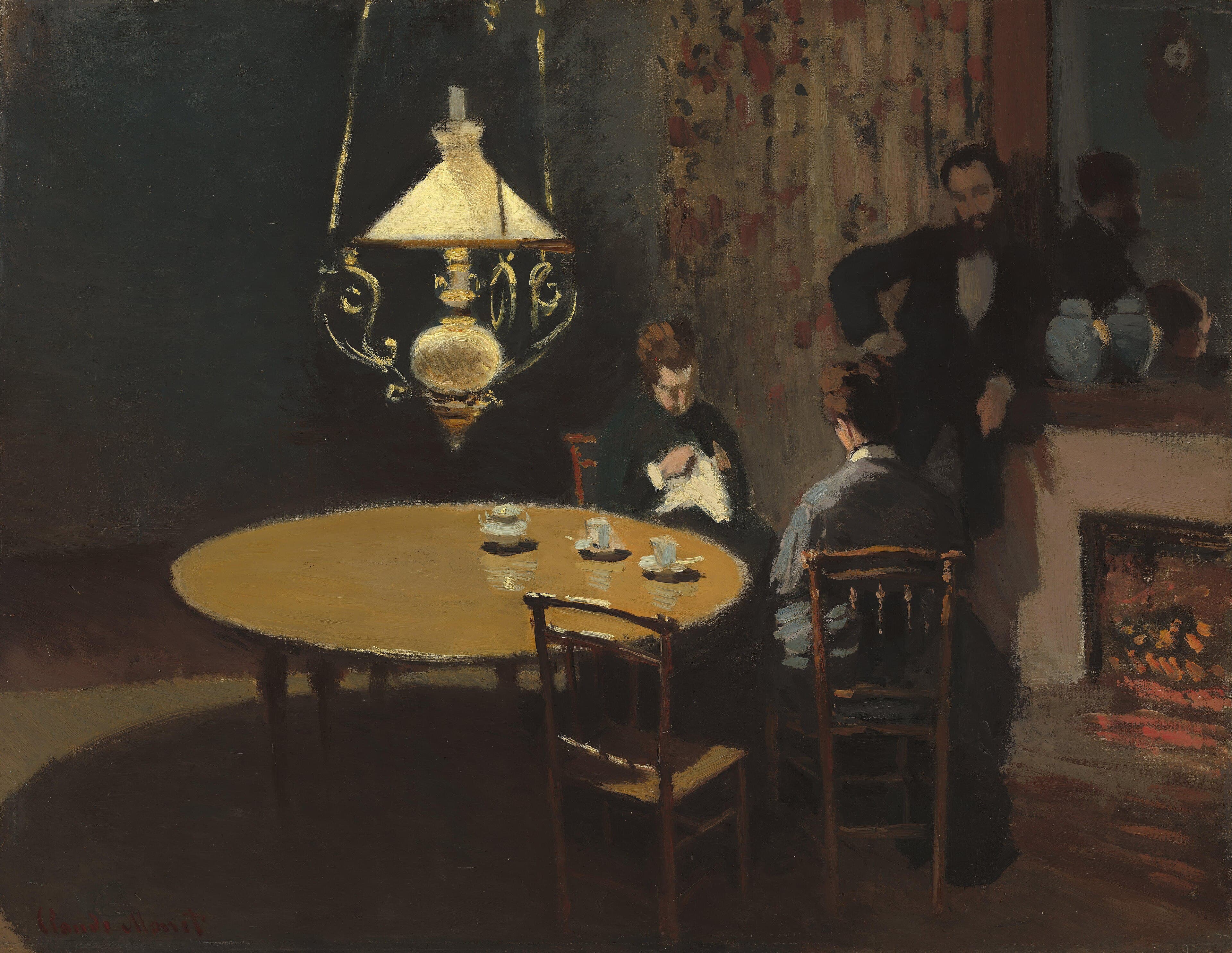
Interior, after Dinner
Claude Monet · 1868–69
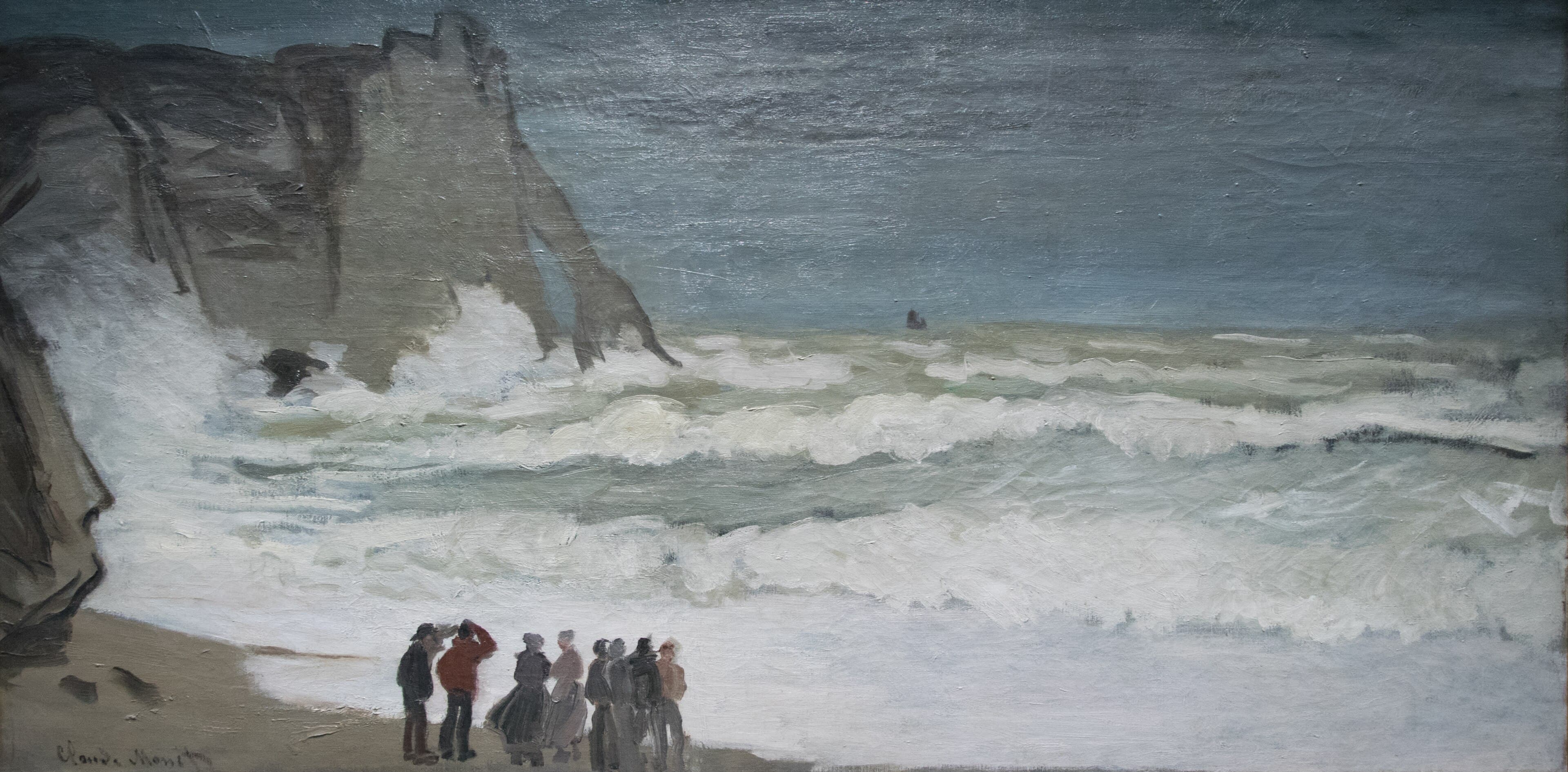
Heavy Sea at Étretat
Claude Monet · c. 1868–69
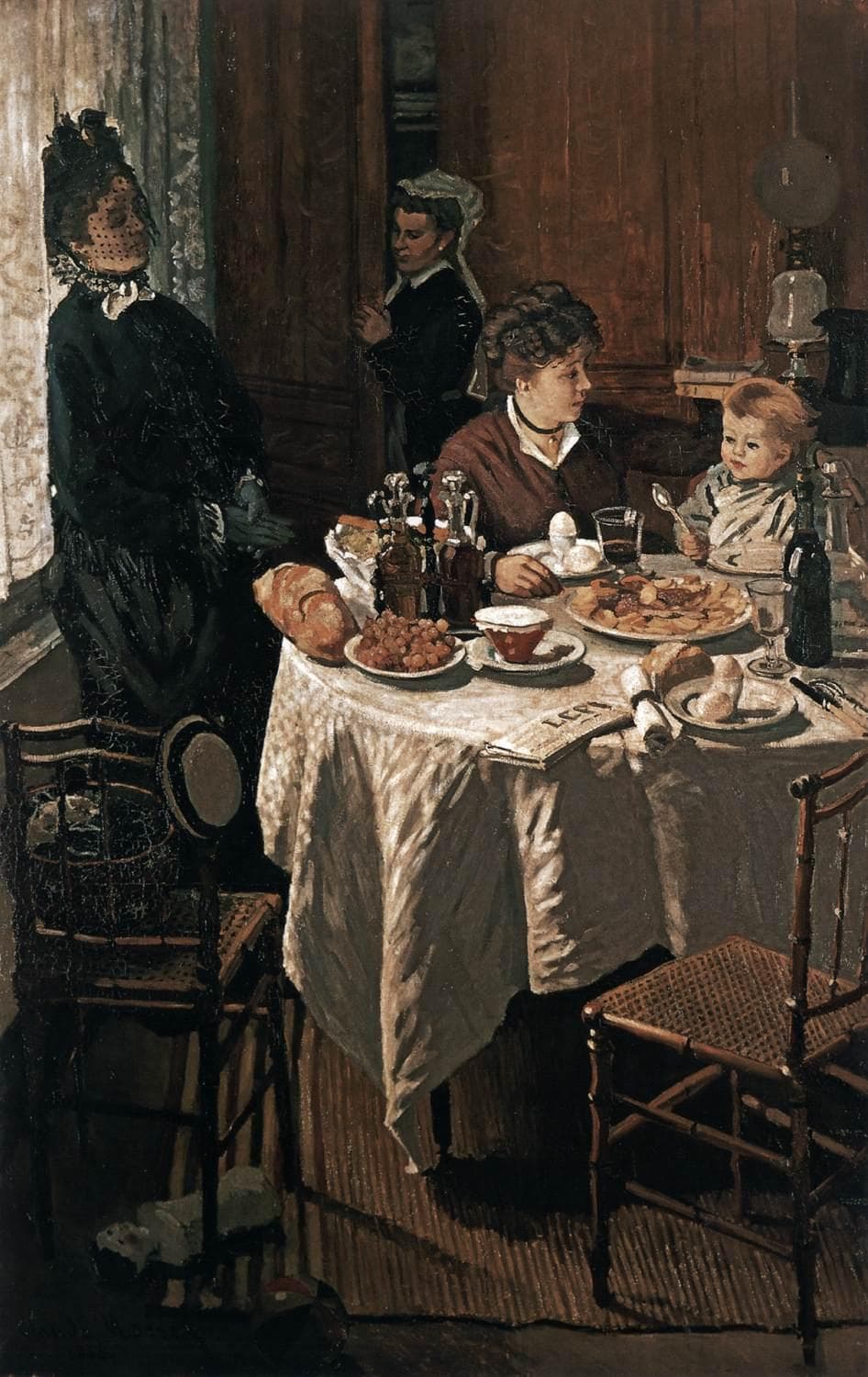
The Lunch
Claude Monet · 1868
The Magpie
Claude Monet · 1868–69
On the Bank of the Seine, Bennecourt
Claude Monet · 1868
Fishing Boats at Honfleur
Claude Monet · c. 1868
Sunset (Coucher de soleil)
Claude Monet · c. 1868
Kindred works
You may also study
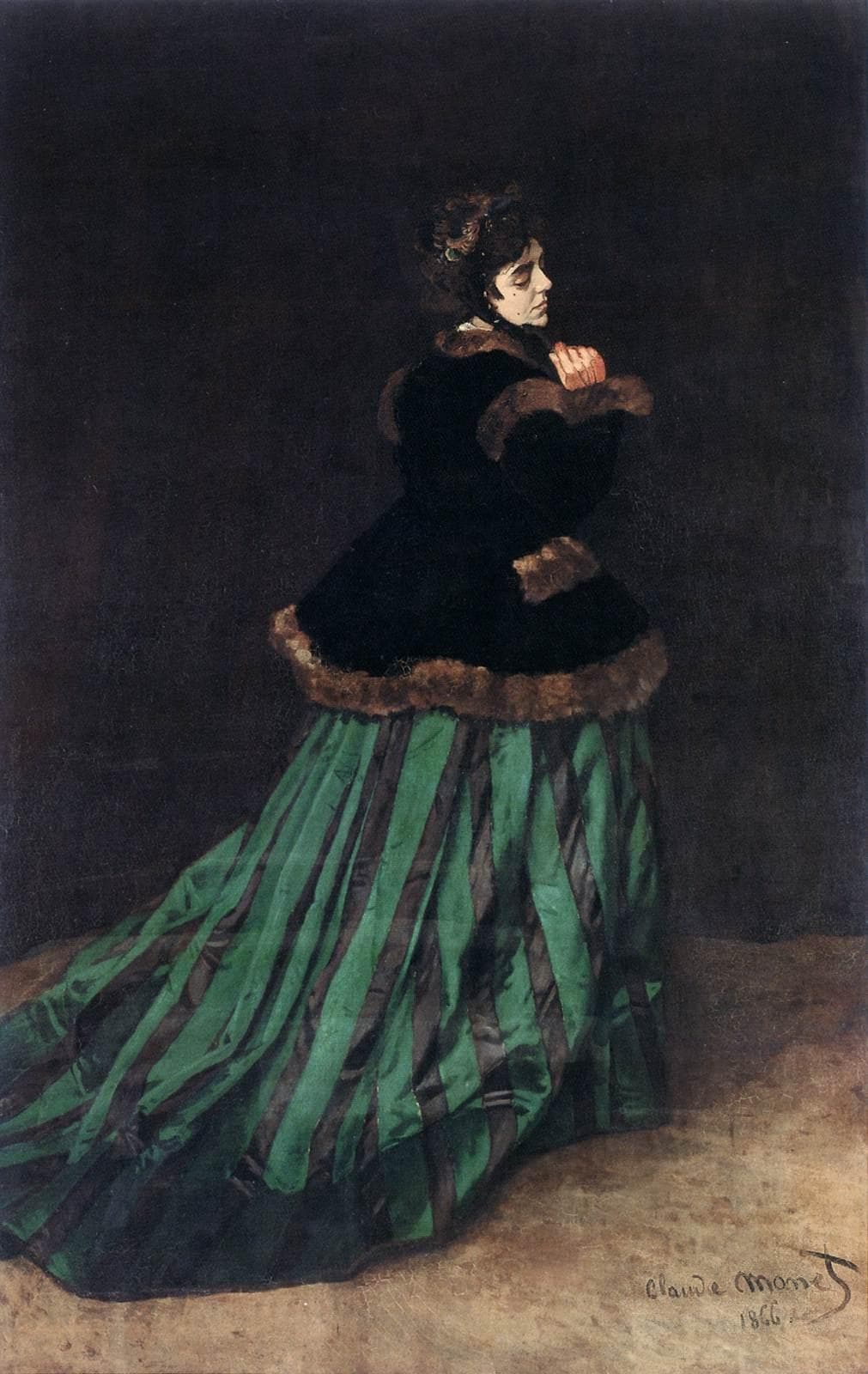
Camille (The Woman in the Green Dress)
Claude Monet · 1866
The Lunch
Claude Monet · 1868
The Magpie
Claude Monet · 1868–69
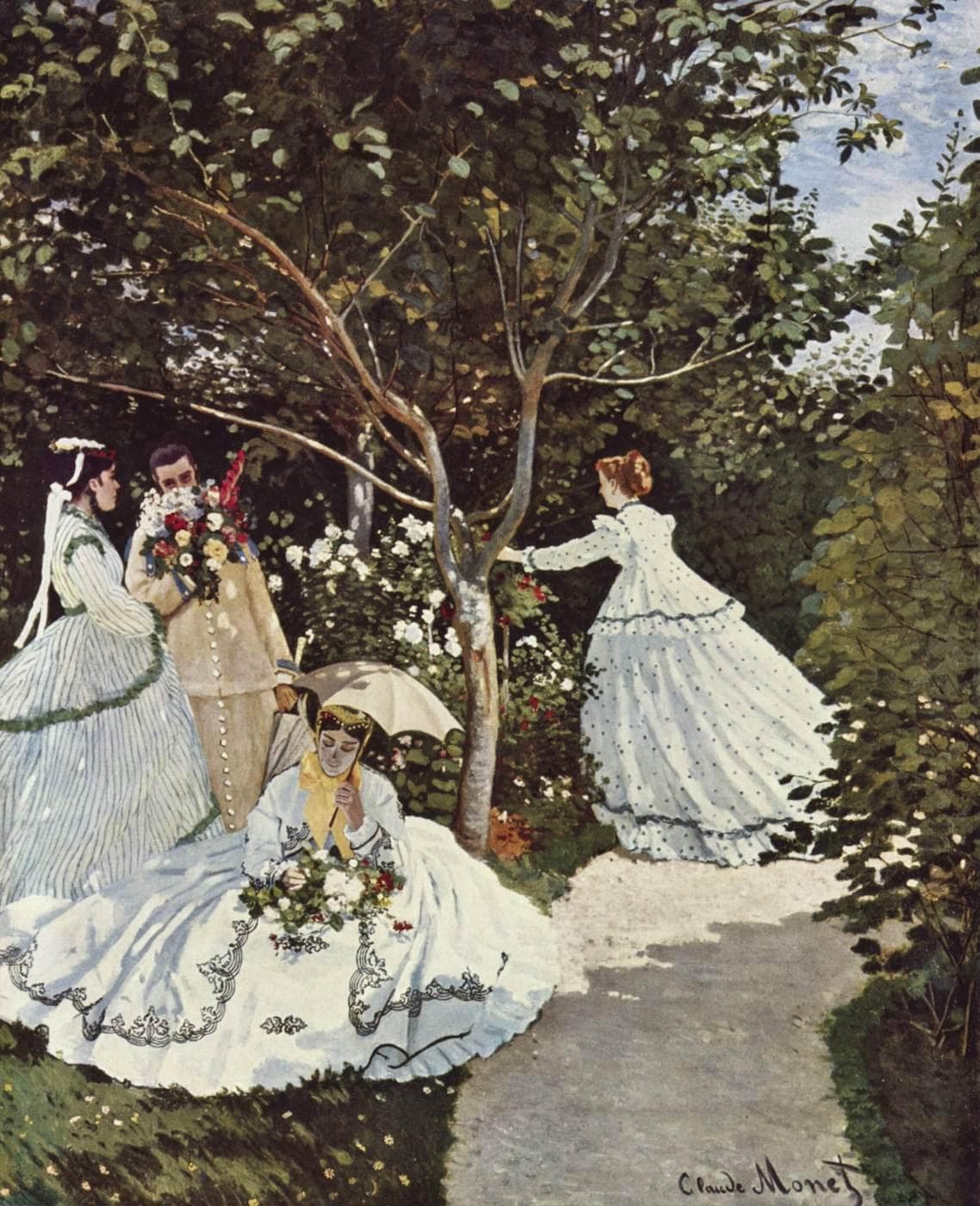
Women in the Garden
Claude Monet · 1866–67
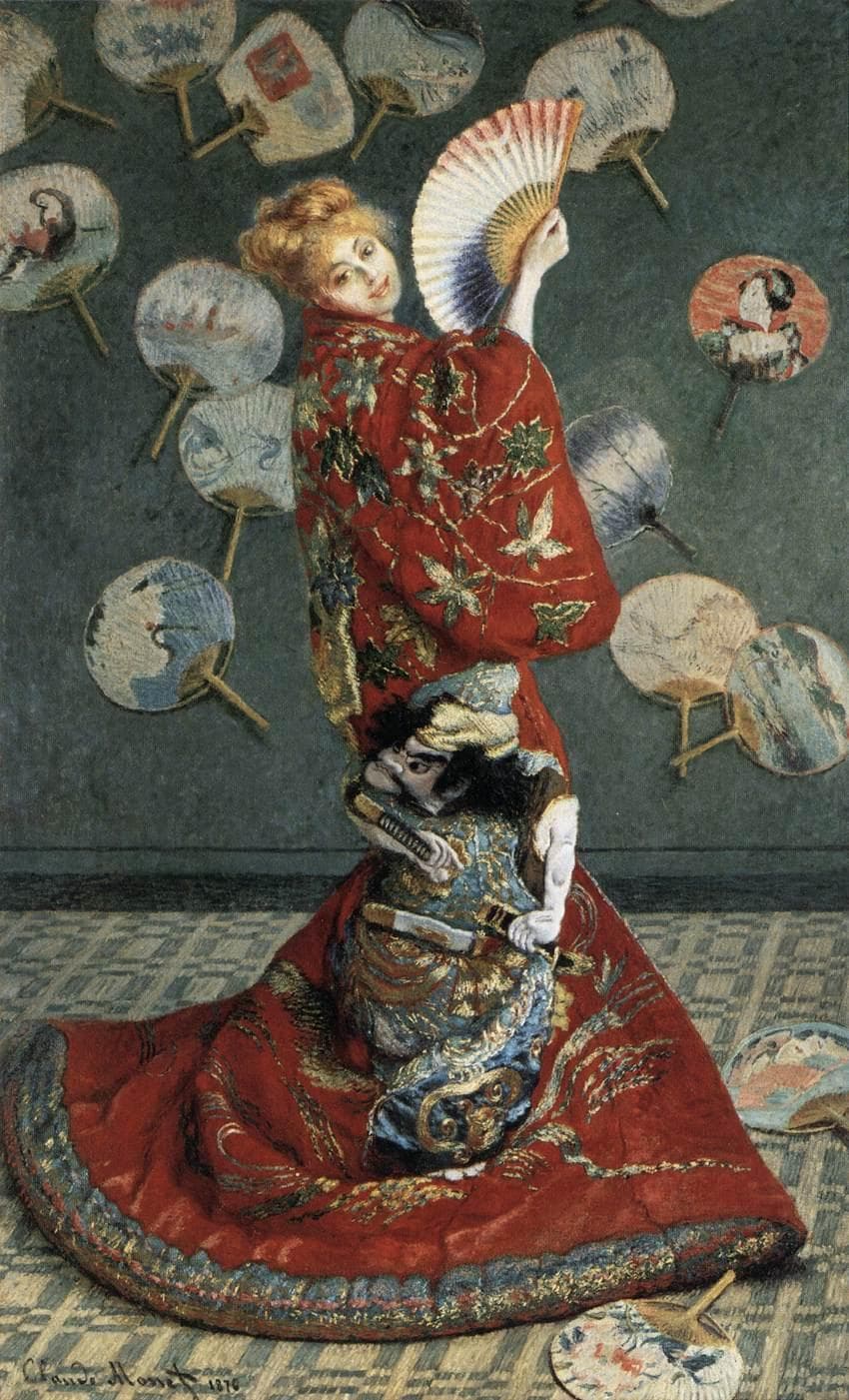
La Japonaise (Camille Monet in Japanese Costume)
Claude Monet · 1876
The Red Kerchief (The Red Cape)
Claude Monet · c. 1868–73

Venus de Milo
Alexandros of Antioch · c. 150–125 BC

Ophelia
John Everett Millais · 1851–52