Image: Claude Monet; Musée d'Orsay (source: ordrupgaard) · Public domain · via Wikimedia Commons
Rouen Cathedral, the Portal, Front View (Harmony in Brown)
Claude Monet, 1892–94
Rouen Cathedral, the Portal, Front View (Harmonie brune) is a Claude Monet painting from the Rouen Cathedral series, begun in 1892: the Gothic façade head on in somber browns, grays and violets under a pale sky. It is in the Musée d'Orsay, Paris, bought from Monet by the French state in 1907.
- Artist
- Claude Monet
- Date
- 1892–94
- Medium
- Oil on canvas
- Dimensions
- 107 × 74 cm
- Collection
- Musée d'Orsay, Paris, France
- Movement
- Impressionism
- Catalogue
- Wildenstein 1319
- Architecture & Ruins
- Religion & Saints
What you are looking at
This is the most architectural of all the Rouen Cathedrals. The west front stands perfectly frontal and symmetrical, and more of it is visible than in most of the series: the central gable and its openwork pinnacles, the bases of both towers at the edges, the three portals at the bottom, all set against a flat, pale gray-white sky. The stone is painted in browns, taupes, slate grays and dusky violet, with chalky highlights picking out the edges of tracery and statues.
The light is dull and even, the kind of day when no sun breaks through. That lets the structure read clearly. Look at the great rose window in the center, a deep brown-violet circle crossed by the pale, thin lines of the gable in front of it, and at the small round clock dial just below, a bluish disk. The portals are dark, heavy arches, and the central door is a brownish rectangle at the very bottom. Among the paler, more colorful canvases of the series, this one feels weighty, almost somber.
The signature and date are at lower left.
Rouen, 1892–94
Claude Monet began the cathedral in February 1892, working first from an apartment at 31 place de la Cathédrale, which gave a nearly frontal view like this one. He returned in 1893 and finished the whole series at Giverny in 1894. The Musée d'Orsay dates this canvas to 1892. Twenty cathedrals were shown at Durand-Ruel's gallery in Paris in May 1895. See the Rouen Cathedral series.
How it was painted
The canvas is one of the larger ones, about 107 by 74 centimeters. The surface is very heavily worked, built up in thick, overlapping touches until the paint stands in ridges like weathered stone. Monet keeps a narrow, earthy palette, but within it there is plenty of color: violet in the shadows, green-gray in the sky, rust in the doorways. The drawing is firmer than usual, with more legible tracery, niches and statues.
Its alternative title, Harmonie brune, places it among the canvases described as color harmonies, like the Orsay's Harmonie bleue and Harmonie blanche.
How this version differs
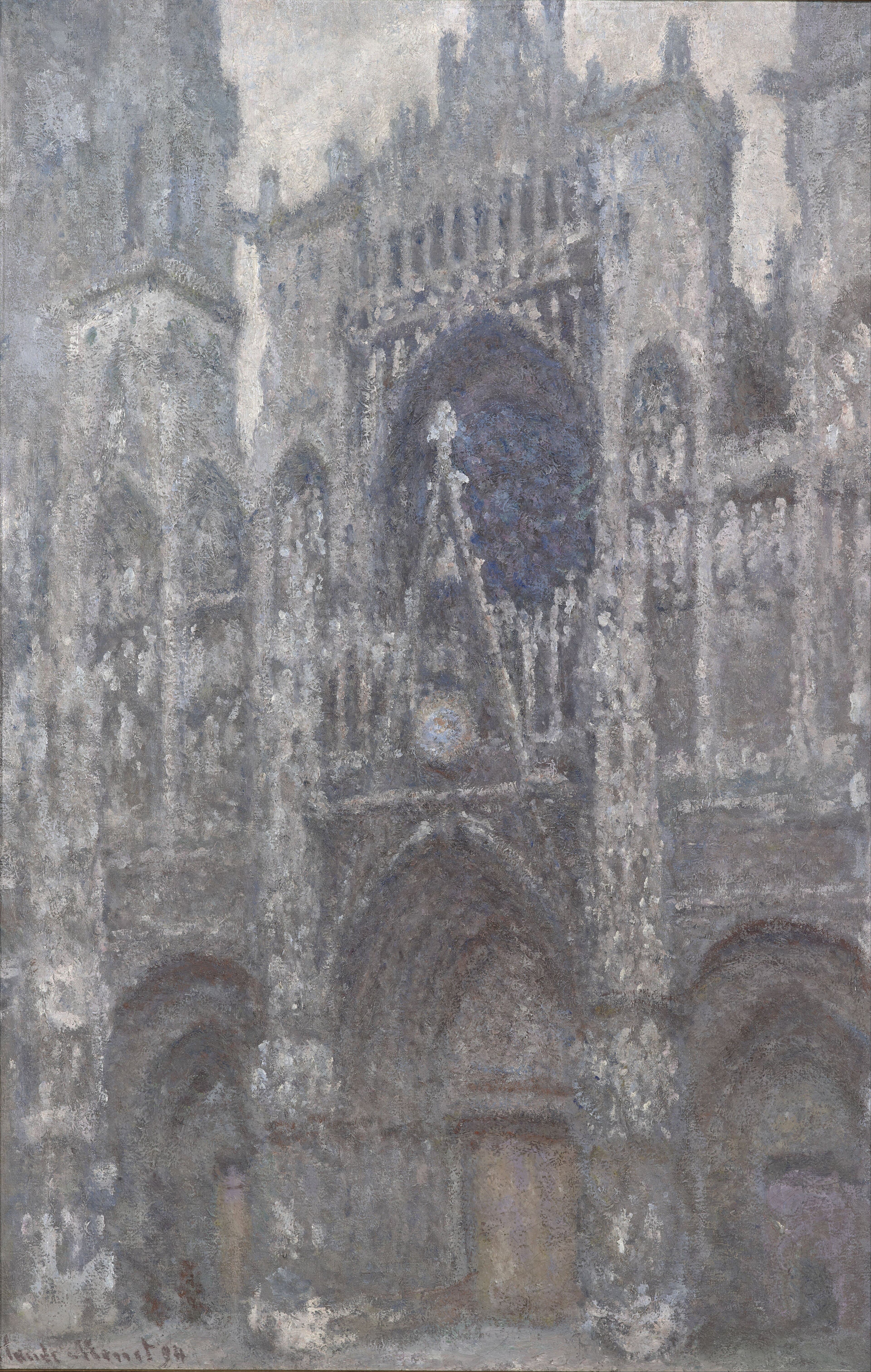
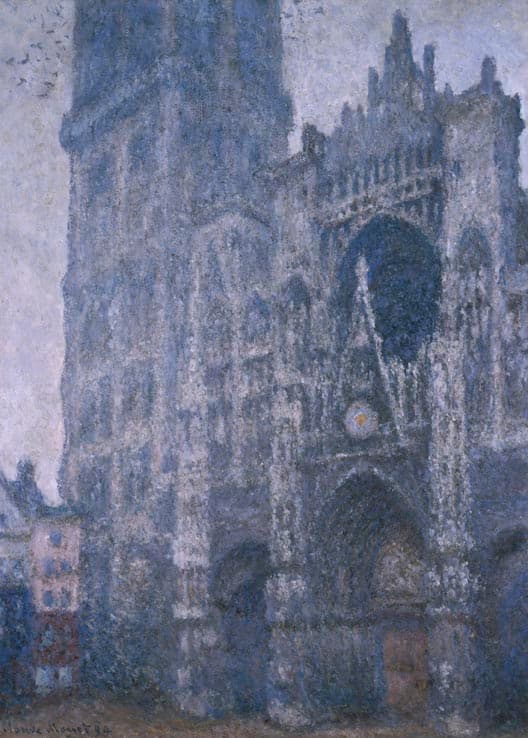
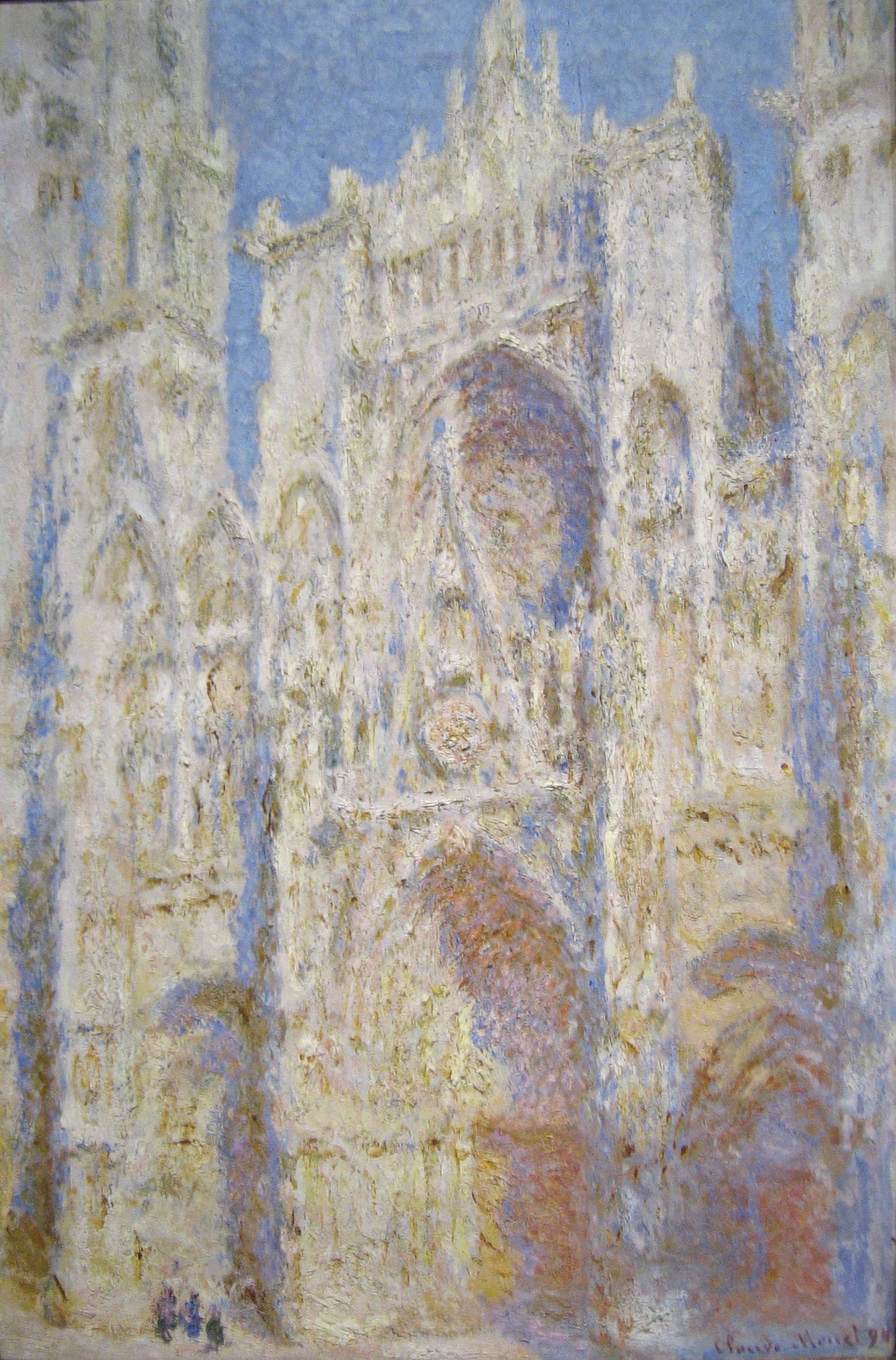
The Orsay owns five cathedrals, and this is the darkest. The Portal, Grey Weather is also sunless but lighter and silvery; the Portal, Morning Sun is blue; the Full Sunlight blazes gold and blue; and the Morning Effect is white. Outside Paris, the closest match is the Weimar Rouen Cathedral, Portal, with a similar earthy palette.
Why the state bought it
The purchase of 1907 was a sign of how much Monet's standing had changed. In the 1870s the Impressionists had been refused by the official Salon; by the turn of the century their pictures were entering the national collections. The canvas the state acquired is among the most structured and least atmospheric of the series, the one in which the building itself is most legible. At the Musée du Luxembourg it joined the Monets that had arrived with Gustave Caillebotte's bequest in 1897.
Looking closely
Stand close and the surface breaks into a coarse, encrusted relief. The paint in the upper gables is thick enough to cast tiny shadows of its own, and in the tracery Monet scratched and dragged the brush to suggest carved stone. In the lower portals the touches become broader and darker, almost like patches of rust.
Ownership and where to see it
Unlike the four Orsay cathedrals that came from Count Isaac de Camondo, this one was bought directly from Monet by the French state in 1907 for the Musée du Luxembourg, then the national museum of living artists. It moved to the Louvre in 1929 and was assigned to the Musée d'Orsay in 1986 (inventory RF 2779). Catalogued as Wildenstein 1319, it usually hangs with its four companions. See our guide to Monet at the Musée d'Orsay.
Questions & answers
Where is Monet's Rouen Cathedral, Harmony in Brown?
It is in the Musée d'Orsay in Paris, inventory RF 2779. The French state bought it from Monet in 1907 for the Musée du Luxembourg; it passed to the Louvre in 1929 and to the Orsay in 1986. The Orsay holds five Rouen Cathedrals and usually shows them together.
When was it painted?
The Orsay dates it to 1892, Monet's first campaign in Rouen, when he worked from an apartment with a nearly frontal view of the façade. He returned in 1893 and finished the series at Giverny in 1894. The cathedrals were exhibited in Paris in 1895.
What does Harmonie brune mean?
Harmony in brown. The alternative title describes the painting's palette: browns, taupes, grays and dusky violets under a pale, sunless sky. It is the darkest and most somber of the Orsay's five cathedrals.
Why does this version show so much of the building?
It is painted almost exactly head on, with both towers' bases at the edges and the full central gable visible. The flat, overcast light also leaves the tracery, statues and portals more legible than in the sunlit or misty versions.
More by the artist
Claude Monet
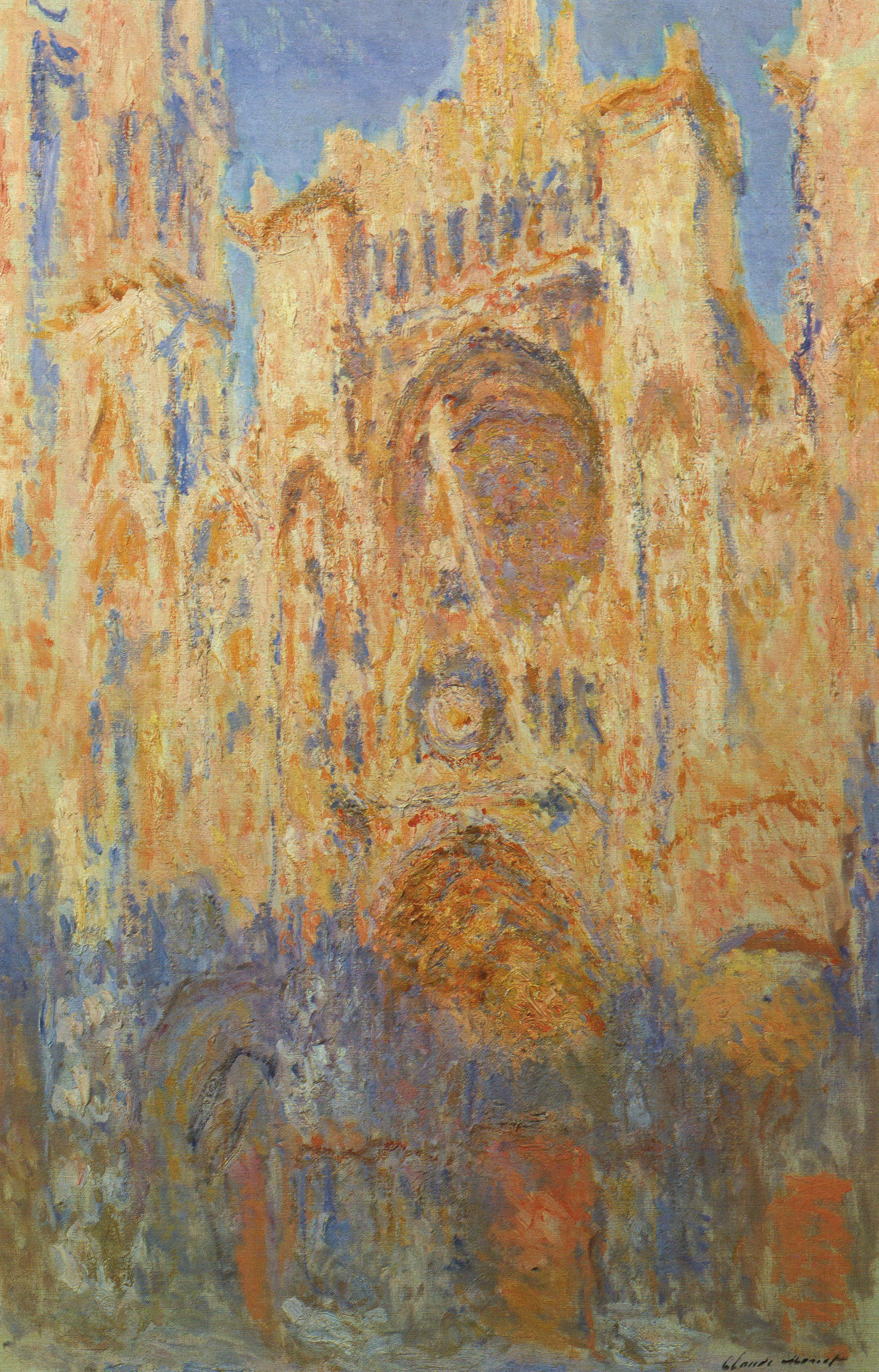
Rouen Cathedral, Sunlight Effect, End of the Day
Claude Monet · 1892
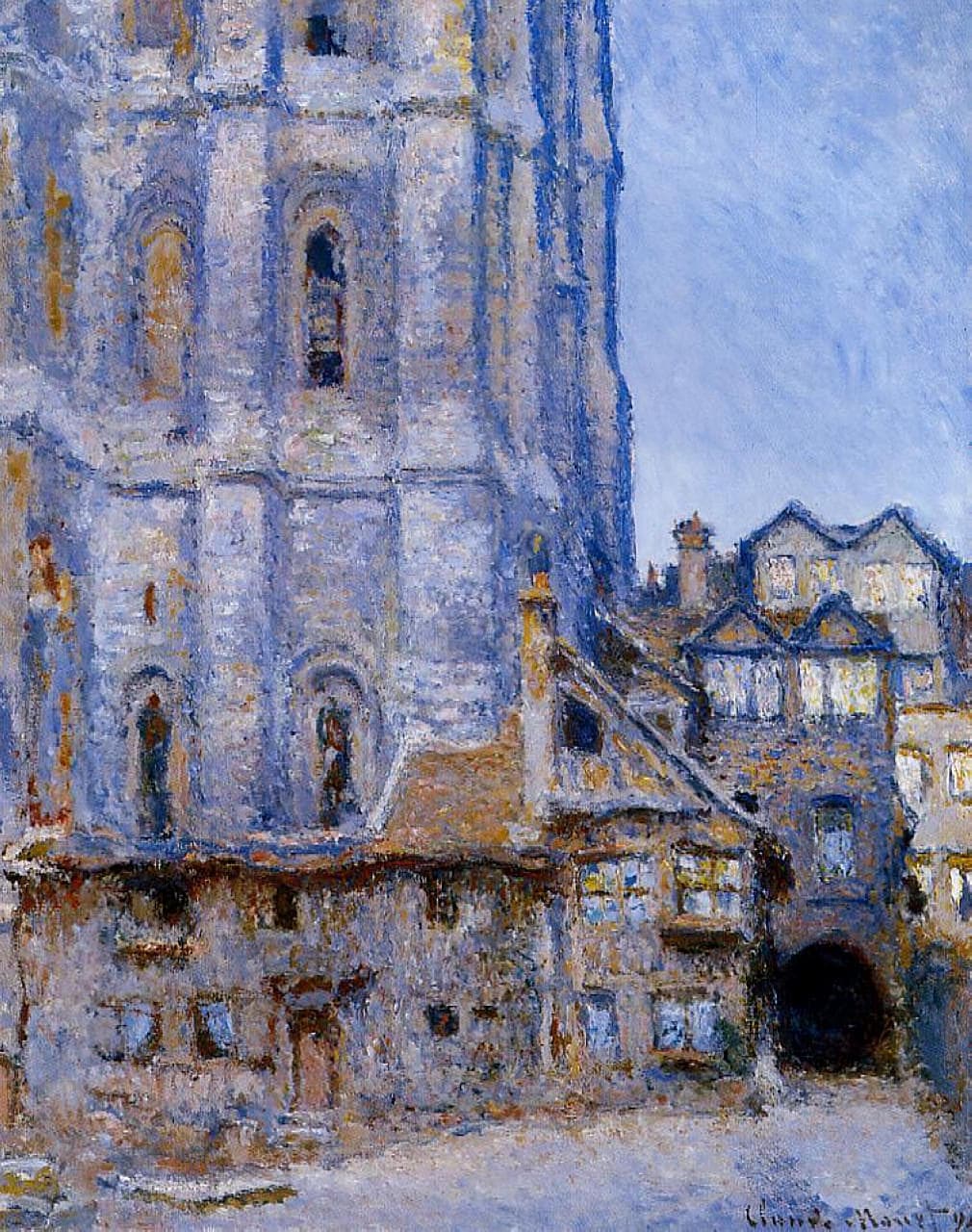
La Cour d'Albane, Rouen
Claude Monet · 1892–94
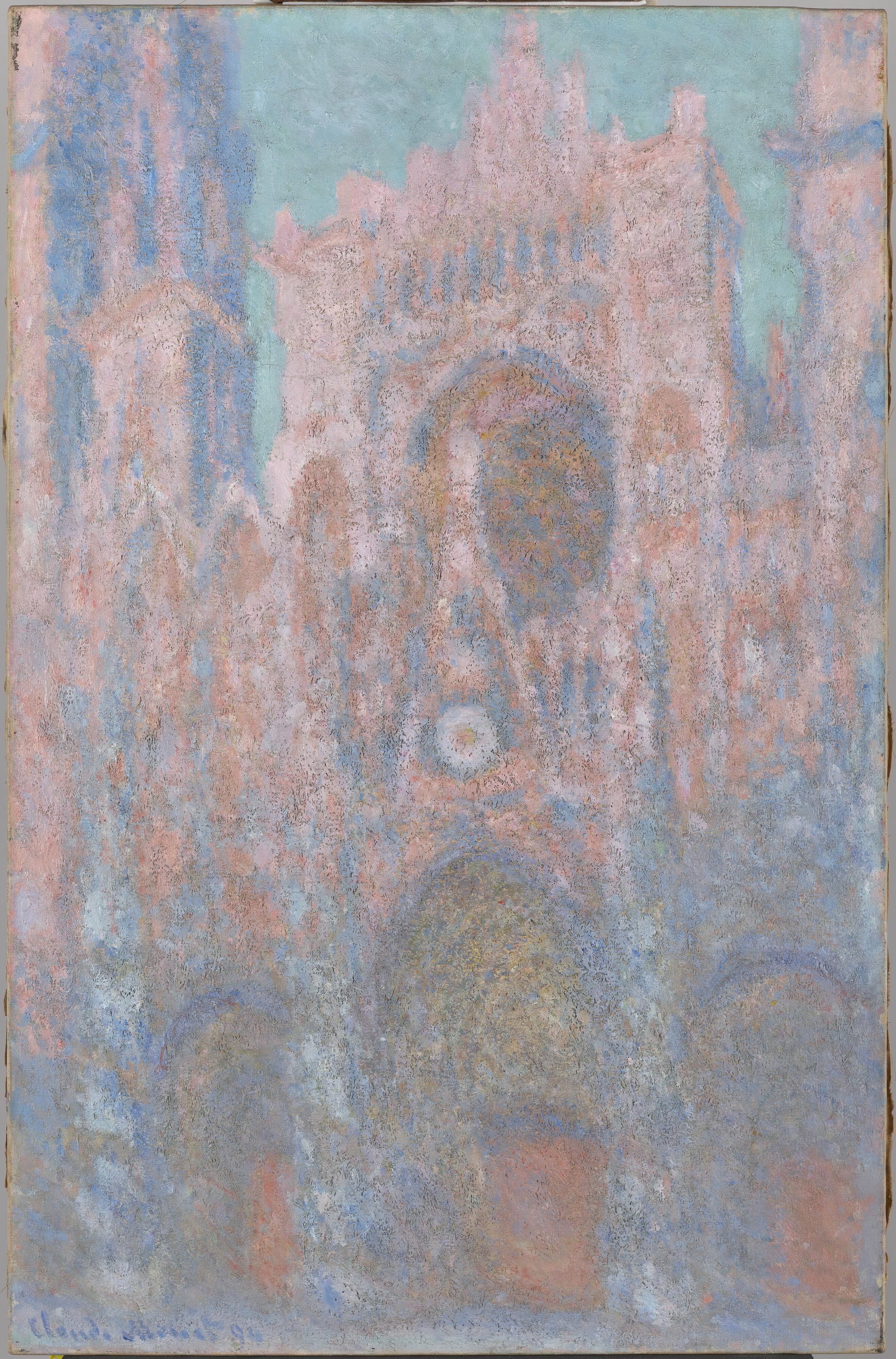
Rouen Cathedral: Setting Sun (Symphony in Pink and Grey)
Claude Monet · 1892–94
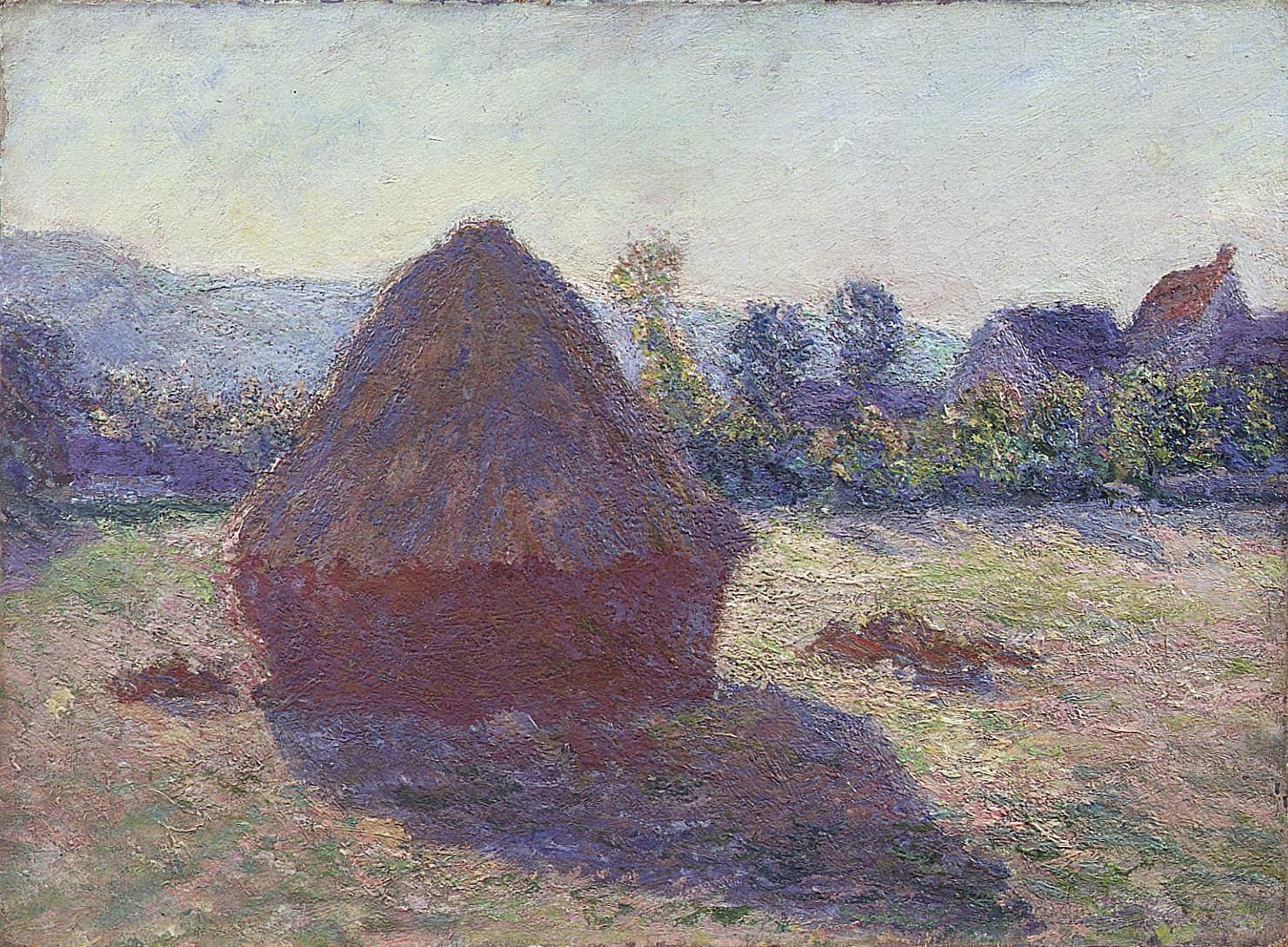
Haystacks, End of Summer
Claude Monet · 1891
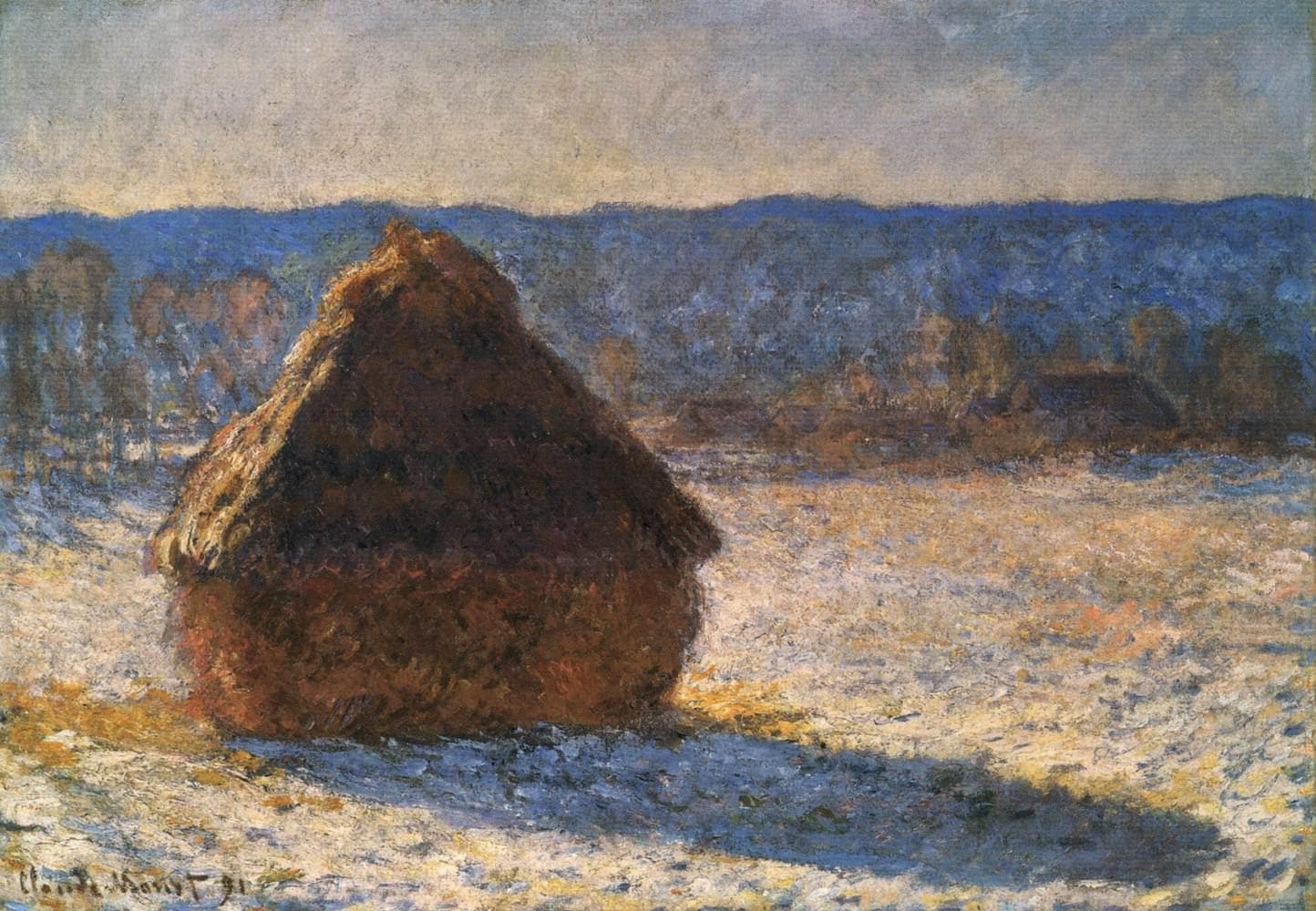
Grainstack (Snow Effect)
Claude Monet · 1891
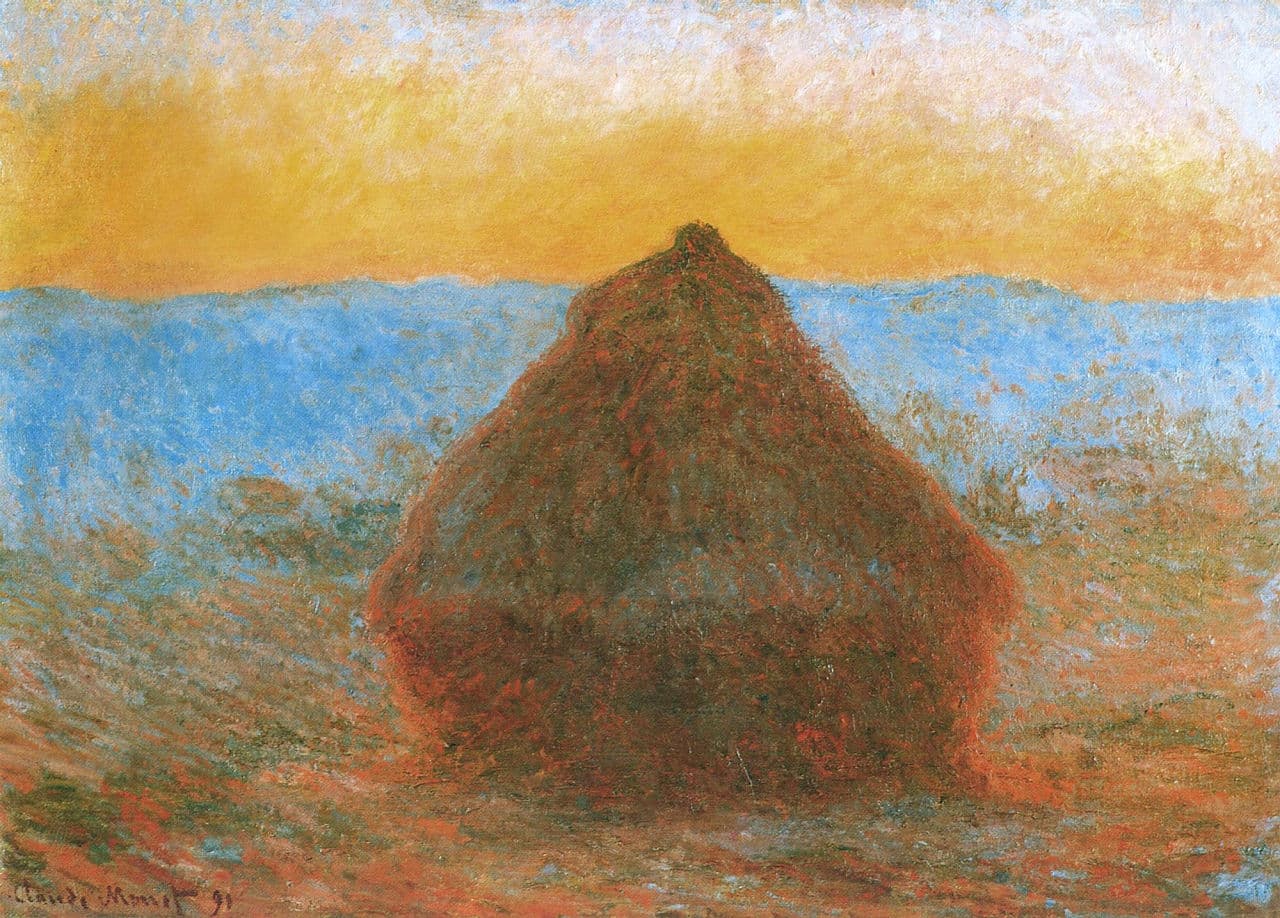
Haystack in the Evening Sun
Claude Monet · 1891
La Meule
Claude Monet · 1891
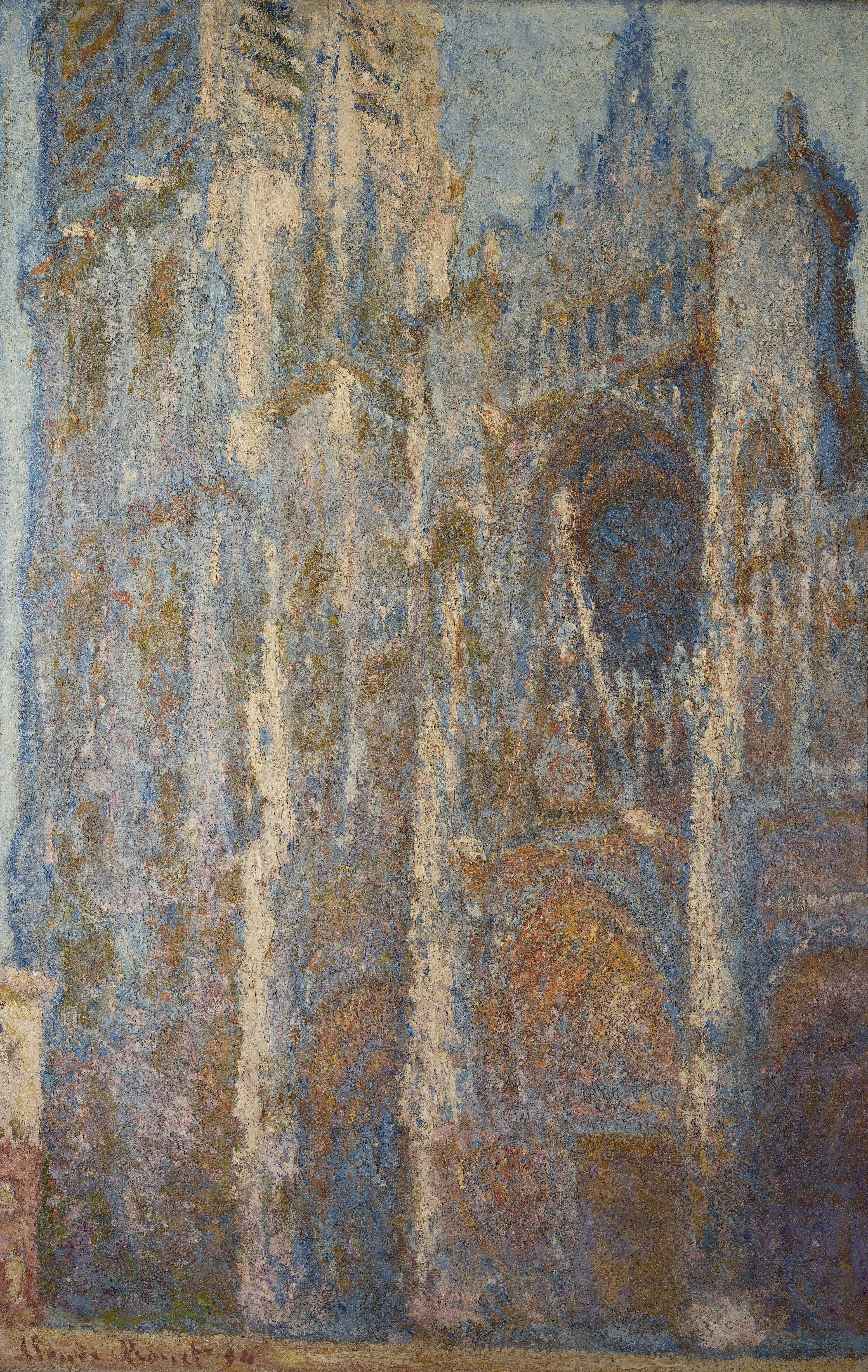
Rouen Cathedral, Portal and Tower d'Albane, Midday
Claude Monet · 1893–94
Also painted in 1892
The same year
Kindred works
You may also study
Rouen Cathedral, the Portal, Grey Weather
Claude Monet · 1892–94
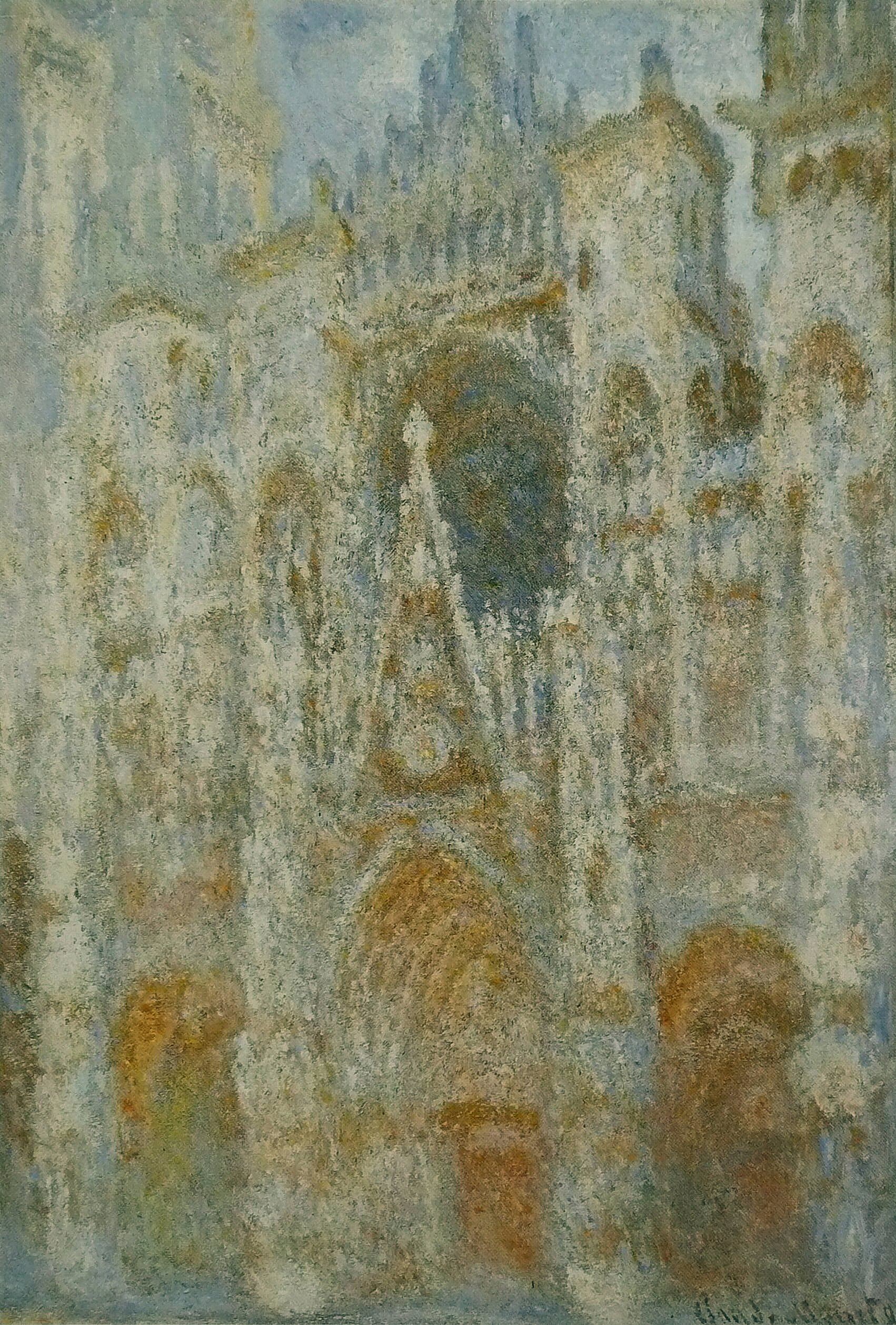
Rouen Cathedral, the Portal, Morning Sun (Harmony in Blue)
Claude Monet · 1893–94
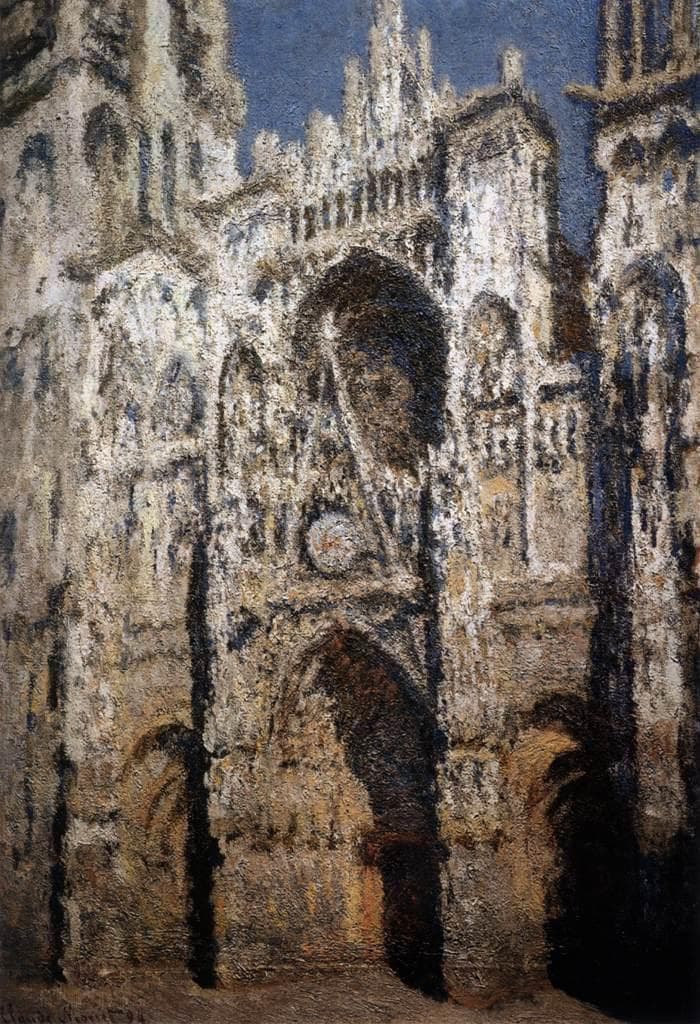
Rouen Cathedral in Full Sunlight
Claude Monet · 1893
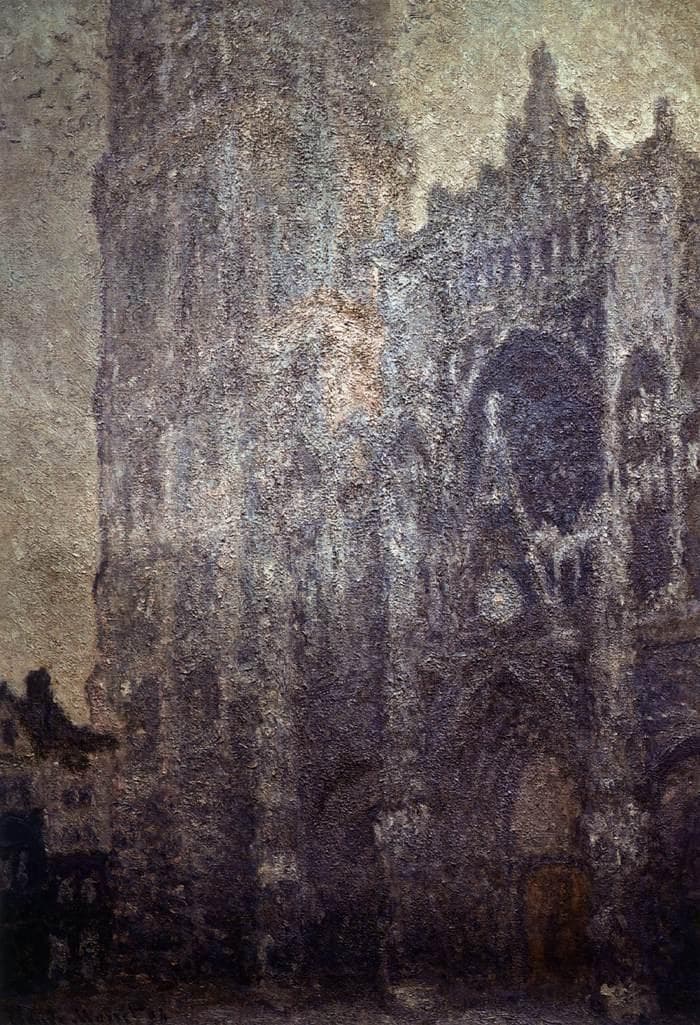
Rouen Cathedral, Effects of Morning Light
Claude Monet · 1893
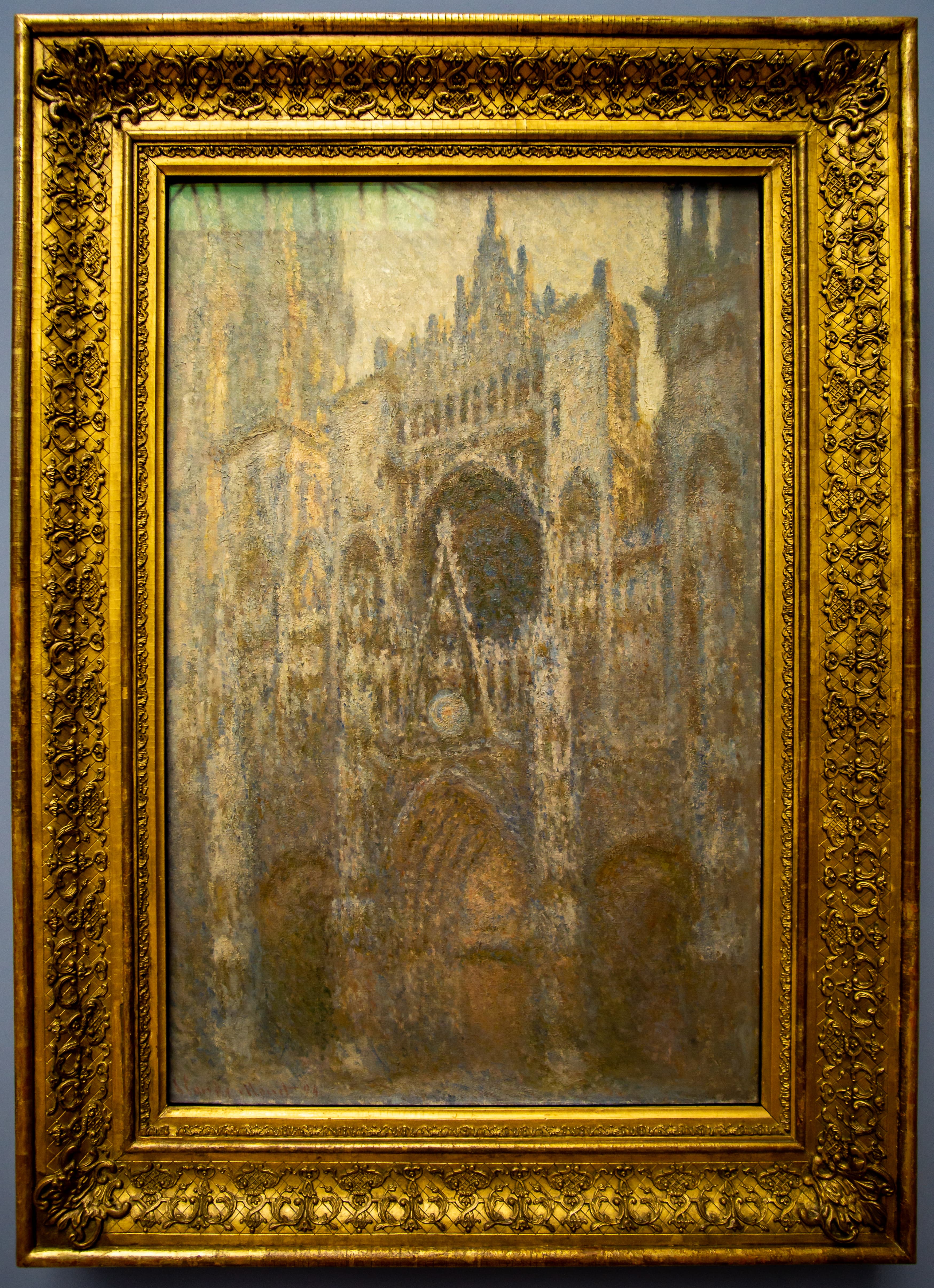
Rouen Cathedral, Portal
Claude Monet · 1893–94
Rouen Cathedral, the Portal and the Tour d'Albane, Grey Weather
Claude Monet · 1893–94
Rouen Cathedral, West Façade, Sunlight
Claude Monet · 1892–94
Rouen Cathedral, Portal, Sunlight (W 1322)
Claude Monet · 1892–94