Impressionism
The Parc Monceau
Claude Monet, 1878
The Parc Monceau is an 1878 painting by Claude Monet of Parisians resting in the shade of tall trees in the fashionable park in the 8th arrondissement. It is in the Metropolitan Museum of Art, New York.
- Artist
- Claude Monet
- Date
- 1878
- Medium
- Oil on canvas
- Dimensions
- 72.7 × 54.3 cm
- Collection
- Metropolitan Museum of Art, New York, United States
- Movement
- Impressionism
- Catalogue
- Wildenstein 466
More at Monet at the Met
What you are looking at
The canvas is tall, and most of it is trees. Dark masses of foliage rise on both sides and arch over the top, almost meeting, with flecks of white sky breaking through the leaves. In the gap between them, in the middle distance, the pinkish façade of a building glows in sunlight beyond the park.
Beneath the trees, along a sandy path dappled with orange-pink spots of sun, a crowd sits and strolls in the shade: women in light dresses and bonnets gathered on benches or chairs, a few children, nursemaids, someone holding an orange-red parasol and another a dark one. At the right, alone, a man in a dark suit and white shirtfront sits on a bench in deep shadow. In the foreground a sloping lawn cuts across the bottom of the picture, striped with bright yellow-green sunlight and blue-green shadow. Monet signed and dated the canvas "Claude Monet 78" at lower right.
Claude Monet painted the scene in the Parc Monceau, Paris, in 1878. The canvas measures 72.7 by 54.3 centimeters, is number 466 in Wildenstein's catalogue, and is in the Metropolitan Museum of Art, New York.
Where and when
The Parc Monceau, in the wealthy 8th arrondissement, was laid out in the late eighteenth century as a private garden for the Duc de Chartres, with follies and fake ruins. In the early 1860s the city bought it and Haussmann's engineer Adolphe Alphand redesigned it as a public park, with gilded gates, curving paths and lawns, surrounded by grand new houses. It was a favorite place for well-off Parisian families, their nannies and children.
Monet painted it in the spring of 1876 and again in 1878. In January 1878 he gave up his house at Argenteuil and took an apartment in Paris, on the rue d'Edimbourg, where his second son, Michel, was born in March. He was nearly destitute, and that summer the family left for Vétheuil. This picture belongs to those Paris months, the same year as the flag-filled streets of Rue Montorgueil.
How it was painted
The strongest element is the light. Look at the foreground: the grass is painted in bright yellow-green where the sun falls and deep blue-green where shadow crosses it, in long diagonal strokes that sweep up from the lower left. That contrast pushes the shaded figures back and makes the scene feel like a hot afternoon. On the path, the sun comes through the leaves as separate spots of warm pink and orange, laid on the sandy ground in single dabs.
The figures are tiny compared with the trees, each a few touches of color, and the orange parasol is a single warm accent that draws the eye into the crowd. The foliage is built from countless short strokes of dark green, olive and black-green, with lighter touches where the sun penetrates. Notice how little sky there is. The upright format and the canopy make the picture enclosed and intimate, a pocket of shade inside the city.
Notice the man on the bench at the right. He sits apart from the group, almost lost in the dark of the trees, painted in near-black with a single stroke of white for his shirtfront and a touch of flesh for his face. He balances the bright crowd on the left and gives the picture a quiet, observing presence, a little like the painter himself watching the families at their leisure.
The motif and its siblings
Monet's city parks belong to the wider Impressionist interest in modern leisure. The Met also owns his 1876 view of the park, Landscape: The Parc Monceau, painted in a lighter, more open key. Compare the Tuileries seen from an apartment window in The Tuileries of 1876, and the Paris street scenes of The Boulevard des Capucines and Rue Saint-Denis. A few months later Monet left the city for good, for Vétheuil.
Where to see it
The painting is in the Metropolitan Museum of Art: see Monet at the Met. For the artist, see Claude Monet.
Questions & answers
Where is Monet's The Parc Monceau?
This 1878 painting is in the Metropolitan Museum of Art, New York, which also owns Monet's 1876 view of the same park. The 1878 canvas measures 72.7 by 54.3 centimeters and is catalogued by Wildenstein as number 466.
When did Monet paint The Parc Monceau?
In 1878, during the months he lived in Paris after leaving Argenteuil and before moving to Vétheuil. He had painted the park two years earlier, in the spring of 1876.
What does The Parc Monceau show?
Parisians, mostly women and children, sitting and strolling on a sun-dappled path beneath tall, dark trees, with a man alone on a bench at right, a sunlit lawn striped with shadow in front and a pink building glimpsed beyond.
Where is the Parc Monceau?
The Parc Monceau is a public park in the 8th arrondissement of Paris, near the Boulevard de Courcelles. Created in the 1770s and redesigned in the 1860s, it still has its gilded gates, follies and lawns.
More by the artist
Claude Monet

Bridge over a Pond of Water Lilies
Claude Monet · 1899

Woman with a Parasol – Madame Monet and Her Son
Claude Monet · 1875

Sunset in Venice
Claude Monet · 1908–12

La Grenouillère
Claude Monet · 1869

Beach in Pourville
Claude Monet · 1882

Springtime
Claude Monet · 1872

Boating on the River Epte
Claude Monet · 1890

The Seine at Asnières (Hermitage)
Claude Monet · 1873
Also painted in 1878
The same year
Kindred works
You may also study
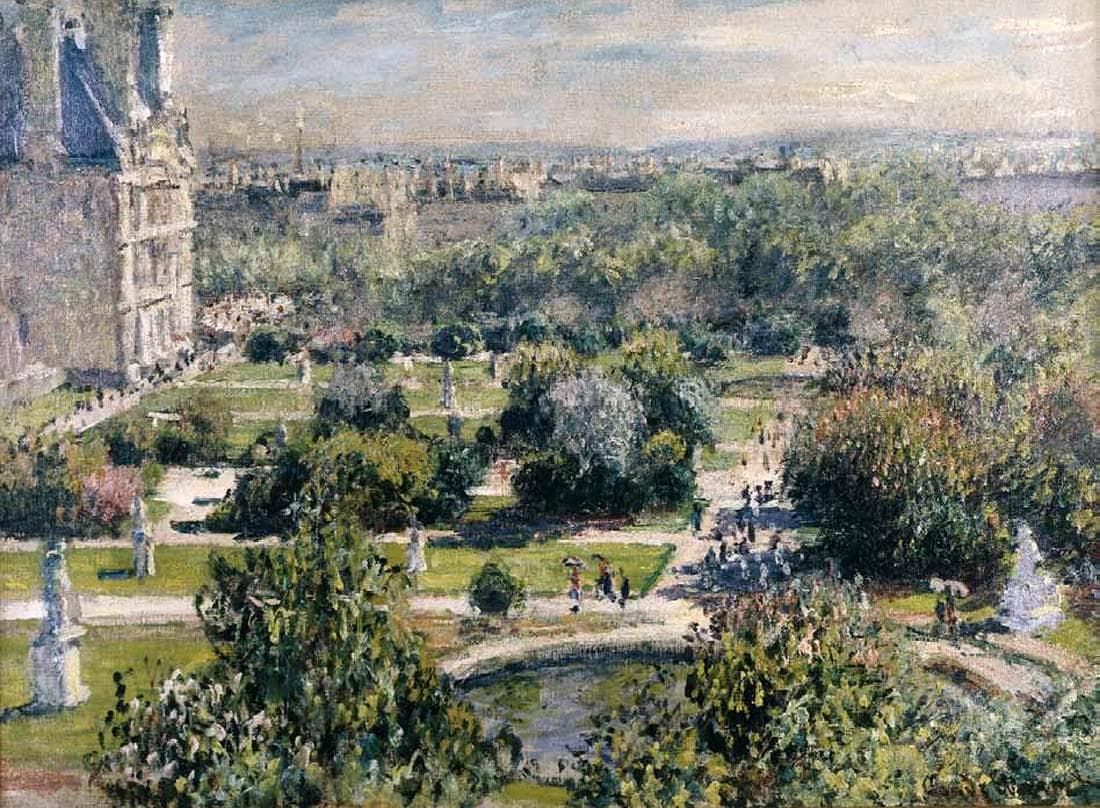
The Tuileries
Claude Monet · 1876
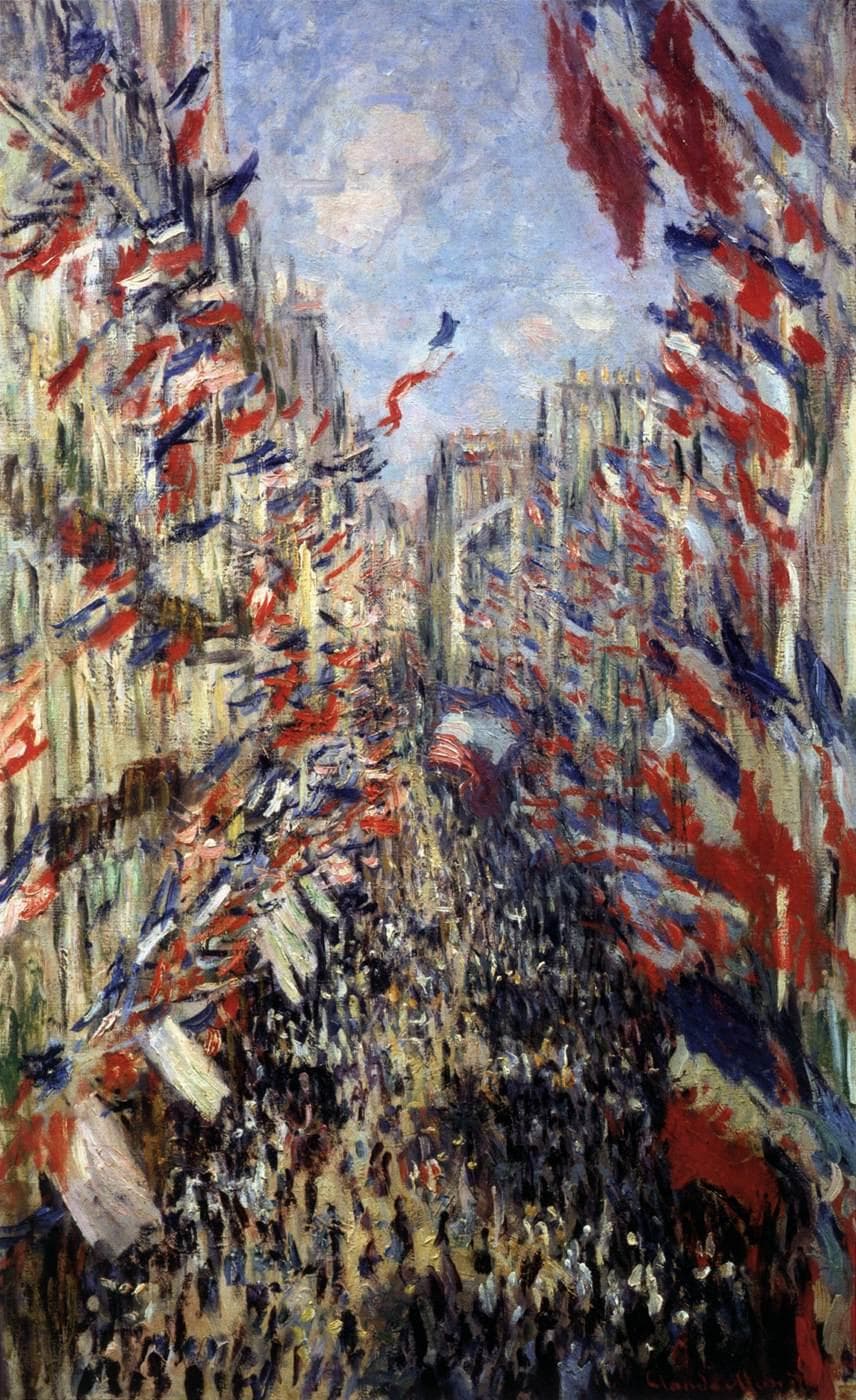
Rue Montorgueil in Paris, Celebration of 30 June 1878
Claude Monet · 1878
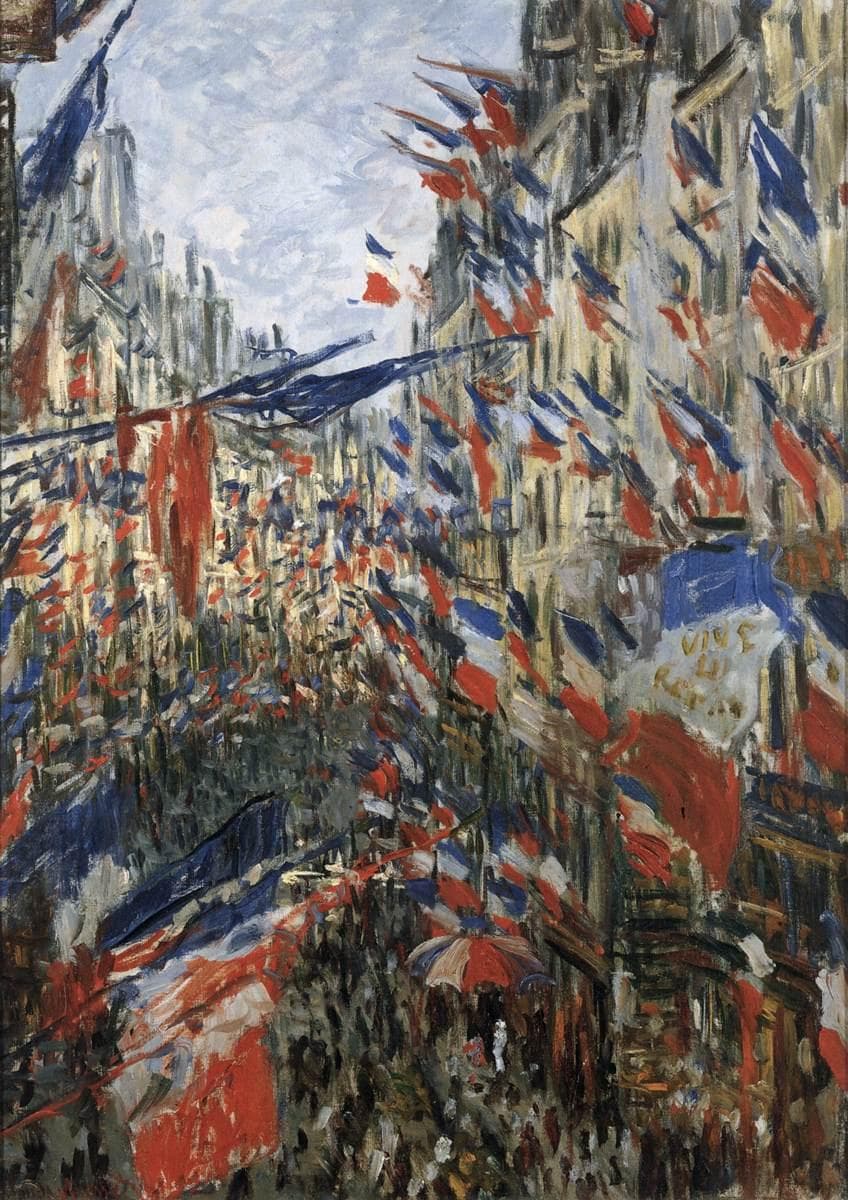
Rue Saint-Denis in Paris, Celebration of 30 June 1878
Claude Monet · 1878
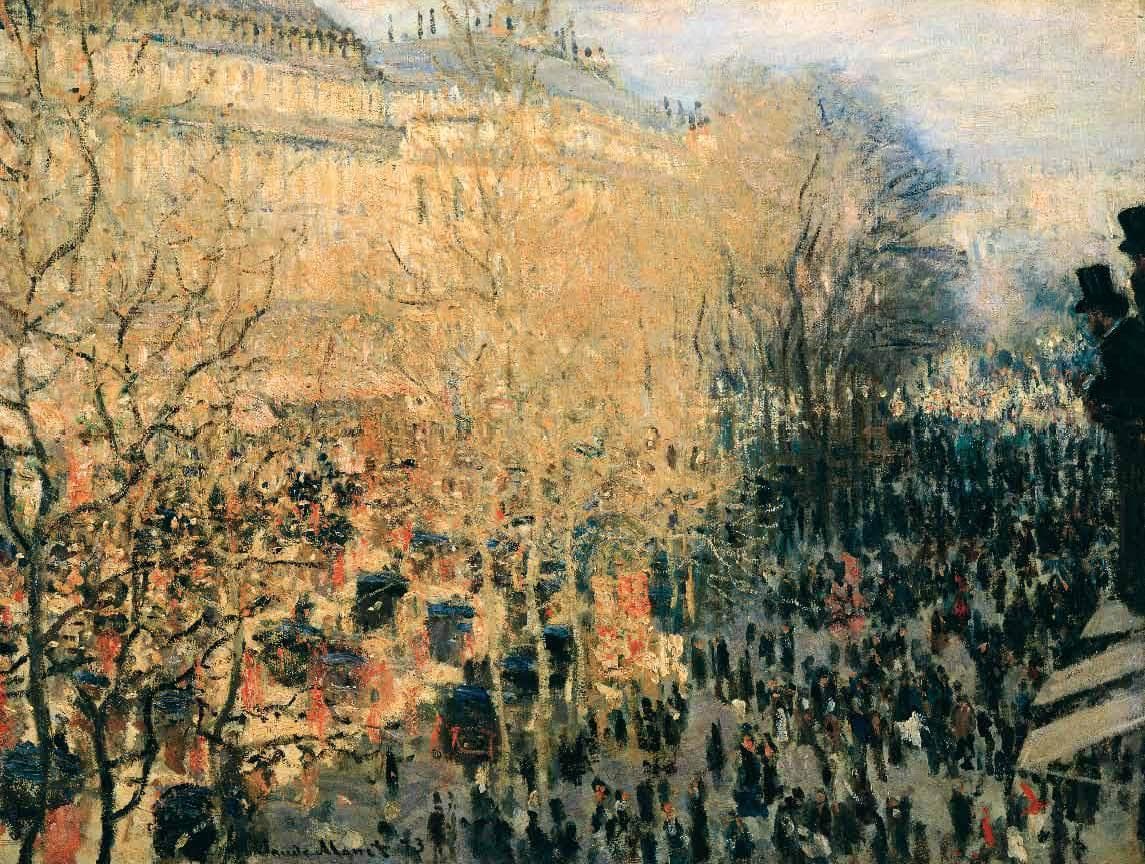
The Boulevard des Capucines in Paris
Claude Monet · 1873
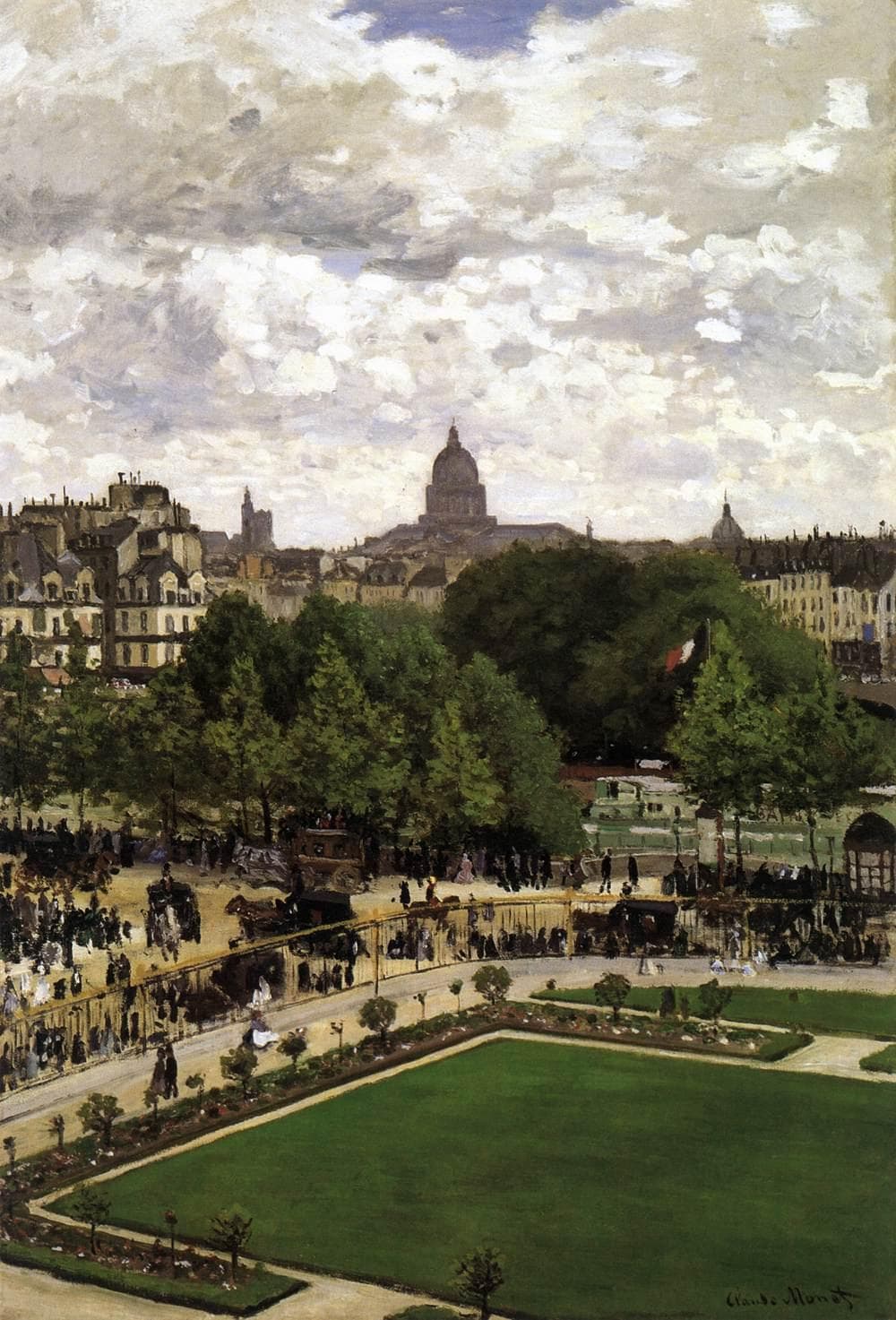
The Garden of the Infanta
Claude Monet · 1867

The Scream
Edvard Munch · 1893

Ophelia
John Everett Millais · 1851–52

The Great Wave off Kanagawa
Katsushika Hokusai · c. 1830–32