Image: MuMa – Musée d'art moderne André Malraux; reproduction via Wikimedia Commons · Public domain · via Wikimedia Commons
Fécamp, by the Sea
Claude Monet, 1881
Fécamp, by the Sea (Fécamp, bord de mer) is an 1881 painting by Claude Monet of a rough gray sea breaking on the shingle below the cliffs at Fécamp in Normandy. It is in the MuMa, Le Havre.
- Artist
- Claude Monet
- Date
- 1881
- Medium
- Oil on canvas
- Dimensions
- 65.3 × 80.5 cm
- Collection
- MuMa – Musée d'art moderne André Malraux, Le Havre, France
- Movement
- Impressionism
- Catalogue
- Wildenstein 652
- Water & Sea
- Nature & Landscape
Fécamp, bord de mer (Fécamp, by the Sea) is a seascape by Claude Monet painted at Fécamp on the Normandy coast in the spring of 1881: a churning gray-blue sea driving onto rocks and shingle beneath a wall of chalk cliffs, under a sky streaked with wind and rain. Signed and dated '81 and catalogued by Wildenstein as no. 652, it belongs to the MuMa – Musée d'art moderne André Malraux in Le Havre (inventory 994.01).
What you're looking at
On the left, the cliff face rises straight out of the picture, a tall, sheer wall of chalk painted in vertical strokes of lilac, rose, gray and green, with touches of red-brown where the rock is exposed. It recedes into the distance as a lower headland that runs to the center of the horizon.
The sea fills most of the canvas. It is painted as a mass of curling, choppy strokes of white, pale blue, gray-green and dark blue-green, with no single big wave but countless small breakers rolling in toward the shore. In the foreground, the beach is a band of rocks and shingle in rust, pink, gray and violet, washed by the foam at the lower edge. The sky is the most dramatic part: dark gray-blue at the top, raked by long diagonal strokes like falling rain, and opening near the horizon at the right into a band of pale yellow light. The signature and the date 81 are in dark paint at lower left.
Where and when it was painted
In March 1881 Monet left Vétheuil for the coast and worked at Fécamp, a fishing port between Étretat and Dieppe, for several weeks, staying longer than planned because the weather and the motifs held him. It was his first sustained campaign on the Channel coast since the 1860s and the start of a decade in which he returned to Normandy again and again: Pourville and Varengeville in 1882, Étretat from 1883. Paul Durand-Ruel, who had resumed buying his work, took many of the Fécamp canvases soon after they were painted. See Étretat and the Normandy Coast.
How it was painted
The brushwork is fast and physical. The waves are made with short, hooked strokes laid wet into wet, the cliff with long vertical drags, the rain with sweeping diagonal hatching. Monet uses the shift in stroke direction to separate rock, sea and sky without any drawing. The palette is cool and stormy, warmed only by the rust of the rocks and the yellow break at the horizon.
How it compares
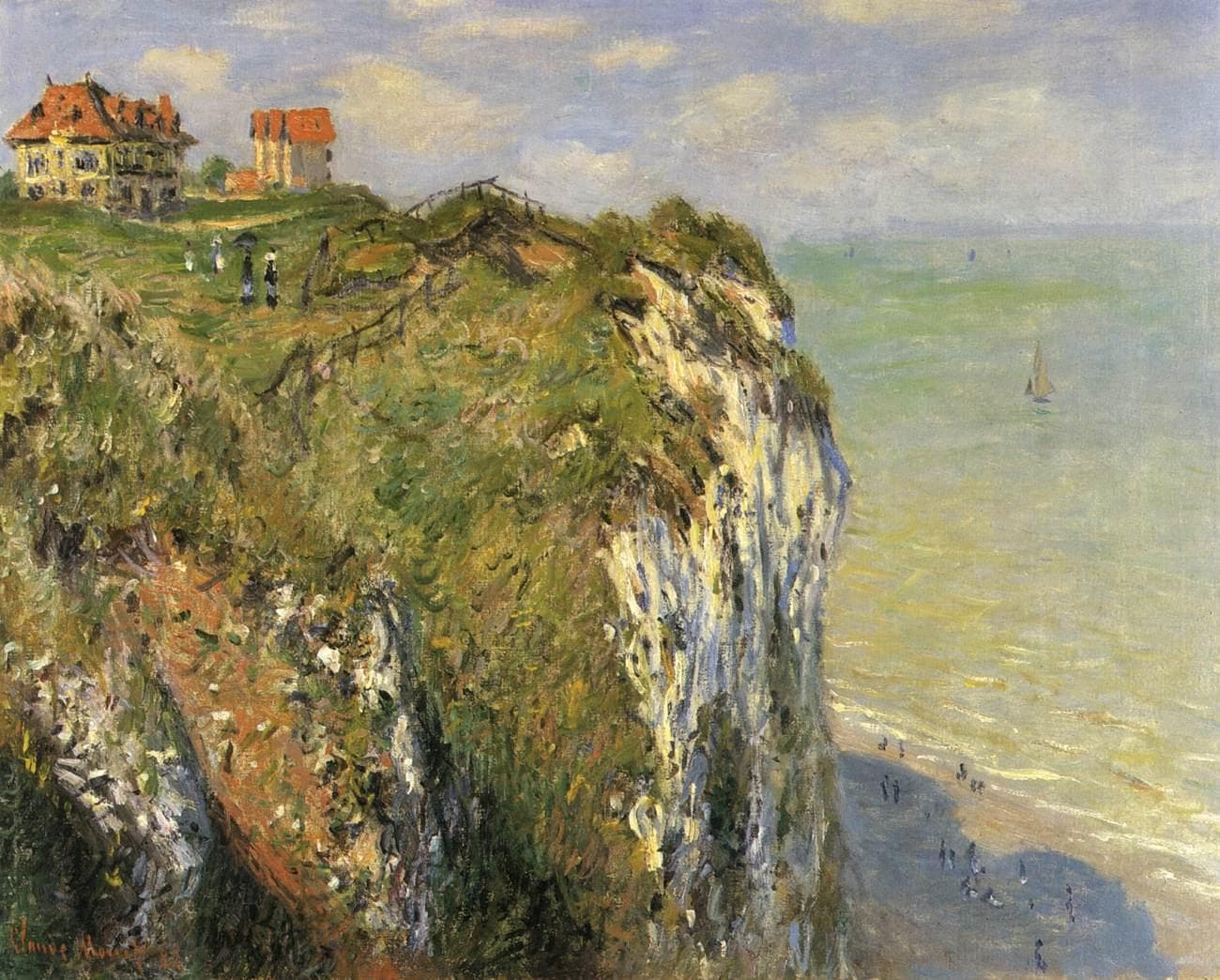
From the same weeks come Waves Breaking in San Francisco, with its single crashing breaker, and the Art Institute of Chicago's Boats Lying at Low Tide at Fécamp. The Le Havre canvas is distinctive for joining the towering cliff and the open, rain-swept sea in one view. A year later at Pourville and Varengeville, as in Edge of the Cliff at Pourville and Cliffs near Dieppe, Monet would move up onto the clifftops and look down on the sea.
Back to the sea
Monet had grown up on this coast, in Le Havre, and had painted at Sainte-Adresse, Honfleur and Trouville in the 1860s. After a decade on the Seine at Argenteuil and Vétheuil, the Fécamp trip of 1881 marks his return to the sea as a main subject. Over the next five years he would paint the Channel cliffs more than any other motif, culminating in the great Étretat campaigns of 1883–86. This stormy canvas is one of the first steps.
Where to see it
The painting is in the MuMa in Le Havre, the city where Monet grew up and where he painted Impression, Sunrise. The museum's collection of Impressionist and Post-Impressionist painting is one of the most important in France outside Paris. For other places to see Monet, see where to see Monet's paintings.
Questions & answers
Where is Monet's Fécamp, by the Sea?
It is in the MuMa – Musée d'art moderne André Malraux in Le Havre, Normandy (inventory 994.01).
When did Monet paint at Fécamp?
He worked at Fécamp in March and April 1881, staying several weeks longer than planned. This canvas is signed and dated '81.
What does Fécamp, by the Sea show?
It shows a rough gray-blue sea breaking onto rocks and shingle below a tall chalk cliff on the left, with a headland in the distance and a rainy sky opening to yellow light on the horizon.
Where is Fécamp?
Fécamp is a fishing port on the Normandy coast of France, between Étretat and Dieppe, known for its tall chalk cliffs. Monet painted there in 1881 and again in later visits to the coast.
More by the artist
Claude Monet
Bouquet of Sunflowers
Claude Monet · 1881
Stormy Sea
Claude Monet · c. 1881–84
Floating Ice on the Seine (Les Glaçons)
Claude Monet · 1880
Waves Breaking
Claude Monet · 1881
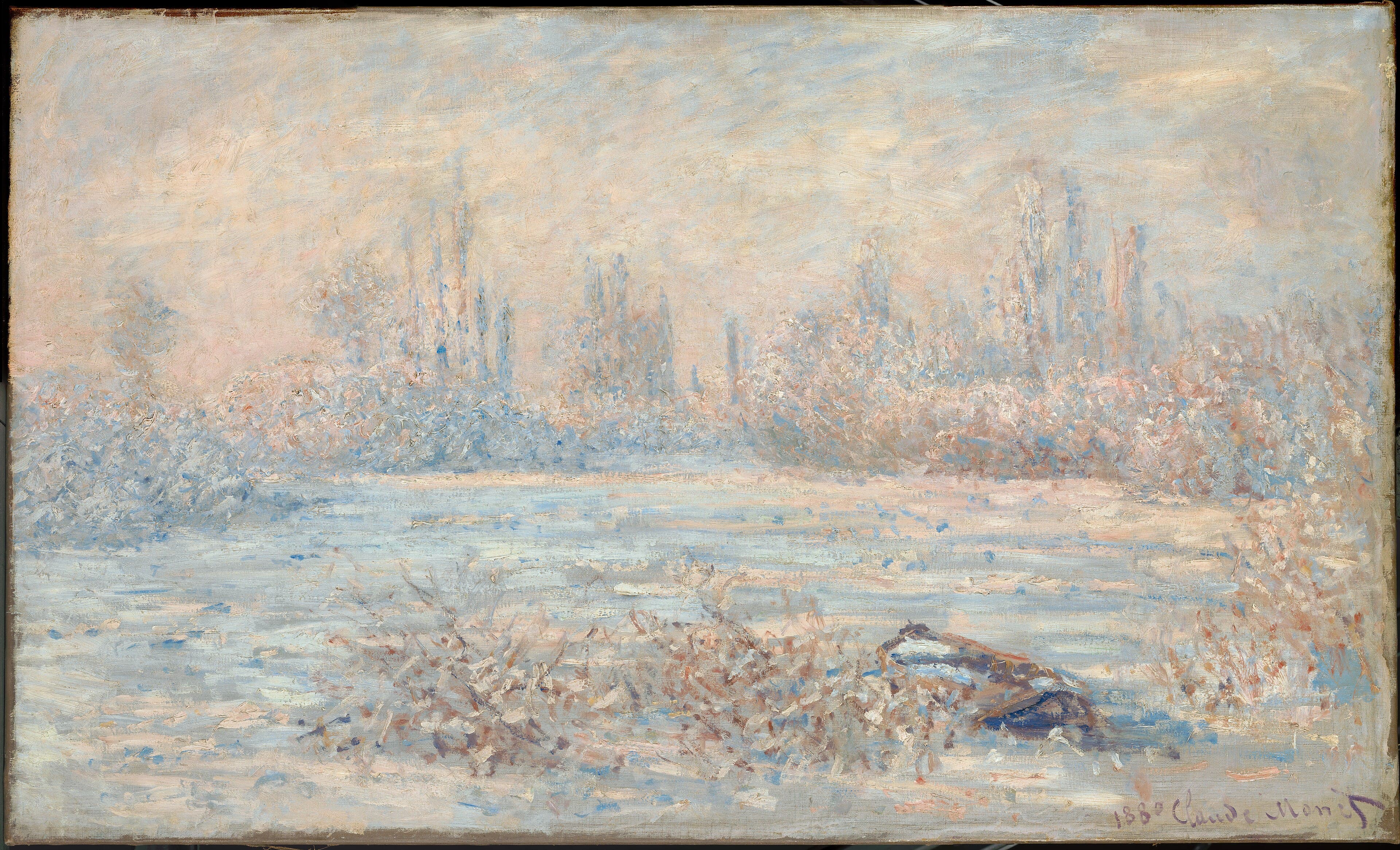
Frost (Le Givre)
Claude Monet · 1880
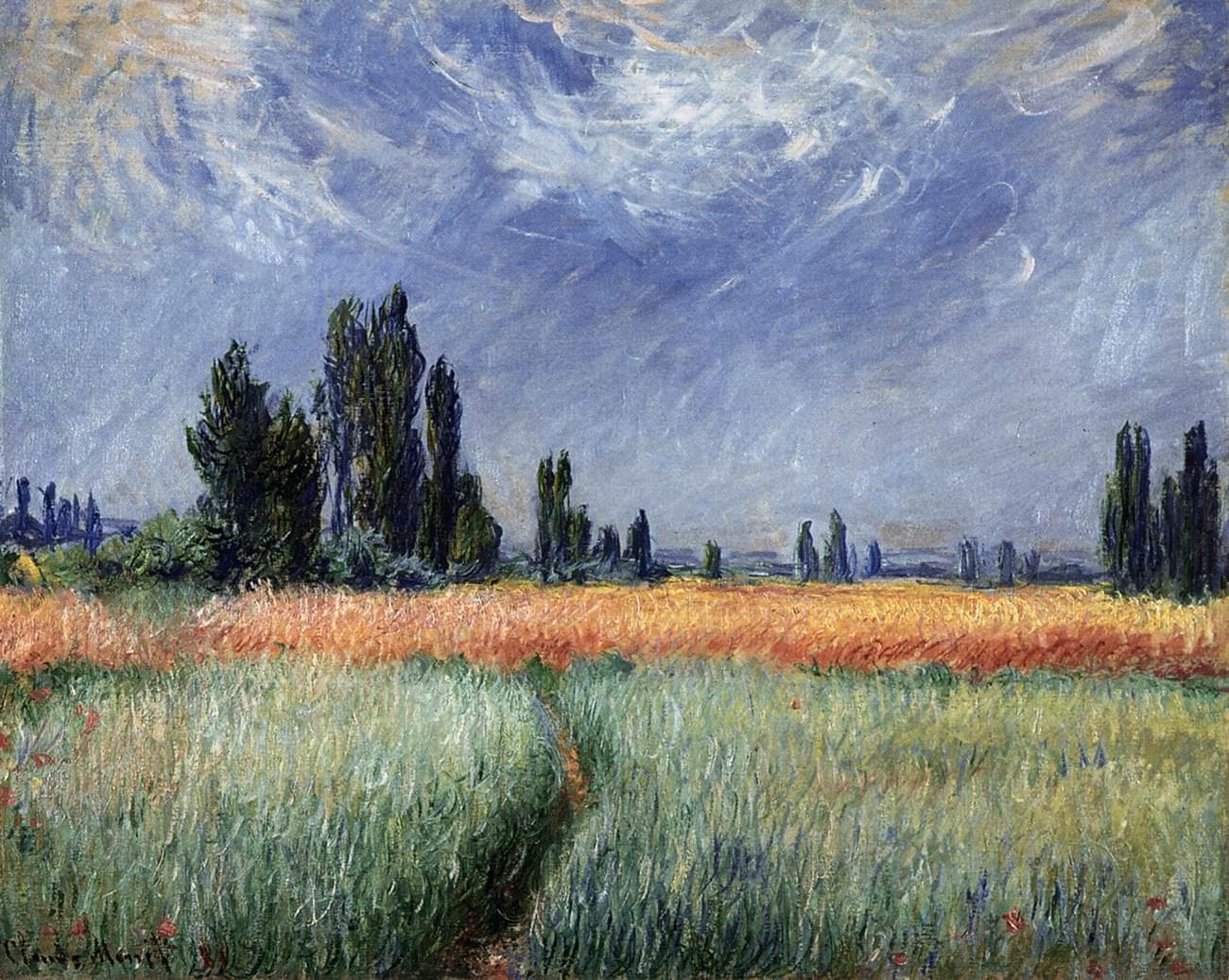
Wheat Field
Claude Monet · 1881
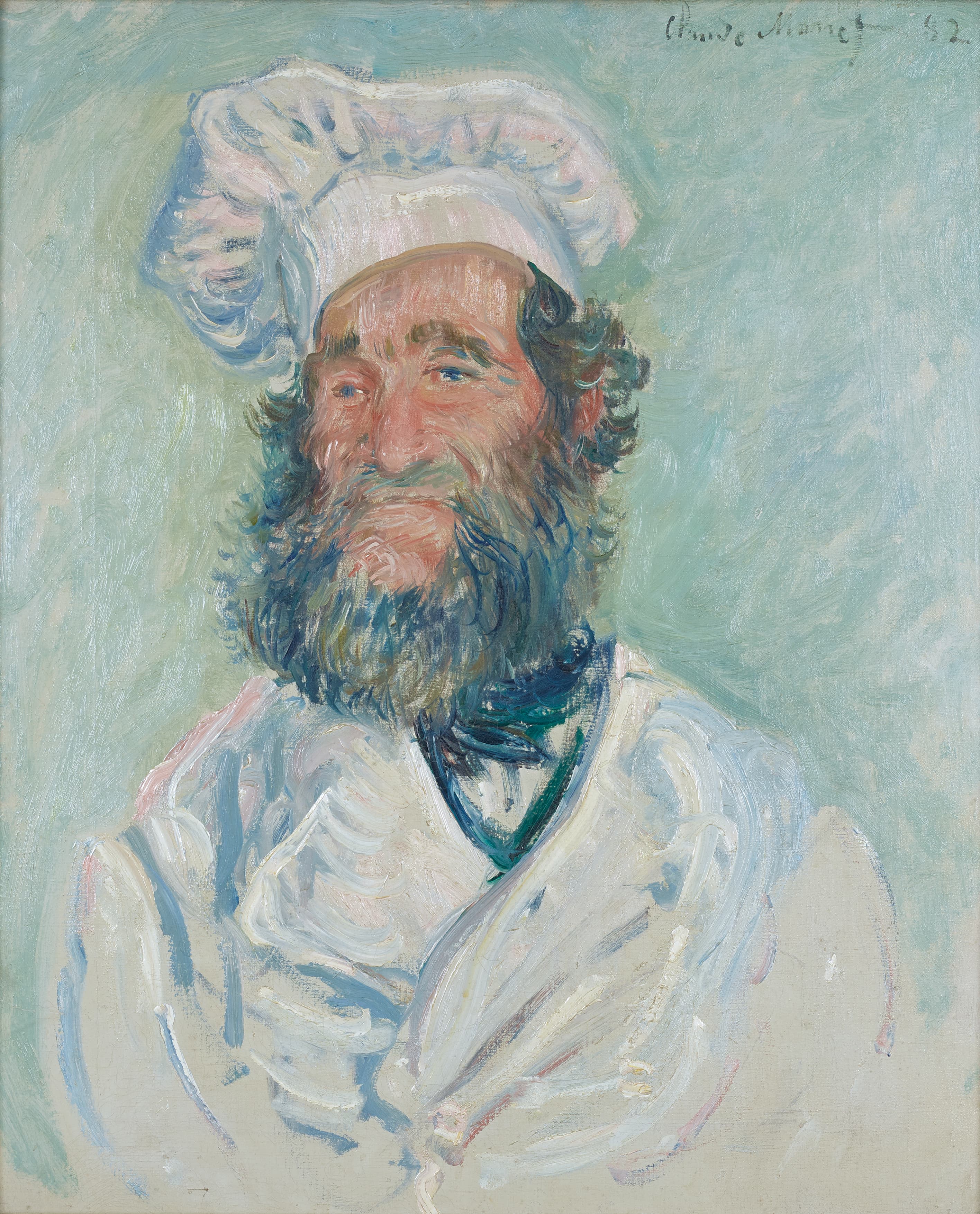
Portrait of Père Paul
Claude Monet · 1882
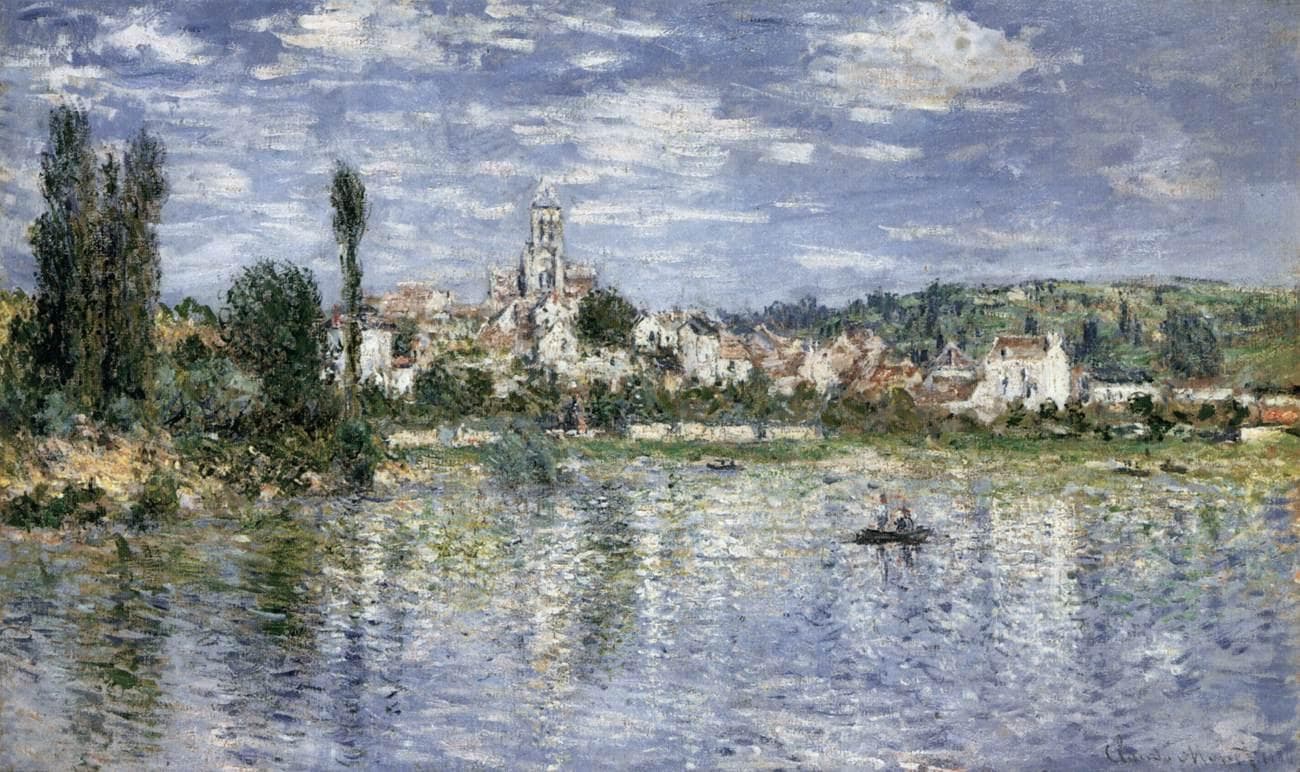
Vétheuil in Summer
Claude Monet · 1880
Also painted in 1881
The same year
Kindred works
You may also study
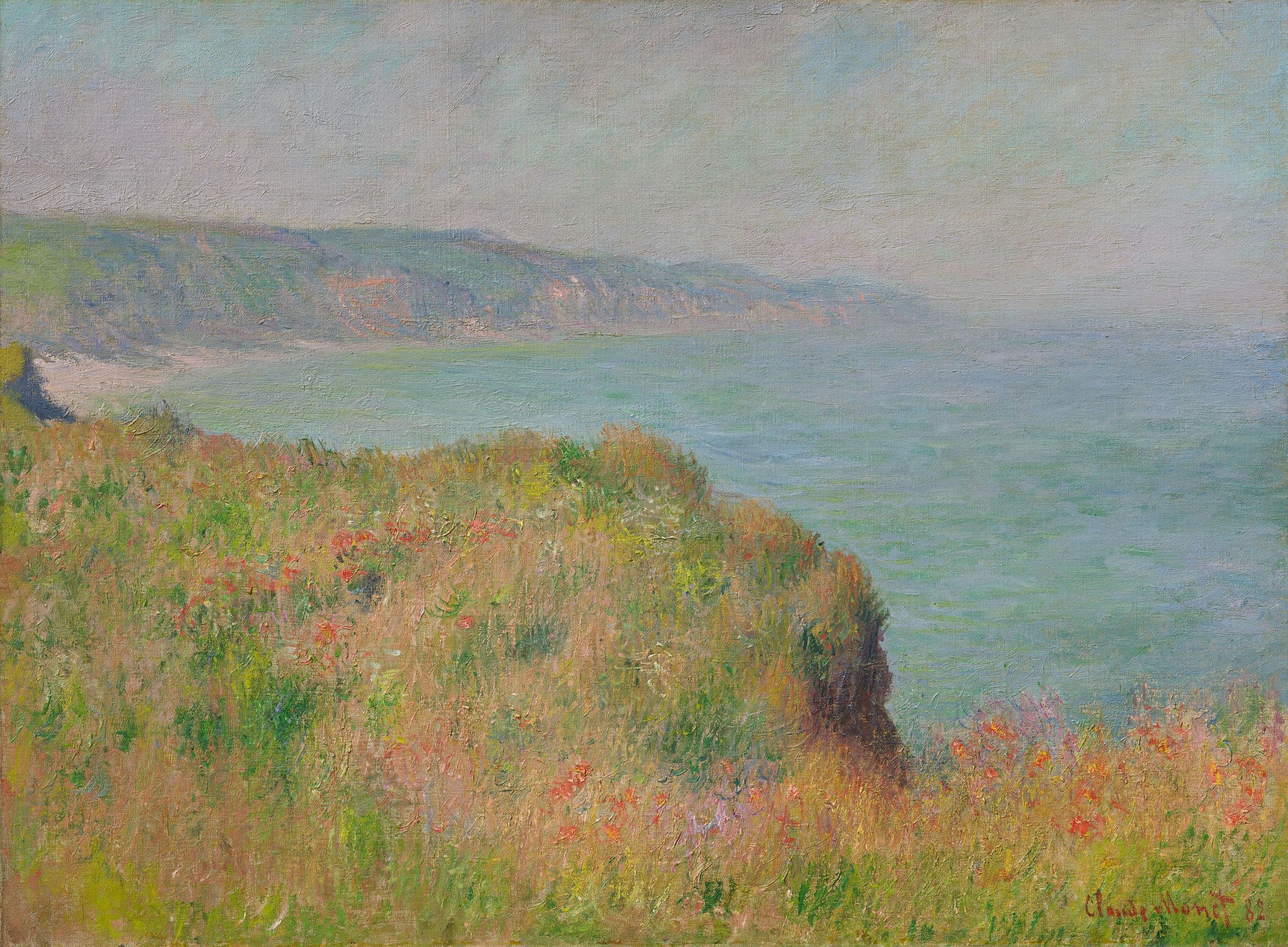
Edge of the Cliff at Pourville
Claude Monet · 1882
Cliffs near Dieppe
Claude Monet · 1882
Low Tide at Pourville, near Dieppe
Claude Monet · 1882
The Customs House, Afternoon Effect
Claude Monet · 1882
Argenteuil
Claude Monet · c. 1872
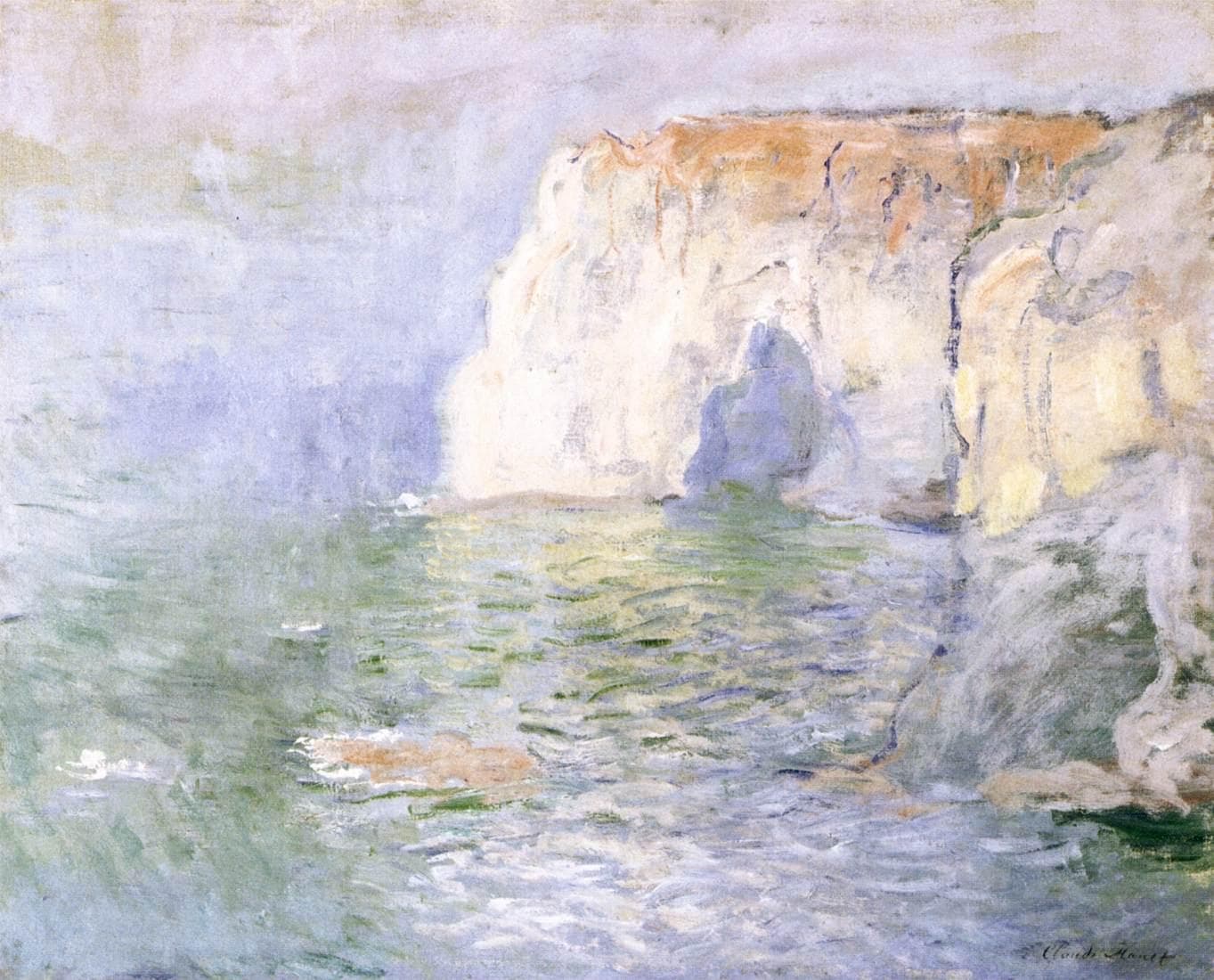
Étretat, the Manneporte, Reflections on the Water
Claude Monet · c. 1885

The Seine at Asnières (Hermitage)
Claude Monet · 1873
Arm of the Seine near Giverny, Rising Sun
Claude Monet · 1897