Image: Kunsthaus Zürich, donated by Walter Haefner, 1995 · Public domain · via Wikimedia Commons
Waterloo Bridge (Kunsthaus Zürich, 1902)
Claude Monet, 1902
Le Pont de Waterloo is a 1902 Claude Monet painting of the bridge almost lost in green-grey fog, a pool of orange sunlight blazing on the Thames below. It was given to the Kunsthaus Zürich by Walter Haefner in 1995.
- Artist
- Claude Monet
- Date
- 1902
- Medium
- Oil on canvas
- Dimensions
- 65 × 100 cm
- Collection
- Kunsthaus Zürich, Zürich, Switzerland
- Movement
- Impressionism
- Catalogue
- Wildenstein 1581
- The City
- Water & Sea
Le Pont de Waterloo (Waterloo Bridge) is one of Claude Monet's views of the Thames from the Savoy Hotel, signed and dated 1902 at lower right. It measures 65 × 100 cm and is number 1581 in the Wildenstein catalogue raisonné. The Zürich businessman and collector Walter Haefner gave it to the Kunsthaus Zürich in 1995 (inv. 1995/0002). Labels on the back record earlier loans, including one from the American collector Aline Barnsdall to the Santa Barbara Museum of Art.
What you're looking at
The fog here is thick and cold: grey-green, sage and pale lilac, filling the sky and lying heavy on the water. The bridge is barely distinguishable, a long, slightly darker band across the middle with the ghost of a few arches. Above it, at upper left, a faint vertical shape and a tracery of green strokes suggest a chimney or tower, and the right side holds the vague mass of a building.
The drama is a single pool of light. Just below the bridge, on the water, the sun's reflection blazes in short horizontal strokes of orange, red-gold and yellow, spreading across the center like burning coals. A small white sail floats inside it. The sun itself is invisible, hidden in the fog above, and the light is known only by its reflection.
That is what makes this version distinct: the contrast between almost monochrome grey-green fog and one concentrated patch of fiery color. It is a picture about a brief moment when the sun's glare struck the river.
Where and when it was painted
Monet stayed at the Savoy in 1899, 1900 and 1901, painting Waterloo Bridge in the mornings. The Kunsthaus catalogue notes how quickly the effects changed, forcing him to move to another canvas after only a few minutes; over forty versions of the bridge are known. He finished and dated this one at Giverny in 1902.
How it was painted
The fog is built from dense, close-toned strokes laid over one another until forms disappear. The reflection is applied on top, thickly, in short, parallel horizontal dabs of pure warm color. That technique, a cool, uniform field broken by a single area of hot impasto, makes the light seem to glow from inside the canvas.
How this version differs
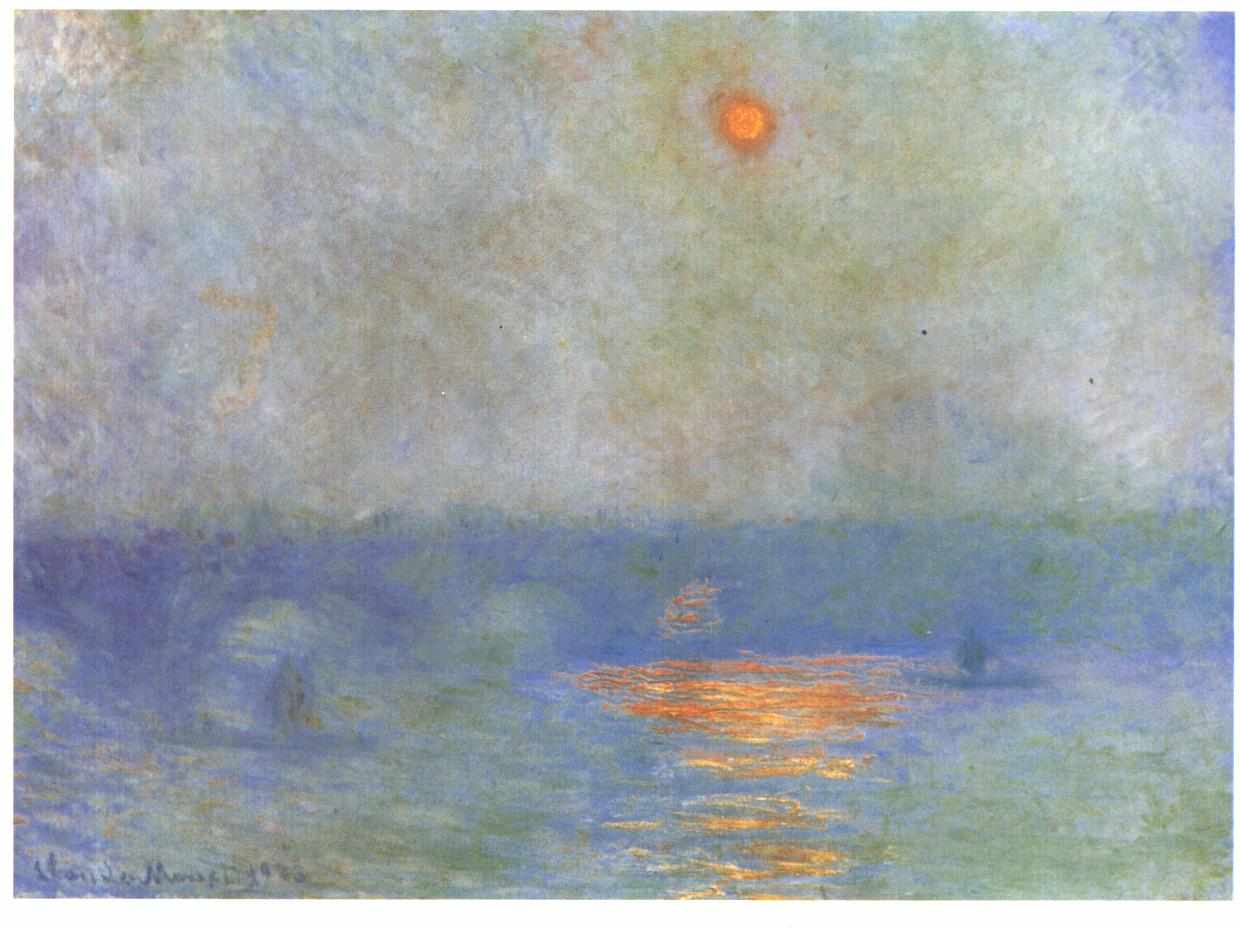
In the Waterloo Bridge series, the closest parallels are the National Gallery of Canada's Waterloo Bridge: the Sun in a Fog, where the orange path of light descends from a visible red sun, and the Hermitage's violet Waterloo Bridge, Effect of Fog. The Tokyo Waterloo Bridge in London, dated the same year, is its pale, pink opposite.
Monet's view from the Savoy
The Savoy Hotel, opened in 1889 on the north bank of the Thames between Charing Cross and Waterloo, offered Monet exactly what he needed: a high, sheltered viewpoint over the river, looking upstream to Charing Cross Bridge and the Houses of Parliament and downstream to Waterloo Bridge. He stayed in rooms on the fifth or sixth floor and worked from the balcony and windows. Waterloo Bridge lay to the east, so in the morning he looked toward the rising sun. That orientation explains why so many Waterloo Bridge canvases, like this one, show light breaking through fog from beyond the bridge.
Where to see it
The Kunsthaus Zürich holds one of the strongest Monet collections in Switzerland, including water lilies and, on loan from the Bührle Foundation, the Waterloo Bridge, London, Sun Effect. This canvas is not always on display. For more, see Monet in London, where to see Monet's paintings and Claude Monet.
Walter Haefner, a Swiss businessman and collector of Impressionist painting, gave the canvas to the Kunsthaus in 1995. Before that, labels on the back show, it belonged to the American oil heiress and patron Aline Barnsdall, who lent it to the Santa Barbara Museum of Art, and it traveled to the major Monet exhibition Monet in the 20th Century in Boston and London in 1998–99.
Questions & answers
Where is Monet's Le Pont de Waterloo in Zürich?
It is in the Kunsthaus Zürich (inv. 1995/0002), donated by Walter Haefner in 1995. It is not always on display; the Kunsthaus also shows a Bührle Foundation Waterloo Bridge on long-term loan.
When was it painted?
It is signed and dated 1902. Monet began the Waterloo Bridge pictures at the Savoy Hotel in London in 1899–1901 and finished them in his studio at Giverny. It is Wildenstein number 1581.
What does the painting show?
Waterloo Bridge almost lost in grey-green fog, with a blaze of orange and gold sunlight reflected on the Thames just below it and a small white sail in the light.
How many Waterloo Bridge paintings did Monet make?
More than forty versions are known. The Kunsthaus notes that the effects changed so fast Monet often had to switch canvases after only a few minutes.
More by the artist
Claude Monet
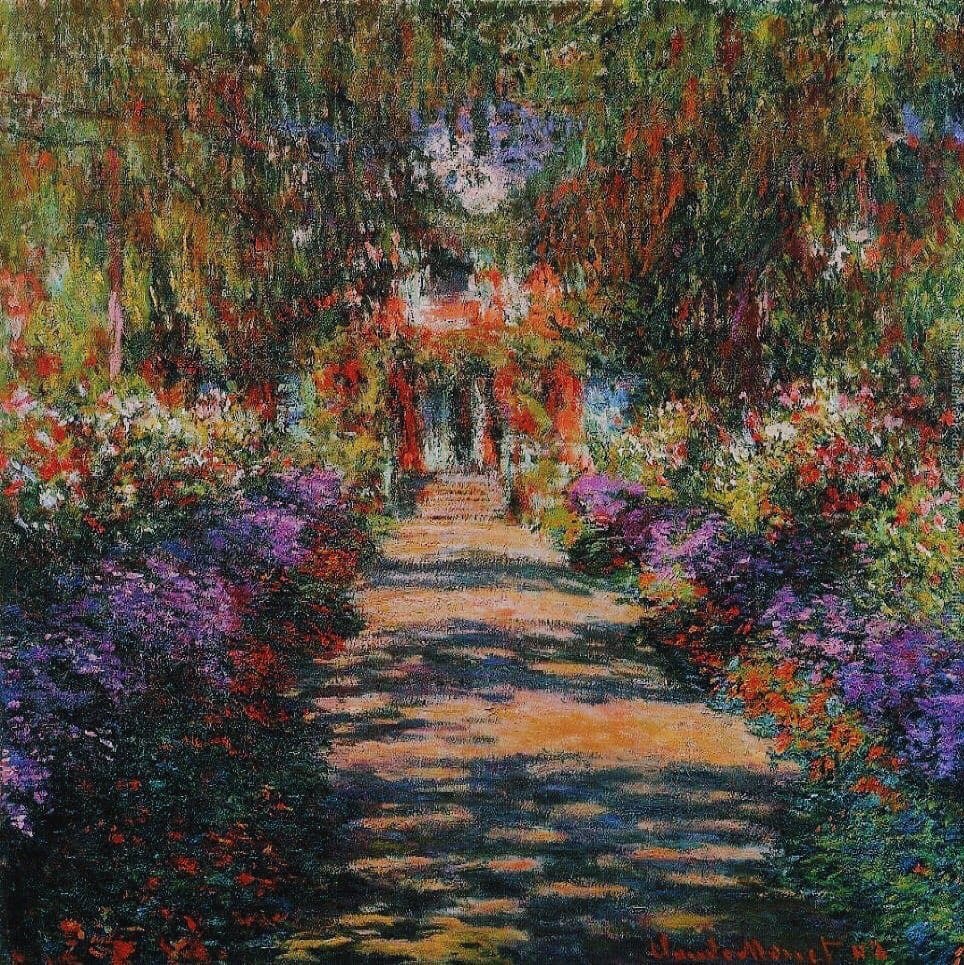
The Garden Path at Giverny
Claude Monet · 1902
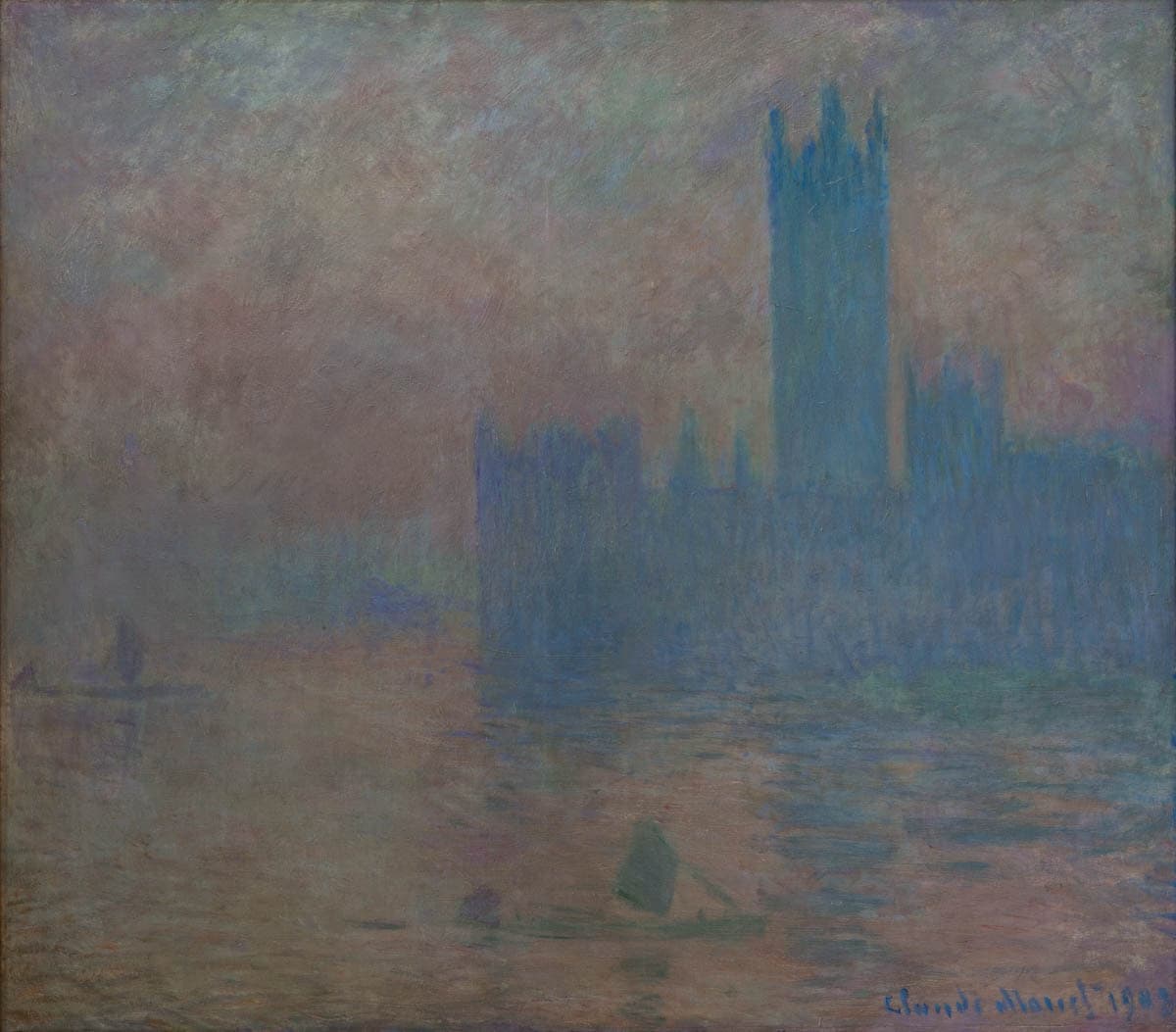
Le Parlement de Londres, effet de brouillard
Claude Monet · 1903
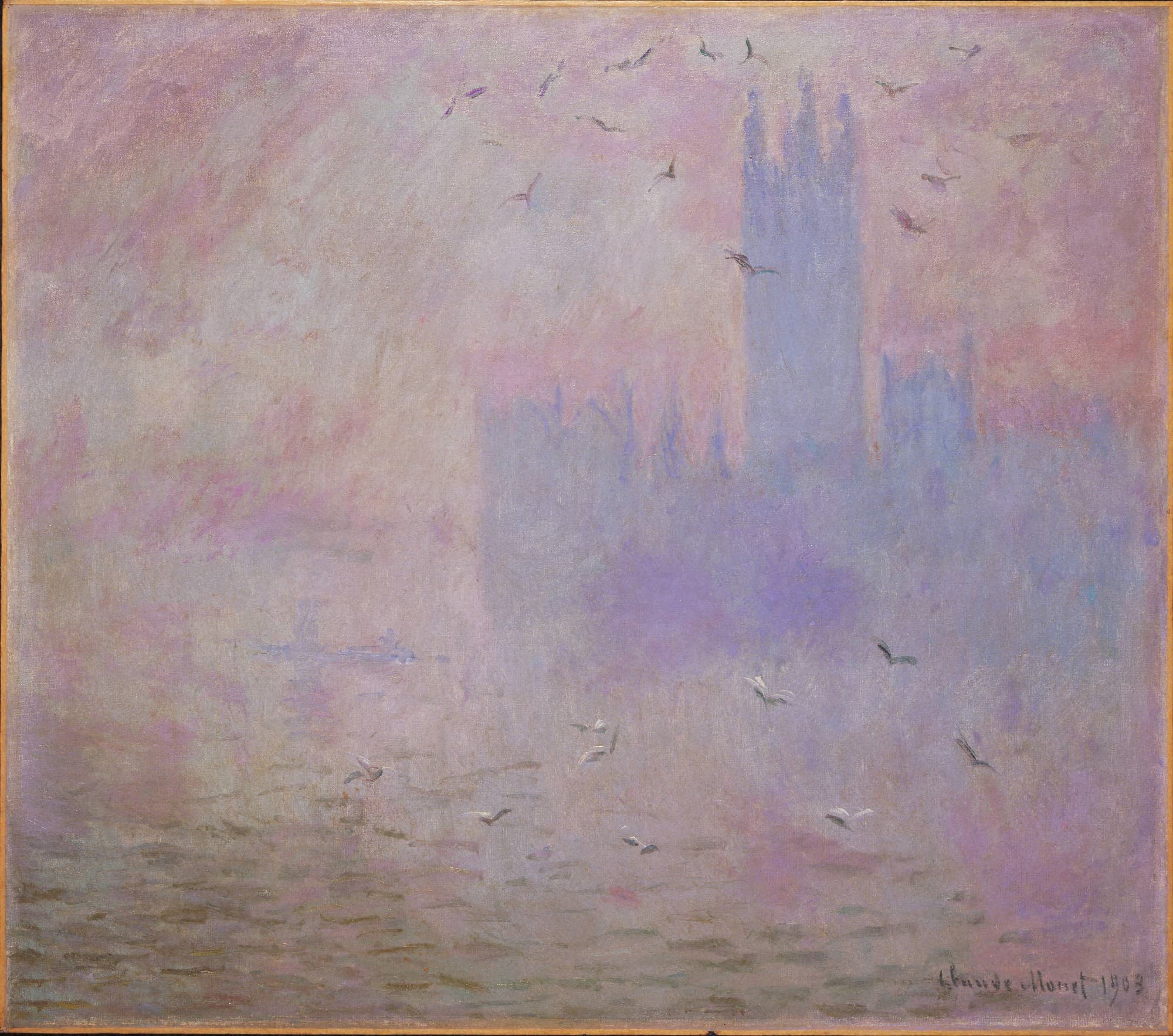
The Houses of Parliament, Seagulls
Claude Monet · 1903
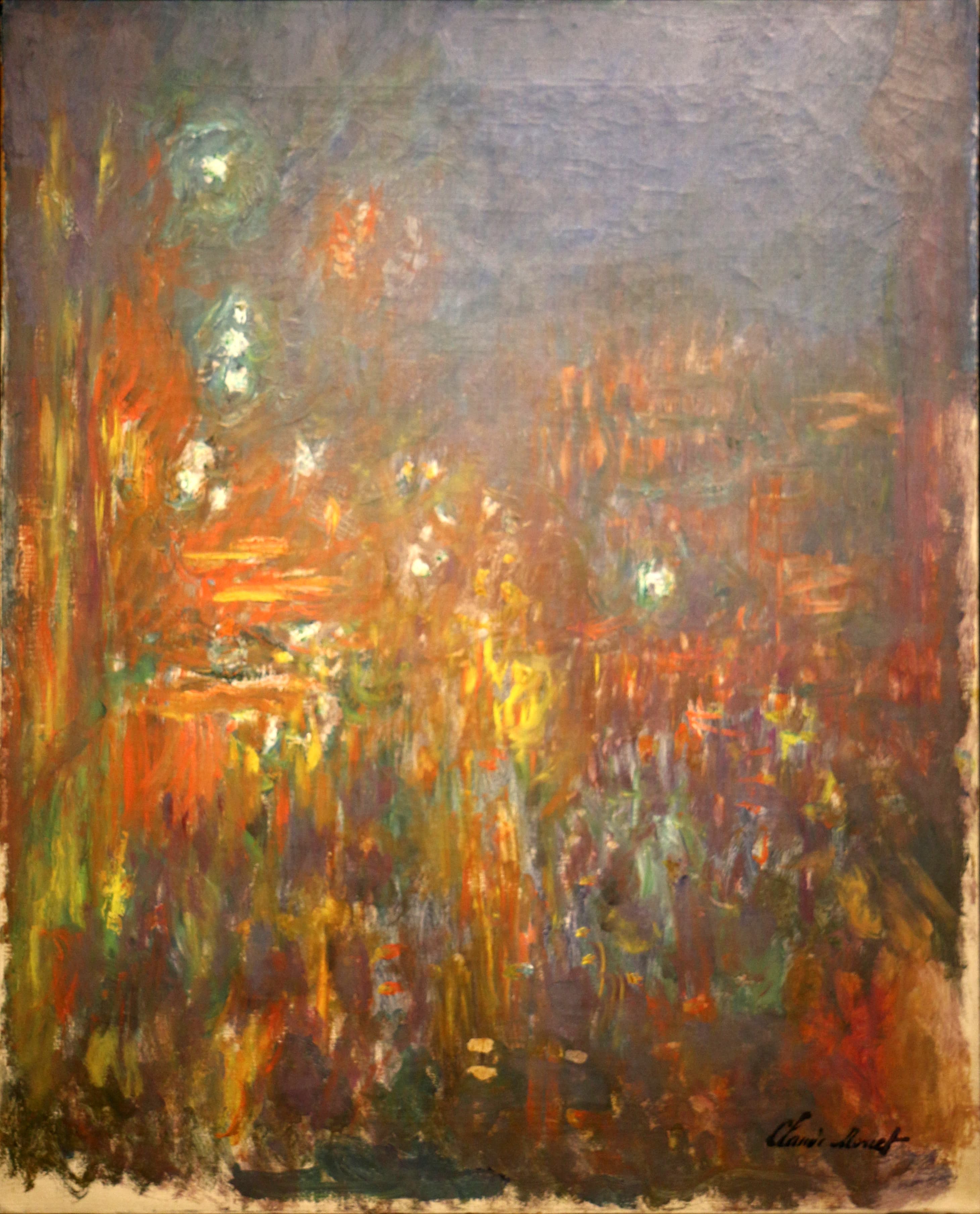
Leicester Square, by Night
Claude Monet · 1901
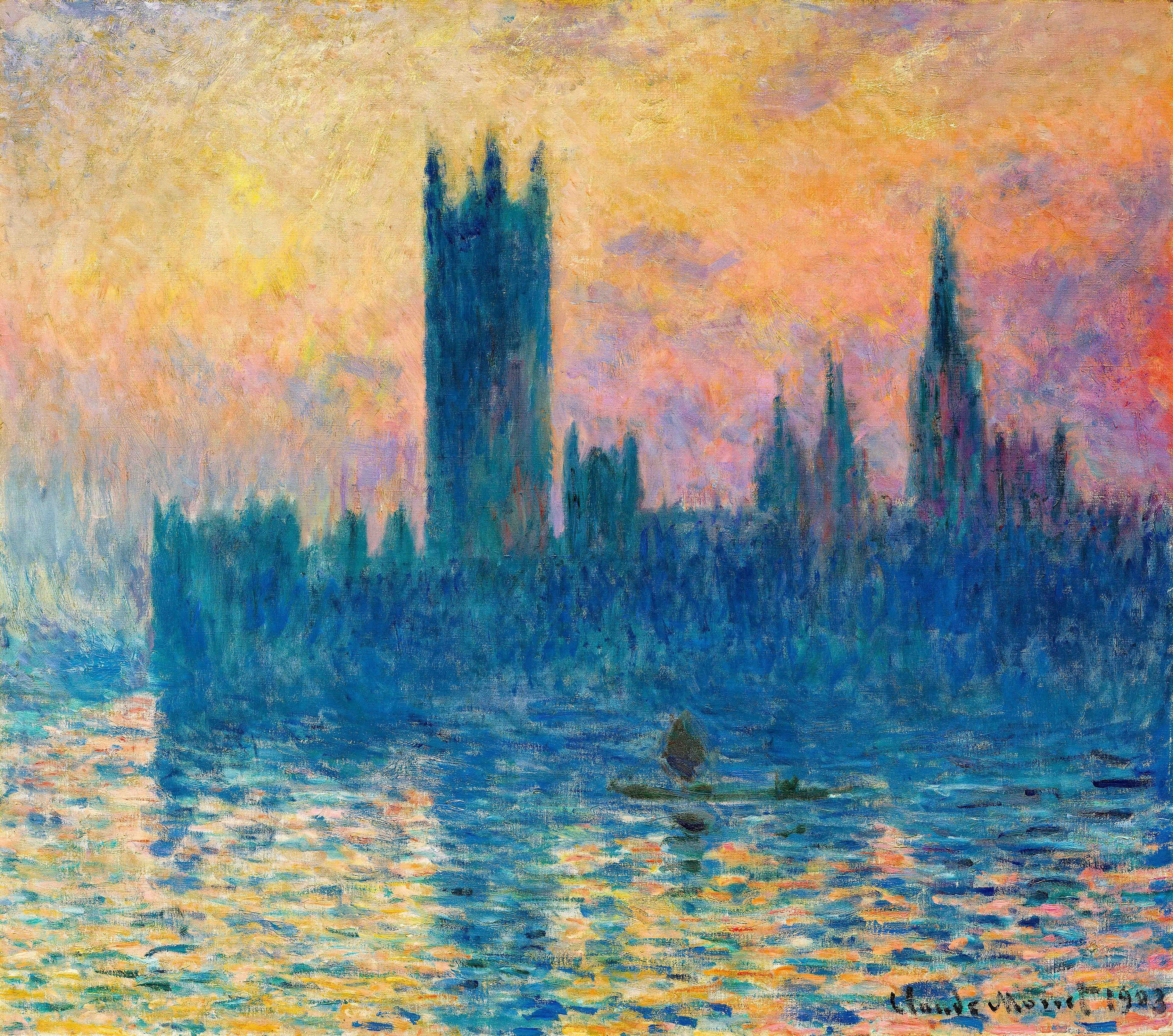
The Houses of Parliament, Sunset
Claude Monet · 1903
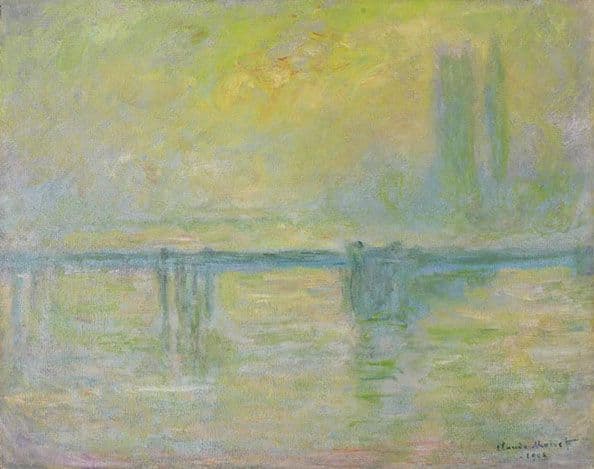
Charing Cross Bridge, Fog
Claude Monet · 1902–03
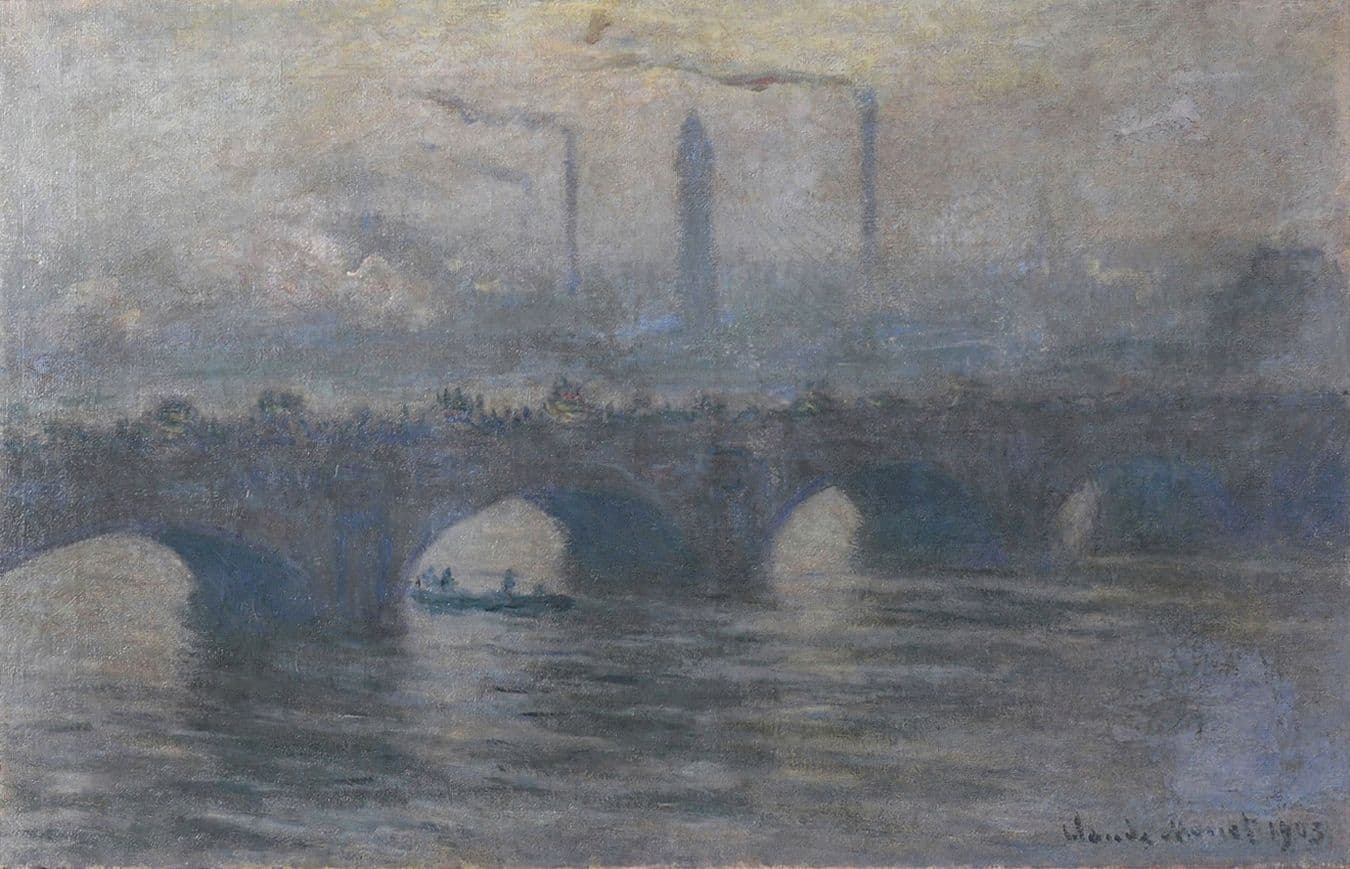
Waterloo Bridge, Gray Weather (Gurlitt Bequest)
Claude Monet · 1903
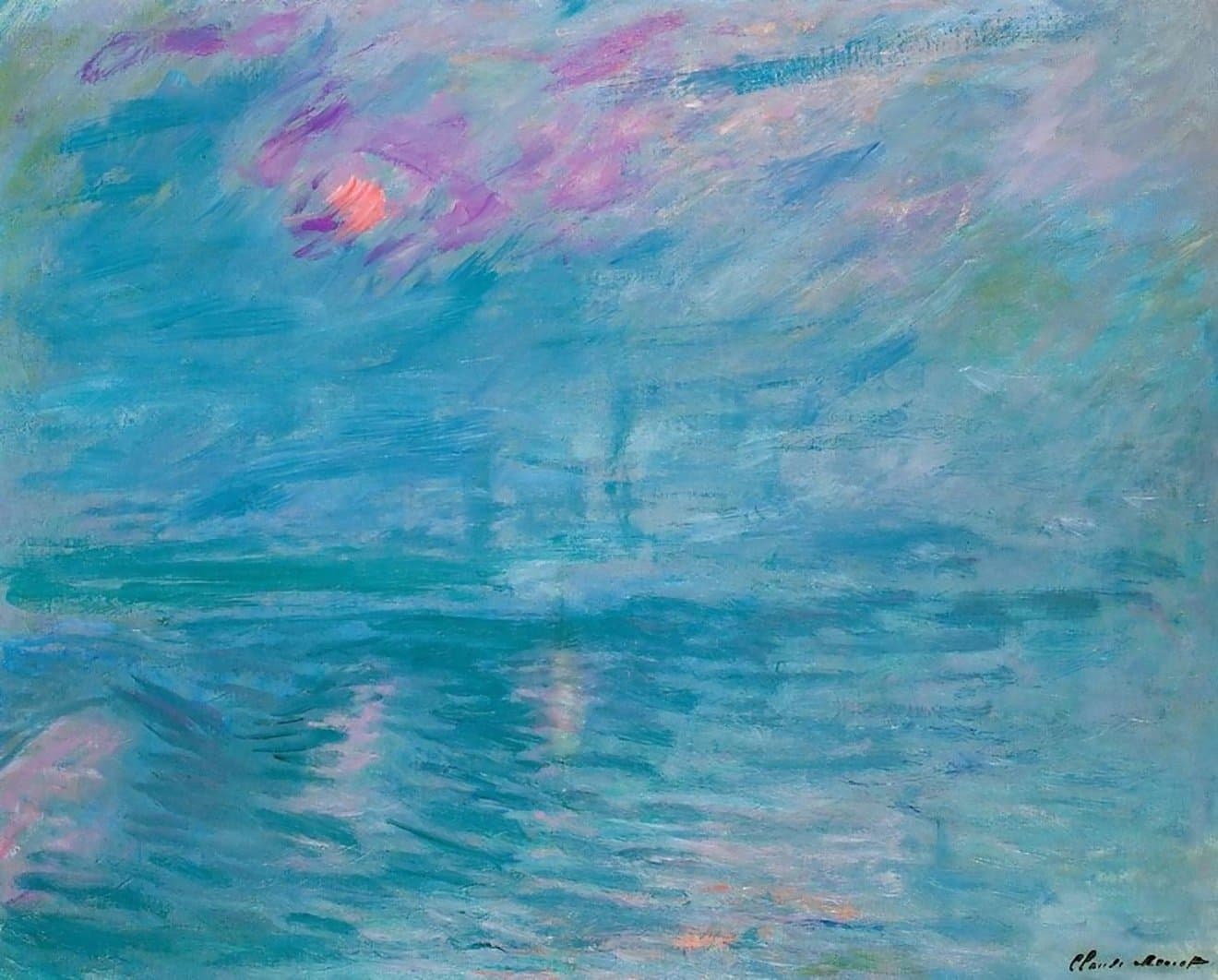
Waterloo Bridge (Davis Museum)
Claude Monet · 1899–1903
Also painted in 1902
The same year
Kindred works
You may also study
Waterloo Bridge: the Sun in a Fog
Claude Monet · 1903
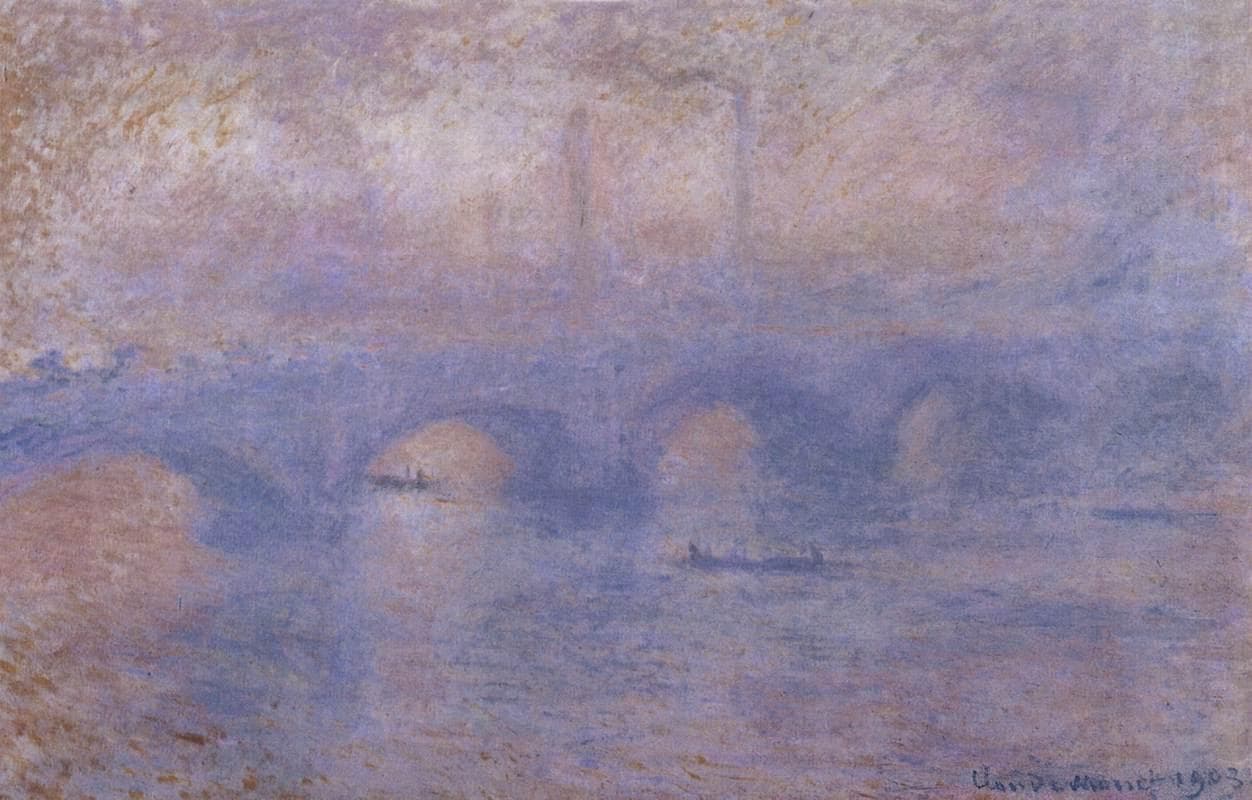
Waterloo Bridge, Effect of Fog
Claude Monet · 1903
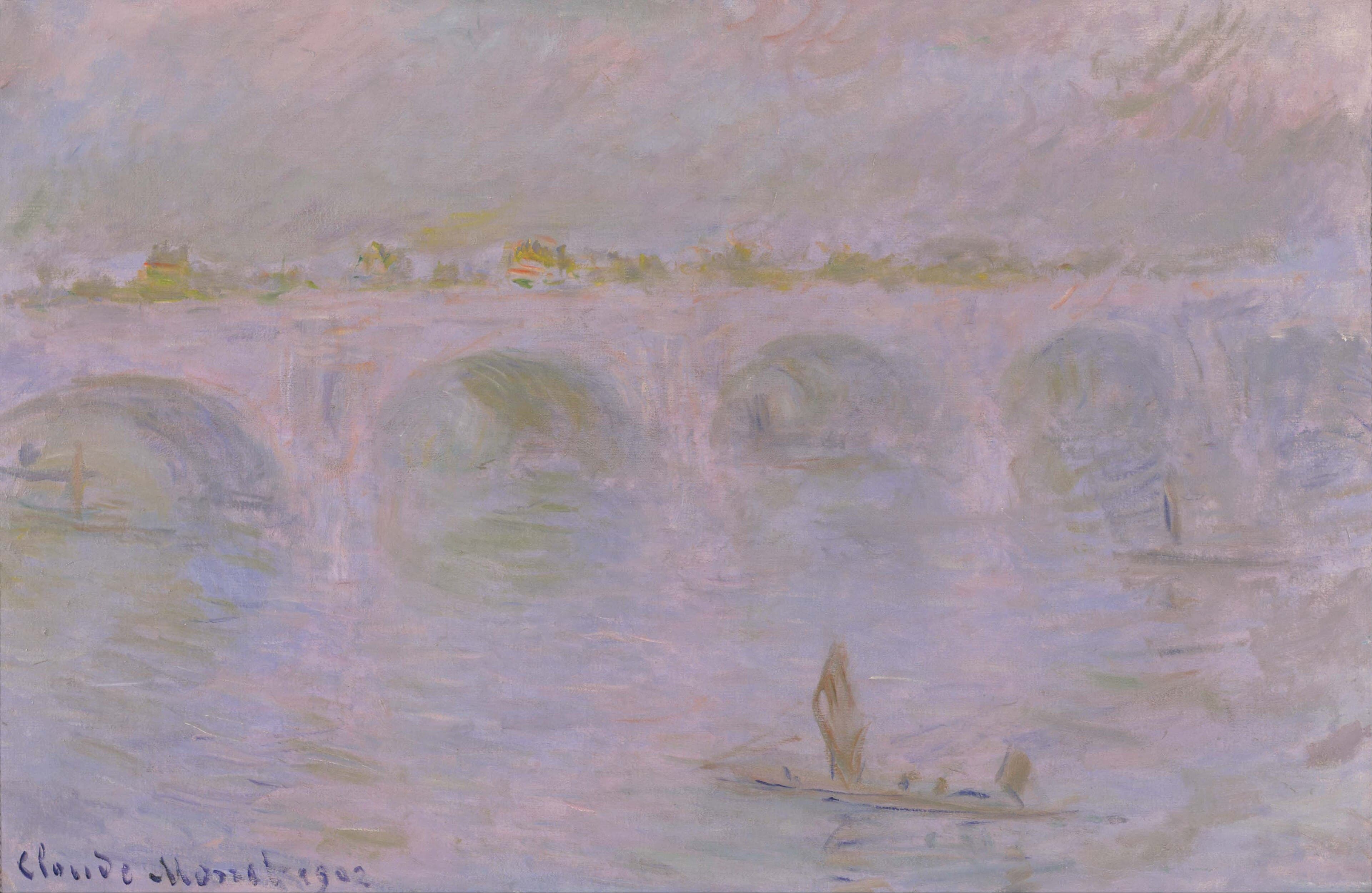
Waterloo Bridge in London
Claude Monet · 1902
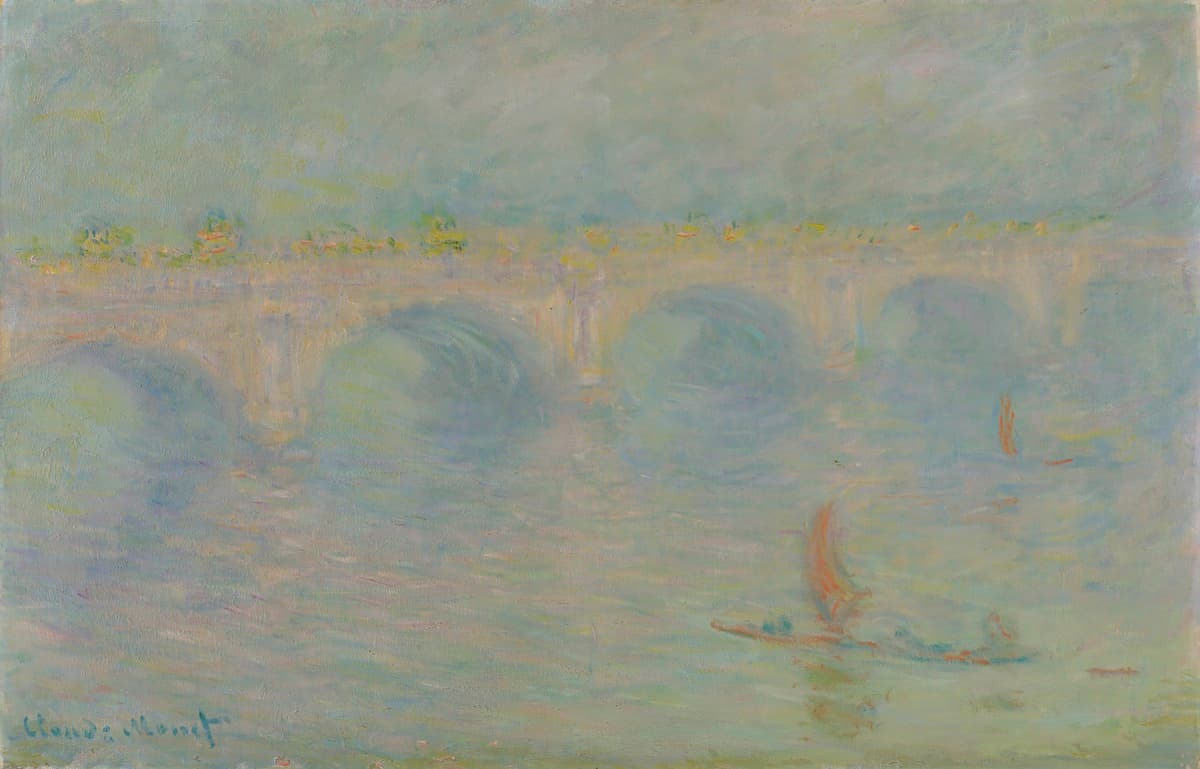
Waterloo Bridge, London, Sun Effect
Claude Monet · 1899–1901
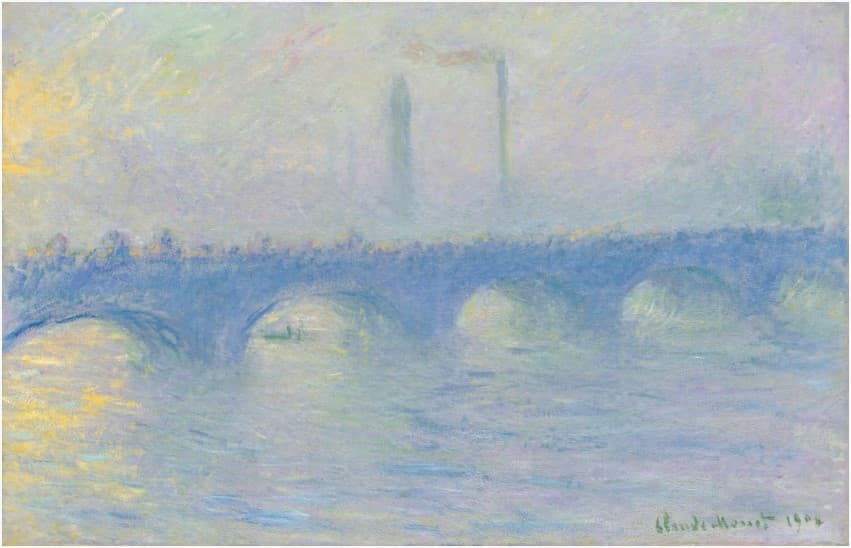
Waterloo Bridge, effet de brume
Claude Monet · 1904
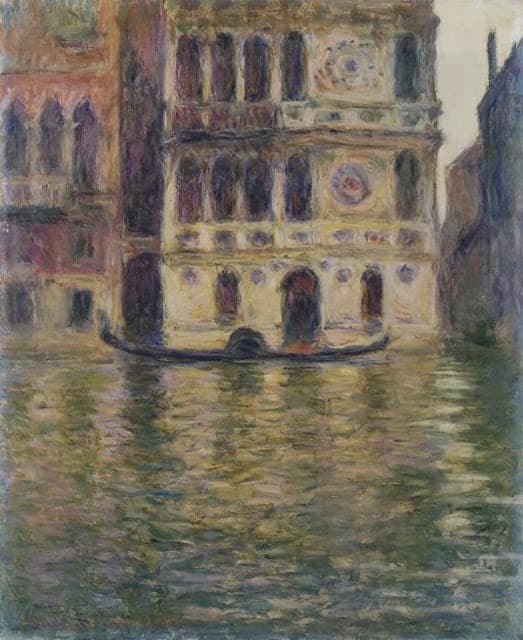
Palazzo Dario
Claude Monet · 1908
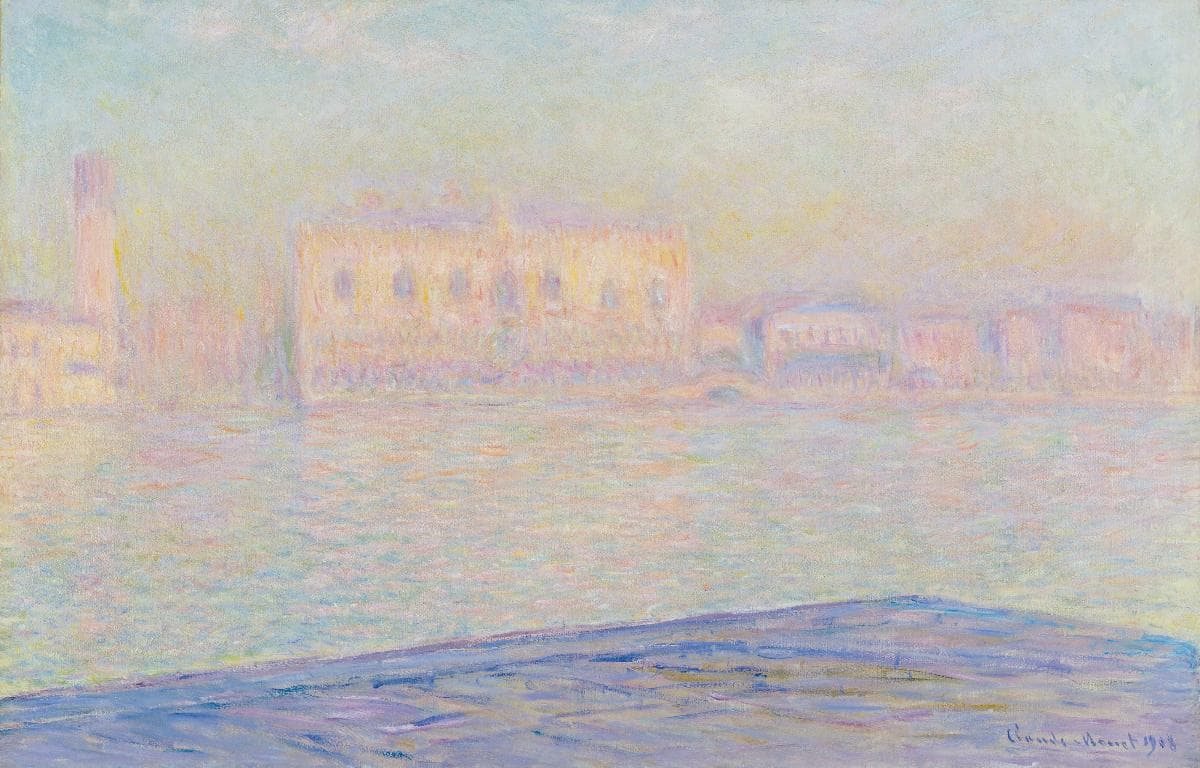
The Doge's Palace Seen from San Giorgio Maggiore (Zürich)
Claude Monet · 1908
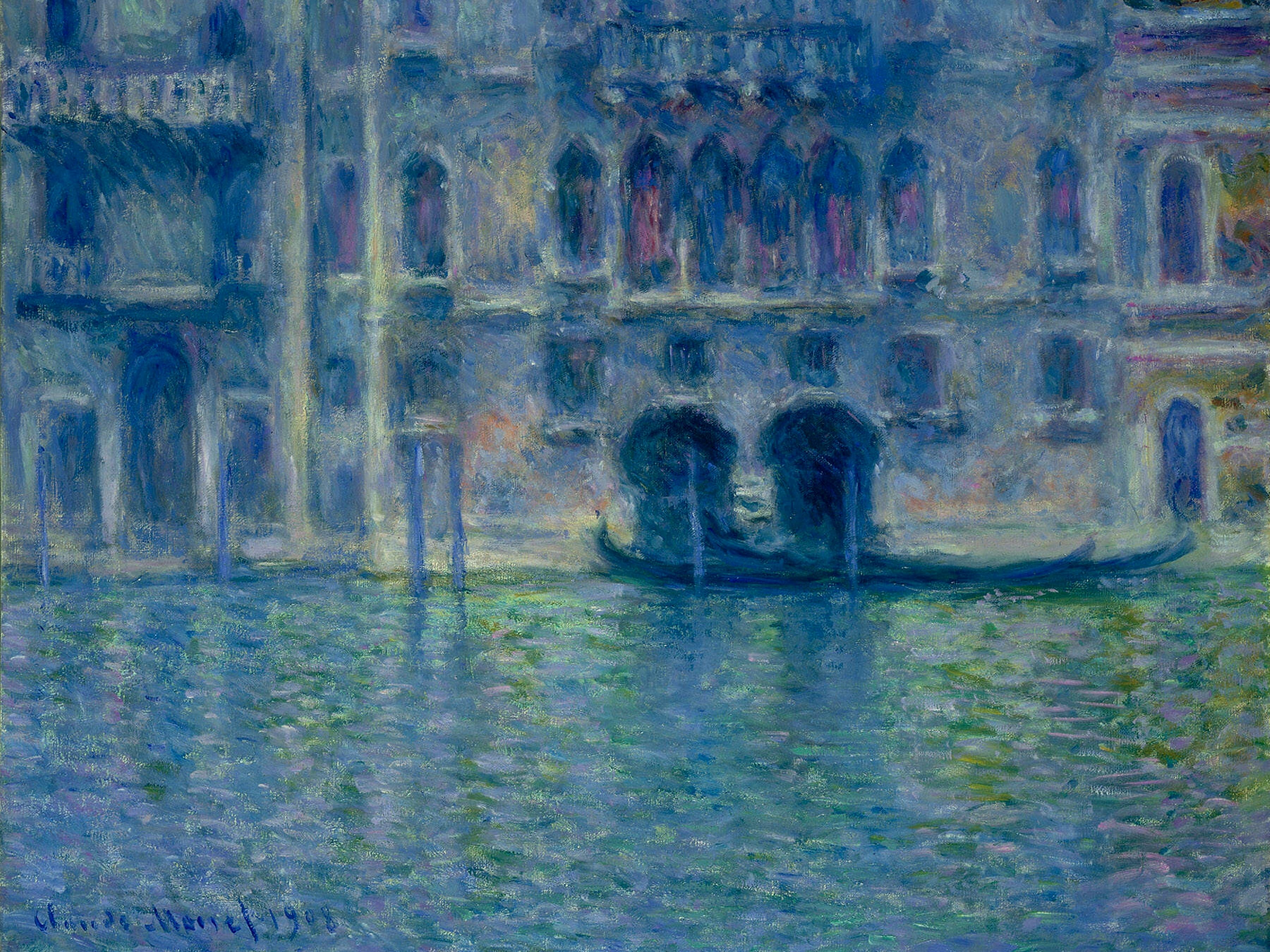
Palazzo da Mula, Venice
Claude Monet · 1908