Impressionism
The Red Kerchief (The Red Cape)
Claude Monet, c. 1868–73
The Red Kerchief (La Capeline rouge), also called The Red Cape, is a painting by Claude Monet of about 1868–73 showing his wife Camille passing a snowy window in a red hood. It is in the Cleveland Museum of Art.
- Artist
- Claude Monet
- Date
- c. 1868–73
- Medium
- Oil on canvas
- Dimensions
- 99 × 79.8 cm
- Collection
- Cleveland Museum of Art, Cleveland, United States
- Movement
- Impressionism
- Catalogue
- Wildenstein 257
What you are looking at
We stand inside a dim room and look out through a pair of glazed French doors. Muslin curtains, tied back and heavy with gray-white paint, frame the opening like the wings of a stage. Outside lies a garden under snow, and a single figure crosses the view: Camille Monet, the painter's wife, wrapped in a dark coat with a scarlet hood drawn over her head. She turns her pale face toward us as she passes. The central glazing bar of the doors runs straight through her body, so she seems caught between two panes, half here and half already gone.
That red hood is almost the only saturated color in the canvas. Everything else is a range of browns, grays and snow whites, which is why the eye goes straight to her face and then cannot settle. Behind her, a dark evergreen shrub is spotted with white where snow has caught on its branches, and a strip of snowy ground glows between the posts of the door.
A portrait that refuses to be one
Claude Monet painted Camille many times, from the full-length Camille (Woman in Green Dress) of 1866 to Camille Monet on Her Deathbed in 1879. This is the strangest of those pictures. The sitter is small, distant, glimpsed through glass and partly blocked by the door frame. The real subject is the act of looking: the dark interior, the bright exterior, and the moment of recognition that passes between them.
The format reinforces the idea. The canvas is upright, almost a meter tall, and the doors fill it nearly edge to edge, so the frame of the picture and the frame of the window become the same thing. We are placed exactly where Monet stood, on the bare boards of the room, at a slight distance from the glass.
When and where was it painted?
The date is not fixed. The Cleveland Museum of Art gives c. 1868–73, and the Wildenstein catalogue raisonné lists the picture as W.257 among Monet's works of 1868. Scholars have argued both for that early date, when Monet, Camille and their infant son Jean spent the winter of 1868–69 on the Normandy coast at Étretat, and for a later winter at Argenteuil, where the family settled at the end of 1871. Neither house is securely identified in the picture, so the honest answer is that the setting is a family home in winter, somewhere in those few years.
Either way, it belongs to the period when Monet was teaching himself to paint snow. The great example is The Magpie of 1868–69, in which shadows on snow turn blue and violet; the Argenteuil winters that followed are gathered on our Monet at Argenteuil page.
How it was painted
Look first at the curtains. Monet builds them with long, dragged strokes of chalky white over a gray ground and lets the weave of the canvas show through, so they read as thin fabric with light behind it. Where they gather at the tiebacks, the strokes twist into loops, a few quick turns of the wrist.
The snow beyond is warmer than the curtains, flecked with cream, and the shrub at left is a mass of green dabs with white laid on top, the way snow actually sits on leaves. The figure is painted with very little: a black wedge for the coat, a few strokes of red for the hood, a pale oval face with two dark marks for eyes. Yet the turn of the head is unmistakable. A gleam of brass on the door handle, one small dab of ocher, is the kind of detail most viewers never notice.
At the bottom, the wooden floor is scraped in quick parallel strokes of brown and buff. It pulls us back into the room and reminds us that we are inside, warm, looking out at someone who is not.
Why Monet kept it
Monet never sold this painting. It stayed with him for the rest of his life and passed to his son Michel after his death in 1926, then to the couturier Edward Molyneux, and was bought by the Cleveland collector Leonard C. Hanna Jr., who bequeathed it to the museum in 1958. The fact that Monet held on to it has encouraged a tender reading: a record of Camille seen from inside the family home, painted for himself rather than for the market.
That reading is a later interpretation, not something Monet wrote down. But it fits the picture's mood, and it gains weight in hindsight, since Camille died young, in 1879. Compare the way he keeps her at a distance in Camille Monet on a Garden Bench of 1873, another portrait in which she seems absorbed in her own thoughts.
Where to see it
The Red Kerchief is in the Cleveland Museum of Art in Ohio (accession 1958.39). Cleveland is not one of the museums with its own hub in this archive; for the full list of collections holding Monet's work, see Where to See Monet's Paintings. More portraits of women from across the catalogue are gathered in Famous Paintings of Women.
Questions & answers
Where is Monet's The Red Cape today?
The painting, catalogued as The Red Kerchief (La Capeline rouge), is in the Cleveland Museum of Art in Ohio (accession 1958.39). It came to the museum in 1958 as part of the bequest of Leonard C. Hanna Jr. Monet had kept it until his death, after which it passed to his son Michel. Check the museum's website for current gallery display.
Who is the woman in The Red Cape?
She is Camille Doncieux, Monet's first wife and his most frequent model. She passes outside a window in a snowy garden, wrapped in a dark coat with a red hood, and turns to look in at the painter. Monet kept the picture all his life, which suggests it had personal value for him.
When and where was The Red Kerchief painted?
The date is uncertain. The Cleveland Museum of Art dates it c. 1868–73, and the Wildenstein catalogue (W.257) places it in 1868. Some scholars connect it with the family's winter on the Normandy coast in 1868–69, others with a winter at Argenteuil after the Monets moved there in late 1871.
What does The Red Cape mean?
Monet left no statement about it. Most writers read it as a private picture about looking: a dark room, a bright snowy garden, and a glance exchanged through glass. The glazing bar that cuts through Camille, and the fact that Monet never sold the canvas, have encouraged a reading of it as an intimate image of family life.
More by the artist
Claude Monet

Bridge over a Pond of Water Lilies
Claude Monet · 1899

Woman with a Parasol – Madame Monet and Her Son
Claude Monet · 1875

Sunset in Venice
Claude Monet · 1908–12

La Grenouillère
Claude Monet · 1869

Beach in Pourville
Claude Monet · 1882

Springtime
Claude Monet · 1872

Boating on the River Epte
Claude Monet · 1890

The Seine at Asnières (Hermitage)
Claude Monet · 1873
Also painted in 1870
The same year
Kindred works
You may also study
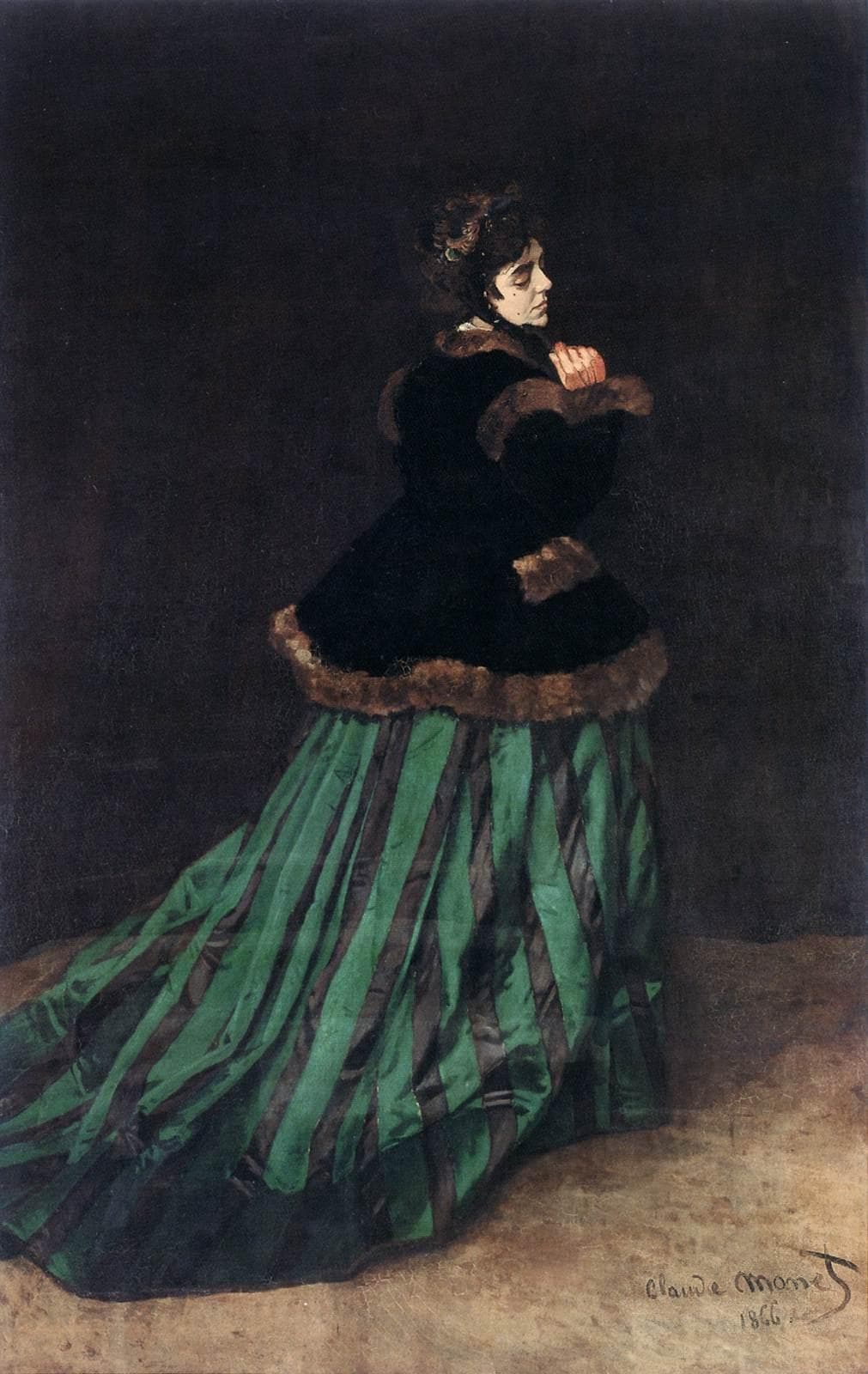
Camille (The Woman in the Green Dress)
Claude Monet · 1866
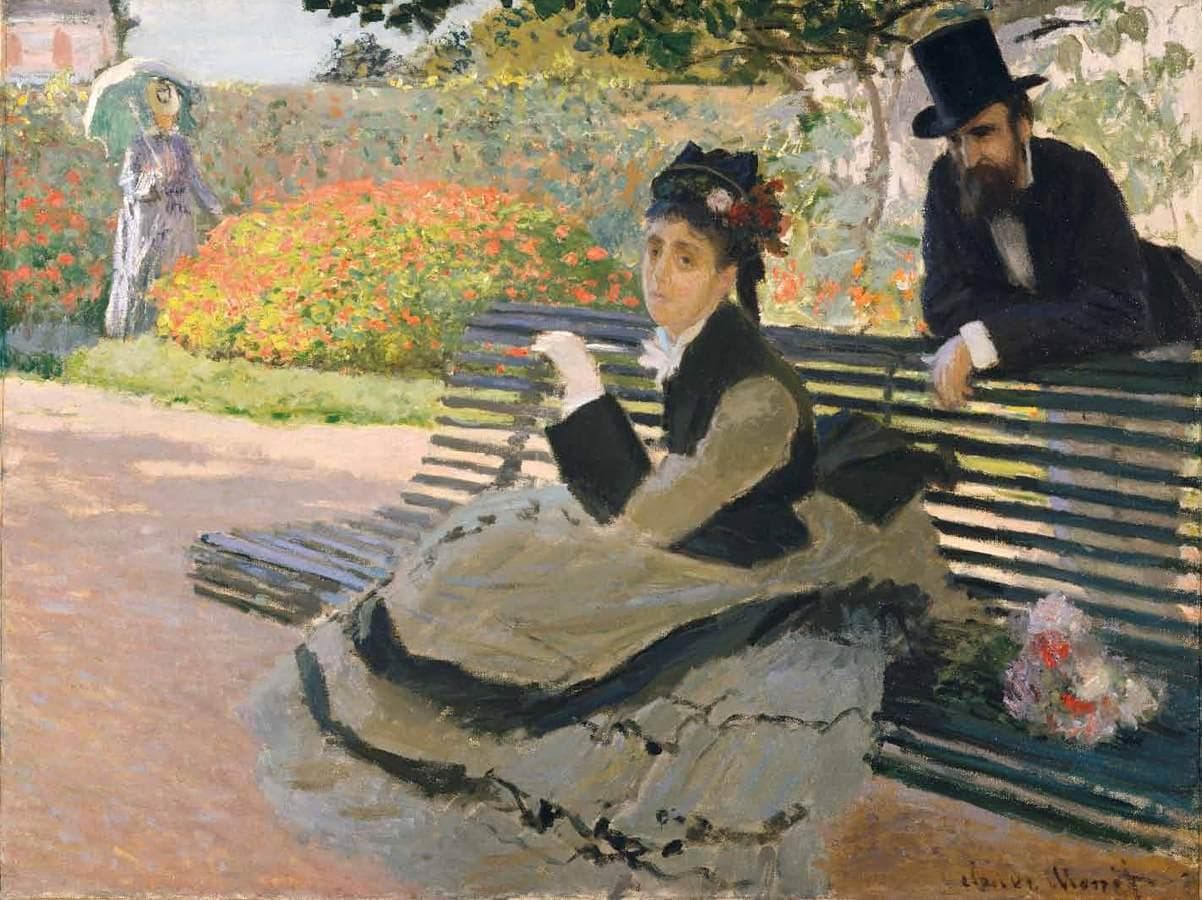
Camille Monet on a Garden Bench
Claude Monet · 1873
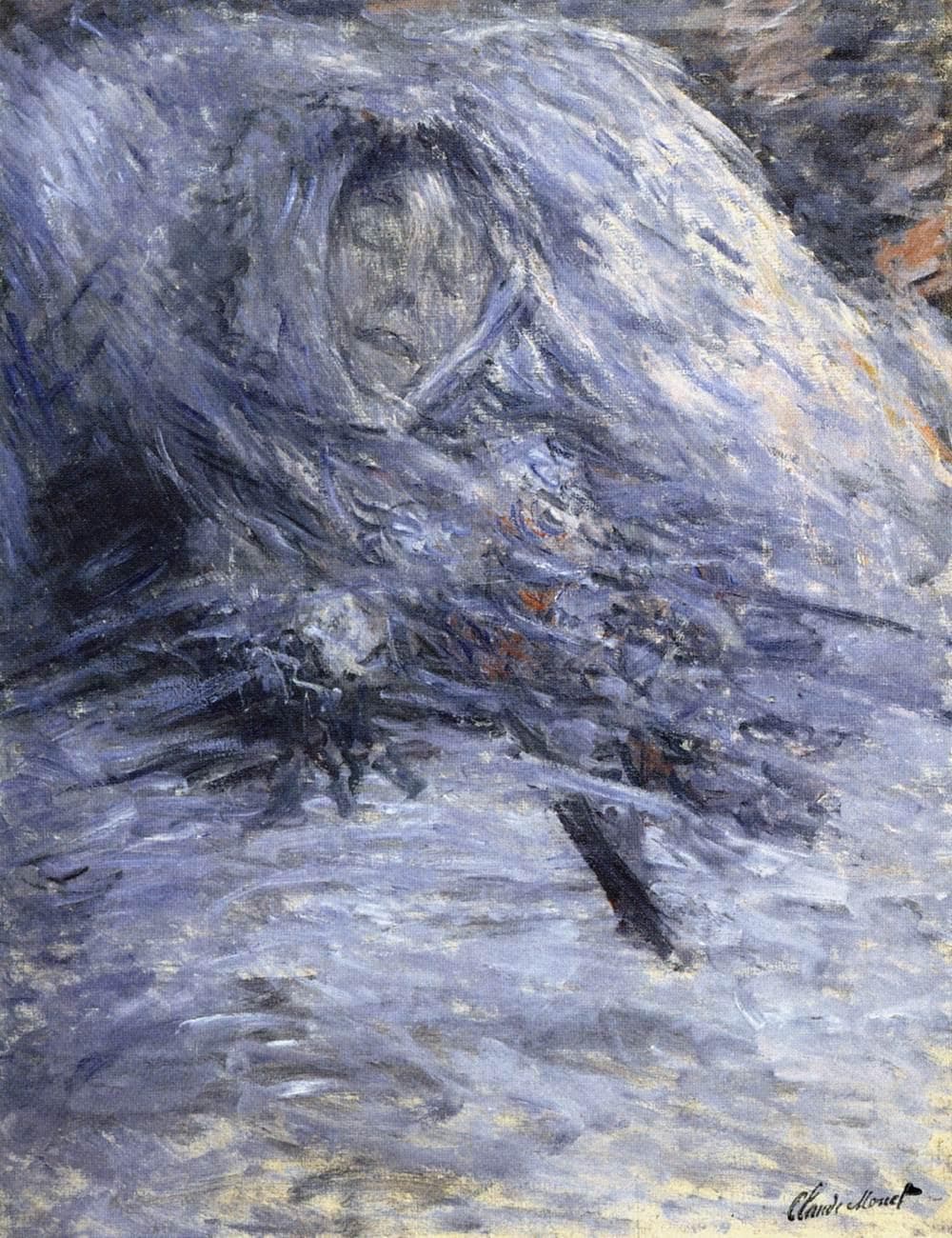
Camille Monet on Her Deathbed
Claude Monet · 1879
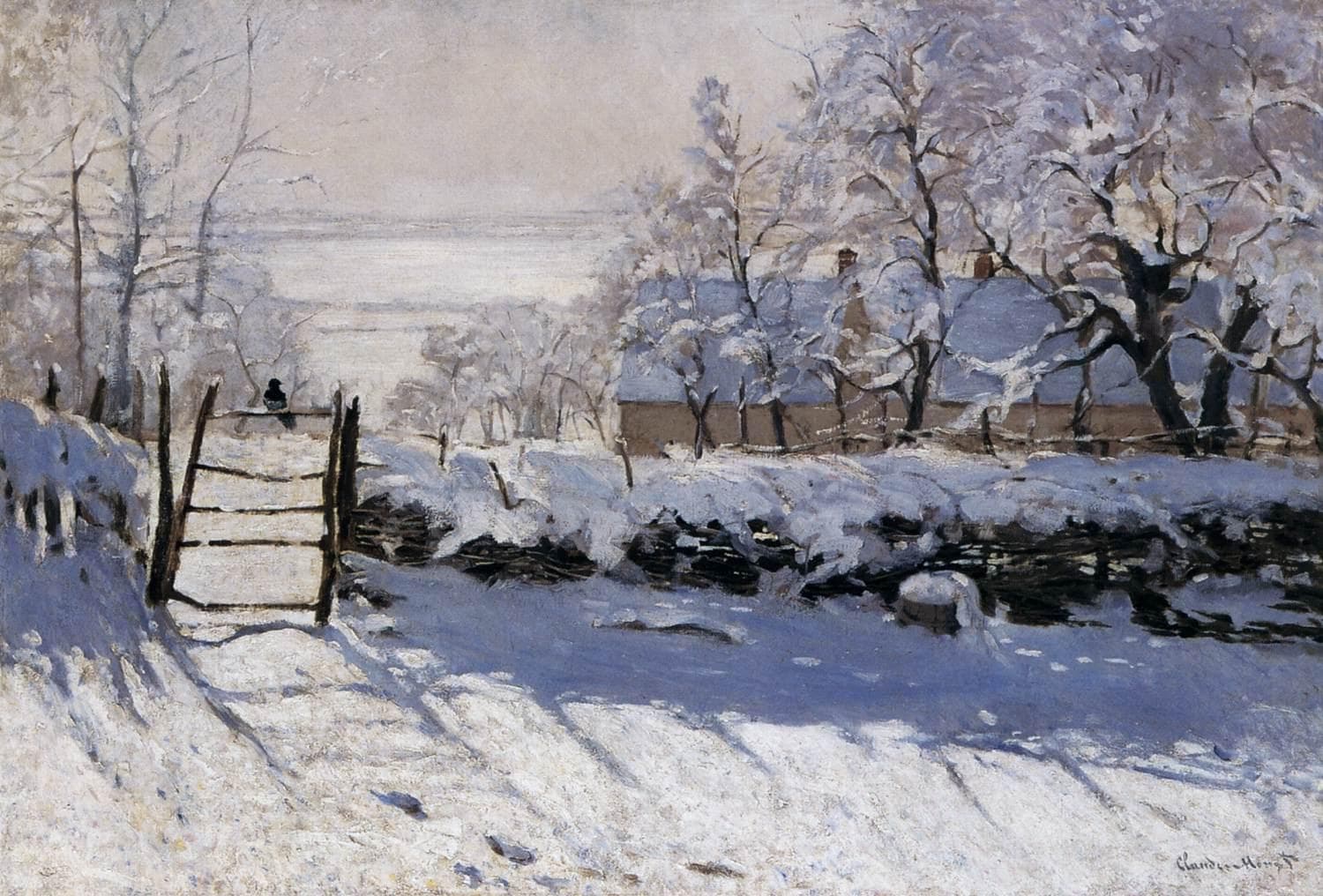
The Magpie
Claude Monet · 1868–69
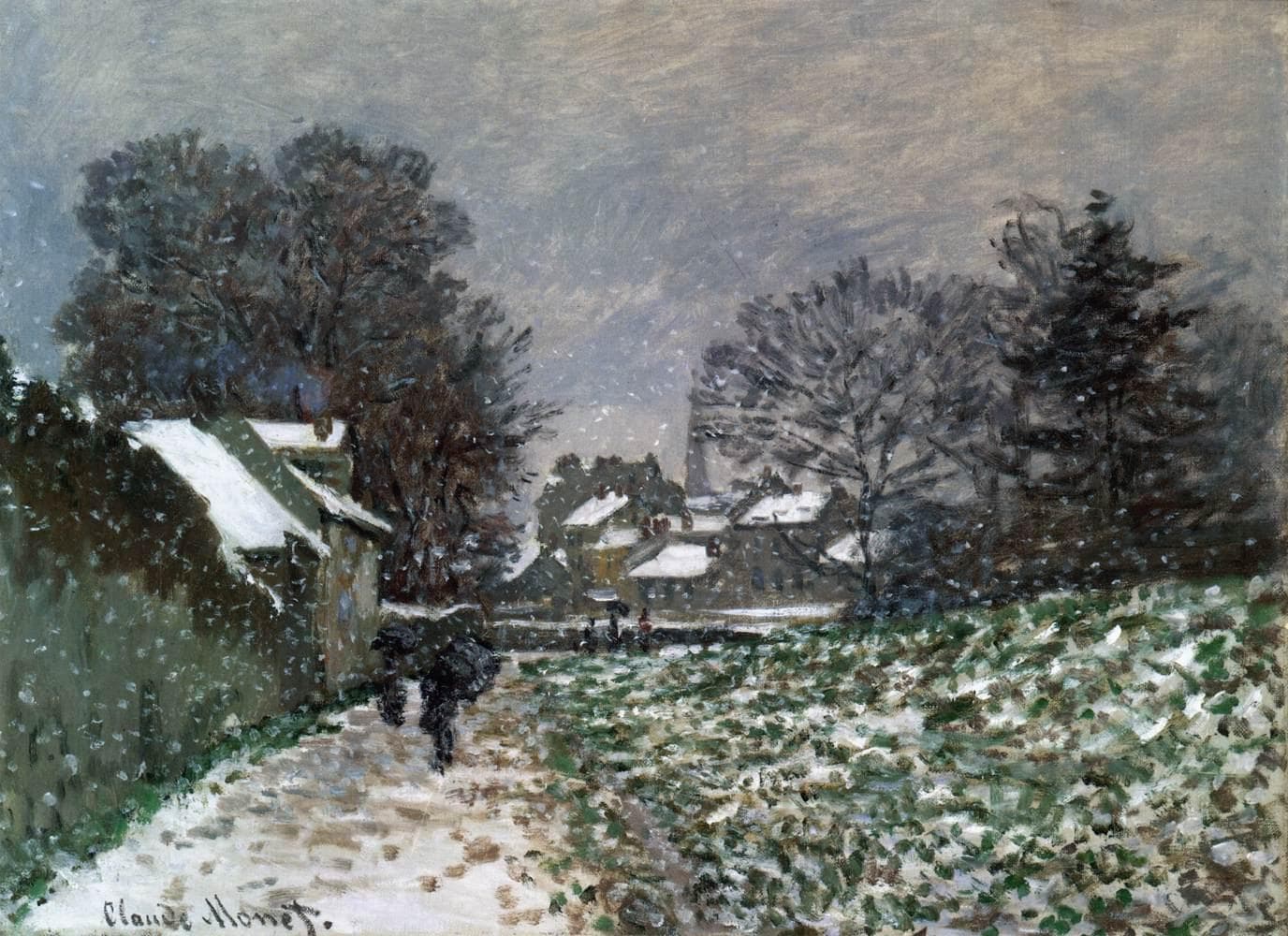
Snow at Argenteuil
Claude Monet · c. 1874

Venus de Milo
Alexandros of Antioch · c. 150–125 BC

Ophelia
John Everett Millais · 1851–52
Las Meninas
Diego Velázquez · 1656