Impressionism
The Gare Saint-Lazare: Arrival of a Train
Claude Monet, 1877
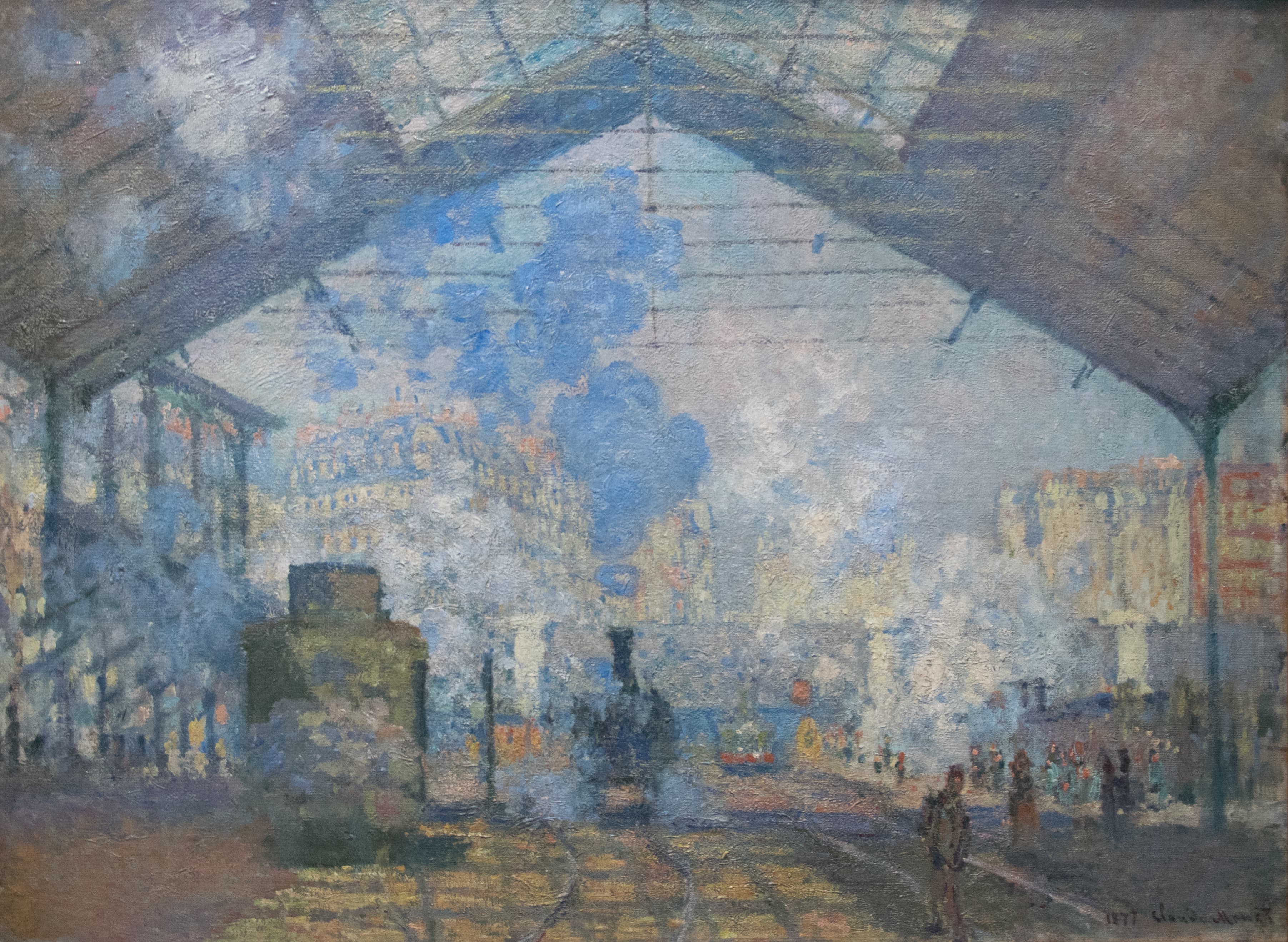
The Gare Saint-Lazare: Arrival of a Train is an 1877 oil by Claude Monet showing a steam locomotive pulling into the great Paris station under clouds of smoke. One of his twelve Saint-Lazare canvases, it belongs to the Harvard Art Museums (Fogg Museum).
- Artist
- Claude Monet
- Date
- 1877
- Medium
- Oil on canvas
- Dimensions
- approx. 83 × 102 cm
- Collection
- Harvard Art Museums / Fogg Museum, Cambridge, Massachusetts, United States
- Movement
- Impressionism
- Catalogue
- Wildenstein 439
What you are looking at
Under the glass and iron roof of a Paris railway station, a locomotive pulls in on the right, black and heavy, its red buffer beam and a single yellow lamp glowing at the front. Its tall chimney pours out a column of smoke that billows up and spreads across the whole upper half of the picture in great rounded clouds of white, lilac and blue-gray, hiding the roof trusses and the sky. On the left, a second engine stands on another track, seen from behind, wrapped in its own steam. Between them the rails curve away toward a bright opening at the far end of the shed, where pale buildings shimmer beyond the smoke.
People are reduced to small dark shapes: a cluster of travelers on the platform at left, railway workers standing between the tracks, and in the foreground a figure in a blue jacket with his back to us, walking toward the engine. The station roof, drawn in steep diagonal lines at the top corners, frames the scene like a stage proscenium. Monet signed and dated the canvas "Claude Monet 77" at lower left.
The real subject is the smoke. Monet paints it with thick, swirling strokes of blue, violet and white, so that it seems to have weight and texture, catching the daylight that falls through the glass roof. Notice how the warm colors, the red of the buffer beam and the rusty brown of the track bed, sit at the bottom of the picture, while the top dissolves into cool vapor.
Compare the two engines. The one on the right, facing us, is solid and dark, its details picked out in short touches of orange and gold. The one on the left, seen from behind, is already half dissolved into steam, its outline softened and its color absorbed into the gray-blue air. In one picture Monet shows a train both as a hard machine and as a thing of vapor and light.
How Monet painted it
In January 1877 Monet rented a small apartment and studio in the rue d'Edimbourg, close to the Gare Saint-Lazare, the station that served Argenteuil, where he had lived for several years, and the Normandy coast. He obtained permission from the railway company to paint inside the station. According to a story told later by Jean Renoir, son of the painter Pierre-Auguste Renoir, Monet put on his best clothes and presented himself to the station director, who was so impressed that he had trains held and their fireboxes stoked to produce the smoke the painter wanted. The anecdote may be embroidered, but Monet certainly worked in the station for several months.
He made twelve paintings of the Gare Saint-Lazare in 1877, viewing the trains, platforms and the nearby Pont de l'Europe from different positions. Some are highly finished; others, like the version in the Art Institute of Chicago, The Train from Normandy, are looser. The Harvard picture is one of the most fully worked of the group.
Context: the Impressionist exhibition of 1877
Seven or eight of the Saint-Lazare canvases were shown together at the third Impressionist exhibition, in April 1877, one of the first times Monet presented a group of works on a single motif. It was an early step toward the series of the 1890s, such as the Grainstacks and Poplars. The novelist Émile Zola, reviewing the show, praised the pictures for finding poetry in railway stations, as earlier painters had found it in forests and rivers.
Meaning: modern life and modern light
The railway was the emblem of modern France. The Gare Saint-Lazare had been rebuilt and enlarged in the 1860s, and from it trains carried Parisians to the suburbs and the sea. Painting it was a deliberate choice of a modern subject, in line with the call of the poet Charles Baudelaire for a "painter of modern life." Yet Monet is not interested in the mechanics of locomotives or the drama of travel. What fascinates him is the way steam and smoke catch and diffuse light, creating a shifting, colored atmosphere inside an iron building, a man-made version of the fog and cloud he painted outdoors.
Critics have read the series both as a celebration of industrial modernity and as something more ambiguous, in which the solid machines seem to dissolve into vapor. Both readings fit a painting where the train is the reason for the picture but the smoke is its true subject.
Where to see it
The painting belongs to the Harvard Art Museums in Cambridge, Massachusetts, where it is part of the Fogg Museum's collection; it came to Harvard in 1951 as part of the bequest of the collector Maurice Wertheim. The best-known version of the subject, Gare Saint-Lazare, is in the Musée d'Orsay in Paris. See also famous Monet paintings.
Questions & answers
Where is The Gare Saint-Lazare: Arrival of a Train?
It is in the Harvard Art Museums in Cambridge, Massachusetts, part of the Fogg Museum's collection, bequeathed by Maurice Wertheim in 1951. Other versions of the station are in Paris, London, Chicago and elsewhere.
How many Gare Saint-Lazare paintings did Monet make?
Monet painted twelve canvases of the Gare Saint-Lazare in 1877. Seven or eight of them were shown together at the third Impressionist exhibition in April of that year.
Why did Monet paint the Gare Saint-Lazare?
The station was a symbol of modern Paris and served places he knew, like Argenteuil and the Normandy coast. Above all, its smoke and steam under a glass roof gave him a new kind of atmosphere and light to paint.
Is the story about Monet stopping the trains true?
Jean Renoir later told how Monet charmed the station director into holding trains and stoking engines for smoke. It cannot be confirmed and may be exaggerated, but Monet did get permission to paint inside the station.
More by the artist
Claude Monet

Bridge over a Pond of Water Lilies
Claude Monet · 1899

Woman with a Parasol – Madame Monet and Her Son
Claude Monet · 1875

Sunset in Venice
Claude Monet · 1908–12

La Grenouillère
Claude Monet · 1869

Beach in Pourville
Claude Monet · 1882

Springtime
Claude Monet · 1872

Boating on the River Epte
Claude Monet · 1890

The Seine at Asnières (Hermitage)
Claude Monet · 1873
Also painted in 1877
The same year
Kindred works
You may also study
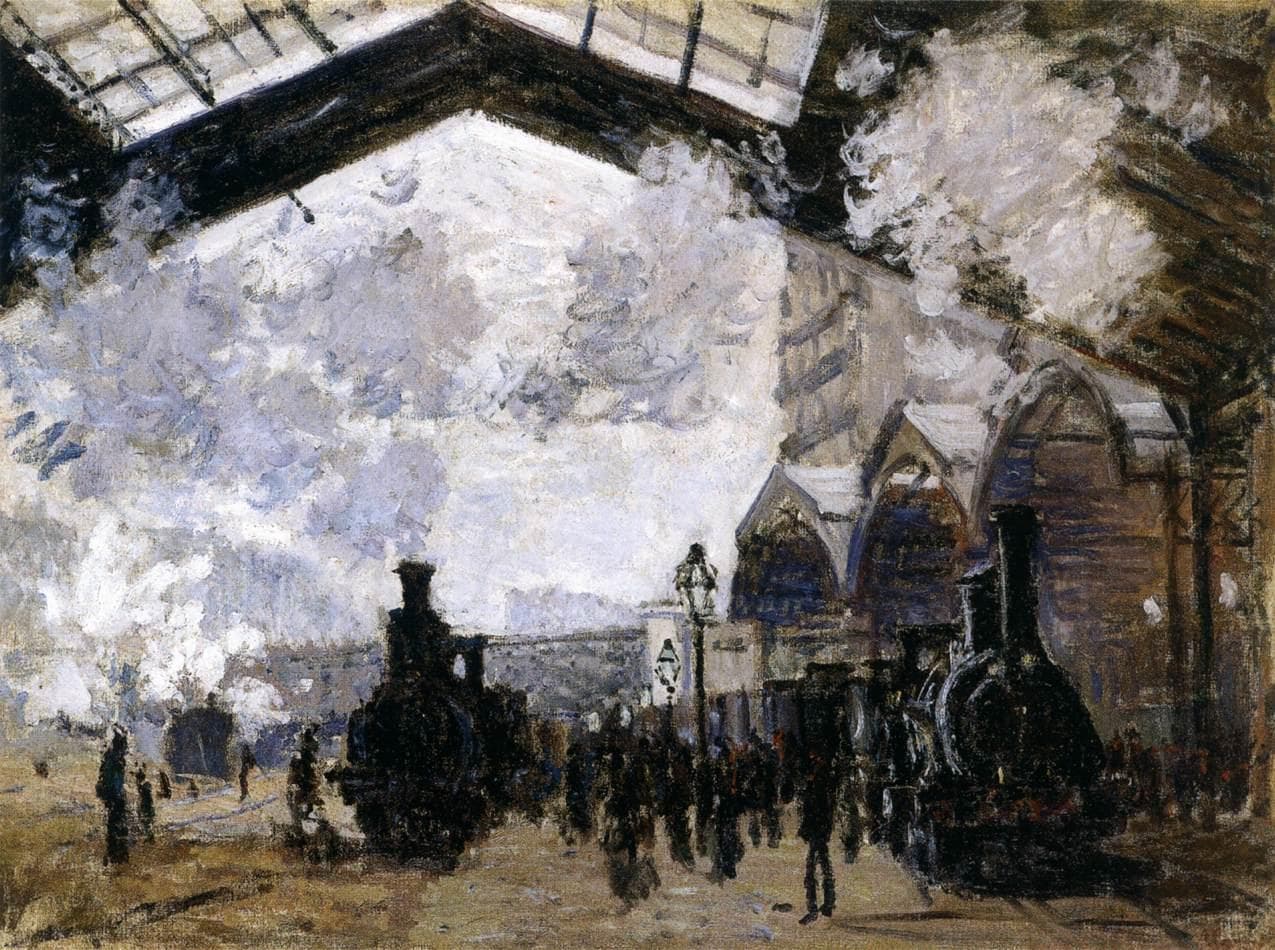
The Gare Saint-Lazare
Claude Monet · 1877
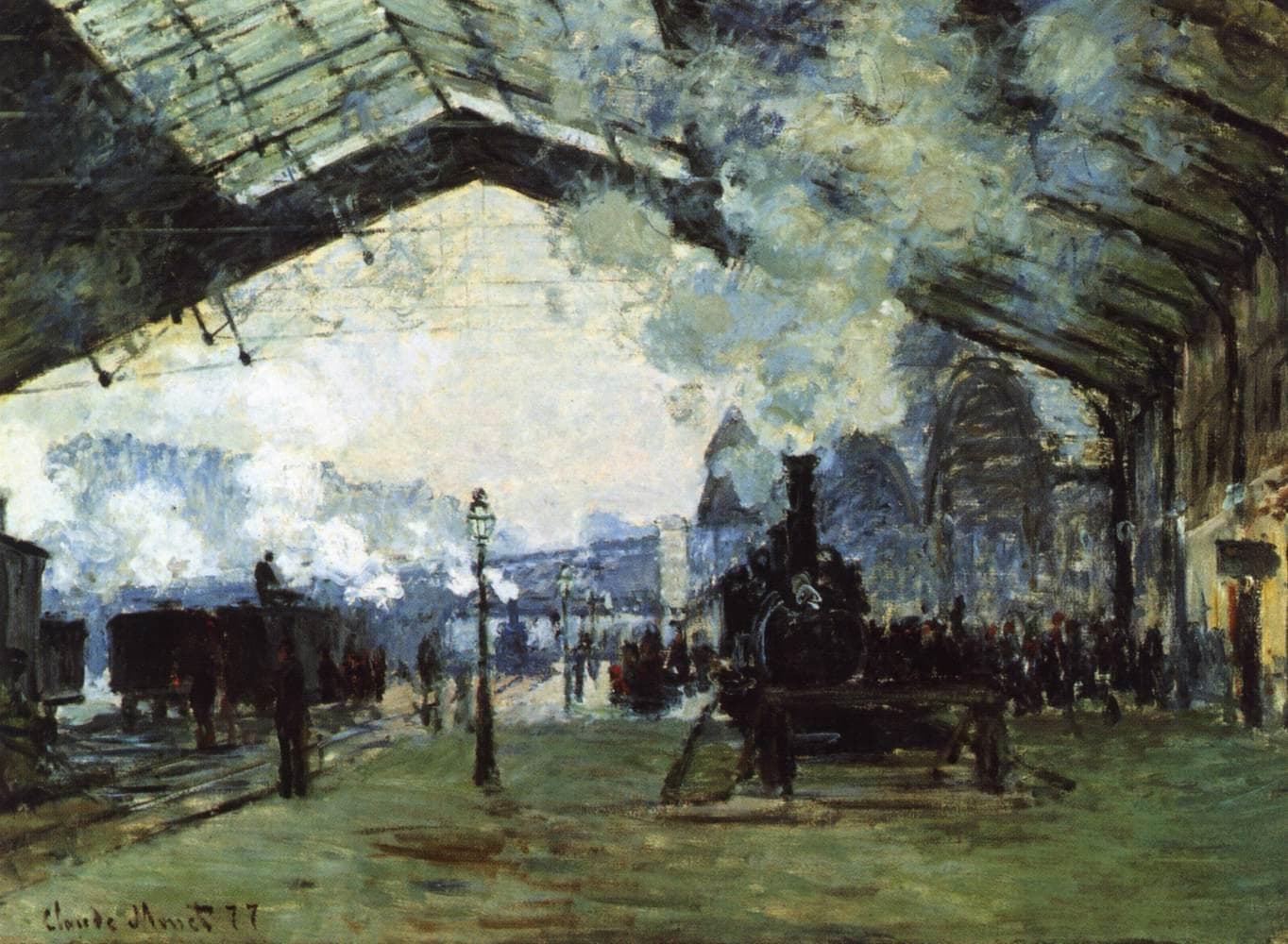
Gare Saint-Lazare: the Train from Normandy
Claude Monet · 1877
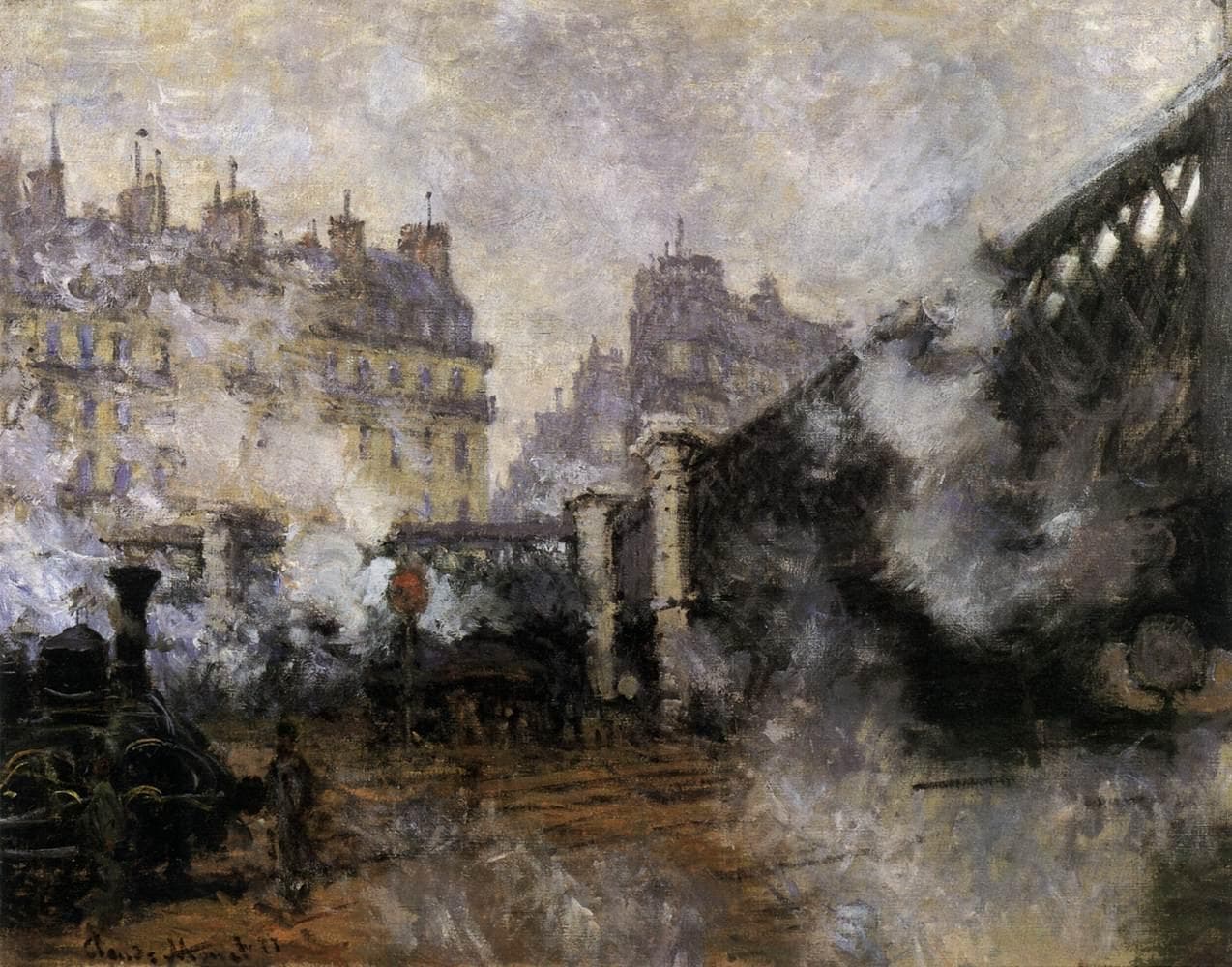
Pont de l'Europe, Gare Saint-Lazare
Claude Monet · 1877
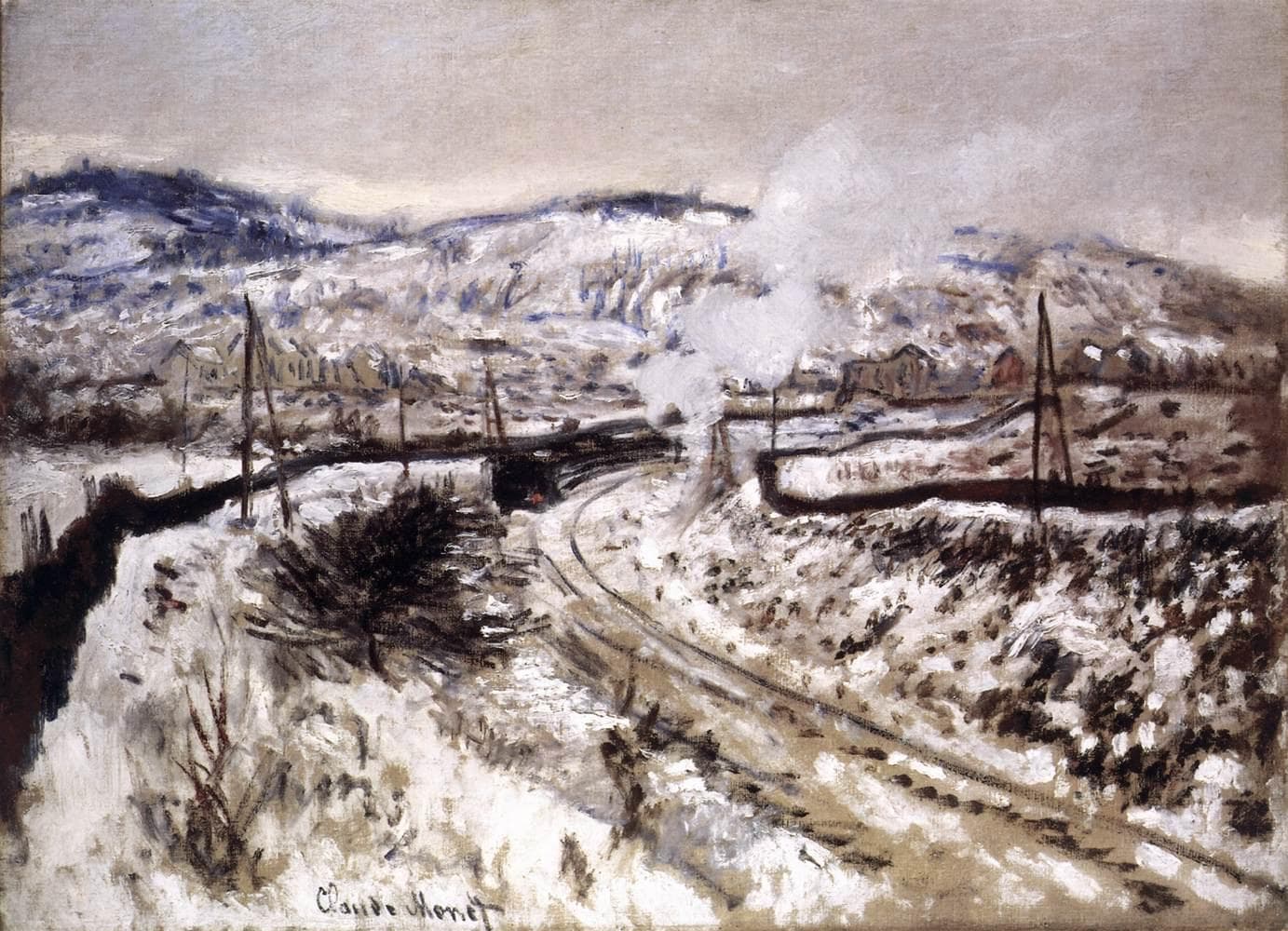
Train in the Snow at Argenteuil
Claude Monet · 1875
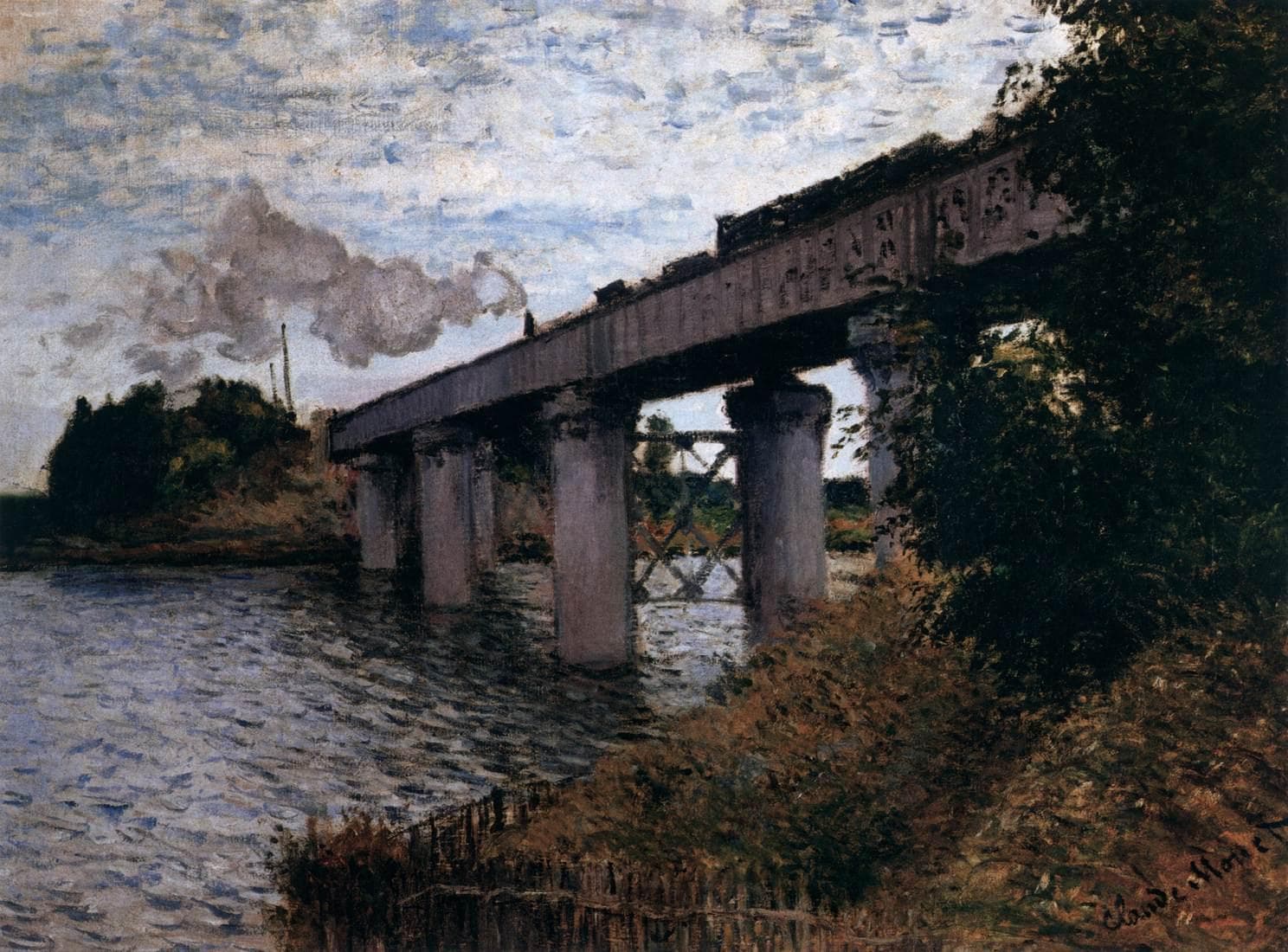
The Railway Bridge at Argenteuil
Claude Monet · c. 1873–74
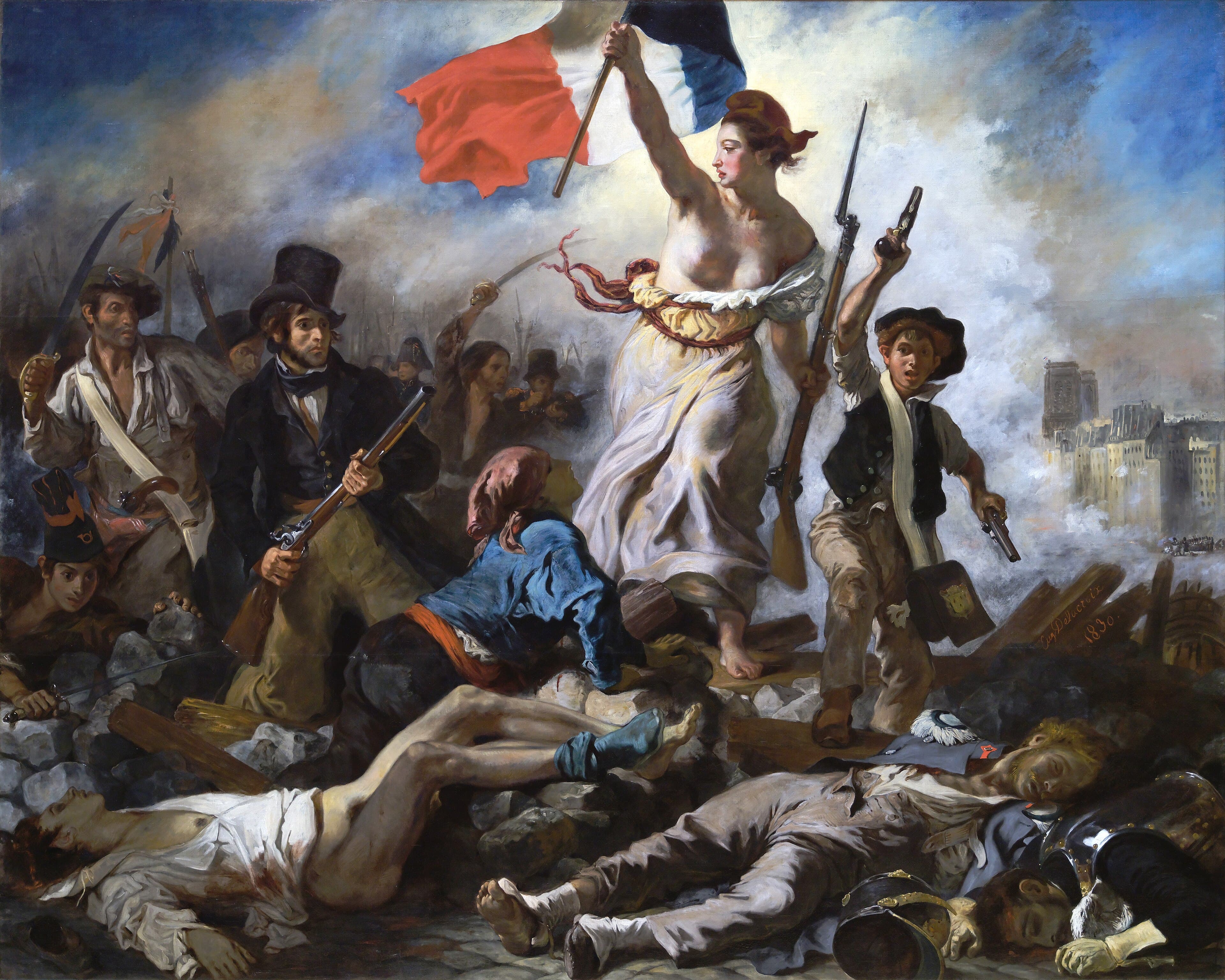
Liberty Leading the People
Eugène Delacroix · 1830
The Night Watch
Rembrandt · 1642
Café Terrace at Night
Vincent van Gogh · September 1888